The Byrne Report

April 18-24, 2007

IT WAS FOUR WEEKS to the day that 16-year-old Jeremiah Chass was shot and killed in his Sebastopol driveway by two Sonoma County Deputy Sheriffs. On Monday, April 9, in Roseland, the predominantly Latino neighborhood of Santa Rosa, yet another psychologically troubled person was shot and killed by law-enforcement officers. Richard DeSantis, unarmed, age 30, was gunned down in his driveway by a Santa Rosa police squad.

In both instances, a family member had called emergency services, stating that a loved one was having a mental crisis. In both cases, the responding officers claimed to have tried violent but nonlethal methods before fatally blasting the decompensating men. Chass was of mixed race; DeSantis was apparently Caucasian. Neither posed a life-threatening challenge to the cops who were called to expertly subdue them, not speedily kill them. Many people assume that these are justifiable homicides despite plenty of evidence to the contrary. There is no pattern here, right?

Like hell there is no pattern.

The Sonoma County deputy sheriffs who killed the teenaged Chass are being investigated by the Santa Rosa Police Department. The Santa Rosa Police Department officers who killed DeSantis are being investigated by the Sonoma County Sheriff’s Department. The Santa Rosa Police Department officers who shot and killed Oakland murder suspect Haki Thurston on Feb. 27 in Santa Rosa are being investigated by the Sonoma County Sheriff’s Department. And finally, the Ukiah Police Department officers who shot to death the mentally ill Cesar Mendez on April 2 are being investigated by the Mendocino County Sheriff’s Department.

This type of official back-scratching is a recipe for the cover-up of possible law-enforcement misconduct in all four homicides.

Indicating the trajectory of his investigation a few hours after DeSantis’ death, Sonoma County Sheriff Capt. Dave Edmonds told the Santa Rosa Press Democrat, “Occasionally, in all communities there are a spate of shootings. That’s the way I see what has happened here. You look at the case facts of each independently, and there’s no relationship.”

Please note: Edmonds’ agency is in charge of investigating the DeSantis killing. But he has already declared that the circumstances of the DeSantis killing cannot possibly be related to the circumstances of the Chass killing and the other two homicides committed by North Bay law enforcers in seven weeks. And he justifies the killing of DeSantis as part of a “spate” of law-enforcement-related homicides in Sonoma and Mendocino counties. So if you are bipolar, schizophrenic or just feeling edgy, you’d best duck–or better yet, move somewhere else–because there is a “spate” of deaths going on. When is such a chain of events officially over? When it’s declared to be by Edmonds? By Santa Rosa Police Chief Ed Flint? By Sonoma County district attorney Stephan Passalacqua?

Hey, maybe it is not a “spate,” but a policy.

In July 2005, the California NAACP released a report on police brutality that is particularly relevant because people of color are in the minority in the North Bay. It is prefaced by Sgt. Ronnie Cato of the Black Police Officers Association of the LAPD, who writes: “White Americans don’t see the racism and the discrimination as we do. So when they are on those juries and things like that, they are much more sympathetic to police officers. They tell us all the time, ‘I don’t care what happens. You have a tough job. We understand what you’re going through’–almost sympathizing with the police no matter what they do.”

The NAACP report calls for police departments and the communities they serve to be held accountable for a change. It cites a 1998 Human Rights Watch study (“Shielded from Justice”) of police misconduct in 14 cities, including Los Angeles and San Francisco, which concludes: “The excessive use of force by police officers . . . persists because, overwhelmingly, barriers to accountability make it possible for officers who commit human rights violations to escape due punishment and often to repeat their offenses. Police and public officials greet each new report of brutality with denials or explain that the act was an aberration, while the administrative and criminal systems that should deter these abuses by holding officers accountable, instead virtually guarantee them impunity.”

Human Rights Watch identified obstacles to establishing accountability as the pattern of hiring psychologically unfit people as police officers and the code of omertà by which police (and sheriffs) protect each other from investigations of wrongdoing. The NAACP calls for monthly psychological evaluations of police officers; training officers in verbal skills for use in encounters with the mentally ill, so that a potentially violent situation can be defused; a ban on the use of Tasers and guns, which kill people; and mandating the use of nonlethal weapons.

Since our system of law enforcement system has proven itself to be dangerously incompetent and bureaucratically incestuous, it is time for ordinary people to take this matter in hand.

or

The Demented

April 18-24, 2007

Moping over his personal and financial success, Woody Allen commented, “Comedy sits at the children’s table.” He meant that only drama gets respect, and that’s what led Allen into the field of faux Scandinaviana.

But when it comes to pure cinematic invention, nothing beats comedy. Comedy is the laboratory where visual ideas are tested; drama picks up on them later, after they’ve been proven to work.

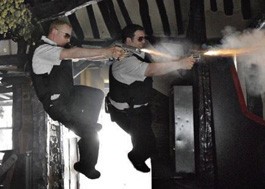
Hot Fuzz is director Edgar Wright and writer Simon Pegg’s follow-up to Shaun of the Dead. It represents movie comedy at its best, an irresistible high-low mix of gross slapstick, whip pans and whiplike wordplay.

Wright and Pegg have built their film in the way the best British comedy is built. Maybe nothing since Fawlty Towers has had such terrific comedic structure to it–the sense of a heavily worked-out plot to make the gags all click in the last reel.

As an action director, Wright has learned from Martin Scorsese and John Woo, but he has subtracted the relentless het-up-ness of such directors. In Hot Fuzz, the speed of the technique looks less desperate and more confident. And the movie boasts stars, too. Seeing Nick Frost and Pegg makes you think more about Laurel and Hardy than Will Ferrell and whomever he is co-starring with this week.

Hot Fuzz runs in haste from the beginning. A montage outlines the superiority of supercop Nick Angel (Pegg), who shames the rest of the London police with his perfect arrest record. Then his bosses–supercilious (Martin Freeman), supercillier (Steve Coogan) and supercilliest (Bill Nighy)–kick him sideways, transferring him to the postcardy village of Sandford. There, being a policeman consists of rousting loiterers and rounding up a stray swan.

Angel is teamed with Danny, the Charles Laughtonish Frost, last seen playing a fragrant but friendly zombie in Shaun of the Dead. Danny is clearly a constable because his dad (Jim Broadbent) is the chief of police.

The Sandford cop shop is packed with cake-eating idlers, including two tremendously snide plainclothesmen (Paddy Considine and Rafe Spall), louts who think they’re the coolest things in town. A policewoman, Doris Thatcher (Olivia Colman), with a sizable overbite and a fondness for horrible double-entendres, and a tottering geezer, whose most important function seems to be the ability to translate what the inbred local farmers say, round out the roster.

Angel’s arrival precipitates a chain of Agatha Christie-like murders. The policeman pursues the mysterious killer as well as pushing against the dead weight of his fellow police, who consider the murders a series of unfortunate accidents. The most likely suspect: a sniggering grocery store owner, played by a gloriously mean Timothy Dalton.

Hot Fuzz offers more than a Naked Gun collection of jokes; it is a postmodern version of a tender Ealing comedy. (If the film looks particularly affectionate, note that it’s shot in Somerset, where the director grew up.) Wright’s retro-heavy soundtrack also has a keen, loping rhythm that keeps the movie in pace. In , Wright told me that he wanted glam rock on the soundtrack, because the beat suggested to him the plodding of a foot patrolman walking. And in the opening, Angel’s résumé, as well as his social retardation, is outlined against the brassy chorus of “Goody Two Shoes” by Adam and the Ants.

Hot Fuzz is an almost insanely high-spirited film, as cheerful and good-natured as a movie can be when depicting a Grim Reaper-dressed assassin depopulating the countryside. (Be warned: The movie has a high gore quotient.)

The movie celebrates placid village life and realizes that such a vegetating life has to be stirred up a little with evenings of crap movies. And Wright isn’t blind to the discontents of all this cozy, half-timbered living; he knows a streak of intolerance can be found out if one digs a little.

If I have any complaint about Hot Fuzz it is that the title is inane. People look at you like you’re missing marbles when you praise a movie called Hot Fuzz. The title just seems too reductive. And then, the other night, we were flipping channels and stumbled on to a cop show called Cold Squad. Like police work, satire depends on careful research.

‘Hot Fuzz’ opens on Friday, April 20, at select North Bay theaters.


New and upcoming film releases.

Browse all movie reviews.

War Play

0

April 18-24, 2007

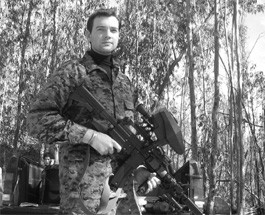
My blood boiled as I raced into the forest. I leaped over logs and tangles of twigs, and moved deeper and deeper into this jungle of darkness. Watching carefully for movement in the dense foliage ahead, I readied my finger on the trigger of my gun. Shots came suddenly, echoing from the southwest, rapid-fire reminders of the battle about to begin, and I wished for a moment that I could turn into a horsefly and buzz safely into the canopy above. But, alas, I was who I was, where I was, and this was war. And war is hell.

Actually, this was just the Paintball Jungle, a 65-acre plot grown over with eucalyptus trees just west of Highway 29 in American Canyon. Every Saturday and Sunday, the Jungle swarms with a hundred or more masked gunmen who shoot each other in good fun with half-inch diameter paintballs. Guests can show up unannounced any time on weekends, rain or shine, but first thing in the morning is best. That’s when owner Robert Delia, aka “Magic Carpet Bob,” a scarred and handsomely grizzled Navy vet and former professional paintballer, delivers his 30-minute orientation speech.

“Gather round for your orientation!” he shouts at about 9am. Fifty eager paintballers do as they’re told, forming a half-circle around Bob, who stands waiting atop an old monster truck tire to enhance his mighty stature. By now we’ve all signed waivers, paid our $55 in dues at the open-air reception desk and been equipped with guns and helmets, but there are some basic safety rules we must hear about, first and foremost of which is to never, ever enter the target range or the forest without first putting on one’s safety goggles.

Bob also briefs us on the various game styles we’ll be enjoying, like Capture the Flag, Center Flag and the Elimination Round. Each, happily, involves running through the woods, hunting people with a relatively harmless gun: a boy’s dream.

Yet a scattered dozen or so of my peers seem to take this business very seriously. They have come dressed in full army fatigues with American flags embroidered on their sleeves. They wear jungle-green bandanas and camouflage foliage in their hair. Several of these men have gigantic $1,000 machine guns with silencers and sights, and I want to tell them that there’s a real army and a real war out in the world, in case they’re interested.

“Now, remember,” says Bob, “the whole point of this in the end is to have fun. Now are you ready?”

Yeaahh!!!” comes the war cry of an army.

Several Jungle employees come around to tie our arms with either fluorescent red or green ribbons, thereby dividing us into teams. I receive a red ribbon, which is actually pink. On a loud speaker, a male voice orders us to our bases. “Greens to the Hornet Nest, Reds to the Airplane Bunker. Game starts in three minutes!” I put on my goggles and follow a gaggle of stern-postured pink soldiers into the thick woods, and this drops me right back into the previously interrupted narrative, which, as you recall, had me racing through the jungle. Ahem.

“Hey, pal, you know where you’re going?” I asked the camouflaged fellow ahead of me.

“Naw, this is my first time here.”

Yet the bumbling lot of us somehow found our base, where a referee sat waiting, holding a walkie-talkie and wearing an orange vest. Our flag–more of a rag, really–flew proudly in the middle of the Lincoln Log-like structure. Sheltered turrets stood at the five corners, and the prospects of dwelling in this cozy inn for the duration of the 30-minute game, taking cheap shots into the woods at enemy and terrorist sympathizers, wooed me into declaring, “I’ll defend the fort!”

With six others, I entered the small complex, climbed up to one of the guard platforms and made myself comfortable at a firing slot in the wooden wall. Momentarily, the ref received a message through the walkie-talkie. Then a loud horn blew in the distance, echoing through the woods, and our man shouted, “Game on! Go get ’em!”

Two dozen of our pink soldiers dashed westward into the woods toward the unseen enemy with the goal of retrieving their flag. For several minutes, we heard nothing while watching the surrounding sphere of jungle for enemies.

And then from one of our sentinels: “Movement to the southwest!” I, too, saw an apparition out in the shadowy woods to the northwest, and a second later a paintball from the south breezed past my face and splattered on a post behind me. We were surrounded. My comrades began shooting from their respective duck-blinds while I stayed low, waiting for the prime opportunity to blast an enemy fighter in his vitals. Opportunity arose when I spied someone about 200 feet away crouched behind a stump. I aimed through the slot in the wood structure and popped off a half-dozen rounds, but I watched each of my paintballs zip waywardly and splatter in the foliage before reaching their target.

There must have been 20 Greens around us, and they were closing in. An armed man ran out from behind a tree and charged forward. He was just 60 feet away, hoping to reach the next patch of cover before anyone could take him out, which I did.

“Hit!” he shouted, nobly obeying the honor system. He straightened up, lifted his hands skyward and calmly walked off the scene. I enjoyed watching him perish.

We picked off several more insurgents, but the Greens had us outmanned. Increasing volumes of paint splattered all around me, and the breeze of paintballs overhead kept me cowering on my knees. And then they were in our fort, swarming viciously like hornets. Presumably, a similar battle was taking place across the forest at the Greens’ base, but the horn had yet to blow and it seemed our flag was going to be the first to go.

I fired feverishly, hitting nothing but wood and earth. Abruptly, a line of machine gun fire pat-pat-patted up my front side. Paintballs hurt, and I screamed in fright and lifted my gun in the air to announce my death. Meanwhile, my men dropped like flies, and the Greens made off with the flag. The ref, still standing by with his walkie-talkie, announced the loss to the horn blower. The trumpet sounded through the woods a moment later, and the game was over. Ten remained before closing time.

While most paintballers at the Jungle make an entire day of running around in the woods and getting shot, I didn’t have what it takes. By 1pm, with a dozen welts rising on my head, neck and torso, I was toast. I was bleeding in several spots, my shirt had been torn open and, frankly, I thought these wounds were pretty darn awesome.

Magic Carpet Bob owns the Paintball Jungle with his partner of 27 years, Karen Kazman. Bob’s adult sons, Eli and Zoe, also help out with the business. Zoe even played on the same professional team as his dad back in the early ’90s, traveling across the country and Europe, and together helping to win for their team the Paintball World Championship in 1991, about the time that we tried to loot Iraq for its oil the first time around.

But the paintballers I’ve seen are a far cry from real soldiers; they’re lovers, not fighters, and Eli believes that paintballing is the second greatest form of recreation in the world.

“It’s the most fun you can have with your clothes on,” he quips.

For others, it’s therapeutic, a chance to blow off some pent-up steam from the office. Ryan Crain, 28, a creative-marketing director from Vacaville, sees paintballing as harmless, a chance to be something that most days of the week he’s simply not.

“It’s great,” he says. “You’re outside, playing dress-up and running around like a soldier in the woods.”

Ditto for me. Stalking strangers with a toy gun answered a long-neglected boyish desire to hunt and be hunted, an urge I once satisfied through classroom daydreams of fighting in wars both ancient and modern, and kicking ass, of course. Perhaps the most satisfying thing about paintball is that the game makes sense; your enemies are as real and tangible as their neon wristbands. In today’s real wars, it’s just so confusing! Men, women, children, newlyweds kissing on the altar–any of them could be terrorists, and the only safe thing to do is to blast them, safety goggles be damned.

But what do I know about war? Paintballing took me to my ultralight personal threshold for violence, and I hope that I never have to put on army fatigues and load a real weapon.

Because I’ve read that there’s a real war going on out there. It’s not in a jungle of eucalyptus trees, and I hear it’s hell.

Paintball Jungle, 2 Eucalyptus Drive, American Canyon. 707.552.2426.


Money Pit

April 18-24, 2007

It’s not as though there isn’t any money. In California, 51 cents out of every tax dollar–including sales and income tax–goes to education. On top of that, voters last year approved a $3.5 billion bond for public schools. Nevertheless, the state has some of the lowest test scores in the country. In 2005, California ranked 47th for education, meaning that only three other states had students who scored worse on standardized tests.

However, the Department of Education believes we still aren’t spending enough. Per-pupil spending in California is 30 percent below the national average, according to DOE director of policy and evaluation Pat McCabe.

Still, others are suggesting that it isn’t so much the amount of money in the educational system as how the money is being used–primarily for inefficient and bloated programs that aren’t reaching the classrooms.

A recent study by the Pacific Research Institute (PRI) and the California Business for Education Excellence claims that one such example is the Academic Performance Index (API), a score that attempts to measure how well schools are doing. According to the study, the state spends $1.25 billion on improvement programs to help struggling schools become proficient, and yet they have had “little if any academic improvement.”

The study, called “Failing Our Future,” compares student test scores from 1,620 low-performing schools that participated in the improvement programs to those of schools that didn’t participate in the programs. It found that there was “no significant difference in academic achievement over time.” Not only that, the study asserts that the state doesn’t have a high enough growth rate for nonperforming schools, and that minority and low-income kids are still being left behind.

“We found no real accountability for the schools,” says Vicki Murray, a senior fellow in education studies at PRI. “There needs to be consequence for failure. As it is, parents don’t have meaningful options in California. If you’re a parent and you have a child enrolled in a school that’s not up to snuff, what do you do?”

In 1999, California established the API score to quantify how well the schools are doing. Every year, students take a series of tests ranging from language arts to math. Based on the overall test scores, the state does a calculation and assigns each school a number ranging from 200 to 1,000. The goal is for all schools to reach 800, which is considered proficient.

The API conflicts with another measurement system, the Adequate Yearly Progress score, part of the No Child Left Behind Act established by the Bush administration. For a school to be proficient under this newer federal system, it would have to have a score of 875.

“The state still stresses 800 because it’s an easier score to meet,” says Lance Izumi, who co-authored the study. “The more schools meet the state target, the greater number of schools appear to be on track.”

For those schools not reaching 800, there are two state programs designed to help them improve. The problem, according to Izumi, is that the billion-dollar programs don’t work because their growth target is too low. Schools that agree to enter the program only have to improve 5 percent a year. At that rate, a school with a score of 635 or less–a plight of more than 3,400 schools–would take between 61 to 84 years to reach 800.

“We’re sacrificing generations of students while the schools are making small incremental progress,” says Izumi.

McCabe believes the study’s criticism is unrealistic. The reason the growth target is low is because it’s so hard for schools to improve with their limited resources.

“It’s a realistic target,” says McCabe. “It’s very difficult to move huge numbers of kids across these proficiency lines. The average gains per year are between 10 and 11 points. We’re holding the schools accountable, but we try to make the targets reasonable.”

In practice, many schools do seem to improve faster than 5 percent a year. From 1999 to 2006 in Sonoma County, median scores steadily increased by 78 points for elementary schools, 67 points for middle schools and 48 points for high schools. The improvement may be slow, but it’s steady.

“There is some logic to what the study is saying,” says Don Russell, assistant superintendent of the Sonoma County School District. “But it’s not what’s occurring in the schools. The schools aren’t saying, you know, we only have to improve 5 percent a year so let’s draw this out for 20 years. People are saying, ‘Golly, we’d better improve our scores and get better.’ So it’s not really a strong argument.”

The study also says that by focusing on overall school performance, kids who are lagging behind will improve at the same rate as everyone else but will never catch up, an issue that is especially troubling for minority or low-income children.

“Let’s say that a school has a score of 400,” says Izumi. “The white students have a cumulative score of 500 and the African-American and Hispanic kids have a score of 350. Even if all the groups hit the growth target, it doesn’t close the gap between the minorities and white students.”

The Department of Education seems aware of this problem. It is in the process of changing the target structure so that some of the subgroups, like minority or low-income kids, will be required to grow faster than they have in the past. In theory, it will start closing some of those gaps.

But blaming the API for the problems in the schools is misdiagnosing the problem, believes McCabe.

“The API is just a measurement,” he says. “It gives us a list of schools that are not making progress and shows us their growth over time. Blaming the API for schools not making progress is like blaming the thermometer for causing the cold.”

For Izumi, the API is one of many expensive programs not making enough of a difference in the educational system.

“They are wasting a lot of the taxpayers’ money, and a lot of folks are calling for more,” he says. “Money has been poured into the system. And it has not improved it one iota.”


Breaking It Down

0

music & nightlife |

By Brett Ascarelli

When you think of hip-hop, west Marin County probably isn’t the first place to come to mind. But on April 21, the youth-geared Sprout Fest will take over San Geronimo to celebrate what to many has become a notoriously problematic genre, associated with gangster and, more recently, cocaine rap.

Speaking by phone from his West Marin home, festival organizer Noel Bartholomew, 22, explains that the mainstream music industry has changed hip-hop for the worse. “A lot of it has gotten pretty negative towards women and towards everyone else,” Bartholomew says. “That’s not what the original art form was about–it was about creating tools for youth to express themselves in a positive way, a nonviolent way.” Some say that during hip-hop’s age of innocence in the 1980s, gang switchblade wars gave way to break-dancing battles. Maybe that’s just urban legend, but hip-hop definitely gave youth a creative outlet.

Bartholomew says that he used to listen to gangster rap but now prefers underground hip-hop, which is more traceable to its roots. And that’s what Sprout Fest–whose name refs the 2001 Bean Fest in San Geronimo, now in its next stage of natural growth–is all about: the roots of hip-hop. “We want to really honor [its] African heritage,” says Bartholomew, who is originally from Switzerland. Arts workshops during the afternoon will focus on break-dancing, beatboxing, graffiti painting, poi-ball dancing, spoken-word poetry and West African drumming taught by master musician Amadou Camara. Bartholomew will himself teach a workshop on capoeira, the graceful Brazilian martial art which has inspired some hip-hop acrobatics.

Recording artist Radio Active, who has worked with Michael Franti and Spearhead, will lead one of the workshops and also emcee the evening concert which features local artists D.U.S.T., Urban Apache B-Boys, Capoeira Mandinga, Shatzi Rainbow, Jahan Khalighi and Greenroom. Concertgoers can vie for $100 prizes in an old-school B-Boy Battle where the best breaker wins, and in other contests.

Sprout Fest breaks out on Saturday, April 21, at the San Geronimo Valley Community Center, 6350 Sir Francis Drake Blvd., San Geronimo. Workshops, including organic lunch and snacks, for youth and twenty-somethings from 11am to 5:30pm; free. All-ages concert begins at 6pm. $5-$20. Organic dinner available for purchase until 7pm. Blankets or beach chairs recommended. 415.488.8888.


FIND A MUSIC REVIEW

Letters to the Editor

April 11-17, 2007

Police praise

I would like to commend Gabe Meline on (“Not What It Seems,” April 4). I am the sergeant for the Santa Rosa Police Department Downtown Enforcement Team.

Ms. Reed failed not only to pay her bills, as any other responsible business owner would in the downtown area, but provided an unsafe business that was potentially a disaster waiting to happen. Mr. Meline’s article addressed key points in that it is not about the music. I am all for having a venue that provides a safe haven for kids to perform; however, this does not allow someone like Ms. Reed to allow for dangerous conditions. I would bet my bottom dollar that if a fire or other incident happened during a concert and a young person was killed or injured, their parents would be the first ones at the city doors demanding why Ms. Reed was allowed to operate her business in such a hazardous way.

Sgt. Andy Romero, Santa Rosa Police Dept.

Difference of opinion

Hip-hop is one of my true loves. The Bohemian might occupy a place in my heart if it plays its cards right. I don’t always agree with reviews, but whatever–it’s a difference of opinion, right?

However, before the arrival of Heroes in the City of Dope is something that I feel Gabe Meline shouldn’t get away with (Critic’s Choice, “Hyphy Overload,” April 4).

Sure, his material might be obscure, but the Grouch is one of the dopest emcees ever, and I’ll say in this letter that Heroes in the City of Dope didn’t sound that special at all.

Oh yeah, and the picture attached to the critic’s review isn’t the Grouch as the review claims. Do your homework. There is a presence of melanin in the emcee’s material, but other than that he is a pasty white mofo. Thanks for trying, though.

Handsome Frank, Calistoga

Um, speaking of pasty white mofos, certain terrifyingly white editors made the mistake with the picture, not Gabe . . .

Who is that gorgeous man?

At a time of war, global warming and breathtaking government corruption, the notion of artistic attribution is less than cosmic. But I was delighted by the lovely photograph of the sexy man in the sombrero on page 99 and noticed there was no photographer’s credit (Critic’s Choice, “Si Se Puede,” March 21 print edition).

Art rarely feeds the poor or clothes the naked. Indeed, the artist more often than not struggles to feed and clothe herself. But the value of art to our collective souls is incalculable and acknowledgement of its source is, at the least, a courtesy. Thanks for running a terrific picture.

Lucy Aron, Sebastopol

Fortunately for us, Lucy, artistic images are also often degraded into that anonymous bundling known as “clip art.” Our Mister Beautiful of p99 was indeed a product of such a homely transaction. Good-looking, half-dressed people sell free papers (and make us deeply happy on the inside). Thanks for the nice note; sorry to strip the scales away.

Making mention of mentoring

Mentor Me Petaluma would like to thank the many individuals and businesses in Sonoma County that so generously supported our recent Mad Hatter Ball. The proceeds, in excess of $20,000, will assist us with some of next year’s expenses as we provide over 100 mentorships in 10 schools. This kind of support is exactly what we envisioned as we founded our school-based mentoring program eight years ago. We know that a community that supports its youth for success in school and in life is a stronger, healthier community.

In my years as principal of McNear School, I witnessed the many immediate positive results of mentoring on children, on their mentors and on our school as a whole. Mentoring is among the strongest interventions we can provide our children.

On the eve of my retirement from the Mentor Me Petaluma Board, I urge others to join in this effort–if not as a mentor, then as a committee or board member who provides the support that insures successful, ongoing mentorships.

Call Mentor Me Petaluma at 707.778.4798 or visit our website www.mentormepetaluma.org. Your life will be enriched and our community will become more interconnected.

Clare Eckhardt, Sonoma


Tech Teens

Making Change

0

Photograph by Brett Ascarelli
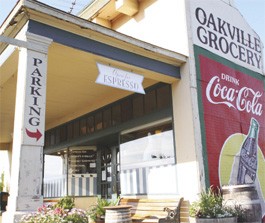
Flagship: The original Grocery on Hwy. 29 retains its funky ambiance.

The historic and original Oakville Grocery, which has been in business for more than 125 years, radiates ambiance in every nook and cranny, and that feeling rubs off on nearly everyone who steps inside the hallowed space. In Napa County, where brand-new million-dollar mansions and spanking new wineries backed by new money push out the old, a bit of genuine, local history seduces vintners, bankers, bakers and bikers.

In fact, the Oakville Grocery has served locals and tourists from before the turn of the last century, through Prohibition of the 1920s to the Depression of the 1930s and the wine boom of the 1980s. It seemed as eternal as Napa’s rolling hills themselves. Then, in 1997, Dean & DeLuca, the glamorous gourmet food giant, invaded and little by little made life miserable for its poorer rival down the street.

At first, local residents were distraught. Then, many mourned when the little store with the global reputation filed for bankruptcy last winter and, what’s more, when Leslie Rudd, the owner of Dean & DeLuca and the CEO of the Rudd Group snapped it up. A market-savvy, Kansas-born multimillionaire and the cofounder and benefactor of the Rudd Center for Food Policy and Obesity at Yale University, Rudd rarely comes out of hiding at his vast Napa estate. Of all the wine and food barons in Northern California–including Robert Mondavi and Michael Chiarello–he’s surely the most invisible and reclusive.

When his company announced the purchase of the Oakville Grocery (now a three-store chain), Rudd issued a press release and let his public-relations staff handle inquiries. “I am honored to now be the steward of both the original Oakville Grocery location as well as the market that has been an icon of the wine country experience since 1881,” he allowed himself to be quoted as saying. “I am committed to refurbishing this beloved landmark so that it will serve as a symbol of hospitality to Napa Valley visitors for many generations to come.”

Two days after the deal was finalized–on a sunny, spring morning with the hills a bright green, the old, valley oaks sending out new leaves–there was no sign of refurbishing at the Oakville Grocery on Highway 29. The hand-painted Coca-Cola sign still needs a fresh coat; the tin roof begs for cleaning and so do the benches in front of the store. The picnic tables want new legs, and the sagging umbrella could use replacing. But inside, business seemed as brisk as ever, though Linda Cook, the efficient store manager, appeared to be unusually vigilant and perhaps even defensive about the sale. “I have absolutely nothing to say,” she exclaimed, in response to a reporter’s request for an interview, though, when asked, “Do you like the food?” she fired back, “Of course, I do!”–and sounded like she meant it.

It would be hard not to like the food at the Oakville Grocery. It would also be nearly impossible not to find something appetizing, even for the most finicky eater, though finding the items on a shopping list might take time. Intrepid shoppers enjoy the Oakville experience, because they have to hunt for what they want, and sometimes they even discover something new and unexpected, like the Katz and Company wildflower honey.

Ozzie Gallegos, the recently hired, bilingual wine buyer, apologized to a customer for not having a larger assortment of wines and for a nearly nonexistent and embarrassing section of French and Italian reds and whites. Born and raised just minutes from the Oakville Grocery, Gallegos knows its long, rich history and the roles Joseph Phelps and Steve Carlin played in shaping the store’s image from the 1970s to the year 2000. “There’s no such thing as a slow day here,” Gallegos says. “If you’re claustrophobic, you don’t want to be here in the first place.” He adds wistfully, “I hope they hold on to the aura of this place.”

In the deli, a small army of Mexican women make hot and cold sandwiches: grilled cheddar and young Asiago or smoked turkey and Brie. These speedy lunchtime miracle workers slice Serrano ham from Spain, mortadella from Italy, and Willie Bird smoked turkey from Sonoma County. Probably the very best food they wrap and package are the freshly made Green Chile tamales with black beans, cheese and corn and the sumptuous steak chimichangas that come with bite-size cubes of steak, Jack cheese, pico de gallo and bell peppers.

Just 4.3 miles north of the Oakville Grocery on Highway 29, Beethoven reverberates at Dean & DeLuca, the megastore big enough to house four or five Oakville Groceries. Dean & DeLuca offers more of everything: more room, food, wine and lots more stuff, including Dean & DeLuca T-shirts. It’s also spotless and a bit sterile. “May I help you, sir?” an employee deferentially asks me. Everything is neatly arranged, and, far more than the Oakville Grocery, Dean & DeLuca is clearly about branding itself, marketing itself.

Phil Box, who has worked for Robert and Magrit Mondavi and for Francis and Eleanor Coppola, sees Rudd’s purchase of the Oakville Grocery as symptomatic of what’s happening to Napa. “Everyone wants a piece of the county,” he says. “The nouveau riche have rushed in, and Napa has become a place to see and to be seen. I’ve met all kinds of royalty there: counts and countesses from Italy, barons and baronesses from France.”

Perhaps new paint, new floors and more modern fixtures will add to the glory of the once grand Oakville Grocery. Perhaps Leslie Rudd will achieve yet another triumph of repackaging. But it’s no wonder Napa residents ask one another what he means when he promises to become a “steward” of the Oakville Grocery, and what he has in mind when he talks about “refurbishing.” It’s no wonder, too, that local residents ask friends and family if they’ll respond to the new sign on the old, weather-beaten front door that reads, “Full Time and Part Time Positions Available: Cashiers, Barista, Grocery, Deli, Sandwiches.”

The Oakville Grocery now has three locations: 7856 St. Helena Highway (Hwy. 29), Oakville. 707.944.8802; 124 Matheson St., Healdsburg. 707.433.3200; and 715 Stanford Shopping Center, Palo Alto. 650.328.9000.


SEARCH AVAILABLE RESERVATIONS & BOOK A TABLE

View All


Quick dining snapshots by Bohemian staffers.


Winery news and reviews.


Food-related comings and goings, openings and closings, and other essays for those who love the kitchen and what it produces.


Recipes for food that you can actually make.

First Bite

At the General’s Daughter you’re treated like Daddy’s favorite, pampered and indulged. From the moment you enter the 130-year-old Victorian manse General Vallejo gave to his daughter Natalia after ceding Sonoma in a brandy-soaked breakfast conference, the gracious dining rooms welcome you like the precious darling you are.

Adding to the feeling of indulgence is carte blanche permission to assemble your three-, four- and five-course prix fixe menu ($45, $55 and $65, respectively) as your little heart desires. All dishes demonstrate chef Preston Dishman’s French training and Southern roots, with attention to the best local, sustainable and seasonal ingredients. A recent partnership with Benziger Family Winery promises that 90 percent of the restaurant’s produce will come from Benziger’s biodynamic gardens.

Before our choices came, we were served an amuse-bouche that proved the least amusing dish of the evening–a thimbleful of green garlic soup that tasted mostly of salt. My friend Michael picked foie gras as his beginner (though, believe me, I tried to dissuade him). Seared on an island of polenta with dollops of rhubarb compote, it was, he said, delicious, though the creaminess of the elements became a bit monotonous. I had tuna tartare with spicy aioli hearts of palm, and marinated cucumbers: a haute tuna fish salad.

We’d also exercised our choice to not choose, ordering the three-ounce wine pairings ($19, $24 and $29 for three, four or five courses, respectively), all, without exception, well-chosen complements to our food. If you care to select your own wine, the list features mostly young and Californian wines.

Round two brought a Dungeness crab cake, an expert treatment of the standard, and scallops, all two of them, perfectly cooked, on a cauliflower purée, encircled by a moat of ginger carrot foam. A spoon would have been nice, but I made do with bread, served tong-wise (as is irritatingly au courant). When I asked for one of each breads, the server crooned, “Excellent choice.” I noticed Michael received the exact same praise, although he requested only whole wheat. Maybe we were both the favorite.

The servers swarmed around our table, knowledgeable, helpful, nearly coddling. The exception? The fellow who greeted us as ladies. When I corrected him, he recovered by saying that Michael has fabulous hair (which he does, curls down to his shoulders). But when he came back and asked again how we “ladies” were doing, it rankled.

Next up was duck Bolognese pasta, a savory mélange of shredded duck topped with herb ricotta, and an order of spice-rubbed venison loin–like butter and incredibly yummy on a bed of wilted chard and sweet potato purée.

Though each course had seemed small, we were pretty full by dessert, a dense bittersweet chocolate cake, topped with salted caramel cream and pistachio brittle. I loved it; Michael objected to the salt. To each his (or her) own, which just might be the motto of this fine restaurant.

The General’s Daughter, 400 W. Spain St., Sonoma. Dinner, Tuesday through Sunday. 707.938.4004.


View All

Quick-and-dirty dashes through North Bay restaurants. These aren’t your standard “bring five friends and order everything on the menu” dining reviews.

Trimming the Herd

The Byrne Report

April 18-24, 2007IT WAS FOUR WEEKS to the day that 16-year-old Jeremiah Chass was shot and killed in his Sebastopol driveway by two Sonoma County Deputy Sheriffs. On Monday, April 9, in Roseland, the predominantly Latino neighborhood of Santa Rosa, yet another psychologically troubled person was shot and killed by law-enforcement officers. Richard DeSantis, unarmed, age 30, was gunned...

The Demented

April 18-24, 2007Moping over his personal and financial success, Woody Allen commented, "Comedy sits at the children's table." He meant that only drama gets respect, and that's what led Allen into the field of faux Scandinaviana. But when it comes to pure cinematic invention, nothing beats comedy. Comedy is the laboratory where visual ideas are tested; drama picks up...

War Play

April 18-24, 2007My blood boiled as I raced into the forest. I leaped over logs and tangles of twigs, and moved deeper and deeper into this jungle of darkness. Watching carefully for movement in the dense foliage ahead, I readied my finger on the trigger of my gun. Shots came suddenly, echoing from the southwest, rapid-fire reminders of the...

Money Pit

April 18-24, 2007It's not as though there isn't any money. In California, 51 cents out of every tax dollar--including sales and income tax--goes to education. On top of that, voters last year approved a $3.5 billion bond for public schools. Nevertheless, the state has some of the lowest test scores in the country. In 2005, California ranked 47th for...

Breaking It Down

music & nightlife | By Brett Ascarelli ...

Letters to the Editor

April 11-17, 2007Police praiseI would like to commend Gabe Meline on ("Not What It Seems," April 4). I am the sergeant for the Santa Rosa Police Department Downtown Enforcement Team. Ms. Reed failed not only to pay her bills, as any other responsible business owner would in the downtown area, but provided an unsafe business that was potentially...

Tech Teens

Making Change

Photograph by Brett Ascarelli Flagship: The original Grocery on Hwy. 29 retains its funky...

First Bite

11,084FansLike
4,446FollowersFollow
6,928FollowersFollow