Stage review: ‘Tuesdays with Morrie’

0

09.26.07


Death is not a dirty word. I’m dying&mdashand I can live with that.” So quipped the real-life professor Morrie Schwartz, whose affectionate words of wisdom and humorous observations were the heart and soul of journalist Mitch Albom’s bestselling book Tuesdays With Morrie, now adapted into a stage play by Albom and playwright Jeffrey Hatcher. Tuesdays is a month-long record of conversations that Albom had with his old sociology professor in the final weeks of his battle with Lou Gehrig’s disease, conversations that had a profound effect on Albom and how he chose to live his life.

That “death” line is a funny one, simultaneously playful and realistic, and Tuesdays with Morrie&mdashrunning through Oct. 28 at the Sonoma County Repertory Theater&mdashis crammed with similar ones. As in the book, in the play it is Morrie’s one-liners and artful questions that one is likely to remember the longest after leaving the theater&mdashthat and the performance of Joe Winkler as Morrie. Supported by the dependably excellent Dan Saski as Albom (who does a lot with what could have been a simple straight-man role), Winkler delivers what may go down as the finest North Bay stage performance of 2007. Both emotionally and technically&mdashwith all the little physical details of Morrie’s deterioration recreated with astonishing accuracy&mdashWinkler is a commanding presence, made all the more remarkable given that most of his lines have to be delivered from a sitting or lying position, with very little physical movement. Winkler does what he does with his voice, his face and his eyes. He takes every line, the juicy ones along with the simpler stuff, and mines them for depths of humor, affection, tension and pain that is often far richer than what was written on the page.

Director Jennifer King does a first-rate job of staging the most intimate moments of the play&mdashand this play has a lot of them&mdashwithout allowing the actors to either shape it too safe or jump the line into melodrama. Directing material like this is a dangerous game, and by anchoring the show with such pitch-perfect performances and finely tuned staging, it never strays into sappiness or preachiness, as could have easily happened.

I only wish the play itself were so good.

Since the book on which the play is based is essentially one long conversation between two men, whenever Saski and Winkler are engaged in debate or playful interrogation, everything remains engaging and Morrie’s delightfully philosophical musings are given the spotlight, as when Albom questions Morrie on his belief in God: “I used to be an agnostic, but now I’m not so sure.” Unfortunately, as adapted into a two-actor play&mdashit premiered Off-Broadway in 2002 has been staged by hundreds of small companies ever since&mdashthe whole structure of the thing is unwieldy and rather sloppily crafted, giving the sense that the script was thrown together in a hurry.

Especially problematic is the inconsistent way that other characters are brought to life, sometimes having Saski morph into another role (suddenly donning doctor’s garb to play Morrie’s physician giving his patient the bad news), sometimes having Saski and Winkler pantomime the presence of other people, pretending they are there when they are not. This will bother some more than others, but I found it jarring and unnecessary, the fruit of a playwright not willing to make stronger decisions toward a more coherent visual logic.

I found the set design by David R. Wright to be similarly jarring, mixing the nuts-and-bolts details of an old man’s apartment with whimsical autumn leaves (Morrie is in the autumn of his life, get it?), which dangle overhead and even protrude up from the floor, as with the enormous leaf that stands behind Morrie’s living room recliner.

In the end, the Rep’s production of Tuesdays With Morrie&mdashwhich negotiates through some of the script problems without being able to obscure them&mdashstill works well, packing a powerful emotional punch, mainly through the magnificent performances of Saski and especially Winkler. At the close, I was sorry to have to let Morrie/Winkler go, and, like Mitch Albom, was grateful for the short time I was able to spend in his presence.

‘Tuesdays with Morrie’ runs through Oct. 28 at the Sonoma County Repertory Theater. Thursday-Saturday at 8pm; Oct. 21 and 28 at 2pm. $15-$20; Thursday, pay what you can. Sonoma County Repertory Theater, 104 N. Main St., Sebastopol. 707.823.0177.


Museums and gallery notes.

Reviews of new book releases.

Reviews and previews of new plays, operas and symphony performances.

Reviews and previews of new dance performances and events.

Wal-Mart approved for American Canyon and Fairfax residents plead with the city

not to fix a bridge felled by the 2005 New Year’s flood.

BIG BOX BATTLES

After three years of legal opposition, a 24-hour Wal-Mart Supercenter opened Sept. 19 in American Canyon. That’s good news for American Canyon’s bottom line, says city manager Richard Ramirez. Because the project faced stiff courtroom opposition, he says, “we did not budget for any additional revenue.” The city is predicting more than $600,000 in additional sales tax from Wal-Mart and the surrounding shopping center. The city will monitor its actual income and adjust its budget accordingly.

But does a “big box” like Wal-Mart generate new revenues or just cannibalize the sales taxes once collected by local businesses, asks Marty Bennett, co-chair of the Living Wage Coalition of Sonoma County. Opponents of the American Canyon Wal-Mart unsuccessfully argued that another environmental impact report was needed. Bennett and others would like to expand the planning process to include a community impact report (CIR) for large projects.

CIRs are already being used in San Jose to access impacts on small businesses, employment, housing, smart growth design, community services and public healthcare, as well as potential fiscal costs and benefits to the city. Wal-Mart currently has no super centers in Marin or Sonoma counties, but its plans call for adding more than 40 of these extremely large stores throughout Northern California, Bennett asserts. A CIR “doesn’t mandate any mitigations but it does supply good information to decision-makers,” he explains. While no Wal-Mart super centers are currently proposed for Petaluma, that community is reviewing plans for Target and Lowe’s store locations. A community forum to discuss a potential CIR ordinance will be held on Tuesday, Oct. 2, at the Petaluma Public Library, 100 Fairgrounds Drive, from 6:30-8:30pm.

The Creek Road Bridge in Fairfax was damaged in the 2005 New Year’s Eve floods and closed to all traffic; early this year it was opened only for bicyclists and pedestrians. Rather than clamoring for repairs to finally get done, at least some nearby residents like the lower traffic loads on their streets and want to keep the bridge off limits to all motor traffic except emergency vehicles. Other residents&#8212especially those along the detour route&#8212don’t like the higher level of traffic in their area and want the bridge restored to its former state. Fairfax can’t afford the $500,000-plus repair bill without state and federal funding, which mandate that the bridge be open to all vehicles, says Town Manager Linda Kelly. Plus, Kelly says, equal numbers of neighbors support and oppose reopening the bridge. So the town is considering other traffic-calming measures.


Stephen Marley

0

09.26.07

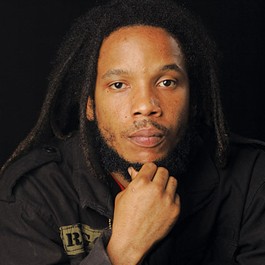
Considering that Bob Marley had 11 children by nine different women, it’s tough to reconcile his philandering with status as rastafari prophet to college students everywhere; nonetheless, he made sure the Marley name would inhabit the most shelf space of any record store’s reggae section. With the economic cachet and cultural heft that the Marley DNA carries, five of his offspring have recorded albums of their own with varying results. The latest, Stephen Marley’s Mind Control, features guests like Ben Harper and Snoop Dogg. Though it would be easy to cite the album’s invisible overseeing guest as Bob Marley, Stephen does a good job of stepping out, both lyrically and musically, from his dad’s shadow. He appears Sept. 30 at the Mystic Theatre.

Two particular tracks very nearly call out the old man, in a call-and-response that is hard to separate from Bob and Rita Marley’s not-always-rosy marriage. “Fed Up” describes a disregarded woman’s point of view (“She said how could you treat me this way? / What we had was more than words could say”) while “Hey Baby,” aided by a smooth-talking verse by Mos Def, seems to be the lamely executed answer (“Everyday I pray to Jah that one day you will see. . . I must fulfill my destiny / I hope you’ll find it in your heart and know these words are true / And please don’t cry, you know that I must do what I must do”).

With five Grammy awards to his credit and vast production experience, the younger Marley could have churned out Mind Control in a heartbeat; instead, through various title changes and rewrites, he waited for it to be perfect. Though not quite charting on the Billboard level of his brothers Damian or Ziggy, sales have nonetheless been brisk for Stephen, which is good. He’s got eight kids of his own to feed, after all.

Stephen Marley performs on Sunday, Sept. 30, at Mystic Theatre, 23 Petaluma Blvd. N., Petaluma. 9pm. $30-$32. 707.765.2121.


Electro Group’s ‘Good Technology’

0

09.26.07

Electro Group’s first album, A New Pacifica, came out in 2001. I own three copies, and I never get sick of listening to it. Which is fortunate, because it’s taken six years for the Sacramento trio to release its follow-up full-length album, Good Technology.

Underwhelming neo-shoegaze bands are a dime a dozen, but Electro Group&mdashwhile they do owe the Boo Radleys and My Bloody Valentine a debt&mdashfirst and foremost sound like Electro Group. Sure, they’ve got the thick layers of fuzzed-out bass and distorted guitar and semi-buried vocals, there’s something punky about Electro Group; their songs are generally short, direct and driving rather than gauzy and dreamy. Melodically, they get in there and out of there without messing around, though their economy offers no less of an atmospheric payoff.

Guitarist-vocalist Tim Jacobson, bassist Ian Hernandez and drummer Matt Hull have been a band since 1994, but Ian and Tim go back even further. “Ian and I became friends over the Cure,” Jacobson says. “‘Lullaby’ was the first song we played together. We were called Graham Cracker Cyclone.” Hull, who was primarily a guitarist at the time, joined the band later on, shortly after he’d acquired a drum kit from an ex-roommate who’d slagged off on rent.

Electro Group are the kind of guys you want to sit around and drink beer with, but because of logistics (Hernandez now lives in Seattle), we made due with a conference call. A lot of what we discuss boils down to the dirty (and terribly unromantic) little secret of the underground music universe: sometimes it’s the nitty-gritty stuff, like access to certain types of recording, that dictates what happens to a band and when it happens.

“When you record yourselves, it’s a blessing because you can take as much time as you want…but it’s a curse, because you do take as much time as you want,” says Jacobson. “We were committed to recording with old-school tape machines…the songs on Good Technology were probably recorded within the span of a year, but the mixing took so long. Because every time you mix with a tape machine in a traditional mixer, you have to start over again. It’s not like your computer, where it’s saved.”

Hernandez described the mixing board they used on A New Pacifica as “a big steaming pile of crap.” (Indeed, the somewhat crappy sound quality of A New Pacifica is one of the things I love most dearly about it.) Good Technology sounds like the same old Electro Group, but better&mdashliterally. Over the years, the guys have greatly improved the quality of their recording and mixing, resulting in a less sludgy sound.

It contains songs the band has been playing live for years, but they are brighter, crisper. The glory of Good Technology is “Hong Kong Blues,” a new mix that improves vastly upon the 7-inch version released by the band a number of years ago. After a goofy sing-song intro, out of nowhere the song bursts into overdrive, with a dizzying, crunchy guitars and growling bass. “Periphery” begins unassumingly enough, but after a few seconds sneaks into a beautiful chorus that balances the counterpoints of aggressiveness and loveliness that make Electro Group so appealing.

Words are not of utmost importance in Electro Group’s musical universe, which is why I was surprised to see that Good Technology includes a lyric sheet. “I’m not a big fan of lyrics&mdashI don’t even know the words to most of my favorite songs,” Jacobson says. “I try to make it coherent in a very vague way, but really I don’t give a shit. I think it’s cool that people read stuff into it or whatever, but it doesn’t make or break the song for me.”

With Hernandez in Seattle, the band has switched over to a long-distance songwriting and recording via computer. “We have much less defined roles,” Matt Hull says. “I’ve actually played more guitar in the last six months we’ve been recording than I’ve played drums, Tim’s got a lot of drums on some of the songs. We’re all throwing down whatever sounds good.”

When will we get to hear this new stuff? Experience has taught us fans not to hold our breath, but considering I’ve been listening to it multiple times daily with no signs of stopping, six years of Good Technology seems like not such a poor fate.


Review: ‘In the Shadow of the Moon’

09.26.07

The Apollo Program, which sent nine missions to the moon from 1968 to 1972, coincided with four violent years in American history. There was a widespread belief at the time that some authorities were using the moon to eclipse the war in Vietnam and the riots in inner cities. Nihilistic jokers could even buy a poster showing Neil Armstrong on the lunar surface with a mockup of a Daily News front page, complete with screaming 120-point block letters: “SO WHAT?”

During these similar times of tarnished American self-esteem, the prince of cinematic uplift Ron Howard has put his name above the title of David Sington’s documentary In the Shadow of the Moon.

And it is high time to re-interview the Apollo astronauts. All three of the Apollo 11 team are approaching their 80s. Twelve men eventually walked on the moon, and six are interviewed in the movie. The disinclination of brave men to reveal much about their feelings, NASA’s PR department and Time-Life‘s editorial standards all conspired to make the astronauts seem like a gang of flattops with fly-over country accents. But then you read Buzz Aldrin’s fine memoir, Return to Earth, or Michael Collins’ Carrying the Fire and discover that they had personalities. Alan Bean, of Apollo 12, claims he was among the more fearful of the astronauts and the one who admits to wondering just how thick that porthole glass was.

A major hole in the movie is the absence of Neil Armstrong. Armstrong is the dictionary definition of the recluse: n., a man who avoids reporters. The Apollo 11 lunar landing was scarier than NASA made it look; the lunar module, Eagle, came within 60 seconds of a command to abort. One chilling moment in Shadow is the reading of a prepared statement, readied in the event that Aldrin and Armstrong were stranded forever: words to the effect that “they came in peace, and now they will rest in peace.”

In the Shadow of the Moon lacks the visual splendor of the highly recommended For All Mankind, a mesmerizing collage of the Apollo missions with 35 mm footage of the surface. The moon voyages were a triumph of science, carried out without the help of anything anyone today would seriously call a computer. But there is a fundamentalist element worked here, and that’s a sign of the times: the controversial reading from a fireproof bible of a page of Genesis during the Christmas 1968 orbit. Charlie Duke of Apollo 16 later became a born-again Christian.

Astronaut Gene Cernan, one of only three men to have traveled twice to the moon, talks of the emotional punch of seeing the world in one whole piece, the same matter Al Gore was discussing in An Inconvenient Truth. “There are two moons in my head,” says one of the astronauts, stressing the difference between his voyage and the view we all get at the inconstant moon.

From this film, you get a sense of stillness that might stay with one forever after such a journey: stillness, and the memory of an immeasurably sharp contrast between a luminous bone-clean desert and a deep black horizon.

‘In the Shadow of the Moon’ opens Friday, Sept. 28, at the Rialto Lakeside Cinemas, 551 Summerfield Road, Santa Rosa. 707.525.4840.


New and upcoming film releases.

Browse all movie reviews.

World of Wine

0

09.26.07

We have gone to almost no end promoting the growth of a peculiar fruit-bearing weed, and today Vitis vinifera reigns across most of the Earth’s latitudes and all longitudes. This plant has enriched and corrupted lives, made some people wealthy and others lazy. It has challenged the boundaries of science with its often demanding temperaments and susceptibility to pests, yet today it reigns among the most abundant species on Earth&mdashand still we coddle it toward global domination.

But why wouldn’t we? After all, no other plant or animal does what the grape does so well; that is, ferment into that well-balanced, long-lasting, intoxicating beverage that we call wine.

Grape cultivation appears to have begun 7,000 years ago in Georgia and Armenia, where stationary societies began raising grapevines for the high-calorie fruit they bore. Given the grape’s facility for going sour, it could only follow that bunches of fruit or bladders full of juice fermented frequently and consequently made the odd Neolithic schoolboy stoned at breakfast. Pottery remains bearing traces of tartaric acid and calcium tartrate&mdashstrong evidence of wine for the chemist&mdashdesignates this region, between the Black Sea and the Caspian Sea, as the likeliest cradle of viticulture.

Upon reaching the New World in the 16th century, the Spanish and English conquerors and colonists both attempted to make wine from native North American grapes, likely of the species Vitis americana and Vitis rotundifolia. The product, however, generally tasted bad, and while New Englanders took to drinking ale and wine imports, the Spaniards called home for the coming galleons to bring cuttings of their own national vines; within just years of conquering the New World, the Spanish colonists had established vineyards. The oldest working winery in the New World, in fact, resides near Monterrey, Mexico. Called Casa Madero, it was founded in 1597.

The heart of Mexico’s wine country, however, resides in Baja California. The peninsula was first planted with grapes by the Spanish padres in 1701 at Loreto Mission, on the inside coast halfway down the subtropical peninsula. The region of any commercial significance, though, is the Santo Tomas Valley near Ensenada, which today crawls with about 9,000 acres of vines. Though pocket change to California’s 800,000 acres, the wineries of the Santo Tomas Valley produce 25 million bottles per year and 92 percent of all domestic Mexican wines.

The big grape in the days of the Spaniards was the Mission, which enologists today consider an inferior breed. It produces a pale weak red wine of low acids and many character flaws, and it eventually was all but replaced by far nobler varietals. However, a descendent called the Criolla grape has survived in quite some acreage and now dwells prominently in South America. Some California estates, like Wellington Vineyards in Glen Ellen, grow a few Criolla vines. The Wellington family uses their Criolla grapes as a constituent of their tawny port.

“We make the Criolla port because we have Criolla vines,” shrugs Peter Wellington, owner and winemaker of the winery. “When you have lemons you make lemonade.”

New World, This World
Like Baja and upper California, Texas owes much of its winemaking heritage to the Spaniards, who planted vines here in the 1500s. The industry took a little while to accelerate, however, and it stagnated until about 1970. Today Texas grows 3,500 acres of grapes in its High Plains region, located on the Panhandle at elevations of up to 4,000 feet, making Texas the fifth largest wine producer of the 50 states. While the grape acreage remains stable, the number of wineries tripled during 2000-2005 from 40 to 120. According to Wes Marshall, author of The Wine Roads of Texas, Texas wines have improved dramatically as this influx of winemakers has begun meddling with the available grapes. The Becker Vineyards 2004 Cabernet-Syrah is a huge, woody, delicious blend and one of the better red wines this writer has ever tasted. Many other common varietals grow well, too.

“We have the potential of becoming known for our Viognier as Oregon is known for its Pinot Noir,” Marshall says, “but we’re facing right now the same stigma that California faced in the 1960s: basically, that we can’t make good wine.”

Meanwhile, the great-granddaddies of the wine world have their own problems. Portugal has produced wine for 800 years and now pushes outward into the world’s oceans of wine consumers, but not everyone is taking the bait.

“People have trouble shopping outside of their comfort zone,” says Karen Burkhart, president of Latitude Wines, an importer in Danville. “People buy what they know, unfortunately. They want to buy New World, and if anything, they’ll usually buy French.”

Portugal grows over 200 varietals of grapes, more than nearly any other nation, and its wines are spawned by 500,000 acres of vineyards over its 35,655 square miles, a density of vine-to-acre three times that of California’s. Three-fourths of Portugal’s wine is still consumed domestically, and on average each of the nearly 11 million inhabitants of the country drinks 15 gallons, 58 liters, or 75 bottles of wine per year&mdashover a glass of wine every day.

Asian Oenophiles
Though associated mostly with the usual Mediterranean-climate hotbeds like France, Chile, Italy and California, grapevines have more recently taken root in some of the most unlikely and intriguing places. In the last decade, a strong wine industry has sprouted in a land where the grapevines never go dormant, the vines can’t tell winter from summer, they don’t shed their leaves and they produce two crops of fruit per year.

A winemaker’s dream? Perhaps, but in India, one of the youngest nations in the world of viticulture, it’s still a bit early to tell.

“For me it’s been fun so far, a great adventure to hone and create a new style of wine for India,” says Kerry Damskey, a consulting Geyserville winemaker who has advised winemakers at Sula Vineyards northeast of Bombay, in the Nashik region, since the mid-1990s.

Table grape varietals have been cultivated for nearly 50 years in parts of India, including Nashik, and thus there is a familiarity among some farmers with Vitis vinifera, but for thousands of years the challenges of growing quality fruit has deterred winemaking in this land of heat, humidity and monsoons. Nashik lies at about 20 degrees latitude north&mdashthree degrees inside of the tropics&mdashand at 2,000 feet of elevation. The weather is mild enough year-round that the vines do not shut down of their own accord and will generate two crops of grapes in 12 months if given the chance. This would only mean two inferior vintages, however, and Indian winemakers must prune back the vines to force dormancy upon the plants. They do so in April and May, sending the vines into hibernation for the wet, hot Indian summer, when grapes can easily mold.

The winter, although a bit short of daylight, is dry and mild and provides conditions more hospitable to the developing berries, and as California’s grapevines are blossoming and sprouting leaves, Damskey finds himself in India each year overseeing the Nashik Valley grape harvest.

When Damskey first brought vine cuttings to India in the mid-1990s, there were, he estimates, 20 acres of wine-land in the nation and two or three wineries. Now there are 40 vineyards and 3,000 acres of wine grapes, making it about the fastest-growing winemaking region on Earth. The quintessential varietals of the country, says Damskey, are Syrah, which Indians call Shiraz, and Sauvignon Blanc. A recent sampling of several bottles found some good stuff. Available locally, the 2006 Sula Vineyards Sauvignon Blanc has a very unique jalapeño lacing over a crispy mineral flavor, and Sula’s 2006 Shiraz tastes heavily of smoke, bacon, raspberry vinaigrette and truffles.

While the Indians crush grapes in February and wipe sweat from their brows, the Chinese up at 40 degrees north latitude in the province of Hebei busy themselves in flattening their pruned vines to the ground and burying them under 15 inches of soil to protect against the winter cold, which can drop to negative 10 degrees Fahrenheit. In spring, the vines are uncovered and roused from sleep, and the wines they produce are promising, if you go by sales alone.

The Hebei wine industry dates back to 1910, when thirsty French missionaries planted such varietals as Pinot Noir, Chardonnay, Cabernet Sauvignon, Riesling, Merlot and a few others that struck them most poignantly in their hearts. The Communist government ripped out most of the vines in the 1950s, but grape advocates replanted after the 1987 revolution. Today, Beijing Dragon Seal Wine Company Ltd. of Beijing is among the largest and most reputable of wineries in China. Its grapes are grown organically in private vineyards surrounding the winery, and Frenchman Jérôme Sabaté oversees the making of the wine, so the business is in good hands. The company produces 3.5 million bottles per year from 600 acres of vines, some of which crawl along the base of the Great Wall.

Australia is bent on wine. The average citizen of the country, in fact, drinks more than twice the amount of wine as an American does. In a nation of 20-plus million people, however, domestic consumption comes nowhere near meeting the huge production, which totals approximately 10 percent of the world’s wine output. In fact, to encourage per capita wine guzzling, the government is currently promoting wine as a healthy lifestyle choice with the hope of boosting each citizen’s drinking rate from 20 to 24 liters per year.

New Zealand, too, once famed for its sheep and grassy green hillsides, is now growing over with vines. Dean Stichbury, whose family owns Jackson Estate, a winery in Renwick, Marlborough, recalls his childhood in the South Island countryside, where the Stichburys once cultivated several hectares of cropland and raised all the constituents of a proper farm.

“We had goats, sheep, corn, wheat and fruit trees, but then in the 1980s, people started realizing that all the money was in grapes,” Stichbury says. His neighbors still keep an isolated orange grove, but it’s surrounded by a sea of grapevines. “That’s the last of the Old World. It’s all like Napa now.”

Garden of England
Great Britain’s grape production has remained close to negligible since the end of the so-called Medieval Warm Period during the mid-ninth to mid-13th centuries. A few stubborn souls do grow grapes in southern England, however. Laurence Williams, maestro and master and maker of everything at Harbourne Vineyard in Kent County, England, has grown grapes and made wine for 28 years. The region, known as the “Garden of England,” sits at 51 degrees north latitude, right on par with the northern end of Vancouver Island, yet the warm Gulf Stream and the general maritime influence prevents frost most winters. Summers are mild though, and the grapes ripen slowly and harvest takes place in November.

“And we’re lucky if fermentation is complete by December,” says Williams.

On his three acres, the Englishman grows Müller Thurgau, Regner, Ortega, Seyval Blanc, Schönburger and Blauer Portugieser. Hmmm. Never heard of them, but Williams assures that they’re good&mdashzesty, grapey and delicate, often no more than 11 percent ABV, though high in acid and well suited for prolonged aging.

The English industry has been developing since the 1970s as countrymen develop tastes for beverages beyond ale, but the size of the industry remains a drop in the world’s barrel.

Beyond 50 degrees latitude, or 3,450 miles north or south of the equator, grapes rarely thrive. Winters are too cold and long and summers too cold and short&mdashbut this climatic limitation has nurtured the development of ancient fruit and vegetable wine traditions in many poleward societies, particularly Great Britain and the islands to the north. In these lands, most wines are homemade, but commercial markets exist. Orkney Wine Company, at 59 degrees latitude north, level with Kodiak Island, produces a line of 14 berry, flower and vegetable wines. Founded by Emile and Marjolein van Schayk, originally of Holland, the winery features rosehip wine, blueberry wine, a honey wine and various other blends. The wines are made mostly from local produce and they are fermented naturally, with no preservatives and only granulated turbinado sugar to feed the yeast, which produces as much as 17 or 18 percent alcohol by volume, as in the case of the Strubarb, or strawberry-rhubarb, wine. Only the 18 Carat&mdashnaturally enough a carrot wine&mdashis fortified, with single-malt whiskey.

Emile learned the art of “country wines” 12 years ago in southwest Scotland from a retired shepherdess, and he has since developed dozens of recipes, which he brings to life in 1000-liter tanks. Several customer favorites demand constant production, especially the Black Portent, a black currant “port,” and Emile faces limitations in trying out several recipes he has developed, including potato and nettle wines. Business is accelerating, and Emile operates a tasting room in the front of the winery. Guests do not have to pay for their sips.

“Of course it’s free!” he exclaims. “You can’t charge for tasting, can you?!”

Folks in the Earth’s warmer latitudes also have their own traditions of fermenting things. A popular drink in Central American nations as well as India is cashew wine, produced by home winemakers and to a smaller degree by commercial operations. Native to Brazil, the cashew nut with which we are familiar is actually just a small component of an apple-sized fruit, fleshy, soft and very juicy. The fruits ripen in the spring and once stripped of their kidney-shaped seeds that protrude from the lower end of the fruit, the cashew apples may be eaten fresh, as jam or as juice&mdashand if there’s one thing we all know, it’s that things that make juice also make wine.

Romel Perdomo, CEO of Travellers Liquors, Ltd., in Belize, oversees the production of about 25,000 bottles of cashew wine annually. According to Perdomo, country locals consume the bulk of the output, readily available in local markets, though tourists are catching on, and Perdomo is negotiating with trade authorities in an effort to export this wine to the wider world. The wine consists almost purely of cashew juice, with just a sprinkling of sugar added to reach the desired potential alcohol content. The wine is aged in food-grade plastic, and the longer the better. Oak, however, disrupts the unique flavor, which provides pungent elements of whiskey, earth and grapefruit juice.

Other oddity fruits serve as a source of alcohol as well, and, right here at home, Adams Point Winery in Berkeley demonstrates this with a line of award winning tropical fruit wines. “When I was still doing homemade wine three years ago, I decided that when I went commercial I would just do the tropical fruits because the world just doesn’t need another Merlot right now,” says Bill Galarneau, owner and winemaker of the company. “People wouldn’t come knocking down my door if I was just making grape wine.”

Galarneau makes 60-gallon, or one-barrel batches, of mango, papaya and persimmon wine. Yes, persimmons aren’t tropical. So sue him. Galarneau hosts tastings at his facility on the second Saturday of every month and by appointment, and currently he sells only through the winery. Galarneau once considered opening a tasting room in the wine country, then thought better of the plan.

“I don’t think the Chamber of Commerce in St. Helena would appreciate it one bit if someone came into town and said they wanted to start pouring fruit wines,” he laughs.

“I think I’ll stay in Berkeley.”


Mindy Smith

0

09.26.07

Mindy Smith is not cool, and she’ll be the first one to tell you so. Adopted by a minister and his musically gifted wife, Mindy was raised in the northern part of Long Island. Her first influence was her mom, the choir director at the church. The family listened to Christian music in the house, with an occasional John Denver record spun on the turntable. Smith took to singing whenever the spirit moved her, which caused some raised eyebrows. “I had to learn how to not be excited about singing as I was walking through the mall,” she remembers. “My teachers hurt me a lot too, when I’d do it in class. That led to learning how to not love having music stuck in my head.” Like many high schoolers, Smith tried to be invisible, immersing herself in the Cure during the week and singing in her mama’s choir on the weekends. “I wasn’t even cool enough to be Goth,” she says with a laugh.

At 19, Smith left home for a Cincinnati bible college and, when her mother passed away, relocated to Knoxville to be with her father. A late bloomer, Smith didn’t pick up a guitar until she was 23. With a wistful soprano that is somehow both worldly and childlike, she began writing songs. Soon she scooted westward to Nashville. Her first break came when she was asked to appear on the 2003 Dolly Parton tribute album, Just Because I’m A Woman, the only unsigned artist to be approached. Her eerie cover of “Jolene” became a hit, with Dolly claiming Smith’s version outshone even her own.

Smith’s 2004 debut One Moment More brought more accolades. With songs about faith, including the single “Come To Jesus,” Smith’s internal struggle between the secular and the divine fueled her songwriting like therapy does a Manhattanite.

With her sophomore release Long Island Shores, Smith, now 35, has produced another fine collection of tunes, returning to her birthplace to exorcise old ghosts in the title track, but to also embrace her adopted home, as with “Tennessee.” Often compared to the likes of Patty Griffin and Alison Krauss, Smith has made the circuitous route from Nesconset, N.Y., to Nashville seem pretty darn cool.

Mindy Smith appears on Wednesday, Sept. 26, at the Mystic Theatre. 23 Petaluma Blvd. N., Petaluma. 7pm. $20; all ages. 707.765.2121.


America’s Obsession with… Storage

Since the 1970s, the average U.S. home has grown by 80 percent, yet Americans face a “storage crisis,” according to UCLA researchers.

The self-storage industry is only 35 years old. It took 25 years for the first billion square feet of storage space to be built. The second billion square feet was built in just eight years.Seven square feet of commercial storage space now exists for every American.

One in 11 households rents storage space &#82121 million more households than two years ago.

For $200,000 the GarageTown chain sells “condominium” storage units complete with fridge, cable TV and members-only clubhouse.

Self-storage units cover 72 square miles, the area of Manhattan and San Francisco combined.

The New York Times reports a surge in multiyear, multiunit renters, or what one self-storage company calls “a segment of the population that has truly embedded storage into its lifestyle.”

Last year, Americans spent $7 billion on organizational products for their homes, closets and garages.

Container Store staff are trained to develop an “emotional connection” with customers. Says a salesperson, “When someone comes in to organize belts or shoes, there is usually a bigger problem.”

American women would rather organize their closets than lose weight, according to a 2005 Rubbermaid survey.

One in three Ikea customers say they get more satisfaction from cleaning out their closets than from having sex.

Men who don’t organize their sock drawer have sex three times more a month than men who do.

Men who own Palm Pilots are four times more likely to forget their wives’ birthdays than men who don’t.

The National Association of Professional Organizers claims that Americans spend 55 minutes a day looking for things they know they own but can’t find.

Four in five new homes have multicar garages. Most two-car garages have one or no car in them.

Seventy-five percent of L.A. garages are used in ways that preclude any parking.

Many upscale homes now feature a “transition room” or, as one woman told the New York Times, “the room where we will channel all of our crap.”

After a Massachusetts family moved into a smaller home in 2005, the mother was reportedly “very depressed” until they converted their den into a “Costco annex.”

According to Mental Health America, more than 2 million Americans are hoarders.

In 2003, a Bronx man spent two days trapped under his magazines&#8212ranging from Vibe to the Harvard Business Review&#8212before firefighters rescued him.

In 2005, a 12-year-old Long Island girl was accused of strangling her mother after being told to clean her room. Her attorney claimed self-defense.

Ninety percent of parents say that their kids’ rooms are causing “mess distress.”A recent study found that college conservatives’ rooms are more neat and organized than liberals’.

The U.S. produces 40 percent of the world’s new stored information.

Each American produces 800 megabytes of digital data a year, the equivalent of 30 feet of books.

The CIA burns up to 10 tons of documents per day.

The director of the National Association for Information Destruction says paper shredders are becoming “a household requirement as much as a washer and dryer.”

The initial version of this year’s U.S. Troop Readiness, Veterans’ Health, and Iraq Accountability Act bill set aside $74 million for peanut storage.

A Kansas salt mine is home to the world’s largest film collection, and, until recently, 400 versions of the good book, owned by the American Bible Society.

The Mormon church advises its members to keep a year’s worth of rations because “It may someday be as important to store food as it was for Noah and his family to board the ark.”

The average American fridge is twice as big as its European counterpart.

Two weeks after Hurricane Katrina, state troopers rescued 1,400 frozen embryos from a flooded New Orleans fertility clinic. The first set of twins was delivered in December.

The San Diego Zoo’s “Frozen Zoo” has semen, embryos and DNA samples from 675 species, half of them endangered.

For $110 a year, Clone USA will store your pet’s semen&#8212provided you collect it yourself.

This edition of ‘Exhibit’ originally ran in theJuly/August issue of Mother Jones magazine. The Byrne Report returns Oct. 10.


Letters to the Editor

September 26 – October 3, 2007

Speaking for the trees

Patricia Lynn Henley’s article about Sudden Oak Death (SOD) was very informative and helpful (“A Changing Landscape,” Sept. 12). For seven years, I have observed the effects of this disease at the Fairfield Osborn Preserve in the oak woodlands of Sonoma Mountain, and it is indeed very difficult to see oak trees suffering and often dying from SOD.

As noted in your article, many plant species are infected by the same pathogen, but most experience mild leaf symptoms that cause little harm. Research conducted at Sonoma State University and other universities suggests that the disease spreads among these “foliar” hosts far in advance of oak infection.

I do not believe that the disease is expanding because forests are unhealthy. Oaks in old, dense woodlands, which grow close to infected bay trees appear to be most vulnerable to disease.

Unfortunately, it seems that the organism that causes SOD is here to stay. Our best hope to cope with it is to develop methods to manage our forests in ways that minimize the spread of this disease, and minimize its effects in areas where it already occurs.

Nathan Rank,
Department of Biology
Director of Fairfield Osborn Preserve
Sonoma State University

Just Say No to Neville

Alarm! (Letters, Sept. 19) is correct, just too many of us are ignoring it. Mr Newell asks, “When are we going to wake up?” Many, like Newell, bemoan war and rightly so. However, we can disagree about it using words, not knives. War is always the last choice, but what do you do when you are given the choice of agreeing-with-us-or-we-kill-you?

Those Wahabists in the Islamic world who want control will do anything to get that control. Their roots come from Amin el-Husseini, the Grand Mufti of Jerusaleum who had direct ties to Nazism and was supported by Hitler. Their views and methods are the same. To those who say pull out of Iraq now, when do you want to fight this enemy? Only after another 30 million die? We cannot afford to act like Neville Chamberlain.

Michael Sturm, Santa Rosa

Talking about Cheap Shots

The latest column by Peter Byrne (“Fish Wrap,” The Byrne Report, Sept. 19) is just another example of yellow journalism at its best. Everyone (including Mr. Byrne) knows that the Santa Rosa Press Democrat has a separate section devoted to local news and the front section usually covers national and international news. But Cheap Shot Byrne once again ignores the facts and gives us his distorted view of reality.

Every column Byrne has ever done consists mainly of half-truths and lies. The rantings of a left-wing lunatic belong in a weekly published in Cuba.

Do your readers a favor and dump him.

Sam Zuech, Rohnert Park

An ill system

Have you needed the services of a hospital? No one seems to plan to, if they can help it. The fact the medical care in our culture has become a corporate endeavor is at the root of the problems facing healthcare. I imagine my fellow nurses being heartsick over the idea of a Sutter strike, yet languishing in increasingly difficult positions: being legally responsible for untrained or poorly trained unlicensed staff, for instance; and working in positions hazardous to their own and their patient’s health with not enough staff—not to mention doing work family members would not even do for their own—at wages not keeping up with the economy. I have seen the changes over 30 years and can attest to the fact that, since medicine became corporate, quality of care has deteriorated. If you want to change the system, take informed action. Watch the documentary The Corporation, not to mention Sicko, take a hanky to catch your tears and write our senators.

Pamela Lewis, RN Sebastopol

Moving Daze

You know how it is when your office is in a pre-moving uproar and even your parents are moving and your sister gets married and you’re a little dizzy from all the damned carrot sticks it takes to get into a proper wedding outfit and your copyeditor goes on vacation and there’s really only two of you there full time anyway and the interns need direction and the ArtQuest kids begin a project and the proofreader position was eliminated six years ago and all you really want to do is go camping in the last burst of summer’s wan warmth?

Yeah, us too.

You know what happens when that happens? You produce papers similar to the Sept. 19 issue in which errors begin on the front page and meander, like Oberon leading his fairy attendants through the cowslip, all throughout the paper.

You know what the best fix is for all the moaning and gnashing of teeth that follows such a public riddle of folly?

A contest! To wit: Name All of the Errors in Last Week’s Paper for a Chance to Win a Sony Pictures Classic Art House Film Screener We Don’t Want to Pack.

Write Errors! ed****@******an.com and we’ll probably even be organized enough to check.

The Ed.,
Covered in cardboard cuts and odd bits of tape


Deva Premal

0

09.26.07

In 1989, the young German singer Deva Premal, studying at the Osho ashram in India, was approached by a New Age group in need of a blonde model to spice up their press photo. The group had just returned from a world tour “of enlightenment” and had collected women in various roles along the way&mdashmassage therapist, road planner, cook&mdashbut none of them, as deemed by the group’s guitarist, Miten, were fit to pose alongside the band. Flattered, the blonde Premal said yes, and a life partnership was born.

Premal and Miten are now an extraordinarily successful duo, topping the New Age charts and serenading massage tables worldwide. For her first album, 1998’s The Essence, recorded in Premal’s bedroom, Miten acted as producer, approaching the project with a clear mind. “We’ll get some keyboards, and you just sing,” he assured her. “It’s easy to make those New Age albums.”

Premal’s best-known works, like The Essence‘s “Gayatri Mantra,” hinge on constant repetition. This is an important feature for the studios and spas where Premal’s music plays a key role in the multibillion dollar yoga industry. Her newest album, Moola Mantra, strives for a whole new level of meditative comfort. Backed by sounds largely indecipherable from song to song, Premal’s breathy soprano repeats the same 15 words, over and over, for almost an hour.

Fans of this experience are most effusive in their praise of Premal’s ability to transform their life’s path, and show little restraint in detailing, on her website, the music’s power over their disabilities, diseases, sexual frustrations or mental states. A prevalent testimonial is that of wiping out all thought&mdashas well as the loss of desire to listen to anything else. The pop star Cher writes that Premal’s CD is “the only one I ever want to hear.”

Ardent devotees of Premal and Miten can attend their annual week-long seminar near Cancun called “Tantra-Mantra,” designed to strengthen the sexual polarity of male and female energies through chanting and tantric practice (homosexual couples are not allowed). The fee is $900&mdashnot including travel, food or accommodations&mdashwhich makes the duo’s appearance in Santa Rosa a virtual steal at a fraction of the moola.

In a benefit for Sonoma Ashram, Deva Premal and Miten appear on Saturday, Sept. 29, at the Jackson Theater, 4400 Day School Place, Santa Rosa. 7:30pm. $30-$50. 707.996.2748.


Stage review: ‘Tuesdays with Morrie’

09.26.07Death is not a dirty word. I'm dying&mdashand I can live with that." So quipped the real-life professor Morrie Schwartz, whose affectionate words of wisdom and humorous observations were the heart and soul of journalist Mitch Albom's bestselling book Tuesdays With Morrie, now adapted into a stage play by Albom and playwright Jeffrey Hatcher. Tuesdays is a month-long record...

Wal-Mart approved for American Canyon and Fairfax residents plead with the city

not to fix a bridge felled by the 2005 New Year's flood. ...

Stephen Marley

09.26.07Considering that Bob Marley had 11 children by nine different women, it's tough to reconcile his philandering with status as rastafari prophet to college students everywhere; nonetheless, he made sure the Marley name would inhabit the most shelf space of any record store's reggae section. With the economic cachet and cultural heft that the Marley DNA carries, five of...

Electro Group’s ‘Good Technology’

09.26.07Electro Group's first album, A New Pacifica, came out in 2001. I own three copies, and I never get sick of listening to it. Which is fortunate, because it's taken six years for the Sacramento trio to release its follow-up full-length album, Good Technology.Underwhelming neo-shoegaze bands are a dime a dozen, but Electro Group&mdashwhile they do owe the Boo...

Review: ‘In the Shadow of the Moon’

09.26.07The Apollo Program, which sent nine missions to the moon from 1968 to 1972, coincided with four violent years in American history. There was a widespread belief at the time that some authorities were using the moon to eclipse the war in Vietnam and the riots in inner cities. Nihilistic jokers could even buy a poster showing Neil Armstrong...

World of Wine

09.26.07We have gone to almost no end promoting the growth of a peculiar fruit-bearing weed, and today Vitis vinifera reigns across most of the Earth's latitudes and all longitudes. This plant has enriched and corrupted lives, made some people wealthy and others lazy. It has challenged the boundaries of science with its often demanding temperaments and susceptibility to pests,...

Mindy Smith

09.26.07Mindy Smith is not cool, and she'll be the first one to tell you so. Adopted by a minister and his musically gifted wife, Mindy was raised in the northern part of Long Island. Her first influence was her mom, the choir director at the church. The family listened to Christian music in the house, with an occasional John Denver...

Letters to the Editor

September 26 - October 3, 2007Speaking for the treesPatricia Lynn Henley's article about Sudden Oak Death (SOD) was very informative and helpful ("A Changing Landscape," Sept. 12). For seven years, I have observed the effects of this disease at the Fairfield Osborn Preserve in the oak woodlands of Sonoma Mountain, and it is indeed very difficult to see...

Deva Premal

09.26.07In 1989, the young German singer Deva Premal, studying at the Osho ashram in India, was approached by a New Age group in need of a blonde model to spice up their press photo. The group had just returned from a world tour "of enlightenment" and had collected women in various roles along the way&mdashmassage therapist, road planner, cook&mdashbut...
11,084FansLike
4,446FollowersFollow
6,928FollowersFollow