Wackadoos, Unite!

0

Word on the street is that 212 Memorial Hospital workers will be pimped out snaking through traffic as buck-a-shot jiffy windshield cleaners amidst that parking lot we call Hwy. 101 in downtown Santa Rosa.

These hospital workers are already fully immersed in career transition classes. They’ll be taught to act like non-English speaking campesinos newly squeezed Norte as a billion tons of subsidized Iowa corn bankrupt their farms in Mexico. But never mind, as we settle into the stability oligarchy affords, we no longer need compare skilled to unskilled, blue to white collar, or service sector to financial industry grunts. We’re all underpaid debtors, high on Soma and flatulent national platitudes.

In fact, contrary to accepted wish-dom, many of our oligarchs turn out to be foreign nationals. Meanwhile, look for those randy Blue Dogs & DLC types to be licking Repugnican business butts all the way to Dubai and Abu Dhabbi. They’ve made theirs. Time to move to somewhere with decent medical care and year-round indoor snow skiing—some heavenly place where panhandlers get their limbs removed and holy gospels are printed in dollars and cents. Or Euros and Yen.

I’ve had the opportunity to peruse the Memorial Hospital retraining syllabus. It’s a good one. A consortium of health insurers and drug firms have joined together in providing one spiffy, all-gloss manual to help these 212 schlubs through their anxieties and anguish. After all, that’s what health care deniers (oops—I mean providers!) and drug firms do. Help others.P. Joseph Potocki

Rehab Resort

0

02.13.08

R aymond Blatt says that converting Sausalito’s Alta Mira hotel property and five adjacent houses into residential rehab facilities is the most rewarding thing he’s ever done. If Blatt’s Alta Mira Treatment Program had existed 18 months ago, when he helped a loved one go through substance-abuse treatment in Arizona, he says that he wouldn’t have had to look for help outside the North Bay.

“That’s what’s driving this—the sense that I can help somebody else who needs help,” Blatt, who co-owns the facility with his father, Michael Blatt, explains. “I want to have the best place to recover anywhere, so the people who need help get help.”

Not everyone sees it that way.

A 30-day stay in the Alta Mira Treatment Program costs between $42,000 and $48,000 (the Betty Ford Clinic is around $23,000), and in addition to helping clients dry out and detox, includes such services as yoga, massage, acupuncture and Toltec wisdom circles.

Nowadays, most health insurance only covers inpatient substance-abuse treatment for the few days of detox and nothing more, making this type of facility available only to those who can pay for it privately.

And as previously reported in these pages (“Detox Deluxe,” Dec. 5, 2007), the city of Sausalito is suing, claiming that last fall’s conversion of the Alta Mira Hotel into a multispace 48-bed rehab center took advantage of a loophole in state law which lets facilities with six beds or fewer get a state license without going through any sort of local review or approval. It’s a practice that’s been used elsewhere, mostly notably in such Southern California jewels as Malibu and Newport Beach.

Blatt says officials at the California Department of Alcohol and Drug Programs advised him to file his license applications that way; each building is a separate treatment center, with counseling done on the premises, although meals and group meetings are all held in the hotel building.

Sausalito mayor Amy Belser charges that Blatt is taking advantage of the six-bed loophole to “cluster” his rehab facilities. “All we’re asking is that this, like all the other buildings in town, go through our local ordinances. It’s not singled out; it’s simply the process,” Belser says of the Alta Mira’s conversion.

All of which beg the questions: What should be included in a residential drug treatment program, how much should it cost and who should decide where it goes? And furthermore, is a stay in a comprehensive residential rehab becoming available only to those with the money to afford it?

Candace Bruce, the Alta Mira Treatment Program’s executive director, says that when she started working in the substance-abuse treatment industry 18 years ago, most insurance covered inpatient services for as long as 90 days at about the same rate that the Alta Mira is charging today.

“It’s a little bit more for inflation and everything, but it’s pretty close to the rate that insurance used to cover,” Bruce asserts. She adds, “The change in healthcare has whittled down the level of care we’re able to offer a good number of people. It’s forced our industry to go to a cash-pay basis.”

And while the Alta Mira offers a B&B-like atmosphere with stupendous views of San Francisco Bay, it also provides a comprehensive rehab program, with lots of one-on-one therapy. Extra services like massage or yoga classes help release stress and tension, and ease the difficult transition into recovery, Bruce says. The Alta Mira Treatment Program is not a spa with rehab added; it’s the way treatment should be done, Bruce says, with plenty of options to help people embrace healthier lifestyles.

“The therapy we do here is intense, it’s meaningful, it’s deep,” Bruce says. “Our therapists are licensed clinicians and they’re serious about healing people.”

Research shows that the longer people are in a treatment program, the better their chances of staying in recovery. So if massage, yoga or other options help folks stay in rehab longer, that’s all to the good, says Deni Carise, professor of psychiatry at University of Pennsylvania School of Medicine and director of treatment systems research at the nonprofit Treatment Research Institute.

“Twenty years ago, people could get a 21-, 28- or 30-day stay covered [by insurance] in a residential treatment facility,” Carise explains. “Today, 90 percent of all treatment is outpatient, and what is being done inpatient is detox only and usually for a stay of three to five days.”

The change has been driven by companies’ need to cut costs rather than what’s best for patients struggling with substance-abuse issues, Carise says.

“They’ve really misquoted the research that has been done on the two [inpatient and outpatient] being equally effective. Studies that show outpatient being as good as inpatient started with people who could be treated in an outpatient setting.”

Even outpatient funding has been trimmed way down, so that most counseling work is done in a group format instead of one-on-one.

“That’s why you’ve ended up with a lot of these high-end programs that are all self-pay,” Carise says. “It’s the only way they can stay in business.”

It’s likely, she adds, that 20 years ago the costs of going through the Alta Mira’s rehab program would have been covered by most health-insurance policies.

State Assemblyman Jared Huffman disagrees.

“This is a resort experience that they’re promoting,” Huffman charges. “The notion that insurance used to cover that is specious.”

He adds, “If we were talking about a legitimate six-person facility that was blending into the neighborhood as the law intended, I might agree. But that’s not what we’re talking about with the Alta Mira or with Bayside Marin [in San Rafael] or with any other rehab resorts. You get the sense that treatment is almost a sideline to what folks are paying.”

Huffman plans to introduce legislation that would prohibit using the six-bed-or-less rule to “cluster” rehabs in residential areas.

“Nobody is saying that large rehab facilities shouldn’t happen. Nobody’s trying to ban them,” Huffman underscores. “All we’re saying is that these facilities shouldn’t be allowed to exploit a law that was intended for six beds or less. These large facilities need to secure the approvals and permits that apply to large facilities. And if they can do that, more power to them.”

Huffman charges that the true focus of these types of places is on “making lots and lots of money.” Not surprisingly, Raymond Blatt sees the situation in a different light.

“[The Alta Mira Treatment Program] is a company that will make money and help people save their lives. It’s what every company should be like. We’re a for-profit business, but we are in the profit of helping people save their lives. I think it’s the best of both worlds.”

One of the problems, Blatt charges, is that there’s still considerable social stigma attached to any type of substance-abuse treatment.

“There’s a lot of prejudice around addiction and people who are addicted,” Blatt says. “I’m a juvenile diabetic, and it’s very similar to addiction in that it’s a chronic disease. If people discriminated against me for being a diabetic the way they do against people with addiction, I think people would never get into recovery.”


Virtual Vittles

0

02.13.08

C hristopher Coccaro, a 19-year-old college student, is throwing together some pork and vegetable soup. First, he rapidly chops and slices a green onion, carrot and a radish. He tosses the veggies into a sizzling pan and stirs them regularly to ensure they don’t burn. Then he adds them to some liquid in a pot, drops in the pork and adjusts the temperature. The whole process takes around four minutes, but when he’s done, there’s no steaming bowl of soup to enjoy. Coccaro isn’t making dinner; he’s demonstrating Cooking Mama, a game for the handheld Nintendo DS. Instead of using a knife or a wooden spoon, he performed his cutting and mixing with a skinny stylus.

Coccaro can easily make fried gyoza and hand-rolled sushi to Cooking Mama’s satisfaction. (The temperamental animated woman’s eyes shoot flames when you fail at a task.) But he isn’t so savvy in an actual kitchen. “I can make grilled cheese sandwiches, that’s about it,” Coccaro confesses. He’s proof that you don’t need to know a saucier from a skillet to enjoy the startling number of “virtual cooking” options that exist in computer and console games and on the Internet.

Why would anyone want to “cook” if they don’t end up with a delicious morsel? The millions of people participating in virtual cooking may each have their own motivations, but it seems clear that a game focused on food has a potential mass appeal that games about, say, fly fishing or knitting lack. Maybe it’s because almost everybody likes to think about food—for instance, to watch other people stir and sample on the Food Network—even if they can’t find the time or energy to make it themselves. Plus, game-based cooking always has a tangible outcome: a meal that can be sold for money, a concoction that restores health or an item that can be shown off to other players. For that reason, even those who aren’t foodies in RL (real life in gamer-ese) may opt to stir things up in a game.

Cooking Mama falls under the umbrella of what the industry calls “casual games”—addictive, easy-to-learn diversions that can be enjoyed by hardcore gamers and nongamers alike. It’s one of many food-related titles in the casual game sphere, such as Diner Dash and Cake Mania, that test organizational skills and speed by requiring players to perform tasks in a logical sequence within a set time. Most of these games, though, don’t actually have anything in common with following a recipe. Cooking Mama is unique in making the player simulate the motions and steps of RL food preparation. Participants are scored on the ability to chop quickly, fill measuring cups to just the right point and keep pots from boiling over.

If there’s anything more addictive than a casual game, it may well be something called an MMORPG (massive multiplayer online role-playing game), such as Lord of the Rings Online or World of Warcraft (WoW). These games encompass entire virtual worlds where strangers meet online—WoW boasted more than 9 million subscribers as of last July—and team up to explore, fight, pillage . . . and cook.

Why spend your time over a bubbling cauldron when you could be killing ogres or tracking down treasure? University of Vermont assistant professor of English Richard Parent, a gamer and expert on all things digital, cites three reasons. First of all, in WoW, eating food you’ve prepared is one way to heal your character after battle. “You can either sit down and slowly regenerate your health, heal yourself using magic or you can eat one of the hamburgers you’ve cooked up for yourself,” he explains. Plus, certain dishes can add useful bonuses to a character’s strength or magic.

Second, cooking is considered a “profession” in WoW , just like alchemy, herbalism and lock picking. A gamer who wants to score as many points as possible, i.e., “max out” her cooking, must scour the world for recipes and learn to make dishes such as “soothing turtle bisque” and “dragonbreath chili.” Beginners visit a “cooking trainer” who can sell them an easy recipe to get them up and running. “I think they start you off with a loaf of bread,” Parent says. “Something that’s challenging to make in the real world is the easiest thing here.”

Parent pinpoints a third reason people like to cook at the keyboard: they like to try on identities. “A lot of the role-playing people go really far with [their food choices] and use that as part of their role playing,” he explains. “They may refuse to eat meat and only eat fish. You might have a character who was vegetarian or vegan. It’s a way of using food choices in the game to respect and demonstrate your character’s personality.”

If you want to use food to show off your own personality to the masses, Second Life is probably the best place to do it. The gigantic world is a web-based virtual reality, not a game. It’s inhabited by millions of “avatars”—stand-ins for real people—and is completely customizable. If you’re tech-savvy, you can add an apron and chef’s hat to your avatar, carry around a heaping plate of spaghetti and meatballs or build a realistic-looking refrigerator and fill it with goodies. And if you don’t know how to make something yourself, you can buy it with “lindens,” Second Life’s unit of currency, which can be bought and sold for U.S. dollars.

Strolling through SL for just a couple of hours, I visited a free, all-you-can-eat buffet that offered shrimp-adorned martini glasses and platters of farm-fresh vegetables. I shopped at a gigantic store that sold plates of enchiladas and cups of coffee, as well as fancy-looking serving trays and punch bowls. I saw signs of a distinct foodie presence, like a perfect model of a KitchenAid stand mixer at a tiny bistro. (If you’re on the ball, you can also find the occasional cooking demo or class.) And I window-shopped at a bakery whose proprietor served up political commentary along with her fancy, custom-made cakes. Click on her “Victory cake,” and text reading “It’s a lie” pops up.

If you’re not a gamer or a web-head, it’s still easy to be bemused by all this virtual cooking. After all, eventually everybody needs to unplug and have a real meal—and when that happens, computer-based culinary skills won’t get you very far.

College student Michael Lahens sees it differently. A passionate cook in RL, he simply wants to extend his skills into the virtual world—and indulge his gastronomical fancies. “In games which have cooking elements, I always strive to perform the best in that discipline,” Lahens says. “For example, all my characters in the Sims are distinguished chefs.”

Lahens also enjoys Lord of the Rings Online. “While my friends were ‘power leveling’ their characters,” he says, “I was traveling the land looking for recipes.” There he discovered “Shire rations,” which he imagines consists of “what an average Hobbit would have for lunch: a hunk of sharp cheese, a piece of roasted chicken and a whole spiced-apple pie.” Simple, perhaps, but a definite improvement over the typical college-student rations of cafeteria food or ramen noodles. “In summation,” says Lahens, “I want to live in the Shire.” Sometimes imagination tastes better than reality.

Quick dining snapshots by Bohemian staffers.

Winery news and reviews.

Food-related comings and goings, openings and closings, and other essays for those who love the kitchen and what it produces.

Recipes for food that you can actually make.

Round They Go

0

02.13.08


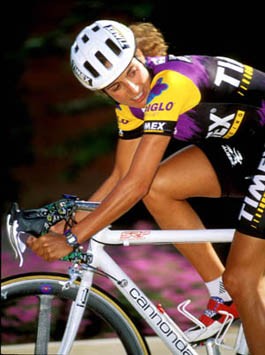
N ow in its third year, the Tour of California has become the biggest stage race in the United States, and it’s right on our doorstep. Starting with a 2.2 mile “prologue” on Feb. 17 at Stanford University and racing 600 miles to Pasadena over eight days, this world-class cycling race features elite professional teams competing for the highest prize purse of any cycling race in North America. But until this year, the Tour of California has not included women.

New this year is that the first stage of the race will be held in conjunction with a women’s criterium in Santa Rosa. A criterium, a closed-course loop, is one of the best bike races to watch. Instead of waiting for hours to see the peloton whiz by in 30 seconds, as is generally the case for stationary spectators during a road race, riders pass by the crowds every few minutes. As the first race weekend in the National Race Calendar (NRC), this women’s race will be the place for many domestic racers to fan their feathers, check out the competition and get a feel for the season to come.

With a strong concentration of top U.S. women cyclists living and training in the Bay Area, race director Laura Charameda, a former professional cyclist, says, “We’re hoping for a full field.” (In her day, Charameda won more races than any other American woman.) “Some people are going to walk away with big money from this race and be the leader of the NRC,” she adds. The prize purse for this criterium is $10,000, so spectators can expect to see some serious in-race tactics.

In fact, it’s all about strategy. During a criterium, or “crit,” teams use their strengths to position their sprinter in the best possible place—that is, if the team has a sprinter. If the team doesn’t have a sprinter (someone who is generally larger in size and good at going really, really fast over short distances), the team will be more aggressive during the race, staging “attacks” to try to establish a breakaway.

“These attacks are often timed right after a prime,” Charameda explains. (A “prime” is a sprint lap where the first rider over the finish wins a prize.) “After sprinters go for a prime, they’re tired, so often other teams will use the tired riders in front, sneak around them and make a break before anyone else has time to notice.”

A good place to watch these tactics taking place, says Charameda, is on the back side of the course, on Third Street opposite from the finishing stretch and near the “booster” tent. The “pits,” where team mechanics fix broken bikes on the fly, are also on the back side of the course; this year, they’re on Fourth Street near the Big O Tires outlet.

After the hour of top-notch professional women’s racing, the men will finish their first stage in downtown Santa Rosa. “Next year, I’d love to see up to three of the stages including women,” says Charameda.

Favorite to Take the Win 2007 NRC Overall Individual Winner Laura Van Guilder from the Cheerwine Women’s Professional Cycling Team will be defending her title at 2008’s first NRC race.

Watch Out For Shelly Olds, a young rider being developed by Marin’s Proman Women’s Cycling. Katheryn Curi (Webcor Women’s Team), who was the 2005 U.S. National Road Champion, will also be a contender for the win. Curi says, “For the past two years I have watched the men from the sidelines and now look forward to joining other strong Northern California women to compete in the Santa Rosa criterium.”


Get Yer Wheels On

0

02.13.08


They’re coming.

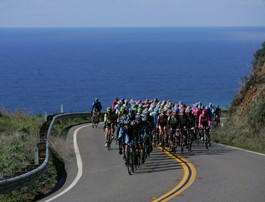
A distant pace car appears. In the lead, racing down the narrow road, a headway-making horde of police vehicles speeds past. A breathless pause, and then, electrified with the singular pursuit of the finish line, comes the spectacularly manic blur of hundreds of speeding cyclists.

Welcome to the Amgen Tour of California, which thunders Stages I&–II, Sausalito to Sacramento, Feb. 18&–19, and has succeeded in not only delivering world-class cycling to our North Bay backroads for the last two years, but in fostering a strong spirit of community camaraderie and pride.

Of course, much of that pride comes from defending champion Levi Leipheimer, the Santa Rosa hero who has given North Bay cycling fans plenty to boast about in the past year. In addition to maintaining a start-to-finish lead in last year’s Tour of California, Leipheimer earned his highest showing yet in the 2007 Tour de France, winning the final Stage 19 time trial and placing third overall, just 31 seconds behind Discovery Channel teammate and Tour de France champion Alberto Contador. Now part of the newly anointed Astana Cycling Team (sponsored by a conglomerate of companies based in Astana, the capital of Kazakhstan), the 34-year-old Leipheimer will again be a strong contender for the Tour of California, which he’s called “the highest quality race the U.S. has ever seen.”

With the Tour of California attracting so many top cyclists, even Leipheimer admits that competition for the yellow jersey is fierce. “More and more of the world’s best want to come,” Leipheimer says. “I think next year we’ll see an even better field.”

Yet, this may very well be the Tour of California’s last year in Santa Rosa.

Faced with rising costs of hosting the Tour, and struggling to drastically reduce the 2008&–’09 budget, Santa Rosa barely has a scale on which to weigh its options for next year’s race. Though attendance has been consistently high—the community support of Leipheimer combined with a spectacular downtown finish have been crown jewels of the Tour itinerary—it simply costs too much for a city that’s currently working to cut $5 million from its budget to host the Tour of California.

In fact, Santa Rosa’s costs have nearly doubled from last year’s $64,000 to $121,000; of that, only $45,000 has been allocated from the city’s general fund, meaning that the remaining $76,000 must come from private sponsors. At press time, only $35,000 has been raised. Unless anyone has an extra $41,000 laying around, or unless the Tour organizers miraculously ask for far fewer services next year, then the Tour of California will likely have to visit a different city in 2009.

Important to keep in mind is that this is the way the Tour of California was initially designed, points out Raissa De La Rosa of Santa Rosa’s Department of Economic Development, “to mimic the Tour de France, or any of the great tours of Europe, where the sites change.”

In France, host cities also put up all of the funding for the honor of the world’s most prestigious bicycle race coming to their city. Initially, Tour of California organizers planned to phase in that same model here, “but the reality is that this isn’t France,” De La Rosa sighs, hinting that even Tour organizers are starting to realize the difference in enthusiasm on American shores. “We have great American cycling teams, but it’s just not the moneymaker here as it is in France.”

Key players this year include Paolo Bettini of Italy, two-time defending world champion of the UCI Road World Championship and 2004 Olympic gold medalist. Nicknamed “the Cricket,” the spry, 5-foot-6-inch Bettini tends to attack with a determined sprint and made headlines by winning the 2006 Giro di Lombardia classic in tears after his brother died in a car accident. In last year’s Tour of California, he played the back of the peloton in Marin, helping push contestants up the hills of Mt. Tamalpais, confident he would regain the time. He’s announced that 2008 will be his last year in professional cycling.

Another cyclist to keep an eye out for is 27-year-old Tom Boonen, a strong points leader in last year’s Tour de France. With dashing good looks, a lively personality and an impressive record (including a 2005 World Road Race title), Boonen is something of a George Clooney&–style celebrity in his native Belgium; he made news last year when he crashed his brand-new yellow Lamborghini to avoid hitting a cat. As a high-profile ambassador for cycling and a thoughtful competitor, Boonen’s presence in the Tour of California raises both the stature and the competitive stakes of the race, making him definitely one to watch.

Santa Rosa city manager Jeff Kolin has spoken with other cities in Sonoma County, hoping to keep the race local, but as usual, if private sector money doesn’t come through, the tour’s days in Santa Rosa will be over. “We really, seriously are looking for more people to step up to the plate just to even make it,” De La Rosa pleads. “We can’t even consider bidding on it next year if we can’t make the budget this year. The budget’s going to be tighter, and the general fund draw is going to be less.”


Wide open ‘Secret’

02.13.08

The Secret Eating Society, a group of design-savvy foodie hipsters, ended 2007 with a party at Sebastopol’s West County Grill and the publication of the “zero” issue of their magazine, The Secret Eating Society Quarterly Journal. The vibe was young and fun, with a let’s-roll-up-the-rug-and-throw-a-magazine purity that was irresistible.

Devoted to all things smart, yummy and sustainable, the SES hosts underground dinners in honor of such as our watersheds, the libido and even the lack of vision (one such meal found diners blindfolded throughout). They have indulged in the guaranteed-to-disappoint rite of foodie passage known as “roasting your own pig” (watching teeth drop vigorously from the animal’s skull is an extreme appetite supressant and apparently only islanders know how to cook the meat so that it matures under heat from a garish white). Nonplussed, SES members continue to offer such events as its Butchering for Amateurs class (they assure that they don’t lead a baby lamb in by a rope) and Speed M[eat]ing, which is like dating . . . but not.

They celebrate their journal’s first official release with a yowza party on Friday, Feb. 29, making a leap (year) forward from an organized collective of attractive and adventurous eaters to an organized collective of attractive and adventurous eaters with print power. Plan to be at Peter Lowell’s from 6pm to 8pm on Feb. 29. 7385 Healdsburg Ave., Sebastopol. $10. [ http://www.secreteatingsociety.com ]www.secreteatingsociety.com.

Quick dining snapshots by Bohemian staffers.

Winery news and reviews.

Food-related comings and goings, openings and closings, and other essays for those who love the kitchen and what it produces.

Recipes for food that you can actually make.

Canal Zone

02.13.08

T he story about boys throwing rocks at frogs—the boys throw in sport, but the frogs die in earnest—describes the difference between violence in a play and violence in a movie. The greater level of realism in a movie takes what might have been something fanciful and makes it brutal, even repulsive. As in David Mamet’s odd policiers and gangster films, In Bruges can never get the balance right between sport and earnestness.

The setting stands out in this off-putting, bloody-buddy pic. Director, writer and famed playwright Martin McDonagh celebrates the city of Bruges in Belgium. Though it’s supposed to be “undiscovered,” the joke has it that if it were anywhere else than a crap place like Belgium it would draw hoards. (Actually, it’s a tourist zoo already.)

Two Irish Londoner gunmen (Brendan Gleeson, Colin Farrell) are on vacation from their last job, sent to Bruges until the heat’s off. Both of them are a bit uneasy. Their boss, presently a Charlie’s Angels &–like voice on the phone, isn’t the sort of man who does favors.

Being a hearty lout, Farrell’s Ray gazes upon Bruges, with its silver fogs and spires, and happily pronounces it “absolute rubbish.” Farrell knits his black kabuki eyebrows trying to figure out what anyone sees in it all, and then goes out to find several pints and a girl. The girl is Chloe (Clémence Poésy), a hanger-on drawn by a local film. As per the satire in Living in Oblivion , the scene being shot features a dwarf (Jordan Prentice) in a dream sequence. Killer, lady and dwarf spar wittily; Chloe turns out to have a secret or two of her own.

Brendan Gleeson’s Ken is the older, more experienced gangster. He sees what’s around him and is genuinely edified. He spends his rest periods flat on his back, reading a vintage paperback so old it has the price on it in shillings.

The two gunmen make a pretty good comedy team—a calm old silverback and a jittery baboon. As Ken is the tour guide of this operation, he hauls Ray to the Basilica of the Holy Blood. The two also observe the fat American tourists who’ll probably die on the way to the tower of the Belfort. On another journey, they stop at the Groeningemuseum, where both stop to look appalled at the seriously appalling 1498 Judgment of Cambyses by David. Ray thoughtfully describes this and the other paintings as “rubbish by spastics.” But he is stirred by Bosch’s Last Judgment , which gives his Catholic soul the willies. This is foreshadowing, as finally we see how very badly Ray’s job went wrong.

In a small part, Yuri (Eric Godon), the local illegal ordnance dealer, is a standout; we can take his darkness and danger seriously. McDonagh’s quips liven the film as much as the scenery does. But the handling of the violence seems like that line about jesting at scars if you never felt a wound. The clip used from Welles’ Touch of Evil says it all: a movie this eager to be an American actioner might have taken it easy on the Yank jokes. And a movie with aims this small ought not to make fun of a dwarf’s stature.

‘In Bruges’ plays at select North Bay theaters. See Movie Times, p36.


New and upcoming film releases.

Browse all movie reviews.

Godard’s Enigma

0

A new box set of four later Godard films shows that the French director still poses a riddle“The legendary ‘French New Wave’ director” helpfully says the cover of the new Jean-Luc Godard Box Set (three discs; $34.98; Lionsgate).

Oh, that Godard. Here are four beautiful films from 1982–93; each one as intractable as the Rock of Gibraltar. Hélas Pour Moi (Oh, Woe Is Me) is the title of the most recent effort (1993), but it could fit the entire collection. The disillusioned director, plagued by questions of the death of cinema and the death of God, arranges his figures for the best lighting and indulges his love for rhetoric and classical music.Passion (1982) is the glossiest film in the set. It counterpoints the oppressed workers in a small French town with the frustrations of a Polish film director (Jerzy Radziwilowicz)—himself just an ordered-around employee, distracted by news of the Solidarity movement in his native country. This director is immersed—or rather, enchained—in a breast-heavy but otherwise useless movie that seems to be one long tableau vivant. Godard knows well the swoon of the culture vulture when seeing masterworks by Goya and others restaged by girls who seem to have escaped the Folies Bergère. Outwitting that reaction is the essence of this movie’s wit.

The other Raoul Coutard–shot film in this collection is arguably the most rewarding: 1983’s Prénom: Carmen, a sexually explicit/postmodern/modern-dress restaging of the fatal coupling of a thieving harlot (a musky Maruschka Detmers) and a callow soldier, who are linked after a ridiculously aestheticized, comic yet cool bank robbery. Here are nods to different versions of the story, from Bizet to Otto Preminger; essential to the film is the idea of the word “perhaps” as the most sexually fraught word a woman can utter. Meanwhile, the cranky filmmaker Uncle Jean (Godard himself) malingers in a hospital, trying to keep his hands clean of the whole affair.Detective (1985) is something I should like to see a few more times before weighing in on it. At first view, it seemed unusually slack, unusually cryptic and mostly there to record Godard’s growing realization that home video might displace cinema. (Worse, the master cinematographer Raoul Coutard is missing in action.)Hélas Pour Moi is about God, who loves us and kills us. A vaguely Apollonian deity (Gerard Depardieu) descends on Earth to seduce a somewhat plain but faithful married woman. A demiurge? God himself? “Looking at the invisible is exhausting,” says a female commentator, and one can rely only on the visible here: the faces and shapes of women in doorways, windows and flare of light. Godard discovers new ways to display women (such as the contortionist serving a cup of coffee in Passion).

This collection—sometimes sublime, sometimes infuriating, sometimes enlightening, sometimes didactic—includes a 30-minute documentary, Jean-Luc Godard: A Riddle Wrapped in an Engima by Gidion Philips. The commentators do an agile job explaining the director’s methods, if not meaning. Who can? Richard von Busack

Pollution & Pupping

0

02.13.08

Two disparate but reliable harbingers of spring are the birth of new marine mammals on North Coast beaches and the slowly rising yellow haze of agricultural industry. Prompted by dry days and warming temperatures, unnecessary emissions are an issue even in the many rural enclaves of the North Bay. The Bay Area Air Quality Management District has one solution: throw money at it. Which is where the Carl Moyer Memorial Air Quality Standards Attainment Program comes in. With a $12 million endowment, the more familiarly known Carl Moyer Program gives money to those with diesel-driven trucks, marine vessels, construction vehicles, ag irrigation pumps and other outdoor engine owners to help them upgrade their equipment to cleaner 21st-century standards. Deadline to apply is April 4, and both public and private entities are encouraged to do so. For more details and to see if your filthy, diesel smog-machine fits the guidelines, go to the Air Resources Board website and search for Carl Moyer. [ http://www.arb.ca.gov ]www.arb.ca.gov.

Regarding those harbor seal pups —well, don’t. Unless you’re far enough away, that is, that you can’t make even eye contact with the animals and their moms. In the North Bay, harbor seal pupping is in progress primarily in the Bolinas Lagoon and Tomales Bay, and the National Oceanic Atmospheric Administration warns that if a seal reacts to your presence in any way, you’re already too close.

Many humans mistakenly assume that an unattended harbor seal pup is an abandoned harbor seal pup. Most often, the reality is that Mom is in the water getting her lunch. The presence of even the most concerned human hovering around the pup can prevent Mom from returning and nursing the baby, inadvertently causing pup deaths.

The best thing to do if you are concerned about a seemingly orphaned pup is to contact an onsite ranger or these authorities: the Marine Mammal Center (415.289.7325), Gulf of the Farallones National Marine Sanctuary (415.561.6622) or the Pt. Reyes National Seashore (415.464.5170).

Send your community alert, political notice, call for help or volunteer opportunity to us at bl***@******an.com.


Sailboat Mindset

02.13.08

According to designer and builder Ted Owens, author of Building with Awareness: The Construction of a Hybrid Home (New Society; $42), the number one design element for energy efficiency is the direction the house is facing and the placement of the windows. In a recent telephone interview, he tells me in minute detail exactly where each of the windows in his 800-square-foot straw-bale home are located, how big they are and how this affects the house’s ability to maintain an ideal temperature during all four of the year’s seasons. Once again, I am reminded how the truly green home seems to function as a living entity, soaking up sun, storing rainwater, maintaining ideal temperatures, filtering light at the appropriate times and in the appropriate amounts and storing heat in its walls.

Owens, who takes the reader step by step through his process in Building with Awareness, tells me that he sees the sailboat as being the ultimate example of small design. In the sailboat, every space is used, and the ultimate goal of the design is total self-sufficiency. Owens thinks of this as his “sailboat mindset,” and by the time I am done viewing a small portion of the five-hour-and-45-minute-long video that accompanies the text, I have jumped on board. The fact that the house is in New Mexico and I live in California does little to quell my desire to move in immediately. Of course, Owens is already living in the house, but this seems like an inconvenience that could surely be worked out. Couldn’t he just build himself another one and sell me his?

This is exactly the type of attitude that Owens seeks to dispel with his guidebook. His book is about self-empowerment, not dependency, though, to be honest, even after reading the book and watching the DVD, I probably wouldn’t be able to do much more than mix up some earth plaster, which seems to be the most doable task of the home’s construction. Then again, I don’t even own a hammer, and besides, building skills are not a prerequisite for enjoyment here. The goal of Owens’ video and book is to raise the bar on the how-to genre, and the end result is something both interesting and informative. Even though I have no money, property or skills to build my own straw bale, I now have an understanding of the process. I’ve learned about earth plasters, photovoltaic cells, passive solar heating and cooling, rubble trench foundations, rainwater cisterns, straw-bale walls and how to make my own adobe bricks—all while sitting on my couch.

Owens tells me that one of the goals of this project is to jump-start the learning curve by showing viewers and readers how the house was designed, why it was designed the way it is and to examine any problems that came up during the building process. Owens believes that the time for being a proactive green builder is now, not some time in the distant future. We have the materials and the knowledge to build responsibly, to think small, efficient and sustainable, and our plethora of excuses for why this is not possible must be shed immediately like a snake’s old constricting skin.

One of the most striking features of Owens’ house is its beauty. The design seems utterly perfect—the little lifted-up living area, the loft with the gorgeous window, the nooks carved into the walls, the irresistible texture of everything. This is part of the beauty of straw bale, Owens tells me, and of working with natural materials in general. They are more forgiving, and slight imperfections only add to the overall aesthetic. By building small, Owens says, by taking into consideration exactly how much space he needed and why, he was able to spend more of his money on the fine details. The end result is a house that cost less to build, costs less to maintain and to heat, and which, despite its compact size, one could easily imagine never wanting to leave.

Seventeen years ago, Owens was working in commercial film production, a field that did not satisfy his creative urge to help solve some of the world’s problems. He began to design the directions for building solar ovens out of boxes as a way to help people living in developing countries conserve their often sparse wood supplies. The box ovens would get up to 200 degrees, which demands a longer cooking time but saves on fuel. Building a hybrid home is not so different, I have concluded, than building an oven out of a box—both demand ingenuity, creativity and a willingness to utilize design in order to better ourselves and our surroundings.

For Owens, the straw-bale project has been both a continuation of his life’s work, as well as an experiment, a way of pushing himself to explore what it would actually take to build a hybrid home powered by the sun. Though I am closer to building an oven out of a box than I am to building a house, I feel confident that, should the opportunity arise, I will not go into it blindly. I will have an increased awareness for the importance of putting the longevity of the planet on equal footing with my desire for a place to call my own.

To order a copy of ‘Building with Awareness’ and for a wealth of information on green building, go to [ http://www.buildingwithawareness.com ]www.buildingwithawareness.com.


Wackadoos, Unite!

Word on the street is that 212 Memorial Hospital workers will be pimped out snaking through traffic as buck-a-shot jiffy windshield cleaners amidst that parking lot we call Hwy. 101 in downtown Santa Rosa.These hospital workers are already fully immersed in career transition classes. They'll be taught to act like non-English speaking campesinos newly squeezed Norte as a...

Rehab Resort

02.13.08R aymond Blatt says that converting Sausalito's Alta Mira hotel property and five adjacent houses into residential rehab facilities is the most rewarding thing he's ever done. If Blatt's Alta Mira Treatment Program had existed 18 months ago, when he helped a loved one go through substance-abuse treatment in Arizona, he says that he wouldn't have had to look...

Virtual Vittles

02.13.08C hristopher Coccaro, a 19-year-old college student, is throwing together some pork and vegetable soup. First, he rapidly chops and slices a green onion, carrot and a radish. He tosses the veggies into a sizzling pan and stirs them regularly to ensure they don't burn. Then he adds them to some liquid in a pot, drops in the pork...

Round They Go

02.13.08N ow in its third year, the Tour of California has become the biggest stage race in the United States, and it's right on our doorstep. Starting with a 2.2 mile "prologue" on Feb. 17 at Stanford University and racing 600 miles to Pasadena over eight days, this world-class cycling race features elite professional teams competing for the highest...

Get Yer Wheels On

02.13.08They're coming. A distant pace car appears. In the lead, racing down the narrow road, a headway-making horde of police vehicles speeds past. A breathless pause, and then, electrified with the singular pursuit of the finish line, comes the spectacularly manic blur of hundreds of speeding cyclists.Welcome to the Amgen Tour of California, which thunders Stages I&–II, Sausalito to...

Wide open ‘Secret’

02.13.08The Secret Eating Society, a group of design-savvy foodie hipsters, ended 2007 with a party at Sebastopol's West County Grill and the publication of the "zero" issue of their magazine, The Secret Eating Society Quarterly Journal. The vibe was young and fun, with a let's-roll-up-the-rug-and-throw-a-magazine purity that was irresistible.Devoted to all things smart, yummy and sustainable, the SES hosts...

Canal Zone

02.13.08T he story about boys throwing rocks at frogs—the boys throw in sport, but the frogs die in earnest—describes the difference between violence in a play and violence in a movie. The greater level of realism in a movie takes what might have been something fanciful and makes it brutal, even repulsive. As in David Mamet's odd policiers and...

Godard’s Enigma

A new box set of four later Godard films shows that the French director still poses a riddle"The legendary ‘French New Wave’ director" helpfully says the cover of the new Jean-Luc Godard Box Set (three discs; $34.98; Lionsgate).Oh, that Godard. Here are four beautiful films from 1982–93; each one as intractable as the Rock of Gibraltar. Hélas Pour Moi...

Pollution & Pupping

02.13.08Two disparate but reliable harbingers of spring are the birth of new marine mammals on North Coast beaches and the slowly rising yellow haze of agricultural industry. Prompted by dry days and warming temperatures, unnecessary emissions are an issue even in the many rural enclaves of the North Bay. The Bay Area Air Quality Management District has one solution:...

Sailboat Mindset

02.13.08 According to designer and builder Ted Owens, author of Building with Awareness: The Construction of a Hybrid Home (New Society; $42), the number one design element for energy efficiency is the direction the house is facing and the placement of the windows. In a recent telephone interview, he tells me in minute detail exactly where each of the...
11,084FansLike
4,606FollowersFollow
6,928FollowersFollow