Wine Tasting Room of the Week

0


I t’s time to wipe the slate, cleanse the palate and buy a new calendar as soon as they’re discounted 60 percent. In this new year, I resolve: to observe a moratorium on Sideways references—it’s been fun for three years, but it’s time to cork it; to step out of the debate of Champagne vs. sparkling, but to drink more of each; to lay down wine for longer than a few days’ storage on the kitchen counter, so as to note how nuances of bouquet develop after, say, three weeks; and to give the topsy-turvy ex–Topolos Vineyards another chance, and see what’s going on there now. Hey! I can take care of that last one right now.

Last time Swirl ‘n’ Spit dropped in on Russian River Vineyards was in February 2006. Ownership was up in the air, and the restaurant had cleared the tables for the last time. Topolos, with its distinctive North County architecture—part hop barn and part Russian fortress—was a funky favorite for locals and visitors alike. The vintages could be at times uneven, but memorable. I still recall an evening more than 10 years ago, when my neophyte palate was stunned by a 1994 Topolos Piner Heights Zinfandel, not quite sure if the wine was shockingly overextracted and overoaked, or simply, brutally, glorious.

It’s got a new, classy label, and while some of the funky details are gone, there is a sense that it’s not done with its makeover. If asked, hosts will still show curious guests a bottle of Topolos’ infamous “Stu Pedasso” brand.

The nicely priced 2005 Rosé of Pinot Noir ($12.99) is a tasty, dry pink wine with substance. Save it for summer or turn up the heat and have it now. You might note Russian River Valley cola notes in the 2002 Pinot Noir ($39.95), enjoying perfumed raspberries on the way to an herbal, rustic finish. I have no problem with blueberry Sharpie accenting the leathery bouquet of a 2005 Dry Creek Syrah ($24.95), but with the 2005 Dry Creek Petite Sirah ($34.95), we finally move into the deep purple territory of luxury tannins that sweep roasted nut aromas and blackberry-pie flavors to their happy home.

The tasting room star that everyone seems to show up for is the just-released 2004 Redwood Valley Barbera ($31.95), a bright and food-friendly table wine. Watch for the upcoming 2003 Napa Valley Charbono ($29.95), sure to be a special treat. Also on the horizon is the return of the Old Vine Zin that was a darling of the Topolos crowd. With all that coming on line, and the restaurant reopened as the new location of Greg Hallihan’s Stella’s Cafe, there’s little reason in the new year to pass up this friendly, rambling old landmark.

Russian River Vineyards, 5700 Gravenstein Hwy. N., Forestville. Open daily 11am to 5pm, tasting fee $5. 707.887.3344.


View All

REWIND

0

current reviews |

INSOMNIAC: Henry Gayle Sanders stars in ‘Killer of Sheep.’

By Richard von Busack and Michael S. Gant

K iller of Sheep: The Charles Burnett Collection’ (Milestone; $39.95) Director Charles Burnett made his 1977 indie film Killer of Sheep for around $15,000 on 16 mm film. This movie was inducted into the National Film Registry in 1990 and became perhaps the most important restoration of 2007 when it was blown up to 35 mm by the UCLA Film Archive, with a little help from the Stanford Theatre Foundation. It is now clear that the roster of the 1970s renaissance filmmakers—Scorsese, Coppola, Altman, De Palma—needs to include Burnett.

The film stars Henry Gayle Sanders as Stan, who has lost his ability to sleep and is trapped in a soul-killing job he can’t afford to lose. His best friend, Bracy (Charles Bracy), tries to cheer him up without luck. Stan is also distanced from his unnamed wife (Kaycee Moore) and his child, Stan Jr. (Jack Drummond).

Visually, Burnett puts his seal on L.A.’s Watts—a sandy, distant railroad-crossed prairie with oases of lush plants—as surely as Jean Vigo put his seal on fog and canal boats in France. Uninterested in melodrama, Burnett shows the gentleness that surpasses all oppression.

The set includes a perceptive essay by critic Armond White; before-and-after versions of Burnett’s lost feature My Brother’s Wedding (1983/2007), now restored by the PFA; and an interesting new two-scene short about Hurricane Katrina, Quiet as Kept. This affectionate dialogue among a weary, cash-strapped family is the antithesis of a sitcom. —RvB

‘Battlestar Galactica: Razor’ (Universal Studios; $26.98) The BG hiatus has become nearly unbearable (season four doesn’t start till April, so say we all), so the SciFi channel rustled up Razor and got it out on DVD just two weeks after its broadcast. Razor jumps back to the appearance of the Pegasus, commanded by Adm. Helena Cain (the name echoes The Caine Mutiny, and Michelle Forbes’ nervous-finger routine recalls Humphrey Bogart’s ball bearings). The familiar faces—Starbuck, Number 6, et al.—appear, but the story concentrates on a new figure, Kendra Shaw (Stephanie Jacobsen), Lee Adama’s choice for XO of the Pegasus when he takes over.

In a series of flashbacks to 10 months ago and 41 years ago, Razor amplifies several backstories, while also charting a dangerous mission to a cylon ship. The jumbled chronology will confound all but devotees. Still, there’s plenty to like, especially the first cylon-human hybrid marinating in its bathtub. The disc includes both the broadcast version and the “unrated, extended” version, which adds about 15 minutes. Cast and creator interviews, behind-the-scenes how-to’s and the web “minisodes” round out the package. —MSG

‘Lady Chatterley’ (Kino Video; $29.95) In three versions of his novel, D. H. Lawrence tried to combat English prudery with a pastoral vision of love in the story of a cross-class affair between titled Constance and gamekeeper Mellors. Director Pascale Ferran adapts John Thomas and Lady Jane, the least known of the three versions. As played by Jean-Louis Coullo’ch, Oliver Parkin—the mild-tempered divorced gamekeeper—bears almost no resemblance to the studly Mellors. Ferran has stripped the Englishness from this account. Gone, too, is something fragrant: the Northern English dialect that proved that Constance Chatterley (Marina Hands) and her lover were literally speaking different languages.

The film won a scad of French Academy Awards—one of them for costuming, which sounds like a joke (unless nudity is the best clothing). And it would be a joke, except that Constance wears vixenish hunter’s reds and scarlet velvet, matched with the golden reds of the woods. Lady Chatterley is probably the best fall-colored movie since the rousse Rene Russo starred in the remake of The Thomas Crown Affair.

This is a woman’s film, so most of the sexuality takes place in the faces, not in the bodies. And it finishes on a precise moment of realized happiness. It’s the way one wants an affair to close if it is closing: with sad satisfaction and no guilt. The minimal extras include the English and French trailers and a photo gallery. —RvB


Silicon Valley | Santa Cruz County |


New and upcoming film releases.


Browse all movie reviews.

Future Unsounds

0

01.02.08

Once again we stand on the precipice of a new year rife with musical possibility. What old ghosts will haunt us? From whence emerge the saucy upstarts who will burst onto the scene, gasping minty-fresh sounds that will obliterate the cynicism of nay-sayers and reawaken the dead-bird souls of burnouts? We have just a few suggestions for the future.

In 2008, the Bureau of Better English Usage will bar music critics from using the term “shimmering pop” on the principle that pretending a bunch of fairly generic music which generally fails to shimmer even a little as a genre is both lazy and inaccurate. (Furthermore, employing the phrase “shimmering pop confection” will become a capital offense.)

Televised awards programs will require all live performers to take drug tests; those who test negative are denied the right to perform. Backstage platters of lunch meats and lukewarm melon pieces will be replaced with coke-lined mirrors and buffets of crack pipes, and the chocolate drained from fondue fountains to be refilled with rubbing alcohol. After all, what’s better for ratings and YouTube viewership than the very public meltdown of a drugged-up has-been?

The new Apple BioPort will debut. The BioPort will plug directly into a gelatinous bodily orifice (available for installation at your local Apple store) and allow users to download music, photos and video files directly to the brain, replacing memory previously occupied by multiplication tables and state postal abbreviations. The limited-edition Billy Corgan/Smashing Pumpkins BioPort will come with an exclusive extra dose of pompous self-importance.

Congress will pass a constitutional amendment allowing foreign-born citizens to run for president with the hope that Arnold Schwarzenegger will supplant Mitt Romney’s flagging popularity and become the frontrunner for the Republican Party. But the Democrats, fearing that Americans want neither a woman nor an African American in office, will seize the opportunity and announce Bono as their candidate, with the Edge supporting him on the ticket. A showdown of massive proportions will ensue, with the Schwarzenegger campaign showing the better TV ads, but the Bono campaign getting the better theme song, “Pride (In the Name of Love),” which has nothing to do with the American presidency but everything to do with stirring the emotions.

Britney Spears’ head will explode, spraying a throng of paparazzi lenses with scalding oil and tiny metal gears, and there will be some ‘splaining to do. Britney’s reps will reveal that she is actually a prototype entertainment droid whose programming backfired, just like HAL 9000’s did in 2001. It will be revealed that Britney’s parents, Disney, Justin Timberlake and her record labels were in on it the whole time, though, unsurprisingly, K-Fed will not have had a clue.

It will be busy year for Rhino Records, whose Led Zeppelin Box Set Box Set will include roughly a thousand CDs, plus a 2,500-page volume of liner notes by William T. Vollman.

At the premier of the Iggy Pop biopic The Passenger, Elijah Wood will be attacked on the red carpet by a mob of grizzled Stooges fans. Thinking fast, Wood will slip on the burdensome but momentarily handy One Ring to Rule Them All, become invisible and escape.

Bob Dylan will fall asleep on the sofa while watching a DVD of I’m Not There that he picked up at Blockbuster. “I don’t know,” he’ll say in a later interview. “It was confusing and overrated.”

Courtney Love’s new album, How Dirty Girls Get Clean, will come out, but no one will buy it, because . . . ick. Meanwhile, she and Yoko Ono will start a support group, Hated Widows of Lauded 20th-Century Rock Musicians.

The term “emo” will officially lose all meaning when, at 12:30pm on March 21, 2008, my 65-year-old conservative veteran father will use it in casual conversation.

Cassette tapes will once again fail to come back into retro-vogue on a wide scale, and will still be easily purchased at garage sales, thrift shops and used record stores for less than the price of a candy bar. This means that, for the microscopic anti&–Apple BioPort contingent who still cling to Walkmans, the world is their oyster. But only if they like Rob Bass and the lesser albums of Heart.

Hip-hop will continue to flourish, increasingly revealing itself to be the most relevant, malleable and creatively fertile genre of pop music in our day. Meanwhile, straight-up rock will be, for the hundredth time, assumed dead, only to resurrect itself fiercely in some quiet pocket of the world in a way no one can presently predict.


Letters to the Editor

0

12.19.07

ASHES TO ASSES

Why is it that we are born with nothing and can’t take anything with us when we die, but spend the time in between shopping, consuming and hoarding as much stuff as we can get our hands on? (The Green Zone, “Buy Nothing Month,” Dec. 19.) We think of ourselves as such a smart species. Clever and inventive, perhaps. Blinded, fearful and superstitious might round out the description a bit. It’s going to take more than just being green. We’ve run amok, but our well-honed denial mechanisms won’t let us see it.

Luda Fiske

SANTA ROSA

BUY NOTHING CONCRETE POETRY

produce consume produce consume produce consume produce consume produce consume produce consume produce consume produce consume produce consume produce consume produce consume produce consume produce consume produce consume produce consume produce consume produce consume produce consume produce consume produce consume produce consume produce consume produce consume produce consume produce consume produce consume produce consume produce

Buck Duke

Santa Rosa

DUCK DUCK GOOSE

I was hoping someone would write regarding Gretchen Giles’ “Killer Gifts” article (Nov. 28) and the recommendation of buying foie gras as a holiday present. Sadly, it seems to have gone unnoticed by any human who cares about animals. Why do we need to torture ducks to have something else to eat? Ms. Giles obviously has not seen the documentary on how ducks are force-fed. She mentions the ducks are free-range, but how is that possible with a tube stuck down your throat? How is that humane treatment? Foie gras is a killer, not a gift.

Karen Zimmerman

Santa Rosa

Dude, Ms. Zimmerman, you are not alone. For over a month, we in editorial have been decrying the senselessness of writing a humor piece in which the consumption of foie gras is recommended and the phrase “But enough of that PETA crap” is used and what? No one responds? You’ve restored our faith in the readership. Thank you, thank you, thank you.


Behind the Chador Curtain

0

the arts | visual arts |

CULTURE, COMFORT: American student Christina Torns (right) listens to a ticket seller outside a mosque in Shiraz.

By Cynthia Nelson

L ast summer, when President Bush declared the Iranian Revolutionary Guard to be terrorists, I was sitting in the lobby of a luxurious hotel in Tehran. New College of California coordinates two or three trips to Iran every year, but few in our group actually had any affiliation with the school; only four of us were students, outnumbered by professors and teachers.

Both Iranians and Westerners I spoke with over the following week agreed that Bush’s statement was a crazy escalation. No one defended the Revolutionary Guard, but now that it was branded like Hamas, Hezbollah and al Qaida had been, people seemed uneasy. One citizen saw Bush as a savior; many others were afraid after seeing lives in neighboring countries uprooted or ended in the name of “fighting terrorism.”

The terrorist designation perpetuates the myth of the Arab world, a tale of fanatical and extremist monoculture in Asia Minor. In this story, Arab culture is conflated with Islamic religion, and distinct ethnic identities like Kurds, Jews and Persians are overlooked completely.

Iran is 99 percent Muslim (89 percent Shiite and 10 percent Sunni), yet is not an Arab country—its language and culture are Persian. The Farsi language has completely different roots and grammar from Arabic, though it’s written using the same alphabet.

The name Iran comes from “Aryan,” describing two groups of nomadic peoples who had varying features (not the Hitler Youth look). The Pars (or Fars) and the Medes lived and migrated around areas stretching from India to Europe over 3,000 years ago. No nation has continuously dwelled on a land longer than Iran has. Part of Iranian identity is this knowledge of history going back thousands of years. People in all walks of life know of the vast Persian empire 2,500 years ago, the Arab invasion a millennium later and the Safavid dynasty 500 years ago, when Shiite Islam became the state religion.

Such a rich living history means that the events of 1953 are very fresh in the minds of Iranians.

That year, the American CIA removed democratically elected prime minister Mohammed Mossadegh from power. Mossadegh had nationalized the country’s oil industry, prompting Time magazine to name him Man of the Year in 1951. With more oil profits staying in the country, British oil interests lost their foothold there. To regain them, Britain worked with the United States on a CIA coup, eventually giving America the most leverage over Iran’s oil.

The coup marked the first time that the CIA had toppled a foreign leader. Led by Kermit Roosevelt Jr. (grandson of Teddy) and Norman Schwarzkopf Sr. (father of “Stormin’ Norman”), the first attempt failed, and Mossadegh’s people arrested the coup’s leaders. A mere three days later, “Operation Ajax” made another attempt, and this time replaced Mossadegh with Shah [King] Mohammad Reza Pahlavi.

The agency took what it learned in Iran and went on to stage coups d’état in Chile, Guatemala, Indonesia and more countries on several continents over subsequent decades. Beginning immediately after the Iranian coup, the CIA helped to install the terrifying Savak “security” forces inside Iran. Savak kept the Shah in power by eliminating any threat to the regime, whether radical or moderate. Trained by the CIA, they used torture and execution widely.

And then the Islamic Revolution of 1979 took most everyone by surprise.

Conservative religious leaders were the one group the CIA hadn’t bothered to keep tabs on. At the Shah’s palace, which is now a tourist site, an Iranian woman in her early 40s remembers the time. “We had no idea. We knew there was going to be a change; we thought it would be democratic,” she says. “We woke up and everything was different.” Women had to start wearing head coverings and long, curve-obscuring garments. The minimum marriage age for girls was lowered to nine. School curricula changed, stating that God had put the new leader in charge. Some schools closed altogether, and the remaining ones became gender-segregated.

Tens and hundreds of thousands of Iranians protested the new mandates loudly in the streets until they were arrested, threatened or otherwise silenced. People still attempt to speak out, print critical newspapers and organize labor. But the government kept closing newspapers and jailing labor organizers.

The new regime was more complex than is widely known. The fledgling Islamic Republic attempted to combine a democratic constitution with religious leadership, although Ayatollah Ruhollah Khomeini speedily quashed the diverse, nonreligious groups that had helped him overthrow the Shah.

W hat all groups had in common was a desire to get rid of U.S. influence. The U.S. Embassy is now defunct, of course, but the wall that surrounds the building is still filled with virulently anti-U.S. statements and artwork. It’s impossible to take them personally, since so much of Iran is accessible to English speakers. Street and highway signs are either transliterated or translated into English, kids learn English in school, even one side of the money is in English. Pretty welcoming to those of us coming from “the Great Satan.”

Many news stories cover President Mahmoud Ahmadinejad expressing the kind of sentiment similar to what we found on the walls of the former embassy. What those stories leave out is that he holds little actual power. In October, Democracy Now! hosted Juan Cole, University of Michigan professor and creator of the website Informed Comment. Cole clarifies, “Ahmadinejad is not commander-in-chief of the armed forces. He can’t order anybody to kill anybody. He can’t launch a war. He can’t launch missiles. Those powers are vested in the Supreme Jurisprudent, the Ayatollah Ali Khamenei. Ahmadinejad can, you know, cut the ribbons and open bridges and things like that.”

No one I spoke with in Iran supported Ahmadinejad. Of course, the more religious segment of the population tends to not be so interested in speaking to obvious Westerners. (Our pasty features and cheap headscarves that don’t even color-coordinate with the rest of our clothes are an instant giveaway.) But judging from people’s dress in the several busy cities I visited, a large majority is reform-minded. Iranian women can vote, smoke, drive, go to university and own property.

The mandatory headscarf for women and girls age nine and above tends to trigger outrage in Westerners—France even tried to ban them completely. Such a visible dress requirement makes it easy to get an idea of people’s politics. If a woman wears a brightly colored scarf with plenty of hair visible, that’s a sign of resistance. Often women knot their hair high on the back of the head, to help hold the fabric on while showing as much hair around the face as possible.

The all-encompassing chador (literally translated as “tent”), on the other hand, is a single piece of cloth that covers the head and drapes over all other clothes, hanging to the ankles. The chador designates religiously devout women, though sometimes it is required to enter a shrine or for some jobs, like teaching. One young woman I met, who had just been admitted to medical school, says that she enjoys a sense of security when wearing the chador if she is in crowded cities.

And the idea that the headscarf invokes meekness or passivity is laughable. Iranian women are animated, informed, outgoing, proud, welcoming, fabulous dressers and sometimes, really fast ski racers. (The majority of Iranian terrain is mountainous, with numerous winter ski resorts.) Being a female traveler in Iran is a great benefit in getting to talk to and learn from women there.

Incongruously, it is incredibly common for women in Iran to get nose jobs. You can’t walk on a city street or ride on the subway without seeing at least one small bandage across a nose. The classical Persian schnoz tends to be generous, and women there are no more immune to Western beauty standards than we are. Plus, faces get even more focus when you have to cover up practically everything else. Some say there is more plastic surgery in Tehran than anywhere else in the world, and though I can’t verify that, it is clearly a thriving industry.

What is more certain is the characteristic hospitality of Iranians, as emphasized in the Lonely Planet guidebook, which says that visitors can expect people to come up to them and personally welcome them to the country, sometimes offering an invitation to dinner after a few minutes of conversation. The book had been published in 2004, so I figured that in the current climate of nuclear weapons accusations, the hospitality would be toned down.

I couldn’t have been more wrong. Families, small groups of students or pairs of young mothers would come up to us, sometimes nearly hopping with excitement, and after a couple minutes offer us tea or dinner. One young father greeted us, asked where we were from, and then asked if there was anything he could do for us. People’s pride in their homes and in the country, and their eagerness to share them, especially with Americans, was like nothing I’d expected.

Luckily, you don’t have to go to Iran to experience the abundant hospitality. More Iranians live in the United States than any other country outside of Iran. So many are in Southern California that it’s sometimes called “Tehran-geles.”

I ran is a signatory to the Nuclear Non-Proliferation Treaty, under which it has the legal right to develop a full cycle of uranium enrichment. Such other countries in the region as India, Pakistan and Israel are not NPT signatories, yet have full nuclear weapons, not just energy.

In 2003, after Iran had helped the United States go after the Taliban in neighboring Afghanistan, then-president Khatami offered to negotiate with the United States on a wide range of issues. Everything was on the table, from nuclear programs to a two-state solution in Palestine and Israel. Condoleezza Rice and company ignored the offer (and rebuked the Swiss embassy for delivering it). Little wonder Iran is recalcitrant now.

The United States continues to antagonize. Last spring, the Navy began sending warships to the Persian Gulf, and by early July, the L.A. Times estimates half the entire naval fleet of warships was there. Yet the United States threatens to attack under “anticipatory self-defense.” Who is anticipating the need for self-defense here? It’s not like half of Iran’s military is parked just outside Washington, D.C.

Recent reports give much hope to avoiding a conflict. Though the Bush administration continues to posture, its own National Intelligence Estimate report released at the end of November shows that Iran has shelved its nuclear weapons program. (The International Atomic Energy Agency has been saying as much for years.) This report is analogous to the announcement of the lack of evidence for WMDs in Iraq. At least this time, the information went public before any bloodshed.

The New York Times travel section in December ranked Iran as 18 on the list of “The 53 Places to Go in 2008.” (San Francisco ranked 39—perhaps the city is a more looming threat?) Of course, tourism is no guarantee that U.S. interests won’t exploit the region. (For one quick example, South Africa welcomed wealthy tourists before apartheid started making the headlines.) But for now, it’s a hopeful indicator that for the time, at least, we won’t be dropping bombs all over Iran.


View All


Museums and gallery notes.


Reviews of new book releases.


Reviews and previews of new plays, operas and symphony performances.


Reviews and previews of new dance performances and events.

Bonehead Grapes 101

0

01.02.08

We learn new things about wine every day. It’s good for the heart, it’s good for the French, it’s good for laboratory mice. There are also many questions unanswered, and some as yet not asked. Has it occurred to no one else to pose this question: Is wine like high school?

It began last summer. Somewhere back there I seemed to have missed a reunion. I believed mistakenly that a cadre of hopelessly backward-looking, glee-club types collected data on classmates, tracked them down and implored them to converge. It turns out, you have to care enough to find out about it. I didn’t care to clink glasses with half-remembered people and compare careers, waistlines and the results of self-replication programs.

“It just doesn’t seem like 10 years have gone by!” No, because I missed that one, too. I happened to receive intelligence about that event, and had been listed as “missing-in-action.” I thought that was a rather romantic designation. I wasn’t puffing up my backstory, bullshitting some old flame about how I’d cashed in during the dotcom bubble. I was out there in the world, a wild card, dangerously anonymous with no forwarding address.

So next time I’ll expound on that missing-in-action bit. I’ll send them a crumpled bio, explaining, “Nothing is known of the whereabouts of James. He was last seen on the border of Bhutan, trekking across the treacherous glaciers of Outer Chai Latte. He had hoped to find the legendary tasting rooms of the mysteriously temperate Cloud Valley, where the world’s rarest Pinot Noir is made by an ancient lost sect of Burgundian Buddhist monks.”

Meanwhile, it all got me to thinking. (I want to make it clear I’m not talking about wine in high school, which is clearly not acceptable, even in the context of, say, added realism in a theater production. I can offer younger readers this nugget of learned advice: Do not drink the props.) If you think about it with a clear mind—or better, with a bottle of wine—the synergies rise out of the fog.

For example, in the world of wine and high school, you’ve got geeks, snobs and Jacques. A cycle of events marks the year: budbreak, midterms, graduation. Grapes are pressed together, shunted into tanks like students pouring in and out of classrooms. In the crush, one must seize the day or forever lament the spoilage of young wine. Real estate prices are higher in the best school districts, as well as the most fashionable appellations. Everyone wants to get in the 90th percentile, and there’s a fair amount of teaching to the test. Mr. Parker hands out good grades to his favorites.

The traditional elective language of wine is French, much loved as an institution, as refined as it is useless: Voulez-vous les cépages beaucoup? Oui, madame, je’n veux élevage, terroir et dégorgement, merci! I don’t remember much about the French I took. Spanish is the practical elective that makes the world go round: ¿Cuando ven las pinche uvas? Only a small minority of über-geeks take German: Ich bin ein Lemberger.

You don’t have to pass advanced chemistry to make wine; there’s usually a pretty girl in the lab who will help out. (Aw, take a census—this is true 85 percent of the time.)

We cheer on the home team, the Fighting Varietals. Rah rah rah. Take Cabernet Sauvignon, which is obviously French for “prom king.” Cab is the team captain, the class president. Everywhere in the world Cab goes, it’s the center of attention. Cab is popular, brawny and often quite intolerable until you get to know it years later when the edges have softened, and the nuances of character show. With some vintages, we’re still waiting.

Chardonnay is wine’s popular, blonde cheerleader. Chardonnay slathers on cocoa butter in the California sun and is spoiled with expensive French oak. Often buttery and cloying with ersatz sweetness, Chardonnay is at once as unpopular as it is popular. With the right environment, however, and a judicious vintner, Chardonnay can be smart and refined with plenty of potential.

Merlot is the everyman, that normal guy with the normal haircut whom you hardly notice. Merlot gets average grades and stays out of trouble. Nobody wants to be Merlot; almost everybody is. Even as millions raise their glass and declare, “I won’t be normal!” sales of Merlot continue to expand.

Pinot Noir is the awkward arty type. Pinot used to be seen as effete, too delicate to withstand the rigors of the real world and of modern winemaking. In the wrong climate, Pinot can end up soaked with alcohol, smelling of barnyard and frustration. But with a little care, it can be coaxed into its full expression. Pinot can become the nerd who’s made it big. Who cares if we still don’t understand its troubled soul? With success come the clones, more robust and durable than delicate youth. The charts go up, alternative becomes a major market and product moves.

Zin is all-American, a little mysterious, rock ‘n’ roll all the way. Zin shows up every decade in a new guise: the jug wine, the cult wine, the greaser, the long hair, the punk. A tattooed redhead on a motorcycle, Zin is at all the keggers. Rough but articulate, Zin had been to Burning Man half a dozen times before you ever heard of it.

Syrah can be awkward, an outsider. Syrah grows wildly in the vineyard, but often becomes a basket case when confined within the institution of the winery. Syrah can be pretty in pink, or smoking in leather; feminine but tomboyish, earthy and blowzy yet beautiful. Is it Syrah or Shiraz? You’re just not sure which way it’s going to go. I saw Syrah chewing tobacco behind the Ag building. I heard that Syrah plays double bass in the symphony. Becoming more rich and multilayered over time, and if lush in both senses, Syrah is still the one for me.

Riesling is the weird foreign exchange student, who, it turns out, is five times more worldly than you ever knew.

Surely effervescent, giggly Champagne could not be taken seriously. But some years on, you discover vintage Champagne; one New Year’s eve with your head full of creamy bubbles and the haunting scent of French perfume, you may be seduced by Champagne, and in a sodden state of inspiration, declare, “Only Champagne every day from now on, for me!” And wake with an incredible hangover.

Pinot Meunier is . . . who was that kid? Did we go to school with him? I don’t remember.

But life, alas, doesn’t always match up to expectation. Sometimes Pinot doesn’t add up to something exquisite. Sometimes Cab is not the king, it’s lost in a sea of look-alike Cabs trying to do the thing that’s popular, indistinguishable from a good Merlot. Real life is a blend.

Taken as a class, our wine culture is a straggly bunch. Other than a handful of know-it-alls who have stories from their summers spent in the vineyards of Europe, our wine culture is struggling to pass the GED. We have barely moved beyond the high school popularity contest. This is a culture that sees a movie and says, “Look, a funny guy said something funny! We’re not drinking Merlot, it’s so totally bogus. Let’s drink what the funny guy drinks.” And when I say “we,” of course I mean them, because we are so smart and special. No one understands us, and we’ll be friends forever. Though we look back on treasured vintages fondly, the best years are yet to come.

Quick dining snapshots by Bohemian staffers.

Winery news and reviews.

Food-related comings and goings, openings and closings, and other essays for those who love the kitchen and what it produces.

Recipes for food that you can actually make.

Life Begins in the Sea

0

01.02.08

We’ve heard the story before. As old as history itself, this one tells of three societies on the fringe, their cultures fading, their populations dispersing, and the sound of their spoken languages growing quieter and quieter.

And though the Graton Rancheria tribe of Marin and Sonoma, the Kashaya near Fort Ross and the Manchester-Point Arena band of Pomo Indians still maintain some loyalty to their respective traditional ways and their historical geographical territories, tribal leaders fear that a new power—the Marine Life Protection Act (MLPA), passed in 1999—could soon bar the three coastal groups from their historical fishing and foraging grounds, severing one of their last ties to an ancient way of life.

“We believe that we are one with the natural world,” says Nick Tipon of the Graton Rancheria, a virtually landless group consisting of Coast Miwok and Southern Pomo. Tipon has been a prominent voice in the ongoing discussions between state lawmakers and stakeholder groups concerned about the MLPA proceedings, which concluded in December with the establishment of the first phase of the new protected areas, focusing on the Central Coast. “The deer, water, the birds, the fish—they are all one, and nothing is more important than another. So any time someone makes a law that says we can’t take something, it troubles us, because that thing is a part of us.”

Between 1999 and April 2007, the California Department of Fish and Game (DFG) and the California Fish and Game Commission (FGC) districted 29 marine protected areas between Point Conception and Pigeon Point, zones in which varying degrees of sea harvest are prohibited. In some areas, commercial take is restricted, while in others, the extraction of any object, alive or otherwise, is illegal. Now, as the state looks at the second phase, the North Central Coast region, stretching from Pigeon Point north to Point Arena, these three coastal tribes are protesting what they consider infringements on their unassailable rights to utilize the natural world.

Eric Wilder, tribal services coordinator for the Kashaya, disdains the California government’s strong-armed approach toward enforcing the MLPA, which consists of four proposals to adjust the current marine life harvest restrictions in, among other areas to the north and south, Salt Point State Park, Gerstle Cove and Bodega Bay. Several of the proposals would tighten regulations or ban altogether the harvest of various finfish, shellfish and other intertidal life in defined locations.

“From our viewpoint, the way the government has approached us with this issue is like a doctor coming along and saying that he’s going to cut pieces of your body away and asking you which are the most important parts that you’d like to keep. We’d like to keep all of it.”

Wilder says that the culture of his tribe already faces the very real threat of dissolution as outside enticements and pressures lure youths away from traditional life on the reservation, located several miles from sea near Fort Ross. Relatively few Kashaya people know the tribe’s history, says Wilder, but seafood and kelp still contribute heavily to the diets of many Kashaya individuals, while also playing important parts in ceremonial events and annual community gatherings, like the acorn festival in October.

“Fishing and gathering is not just a recreational thing for us,” Wilder stresses. “It ties us to our past and our ancestors, and if they close the coast to us, they might as well sentence us to death, because that will end us.”

Wilder, like scores of his Kashaya friends and relatives who gather abalone, sea urchins and other edibles along the shore, already adheres to state recreational fishing regulations, and he feels that such commitment to the laws is sufficient.

“That’s what those laws are there for, to protect the ocean. Why are they now not good enough? Since the Russians came, our people have had to live in a world of different rules and regulations, and we’ve followed them, but with all the overfishing and depletion of resources, it seems like it would have been a good idea if they had just followed our rules instead.”

Melissa Miller-Henson, of the Department of Fish and Game’s MLPA Blue Ribbon Task Force, says that the DFG and FGC will almost certainly respect tribal rights and needs as they implement the laws. “I would be shocked if the tribes were to lose their fishing rights. I think we live in a day and age when that wouldn’t be acceptable,” she says.

But many members of the public and even some lawmakers do not know of each tribe’s quiet existence and their reliance on the sea. This obliviousness impedes efforts to preserve the culture, says Tipon. The 1,100 members of the Graton Rancheria tribe live throughout the state, and though they lay claim to a one-acre plot near Occidental, their societal cohesiveness is a rather nebulous concept, with virtually no sense of place to anchor the tribe to its past and few living members who speak the tribe’s dialect.

Two seasonal ceremonies still bring the people together for communal seafood feasts and offerings of gratitude toward the abundance of the sea and the land. The loss of fishing rights could effectively end such gatherings and mark still one more step toward complete immersion into Western ways.

“At this point in the game, we feel that anything at all that our people could once do and are now denied is not healthy,” Tipon says.

The Kashaya have fared just a little bit better. Twenty-five families still live on the tribe’s 42-acre reservation several miles inland from Fort Ross, and 52 individuals still speak the language. One such person is Kashaya elder Violet Chappell, 77, who was born in Mendocino County and has lived virtually all her life on or around the Kashaya reservation. Chappell has maintained a strong and loyal connection to the ways of life with which she grew up, but she has watched her culture slowly wane over the decades.

“There are not enough people of us anymore who know the history, the genealogy and the religion of the Kashaya,” she says. “Morals and ethics have always been strong in our teachings, but the children today aren’t learning. We Indians have to learn how to live in two worlds. Our world and our culture is a great way to live, but too many of us are forgetting about it all and leaving for the cities.”

Before the Russians landed at Fort Ross in 1812, the Kashaya, whose population is estimated to have been some 1,500 people, had never encountered Caucasians, as the Spanish missionaries never reached the mountainous stronghold of the small tribe. The Kashaya dwelt primarily between Duncans Point and the Gualala River, living on the coast during the spring and summer and retreating into the hills as far as 30 miles inland during the winter.

The Russians founded Fort Ross as a base camp for their otter hunting trade, and for three decades pursued the thick-furred mammals, collected the pelts and kept the Kashaya employed as laborers. Upon the Russians’ departure in 1841, life was permanently changed for the Kashaya. Encroaching white settlers established private property, built fences and barred the tribal members from their favored foraging and hunting grounds. In 1914, the federal government secured a quiet plot of 42 acres in the hills several miles from the sea. With little water and poor soil, the reservation hardly made up for the loss of their traditional hunting lands, and many would leave the reservation in the decades following to take up modern life in modern towns.

Today, nearly every household on the Kashaya land, says Chappell, is affected by diabetes, an upward trend driven by a declining quality of diet. She recalls the foods of her own upbringing—abalone, seaweed, shellfish, sea urchins, herbs and wild greens—and notes that few Kashaya bother with such items anymore.

Marine Life Protection Act public workshops and meetings will be held Feb. 4, 5 and 6 in Gualala, Bodega Bay and Half Moon Bay, respectively, and will allow members of the public to voice concerns as the state government edits and rewrites its various draft proposals. The estuaries and bays of Point Reyes and Salt Point are just two areas being considered for moderate to full protection under the MLPA, though proceedings are only in the beginning stages and final decisions will not be made for another nine to 12 months.


Gaming Ghetto

0

01.02.08

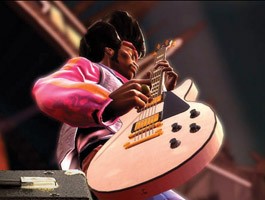
If archaeologists excavate our society a thousand years from now, one wonders what they’ll make of a guitar-shaped device with push buttons instead of strings. Their bafflement will no doubt increase if the episode of South Park survives that compares playing the device to shooting heroin. They will wonder how and why a big chunk of society seemed to have, momentarily at least, lost its mind over a plastic toy tied to something with computer chips inside.

Ask most anyone who has played the video game phenomenon Guitar Hero even a few times, and be prepared for gushing praise. Everyone from nongaming twenty-somethings to preteen girls to middle-aged men speak of it in terms not normally associated with a mere game. Bryan Cole, a forty-something consultant for the product-quality support firm SigmaQuest, describes the transcendent enjoyment so many apparently get playing the game.

“Oh, it’s just ridiculously fun,” he says before going on excitedly about the game for another minute. His previously mild-mannered demeanor morphs into arms-waving enthusiasm. He actually uses the adjective “visceral” at one point to describe it.

“There’s nothing like it,” he says. “It really feels like you’re playing all this great music. It’s totally addicting.”

Fourteen-year-old Cheyton Whiskey got turned on to the game at a friend’s house and “fell in love” as he puts it. Cheyton wasn’t a novice to video games, but he puts Guitar Hero in a category all its own. “I definitely enjoy Guitar Hero a lot more than anything else I’ve ever played,” he says. The viral nature of the game’s astonishing growth in popularity over the last year comes out when I ask the teen how many of his friends are into it. “A good majority of my friends have played it. It’s their favorite game now, too.”

Whiskey has a particular fondness for the music. “My dad turned me on to bands like the Doors and Creedence when I was younger, so I like the classic rock music in the game.”

Those sentiments, particularly the latter, make video-game music producer Will Littlejohn smile with satisfaction.

“I feel really fortunate to be part of Guitar Hero, because it allows people to enjoy some of the greatest songs around in a whole new way,” Littlejohn says. While you might expect that from the guy who pays the rent doing music for Guitar Hero and other music-related games, Littlejohn is a true evangelist for an entertainment he believes has an almost soulful value.

Of course, Littlejohn—along with Wave Group Sound, the production company he founded—has little choice but to primarily rejoice in the more ethereal rewards returned by Guitar Hero. By the standards of the entertainment business outside the game industry, his company, plus all the singers and musicians contracted by Wave Group, supplied the major portion of what makes the game series so enjoyable.

Financially, they got left in the dust.

So did many other little-known musicians and singers who contributed to Guitar Hero and its follow-up versions at the same time that other contributors were receiving ceiling-high stacks of cash. How high does that ceiling reach? According to VGcharts.com, various incarnations of Guitar Hero III occupy all but fourth place in the top five rankings of American video game sales for 2007. That success mirrors the monster footprints left by the first two versions of the game. Total sales approach 9 million units; that’s almost $1 billion.

Creative Class War

The film and software industries of Southern and Northern California are both places where it’s way better to be on top, and the very idea of “abused workers” seems almost absurd in areas much of the world views as two of the wealthiest and most talent-friendly spots on earth.

The seemingly endless success stories coming from both regions produce a gold-rush mentality. In L.A., it’s the waiter with a screenplay; in Silicon Valley, the receptionist with stock options. Marketable talent is the coin of the realm down south, while getting hired by the right tech company at the right time can be the key to the early, wealthy retirement of which no Hollywood receptionist would ever dare dream.

But there’s always been a dark side to the dream. Down south, entertainment industry workers famously nicknamed Disney “Mousewitz” for that company’s stance on wages and working conditions. Rock bands seeking attention in Los Angeles get reduced to paying clubs for “stage space” and having to sell tickets to their own shows.

In Silicon Valley, stories about janitors getting the shaft from hugely successful tech firms have littered the business pages for years. In many cases, those same subcontracted janitors were cleaning up the gourmet cafeteria meal remnants left by the kind of information workers over whom companies still intensely compete. An alleged shortage of such workers even necessitates importing highly educated folks with technical skills from India, Asia and other regions. The bottom line: play a front-line role creating electronic stuff that makes big money and nobody screws with you.

But the ugly story behind the creation of the Guitar Hero video game series may be the harbinger of a new kind of tech industry. Could the creative environs of Northern California become a place where making millions off of grossly underpaid local creative talent causes even the brass-knuckled accountants at Disney to go green with envy?

Hurtin’ for Certain

Sound melodramatic? Meet “Alan,” a veteran session singer. Like all the people interviewed for this story who lent their musical talents to the producers and publishers of the most successful video game in recent history, he’s afraid to use his real name. Just like a New York or Hong Kong sweatshop worker, he fears a replacement will step in the instant he complains about making only $300 per song on Guitar Hero I and II.

He’s afraid for his friends, too.

“I’m not going to complain, because that could jeopardize other people’s jobs,” he says. Alan looks at his contribution to Guitar Hero philosophically, like an intern who landed a summer gig with a big company might. “I got a great demo out of it and hopefully that will turn into something.” Pretty game attitude for a musician with over 20 years of experience.

How hard was the work?

“Those sessions kicked my ass, and it took a toll for a couple days afterwards,” Alan says, recalling the effect the recordings had on his voice. “Wave Group has extremely high standards for all their game work, so every syllable, every trill, gets microscopically scrutinized. We’re talking countless takes over two or three hours for each finished song. By the end of the session, your voice is hurtin’ for certain.”

Wave Group’s Will Littlejohn is proud of the results and especially the degree to which the finished product sounds as good as the original classic rock tracks. Fans of the game seem to agree. Alan confirms that assessment with an anecdote about listening to the radio one morning. “KFOX played one of the Guitar Hero tracks I sang on over the phone for one of the members of the band who recorded the original version. The guy said he thought it was their version. He thought KFOX was playing a joke on him.”

Outside the walls of Wave Group, Alan enjoys an exceptional distinction as a “one take” vocalist in recording sessions. Two to three hours per song is an aberration of exponential proportions for him.

“Let’s put it this way,” he says. “I feel like I earned every penny of that session fee.”

Mailbox Money

Intellectual property in Los Angeles is often protected by union contracts, royalties or back-end deals. That Alan’s performances aren’t compensated with even a fraction of a penny every time a Guitar Hero game prominently bearing his voice is sold is undoubtedly sweet music to the management at Activision, the nearly $1.5 billion game software developer now headquartered in Santa Monica. It’s a lovely beach town filled with people receiving “mailbox money” from acting, singing, writing and other things that generate more customers and more income over time. According to L.A.-based songwriter, composer and film orchestrator Tom Mgrdichian (My Super Ex-Girlfriend), “Residuals keep creative people from falling into poverty between gigs.”

Who is getting rich off the tech industry’s new sweatshop economy? Certainly not Littlejohn’s company, which might best be compared to those janitorial contracting companies hired by big tech firms looking to avoid paying decent wages and benefits to the people cleaning their buildings. Both businesses provide services for flat fees and, while their owners do better than their employees, nobody is getting rich. Littlejohn points out he drives a 2003 Ford Escape and that the musicians he hires are well paid compared to the area norm.

Other contributors to Guitar Hero did better. Figures weren’t released, but when Activision bought out the owners of original publisher Red Octane a few months ago for about $100 million, founders Kai and Charles Huang, who played a big role in inventing the game and its guitar shaped controller, undoubtedly got a nice payday.

Could the Huangs and Red Octane/Activision afford to be more generous with the talent that made them so much dinero? Let’s put it this way: if Alan received one-thousandth of 1 percent of Guitar Hero’s gross revenue, it would provide a $6,000 down payment on a car to replace his limping 15-year-old vehicle. One-tenth of 1 percent would enable Alan to move out of his 600-square-foot rental into a condo without a mortgage. Virtually any decent level of residuals would help him pay for the college tuition his daughter will shortly need.

But unless Activision experiences a sudden attack of conscience, neither Alan nor any of his fellow musicians will see another penny for their hugely successful work regardless of how many more units are sold. Why is that?

In short, Alan and his fellow musicians made the mistake of wanting to live and make money off their entertainment skills in the tech industry. In Los Angeles, it’s nearly impossible to be employed on a TV or major movie set without the protection of a labor union that is enormously powerful. Even writers, who are about as far from the front line as one can get, enjoy union protection, as the writers strike has underscored. This makes Southern California an expensive place to produce entertainment, and many a low- and medium-budget production company has exited to Canada or to more affordable, less unionized parts of the United States.

For the overwhelming percentage of mainstream entertainment projects, front-line talent is compensated more when a particular show or movie earns more. This is even true in some corners of L.A.’s video game industry. Voiceover talent (provided in many cases by well-known Hollywood actors) receives big flat fees and often get residuals for work on video games.

Not so in the so-called digital entertainment capital of the world. Unless you own stock in the company for which you toil, or receive overtime pay, tips or sales commissions, you’re working for a flat, monthly fee.

So when Guitar Hero publisher Red Octane came to Littlejohn’s production company requesting a quote for producing the music for the first two of an eventual three versions of Guitar Hero, such usual L.A. niceties as residual payments for the musicians and singers never entered the picture. Nobody even thought about getting any grief from the union.

Creative Crumbs

What lessons should other members of the creative class draw from Activision-Red Octane’s treatment of musicians and singers? Is a gleaming two-story office building concealing a creative sweatshop headed your way?

One answer comes from noted New York Times columnist and author Thomas Friedman. In his seminal book about globalization, The World Is Flat, Freidman observes, “If I can buy five brilliant researchers in China and/or India for the price of one in Europe or America, I will buy the five; and if, in the long run, that means my own society loses part of its skills base, so be it.” Replace “researcher” with “IT worker,” and one sees the brutally efficient logic that put thousands of college-educated, highly skilled, local information technology workers out of work, many permanently. Is there any reason to believe American musicians and other creative types are somehow insulated from the same fate?

According to a recent Zogby poll, more than half the American population believes we’re a country “in decline.” A lot of the media and many of our politicians focus on outsourcing as a main source of that consternation. Perhaps there’s a better explanation for that depressing state of mind. Maybe it’s the emerging reality that few of us are prepared to compete in a world where no one even stops to consider whether 1/10,000th of 1 percent in sales revenue would be better distributed to a worker than to thousands of stockholders. In that context, what country the workers come from and how many crumbs each gets to eat from a particular bare-bones, flat-fee contract is almost beside the point.

According to Freidman, musicians and singers getting recording-session pay rates considered “good” by Hollywood or even Silicon Valley’s low standards should realize that their English-speaking potential replacements in India are but a Skype call away. The number of Mumbai-based music producers happy to provide Activision and other game firms with music for a 10th the price paid to U.S. contract producers is plenty long. Despite all those American flag lapels adorning suit lapels of corporate managers, Brownie points and promotions get awarded for lowering costs and increasing profits even if that means not doing right by the home team.

Another answer comes from Hollywood. Trying to arrange the participation of a famous or once-famous American artist in an untested entertainment form for a share of the proceeds rarely succeeds. So almost without exception, when Guitar Hero I was a mere idea being developed by then-little-known companies, big-name acts—or, more accurately, their representatives—weren’t the least bit interested in being, quite literally, part of the game. Fast-forward two games and a half-billion dollars later and these same people are climbing over each other to get their “classic” songs from decades past licensed into Guitar Hero’s monster cash-generating machine. Big Entertainment’s sensibilities demand a sure thing, and the rising fortune of the Guitar Hero franchise is just the kind of sure bet the entertainment industry loves.

Ironically, Littlejohn and his band of music makers may have put themselves out of business by helping make Guitar Hero too enjoyable, too popular and too profitable. Piling irony upon irony, Alan watched the South Park “Guitar Hero” episode and noted the series producers misrepresented the actual game soundtrack by using the original Kansas version of “Carry On Wayward Son,” as opposed to the “play-enhanced” version Wave Group produced for the game. “That’s pretty funny if you think about it,” he says without a trace of bitterness at circumstances that made yet another “residual performance” payday unobtainable.

Video games now bring in more cash than the music and movie industries combined. But without the regular pay and health benefits that come with, say, a 9-to-5 job animating games, freelance musicians and singers who perform on video games are, essentially, Silicon Valley’s newest janitors, maybe to be replaced one day by India’s. If you believe companies like Activision wouldn’t mind expanding that distinction to other members of the supposedly protected “creative class,” take a hint from the title of a Judas Priest song included on Guitar Hero I: “You Got Another Thing Comin’.”


Noodle Down, Man

0

01.02.08

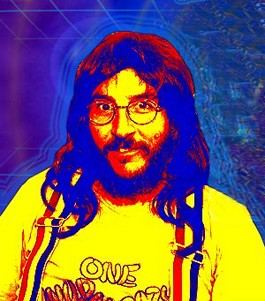
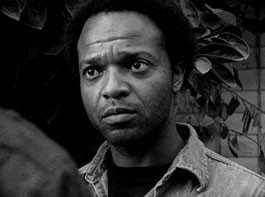
A s if leading one of the Bay Area’s most unique bands and writing a full-length novel weren’t enough for Primus frontman and lovable oddball Les Claypool, he’s now added film director to his cache of hat tricks. Years in the making and largely filmed in Marin, Electric Apricot: Quest for Festeroo is a mockumentary in the vein of This Is Spinal Tap , skewering the jam-band scene and all of its attendant nonsense with a keen eye for the absurd. Distributed by National Lampoon, it’s funny, as the saying goes, because it’s true.

The film follows the foibles and follies of Electric Apricot, a band of mostly clueless hippies who start out small, playing in coffee shops, writing innocent little songs, jamming endlessly. But when “Hey, Are You Going to Burning Man?” is a surprise hit and the band starts to record their first album, relations get strained. By the time they’re offered a slot at the huge jam-band festival Festeroo, the infighting increases to the most shameful of levels: group therapy.

With easy targets to aim at, Electric Apricot contains plenty of zinging one-liners, but Claypool’s ace in the hole is the ability to send up, in what at times is obvious fashion, aspects of his own scene; Primus, after all, exists on the outer periphery of the jam-band world. That Claypool can gather together people like Wavy Gravy, Bob Weir, Warren Haynes and Mike Gordon to participate in such a roast is a testament to his guts as much as his clout. It proves, too, that a little bit of harsh introspection is necessary to keep at it in music; jazz musicians often criticize the “jazz scene,” for example, just like punk bands often criticize the “punk scene,” and in doing so, they protectively elevate themselves above the trivial aspects that so often transform musical adherents into caricatures.

People all over the world will see Electric Apricot but it carries a special extra heft when shown locally. In hippie-friendly Northern California, it’s a near guarantee that certain personality traits of the film’s subjects will ring a familiar unhygienic bell. Claypool will be on hand to discuss the film at a special screening on Thursday, Jan. 10, at the Rafael Film Center, 1118 Fourth St., San Rafael. 7:30pm. $9.75. 415.454.1222.


Wine Tasting Room of the Week

0


It’s time to wipe the slate, cleanse the palate and buy a new calendar as soon as they’re discounted 60 percent. In this new year, I resolve: to observe a moratorium on Sideways references —it’s been fun for three years, but it’s time to cork it; to step out of the debate of Champagne vs. sparkling, but to drink more of each; to lay down wine for longer than a few days’ storage on the kitchen counter, so as to note how nuances of bouquet develop after, say, three weeks; and to give the topsy-turvy ex-Topolos Vineyards another chance, and see what’s going on there now. Hey! I can take care of that last one right now.

Last time Swirl ‘n’ Spit dropped in on Russian River Vineyards was in February 2006. Ownership was up in the air, and the restaurant had cleared the tables for the last time. Topolos, with its distinctive North County architecture —part hop barn and part Russian fortress —was a funky favorite for locals and visitors alike. The vintages could be at times uneven, but memorable. I still recall an evening more than 10 years ago, when my neophyte palate was stunned by a 1994 Topolos Piner Heights Zinfandel, not quite sure if the wine was shockingly overextracted and overoaked, or simply, brutally, glorious.

The winery is under new Topolos ownership —Jerry is the brother of original owner Michael Topolos. It’s got a new, classy label, and while some of the funky details are gone, there is a sense that it’s not done with its makeover. If asked, hosts will still show curious guests a bottle of Topolos’ infamous “Stu Pedasso” brand.

The nicely priced 2005 Rosé of Pinot Noir ($12.99) is a tasty, dry pink wine with substance. Save it for summer or turn up the heat and have it now. You might note Russian River Valley cola notes in the 2002 Pinot Noir ($39.95), enjoying perfumed raspberries on the way to an herbal, rustic finish. I have no problem with blueberry Sharpie accenting the leathery bouquet of a 2005 Dry Creek Syrah ($24.95), but with the 2005 Dry Creek Petite Sirah ($34.95), we finally move into the deep purple territory of luxury tannins that sweep roasted nut aromas and blackberry-pie flavors to their happy home.

The tasting room star that everyone seems to show up for is the just-released 2004 Redwood Valley Barbera ($31.95), a bright and food-friendly table wine. Watch for the upcoming 2003 Napa Valley Charbono ($29.95), sure to be a special treat. Also on the horizon is the return of the Old Vine Zin that was a darling of the Topolos crowd. With all that coming on line, and the restaurant reopened as the new location of Greg Hallihan’s Stella’s Cafe, there’s little reason in the new year to pass up this friendly, rambling old landmark.

Russian River Vineyards, 5700 Gravenstein Hwy. N., Forestville. Open daily 11am to 5pm, tasting fee $5. 707.887.3344.


View All

REWIND

current reviews | INSOMNIAC: Henry Gayle Sanders stars in...

Future Unsounds

01.02.08Once again we stand on the precipice of a new year rife with musical possibility. What old ghosts will haunt us? From whence emerge the saucy upstarts who will burst onto the scene, gasping minty-fresh sounds that will obliterate the cynicism of nay-sayers and reawaken the dead-bird souls of burnouts? We have just a few suggestions for the future.In...

Letters to the Editor

12.19.07ASHES TO ASSESWhy is it that we are born with nothing and can't take anything with us when we die, but spend the time in between shopping, consuming and hoarding as much stuff as we can get our hands on? (The Green Zone, "Buy Nothing Month," Dec. 19.) We think of ourselves as such a smart species. Clever and...

Behind the Chador Curtain

the arts | visual arts | CULTURE, COMFORT: American...

Bonehead Grapes 101

01.02.08We learn new things about wine every day. It's good for the heart, it's good for the French, it's good for laboratory mice. There are also many questions unanswered, and some as yet not asked. Has it occurred to no one else to pose this question: Is wine like high school? It began last summer. Somewhere back there I...

Life Begins in the Sea

01.02.08We've heard the story before. As old as history itself, this one tells of three societies on the fringe, their cultures fading, their populations dispersing, and the sound of their spoken languages growing quieter and quieter. And though the Graton Rancheria tribe of Marin and Sonoma, the Kashaya near Fort Ross and the Manchester-Point Arena band of Pomo Indians...

Gaming Ghetto

01.02.08If archaeologists excavate our society a thousand years from now, one wonders what they'll make of a guitar-shaped device with push buttons instead of strings. Their bafflement will no doubt increase if the episode of South Park survives that compares playing the device to shooting heroin. They will wonder how and why a big chunk of society seemed to...

Noodle Down, Man

01.02.08 A s if leading one of the Bay Area's most unique bands and writing a full-length novel weren't enough for Primus frontman and lovable oddball Les Claypool, he's now added film director to his cache of hat tricks. Years in the making and largely filmed in Marin, Electric Apricot: Quest for Festeroo is a mockumentary in the...
11,084FansLike
4,446FollowersFollow
6,928FollowersFollow