Cooking with TJ’s

0

01.06.08

F rom the “I should’ve thought of that” files, longtime Trader Joe’s fans Deana Gunn and Wona Miniati have come up with the first-ever Trader Joe’s cookbook, Cooking with All Things Trader Joe’s . Using ingredients that all come from the popular chain, they’ve created one of the few cookbooks geared toward time-starved home cooks that is actually decent.

If you’re a seasoned home chef, some of the recipes, like the stuffed red peppers, “blue corn taco salad olé” and cheese fondue will seem a little amateurish and geared toward kitchen newbies. However, if you really are culinarily challenged, check out the “Bachelor Quickies” chapter, a list of ridiculously easy heat-and-eat recipes. But experienced chef or not, there’s nothing wrong with a little help on those nights when you don’t feel like spending a lot of time in the kitchen or shopping at several stores for your groceries. The book also includes suggestions for pairing food with Trader Joe’s famously cheap (and sometimes even good) wine.

The book treats Trader Joe’s as your personal prep kitchen by utilizing the store’s array of prepared items, sauces and mixes to create pretty decent meals in 15 minutes or less. I cooked a couple of recipes from the book and was pleasantly surprised at how good and easy they were. I recommend the better-than-it-sounds “black bean and ricotta-stuffed portobellos” and the “peanutty sesame noodles.” I love a good peanut sauce, and the one in this recipe is very good.

You could just stick with frozen burritos or canned soup, and call it a night. But with just a bit more work, Cooking with All Things Trader Joe’s allows you to create a decent meal in about as much time as it takes to bake a frozen pizza. There’s no shame in taking a few shortcuts now and then if it means getting food on the table faster.

Quick dining snapshots by Bohemian staffers.

Winery news and reviews.

Food-related comings and goings, openings and closings, and other essays for those who love the kitchen and what it produces.

Recipes for food that you can actually make.

First Bite

0

02.06.08

E ditor’s note: First Bite is a new concept in restaurant writing. This is not a go-three-times, try-everything-on-the-menu report; rather, this is a quick snapshot of a single experience. We invite you to come along with our writers as they—informed, intelligent eaters like yourselves—have a simple meal at an area restaurant, just like you do.

What is it with the French? French president Nicolas Sarkozy has an affair, divorces his wife, who’s also having an affair, and then takes up with a young, gorgeous actress. No one blinks an eye. Call it arrogance, self-confidence or je ne sais quoi, but it’s real, and you can see it and taste it at Chloe’s French Cafe, which opened just before Christmas.

The French themselves would probably say Chloe’s offers “un gout de France. ” The food is authentically French, though the setting, in the Landmark Executive Building, doesn’t make one think of France. Off the beaten track in the northwest corner of Santa Rosa, it’s worth the detour. Renee Pisan, who’s originally from Cleveland and who studied French cooking in Dallas, makes the hearty French fare: soups, sandwiches and salads. Her husband, Alain, who was born and raised in St. Tropez, makes the pastries the same way his parents did in their cafe, and, as Renee says, croissants are in his DNA. Alain’s brother, Marc, who has selected some of the best French and California wines, serves as the sommelier.

Chloe’s is charming. The menu is in French and in English, and the people who work at the counter really like what they’re doing. On the walls, there are photos of French street scenes, and the pastry counter, with its éclairs and fondants, is bound to bring back memories of French cafes.

The hot and cold sandwiches are made with slices of thick, tasty French bread, and there’s lots of cheese, especially in the Croque Monsieur ($6.75), with baked ham, Gruyère and a béchamel sauce. The tarragon turkey sandwich comes with thinly sliced turkey breast, sharp cheddar cheese and mustard ($6.75). There’s the soup du jour, in a cup or bowl ($3.75&–$4.95) made fresh everyday. The coffee is excellent, and the desserts, especially the fondants ($1.75), are as decadent as a chocolate cake can be.

The words “local” and “organic” aren’t on the menu, and the food isn’t uniquely Californian, but Chloe’s French Cafe is a definite addition to the local restaurant scene, and it seems likely that its reputation can only grow. Years ago, a billboard for a local winery on Highway 101 read, “Don’t Leave Sonoma Without Seeing France.” Now, Chloe’s gives that slogan new meaning. If local chefs haven’t already discovered it, you can bet they will. The French, it seems, still have a thing or two to teach us.

Chloe’s French Cafe, 3883 Airway Drive, Landmark Executive Building. Open for breakfast and lunch, Monday&–Friday. Happy Hour, with selected French cheeses and wines, Fridays, from 4pm to 6pm. 707.528. 3095.


Quick-and-dirty dashes through North Bay restaurants. These aren’t your standard “bring five friends and order everything on the menu” dining reviews.

Whale Safe

0

02.06.08

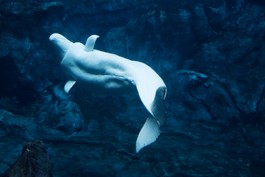
For large baleen whales, the approach of a vessel once meant great danger, and those that knew better dived for the depths. Today, the threat of the harpoon is gone in most waters, yet whales must still contend with the vessels themselves. Prop-powered, steel-hulled and ever in a hurry to meet the demands of the global economy, open-ocean ships travel faster and in greater abundance today than they ever have before, and collisions between vessels and water mammals are on the rise. In virtually all cases, the animals lose.

This accelerating trend has been starkly obvious along California’s busy coastline, where an alarming number of dead humpback and blue whales have washed ashore in recent months with injuries almost certainly caused by bows and propellers. High underwater noise poses an issue of concern, too, and while there is no easy way to monitor the doings of ships far from shore, in Marin County one small nonprofit organization—Seaflow, based in Sausalito’s Fort Cronkhite—demands that within our coastal state and federal marine sanctuaries, large ships put on the brakes for whales.

Founded in 1999, Seaflow aims to protect whales, dolphins and porpoises from the negative effects of boats and their noise. This March, the organization launches its Vessel Watch Project, a volunteer watchdog effort to monitor ships as they enter and leave San Francisco Bay. Seaflow plans to charter small fishing vessels and take volunteers out the Golden Gate to both observe passing ships and to take readings of underwater sounds and their volumes and frequencies with subsurface microphones. Sentinels may also be stationed on the Marin Headlands with binoculars and cell phones.

“We want to involve the public while educating and informing them, as well as the policy makers,” says Seaflow executive director Robert Ovetz. “By bringing out citizens and getting them involved—letting them hear what the underwater soundscape is like, see how fast these vessels are going and how they’re treating our marine sanctuaries like superhighways—we think that’ll have a tremendous impact on the progress we make.”

According to a 2006 paper published by Mark McDonald, John Hildebrand and Sean Wiggins with the University of California, the ocean’s global fleet of commercial vessels more than doubled from 41,865 in 1965 to 89,899 in 2003. In the same 38-year period, the gross tonnage of ships grew from 160 million to 605 million. Port turnaround has grown more rapid, too, meaning that each of these ships spends more time than before on the water. An increase of about 10 decibels in the 30 Hz to 50 Hz frequency range at a recording site near San Nicolas Island off of Santa Barbara correlates with this fleet growth, and many scientists believe that such noise disturbs and possibly injures marine mammals like whales.

In fact, underwater measurements with microphones at the same spot have detected what appears to be a shift in the vocalization strategy of blue and fin whales. Megan McKenna, a graduate student at the Scripps Institution of Oceanography and a scientific correspondent for Seaflow, says that the animals’ calls have increased by about seven decibels from 80 to 87 in the past 40 years, an increase of five times the intensity (it’s a logarithmic scale).

The increase in volume closely resembles the increase in general ambient ocean noise, most of which comes from ships, and McKenna suggests that the whales may be vocalizing more loudly to make themselves better heard and understood by their peers amidst the din of boat noise. “It begs the question,” he says. “Is there a threshold where whales can no longer hear each other through this background noise?”

Sound carries with great ease under water. In the “deep sound channel,” a layer of water characterized by a particular range of pressure and temperature parameters and which hovers as much as a thousand meters below the surface, noise may carry literally across oceans.

“Mankind has made the ocean a very noisy place, and most of it is due to commerce,” says Toby Garfield, a professor of oceanography at San Francisco State University. “The biggest change the ocean has seen has been with the development of the diesel engine and fast freighters.”

According to Ovetz, ocean noise has approximately doubled every decade for the past 40 years. Observations are inconclusive, but many scientists believe that low frequency vibrations generated by ships can deafen and disorient marine mammals as well as drive them from their breeding and feeding areas. The noise may also lead indirectly to the flustered whales being struck by the ships.

Such occasions have historically been rare. Between Los Angeles and the Point Reyes Peninsula from 1986 to 2004, only 12 whales are known to have been hit by ships.

But between September and October of 2007, three blue whales and two humpbacks were found dead on Southern California beaches with cracked skulls and other injuries plainly suggestive of violent interactions with big metal objects. Another humpback was found in similar condition at Point Reyes this fall.

The abrupt increase in ship-whale collisions cannot be ignored, says Ovetz. “This is a record number of highly endangered species being killed by shipping traffic,” he charges.

Research by Woods Hole Oceanographic Institution has found that when a ship reduces its speed from 20 knots to 10 knots, it also reduces the risk of collision with whales by 40 to 50 percent. The National Oceanographic and Atmospheric Association has proposed implementing a speed limit outside Boston Harbor and other ports, but the suggestion has been opposed by the World Shipping Council, which argues that such impediments to ship travel would cost captains and maritime companies money.

Currently, the Channel Islands National Marine Sanctuary (NMS) imposes a voluntary speed limit of 10 knots, but whether any vessels follow the suggestion is not clear. Seaflow holds the opinion that a required 10 knot speed limit in local waters would protect marine mammals while generating other benefits.

“Reducing the speed limit to 10 knots in the sanctuaries would not only lessen the risk to whales, but save fuel for the ships and reduce emissions into the air,” Ovetz says. “It’s a win-win-win situation.”

According to Matt Zolnierek, lieutenant with the Coast Guard’s Vessel Traffic Service, a strict code of rules regulates the bay’s boat traffic, which includes approximately 400 daily “transits,” many of which are roundtrips by ferries or fishing vessels. Radar surveillance ensures that boats obey a speed limit of 15 knots. Outside the Golden Gate, however, vessels are largely free to act and move about as they wish, says Zolnierek. The only safety rule is one of traffic lane separation, which the Coast Guard monitors as inbound and outbound ships maneuver past one another near the Golden Gate Bridge.

Ninety percent of all imported goods arrive in the United States by ship, and every day 10 large vessels come streaming through the Golden Gate, according to stats from the San Francisco Marine Exchange. Unavoidably, these vessels plow right through the Farallones and the Monterey NMS, which, like other areas established by the Sanctuaries Act of 1972, is designed to protect resources and marine life. Ovetz believes it is the federal government’s obligation to assure that within such zones—as well as state-monitored Marine Protected Areas—ships do not create a hazard for wildlife, either by striking animals directly or blasting them with their tremendous volumes of low frequency noise.

Seaflow’s Vessel Watch Project has received a boost of interest and support following the November Cosco Busan oil spill. Plans to begin a watchdog program of local boat traffic are accelerating, and the calendar has been marked with five tentative cruise dates on which chartered vessels will motor volunteers out the Gate to conduct vessel-watching activities. Using underwater microphones, cables and headphones, volunteers will listen to the endless subsurface rumblings with which whales must contend. Seaflow will also measure the speed of passing ships and consider what hazards such boat traffic may present to marine mammals.

Also on Seaflow’s agenda is construction of a database of the large vessels that regularly visit San Francisco Bay. Coast Guard records, says Ovetz, will reveal which boats have been involved in local accidents or have violated traffic codes. Vessel Watch observations will then discover whether any such ships repeat their offenses and whether authorities respond with a crack of the whip or just a slap of the hand. Large cargo vessels regularly enter the bay carrying over a million gallons of tarlike bunker fuel, and these boats cannot be allowed to put the public and the public’s resources at risk, Ovetz says.

“Sanctuaries have a responsibility to protect natural resources within their boundaries. That’s not always being done out here, and someone needs to call them on it. With the Vessel Watch program, we will be the eyes and the ears of the ocean.”

For more information on Seaflow, visit [ http://www.seaflow.org ]www.seaflow.org.


Letters to the Editor

02.06.08

Yes We Can!

I think it is amazing how huge Barack Obama’s grassroots movement has become. One underlying and enduring truth is that Obama’s campaign has inspired a movement of people who really believe in our power and responsibility to make a difference in our community. Something like 700,000 donors have donated to his campaign overall, and 90 percent of those in the last month (around 200,000 people) have given less than $100. An unprecedented number of citizens have volunteered for his campaign. This is an amazing model of a grassroots campaign, and I hope it persists after this election.

Sky Nelson

Santa Rosa

middle-class poor

I wonder how many people are in the exact same situation (“Wage Slaves in Paradise,” Jan. 23). How about 80 or 90 percent of us? The bottom line for most hard-working middle-class poor is that we actually do want to pay our bills on time and in full. We are not extravagant, and if those credit limits are maxed out, they were more than likely used to pay PG&E and the water bill. If we were not being continually gouged by rising interest rates on our credit cards and mortgages we could pay our bills in full and on time. Why is no one discussing this in the political arena?

J. Earnest

Santa Rosa

Mccain is dangerous

John McCain is a known quantity, but should never have entered the race, with his age, psychological and physical conditions being major impediments to his campaign. Certainly McCain was courageous during wartime—so were thousands of others—yet this does not necessarily make them good presidential candidates. McCain’s ferocious temper should be enough to scare people, and his unpredictable emotions actually scare me if our country was in a time of peril. Does anyone really believe that he will be able to stand the rigors of the campaign until November against firecrackers like Obama or Clinton? Give me a break. I know the media wants a Democrat to win, so that is why a lot of them support McCain, because they know he won’t win. Let’s be fair about the race.

sara Rainone

Mr. Fix-It?

So, Gabe Meline advocates drilling holes in the floor of rental units and damaging the ceilings of property owned by others, and the Bohemian thinks that’s fit to print (“Deposit Security,” Jan. 30)? Come on. As a long-time landlord, I’ve dealt with all manner of human waste and carelessness, but rarely do I see such activities actually recommended in print.

Max Murphy

Forestville

Mr. Murphy, dude—it was a joke. Ish. You know: a joke-ish. Anyway, he did strongly advocate for putting everything back the way you found it (in order to get money, of course). What are a few holes among friends? Ish.


Head Shots

0

current reviews |

Model Artist: Lee Miller in Man Ray’s ‘Electricity,’ 1931.

By Richard von Busack and Michael S. Gant

Lee Miller: Through the Mirror’ ($29.95; Facets Video) Pioneer female photographer Lee Miller led one of the 20th century’s most glamorous lives: she was a Vogue cover model in the 1920s, posed for Edward Steichen, learned to make her own pictures while living with Man Ray, appeared in Cocteau’s The Blood of a Poet, and wrote and illustrated powerful magazine articles about the liberation of the concentration camps. This 55-minute French documentary by Sylvain Roumette offers an introduction to Miller’s life, based on the archival work of Miller’s son, Antony Penrose (Miller was married to British surrealist Roland Penrose).

Most of the film consists of stills of Miller and her work discussed by Antony, along with a long reminiscence by American magazine photographer David Scherman, who enjoyed an affair with Miller (whose relationship with Penrose was extremely open) that he’s obviously never gotten over.

Too bad, though, that the son’s protective instincts seem to hide Miller from us. We see her mostly through the eyes of others, as if she where still the model who used to alternately fascinate and infuriate Man Ray. I don’t know if any film of Miller herself actually exists, but her own voice is missing from this biography. The set comes with a booklet containing two interesting pieces about Miller, including the director’s essay linking Miller to Stendhal’s heroine Lamiel. —M.S.G.

‘Shadows of Forgotten Ancestors’ ($29.95; Kino) Soviet-Armenian director Sergei Paradjanov’s 1964 masterpiece of life in the Carpathian Mountains, “forgotten by God and people,” tells the story, somewhere in the past, of the peasant Ivan (Ivan Mikolajchuk), who loses the love of his life, wanders in exile and participates in celebrations and lamentations. Eventually, Ivan marries a bright-eyed, faithless villager (Tatyana Bestayeva) who cannot lure him back from the ghostly appeal of the woman he lost. The Georgian filmmaker’s extraordinary sensuality combines the dreaminess of Vigo with the feeling for the natural world of Herzog.

Kino’s print of this much-mutilated film is very good, if not visually restored, and includes scenes that didn’t make it on to earlier video issues. The coming attractions include the good news that Paradjanov’s Legend of the Suram Fortress is also being reissued by Kino. A slideshow of the director’s fine art is beautiful as it is enlightening; less so is the underwhelming 2002 documentary Islands, comparing the career of Paradjanov with that of his great friend Andrei Tarkovsky (Solaris, Andrei Rublev) . Out-of-context film clips try to illustrate both artists’ sufferings at the hands of Soviet censors and judges. In Paradjanov’s case, they knew who they were after—Shadows of Forgotten Ancestors is perhaps the least Soviet movie ever made in the U.S.S.R. —R.v.B.

‘Slings & Arrows’ ($59.95; Acorn Media) The Canadian TV comedy Slings & Arrows ran for three seasons (2003–2006), totaling just 18 45-minute episodes. The box set (with an extra disc of interviews) will leave you wanting more but admiring creators Mark McKinney, Susan Coyne and Bob Martin for knowing how to bow out on top. Combining The Office and Waiting for Guffman, the show follows the fortunes, egos and libidos of the New Burbage Festival of Shakespearean Theatre.

McKinney plays the bumbling executive director with the ultimate nondescript name, Richard Smith-Jones. His administrative assistant, Anna (Coyne), is an overstressed but chipper office enabler who fixes the copy machine, rides herd on the interns and begrudgingly serves coffee. Artistic director Geoffrey Tennant (Paul Gross) suffered a breakdown during a performance of Hamlet seven years before and now lives in the theater’s storeroom. His one-time lover, Ellen Fanshaw (Martha Burns), is a neurotic diva.

The festival’s emeritus director, Oliver Welles (Stephen Ouimette), is run over by a ham-delivery truck early on but returns as a ghost giving Geoffrey staging advice. Visiting director Darren Nichols (Don McKellar of Twitch City) hates theater and favors Roland Barthes–style deconstructions, including a Romeo and Juliet in which the leads never look at each other.

Each season follows a single main play—Hamlet, Macbeth and King Lear— with the offstage antics mirroring the onstage text. In my favorite subplot, Richard, worried that the festival’s aging subscribers are literally dying in their seats, hires a New Age ad agency headed by a visionary named Sanjay (Colm Feore), who embarks on an ad campaign featuring billboard come-ons like “Bite Me” and “Piss Off.”

The show manages to be raucous, profane, witty and, best of all, really in love with the agony and ecstasy of putting on a play. —M.S.G.


Silicon Valley | Santa Cruz County |


New and upcoming film releases.


Browse all movie reviews.

Hot Ink

Sexology 101

02.06.08


D o you actually get paid to do this?”

I’d just lectured 400 San Francisco State undergrads on “A Brief History of American Cinematic Pornography.” Not your typical ivory-tower fare. The first half focused on stag movies shot from 1900 through the 1960s. Projected snippets of triple-X San Francisco films produced in the 1970s anchored the second half, highlighted by that timeless classic Make Mine Milk . You may recall that MMM stars a meaty, lactating lass whose postdubbed comments range from the “far-out” whimsical to the engagingly obscene. Milky’s playmates include a near comatose male drunkard and his exquisitely plain-Jane girlfriend. Jane’s sexual gyrations visually define the word “raunch.” She sure could act.

And yes, SF State paid me to do this. The university’s human sexuality studies program gifted me with a whopping $50 honorarium to present a century of cinematic smut. It wasn’t the first time, either.

My lecture had succeeded in providing naptime for scores of knowledge-satiated students. I could hear them snoring. Still, as those lights came up, I clearly saw hundreds of other students—hormone-saturated, slack-jawed and staring at me like zombies straining to keep their meal down. That first questioner no doubt voiced what many who had managed to remain conscious puzzled. He actually gets paid for this?

That’s when it hit me.

Could it be that the 21st-century student no longer finds bulbous men in leisure suits or hippie chicks sporting furry armpits and fat pimply butts sexually enticing? Odd, but demonstrably true. Following this scientific line of inquiry to its logical conclusion, I finally had to ask myself: Just where was my narrowly gauged expertise taking me in life?

I resolved to pose this question to that person best equipped to provide me a knowledgeably honest answer. Should my life purpose require recalibration, then this adviser needed to be thoroughly familiar with my field of research. Beyond that, however, he or she would need also to be in touch with the entirety of our species’ sociosexual activities. In other words, it was incumbent upon me to seek the advice of a truly enlightened sexual being. But just who in the world is such an evolved master?

Fortunately, I knew. I resolved to seek council from the one truly transcendent sexpert I’d ever met, someone once actually described as our national sexual treasure. I chose Ellen Steinberg.

If Ellen Steinberg doesn’t ring a bell, perhaps her other name does: Annie Sprinkle. If you’ve never heard of Annie Sprinkle, then your life, too, may be entirely devoid of meaning. Annie’s one of the most recognized and celebrated actresses in the history of American pornography. Annie is legend not only for her carnal enthusiasms, but also for her gender-bending, sex ed and gooey-edge performance art. She’s a humorist, postporn modernist, multimedia artist, lecturer, feminist fetishist, tantric instructor, published author, professional photographer and—whew!—one hell of a utopian entrepreneur. She’s also a really nice person.

Now, I’m no New Ager, but sometimes harmonic convergence just plain runs amok. The very moment I realized that she was the one human being qualified to analyze my entirely pathetic existence, my phone rang. It was Annie Sprinkle.

I set to pleading for her help in resolving my life crisis from that first hello, but Annie cut me short. She doesn’t like people wasting her time. Annie was calling to offer me a short-term business arrangement.

I was flat broke as usual. Annie intuited this and had conjured up a solution. Being the all-embracing Earth Mother type, Annie extended her offer to my equally indigent motor-mouth buddy, Mike. Would we like to assist her for a few days? For pay?

Mike was a lip-smackin’, hipper-than-thou trendster, the type who asks really embarrassing questions specifically to embarrass. Mike’s specialty was hardware. Earrings, tongue rings and, yes, one enormous silver rod running straight through the head of his—well, you know. Moreover, Mike’s singular life goal was to become a video porn producer.

Annie hired us to help throw out her porn. Not all of it. Not the goofy, primordial porn, but tens of thousands of artsy-hot photo sheets and slides, most of which were so dignified they could well have been published in Playboy, Penthouse or the porno version of Better Homes & Gardens Annie had photographed hundreds of models over what I understood to be years, if not decades. But she was pressed for space, and the time had come to sort and pitch. We must have dumped a good half-ton of Annie’s stuff. You can only imagine how hard that was.

Annie’s art studio was then in a former Army barracks, part of the Headlands Center for the Arts. She had festooned her studio with erotic art, racks of custom lingerie and frolicsome costumery amid a jumble of New Age, feminist and multi-uni-duo-sexual devices. There were books, mags and playtime construction materials. While an adult amusement park to the eyes, the room was one damn cold place in the El Niño dead of a North Bay winter.

A nnie, my friend Mike and I met when we were all enrolled in the same doctoral program at San Francisco’s Institute for Advanced Study of Human Sexuality. It had long ago been nicknamed Hot Tub U. Mike and I naturally enough called it Fuck U.

Founded some three decades ago by a couple of Methodist ministers, together with Alfred Kinsey’s closest colleague and co-author Wardell B. Pomeroy, this private institute offers a range of masters and doctoral programs. (It is, however, somewhat fuzzy about its national accreditation.)

The institute claims to own the world’s largest collection of pornography. I’ll say this for sure: There is one mighty awesome load of old 16mm films at IASHS. And I should know—for two years, I was the school’s 16mm feature-film archivist.

I first visited the institute hoping to write a cockamamie story for whatever magazine would buy it. During my sit-down with institute president Ted McIllvenna, media came up as a topic. He told me about vast holdings of films and video, not only housed onsite but also piled up in numerous warehouses. When I mentioned my film and television school background and years in Hollywood, he asked if I’d like to enroll in the institute’s Ph.D. program as an intern archiving films in exchange for tuition. I’d also give the occasional lecture on what I’d uncovered. Back home, I explained this proposition to my not-yet-wife. She enthusiastically encouraged me to grab the offer. I guess she didn’t know what we were getting into.

Why would the Institute would want these materials catalogued? Think of any library with AV materials. In order to locate those materials they must be ordered, particularly if comprehensive studies may be done using the materials. This enhances the stature of any library’s holdings.

But mostly I think Ted wanted them catalogued so the films could be digitized and re-released as historical wanker tapes. There’d long been talk about the institute working together with one of the nation’s most notorious old porn operators in creating a series of sex museums. The first was to be built adjoining one of his strip joints in Vegas. Class all the way. Copies of these “heritage series” films would of course be available for sale on-site for~ serious historians flocking to the museum to take home with them. In brown paper bags, no doubt.

Unlike Hollywood or conventional indie releases, these films were not copyrighted. They were sold outright to theaters as quickly as possible so as to out-race dupe pirates who’d soon be circulating the very same films at discount prices. Years later, with the 16mm adult-film industry spent-dead, some of these ex&–theater owners realized that fat tax write-offs could be had by gifting decaying celluloid to nonprofit groups. But what sort of nonprofit collects musty old porn? The Kinsey Institute at Indiana University, for one, and Fuck U, too.

T he next morning we were back in Annie’s studio, pitching out porn like no tomorrow. Mike had already launched into the day’s inquisition. Annie responded to Mike with even better than she got, while I blubbered flustered nonsense. I did endeavor to place my “life’s direction” question to the fore, but Mike steamrolled my every attempt with comic ferocity.

Occasionally, the rains would break. We’d seize upon these interludes to hike down sand dunes to the ocean, stretching our legs and breaking from our pornographic monotony. Even while Pacific winds whipped through us, Mike continued peppering us with questions.

Back in her studio, Annie generously hooked both Mike and me up with all kinds of folks she figured could help us grow our careers. Additionally, she spent phone time booking her performances, gabbing with old friends and cooking up exciting new projects. By the end of the week, our work for Annie was finished.

T he last time I saw Mike, he proudly toured me through his new porn studio, a closet-sized bedroom atop a bookstore in the Tenderloin. I figure by now, after these few years, he’s either a big-time porn producer or the lead interrogator at Gitmo.

Annie’s still accumulating fame, if not fortune. She received her Ph.D. months before I had to leave the institute in order to make some semi-real money. Unlike these two dynamos, I never sensed where I fit into the sexology cosmos. I had no psychology or psychiatry degree, so therapy was out. Porn production hadn’t the allure for me that it did for Mike, and my age precluded university tenure, had I chosen to teach.

I never did ask Annie what archiving seminal porn films meant to my life, and it wouldn’t be fair to expect that she could tell me. But I got a story out of it, a friend in Annie Sprinkle—and I learned how to ask lots and lots of questions.

To learn more about Annie Sprinkle, go to [ http://www.anniesprinkle.org ]www.anniesprinkle.org


Wine Tasting Room

0

L et’s talk sweet wine. Not that sweet kiss of oak, or even wine paired with chocolate. They’re nice, but for many people, once chocolate’s in the picture, the wine is marginally relevant. No, no—let’s have a frank discussion about residual sugar.

We can look to the lyrics of hundreds of songs to find that people have long celebrated “Sweet Wine,” “Sweet Red Wine” and even “Sweet Cherry Wine.” We don’t hear crooning over dry wine. And who sings about “Bitter Wine”? Bon Jovi, that’s who.

It was the cavity-courting English who boosted Portugal’s fortified, sweet wine to world renown, while every fall Germans enjoy a half-fermented brew called Federweiser. Why was white Zinfandel such a hit with Americans? Because it tastes like watered-down raspberry Kool-Aid licked off of a stainless steel tank? Because it’s sweet, duh. Now, who is drinking the Kool-Aid here? According to tasting-room sources, people are shy about asking for the sweet wine on the menu. It’s somehow thought to be déclassé.

Everyone’s romance with the grape must seemingly conform to this story line: getting snockered on sangria, awakening to $8 varietals and then, finally, enlightenment—being able to confidently proclaim that the 1998 Chateau Doncha’know won’t be drinkable ’til 2030. Is it possible that some sweet wine is shunned for reasons other than how fine it tastes, alienating the taste preferences of much of the nation? Of course, much of what is available sucks. It’s made by the lagoon-full, sold by the jug-full and it doesn’t help family farmers. Now—hold on to your head, this may hurt—what if these sugar sippers had access to more high quality, North Coast wine that they liked? Ow, my head. I should really get that cavity checked out.

Get your fill of fructose with these excellent local offerings: Randy Pitts wastes no time in bottling Harvest Moon’s 2007 Late Harvest Zinfandel ($30), an ambrosia of fresh grape flavor, with yeasty, floral and cocoa notes—why wait? In Selby’s Sauterne-style 2000 Sweet Cindy ($12), Gewürztraminer dances with Sauvignon Blanc in an apricot-brandy-infused dream. Peterson’s 2005 Dry Creek Valley Muscat Blanc ($30) is a nectar of hazelnut and orange. Even French Columbard, left on the vine long enough, shows the love in Dutton Estate’s 2006 Sweet Sisters Late Harvest French Columbard ($18). Sonoma Valley Portwork’s tawny-red Deco ($17) is bittersweet with chocolate essence, like the best day of a love that won’t last.

Gewürztraminer can be great in sweet or dry styles, but it’s fashionable with wineries these days to preemptively assure tasters that theirs is bone dry, not sweet! Let’s see what turns up at the Anderson Valley Winegrower’s third annual International Alsace Varietals Festiva on Saturday, Feb. 9, at the Mendocino County Fairgrounds. 14400 Hwy. 128, Boonville. Grand tasting noon–3pm; $65. 707.895.WINE. [ http://www.avwines.com ]www.avwines.com.

View All

Let’s Get It On

0

02.06.08

N ight after night on radio stations all over California, an easygoing, seductive voice introduces the classic sounds of smooth soul music. Flowing across the airwaves into the bedrooms of spouses, lovers and hopeful hookups, this voice guides the sexual fulfillment of hundreds of listeners across the state. And the woman behind the voice couldn’t be happier about helping out.

Meet Lisa St. Regis, whose 10-years-and-counting radio show “Between the Sheets,” broadcast locally on KISS 98.1-FM, is by far the best-loved source for the sultry, slow jams called “baby-makin’ music.” The playlist, featuring the likes of the Isley Brothers, Teddy Pendergrass and Earth Wind & Fire, drips with deep-soul romance, but the real highlight of the show is St. Regis herself—and the obvious satisfaction she gets from assisting in the satisfaction of others. “I want everybody,” she said last weekend while working in the station’s San Francisco studio, “to have a romantic evening.”

In many ways, St. Regis was bred for the task. At the age of five, she drew sketches of wedding dresses and dreamed of true love; at 10, she demonstrated professional vocal ability answering phones at her mother’s office. Come junior high, between making mix tapes for friends and poring over love-song lyrics, she realized that people seemed to come to her for advice—and in high school, she entered into show biz by starring as Rizzo in the musical Grease . At 18, she took a radio job in San Jose, and she’s been behind a microphone, doling out love songs, offering advice and helping people hit the sack with each other ever since.

St. Regis, an Oakland resident born and raised in the Bay Area, brings two unique elements to the art of the boom-chicka-wow-wow: the first is her voice, a masterpiece in itself, containing just enough velvet tone to put both men and women in the mood; number two is her down-to-earth interaction with listeners who call in nightly with song dedications, dying to tell the world how much they love that special someone.

“It’s always been amazing to me how somebody can call up on the phone and trust me enough to tell me the deepest things,” St. Regis says. “One man—this was years ago—he was about ready to have an organ transplant, and before he went in to be operated on, he called in and wanted to make a dedication to his fiancée. Just in case he didn’t make it.”

Indeed, there’s a sea of listeners who feel as if they know St. Regis like a best friend. Parents of children conceived while listening to “Between the Sheets” have called in when the baby is born. Wives have called to let their soldier husbands serving abroad know that they’re pregnant. Boyfriends have called to propose on the air to their girlfriends. “I mean,” St. Regis gushes, “how much more joyful can you get?”

It helps that St. Regis broadcasts an intoxicating dose of classic love songs every night: Heatwave’s “Always and Forever,” Luther Vandross’ “Here and Now,” GQ’s “I Do Love You.” Though she stays up on newer artists like John Legend and Alicia Keys, it’s the older songs, she says, that get her listener’s juices flowing—and not just due to familiarity. “The kinds of songs that are being released now have so much formula ,” she sighs, “so they don’t have the same depth or lyrical content, I believe, as some of the traditional, classic old-school love songs.

“I don’t want to sound old,” she continues, “but if the first thing that you’re telling your girlfriend is ‘Do this, do this, do this, and this’ll happen tonight’—there’s no romance there, there’s no thought there. It just doesn’t have the same emotion for me.”

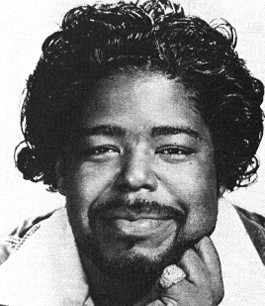
What about the bedroom classics played to death, like Barry White? Has she ever considered a moratorium on possible clichés, a “Sexual Healing”&–type of embargo? “No, not at all!” she laughs. “Those are some of our most requested songs! If you become a musical snob, you’ll find you get 10 requests for that song. The music is popular for a reason; it speaks to a lot of people.”

Though she’s constantly interacting with the love lives of others and has even served as bridesmaid for five of her listeners, St. Regis keeps her own personal life private from her on-air persona. She’s never been married (“Isn’t it the craziest thing?” she laughs), though she’s currently in a happy, long-term relationship with someone who, when they met, had never heard of “Between the Sheets.” After a few breakups with men who had harbored preconceived notions about “Lisa St. Regis, radio host extraordinaire,” it was a blessing to find him.

“People would hold me out to their friends to say, ‘Look! Look who I’m dating!'” the popular radio host says. “And so it got to the point where that was almost the number one criteria—to not care about what I do for a living. It’s difficult, when you’re on the air, to find somebody who doesn’t think that they know you already.”

Her listeners, as usual, provide the vast pool of experience to draw on in her personal life. “There’ll be people that have been married for 27 years, and my biggest question is how do you do it?” she says. “And I’ve learned that one of the biggest factors in people staying together is respect. For each other. And then comes love. If you treat other people with respect, you allow them to grow, you allow them to change, you allow them to make mistakes.”

Among the many benefits to being in radio for so long—along with meeting James Brown, Smokey Robinson and Tina Turner (“She was regal,” St. Regis remembers, “like a queen”)—is a first-hand opportunity to witness music actually changing people’s lives for the better. “Something like 96 percent of people in the United States still tune in to their radio on a weekly basis,” she says, “and it’s the only place where you can get a community feel, where you can hear your neighbors and have a central meeting place.”

“Everybody who falls in love feels like they’re falling in love for the first time, and each generation thinks that they invented love,” she points out. “But I think that every time we hear somebody else with a situation that’s similar to ours, then we stop having all these great dividing lines. It stops being ‘us’ and ‘them,’ and we start hearing a common thread.”

“Love, relationships, family, and romance,” she smiles, “that’s universal.”

‘Between the Sheets’ airs in the Bay Area on 98.1 FM Sunday&–Friday from 10pm to midnight.


Disappearing Woman

0

the arts | stage |

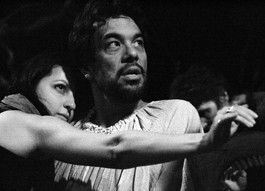
On the Boil: Denise Elia as Hecate and David Yen as Macbeth in last fall’s Loading Zone production.

By David Templeton

I like stepping all the way into whatever I’m presented with,” pronounces actress Denise Elia, spearing a shrimp over lunch last weekend in Santa Rosa. “I like disappearing into my roles. I want every one of my characters to be a really full, rich, deeply developed character, so I always try to find that character somewhere inside me, and then I start hauling it up and out into the open until I see the image of that character in front of me—and then I just step in.”

Though Elia has been performing frequently in the North Bay for the past three years, first appearing on the stage of the Sixth Street Playhouse as Pageen Ryan in Mame , it is only recently that audiences and critics have begun noticing her as one of the best young actresses to be working in the area. The problem—which, upon examination, is really anything but a problem—is that Elia, 29, has a way of disappearing into her roles so completely that she seems like an entirely different actress from role to role.

Whether singing and dancing in musicals like Mame, Sweet Charity and Oklahoma , smoldering as an emotionally conflicted cop in Actors Theater’s Lobby Hero , or flattening audiences with her comic timing, spot-on New York accent and scalpel-sharp comedy precision in the Sonoma County Rep’s currently running Moonlight and Magnolias , Elia immerses herself so completely that all one remembers later is the character seen onstage.

But that kind of invisibility can only last so long, and it was as the lead in last year’s Wait Until Dark , presented by Healdsburg’s Raven Players, and in last fall’s Macbeth , staged at the Loading Zone theater in Santa Rosa, that it suddenly became impossible not to notice Denise Elia. In Macbeth , playing the multiple roles of Malcolm and Hecate, Elia gave one of the most physically committed performances of the year, prowling, slinking, screaming, fighting, pleading, threatening and terrifying her way through a three-hour production that ranks as the scariest, most imaginative Macbeth I’ve ever seen, with Elia delivering one of the most memorable performances of the year.

“Of everything I’ve done in theater, ever, I think Macbeth was the first time I was able to utilize nearly everything I know, all the skills I learned in college and everything I’ve learned along the way,” Elia says.

Born in Long Island, Elia studied theater and Italian at the Center for the Arts in Buffalo, N.Y., and founded her own company devoted to performances of Italian theater. After graduation, she moved to Whitney, Ontario, where she was briefly married, and where she found a niche doing stage managing and assistant directing. After the dissolution of the marriage and a brief return to New York, she visited some friends in Santa Rosa, and over the course of that summer, fell in love with Northern California.

With its vast number of theater companies and devoted theater audience, the North Bay has turned out to be a great place for Elia to develop her acting career. She’s been auditioning for several major roles in local shows this summer, and expects to not be idle long once Magnolia ends its run next weekend. Eventually, she says, she plans to test the film and television waters of Los Angeles.

“I think Santa Rosa is a really great place for an actor to cultivate and nurture themselves,” she says. “There’s really quite a lot of work here, and I’ve been soaking up as much as I can.”


View All


Museums and gallery notes.


Reviews of new book releases.


Reviews and previews of new plays, operas and symphony performances.


Reviews and previews of new dance performances and events.

Cooking with TJ’s

01.06.08F rom the "I should've thought of that" files, longtime Trader Joe's fans Deana Gunn and Wona Miniati have come up with the first-ever Trader Joe's cookbook, Cooking with All Things Trader Joe's . Using ingredients that all come from the popular chain, they've created one of the few cookbooks geared toward time-starved home cooks that is actually decent....

First Bite

02.06.08E ditor's note: First Bite is a new concept in restaurant writing. This is not a go-three-times, try-everything-on-the-menu report; rather, this is a quick snapshot of a single experience. We invite you to come along with our writers as they—informed, intelligent eaters like yourselves—have a simple meal at an area restaurant, just like you do. What is it with...

Whale Safe

02.06.08For large baleen whales, the approach of a vessel once meant great danger, and those that knew better dived for the depths. Today, the threat of the harpoon is gone in most waters, yet whales must still contend with the vessels themselves. Prop-powered, steel-hulled and ever in a hurry to meet the demands of the global economy, open-ocean ships...

Letters to the Editor

02.06.08Yes We Can! I think it is amazing how huge Barack Obama's grassroots movement has become. One underlying and enduring truth is that Obama's campaign has inspired a movement of people who really believe in our power and responsibility to make a difference in our community. Something like 700,000 donors have donated to his campaign overall, and 90 percent...

Head Shots

current reviews | Model Artist: Lee Miller in Man...

Hot Ink

Sexology 101

02.06.08D o you actually get paid to do this?" I'd just lectured 400 San Francisco State undergrads on "A Brief History of American Cinematic Pornography." Not your typical ivory-tower fare. The first half focused on stag movies shot from 1900 through the 1960s. Projected snippets of triple-X San Francisco films produced in the 1970s anchored the second half,...

Wine Tasting Room

L et's talk sweet wine. Not that sweet kiss of oak, or even wine paired with chocolate. They're nice, but for many people, once chocolate's in the picture, the wine is marginally relevant. No, no—let's have a frank discussion about residual sugar. We...

Let’s Get It On

02.06.08N ight after night on radio stations all over California, an easygoing, seductive voice introduces the classic sounds of smooth soul music. Flowing across the airwaves into the bedrooms of spouses, lovers and hopeful hookups, this voice guides the sexual fulfillment of hundreds of listeners across the state. And the woman behind the voice couldn't be happier about helping...

Disappearing Woman

the arts | stage | On the Boil: Denise...
11,084FansLike
4,446FollowersFollow
6,928FollowersFollow