Superburger Rises Again

0

The last time I stopped by Gayle’s Superburger, on its final day in business, the atmosphere really wasn’t as jovial and congratulatory as it should have been. As a matter of fact, it was decidedly depressing—despite the milestone, the former owners could only muster one other grungy customer in the joint, and he didn’t even know, or seem to care, that it was the last day they’d be serving up their famous King Burgers.

I related this scenario to a few different people later on that night, and I quickly learned that the former owners weren’t what you’d call necessarily well-liked. I remember going to parties at the house next door in the mid-‘90s and listening to the house’s tenants complain about how mean the owners were, which is pretty funny considering that we routinely sneaked over onto Superburger’s roof to drunkenly light off fireworks in the middle of the night, but apparently the sentiment spread throughout the land. Though I never had any truck against the old owners—why would I?—I was surprised to hear some of my best friends vilifying them as if they were the human incarnate of Mr. and Mrs. Satan.

I stopped by the vacated Superburger the next day and ran into Bill Cordell, the new owner, as he prepped the small space for its reopening (that’s the transitional phase, pictured above). Things looked promising—Bill was friendly as could be, and Modest Mouse’s “Perfect Disguise” played on the stereo inside, which I know doesn’t have anything to do with food, but still. I asked about the overhaul, and Bill assured me he wouldn’t change the place much, short of scraping off the gum on the counter, slapping on some fresh paint, and making a few non-intrusive additions to the menu.

It took me a while, but I finally got down there today, and even at a late lunch hour the place was filled—only one seat remained at the horseshoe counter. And friends, I didn’t think I’d say this, but the place has changed for the better. You know how, like, you’ve got an old car that you love but it’s kinda fucked up, and you think the reason you love it is because it’s fucked up, but then you take it in and give it a tune-up and wash it and wax it and you’re like, if I loved this fucked up car so much, why didn’t I do this earlier? That’s what Superburger is like now.

Don’t worry—there’s still a pile of newspapers at the door, some old regulars, and the serve-yourself condiment tray on the counter. There’s still the old Schaefer ice cream freezer and the Hamilton Beach milkshake blender. There’s still the fixed stools. But all of these things are simply put to a much better purpose these days. I got a cheeseburger with fries and it was like nothing had changed, except the cheeseburger tasted a lot better and the people around me were a lot happier.

As for the menu, I could tell you about the nifty ingredients, like apple-smoked bacon and gorgonzola cheese. I could tell you about the burgers with cute local names like the St. Helena and the Montecito, about the chicken sandwiches and the sausages. But you know what? All you really need to know is that there’s now a huge jar of jalapeños sitting on the counter, free to be smeared upon your food at will. Hell yes. Count me in.

Ecomania

03.12.08

I n my search for the eco-warriors of the North Bay and beyond, some things have been brought to my attention regarding the sometimes hazy nature of what exactly it means to be green. The first is that there is not a 100 percent way to be green that does not include killing oneself. We can make positive changes for the environment, but shopping, eating, moving, creating, building all have impacts, and these impacts cannot be negated by recycling and using biodegradable to-go containers. The second is that the concept of “going green” is becoming popular in ways that make me suspicious.

When I hear through the greenvine that Wal-Mart is going to be remodeling its stores in order to attract environmentally oriented shoppers, I know that I have some investigating to do. If Wal-Mart thinks consumers are so easily duped as to be lured into a big-box store with a recycle bin and some carefully placed “natural” products, then the world of green is definitely getting muddied.

In order to get a firmer grasp on what it means to be sustainable and how we as consumers fit into the definition, I contact John Garn, a highly recommended environmental consultant. Garn, who has a powerful track record for helping businesses and cities green up, is the creator of Community Pulse (www.communitypulse.org), a website that tracks Sonoma County’s monthly use of energy, water, waste and carbon dioxide emissions. He considers himself to be a guide for businesses on their way to sustainability, and though I have no intention of starting a business, guide me he does.

The problem begins with the word “sustainable,” Garn cautions. What does it mean? People throw it around the way they throw around the word “natural,” but as long as there are no regulations in place to define “sustainable,” then things labeled as such don’t have to be sustainable at all. Sustainability is a continuous process; you can’t simply call something “sustainable” and expect it to save the species from extinction.

Garn suggests we think of sustainability as a needle on a compass indicating how close we are to our destination as a culture that perpetuates life. Even if we do pay attention to the compass, he cautions, “How can we expect to be a sustainable culture inside an economy that is not sustainable, because it is based on growth and consumption?” As long as we associate conservation with sacrifice, we will be stuck in what Garn and I begin to refer to during our conversation as “the Prius model of sustainability.”

This type of greening, Garn warns, is not sustainable, not only because it is directly connected to affluence, but because it is still a result of consumerism. The carbon footprint involved in putting together that Prius, Garn tells me, will never during the life of the car be offset, no matter how low its emissions. This reminds me of a term I recently added to my lexicon, which I share with Garn: “eco-apartheid,” where ecological well-being is only available to those who can afford it.

Garn rejoins with an anecdote about a local 7,500-square-foot straw bale home, chalk full of green gadgets and materials but inhabited by just two people. How is this sustainable? If every couple were to enjoy their own 7,500-square-foot straw bale home, we would need to enforce mass sterilization or colonize the moon.

The dreaded solution to creating true sustainability is simple: consume less, consume local. Organic strawberries from Chile in January? Don’t buy them. Mineral water from Germany? Just say no. Buy a used car, a small house. We, as consumers and planet dwellers, have to create a demand for real green processes and not be satisfied with a sticker that says “Sustainable” with no evidence whatsoever to back it up.

In order to get past the greenwashing, and to the truth of the matter, Garn recommends reading the “Six Sins” report, which artfully describes the six most common false claims of sustainability, such as the sin of the hidden trade-off and the sin of vagueness. He also cautions against “ecomania,” the false perception that we are as green as we can be. We need to stop “solarizing our efficiency,” he says, referring to the phenomenon where a few solar panels are installed because they make a business “look green,” while few moves are made to actually minimize energy use within the building.

Until we stop seeing conservation as something that goes against the American way of life, then all this talk of going green will lead nowhere. After all, the United States holds 5 percent of the world’s population, and yet we consume 29 percent of the world’s resources. How, Garn asks me, loosely defined as the word may be, can this possibly be sustainable?

To download the ‘Six Sins’ report, go to [ http://www.terrachoice.com ]www.terrachoice.com.


Letters to the Editor

03.12.08

The Real Scandal

As a former member of the New College of California Board of Trustees, I was scandalized by your article (“,” March 5). The real scandal is that the Western Association of Schools and Colleges (WASC) has all but destroyed a unique college that has provided high-quality educational programs at the undergraduate, graduate and professional levels for thousands of students, many from underserved and under-respected communities who otherwise would never have had the opportunity to get a college degree. The majority of those graduates now serve those same communities.

New College was judged to be in satisfactory compliance with all WASC standards in 2006. Two weeks ago, WASC voted to strip New College of its accreditation. This action came about as a result of an internal struggle that led a subgroup (including former employees) to secretly go to WASC with allegations of accreditation violations. WASC chose to deal with the situation by utilizing an extraordinary provision in its regulations that allowed them to send in an investigative “swat” team with one week’s notice to New College, while refusing to inform the college of the allegations against it or allowing the college any opportunity to prepare an explanation or defense for whatever allegations had been made. This three-person team appeared on campus, conducted a two-hour review of specified students’ files and then spent five hours at an off-campus location interrogating administrators and faculty.

The team then produced a condemnatory report containing some legitimate criticisms of college administrative and academic practices but many sweeping judgments that were exaggerated or false. A good example of that, repeated in the article, is the report’s accusation that former president Martin Hamilton showed favoritism toward a student and authorized a change in his transcript in exchange for the student’s promise to donate a million dollars to the college. This attempt at a grade change by president Hamilton never took place. Hamilton was never given an opportunity to prove his innocence to WASC, despite prior investigations by both the college’s academic vice-presidents and the Board of Trustees that found the accusation to be untrue. Martin Hamilton did not resign as a result of these allegations; he resigned because Ralph Wolf made it clear that New College would lose its accreditation if he did not.

As a result of this report, the WASC commission took a highly public punitive action placing New College on probation in July 2007. Because of this action, the college’s enrollment plummeted by 41 percent, actually creating a financial crisis that did not previously exist. Because of WASC’s action, the Department of Education immediately restricted the college’s access to federal financial aid funds, further crippling the college financially. Because WASC forced the resignation of Martin Hamilton and stigmatized those with significant past involvement in the administration, a new administration with little or no experience was forced to try to cope with the financial and political crisis, while maintaining timely responses to WASC demands that they knew New College would not be able to meet.

I would appreciate it if the Bohemian did a more thorough job of investigating all sides of the issue. I know for a fact that writer Leilani Clark did not talk to Martin Hamilton before accusing him of taking a bribe. Martin has lived in this community for many years and was instrumental in starting the Santa Rosa New College campus, which has provided a forum for numerous groups and issues. I’d think you would want to treat him fairly.

Colleen O’Neal

Santa Rosa

Leilani Clark replies: While I respect your assertions concerning New College’s unique and important contribution to the education community, it is a grand oversight to put the blame for the demise of the school squarely in the hands of WASC. In terms of Martin Hamilton, I reported that he had resigned amid accusations of bribe-taking. Whether he took it or not has yet to be proven, but the allegations themselves have been documented as a matter of public record.

On the Other Hand

Great story (“School for Scandal”). Research and quotes finely balanced. Taut, efficient prose. Could actually feel the heartbreak of students and staff alike. So sorry for them. Well done, Ms. Clark!

david dulberg

Sebastopol


Dual Nature

0

03.12.08

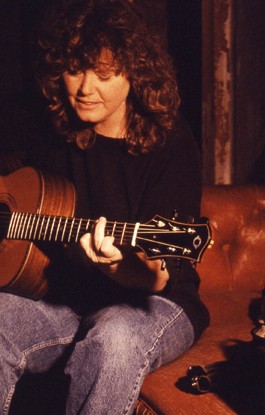
R egardless of the weather in California, it’s still deep winter in New England, where Cheryl Wheeler is having an eventful season. “I wrote a couple of songs in December, so I’m happy about that,” she reports. “I’ve been watching all the political races, and when I’m through with this call I’m talking the dogs for a w-a-l-k in the w-o-o-d-s. I have to spell it, ’cause they can hear me.”

The reason for the call, of course, is her imminent West Coast visit, which will bring Wheeler and accompanist Kenny White to the Sebastopol Community Center’s Youth Annex on March 15. Unlike many such sojourns, however, there is no new album to promote this time around.

“I would like to make another record; I don’t have enough material yet,” Wheeler says. (Her last official release was Defying Gravity in 2005.) Nor is she certain when that will change. “I used to write a lot more,” she laments. “As you get older, you’re less inclined to think that all your ideas are actually good. When I was in my 20s, if I was vaguely unhappy, I would think that was worthy of a song. Now I don’t.”

Not surprisingly, the casual quips that leaven Wheeler’s conversation are much like those that enliven her performances, if perhaps a bit more spontaneous that the side-splitting stage patter that delights her fans.

“Everything that I have ever said was in the moment, at least the first time I said it,” Wheeler explains. “But then if it works and I like it and it’s a good way to introduce the song, obviously I keep it in. My bottom line is that I’ve been hired to entertain people, that’s my job and I love doing that. And the best barometer I have is that I need to keep myself entertained, so I have to enjoy hearing it or think it’s funny. But if I feel like I’m getting sick of a little bit that I’m doing, that’s a good sign that I shouldn’t do it and it needs to change.”

But Wheeler is a singer-songwriter, not a standup comic. She balances her penchant for punch lines with a gift for crafting luminous melodies and crystalline lyric imagery, all in the service of insightful, emotionally resonant vignettes. Little wonder that her songs have been covered by such high-profile artists as Garth Brooks, Bette Midler, Kathy Mattea and Peter, Paul and Mary. She’s also penned sizable hits for Dan Seals (“Addicted”) and Suzy Bogguss (“Aces”).

Her most unusual cover came from country superstar Garth Brooks, who used a portion of Wheeler’s powerful “If It Were Up to Me,” as part of a track on his perplexing Chris Gaines album in 1999. Written in response to the Columbine school shootings, the song contains a lengthy list of possible reasons for the violent outburst: “Maybe it’s the high schools, maybe it’s the teachers / Maybe it’s the tattooed children in the bleachers / Maybe it’s the Bible, maybe it’s the lack / Maybe it’s the music, maybe it’s the crack / Maybe it’s the hairdos, maybe it’s the TV / Maybe it’s the cigarettes, maybe it’s the family / Maybe it’s the fast food, maybe it’s the news / Maybe it’s divorce, maybe it’s abuse . . .”

But Brooks did not include Wheeler’s concluding line: “If it were up to me, I’d take away the guns.” Wheeler says the omission didn’t bother her.

“He was using the litany to make a different point, but it wasn’t that different,” she says. “My point was very specially, if we’re going to wonder why children shoot each other, I think it’s because they have guns. His point was, why are we all so violent? I mean, Garth Brooks has a whole lot more to lose than I do if he comes out and makes some anti-gun comment. I’m not rabidly anti-gun; I’m rabidly anti-gun-in-the-hands-of-school-children. Or crazy people at any school.”

But politics, like comedy, is not Wheeler’s main focus. “I have written a lot of political songs in recent times—I mean, who hasn’t?” she sighs. “But I’m sick of it all, I just want to turn away from it. There’s nothing I can do about it.

“But things will be looking up,” she brightens. “Things can’t help but look up. Unless we elect Osama bin Laden, we’re going to be better off than we are now.”

Cheryl Wheeler and Kenny White perform on Saturday, March 15, at the Sebastopol Youth Annex. 425 Morris St., Sebastopol. 8pm. $32. 707.823.1511.


Savoring Pigs & Monks

03.12.08

I s it just us or does an entire weekend devoted to little more than devouring the greater part of an heirloom pig while drinking Pinot Noirs from the around the world sound almost recreational? As though calories could be burned staggering from the Friday night, March 14, Taste of Pigs & Pinot to the Saturday morning, March 15, seminars to a gala dinner that Dry Creek Kitchen chef Charlie Parker has devised to benefit hunger organizations and a local school? Naw, it’s not just us, as the Pigs & Pinot event is now in its third year and going strong.

The weekend begins with a taste-around of some 50 international Pinots and a groaning board of artisanal pork products—including a whole roasted suckling—and moves briskly on to two informational morning seminars, one with master sommelier Keith Goldston holding forth on the lush life of Pinot Noir; the other with Palmer himself, who takes over the Relish school to cook the hell out of pig goodness, trotters and all. The weekend ends Saturday with a gala dinner, live jazz, more drinks and yummy etcetera. It all takes place at the Hotel Healdsburg. For more details, go to www.hotelhealdsburg.com/pigsandpinot, and save us a rib.

Meanwhile, over in the Sonoma Valley, some 19 wineries open their doors for the 18th annual Savor Sonoma Valley event March 15-16. Formerly known as the Barrel Tasting Weekend, this drive-around do features thief-drawn tastings from the newest vintages, with the vintners informally waiting your arrival on the crush pad or in the caves. Food, live music, surprises—the works—are guaranteed. This is a designated driver fete of the nth degree and, accordingly, those tix are just $20; those with a more terrible thirst are just $55 for the weekend. For more info, go to www.heartofsonomavalley.com.

We like to read menus the way that other people like to read poetry: with rapt attention, a slight thread of drool hanging nicely from the chin. And so it is that we’ve made a small mess of the new Hopmonk Tavern ‘s proposed menu, distributed to the hundreds of people—and we are not joking, hundreds —who lined up to apply for the limited positions at Dean Biersch’s new digs, due to open in early April. Redoing the former Sebastopol Brewing Co. as a German-style tavern with an 85-seat interior beer garden, two bars and a promised live music lineup, Hopmonk already has us dancing. The pre-opening sample menu ranges from Thai yellow curry and spicy roasted chicken to a beer-braised sausage plate, a fish of the day, chorizo corn puppies and even samosas. Take a bit of India, throw in a dash of Asia, fry up a bit o’ Bavaria, add a pinch of Italy, scoop up some Mexicano, swing by England and pull up a chair. We’ll keep you posted on when this new spot is ready to open for biz.

Quick dining snapshots by Bohemian staffers.

Winery news and reviews.

Food-related comings and goings, openings and closings, and other essays for those who love the kitchen and what it produces.

Recipes for food that you can actually make.

The War Election

0

03.12.08

Maybe it sounded good when politicians, pundits and online fundraisers talked about American deaths as though they were the deaths that mattered most. Maybe it sounded good to taunt the Bush administration as a bunch of screw-ups who didn’t know how to run a proper occupation. And maybe it sounded good to condemn Donald Rumsfeld and George Bush for ignoring predictions that several hundred thousand troops would be needed to effectively occupy Iraq after an invasion.

But when a war based on lies is opposed because too many Americans are dying, the implication is that it can be made right by reducing the American death toll. When a war that flagrantly violates international law is opposed because it was badly managed, the implication is that better management could make for an acceptable war. When the number of occupying troops is condemned as insufficient for the occupying task at hand, the White House and Pentagon may figure out how to make shrewder use of U.S. air power—in combination with private mercenaries and Iraqis who are desperate enough for jobs that they’re willing to point guns at the occupiers’ enemies.

And there’s also the grisly and unanswerable reality that Iraqis who’ve been inclined to violently resist the occupation can no longer resist it after the U.S. military has killed them.

If the ultimate argument against the war is that it isn’t being won, the advocates for more war will have extra incentive to show that it can be won after all. If a steady argument against the war maintains that it was and is wrong—that it is fundamentally immoral—that’s a tougher sell to the savants of Capitol Hill and an array of corporate-paid journalists.

But by taking the political path of least resistance, by condemning the Iraq war as unwinnable instead of inherently wrong, more restrained foes of the war helped to prolong the occupation that has inflicted and catalyzed so much carnage. The antiwar movement is now paying a price for political shortcuts often taken in the past several years.

During a long war, condemned by some as a quagmire, that kind of dynamic has played out before. “It is time to stand back and look at where we are going,” independent journalist I. F. Stone wrote in mid-February 1968, after several years of the full-throttle war on Vietnam. “And to take a good look at ourselves. A first observation is that we can easily overestimate our national conscience. A major part of the protest against the war springs simply from the fact that we are losing it. If it were not for the heavy cost, politicians like the Kennedys [Robert and Edward] and organizations like the ADA [the liberal Americans for Democratic Action] would still be as complacent about the war as they were a few years ago.”

With all the recent media spin about progress in Iraq, many commentators say that the war has faded as a top-level “issue” in the presidential race. Claims of success by the U.S. military have undercut precisely the antiwar arguments that were supposed to be the most effective in political terms—harping on the American death toll and the inability of the occupying troops to make demonstrable progress at subduing Iraqi resistance and bending the country’s parliament to Washington’s will.

These days, Hillary Clinton speaks of withdrawing U.S. troops, but she’s in no position to challenge basic rationales for war that have been in place for more than five years. At least Barack Obama can cite his opposition to the war since before it began. He talks about changing the mentality that led to the invasion in the first place. And he insists that the president should hold direct talks with foreign adversaries.

The best way to avoid becoming disillusioned is to not have illusions in the first place. There’s little reason to believe that Obama is inclined to break away from the routine militarism of U.S. foreign policy. But it’s plausible that grassroots pressure could pull him in a better direction on a range of issues. He seems to be appreciably less stuck in cement than the other candidates who still have a chance to become president on Jan. 20, 2009.

The documentary film ‘War Made Easy: How Presidents and Pundits Keep Spinning Us to Death,’ based on West Marin resident Norman Solomon’s book of the same name, launches its New York City theatrical premiere on March 14.

Open Mic is now a weekly feature in the Bohemian. We welcome your contribution. To have your topical essay of 700 words considered for publication, write [ mailto:op*****@******an.com” data-original-string=”Ycrx3rYlxGtcBg8NppqLVA==06aUT4nZ5HAaD06yMKry3CtJZx01jWZ2fjJRxKI0fo+0WZWj+uJ8ycjP76amhGoKs95FjKst0pqVHeo7P88hyj4Qdm7wITZBuYXb6MTzyxkahw=” title=”This contact has been encoded by Anti-Spam by CleanTalk. Click to decode. To finish the decoding make sure that JavaScript is enabled in your browser. ]op*****@******an.com.


First Bite

0

03.12.08

Editor’s note: First Bite is a new concept in restaurant writing. This is not a go-three-times, try-everything-on-the-menu report; rather, this is a quick snapshot of a single experience. We invite you to come along with our writers as they—informed, intelligent eaters like yourselves—have a simple meal at an area restaurant, just like you do.

After N.V. abruptly closed last August, Napa area diners wondered what had become of chef-owner Peter Halikas. Just a few weeks later, he reappeared along with his entire staff at Brix, up the road in Yountville.

He revamped the kitchen at the 11-year-old property, then introduced his signature menu, featuring an eclectic Mediterranean-California-French blend with Asian accents. I put the place on my “must visit” list and promptly got too busy to go.

And by the time I finally got there last week, I was too late. Surprise: Halikas had suddenly departed just days before, and in his place was a new executive chef, Carlos Canada. Gone was the Asian flair, and in its place was a pretty straightforward California bill of fare.

Too bad. Instead of the highly sophisticated Sonoma lamb shoulder sous vide with parsnip purée, icicle radishes and fennel jus or the sexy-sounding Fuyu persimmon and pineapple quince salad in vanilla-raspberry balsamic vinaigrette that I had been anticipating, I had tamer choices like roasted rack of lamb ($32) and Boston butter lettuce salad in Champagne vinaigrette ($9). A fine meal, to be sure, but not the exciting promise that had lured me for a 45-minute drive through a rain storm.

An appetizer of PEI mussels ($14) was a highly promising start, bringing almost a dozen plump mollusks bathed in a spicy saffron broth studded with fennel and chorizo—very dunkable with grilled sourdough. The butter lettuce salad slowed things down, an ordinary mound of oversalted greens sprinkled in pine nuts, sliced grapes and julienne Asian pear with no noticeable Champagne sparkle. Then the pizza ($14) came, and it was beautiful, the fluffy crust disappearing under an avalanche of slinky-chewy trumpet mushrooms, dollops of fresh mozzarella, tomato, basil and fiery peppered house-made fennel sausage.

The dayboat scallops ($30) were expertly pan-seared, glistening in brown butter atop a buttery swirl of cauliflower purée studded with capers and crowns of broccoli romanesco. Rack of lamb (no longer on the menu), meanwhile, was three rosy-hued chops moistened with a mild black olive jus over a mound of juicy chard and superbly cheesy spring onion potato gratin.

It was all very nice but highly conventional in this big restaurant that seems more suited for tourists than for fine dining (there’s even a gift shop at the entrance, as well as a massive private party space). A gorgeous, giant garden framed by the dining room windows hints of potential pristine vegetable orgies, but what we got was drowned in butter, oil or so much garlic that any earthy nuance was lost.

We ended with a good but entirely predictable chocolate chip cookie sundae ($9), the cookie crumbled into the ice cream and swirled with chocolate fudge and whipped cream.

At the time Halikas took over Brix, he told me that he hoped to liven up what was an ordinary menu in an extraordinary property. Here’s hoping chef Canada, or whoever takes the gauntlet next, keeps that dream alive.

Brix, 7377 St. Helena Hwy., Napa. Open for lunch and dinner daily. 707.944.2749.


Quick-and-dirty dashes through North Bay restaurants. These aren’t your standard “bring five friends and order everything on the menu” dining reviews.

Geographica Gigantea

0

03.12.08


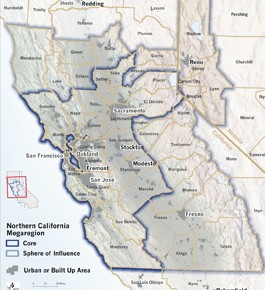
B ye-bye, North Bay. Bon voyage, Silicon Valley. Sad to see you go, Monterey Bay. You’ve all been supplanted. Encompassed. Enfolded. And not just into your granddad’s Greater Bay Area, but into a brand-new sweeping, diverse and gigantic area newly known as the Northern California Megaregion. It’s a region fanning out from six concentrated employment centers—San Francisco, Oakland, Sacramento, Modesto, Stockton and San Jose—embracing 21 counties from Yuba and Sutter in the north to Monterey in the south. It stretches from coastal Sonoma to inland Eldorado counties, and hosts 14 million people working at over 5.7 million jobs.

Born just a few days before Christmas 2007, the NorCal Megaregion’s record of emergence is as unremarkable as most birth records. It appears only as a minor note attached to a seemingly run-of-the-mill grant sought by several Oakland legislators who wanted $840 million in state funds to get cargo moving more quickly around the Port of Oakland.

The pitch the lawmakers made for the money, though, was unique: What happens in Oakland doesn’t stay in Oakland. When getting goods in and out of the port slows down due to creaky old docks, narrow freeway overpasses and twisted railroad tracks, congestion spreads outward for hundreds of miles across the whole (here it comes) megaregion.

To the immense shock of Southern California, a far longer established megaregion vying for the same funds, not only did the California Transportation Commission buy their argument and give the Oaklanders the entire $840 million, it also approved the megaregion approach for future use, inviting northern lawmakers to use it again for other big requests.

That official stamp of acceptance, in turn, energized others who had been talking about the reality of a Northern California megaregion—for quite some time—to speak up assertively.

One such entity is the think-tank San Francisco Planning and Urban Research Association (SPUR). Its executive director, Gabriel Metcalf, first ran across the concept in grad school in the 1961 Jean Gottman book Megalopolis , which focused on the burgeoning northeastern U.S. corridor radiating outward from New York City.

When, by 1967, the Regional Plan Association declared that the corridor had morphed into the “Atlantic Urban Region,” stretching from Maine to Virginia, long-term thinkers took note. In the 1980s Gottman, reviewing the concept, reported a number of megaregions bubbling up across the United States.

Virginia Tech’s Metropolitan Institute defines megaregions as those containing at least 10 million people living and working in at least two (and sometimes several dozen) cities and their suburbs linked by major transportation infrastructure and steady flows of goods and services, sharing a similar regional history and identity.

Megaregionalists argue that the cities, suburbs and exurbs conjoined into such areas cannot be realistically seen as separate population nodes, because activity involving them and travel among them—whether composed of visitors and commuters or burrito ingredients and bicycle parts—is unceasing. So if one community in a megaregion doesn’t do what’s necessary to keep the flow going—like repairing its roads or protecting against floods—it profoundly impacts the rest.

But many localities still refuse to acknowledge their interdependence and interresponsibility, and that has begun to create serious long-range consequences. Because whether we like it or not, the U.S. population has been moving en masse from sparser central continental areas into denser employment centers around the edges. America 2050, a national long-term planning group headed by such notables as Bruce Babbitt, predicts that “by mid-century, more than 70 percent of the nation’s population growth and economic growth is expected to take place . . . within these megaregions.”

The Big Picture

There is a way out, say long-range planners: stop thinking locally and start planning globally.

Saskia Sassen, professor of sociology at the University of Chicago and London School of Economics and a major voice in regional planning, gets excited by the possibilities, describing them as “the making of new economic history.”

Her primary interest being sustainable human settlements, which she has studied at length for UNESCO, Sassen examines patterns of healthy human relations. For her, the question is how do we enhance these urbanization advantages? How do we minimize the toll of traffic and crowding and reap some enjoyment from these new far-flung and densely interwoven zones of employment, housing recreation and culture?

For one thing, says Sassen—and this is common to megaregional thinkers—we need to get over some things, like the idea that there’s something inherently wrong with human beings traveling from place to place in large numbers.

“Once you hit excess congestion disadvantages,” she notes wryly, “you might as well go for activities that benefit from geographically dispersed arrangements.” Like, say, biking between a company’s Eastside office and Westside office, which on sunny days sure beats staying indoors in a single downtown office structure for eight hours straight.

Sassen also argues for tolerating moderate dispersion, pointing out that physical togetherness is no longer entirely necessary for common experience. “Central urban density . . . has historically helped solve the risk of insufficient variety,” Sassen says, but modern digital communications assure that “wherever people are, there should be access to many of the needed resources.” In other words, telecommuting starts to make sense in megaregions.

So while Sassen certainly doesn’t shrug at irresponsible sprawl, she doesn’t hold suburban living, commutes or megaregional travel as big issues either.

This is common of many megaregionalists: what’s crucial is that the region offers a healthy mix of housing, jobs and culture and alternative ways to move among them. There’s not a lot of moralizing over how many miles a day people travel, where they go or how much time they spend doing so. To the megaplanner, it’s having a wide set of choices that matters; people will sort their own way through them. The apparent motto: Plan intelligently, then control minimally.

Edward L. Glaeser, a Harvard land-use expert who has spent many seasons crunching numbers to show that overly tight local land-use regulations, not market sloth, have produced the most severe housing shortages in the United States, agrees.

“When bedroom suburbs make their own decisions” in absence of cooperative institutions, he says, “they tend to take into account only the interests of neighboring homeowners.” Not good for planning anything from roads to parks to wildlife habitats.

His recommendation? “While, like most economists, I remain enthusiastic about the diversity and competition that comes with local control, a regional approach to land-use regulation could improve the system.”

Leaving Local Behind

If planning should become primarily regional, though, what would happen to that common linchpin of both Southern conservative and coastal progressive politics: an insistence on local control?

SPUR director Gabriel Metcalf, who is backing a campaign to get statewide high-speed rail on the ballot, says it’s time to reconsider this sacred cow.

“We have to realize that planning and zoning are not merely local matters,” he says. “They also determine our carbon footprint and degree of environmental destruction.”

Any jurisdiction’s failure to plan, in this megaregional age, now affects others in every direction. And therefore, jurisdictions—and their constituencies—are going to have to start cooperating.

Planners are aware that this view, which is polar opposite to the convictions of many neighborhood-centric activists, will be a rough ride for some. The resident used to demanding that her city council remove a new traffic-accelerating left turn lane on a local state highway will more frequently find that the council won’t have final say any longer. “These decisions will be made countywide, at the least,” says Papadakis. So will determinations about greenbelts and habitats and bicycle paths.

Metcalf emphasizes the benefits of embracing wider regional planning. “What we have to gain is a region that’s more affordable to live in and that can maintain its economic competitiveness.”

But he agrees that the shift may prove tough.

“Like with global warming,” says Metcalf, “we’re asking a lot of people. We’re asking them to concern themselves with things that are really big and really scary, and pay attention to much more than their own blocks or neighborhoods.”


Valley Boys

0

03.12.08


Ask the members of the Grand Color Crayon why they haven’t left Napa and they’ll look confused. They reiterate the obvious, that it’s a beautiful, gorgeous place. And yet the GCC, who are easily the most important band in Napa at the moment and probably the most important band in Napa for the last 20 years, are also fervent critics of their odd spot in the world.

COPIA, they charge, is a gentrified waste of money that used to be a field. The Napa River is polluted. Lake Berryessa is a hotbed for date rape and random killings. Downtown clubs are full of “tourists trying to get laid” and “a bunch of people that realize that they can’t relate to anyone and they don’t know anyone and no one knows them and they’re sad.”

But perhaps the band’s fiercest and best-known quarrel is with the hometown newspaper, as evidenced in the song “Fuck the ‘Napa Register,'” which was born from coverage of two separate traffic accidents that band members say blatantly sympathized with white citizens in the wrong while insulting and vilifying black and Latino victims.

“They’re a bunch of fucking yellow journalists,” singer Kyle May, 21, vents. “[The paper] misspells, it’s written at a fifth-grade level, it doesn’t talk about anything important or real that happens in Napa, and it’s just something comfortable for the tourists to pick up.”

Twenty-two-year-old drummer Brian Montague, born in India and adopted in Napa, describes the area’s culture as “everyone trying to be accepted.” Guitarist Jakey Lieber—20, half black and also adopted—says that Napa’s youth are “paved over,” and that anything creative is relegated to the lower crust, “which is under the cement.” May, who’s half Native American, whose mom is a janitor and who, along with Lieber, grew up in a mobile home park, notes that the collective realization to embrace a low social status is what brought the band together in 2004.

As befits an outspoken band stuck in a county with few peers, the GCC are loud. Having traveled over the hill on a recent Friday night to Petaluma, the band played a set at a house party that could be heard two blocks away. May introduces songs in either a Barry Manilow croon or a Notorious B.I.G. mushmouth; Montague regularly breaks his snare drum; and Lieber, launching into the air with a gymnast’s precision, plays schizophrenic metal and hardcore riffs completely, and astonishingly, with just his bare thumb.

At the end of the set, the lights suddenly go dark. Someone rushes May and picks him up, swinging him around. Lieber’s guitar flies through the air. When the lights come back on, they’re both lying on the ground, out of breath, and May ends the show with a throat bellow that sounds like he’ll never speak again.

Not understood by hardcore bands, indie rock bands, screamo bands or metal bands, the GCC connect best, they say, with older people who were into DIY culture before the genre lines became so rigid, a mentality they professionally mock. Introducing the song “A Broaphobic Nosebleed,” the band rip off their shirts, exaggerating the jock mindset in punk rock with hilarious buffoonery while also spoofing the guttural gurgles of death metal. They’re known to bring free punch and cookies to hardcore shows.

So how does a band like the GCC get by? “Passion and heart” is how Montague describes it. Getting out of town on a couple mini-tours of the Pacific Northwest helps. The band also recently released a 7-inch, Ice Eaters, and is working on an upcoming EP.

Utilizing frustration and turning it on its ear with humor and expression is rare in a city like Napa, which offers few opportunities for its creative youth. Still, the relationship seems symbiotic—the band is a product of its stifling hometown just as much as Napa desperately needs a band like the Grand Color Crayon.

“We’re not gonna own shit in our life,” May explains without a drop of regret. “We’re poor in a nice community, where it’s like, ‘Hey, we’re safe.’ So we own this shit, dude, let’s turn it over on its fuckin’ edge.”[Marker]

Just don’t expect to read about it in the Napa Valley Register anytime soon.

For more, go to www.myspace.com/dagrandcolorcrayon.


Mad Money

ISSUEDATE


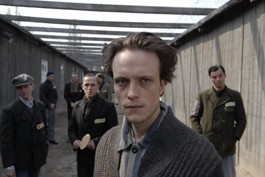
J ust when there seemed to be no new cinematic stories to tell about the concentration camps, Austrian director Stefan Ruzowitzky has come up with his Oscar-nominated The Counterfeiters . Based on Adolf Burger’s history The Devil’s Workshop , this drama tells of Operation Bernhard, the Nazis’ plan to flood the Allies with counterfeit money, using slave labor in a concentration camp.

It’s a “golden cage,” observes the wiliest man in the forgery operation. He is the master counterfeiter Salomon “Sally” Sorowitsch (Karl Markovics), who is picked up by the SS in 1936, right before he’s about to leave for safer climates. Markovics’ unusual lead acting helps overcome Ruzowitzky’s too-simple template of the rogue redeemed. He is a chilled, withdrawn actor, physically something like a cross between Ben Affleck and Max “Nosferatu” Schreck.

A Jew, Sorowitsch is branded with the green triangle of the habitual criminal. After years of filthy, crowded conditions in the regular ranks of the concentration camp, Sally is brought out to work on the Nazis’ plot. His new supervisor is the same officer who arrested him years previously, Herzog (Devid Striesow), a cop turned commandant.

Sally and his team of printers, respectable bankers and engravers begin the grinding work of trying to emulate a British pound note. They eventually succeed. The bill is perfect, even down to the minute pin holes found in used English pounds. (In the days when the British didn’t have wallets, they used to pin currency to the inside of their pockets.)

As Sally lives for both craftsmanship and survival, he is fairly satisfied with the results. But he is under pressure from Herzog, and the threat of extermination hangs over the team. Burger (August Diehl), an activist printer, urges Sally to sabotage the project even while the team is toiling over their magnum opus: the American dollar bill. As the war reaches its end, the pragmatic head forger is wedged between the ever more desperate Nazis and his rebellious fellow inmates.

I have read that Ruzowitzky was not eager to give the Nazi perspective in the visuals, so he used over-the-shoulder POV shots for the inmates but not for their vicious captors. And yet as Herzog, Striesow’s performance is a debonair, shrewd one, more full of surprises than anything else in the film. (The soundtrack is different from what you would expect, too; it’s a series of Argentine tangos on the harmonica, and it sounds more like Larry Adler’s score for Genevieve than anything else.)

To further motivate Sally, and to prove his broad-mindedness about the company of Jews, Herzog brings the counterfeiter to his home one Sunday to meet his Aryan wife and kids. Herzog startles us by showing up in civilian clothes. The whiteness of the commandant’s polo sweater blazes out of this film’s chronic murk, the brightest thing in the entire movie, even though The Counterfeiters includes scenes in a gambling salon in Monte Carlo.

An engrossing story beats almost any element in a film. Even if everything else is weak, a good true-life story will stand up for itself. That’s ultimately the case with The Counterfeiters . Unfortunately, Ruzowitzky and his director of photography, Benedict Neuenfels, are apparently scared of making this adventure picturesque or pretty. They go for a neo-documentary approach that makes for reliable ugliness.

A decorative rack focus—a zoom and retreat that doesn’t give us more details of a dimly lit face—shouts out a reminder that you’re sitting in a movie theater, even more so than an ordinary, scarcely noticed crane shot or a pan. And despite the wobble and shake of the hand-held camera, we’re still apprised that we’re watching a story of gradual redemption.

One reason for Sally’s trip to the commandant’s house is partially to negotiate some tuberculosis drugs for a dying inmate. Like anyone else in a Hollywood movie, Sally follows his insistence in not sticking his neck out for anybody by a familiar tortoiselike stretch. Somehow, you wish this film was darker in its soul and lighter in the visuals.

‘The Counterfeiters’ plays at the Century CineArts at Sequoia, 25 Throckmorton Ave., Mill Valley. 415.388.4862..


New and upcoming film releases.

Browse all movie reviews.

Superburger Rises Again

The last time I stopped by Gayle’s Superburger, on its final day in business, the atmosphere really wasn't as jovial and congratulatory as it should have been. As a matter of fact, it was decidedly depressing—despite the milestone, the former owners could only muster one other grungy customer in the joint, and he didn’t even know, or seem to...

Ecomania

03.12.08I n my search for the eco-warriors of the North Bay and beyond, some things have been brought to my attention regarding the sometimes hazy nature of what exactly it means to be green. The first is that there is not a 100 percent way to be green that does not include killing oneself. We can make positive changes...

Letters to the Editor

03.12.08The Real ScandalAs a former member of the New College of California Board of Trustees, I was scandalized by your article ("," March 5). The real scandal is that the Western Association of Schools and Colleges (WASC) has all but destroyed a unique college that has provided high-quality educational programs at the undergraduate, graduate and professional levels for thousands...

Dual Nature

03.12.08R egardless of the weather in California, it's still deep winter in New England, where Cheryl Wheeler is having an eventful season. "I wrote a couple of songs in December, so I'm happy about that," she reports. "I've been watching all the political races, and when I'm through with this call I'm talking the dogs for a w-a-l-k in...

Savoring Pigs & Monks

03.12.08I s it just us or does an entire weekend devoted to little more than devouring the greater part of an heirloom pig while drinking Pinot Noirs from the around the world sound almost recreational? As though calories could be burned staggering from the Friday night, March 14, Taste of Pigs & Pinot to the Saturday morning, March...

The War Election

03.12.08Maybe it sounded good when politicians, pundits and online fundraisers talked about American deaths as though they were the deaths that mattered most. Maybe it sounded good to taunt the Bush administration as a bunch of screw-ups who didn't know how to run a proper occupation. And maybe it sounded good to condemn Donald Rumsfeld and George Bush for...

First Bite

03.12.08Editor's note: First Bite is a new concept in restaurant writing. This is not a go-three-times, try-everything-on-the-menu report; rather, this is a quick snapshot of a single experience. We invite you to come along with our writers as they—informed, intelligent eaters like yourselves—have a simple meal at an area restaurant, just like you do. After N.V. abruptly closed last...

Geographica Gigantea

03.12.08B ye-bye, North Bay. Bon voyage, Silicon Valley. Sad to see you go, Monterey Bay. You've all been supplanted. Encompassed. Enfolded. And not just into your granddad's Greater Bay Area, but into a brand-new sweeping, diverse and gigantic area newly known as the Northern California Megaregion. It's a region fanning out from six concentrated employment centers—San Francisco, Oakland, Sacramento,...

Valley Boys

03.12.08Ask the members of the Grand Color Crayon why they haven't left Napa and they'll look confused. They reiterate the obvious, that it's a beautiful, gorgeous place. And yet the GCC, who are easily the most important band in Napa at the moment and probably the most important band in Napa for the last 20 years, are also fervent...

Mad Money

ISSUEDATEJ ust when there seemed to be no new cinematic stories to tell about the concentration camps, Austrian director Stefan Ruzowitzky has come up with his Oscar-nominated The Counterfeiters . Based on Adolf Burger's history The Devil's Workshop , this drama tells of Operation Bernhard, the Nazis' plan to flood the Allies with counterfeit money, using slave labor in...
11,084FansLike
4,446FollowersFollow
6,928FollowersFollow