Grape juice, yeast and a vintner. Around the world, these three honest ingredients converge as they have for millennia to create the potent product that so many of us love. But deep within the modern winemaking industry, mysterious creatures lurk. In the vineyard and winery, synthesized preservatives, additives, coloring agents and a slurry of names from the periodic table compose a list of aids that rewrites the very idea of bottled poetry.
Some in the industry shrug, saying these methods and materials are there to protect quality standards, to make wine look and taste good and, ultimately, to please consumers. Wine, after all, can spoil if not treated correctly, and sulfites, or sulfur dioxide, the most heavily relied upon preservative, has been used by winemakers to a limited extent for many hundreds of years.
However, not until the 19th century did winemakers declare en masse chemical warfare on vineyard pests and winery microbes. The unsettling reality today is that many wines are a highly processed form of food; the federal government permits the use of dozens of synthetic and natural materials in the making of wine. Some linger in the bottle, say industry watchdogs, and, thanks to hard lobbying by the wine industry, the use of no additives other than sulfite must be divulged on the label. What lies beneath that wine-dark surface usually remains entirely open to speculation.
Virtuous Viticulture
For makers of organic wine, it’s an entirely different rulebook. Governed by personal ideals, loyalty to traditions and, most of all, the USDA, these men and women make up a tiny but growing portion of the industry. Less than 10 percent of California’s wine-grape acreage is grown organically, without the use of petroleum-based products, sewage sludge or irradiated materials. Just a quarter of California’s winemakers use any organic grapes at all, even though there is little question that for the health of farmworkers, the environment and the grapes themselves, organic farming is a hugely virtuous art.
More debatable is the practice of making entirely “pure,” certified organic wines, which cannot contain any added sulfites. Less than 10 wineries along the West Coast produce such a product. Sulfites are very effective at preventing spoilage and oxidation, which materializes as a brown wine with a flat metallic taste, and most winemakers just don’t see the point of skimping on this relatively harmless material, which helps ensure a long life in the bottle.
No Shitty Wines
Darryl Mason, winemaker at Vinatura in Humboldt County, produces certified organic wines. He has dedicated himself to replicating pre-industrial winemaking techniques, and though it has taken him 18 years of battling hazy wine, sediment layers, occasional spoilage and instability in the absence of sulfites, Mason says he has finally achieved his objective in his line of bold red wines.
As an amateur scholar of history, music and wine, Mason says his inspiration to make wine like the ancients did came from listening to college professors explain that pre-Christian societies in the Mediterranean region drank only low-quality wine; they could make nothing better due to a lack of additives and knowledge of microbiology. Mason never believed it. He points out that ancient civilizations achieved famed heights in technology, science, math and engineering.
“And you’re telling me that these people were drinking shitty wine?” he exclaims. “I don’t think so.”
Phil LaRocca of LaRocca Vineyards in Butte County also looks to the old days of the Old World to attempt the craft of organic winemaking. He favors literature from France’s Middle Ages. Winemaker Paul Frey of Mendocino’s Frey Vineyards, the largest and oldest organic winery in the country, has also studied old documents on ancient winemaking and has referred heavily to the writings of Mago, Cato and other agricultural scholars of Mediterranean societies.
Like other organic winemakers, Frey says there is nothing new, progressive, innovative or experimental in his and his family’s methods. To the contrary, many of their practices mirror techniques that dominated the industry for thousands of years. One of their latest and ongoing experiments was inspired by Pliny the Elder, who described a process of aging white wine for 20 years in clay amphorae. Five years ago, the Freys began doing the same, filling 10 seven-and-a-half gallon clay jugs with several wines, sealing them with beeswax and a pine-sap resin, and inviting time to do the rest. These wines may eventually be retailed.
What’s Organic?
Organic wines are produced under intense eyeballing from USDA-approved certifying agencies, such as California Certified Organic Farmers (CCOF), Stellar Certification Services, Quality Assurance International, Oregon Tilth and scores of others around the nation. These watchdogs follow the standards set by the USDA’s National Organic Program. The USDA also reviews products imported from overseas to verify if their own organic claims are valid.
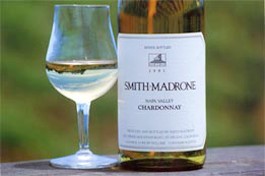
Viella Shipley, director of marketing and sales with CCOF, says organic products bearing third-party certification on the label are entirely trustworthy. In the case of wines, “certified organic” or “organic” means the product was made with all organically grown grapes and without added sulfites. “Made with organic grapes” or “Made with organically grown grapes” means that 100 percent of the grapes were organically grown, but that sulfites may have been added. There is one notable hitch: “Made with organic Chardonnay grapes” (or any other specified varietal) leaves open the possibility that other nonorganic grape constituents may compose up to 30 percent of the wine. The USDA seal may or may not be used on the former of the labels, but never on the latter.
In conventional wines, the list of additives permitted by the Tax and Tobacco Bureau is a long-winded, ugly mess. The additive known as “mega-red” (also marketed as “mega-purple”) secretly serves as a very attractive food coloring for many well-known red wines. A touch of calcium carbonate can adjust the pH. Tartaric acid can cover the taste of unwanted residual sugar. Diammonium phosphate, a yeast nutrient, can aid struggling yeast colonies and malolactic bacteria. Potassium metabisulfite sterilizes equipment. Enzymes may be added to break apart polysaccharides that could otherwise create a haze in the bottled wine. Copper sulfate may be stirred into a vat of fermenting wine to combat the rotten-egg odor of hydrogen sulfide, a byproduct of fermenting yeast.
Many conventional winemakers avoid these items—and many say they wouldn’t touch them with a two-foot pole—but there’s really no way for a consumer to know without a list of ingredients on the bottle. In the vineyard, too, various agents play regular roles in the upkeep of the otherwise regal terroir. Although growers may say they follow organic practices, organic advocates recommend against trusting these claims if the wine bottles don’t bear the label to prove it.
“This green thing has just exploded,” says Martha Barra, co-owner of Barra of Mendocino, whose wines are made only with organic grapes. “There are a lot of people who want to get on the bandwagon, but unless there’s that third-party inspection seal on the back, you need to be skeptical.”
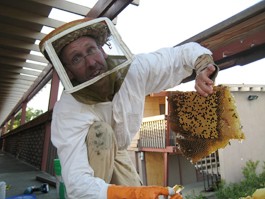
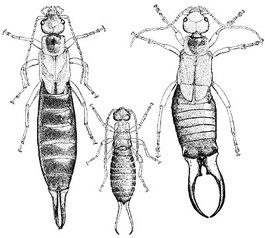
Meanwhile, organic vineyards follow historically favored techniques to counter the enemies that prowl among the grapes. Bird boxes on the property welcome raptors, which prey on rodents. Blackberry bushes around the perimeter provide shelter for many predatory insects which prey on those that enjoy grape leaves. Unwanted weeds in the vineyard are dealt with by hand or machine and left to compost naturally among the vines. Some are left to co-exist with the vines.
David Koball, vineyard director at Hopland’s Fetzer Vineyards, says organic winemaking is easy once a farmer determines to do it. “It just requires a different mindset,” he says. “You don’t wait until you have a problem. Instead, you pay attention to the vines and you keep them healthy.”
Naturally Technical
In organic wineries, things get slightly more technical. To combat oxidation, organic winemakers try to keep their vats filled entirely to the brim until bottling. They may also put a layer of nitrogen or carbon dioxide over the wine to blanket it from the air, which floats above these heavy gases. To eliminate the rotten-egg odor of hydrogen sulfide, organic winemakers simply aerate their fermenting wines.
Organically grown grapes are said to carry more natural nutrients, and this eliminates the need to add synthetic nutrients to aid the yeast through fermentation of the juice. To remove cloudy proteins from the wine, additions of organic egg whites can bond with the offending proteins and sink them to the bottom. Some wineries, including Frey, LaRocca and Medlock Ames in Healdsburg, even make vegan wines, substituting bentonite clay or diatomaceous earth for the egg whites.
But the most commonly discussed distinguishing point between organic wines and conventional wines is the presence of sulfites, a highly renowned and proven preservative. Organic winemakers in the United States cannot add them at any point in the winemaking process. Conventional wines may use up to 350 parts per million, a limit imposed by the FDA, although most wines carry no more than 100 ppm or so.
Sulfite levels in wine are verified by the Tax and Tobacco Bureau through mandatory lab analysis of every vintage of every commercial wine. It is generally known that sulfites occur naturally as a very scant byproduct of fermentation, and wines without added sulfites occasionally carry up to 10 naturally occurring parts per million. Other organic wines measure out at zero, and many organic winemakers feel that the issue of naturally occurring sulfites is unjustly inflated to counter any significance of “sulfite-free” wines.
Tony Norskog, winemaker at the Nevada County Wine Guild, says, “There might be some sulfites in my wine at parts per billion, but that’s really splitting hairs. A part per million is a Ping-Pong ball in an Olympic-sized swimming pool. A part per billion would be like one Ping-Pong ball in a thousand swimming pools. Find that ball.”
Mason is also suspicious of the sulfite accusation. “If they have everyone believing that sulfites exist in all wines, then it kind of negates everything we do.”
Mason refers to heavily sulfited specimens as embalmed mummies, calling them “Frankenwines.” Sure enough, sulfites do work to preserve wines for decades, and wines without them sometimes don’t last at all. Many people still recall the 1970s, ’80s and even the ’90s when several releases of new organic wines tasted memorably bad. Cloudy with proteins, highly oxidized or downright spoiled, consumers didn’t forget about it, and these wines left their legacy.
“They gave the whole genre a black eye,” says Norskog, who admits that a few of his wines “have gone south of the border” after bottling. No longer. Our Daily Red, Norskog’s most esteemed organic wine, is the bestselling organic wine in the country.
LaRocca also recounts his time two decades ago as a learning winemaker, when he saw several vintages spoil and others peak at much less than excellent. He has polished his art, however, and tied up loose ends, and his wines, especially the late-harvest Zins, have won numerous awards since. Still, LaRocca sees a tiresome and lingering stigma against organic wines.
“If you’re at a tasting and you have a bad conventional wine and it doesn’t stand out, you say, ‘Oh, that’s a bad wine,’ and move on. But if you notice that it’s organic you say, ‘Aha! It’s organic. That’s why it tastes bad!’ and it sticks in your mind.”
And the Point Is?
Given the endless concern of an organic wine suffering oxidation or spoilage, one may wonder what is even the reason for making it. Bolinas winemaker Sean Thackrey sees little point at all. Although Thackrey reveres old writings and values ancient traditions of winemaking, he doesn’t entirely approve of the pursuit of organic winemaking. He calls the practice “ideological” and likens it to a religion, a practice based more on faith than on any science.
Norskog admits that the fees and paperwork involved in the organic certification process can be a hassle, but he does note that organic wines are a noticeably “clean-burning” beverage, easy on the body and much less liable to leave headaches and hangovers. LaRocca says his family in Sicily made organic wines and that he is carrying on the family tradition. And for Mason, it’s a matter of art, history and principle: “What could be more authentic,” he asks, “than a wine that’s got nothing in it but grape juice and indigenous yeast?”
But for people interested in ecologically sustainable practices and socially responsible winemaking, the sulfite debate doesn’t much matter. What’s important is what occurs in the vineyard. That is why Benziger Family Winery in Glen Ellen has been certified biodynamic since the mid-1990s, with many of the winery’s estate vineyards and outside grape contractors currently in transition.
“Adding sulfites isn’t really something that affects the environment,” says Mark Burningham, vice president of wine growing. “We believe in doing the right thing in the vineyard, which is really where it matters.”
Benziger produces several biodynamic wines, a class of products considered by many to be among the most ecologically sound and holistically pure in the industry. Yet the entire biodynamic genre, which requires third-party certification just like organic, faces scrutiny by those who misunderstand it as a form of pagan religion.
“Biodynamic farming requires a complete and dedicated attention to what you’re doing,” Burningham says. “Other winemakers just look at the calendar to see if it’s time to spray or fertilize. In biodynamic farming, there’s a very spiritual connection to the earth and seasons, and a dedication to the vineyard, but it’s not voodoo.”
Benziger’s 2005 Tribute, a blend of Cabernet Sauvignon and Cabernet Franc, provides a velvety smooth mouthful of strawberry jam, ham, licorice and mint. By the objectives of biodynamic farming, this vibrant red is a perfect and convincing snapshot of the estate vineyard’s flavorful terroir.
Burningham regularly invites grape growers to taste Benziger’s estate wines, and their quality is convincing. This year, he says, a third of the winery’s outside grape suppliers, after tasting Benziger’s biodynamic wines and examining the vines, decided to pursue organic certification. Several more growers are already biodynamic or are in transition. Burningham assures that in a blind taste test, his biodynamic wines, which carry 100 ppm of sulfites or less, will win.
Norskog grants that sulfite-free winemaking may have little practical purpose, but he has no doubts about the virtues of organic grape growing. He planted two acres of vines on his estate in 1985, dedicating half to organic grapes, half to conventionally treated grapes. The organic vines, he says, attained better health and produced more flavorful, brilliant fruit than their counterparts, and today his entire estate and all his outside suppliers are certified organic.
Bottled Poison
Norskog also believes firmly in organic grape growing for reasons of human health, not the least that of his own family. How, he asks, can you spray your land with a clear conscience while your own children are picking strawberries among the vines? The dangers of synthetic pest killers are plain to Norskog, who has seen two of his own friends die of cancer.
“They were in their sixties, but they looked pretty hardy until they started growing grapes.”
Neither of them, says Norskog, followed organic practices. In fact, some of the highest rates of cancer in the United States occur among workers at conventional farms, according to Mark Kastel of the Cornucopia Institute, a progressive farm-policy research group and aggressive organic-industry watchdog in Wisconsin. Kastel strongly believes in the merits of biodynamic farming and organic farming, and he says the conventional grape-growing industry of both wine and table grapes is one of the most avid users of toxic substances that ultimately can trickle down into the bodies of farmworkers and even nearby residents.
Wine drinkers, too, may be at risk. A startling study reported this year by the Pesticide Action Network found that of 40 wines from several continents, 35 contained traces of residual pesticides, including two French wines over $300. All the uncontaminated wines were made from organic grapes, and only one organic wine in the study was contaminated, a surprise later traced back to chemicals used on an adjacent farm.
Good-to-Go Orgo
Sales of organic wines are on the rise. Frey Winery, which sells 80,000 cases per year, saw wine sales increase by 10 percent between 2006 and 2007, and its wines have ranked in competitions among well-made conventional labels. Frey’s 2006 Syrah smells of ham, licorice and butter with a perfectly round, earthy taste of meat, lavender and a daring trace of motor oil. The Petite Sirah is loud and fruity with black cherries, a scent of herbal soap and chocolate. LaRocca’s 2006 Chenin Blanc glows an unusual gold, smells of apple, pine and honey, and tastes like a blend of mead and retsina, an appealing rough effect that is tempting to attribute to the wine’s sulfite-free status.
California Certified Organic Farmers’ North Coast winery inspector Elizabeth Whitlow believes that the explosion in the organic wine industry is just beginning. The level of consumer interest in organic wine, despite some lingering mistrust, is accelerating, and more and more wineries and vineyards every year express interest in attaining organic certification. Already CCOF is building its staff in anticipation of the increased demand for facility inspections.
California acreage of organically grown grapes is tiny yet expanding. Of more than half a million acres of wine grapes statewide, those certified as organically grown increased from 7,761 in 2004 to 9,240 by 2007. In Mendocino County, the belief in sustainable farming is particularly strong, and nearly 25 percent of wine grapes grown there are certified organic. Consumer demand is having its effect, and Badger Mountain in Washington ceased adding sulfites to its esteemed organically grown wines in 1995 in part to meet requests from retailers. The winery’s production has accelerated by 30 percent in the last five years.
Still, organic wines without added sulfites are very rare, produced by a scant handful of wineries in the States. Wines made with organically grown grapes but containing added sulfites are far more numerous and include Barra of Mendocino, Yorkville Cellars, Bonterra, Jeriko, Medlock Ames and Cabot Vineyards. Benziger has enacted its own “sustainable” program, called Farming for Flavors, which arose as a reaction to so many other producers abusing words such as “green,” “eco-friendly” and “natural.”
Farming for Flavors requires that its growers meet rigorous standards in watershed protection, biodiversifying the local ecosystems, managing pests organically and following other basics. The program now includes 45 winegrowing families and was audited and approved for the first time in 2006 by Stellar. Other sustainable programs are being developed, but consumers must always remember to watch for the third-party certification on the label.
A valid discussion of organic wines goes far beyond mere sulfites. It leaves the winery and moves out to the vineyards. On this soil, organic farming ruled the earth for thousands of years, when farmers dirtied their hands and never thought twice about whether to wear a gas mask as they worked their land. Fertilizer was manure, pesticides were bugs, organic was everything and farming was sustainable.
So why can’t it be now?