Found in Translation

0

04.30.08

David Templeton

My deaf lesbian sister just seduced my boyfriend!”

That proclamation sounds like a headline for the National Enquirer, but in playwright Aditi Brennan Kapil’s Love Person, the engaging and challenging new play from Marin Theatre Company and the National New Play Network, those words are definitely no joke. Love Person (the literal American Sign Language translation of the word “lover”) is a play about love, language and the tricky art of translating one set of words into another. It employs ASL, Sanskrit poetry and text messaging, as Kapil explores the strengths and weaknesses of conversation in a multilingual, multi-technological world.

Love Person is meticulously designed so that, through projections, supertitles and onstage interpretation, we always know more or less exactly what the characters are trying to say. As result, the play ends up making supporting characters out of the languages each character uses to communicate. I’ve honestly never seen anything like it.

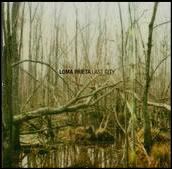
Victoria (Emily Morrison) has a demonstrated habit of falling for unavailable men, and may have done it again when she meets Ram (Janak Ramachandran), a visiting poet and Sanskrit expert who immediately regrets his one-night stand with the sexy but needy—and apparently fairly shallow—young woman. Vic’s slightly hostile deaf sister, Free (Mary C. Vreeland, above left), is the lover of Maggie (Cathleen Riddley, above right), a professor of poetry who is devoted to Free but has a habit of romanticizing her lover’s deafness, seeing ASL as a kind of dancing-poetry that transcends English. Free resents English, and has begun to resent Maggie’s love of the written word. .

Through an accident of timing, Free sends Ram a text message poking fun at this belief that translation can ever get at the soul of a different language. Believing the message to be from Vic, Ram is surprised to see a depth and wit he hadn’t noticed before. Just as Cyrano de Bergerac charmed Roxanne with his beautiful words, Ram, of course, ends up falling in love—with Vic, whom he believes he’s been chatting with all these weeks. Such circumstances cannot continue, of course.

Simply and effectively adapted, the production is designed by Eric E. Sinkkonen, with subtle but significant lighting design by Stephanie Buchner and a nice, nonintrusive musical score by Chris Houston, which brings a great deal of mood and tension to the show. The actors are all excellent, displaying shades of evolving character as they reveal the aching, loving, silly, inventive, forgiving and resilient souls that live and breathe beneath all those words.

Love Person runs Tuesday&–Sunday through May 18 at the Marin Theatre Company. Wednesday at 7:30pm; Thursday&–Saturday at 8pm; Sunday at 5pm. 397 Miller Ave., Mill Valley. $30&–$35. 415.388.5208.


Museums and gallery notes.

Reviews of new book releases.

Reviews and previews of new plays, operas and symphony performances.

Reviews and previews of new dance performances and events.

First Bite

Editor’s note: First Bite is a new concept in restaurant writing. This is not a go-three-times, try-everything-on-the-menu report; rather, this is a quick snapshot of a single experience. We invite you to come along with our writers as they—informed, intelligent eaters like yourselves—have a simple meal at an area restaurant, just like you do.

Saddles, the spiffy restaurant at the glamorous MacArthur Place resort, has long been a destination for beef lovers. Now with prices for top-quality beef rising and the public appetite for beef diminishing, Dana Jaffe, the executive chef, says a makeover is likely, though the look of the new menu isn’t clear. For now, beef reigns supreme. When I arrived for dinner midweek, I wondered whether I’d opt for a steak or be cautious and order the seared salmon or the squash ravioli. Once I sat down in the casual dining room with its trompe d’oeil paintings and glanced at the menu, I knew instantly I wanted steak.

My friend wanted steak, too. But first things first. We started with the baked oysters Sonoma ($10) with pancetta and béarnaise with cognac. Next, we shared a creamy shrimp bisque, sweetened with coconut ($7). There were seven different steaks to chose from, including filet mignon, porterhouse and a dry-aged New York. We ordered the 23-ounce bone-in ribeye ($45).

The huge steak, which arrived on a big, white platter, looked succulent and gave off a rich, beefy aroma. It was cooked medium rare with just a punch of salt and pepper and a smidgen of butter, so the meat spoke for itself. It had been turned several times over a hot grill, and seared on the outside to keep the juices inside. I cut the tender ribeye in half with a hefty steak knife, and shared it with my fellow carnivore, savoring every bite.

The Rued 2003 Zinfandel brought out the flavors of the meat. Garlic mashed potatoes ($4.50) and steak fries ($4.24) are available for potato lovers. We chose the wild chanterelles ($8), which were flavorful, and the garden-fresh creamed spinach ($4.75). Next, we had Saddles’ salad of mixed greens, goat cheese, walnuts and a cider-thyme vinaigrette dressing. ($8) For dessert, we had the crème brûlée with blueberries ($7).

Jaffe expects greatness from her kitchen staff, and everyone contributes to the Saddles dining experience, including the vegetarian Hindu sous chef. Jaffe buys top-quality grass-fed beef from sustainable ranches in Northern California and Oregon. The steak tastes clean, and it feels good to eat beef that’s been treated kindly. Jaffe makes her own pies with fruit from the trees right outside the kitchen, and, using a recipe handed down from her mother, also makes a delicious, cold fruit soup with rhubarb, raspberries, black cherries, prunes, sultanas and cinnamon topped with vanilla bean ice cream. It’s worth a special trip to Sonoma.

“Americans thrived on steaks and pies,” Jaffe smiles, as though her memories of yesteryear were fresh. “Not so much anymore. If you want to eat the way Americans once ate, come to Saddles.” Indeed, it’s a carnivore’s paradise, and an American steakhouse in the best American tradition. The live Friday night showboat jazz adds a touch of elegance.

Saddles, open for dinner nightly. 29 E. MacArthur St., Sonoma. 707.933.3191.


View All

Quick-and-dirty dashes through North Bay restaurants. These aren’t your standard “bring five friends and order everything on the menu” dining reviews.

Feat of Clay

0

the arts | visual arts |

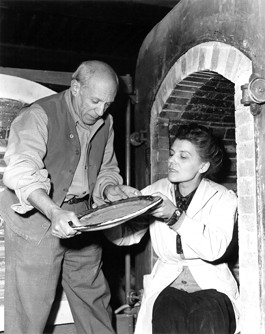
On a Platter: Picasso with Madoura pottery workshop mistress Suzanne Ramié.

By Gretchen Giles

It’s a hot afternoon in Sonoma, and the Picassos are everywhere. They’re lying on the floor set atop moving blankets. They’re dotted with Post-It notes. They’re sitting unguarded by the usual clear plastic vitrines that museums use to protect them, just sitting, on white movable dais stands. More Picassos are as yet uncrated, piled in packing material in massive wooden crates marked “Fragile,” which still need to be pried open with a crowbar to reveal the treasures inside.

With Donna Summer and other sprightly dance music of the era playing over the system, Sonoma Valley Museum of Art executive director Lia Transue stands calmly amid the Picasso-driven chaos. Dressed down in jeans with her hair tied back, Transue gestures with a hand that is encased in a purple latex glove—a purple latex glove that casually holds yet another Picasso. “Let’s try that one there,” she suggests to her installation team, actually shaking the Picasso in emphasis.

No cause for alarm. All of this is fairly sturdy stuff. Rather than the paintings or drawings that the famed Spanish artist Pablo Picasso was best known for, the SVMA is on this day installing a show of some 65 ceramic pieces adorned and manipulated by the master of 20th-century art. Titled “25 Years of Edition Ceramics: Picasso,” this exhibition has been traveling to museums all across the United States for the last eight years straight. The SVMA exhibit marks the collection’s last stop. After this public viewing, the collection will be deaccessioned by the Edward Weston Collection, which owns it, and sold piecemeal into private hands.

Created like prints in limited editions, Picasso ceramics are not widely known in great part, Transue says, because he kept so many for himself. “He had about 3,000 pieces in his own home,” she says, “and he used them for everything.”

Judging by the pieces on exhibit, “everything” is a large word indeed. There are vases that could never hold a flower, olive oil jugs that could certainly emit but whose apertures are so slim as to never admit and water jugs suitable for only the most hydrated sipper. Function, however, is really beside the point. After all, this is Picasso. The decorations, the markings in the clay, the paintings over the surfaces and the mythologies evoked—childlike, primitive and, above all, rapid in execution—are what hold the eye and squeeze the stomach with pleasure.

Among his many talents, Picasso was known for being as adept at stage design as he was at inventing a whole new artistic genre. As skillful with paint as he was with chalk or metal. He was first introduced to clay as a medium in 1946 and quickly became interested in the painterly possibilities of adorning that which came from the very earth. While vacationing at a friend’s home in the south of France, the painter, then 65, decided to take in the local sights, which on that day included a potters exhibition in the sleepy town of Vallauris.

Vallauris had been known for the quality of its ceramics studios, but interest had died down over the last century. Upon encountering Suzanne and Georges Ramié, owners of the Madoura Pottery Workshop, Picasso became intrigued. He asked to see the workshop and immediately set to work, producing three pieces on the spot. He then asked for a permanent area of the workshop that he might use. He was Picasso. He got his permanent spot.

In 1947 alone, the master produced 2,000 pieces at Madoura. While there in 1953, he met Jacqueline Roque, who would become his last wife, and he continued to work in ceramics until his death in 1971.

Picasso never learned to successfully throw a pot on the wheel. Nor, according to exhibition curator Gerald Nordland, did he ever solve “the technical problems of glazes and multiple firings.” Instead, when given such standard outlay from the Madoura as long, oblong white serving pieces known as “Spanish platters,” Nordland says, “he treated them like canvases.”

Standing near a gloved assistant who is busy assessing the ceramics as they come out of the large wooden crates for scratches or marks, Transue admires a plate. “I wish that I had seen Picasso’s ceramics before I took pottery in art school,” she sighs, tracing a design with a gloved finger. “I’m a painter. I don’t really care how to throw a pot. I just want to paint on things, and that, of course, is exactly what he’s done. Look at the matte, the shine, the etched points, the relief—there’s a lot going on.”

With a busy pottery factory humming around him at Madoura, Picasso worked with master craftswoman Suzanne Ramié to better understand the medium. Soon, he was taking unfired ready-mades and manipulating them to reflect the vibrant Mediterranean mythology of lusty maids and horned beasts that often danced through his imagination. Take a vase, make a pinch, have a woman. Take a plate, turn it over, have a backside canvas. Take a water jug, seal it up, have a sculpture. The works collected in the traveling exhibition also reveal how Picasso gouged the giving clay with tools and fingers, marking it inextricably with his own personal stamp, and took strips and segments from other pieces and adhered them to unusual effect.

Having a stratospheric art star hunkered down in this sleepy south of France village once known for its ceramics revitalized Vallauris. Ever canny—apocryphal stories about the artist tell of him signing children’s skin rather than giving their parents a traditional autograph—Picasso worked with Ramié to create a series system in which his original creations could be exactly reproduced in limited editions no greater than 500. And so, Picasso not only revitalized the town, he’s kept it in business almost 40 years after his passing.

“Yes,” Transue affirms with a smile. “His ceramics are still being made.”

  ’25 Years of Edition Ceramics: Picasso’ shows May 1–June 29. A members-only opening on Thursday, May 1, also celebrates the museum’s 10th anniversary from 6:30pm to 8pm. A free community open house is slated for Sunday, May 4, from 11am to 5pm. Sonoma Valley Museum of Art, 551 Broadway, Sonoma. Admission, $5–$8. 707.939.7862.


View All


Museums and gallery notes.


Reviews of new book releases.


Reviews and previews of new plays, operas and symphony performances.


Reviews and previews of new dance performances and events.
Collapsing Under the Weight of Loma Prieta

1

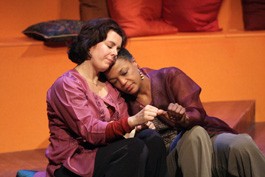
I heard some of the final mixes of Loma Prieta’s new full-length last week. I can’t even describe it. It’s insane.
I’m not the first one to note the disconnect between the band members’ calm, collected personalities and Loma Prieta‘s unhinged, ballistic hardcore, I know, but it’s still shocking to hear them play like electrocuted behemoths on PCP. The album, from the songs I heard, is a sprawling, crazed fury of invention, and holy crapballs, the band is actually touring Europe next month. Europe!
The record, called Last City, comes out May 9. A record release show happens that night at the Bike Kitchen in SF.

Aye, I Must Capitalize Eighth Blackbird

0

Which is a shame, really, since they’re one of the best damn classical groups in the country and yet they insist on being called.. . ugh. . . can’t do it. . .. eighth blackbird. For reasons too long to get into here, I’ll allow the privilege of decapitalization to fIREHOSE, but not to Eighth Blackbird; I will, however, say that they were great at the Healdsburg Community Church last week.
It takes a lot to get me inside a church on any day of the week—let alone a Sunday. I suppose some free Tanqueray and J.M. Rosen’s cheesecake at a party hosted by MF Doom with a Susan Hayward look-alike contest and the complete works of Joan Miró on display might do the trick. Either that, or a performance hosted by the fantastic Russian River Chamber Music Society, which for over 16 years has been presenting free chamber music performances in Sonoma County, taking a close second.
So after a visit to the Great Eastern Quicksilver Mine and a dip in the river at Camp Rose, I did the unthinkable and went to church. Eighth Blackbird was just starting, and I immediately realized I’d made the right choice. Their first piece was a wacky thing for violin, clarinet, and piano, and it was both painstakingly precise and yet totally off-the-cuff; the fourth movement, fittingly, was titled after an R. Crumb comic: “Cancel my rumba lesson!”
The next piece utilized a de-tuned viola growling like a UPS truck, and after that, a composition, “Musique de Tables,” was played completely by the rapping of hands, fingers, knuckles and arms upon a tabletop. “Coming Together” was a hilarious duo for cello and clarinet consisting entirely of glissandi, sounding, as introduced, like a conversation between two adults from the Peanuts television specials—the two players wandered around the room, “talking” to each other in a very convincing primal dialogue. And the final piece was pure insanity, another highly complex thing that left me wondering: how do they rehearse this stuff?
Here’s the deal with Eighth Blackbird. What they do, they could be hella pretensh about it, but they’re not; they laughed along with the crowd at the ridiculous moments, they concentrated along with the crowd at the complicated passages, and they came off as very personable and real. The next day I read a tepid review in the Chronicle about ’em, which was too bad, because I couldn’t see anyone disliking them based on the Healdsburg show. [alas, they played a completely different program.]
Avant-garde music is usually the province of middle-aged intellectuals, but I’d wager to say that any 5-year old—or anyone with an open heart of any age—would easily be ecstatic with Eighth Blackbird. And to think that every composition they performed was written no earlier than 1987! Consider yourself lucky if you were there, and thanks to Gary McLaughlin and the RRCMS for booking ’em.

Japanese Jazz

4

I’d never really given much thought to jazz from Japan before, but I recently came into a few records that’ve instigated a full-blown obsession whose duration has yet to be determined. This stuff kicks ass! Here’s a few of my favorites lately.
Takehiko Honda – Jodo The title track alone, a chilling 11-minute dirge, is out of this world and is the reason everyone should track down this record. Reggie Workman bows his bass maniacally, sliding all over the fretboard, while Honda plays these terrifying chords up and down the piano. The whole tune is either one big fit of tension or one big release; I still can’t tell which, but it’s great. It just goes on and on! I love it.
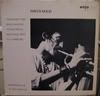
 

Terumasa Hino – Tera’s Mood Everything I’ve heard from Hino’s group in the early ’70s—with Mikio Masuda, Yoshio Ikeda, and Motohiko Hino—has been top-notch, and this live record, from 1973, is my favorite. “Alone, Alone and Alone” lives up to its name as a sparse invocation, then “Taro’s Mood” rips into an ultrafast pace with Masuda killing it, and “Predawn” has everybody shredding, especially Motohiko Hino on drums.

 

Kosuke Mine – Mine Yet again, the sense of discovery here is overwhelming. Like, who the hell is Kosuke Mine, right? But dude, it’s great! This seems to be the first record released on the Three Blind Mice label, which released a lot of jazz from Japan in its day. This one’s from 1970, and features a fine take on Joe Henderson’s “Isotope” with some out-there originals augmented by Fender rhodes and Hine’s angular saxophone.
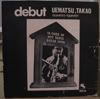
 

Takao Uematsu – Debut “Inside Parts” is your standard blues and “Sleep, My Love” actually contains direct quotes from “A Love Supreme,” but when Uematsu’s playing solos he’s his own man. A mostly mid-tempo record, Uematsu nonetheless blows the hell out of his tenor, even on ballads. A trombonist named Takashi Imai comes correct with some inventive playing, too. Nice version of “Stella by Starlight,” but wait. . .
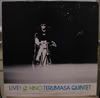
 

Terumasa Hino – Live! Hino takes the cake again with a way better version of “Stella by Starlight,” and you guessed it—it’s the same early ’70s group. “Sweet Lullaby” is a good example of Hino’s forte; it fills empty spaces with just the right jabs, and Side Two is one long jam called “Be and Know” that even gets into some boogie rock with Hino wailing in the upper register. It’s 30 minutes long, all on one side! Such a great band, this one.


May day in the North Bay

0

04.23.08

Calling for a “No Peace, No Work Holiday” in protest of the ongoing U.S. war in Iraq, the International Longshore and Warehouse Union (ILWU) prepares for a cessation of all work on Thursday, May 1. May 1 has long been International Workers’ Day, though in the North Bay for the past two years, the marchers have largely been occupied with the inequities of the U.S. immigration system.

While thousands of people marched for immigration rights in 2006 and 2007, the focus of North Bay May Day efforts this year once again turns back to the worker. Sonoma County organizer Atilla Nagy explains that a coalition of groups, including several interfaith organizations, have banded together as a May 1 Coalition to emphasize the ineffectiveness of NAFTA, to call for a halt to ICE raids in the North Bay and to further the campaign for Sonoma County specifically to become a “county of refuge.” 

But what about the Latino crowds who have filled the streets of Santa Rosa dressed in white shirts, calling to be recognized? “They’ll still be very much a part of this,” Nagy assures. “The focus is very much on the immigrant community. After all, they do all the work.”

The International Workers’ Day march and rally starts at noon in Roseland at the old Albertsons grocery store lot, 665 Sebastopol Road. The march begins at 1pm and wends its way to Juilliard Park, where speakers, teach-ins and other peaceable activities will be paramount. For details, call 707.571.7559.

In San Rafael, the Canal Community Alliance celebrates International Workers’ Day with an evening event at its offices featuring community activist Ethel Seiderman and Supervisor Steve Kinsey’s assistant David Escobar. Seiderman is the newly retired executive director of the nationally acclaimed Parent Services Project. Food, translation and childcare available. Thursday, May 1, from 6pm to 9pm, at the Canal Alliance, 91 Larkspur St., Bldg. 86-C, second floor. Free. 415.454.2640.

For more information on May Day in the Bay, go to the Bay Area Immigrant Rights Coalition, [ http://www.immigrantrights.org/ ]www.immigrantrights.org.

Send your community alert, political notice, call for help or volunteer opportunity to us at bl***@******an.com.


First Bite

Editor’s note: First Bite is a new concept in restaurant writing. This is not a go-three-times, try-everything-on-the-menu report; rather, this is a quick snapshot of a single experience. We invite you to come along with our writers as they—informed, intelligent eaters like yourselves—have a simple meal at an area restaurant, just like you do.

Where do college English majors go after they receive their diplomas? Denny Lane graduated from Sonoma State University in the 1990s and still remembers his lit profs. Now he’s part owner of Maya, the Mexican restaurant that prides itself on its “Yucatan spirit in the heart of Sonoma.” Shakespeare and Virginia Woolf don’t aid him at Maya, but he exudes an air of sophistication that adds charm to the large, often noisy dining room with its walls and floors of stone.

I ate there recently with a half-dozen people in the wine and food industry. Two of them were a brother and sister who had grown up in Sonoma and who made their mother’s Mexican cooking a yardstick to take the measure of the chef at Maya. From the start, I knew I was in for a comparative dining experience, and I had the hunch that mom’s cooking would win. But I was ready to plunge ahead.

I have eaten at Maya several times, and almost always order the chile verde with large chunks of tender, braised pork and either tomatillo or red chile salsa ($14.25). “Very spicy” the menu reads, but that has never been the case. This time I wanted something different. My friends were willing to share dishes, and that was fun.

First came the bite-sized empanadas filled with grilled vegetables ($8.25), not made in mom’s Morelos style, my dining companions told me. Next, the quail salad that could have been a meal in itself, with grilled quail in a sauce made from poblano chiles and tomatillos, and a mixed green salad ($14.95). The shrimp tacos looked almost too beautiful to eat, and though they were tasty they weren’t spicy enough for my palate (13.95). The pan-seared sea bass with pesto corn risotto and an orange-tomato-cumin sauce ($21.50) also looked almost too beautiful to eat.

My friends opened several bottles of wine from Robledo, one of the few local wineries owned and operated by a multi-generational Mexican family. We enjoyed a fruity 2005 Pinot Noir and a hearty 2004 red wine named Los Braceros in honor of the Mexican farmworkers who came to America as part of a federal program in the 1940s. There was also an excellent 2005 Moscato that was sweet enough to make dessert feel superfluous.

Every dish at Maya looks gorgeous; the chef has obviously gone wild with colorful sauces. The ingredients are fresh and the service is excellent. But the food lacks fire. Even the bright red and green salsas that come with chips don’t have much kick. But I only have myself to blame. “Most of our dishes are not spicy,” the menu reads. “We’re happy to turn the heat up or down for you.” Next time, I’ll ask the chef to fire up the blast furnace. Then I’ll close my eyes, and pretend I’m eating in the Yucatan.

Maya, open for lunch and dinner, Monday–Saturday; dinner only, Sunday. 101 E. Napa St., Sonoma. 707.935.3500.


View All

Quick-and-dirty dashes through North Bay restaurants. These aren’t your standard “bring five friends and order everything on the menu” dining reviews.

Wine Tasting Room of the Week

0


Wine country tours? Hurtling down the highway at a hundred vineyards per hour, for the most part. Most tourists never explore the other side of the end post. Now, a Colorado-based adventure-tourism outfit has launched an idea that, believe it or not, is new: take a hike. Sonoma Vineyard Walks is designed for active people who don’t mind learning something. To help publicize the venture, Sonoma Grapegrowers and Zephyr Adventures recently wined and dined members of the local press—at least a free lunch from the Jimtown Store, and that’s good enough for me.

This is not the model where people pay $5K to get in the way of the harvest crew for a day. It’s all talking, tasting and three to six miles of hiking. First, we hike across Sausal Winery’s parking lot to the tasting bar and sample a trio of old-vine Zinfandels. Thus fortified, we take an even more vigorous walk to have a look-see at the gnarled old vines. While we dig our heels into freshly tilled soil, vineyard manager Mark Houser fills us in on colorful viticultural anecdotes. Next the trail turns up a steep hillside. I break a sweat, and an hour passes with no wine (paying guests, at this point, could opt to go shopping in Healdsburg while the mountain goats among them scrabble up Rockpile appellation).

At family-run Alexander Valley Vineyards, Harry Wetzel IV leads us into a cave construction site and doles out barrel samples of hearty Grenache. Blinking in the light at the end of the tunnel, we find a table of wine awaiting. Trivia: Premium Bordeaux blend Cyrus ($55) is, like the high-end restaurant, named for homesteading patriarch Cyrus Alexander. Although the Wetzels opened their winery in the 1970s, they serve as curators of local history, having restored Cyrus’ original adobe and schoolhouse.

At the end of the trail, what have we learned? Of interest to locals eager to know what vineyard dust tastes like on the other side of the globe, Zephyr books tours in Burgundy, Italy, Spain, South Africa, South America and Oregon (including amphibious winery assaults along the Willamette River, via canoe). If they’ve done as good a job as they have here, lining up key keepers of the grape for personal tours and tastings, these promise to be great.

I emphasize my availability for the Burgundy press tour, and then blaze my own path to the tasting room. Here is AVV’s delightfully idiosyncratic Wicked Weekend Zinfandel three pack ($49), Temptation and Sin Zin through Redemption. But it’s no sin of haste to enjoy the fresh 2007 New Gewürztraminer ($9). It’s like biting into a crisp Asian pear, lightly sweet, spicy and delicious. Chill a bottle any day, put it in a backpack and get walking.

Alexander Valley Vineyards, 8644 Hwy. 128, Healdsburg. Tasting room open daily,10am–5pm; no fee. 707.433.7209. To learn more about Zephyr Wine Adventures, go to [ http://www.zephyradventures.com/ ]www.zephyradventures.com.


View All

Semester Spores

0

04.23.08


In February, my partner Barbara became a freeway flyer. No special license for freeway flying is required. All you need is eight years of college, teaching experience, wheels and, of course, another source of income. I decided to co-pilot the 90-minute trip from our home in Davis to Rohnert Park when she became a part-time instructor at Sonoma State University. (Public transportation by bike, train and two busses takes 4.5 hours.)

Knowing that Sonoma County is a productive mushroom habitat, I brought my sketchpad and watercolors with me on these journeys. Field manuals remained in the trunk until needed for identification. The rule in sketching mushrooms is to draw first when the specimen is fresh and ID afterward. I collected and painted fungi while Barbara taught her class. When needed, I supervised makeup exams in the library.

I am no stranger to campus foraging. I have identified several dozen species on the UC Davis campus where I taught for 40 years, and pass time at dull meetings drawing mushrooms. By now, UC Davis mushrooms are familiar. I looked forward to checking out the SSU campus as a new habitat. This would also be an opportunity to observe growth stages. Returning to the campus at one-week intervals, I could follow individual mushrooms from the button stage to maturity and finally to desiccation.

Not knowing what I would find, I collected a few representatives of anything that I could sketch, including buggy, blackened and over-the-hill specimens, LBMs (little brown mushrooms) and deflated puffballs. The coffeehouse in the Schulz Library proved a good location to paint what I collected. There are tables with natural light and refreshments available. Everyone is cool. The old guy could do his painting without an audience. No one approached or watched what I was doing. By mid-March, I was a Friday-afternoon fixture; the service staff knew I wanted a small latté.

Collecting mushrooms so near to where I could paint them was a new experience for me. Most places, I have to wait hours until I return home to begin painting, and by then the specimens will have deteriorated.

The SSU campus is beautifully landscaped with widely spaced buildings, well-tended flower beds and gardens, and many trees, both domestic and exotic species. The groundskeepers seem to have an unlimited supply of wood chips. There are several small artificial lakes and plenty of benches on which to sit and contemplate. The ambiance reminded me of Davis when I started teaching in 1963. There were only 4,500 students at the time, plenty of space between buildings and no traffic lights in town.

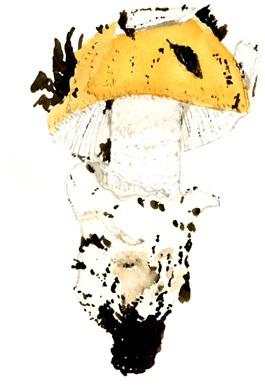
Foraging in a new location revealed minor variations of familiar species. Whether these were new varieties or just environmental adaptations is difficult to say without DNA analysis. Weekly visits provided the opportunity to observe patterns of succession. The previous week’s enormous fruiting of small inky caps precipitously declined on my next visit, but the tough twisted cup fungi increased, although many were dark and moldy. Watered lawns brought up tiny grass fungi. By mid-March, after the rains had stopped, almost all the mushrooms I saw were repeats. There were still hundreds of tan spring agrocybes with cracked caps in the wood chips, and dozens of handsome spring amanitas under live oak along East Redwood Avenue, but I had already painted them. Occasionally, I called something a new variety of a familiar species just to keep my search going. By April, the spring fruiting was over and my documentation ended.

There are several edible varieties on campus and even a few hallucinogenic psilocybe, although I collected only single specimens as painting models. On several occasions, the planter beds outside Darwin Hall contained prized morels, the kind that sell for megabucks in upscale markets.


I don’t mind divulging their location as I won’t be returning any time soon. With the state budget in limbo and looming cuts, part-time instructors aren’t likely to be rehired. Enrollments may be reduced and classes cut. The freeway flier landed, taught her course and now is gone.

Open Mic is now a weekly feature in the Bohemian. We welcome your contribution. To have your topical essay of 700 words considered for publication, write [ mailto:op*****@******an.com” data-original-string=”y7WZWWs0BTaaEkyK19rdLA==06aOQBwnxvAVWq/iuEOnIB6sF0evXvkRVmVLId94GyhYe+8omOVMykzSPNfCrJaax/ZdIffIQfaEOeUIf6hn30aSbQP7yw1ZEKPq2h032quO0o=” title=”This contact has been encoded by Anti-Spam by CleanTalk. Click to decode. To finish the decoding make sure that JavaScript is enabled in your browser. ]op*****@******an.com.


Found in Translation

04.30.08David Templeton"My deaf lesbian sister just seduced my boyfriend!"That proclamation sounds like a headline for the National Enquirer, but in playwright Aditi Brennan Kapil's Love Person, the engaging and challenging new play from Marin Theatre Company and the National New Play Network, those words are definitely no joke. Love Person (the literal American Sign Language translation of the word...

First Bite

Feat of Clay

the arts | visual arts | On a Platter:...

Collapsing Under the Weight of Loma Prieta

I heard some of the final mixes of Loma Prieta's new full-length last week. I can't even describe it. It's insane. I'm not the first one to note the disconnect between the band members' calm, collected personalities and Loma Prieta's unhinged, ballistic hardcore, I know, but it's still shocking to hear them play like electrocuted behemoths on PCP. The album,...

Aye, I Must Capitalize Eighth Blackbird

Which is a shame, really, since they're one of the best damn classical groups in the country and yet they insist on being called.. . ugh. . . can't do it. . .. eighth blackbird. For reasons too long to get into here, I'll allow the privilege of decapitalization to fIREHOSE, but not to Eighth Blackbird; I will,...

Japanese Jazz

I'd never really given much thought to jazz from Japan before, but I recently came into a few records that've instigated a full-blown obsession whose duration has yet to be determined. This stuff kicks ass! Here's a few of my favorites lately. Takehiko Honda - Jodo - The title track alone, a chilling 11-minute dirge, is out of this world...

May day in the North Bay

04.23.08Calling for a "No Peace, No Work Holiday" in protest of the ongoing U.S. war in Iraq, the International Longshore and Warehouse Union (ILWU) prepares for a cessation of all work on Thursday, May 1. May 1 has long been International Workers' Day, though in the North Bay for the past two years, the marchers have largely been occupied...

First Bite

Semester Spores

04.23.08In February, my partner Barbara became a freeway flyer. No special license for freeway flying is required. All you need is eight years of college, teaching experience, wheels and, of course, another source of income. I decided to co-pilot the 90-minute trip from our home in Davis to Rohnert Park when she became a part-time instructor at Sonoma State...
11,084FansLike
4,446FollowersFollow
6,928FollowersFollow