Trawling for Answers

0

05.14.08

To many Northern Californian fishermen, things smell a bit fishy in the ongoing proceedings of the Marine Life Protection Act. The Blue Ribbon Task Force, a state-appointed team of five men and women who will eventually decide what collecting and harvesting restrictions to impose on the North Central Coast of California, includes at least one person who is tightly connected to the Packard Foundation, one of the loudest—and wealthiest—supporters of proposed closures that have recreational anglers statewide fearful that the end is coming, slowly yet steadily, for the tradition of fishin’.

As reported earlier in these pages (“Blast,” April 16), the task force took comments for many long hours at the latest pair of public meetings on April 22&–23 at San Rafael’s Embassy Suites Hotel, but many fishermen stewed in the lobby as the task force, so it seemed to them, began leaning toward many of the restrictive proposals brought to the table by fishing opponents.

In fact, many anglers have suspected all along that the public MLPA process has been a done deal from the start. Here’s why: Meg Caldwell, a senior member of the task force, is also the interim director of the Center for Ocean Solutions, an environmental science and conservation center in Monterey. The center was created earlier this year in part from a $25 million grant from the David and Lucille Packard Foundation.

It just so happens that the Packard Foundation provides the Monterey Bay Aquarium with 75 percent of its annual budget. The aquarium, meanwhile, has voiced loud approval of many suggested restrictions that could put recreational “consumptive” users off of their favored waters by December. These are the very same restrictions which Caldwell, who is essentially an employee of the Packard Foundation, is currently reviewing.

This link between the Blue Ribbon Task Force and supporters of the MLPA’s most drastic closure proposals has many suspecting foul play. But the Department of Fish and Game’s MLPA program manager Melissa Miller-Henson asserts that the connection between Caldwell and the Packard Foundation has had no influence on MLPA proceedings. Caldwell did not return several phone calls to her office.

Additionally, the Packard Foundation, along with four other organizations, is helping to fund the MLPA’s budget needs. Several years ago, the Coastside Fishing Club filed a suit against the state, claiming that this private investment in a public process is illegal.

“Coastside lost that suit,” says Samantha Murray of the Ocean Conservancy. “I think it’s time that this issue gets put to bed. The MLPA is being implemented.”

Big Fishing Wins?

Kenny Belov, manager and seafood buyer at Fish restaurant in Sausalito believes that, if implemented in its current form, the MLPA will have the very negative effect of reducing both the availability of local seafood and the opportunity for individuals to catch their own. Belov is quick to note that the MLPA will not affect fishing activities three miles and farther off the coast.

“The big guys will still be out there offshore. The environmental groups behind this think that if you’re protecting coasts, you’re somehow changing something. Unless you ban long-lining in the open ocean and unless you ban bottom-dragging in California waters, I don’t see how you’re affecting the ocean in a positive way. By closing fishing near shore, you’re getting rid of the smaller guys who are doing it right.”

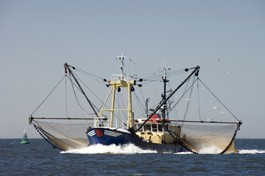
In offshore waters as much as 2,000 feet deep, an interstate fleet of boats drag the bottom with destructive trawl nets for, among other species, hake. Hake is a tremendous seafloor fishery currently impacted by overharvesting and wrought with by-catch (creatures unintentionally caught in the nets). In the industry, hake-fishing by-catch is considered unavoidable, and it heavily affects rockfish, of which some species have suffered a collapse as dramatic, if less glamorous, as that of Chinook salmon.

Hake fishing vessels are allowed catch quotas for several threatened species of deepwater rockfish. The California-Oregon-Washington hake fleet is permitted to land up to 4.7 metric tons of canary rockfish, 25 metric tons of darkblotch rockfish or 275 metric tons of widow rockfish before their season is closed for the year.

Such factory-style boats are required to report their catches on an honors system, but they regularly cheat. During inspections last summer, it was discovered that 40 percent of federally installed cameras meant to monitor onboard activities had been turned off by crews during net hauls. Furthermore, one vessel in Washington was found to have dumped several tons of widow rockfish overboard to avoid hitting its quota and ending the season for the entire fleet. The wasted fish soon washed ashore, and authorities pieced together the crime.

Hunting, Gathering

But by a fascinating irony, the saltwater portion of Carre’s lifestyle will be threatened, as the MLPA task force considers turning the several miles of ocean in front of Carre’s property, among other zones, into a no-take marine reserve.

The North Coast, Carre argues, is not in need of extreme protection. People have rock-picked abalone from the shore here for millennia, she says, and the snails are as abundant and large as they ever were. Other species are equally robust.

“I see no point in this at all except to slowly start putting the squeeze on recreational harvest,” Carre charges. “I think Fish and Game should find a problem first before they run up the coast with their bulldozer and tape.”

For his part, recreational fisherman Rich Navarro of Burlingame believes the MLPA proceedings are based on private interests and little science. “A lot of these people work for nonprofits. They need funding for research, and if there’s no crisis in the ocean, then there’s no grant and no paychecks. They’re assuming there is a problem to substantiate their own jobs.”

Miller-Henson allows that scientific data is scarce on the North Coast. While a sonar seafloor analysis is underway, the bottom habitat profile remains largely unknown. “We’re literally just learning now what the bottom structure out there is.”

Yet the MLPA is designed to provide security for specified, known habitats, she says, preferably pinpointing regions that consist of several types of bottom—sand, rock, both shallow and deep—in order to diversify the range of species that will benefit from harvest closures.

But how can these areas be identified when no one fully knows what the bottom terrain even looks like? Murray of Ocean Conservancy defends the integrity of the process.

“It’s been said from the beginning that the MLPA will be based on the ‘best available science.’ If there’s no better science, then we can only use what we have.”

Who Wants What

By the end of the latest meetings in San Rafael, the task force decided to concoct a blend of the three MLPA proposals at the table. Called their “preferred alternative,” the tentative plan would designate 11 percent of the study region as marine reserves that prohibit all take—no animals, no kelp, no shells, no sand. Under this plan, the northern portion of Salt Point State Park and other popular diving and kayaking sites would be barred from consumptive use.

Carre feels the task force did not fairly consider the opinions of the people who inhabit the North Coast. She and 300 others in coastal Sonoma and Mendocino counties signed and delivered a petition to the Department of Fish and Game earlier this year supporting Proposal 2-XA, the relatively fisherman-friendly plan. But the petition, Carre says, never reached the stakeholders group that was to consider public opinions as it directed the MLPA process.

Miller-Henson explains that thousands of comments, form letters and petitions arrived in the final weeks of the public-comment period, which ended in late March. Miller-Henson sifted through this paperwork before reporting the information to the task force. Among the piles of pro-2-XA letters, she says, were 100 to 150 notes from Monterey Bay Aquarium guests supporting Proposal 4, the one touted by environmentalists. 

Retired commercial fisherman Alan Jacobs of Point Arena says that Mendocino County was overwhelmingly in favor of 2-XA. Point Arena mayor Leslie Dahlhof claims otherwise; public meetings at the city hall were dominated by irate fishermen, but a sizable and unidentified portion of the community who did not attend the meetings lean toward protecting the region, she says.

If the Blue Ribbon Task Force’s preferred alternative passes the ultimate inspection by the Fish and Game Commission, a process that begins in June and may run six months, Point Arena’s fleet of a half-dozen boats will be inconvenienced by two significant closures immediately north and south of the harbor, Jacobs says. Fishermen will have to travel farther, often in rough and dangerous conditions, to reach fertile grounds. Limited fishing days and reduced catches will result, and town supervisor Peter Bogdahn has estimated that Point Arena’s annual income will plummet by 25 percent. 

Carre thinks that with the good they are trying to do, MLPA supporters are inadvertently boosting the state’s carbon footprint.

“These three or four boats supply all the restaurants with fish, and the way I see it, the more fish they’re allowed to catch, the fewer dirty diesel trucks need to come up Highway 1, which is crumbling to pieces. Getting fish yourself and getting it locally—that’s the green way to go, and these environmentalists are ending all that.”

Almost 90 percent of the North Central Coast study region will remain open, but many of the preferred alternative’s recommended closure zones include disproportionately popular access points for abalone divers and kayak fishermen.

“Now, where are all these divers and fishermen going to go?” Carre asks. “Any cattle rancher knows you can’t take away half your land and have the same number of cattle. You will ruin your pastures.”
Conscious clothing

05.14.08

I just wanted to express my interest and appreciation in the cause behind Por Vida (“Wear It for Life,” May 7). I think this young woman, Emily Chavez, is one of the few youth of this generation who make it a priority to stay informed. I would love to hear more about this organization.

Amber Lloyd

Rio Nido

A very thoughtful article, and heartbreaking (). The body of law rationalizing police violence and murder must be changed. Every killing by police, it seems, is because the police are afraid for their lives. I submit that if their job is so terrifying, even though it’s listed low on the list of dangerous jobs, that they seek other employment. Our communities, and especially our families, can’t afford and should not tolerate this casual violence. When we see such behavior in other countries, the violent ones are characterized as criminal government thugs. Here, for some reason, the same violent types are labeled as “trained professional public safety officers.”

Most citizens just aren’t very violent and need to rely on civil rights suits and the initiative process. We need very public, punishing lawsuits and legislation to regain control of rogue government officials and employees. Police gunning down people, including children, is not acceptable. The use of the tired old defense that they were “afraid for their lives” is an insult. We want educated, ethical people to work in the public safety role, not semiliterate thugs.

Richard Wales

Penryn

When police misconduct has risen to the level of shooting and killing women and children, we can be sure this is the tip of the iceberg. For some years now, law enforcement has been living and promulgating a culture of violence and domination without regard for civil rights. Lying and false pretense have become the norm and are justified in the name of police work. 

It is time for a policy of zero tolerance for any police improprieties, however slight, with serious economic consequences to their employers. Blaming the cops for doing what they have been taught is ridiculous; the cities and counties who have coddled and condoned this violent culture are to blame.

A successful lawsuit for every infraction would bring these evil trends to a screeching halt.

John Bechtol

Via email

I applaud the editor’s powerful and artful response to the autopsy report of young Jeremiah Chass, killed by two Sonoma County sheriffs as he was in the midst of a crisis in his parents’ vehicle. Through the power of detail, Gretchen Giles turns a cold and clinical description of the taking of a human life into harrowing poetry.

Brian Boldt

Santa Rosa

The Redwood Empire Food Bank thanks The Bohemian for sponsoring Petaluma Mystic Theatre’s “Battle of the Bands Food Drive.” This phenomenal effort, in the capable and inspired hands of the Mystic’s Shennon O’Donnell, brings together Sonoma County’s best local musical talent for a worthy cause. The Mystic’s goal is to collect 5,000 cans of food for the REFB. Come out to the Mystic Theatre every Sunday in May, enjoy hot local talent and help feed the over 50,000 local people who depend on the REFB for basic nutritious food every month.

Miriam Hodgman

Food Drive and Event Coordinator, Redwood Empire Food Bank

Please know that Jewel Mathieson and Ken Brown were not, as reported in these pages (“It’s High Time,” April 30), the driving force behind establishing a medical marijuana dispensary in Sonoma; one Dona Ruth Frank of Creekside Medicinal Organics, LLC, takes that mantle. We apologize for the error.

Back to Us Food writers, put down that fork and pick up that mouse! We need you. We’re beginning to suspect that no one wants to read as much about likker as we evidently want to print about likker, but food-writing freelancers are needed, necessary and in woefully short supply.

Please send a short, graceful note to ed****@******an.com introducing yourself and explaining why you should be able to chew not only on, but for, the Bohemian. Clips, links and other past expressions of the written word that reflect kindly upon your talents are hugely welcomed.

The Ed.

Drunk ‘n’ hungry


&–&–>

Are They Dark?

0

05.14.08

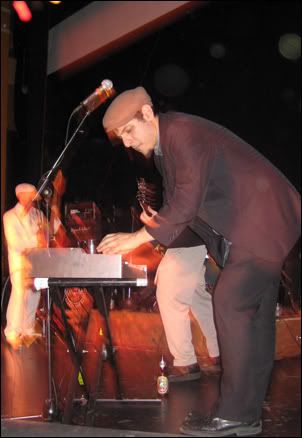
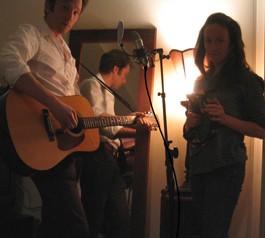
T hese days, the popular model for an alt-rock lineup is either a stark guy-girl duo, like the White Stripes, or a multi-instrumental collective, like the Arcade Fire. These current models are opposites, but for Sonoma’s new rock duo the Harlequin Party, the two models coexist.

“I think we have both styles in us, and more,” says Sasha Papadin of his first project, which includes wife Lauren Papadin, since his club-touring band the Val Papadins dissolved last year. “The big picture,” Sasha says of Harlequin Party, “is to make an anti-band—the two of us at its core, with guests coming and going.” The newlywed couple, who refer to their rattling carnival sound as “rock noir,” plan to add horns, percussion, backup singers and perhaps even dancers when they start gigging to support their new disc, Fever Dreams.

Lauren enjoys that “the simplicity of this current duo is lovely and virtually carefree,” but favors opening the duo into a loose collective, which Sasha says will “create a medium where we can play acoustic shows or big band shows and not feel like we’re betraying some code.”

That’s the performance plan, but Fever Dreams is virtually a solo recording by Sasha, with slight vocal and production contributions from Lauren and Sasha’s brother William. Still, the need for a larger band is implied by multiple keyboard and guitar parts (which Lauren shares live), by the strange mutating circus feel of the music and by charming touches like group vocals that recall a gaggle of drunks in the distance.

“I focused on making the record right and chose to worry about live arrangements later,” Papadin says of converting solo work into a group dynamic. “I gave myself advance permission, when recording, to not have to play these songs the same way live—that felt like freedom.” In fact, changing the songs live is the whole point, he says, noting how favorites like the Walkmen and Bob Dylan “completely deconstruct their songs at each show. As a fan, that’s the only thing that brings me back.”

The content of Fever Dreams is complex enough to invite such reinvention. A general sonic thread links Harlequin Party to artists like Nick Cave, David Bowie, Leonard Cohen, Tom Waits and Ennio Morricone, where a dreamy European sense of keyboard atmospherics collides with a rougher American sense of driving guitar. In the middle of the track “Los Angeles,” for example, a churning, savage Bo Diddley beat is interrupted by a wandering piano abstraction before the chorus reappears.

Papadin is genuinely incredulous when asked why the songs are so dark. “Are they dark? They sound cheery to me,” he retorts, later admitting that there’s “something sinister bubbling below the surface, like the dark undercurrent of a calm ocean. If you’re honest with the undercurrent, it comes out feeling very human, cleansed and worked-out.”

“Some of the songs are dark,” Lauren adds, “but Sasha is not. That paradox gives the music such a uniquely beautiful sound.”

Indeed, there is more to Papadin than “rock noir” band music. He also composes soundtracks, recently creating scene segues for a staging of Lolita by Intertwined Productions at the Sonoma Community Center. Director Frances Hall had seen his indie film Prelude at the Sonoma Valley Film Festival in 2004, and was “reminded a lot of David Lynch. Sasha is kind of ethereal, but pretty haunting.”

Hall says that “I definitely want to use him again,” and her recommendation shows that Papadin’s music can thrive far beyond a solo or duo format. “He gets over [his own work] soon,” Lauren says of her husband’s restless creativity, adding that she does “everything I can to keep him interested in these songs before moving on to the next project.” But Papadin doesn’t seem to move on from his material so much as move within it.

“These songs are like battered rowboats,” he says, “that are going to behave and feel different based on the weather, and on who or how many people are paddling.”

The Harlequin Party release ‘Fever Dreams’ at the end of May, with live shows to start in early June. For more details, check [ http://www.myspace.com/theharlequinparty ]www.myspace.com/theharlequinparty.


First Bite

Editor’s note: First Bite is a new concept in restaurant writing. This is not a go-three-times, try-everything-on-the-menu report; rather, this is a quick snapshot of a single experience. We invite you to come along with our writers as they—informed, intelligent eaters like yourselves—have a simple meal at an area restaurant, just like you do.

The aroma of spices and garlic that wafts from Chinois Asian Bistro in downtown Windsor entices visitors through the door—and down the Silk Road. The ancient and renowned trading route influenced the cuisine of Japan, Thailand, Singapore, Taiwan, Cambodia, the Philippines and Southeast Asia, and is reflected in Chinois’ large and varied menu.

After being seated at the black lacquered table, our hungry party of four started with the menu’s small plates, ordering the Thai-influenced fried calamari with lemongrass and mint-citrus dip ($8), lemongrass crab cakes with seven-spice aioli ($7) and our favorite, crunchy Japanese panko prawns with wasabi-honey mayo ($12). Fresh shredded beets served as the garnish for each dish.

From China, we selected dim sum, a snack originally served in the roadside teahouses for travelers. The daybreak radish cakes ($5) are made from daikon that has been boiled, mashed and formed into squares that are then fried. The nicely crisped outside hid the bland white interior that slightly tasted of horse-radish. The sweet soy dipping sauce served with it was flavorful, and we liked it so much we ended up ordering it two more times, since it was repeatedly whisked away after the small plates were emptied.

The dim sum sampler ($14) features two shrimp and leek dumplings, three pork shu mai and two barbecued pork buns. The dumplings were bursting with fresh leeks and shrimp, and the soft but slightly chewy steamed pork buns were generously stuffed with shredded meat. Shu mai, small dumplings with a flavorful ground pork filling, were another table pleaser, and it was difficult to share two among all of us.

From the large plates, we went back to China for the flank steak with organic snow peas ($16), and to Taiwan for the short rib egg noodle soup in Chinese five-spice broth ($17). The slow-braised meat and soft noodles complemented each other well, and the broth was highly spicy, even for those of us who like to break a gastronomic sweat. We moved on to Hong Kong with barbecued pork char su with egg noodles ($17), wok-fried and served with baby shitake mushrooms. Both the pork slices and noodles were chewy, which the men loved but the women considered dry.

We ended our travels in Malaysia, with a huge bowl of Kuala Lumpur sambal mussels ($16) tossed in a spicy ginger sauce. The coconut rice accompanying it never arrived, so we ate it with the jasmine rice that came with the other dishes. The owner gave us a container of the missing rice to take home, and it was sweet and delicious even a day later.

Chinois, just six months old, also serves dessert (we were too full), and hosts $5 happy hour tapas and cocktails from 5pm to 6:30pm on weekdays. It’s worth hitting the road for.

Chinois Asian Bistro, 186 Windsor River Road, Windsor. Open daily for dinner; lunch, Monday-Friday. 707.838.4667.


View All

Quick-and-dirty dashes through North Bay restaurants. These aren’t your standard “bring five friends and order everything on the menu” dining reviews.

Low-Carb(on) Cuisine

0

05.14.08

I‘ve started to live a double life. Or at least my stomach has. Half of the week I’m an omnivore, eating tacos, sashimi and barbecue, often all before dinner. But the rest of the time, I’m a vegetarian with serious vegan inclinations. It didn’t used to be this way.

As a food journalist, I eat out for upcoming restaurant reviews. I eat out to familiarize myself with new cuisines. I eat out and write about it on my blog (www.metrosiliconvalley.com/livefeed). I eat because I’m hungry. I eat a lot.

I once read a spy novel about some terrorists who, in order to pass as Japanese citizens, studiously ate Japanese food before a big operation in case they were killed and inquisitive minds wanted to examine the contents of their stomachs to find out who they were and where they came from. If someone were to examine my insides on my days at the office, they’d be thoroughly confused about my identity. It’s a United Nations of food in there, although sometimes the bun bo hue doesn’t get along with the clam chowder and it takes a few Tums to calm things down.

I used to eat with the same abandon at home, but instead of going out to eat, I’d cook the food myself. While my wife handles the occasional dessert, I cook everything else, and I was eating as promiscuously at home as at work. But over the past few weeks, I’ve felt the need to lighten up. Short ribs, skirt steak, roast chicken and roast pork are out. Salads, roasted cauliflower and veggie burgers are in. Part of my change in diet was due to high cholesterol, an occupational hazard. Part of it, too, was that it just feels better to eat less meat. My body needed a break. But what really sealed the deal was learning about the environmental costs of profligate eating.

I’ve long known about the evils of factory farming and the human and environmental damage caused by pesticides and herbicides used in food production. But I didn’t know the extent to which some of my favorite foods—beef, cheese, fish—contributed to global warming. Food production in America creates more greenhouse gases than driving. While you may drive a Prius, eating the equivalent of a Hummer is no longer tenable. Livestock emit 18 percent of greenhouse gases worldwide. I learned these and other disturbing facts by going to EatLowCarbon.org, a new website that calculates the carbon footprint of what you eat.

On the website, you simply drag and drop food items into a skillet, and it calculates the carbon dioxide equivalent. A cheeseburger racks up 1,855 points, while a falafel only has 300. Each point is the equivalent of one gram of greenhouse gasses. The food calculator is the work of Bon Appétit Management Company Foundation, the nonprofit arm of the food service company that feeds Yahoo, eBay, Oracle and 400 institutional clients around the country. The foundation seeks to educate people about how food choices affect the environment. The carbon calculator does that in spades. Play with the calculator for a few minutes, and you get the picture. “What we’d like people to do is take away some big messages,” says Helene York, director of the foundation.

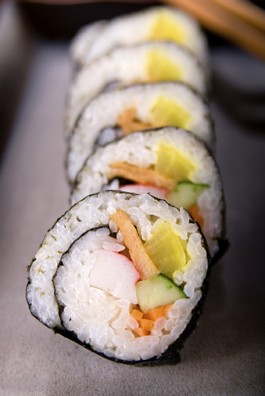
Eating large animals like cows contributes to global warming because of the amount of methane cattle emits. Cow flatulence is 23 times more potent than CO2. Producing grain and corn to feed animals is also carbon-intensive. And shipping the beef to market further adds to the carbon load of that double bacon cheeseburger. And, oh yeah, cheese is bad news too, especially imported cheese that flies in on a jet. Sorry, all you cheese-eating vegetarians. You don’t get a pass. And the typical sushi bar with all that air-freighted fresh fish? An environmental nightmare.

Even if you eat food with a lower carbon footprint, tossing out uneaten or spoiled food is a “dead loss” for the environment, because not only will the carbon that went into producing the food be for nothing, food that sits in a landfill can then emit methane, adding more heat-trapping gasses to the atmosphere. “It’s the old argument: eat all your rice, because there are people starving in Africa,” York says. “That still holds true, now more than ever.”

While eating is a carbon-intensive activity, the good news is that it’s possible to change what you eat. Collectively, that can make a real difference. As a restaurant critic and food lover, I’m not ready to give up meat and cheese and other carbon-intensive foods yet. But when I’m not on the clock, you can bet I’ll be paying closer attention to the impact of what I eat, and eating a lot more vegetable soup and salad made from lettuce picked from my backyard.

Quick dining snapshots by Bohemian staffers.

Winery news and reviews.

Food-related comings and goings, openings and closings, and other essays for those who love the kitchen and what it produces.

Recipes for food that you can actually make.

Anywhere She Lays Her Head

0

05.14.08

Scarlett Johansson is a lucky woman when it comes to Anywhere I Lay My Head, her debut album out next week. It’s hard to go wrong with songs written by one of the most brilliant songwriters of the age, Tom Waits, and add to the mix the production team of Dave Sitek (TV on the Radio) and Nick Zinner (Yeah Yeah Yeahs), with backing vocals by David Bowie, and there’s a recipe for brilliance. But the right ingredients don’t always add up. Opening track “Fawn” is the song a lonely organist in a Midwest mall might play while awaiting customers who will never arrive. “Falling Down,” the first single—a pretty, My Bloody Valentine&–esque track—highlights Johansson’s smoky vocals and would have been right at home on the Lost in Translation soundtrack; on “Anywhere I Lay My Head,” the actress emulates the tremolo vocal styling of Elizabeth Fraser of the Cocteau Twins. But on “Fannin Street,” Johansson sounds like she was drugged before the recording session and then forced to sing through a broken vacuum cleaner tube, and the disco-infused vibe of “I Don’t Want to Grow Up” would work as the opening theme to a bad German variety show. If you pretend it’s not Johansson singing, and just some unknown lovely girl singer, it’s better.—Leilani Clark

Johansson cannot sing in tune at all. It’s intriguing. One, she didn’t autotune her vocals, instead doubling them up to constantly clash with each other in pitch. Two, it sounds like Sinéad O’Connor or This Mortal Coil or some other early 4AD stuff where the singers purr like witches luring you into their vat of human flesh. And three, if it wasn’t Tom Waits’ material, the album would actually be better. Johansson doesn’t “get into” the feeling of the songs; it’s like she learned them five minutes before recording them and delivered a cold reading with no passion at all. She’s gotten a lot of cred for this project, but overwhelmingly, she comes off as not an actual Tom Waits fan at all. Too bad.—Gabe Meline

In her films, Johansson is often cast as a muse for middle-aged men—she’s the Viagra of filmdom. As a singer, however, excusing the metaphor, she falls flat. The ingénue and her producers have chosen songs from throughout Waits’ career, making it a little disconcerting to hear a 24-year-old sing “I Don’t Wanna Grow Up.” The songs Waits writes are gems of lyrical brilliance, so why are Scarlett’s vocals so awash in reverb? Sitek has said he was trying for a “Tinkerbell on cough syrup” vibe, but we love our neighbor’s voice—why would we want cough syrup?—Brian Griffith

Anywhere I Lay My Head is out in stores next Tuesday. Tom Waits is touring this summer, hell yeah; for dates, see www.tomwaits.com.


Obama’s Clarifying Win

0

05.14.08

Barack Obama’s May 6 triumph was a victory over a wall that pretends to be a fly on the wall.

For a long time, the nation’s body politic has been shoved up against that wall. It’s known as the news media.

Despite all its cracks and gaps, what cements the wall is mostly a series of repetition-compulsion disorders. Whether the media attention is on Pastor Wright, the words “bitter” and “cling,” or an absent flag lapel pin, the wall’s surfaces are more rigid when they’re less relevant to common human needs and shared dreams.

“We’ve already seen it,” Obama said during his victory speech in North Carolina. “The same names and labels they always pin on everyone who doesn’t agree with all their ideas, the same efforts to distract us from the issues that affect our lives, by pouncing on every gaffe and association and fake controversy, in the hopes that the media will play along.”

And oh, how they’ve played along. From the front pages of “quality” dailies to the reportage of NPR’s drive-time news to the blather-driven handicapping on cable television, the ways that media structures have functioned in recent weeks tell us—yet again—how fleeting any media attention to substance can be.

News outlets spun out—”pouncing on every gaffe and association and fake controversy”—as media Obama-mania about a long shot candidate morphed into Obama-phobia toward the candidate most likely to become the Democratic presidential nominee. The man who could do little wrong became a man who could do little right. The lines of attack were spurious and protracted enough to be jaw-dropping.

But how often can we be truly shocked by such media patterns? Perennial corporate structures are reinforcing the narrow boundaries.

If this sounds like an old complaint, it is. Institutional dynamics—fueled and steered by ownership, advertising, underwriting and undue government influence—repeat themselves with endless permutations. Dominant media routinely focus on counterfeit issues, often ignoring or trashing progressive options in the process.

From George McGovern to Gary Hart to Michael Dukakis to Al Gore to Howard Dean to John Kerry, a long line of Democratic contenders with a chance to become president have been whipsawed by cartoonish images or bogus “issues,” incubated by the right wing and fully hatched by the mass media. The slightest progressive wrinkles of even the starchiest corporate Democrats have been ironed out by media steamrollers.

In recent months, as Barack Obama went from underdog to frontrunner, the news media became stainless-steel accessories to the “kitchen sink” politics of smear and fear.

The media pretense of being a fly on the wall has often been preposterous. In the real world of politics, where power brokers and manipulators proceed with the cynical axiom that perception is reality, the fly on the wall is the wall. The political press corps is not observing reality as much as redefining it while obstructing outlooks and constraining public perceptions.

Yet in North Carolina and Indiana, voters had more votes than all the pundits did. Pundits lost. Voters came out ahead. So did Obama. And so did the body politic.

We’re still up against the media wall. But when dawn broke on Wednesday, that wall wasn’t quite as high or mighty. And the nation might be able to see a little more clearly beyond it.

West Marin writer Norman Solomon is an elected Obama delegate to the Democratic National Convention. His books include ‘War Made Easy: How Presidents and Pundits Keep Spinning Us to Death.’

Open Mic is now a weekly feature in the Bohemian. We welcome your contribution. To have your topical essay of 700 words considered for publication, write [ mailto:op*****@******an.com” data-original-string=”WTTOHBUhKl7qJxqM8XHIGQ==06axvVq1oluzz5ZoVfeXGwzhdrSVKDI3SkhuCypBtAPl8IyUhtpz5IuIMKUm/K0lXv0y5e773VhzbkcSQc6TwEik/uNzObdYY4wmq7nvqAMUH2QbDYTnl/SkeizxWK0eHlO” title=”This contact has been encoded by Anti-Spam by CleanTalk. Click to decode. To finish the decoding make sure that JavaScript is enabled in your browser. ]op*****@******an.com.


The Slackers at the Mystic Theatre

0

Vic Ruggiero, what a guy.
“Hey, howya likin’ the movie so far? Ya know those movies, right, where they got the guy who keeps talkin’ about stuff, an’ it goes on an’ on, an’ then you figure out there’s no plot or thread? You ever seen those movies? Like those Woody Allen movies, y’know, ‘So I was waitin’ for the bus. . ‘ An’ he keeps on talkin’ and talkin’ without makin’ no sense. Or like, whaddya call it, the French New Wave? Where there’s just a bunch of stuff an’ we’re supposed t’think it’s art?”
“Is this like that? Is this art, what we’re doin’ up here?”
The Slackers are a great band who know six zillion songs, and therefore, if you go see ’em, they’ll play 12 songs you don’t know until they finally play one song you love. It’s worth the wait, and Ruggiero’s string of deep-Bronx nonsequitur banter is hilarious.
“Nice t’ be playin’ some of those tough-guy songs, y’know. For a long time everyone was out to kick our ass for bein’ the best band in New York. We were always playin’ Nightingale’s. ‘Member that place? Held about 25 people. It bred only the best! Blues Traveler. Spin Doctors. Tha’s why people were wantin’ to kick our ass, t’make sure of no more Blues Traveler!”
The show was fantastic. Everyone in the place was dancing. Only half-full, though, which is really too bad—I can think of two dozen people off the top of my head who would have loved it. Don’t miss ’em next time they come around.

Trace Adkins at Konocti Harbor

1

As I walked from the parking lot up to the entrance of the amphitheater last Friday night, I overheard two employees—a shuttle driver and a kid directing traffic—chatting about the evening’s crowd. “It’s gonna get worse when people start drinkin’,” one said. “Yeah,” the guy replied, “there’s a whole lotta stupid goin’ on.”
I was, for the first time in my life, at Konocti Harbor, a place that’s been the punchline to many jokes about toothless women and shirtless men made by us big city Santa Rosa types. But I can now say with authority that these jokes are mostly unfounded; after a long, winding drive, I found out that Konocti Harbor wasn’t at all the chintzy Las Vegas atmosphere I’d always assumed it to be but a serene hamlet of beauty and fresh air. In fact, strolling past the trees, tennis courts and rustic cottages with a quaint view of Clear Lake, it recalled more the summer resort from Dirty Dancing, and thus every girl in high-rise jeans made me think of Jennifer Grey. There were a lot of ‘em, too—this was, after all, a country show.
I’ve been listening to a lot of country radio lately. Most of it’s terrible, but alongside all the bullshit like Brad Paisley, Kenny Chesney and Dierks Bentley, there’s this guy from Louisiana, Trace Adkins, that I’m a huge fan of. Those who know me might find this incredibly out of character—believe me, I was pretty surprised to find it out myself—but after immersing myself thoroughly in the subject, I can say that Trace Adkins has one of the most penetrating and compelling voices in country music today.
During his hour and a half-long set at Konocti, Adkins played hit after hit, demonstrating the versatility of style in his output. The lightshow-laden opener “I Got My Game On” kicked things off promising that “it’s gonna be a hell of a ride,” and from the tender moments of “I Came Here To Live” and “Every Light in the House” to the good ol’ boys romp of “Rough and Ready” and “Ladies Love Country Boys,” Adkins was clearly having a great time. “We’ll try to do some songs that we know pretty good,” he joked to the crowd early on, “so they won’t suck too bad.”
Adkins has a natural ability to be both serious and stupid, oftentimes in the same sentence. For example, the “American Man” tour, which hits casinos, state fairs and football fields, is named after a song that Adkins told the crowd was inspired by his dad: “He’s basically at the top of my hero list,” he said, speaking from the heart. “Real hard-noser, though. Someone said to me the other day, ‘Your old man reminds me of John Wayne.’ I said, ‘Hell, my old man makes John Wayne look gay.’”
When Adkins finds a song in the direct middle of these two extremes—the pensiveness of “You’re Gonna Miss This” and the crass yahooism in “Chrome,” say—he’s at his best. “I Wanna Feel Something,” one man’s plea to experience emotion in a numbing modern world, was one of the set’s highlights on Friday night. Occupying similar emotional ground was “Arlington,” which Adkins went out of his way to introduce with “nothing but the utmost of respect and honor.”
In the country world, “Arlington” sparked controversy when it was released as a single, probably because it doesn’t conform to the simpleminded let’s-fuckin’-kick-their-asses narrative of all the remedial Toby Keith fans in the world. Instead, it explores the complex point of view of a dead soldier sent back home from war who finds at least a small, final solace in being buried in the hallowed ground of Arlington Cemetery. The verses, in particular, represent some of Adkins’ richest singing, and at the end of the song, Adkins was visibly choked up.
“I gotta be honest with you, it’s hard to keep my mind on things, singing that song,” he said afterwards, explaining that his manager’s son was over in Afghanistan; two days ago, there’d been an attack which had killed at least two soldiers, and they still hadn’t heard from him. “We’re goin’ over there in September, though,” Adkins announced. “Funny thing is, we go over there to make them feel good, and you know what? They make us feel good! Now, I don’t give a damn if you support the war or not, but we gotta support the boys in the fields!”
(Of course, the crowd went crazy at this, but for as hot as Adkins is on soldiers’ issues, not all of his fans seem to share his concern. During the show, two women—a mother and a daughter trashily dressed in matching tube tops and pumps—walked next to me and stood directly in front of an aisle full of WWII veterans, blocking their view and blatantly ignoring their repeated requests to move. I went up and pointed out that their tickets were for a different section, and that they were upsetting a row full of old people, but they absolutely did not care at all; it was only when security came along that they haughtily strutted back to their seats. So much for war heroes, I guess.)
“Hot Mama” marked an end to the “wholesome part of the concert,” and Adkins talked a little bit about the song’s steamy video (“it was the first time since I got a record deal,” he said, “that my mamma was very disappointed in me”) and then went into a weird thing about the Bible and Adam and Eve and the forbidden fruit. This all came back around to his big closer, “Honky Tonk Badonkadonk,” which prompted everyone in the crowd, who had been standing the whole time, to completely get on down. I decided to walk around and watch all of Lake County’s finest—including, yes, a girl missing some teeth and an overweight guy wearing no shirt—shake their back-country asses to the most totally stupid and completely enjoyable country hit of the last few years.
The band vamped the song at the end, with Adkins finally delivering his send-off line.
“Lemme tell you,” he said, while the band played, “I didn’t get in this business for the fame, or the money—I got in this business for one reason and one reason only. . .”
The music stopped. Adkins threw his arms open wide.
“Badonkadonk, motherfucker!”
Like the man said: a whole lotta stupid goin’ on. But when no one’s takin’ it too seriously, and when an amphitheater full of people on the lake are having a hell of a good time, it’s hard to do anything but laugh your ass off and join in.

Media Moments: The P.D. and the KRSH

0

It’s just one of those days when tidbits fall from the sky into one’s lazy lap. And so it was that a man called our offices this morning, wanting to talk about the Santa Rosa Press Democrat. A former staffer since laid off by the PD, our chap is a smart fellow with an interesting story to tell about how our own particular slice of modern day mass media is committing suicide by accident.

Outsourcing ad production and editorial layout to India (as seen above), anyone?

Later this afternoon, an email came in from the KRSH 95.9-FM, where I spend about 10 minutes every Wednesday morning nattering needlessly on about ahrt and the Bohemian. Seems top management at the KRSH are concerned that the morning “talent” talk too much. Ziggy Eschliman is on for 30 minutes on Wednesdays; Frank Hayhurst for an hour on Fridays. Theater, film and the occasional other round the week out. Now each of us will have three entire minutes. While I’m just as glad to have to either focus my words or quit the gig, I suspect that Ziggy and Frank might feel otherwise.

Trawling for Answers

05.14.08To many Northern Californian fishermen, things smell a bit fishy in the ongoing proceedings of the Marine Life Protection Act. The Blue Ribbon Task Force, a state-appointed team of five men and women who will eventually decide what collecting and harvesting restrictions to impose on the North Central Coast of California, includes at least one person who is tightly...

Conscious clothing

05.14.08I just wanted to express my interest and appreciation in the cause behind Por Vida ("Wear It for Life," May 7). I think this young woman, Emily Chavez, is one of the few youth of this generation who make it a priority to stay informed. I would love to hear more about this organization.Amber LloydRio NidoA very thoughtful article,...

Are They Dark?

05.14.08T hese days, the popular model for an alt-rock lineup is either a stark guy-girl duo, like the White Stripes, or a multi-instrumental collective, like the Arcade Fire. These current models are opposites, but for Sonoma's new rock duo the Harlequin Party, the two models coexist. "I think we have both styles in us, and more," says Sasha Papadin...

First Bite

Low-Carb(on) Cuisine

05.14.08I've started to live a double life. Or at least my stomach has. Half of the week I'm an omnivore, eating tacos, sashimi and barbecue, often all before dinner. But the rest of the time, I'm a vegetarian with serious vegan inclinations. It didn't used to be this way.As a food journalist, I eat out for upcoming restaurant reviews....

Anywhere She Lays Her Head

05.14.08Scarlett Johansson is a lucky woman when it comes to Anywhere I Lay My Head, her debut album out next week. It's hard to go wrong with songs written by one of the most brilliant songwriters of the age, Tom Waits, and add to the mix the production team of Dave Sitek (TV on the Radio) and Nick Zinner...

Obama’s Clarifying Win

05.14.08Barack Obama's May 6 triumph was a victory over a wall that pretends to be a fly on the wall.For a long time, the nation's body politic has been shoved up against that wall. It's known as the news media.Despite all its cracks and gaps, what cements the wall is mostly a series of repetition-compulsion disorders. Whether the media...

The Slackers at the Mystic Theatre

Vic Ruggiero, what a guy. "Hey, howya likin' the movie so far? Ya know those movies, right, where they got the guy who keeps talkin' about stuff, an' it goes on an' on, an' then you figure out there's no plot or thread? You ever seen those movies? Like those Woody Allen movies, y'know, 'So I was waitin' for the...

Trace Adkins at Konocti Harbor

As I walked from the parking lot up to the entrance of the amphitheater last Friday night, I overheard two employees—a shuttle driver and a kid directing traffic—chatting about the evening’s crowd. “It’s gonna get worse when people start drinkin’,” one said. “Yeah,” the guy replied, “there’s a whole lotta stupid goin’ on.” I was, for the first time in...

Media Moments: The P.D. and the KRSH

It's just one of those days when tidbits fall from the sky into one's lazy lap. And so it was that a man called our offices this morning, wanting to talk about the Santa Rosa Press Democrat. A former staffer since laid off by the PD, our chap is a smart fellow with an interesting story to tell...

11,084FansLike
4,446FollowersFollow
6,928FollowersFollow