The Hills Are Alive

0

06.04.08

From world-class studios to smaller, project-based operations, North Bay musicians have an array of choices when it comes to recording. Why are so many of these studios based in the town of Sebastopol, population 7,000-ish? We have absolutely no idea.

Ausgang Audio “We love working with creative musicians and bands, and have recently recorded the Highlands and Yeah Yeah Yeah’s guitarist Imaad Wasif,” says Justin Millar, who with wife Cara Phillips, runs this hi-fi analog recording studio with digital recording options. Located in an old Petaluma Victorian, the studio features a separate control room, live rooms with 10-foot ceilings and wide plank oak floors. Millar brings years of experience as a Skywalker Sound staff member to his work as an engineer.

From the Rock ‘n’ Roll ‘Jeopardy’ Files Star Wars freaks can record on equipment actually used at Skywalker Ranch, the compound run by Jungian-inspired director George Lucas.

Recording Philosophy “We’re passionate about recording, vinyl records and archiving a band’s uniqueness.” www.ausgangaudio.com.

Banquet Studios Thirty years of recording experience is one of the perks of working with Warren Dennis Kahn, retired SSU music professor and the owner/engineer at Banquet Studios. Kahn recently upgraded to a beautiful, acoustically sound studio in rural Sebastopol with views of rolling wheat-colored hills. The large studio (they recently hosted a 40-person choir from Occidental) is strictly digital. “It’s a huge endeavor to put out a record,” says studio manager Shanin Jones, a singer and percussionist with R&B dance band Blue Moon. “Just to have the guts to do it. We want people to feel encouraged and supported. Since we are all musicians here, we understand the pressures of the recording process.”

From the Rock ‘n’ Roll ‘Jeopardy’ Files Deepak Chopra, author of The Seven Spiritual Laws of Success, recorded an audiobook here.

Recording Philosophy “Our purpose is to provide a conscious recording environment in which personal artistry is encouraged, creativity is inspired and the human spirit is expressed.” www.banquetstudios.com.

Coyote Creek Studio On a sunny day in Sebastopol, Robert Butler, owner of Coyote Creek Studio, plays a rough cut of “We are the Ones,” a heartfelt song by singer-songwriter Sky Nelson. Working primarily with such regional artists as Kelly the Singer and rock band Jed, Butler looks for artists with potential and is willing not only to record them but also to help with post-recording promotion. “This is a comfortable place. Artists are in a situation where they can do their best work,” Butler beams.

From the Rock ‘n’ Roll ‘Jeopardy’ Files The studio got its name from the coyotes that liked to visit during late-night recording sessions. According to Native American lore, these creatures represent the trickster god. Maybe the studio is situated on some Sedona-like vortex.

Recording Philosophy “The signal path is the key. It starts with talent, mics, the room and pre-amps.” www.coyotecreekstudio.com.

In the Pocket “I wanted to build a studio where I could achieve the sounds of my favorite records,” says owner Gregory Haldan from his finely outfitted In the Pocket control room. After purchasing a NEVE console mixing board previously used on The Benny Hill Show, Haldan continued his search for the best gear available. “I have a clear vision of how I want to approach equipment,” he says.

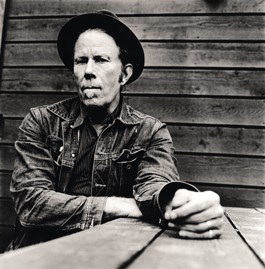
Clients like Gov’t Mule and Tom Waits, who recorded both Alice and Blood Money here, have taken advantage of the isolation and privacy. “It’s about helping people make the record of their dreams,” Halden says.

From the Rock ‘n’ Roll ‘Jeopardy’ Files “Dr. Woo,” the mysterious previous owner of the property attempted to build a “spiritual creek” underneath one of the houses. It has since been diverted.

Recording Philosophy “Focus on the music.” www.inthepocketstudio.com.

Prairie Sun On first approach, Prairie Sun looks like a farmhouse. In fact, it spent the first part of its life in rural Cotati as a chicken hatchery, a fact that co-owner Mark “Mooka” Rennick shares with pride. “It’s basically a funky old chicken barn,” Rennick says about his successful recording facility. But don’t be fooled by the rough exterior. Prairie Sun is a world-class studio, featuring vintage analog equipment combined with the most up-to-date digital profile. Patronized by the likes of Tom Waits, who recorded the Grammy Award-winning Mule Variations in a modified closet now called the “Waits Room,” the Mountain Goats and Heavy Weight Dub Champion, this “funky chicken barn,” has seen its share of brilliance.

Studio B features a Neve Mixing board previously owned by Pete Townshend. Studio A features an 80-input mixing board. “We can handle huge projects,” Rennick stresses. Musicians who want to mix analog with digital can do that, since each room has a proprietary digital ProTools system, all wired for two-inch analog tapes.

From the Rock ‘n’ Roll ‘Jeopardy’ Files Before a recording session by a West County hippie band, a guru-priest attempted to splash holy water around one of the studios, seriously threatening some very expensive equipment.

Recording Philosophy “Prairie Sun is an artistic compound with professional services and great vibes, and we like to have fun.” www.prairiesun.com.

Zone Recording/Blair Hardman Productions “We get all levels of performers in here and we make everybody feel comfortable,” says Blair Hardman from the helm of an immaculate control room that resembles the inside of a small spaceship. “I majored in psychology so that’s a big help,” Hardman laughs, speaking of his ability to stave off nervousness in clients who may be new to the recording process. Clients can also choose from hundreds of guitar amps since they are given access to all of the gear in the adjacent Zone Music store.

From the Rock ‘n’ Roll Jeopardy Files Blair Hardman made a guest appearance on the bestselling audiobook The Secret. He read the biblical quotes.

Recording Philosophy “Recording at Zone means never having to say you’re sorry.” [ http://www.zonemusic.com ]www.zonemusic.com.

Other Studios to Love

Grizzly Studios “From the early ’90s to 2000, it seems like practically everything that came out of the North Bay area came through the studio,” says owner Roger Tschann about his legendary Petaluma digs. From Mac Dre to Cutie Pie—a Japanese ska outfit who flew across the Pacific to record with the man responsible for records by California ska bands like the Bruce Lee Band—Grizzly is a place where musicians of all stripes can come for quality analog and digital recording.

“It’s affordable with a relaxed vibe,” Tschann says about Grizzly. With a track record of producing classic recordings from pretty much every cool band to come out of the North Bay, Tschann can put his output behind his words. 707.763.BEAR.

The Plant Recording Studios Fleetwood Mac recorded their perennial hit Rumours at Sausalito’s original Plant in 1976. This world-class facility still caters to the big names, including the Dave Matthews Band, Joe Satriani and Santana. For those with a little extra cash, check out the “Garden,” a studio room complete with tropical plants and a hot tub. www.plantstudios.com.

Route 44 Owner and engineer Harry Gale has captured the sounds of many of Sonoma County’s finest including Doug Jayne, Charlie Musselwhite and Laughing Gravy. Route 44 features an efficient and comfortable set up along with ProTools-based digital recording on two acres of country land in Sebastopol.

“All egos get checked at the door—including mine,” says long-time musician Gale. “We usually wind up having a great time doing our best, and I have many clients who come back repeatedly for three or more albums.” www.route44studio.com.

Sebtown Slated to open this month, Sebtown is a professional recording studio in the heart of Sebastopol. Studio designer Jack Jacobsen designed the world-class acoustic recording rooms. Owner Chuck Johnson doesn’t hesitate to declare, “it’s the best in Sonoma County.” Local artists are encouraged to contact this affiliate of the New Vintage Artists label to see for themselves. 707.495.9001.

Silverado “We believe in creating an environment where the artist feels supported by a combination of state-of-the-art electronics and precision engineering, editing and mastering—and quality professional people with positive attitude, to get quality results,” says Patrick Flynn, head engineer at Silverado. Located in rural Calistoga, the studio combines a vintage TAC magnum console with ProTools for those looking for personalized hybrid touch. Rates are comparable to other studios, and they offer package deals for longer projects. www.silveradomusic.com.

Fame Game

0

06.04.08

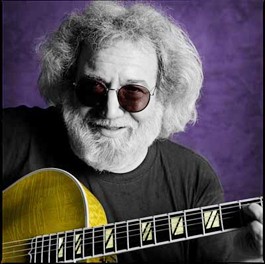
Rock-star encounters happen every day in Marin, from sharing a bathroom with Huey Lewis to sharing a sandwich line with Carlos Santana. My favorite story involves a childhood sleepover at Jerry Garcia’s place that left a young girl wondering why the fridge was stocked solely with tubs of giant mushrooms.

“People lived down the street from Grace Slick or saw Van Morrison in the drugstore—they really treasure those kinds of associations,” says Marin Independent-Journal columnist Paul Liberatore. In his March 20 column, Liberatore rather innocently proposed that the county create its own rock hall of fame. Almost immediately, he had a mountain of old stories and memorabilia to peruse. “I expected some response, but I had no idea of the scope,” says the former rocker, who was inspired by the deaths of musician friends Martin Fierro and Chuck Day. “I got way over 300 emails, and when people started sending in nominations, it went off the charts.”

Serendipitously, the Marin History Museum was preparing for “Marin Makes Music” as the theme for its annual gala fundraiser, held May 2 in Mill Valley. “I go to 20 or 30 fundraisers a year,” says Pam Hamilton, who does PR for the museum, “but there was something electric about that night; people were so excited.” Excited enough, apparently, to make it an annual event. “Next year, we will embrace the Marin Symphony, country, blues, jazz,” Hamilton says. “Tommy Castro couldn’t make it, but said, ‘Next year I’m there.'”

Hamilton, like many, sees the hall of fame concept as restrictive and inherently controversial. “It becomes a selective process,” she says. “We want to honor people regardless of whether they made the top of the charts like Huey Lewis or are just one of the most solid music-makers, like Austin de Lone.”

Liberatore’s idea has similarly evolved. “After I’ve had time to think about it and talk to people, the emphasis should be Marin’s rock history rather than making it a hall of fame for all the hotshots,” he says. “Criteria would be decided later, but now I’d like to see us preserving our rock history and getting it out there so people can enjoy and learn from it.”

Local real estate agent and guerrilla historian Jason Lewis, whose Marin Nostalgia website features an interview with jazz luminary George Duke, couldn’t agree more. “I think Paul’s thing is a great idea, but the national one has left out some groups that are more than deserving,” he says. “What is a true hall of fame based on? Record sales? Number of Top 40 hits? Or just bands the editors of Rolling Stone magazine think are ‘cool’?”

Coincidentally, the museum gala’s emcee was former Rolling Stone editor Ben Fong-Torres. He is also weary of the increasingly criticized Rock and Roll Hall of Fame Foundation, cofounded by his former colleague Jann Wenner. “It’s a no-win situation, where people are pulled in and others are left out,” he says. “You also have the politics and the economics of an organization like that.”

Fong-Torres has even devoted an episode of his KFRC 106.9-FM radio show to those who were snubbed. “The Steve Miller Band, the Doobie Brothers and Boz Scaggs come to mind,” he lists. “I don’t understand why they haven’t even been nominated. There’s something going on there.”

Having covered Bay Area music for decades, Fong-Torres supports the plan but believes extra precaution is wise. “Altogether, [the gala] was a successful early step in the process, but let’s try to do it right and recognize as many people as possible right away,” he says with a laugh. “[Pianist] Jon Allair is totally unknown to the music industry, even though he’s got great credits with Van Morrison and others.”

Perhaps Village Music’s recent closure and the Sweetwater Saloon’s sluggish relocation have catalyzed local fervor. “I think it woke people up,” Liberatore says. “People are afraid, and they see these things going away.”

And this cultural richness doesn’t stop at county lines. “I think Sonoma may want to have its own, which I would encourage,” he says. “People like David Grisman, Tom Waits, Nick Gravenites in Occidental. It overlaps in a lot of ways, but Sonoma has a real history of its own, too.”

As pied piper of this effort, Liberatore remains generous. “I would like to see it happen, so anything that I can do to bring it about, I’m going to do it,” he says. “I know Martin [Fierro] really would’ve liked some recognition. Wouldn’t it have been nice to be able to honor [him and Chuck Day] when they were still living?”


Gracefully Humane

06.04.08

Life in war-torn Iraq is obviously no picnic, but it starts to look a little bit better when compared to conditions under Saddam Hussein (unless you were one of the select few who received his double-edged favors, of course). In Heather Raffo’s poetic, gracefully humane one-woman play The Nine Parts of Desire, running through June 14 in the Studio at Santa Rosa’s Sixth Street Playhouse, nine Iraqi women tell intimate stories of their lives before and after the fall of Saddam. Some of these stories are lovely and inspiring, some are funny, many are harrowing. All of them are performed by Denise Elia, taking another major step forward after several years working in the community theater trenches of smallish character parts and ensemble roles.

In Nine Parts of Desire, Elia, always a very physical actor, morphs in and out of the bodies of a distinct array of women: a grieving Bedouin woman dropping the shoes of dead people into the Euphrates every day as an act of devotion; a wealthy Iraqi artist wrestling with the compromises that have brought her success under Saddam; a neglected wife and mother, yearning for love, who discovers her own worth while posing for the aforementioned artist; an expatriate Iraqi, living in New York, anxious for news of her family as the post 9-11 bombing of Iraq begins; a fearful ob-gyn in Baghdad describing the horrific health conditions of her people after the commencement of the war and invasion; and others, all richly detailed, distinctly individual portrayals, thanks to Elia and co-directors Bronwen Shears and Elizabeth Craven.

The set is clever patchwork, suggesting different times and places with a television set here, a pile of rubble there, an easel, a chair, an array of glass water urns, a pool of water. Elia navigates from one character to another using slight costume changes, shifts in voice, changes in posture. This is a beautiful show, and an important one, taking us into the lives of “others” in ways that are both mesmerizing and deeply moving. Nine Partsis the type of show that was designed to challenge, change and inspire the people who see it, and in the hands of Shears, Craven and Elia, that’s exactly what this play does.

Nine Parts of Desire runs Friday-Sunday through June 14 at the Sixth Street Playhouse. Friday&–Saturday at 8pm; Sunday at 2pm. 56 W. Sixth St., Santa Rosa. $12&–$18. 707.523.4185.


Museums and gallery notes.

Reviews of new book releases.

Reviews and previews of new plays, operas and symphony performances.

Reviews and previews of new dance performances and events.

Psych  Psnap

0

06.04.08

There’s talking, laughing and the clinking of beer bottles. Suddenly, the sound of four perfectly tuned voices echo off the walls of the Paris Métro. Inside the train, four young men grin at one another and strike up a beat on a metal pole. As the clinking intertwines with clapping, they break out once again in harmony. The faces of average French citizens stuck on the subway in the wee hours of the night slowly morph from flabbergasted confusion into an enchanted look of euphoria.

The performance is like witnessing world diplomacy through song. The train slows to a stop, the doors part and whistling applause escorts the men out onto the platform. The foursome giggle as if they’re immensely surprised with the music they’ve just created.

As cheesy as this video clip sounds, these exuberant young men are at the forefront of indie alternative music’s new wave.

Welcome to Yeasayer, people.

On their debut album, All Hour Cymbals, the band’s self-proclaimed “Middle-Eastern-psych-snap-gospel” sound is a collage of chimes, occasional a cappella harmonies, African and Indian beats pounding away in the background, and wispy synthesizer layers. Psych-snap-gospel hardly begins to describe it.

Pronounced “yay-sayer,” the band is comprised of a cacophony of musical talents: Anand Wilder, Ira Wolf Tuton, Chris Keating and Luke Fasano. Wilder and Keating became friends during high school in Baltimore, Md. In 2004, the duo reconnected in Brooklyn and began playing music. A year later, Tuton joined as the bass player, and in the summer of 2006, Fasano’s drums formed the backbone of the group.

Yeasayer are only one of recent Brooklyn imports to the popular music scene. Along with bands like Vampire Weekend, MGMT and Animal Collective, they are slowly transitioning from underground experimentation to hipster playlists to guesting on such mainstream fare as Late Night with Conan O’Brien and MTV.

Commercialism may be the name of the game in Manhattan, but Brooklyn gives artistic innovation a new stomping ground, heralding the rebirth of the broke and statusless musical genius.

While Yeasayer may find their home and inspiration among the crop of new bands like A Place to Bury Strangers and the Muggabears, their results sound far different. Where A Place to Bury Strangers pair lazy vocals with frenetic, pulsating drumbeats, Yeasayer lean toward the mystical side of the spectrum, kneading the drumbeats and guitar into wispier rhythms. The Muggabears, who classify themselves as “emotronic,” are just that: a little more pop and a little more angst, like a grunge version of the Australian band Jet. Yeasayer hit the middle mark with ease, each track of All Hour Cymbals more expansive and multifaceted than the last. They are relatable. Listenable.

“Beautiful” is the one word that crops up again and again with reference to Yeasayer in music blogs and review sites. Their lyrics are beautiful, the sounds are beautiful, the sentiment is almost too beautiful to handle. What exactly are these four guys—all hailing from different areas of the East Coast but all living in Brooklyn now—doing to evoke such strong reactions? The secret lies in the content. Not in the trippy melodies, and not in the Phil-Collins-circa-1980s vocals in tracks like “Sunrise,” but in the nature with which they tackle some startlingly pessimistic subject matter. In their single “2080,” which launched their introduction into the mainstream, lead vocalist and keyboardist Chris Keating sings, “I can’t sleep when I think about the times we’re livin’ in / I can’t sleep when I think about the future I was born into.” Such a harsh take on issues facing the world today was in part motivation for the band’s unique name.

“The name ‘Yeasayer’ seemed positive,” Keating recently told New York Noise, an indie and underground music television station. “You know, we thought, ‘If we have a positive name, then we can kinda go ahead and talk about the dark stuff.'”

In a Top 40&–driven musical market, Yeasayer have managed to create something new, which is normally thought to be an increasingly futile goal for new musicians. The bands coming out of Brooklyn are turning alternative indie music on its head, and Yeasayer are right there, bringing in that Middle-Eastern-psych-snap-gospel. Right on.

Yeasayer appear July 19 at San Francisco’s Download Festival. www.downloadfestival.com.


News Briefs

0

06.04.08

Prettying up the Parks

Over a million outdoor enthusiasts nationwide are expected to head to a favorite park, forest or recreation area on Saturday, June 7, for a day of trail work and celebration. Established in 1993, National Trail Day (NTD) now includes almost 3,000 separate events across the country. Volunteers refurbish national, state regional and local park trails. Organizers offer workshops, educational exhibits and new trail dedications in addition to giving folks the opportunity to give a little elbow grease in payback.

Rod Helms is the executive director of the Sonoma Trails Council, the nonprofit spearheading Sonoma County’s efforts. Helms encourages everyone who has ever used a park to lend a hand in NTD trail-maintenance efforts. In the past, Helms says that he’s enjoyed everything from “brushing trails, tread-work and reversing erosion from lumber trails into creeks” to “removing seaweed off a beach” to luring potential bike-riding volunteers off the path “with cookies.”

In Marin, volunteers will meet at Tennessee Valley to do fence-building, clear brush and construct a raised turnpike. In Sonoma, the event is Trail Days-with-an-ess as the work at Salt Point State Park runs Friday&–Sunday, June 6&–8, with work needed on the pygmy forest and rhododendron preserve, as well as such mundane places as the beach. In Napa, volunteers get an unprecedented chance to enjoy the new Newell Preserve, an open space acquisition not yet open to the public, as they tour the area that is slated to one day be the River to Ridge Trail, part of the overall Bay Area Ridge Trail.

Aside from the satisfactions to be had from a well-spent day of magnanimous labor and camaraderie, all volunteers receive free raffle tickets good for mounds of outdoor gear provided by REI, Sonoma Outfitters, Camelbak and Marmot. In Sonoma County, the gear will be handed out at the Sonoma County Trails Jamboree, which is slated for Saturday, June 21, at Santa Rosa’s Juilliard Park. The featured guest speaker is Traci Verarbo-Torres, the legislative and policy director for the California States Parks Foundation.

For further details on Sonoma County NTD events, call 707.490.4950 or visit www.sonomacountytrails.org. Marin County residents can call 415.561.3068 or visit www.parksconservancy.org. For details on the River to Ridge Trail event, call 707.647.7275.


Wine Tasting Room of the Week

0


A too-cursory review of a press release led me to believe that Murphy-Goode’s brand-new tasting room is a “green” structure—solar panels, sod roof, that sort of thing. Turns out the downtown Healdsburg location is a keystone in a “green tourism” strategy. It purportedly saves wine tasters some 75 gallons of gas per week as compared to driving to their Alexander Valley winery. That’s laudable, applaudable. (Of course, every conscientious wine taster taken off the road will be replaced by three yuks who come to simply drink and throw away their green at the casino.) I’m not saying that the gambling-themed winery, which has earned its down-to-earth, straight-talking image, is bluffing its hand. I’m saying: fire up the gas grill and bring out the reds and the whites!

Because I can’t be content to just read a press release, I ambled down to the new tasting room and learned some other things I didn’t know about Murphy-Goode:

• Murphy-Goode has farmed huge quantities of grapes in the Alexander Valley since 1985, but grows none of its own Zinfandel, one of its most successful varietals. 

• Minnesota Chardonnay is not an appellation. It’s aged in American oak barrels that are sourced from the great state of Minnesota, from whence also originate the winery’s founders.

• Jackson Family Wines has owned M-G for two years.

• The purple color scheme is a tribute to home favorites the Minnesota Vikings. (Does the whole Minnesota-purple thing explain anything, I mean at all, about Prince?)

Once there, I also learned what’s good about Murphy-Goode:

• The sparkly, retro style bar is made from shards of recycled glass that has the appearance of abalone shell.

• An oversize photomontage above the tasting bar features regular folks, like the cellar crew and other staff working and horsing around.

• The owners have retained the winery’s focus on reasonably priced, high-quality Sonoma County wines with no attitude added.

And most importantly, I learned the wines that I like at Murphy-Goode:

The  hands-down bargain is the 2007 “The Fumé” Sauvignon Blanc ($11.50), perfect for anyone who doesn’t mind a mild whiff of eucalyptus on the way to a full, only mildly oaky mouthful of barrel-fermented goodness. Summer party wine? Chardonnay lovers and haters can make peace on this one as Meyer lemon and butterscotch dally in a cool sip of 2006 Minnesota Chardonnay ($18). The simple, exuberant, warm brambleberry fruit of the irrepressible 2005 Liar’s Dice Zinfandel ($21) upstages the greener, spicy but more refined 2004 Snake Eyes Zinfandel ($35). An initial suggestion of fresh bread and raspberry perfume belies the serious dark violets of the 2005 Petit Verdot ($28), finishing with a brief tannic thud, like a leather football in an iron glove.

What’s green, yet purple, a toss of the dice, but always a sure bet? Murphy-Goode Winery, 20 Matheson St., Healdsburg. Open daily, 10:30am to 4:30pm. Tasting fees, complimentary or $5 for reserve. 707.431.7644.


View All

Don’t Treat the Earth Like Dirt

06.04.08

When my homeopathically inclined friend makes a tincture for my allergies by placing small vials on one side of a nondescript little machine, and a tincture bottle filled with Grand Marnier on the other, and then turns on a magic switch for 30 seconds, my rational mind tells me that what exists in the tincture bottle has not changed. It was and still is Grand Marnier. My body, however, feels differently, and within 15 minutes of taking my tincture, I can breathe again. Biodynamic farming is sort of like this. Founded on a holistic and spiritual understanding of nature and humanity, biodynamics is difficult to explain and at the same time, undeniably effective.

Considering the fact that biodynamic farming was invented in 1924 by Rudolph Steiner, the father of Waldorf education, one should expect the unexpected. Steiner was anything but conventional, and he believed that we need to have the same holistic approach in our farming methods as we do in educating our children. There are obvious aspects to this method of farming that are hard to contest: biodiversity; no artificial fertilizers, pesticides or herbicides; working with the cycles of nature; and composting. Then there are the less easily explained phenomena. Like the cow horn.

When Mimi Gatens, director of sustainability at the Benziger Winery in Glen Ellen, tells me about the cow horn, I have a hard time containing my enthusiasm. I first encountered the cow horn when doing a story on Steve Rose, of Rose Ranch, who supplies Benziger with some of its biodynamic grapes. Now, here I am, perched atop a small hillock, surrounded by a biodynamic vineyard and farm, overlooking one of the “insectaries”—an elaborate garden space that attracts the good bugs into the vineyard—and I get to see a real cow horn burial ground!

This is the perfect example, Gatens tells me, of how biodynamics can freak some people out while enthralling others. The cow has the most advanced digestive system of any living animal. Somehow, Steiner figured out that the cow’s digestive juices interact with the horn in order to form the ideal vessel—not too thick, not too thin—for turning manure into compost. Filled with manure and planted in the ground at fall equinox, the horns come out of the ground containing the richest soil imaginable, which is then used on the farm before sowing and planting.

Biodynamic farming is labor-intensive. It involves a committed staff, close attention to the biodynamic sowing and planting calendar following the lunar cycles, elaborate herb-based preparations made from herbs grown here on the farm and a strong belief that by working with the cycles of nature one can produce a better wine. The 85-acre Sonoma Mountain estate, which I toured on a lovely tram, is situated in a perfect 360-degree bowl. The vineyard houses sheep that roam the vineyard in the winter, tilling the soil and eating the weeds, as well as Scottish Highland cows, which are kind enough to provide the farm with manure. The goal of a biodynamic farm is to be self-sufficient, keeping external inputs at an absolute minimum. And of course, the work is never done. Despite being certified by the Demeter Association, founded in Europe in 1928, there is always something to be improved upon.

After a sweeping ride around the farm’s extensive water-filtration system—in which the vineyard’s wastewater flows down into a series of ponds, where it is filtered of impurities by carefully constructed wetlands and used for irrigation—our tour ends at the tasting room. Rodrigo Soto, director of winemaking, meets us here and proceeds to tell me all sorts of wonderful things about the different wines, how they are made, whether they come from biodynamic grapes, organic grapes or sustainably grown grapes, why sulfites are necessary for stabilizing the flavor in a quality wine and about the delicate relationship that exists between growers and vintners.

As I struggle to swirl this very good wine in my glass, Soto tells me something that resonates. Conventional farming is like mining the land, he says. In 10 to 15 years, a piece of property can be virtually destroyed. Living as we do in a county drowning in vineyards, I can only hope that the growers out there believe in this message. Poor farming practices affect not just the food we eat, but the water we drink and bathe in, and the air we breathe. Steiner may have been a far-out dude, but he knew a thing or two about true sustainability. Perhaps it would behoove us to listen.

For more information about Benziger Winery, go to [ http://www.benziger.com ]www.benziger.com.


Stay Up Late

0

06.04.08

It ain’t all about Damian on the big stage this year. The Harmony Festival has teamed up with Jazziz magazine to bring together some truly creative music from around the globe in what they’ve for the past four years called the Ambiotica Lounge. A late-night chill-out experience, this year’s Ambiotica brings artists from all around the world, including Pakistani vocalist Sukhawat Ali Kahn, Israeli guitarist Roni Ben-Hur and Tibetan vocalist Yungchen Lhamo. Saturday night’s double-punch is hard to beat: percussionist Babatunde Lea and upright bass wizard Charnett Moffett team up for jazz excursions, while songwriter KJ Denhert slides in afterward with her powerhouse blend of urban folk and acoustic jazz.

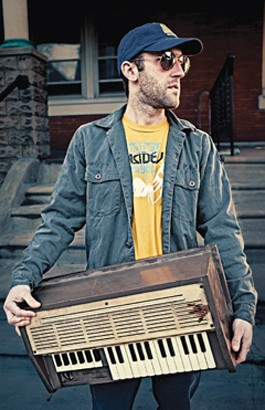
Saturday night also means the long-running Techo-Tribal Community Dance, and this year’s headliner is San Francisco favorite DJ Cheb i Sabbah, an artist who wields a magnetic pull over every rare world-beat groove on earth and blends them with taut skill. A notable standout on the bill is RJD2 (above), a Philadelphia DJ who around the turn of the century created two flawless and hugely cinematic instrumental hip-hop albums which essentially crumble under the weight of their own texture. But last year, he delved headlong into crooning indie-folk-pop musings for his latest release, The Third Hand. Will he scratch or will he sing? Either way, don’t miss it.

The Harmony Festival runs Friday&–Sunday, June 6&–8, at the Sonoma County Fairgrounds, 1350 Bennett Valley Road, Santa Rosa. Damian Marley, George Clinton, Mickey Hart, Angelique Kidjo and Lila Downs are among the weekend headliners, while the Devil Makes Three, John Courage, the Goddess Alchemy Project and others fill the smaller stages. For full lineup, see [ http://www.harmonyfestival.com/ ]www.harmonyfestival.com.


Know What Imeem?

0

06.04.08

In the small Midwest town where I grew up, the only access I had to current pop music that wasn’t Top 40 was the local college radio station. On a clear day, if I stood in just the right spot of my bedroom with the radio antenna pointed just so, the college station broadcast would be mostly audible, albeit ridden with static.

If a user-friendly music-sharing website had existed in those stone-age days , I’d probably have gobbled it up, and my mother, instead of repeatedly asking me to cease watching late night television and finish my homework, would have had to instead drag me away from the computer.

It sounds great, doesn’t it? A virtual land of countless songs free for the listening, pre-selected for quality by scores of celebrities, friends and strangers—or, in hopeful terms, friends-to-be. And that’s what makes websites like imeem.com so popular. Remember Napster, the ill-fated, oft-sued charter of free Internet music sharing? After that empire toppled, Napster’s Jan Jannink cofounded imeem in 2004, and, after a fairly short gestation period, the site exploded; late last month, Wired reported that imeem is now the most popular social music site in the country.

There are a couple different reasons for its popularity, but the main one is imeem’s breadth of content, focus on high-profile playlists and ease of use. Last year, College Music Journal posted a free playlist over 270 songs long, featuring acts appearing at their CMJ Music Marathon and Film Fest. And they’ve made deals with all four major record labels, allowing imeem to be a veritable Candyland of streaming music: click on the song, the whole thing plays for free, and if you like it, you can download it from iTunes or Amazon for a small fee.

Shortly into my own excursion with imeem’s ad navigation and playlist browsing, I began to think of more exciting things to do. There was too much of everything—ads, songs, videos—and I don’t even have enough time to listen to the music I already have to begin with.

All of the playlists categorized as “shoegaze” sucked. I could have created and posted my own superior shoegaze playlist, but that would have taken time and effort. Truth be known, it would have been something I did not for the greater good of shoegaze music, but because I wanted people I’d never met to know how much cooler I was than them.

While vacationing recently in a small town adjacent to a national park, I stumbled across an antique mall. One section held shelves and shelves of country music records, most of them from the 1960s, and most of them in excellent condition. They were 50 cents each, and I felt my pulse quicken. Although we’d just visited the only temperate rain forest in North America, I knew I’d come away from the trip boasting of 50 cent country music records. It took restraint, but I only bought two albums, seeing as we don’t actually have a record player.

But I love the way the records smell, and I love the photos on their covers of my favorite Nashville Sound divas with their bouffants and puffy-sleeved prairie dresses, and the men with their pompadours and Nudie suits. And that’s the difference between me and a satisfied imeem user. These music-sharing sites—save ads and videos and user profiles—are pure music, scads of it, but the context is a computer screen and a set of speakers. To me, I guess music is a bunch of musty records I can’t even listen to.

That’s too bad, maybe, because sites like imeem give music lovers more control over what they listen to than ever before. For those who care about Nicole Richie, imeem shared her own Best Of 2007 playlist (number five is Maroon 5’s “Wake Up Call”). But for those who, like me, could care less if Nicole Richie fell off the face of the earth, imeem posted dozens of other year-end playlists to choose from, compiled by artists like Spoon or Aesop Rock.

It’s almost as if Spoon made a personalized mix just for you, except they didn’t. Spoon made a playlist of stuff they like, not stuff they think you, specifically, will like. If Spoon came over and brought one of those record players you could use to upload songs to your computer, I’d make them a playlist of my new Loretta Lynn and Porter Wagoner gospel albums. No one would ever have to settle for standing on one foot just to listen to the college station ever again. Unless you wanted to.


Letters to the Editor

06.04.08

Secrets and Lies

What John Sakowicz didn’t mention in his story about swaps and derivatives (“Secrets and Lies,” May 28) is that Warren Buffett, the world’s richest man and most successful investor, started warning the world about them as far back as 2003. In his 2003 annual letter to shareholders at Berkshire Hathaway, Buffett’s investment company, he called swaps and derivatives “financial weapons of mass destruction.”

He said that because the contracts were too complex and allowed Wall Street to recklessly speculate without putting up any cash or collateral, they posed “meta-catastrophic risk” to the economy.

Warren Buffett also warned of the potential for large-scale fraud. I quote: “Swaps and derivatives generate reported earnings that are often wildly overstated and based on estimates whose inaccuracy may not be known for years.”

I am copying Sakowicz’s article and sending it not only to our congressional delegation here in Northern California, but also to all our presidential candidates. I’m also emailing it to many of my more politically active friends and colleagues.

Shannon Morris

Ukiah

He Found Us!

Thank you so much for continuing to run these articles on the state of the economy. Where did you find this John Sakowicz? He’s great!

Gabriella Toro

Santa Monica

Plain Old Guts

This article (“Secrets and Lies”) smacked me right in the face with its searing honesty and incendiary revelations and explanations. Wow, I had no idea that anything like this lurked below the glitter of Wall Street! It takes guts for the author to have written this, and even more guts for your commendable paper to publish this. I am going to tell everyone I know. And I am going to send this link to our legislators with a note to pay attention.

This sounds like a new and insidiously malicious mafia to me, with echoes of the well-known recorded tapes from the downfall of Enron. We can’t just sit back and let this party go on, unregulated—especially when the average American is really suffering these days.

Marva Marrow

Hesperia

PrÊt-À-Porter

Patricia Lynn Henley’s “Between Sizes” (May 7) was a real eye-opener. As an older male, I can now understand much better why clothing shopping has always been unpleasant. I’ve had some of the same experiences.

As a retired electrical engineer, I find it somewhat ironic that now, in the 21st century, the ready-to-wear industry is still based on a model originally designed to meet the needs of military uniform garment. (A lot of things we use today originated from military need, and they’ve all changed our lifestyles, not always for the better.)

It’s almost been three decades since sci-fi author Frank Herbert (Dune) described a technological solution in an introductory book on computers; the necessary technology to implement a basic model existed even then.

A customer should be able to go to a ready-to-wear service center, where she could get her measurements professionally taken and entered into a database. She could then order from a virtually limitless variety of fashions, fabrics, patterns and colors, and her order would be cut by CNC equipment, assembled and delivered.

The technology necessary to implement this model exists today with the bells and whistles on. I believe that the first business to implement this model today would have so many women beating a path to their door, they’d have to beat the customers off with a stick!

John Meshkoff

Petaluma


&–&–>

The Hills Are Alive

06.04.08From world-class studios to smaller, project-based operations, North Bay musicians have an array of choices when it comes to recording. Why are so many of these studios based in the town of Sebastopol, population 7,000-ish? We have absolutely no idea.Ausgang Audio "We love working with creative musicians and bands, and have recently recorded the Highlands and Yeah Yeah Yeah's...

Fame Game

06.04.08Rock-star encounters happen every day in Marin, from sharing a bathroom with Huey Lewis to sharing a sandwich line with Carlos Santana. My favorite story involves a childhood sleepover at Jerry Garcia's place that left a young girl wondering why the fridge was stocked solely with tubs of giant mushrooms. "People lived down the street from Grace Slick...

Gracefully Humane

06.04.08Life in war-torn Iraq is obviously no picnic, but it starts to look a little bit better when compared to conditions under Saddam Hussein (unless you were one of the select few who received his double-edged favors, of course). In Heather Raffo's poetic, gracefully humane one-woman play The Nine Parts of Desire, running through June 14 in the Studio...

Psych  Psnap

06.04.08There's talking, laughing and the clinking of beer bottles. Suddenly, the sound of four perfectly tuned voices echo off the walls of the Paris Métro. Inside the train, four young men grin at one another and strike up a beat on a metal pole. As the clinking intertwines with clapping, they break out once again in harmony. The faces...

News Briefs

06.04.08 Prettying up the ParksOver a million outdoor enthusiasts nationwide are expected to head to a favorite park, forest or recreation area on Saturday, June 7, for a day of trail work and celebration. Established in 1993, National Trail Day (NTD) now includes almost 3,000 separate events across the country. Volunteers refurbish national, state regional and local park trails. Organizers...

Don’t Treat the Earth Like Dirt

06.04.08When my homeopathically inclined friend makes a tincture for my allergies by placing small vials on one side of a nondescript little machine, and a tincture bottle filled with Grand Marnier on the other, and then turns on a magic switch for 30 seconds, my rational mind tells me that what exists in the tincture bottle has not changed....

Stay Up Late

06.04.08It ain't all about Damian on the big stage this year. The Harmony Festival has teamed up with Jazziz magazine to bring together some truly creative music from around the globe in what they've for the past four years called the Ambiotica Lounge. A late-night chill-out experience, this year's Ambiotica brings artists from all around the world, including Pakistani...

Know What Imeem?

06.04.08In the small Midwest town where I grew up, the only access I had to current pop music that wasn't Top 40 was the local college radio station. On a clear day, if I stood in just the right spot of my bedroom with the radio antenna pointed just so, the college station broadcast would be mostly audible, albeit...

Letters to the Editor

06.04.08Secrets and LiesWhat John Sakowicz didn't mention in his story about swaps and derivatives ("Secrets and Lies," May 28) is that Warren Buffett, the world's richest man and most successful investor, started warning the world about them as far back as 2003. In his 2003 annual letter to shareholders at Berkshire Hathaway, Buffett's investment company, he called swaps and...
11,084FansLike
4,446FollowersFollow
6,928FollowersFollow