Watching the Cops

07.09.08

Copwatching” is the act of publicly observing and documenting police activity as a way of keeping our officers accountable. Copwatchers do not wish to interfere with police activity or to physically resist police misconduct. They observe and document instances of police interaction with the community.

Copwatching is absolutely necessary for any community to be safe. Without a way to check the power of the police, a community lives in a police state, where the cops decide whether what they are doing is right or wrong.

There are many forms of police accountability, such as civilian oversight committees, the legal system, the press and the police department’s official complaint system. While these are useful and important, none of these systems can directly help someone who might be suffering at the hands of the police at any given moment (for example, the 50 people who have been killed by Sonoma County law enforcement or have died in custody since 1995).

Copwatch organizations often participate in rights-training workshops, where they share their knowledge of constitutional rights with the community. People who are familiar with these basic rights will often have a better chance of avoiding arrest or harassment, and knowledge of one’s rights is certainly a fundamental necessity for any democratic society.

For example, Sonoma County law enforcement officers have been caught on tape refusing to identify themselves to a copwatcher either by name or by badge number, which they are required by law to do upon request. Robert Edmonds, a Santa Rosa resident who often participates in copwatching, has filed several harassment complaints against the Santa Rosa Police Department. Joe Willis, also of Santa Rosa, was arrested for observing the police at the weekly Wednesday Night Market event downtown.

Most recently, on May 1, 2008, activist Ben Saari was arrested for copwatching as the immigrant-rights protest/rally arrived at Juilliard Park. Santa Rosa police officers were moving a group of mostly Latino youth out of the park, threatening them with extended batons and attack dogs. Saari moved with the group, walking backward as he kept a video camera pointed at the agitated officers. Though he was doing nothing illegal, an officer gave him a warning. Saari asked if he was being arrested or detained, and the officer said no. When Saari refused to stop videotaping, the officer physically attacked him and arrested him without reading him his rights or giving him a reason for his arrest. He was later formally charged with interfering with a public officer.

There is no excuse for repressing the act of copwatching. Police officers are trained to handle extremely stressful situations, and having someone merely watching them should have no negative effect on their performance or the situation as a whole. When we are too afraid to question a police officer’s actions, we are facing a fundamental social problem. Police are held accountable to their superiors (as we have seen from recent internal problems within the SRPD), to the courts, politicians and to the wealthy. But if police cannot be held accountable to regular people, the people they interact with the most, then they do not serve the purpose that we are told they serve.

If those in power wish to gain our trust, to convince us that the police are on our side or even convince us that the police are a necessary and positive presence in our communities, then local law enforcement must be accountable to regular people, and copwatching must be a part of everyday life in our communities.

Open Mic is now a weekly feature in the Bohemian. We welcome your contribution. To have your topical essay of 700 words considered for publication, write [ mailto:op*****@******an.com” data-original-string=”y92WaBeUte7DmDE7pK9NNQ==06agHVYKzas59uCPrh5y/Smzuktd8qBQipWs1pS9XHQG4f2WhTMjh3VpEn4PIlLLIXaPpEMnaco6CsObyAME5pb+Z4s61mDQMshIGt1jHQvo++m0L9fdrzcx8La0OgHUB8HvHVeOjWiAWUBN7JnT1rQH61YAO39MQn9Nw3pvV5qX+dUfbpVVArJG9L6mGpmHvE6wU/2Du5gHDF2GzvhNMlGv+pCEwzmQJeXA0YxRtb51OjXkni+Roq+yWNrW6K4ZAgTkQ/Les528NL+579pks1iYFrWxFr4Hm2+8bP5f3f9KHa32N61bU2EsMv1XmrrrqOZOPtCquk7JtcRfYSb+wdAJd5wGKv4+SiFq0NQ05zyTCTmy0p88i9smQ6qQJ9cSfBPn6DZoNYMNV+HGn8htX760rSl1dGdte49wqW3gxr+zdLmSnXUQvItnymxST1VG+u/5g3Wp7zQMRc5q3QNPer0ZV5DUB7s+qb2gVxyzliaML5A+IBiiuOPltUg9QOY8ykDm5Sf/91mgeSy/WXBwM2A3ZdLnlmORmprh1vvkM/B2d12wUyUSwTgNPihiqEvB/xxwoMgmG8sdxPSU8op57qR5e0xnK0tTmrIyc228CpeWgpDhtti9mVfcB/EXXYgAAoOOQbGpQE0b18oM4QFQqq9D7TGmSsMeFU9UUqcJ6VD8XAa+J8nKdwxf56ue145BpR/y9t8LaYP4URt2iOj2fBr6MuP6KLaVRcOcgOx8UwHeC6XUZalgd4fB0Na8jPGKHzVagNwC6XKubBL4wqQ9zen0uZ/z2nbqT0FWRXQExUq/2hB7UWQjwhvffVTXZyUl6P7jRE1PQSz+lfFxwvwFG1dsyXoeLxTKBtHnS1UweWiVdBwd0BZBxFvdJjGUzZtK6985CPgpqgzV4Wk91wvVnEfJuF+g7Tab8gSHWUwFiYiRGm7/2pYzqP0tMkazIe2DWV+TcRHNVNKZt1uRy60+tbuXVg4k3vX+GZ3cbKAF+iryoAqTA+XSCaBt3kXe7ne1z3CCzPqnLxDnei82momJv3v8DWcO/yEA4xjY1xLsm/gNNn5am+4RqJNURSQmVhksBHfHV0I+BFNV1Um1s3isBCeiM2UbpKBQwnya6Wm0vcT3aEtn1nIkc/GwIODqBbSaJR3piYFWv9dKkLBZXSNvcC3U8FW4n0x25J++yUxUySyt51RirR87QAKBaxQ8KI9GOAIwELSBtvxC4yHT4bC1MGAlVIj0NQg9x9q7I0ZiQFhHsLHeosGq8hPtO4m2Lx88aX9b8ckWrqNCv8bdYmuzjcL+EuyPZ46D2yoTA4PyKC0LKOTUnI3SGCr5Vr710D7KOVk7kbpGscqVYHNIIqvYmUWCYhA3asK8Sbb2Zjv2ZgJwspwAiBT28+WN47pNlEJ7QCD4ZS6Dtb36Bk8knbnnLmk8A==” title=”This contact has been encoded by Anti-Spam by CleanTalk. Click to decode. To finish the decoding make sure that JavaScript is enabled in your browser. ]op*****@******an.com.

Contacts

The following local organizations are doing police-accountability work or are otherwise fighting against police brutality or harassment.

The County of Refuge Campaign works toward passing a sanctuary law for immigrants living in Sonoma County. This would prevent local law enforcement from collaborating with ICE (Immigration Customs Enforcement, the federal immigration enforcement agency under the Department of Homeland Security). Local law enforcement has no legal requirement to aid or collaborate with this federal agency. 707.523.1740.

The Police Accountability Clinic and Hotline (PACH) is a Santa Rosa-based mutual aid organization that documents testimonies from those who have specific complaints about police officers. 707.542.PACH.

Santa Rosa Copwatch is a group of people who copwatch as an organization. 707.579.1605.

Sonomadefense.org is a website that, at the moment, serves to spread awareness about Ben Saari’s case.


Crossings

0

07.09.08

Writer-director Fatih Akin, a German native of Turkish ancestry, likes to trade in cross-cultural identity politics. He avows that many mutual illuminations may be had from Germany’s stance toward its swelling Turkish population and Turkey’s stance toward its impending Europeanness. That’s a lot to ask of a movie, but Akin phrases his questions gently, and he gets compelling results. To make a complex story simple, The Edge of Heaven is a tale of a father and son, two mothers, two daughters and two cultures.

Ali (Tuncel Kurtiz), a Turkish widower living in Germany, discovers his preferred prostitute, Yeter (Nurcel Köse), is a fellow Turk, pays her to become his concubine and brings her home to live with him. She’s not sure about it, but a menacing admonition from a pair of Muslim thugs to “repent” suggests that perhaps a change of pace is in order.

Ali’s son, Nejat (Baki Davrak), a comfortably assimilated professor of German literature, isn’t sure about the arrangement either. But he softens when informed that Yeter’s been tricking to pay for her daughter’s education back in Turkey. Of course, her daughter, Ayten (Nurgül Yesilçay), doesn’t know this, but neither does Yeter know that Ayten has become a revolutionary—on the run, as it happens, from Turkish police.

In due course, Nejat has a solemn occasion for a trip to Istanbul to find and help the young woman. But his timing is perfectly and poignantly wrong, for she has just fled, seeking asylum, to Germany. There, she meets a wide-eyed young German woman, Lotte (Patrycia Ziolkowska), who takes her in and becomes her lover, though it means they both run afoul of Lotte’s perfectly respectable middle-class mother, Susanne (Hanna Schygulla, Fassbinder’s famed muse), herself a former idealist who has grown politically complacent with age and experience.

Thanks as much to Akin’s script as to the actors’ consistently excellent performances, any one of these characters could carry a movie of his or her own. But The Edge of Heaven is very much a shared venture. The way it works is like a rather highly poised relay race: handing the narrative off from one character to the next, leaving the frayed braids of each story to loop back around when nearly forgotten or at least not expected, and earning—against what seem at first like very long odds—a deeply felt fraternity.

Viewers waiting for these characters to discover how their arcs are connected will do so in vain. The closest people come to a proverbial crossing of paths here is passing each other by while traveling in opposite directions. Connections are missed and broken as much if not more than they’re made.

Likewise, there’s a conspicuous amount of charity on display—people take each other in, and do each other major favors, without very much provocation—but probably just as much mercilessness. Ayten’s plea for asylum, for instance, fails, and she suffers for it greatly. The others suffer too, for all of their choices—Ali’s arrangement with Yeter, Lotte’s battles with her mother, Nejat’s journey to Istanbul—bring as much despair as renewal.

All of its barriers to communication and narrative linearity, while arguably most appropriate for a dramatization of Turkey’s tentative steps toward the European Union, do lend the movie a slight aura of preciousness, just the sort that American audiences have found particularly endearing in recent foreign films. So, yes, The Edge of Heaven is a little like Babel. But Akin’s film has more life and less self-congratulation, which makes all the difference. That he doesn’t coddle his characters only authenticates his generosity toward them. That he twice gives away their unhappy fates with chapter titles in advance only makes their time onscreen seem more precious. An exquisitely wistful feeling emerges, from knowing what’s in store but wondering how it will play out.

The Edge of Heaven depicts a randomly cruel and violent world, but has a way of shepherding viewers through it that might be called optimistic. The movie doesn’t preach to the choir of knee-jerk cynicism, nor does it offer condescending platitudes. What it does is not forget to make its politics personal.

  ‘The Edge of Heaven’ opens Friday, July 11, at the Smith Rafael Film Center. 1118 Fourth St., San Rafael. 415.454.1222.


New and upcoming film releases.

Browse all movie reviews.

Fresh ‘n’ Foxy

0

07.09.08

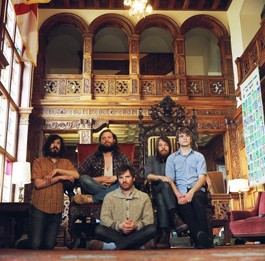
The sentiments inscribed on the Fleet Foxes’ album jacket are startlingly heartfelt. They humble themselves, apologizing to their producer for all the “flailing around, recording ourselves poorly”; the reader is strongly advised to love his or her family, as they are “the only important thing in the world”; and a large portion of the band’s thank-yous are devoted to musicians and artists ranging from Debussy to Dylan. The Fleet Foxes don’t just bring a refreshing approach to the obligatory album dedication and copyright listings. They are making folk music relevant again.

Fleet Foxes, the self-titled LP released by five young men who hail from all over Washington state, has none of the showy or synthesized beats used by countless new bands attempting to break the mold of alternative indie music. They are fast becoming the band other bands admire, and it’s easy to see why. The music is graceful, even elegant, and it maintains an easy sincerity as each member lends his voice to guitarist Robin Pecknold’s winsome lyrics.

“We decided to put an emphasis on harmony, simple three- and four-part block harmony,” Pecknold recently wrote on the group’s MySpace page. “The songs are simple, songs about our friends and family, history, nature and the things around us in the Pacific Northwest. Instead of complicated vocal melodies, we try to use guitars and mandolins and banjos and other little guys to fill the melodic spaces in the music.”

The “other little guys” round out the melodies and etch in a subtlety that is not wasted on even the most unaffected ear. Each song is full of sound, levels and levels of it, without being overwhelming. Because the band found itself inspired by music’s transportive ability, the sounds coming out of this album act like a time machine of sorts. The tracks, while written from Pecknold’s experiences, trigger memories not thought of in years.

“Music activates a certain mental freedom in a way that nothing else can,” Pecknold writes—under the name Warren Gamaliel Bancroft Winnipeg Harding—on the back of the CD jacket. “You can call it escapism if you like, but I see it as connecting to a deeper human feeling than found in the day-to-day world.”

The members of Fleet Foxes grew up on the soft and scratchy sounds of their parents’ albums: the Beach Boys, Crosby, Stills and Nash and every other band you’d expect to find in the record collections of baby boomers. These are the classic influences behind the lilting, wind-in-your-hair harmonies of Fleet Foxes, which explains my undeniable urge to jump in the car and cruise down the coastal highway after the first listen of this surprisingly well-rounded debut LP. The only letdown on the entire album is the absence of “Mykonos,” a gorgeous song found on the Foxes’ accompanying EP, Sun Giant, released in April 2008.

With names like “White Winter Hymnal,” “Ragged Wood” and “Tiger Mountain Peasant Song,” the self-described “baroque harmonic pop jams” created by Fleet Foxes strike a chord, literally, with nature. The album feels like a return to the earth, to the roots of indie folk music, when Simon didn’t hate Garfunkel and Joni Mitchell had just released her all-acoustic 1968 debut album, Song to a Seagull.

It’s true that Fleet Foxes draw numerous comparisons to the folk rockers of the past, and some of the present—My Morning Jacket, mostly (like many alternative musicians, they’ve also been hailed “a softer” Animal Collective)—but remarkably, they manage to simultaneously sound both familiar and uniquely innovative. The songs are comfortable, like that favorite sweater that comes out every winter, and evoke a nostalgia for a time when a guitar, a clear voice and a campfire in the mountains were the makings of perfection. Just as the Beach Boys wrap the listener completely into the setting and emotions of the lyrics, so do the Fleet Foxes recall a simple creativity that has been missing from the recent canned and predictable additions to the mainstream music scene.


“We hope you enjoy it,” concludes the album’s liner notes. “Music is a weird and cosmic thing, its own strange religion for nonbelievers, and what a joy it is to make, in any form.”

Don’t assume that the Fleet Foxes’ softness underestimates their power as artists. They are a force to be reckoned with, although they may not know it yet.


First Bite

Editor’s note: First Bite is a new concept in restaurant writing. This is not a go-three-times, try-everything-on-the-menu report; rather, this is a quick snapshot of a single experience. We invite you to come along with our writers as they—informed, intelligent eaters like yourselves—have a simple meal at an area restaurant, just like you do.

At Miguel’s, the walls are painted in black-and-white murals, looking a bit rough, as if the painter went off for a beer and a nap, and will come back to fill them in later.

Service can be slow. Even in sleepy Calistoga, where mud baths are a fitting symbol of the unhurried, viscous approach to daily life, it’s not unusual to lounge through impressive waits between the arrival of the basket of big, thick, puffy chips and torrid umber-hued salsa, and an appetizer or entrée.

The food ordered may show up as something else. The kitchen, perhaps contemplating the ambitious task of putting out the lengthy list of Sonoran and California-themed fare, might languidly decide that certain primary ingredients and accoutrements are more suggestion than promise.

And when all is done, you may or not get the correct bill. On a recent visit, my table received a neighbor’s tab, and—cha-ching! —we scored, since it was at least $20 less than what we’d run up. (Yes, I did call the mistake to the server’s attention, so no lightning will strike me dead and start another Napa County fire.)

But ultimately, owner Miguel Cuenca has put together an experience that most blandly can be called auténtico, and more glowingly as soul-satisfying and delicious. There’s a reason notable chefs from neighboring fancy restaurants make the place a regular breakfast stop, for the soupy steak and guacamole chilaquiles ($10.95) or Texas French toast sopped in brandy-cinnamon egg batter ($6). Importantly, too, Miguel’s has its priorities. Meals may mosey in, but a potent margarita ($6) appears nearly before the request leaves your lips.

Huevos rancheros ($10.50) are a messy all-day favorite, layering flour tortillas with lacy-edged fried eggs, beans, salsa, cheese, guacamole, sour cream and chunky golden-brown potatoes. As a Oaxacan specialty, juicy chicken splays on a mirror of velvety mole ($15.95) to be wrapped with rice and beans in tortillas—the server may not apologize for the tortillas being absent from the plate, but he’s quick to fix the problem.

Two tamales are served in an ungainly heap, yet the masa is fresh steamed corn, the chicken tucked inside is tender, and the red sauce splashed atop is edged with just enough burn to command respect without going gringo-unfriendly. And do I really need the masa cakes promised with the carnitas ($12.95)? Yes, I do, so my server finally brings them solo, to soak up the thin gravy of pork braised with onions, garlic, citrus and bay leaf.

We’re loosening our belts and laying down our entrée forks before the quesadilla appetizer ($6.45) arrives. No matter, it’s still a lovely thing, bloated as fat as a grilled cheese sandwich and smothered in guacamole and sour cream.

As we leave, our server pops his head out of the kitchen and says, “Hurry back.” Wonderful choice of words. But fitting, because indeed, I will.

Miguel’s, open for breakfast, lunch and dinner daily. 1437 Lincoln Ave., Calistoga. 707.942.6868


View All

Quick-and-dirty dashes through North Bay restaurants. These aren’t your standard “bring five friends and order everything on the menu” dining reviews.

Shock Value

0

07.09.08

Since they were introduced in 1993, Tasers have been aggressively promoted as a nonlethal “electronic control device” for use by law enforcement, military personnel and correctional officers. Formally known as the Thomas A. Smith electronic rifle (named for the cofounder of Taser International), this instrument fires twin metal barbs attached by insulated wires to the Taser device, which delivers a 50,000-volt burst of low-amperage electricity into the target body at the point of contact. The resulting shock “temporarily overrides the command and control systems of the body to impair muscular control,” the company’s website crows.

Tasers have been purchased and deployed by more than 1,700 law enforcement agencies across the country, including most North Bay police departments and the campus officers at Sonoma State University and Santa Rosa Junior College.

“We now issue the Tasers to all our deputy sheriffs,” says Sonoma County Sheriff Bill Cogbill, whose department has purchased 127 of the $800 weapons. “I’m so convinced, based on the data, both medical and practical, that the use of the Tasers has really helped avoid injuries and death to officers as well as suspects,” he says, adding that “the number of people dying in police custody hasn’t changed over the years,” even as Taser use has mushroomed.

But Tasers have been implicated in a growing number of fatalities. “Since 1999, there have been 148 deaths in the United States and Canada following the use of a Taser, more than half of which occurred in the last year alone,” Mark Schlosberg writes in “Stun Gun Fallacy: How the Lack of Taser Regulation Endangers Lives,” a 2005 study by the ACLU of Northern California. Fifteen of those deaths were in Northern or Central California, including 31-year-old Carlos Fernandez, who was Tasered six times by Santa Rosa police on July 16, 2005. His autopsy attributed Fernandez’s death to “drug-induced delirium from methamphetamine intoxication.”

To date, there have been few genuinely independent studies of the Taser’s possible risks, particularly for individuals with a history of heart problems or drug abuse. Dr. Zian Tseng, a cardiologist at UCSF, has warned that a Taser discharge could be fatal if the shock happens to hit at the wrong moment during the heartbeat cycle, a possibility that increases when multiple shocks are given quickly.

Cogbill dismisses that as an insignificant risk. “If you have pre-existing issues, in a very small percent—point zero-zero-zero-something—you might have somebody react and die as a result of the confrontation with police and what’s going on inside of their body. If this person’s high on drugs or psychotic or something, and you’re fighting them and they’ve got their core temperature up and pulse and everything up, that’s the same as if you Tasered them, ’cause it does the same thing to the body. So whether you use a Taser or physically fought them or use the baton on them,” he concludes, “they most likely would have died from that confrontation.”

On June 6, a federal jury in San Jose awarded a $6 million judgment to the family of a man who died after being Tasered by police officers more than two dozen times. The case upheld the family’s claim that Taser International was partially responsible for Robert Heston’s death, because the company had failed to warn police “that its stun guns could be dangerous when used on people under the influence of drugs,” the Associated Press reported. Heston’s death was officially attributed to a combination of meth intoxication and the Taser shocks.

Although the company has been sued at least 71 other times, this was the first time a jury had found it liable, a conclusion made even more notable by the fact that the jury exonerated the officers who had applied the 30 or so shocks.

The decision echoed a key criticism in the ACLU report, that Taser International has marketed the Taser “as a use of force measure that can be used in a wide range of circumstances,” Schlosberg said in a recent interview. “I feel that the way they’ve promoted it, saying that it’s safer than Tylenol, is not very responsible. We’re concerned that the Taser is going to become not just a substitute for guns, but a substitute for verbal persuasion, for less intensive persuasion measures and may actually end up proliferating the use of force without proper regulation.”

In the three years since the ACLU report was issued, many departments have heeded its call for heightened training and regulation of Taser use, although others, notably the Royal Canadian Mounted Police, have begun to seriously reconsider their use of the device.

Meanwhile, Taser International is proudly rolling out a new consumer product, the C2, billed as “a personal protection device.” Small enough to fit easily into a purse or pocket, it comes in “nine designer colors,” including leopard-skin print.


Letters to the Editor

07.09.08

Voodoo Econ

John Sakowicz’s article on the “Shadow Economy” (June 25) was succinct, powerful and dead on. I first became aware of how “shadowy” things were getting when I learned that there was a financial instrument called a “weather derivative.” Betting on the weather! Sure sounds like voodoo economics to me. Time will tell how this all plays out but it should be an interesting time to say the least. Thanks again for the great writing.

Nic Smith

Santa Rosa

It really needs to stop

More than dark, symbol-laden German cinema, this gripping, yet horrifying story (“Shadow Economy”) strikes me as the perfect theme for a Robert Ludlum thriller—very much of our times, sans the chickens.

It is mind-boggling yet eerily plausible that this garbage is going on. Lots of brilliant minds on Wall Street driven by greed (another famous movie image from the movie of the same name!), the lust for power, the ease of contrivance and strategy, and the fact that beautifully and simply, they can.

As our country and most of its inhabitants struggle with everyday problems—and lately, that’s gas and groceries—the evil-making of these strangely charismatic villains continues unabated. This needs to stop. It really needs to stop.

Marva Marrow

hesperia

Unclothed Emperors

Excellent paper! I was looking for a glimpse into the zeitgeist of the Californian economy and popular culture while visiting the Napa Valley and came upon your well-written publication in a restaurant in St. Helena with the front page article on the secrets and lies of the current commodities market (May 28). John Sakowicz made us all proud with his alarmingly accurate perception of the current situation. Unfortunately, I’ve misplaced the paper and desperately want to show my people in Canada what’s really going on.

Please email me a copy of this article as I believe this information needs to be circulated, and I no longer feel alone in knowing the emperor is wearing no clothes.

Keep fighting the good fight.

Jonalyn Siemen

Victoria, B.C., Canada

Last Dance?

Last Sunday, at the San Anselmo Street Fair, my wife and I enjoyed a talented band playing renditions of Beatles’ tunes. While observing the crowd dancing to the music, we both noticed a particular dancer gesticulating in an eccentrically ’60s style of movement. I remarked about how his exaggerated style enhanced the ambiance of the music. It seemed to be a reminiscent celebration for all.

Very soon after, we observed a police officer approach the dancer and pull him aside. The officer proceeded to quietly handcuff the dancer. Within three minutes, a gathering of puzzled and concerned citizens approached the officer to ask what the dancer had done. The officer answered that someone had placed a call to the police department, feeling threatened by the dancer’s behavior. 

A brief conversation among the gathering of concerned citizens revealed that no one had witnessed any behavior at any time that could be construed as threatening. At one minute the dancer was celebrating, the next minute he was shackled, shamed and crying in front of a dismayed crowd.

I communicated to the officer in charge that the dancer had committed no crime and suggested that the proper procedure would be to release the dancer, while maintaining a police presence in his vicinity. I also pointed out that by the officer’s standards, at least 10 other imbibers swaying to the music should be detained. The officer responded that the dancer was obviously intoxicated and was a threat to his own safety. I replied that the dancer should be allowed to decide for himself if he was a threat to his own well-being.

The demeanor of the three officers involved was professional, courteous and firm. Their presentation represented their unit well. But why did the dancer have to be publicly humiliated? How eccentric must one be to be considered a threat? What kind of paranoid and self-obsessed individual would summon the police in response to such benign behavior?

After our brief conversation, the commanding officer returned to our small crowd of concerned citizens and said the dancer voluntarily acquiesced to going to detox. We left the dancer sobbing in the squad car. I trusted the word of the officer. I hope my trust was not misplaced.

 James Miner

San Rafael


&–&–>

Roasted Peanuts

07.09.08


Sonoma County is truly fortunate to host within its borders such a stellar theater-arts training program as SRJC’s annual Summer Repertory Theatre. Each summer brings a new crop of actors and crew members, and those of us who make the pledge to see all five shows often become fans of particular players, rooting for this actor or that singer, whom we get to see performing in a range of roles, large and small, over the course of two months. Some of the shows, of course, turn out to be stronger than others, but part of the SRT experience includes walking away from a weaker show happy that we were able to see one of our favorite performers shining in an otherwise unfocused or unevenly carried-out production.

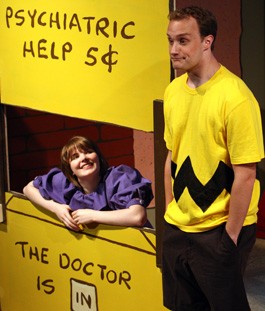
Such is the case of the cute-as-a-button but not-as-solid-as-the-other-shows musical Snoopy, which opened last weekend, the fourth of this season’s shows to debut. The primary reason to see Snoopy is Sarah Michelle Cuc as Peppermint Patty. Having already made a strong dramatic impression as Mary Warren in The Crucible and as a comic actress in several roles in The Women, Cuc, who comes to SRT from Santee, Calif., demonstrates in Snoopy that she also has a powerhouse singing voice. It’s safe to say that we can expect good things from Sarah Michelle Cuc in the future.

Snoopy, based on the beloved cartoons and characters of Charles M. Schulz, is something of a sequel to the better-known You’re a Good Man, Charlie Brown, only with more and better songs, this time by Larry Grossman and Hal Hackady. Essentially plotless, it covers a year in the lives of Charlie Brown, Linus, Lucy, Sally and especially Snoopy, Charlie Brown’s imaginative, wannabe-novelist dog.

Nothing much happens, of course, but then nothing much happened in Schulz’s strip. Snoopy tries to write a novel and waits for each new rejection letter, he pines for his long-lost mother and he stages satirical sock-puppet shows for the kids in the neighborhood. The kids go to school, worry about things, swap witty kidlike insults and make tentative attempts at reaching out to one another. What we get, basically, in Snoopy is a series of musical performances illustrating the daily grind of being a kid without much to do, each song stitched together by short and joke-filled sketches, many lifted directly from the panels of Schulz’s comic.

In the SRT production, competently directed by William McNeil, Cuc nicely displays the awkward uncertainty of being Peppermint Patty, one of the “odd kids,” alternating between openly expressing her befuddlement with school and homework, and her passive-aggressive affection for Charlie Brown (Brian Watson). When she sings the wonderful song “Poor Sweet Baby” to Charlie Brown, she shows serious singing chops.

Also good are Zach Raino as Snoopy (acrobatically leaping on and off that iconic doghouse, displaying solid comic timing in his interactions with other characters) and Jimmy Robertson as Linus, capturing the sweet intelligence of the kid who can’t bear to be apart from his security blanket. Robertson has a nice quick bit when his blanket must be taken away and laundered, and we see various stages of panic play across his face before he finally gets the blanket back and melts with relief.

Lucy, the bossy-crabby queen of the neighborhood, is played by Nicole Odell with the right amount of self-assured cluelessness, and as Charlie Brown’s sister, Sally, Raquel Cockrell has some strong, funny moments of her own.

That said, this is one of the inherent problems with the “Peanuts” plays: it’s always weird to see adults playing kidlike voices and attitudes, suggesting some sort of arrested development or brain damage that doesn’t present itself in the strip where the kids look like kids.

There are a few other problems as well, though none is crippling. In general, the women of Snoopy all out-sing the men, many of whom wobbled and pitched their way through opening night.

The set by Sherry Rahn looks a bit slapped-together compared to the first-rate sets on display in all the other shows, and the musical accompaniment by pianist Lilli Wosk seemed a bit uncertain and off-tempo. Despite these quibbles, Snoopy is mostly enjoyable, and the stunning closing anthem, “Just One Person,” had the audience in tears, it was so well staged and performed.

‘Snoopy’ runs through Aug. 6. July 5, 8&–11, 19, 25&–26, 29&–31 and Aug. 6 at 8pm; also July 5&–6, 9&–11, 19&–20, 26, 30 and Aug. 6 at 2pm; July 6 and 20 at 7:30pm. Newman Auditorium, Santa Rosa Junior College, 1501 Mendocino Ave., Santa Rosa. $8&–$20. 707.527.4343.


Museums and gallery notes.

Reviews of new book releases.

Reviews and previews of new plays, operas and symphony performances.

Reviews and previews of new dance performances and events.

‘Rally’ for the Planet

07.09.08

I like to think of myself as noncompetitive. I don’t care if I win, because I never do anyway. However, there is something about a good old-fashioned, intellectually challenging competition that really gets me going. This is why, when I started my own Carbon Rally team, the Seb-Town Rockers, I decided to go straight for the big guys, the Royal Acorns, a team of 17 self-proclaimed tweens who, from the looks of their picture, all attend the same private girls school.

The Royal Acorns, with the guidance of their team leader, Carbon Cruncher, are kicking serious carbon ass. Since joining, they have reduced 13.77 tons of carbon, and this game has only existed since April 2007. Granted, the Royal Acorns have some things in their favor. They are, for example, too young to drive. Also, they have the benefit of youthful vigor.

I, however, am not to be deterred, and after interviewing Carbon Rally’s Jason Karas, I set about putting together a team that I believe will, given enough time, take the Royal Acorns down. In about 10 minutes, I am able to create a Seb-Town Rockers account, invite people, come up with a team motto (“No more excuses!”) and take about three carbon challenges. I email everyone I know. This is not a lot of people, but within the week most of them join. Now, I have a team of 11 people. Together, we have already saved 317 pounds of carbon, and I’m pretty sure no one is cheating. As Karas so aptly tells me, what’s the point of cheating when the entire point of the exercise is to feel good about yourself? The only thing anyone can win from this is the sense of wellbeing that comes from a job well done and some stiff competition.

What Karas and his team have created is not just an Internet site that educates and empowers people regarding the climate crisis, but one that is fun to use. The challenges may seem simple enough: agree not to eat meat two days this week, don’t use a disposable water bottle for the next seven days. These are small things, but ultimately, all are tasks that can be scientifically measured and accounted for, and best of all, they compound.

Each task comes with clearly stated information—details of the challenge, rules of the challenge and a fancy-looking math equation that shows how not accepting this particular challenge uses carbon and to what degree. There are location maps and graphs, and members can suggest potential challenges for weeks to come.

As I settle into my new role as team leader, I take my cues from knowledgeable sources. Karas suggests that a good team leader is not passive, but rather active and strong. He speaks highly of the Royal Acorns. In fact, he is the one who pointed them out to me in the first place. He also mentions Kevin Schlabach, team leader for a corporate team called Beyond Green. Karas, who feels that the Carbon Rally participants are the life-giving force of the site, arranges for me to talk with Schlabach. I do my research and discover that Schlabach’s team of 31 people has saved 3.15 tons of carbon thus far.

 Via email, Schlabach tells me of the importance of keeping the team engaged while making sure the team environment is positive and supportive. Schlabach has been an active member for six months. He was the 540th person to join Carbon Rally, and he created the 49th team. There are now over 280 teams and over 3,500 members, half of whom do not belong to a team at all but operate as individuals.

Schlabach and his team members have the benefit of being co-workers at Beyond.com, the world’s largest network of niche career communities—whatever that means. Schlabach sees his teammates every day, thereby affording himself an excellent opportunity to apply a little peer pressure. As good as Beyond Green may be, however, they are still behind the Royal Acorns by a number of tons, which makes them seem less of a threat to the Seb-Town Rockers.

The Royal Acorns have 366 comments on their team page. Beyond Green has 41. The Seb-Town Rockers have 12. At this point, I feel fairly confident that, with enough rigorous attention on my part, combined with the fantastic commitment of the Seb-Town Rockers team, we will soon be measuring our carbon in the tons and our team messages in the thousands.

Already, I have cut my car idle time by minutes on a daily basis, cut my meat eating back by two days a week and refrained from buying a single plastic water bottle. Yesterday, I agreed to compost for two months. A few of the Seb-Town Rockers have complained that they need more challenges. Then they tell me they already do most of these things anyway. “Well, do it again,” I snap. “And this time, do it for the team.”

To join Carbon Rally, go to [ http://www.carbonrally.com/ ]www.carbonrally.com.

The challenges seem simple enough but they add up to a lot of carbon saved.


Dynastic Days

the arts | visual arts |

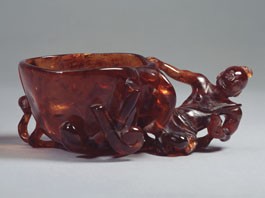
Amber Dreams: This bowl carved of amber serves both form and some function.

By Richard von Busack

In the public mind, three centuries of the imperial Ming dynasty come down to the vase. The porcelain is haunting, underglazed in a sky-blue to glow creamy white. The once-guarded science of porcelain making is available to every community college’s ceramics class, so the divinity of these vases must seem a little faded. In our era of mechanical reproduction, even Grecian urns don’t wring any Keats out of the average passer-by.

There are valuable and beautiful Ming vases on display at the San Francisco Asian Art Museum’s summer show, “Power and Glory: Court Arts of China’s Ming Dynasty,” outlining the arts of the regime (1368–1644). This is an ambitious, expensive and politically fraught borrowing of treasures from three different Chinese museums.

In the ground-floor galleries, the growing richness of the emperors is seen in luscious white nephrite jade, carved into belts and pendants, glowing like starlight. Overlooking some of the treasures are silk paintings of the emperors in their serene mildness, posed in stiff gowns embroidered with heraldic animals.

Glazed stoneware, preserved from the ages underground, includes a segment of the arched gate of the Temple of Gratitude, circa 1412–1431, featuring an elephant with squinting, human eyes. The show also features specimens of gold-threaded “Heavenly Splendor” brocade, woven into a pattern of disbelief-inducing intricacy.

Perhaps more heavenly and splendid: a Tibetan tanka, a gift from the emperor to the high lamas. This silk satin embroidery depicts Raktayamari, three-eyed “Red Conqueror of Death,” in midcopulation with his consort goddess. It has a lavishness and sophistication that might not have been rivaled in the world of 1400.

Preferring art on the human scale, I was more taken by a Wu Wei painting. Wu (1459–1508) was officially declared “the Number One Painter” of two imperial regimes, though he was a rough-houser, a Bukowski. Wu’s A Monk Enjoying a Moon Painting depicts a wanderer staring in amorous glee at a fine scroll. His physique suggests that the plump friars on German beer bottles had Chinese cousins. This monk has a square chin and a boxer’s nose, and he holds the rolled-up lower end of the scroll at a downward angle, like Groucho’s stogie.

Over the course of the dynasty, the emperors left Nanjing to establish a new capital in Beijing. Here, the emperor and about 60,000 of his closest friends retired from the world. The Ming flourished at the same time as the European Renaissance. And these Chinese paintings recall incidents and heroes of earlier times, just as European artists looked back to ancient Rome. China, too, had its age of exploration, like Europe. Part of the show discusses the emperor’s treasure fleet with mariners who voyaged from Surabaya to Mombasa. “The emperor did not trade,” explains the museum’s Dr. Michael Knight. “He received tribute and he gave presents.”

The difference between the Ming and the European Renaissance is the former’s lack of interest in everything outside the palace walls. Rather than initiating the growth of the individual, the Ming reinforced connoisseurship, rank andrigid tradition.

As the Beijing Olympics commence, one hears all the grumbling about how these next decades will be a Chinese century, just as the last was an American century. If this is the case, this show provides some solace. This art provides a tremendous argument for the human race, no matter what language that race speaks.

‘Power and Glory’ runs through Sept. 21 at the Asian Art Museum, 200 Larkin St., San Francisco. 415.581.3500.


View All


Museums and gallery notes.


Reviews of new book releases.


Reviews and previews of new plays, operas and symphony performances.


Reviews and previews of new dance performances and events.

Abecedarian of Fun

0

07.09.08

Animal Crackers In the sticky fist of 108 years of kids, Barnum’s Animal Crackers have taken the shape of 54 different animals (or sometimes just the sticky fist). A string was added to the brightly colored box so it could be hung on a Christmas tree.

Bubbles In a glass of Guinness stout, the bubbles float downward. Bubbles at the center rise and create a circulating current in the glass, causing those bubbles along the walls of the glass to be pulled down in the draft.

Civet coffee (kopi luwak) Palm civets, furry little critters that live in tropical forests, have become unwitting factories for a strange brew. Swallowing coffee cherries whole, their stomach acids and enzymes “process” the cherries, removing the fruit, leaving the bean. After the civet does its, ahem, civet duty, the beans are collected from the scat, cleaned and dried before roasting. Enthusiasts rave about the “distinctive” coffee that can sell for up to $450 a pound.

Diamond Jim BradyA typical day’s consumption for this early-20th-century rail baron with a legendary appetite could include hominy, eggs, cornbread, muffins, flapjacks, chops, potatoes, beefsteak, a full gallon of orange juice, two to three dozen clams and oysters, a brace of boiled lobsters, three deviled crabs, a joint of beef, several kinds of pie, a platter of seafood, six more crabs, two bowls of green turtle soup, six lobsters, two canvasback ducks, two portions of terrapin, steak, vegetables and an entire platter of pastries for dessert. Brady’s autopsy revealed a stomach six times larger than the average person’s.

Eggs The white part of an egg is called the glair. The empty space at the base of the egg between the white and shell is the air cell. The candler uses the size of the air cell to determine an egg’s grade. The chalazae are those mucousy strands of egg white that anchor the yolk in the center of the thick white. The more prominent the chalazae, the fresher the egg.

FuguConsidered a delicacy in Japan, fugu (blowfish) contains a deadly poison in its organs. Prepared correctly, it creates a mellow, tingling buzz in the mouth; incorrectly, it can cause seizure or death. Only licensed cooks can prepare it; training takes 10 years. Fugu is cooked in separate kitchens, and by law every chef must taste his preparation personally before serving it to customers. Disposal of fugu’s toxic wastes is also strictly regulated, following the death of homeless people who ate fugu waste from dumpsters.

Gum blondes Toronto artist Jason Kronenwald constructs portraits of such celebrities as Britney Spears and Lindsay Lohan entirely out of ABC gum (that’s “already been chewed” gum, for those of you who skipped childhood) stuck to plywood. All the colors are “natural” to the gum and “mixed” in the mouth by a band of willing chewers. Kronenwald keeps his own teeth out of it.

Huitlacoche From the Nahuatl, “huitlatl” meaning “excrement” and “coche” meaning “raven,” this black fungus, known to most farmers as corn smut or soot, grows on ears of corn making the kernels swell with spores until they are bulbous and black. It has a long history in the cuisines of Aztecs, Hopis and Zunis for its pungent, earthy taste and reputed life-giving properties.

Ice cream Squid, bacon, whale, Stilton cheese, pit viper, silk, ox tongue, natural Viagra, raw horseflesh, fried pork rind, garlic, sauerkraut, cold sweat are all ice cream flavors. Puts Baskin’s 31 to shame.

Jello Technicians at St. Jerome Hospital in Batavia, N.Y., tested a bowl of lime jello with an EEG machine and found it to have the same brainwaves as adult men and women.

Kwispelbier “A beer for your best friend,” this canine beverage named after the Dutch word for wagging a tail, was invented by pet-shop owner Gerrie Berendsen, who wanted to share a Miller-time moment with her dogs after a day of hunting. It’s nonalcoholic, so your best friend will have no trouble drinking you under the table, then licking you mercilessly.

LutefishPurported to be the food of the Vikings and still a Nordic tradition around Christmas, lutefish is made from dried cod or ling prepared with lye, creating its famous jelly-like consistency. But be careful not to let it lie in the lye too long, else the fats of the fish turn to soap.

McDonald’s Think Big Macs are universal? In India you’ll find a Maharaja Mac, of lamb or chicken meat, and a vegetarian McAloo Tikki. In Israel, there are three kosher versions of the Golden Arches. Sweden has the first ski-through McDonald’s in the world. Germany’s serve beer. In Chile, you dress burgers with avocado paste, not ketchup. And in Hong Kong, burgers come between two patties of glutinous rice.

New Year’s rituals In Spain, the special tradition is to eat 12 grapes in 12 seconds as the clock bell tolls the hour and rings in the New Year. Each grape represents the 12 months to come, sweet or sour. You can even buy a tin of 12 peeled, seeded grapes all ready for popping.

Olives This fermented fruit holds a place of glory in history (not to mention on pizza slices). Victors in the Olympic games were crowned with olive leaves. Athena won the favor of the Greeks and the naming of their capitol by the most useful gift of an olive tree. A twig of an olive tree brought back by his white dove assured Noah land was ho, and lo, became a symbol of peace.

Peanuts An ingredient of dynamite. Peanut oil can be processed to produce glycerol, which is used to make nitroglycerin, one of the key components of the explosive.

Quinoa Cultivated from before 3,000 B.C., quinoa was worshiped by the Incas (explaining why the Catholic Spanish conquerors evidently felt moved to suppress it almost 400 years). Each planting season, the Inca leader planted the first seed using a solid gold shovel. Although most people believe it is a grain, it’s really a fruit.

Roadkill cook-off Since West Virginia legalized harvesting roadkill some 20 years ago, it was no big surprise when the cook-off was born. In Marlinton, W.V., this September, expect to sample such dishes as Thumper Meets Bumper and One Ton Wonton. The number one contest rule is that the entry must include animals typically found dead on the road—groundhog, possum, deer, rabbit, squirrel, raccoon, etc.—though they need not actually come from there.

SushiThe best sushi chefs prepare octopus by first giving the live animal a long, full-body massage.

Turkey testicle festivalAfter the road kill cook-off, head over to Byron, Ill., in October to have a ball—a turkey ball, that is. Go ahead and have two (they come in a matched set.) Gobble, gobble.

Uses for food A teaspoon of pepper sprinkled in the washing machine before adding clothes will keep colors from fading. Dry orange peels, which contain flammable oils, can be used to start a fire instead of paper, with a much nicer aroma. To speed up the ripening of tomatoes, place in a brown paper bag with a ripe apple and seal for a few days.

Vinegar Pliny the Elder tells of how Cleopatra bet Marc Antony she could host the most lavish feast ever. After a pretty luxe meal, she dropped one of her pearl earrings (said to be worth 15 kingdoms) into a glass of vinegar where it dissolved. Bottoms up!

Watermelon A 17-pound black Densuke watermelon sold for 650,000 yen or $6,100 on June 6, 2008, making it the most expensive watermelon ever. 

Xanthan gum A polysaccharide produced by fermenting corn starch with the Xanthonomonas campestris bacterium, xanthan gum has acquired currency in the latest molecular gastronomy craze. It helps “stabilize,” “thicken” and “emulsify.” Add it to foods or liquids to change them into gel, paste, foam or glop.


Yeast In the production of lambic, a Belgian ale, no yeast is artificially added to the wort (the liquid mash); instead, it’s exposed to the open air of the “Zennevalei” (Senne Valley). Wild yeast cells do their natural, spontaneous magic to start fermentation. 

Zedoary An ancient spice, related to turmeric, native to India and Indonesia, with a bouquet and taste like ginger. Although quite rare in the West, it is used in Indian pickles and curries, and in Chinese medicine to purify the blood and cure flatulence.

Quick dining snapshots by Bohemian staffers.

Winery news and reviews.

Food-related comings and goings, openings and closings, and other essays for those who love the kitchen and what it produces.

Recipes for food that you can actually make.

Watching the Cops

07.09.08Copwatching" is the act of publicly observing and documenting police activity as a way of keeping our officers accountable. Copwatchers do not wish to interfere with police activity or to physically resist police misconduct. They observe and document instances of police interaction with the community.Copwatching is absolutely necessary for any community to be safe. Without a way to check...

Crossings

07.09.08Writer-director Fatih Akin, a German native of Turkish ancestry, likes to trade in cross-cultural identity politics. He avows that many mutual illuminations may be had from Germany's stance toward its swelling Turkish population and Turkey's stance toward its impending Europeanness. That's a lot to ask of a movie, but Akin phrases his questions gently, and he gets compelling results....

Fresh ‘n’ Foxy

07.09.08The sentiments inscribed on the Fleet Foxes' album jacket are startlingly heartfelt. They humble themselves, apologizing to their producer for all the "flailing around, recording ourselves poorly"; the reader is strongly advised to love his or her family, as they are "the only important thing in the world"; and a large portion of the band's thank-yous are devoted to...

First Bite

Shock Value

07.09.08Since they were introduced in 1993, Tasers have been aggressively promoted as a nonlethal "electronic control device" for use by law enforcement, military personnel and correctional officers. Formally known as the Thomas A. Smith electronic rifle (named for the cofounder of Taser International), this instrument fires twin metal barbs attached by insulated wires to the Taser device, which delivers...

Letters to the Editor

07.09.08Voodoo EconJohn Sakowicz's article on the "Shadow Economy" (June 25) was succinct, powerful and dead on. I first became aware of how "shadowy" things were getting when I learned that there was a financial instrument called a "weather derivative." Betting on the weather! Sure sounds like voodoo economics to me. Time will tell how this all plays out but...

Roasted Peanuts

07.09.08Sonoma County is truly fortunate to host within its borders such a stellar theater-arts training program as SRJC's annual Summer Repertory Theatre. Each summer brings a new crop of actors and crew members, and those of us who make the pledge to see all five shows often become fans of particular players, rooting for this actor or that singer,...

‘Rally’ for the Planet

07.09.08I like to think of myself as noncompetitive. I don't care if I win, because I never do anyway. However, there is something about a good old-fashioned, intellectually challenging competition that really gets me going. This is why, when I started my own Carbon Rally team, the Seb-Town Rockers, I decided to go straight for the big guys, the...

Dynastic Days

the arts | visual arts | ...

Abecedarian of Fun

07.09.08Animal Crackers In the sticky fist of 108 years of kids, Barnum's Animal Crackers have taken the shape of 54 different animals (or sometimes just the sticky fist). A string was added to the brightly colored box so it could be hung on a Christmas tree.Bubbles In a glass of Guinness stout, the bubbles float downward. Bubbles at the...
11,084FansLike
4,446FollowersFollow
6,928FollowersFollow