10.01.08
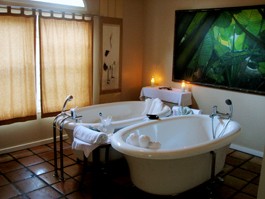
COUPLES THERAPY: Twin baths are among the pleasures of Calistoga’s Lavendar Hill Spa.
By Suzanne Daly
I am a spa junkie. My addiction started at an early age, when I experienced the hot rock steam of a Native American sweat lodge in the hills of Ojai. I have since sought out healing waters and treatments around the world, from the famed Gellert Hotel baths in Budapest to the oceanside hot springs of Hot Water Beach in New Zealand.
Last summer afforded me the best high yet, spending three hours having nearly every inch of my body scrubbed and then massaged at the 300-year-old, highly ornate Cagaloglu Hamami in Istanbul. The oldest Turkish bath house in the city, its spectacularly carved marble men’s bath is featured in the James Bond film From Russia with Love. Unfortunately for James, chasing bad guys took precedence over being scrubbed and rubbed until his skin shone baby-pink afterwards, like mine did.
But that was a year ago. I rub my neck, trying to work out the large knot that perpetually lives there, but the ache remains. And though I am jonesin’ for a deep massage, the current economy does not allow for the frivolity associated with having a spa day very often.
A little research, however, shows there are ways to enjoy the multitude of North Bay spas without doing a Lehman Brothers. Below, we offer our nearly exhaustive roundup of North Bay spas. All of the establishments listed offer at the minimum massage and at most every legal bodily service in your wildest imagination. Is your addiction caviar, crushed pearls, colored lights, paprika, seaweed, chocolate, or mud? Get your fix. I’ve certainly been getting mine.
Sonoma County
Akoia An owner-operated spa, this establishment entices clients to “treat thyself” to the unique services it offers. A warm Thai herbal poultice massage counterbalances the daily wear and tear of life; the sensual Javanese body scrub was originally a ritual used to prepare brides for a night of sensuality and pleasure. Check the website for this season’s special, a harvest spice, pear and almond body polish formulated in Healdsburg. 452-B Healdsburg Ave., Healdsburg. 707.433.1270.
Alles Representing the best of the European-spa lifestyle, Alles offers a green environment and biodynamic skincare products like Dr. Hauschka’s from Germany and others from Switzerland and Hungary. A unique treatment of manual lymphatic massage gently detoxifies the body to promote systemic health, help eliminate congestion and enhance the immune system. 380 Windsor River Road, Windsor. 707.838.3223.
Azulene Focusing on waxing for both female and male clientele, Azulene assures that “an eyebrow wax can be an instant facelift for $18,” and that the bikini wax, depending on how far you take it, enhances a weekend of fun on a houseboat or tantalizes a new lover. Azulene offers many gender-neutral products, teeth whitening and spray tans to go with the Brazilian body wax. 122 Wikiup Drive, Santa Rosa. 707.576.7546.
The Best Day Spa How about a massage while you are fully dressed? The Best Day Spa offers this Thai-style massage as well as others, plus makeup and waxing. A free 20-minute sauna is offered after all treatments. 3082 Marlow Road, Ste. B4-B5, at the corner of Marlow and Piner roads, Santa Rosa. 707.545.1058.
Blush a Day Spa Unassumingly nestled into the corner shop behind the Sonoma Ballet Conservatory, Blush brings space-age technology to rural Sonoma. Run by a husband-and-wife team, James and Delores De Alba, the spa specializes in skincare and brow-shaping. Organic products are used for facials, which may also incorporate the use of NASA-developed Max 7 LED light therapy. Using seven different wavelengths—colors—of light to noninvasively strengthen and heal skin, LED therapy resembles a laser light show minus the Pink Floyd. Afterward, however, the glow of your skin will have you blushing from compliments. 561 Broadway, Ste C., Sonoma. 707.935.0116.
Coldwater Creek—The Spa Famous for its pedicures, Coldwater’s clients have been known to fall asleep in the spectacularly cushy chairs only to awaken to newly refurbished toes. There’s a pedicure specifically for guys, too, and they’ll love the comforters, hot neck wraps and eye pillows that heighten the experience. Part of the Coldwater Creek Company, this spa offers pampering at a consistently high level, and the boutique carries a spa clothing line. Join the e-mail list to receive customer specials. Repeat customers who rebook their next midweek appointment before they leave receive a 20 percent discount. In Montgomery Village, 728 Farmers Lane, Santa Rosa. 707.566.9314.
Fairmont Sonoma-Mission Inn Spa Built on the site of ancient thermal baths, this elegant Spanish-Mission-style spa is one of the only luxury resorts in the country with its own source of thermal mineral water. Featuring pools of varying temperatures, the spa offers a bathing ritual to guests and locals who partake of its services. Sonoma County residents benefit from the Good Neighbor program, receiving 10 percent discounts on all spa treatments Sunday–Friday and are welcome to take the 7am hikes or 8am bicycle rides that the hotel offers. Bike trips are $30 and include bike, helmet, water and transport to and from the ride. This expansive facility is noted for its extensive facials, including ones with caviar or Sonoma lavender. 100 Boyes Blvd., Sonoma. 707.938.9000.
Garden Spa at MacArthur Place (See “Hidden Jewels,” below) 29 E. MacArthur St., Sonoma. 707.938.2929.
Hyatt Vineyard Creek Spa True to its name, the Vineyard is a wine-based spa, and most of the products used, including those made from lavender and mustard, are locally made. Treatment options are classed as tours, pairings and tastings. Clients may choose between Merlot or Chardonnay to nourish the skin with anti-oxidants or grape sugars. Vineyard Creek also exclusively offers Matanzas Creek lavender products for wraps, scrubs, facials and just a nice deep breath of Sonoma. 170 Railroad St., Santa Rosa. 707.636.7300.
Kenwood Inn & SpaKenwood focuses on the healing properties of all parts of the grape, from seeds to wine. The signature Kenwood Harvest Sugar Scrub uses organic sugar cane, milled grape seeds, Chardonnay oil, Riesling oil and red wine extract to exfoliate the skin before a massage with Chardonnay extracts or grape seed oil. Kenwood also features Arcona products favored by celebrities. Cost to locals is $35 extra if not staying at the Inn. 10400 Sonoma Hwy. (Highway 12), Kenwood. 707.833.1293.
Mermaids Spa & Seaweed Bath Shop You can almost hear the ocean at this spa that caters more to locals than visitors. For those who love the sea, Mermaids’ forte is one of the many healing hour-long hydromineral baths infused with Pacific seaweeds, aromatherapy oils and sea salts. Clients choose their own remedy for the perfectly personalized therapy session. Seaweed is also used for body wraps and facials. The five-hour Divine Mermaid Day package combines treatments with a gourmet lunch from nearby K&L Bistro or Alice’s Restaurant (excluding alcoholic beverages). Wednesday is locals day, and all treatments are discounted 10 percent. 115 S. Main St., Sebastopol. 707.823.3535.
New Dawn Day Spa Blissfully quiet and peaceful despite a high traffic location, New Dawn offers specials like the multi-vitamin power facial for mature skin, mini-facials and a relaxing hour-long treatment applying a warm, botanical mudpack to the scalp and hair to renew their health. Best deals include mini-facials and Swedish massage. Many discounts and specials are offered via email. Clients can also buy a year (12 sessions) of certain treatments in advance and receive $100 off the total. Product samples are offered as well. 6741 Sebastopol Ave., Ste. 160, in the Gravenstein Station. 707.823.8441.
Osmosis The Victorian exterior of Osmosis shelters the only cedar enzyme baths in the country, drawing tourists as well as locals interested in an all-green “staycation” destination. Osmosis combines physical detoxification with mental relaxation via enzyme baths and massage, available indoors or in open-air pavilions. Beautiful Zen gardens offer spiritual calm as well. Services also include a three-week enzyme cleansing treatment designed to detoxify the body over several visits and includes lifestyle and nutritional coaching with a supervising physician. Free morning meditation each Thursday at 8am. Check monthly deals online and sign up for birthday specials. 209 Bohemian Hwy., Freestone. 707.823.8231.
A Simple Touch This little spa near the plaza offers private, intimate parties complete with appetizers and wine or Champagne, so guests can fully relax and enjoy the full menu of spa treatments. Of note is the rose whey bodywrap and facial. In appreciation of those serving our country, military personnel are offered 25 percent off of all services. 239 Center St., Healdsburg. 707.433.6856.
Sonoma Coast Villa Inn & Spa Set on 60 acres in the coastal hills of Bodega, this secluded Mediterranean-style estate offers guests a full slate of spa services. Day users must have an appointment. All treatments begin with a footbath, heated neck wrap and a cup of tea and finish with a blanket cocoon. Aromatherapy is also included. Particularly appealing is the Net Release, a treatment designed to de-stress and ease the numbness and tension from repetitive-use syndrome computer users experience. Special attention is paid to the eyes, hands and jaw. Guests may order lunch or light, healthy spa meals made with ingredients grown in the one-acre, on-site garden. 16702 Hwy. 1, Bodega. 707.876.9818.
Sonoma Spa Easily found on the historic plaza, this spa invites clients to relax in the special herbal aromatherapy sauna before one of the spa’s signature body treatments using herbal infused mud, rose masques or shea butter. Internet specials are valid everyday except Saturdays and holidays. 457 First St. W., Sonoma. 707.939.8770.
Sumbody (See “Hidden Jewels,” p24) 118 N. Main St., Sebastopol. 707.823.2053.
The Spa at Hotel Healdsburg This attractive, modern spa is perfect for the high roller. Across from the plaza, its neighbors are chic boutiques and high-end restaurants, like the hotel’s renowned Dry Creek Kitchen. A combination deep-tissue, hot stone, shiatsu and reflexology massage package will guarantee a few melted guests enjoying the pool afterwards. A whirlpool bath is also available for use with spa services. Those in the 707 area code receive 15 percent off all treatments Monday–Thursday. 327 Healdsburg Ave., Healdsburg. 707.433.4747.
The Spa at Montecito Heights Need a respite from the partying and salsa dancing at Santa Rosa’s landmark Flamingo Resort, or perhaps from the aches and strains of racquetball? Try the on-site spa, which specializes in sports-related massage and treatments. Sauna and Vichy shower treatments with ginger products are also available. Check the website for online specials. Located directly behind the Flamingo. 2777 Fourth St., Santa Rosa. 707.526.0529.
Napa County
Amadeus Spa at the Napa Valley Marriott Revel in a day of mother-daughter or father-son bonding instead of the usual parent-child stress. Amadeus has spa packages designed to bring out the best in everyone, and locals get 20 percent off treatment prices Monday–Thursday. Romance packages are also offered for couples enjoying life without kids. In the candlelit “wet room,” lovebirds can partake in Vichy showers, body scrubs, massage and other sensuous treatments at the same time. 3425 Solano Ave., Napa. 707.254.3330.
Avance Day Spa Run by an extremely welcoming and accommodating staff, Avance caters as fully to the comfort of men as women. Men’s treatments include sports massage, waxing, airbrush spray-tanning, deep-pore cleansing facials and even “facials” for the back. Avance’s team spirit makes a day of pampering a lot of fun. 585 Coombsville Road, Napa. 707.226.6822.
Calistoga Massage Center & Day Spa Step into a paradisiacal hideaway located in the heart of downtown Calistoga. Enjoy the tropical massage-facial-pedicure package at prices that match today’s economy. Walk-ins are welcome, and Sonoma County residents get 15 percent off treatments every day. Mention online specials at the time of booking for further discounts. 1219 Washington St., Calistoga. 707.942.6193.
Calistoga Spa Hot SpringsAn unpretentious resort, this spa caters to families with children. There are three heated pools and a kiddies pool for the splashers, as well as outdoor mineral baths. Accommodations include kitchenettes and outdoor barbecues. Bargain pricing for a family getaway. 1006 Washington St., Calistoga. 866.822.5772.
Calistoga Village Inn & SpaMud plays a starring role in the treatments offered at this vintage spa. But if wallowing in mud—even if it’s infused with pure volcanic ash extract and salicyl aspirin powder—doesn’t suit you, try the wide variety offered here, including milk whey, mustard or seaweed immersions. 1889 Lincoln Ave., Calistoga. 707.942.0991.
Dr. Wilkinson’s Hot Springs Resort Established in 1952 as an alternative medical treatment, Dr. Wilkinson’s is a Calistoga institution and still offers mud and mineral baths and massage. 1507 Lincoln Ave., Calistoga. 707.942.4102.
EuroSpa & Inn A soothing and intimate locale, EuroSpa offers something different in Calistoga—no mud baths. They do have mud wraps, however, packaged with massages and facials for a complete rejuvenating experience. EuroSpa maintains a lovely backyard space to unwind and wine and dine al fresco after treatments, and will cater to private parties. 1202 Pine St., Calistoga. 707.942.6829.
Golden Haven Hot Springs & Spa This newly remodeled Calistoga institution is one of the few that offers couples mud baths. This spa also guarantees that guests will lose a minimum of six inches off their total body measurement after just one of their European body wraps. Day users have the use of the hot mineral pool, whirlpool bath and sun deck with any spa treatment. Lots of Internet specials are available, including room rates at great discounts. 1713 Lake St., Calistoga. 707.942.6793.
Health Spa Napa Valley Vaulting beyond body treatments, this spa offers all things healthy from bike rides to seasonal, organic body wraps. Billed as a fitness-wellness-health center, Health Spa Napa Valley will soon be expanding; treatments will be 20 percent off during renovation. New additions will include a nail-care center and a private Pilates studio. Locals in the 707 area code receive 10 percent off all treatments, and patrons should look for monthly Internet specials. 1030 Main St., St. Helena. 707.967.8800.
Indian Springs Resort & Spa Named for the Native Americans familiar with this site long before European settlers arrived, Indian Springs has been a healing resort since 1862. Ancient volcanic ash from the 16-acre hillside mixed with mineral water from four local geysers is used for the mud baths and other treatments. The thermally fed, Olympic-sized pool dates back to 1914. Heated year-round, it is available to day users Sunday–Thursday after just a half-hour massage. A Buddha pond graces the grounds for more private and meditative relaxation. The winter special consists of two complimentary mud baths when patrons stay overnight, available from November to March. 1712 Lincoln Ave., Calistoga. 707.942.4913.
Lavender Hill Spa (See “Hidden Jewels,” p24) 1015 Foothill Blvd., Calistoga. 707.942.4495.
Lincoln Avenue Spa A more upscale sister to Golden Haven, Lincoln Avenue offers a broader slate of treatments. Clients can opt for Moor mud imported from Hungary or native Calistogan mud, personalized with 12 Ayurvedic herbs, kelp, wine products or even chocolate. If thick mud isn’t your thing, try the liquid mud whirlpool bath. End the day with a relaxing afternoon tea at the spa’s English garden tearoom. Great website specials rotate monthly. 1339 Lincoln Ave., Calistoga. 707.942.5296
MountView Hotel & Spa Easy to spot on Calistoga’s main drag, the Mount View Spa is tucked in an appealing, Mission-revival-style hotel. For an intimate party away from home, check out the Relaxation Group package. Six to 10 guests receive treatments—and the sixth guest is free. The group also receives a bottle of wine for every two guests, along with a cheese bistro basket and souvenir Champagne flutes to remember the day. Daily spa specials can be found listed on the board outside the hotel, and Sonoma County residents receive 15 percent off all treatments every day of the week. 57 Lincoln Ave., Calistoga. 707.942.5789.
Roman Hot Springs Resort Under new management, the Roman (previously the Oasis) offers the three m’s: mud, mineral water and massage. Catering to couples, this spa creates a safe, personalized and comforting environment for clients by providing the same attendant for all services. Clients are able to fully relax knowing that there won’t be a parade of strangers tending their naked bodies. Check the website for monthly manager’s specials. 1300 Washington St., Calistoga. 707.942.2122.
Solage Calistoga At one year old, this contemporary spa is still the new kid in town. Day guests pay a $25 fee to use the three geothermal pools. There are separate men’s and women’s clothing-optional pools as well as the co-ed 98 degree swimming pool. The signature “mudslide” experience starts with guests sliding up to the mud bar to schmooze and choose the essential oil they want to mix with the mud. Oozing into the treatment room, the mud is applied with the aid of an attendant. Clients then lay on a heated lounge to bake the mud on and relax. Lastly, a shower and a soak in the geothermal water ensure a clean finish. The mudslide is 50 percent off when booked with an 80-minute spa service Sunday–Thursday. Check the website for other upcoming specials. 755 Silverado Trail, Calistoga. 707.226.0820.
Villagio Inn & Spa Welcoming to locals, the Villagio makes visitors feel like they are guests at a wealthy friend’s Tuscan estate. The spa boasts 13,000 square feet and 16 treatment rooms, yet insists on personalized service for every patron. Locals there for a day’s pampering may be upgraded, with their treatment being given in one of the lavish suites for a taste of the good life. Try the Montecelli, creamy Italian mud mixed with cypress, pear, lemon and fennel. Co-ed sauna and steam rooms and an outdoor pool are also available for a day’s enjoyment. 6481 Washington St., Yountville. 707.944.8877.
Marin County
Asante Day Spa Currently celebrating a decade of offering holistic health services, the spa continues to offer something for everyone in the family, from foot, knee and hip rehab classes for grandma to massage for the family pet. They also suggest promoting a healthy lifestyle for yourself by sending a “not so subtle gift hint” via email to those who love you; this links to the spa’s online gift certificate purchase. Other online specials change monthly. 1003 Third St., San Rafael. 415.460.6506.
Barefoot & Pregnant Now located in the beautiful Casa Madrona Hotel, this spa aims to comfort expectant mothers, couples or soon-to-be older siblings. Barefoot terms itself a “maternity spa,” and offers treatments to reduce the discomforts of pregnancy, from aching feet to stretch marks. A plaster belly cast can be made to remind new moms of their days B.C. (before children). Casa Madrona Hotel, 801 Bridgeway, Sausalito. 415.354.8308.
Eden Day Spa Under new management, Eden Day Spa promises a new attitude, atmosphere and a more European-style experience. A quaint spa in the heart of even quainter San Anselmo, Eden offers a quaint service called threading, an ancient Middle Eastern form of hair removal. The hair is gently lifted from the root and is a lot less painful than waxing. Walk-ins are welcome, but the spa only holds four clients, so reservations are recommended. Check for monthly online specials. 541 San Anselmo Ave., San Anselmo. 415.464.9111.
Evo Spa If you can’t find the treatment you are looking for here, you probably won’t find it anywhere. From Hungarian paprika facials and noninvasive facelifts to zero gravity, dry hydrotherapy from Italy—complete with chromatherapy lights and experienced fully clothed—Evo’s got it. Evo is heavily into rituals, and states that “transformation is their passion.” For a new way to wear precious gems, try kaya kalpa, an ancient ritual traditionally reserved for royalty. A pasty, herbal mixture of gold, silver, mineral ashes of crystals and seven gemstones, and warm cream is painted over your entire body. Warm oil is then poured over your forehead and hair to calm the nervous system. The ritual ends with a Tibetan bowl foot massage for balance. Sign up on the email list to receive monthly online coupons and specials. 216 Strawberry Village, Mill Valley. 415.383.3223.
Safronya Ayurveda, the 5,000-year-old Indian science of life and self-healing, is the foundation for treatments at Safronya. The spa’s extensive menu takes a holistic approach to health, offering classes in nutrition, yoga and meditation along with the usual slate of spa treatments. Saffron is showcased as a healing agent and is used in facials, massages, body wraps and, yes, even to flavor food served at the spa. To promote community, Safronya offers daylong retreats for cancer patients and free introductory classes to the practice of Ayurveda. Online specials for services and products are also offered. 523 D St., San Rafael. 415.259.0433.
Shibui Gardens Embracing the values of Marin’s founding hippies—hot-tubbing under the stars—this unpretentious institution limits its menu of services to hot tubs, saunas and massage. It’s strictly no frills—BYO towels, robes and water. Tubs are two-for-one Monday–Thursday from 2pm to 6pm. Shibui also offers free open-air hot-water soaks after a massage. 19 Tamalpais Ave., San Anselmo. 415.457.0283.
Spa de Novato Featuring a full slate of massage and bathes, Spa de Novato also gives haircuts and has a full mani-pedi service. 1305 Grant Ave., Novato.415.897.4511.
Spa Soleil Who doesn’t want to get rid of cellulite? Spa Soleil (previously Juvenis) specializes in endermologie, a noninvasive technique of reducing these cottage cheese–like fat deposits. It also has services aimed at weight loss, firming and acne control. Smooth moves have priority here, whether by massage, glycolic peels, cellulite reduction or waxing. Check the website for monthly or email specials. 2829 Bridgeway, Ste. 101, Sausalito. 415.332.5551.
Stellar Spa New to its menu is ultrasonic microdermabrasion. Clients may have massages in the seawater negative-ion inhalation room, breathing in the calming effects of negative ions via a fine water mist. Studies show this helps relieve headaches, allergies and jet lag. Purchase a six-treatment series plan and receive a 10 percent discount and a complimentary facial or bodycare accessory kit. Join the spa’s free online club and receive special monthly discounts; monthly specials can also be found online for non–club members. 26 Tamalpais Drive, Corte Madera. 415.924.7300.
Tea Garden Springs Calling itself “a Zen spa of vision, health and vitality,” Tea Garden makes use of Chinese and Indian philosophies when performing spa services. Visitors are welcomed into the feng shui–designed tea garden to unwind with a cup of tea before treatments. Going beyond the usual, Tea Garden offers advanced body therapies that address the effects of emotions and thought patterns on a person’s health. The spa believes in the art of service, and strongly supports the community with monetary donations to schools and other organizations. The Quon Yin card is available for purchase with a first treatment, and can be used to acquire “loyalty points” adding up to a 10 percent discount on services. The lucky winner of a monthly raffle scores a free treatment. 38 Miller Ave., Mill Valley. 415.389.7123.
Hidden Jewels
Garden Spa at MacArthur Place This spot welcomes clients as if they are coming home for a richly deserved rest. The lush gardens surrounding this old Sonoma farm estate cradle the pool and spa area, giving a hint of the botanical treatments to come. Named for its aromatic gardens and whimsically decorated with gardening implements, the spa offers clients treatments based on fruits, flowers, vegetables, herbs and old Mother Earth herself. Of note are the signature treatments, especially the Citrus Tree, a scrub, bath and massage applying all the sweetness of an orange or lemon grove. Unique vegetable treatments include the Eight Greens Facial. Spa clients may use the pool and co-ed steam room for the day. Saddles Restaurant is also on the property for tasty meals inside or poolside. Join the Garden Club for online specials throughout the year. 29 E. MacArthur St., Sonoma. 707.938.2929.
Lavender Hill Spa East meets West at this charming little spa. Tucked into a hillside garden decorated with exotic Asian statuary and art, Lavender Hill sets the mood for couples in softly colored, warm and inviting double-tub or massage rooms. Intimacy is guaranteed, since the spa only serves a maximum of eight clients at a time. Unique Asian infusions are used as remedies for sore bodies, including a milk-based Thai bath with white kelp and citrus, and green tea and mint combinations. A lavender, Cabernet and pumpkin combination welcomes the fall season. After November, all packages are buy one, get one half off. 1015 Foothill Blvd., Calistoga. 707.942.4495.
Sumbody A hidden jewel on Sebastopol’s bustling main street, Sumbody embraces the town slogan of “Local Flavor, Global Vision.” Once a client steps into the fragrant shop and through the curtains, she is transported into a setting that could be streamside in Shangri-la. Three tented treatment rooms with soothing lighting and the relaxing murmur of fountains and birdsong welcome the weary to rest and enjoy a transcendent body treatment. Clients choose an essential oil to enhance their treatment and fit their mood: joy, passion, stress relief, clarity, surrender or energy. All the products at Sumbody have been formulated by owner Deborah Burnes, a hobby-botanist and esthetician, and are made in Sebastopol. Try the Zappers, aromatherapy remedies for treating anxiety to zits. Sumbody has monthly drawings for free facial parties and offers special events monthly. 118 N. Main St., Sebastopol. 707.823.2053.
Before You Go
• Look at the establishment’s website and see what the spa has to offer. Many have a locals rate, monthly specials or package deals, including two-for-ones that can save money.
• Be sure to take a look at the length of the treatments. While many are listed as hour-long, in reality they are 45 to 50 minutes, with the remaining time allotted to dressing and undressing. Always try to get to your appointment at least 15 minutes early to get acquainted and undress, so that you benefit from the full length of your scheduled treatment.
• Know what is included in the price. Many spas charge extra for aromatherapy or for certain types of products used.
• Don’t forget to figure in a gratuity for each attendant; the economy has been tough on them as well.
• If all you can afford is a mini-facial, make the most of it. Spas with pools, steam rooms and other amenities will often allow day guests to use them without charge when a treatment is booked.
As Clean as Mud
Your sweetie has planned a romantic weekend getaway, thoughtfully chosen a lovely hotel, put the Champagne on ice and booked mud baths for two. OK, you’re game. Entering the spa treatment room, the aromatherapy lightly masking the smell of minerals, you notice the steaming tubs of thick, grayish-brown ooze. Something occurs to you. The parking lot was full. Another couple just passed by in the hall, coming from this direction. Were they in these tubs ahead of you? Well, yes, they probably were. But don’t worry. The mud is cleaned between clients. Except—just how do you clean mud?
After conferring with three different spas that specialize in mud treatments, the general consensus is that when clients get out of the tubs, they take their personal layer—the mud coating their skin and any dead skin cells—with them. Next, hot mineral water, usually from on-site geothermal springs, is run into and through the remaining mud for 15 minutes to flush it. The water temperature can range from 160 degrees to 210 degrees, hot enough to kill most pathogens. A hoe or shovel is used to stir and turn the mud as the water is added, so that the heat spreads throughout the mixture. Hot coils in the bottom of the tub also increase the temperature. Lastly, volcanic ash and-or peat is added to thicken up the mass to the right consistency. A half-hour later, the next happy couple is gingerly sliding into the fresh, clean tub of mud.
Ask Sonoma State University biology professor Mike Cohen whether this cleaning process and short turnaround time is adequate, and he hesitates. “You would really need to be checking the temperature with thermometers at different points throughout the mud to make sure it was thoroughly heated,” he says. “The lower the temperature, the longer duration of time you would need. Most, but not all, pathogens would be killed. And if a person had a cut, he shouldn’t go in.” Cohen adds that after searching the Internet for information, he found “only one incomprehensible study” done on the topic of mud cleaning and no evidence of problems or illness attributed to mud baths.
The same question was asked of various officials in the Sonoma County, Napa County and California state health departments, and, after 16 phone calls, the answer was the same: “We don’t know, because we don’t regulate them.” Several different people in the environmental health department stated that any body of water, like a swimming pool or whirlpool spa, is strictly regulated and inspected, but that mud fell outside of those rules.
More rules aren’t necessarily a better thing. After all, mud-bathing dates back to ancient times and is highly respected in many cultures that use it as a remedy for various ailments. But it’s probably best to heed the advice of a spa attendant who has worked for a well-known health resort for nine years and doesn’t want to be identified. “If the mud is hot, it’s clean,” she says. “But that’s the tricky part—it depends on the attendant cleaning it.”
She sighs. “If it’s not really hot, they haven’t done a good job. If it’s not hot, don’t get in.”