


FOLLOW US
Jack London

The Other ‘Salesman’
10.08.08
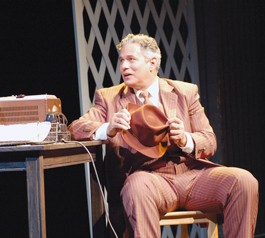
“It’s been intense,” says director-actor-educator W. Allen Taylor following a busy week preparing Arthur Miller’s Death of a Salesman for last weekend’s opening at the College of Marin in Kentfield. “It’s a long play and a difficult play,” he acknowledges, “but it’s a great play. These last few weeks have been quite a ride, but a good ride.”
Taylor says he had no idea, when they added Miller’s play to the current schedule, that anyone else in the area was doing the same show, let alone opening it on the same day, as Santa Rosa’s Sixth Street Playhouse did last weekend (see review, p34); Antioch’s Hapgood Theatre Company, in the South Bay, is the third production to open in the Bay Area last weekend, to which Taylor responds, “I love it! It’s the theater gods at work. There’s clearly something in the Zeitgeist that makes this play appropriate right now. And the economic news of the last few days makes it all the more timely. There is definitely something in the air, a sense of looming instability, not just in the economy, but our very direction as a society.”
According to Taylor, whose directorial efforts have established him as one of Marin County’s most interesting directors to watch, Miller’s tale of Willy Loman, a hard-working American at the end of his rope, has never been more timely.
“With economic issues on the front burner for America,” he says, “it’s easy for us to identify with a Willy Loman, someone fighting to get some attention for all the work they’ve done. Death of a Salesman is about the pitfalls of the American dream, about how easy it is to become a casualty of that dream. A lot of people are having to face that very thing right now.” These issues are reflected in Taylor’s production, from the pacing of the action to the design of the set by Ron Krempetz, inspired by the moral and spiritual precipice Miller’s characters find themselves teetering on.
“We’ve tried to use Willy Loman’s house a s a metaphor,” says Taylor, “to give it even more meaning.” Featuring Bill Clemente and Stephanie Alberg as Willy Loman and his long-suffering wife, Linda, College of Marin’s Death of a Salesman runs through Oct. 19. Friday&–Saturday at 8pm; Sunday at 2pm. Fine Arts Theatre, COM campus, 835 College Ave., Kentfield. $10&–$15. 415.485.9385.
Museums and gallery notes.
Reviews of new book releases.
Reviews and previews of new plays, operas and symphony performances.
Reviews and previews of new dance performances and events.
Letters to the Editor
10.08.08
Steampunk Salutations!
Bravi to Ty Jones and Spring Maxfield for creating such a fabulous event, the Handcar Regatta, on Sunday, Sept. 28, in Depot Park. What a hoot!
It’s the first time in my 15 years here in Santa Rosa that I’ve experienced a public celebration this original, accessible and appealing to a cross-section of Santa Rosans. We could use more of the unpolished, spontaneous and participatory aesthetic of the Regatta. The blend of art and craft, history and science, fantasy, street theater and Victorian kitsch is a tangy antidote for the plethora of expensive, overscripted wine country public events.
And, in light of peak oil and climate change, what a playful way to insinuate the necessity of reviving rail travel, cycling and post- (and pre -) petroleum technology and DIY craft into mainstream culture and consciousness.
I hope the Regatta returns next year.
b>Janet Barocco
Santa Rosa
Listings of Meals Past
I enjoy your Dining Guide but take issue with the descriptions of “organic” restaurants. For example, in the listing for Papas and Pollo restaurant that has run for years, the reviewer states that “it’s all organic.” I went there and asked if the tortilla chips were organic, since I was particularly concerned about GMOs. I was told that they were not. So I asked “Just what is organic in the burrito that I’m ordering?” The answer was “only the salad greens.” I would encourage your reviewers to take organics more seriously—as do the writers for the North Bay Natural Pages—ask about percentage of organics and use statements like “some organic ingredients” instead of “it’s all organic” when appropriate. For a restaurant that uses organics only for its salad greens, I wouldn’t expect any mention of organics at all in the review. There are restaurants like Peter Lowell’s and Cafe Gratitude that use organics for a majority of their ingredients, and I believe that many would be interested in this kind of information.
Christina Manansala
Guerneville
Down to the Lawyers Now
Reading your article on the Drakes Bay Family Farms oyster farm in the Pt. Reyes National Seashore (“Shell Games,” Sept. 17), it is clear to me that the Lunnys run an environmentally sound business that improved greatly upon the former owners, does little if any damage to the environment and helps the area and its people through locally produced food and jobs. But NPS employees and others are justified in being concerned that by allowing the business to operate past its lease they could allow other less responsible business people to demand equal treatment under the context of legal precedent, and thereby permit continued damage to public lands all over the United States. If you will indulge me, the NPS wants Lunny to admit he took a chance and “take one for the team.” I hope the lawyers can work out an agreement that respects the benign impact of the farm without implying a harmful precedent.
Robert Fox Gaynor
Santa Rosa
Dept. of Extra Info
Fall Lit usually presents with the clever glowing wit of your responses to our annual Java Jive writing contest. For the first time in some 14 years, this Fall Lit issue is Jive-free, but that doesn’t mean that the Jive has left the building. It’s just been pushed forward.
We who love and adore our twice-yearly lit issues have been frustrated because printing all of your clever glowing wit takes over Fall Lit and precludes us giving adequate notice of MTC’s innovative staged reading series, the digital Bard, radical Jack, the last word on shamanism and other such delights as are included in this steaming hot copy held preciously by you this instant. Therefore, we plan to publish your clever glowing Jive wit in our Thanksgiving issue, Nov. 26, and will announce this year’s breathless contest next week. We know the deadline will be Nov. 12; we just don’t quite know what tomfoolery we’re up to yet this year.
In other Lit news, please join us in welcoming novelist Bart Schneider to a regular rotation in the Bohemian. A founder of the nationally acclaimed Hungry Mind Review, Bart launches Lit Life this week, a biweekly column devoted to writers and writing. We’re honored that Bart is willing to suffer the insulting pay and irritations of deadline in helping us to better serve community.
The Ed.
More Pleased than Punch
&–&–>
Evolution of Wordz
10.08.08
SPOKEN WORD:MTC’s Jasson Minadakis oversees an ambitious staged reading program.
By David Templeton
When a playwright finishes a draft of a new play, they just desperately want the thing to be done,” says up-and-coming New York playwright Sharr White. “The fact of the matter is, in nearly every single case, as much as the writer wants that play to be finished, it is usually not. And that is why ‘workshop productions’ and staged readings of plays—and series like Marin Theatre Company’s Nu Werkz series—were invented, so playwrights would have a way to work out the bugs in their work.”
While most professional theater companies have the occasional staged reading of a new play, few local troupes are as committed to the development of new works as Marin Theatre Company, which, over the last few years, has turned up the fires of theatrical creativity by reengineering its annual Nu Werkz staged reading series, adding two major playwriting awards as part of the package. Now in its fifth year, Nu Werkz was created as a way for the staff of MTC to test-drive new plays while getting to know promising young playwrights, all part of the company’s ongoing effort to grow strong creative relationships with a large number of emerging artists.
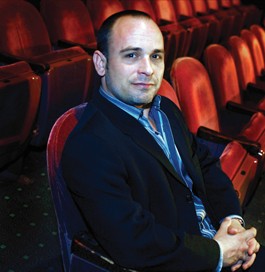
Originally, the Nu Werkz series included worthy plays that the company would, for one reason or another, not normally have as part of its regular season of fully staged shows. Now, under the leadership of Jasson Minadakis, who was named artistic director two years ago, the Nu Werkz series only includes plays that MTC is seriously considering for full productions in the future, with four plays included in the reading series each season.
“We’re trying to keep the series structured as a way of giving people a glimpse of where we could be going in the future,” Minadakis explains. “There’s no guarantee that if a play is in the Nu Werkz series it will automatically end up getting a full production in the future, but what it does mean is that we are seriously considering doing the play, and that we are very interested in building a lasting relationship with that playwright. For audiences, it’s a taste of the future of American theater. These are writers in the early stages of their literary careers. This is a way to preview what is coming in the future, both at MTC but also on the wider American theatrical landscape.”
The 2009 Nu Werkz series kicks off next week with two free staged readings of Sharr White’s Sunlight, a four-person play set on the campus of a prominent New England university, involving an explosive personal and professional conflict between the liberal president of the university and the conservative dean of its law school, who happens to be the president’s son-in-law. At the heart of the play is a conversation about the post-9-11 legality of state-sanctioned torture, with each man on opposite sides of the argument.
Sunlight was commissioned by South Coast Repertory Company in Southern California, but when that company, after giving it a partially staged workshop production, decided not to do a full run of the play, Minadakis, who saw the workshop of the show, decided to pick it up for Nu Werkz, which also will feature Kate Walber’s Elsewhere and Zel Williams’ Blood Money; the fourth play in the series has yet to be announced.
“We are probably going to do Sunlight in our next season or two, after a little bit of tweaking,” Minadakis says. “So it’s kind of exciting. Audiences will be able to watch part of the evolution of this wonderful play.” For the Nu Werkz reading, the focus will be on the words, as the actors will likely be sitting on stools with their scripts in front of them on music stands.
“These kind of staged readings of plays are a really great way to find out how the document as a whole is set,” White says. “Even with a play like Sunlight, which has gone through a very productive workshop experience at South Coast Rep, it’s always an intense experience, learning anew how a piece is sitting.” Sunlight being a very timely and topical play, White’s primary concern is making the piece feel more timeless. “Because it deals with elements of the Bush administration, I feel that, if not handled right, that could end up feeling a bit dated,” he admits. “So my big question is in finding out how to make sure the play has as relevant a life five or six years from now as it does now.”
White also has questions about pace. “It’s a very quick, fast-paced play, but I have moments where I take it down in tone and let it be a little restful, and the question is should I be doing that or not. The reading will, I think, prove to be very valuable in the development of this play.”
Clearly, for many of the playwrights whose work is included in the Nu Werkz series, the hope is that the staged readings will be followed somewhere down the line by a full production as part of MTC’s theatrical season. In some cases, the wait between the Nu Werkz reading and the full production will not be long. Last season’s series included Zayd Dohrn’s Magic Forest Farm, which won MTC’s first-ever Sky Cooper New American Play prize ($10,000 and a guaranteed slot in the next year’s season), and the play is now slated for its first full production in April of 2009 as part of the regular season.
“Readings like these,” Dohrn, also of New York, explains, “are a big part of what a playwright needs, just to hear the piece out loud and get a sense of what it looks like onstage a little bit. For me, the Nu Werkz reading was a particularly useful process. There’s a very special kind of pressure a playwright feels when something is going up onstage before an audience, and it’s a creative pressure that can be incredibly fertile, so in getting to do the readings and work toward the actual full staging, to test-drive the piece, I was able to take the play apart and look at it and see what was working and what wasn’t working. It’s a very valuable experience to me as a playwright.”
In these “test-drive” experiences, Dohrn explains, audience members are a major part of the process, because their reactions gauge whether the play is doing what the playwright intended while he or she was writing it alone in a studio. Also valuable is getting to hear the play spoken aloud by professional actors, another indicator of whether the piece is working or not.
“You get some good actors in a room,” Dohrn says, “and suddenly some stuff you didn’t know would work is actually working, and other stuff you thought was working, once you’re sitting there listening to it, you realize it’s not quite fitting the character the way you thought it would. And then when you get the audience in there, their reactions are so important. Just observing whether they’re slouched back in their seats or sitting forward to catch every word, that alone can be incredibly valuable.”
In the case of Magic Forest Farm, a play about the 1960s’ back-to-nature commune movement, in which flashbacks play an important part, Dohrn was interested to see if those flashbacks proved confusing, and whether the audience was able to tell where things fit chronologically. As a result of the readings, he has made significant changes in the structure of the play. Anyone who caught the reading last year will probably recognize where the fully staged 2009 production deviates from the Nu Werkz version.
“If you’re interested in the nuts and bolts of how the theatrical process works, then, as an audience member, this could be a very appealing experience, to see a play grow from script to production,” Dohrn says. “Most people just get to see the last part, without any idea how it got there, so the Nu Werkz series allows people an opportunity to see how a playwright gets from A to Z.”
Nu Werkz readings of Sharr White’s Sunlight takes place Oct. 6 and 13 at the Marin Theatre Company, 397 Miller Ave., Mill Valley. 7:30pm. Free. 415.388.5208.
Page to Screen
Measure for Measure

10.08.08
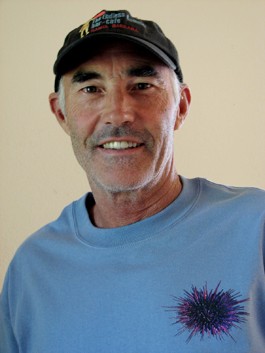
Scott Beattie was already considered to be at the top of his game when Douglas Keane and Nick Peyton lured the young bartender away from St. Helena’s Martini House. Keane and Peyton were in the final stages of planning their destination restaurant, one that included Keane’s dream kitchen and Peyton’s dream service team. The bar remained unmanned, and so the two invited Beattie to come on up to Healdsburg.
The restaurant, of course, is Cyrus, the award-winning house that recently rated only a half-star lower than Thomas Keller’s French Laundry in the newest Zagat guide. Beattie, who had spent the first two years of his career behind the bar mastering such old-school tricks as floating a slick of Chambord at the bottom of a glass, had recently had his palate and his mindset shaken up by something as mild as a beverage. As he relates in his new book, Artisanal Cocktails (Ten Speed Press; $24.95), he was seated at San Francisco’s Absinthe Brasserie when he ordered an old-fashioned cocktail called a Ginger Rogers. But instead of commercial liquids mixed with liquor, bartender Marco Dionysos stirred up a concoction using homemade ginger syrup, fresh herbs and other marvels of artisanal craftsmanship. Beattie was astonished.
Upon landing at Cyrus, he continued his own explorations with cocktails blended exclusively of fresh, homemade ingredients and the highest quality local liquors. No ghastly chartreuse margarita blends or lumpy gray mudslide concoctions would, after all, work at a restaurant as spectacular as Cyrus. Thing was, his cocktails were good—but they weren’t great.
“Nick and Doug never sat me down and told me to step up my game,” Beattie says during a recent phone interview. “But I didn’t really get it until I was seeing the food coming out of the kitchen and the service set up and how people were reacting to it all.
“What I was doing was fine,” he says, “but it wasn’t what they were doing.”
When Beattie set about to bring his side of the operation up to snuff, he started outside. “When I moved up here, I didn’t really understand what this area was really all about,” he says. “I was only coming from San Francisco and I’d lived in Napa, but I didn’t understand the extent to which the area in which we live produces all these foods until I stared going to the farmers market.”
Beattie befriended area growers and began making such as Healdsburg’s Love Farms a regular daily stop. He learned the earth’s cycles and came to anticipate variables as wide as next season’s promise and tomorrow’s harvest. He learned about edible flowers and the properties of various herbs. And, most surprising to him, he came to fully understand how to use citrus.
“That became really exciting, because it was really fun,” he enthuses. “All of a sudden I’m driving all over trying to find the sole Key lime tree in the middle of the Dry Creek Valley or I’m trying to find the Meyer lemon that someone told me about, and all of it is organic and all of it is local and it tastes so much better than anything else.”
As detailed in the 50 recipes collected in Artisanal Cocktails, the results were dramatic. With the help of a forgiving kitchen staff, Beattie learned how to make his own syrups, how to infuse essential oils, how to use foam—the popular deconstructionist kitchen trope of the moment—to enhance presentation, how to candy and dry fruit for garnish, how to properly cut herbs to best release their perfume. He learned, in fact, the craft of making cocktails, one that Beattie and other master “mixologists,” including famed “king of cocktails” Dale DeGroff, are eager to teach a public whose palate has been wearied by decades of oversweetened mixers and cheap blended liquors.
“There was a period before Prohibition when making drinks was a craft,” Beattie emphasizes. “You only used quality ingredients, you dressed for the role and it was a job that took years to learn how to do correctly; you had to apprentice. When Prohibition kicked in, people were more concerned with getting something that worked,” he chuckles, alluding to alcohol’s spirited effects. “The American market was flooded with cheap Canadian blended rye. Domestic producers couldn’t make anything better than moonshine—they couldn’t age it, couldn’t keep it in casks—and that changed American tastes for a long time. Once Prohibition was over, people had gotten used to drinking whiskey that tasted like cheap blended Canadian rye. With the exception of a few tiki bars after WW II, cocktail culture didn’t come back.”
But back it is, as more bartenders are willing to immerse themselves in every detail of a drink’s structure in order to produce a product superior enough to be an event all in itself. And indeed, the devil is in such details. Take ice. Please. Artisanal Cocktails is very unforgiving on the ice issue, Beattie warning aspiring mixologists not to trust the chicken-flavored minibergs moldering in one’s own freezer, but to instead strike up a friendship with a neighboring restaurant and use their professionally made ice or even buy the stuff bagged from the market and break it up yourself.
But something as seemingly small as ice is huge in the success of Beattie’s drinks, dependent as they are on presentation. A trick he devised himself is to use flowers and herbs to inform the drink’s look, shaking them with the ice so that these brilliantly colored and flavored items stick to the cubes and separate uniformly in the glass.
Properly measuring ingredients is another tedious must. Beattie remembers working the bar at Cyrus producing reasonable excellence while a visiting mixologist sipped a cold one. He told Beattie that he should be measuring as he went; Beattie laughed it off. Six months later, he says, he stopped himself in frustration during service and muttered, “I need to be measuring!”
But what Artisanal Cocktails is really about is community. No longer behind the bar at Cyrus, Beattie works part time at Healdsburg’s new Scopa restaurant while he prepares to launch his own cocktail catering company. Through this journey, Beattie remains grateful and alive to his good fortune. And he is solid on one point.
“I really respect,” he says with good humor, “people who measure.”
Scott Beattie appears on Monday, Oct. 13, from 6pm to 9pm, at Flying Goat Coffee, 324 Center St., Healdsburg. 707.433.3599. He’ll be at Tra Vigne on Monday, Oct. 20, from 6pm to 9pm. 1050 Charter Oak St., St. Helena. 707.963.4444. All events are free.
Quick dining snapshots by Bohemian staffers.
Winery news and reviews.
Food-related comings and goings, openings and closings, and other essays for those who love the kitchen and what it produces.
Recipes for food that you can actually make.
Green Fees
10.08.08
If there is one sport that has long been in possession of the word “green” without intending any reference beyond the color of grass, it would have to be golf. From an environmental standpoint, golf is not known for being outstanding. Imagine all of the water it takes to just keep the course watered, not to mention fertilized. No, despite the electric carts, golf does not jump to mind when I try to visualize what properties make up an environmentally friendly sport. Santa Rosa’s Bennett Valley Golf Course, which in the last year has undergone a long-awaited and much-needed revamping of the grounds, does not claim to be a bastion for the greening of the sport. What it does offer, however, is enough to pique my interest and spur me to investigate further.
I spoke with Richard Hovded, the park planning and development manager for Santa Rosa Parks and Recreation Department, about the Bennett Valley’s greening and the upcoming event Golfing for the Planet, a fundraiser and educational event for the Climate Protection Campaign’s Community Climate Action Plan. This plan, sponsored in part by local city and county governments, has been two years in the making and could quite possibly offer a critical opportunity for Sonoma County to reduce emissions to the degree necessary to stave off global warming.
The Bennett Valley Golf Course has been a municipal course since 1970. Hovded reminds me that, back then, the golf course was located basically in the boonies, but as the only golf course in Santa Rosa, it soon developed a steady following. Ah, those were the days, when volunteer members could decide, you know what, this old farm house needs some revamping, let’s add some rooms and call it a club house. The resulting building, while perhaps well loved by the regulars, was not up to code, and so the city of Santa Rosa saved their green fees in hopes that, eventually, they would be able to build a clubhouse worthy of the community which it serves.
Last year, the city completed the new clubhouse, pro shop and after-hours community and event center. The new building, which Hovded says is the first green building for the city, was nothing if not challenging to complete. The days of cheerful volunteers whipping up a few extra rooms out of someone’s leftover lumber are over. Not that recycled materials weren’t used (they were), but the entire project—which includes geothermal wells for heating and cooling, solar panels, carpeting made from recycled milk jugs and the usual array of environmentally friendly choices necessary to meet LEED standards—cost upwards of $10 million to complete. Yes, times have indeed changed, but despite the resistance that arose when faced with that “10 percent higher to be green” price tag, those involved in the project persevered to stunning effect.
Hovded assures that eventually, he has every intention of making changes to the green itself. He plans to put in a reclaimed water system for watering the course, install self-sustaining irrigation and to switch over entirely to organic fertilizers. With the current economy and the city’s commitment to keeping green fees as low as possible, this could take a while, but the direction is clear.
After my conversation with Hovded, I phone Barry Vesser, deputy director of the Climate Protection Campaign. Vesser says that the Climate Protection Campaign is attempting to raise awareness in as far-reaching a manner as possible. Vesser explains that the Action Plan, which focuses on reducing emissions and boosting the economy, offers 41 solutions and a financing plan for each. The money to fund these changes, which are more about investment and infrastructure than personal behavior change, will come from new investments created within the community via a variety of state-of-the-art financing mechanisms.
The plan covers such aspects as energy efficiency, smart transmit and land use, carbon capturing and sequestering, and the development of renewable energy in the county. We can’t afford not to make these changes, Vesser cautions, and when we do make them, we will be able to reduce our greenhouse gas emissions by 25 percent below 1990 levels.
The Greening the Green tournament in benefit of the Climate Protection Campaign tees off on Friday, Oct. 10, with a ‘scramble’ on the Front 9 followed by a reception. $100. 3330 Yulupa Ave., Santa Rosa. For more information or to participate in the tournament, call 707.525.1665, ext. 114 or contact [ mailto:lo**@***********************gn.org” data-original-string=”qLY3ttmlN5c/cGCavEA9OQ==06asnO38ahJZjuQG5AltG+rzmWYixVG6Jb/j4MgYFZsxT7x3agxuiFonlagOpXCl5Zm0vvNTjVZ3lRe1fNJWbU5jkcnPp+5brqtCaYiwTV9are7wKhZhLHZK+VJv4T5lFuI3GlvllfyyrAtCReryb4Jyg==” title=”This contact has been encoded by Anti-Spam by CleanTalk. Click to decode. To finish the decoding make sure that JavaScript is enabled in your browser. ]lo**@***********************gn.org.
The Move West
Waste Not
10.08.08
This year, Napa County’s recycling program expanded more than ever to include not only such traditional recyclable items as cans, bottles and plastic bags, but also those awkward items that no one feels are really right to put in the trash can. As environmental awareness continually increases, so does that weird pile of un-throw-away-able junk in the backyard.
What to do with that plastic bucket full of eight-month-old car oil that was once so recklessly poured down the storm drain? What to do with the old washing machine that was fixed five times on long Saturday afternoons before finally going completely kaput? And what to do with the kids’ old computer monitor that stopped working when a glass of Fanta accidentally disappeared into its ventilation slots?
But even trickier are pharmaceutical drugs, sharp syringes and razor blades. Putting pharmaceutical drugs down the drain can be incredibly harmful to the environment and our habitat, and it doesn’t take a brain surgeon to realize the dangers of chucking razor blades and needles in the trash. In fact, as of Sept. 1, 2008, a new state law makes that practice illegal.
On Saturday, Oct. 11, the city of Napa hosts a collection event for unused or expired pharmaceuticals and home-generated “sharps.” Place syringes and razor blades in a puncture-proof container, such as an old bleach bottle or coffee can, and bring them to 1539 First St., Napa, on Saturday, Oct. 11, from 10am to 4pm. Also, pharmaceuticals and sharps, along with other household waste, will be accepted at a special hazardous waste collection event on Saturday, Oct. 25, from 9am to 3pm at the Napa County Fairgrounds in Calistoga. For more information, see www.naparecycling.com or www.napamax.com.
For disposal of other problematic items, Napa area residents can head to a consolidated area of disposal centers located around Highway 29 and South Kelly Road. The bucket of used oil can be taken to the Napa-Vallejo Household Hazardous Waste Collection Facility at 889-A Devlin Road in American Canyon. Open 9am–4pm on Fridays and Saturdays, the facility also accepts old paint, propane tanks, batteries, solvents and cleaners. Call ahead of time to check that your waste can be dropped off, at 1.800.984.9661.
As for the soda-soaked computer monitor? Around the corner, there’s the Napa Recycling and Composting Facility at 820 Levitin Way, which will take broken old computer parts and other assorted e-waste like cell phones and TVs. Concrete, tires and metal can be brought as well. Open Monday–Friday, 8am to 4pm, the facility appreciates calls ahead of time at 707.255.5200.
What about the broken washing machine? The Devlin Road Transfer Station, at 889 Devlin Road in American Canyon, takes bulky items such as appliances, mattresses and furniture. It’s open daily from 8am–4pm. 707.252.0500.
Pay Attention

10.08.08
Arthur Miller’s Death of a Salesman is one of those plays that most people feel they know inside and out, whether they’ve actually seen the play or not. Nearly 60 years old now, the play has rooted itself into the soil of the American psyche and, like Gone with the Wind, The Grapes of Wrath and To Kill a Mockingbird, its lines, characters and themes are now passed along by a kind of cultural osmosis. Though it is a play that has, in part, defined America and the American dream, there is also a palpable sadness and yearning to the play that is bigger than geography; Willy Loman, the salesman of the title, has a uniquely American perspective, but his fractured heartache is universally recognizable and relatable.
The theater lover in me—the one who believes that theater is important because it reveals the beating heart and soul of the culture that created it—hopes that everyone will see Death of a Salesman at least once in their lives. If Sixth Street Playhouse’s new production, much hyped in the last few months for its casting of television actor Daniel Benzali as Willy Loman, is the one Salesman you see, then, as Loman himself might say, you won’t be doing too bad at all.
Willy Loman is an aging salesman (what he sells is never made clear) whose career is now a fraction of what it once was. Barely making a living, Willy, whose grasp of reality has always been tentative, now spends his days slipping in and out of the past, still desperately dreaming of the riches and popularity he believes are the due of every hard-working American. His wife, Linda (Tori Truss, achingly honest and pulsing with surprise reactions), has begun to suspect that Willy’s frequent car accidents are actually failed suicide attempts, and is worried about her two sons.
Happy (Michael Navarra) is a shallow imitation of his father, hoping to achieve his dad’s dreamed-of wealth and success, not by working hard but by maneuvering into the path of opportunity, seducing the fiancées of his rivals as sport. Biff (Tim Kniffin) has recently returned home after years away in Texas, a mysterious disappearance that has alienated him from his family. A one-time high school football hero, Biff was expected to be the one who achieved the fame and fortune Willy’s always longed for, but a tendency toward kleptomania and a resistance to his father’s endless dreaming has sent him on a different course, and his unannounced return home—poorly timed, it turns out—threatens to tear apart whatever remains of Willy Loman’s decimated self-esteem.
Confidently and sensitively directed by Sheri Lee Miller, making visually appealing use of David Lear’s moody, multileveled frame-work set, Arthur Miller’s poetic eulogy to skewed values is well-served by the entire production, particularly in the acting, the strength of which goes way beyond Benzali, who, all hype aside, is truly magnificent, especially in the devastating second act. You can almost hear his heart crack and his sanity rip away like Velcro from his mind.
Even the small-part supporting cast delivers, with beautifully detailed performances by a knowingly watchful John Craven as Charlie, Willy’s successful next-door neighbor and only friend; a slightly menacing Eric Burke as Willy’s late entrepreneur brother Ben, appearing only in dream sequences and flashbacks; Jeff Coté, all exasperated condescension as Willy’s boss Howard; Gina Rose Tiso, nailing the superficial aggression of Willy’s abrasive one-time mistress; Chris Ginesi in a richly above-and-beyond performance as Stanley, a talkative, good-hearted waiter, who knows how to handle Willy better than anyone else; and Mark Bradbury in an expertly arced performance as Charlie’s bookworm son Bernard, whom we see as a nerdy brainiac in flashbacks, and then see as the confident, successful lawyer he has become.
What is particularly clear in this production is that Willy Loman’s mistake is not his belief in the American dream; it’s his interpretation of that dream that dooms him. Willy believes that by being liked, a person will become successful. In America, to be liked, and well-liked, one has to become successful first.
‘Death of a Salesman’ runs Thursday&–Sunday through Oct. 26 at the Sixth Street Playhouse. Thursday&–Saturday at 8pm; Sunday at 2pm; also Saturday at 2pm. 52 W. Sixth St., Santa Rosa. $14&–$26. 707.523.4185.
Museums and gallery notes.
Reviews of new book releases.
Reviews and previews of new plays, operas and symphony performances.
Reviews and previews of new dance performances and events.
The Other ‘Salesman’
10.08.08 "It's been intense," says director-actor-educator W. Allen Taylor following a busy week preparing Arthur Miller's Death of a Salesman for last weekend's opening at the College of Marin in Kentfield. "It's a long play and a difficult play," he acknowledges, "but it's a great play. These last few weeks have been quite a ride, but a good...
Letters to the Editor
10.08.08Steampunk Salutations! Bravi to Ty Jones and Spring Maxfield for creating such a fabulous event, the Handcar Regatta, on Sunday, Sept. 28, in Depot Park. What a hoot!It's the first time in my 15 years here in Santa Rosa that I've experienced a public celebration this original, accessible and appealing to a cross-section of Santa Rosans. We could use...
Evolution of Wordz
10.08.08 SPOKEN WORD:MTC's Jasson Minadakis oversees an ambitious staged reading program. By David TempletonWhen a playwright finishes a draft of a new play, they just desperately want the thing to be done," says up-and-coming New York playwright Sharr White. "The fact of the matter is, in nearly every single case, as much as the writer wants that play to be finished,...
Measure for Measure
10.08.08Scott Beattie was already considered to be at the top of his game when Douglas Keane and Nick Peyton lured the young bartender away from St. Helena's Martini House. Keane and Peyton were in the final stages of planning their destination restaurant, one that included Keane's dream kitchen and Peyton's dream service team. The bar remained unmanned, and so...
Green Fees
10.08.08If there is one sport that has long been in possession of the word "green" without intending any reference beyond the color of grass, it would have to be golf. From an environmental standpoint, golf is not known for being outstanding. Imagine all of the water it takes to just keep the course watered, not to mention fertilized. No,...
Waste Not
10.08.08 This year, Napa County's recycling program expanded more than ever to include not only such traditional recyclable items as cans, bottles and plastic bags, but also those awkward items that no one feels are really right to put in the trash can. As environmental awareness continually increases, so does that weird pile of un-throw-away-able junk in the backyard. What...
Pay Attention
10.08.08Arthur Miller's Death of a Salesman is one of those plays that most people feel they know inside and out, whether they've actually seen the play or not. Nearly 60 years old now, the play has rooted itself into the soil of the American psyche and, like Gone with the Wind, The Grapes of Wrath and To Kill a...

Copyright © Weeklys All rights reserved.
Our Publications
