First Bite

Editor’s note: First Bite is a new concept in restaurant writing. We invite you to come along with our writers as they—informed, intelligent eaters like yourselves—have a simple meal at an area restaurant, just like you do.

We almost didn’t make it to Scopa. We headed out with the best of intentions—which, in the case of Scopa, should always include a reservation—and were just outside of Guerneville when our jolly conversation began to flag in tune with our failing engine. You know, when the usual gravelly grip of forward motion melts to nothing and you’re left to drift to the skinny shoulder, frantically hitting the hazards? Suffice it to say our venerable ’87 Volvo (300,000 miles and counting) wasn’t quite ready to make it off the blocks.

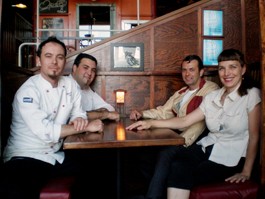
As we traded cars, I left a rushed message on Scopa’s reservation line, and off we were again, fully expecting we would be turned away. But when we arrived at the wildly popular restaurant that chef and owner Ari Rosen opened in May on the Healdsburg Plaza, there, at the end of the line of two-top tables, all crowded in like seats on a train, was our very own reserved oasis! Talk about a nice welcome. The restaurant does feel a little like a train car: narrow, a bar toward the back, diners chockablock and chatting between the tables, checking out who’s eating what. The walls of rough cement and the stained concrete floor add to the lively clamor.

Scopa is Italian for “broom” or “sweep,” and lends its name to a card game where you make a sweep for a full point. (My Italian friends also tell me that it means something naughty: sweeping someone off his/her feet and onto his/her back—wink, wink.) The back of Scopa’s menu describes the game in detail (a deck of the cards is on sale for $10). The right side of the menu describes another sort of fun, what our Italian waiter called “true Italian food,” mastered during chef Rosen’s years in Tuscany.

With 13 antipasti plates ($5–$9) and such enticements as grilled peaches and purslane (a wild succulent green), polpette calabrese (spicy meatballs with smoked mozzarella), and sautéed escarole with beets and fennel, it was hard to choose. We went for the octopus terrine ($9), the thinnest slices of pressed octopus layered with green olives and roasted cherry tomatoes. The burrata cheese ($9) was a loose orb of creamy flow offset perfectly by rough (bread), nutty (arugula) and smoky (eggplant) accompaniments. The marinated pork of tonno del chianti looked so much like the tuna of its name we did a double take and then a double bite, given the fig balsamic marmellata alongside, my favorite taste of the night.

We decided to split a main course from a list of eight secondi, among them pizzas and pastas ($15–$16.50). Nonna’s tomato-braised chicken ($17) was tender, nearly boneless, in a rustic sauce of tomatoes, carrots and onions, lounging on a triangle of toasted polenta. Better suited to a wintry night, perhaps, but we pretended, shivering our shoulders as they rubbed against our neighbors.

Wine is priced reasonably, sorted under the headings of Bubbly, California, Italy the North, Italy the Center, and Italy the South. My only quibble is that none but the house and sparkling wines are offered by the glass. We were “forced” to buy a bottle, and that’s just too terrible, a yummy “Sivoy” Cascina La Ghersa 2005 ($27).


We were briefly tempted by the dolce ($6–$8)—peaches marinated in red wine, affogato (vanilla ice cream doused in espresso with a house-made biscotti), chocolate soufflé, and cheese plate—but decided to sweep out of there before we needed an industrial Vac-u-Max™ to move us on.

Scopa, 109-A Plaza St., Healdsburg. Open for dinner, Tuesday–Sunday. 707.433.5282.


View All

Quick-and-dirty dashes through North Bay restaurants. These aren’t your standard “bring five friends and order everything on the menu” dining reviews.

Notes on Arcadia

0

07.16.08

Arcadia, proverbial land of pastoral beauty, richness and plenty. In Greek and Roman legends, it is a land where streams run full of clear, clean water, and lakes and bays are packed with fish. Its peoples live in harmony with nature; its wilderness is unspoiled.

Arcadia, a sanctuary of rural happiness and tranquility, offers respite from the complications and stresses of urban life. Nature reigns supreme in this fertile refuge of uncorrupted, unsophisticated, innocent shepherds and woodsmen.

Arcadia has existed for the longest time, the etymology of its name shrouded by the haze of ancient obscurities. In French, it’s “Acadie.” Frenchman Nicloas Poussin’s famous 17th-century painting titled Et in Arcadia Ego (“I am in Arcadia“) depicts bucolic serenity and includes, curiously, a group of shepherds inspecting an inscribed coffin. What does it mean? Who is in Arcadia? Is there an Arcadia, or Acadia, or an Acadie? Was such a heaven on earth just the stuff that dreams are made of, or does such a place really exist?

“Acadia” is the original name shown for the entire Atlantic Coast north of Virginia on one of the earliest maps drawn in the mid 1500s by Italian explorer Giovanni da Verrazzano. By Poussin’s time, a century later, settlers from west central France were already living in Canada’s Maritime Provinces, eastern Quebec and New England all the way down to Philadelphia and, like Verrazzano, were calling it “Acadie.” Poussin must have heard of the majesty of the eastern woodlands from pioneering French compatriots. Could he have been portraying the “unspoiled” beauty of the actual East Coast American Acadia?

Why did Verrazzano choose the name “Acadia”? Was it because of its pastoral perfection and his familiarity with Greek legends? Or was it because my Mi’kmaq and Abenaki ancestors called our fertile homeland “Akadi,” so he simply adopted the local name? We still have a Tracadie in Nova Scotia, and Abenaki cousins still refer to exceptionally fertile places as “quoddy,” as in Passamaquoddy Bay. Is it a coincidence that “Akadi,” “quoddy,” “Acadie,” “Acadia” and “Arcadia” on both sides of the Atlantic, mean the same thing? Or is it all interconnected? Maybe ancient Greek or Egyptian mariners managed to navigate this far and remembered in their stories of long, long ago a beautiful and very real country, the Akadi of my forefathers.

Certainly, the depiction of the inhabitants of Acadia of the Greek Golden Age matched the reality of native, indigenous Americans of Akadi. We lived naturally, without the greed and corruption that eventually befell urbanized ancients of classical antiquity and industrialists of a more recent era.

What happened to us Akadians, inhabitants of paradise on earth? We’re still here, all around you. We’ve changed our style and names so you don’t immediately recognize us. Some of us don’t even recognize ourselves. We’ve parked our canoes, shed our beads, long linen shirts and bright red sashes, laid down our pipes filled with tobacco, and mostly adopted European ways. Many Acadians of the Maritime Provinces (now New Brunswick, Nova Scotia and Prince Edward Island) intermarried so thoroughly with the French that we created a new people called “metis” who are Frenchified Indians or Indianized French, whichever way you choose to see us.

In 1755, under the “Grand Derangement,” we were expelled from our idyllic Acadian home by British colonials. We wound up scattered from New England to the West Indies, Spain and especially to Louisiana where our name was corrupted from “Acadian” to “Cajun.” But our beautiful original namesake, Akadi, Acadia, Arcadia or Acadie, lives on. Come to New Brunswick during autumn’s splendor and see for yourself. Dig for clams on New England beaches or paddle a canoe down tributaries of the Richelieu.

Next time you look out over the water and notice a kayaker paddling down the Russian River, smile at her. She might be an Akadian adventurer far from her homeland and her people. It might be me.


Open Mic is now a weekly feature in the Bohemian. We welcome your contribution. To have your topical essay of 700 words considered for publication, write op*****@******an.com.

In which our July 23 Arcadia issue prompts an essay tracing the word’s history directly back to North America’s native peoples.


All Aboard

0

07.30.08


You see,” chef Thaddeus Palmese says, indicating four stovetops and two ovens with a wave of his arm, “all this is brand-new.” Palmese is standing in a skinny corridor of a kitchen, hanging off the end of the Starlight Wine Bar and Restaurant, the vintage train car perched in Sebastopol’s Gravenstein Station. Backed up against a refrigerator full of bright yellow bell peppers and greener-than-green arugula, he is inches away from a piping hot stovetop and an oven full of the night’s desserts, feeling the heat waft through his clothes.

Burly sous chef Erik Amavisca, playfully nicknamed “El Santo,” stands behind Palmese, preparing dishes. Once owners Ted and Heather Van Doorn enter, the kitchen is pretty much packed to capacity. It’s hard to imagine any typical hustle and bustle of a restaurant kitchen going on here safely, but the fact that it does only adds to the small-town magic that takes place at the Starlight, the little wine bar that could.

Duke Ellington and Count Basie play over the speakers, and Heather, dressed in black pedal pushers and a simple white top, complete with a red-and-white polka-dot scarf tied around her ponytail, crosses the leopard-print carpeting to where Ted is sitting at the bar. Ted’s dressed like a greaser, or maybe a casual greaser on his day off, with a white T-shirt with black trim and black jeans, and one half expects him to whip out a comb à la John Travolta in Grease.

The Van Doorns met on the set of Titanic—he was a model maker, she was a camera assistant—and Ted, anticipating the next question, plops a photo album down on the table. There are pictures of Heather standing by cameras smiling, Ted posing next to scale models of ballrooms and ship hallways (minus Kate and Leo and the knee-high frigid water) and pages of on-set snapshots. But after spending time in Hollywood and settling down to start a family, they found the industry beginning to change. The arrival of digitized set models and CG action sequences pushed Ted, who prefers to work with his hands rather than computers, to consider another line of work.

“We were thinking of getting out of the film business after we had our first kid,” Heather says as she and Ted sit down to a quick lunch of hot steak sandwiches straight from the kitchen that could make even a vegetarian’s mouth water. “Ted was working on Spider-Man 2, but the pickings were getting pretty slim.”

Ted says that he had always toyed with the idea of opening his own pub or restaurant, of sorts—a classy and casual place where neighbors could meet up for a beer or a bite to eat—and so the two set out to look for a brewpub in Los Angeles. But while L.A. might be the ideal locale for starry-eyed actors and directors, the Van Doorns found the SoCal restaurant business to be cutthroat and ugly, and the search for the perfect spot yielded no results. In a last-ditch attempt, Heather and Ted noticed a listing for a “train car restaurant” (formerly home to Appellations) located in Sebastopol. They had traveled through Sebastopol to visit family in the past, liked the area, and had nothing to lose. The opportunity smacked of fate.

“We really didn’t know what we were doing, but we figured this was the chance we were looking for,” Heather says. They put in their offer that weekend.

Two thousand three hundred miles away in New Orleans, Thaddeus Palmese was fast becoming burned-out. After working the restaurant business in the Big Easy for years, Palmese grew tired of the constant party atmosphere that revolved around his schedule. He left Louisiana one year before Hurricane Katrina (“After the hurricane, the restaurant I had been working at couldn’t bounce back”) and flew out to L.A. Once there, he met up with his long-lost cousin, Ted Van Doorn.

“Our parents weren’t close, so we didn’t see each other much,” Ted says. “I thought he was dead! And then—poof! —he shows up, and whaddya know? He’s a chef. And we’re opening a restaurant. Perfect.”

The trio began collaborating on ideas, and Palmese offered to consult, using his experience to help the Van Doorns hire the right chef and get the eatery off the ground. When Ted and Heather found the train car, Palmese took a road trip up to take a look. It didn’t take much to convince him they had found the right place.

“When I came up here, I just knew that this was it. The food here is phenomenal, but not only that, the people really appreciate it,” he says. “It’s a lot like New Orleans in that way. L.A. is all about who you might see. The food might as well not even be there.”

Now all they needed was a talented chef to tie the whole endeavor together. Simple. Any Bay Area chef worth his or her salt would jump at the chance to run a kitchen and compose a menu. Right?

“The two chefs we interviewed took a look at the kitchen space we had and immediately turned it down,” Ted says. “No questions asked. It was an impossible kitchen. So Thad agreed to start for us for a few months, and he never left.”

Palmese adjusts his backwards pageboy cap, wipes his hands on his apron and shrugs his shoulders. “It was meant to be,” he says with a smile.

However predestined the coming together of the Starlight may have been, it was not without its setbacks. The old “kitchen” at the Starlight barely warranted the name, and after a disastrous Valentine’s Day the first year, the paltry two burners and one pizza oven failed to support the burgeoning business. The Van Doorns began installing a kitchen out of as much second-hand equipment as they could, eventually constructing the functional kitchen residing there today.

“Those tabletop burners are for shabu-shabu, you know?” Ted laughs, and Heather and Palmese shake their heads. “It was like trying to cook Thanksgiving dinner for 20 people on a camp stove.”

The second setback—cash flow—prompted the team to stumble upon the blossoming Slow Food movement, which is gaining popularity with restaurants all over the world.

“Honestly, we were first into the Slow Food movement because of our limitations,” Heather says. “We had to make the most out of what we had, so we had to get the very best produce possible, and that was all local stuff.”

Ted remembers finding a snail on his salad plate at a local restaurant. Instead of storming out and demanding a free meal, he asked the chef where he got his greens.

“It wasn’t a bad thing! I think the chef was shocked that I wasn’t outraged,” Ted says. “You know, with local produce, every once in a while you might get a caterpillar in your salad. Wildlife in your greens, that’s a good sign.”

While Palmese doesn’t wholly subscribe to the elements of the movement—sometimes he has to buy produce commercially, which isn’t all bad, he says—he likes the ideas behind it.

“I’ve read Alice Waters’ book, and I definitely appreciate the philosophy there—starting with something good, and not screwing it up,” he says. “It’s a very practical outlook. Simple, but flavorful.”

“You don’t need to ‘gild the lily,’ so to speak,” Ted adds.

The benefits of going local are endless, but the Van Doorns and Palmese say it’s the ties to the community—the farmers down the road, small-time vintners or a regular customer with an overachieving peach tree—rather than the organic critters that make the Slow Food movement a winning approach to running a restaurant.

“We get tons of stuff from our regulars. Lemons, pears, peaches, apples,” Palmese says. He points to the small pies baking in the oven. “The apples in there are from our neighbors orchard. They’re amazing.”

 By highlighting the vintage aspect of train travel, the Starlight allows diners to step back in time, to an era when luxury was found in the dining car, and feel-good food was a staple of the American diet. The original Starlight train, a daylight train run on a red-eye schedule, ran along the Southern border through cities like New Orleans that were producing taste explosions like nothing anyone had ever tried, giving the bland, commonplace meal of the nuclear family a shake. Gumbo, pot pies, chili cheese steaks and apple pies grace the menu, and with Palmese’s Cajun-infused expertise spicing up everyday dishes, the train may as well be clipping through the South Pacific during the meal. No train ride would be complete without chatty neighbors, and the snug booths and tables that line the train car give customers exactly that, making for an undeniably small-town experience, Ted says.


“People come here and end up making friends over dinner,” he says. “It really isn’t weird to see strangers chatting the whole night.”

Heather nods in agreement. “We’ll see people who have never met sharing dishes! A plate will come out and everyone will crane his or her neck to check it out, and the person who ordered it will let everyone try a little bit. It’s hilarious.”

Quick dining snapshots by Bohemian staffers.

Winery news and reviews.

Food-related comings and goings, openings and closings, and other essays for those who love the kitchen and what it produces.

Recipes for food that you can actually make.

News Blast

0

07.30.08

Don’t get Sick ’til 2020

When Santa Rosa’s Sutter Medical facility dropped its semi-detonated closure-bomb last year, Sonoma County’s board of supervisors was compelled to act. They created Health Action, a 31-member forum to discuss, analyze and provide solutions to the county’s ongoing medical crisis.

One year later, Health Action has just released its plan, titled “A 2020 Vision for Sonoma County.” County Supe Tim Smith, a co-chair of Health Action, says, “We have a plan of action that we believe will help Sonoma County become one of the healthiest places to live in California.” The study’s three-step approach determines that area residents will

• have access to affordable healthy food and adopt healthy eating habits;

• regularly participate in physical activities;

• have both primary and preventative care providers.

All of which sounds fantastic, but . . .

More than 42,000 Sonoma County residents currently find themselves scraping the bottom of one deep, dark and medically uninsured pot. Toss in tens of thousands more who aren’t adequately covered. Add to this financially strapped county hospitals and care facilities that continue to layoff personnel, cut services, close or are voted down. Now pluck out growing numbers of professional healthcare providers racing away to distant climes. Season the pot with expected state and federal support cuts; cuts to school phys-ed, intramural, after-school and team sports programs; proposed state park closures; pre-conditioned persons denied private medical coverage; rising food, prescription and health insurance costs; and finish the whole mess off with skyrocketing North Bay bankruptcies.

It’s one hellish ragout, this cannibal stew bubbling away inside the seemingly depthless pot that is our nation’s phantom healthcare policy. So, one question that might be posed, is this: Just how will Health Action’s three laudable goals realistically get accomplished over the next 12 years?

That and myriad other inquiries will no doubt be addressed over the next six weeks as county residents gather to make their voices heard in public input gathering sessions hosted by Health Action members throughout Sonoma County.

“If we do this right,” Smith says, “the kids entering first grade this fall will be light years ahead of us in terms of health know-how when they graduate from high school in the year 2020.”

For more information, or to locate a Health Action public meeting near you go to www.sonomahealthaction.org or call Bob Klose at 707.824.8332.


Green Acres

07.30.08

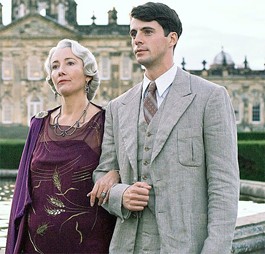
This revisionist version of Brideshead Revisited stars one original cast member from the 1981 BBC series. Welcome back to that ageless star: Yorkshire’s Castle Howard reprises its performance as Brideshead. There’s a segment of the audience that was just planning to go and gawk at the gardens, anyway.

The coffee-table movie crowd may not be disturbed by the weird and humorless approach by director Julian Jarrold, who is coming off the far superior Becoming Jane. In Evelyn Waugh’s strangely prestigious novel—so deft, so witty, so irritating—the closeted love balances the overpowering snobbery. The film begins during World War II, as British soldiers are based at a vacant country manor. In flashback, the noted artist Charles Ryder (Matthew Goode) recalls the beautiful and damned Flyte family that lived there during the 1920s and 1930s.

But Brideshead Revisited isn’t really about Ryder anymore than the similar but superior The Great Gatsby is about Nick Carraway. Making Ryder’s social climbing explicit is as bad as Jarrold’s other bad idea: to make pale, frail Sebastian Flyte (Ben Whishaw) declare his love with a kiss . . . or to pose him as if he were a shaven-headed AIDS sufferer during his time as a remittance man in the Arab world. The heterosexual love story between Ryder and Julia Flyte (Hayley Atwell) has zero chemistry—was that deliberate, too? There’s not much chemistry in the love between God and these aristos, either.

The busy, badly composed Oxford scenes and the smog-capped excursion to Venice to visit Lord Marchmain (Michael Gambon) aren’t as swoon-worthy as they ought to be. As Lord Marchmain’s Italian mistress, Greta Scacchi calms the more easygoing Catholics in the audience. Her Cara is boggled, just as any Mediterranean might be, by the Flytes’ conception of God. Emma Thompson gets to be the villainess. Lady Marchmain, a gentle Madonna in the book, is here an iron-willed, silver-haired matron. Thompson supposedly threatened to quit this picture when there was pressure on Atwell to lose weight. This story tells us that Thompson is a good, loyal person. It also highlights the problematic casting: Atwell is a statuesque woman, and she looks like an anachronism in her art deco sheaths and Jazz Age cloche hats.

Trying to be progressive, Jarrold takes a 180-degree turn on the book’s finale, which endorses an ultra-Catholicism that may never have existed anywhere outside the round of Waugh’s skull. We’re accustomed to hearing horrible stories that some devout person believes are beautiful. (The gist of these legends is usually that human beings can take a lot of suffering without complaint.) On one level, then, I appreciate Jarrold’s radical approach to the novel’s ending: the staging of the death of Lord Marchmain as horror, rather than the gentle beckoning of the Infinite. It’s not what the attending priest elsewhere describes as “a beautiful death.” But this new enlightened angle isn’t Waugh at all. And it’s very odd to see Brideshead turned into Castle Dracula with crucifixes.

‘Brideshead Revisited’ opens Friday, July 25, at Rialto Cinemas Lakeside. 551 Summerfield Road, Santa Rosa. 707.525.4840.


New and upcoming film releases.

Browse all movie reviews.

The Sport of Pols

0

07.30.08


God knows the Olympics have been riddled with politics, commercialism and drug scandals since ancient Greece, but David Maraniss’ Rome 1960: The Olympics That Changed the World (Simon & Schuster; $26.95) offers the Olympic vices in forms first recognizable to modern sports fans. Bookended, as Maraniss writes, “by the Soviet spy trial of American U-2 pilot Gary Powers and Khrushchev’s threat to stir things up at the U.N.,” the 1960 games were “in no way isolated from the eruptions and disruptions of the modern world.” Indeed, they seemed to reflect them. Rome “teemed with spies” as the Russian KGB frantically tried to head off possible defectors. For the first time, steroids and amphetamines were detected during routine testing. Racial tensions boiled, while the International Olympic Committee tried to avoid the issue of South African apartheid.

Maraniss, author of the biography of Vince Lombardi, When Pride Still Mattered, has chosen the most colorful Olympics ever to write about. While a “movable feast” of sportswriters roamed from event to event on motor scooters, helicopters and “little Fiat 500 cars with Italian sailors behind the wheel,” legendary athletes such as light-heavyweight boxer Cassius Clay (later to be known as Muhammad Ali) and Wilma Rudolph, the first American woman to win three gold medals in a single Olympics, enthralled millions who were the first to watch the games on television.

All during the 17 days, writes Maraniss, “one could see an old order dying and a new one being born.” Avery Brundage, the iron-fisted president of the IOC, saw the first cracks in his pristine amateur domain as athletes complained—and journalists supported them—about “everyone making money from their efforts but themselves.”

As always, Maraniss constructs the big picture from a thousand vivid details: “Before the Olympics, the Eisenhower administration argued that it was not necessary to keep pace in ancillary interests such as sports.” After the Olympics, the Kennedy administration decided that “some Soviet sporting activities have certain propaganda benefits that needed to be counteracted.”

From there on, politics played an increasing role until, in 1980, the political tail wagged the Olympics dog, which is the subject of Boycott: Stolen Dreams of the 1980 Moscow Olympic Games (New Chapter Press; $25.95) by Tom Caraccioli and Jerry Caraccioli.

With a foreword by Walter Mondale, Boycott effectively paints the background of the Carter administration’s decision to pull American athletes out of the 1980 Moscow Summer Olympics in response to the U.S.S.R.’s brutal repression of Afghan independence. In the process, the book also serves as a poignant tribute to hundreds of American athletes “caught in the middle of a geo-political chess match between super powers.” For many of them, this book will be their only chance to recount their Olympic dreams, most of them bittersweet. For instance, wrestler Gene Mills laments, “I was probably the most dominant wrestler in the world for years, and I can’t even get recognized for it because I didn’t win an Olympic gold medal. I think about it a lot.”

The Caraccioli brothers, authors of Striking Silver, the story of the 1972 U.S. Olympic hockey team, do a fine job of representing the pros and cons of the boycott. One wishes, however, for a little less spin-doctoring of the sort done by former vice president Mondale, who defends the decision to call for the boycott by comparing the Russians in 1980 to “Nazi Germany at the infamous 1936 Berlin Olympics.”

Mondale should have thought that argument through: thanks to Jesse Owens, U.S. participation in 1936 resulted in a massive humiliation to Hitler. It’s hard to close this book without agreeing with swimmer Glenn Mills, who 28 years later believes that the Carter administration’s only function should have been to “butt out. Anyone who has ever been involved in international athletics will realize the way we’re going to bring this world together is by kids coming together to compete.”


Museums and gallery notes.

Reviews of new book releases.

Reviews and previews of new plays, operas and symphony performances.

Reviews and previews of new dance performances and events.

Generation Debt

0

07.30.08

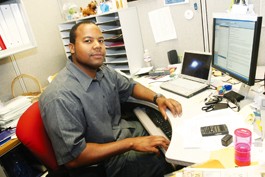
He was your typical college kid, persuaded to sign up for his first credit card right there on the college campus. It didn’t take long for Rance Bobo to max that card out when he bought a bike. After that, he signed up for a few more cards, using them to buy clothes and stuff for school.

The debt started catching up to him, so he decided to take out student loans to pay it off and help make ends meet. By the time Bobo left college, he was $20,000 in the hole. That didn’t stop him from taking out another 20 grand for a car loan.

More than a decade later, Bobo, now 30, is still chipping away at his $30,000 tab. Even if he is saddled with debt, with no end in sight, Bobo’s not losing any sleep over it. He finds it hard to save money, and is often tempted to spend it on nice clothes and the latest technology.

He describes his penchant for living beyond his means as a mark of his generation, one made up of folks who will drop $4 on a coffee drink without a second thought and who pride themselves on having the latest gadget in hand.

“With our generation, it’s ‘What do you need? What do you want?'” says Bobo, sitting outside the office at San Jose State University where he works as a counseling coordinator.

“I’m trying to take care of my debt, because I want options,” he says, “but there are these new pants I have been eyeing for months. They are 80 bucks. But man, I’ve got to have them.”

Tightwads & Spendthrifts

Our grandparents understood the value of a dollar. They stashed coins in piggy banks and contributed to their savings accounts. That’s when credit cards didn’t exist and borrowing money to buy a car was out of the question.

What happened to that old-fashioned American virtue called thrift? Americans have taken the term “living beyond our means” to a whole new level, as we continue to live with debt and no savings.

This is particularly true among young professionals. In a recent survey of 5,000 Gen X-ers conducted by Charles Schwab, roughly 25 percent said they are living paycheck to paycheck, while 17 percent said they follow the “spend now, pay later” code. Those numbers might not seem to indicate a problem, but less than 15 percent described themselves as “cautious savers.”

“Spending is no longer keeping up with the Joneses, now it’s keeping up with the Hiltons,” says Matt Murray, executive director of the American Association of Young People, a youth economic advocacy group based in Colorado.

George Loewenstein, a 53-year-old professor of economics and psychology at Carnegie Mellon University, says that younger generations have a completely different outlook on spending and saving than even his generation. “There has been a sea change in the attitude toward debt,” Loewenstein says. “Perhaps the young people are going to reach a point of desperation, and they will realize they cannot sustain a lifestyle they want using debt.”

A study released in April by the Journal of Consumer Research titled “Tightwads and Spendthrifts” showed that younger generations have different spending and savings habits than their grandparents. The study showed that people between the ages of 21 and 30 were more likely to be spendthrifts, meaning they chronically spend beyond their means. The older generations were more likely to be tightwads, or save beyond their comfort level.

Of the 13,300 people surveyed nationally, those who were over the age of 70 were most likely to be tightwads, regardless of their income level, according to the study. Could this mean that as we age, we get a better handle on savings and spending habits?

“That is the big question we can’t answer yet,” says Scott Rick, a lecturer at the University of Pennsylvania’s Wharton business college who co-authored the study. Rick suggests aversion to spending might have more to do with history than with age. “Is it generational, and people over the age of 70 are tightwads because of their upbringing and the Depression?”

Some experts say it’s just that. The fact that baby boomers never experienced the true economic hardships that their parents faced might explain why they have not developed good savings habits. Being born in a generation where you were forced to live within your means sticks with you throughout life, these financial experts say.

However, Rick says there’s no evidence that tightwads were always tightwads. He and other researchers plan to do follow-up studies to determine whether spending and saving habits are generational.

One thing is for sure: Younger generations are strapped with more financial burdens than their grandparents, such as the skyrocketing cost of education. That, as well as the growing disappearance of pension plans, has forced many young professionals and college students far into debt.

Nearly 66 percent of undergraduate students have some debt upon college. In 2004, the average student-loan debt among graduating seniors was $19,237, according to the National Postsecondary Student Aid Study. That is up from 1997, when studies showed the average student loan debt was about $11,400.

There is psychological effect to that. When someone has so much debt in one area, it becomes easier to take on debt in another area. A study released last month by Nellie Mae, a Massachusetts-based education-financing company, found that more than nine in 10 graduate students had at least one credit card last year with an average balance of $8,612.

“I have $45,000 in debt,” said one recent college grad. “A lot have so much college debt, so what’s another couple hundred?”

It’s Only Money

The savings rate among Americans has plummeted over the last three decades. In the mid-1960s, Americans saved an average of 8 percent of their personal income. That dropped to 2.4 percent in 2002. Today, the average savings rate among Americans is 0 percent, according to the U.S. Bureau of Economic Analysis. Wealthier Americans are saving substantially more, while poorer Americans are going further into debt.

“It’s near crisis,” said Robert Duvall, president of the National Council on Economic Education, a New York-based financial-education group. “The fact that credit card debt keeps spiraling upward and personal bankruptcy is going up for people at a young age, and there is a negative savings rate in this country—this is a significant yellow blinking warning light for the nation.”

Credit cards are much to blame.

The credit card as we know it today emerged in the mid-1960s. Most Americans had easy access to them by 1980. Analysts have watched the savings rate quickly drop as more Americans got credit cards. Today, most college kids can get their first credit card when they walk into their campus bookstore.

That’s what happened to 21-year-old Diamond Richards, who now has more than $55,000 worth of debt, including medical bills and credit card payments. Richards had already blown through some of her college money by the time she got to Evergreen Valley College a few years ago. She was on financial aid and in need of money. So she signed up for credit cards and continued buying things, maxing three credit cards to purchase clothes, shoes and whatever else she wanted. When she started getting statements and bills she couldn’t afford to pay, Richards realized she needed to put an end to her spending sprees.

She cut up her credit cards. And now she is trying pay off what she owes, slowly.

But still, like many of her friends, Richards doesn’t feel that debt is something to worry about; it’s just a part of life. “I don’t stress about it,” she says.

The lack of savings among Americans is not just a personal problem; it’s bad for the national economy, according to Ronald Wilcox, author of Whatever Happened to Thrift: Why Americans Don’t Save and What to Do About It. Easy access to credit cards, and the fact that people can finance almost anything from a washing machine to a pound puppy, has created a false sense of wealth, Wilcox says.

It’s something that policymakers need to address, he says. Although there have been some attempts to establish credit card reform, Wilcox says, what the government needs to do is create incentives for people to save money. He points to Barack Obama’s plans to bolster savings among Americans.

Obama proposes requiring small businesses to offer automatic deduction pension plans similar to what larger companies offer. Another plan would allow anyone who makes $75,000 or less to deposit up to $1,000 annually in an IRA and the government would match it.

“There has to be some government intervention,” says Wilcox, who is also a professor of business administration at the Darden School of Business at the University of Virginia. “It’s a large public-policy problem.”

Latte Logic

Another part of the problem is that young people don’t have basic budgeting skills. Nobody has taught them about money and investing. They don’t know the difference between “good” debt and “bad” debt. Economists know that taking out loans to pay for a college education is good, while racking up credit card debt to order pizzas and buy new shoes is bad. Many members of Generation X and Y apparently haven’t figured that out.

There’s no reason to believe the next generation will be any better about spending and saving money. In a recent Charles Schwab survey of 1,000 American parents and teens between the ages of 13 and 18, roughly 30 percent said their parents talk with them about money and budgeting. Still, most teens said they have more knowledge about how to use a credit card than how to pay for college.

About 45 percent of teens surveyed said they know how to use a credit card, while only 26 percent said they actually understand how credit card fees and interest rates work. Moreover, only 7 percent of those teens said they could go a week without spending money.

What this country needs is a greater push for financial literacy, Duvall says. Not just your basic Econ 101 classes, which focus on big economic issues, but courses on personal finances—how to budget, save and dodge unnecessary debt.

“Some say that finances and how to spend your money is something that parents should teach,” Duvall says, “but the fact is that a lot of parents are in trouble.”

That’s true for Ryan Lundell. The 27-year-old bartender says nobody really talked to him about budgeting when he was growing up. But that didn’t matter. He learned to stay away from credit cards by watching family members and friends get mired in debt.

Throughout college, Lundell managed to remain an atypical tightwad for his age, only shelling out money for things he absolutely needed. To this day, he doesn’t own a credit card, fearing it would get the best of him. “If I can’t pay for it, I don’t buy it,” he says.

But staying out of financial trouble doesn’t require becoming a tightwad. There are ways to enjoy life and still keep your head above water.

Experts say younger generations need to start saving money now. A good way to track spending habits is to carry cash, and use a debit card instead of a credit card. After getting paid, put some money into a savings account.


Even packing lunch and cutting back on coffee can go a long way. Part of the problem in spending is that consumers have lost sight of how the small purchases, such as $4 cappuccinos, can add up.

“We have difficulty understanding the cumulative effects of small things,” says Loewenstein. “If you eat one bag of Doritos, it won’t make you fat, but if you eat a couple bags per day, it will make you fat. It’s the same thing: a latte or two won’t make you broke but a couple lattes every day add up.”



Letters to the Editor

07.30.08

Olive this is True

I am always happy to read about California olive oil in the press (“Snake Oil?” July 23). We are a young industry but have managed a Berlitz approach to olive oil that has allowed us to match the best of the Old World’s premium extra virgin in a couple of decades.

I think that Alastair Bland’s article is misleading on a couple of issues. First is the adulteration question. There is no doubt that the adulteration of olive oil with less expensive oils is a problem (dating back to BCE, no doubt). But the larger issue for American consumers is one of quality.

Most of the “extra virgin” olive oil on supermarket shelves is made only from olives and not adulterated. One of the reasons is that even in the United States it is illegal to adulterate olive oil. The more elusive issue is whether or not the oil is truly extra virgin. In order to qualify, it must be found free from defects by a trained taste panel. This is where the average supermarket product falls short. It would never pass a taste test (the most meaningful part of the IOC standard for EVOO), and would not be considered EV in Europe. So it is sent to the United States where “extra virgin” has no enforceable legal meaning yet. And good on Pat Wiggins for leading the charge in the California legislature.

A word about lampante. There ain’t no way on God’s green earth you can hide the flavor of lampante. As a taste-panel member, I can assure you that is not going to be masked by anything. You left out the part where all that nasty oil is refined to produce a flavorless, colorless olive oil product. Flavored with a little good EVOO, it is a perfectly acceptable choice for things like frying, where good EVOO would be too expensive. Nothing intrinsically bad about it (as long as it’s not rancid), it just isn’t extra virgin or even virgin. Remember that the next time you look at a bottle of “Extra Light in Flavor” olive oil, you are paying for a bottle of refined olive oil with a tiny bit of ersatz extra virgin for flavoring.

Alexandra Kicenik Devarenne

Petaluma


Geography of Cinema

Yet more reviews of movies showing in Marin theaters? Do all of your film reviewers live in Marin? Or do you have an arrangement with Marin theaters—the Smith Rafael Film Center, in particular? It was my impression that the Bohemian is printed in Santa Rosa for a predominantly Sonoma County readership. Apparently, re films, I was wrong. How else to understand reviews of Up the Yangtze, Redbelt, Brick Lane, Herzog’s Encounters, etc., noting they’re playing in Marin, when a short time later they will open in Santa Rosa? In Film Caps, the only films theater-identified are those playing in Marin. I can understand the chain theater problem, but what about smaller theaters? And conserving gas?

Doesn’t the Bohemian realize we have a film gem in our own backyard that deserves our support and heartfelt thanks? In addition to great films, Rialto Cinemas Lakeside has exciting special programs and series. Unlike those of the Rafael Center, the Rialto’s gifts to the community are rarely even noted.

A favor. Could von Busack restrain his offensive, possibly libelous personal/elder comments? “When I grow old . . . I shall look exactly like Ian McKellen, full of decades’ worth of vices no clean person wants to even think about.”

Terry Popp

Santa Rosa

 The North Bay Bohemian serves Sonoma, Marin and Napa counties, which means that we can dip freely among the three to highlight films that are of a better quality and more acute interest than the typical mainstream fare. That said, you’ve hit upon a weekly tussle for us; we don’t want to be the ad hoc publicity arm for either the Rafael or the Rialto, and so strive to serve as best we can, highlighting films at wineries, parks and such as the Jarvis Conservatory in our Movie Caps and Movie Times images as well. It’s a balance, and sometimes that balance tips. Thanks for pointing that out.

Regarding von Busack, we have to chuckle that the above McKellen snark is one of his better lines—and leave it at that. You’ll see reviews by Jon Keifer occasionally, too, as we try to mix up the voices in the book.


&–&–>

Waste Not

07.30.08

I grew up composting, using a method that I recently learned has a name. Rick Kaye, director and creator of the Compost Club, says that what my family always called “pitching the compost over the side of the hill” or “dumping the compost” is actually called “sheet composting.” The pile was never turned, worms were never added and, of course, it was never used. The Compost Club goes way beyond this elemental method, though the end goal is largely the same: to minimize the waste stream as much as possible.

In Sonoma County alone, Kaye says, 1,200 tons of garbage are picked up five days a week and carted out of county. Sonoma County doesn’t have a working landfill, so one-third of the waste stream that is actually compostable food waste is trucked into someone else’s backyard. And this compostable food isn’t composted once it gets there. How can it be, when it’s covered in tons of trash? What it does do is add to the leading cause of human methane production: landfills. Unless the landfill in question is capturing the methane and converting it to something handy, like electricity, we now have banana peels and apple cores contributing to the climate crisis.

In 2002, when his daughter was a second grader in Healdsburg, Kaye volunteered to coordinate her school’s recycling program. They started a recycle club, and the students took turns staffing the recycle cart at lunchtime, making sure that containers of milk and juice were emptied, and that everything that could be recycled was. During his duties as the “damage control” during the lunch rush, Kaye noted a huge amount of food waste. Why not take this opportunity to introduce a food-scrap effort into the mix?

Compost boxes were made, a compost-box rotation schedule was put into place, and soon the students staffing the recycle cart were adding one more task to their job: dumping their buckets of lunchtime scraps into the compost box of the week, so that the worms could do their work. Soon, garden soil was being made. Students made labels for their soil and began selling it for $1 per pound. What began as a small business, selling just to parents, soon grew. The Healdsburg Nursery gladly accepted the compost, and on Saturdays, students and parent volunteers began staffing a booth at the town’s farmers market. Selling out was, and still is, never a problem.

The Compost Club has since helped to start up similar programs in Windsor, Sebastopol and Santa Rosa. The compost bins set up are for vermiculture, which means they utilize worm composting—effective, yes, but slow and limiting, because worms are vegans, so meat and dairy scraps still have to go into the garbage bin.

Though some might feel satisfied with such     accomplishments—hundreds of children educated in the importance and method of composting, tons of food waste kept from the landfills—Kaye is just getting started. After being approached by numerous schools and youth programs, the Compost Club became a nonprofit in 2006.

Kaye wants to be able to move beyond vegan worms to a thermal composting system that will allow for all food waste—including chlorine-free paper products, lunch bags and biodegradable flatware—to be composted quickly and effectively. Vessel composters, however, sell for upwards of $8,000. After three frustrating years of trying to find a way to secure vessel composters for schools, the Compost Club has finally made a breakthrough. An Oregon farmer has figured out a way to make his own affordably, and is giving the Compost Club full details and directions. What would have cost $8,000 will now cost $1,500, plus some sweat and labor.

Kaye is not stopping at schools, either. Restaurants are a huge producer of food waste, and yet what options do they have for composting when many of them are located in downtown areas? The Compost Club is working toward helping restaurants learn about and secure food-waste pulverizers. These miraculous machines grind down the food and separate out the pulp, reducing the waste by 75 percent. The resulting pulp could then be picked up by the Compost Club and delivered to one of their “demo farms,” such as the one they currently have at Dragonfly Floral Farm in Healdsburg.

Kaye says that their work has just begun, and, yes, they need help making it all happen—more compost plots, more volunteers to help set up the worm farm, and let’s not forget more funding.

While “dumping the compost” may be easy enough, turning that compost into usable soil is an art. So is educating children. That the Compost Club is able to do both is testament to the beauty of their vision, as well as to the fact that this vision is one that we can no longer afford to brush aside as a luxury, rather than a necessity.

 For more information, go to www.compostclub.org or call 707.922.5778.


Listen, America

0

07.30.08

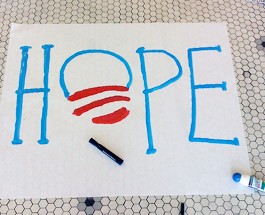
Traditionally, the [Democratic Party] platform is written by paid professionals and then presented to the American people. This year, that’s going to change.

—Barack Obama

 Thirty-three-year-old Sky Nelson is a high school physics teacher turned full-time singer-songwriter. This past weekend, Nelson shared chores with three other activists moderating a Democratic Party platform meeting in Santa Rosa. Theirs was one in a multitude of such gatherings organized by thousands of volunteers, which were held across the country over the past two weeks.

Political platforms articulate the shared vision of a given party by describing what values its members share, along with what specific actions they intend to take following that year’s election. Constructing and composing these platforms has always been assigned to a high-level platform committee. It’s their job to suss out how the political winds are blowing, especially in regards to partisan constituents. Considerable toil likewise gets expended on wording the platform so as to attract independents and undecideds into the fold.

What’s apparently different this year is an invitation from the Democratic National Committee at presumptive presidential nominee Barack Obama’s behest to include previously unheard voices in the platform-building process. Here in the North Bay, this first grassroots step appeared, for the most part, to have succeeded.

The Santa Rosa platform meeting was hosted by the Yulupa Cohousing Community. Forty Sonoma County residents shared political likes, dislikes and visions. By the end of the two-hour session, they’d hammered out more than two dozen consensus platform planks. Issues involving the economy, foreign policy, the environment, protecting the Constitution, media control and Net neutrality got proposed, rejected or agreed upon. Some thirty agreed-to platform suggestions were then emailed to unnamed national Democratic Party apparatchiks later that evening for consideration and possible inclusion in the party’s ’08 platform. The final platform draft will be presented for delegate approval late this August at the Democratic National Convention in Denver.

“We did a good job of finding common ground and letting everyone speak,” Nelson says of the Santa Rosa gathering. “That was one of our main goals: making sure everyone felt lik they’d been heard and had a chance to express their views.”

While folks were having at it up north in Santa Rosa, a second platform meeting gathered steam out on the sun-dappled patio of North Light Books in Cotati. Sonoma State University psych lecturer Skip Robinson led this conclave. It was attended by 25 persons, most of whom were middle-aged or older and of the Caucasian persuasion. But homogenous or not, Robinson put to good use his skills as a conflict-resolution professional. Lively, engaging and brisk debate led to eight proposed platform planks, each of which garnered at least 16 of the 25 possible votes, with over a dozen other planks endorsed by majority support.

Top issues for those attending the Cotati confab were war, torture, supporting the United Nations, nuclear disarmament, single-payer healthcare, the environment, the nation’s growing wealth disparity and inequitable foreign trade agreements. On the corner of the whiteboard up front was scribbled, “No nuclear nuthin!”

A third platform meeting was held later that same day, at Coffee Catz in Sebastopol. This group’s final document mirrors issues hashed out by the two previous groups, but this assemblage did have its heated moments, the 90-plus stifling degrees inside notwithstanding.

The Obama ’08 website includes a “local platform process sample agenda.” But volunteer hosts were encouraged to design meetings as each personally saw fit. Simply by walking in, it was obvious that the Sebastopol meeting organizer, library arts researcher Richie Partington, had put earnest prep time into constructing his session. But the best-laid plans can collide with reality. Much of the two allotted hours was given over to the host reading and sometimes defending his own 17 paragraph-length platform planks. Grassroots democracy, however, can be messy as mud, and those assembled did voice their displeasure. But objections aside, Partington ultimately sent a far-reaching 25-point list of platform suggestions to the Obama camp later that evening.

The Obama ’08 website states, “Supporters like you have opened up the political process like never before. But now you can do even more. You can write the next chapter in the history of the Democratic Party.”

Really? Sky Nelson believes so. “My personal opinion is that they’re trying to get the public more involved, and my strong feeling is that from all the correspondence from people in the Obama campaign and all of the follow-up over the last eight months is it’s a lot to be doing. This is a chance for the people to get involved, but it’s not neccesarily going to be run perfectly the first time. Their intention is genuine, that they want to get public opinion and they want this to be the peoples’ platform.”


Groups across the land have led to chapters submitted for platform consideration. The question now becomes: who’s reading these chapters, what considerations will they be given—and precisely how’s all this hard work being compiled? Is the DNC truly listening to America, or is it barking up a feel-good carnival attraction filled with smoke, mirrors and empty rhetoric? Only time, and Mr. Obama, will tell.


First Bite

Notes on Arcadia

07.16.08Arcadia, proverbial land of pastoral beauty, richness and plenty. In Greek and Roman legends, it is a land where streams run full of clear, clean water, and lakes and bays are packed with fish. Its peoples live in harmony with nature; its wilderness is unspoiled.Arcadia, a sanctuary of rural happiness and tranquility, offers respite from the complications and stresses...

All Aboard

07.30.08You see," chef Thaddeus Palmese says, indicating four stovetops and two ovens with a wave of his arm, "all this is brand-new." Palmese is standing in a skinny corridor of a kitchen, hanging off the end of the Starlight Wine Bar and Restaurant, the vintage train car perched in Sebastopol's Gravenstein Station. Backed up against a refrigerator full of...

News Blast

07.30.08 Don't get Sick 'til 2020When Santa Rosa's Sutter Medical facility dropped its semi-detonated closure-bomb last year, Sonoma County's board of supervisors was compelled to act. They created Health Action, a 31-member forum to discuss, analyze and provide solutions to the county's ongoing medical crisis.One year later, Health Action has just released its plan, titled "A 2020 Vision for Sonoma...

Green Acres

07.30.08This revisionist version of Brideshead Revisited stars one original cast member from the 1981 BBC series. Welcome back to that ageless star: Yorkshire's Castle Howard reprises its performance as Brideshead. There's a segment of the audience that was just planning to go and gawk at the gardens, anyway. The coffee-table movie crowd may not be disturbed by the weird...

The Sport of Pols

07.30.08God knows the Olympics have been riddled with politics, commercialism and drug scandals since ancient Greece, but David Maraniss' Rome 1960: The Olympics That Changed the World (Simon & Schuster; $26.95) offers the Olympic vices in forms first recognizable to modern sports fans. Bookended, as Maraniss writes, "by the Soviet spy trial of American U-2 pilot Gary Powers and...

Generation Debt

07.30.08He was your typical college kid, persuaded to sign up for his first credit card right there on the college campus. It didn't take long for Rance Bobo to max that card out when he bought a bike. After that, he signed up for a few more cards, using them to buy clothes and stuff for school.The debt started...

Letters to the Editor

07.30.08Olive this is TrueI am always happy to read about California olive oil in the press ("Snake Oil?" July 23). We are a young industry but have managed a Berlitz approach to olive oil that has allowed us to match the best of the Old World's premium extra virgin in a couple of decades. I think that Alastair Bland's...

Waste Not

07.30.08I grew up composting, using a method that I recently learned has a name. Rick Kaye, director and creator of the Compost Club, says that what my family always called "pitching the compost over the side of the hill" or "dumping the compost" is actually called "sheet composting." The pile was never turned, worms were never added and, of course,...

Listen, America

07.30.08Traditionally, the platform is written by paid professionals and then presented to the American people. This year, that's going to change.—Barack Obama  Thirty-three-year-old Sky Nelson is a high school physics teacher turned full-time singer-songwriter. This past weekend, Nelson shared chores with three other activists moderating a Democratic Party platform meeting in Santa Rosa. Theirs was one in a...
11,084FansLike
4,446FollowersFollow
6,928FollowersFollow