Big Tickets

0

09.10.08

In the next few years, it’s a guarantee that organic and sustainable farming will experience incredible growth. It’s a subsequent guarantee, then, that those same farms will be looking for farmhands—and while older farm owners sell their land, or die without interested kin, they’re especially looking for workers who are young, disciplined and accustomed to hard work.

Enter the Farmer-Veteran Coalition, whose mission is to connect returning soldiers with organic farming. “Some of the veterans coming back aren’t sure what they can do—they’re coming back kind of confused and looking for something to do,” says the FVC’s Linda Speer. “We’ve had some meetings with veteran groups, and they’ve said that just putting their hands into the earth has been so healing.”

The organization hosts a benefit kickoff dinner on Sept. 14 with speakers including Iowa corn farmer and family-farming advocate George Naylor and Gold Star mother and Veterans’ Village founder Nadia McCaffrey. Daniel Ellsberg, famed author and leak source of the Pentagon Papers, will also be in attendance. Sunday, Sept. 14, at French Garden Restaurant, 850 Bodega Ave., Sebastopol. 3pm. $100. 707.981.8010. . . .

Hark! Oak Hill Farm in Sonoma offers a Slow Food dinner from chef John McReynolds, prepared largely from veggies picked fresh from the farm to benefit the Sonoma Land Trust and Sonoma Community Center. Regional wines, olive oils, cheeses and meats will be part of a family-style dinner with “heaping platters of food” promised for meat lovers and vegetarians alike. In a tactical co-opting of the supreme diss in the regional lexicon, Anne Teller, owner of Oak Hill Farm, quips of the event, “It’s about savoring Slow-noma.” Tee-hee. Monday, Sept. 15, at Oak Hill Farm, 14805 Sonoma Hwy., Glen Ellen. Farm tour at 5pm; dinner at 6:30pm. $80. 707.939.9394. . . .

After the grand wine auctions in Sonoma County that raised $1.5 million over Labor Day weekend, it’s now Marin County’s turn to start the bidding. The first annual Marin Wine Auction features live music, tapas, theatrical performances, two silent auctions and a live auction to benefit charities supporting affordable housing, local agriculture and the arts. Hosted by the Kieretsu Forum on 11 acres of gardens and featuring over 20 wineries, the inaugural gala pounds the gavel on Saturday, Sept. 13, at the Marin Art and Garden Center, 30 Sir Francis Drake Blvd., Ross. 3&–9pm. $125. 415.244.9890. . . .

And for those without a hundred or so dollars to throw around, Santa Rosa’s Fourth Street, for the last 25 years, has been the home of piping pedestals of pizza at La Vera Pizza, which celebrates the anniversary of its Sept. 17, 1983, opening with 25 days of “25”-related specials. Twenty-five cent dinner salads, $2.50 beers and $25 gift certificate giveaways are just a few of the deals underway until Sept. 25. Our favorite special: the 25 cent corkage fee—but only for Sonoma County wines! Right on! See www.laverapizza.com for details.

Quick dining snapshots by Bohemian staffers.

Winery news and reviews.

Food-related comings and goings, openings and closings, and other essays for those who love the kitchen and what it produces.

Recipes for food that you can actually make.

Letters to the Editor

09.10.08

This Thing Called Jazz

With due respect to the exchange between Larry M. and Gabe Meline re Steely Dan selling out (Letters, Aug. 27): First, anyone who goes to print saying that they think Steely Dan “sucks the bag” has balls the size of Mt. Tam, and so, Gabe, I have to respect that. Second, not disavowing that Steely Dan perhaps applied “peer pressure” upon the infamous smooth jazz sell-outs of our era, there was this thing called jazz and it came out of New Orleans and they were playing stuff like “Chase the Tiger.” However, incredibly, upon occasion, the leading exemplar of this hot new music could be seen lurking in the balconies, by his own admission, digging Guy Lombardo in concert! This was back in the 1920s, Gabe, and before you know it—only because he wanted to, not because anybody asked him to (no record execs pressured him, ’cause they hadn’t even thought of it)—you had Louis Armstrong blowing Lombardo’s “Monday Date” and “Stardust” and “Jeepers Creepers.” Gabe, there was no going back! The jazz guys found out a long time ago there was no dough in the “Muskrat Ramble.” Crossover didn’t start with Steely Dan!

David Madgalene

Windsor

In Defense of Hang Ah

After reading the rather negative review of Hang Ah Dim Sum in the Bohemian a few weeks ago (First Bite, July 16), I was confused because a friend of mine who spent many years in Asia had raved to me about Hang Ah. I decided to check it out for myself and went there for lunch on Aug. 22. I ordered the steamed barbecue pork bun, the chive shrimp dumplings, the shrimp dumplings and the pot stickers, all from the dim sum menu. It was the freshest dim sum I’ve ever eaten, including several places I have frequented in San Francisco. The ingredients are of the highest quality, the noodles handmade and each item came hot and freshly made from the kitchen, bursting with flavor. I worry that a new establishment that deserves to succeed could be adversely affected by mistaken negative reviews. I highly recommend Hang Ah Dim Sum!

Ellen Licht

Santa Rosa

What about Third or Fourth Bite?

I understand the concept of “First Bite,” but I have to disagree with the content of the review of Hang Ah. I just don’t like it when one person, one writer, can take a restaurant apart and not have any accountability. I don’t know why food “critics” do that (the Santa Rosa Press Democrat’s Jeff Cox comes to mind). If they don’t like the place, don’t write anything. Why try to destroy their business? From my perspective, I thought the food at Hang Ah was pretty good—and I grew up eating dim sum. All I am saying is, why write a negative article on a new place after one visit. That’s not fair. I am very disappointed with the Bohemian for allowing that to happen.

Ken Murakami

Santa Rosa

About First Bite

A word about First Bite: Back in the Bad Old Days when we ran 1,400-word restaurant reviews that compelled us to retain someone whose sole job was to eat and which nonetheless regularly resulted in irate restaurateurs standing in my office threatening coronary, lawsuit or both, we would try a spot three times before putting fingertips to keyboard.

And then we hit gratefully upon the First Bite concept of having smart, regular folks just like you go and eat. They are to have exactly whatever they want to have, just like you. They are to be entertaining, kind and thoughtful, just like you. Word count went down, waistlines subsided, restaurateurs left our offices spittle-free. A small bluebird settled on my window sill.

Our publication is far too small to truck needlessly in negativity; we need the space for all the great things we try to highlight. While criticism is not unwelcome, we don’t pursue bum experiences just for the glory of writing about them. If a First Bite writer has heard bad things about an establishment, had a bad meal there or otherwise been negatively influenced about a place before being assigned that restaurant for review, we will not do the review. But if a First Bite correspondent goes in good faith and has an “eh” kinda meal, we do write about that. And we welcome rebuttal. We are thrilled that y’all have come to the defense of Hang Ah.

Thanks for taking the time to write in—just like us.

the ed.


&–&–>

F*ck Section M

0

09.10.08

In September 1998, a new magazine appeared in coffee shops and record stores across Sonoma County. The free, tabloid-sized publication featured the punk band the Burdens on the cover and was printed with the cheapest, smeariest ink possible.

Abhorred, adored and largely ignored, Section M magazine soldiered on for five unsteady but always eventful years. And now, a decade after that first issue, former Section M staff members have organized a blowout 10-year anniversary party. Slated to perform are a laundry list of local bands, a number of which are likewise reuniting for the event. One question remains, though: Why? Why celebrate a magazine that never made a profit, was littered with typos, found a miniscule readership at best and, it could be argued, existed to serve itself?

The best person to ask is Michael Houghton, Section M‘s former editor-in-chief and, though he will vehemently deny it, the perennial Section M go-to guy. “You know, I just haven’t seen most of these folks in between five and 10 years,” he says, “and I just want to say thank you to everyone who ever volunteered, because Lord knows it was pretty thankless at the time.”

What was often “pretty thankless” began as a simple idea, fueled by a Judy Garland and Mickey Rooney&–ish “let’s put on a show” mentality: there’s a need and, gosh darn it, we’re going to fill that need. “What we saw was this disparity,” Houghton says, “a bunch of truly great bands, with a real Sonoma County sound emerging, and a lot of people who enjoyed seeing live music, but the two weren’t finding each other. We tried to be the hub of that wheel, to build all sides up and try to make a ‘community’ out of the chaos.”

What Section M lacked in finesse and professionalism it made up for in pluck—and, occasionally, arrogance; it was an entity that attracted people with a need to prove themselves. I know, because for about two years I was deeply involved with the magazine, eventually serving as its managing editor. It was a wonderful venue for hopeful writers, in part because it was a great place to make mistakes—and make them we did, slagging on bands just for the sake of sounding clever and boldly taking stories to print with a clueless disregard for fact-checking.

After a period, members of Section M‘s core staff began appearing as recurring characters in articles; readers were able to follow the exploits of not only local bands, but writer Felix Thursday and photographer Bill “Wild Bill” Powell, among others. Sometimes, tales of the staff’s activities were more interesting than those of actual bands.

But there was always a tireless dedication to the music, a delusional but sincere sense that the Bay Area’s creative expression was dependent on a fresh issue of Section M appearing almost magically every other month or so.

Section M‘s self-important tone occasionally ignited the cattiness that exists in any music scene. “I just remember bands, the local ones, having this sort of sense of entitlement,” says Felix Thursday. “Like, ‘When are you putting us on the cover?’—even though they hadn’t played a show yet. And people, mostly from bands, getting all pissed off whenever someone was honest about them, which was rare. Like we were having these big parties that no one else was invited to. Yeah, right. We were fucking working.”

Indeed, producing the paper was a Sisyphean effort entirely dependent on the efforts of volunteers. Houghton estimates that at least 220 people filtered in and out as Section M staff over the years, and that’s not counting people like Tom Gaffey of the Phoenix Theatre, Roger Tschann of Grizzly Studios or Scott Walker of the now-defunct Inn of the Beginning, folks whose involvement and dedication to enabling local musicians ensured there was music to talk about in the first place.

Cat Crawford both wrote and photographed for Section M in its later years. “The lack of money was a big problem,” she says. “It’s hard to get distributed when the delivery person isn’t getting some worthwhile scratch for his or her time. I was an assistant editor for a while and did my best, but I also had two jobs and was going to school, so I couldn’t always put in the long, unpaid hours often needed to get the issue together.”

Even so, there were times when the work paid off, Crawford recalls. “I got exposed to myriad new bands that broadened my musical palette, and when I showed up to a venue in [San Francisco], I got to say, ‘I’m on the list!’ Free passes, cool badges, front-row shooting, buttons, stickers, photos coming out my ears—it was nearly all good.”

“I’ve had a lot of people in the years since the magazine write me or come up to me and tell me that what we did really affected their lives,” Houghton says. “There were kids who started writing for us when they were 16 who went on to major in journalism, and the articles we published were part of what helped to get them into their colleges.” Section M is indirectly responsible for at least two happy marriages. (And, if you remember that year or so when yours truly was the staff writer of the Bohemian, you can blame that on Section M, too.)

A perpetual lack of funds expedited Section M‘s demise, but there was something else, too. Maybe everyone grew up a little too much. “We didn’t know what the hell we were doing,” Thursday says. “None of us were business people. [It was] ignorance and innocence, and all the typical reasons that things like this seldom stick around for long.”

But perhaps Bill Powell puts it best. “It was just really fun and entertaining, and when it stopped being so, I left,” he says. Section M‘s last issue, its 31st, featured writer Chuck Palahniuk on the cover. After five years of being financed through personal credit cards, it was time to pull the plug.

To those who are not currently donating their hallway to the storage of years-old back issues, Section M may be just a smear of a footnote in the North Bay underground, something that happened for a while and then went away. It proves that the crackpot ideas we pour so much heart and soul into often don’t come to fruition, no matter how much you believe in them. Maybe that Section M existed in the first place is impressive enough.

The ‘Section M’ 10-year reunion, with performances by Cropduster, the Blockheads, the Reliables, Scattershot Theory, Royal Pine, the Paranoids, 20 Minute Loop, Hanalei and the Most Awesome Protagonist, gets underway on Saturday, Sept. 13, at Daredevils & Queens, 122 Fourth St., Santa Rosa. 7pm. $7. For more info, see www.sectionm.com.


The Cho Must Go On

0

09.17.08

With socialites and their mothers literally boasting their own reality shows these days, it’s about time a truly talented subject like Margaret Cho had one. For nearly two decades, the Korean-American comedian has spoken for outsiders everywhere. To disenfranchised gays and fellow first-generation Americans with identity crises to any entertainer taking on the industry machine to any woman who’s ever felt unattractive, Cho has offered a bold and fearless comedic voice. With VH1’s new Cho Show, the audacious comic, who brings her uproarious Beautiful Tour to the Wells Fargo Center Sept. 13, returns to television older, wiser, funnier and a little more jaded.

In the season premiere, we see the San Francisco native processing mixed emotions at being named Korean of the Year by a Korean-American organization—presumably the same folks who protested her ABC sitcom All American Girl 14 years ago. While revolutionary in many ways, the short-lived show weathered accusations of perpetuating negative stereotypes. Cho is still smarting from the backlash.

“They really hated me,” Cho says laughingly via phone from Nashville, where she is on tour. “One Korean-American reporter at the LA Times spent many pages in the newspaper complaining about how I was the worst thing to happen to the Korean community since the Koreas were separated!” When I suggest the possibility that her detractors have merely evolved, Cho rebuts with her characteristically biting wit. “They mostly died,” she deadpans. “So the people who are younger are really into me.”

And they are really into her. Following the Korean of the Year award ceremony, we see a young girl crying her eyes out while expressing her admiration to Cho, reminding us that she is still one of few well-known Asian-American entertainers, period—even in the 21st century. At a hometown show at the Warfield Theatre earlier this year, Cho offered a glimpse into her peculiar form of recognition. “Someone asked me, ‘What was it like to make Charlie’s Angels?'” she remembered. “I said, ‘No, no. I’m the one from Grey’s Anatomy. ‘”

Cho feels that indirect slighting is just as detrimental as major racial faux pas. “The biggest thing we’re facing isn’t exactly overt racism or stereotypes; it’s really about invisibility and noninclusion,” she says. “I think it’s getting a little bit better, but there really are not enough representations.”

The film industry, a business like any other, continues to compound the problem by being Caucasian- and Euro-centric. This year’s case in point is the controversial movie 21, based on the true story of MIT students who counted cards and took some Vegas casinos for a fortune. Countering any progress from the recent Harold and Kumar films, 21‘s real-life Asian-American characters became white for the movie; ironically, British actor Jim Sturgess required a voice coach to sound convincingly American in the lead. Ben Ma, whose memoir was the basis of the screenplay, became Ben Campbell. While the move could be seen as a tragic necessity for commercial success, Cho agrees with the protesters this time around.

“That was really upsetting, and it sickens me that our stories are taken from us and given to white people,” says Cho, whose own sitcom’s Asian characters were replaced by Caucasian characters in midseason. “It’s like if you took a story about segregation in Mississippi or one of those stories with slavery and you just made it with white people. They wasted one of our stories.”

In additional to ethnic restrictions, Cho is further handicapped by her normal, full figure—which sticks out like a sore thumb next to Hollywood’s throngs of waifs. While her struggles with weight have provided great material for her standup comedy, Cho celebrates her curves in The Sensuous Woman, a monthly variety show combining burlesque, comedy and belly dancing. “It’s a big part of my life and how I keep myself sane and happy,” Cho says of the show, currently on hiatus. On The Cho Show, she even dons an outfit consisting solely of body paint.

And Cho is certainly done with fad diets. “I kind of eat a lot of French fries. A lot. I mean, I’m eating some right now,” she says, chewing loudly. “And a lot of fried food and cheese. And sugar. And alcohol. And a lot of candy is my diet secret.”

Thankfully, with her reality show, Cho can just be herself, whether on a particular day she feels “too Asian” or “not Asian enough,” as the All American Girl producers notoriously told her. In addition to all the fellow comedians who appear on the show, a major thrill for fans is seeing her real-life parents, whose heavy Korean accents and acclimation anecdotes have inspired some of Cho’s most riotous standup material over the years. At the Warfield show, Cho told of her father’s curious reaction to the Virginia Tech massacre (caused by a fellow Korean). “Wow, 32 people,” she mimicked slowly in an exaggerated accent, “I mean, one or two is OK, but . . .”

Although her parents appear to enjoy all of her shenanigans on the show and seem comfortable in front of the cameras, this is no accident. “They were kind of scared of it and were worried I was going to ask them to do something they didn’t want to do,” Cho remembers. “They’re not allowed to watch it, because I don’t want them to get super self-conscious.”

Although the show’s coverage is a far cry from 24-hour surveillance (for instance, Cho’s husband, Al Ridenour, doesn’t appear on the show), some vulnerable moments slip out. Most poignant is when her parents treat her friend and personal assistant, Selene Luna (who is 3-foot-10), like a surrogate grandchild. Humorous, sure, until they buy a baby’s outfit for Luna’s daughter, bringing the 39-year-old Cho to tears over the diminishing prospect of having children of her own.

“They’d been thinking that for a long time,” Cho says without a hint of embarrassment. “It’s the stuff we talk about, and it just seemed like the right thing, so I’m happy that that is out there.”

While virtually everyone has to deal with pressure from their parents, Cho’s material mainly caters to ethnic minorities and the LGBT community, whom Cho has supported through many causes, most recently the ongoing fight for marriage rights. “I think that’s true,” Cho says. “Some of the [Beautiful Tour’s] subjects are mostly for gays and lesbians and mostly for people of color, but it’s also for everybody.”

Indeed. Her current show not only pleases her gay audience (“I love gay bars until it gets to be dick o’clock!”) and her fellow Asian-Americans, her materials takes on politicians, entertainment figures and technology, namely the ubiquitous online hookup-aide MySpace. “Who hasn’t fucked their top 10?” she says of the online promiscuity catalyst. “I actually fucked Tom!”

Amazingly enough, her wide-reaching, perfectly paced shows—from 2000’s breakthrough I’m the One That I Want through her current production—stem from improvisation. “I just kind of do it and try to figure out what’s funny, and it takes a long time,” Cho says. “I do a lot of writing onstage. It’s a lot of improv-ing, but by the time I go to do the show, it’s all set.” With so many bases to cover in a single comedy show, she surely must seek advice for material she’s working on, right? “No, no,” she says with a laugh. “It’s only me.”

While Cho is used to fighting for respect on the home front, she, like many, feels hopeful that a new ally may soon be in the White House. “It’s huge. It just makes America a real democratic republic,” she says of presidential hopeful Barack Obama, for whom she’s been a campaign surrogate. “It really actually reinforces this whole idea that we are free.”

Things seem to be working out fine for Cho now, which is a far cry from that time, not so long ago, when even her parents didn’t believe in her. “They were not supportive at all, but they finally learned to be,” Cho says. “They finally realized that I wasn’t quitting.” Good for us that she didn’t. America could always use a good laugh.

 Margaret Cho appears at the Wells Fargo Center on Saturday, Sept. 13. 50 Mark West Springs Road, Santa Rosa. 8pm. $15&–$65. 707.546.3600.


Museums and gallery notes.

Reviews of new book releases.

Reviews and previews of new plays, operas and symphony performances.

Reviews and previews of new dance performances and events.

The End of the Summer

It’s the end of the summer
Come to the time when we have to say goodbye
After watching seven different bands at Daredevils & Queens tonight, and after spending three days watching countless bands at the Insect Carnival last weekend, I have to say: summertime’s elusive promise, that delicate combination of freedom and togetherness so impossible to contain, has come and delivered its sweet kiss just in the nick of time. Soon it will be October, and we’ll spend our nights at home, and read Neil Gaiman novels and watch Richard Widmark movies, and talk about them to computer screens. But these last few weekends, at least, have been a last gasp of what living in Santa Rosa is all about.
It’s hard to put into words, these shows at the Insect Carnival and Daredevils & Queens, aside from saying that they’re probably best not put into words. They breathe, but how do you describe a breath? You inhale air, you exhale air. Right? Is it that simple?
The oldest of friends, the newest of strangers, the coldest of beers and the truest of bands. All under a sky just enough unclouded by city lights to allow a few stars to poke through. Shooting stars, even—the kind that you catch in their split-second streak, and when you discover that the person you’re next to saw it too, for a moment you are bonded if not by the music or the laws of attraction than at least by the very fact that you’re both under the same big sky.
The end of the summer means that people play John Prine and Jesus Lizard songs in the middle of a field, next to a mud pit full of naked people. The end of the summer means Jolie Holland ballads and clanging chains and bullhorns and a floor bending under the weight of people jumping up and down in rhythm. The end of the summer means sharing amps and sideways smiles and a hundred hugs. The end of the summer means a downtown alley full of people drinking free beer and fuck it if it’s Coors.
And the end of the summer means that as the wig-wearing auctioneers of Wine Country Weekend raise money by clowning their own dead counterculture of the 1960s, there are walls both concrete and wooded, both inside city limits and out, where a new culture is constantly being reborn. Where fresh blood is funneled into art, and music, and community, and life, and where money does not rule all. I repeat: where money does not rule all.
So thanks to the bands, and the people like Travis and Bryce and Kyle, and the hordes of people in this town who know a good thing when they see it and who seize it while it lasts.

Urine the Money

09.03.08

Recently, while attending a Sustainability Tour in San Francisco, I learned about urine diversion, the practice of keeping urine out of the waste stream and putting it to work in the garden. At the time, Carol Steinfeld’s book, Liquid Gold: The Lore and Logic of Using Urine to Grow Plants, was passed around the group with great reverence. Needless to say, I was intrigued, and so set out on a quest to not only find the book but the author herself. After all, what brings a person to this work, and how can the rest of us benefit from reassessing our addiction to the comfortable cradle of modern-day plumbing?

Steinfeld speaks to me from her office on Fish Island, Mass., where she is known, she shares with a laugh, for her work. Urine diversion is not a new concept, of course. Men do it all the time, Steinfeld tells me, and many people, when they learn of what she does, are happy to be able to share stories of grandmothers and grandfathers who once used urine to fertilize the roses, to produce those extra juicy papayas or to keep the flies off the farm animals. Others, however, react with a grimace, and some—when she first shares cherry tomatoes from her garden and secondly relates her fertilization techniques—will stop chewing midbite.

Steinfeld became involved in waste diversion while working at an ad agency in the Bay Area. Next door to her office was a man selling low-flush and composting toilets. Steinfeld, who had been looking for an “eco” topic to champion, one that did not already have a bevy of strong grassroots voices to back it up, saw a need. Thus began her journey as the advocate for—and avid educator of—ecological wastewater recycling.

Steinfeld has now penned two other books, The Composting Toilet Book and Reusing the Resource: Adventures in Ecological Wastewater Recycling, co-authored with David Del Porto. In addition to writing, Steinfeld conducts workshops for the nonprofit Ecowaters, and promotes the use of urine-diverting toilets. If you consider that much of our toilet flushing is for what she calls “urine events,” Steinfeld stresses that we are actually using good, clean drinking water for every flush. This wasted drinking water, now mixed with urine, is then flushed into wastewater treatment plants, and later discharged into our soil, groundwater, streams, lakes, rivers and seas, literally drowning them with nitrogen. One has to stop for a moment and question the logic of the system.

Urine-diverting toilets are perfect for those aware of the problem but faint of heart when it comes to peeing in something so gauche as, say, a mason jar. The urine can be diverted to a holding tank, where it sits for long enough to be rid of any potential, though unlikely, pathogens, before being utilized for gardening or farming purposes. According to Liquid Gold, during the course of a single year, Americans are literally pissing away enough nitrogen to fertilize almost 12 million acres of corn.

Steinfeld suggest three simple approaches to using urine. First, one can simply save it, dilute it 8-to-1 with water, and use it in the garden. Anyone who balks at this idea should look at the photos in the book, which demonstrate outstanding results with what I have come to think of as simply “urine farming.”

Another possibility, one which Steinfeld herself is currently using, is to collect the urine and put it directly into the compost bin, thus fertilizing the soil as well as speeding up the composting process. Another choice, specifically useful if one has a urine-diverting toilet in place, is to send it directly out into an aerobic garden bed.

If these options sound too complicated, Steinfeld suggests just pouring it out evenly on the grass. As long as the ground is aerated, she assures, there won’t be a smell; as for those brown patches we blame on the dogs, that’s from peeing in one place over and over again.

While urine diversion may not have hit the mainstream just yet, the movement is out there and growing. For those new to the concept, consider participating in Pee on Earth Day, celebrated June 21 in the Northern Hemisphere, and Dec. 21 in the Southern.

While many Californians already feel comfortable with the old “if it’s yellow let it mellow” adage, perhaps it’s about time to take things a step further, and up the ante for Mother Earth.

For more information on Carol Steinfeld’s books, visit www.carol-steinfeld.com.


Temp Situation

0

09.03.08

Body Language: Breathing is the only requirement.


 A clutch of college kids stumbled by, reeling, shouting incoherently about war and jobs, their hollow laughter curdling into drunken sobs. Ha! I chuckled, my derision gently tempered by the empathy of one who’s been down that road before. Yeah, I remember my first recession.

Of course, things were a lot different when I was in college, back in the 1990s. George Bush was president, we had a war in the Middle East and the economy took a dump.

But some things don’t change. Temporary employment agencies still afford new entrants to the job market insight into how the sausage is made in a variety of industries while offering employers a ready supply of fresh meat. Temping during a time of economic shrinkage can be among the most demanding, humbling, yet rewarding work experiences one can have (other than the Peace Corps, AmeriCorps and possibly several hundred other options).

Many temp gigs pay decently and offer professional work environments; of course, the ones I got only required a nominally warm body. Nevertheless, I highly recommend the opportunity to engage in frustratingly dull labor. I really got a feeling for what it would be like if, say, the People’s Committee had decided that my writing was too sympathetic to bourgeois values. Allow me to share some key insights I gained.

Sex Is Destiny We may have been immersed in the PC regimen in college, but when my friends and I went to the temps, the girls were guided toward clerical and the guys toward manual. Liberal arts degrees—what did we want with that? The inspiring answer that we learned from the introductory music video showing 19th-century factory workers slaving on assembly lines in black-and-white until a heavy metal guitar riff signaled the segue to modern times where liberated employees zipped around on forklifts assured many things: we’ve got color TV, an eight-hour day and, sure, we’re rock stars.

Use Your Noggin Some agencies administer a personality test that at first seems random and invasive: “What do you see when you look in the mirror? (A) I’m happy, self-confident and ready to do my best. (B) I sometimes find myself staring back for a long time. (C) I’m tired of being pushed around, and I’m going to do something about it.” Aha!—this test is loaded with trick questions designed to cull both the criminally insane and the criminally honest.

Our Bodies, Our Serfs Temp terminology is refreshingly candid. “We need five bodies,” the agency might say. A supervisor once cheered up a stressed-out floor manager by presenting me with the bright introduction, “Look, I brought you a body.”

Disposability Is Not a Two-Way Street After a series of flaky assignments where nobody knew what to do with the body that HR had requisitioned for them, I accidentally committed myself instead to weeding a blueberry farm for more cash. I apologized to the agency for canceling; the scolding agent emphasized how difficult it would be to find another body, and gravely warned that our “professional relationship” would be terminated. Later!

This Too Shall Pass Several days after scrubbing acres of tents on my hands and knees for an event-production company, I helped them take down the tents and sound system on the grounds of a science museum. Midway through, the automatic sprinklers turned on. After we scrambled to move everything out of the way, a second set of sprinklers went off right underneath us again.

I took momentary refuge inside the doorway of the closed museum. Turning around, I saw that a life-sized animatronic dinosaur exhibit continued to thrash and roar, swish its armored tail and snap its massive jaws.

The takeaway was that like earth’s past inhabitants, we are only passing through, and we should be thankful. (They, being reptiles, couldn’t give a goddamn.) After many were trampled underfoot, with a great gnashing of teeth, this recession, too, would pass into ancient history . . . And then it would return, automatically, like some mindless beast.

Hey, kid: Join the team.


Wine Tasting Room of the Week

0

This week’s lesson in winespeak will aid in tilting your nose confidently high in tasting rooms while heaping shame upon wine marketing hacks. Sounds like fun; let’s get started!

Gallons of ink are devoted to touting the “unique microclimate” of a given vineyard or region. This widely abused term refers to a sound concept, and the specific word for that concept is “mesoclimate.” What’s the difference? In the big picture, coastal California has a Mediterranean climate. Without getting too technical, “micro” is a prefix that, very generally, in layman’s terms, means “really small.” Napa Valley: not small. In viticulture, microclimate usually means the temperature, light and humidity within the canopy of the vines. Differences in wine quality may result when just because the grapes were shaded by too many leaves.

Mesoclimate is right in the middle. Calistoga is hotter than Carneros, for instance, or the bottom of a vineyard may be a different story than uphill, 100 meters away.

When Googled, “unique mesoclimate” returns 324 results, while “unique microclimate” yields 13,800. Since everyone already says microclimate when what is meant is mesoclimate, what’s the point? Consider the following exchange:

Bob: “I just love the big, ebullient black currant flavor of Sauvignon Blanc—and those manly, gripping tannins.”

Marta: “Oh, are you talking about Cabernet Sauvignon?”

Bob: “That’s right, Sauvignon Blanc, king of red grapes, that makes the great wines of Bordeaux.”

Marta: “You mean Cabernet Sauvignon. Sauvignon Blanc is white.”

Bob: “Geez, do you have to be such a wine snob?”

While it’s futile to rail against something that’s already been stoppered and sealed in the minds of millions, there could be more utility here than that it’s nice to call things by their right names. Wine is a value-added product; apparently, the more hokum that’s heaped on to it, the more value is added. Go forth with your knowledge.

OK, school’s out, let’s crack open a bottle! Martinelli Winery is a great place to explore Pinot Noir, Zinfandel and Chardonnay dispersed throughout unique mesoclimates within the Russian River Valley. Veteran grower Lee Martinelli Sr. farms the grapes—no doubt, expertly managing vine canopy microclimate as well—and the winemaking team led by Helen Turley crafts them in small lots.

The 2005 Martinelli Road Chardonnay ($48) is grown in a cool depression, and it’s got a clean, steely character. The 2005 Zio Tony Ranch Chardonnay ($50), a few miles away on a southeast-facing ridge, is more full-bodied, with rich flavors of baked apple. Both of these mesoclimatic insights are, of course, nearly buried under barrel-fermented layers of bountiful butterscotch, caramel and cream, a marriage of middle-climates and medium-plus toast. But they are far, far from middlin’.

Martinelli Winery, 3360 River Road, Windsor. Open daily, 10am–5pm. 707.525.0570.


View All

Letters to the Editor

09.03.08

Ich Bin Ein . . .

It’s especially disappointing that President Cheney will not speak at the Republican Convention, since his German has been coming along so well. 

Brian Boldt

Santa Rosa 

Truth Stranger

The official story of what happened on 9-11 would have fit nicely in your “Conspiracy Issue” last week (“Down the 9-11 Rabbit Hole,” Aug. 27). A conspiracy is when A and B conspire against C, hence the official story. In fact, the word “conspiracy” itself has been completely vilified.

In the days following 9-11, Bush said, “Let us never tolerate outrageous conspiracy theories,” yet here is what he also said:

• They said there were cell-phone calls from the planes. This was not possible in 2001 at 30,000 feet traveling at 400 miles an hour. (Calls cannot transfer between towers fast enough.)

• Barry Jennings, working in WTC7, reported explosions and dead bodies in WTC7 before either Tower 1 or Tower 2 fell.

• How can the Pentagon be struck one hour and 20 minutes after the first strike in New York?

• Insiders bought put options on American Airlines and United Airlines specifically days prior to 9-11. Put options are bets that the stocks would fall. These trades were 25 times the amount of regular trades for these companies in the past.

• The new NIST report on WTC7 had to blame a “new phenomenon” and rely on computer models that don’t show the entire collapse to its finish.

Thanks for taking time to address this most important issue.

Brian Romanoff

Santa Rosa

Devil Went down to Georgia?

Was The Bohemian’s “Conspiracy Issue” penned before the so-called ‘Georgia Crisis’ unfolded? It has all the makings of a five-star classic conspiracy. Golly, just look at all the “coincidences”:

• There just happened to be joint U.S.-Georgia military exercises 23 days prior to Georgia’s invasion of South Ossetia. These joint exercises were announced July 15, were to involve 1,200 U.S. servicemen and 800 Georgians, and to last “about three weeks.” (Just off-hand, I’d have to guess the Georgians didn’t take very good notes).

 • Secretary of State Condoleezza Rice just happened to have been in Tbilisi on July 9 for talks with Georgian president Saakashvilli.

 • Karl Rove just happened to be attending the fifth annual Yalta European Strategy Conference in the Ukraine July 10&–13. Also in attendance: Georgian president Saakashvilli.

• Republican presidential candidate John McCain’s principal foreign policy adviser is Randy Scheunemann, who just happens to have been until very recently the main U.S. lobbyist for Georgia.

 • Joseph R. Wood, Cheney’s deputy assistant for national security affairs, was in Georgia shortly before the war started.

 Me, I’m sure there are perfectly reasonable explanations to all of the above, and that the Bush White House will think of them subsequently.

 Rich Jones

Monte Rio

Dept. of Corrections

Whether it was due to his awkward ownership of an unusual commercial domain, the fluoride-free drinking water in his cup, that weird crap in the jet trails outside his window, an overly ambitious public radio program blaring from his computer, the Satanists putting babies on spikes in the nearby redwoods, the Tin Hat league west of town, the black witch pulling joe or the ramblings of ol’ Prickly Pete—something addled poor P. Joseph Potocki whilst penning his “Down the 9-11 Rabbit Hole” piece, causing him to errantly place the people’s historian, Howard Zinn himself, in the anti-9-11-conspiracy category. Dr. Zinn thinks that things are fishy indeed. We apologize for Potocki’s strange mistake and vow to get to the bottom of it immediately.

the ed.

Abducted by aliens


&–&–>

Facebook Files

0

09.03.08

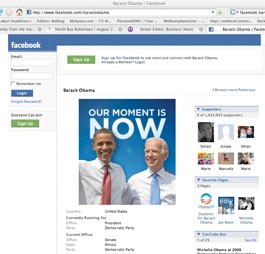
Of Course He’s Got One: But you can only be an Obama ‘fan,’ never a ‘friend.’

Now that my 20-year-old son has a steady girlfriend, I asked him the next most logical question. “Have you updated your relationship status on your Facebook page?”

“No,” he explained, “I have too many friends I don’t know.”

Ah, Facebook. Below, Bohemian interns Cassandra Landry and Brodie Jenkins parse out its stranger ways for your gape-jawed pleasure.

—Gretchen Giles

OMG

I’d known for a long time that I had a love-hate relationship with Facebook. I hated the constant notifications of other people’s lives—the parties I wasn’t at, the obnoxious look-at-me status updates, the vexatious SuperPoke, the slightly unsettling voyeuristic quality of it all—but I loved the convenience of it. It was like a guilty pleasure, except every other college student indulged along with me, so we were all just one big shameful group.

Curiously, the longer that I stared at the glowing screen full of gossip, the more my self-confidence began to wane. At first, I didn’t even consider Facebook a culprit, but after I began to overly concern myself with the images communicated through my likes, dislikes, photos and general information presented on my page, I knew I had to step away from the keyboard.

“Facebook fasts” came and went, but I couldn’t hide forever. My frustration finally cumulated in the reading of “Facebook Phobia,” an article published in the July 16 issue of The Boston Phoenix. The piece discussed the online phenomenon that has my generation addicted, warping our relationships as we consult profiles for personality instead of meeting potential friends in the flesh. It was comical, and I chuckled along as it listed Facebook side-effects: an insatiable need to check for messages; comparing how many “friends” people have; talking about Facebook in everyday conversation. And then I began identifying with too many symptoms for my own comfort. Next thing I knew, in a hazy, dream-like consciousness, I did the unthinkable. I deactivated my account.

Within minutes of announcing my decision, I was inundated with incredulous and stunned Internet cries. “Don’t do it!” “Wait, wait, why? ” Deactivating a Facebook is, of course, networking suicide. But I calmly reassured myself that plenty of functional, admirable and successful folks out there do not have a Facebook or MySpace or Twitter account. Plenty of them. Sure, maybe not as many as the 90 million members of Facebook alone, but enough.

After a (shameful) half-hour debating the consequences of such a dramatic move, I faced the tragic fate of my generation. Are we so dependent on technology and intangible luxuries that I, infinitely more complex than an Internet application, couldn’t even sever the tie? I indignantly stuck it to the World Wide Web. The final, righteous click came and went (9:36pm on July 22, 2008), and miraculously, I felt better.

Weeks passed. I received a few snarky texts about my mysterious disappearance, but the backlash remained relatively minimal. I had fewer distractions at work, forcing me to actually be productive. Then the stress dreams came. With the new semester approaching, I worried I wouldn’t be able to communicate with my three new roommates about moving in. Why hadn’t we traded phone numbers? Is the telephone obsolete? Whatever the reason, I was suddenly stranded all alone on my island of Internet righteousness. The phantom pains of Facebook were finally surfacing.

For the first time in weeks, I considered reactivation. I shuddered at the thought. Had I failed to show the mighty Internet what I’m really made of? And then, in a flash of nirvanic clarity, I realized that, no, I wasn’t weak or defeated. If anything, the time away taught me how to control Facebook, instead of letting it control me. I calmly reopened the social portal, cringing only slightly, at 10:46am on Aug. 6, 2008.

I may as well have closed my eyes and twitched my nose as I clicked away. The reactivation process is horribly easy, perhaps insinuating that many, like myself, try and fail to break away from the networking Leviathan. All one has to do is log in normally, and the lovely folks at Facebook will email a link straightaway that restores your cyberspace self in an instant. Like I never left.

—Cassandra Landry

The Sacred Divide

I recently learned that a close friend of mine, “Trisha,” gave her mom her Facebook password. Trisha’s mother, “Lynn,” could then access her Facebook account, her messages, wall-posts, photos and friends’ profiles. What this also meant was that Lynn could freely peruse my Facebook profile as well.

My own mother let it slip one night during dinner.

“I want your opinion on something,” she said over a plate of chicken and green beans, “because I can’t decide whether it’s weird or not.”

“Mmm,” I said from the depths of Elle magazine.

“Well,” she went on, “I was having lunch with Lynn, and we were talking about you kids. And I mentioned that you had started to date Tim. And Lynn already knew who he was!'”

My ears perked up. “Um, how?”

“She saw what he’d written on your Facebook thingy,” my mom said innocently. “She uses Trisha’s account. Is that, you know, normal?”

“What?!”

I felt violated and furious, as though Trisha had let a spy into forbidden territory. By sharing her account with her mom, she was betraying me and all of her online peers’ trust. There was no other option but to remove her from my Facebook friends. Click.

True, my reaction was overblown and hasty, even immature. But there was something behind it. Friends of mine who use Facebook were shocked that Trisha would let her mom use her account. The overall consensus, in answer to my mom’s question, was no, it wasn’t normal.

Parents, you are not welcome on Facebook. You may wish to understand the inner workings of this strange and magical world first-hand, but if you want to maintain any shred of respect your children deign to show you, stay far away. Facebook is young people’s territory.

I know it hurts. But this is the bitter truth, one of those painful dividing lines between older and younger generations. You may feign calm indifference, but we can sense your meddlesome motives. “I just want to look at Ann’s pictures from Europe,” you say sweetly, but we can see through you like a pair of fishnets.

You know Facebook is off limits. Perhaps you snoop because you are offspring-deprived. The baby bird is out of the nest. Maybe the baby bird doesn’t call very often. And you, the parental unit, want to know what all of your rearing efforts have amounted to. How is the progeny handling life away from home? Are little Tyler or Alyssa making friends? Partying? Partying too much? A treasure trove of carelessly shared information, Facebook may reveal what your child refuses to disclose directly.

Now that anybody can join Facebook, the temptation to sign up can be overwhelming for the curious parent. Don’t give in. You’ll find yourself floundering in an alien universe, where BRB, OMG, LOL and WTF replace actual sentences and status updates are gobbled up like US Weekly headlines.

On Facebook, kids display and toy with aspects of their identities, “coming out” to a new peer group (Tyler Thompson is “Interested in: men“), flirting with reckless abandon, waging savage “poking” wars, starting and ending relationships like the sleaziest Hollywood stars, putting up photos from drunken parties and self-aggrandizing events. This information is tailored for an exclusive community of teens, students and recent grads—parents not included.

If you ever had a clubhouse as a kid, you’ll remember the thrill of perceived ownership, of separation and protection from parental invasion. Think of Facebook as the young adult’s virtual clubhouse. An invisible “Keep Out!” sign is posted on the door. To enter means to infringe, to violate a false, but precious, sense of security.

I know it’s ironic. The whole point of a Facebook profile is that it’s public. We Facebook junkies fill everything out, from our religious and political views to our favorite quotes, knowing that it will (and wanting it to) be seen. I have over a thousand friends—a thousand—who can all look at my Facebook profile whenever they want. So what if Lynn gets added to the list?

The problem is that she’s a parent. Lynn has seen me in diapers, watched me grow, judged, scolded and taken care of me. The thought of her secretly trolling through my photos and wall conversations makes me cringe. She doesn’t belong among the ranks of 18- to 25-year-olds with whom I share my social networks.

Soon, the shit hit the virtual fan. My mom received a furious email from Lynn, demanding an explanation for my heartless behavior toward her daughter. This set off a string of confessions and accusations, which flew through the Internet abyss with Superman speed. I learned that Lynn felt estranged from me, and had considered Facebook our only means of “connection.” Trisha told me that I was deluded if I thought outsiders didn’t break into Facebook all the time.

Finally, exasperated and disgusted with myself for partaking in this silly drama, I repented. In an email CC’d to her mother, Trisha accepted my apology. I re-requested her friendship on Facebook. Trisha consented. She changed her password.

I breathed a sigh of relief.  

—Brodie Jenkins

Damn You, Mark Zuckerberg

A brief mosquito-infested foray into the Facebook jungle— aka a glossary

ApplicationsIt’s like Pimp Your Profile. Basically anything can be added to the profile: bumper stickers, TV show and movie fan sites, quotes, pictures—the list goes on and on and on. Search for various apps through the search engine, but be wary of adding too many. Scrolling through the applications just to type a quick message is tiresome, and you’ll be stuck on the computer for an hour, minimum.

Friending Just because somebody is your Facebook friend does not mean he or she is your friend in real life. Facebook veterans quickly grow accustomed to the familiar line from an unfamiliar individual: “Hey, aren’t you my Facebook friend?” Over time, you may accumulate many hundreds of “friends,” but you will only know about half of them and be close to an even smaller fraction. Friending someone that you have met in person, however, is a symbol of solidification, showing that you like that person and that you want to keep in touch.

Interests Just another way to hone your Facebook image, “Interests” are a personal statement. Are you boring? Then go ahead and put “hanging out with friends” or “reading” as your interests. We’ll try not to judge you. Obsessed with Dungeons and Dragons? You might want to leave that out. Many go the quirky route, as in putting “Slinkies” as an only interest. Others flower it up (“star-gazing, long luxurious bubble baths, intellectual snobbery”). Put whatever you like, just try not to look dumb.

News FeedEnables the user to view every single detail of every friend’s online lives: photos added, comments made to mutual acquaintances and status changes. Slightly creepy, and a great way to get sucked into the he-said, she-said whirlwind.

Pokes A poke can be anything from a friendly nudge of acknowledgement to a sexy, potentially creepy, gesture of interest. Those poked have two options: “Poke Back” or “Remove.” Sound simple? It isn’t. Poking is like tennis—once poked, the ball is in your court. Poke back, and the power is out of your hands. Your poke is now on somebody else’s computer screen, so easily removed, so easily ignored. Poke back too quickly and you seem overly eager; poke too slowly and your friend is insulted. Always remember to poke responsibly.

Profile An Internet box-o-fun. The all-powerful profile is a page dedicated to the interests, whims, hopes and dreams of one individual. Peruse with caution.

Relationship Status0 Relationship status options are as follows: “Single,” “In a Relationship,” “Engaged,” “Married,” “It’s Complicated” and “In an Open Relationship.” You can also show who you are in a relationship with, though the other person has to confirm. Many silly fake relationships exist on Facebook (“It’s Complicated with Chuck Norris”), but be careful before displaying a serious relationship on your profile. Breakups are made even nastier when exhibited for all to see. Not only will your status say, “Jane Doe is no longer in a relationship,” but those Facebook bastards decorate it with a broken heart icon. Talk about twisting the knife.

Social Network A network simply defines the extent of your connections. After joining a college network for example, you are then free to view all profiles in that network, with respect to certain privacy preferences. Facebook does allow more than one network per profile: a city network and a school network. Have two masters degrees and a PhD, all from different schools? Add “alum” to each and multiple networks are opened. Ah, networking.

Status A little glimpse of your offscreen life, your “status” is a brief description of your current thoughts, feelings, actions or whims, and the options are endless. Laid out with your name and the verb “is,” it prompts users to write something as basic as “is dying at work” or insert a line from a favorite poem: “is nobody. Who are you?” Some use the status as an alternate form of communication, as in “Jane Doe wishes you were here.” But those who want to keep their daily activities off the record can always leave the status blank.


Wall – Messaging Got something to say? Write it on the wall, but remember—everyone can read it, and don’t think that they won’t. Consider the consequences before spilling all the details of last night’s bitch fest, and send the recipient a message instead. Personal, private and perhaps comforting due to it’s similarity to plain ol’ email.

—B.J. & C.L.


Big Tickets

09.10.08In the next few years, it's a guarantee that organic and sustainable farming will experience incredible growth. It's a subsequent guarantee, then, that those same farms will be looking for farmhands—and while older farm owners sell their land, or die without interested kin, they're especially looking for workers who are young, disciplined and accustomed to hard work. Enter the...

Letters to the Editor

09.10.08This Thing Called JazzWith due respect to the exchange between Larry M. and Gabe Meline re Steely Dan selling out (Letters, Aug. 27): First, anyone who goes to print saying that they think Steely Dan "sucks the bag" has balls the size of Mt. Tam, and so, Gabe, I have to respect that. Second, not disavowing that Steely Dan...

F*ck Section M

09.10.08In September 1998, a new magazine appeared in coffee shops and record stores across Sonoma County. The free, tabloid-sized publication featured the punk band the Burdens on the cover and was printed with the cheapest, smeariest ink possible.Abhorred, adored and largely ignored, Section M magazine soldiered on for five unsteady but always eventful years. And now, a decade after...

The Cho Must Go On

09.17.08 With socialites and their mothers literally boasting their own reality shows these days, it's about time a truly talented subject like Margaret Cho had one. For nearly two decades, the Korean-American comedian has spoken for outsiders everywhere. To disenfranchised gays and fellow first-generation Americans with identity crises to any entertainer taking on the industry machine to any woman who's...

The End of the Summer

It's the end of the summer Come to the time when we have to say goodbye After watching seven different bands at Daredevils & Queens tonight, and after spending three days watching countless bands at the Insect Carnival last weekend, I have to say: summertime's elusive promise, that delicate combination of freedom and togetherness so impossible to contain, has come and...

Urine the Money

09.03.08Recently, while attending a Sustainability Tour in San Francisco, I learned about urine diversion, the practice of keeping urine out of the waste stream and putting it to work in the garden. At the time, Carol Steinfeld's book, Liquid Gold: The Lore and Logic of Using Urine to Grow Plants, was passed around the group with great reverence. Needless...

Temp Situation

09.03.08Body Language: Breathing is the only requirement.   A clutch of college kids stumbled by, reeling, shouting incoherently about war and jobs, their hollow laughter curdling into drunken sobs. Ha! I chuckled, my derision gently tempered by the empathy of one who's been down that road before. Yeah, I remember my first recession.Of course, things were a lot different when I...

Letters to the Editor

09.03.08Ich Bin Ein . . .It's especially disappointing that President Cheney will not speak at the Republican Convention, since his German has been coming along so well. Brian BoldtSanta Rosa Truth StrangerThe official story of what happened on 9-11 would have fit nicely in your "Conspiracy Issue" last week ("Down the 9-11 Rabbit Hole," Aug. 27). A conspiracy is when A...

Facebook Files

09.03.08Of Course He's Got One: But you can only be an Obama 'fan,' never a 'friend.' Now that my 20-year-old son has a steady girlfriend, I asked him the next most logical question. "Have you updated your relationship status on your Facebook page?" "No," he explained, "I have too many friends I don't know." Ah, Facebook. Below, Bohemian interns...
11,084FansLike
4,446FollowersFollow
6,928FollowersFollow