Wine Tasting Room of the Week

0

It’s almost that time of year again. In one of the more dramatic yet tragic events of the natural world, salmon leave the open ocean and home in on their natal streams. Struggling upstream rivers and tributaries, they heroically return to the suburban backwaters from whence they came, only to spawn and die.

Then there’s the steelhead, the perennial boomerang children of the salmon world. They spawn, grow up, leave for the big ocean (everybody knows there are more fish in the sea), and then return and return again—when there’s a home to return to. It’s no joke that decades of crude land management have fouled fish habitat—yes, even in bucolic wine country. Cultivating image as assiduously as their vines, wineries nowadays position themselves as the most benign agricultural enterprises. But it hasn’t always been so.

Just ask Wine Creek—or ask winemaker Steven Canter, who explains that the creek that bisects Quivira Vineyards merely served as a convenient drain during the last century. Reportedly, it got its name because it ran red with winery effluent during harvest.

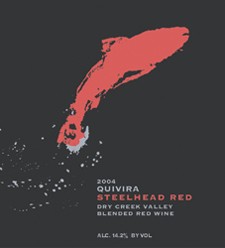
Former Quivira owners Henry and Holly Wendt began habitat restoration on Wine Creek a decade ago, and created the Steelhead Red wine brand, proceeds of which help to fund Trout Unlimited. They installed weirs, or manmade rock ledges, to create fish-friendly pools and encourage deposits of gravel that are crucial for spawning. Willow trees were planted to provide shade and help control erosion, and barriers to migrating fish were removed.

When Swirl ‘n’ Spit last stopped by Quivira in February 2006, small fry were swimming in Wine Creek, and newly certified biodynamic wines were still slumbering in the cellar. Since then, the steelhead have grown up and returned to spawn (they even have their own YouTube video).

There have been other changes. New owner Pete Kight has enthusiastically picked up the cow horn where the Wendts left off, and winemaker Canter approaches biodynamics with a musician’s spirit and a surgeon’s scalpel: while biodynamic preparations can now be bought off the shelf, he says biodynamics are like the chords of a jazz standard—the point is to riff on them in tune with the vineyard. Instead of harvesting vineyards in “blocks,” he divides them into dozens of picks according to the natural contour of the land.


The resulting wines have both finesse and broad appeal. The 2006 Dry Creek Valley Zinfandel ($20) whispers rather than shouts “Dry Creek Zin.” The stainless-steel-fermented 2007 Fig Tree Vineyard Sauvignon Blanc ($18) derives intensity from lemongrass and herb aromas, rather than aggressive fruit or acidity. When Canter parsed out the varietal components of the former version of Steelhead Red, he thought the Mourvèdre had more potential than it was showing. With a little micromanaging, the 2006 Wine Creek Ranch Mourvèdre ($32) became a triumph of dense black cherry with a long, savory finish. No one ever guesses that the irresistibly juicy, silk-bodied, gold-medal winning 2006 Wine Creek Ranch Grenache ($26) nearly tops 16 percent alcohol, all of which make the as-yet unreleased Syrah and Rhône-style blend quite promising. Once again we find, as have the steelhead, that Quivira is worth returning to, year after year.

Quivira Vineyards, 4900 West Dry Creek Road, Healdsburg. Open daily, 11am–5pm; tasting fee $5. 707.433.8333. Steelhead Dry Creek Valley Zinfandel ($16) is available for sale but not tasting, and can also be found in Safeway and Von’s stores. For more info, visit [ http://www.steelheadwine.com/ ]www.steelheadwine.com.


View All

Jonesin’ for the Fourth

0

10.29.08

Democrats haven’t had much reason to break open the bubbly on the first Tuesday in November in quite a few years. In fact, for the entire 21st century, those of the left-leaning persuasion have tended to shed more tears than sparkling wine on election night. But this year looks to be different and the mood at Democratic headquarters throughout the North Bay is quite ebullient. Just call up the Sonoma County Democratic Headquarters in Santa Rosa and ask about their plans for the night of Nov. 4. “It’s going to be the party of the century,” enthuses a volunteer, so enthusiastic that his name is lost to the phone line. “Be there or be square!” By contrast, the Sonoma County Republican headquarters reports that they will not be hosting a public event this year—at all. But we’re not calling it yet; Nov. 4 is still agonizing days away.About that Sonoma County Dems bash, it’s slated for Nov. 4 from 8pm at the Flamingo Hotel, Fourth Street at Farmers Lane in Santa Rosa. We hear tell that there will be a television or two available, as well as refreshments and a no-host bar. Donations are always warmly welcomed. Contact them at 707.575.3029.

Meanwhile, Marin GOP shakers perhaps have sturdier stock portfolios and are gamely planning a public event for supporters. They modestly invite, “Come join us for what will hopefully be a night of celebration,” at the Harbor Point Tennis and Swim Club, 475 E. Strawberry Drive, Mill Valley. There will be a no-host bar and some light food. For details, call 415.456.4391.

The Marin Democratic Party hosts a party at its headquarters from 8pm with large-screen TVs, food, “like-minded” Marinites and more. 1344 Fourth St., San Rafael. Free; donations, yes please. 415.455.5400. Also in Marin, the Grassroots Leadership Network hosts an election-night party at its offices and will be open all day to help voters with last-minute questions and concerns. Translation services are available in Spanish (415.451.4530, ext. 306) and Vietnamese (415.491.9677). The party is from 6pm to 10pm. 30 N. San Pedro Road, San Rafael. 707.451.4350.

Back on the ebullient side of things, the Napa Democratic Party promises “an election night we’ll never forget!” from 5pm at the Napa Elks Club, 2840 Soscol Ave., Napa. 707.257.1208. We were unable to raise the good folks of the Napa GOP on short deadline, and had a frightening conversation with the person listed as the contact point for the Progressive Democrats of Napa; apparently, that chapter has lapsed.

In nonpartisan circles, KRCB public media broadcasts a live feed off election coverage at the Raven Theater, 115 North St., Healdsburg. 707.433.6335 and Sonoma State university invites students and public alike to watch events unfold from 5pm with speakers and a student panel at the Intercultural Center Gallery, Student Union, 1801 E. Cotati Ave., Rohnert Park, 707.664.2382.


Got Goat?

0

10.29.08

For the past two years, Emily Eakins has auctioned off her goats at the Sonoma County Fair. Her Boers have won prizes, and, not surprisingly, they’re snapped up, butchered and barbecued. Though she’s just 11, and only a sixth grader at Forestville Elementary School, Emily is a 4-H club veteran and knows what she’s talking about what she talks goats. “Goat meat is really good,” she says enthusiastically. “It’s better than lamb—not as gamey. Chocolate, my first goat, was a real sweetheart. Last year my prize goats, Super Bull and Little Red, were skittish. They didn’t want to be petted.”

All over Northern California, “Got goat?” has become more than just a rhetorical question. Farmers in Marin, Sonoma, Mendocino counties and beyond are turning to goats as a way to diversify and to jump ahead of the culinary curve, as cutting-edge chefs have begun to cook goat and serve it in restaurants. Of course, goat meat has been around as long as European immigrants have been around, and goat has always been a part of the Mexican-American diet. Almost every taco truck serves goat tacos, and the taqueria, that ubiquitous American institution, wouldn’t keep customers happy without birria, a kind of goat stew.

Mark Dierkhising, the chef-owner of Dierk’s Parkside Cafe in Santa Rosa, has been cooking goat in Napa and Sonoma since the 1970s. He’s learned a lot from the Mexican immigrants in his kitchen. Last September, he put goat chops on the menu, and because they were an overwhelming success, he’s planning to serve goat tacos regularly.

“Goat is everywhere, though people don’t notice it,” Dierkhising says as he stands at the counter, wearing a white apron. “In the vineyards, Mexicans will cook a whole goat. They dig a hole, build a fire, and let it die down. Then they’ll put a whole goat inside a kettle, drop it into the embers, cover it with a damp cloth and cook it for hours. At lunch, it’ll feed a crew of 30 men. Nothing tastes as good.”

At Big Goat Farm in Marin near San Antonio Creek, Cindy Pomi raises goats with her husband, Mark, on a 503-acre ranch that was home to cows for nearly 100 years. Now they have a herd that includes 200 does, eight billies and about a hundred kids, all of them friendly to humans, though the billies butt heads. Mark Pomi is a third-generation farmer and a graduate of Cal Poly San Luis Obispo, where he and Cindy met. He’s not ready to give up farming without a fight, but he’d rather be raising something more dignified than goats.

“They’re OK,” he says begrudgingly on a sunny autumn morning in between chores. “In some ways, they’re like cows. They’re ruminants. They eat thistles and blackberry bushes. They’re time-consuming, and as with cows, you have to mend fences.”

Cindy enjoys goats more than does her husband. The daughter of farmers in the San Joaquin Valley, she has a BS in animal sciences and an MA in agricultural education, and teaches science in a one-room schoolhouse in West Marin’s Hicks Valley. She’s also a representative for Barefoot Books, which specializes in children’s literature. “All of us have second jobs,” she says as she stands in a field surrounded by goats with names like Bon Bon and Candy, her sunglasses perched atop her head. “Farming is a way of life,” she adds. “It was bred into me. As a girl I was shy; farm animals helped me get over it.”

The Pomis take their goats to Dixon, near Sacramento, to be slaughtered in a USDA certified slaughterhouse. Then they’re delivered to such as the Marina Market and the Olema Inn, where chef Jimmie Wong cooks goat from time to time.

The goat business has picked up in recent months, in part because of glowing articles about goats in newspapers and magazines, so the Pomis’ goat meat is already sold through March 2009. Still, goat ranchers feel there’s an uphill battle to fight. As they point out, consumers often think of goats as inedible creatures that dine on tin cans. The idea of eating “kid” turns stomachs, but it won’t if Emily Eakins and Cindy Pomi have a say.

Perhaps the most eloquent local advocate for goats as farm animals, pets and all-around environmentally friendly beasts is a Petaluma native named Nancy Barlas, who raises Boer goats with Paul Lewis, a jovial descendant of immigrants who came from the Azores in the 1840s. Barlas and Lewis also make two kinds of goat sausage, one for breakfast and one for dinner, available only at the farm and by mail order.

“Goat is the healthiest meat when it comes to fat content, cholesterol and sodium,” Barlas says, as goats with names like Picasso, Nemo and Chattanooga gather around. Barlas wears a T-shirt with the image of a goat. “Goats are intelligent,” she continues. “They do minimum damage to the environment, they help prevent fires and they manage landscapes. You can eat almost every part of the goat: leg, shoulder, shank and breast.”

Paul Lewis listens carefully and nods approvingly. “I’ve spent most of my life with pigs, horses, cows and sheep,” he says. “I’ve been fascinated with ruminating animals. Goats are the most amazing. They’re eaten in Europe, Africa, Asia and the Americans. More people eat goat than any other red meat.”


At Della Santina’s Trattoria on the plaza in Sonoma, owner Dan Della Santina remembers his boyhood in Tuscany, and the mountain villages where the entire culture centered on goat. “Villagers ate goat cheese, goat milk, goat meat,” he says. “The boys who tended the goats came down from the mountains in September and went back in spring when the baby lambs were born. We ate goat every Easter. That’s the one time of the year we serve it here.”

All year round, goat sells for about $3.99 a pound at the Chapala Meat Market in the Fiesta Shopping Center on Highway 12. Seven days a week, goat tacos, just $2 each, are served at the Taqueria Los Primos on Highway 12, a short walk from the Sonoma Mission Inn. Sheana Davis, a local chef and educator who learned to cook the meat from two Bulgarians who worked on a Sonoma goat farm—eats at Los Primos with her dad. “Goat is here to stay,” she predicts. “It’s only a matter of time before it’s in upscale restaurants all over Northern California.”

Quick dining snapshots by Bohemian staffers.

Winery news and reviews.

Food-related comings and goings, openings and closings, and other essays for those who love the kitchen and what it produces.

Recipes for food that you can actually make.

Letters to the Editor

10.29.08

No On Measure Q

If Measure Q passes, its consequences would be felt not only in the North Bay but throughout the North Coast. Taxpayers in Marin and Sonoma would be paying not only for a passenger train, but would share the costs of maintaining the rail line used for freight trains for 300 miles between Marin and Eureka, including 50 miles that runs through the Eel River canyon.

Derailments, track closures and safety problems in the landslide-prone canyon have plagued the railroad here all along, and finally closed the line in 1998. But with SMART, the NCRA can restore service to an otherwise inaccessible gravel mine in the canyon. Six million tons of gravel could be hauled from the canyon annually. Many question whether the operation would be feasible without SMART funds.

Quarry operations are devastating to fish populations. Once the mainstay of the North Coast, the Eel River salmon are today endangered, the result of logging, mining water diversions and development. They can’t survive further damage to their habitat.

Voters need to know more about the connections between SMART and the NCRA, but the railroad has refused to provide an environmental impact report for its operations north of Willits. We recognize the need to reduce global warming and traffic congestion, but we want transportation to serve the public, not subsidize industry fat cats or sacrifice our environment. Let’s get back to the drawing board.

Nadananda

Executive Director, Friends of the Eel River

Is Smart Dumb?

Before you decide to vote yes on Q, here are some facts: The BART and Cal Train services offer more trips and have many commuters that rely on them, but have not solved our traffic problems. Both trains go out to San Francisco. To get to S.F. from Cloverdale, you need to board the train, get off at Larkspur and take either the bus or ferry boat. The ferry service is already packed with commuters, and the distance to walk to the destination is time-consuming. There is a greater need for more bus service rather than a train service that will hurt Golden Gate Transit.

There are only 14 weekday trips planned, from commute time to commute time, and four weekend trips, whereas BART/Cal Train both have extended services. A BART extension to Marin County makes more sense and is truly SMART.

There is talk of Gov. Schwarzenegger adding a 1 percent sales tax to balance the budget, so take a quarter cent sales tax plus a 1 percent hike and you will be paying upwards of 8.5 percent sales tax. It doesn’t sound SMART to me to pay more for a service that nobody is going to use, and you won’t get to San Francisco. Don’t believe the writing that “it’s only for 20 years.” Better think SMART and vote no on Q. You cannot rely on it. Let’s not be dumb on this.

Darren Schivo

Novato

Teacher’s Legacy

Thank you for the wonderful article about Holly Vinson (“Stage Sage,” Boho Awards, Oct. 15). I am 26 years old now but began my love affair with theater at age 11 in Holly’s summer camp for Oliver! I went simply because it was close to my home, but found so much more than just something to pass the summer. I went on to join the ArtQuest program at Santa Rosa High School, where passion, fun and high expectations for professionalism continued. I have been in only a few productions in the last several years, but the experiences and lessons I took from being involved with theater have been some of the most important in my life. Holly’s program was the beginning of something wonderful in my life, and in the lives of so many local children.

Reina Martinez

Santa Rosa

The MSG Letters Don’t Stop

Having worked in the media for many years, it is no surprise to me that the writer of your Sept.10 cover feature, “Meet Your Unami,” came back from a very fancy free meal sponsored by a foundation funded by the corporation who brought the world MSG and wrote a glowing article praising this chemical additive. 

What surprises me is that a paper like the Bohemian printed the article, and that your editor did not demand that the writer at least include an opposing or even professionally objective view about the effects of MSG. Instead we get “But it’s since been proven that Chinese restaurant syndrome is bunk and MSG is not the evil it is made out to be.”

Bunk? Tell that to the estimated 10 percent or so of the population who get mysterious headaches from MSG, myself included. I expect this sort of corporate stenography from trade journals, not a newspaper based here in Sonoma and Marin counties, where organic, local and wholesome food is grown and appreciated.

Jonathan Greenberg

Sebastopol

From the We Get Letters Dept: Our Oct. 22 slate of recommendations surprised many who assumed that we’d be in knee-jerk harmony on Prop. 2. Alas. And we still don’t support the measure. Here is feedback on our recs, reprinted this week on p10.

The Big Bash

I am very disappointed that the Bohemian will not be supporting Proposition 2, the Prevention of Farm Animal Cruelty Act. You folks are really drinking the Kool-Aid of big agribusiness when you claim that Prop. 2 will “decimate” area producers. First of all, Prop. 2 doesn’t even affect those very “cage-free” and “humanely raised” producers that the Bohemian says we should all patronize anyway. In fact, it will help these farmers by removing the competitive advantage enjoyed by companies that have not yet bothered to adopt more humane standards.

Second, if the passage of Prop. 2 presents a hardship for some companies, it’s only because these companies have peen profiting from cruel farming practices all along. We don’t relax labor standards just because an employer might move overseas to exploit workers. Neither should we sacrifice our standards of animal compassion just because such standards don’t yet exist in Texas or Mexico.

While it’s true that no single piece of legislation could solve all the problems of industrial farming, Prop. 2 is an eminently reasonable step in the right direction. That is why it has already been endorsed by so many California individuals, businesses and organizations, including hundreds of farmers, writer Michael Pollan, the Sierra Club and the California Democratic Party. These folks understand that the passage of Prop. 2 will be a modest but important victory for the millions of farm animals living in cages too small to even turn around and extend their limbs. I urge everyone to vote yes on Prop. 2. It’s the right thing to do for California’s farm animals.

Wade Spital

Petaluma

Shame on Us?

Shame on the Bohemian! I am outraged that you would suggest voting against a proposition preventing millions of factory-farmed animals from enduring cruel and deplorable conditions for the sake of profit. Where exactly did you get your “proof” that these factory farms would be forced out of business? It sounds like the staff of this paper has fallen prey to the opponent’s propaganda.

The European Union, as well as four states in this country (Arizona, Colorado, Florida and Oregon) have successfully complied with these or similar bans on inhumane treatment. If you agree that there’s no question that the industrial farm system is an outrage, how then could you condone the continuation of these practices for even a second longer?

I do pay attention to this issue and have adjusted my purchase choices to support those producers that treat animals humanely. Simply standing by and waiting for someone to come up with what you would consider to be a better solution is unacceptable.

The time for change is now. My vote on Nov. 4 will be for the abolishment of these hideous practices.

Kimberly Thatcher

Forestville

Eggs ‘n’ Bacon Politics

I am appalled that the Bohemian is recommending its readers vote no on Prop. 2. Your argument is primarily about jobs in your statement: “Fortunate as we are to be based in the state’s egg basket, we will instead see area producers forced out of business.” Unfortunately, that is why laws are sometimes necessary to force people to do the right thing. Given profitability vs. humane practices, we have seen an obscene and secretive industry arise. Advising your readers that they should buy “only cage-free, humanely raised organic poultry and pork” is like telling them to shop at Whole Foods for healthier choices vs. Wal-Mart. Given a choice of cheaper alternatives, most people will do so and not give a thought to where their morning scrambled eggs and bacon were sourced. If people have to buy their eggs from producers in Texas, perhaps it will make them pay attention and ask why. This may not be a perfect initial proposition, but it is a vital step in the right direction in generating awareness. To paraphrase Gandhi, “A society will be judged by how it treats its animals.” Let’s do this. Vote yes on Proposition 2.

Lynn Lee

Napa

You Wouldn’t Do it To Your Pets

Bohemian, you have been lied to. No farmer, in Sonoma County or anywhere else in the state, will go out if business when Prop. 2 passes. Yes, they are going to have to spend some money to do what is right for the animals in their care, but they will not go out of business. Businesses always cry wolf when they face regulation to make a product safer or life better. The downtown bars blubbered that they would have to close their doors when the smoking ban passed, and that was all hot air, too.

The truth is that Prop. 2 helps prevent cruelty to animals. It’s simply inhumane to confine farm animals in a tiny cage barely bigger than their bodies. The cages are so small that animals can’t even walk or extend their limbs. It’s hard to imagine a more miserable life.Prop. 2 is a modest and reasonable initiative that has been endorsed by the Democratic Party of California and over 100 family farmers. Prop. 2 will make our food safer, help safeguard the environment and relive the suffering of farm animal in intensive production. We would never force our pets to live in filthy, cramped cages for their entire lives, and we shouldn’t force farm animals to endure such misery either. All animals, including those raised for food, deserve humane treatment. California has been given the rare democratic opportunity to cast a vote to alleviate the suffering of millions of animals statewide. Please go to www.Yesonprop2.com to learn more and vote yes on Prop 2.

Hope Bohanec

Sonoma County Coordinator

Yes on Prop 2 Campaign

Nothing To Do With Advertisers

I experienced disbelief when I read your “staff recommendations” re the upcoming proposition. Surely one recommendation, on Prop. 2, is an error. The correct vote is yes on Prop. 2. Factory farming practices have gone on too long. Whatever brainwashing strategies are being used on newspaper people, I can only guess some of them have to do with not wanting to alienate the many businesses and advertising revenue associated with cruel factory farming practices. They can’t work for much longer.

If you ever toured a slaughterhouse or a mega-size chicken farm, you would throw up!

Forget the poor little calves stuck in the wooden pens, the pigs whose lack of sweat glands require them to be near clean water, living in filth, there is no doubt, if you can’t forget, you would never eat flesh again.For those who need their animal protein to sustain their incredible charms, at least insist on clean, happy victims.

Johanna Lynch

Cazadero

Blowing It Big Time

What literature are you reading regarding Prop. 2? The California Egg Board, the Veal Producers of America, Hormel and Tyson? Telling the public not to eat veal is like throwing a deck chair off the Queen Mary, and what about the eggs and pork products?

Where do we start as a civilized culture to start treating sentient creatures humanely? As a native Californian, I am proud of our state taking the lead in raising the consciousness of America and the world on many issues.

Prop. 2 is to give farm animals some rights—like to have a cage large enough to be able to turn around in or spread wings, some time in the fresh air and sunlight, and not to have to live in feces and dead bodies. And it gives producers until 2012 to accomplish the task. Oh, and did you know that New Jersey has a similar set of rules governing their farm animals? I don’t hear about veal, pork or eggs coming from Mexico or Texas supplanting New Jersey’s own farm animals and all the New Jersey farmers selling their farms, etc.

Bohemian, you blew it big time recommending No on Prop. 2.

Karen Zimmerman

via email

Big Box Enviro

Proposition 7 is an amendment to our current California Law AB32 that requires 20 percent renewable electricity by 2010, not 2017 as suggested in your recommendation to vote no on Prop. 7. Prop. 7 increases the annual requirement from 1 percent to 2 percent. We’re talking about a 2 percent commitment to renewable energy each year. This is not hard, nor is it complicated. The goals, regulations, penalties, definitions and market incentives are clearly expressed in the initiative language. It has only become complicated and uncertain in light of a $30 million campaign to make it seem so, which is 100 percent funded by our utility companies (our rate-payer dollars hard at work!). The all-star line up of environmental opposition is also succeeding wildly to spread the misinformation about what exactly Prop. 7 will and won’t do.

I not only disagree with the opposition endorsements of these big box environmental groups because of their misguided and false claims, but I flat out don’t trust these groups to put the public and environmental interest ahead of their corporate investments. I don’t trust the Sierra Club to speak honestly about Prop. 7 when they receive an undisclosed amount of money from the Chlorox Chemical Company to endorse their “green” line. I don’t trust the Union of Concerned Scientists to speak honestly about Prop. 7 when they share board members with the major investor-owned utilities that finance the entire opposition campaign. I certainly don’t trust the NRDC to speak honestly about Prop. 7 when their key spokesman against it, Ralph Cavanagh, is the same fellow responsible for helping ENRON succeed and ensuring the deregulation of the electricity market for profit off of our 2000-2001 energy crisis.There are five remarkable gentleman speaking out for Prop. 7 despite the opposition’s best efforts to recruit them as their own. Donald Aitken, former lead scientist as Union of Concerned Scientists; David Freeman, eco-pioneer and energy expert who not only got the EPA going, shut down nuclear reactors all over the country, and helped get us out of the 2001 energy crisis but was also behind the very first environmental and energy policies in the nation; and three Nobel Prize-winning scientists: Walter Kohn, Herbert Kroemer and Alan Heeger. I trust their independent and professional opinions because they represent an individual analysis free of a commitment to an institutionalized, corporate or group identity.

It’s time we demand our energy independence and support a sustainable and renewable electricity market.

Kelly Rivas

Santa Rosa


&–&–>

Maybe He Can’t Walk on Water

0

10.29.08

CAPITOL FELLOW: This time next week, we’ll know the outcome. Three cheers for having the whole darned thing done with and moving ahead to a brighter future!

There’s something profoundly wrong with an economic system that sells homes cheaply, then takes them away from young families; that encourages wasteful energy consumption while fuel prices double and ExxonMobil serially breaks corporate profit records ($12 billion last quarter). And there’s something immoral about a political order that allows its leaders to invade countries on pretext, then fails to hold them accountable; that end-runs international and constitutional principles on torture and incarcerating the innocent while endeavoring to globally spread its values.

The Republican administration in Washington turned surpluses into deficits, peace into war, prosperity into chaos. It failed to address the rising costs of food, healthcare and college tuition, and ignored the decline of public education and the earth’s atmosphere. It let Detroit collapse and New Orleans drown.

In short, the Republicans that America elected screwed up the country, and it’s time to take it back.

With an abysmal record to run on, the GOP has taken to questioning the patriotism of its opponents, conducting a campaign of innuendo and guilt by association. The irresponsible fear-mongering and demagoguery had predictable results.

When John McCain posed the rhetorical question “Who is Barack Obama?” amid the worst financial stress of our lifetimes, he riled the lynch mob. Given McCain supporters’ use of Obama’s middle name and the campaign’s exaggeration of his relationship to a ’60s radical, the demonization took its next illogical step.

In the end, McCain was forced to answer his own question and declare that Obama was a decent family guy of whom Americans didn’t need to be afraid, but with whom he had differences. If that’s what the election’s about, why didn’t McCain just stick to policy differences in the first place? (The Obama campaign, other than posting an informational video, resisted making a big deal out of McCain’s close friendship with Savings and Loan criminal Charles Keating.)

McCain’s lurching, shambolic campaign and confused messaging—Obama’s a terrorist, no he’s a family man—is precisely what’s not needed to calm the jangled nerves of consumers, bankers and nuclear wannabes around the planet at this critical juncture.

McCain’s hurried selection of a charming yet unqualified political extremist who abused official powers to settle a family matter exhibited the kind of rush to judgment that created the debacle in Iraq. Keep him away from that nuclear button!

Luckily, there’s an alternative in one of the brightest political lights to emerge on the national stage in decades. We chose Barack Obama early on, for his measured intelligence, cool persona and smart embrace of technology.

Sen. Obama’s continuing success in winning over Americans of all colors, religions and economic classes reconfirms our early support for an Obama presidency. His focus on positive themes and inspirational messages displays an intuitive flair for leadership. He has run a better campaign, organizing neighborhood teams and making innovative use of modern digital tools. He has a better bench, with an experienced vice president and seasoned advisers. His formidable yet diverse funding base will leave him less beholden to special interests.

His election offers a possibility to turn the page on racial division, Cold War thinking and widening class divides. Though the challenges are greater than ever, the recent wake-up calls present an opportunity, with inspired leadership, to finally tackle the healthcare crisis and achieve alternative energy breakthroughs that will reduce dependence on unstable foreign-oil-producing nations.

Maybe he can’t walk on water. But Obama is a unique talent who arrived at a critical moment in history. For America, the choice is clear. 


Adventures in Eco-Voting

10.29.08

Nowadays, it seems that nearly everybody wants to be seen as green. It’s not just corporations jumping onto the bandwagon; politicos and ballot measures are hopping aboard, too. It’s heartening that, even in these challenging times, so many mainstream folks recognize the environment’s vital role in our economy, health and survival.

Still, this issue’s popularity brings a new challenge: we as voters and consumers can no longer simply accept eco-claims on face value. As the biofuel backlash so aptly demonstrates, we need to look beneath the surface, especially with so much at stake.

Consider, for example, presidential candidates Barack Obama and John McCain. Both speak for environmental cures such as alternative energy, which certainly is vital for addressing global warming, peak oil and more. But an analysis of the candidates’ eco-credentials by the League of Conservation Voters (LCV) reveals a greater difference. While Obama receives a lifetime LCV rating of 86 percent for his consistent pro-earth votes, McCain achieves only 24 percent.

Similarly, in Sonoma County’s Fifth District Supervisor‘s race, both Rue Furch and Efren Carrillo speak of eco-principles. But the details tell a different tale. Furch’s history, positions, awards and presentation clearly reveal her as an eco-wonk, diligently toiling for decades on essential local environmental protections. She’s been endorsed by the Sierra Club, Sonoma County Conservation Action and current supervisor Mike Reilly, who’s upheld this seat’s strong eco-tradition for the past 12 years.

Carrillo, on the other hand, has quite modest environmental experience and vague positions. Two-thirds of his campaign contributions come from the development industry, and most from outside the district, at least according to Furch’s analysis of campaign disclosure reports.

This same dissonance between green image and reality appears on California’s ballot. While state propositions 7 and 10 both profess to encourage alternative energy implementation, they’re opposed by major environmental, business, labor, consumer and taxpayer groups. Critics feel that fundamental flaws would actually harm environmental progress and waste taxpayer dollars.

Now, I’m not suggesting that all eco-claims should be distrusted as just another reason for cynicism. Rather, I see environmentalism at a new stage, one that calls on us to increase our discernment and engage more deeply in specific implementation decisions.

For example, I do support Proposition 2, which seeks more humane conditions for farm animals while improving food safety and reducing water and air pollution. This proposal is endorsed by the Sierra Club, Center for Food Safety, Humane Society, California Council of Churches, California Veterinary Medical Association and others. Reading the official description and big business opposition, I’m amazed that we’d even debate whether pens should allow animals to “lie down, stand up, fully extend their limbs and turn around freely.”

Other decisions are more complex, though, with sincere eco-people advocating notably different solutions. For instance, there’s Sebastopol’s City Council race, where those elected will determine the fate of the contested Northeast Area Plan (NEAP). On the one hand, NEAP’s proponents feel that the current proposal to build intensively in the town’s entry-area flood plain is ecological, based on New Urbanism’s promotion of high-density and mixed-use. CandidateJen Thille prominently features these claims for NEAP in her “Sustainable Sebastopol” campaign.

However, after examining the specifics, the overwhelming majority of citizens commenting at NEAP’s final hearings opposed this plan as too big for the small town, and ecologically and economically infeasible in this location. They questioned spending millions to overcome nature’s flood plain and earthquake liquefaction zone. They saw those millions making the area’s houses and businesses more costly, thwarting mixed-use and conflicting with the plan’s targeted low-rent businesses. They determined that the unavoidably gridlocked traffic would block the plan’s required influx of new shoppers, cannibalize current businesses, generate greenhouse gases and harm livability.

Echoing these citizens is candidate Guy Wilson, who proposes downscaling NEAP to better respect natural and infrastructure limits, current businesses and the people’s democratic choice. To me, this approach better embodies true green.

This is just a sample of the hidden eco-issues lurking on our ballots. By digging for the deeper story, we can all help ensure truly wise choices for our future world.

 National LCV voting information is at www.lcv.org. California LCV endorsements of federal and California Congress people is at www.ecovote.org. A convenient summary of many group’s proposition recommendations is at http:-/igs.berkeley.edu-library-hot_topics-2008-Nov2008Election-index.html. Local endorsements are at the Sierra Club’s site www.sierraclub.org-ca; choose your local chapter.


About Knowing

0

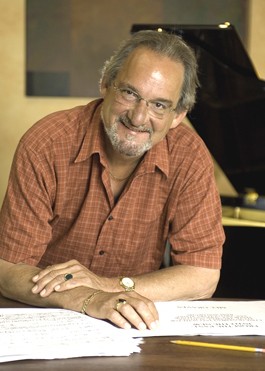
Reclining on his black leather sofa, Mel Graves surrounds himself with written notes and sheet music. With his girlfriend’s dog at his feet, he talks with his trademark mix of insight, humor and passion, as vibrant and alive as he’s ever been. But in addition to the gold watch on his left wrist, he also bears a medical bracelet on his right.

At 61, Graves, widely loved as a brilliant jazz bassist, instructor and composer, has been diagnosed with inoperable pancreatic cancer. He does not have much longer to live. The music and written notes scattered around the room are part of a farewell performance to be held Nov. 9 at Sonoma State University, which he has himself titled “Movin’ On.” He’s hoping the night won’t be a somber affair, and with past alumni, longtime sidemen and good friends onstage, it’s sure to be an exciting if bittersweet celebration of the life of one of Sonoma County’s great jazzmen.

“I think one of the main things you learn in jazz is to be in the moment,” Graves says. “It’s a thing that I’ve tried to carry into regular life. To me, all of life should be art. It should be done in an artful way whenever possible, whether you’re eating or making love. Life is art. And death is art. It’s all part of the same thing. I don’t believe there’s life and death. I think there’s just a continuing plane. Yes, it’ll be a difference, of course, but it’s all part of the same thing.”

Aware of Eric Dolphy’s well-known description of music (“Once it’s over, it’s gone in the air”), Graves has lived a life of ensuring that his music thrives long after he is gone: he’s written over 100 jazz compositions, released numerous albums both as a leader and sideman and last year premiered a two-hour suite for 10-piece ensemble entitled Out of the Past—Into the New, which he describes as “a culmination of my life’s work.”

A legacy even more direct is Graves’ widespread influence as an instructor at SSU, where for 25 years he’s touched the lives of thousands of young musicians, many of whom have gone on to successful musical careers. He has always been a hands-off instructor, helping the student to find the right feel instead of directing which notes to play. Since his diagnosis, former students from all over the country have been writing to Graves, sending emails and making calls, each echoing the same sentiment: Thank you for teaching me everything I know.

Graves says in the last two months, he has felt his world getting smaller, his thoughts turning inward. He notes how little snapshots of his life have been coming back to him, peacefully, over the last few weeks, instead of flashing quickly before his eyes. More than anything, he’s glad to have had the life he’s been given.

“I mean, what do I have to complain about?” he asks, ignoring the obvious.

“I’ve pretty much worked and played up and down the pike here for decades, and I’ve had a lot of memorable experiences with wonderful audiences,” he says gratefully. “I appreciate the fact that my music has been appreciated, that my bass playing has been appreciated, and it looks like my writing has as well. I feel fortunate to have lived in an area where my music is supported.”

Between chemotherapy, hospice care and doctor’s visits, Graves has continued to compose. A piece sits at the piano which he recently completed, and soon he’ll enter the studio to oversee the recording of a new contemporary vocal work, titled “About Knowing.” Perhaps most poignantly, he has added a sixth and final movement to the large-scale opus Out of the Past—Into the New. He hopes that it will be performed posthumously, perhaps at the Green Music Center, at SSU.


But for now—in the moment—Graves is looking forward to the big party he’s throwing for himself, featuring some of his favorite players, peers and alumni. He is too weak to play the bass, but with the immense talent onstage, he says he won’t mind being a spectator.

“Who knows what kind of shape I’ll be in,” he ponders, “but I think it will come together quite well. You just have to roll into acceptance and gratitude for what you have, and move along. I’m OK with it, you know?”

‘Movin’ On,’ a tribute concert for Mel Graves with Denny Zeitlin, Art Lande, Randy Vincent, George Marsh and many others, is sure to play to an overflow crowd on Sunday, Nov. 9, at the Warren Auditorium. Sonoma State University, 1801 E. Cotati Ave., Rohnert Park. 7:30pm. $15. 707.664.2353.

Death Becomes Them

0

10.29.08

MOUNTAIN CEMETERY: Founded in 1841, this Sonoma burial ground holds the remains of General Vallejo as well as Henry Boyes. Is ‘Count’ Haraszthy lying below this grave marker artfully fashioned from a toilet seat?

Photographs by Suzanne Daly
Ghost story by P. Joseph Potocki

One thing is is certain—he is dead. That “Count” Agoston Haraszthy was devoured by alligators while crossing a jungle river in the summer of 1869 is not so certain. None bore witness, and no trace of him has ever been found.

Yet even today we hear faint whispers contending that Agoston Haraszthy—world adventurer, visionary entrepreneur, fraudulent raconteur and feted Father of the California Wine Industry—fabricated his own gruesome demise so as to lend cover when stealing his way back to the town of Sonoma undetected.

Cryptic murmurs suggest Haraszthy returned here to conclude shadowy business left unfinished after he’d filed for bankruptcy, abruptly fleeing to Nicaragua, just one year before. Unfinished business, these souls breathlessly whisper—not ravished gators—caused the ersatz “Count” to meet his untimely death.

BLOOMFIELD MOONRISE: The Bloomfield Cemetery was established in 1860 after area residents grew tired of burying community members in the local schoolyard. The stone figures of this graveyard evoke chess pieces and an earlier grandeur.

The end, they say, came near midnight on a chill and blustery Noche de las Brujas—the unholy Night of the Witches. Flames from a mammoth bonfire were seen dancing and spasming demonically up from the distant valley floor. A trim and bearded Agoston Haraszthy, aged 56, well-dressed in long coat and top hat, watched for a time before turning away, striding purposefully up the moonlight-dappled hillside of the oak- and madrone-speckled Sonoma Mountain Cemetery.

A moldering stench of dank rot and the scrunching sounds of just-fallen leaves mimicked mortality with each step taken. Ill-tempered winds blew wood fencing from its moorings. Gusts swirled and eddied debris, as if frantically stirring every loose thing together in dark cauldrons of evil intent, while blustery squalls upended lovingly tended family plots, tumbling over vases and lesser grave markings, revealing skulls and maggot-cleansed bones reaching for life from their earthen graves below.

4-16-08: ‘I sure do miss you’ begins this poignant note placed on a grave at the Forestview Cemetery (also known as the Forestville Odd Fellows Cemetery).  Our dry summers keep such fragile momentoes intact far into the autumn.

Agoston Haraszthy arrived at his rendezvous. A wraithlike figure emerged from darkness. He moved slowly into the shallow patch of dull orange moonlight. Haraszthy smiled at the man, warmly outstretching his hand in greeting. This welcoming gesture was met with a certain violence that none who tell this tale can yet explain. Without so much as a struggle, it was ended. Haraszthy’s lifeless self, dragged to a freshly dug grave, was plunged down and hastily covered.

No one knows just where “Count” Agoston Haraszthy’s remains actually lie. But it is said that each year on Noche de las Brujas, Haraszthy’s spirit, in the form of the well-dressed man he was, walks the entire night in a purposeful fashion, up, down and throughout the old Sonoma Mountain Cemetery, a broad smile racing across his face, extending his hand to any living soul who should dare meet the fright of his friendly gesture.

BABY: It wasn’t uncommon in the 1800s to not name an infant until it was certain whether he or she would live. Many larger families also wearied of naming their  youngest immediately, having run out of fresh ideas. This lad or lassie was interred at the Tomales Catholic Cemetery.


Where They’re Laid

Finding the cemeteries featured here

Bloomfield Cemetery Sutton and Hillview streets, Bloomfield. Calistoga Pioneer Cemetery Foothill Boulevard, Calistoga. Forestview Cemetery 5925 Gravenstein Hwy. N., Forestville. Gilliam Cemetery  2998 Sullivan Road at Dyer, Sebastopol. Tomales Catholic Cemetery  1400 Dillon Beach Road, Tomales. Tomales Presbyterian Cemetery  11 Church St., Tomales.

 A fairly exhaustive list of Sonoma County cemeteries is found at

http:-/users.ap.net-~chenae-sococeme.html

For Marin County, go here: www.marin.californios.us

And for Napa County, go here: www.napacountygenealogy.com-cemeteries.htm

OUR LORD OF THE HANDMADE BOWL: At the tiny Gilliam Cemetery outside of Graton, a grave is marked with a white wooden post incongruously topped with a stitched vessel featuring Biblical images.

MARKERS: The wooden headstone of Elmer Isaacson (1905–1980) is accompanied by the Forestview Cemetery’s own marker for Marian L. Isaacson (1914–2006). Elmer’s wife? His sister? These silent testaments to the connections of life give inevitable rise to their own stories.

BLOOMFIELD MOONRISE: The Bloomfield Cemetery was established in 1860 after area residents grew tired of burying community members in the local schoolyard. The stone figures of this graveyard evoke chess pieces and an earlier grandeur.able rise to their own stories.


Thrillingly Strange

0

the arts | stage |

Photograph by Jeff Thomas
INTO THE WOODS: Soprano Sara MacBride portrays Nunber Two, the poet Anne Sexton.

By David Templeton

Opera is an art form of deep emotion and grand exhibitionism, but it need not be massively staged to be effective and entertaining. In fact, beginning in the late 1950s and ’60s, there was a movement to create small, offbeat, experimental operas that eschewed the pageantry and excess of the opera hall, replacing it with a scaled-down variation that emphasized psychological insight, minimalist sets and complex, dissonant music.

One of the more interesting experiments of this period is Conrad Susa’s Transformations, adapted from the book of the same name by the Pulitzer Prize–winning poet Anne Sexton, itself a poetic reinterpretation of several famous fairy tales collected by the Brothers Grimm. In the smart, gorgeously sung production that opened last weekend, Cinnabar re-embraces its own experimental roots and delivers a Transformations that is as entertaining and satisfying as it is musically challenging and mesmerizingly, thrillingly strange.

In the book, Sexton—whose childhood abuse and years of alcoholism, institutionalization and attempted suicide are woven into the heart of her work and reputation—writes elaborately abstract, wildly anachronistic visitations on the sometimes disturbing deeper themes of Rapunzel, Snow White, Rumpelstiltskin, Hansel and Gretel and others, superimposing onto them her own therapeutic explorations, thoughts, ideas, assumptions and reactions to the horrors of her life. In book form, it’s a gloriously shocking and beautiful journey into a thoroughly humane madness; in its operatic form—and opera is the perfect medium for exploring madness—these musings are pushed into the realm of genius.

Inventively directed by Elly Lichenstein, with strong musical direction by Nina Shuman, the piece retains the eccentric structure of Susa’s original vision, with its cast of eight singers distinguished not by name but by number, each taking on an array of parts as the “entertainment in two acts” (Susa preferred that description over the word “opera”) gracefully moves through seven of Sexton’s fairy-tale poems. In its original form, Susa, with Sexton’s piercingly funny words as libretto, gives the sense that the opera is being performed in an asylum, with Sexton spinning her tales as the other patients take on the roles in her various personal fantasies. In the Cinnabar version, this notion is largely set aside for something less sensational but far richer.

On Joel Eis’ set of multilevel platforms wrapped here and there in sheets of clear plastic, there sits a single lounge chair on which Number Two (soprano Sara MacBride), as Sexton, reclines, inviting us into her mind as she uses the metaphors of fairy tales to bare her wittily bruised but amused soul, as if we are her therapists, invited into the dream world of Sexton’s neurotic reality.

Beginning with the story of “The Gold Key,” which Sexton makes clear is about humanity’s need to understand itself, the cast transforms into an array of characters, animals, objects, entities, edifices, insects and vegetables, all singing Sexton’s scalpel-sharp words. Bridging the worlds of fairy tale and taboo-busting modern life, those words are the chief wonder of the piece, as when Number Two sings, “No matter what life you lead, the virgin is a lovely number / Cheeks as fragile as cigarette paper, arms and legs made of Limoges, lips like Vin du Rhône / Rolling her china-blue doll eyes open and shut / Open to say, Good Day Mama, and shut for the thrust of the unicorn.”

Die Fledermaus this is not.

The cast is exceptionally strong. MacBride is magnetically watchful, overseeing much of the action with a laser intensity. As Number One, Jennie Lister skillfully employs her expressive face and elastic physicality in playing Snow White, Rapunzel, Gretel, Briar Rose and others.

Valentina Osinski, playing everything from a mirror to a snake, is sexy, slinky and, playfully comic. When singing together, as in the second act preamble to the story of Rapunzel, their pure, clear harmony is devastating. The rest of the group—Miguel Evangelista, Jeff Wang, Will Hart Meyer, Todd Donovan and Robert Stafford—also demonstrate range and inventiveness.


The orchestra, too, handles the challenges of the music with bravura aplomb. Being Anne Sexton must not have been easy, and she passes that trait down in this difficult and beautiful “entertainment,” a rare and not-to-be-missed journey into a one-of-a-kind world.

‘Transformations’ runs Friday–Sunday through Nov. 15. Oct. 31, Nov. 7–8, 14–15 at 8pm; Nov. 2 at 3pm. Cinnabar Theater, 3333 Petaluma Blvd. N., Petaluma. $32–$35. 707.763.8920.


View All


Museums and gallery notes.


Reviews of new book releases.


Reviews and previews of new plays, operas and symphony performances.


Reviews and previews of new dance performances and events.

Live Review: Against Me! at the Grand Ballroom

2

Goldenvoice is a concert promotion company that grew out of the Los Angeles punk rock underground of the 1980s into a huge entity that today essentially dominates the market in the greater Southern California area. They’re now doing shows in San Francisco at the Regency Center Grand Ballroom, and they have brought everything that’s wrong about Los Angeles with them. I nominate that we send them back home. I’m not alone.
The Grand Ballroom (don’t confuse it for the old Avalon Ballroom, which is next door, on Sutter Street) is a beautifully ornate venue with tall ceilings, a wrap-around balcony and elegant chandeliers. One can only imagine how great it’d be in the hands of, say, Another Planet, because it’s clear that Goldenvoice is blowing what could potentially be a great venue.
First off—it’s hard not to be irritated by the very imposing security presence. There’s the usual pat-down, what’s-this-you’ve-got-here at the door, but once inside, it’s all hey-where-are-you-goin’ and being told not to walk or stand in what appears to be wide open, unrestricted spaces. The sense of authoritarian rule isn’t in-your-face, but it’s constant, and it makes for a lousy experience when you feel like you’re constantly being monitored.
Second—I understand that the Grand Ballroom is a difficult room for sound, but it’s not an impossible room for sound. It’s the same dimensions as the Fillmore, which has great sound. The problem is that the sound equipment isn’t permanent; Goldenvoice has to bring in all their speakers, boards, monitors and stacks for each individual show and get everything dialed in each time. It’s an extremely limiting situation, and it leads to the bands sounding utterly horrible.
Third—Goldenvoice takes a 20% cut of bands’ T-shirt sales, and a 5% cut of their CD and LP sales. This is unspeakable. There is no respectable reason for promoters to take a cut of a band’s merchandise. Especially their music. It’s not unusual among the more sleazeball promoters, and it’s the norm for huge concert promoters like Live Nation, but that doesn’t mean it’s okay.
Fourth—tickets for the Grand Ballroom are sold through Ticketmaster, which I think is totally inexcusable considering the far more fan-friendly ticketing options available these days. Ticketmaster is like the Bush presidency—a series of failed policies and “screw you” attitudes—and it needs to die like the embarrassment that it is.
The first time I saw Against Me! at 924 Gilman Street, obviously none of these issues were a problem. That was five years ago, and a lot has changed for Against Me! since then—not the least of which is selling way more records and playing way larger shows, for better and for worse.
The pivotal moment came when I saw them at the Warfield just before New Wave was released, shoved onto an awkward major-label co-billing with Mastodon. They seemed bored, and the new songs were awful. Imagine my surprise when they got more popular than ever, and New Wave, a slickly produced pile of crap, became Spin‘s Album of the Year.
And yet I couldn’t completely abandon Against Me!, as much as I certainly tried.
I still remembered the time they came to Santa Rosa on their first tour and stopped by the Last Record Store. They cruised the aisles, and bought some records, and then one of them asked, “Yeah, um… we’re a band on tour, and we’re playing a show at a place called Jessie Jean’s tonight, but we don’t see any flyers for it at all. Do you think you could maybe tell people to come?”
“Sure, ” I said. “What’s your band’s name?”
“Against Me!,” the guy replied.
I lit up with excitement. “You guys are reinventing Axl Rose!” I said.
“Yeah… how d’you know that?”
“We carry your record over here, look!”
And then one by one, they all filed over to the ‘A’ section, and held up their record, amazed. That’s the Against Me! that I still see in my head: four guys just totally stoked to see their own band in a record store on the other side of the country.
Last night, Against Me! played a fair balance of songs old and new, ensuring that longtime fans still had something to shout about. The older songs got most joyous reactions, naturally—”Cliché Guevara,” “Walking is Still Honest”—but one of the reasons I like seeing Against Me! live is to be reminded of songs like “Borne of the FM Waves of the Heart,” which is a highlight of New Wave.


Sure, new clunkers abounded. Despite its well-intentioned subject matter, “Anna is a Stool Pigeon,” from Tom Gabel’s new solo album, sounded forced and uninspiring, fulfilling the cliché of most solo album material. And I still can’t bring myself to buy New Wave, simply because I’d be picking up the needle and skipping songs so much that it wouldn’t be worth it.
The band’s gigantic banner draped the back wall of the stage, but the hall was half-empty. Though Against Me! is one of the most energetic and cardiovascular bands in the world, lots of people past the first 10 rows just stood there, like they were watching a cooking show or something. It felt a tad like much ado about little, until the encore, “We Laugh at Danger and Break All the Rules,” which proved yet again that Against Me! knows how to close the hell out of a show.
First people from the crowd began jumping on stage and singing along. Then, ditching his drums to help lead a huge clapping breakdown, Warren ran and stagedove into the crowd—flying through the air right exactly on the downbeat when the band, with a guest drummer who appeared out of nowhere, kicked back in and finished the song. It was fuckin’ nuts, and so totally fun, and the best part is that the overzealous security guards on the other side of the barricade were going crazy. Ha!
Made me love ’em all over again.

Jonesin’ for the Fourth

10.29.08 Democrats haven't had much reason to break open the bubbly on the first Tuesday in November in quite a few years. In fact, for the entire 21st century, those of the left-leaning persuasion have tended to shed more tears than sparkling wine on election night. But this year looks to be different and the mood at Democratic headquarters throughout...

Got Goat?

10.29.08For the past two years, Emily Eakins has auctioned off her goats at the Sonoma County Fair. Her Boers have won prizes, and, not surprisingly, they're snapped up, butchered and barbecued. Though she's just 11, and only a sixth grader at Forestville Elementary School, Emily is a 4-H club veteran and knows what she's talking about what she talks...

Letters to the Editor

10.29.08No On Measure QIf Measure Q passes, its consequences would be felt not only in the North Bay but throughout the North Coast. Taxpayers in Marin and Sonoma would be paying not only for a passenger train, but would share the costs of maintaining the rail line used for freight trains for 300 miles between Marin and Eureka, including...

Maybe He Can’t Walk on Water

10.29.08CAPITOL FELLOW: This time next week, we'll know the outcome. Three cheers for having the whole darned thing done with and moving ahead to a brighter future! There's something profoundly wrong with an economic system that sells homes cheaply, then takes them away from young families; that encourages wasteful energy consumption while fuel prices double and ExxonMobil serially breaks...

Adventures in Eco-Voting

10.29.08Nowadays, it seems that nearly everybody wants to be seen as green. It's not just corporations jumping onto the bandwagon; politicos and ballot measures are hopping aboard, too. It's heartening that, even in these challenging times, so many mainstream folks recognize the environment's vital role in our economy, health and survival.Still, this issue's popularity brings a new challenge: we...

About Knowing

Moving artfully on with Mel Graves

Death Becomes Them

10.29.08 MOUNTAIN CEMETERY: Founded in 1841, this Sonoma burial ground holds the remains of General Vallejo as well as Henry Boyes. Is 'Count' Haraszthy lying below this grave marker artfully fashioned from a toilet seat? Photographs by Suzanne DalyGhost story by P. Joseph PotockiOne thing is is certain—he is dead. That "Count" Agoston Haraszthy was devoured by alligators while crossing a...

Thrillingly Strange

the arts | stage | Photograph by Jeff Thomas INTO...

Live Review: Against Me! at the Grand Ballroom

Goldenvoice is a concert promotion company that grew out of the Los Angeles punk rock underground of the 1980s into a huge entity that today essentially dominates the market in the greater Southern California area. They're now doing shows in San Francisco at the Regency Center Grand Ballroom, and they have brought everything that's wrong about Los Angeles with...
11,084FansLike
4,446FollowersFollow
6,928FollowersFollow