Air Supply

0

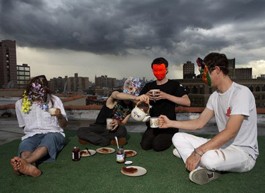
A ir and wine have that torrid sort of relationship that only leads to ruin. It’s said that air is the enemy of wine, but consider the yogic regimen of letting uncorked wine “breathe,” and air becomes its fast friend. Decanting is employed as a therapy for wines young and old, to open up the closed, smoothen the rough and edify the callow. Critics of the ritual say not to worry about the air, pointing to several high-profile blind tastings in which even professional tasters preferred wine poured straight from the bottle. If anything, a decanter looks pretty on the table, and will, for better or worse, expose wine to its old frenemy.

What about those legitimate occasions when we don’t wish to consume an entire bottle? For the gear-happy, there is an ever-expanding array of novel gadgets that promise to aerate the beejesus out of wine. Perhaps the simplest, yet most mysterious is the “breathable glass” developed by German manufacturer Eisch Glaskultur. It’s claimed to open up wine in a few minutes, equivalent to an hour in a decanter.

No different in appearance than standard crystal, it has no baroque rivulets, valves or channels, no batteries included. The company is evasive about its proprietary technology, explaining only, “After the actual manufacturing process, the glasses undergo an oxygenizing process which gives the Breathable Glass its unique properties. Generally . . . wines with rough edges are softened and flavors are enhanced.”

Naturally, this calls for an experiment. Five-ounce pours were tasted blind from the Eisch against a comparably sized normal glass. To approximate the scientific method, I recruited my estimable colleague Pepe to help randomize the samples and to provide commentary. We agreed that the Eisch flattened out the inexpensive 2005 Forestville Reserve Chardonnay and that the varietal aromas were sharper in the regular glass.

The medium-bodied M. Chapoutier 2006 Côtes-du-Rhône blew off initial aromas from mushroom and dirt to milk chocolate; if anything, the regular glass had brighter fruit and astringency. Pepe got “firecrackers and port” from a regular glass of Viña Cobos “Felino” 2007 Mendoza Malbec (the youngest, most tannic of the test), noting that the Eisch pour “smells better—but smells less.” I got plums and fruitcake, and found the Eisch pour was less volatile, with a somewhat drier, maybe even more integrated palate.

Conclusions: The breathable glass doesn’t improve every wine, but may tamp down initial aromas—both good and lesser—and seems to somewhat round out the rough edges. I noted later that the glass, if simply rinsed out, retains an odor of chemical or oxidized wine, perhaps a clue that there’s some kind of micro-porous coating at work.

There is another, clearly useful purpose to decanting: to keep the sediment at the bottom of an old bottle from murking up one’s glass. Alas, the breathable glass cannot help wine to pour sweet and clear from the brim to the dregs.



View All

Bright Moments

0

12.31.08


When some people get older, they start going out to sushi and start leasing new cars and start taking Pilates classes. And for some reason they stop listening to new music.

Then there are those of us who get older with the attendant need to find something to cling to, and for us that thing is music. There are little musical moments throughout the year that change us. Defining snatches of music that somehow condense our time on Earth and hurl it back at us in a soul-shaking rush of brilliance. They are transformative moments, transcendental moments.

This is the time to reflect on reasons why life is worth living. A time to count the ways that faith was restored. For me, it’s a time to think back on the most inspiring shows I went to, to reflect on how my faith in live music was reaffirmed over and over again.

Case in point: watching the homecoming of Green Day’s Billie Joe Armstrong as he stepped through the doors of 924 Gilman, after years of being away, to play a breathtaking show with Pinhead Gunpowder and bring tears to the fans who waited in line outside for eight hours. Faith in redemption. Or the other way around: watching Vampire Weekend just days after their album was released in a short set at Amoeba in San Francisco, so clearly and excitingly on the cusp of being one of the year’s best new discoveries. Faith in baptism.

The Boredoms setting up in the center of the Fillmore’s floor, singer Yamatsuka Eye on crutches but flailing gymnastically and repeatedly crashing a hand-fashioned tower of electric guitars during a pulsing, nonstop set. Or Themes, on tour from Minneapolis, emanating a death-march group howl of “The Soldier Trade” to a crowded living room at the Church House in Petaluma. Faith in house shows.

At the Boogie Room, watching members of the Crux lead a holy-rolling revival in the dead of night, inside a cold barn, rousing classics like “Mary Don’t You Weep” by candlelight and baptizing the congregation with water; then, later, watching them shout through bullhorns, rattle large chains and cause the floorboards of the barn to nearly buckle under the weight of the enraptured crowd. Faith in ramshackle theater.

Being completely surprised when people I’d seen around town would suddenly turn up with gobs of talent, like James Ryall singing “This Invitation Has Meant the World to Me” at the unique New Trust tribute night, or Nick Wolchsmoking, playing drums and receiving a birthday cake all at the same time during a revelatory Goodriddler set outdoors at Daredevils & Queens. Faith in the next generation.

Witnessing the world premiere of “Boycott,” a lost Eric Dolphy composition, by Bennie Maupin and James Newton‘s incredible quintet at the Healdsburg Jazz Festival, with the actual charts handwritten by Eric Dolphy on the stand. Or watching Denny Zeitlin, the day after the death of his close friend Mel Graves, sit down at the piano to play the most emotionally moving version of “What Is This Thing Called Love” that has ever existed on the planet, putting his whole being into a loving tribute to his friend. Faith in abstract testimonials.

The utterly spine-chilling beauty of Tom Waits in Dublin, as the rain plundered the circus tent above, singing “Christmas Card from a Hooker in Minneapolis.” Broken Social Scene,, 10 members strong, giving a summertime send-off with thousands of hands in the air at Golden Gate Park. Or the most awe-inspiring spectacle of all, Of Montreal,’s Skeletal Lamping tour, involving a dizzying onslaught of elaborate sets and costume changes. Faith in romantic bombast.

Even huge arena shows delivered. Witnessing the Cure,, opening a three-hour set with “Plainsong” and trammeling through a lifetime of signposts, year after year. Or George Michael,, outdoing the longing of “A Different Corner” only with a harrowing version of “Praying for Time.” Faith in longevity.


Somalian rapper K’naan, leading a crowd in putting up their fists for freedom for “In the Beginning.” Walkmen singer Hamilton Leithauser,, twisting his torso and throwing his head back in some unholy evocation during “In the New Year.” Crooked Fingers’ Eric Bachmann,, picking slowly at his guitar and begging to be loved again in “Sleep All Summer.” Faith in heartfelt passion.

Here’s to another year gone by with all of these moments and hundreds more. Now go out with your friends, tell them how much you love them, and sing “Auld Lang Syne.” There’s nothing like faith and love to keep us running for another year.


Food Club Rituals

0

12.31.08

Remember the lead-up to Y2K, when the panicking masses stockpiled canned ravioli and beans in hastily constructed pantries, as if they were preparing for the Big One?

In retrospect, some might conclude these folks were a wee bit paranoid, but I look back on that time as a window into a collective sanity of sorts, and an important teaching moment. Fears of computer crashes highlighted our dependence on technology and catalyzed the panic, but what people were actually, viscerally afraid of was running out of food. Ultimately, the alarm was more rooted in our dependence on supermarkets than on computers.

With the financial markets in meltdown, many people are now worried about their money. As with fears of computers gone haywire, the economic jitters quickly circle back to even more fundamental concerns, like putting food on the table.

I was once infatuated with the idea of living self-sufficiently, like a homesteader, earning my existence from the earth with sweat and ingenuity. I eventually gave up on that idea, because while I’ve long admired and practiced many of the skills that homesteaders used to survive the winter, I don’t want that lonely lifestyle any more than most homesteaders probably did. While civilization is rife with problems, community is cool.

Now I run with a loose-knit collection of friends, acquaintances and neighbors, each with his or her own skills and specialties in the realm of food acquisition, preparation and storage. I call these people my food club.

The first rule of food club is you talk about food. A lot.

In place of the grace said before meals in many homes, food clubbers tend to give thanks by recounting the stories behind their food. For example: “We have tuna that Mike caught on his fishing trip to Washington state marinated in soy sauce and homegrown garlic, home-pickled peppers, roasted roots from Steve and Luci’s farm, garden salad, and a bottle of saffron mead from Buck’s cellar.”

The typical food club meal is composed of mostly local ingredients, but we aren’t locavore fundamentalists. What makes it food club is the network of relationships behind it.

There are 52 and a half grains of gunpowder in my bullets, says Bill, who shoots a .270 hunting rifle, like me. A grain is a unit of weight, which makes things confusing, because gunpowder isn’t powder at all, but lots of small metallic pellets, which are also called grains.

Hunters are natural food clubbers because we love telling stories about our food. And being able to take your gun into the hills and come back with dinner offers a kind of primal comfort and security. Food security is a kind of social security. Guns, unlike computers, can’t forget what time it is. Bullets, unlike money, don’t become worthless.

Bill’s bullet-loading station was a little dusty, as it hadn’t been used in 10 years. He usually fires only one shot a year, so he’s still using the batch he loaded before Y2K.

The bullets I’m loading are copper-based, rather than lead-based. I decided to switch to copper when a fellow food clubber told me about studies showing increased levels of lead in ravens’ blood during hunting season, presumably because the birds are eating bullet-riddled carcasses left behind by hunters. Other studies have found traces of lead in wild game as well, making lead bullets a human health risk as well as an environmental concern.

Not all food clubbers hunt, or even eat meat, but those who do need to know where it came from. If more people could see conditions in the slaughterhouses, smell the feed lots and comprehend the environmental, social, economic and humanitarian costs of factory farming, mystery meat would be more than most folks could swallow. That’s why omnivorous food clubbers hunt for their meat, make friends with hunters, buy their meat from local farmers or otherwise take the mystery out of it.

Food clubbers share their knowledge, helping each other make the connections and develop the skills we need to take control of our own diet. We share this information via chance meetings in coffee shops, on the trail, at the farmers market, as well is in more formal meetings like pot-luck dinners or at the Swap Meat.

The Swap Meat is kind of like the food club’s annual convention. It happens in February, when pantry and freezer stocks are dwindling and the selection that remains is turning monotonous. My food club and I gather in a cozy living room to trade our surplus, increasing the diversity of our respective stashes. We have a good time, swap stories, observations and predictions, and then go back to our lives. Some food clubbers I might not see again until hunting season, when we’re sharing a tent or the back of a pickup truck, or helping each other carry out an animal. Others I won’t see again until farmers market.

For some, a food club is partly a response to the fears revealed by the Y2K episode, but we generally aren’t doing it out of fear. We aren’t doing it to save money, either, though we often do—and in these trying economic times, every little bit helps. Often, what we do is motivated by knowledge of the harmful or healing consequences our eating choices can have on the world, but as far as I’m concerned, if it isn’t tasty, healthy and fun, it isn’t sustainable.

And sure, if the Big One ever does hit, if the stores ever run out of food of if economic collapse makes our money useless, we food clubbers will know how to feed ourselves—not as independent pioneers, but as member of a real, functional community.

Doomsday scenarios aside, ultimately we’re united by our shared desire to live exceptional lives, and exceptional lives require exceptional food, which isn’t available in stores—only in stories.


Quick dining snapshots by Bohemian staffers.

Winery news and reviews.

Food-related comings and goings, openings and closings, and other essays for those who love the kitchen and what it produces.

Recipes for food that you can actually make.

Divine Intervention

12.31.08

For years, environmentalists have been watching China’srapid economic growth and industrialization with alarm. Thecountry’s understandable desire to bring the West’s modernlifestyle to over 1 billion Chinese is expected to help pushhumanity’s cumulative environmental impact far beyond the earth’scapacity. While some Chinese people are enjoying new conveniences,others and the environment are suffering significant harm, evenoutside China’s borders.

The specifics are staggering. Imagine what it’s like to live ina country where two-thirds of household sewage and one-third ofindustrial wastewater are released untreated. Nearly 700 millionChinese people drink water contaminated with animal and humanwaste. Discharges pollute China’s major rivers, poisoning farmsalong the banks, pushing fish into extinction and rendering keyfisheries unusable.

Acid rain from coal-fired power plants falls on one-third ofChina’s agricultural land, damaging crops and contaminating foods.Unfettered development, deforestation and overgrazing are spreadingthe Gobi Desert by 1,900 square miles annually. Cancer andpremature deaths from respiratory disease are increasingdramatically. China’s air and water pollution are contaminatingother countries too, even the United States, and its hunger fornatural resources is devastating habitats around the globe.

This environmental damage is costing China an estimated 8 to 12percent of its annual $3.4 trillion GDP. The global economicdownturn is expected to slow China’s growth somewhat, from 11.9percent in 2007 to 9 percent in 2008, but this level is stillecologically unsustainable. In 2005, a vice minister of China’sState Environmental Protection Administration warned, “The[economic] miracle will end soon because the environment can nolonger keep pace.”

Amazingly, even in this repressed country, Chinese citizens havebeen taking to the streets, with an estimated 450,000 environmentalprotests in 2007, some with up to tens of thousands of protesters.Most gatherings are suppressed by force.

China’s government has taken some positive steps, includingsetting ambitious environmental targets and cleaning up Beijing forthe 2008 Olympics. However, government programs often fail becauseof corruption and competition from the country’s economicaspirations. A poll found that only 18 percent of Chinese companies”believed that they could thrive economically while doing the rightthing environmentally.”

That’s why I was intrigued to hear of a very different type ofaction being taken to shift China’s ways. Just recently, Taoistmasters gathered from all across China to agree on their ownseven-year environmental action plan. Can they really have animpact? In a recent UN Dispatch article, Olav Kjorven of theUnited Nations Development Program acknowledges that the challengeis significant. Still, he says, traditional “Taoist values andbeliefs continue to hold enormous sway in Chinese society” and arebeing welcomed back into policy-level discourse. Governmentofficials actively attended this event, asking for Taoists’ help inbuilding a more environmentally harmonious and sustainablecountry.

Taoism brings a key asset, says Kjorven: its 5,000-yeartradition of emphasizing alignment with nature and “environmentalstewardship as a sacred duty.” Most importantly, he says, “Taoistsare walking the walk,” installing solar panels on their thousandsof temples, and “providing comprehensive guidance on all aspects ofenvironmental and climate stewardship.” Their perspective islong-term: “to change the course for generations to come.”

In this work, Chinese Taoists are not alone. Numerous worldreligions are developing seven-year environmental plans, with theassistance of the Alliance of Religions and Conservation (ARC),founded by Britain’s Prince Philip, husband of Queen Elizabeth II.Back in the 1980s, Philip was wondering how to engage more of theworld’s population in environmental action when it occurred to himthat religious leaders could reach many people, encourage them tocare for the natural world created by their particular deities andspeak in a way aligned with their unique traditions. Thus, says itswebsite, ARC was created “to link the secular worlds ofconservation and ecology with the faith worlds of the majorreligions.”

In November 2009, a few weeks before the world’s crucialCopenhagen climate meeting, ARC’s 11 member faiths will officiallypresent their plans and commitments. “This is no smallcontribution,” Kjorven says. “These 11 faiths represent in some wayor another roughly 80 to 85 percent of humanity. Perhaps that’senough to bring us to a global, political tipping point. In theend, it may just be what is needed to convince even the moststubborn and reluctant of policy makers that the time to securehumanity’s future is now.”

May it be so.

to theeditor about this story.


Winter Wonderland

0

12.31.08

W ell, it finally happened. Animal Collective, the challenging and  experimental quartet revered in both noise-rock and freak-folk circles, has made an accessible pop album. Merriweather Post Pavilion , which hits stores Jan. 6 on vinyl and Jan. 20 on CD, is the first huge release of the year for an indie-rock world waiting with white-baited belt, and the fact that it appeals to a wider audience than ever is already dividing the band’s torrent-friendly followers.

No longer a guarded underground secret, Animal Collective is akin to the Genesis of this generation; Merriweather Post Pavilion could be their Trick of the Tail . It opens with a cinematic electronic waterfall, and though its first two minutes contain hand-clap loops, cricket sounds and strange Bebe Barron oscillations, “In the Flowers” is instantly less Black Dice and more Sufjan Stevens; less Guru Guru and more Van Dyke Parks. The drug-addled narrator trips through a field with an unstoppable spinning force; by the time he wants to “leave my body for the night,” a wall of sound crashes in and heralds the dizzying clamor of an astonishing record.

And yet gone is the untamed abrasion of “For Reverend Green,” the wild, yelping standout from last year’s lauded Strawberry Jam . Much of the hour-long Merriweather Post Pavilion revisits the slow, recessed areas that made up the beautiful second half of the band’s 2004 album, Feels , but barters that album’s eeriness away for rich melodic leanings. Layered vocals sound more breezy than ever over the sing-songy traditional chords of “Summertime Clothes,” and get downright madrigal on the carefree “My Girls,” the aging-romantic “Guys Eyes” and the album’s addictive, canon-like closer, “Brothersport.”

To the band’s more stubborn avant-garde-leaning fans, all of this works fluidly and accessibly for the worse. What they have to admit is that Animal Collective has pulled off the ultimate experiment: that all of their bizarre past explorations have been isolated and arranged as ingredients in conventional songs, creating a fresh pop quilt while retaining the defective pastiche of their noodling past. In the end, Merriweather Post Pavilion is a highly enjoyable, and sometimes funny, listening experience from a band two steps ahead of the rest of us. They create their own worlds; we’re sometimes able to inhabit them, one album at a time.


Letters to the Editor

12.31.08

Annual letter from the streets

I am one of few voices of the homeless in Marin County. Most of the needs of the poor and homeless in Marin go unnoticed by society and by the churches. Most of the churches have turned their hearts away from the poor. If churches knew God’s mind, they would know that God is not very happy, because homeless people have nowhere to go to get out of the rain and cold. The only homeless shelter in Marin holds 30 people. There are about 2,000 people in Marin who are homeless, and there hasn’t been adequate shelter in Marin in over 20 years.

The people of Marin are heartless to the poor in Marin. There is no light or hope for the homeless, since Father Martin was discharged from St. Vincent de Paul’s dining room for being on the side of the poor. The poor loved him, and he loved the poor from his heart. When he said the Lord’s Prayer at lunchtime, he filled the room with God’s angels. When Father Martin was discharged three years ago, a dark cloud fell over St. Vincent’s; it has never been the same. The light has never come back.

As you judge the poor, the light in your heart goes out. So as you pass the homeless in your warm car, going to your warm houses, know that the homeless don’t have anywhere to go, even on Christmas day the homeless are not welcomed anywhere by society, no where.

If you want to go to heaven, you have to change your views on how you see homeless people. The poor are God’s favorites. They are worthy like everyone else. It is not a sin to be homeless. It is a sin to think that you are more than the poor. The war on the poor is equivalent to the war on drugs. It’s not God’s war. It’s man’s war against himself. Half the people in prison are innocent and should be set free. Their only crimes were to get high on drugs. Three strikes and you do life. We as a nation have lost sight as to what is right and wrong in God’s eyes. In the end, as a nation we will be judged for doing nothing to stop it, when in our hearts we knew better. All of us.

Only when you walk a mile in the footsteps of a homeless person, and sleep in his bed at night in the rain and cold, with nowhere to get out of the rain—when you have to hide from the police, who want nothing but to hunt you like a wild dog and give you a ticket for sleeping in the woods—can you feel our hopelessness and despair.

We are all on trial for the way the haves treat the have-nots. God sees everything. I am inspired by my wife Joan. We were homeless and living in our van (she in a wheelchair) for five years.

Robbie Willis

San Rafael

 A quick call to Homeward Bound of Marin easily refutes Robbie’s claim that there are only 30 beds in Marin. Those who need assistance can contact the following agencies:

Homeward Bound of Marin  199 Greenfield Ave., 2nd Floor, San Rafael. 415.457.2114.

Mill Street Center  190 Mill St., San Rafael. 415.457.9651 or 800.428.1488.

New Beginnings Center 1399 N. Hamilton Parkway, Novato. 415.382.3532.

Voyager Carmel Center  830 B St., San Rafael. 415.459.5843.

Fourth Street Center  1111 Fourth St., San Rafael. 415.457.0125.

Marin Housing Authority  4020 Civic Center Drive, San Rafael. 415.491.2525.

MAWS &– Marin Abused Women’s Services  Hotline: 415.924.6616; in Spanish, 415.924.3456.

The Ritter Center 16 Ritter St., San Rafael. 415.457.8182.

Meals may be had at

St. Vincent De Paul  820 B St., San Rafael. 415.454.3303.

Salvation Army Community Center 351 Mission Ave., San Rafael. 415.459.4520.


big bully business

Obama’s plans for the future offer some real hope at a rather dismal holiday time, but our troubles are far from over. Our biggest problem—as a nation, as a civilization—is the runaway political preeminence of large corporations. Corporations are kingdoms, run from the top, their principal goal the enrichment of management and investors. They’re the opposite of democracies.

The misdeeds of Bush and his cronies all stem from a big-business “ethic.” Just ask yourself: Who is better off after these past eight years? What entities have benefited most from the monthly $10 billion that goes into occupying Iraq? Obama will have to be at least as tough a counterforce as either of the Roosevelt’s or big bully business will go right on driving the policy vehicle.

J. B. Grant

Sebastopol


&–&–>

New Laws for New Year

0

12.31.08

In California for six months now, it has been illegal to talk ona handheld cell phone while driving, but perfectly fine and dandyto futz around with your BlackBerry trying to abbreviate everydayphrases and override predictive text and accidentally drop thething and shove your hand between the emergency brake and the seatand oh there’s an incoming text and I gotta finish this hang onjust a sec and oh there’s another incoming text and I gotta respondto both of these and holy bejeezus there’s a red light.

Beginning Jan. 1, 2009, the era of Bluetoothed drivers punchingaway on their electronic devices ends, when it becomes aninfraction to write, send or read text-based communication on anelectronic wireless communication device while driving, regardlessof age. A fine of $20 will be assessed for the first offense, andrepeat offenders will have to cough up $50.

Those red temporary registration squares Scotch-taped to theback window of many a 1972 Buick that has failed a smog check willstart costing money, as well. In the past, if a vehicle’s owner hadpaid the registration fees but failed a smog check, a freetemporary 60-day permit was issued. As of Jan. 1, that permit willcost $50. Other new vehicle laws make it a crime to counterfeit orforge Clean Air stickers for the purpose of driving in a carpoollane, and expands the motorcycle definition to allow three-wheeledvehicles, such as Zap cars, to use the carpool lane.

Also going in to effect on Jan. 1 is a landmarkdisability-access bill aimed at combating cases in which plaintiffsprofit by filing lawsuits against an establishment they do notintend to use. “Someone won’t be able to just go in and look aroundfor a laundry list of violations and say, ‘Hey, if you pay me acouple of thousand dollars, I’ll go away,'” says Lorie Zapf,president of San Diego Citizens Against Lawsuit Abuse. The new lawprovides damages paid only to plaintiffs who personally encountereddenial of access and establishes an early evaluation process todetermine the merit of disability access claims.

Temporary workers are affected by a new law taking effect forthe new year, as well. Rather than paying temporary employees onthe final day of assigned work, staffing agencies are required topay workers on a weekly basis, no later than the regular payday ofthe calendar week following completion of services. In someinstances, employees who previously were able to demand instantpayment on their final day of work will have to wait up to a week,but during the assignment, the law ensures weekly pay.

to theeditor about this story.


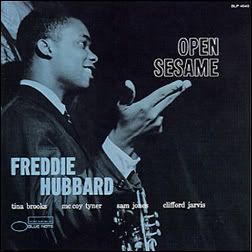
So Long, Freddie Hubbard

1

Earlier this year I saw Freddie Hubbard, one of the world’s greatest trumpet players, at Yoshi’s in San Francisco. It was a living, breathing disaster. If you’d like, you can read about the show here, but if you ever listened to this man and felt the transport in his trumpet playing, I warn you—it will only make you sad.

In his prime, Freddie Hubbard’s solos were the very definition of speaking through playing. His notes were words, his runs long sentences. He was sad, funny, and fearless, all without opening his mouth. I have spent cumulative hours with my eyes shut listening to his solos, being taken on beautiful journeys no oral storyteller could match.
There are so many amazing albums that Freddie Hubbard played on I don’t know where to start. I also keep discovering them in my own collection. The hallmarks: Oliver Nelson’s The Blues and the Abstract Truth, Herbie Hancock’s Maiden Voyage, Eric Dolphy’s Out to Lunch. The standards: John Coltrane’s Olé, Art Blakey’s Mosaic, Tina Brooks’ True Blue, Wayne Shorter’s Speak No Evil. The big-band avant-garde: Ornette Coleman’s Free Jazz, John Coltrane’s Ascension. His own: Open Sesame, Hub-Tones, The Artistry of Freddie Hubbard and yes, Red Clay. All of them superb.
Freddie Hubbard died today at age 70, a month after suffering a heart attack. He had a really terrible curtain call in life, and it was torture to watch someone whose playing I loved so much struggling so viciously. It was worse that he was so cantankerous and volatile—just truly heartbreaking. Here’s hoping he found some peace. He’s still my pick over Miles Davis any day, hands down.
A memorial tribute for Freddie Hubbard is planned next month in New York City. In the meantime, here he is with Art Blakey, Wayne Shorter, Curtis Fuller, Reggie Workman, and Cedar Walton, in 1962. He always blasted hilarious grand entrances in his solos when he was able, and this one’s no exception.

[display_podcast]

Air Supply

Bright Moments

12.31.08When some people get older, they start going out to sushi and start leasing new cars and start taking Pilates classes. And for some reason they stop listening to new music.Then there are those of us who get older with the attendant need to find something to cling to, and for us that thing is music. There are little...

Food Club Rituals

12.31.08Remember the lead-up to Y2K, when the panicking masses stockpiled canned ravioli and beans in hastily constructed pantries, as if they were preparing for the Big One?In retrospect, some might conclude these folks were a wee bit paranoid, but I look back on that time as a window into a collective sanity of sorts, and an important teaching moment....

The New Frugal

Divine Intervention

12.31.08For years, environmentalists have been watching China'srapid economic growth and industrialization with alarm. Thecountry's understandable desire to bring the West's modernlifestyle to over 1 billion Chinese is expected to help pushhumanity's cumulative environmental impact far beyond the earth'scapacity. While some Chinese people are enjoying new conveniences,others and the environment are suffering significant harm, evenoutside China's borders.The specifics are staggering....

Winter Wonderland

12.31.08W ell, it finally happened. Animal Collective, the challenging and  experimental quartet revered in both noise-rock and freak-folk circles, has made an accessible pop album. Merriweather Post Pavilion , which hits stores Jan. 6 on vinyl and Jan. 20 on CD, is the first huge release of the year for an indie-rock world waiting with white-baited belt, and the...

Letters to the Editor

12.31.08Annual letter from the streetsI am one of few voices of the homeless in Marin County. Most of the needs of the poor and homeless in Marin go unnoticed by society and by the churches. Most of the churches have turned their hearts away from the poor. If churches knew God's mind, they would know that God is not...

New Laws for New Year

12.31.08In California for six months now, it has been illegal to talk ona handheld cell phone while driving, but perfectly fine and dandyto futz around with your BlackBerry trying to abbreviate everydayphrases and override predictive text and accidentally drop thething and shove your hand between the emergency brake and the seatand oh there's an incoming text and I gotta...

So Long, Freddie Hubbard

Earlier this year I saw Freddie Hubbard, one of the world's greatest trumpet players, at Yoshi's in San Francisco. It was a living, breathing disaster. If you'd like, you can read about the show here, but if you ever listened to this man and felt the transport in his trumpet playing, I warn you—it will only make you sad. In...
11,084FansLike
4,446FollowersFollow
6,928FollowersFollow