Good Vibrations

0

02.11.09

IBerkeley Rep presents Sarah Ruhl’s stimulating exploration of sexuality in the Victorian era

n Sarah Ruhl’s provocative, compassionate and very funny new comedy-drama, In the Next Room: or, The Vibrator Play, certain words—sexuality, masturbation, orgasm—are never used, but without once being uttered, they are nevertheless the central focus of the play. The play, directed by Les Waters at the Berkeley Repertory Theater, marks the company’s 50th world premiere since opening its doors in 1968.

In Victorian times, at the dawn of the arrival electricity, the bulk of polite European society held no particular opinion on the subject of female sexuality, since they had no clue that it even existed. The female orgasm, never called such and limited strictly to the world of abnormal medicine, was called a “paroxysm,” and was believed by doctors to be a beneficial release of fluids that, when built up in certain women, caused the regrettable condition known as “hysteria.” With the advent of electricity, the vibrator began to be used in certain medical offices, and in Ruhl’s exhaustively researched play, we allowed to take a peek inside such an office.


Dr. Givings (Paul Niebanck), with his able, efficient assistant Annie (Stacy Ross, a frequent favorite at Mill Valley’s Marin Theatre Company), has developed a reputation for successfully treating the symptoms of female hysteria. Working in his impressively equipped home office, next door to his own living room, the doctor keeps the details of this practice from his chatterbox brand-new-mommy wife, Catherine (Hannah Cabell), who starts to become curious after the arrival of a new patient, the radiantly unhappy Mrs. Daldry (Maria Dizzia), whose stiff-and-proper husband (John Leonard Thompson) is worried about her emotional condition and lack of interest in “marital relations.”

With the simultaneous appearance of Elizabeth (Melle Powers), Catherine’s African-American wet-nurse, and the handsome artist Leo (Joaquin Torres)—a rare “male hysteric”—Ruhl sets the scene for a series of surprises, discoveries and personal evolutions. The excellent cast, some of whom are required to bare themselves emotionally and otherwise, carry the story to its satisfyingly moving conclusion (a climax in more ways than one). Compassionate and illuminating, In the Next Room is an electrifying entertainment.


Museums and gallery notes.

Reviews of new book releases.

Reviews and previews of new plays, operas and symphony performances.

Reviews and previews of new dance performances and events.

No Body Left Behind

02.11.09

SHIP OF STATE: Harry S. Truman first proposed single-payer as a national health plan way back in 1948. Ever heard anyone accuse him of being a socialist?

Michael Kozart works the North Bay healthcare trenches. As medical director for the Santa Rosa Free Clinic, Kozart is accustomed to servicing the city’s hardcore homeless population. But with our downward spiraling economy, Kozart says he is witnessing a dramatic up-tick in demand for his clinic’s services. Notably, his clinic is being deluged by surprising demographic groups. “We’re getting lots of folks,” Kozart says, “hurt by the downturn who lost their jobs and need help. Our clinic is just bursting at the seams. We’re beyond capacity. We have to turn people away.”

President Harry Truman first proposed national health insurance back in 1948. He made the single-payer system a centerpiece of his “Fair Deal.” Yet more than six decades later, we still have no universal health system. Instead, America’s healthcare has devolved into a byzantine labyrinth of over 1,200 competing insurance companies, for-profit hospitals and pharmaceutical manufacturers whose profit margins outstrip even those of Big Oil.

What’s resulted are bloated industries run by obscenely overpaid corporate pashas, who, according to the Citizens Alliance for National Health Insurance, personally garner a good percentage of the $660 billion in annual profits their industry outfits shovel in, and who powerfully oppose developing anything akin to any demonstrably effective universal healthcare model such as those at work elsewhere throughout the world.

In gearing up for his futile run at the White House, Rudy Giuliani addressed fellow Republicans on the issue two years ago at a San Francisco fundraiser. Giuliani’s remarks were typical. “Democrats want universal healthcare, collective responsibility—honestly, it’s their version of socialized medicine.”

Dr. John Shearer has little patience with propaganda concerning single-payer healthcare. A recently retired family medicine doctor in Sonoma County and the immediate past president of the California Physician’s Alliance, Shearer formerly served as a volunteer physician at the Jewish Free Clinic, now located in Rohnert Park. He presently serves on its board of directors. For the past quarter century, Shearer and the organizations to which he belongs have been dedicated to reforming healthcare by promoting a single-payer system.

Shearer points out that a growing majority of Americans want single-payer health insurance, as do 59 percent of the nation’s physicians. He challenges Giuliani and his ilk to address the facts. “Single-payer is not socialized medicine. It is a universal healthcare system,” Shearer says, “publicly funded but privately provided. That is to say, physicians and hospitals are contractors to the system, but they remain in private practice and are not employed by the state. It is not socialized medicine.”

Shearer ticks off advantages to single-payer systems, including the affordability to individuals and enormous savings to society as a whole, free choice of physicians, universal coverage and the elimination of administrative duplication. Single-payer, as provided in both the National Health Insurance Act HR 676 as well as former California State Senator Sheila Kuehl’s twice governor-vetoed SB 840, is a universal system based on healthcare help rather than healthcare limitation and denial, with improved oversight and responsibility over a system that is now arbitrary, its decisions over life and death presently made in private with profit-making first and foremost.

Shearer notes that our nation spends far more on healthcare per capita than any other industrialized nation, while still not measuring up to even some Third World countries, never mind equaling our world financial competitors. To demonstrate this he cites the World Health Organization ranking America’s health system at number 37. That’s behind Morocco, Dominica and Costa Rica. And while we spend far more per capita for poor results, 47 million of our citizens are uninsured and perhaps an equal number do not carry adequate coverage.

Here in California, where the numbers of uninsured continue to soar, the governor has $669 million worth of healthcare on the chopping block. What’s to bounce back from D.C. with passage of a federal stimulus package isn’t clear. And how much of that stimulus will be devoted to healthcare is entirely conjecture. All that’s certain is the problem is worsening daily.

A healthcare forum addressing the single-payer issue, entitled New Opportunities for Solving the Health Car Crisis with a Single-Payer System, is on tap for Feb. 21. Dr. Shearer will moderate a panel that includes three other renowned experts and activists in the field.

Asked if a single-payer national healthcare system might address needs his Santa Rosa Free Clinic faces, Michael Kozart says, “Single-payer is everything we need. It is exactly what we need. I just don’t see any other way to achieve healthcare justice. It’s Economics 101. When there’s one buyer negotiating costs for everyone and everything, we all benefit.”

‘New Opportunities for Solving the Health Care Crisis’ is slated for Saturday Feb. 21, from 3pm at the Glaser Center, 547 Mendocino Ave., Santa Rosa. Free; donations welcome. 707.568.5381.


Etta James Does Not Rock the House

3

I was waiting for this. Etta James slams Beyoncé.

[display_podcast]

It’s not so much that Etta James is jealous of someone else singing her song; she couldn’t be, after the thousands of versions of “At Last” played at weddings every single weekend in America. At some point, you hand your signature song to the public, and are glad for the supporters (and royalties) of the original instead of threatening to whoop their ass. James signed off on Cadillac Records, and knew Beyoncé would be in public, promoting the film with her likeness.
But: “He ain’t my president.” ‘the fuck? If that’s the way she feels, then she never deserved to sing “At Last” for Obama anyway, and she and other cantankerous rock critics can sit in a corner complaining about how Beyoncé needs a ladder to kiss the hem of Etta James’ skirt—with intelligence and hope as collateral damage.
Realistically, Etta James needs some scaffolding to reach Beyoncé’s shoes. She isn’t the vocal powerhouse who recorded Etta James Rocks the House anymore, and frankly, if she’d sung for the Obamas, she only would have embarrassed herself. She’s since offered a halfhearted semi-retraction, but I don’t think anyone feels it. A sad twilight to a great career.

Film Review: ‘He’s Just Not That Into You’

0

Listen, HJNTIY, We Need to Talk…

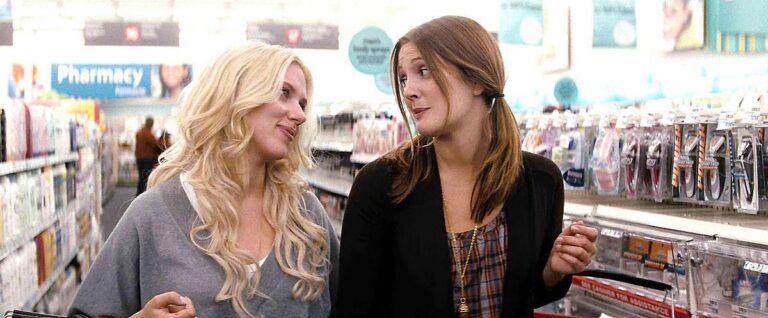
If he’s not calling you, sleeping with you, marrying you—or is sleeping with someone else—it could be that he’s just not that into you. It seems like a simple enough guideline. Yet most women wish to be an exception to such rules. That is why so many hopeless romantics will be gathering up their girlfriends with rabid excitement to go see He’s Just Not That Into You, the film based off the self-help dating book of the same name. They shouldn’t.

According to script, we ladies love to have our girl’s nights, which usually include Champagne, group readings of Cosmopolitan, and sharing advice on men. HJNTIY promises all of this in movie form, but all the witty, relatable scenes are easily seen in the previews. Sympathizing with the women in the film turns out to be more depressing than eating a carton of Ben & Jerry’s when home alone on a Friday night.HJNTIY focuses on the intersecting lives of five women and the men they constantly misread. Every time one of them starts to smarten up to the man’s real feelings, their girlfriends ease them back into oblivion by saying that this one time they knew this one girl who ended up falling in love. This distorted view of reality makes many of the characters pathetic in their attempts to understand and snag themselves a man.

Gigi (Ginnifer Goodwin of Big Love) sits by the phone all day stalking potential mates. Her desperate, over-the-top need to be loved causes her to pretend she is meeting men for dates and will make you think twice about calling the next guy who gives you his card. Her polar opposite Beth (Jennifer Aniston) has been dating Neil (Ben Affleck) for seven years without a ring. Affleck and Aniston are always playing down-to-earth, puppy dog characters, so it’s no surprise that their chemistry seems real and their scenes of the movie are the sweetest.

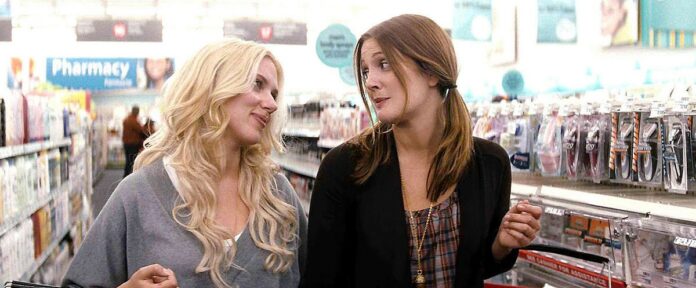
It’s hard to relate with many of the characters because, well, there is too many of them. You just can’t get that into them. They each get so little screen time that it’s hard to get to know or understand their many problems. Mary (Drew Barrymore cute as always), has a small part, but reflects the most on women in today’s society. Mary only meets and connects with men through technology like Myspace, videochatting and texting. She complains about how we don’t meet people organically anymore and how being rejected by “seven different technologies” is exhausting. Thankfully she has her gay entourage to give her advice, but don’t worry about their love lives. According to one gay character, it only takes them two or three seconds to understand if someone wants to sleep with them or not.He’s Just Not That Into You doesn’t have a fully rounded enough script for its talented actors, but it’s a cute enough movie with some decent laughs. And don’t worry, single ladies, the end of the movie reminds us that there is still hope in our sad dark lives. Attached? Don’t take your boyfriend to see this film. He might get some ideas, and you don’t want to find out that honestly, he’s just not that into you, either.Hannah Smith

Live Review: Hank Jones at Yoshi’s

0

Let us praise versions of “My Funny Valentine” that don’t make us squirm. Let us praise Lifetime Achievement Awards for those who truly deserve it. Let us praise 90-year-old pianists who continue to paint new scenes on the keys.
Let us praise Hank Jones.
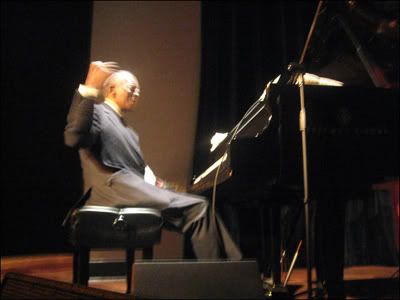
Hank Jones opened a two-night stand at Yoshi’s in San Francisco tonight, and during an hour-and-a-half set displayed no loss of conception, creativity, nimbleness or humor even while entering his ninth decade. He defines the phrase “jazz treasure” without any self-importance. He opened his set with “Happy Birthday,” for cryin’ out loud.
I caught the 10 o’clock set, after impulsively driving down from Santa Rosa at the last minute to buy a single ticket. Jones has been on a lot of albums I adore—Cannonball Adderley’s Somethin’ Else, John Coltrane’s Bags & Trane, Charlie Haden’s Steal Away, Roland Kirk’s We Free Kings, Chris Connor’s My Name is Chris—but it’s a piquant little collection of standards by his Great Jazz Trio that I’ve been listening to a lot lately. Someday My Prince Will Come isn’t out of this world, but it is a basic collection of standards played well. Sometimes that is all that’s needed.
Tonight, Jones offered a similar grace and simplicity. Check the setlist:
Lonely Moments – Mary Lou Williams
Quiet Lady – Thad Jones
Bluesette – Toots Thielmans
My Funny Valentine – Richard Rogers
Rhythm-a-Ning – Thelonious Monk
Blue Minor – Sonny Clark
Stella by Starlight – Victor Young
Six and Four – Oliver Nelson
Mercy, Mercy, Mercy – Joe Zawinul
Intimidation – Hank Jones
Blue Monk – Thelonious Monk
Each song followed the basic order. Intro, head, verse, piano solo, bass solo, drum solo, head, and out. John Clayton clearly relished playing with a different group (he’s Diana Krall’s right-hand man) and came correct with brilliant bass work that at times even had Jones in awe, while drummer Clayton Cameron danced around the drums with brushes that seemed to sing. Jones phrased skilled solos that could only come from a lifetime of playing combined with an impressively present acumen.
But it was Hank Jones’ humor that took the cake. He drew out the ending to “Mercy, Mercy, Mercy” with three false endings, toying with the crowd, but when the next tune ended abruptly and no one clapped, he looked at the audience, curiously, and laughed, “That’s it.” During the verse of “Blue Monk” he threw in an extra discordant harmony to Monk’s already-discordant arrangement and then looked around as if to apprehend the musical trespasser—inside the piano, underneath the keyboard.
The dude is 90 and he’s still having fun. Thanks, Hank, for still being here.

Buzz Kill

0

02.04.09

The search for a tonic that will raise his magic wand or swell her libidinous hunger has spanned the centuries, spawning the word “aphrodisiac,” a derivation of Aphrodite, the Greek goddess of love, sex and beauty. The sexually arousing qualities of oysters, chocolate, Spanish fly and powdered rhino horns have long been exulted by cultures worldwide. In ancient China, eating human genitals, semen and even menstrual blood were all believed to increase sexual ability. A quick look in the spam box confirms that a vast variety of modern-day cures have joined the list, amounting to a billion-dollar business. Viagra alone sells for roughly $8 per tablet, even though it only has a 70 percent success rate. But what of anti-aphrodisiacs, those items that have the opposite affect?

When a prominent San Francisco&–based ob-gyn is asked about the biggest buzz kill she deals with in her practice, she laughs, “Two kids and a mortgage—it works for all my patients, guaranteed! Stress, responsibility and lack of time—they’re all so destructive to libido in our culture. Try working full-time, having kids and running a household. There’s no time or energy left over.”

She continues, “While stress destroys women’s libido, it seems to increase men’s. A driven man is turned on by stress and power, but women don’t respond that way. Hormones have a lot to do with it. Testosterone, the primary libido producer, boosts the sex drives of both men and women, while estrogens have the opposite effect.”

And so it follows that ingestibles that cause a drop in testosterone will cause a droop in the action. While this may be a good thing for parents of hyperhormonal teenagers or as treatment for sex offenders, most folks don’t want to lose that lovin’ feeling too quickly. It’s best to avoid buzz kills, or use them in moderation when possible.

American’s most commonly ingested anti-aphrodisiacs are alcohol and cigarettes. Both decrease testosterone production and are highly addictive. (It kind of makes you wonder how bars became the singles’ widespread place of choice to meet and mate, considering the high consumption rate of both in these venues.)

Another common cultural factor for libido loss is a high-fat diet and a sedentary lifestyle. Hydrogenated fats equal bigger guts and active fat cells, which increase estrogen production. Exercise battles fat and maintains normal testosterone levels. Real men may find themselves eating more quiche and less beer, burgers and fries.

And don’t rely on Kellogg’s Corn Flakes for healthier eating. J. H. Kellogg originally promoted his cereal as an anaphrodisiac. He wrote a book of moral codes, Plain Facts for Old and Young, in which he spoke of the need to “quell the beast within” and to restrict one’s desires.

Other buzz kills fall under the category of bad odor producers. No doubt there are BO, bad breath and fart fetishists, but it’s probably safe to exclude the general population from such fetid forms of enjoyment. Red meat, especially when eaten in conjunction with a diet low in vegetables and fiber, may stagnate and putrefy in the digestive tract, causing terrible gaseous odors. Eggs, fish and liver contain chlorine, often resulting in fishy and sulfurous smells post-digestion. Oral bacteria also feast on anaerobic proteins such as red meat and fish, producing the waste products that cause halitosis.

And the “musical fruit” of children’s rhymes—beans (and legumes)—are notorious gas producers. While the song promises that “the more you eat the better you feel,” no doubt your date will wish you hadn’t ordered that super-burrito. Processed foods, heavy in sugar, refined white flour, rancid fats and hydrogenated oils can be responsible for highly objectionable BO. Think Homer Simpson and his interminable intake of doughnuts, if a visual turn-off is needed.

Even though “a picture of your mother” (as one blogger responding to the question “What is an anti-aphrodisiac?” answered) may instantly kill any libidinous thoughts, mom still looms large in the good advice department. A diet high in veggies and low in fat, moderate in alcohol intake, no ciggies and lots of exercise will keep the buzz going longer than the Energizer Bunny. Maybe not what mom had in mind, but that’s probably how you got here in the first place.

The Flaccid Four

Alcohol As Ogden Nash noted, “Candy is dandy but liquor is quicker,” but the juice popularly used to loosen inhibitions is actually the number one cause of libido loss. Numerous scientific studies conclude that alcohol diminishes arousal and makes it more difficult for both women and men to climax. And here’s a twofer: quinine, widely used in tonic water, is toxic to the testicles, reduces sperm production and decreases testosterone. So if you’re looking for some action, lay off the gin and tonics, or you may go down like the British Empire.

Cigarettes The primary active ingredient in cigarettes, nicotine, decreases sexual libido. Plus, cigarettes yellow the teeth and skin, and make the breath taste like a used ashtray, hardly a conducive way to set the mood. And we are all well aware that they kill far more than the buzz. Furthermore, forget trying to hide the odor with breath mints or toothpaste. In large doses, spearmint and peppermint reduce testosterone levels and cool the heat.

Black Licorice Licorice root extract, which is used to flavor a wide variety of products such as candies, liqueurs (think Schnapps), soft drinks, herbal teas, medicines and ice cream, contains ingredients that impede the production of testosterone. Considerable amounts of licorice are used to flavor and sweeten the taste of tobacco with a woody flavor. The New England Journal of Medicine recently published a study concluding that components in licorice suppress the sex drive, partly due to their estrogenic content. Why not market this to teens—or to parents, who can slip it into their offspring’s diet? Twenty-five grams—less than an ounce—are cheap, and offer strong anti-aphrodisiacal effects when ingested.

Tofu and other soy products Soy products contain high amounts of isoflavonoids, which mimic the effects of estrogen. It is conjectured that the Buddhist monks in China and elsewhere consumed much of it in order to inhibit their libidinous tendencies and keep them focused on the straight and narrow path to nirvana. Many cooks use garlic and onions to enhance the bland taste of tofu, and garlic breath hinders hooking up with that special someone. But garlic has been considered an aphrodisiac since the days of the ancient Greeks. A 2005 study has proven it a vasodilator, sending blood into the appendage in need of a stiff drink. It’s best to use an alternate seasoning if inaction is the aim.

—S.D.

Quick dining snapshots by Bohemian staffers.

Winery news and reviews.

Food-related comings and goings, openings and closings, and other essays for those who love the kitchen and what it produces.

Recipes for food that you can actually make.

Beer=Good

02.04.09

Prohibition, a period devoid of all things golden and intoxicating, was a dark and lackluster time for beer lovers. Prohibition in San Francisco wiped out most of its breweries or drove them underground, and it wasn’t until the 1970s that they started popping back up again. One of these was the New Albion Brewery, which opened in 1976, becoming one of the first craft breweries in the United States.

There are now some 1,400 small craft breweries, many of them concentrated in Northern California. That seems like reason enough to party, and party we shall with the first-ever San Francisco Beer Week. This 10-day event, running Feb. 6&–15, celebrates the Bay Area’s history of brewing and includes 150 events taking place from the North Bay to the South Bay. Lagunitas Brewery has a fantastical beer circus, Marin Brewing Co. adds a Mexican flavor with a fiesta, Noonan’s is serving various whiskeys and Moylan Brewing Company’s beers, Horizons Restaurant is doing it up in the moonlight with a Sierra Nevada five-course tasting meal, and Iron Springs Pub and Brewery is hosting a beer dinner. The kickoff event is the Bistros Double IPA Festival in Hayward on Feb. 7 where Napa Smith Brewery will unveil the “official” beer of SF Beer Week, its Napa Smith Original Albion Draft Ale, created by master brewer Don Barkley.

Barkley started at New Albion as an intern, advancing to master brewer by the time the brewery closed its doors in 1983. He then helped launch the Mendocino Brewing Company, creating the unique Red Tail Ale. He is currently the master brewer at Napa Smith Brewery. Owner Steve Morgan speaks highly of Barkley’s experience. “Don’s been making craft beer longer than anyone besides Fritz Maytag [who opened Anchor Brewing in San Francisco in 1965].”

The Albion Draft Ale gives a delicious history lesson to those who try it, because “it is literally a recreation of the very first craft beer in the United States,” says Morgan, who explains that Barkley found the New Albion Brewery recipe in a shoebox. The two decided to go back and brew the original craft beer especially for SF Beer Week. There is only one batch being made, the equivalent of 30 kegs, and none of it is being bottled. “Once it’s gone, its gone,” says Morgan. For dates and times, go to www.sfbeerweek.org.

Quick dining snapshots by Bohemian staffers.

Winery news and reviews.

Food-related comings and goings, openings and closings, and other essays for those who love the kitchen and what it produces.

Recipes for food that you can actually make.

Graziano’s Vodika Lounge

0

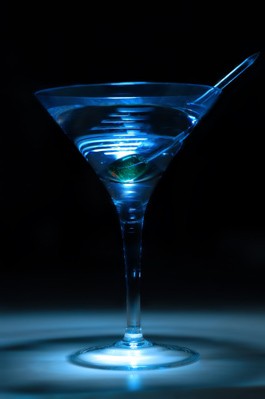
As wine is to sunlight and warm crackling fires, vodka is to the shattered ice in James Bond’s martini, coolly ordered in a room full of danger, or to the rough frost on a bottle of Stoli pulled from the freezer at midnight. Vodka inspires fascination with all things that are clear as crystal and cold as ice.

Upon learning about the Ice Hotel in Sweden, many have an unreasoning desire to be there. The azure light filtered through shimmering walls, the ice beds piled with furs, and naturally the vodka bar, made of pure ice, are all strangely irresistible.

In recent years, the ice bar phenomenon has spread from the frozen tundra to the world’s capitals of style and taste: London, New York, Dubai, Las Vegas, Petaluma.

As part of its recent remodel, Petaluma fixture Italian restaurant Graziano’s has installed the Vodika Lounge, a walk-in freezer for the express purpose of tasting vodka at its bone-chilling “correct” temperature. Any person who must ask the obvious—”Um, why can’t the vodka be inside a smaller freezer, while we stay in the warm bar on the outside?”—is due for a serious reevaluation. When a comrade I’ll call Agent K (eyes dark as the Nordic new moon, locks that glint like the dregs of Goldschläger) suggested a rendezvous at this place, I immediately signed on to the mission.

Park the puffy jackets at home, because “renting” from Graziano’s selection of luxurious faux fur coats is part of the fun. Fur hats, too. Thus bundled up, our hostess (in Bond-girl white fur) ushered us through the freezer door into the atmospheric blue glow of an arctic twilight. The frigid air made me catch my breath, while the extreme blue created fleeting ecstasy flashbacks every time I blinked. Above, the massive condenser unit keened like an authentic arctic wind.

This is not the place to while away the evening sipping crantinis; the Vodika Lounge is for tasting brief flights of premium grain and potato distilled spirits. We chose one of the more unusual flavor-infused vodkas. Zubrowka Vodka, made with Polish bison grass, had an appealing, sweet vanilla-hazelnut flavor. The intriguing Snow Queen, with its intricately etched Kazakh princess flowing above onion domes, was a beauty, as creamy and smooth as the idea of snow.

All that’s missing from this icy little wonder world are Björk remixes and a smidgen more vodka. Pours were not quite equivalent to a full bar shot, nor were they as numerous as a typical tasting flight of similarly priced wine. The ice bar is surely a fun fantasy of ice, fur and pure grain alcohol, but if I wasn’t habitually intoxicated by the company of Agent K, I would have had no buzz on at all.

Graziano’s Vodika Lounge, 170 Petaluma Blvd N., Petaluma. Open 6pm–1am. Tasting fee $20–$25 per person. 707.762.5997.


View All

Brother Interior

0

02.04.09

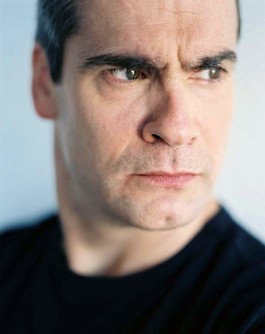
Like his cultural antithesis Madonna Ciccone, Henry Rollins is an expert at transformation. Debuting as the tattooed and muscle-bound singer for legendary punk band Black Flag in 1981, now an activist and world traveler edging toward 50, Rollins has lived at least nine lives. After Black Flag’s breakup in 1986, he hit his stride in the Rollins Band; in another incarnation, the literature aficionado established the publishing imprint 2.13.61, releasing his own poetry and tour journals along with books by Nick Cave and Exene Cervenka. After being designated “Man of the Year” by Details magazine and winning a Grammy for Best Spoken World Album in 1994, he played Hollywood with parts in films like Lost Highway and guest-hosted on MTV.

Refusing to sink into obscurity, Rollins has entered the 21st century with a bang. He produced a Saturday-night radio show for Indie 103.1 and briefly morphed into a talk-show host with The Henry Rollins Show, featuring guests like Sleater-Kinney and Werner Herzog. Through it all, he has been an inveterate spoken-word and USO performer, entertaining troops in Iraq and Afghanistan, as well as a documentary filmmaker, recording his own concerts in New Orleans, Israel and South Africa.

On the phone from Los Angeles where he lives, Rollins is friendly and open. This comes as no surprise since no topic is off-limits during his speaking tours. Cultivating a mix of social critique, political analysis and personal narrative, Rollins brings his scathing observations about everything from Burger King in Beirut to dating in La-La Land when he appears at the Wells Fargo Center on Feb. 7.

“I’ve always had fun with the dating thing onstage, because it’s always been so difficult for me to meet women,” Rollins says with a laugh. An outspoken advocate for gay rights, with refreshingly feminist inclinations, Rollins has learned to look for the true beauty in women. “It took me a while to where the looks didn’t matter so much as, well, I want to be friends with this person, and that makes them sexy. I’m seeing a different kind of beauty,” he says.

Strong opinion is a trademark of a Rollins performance. Current material is culled from his recent travels to Saharan Africa for the Desert Music Festival, and includes observations about experiences in Tehran, Syria, Lebanon, Burma, Vietnam, Cambodia and Thailand.

“You see the commonalities more than the disparities. Peace is a true north for people, some kind of stability,” Rollins says about traveling the world. “People might be ‘dipped in dirt,’ but they are vigorous, they’re working everyday. No matter where you go—Ho Chi Minh City, Islamabad, Pakistan—people are trying to get ahead, they’re striving towards dignity and peace.”

The recent transition of presidential power, an experience Rollins likens to being “in fifth gear in a Maserati going down the Autobahn, when before the mule didn’t want to get out of the gully,” will also come into play.


With a mix of humor and pathos, Rollins skirts the line between standup comedy and angry political commentary, but he resists being characterized as a comedian. “When I’m onstage sometimes, I will kind of trip over humor, or it follows me home like a dog, and sometimes when you’re talking about meeting 23-year-old boys with 60 percent of their brain removed who will spend the rest of their lives in diapers changed by their mom, there’s no humor there,” he says, in reference to lessons learned from touring military hospitals like the Walter Reed Army Medical Center.

“I basically call it like I see it, for better or for worse, and sometimes it’s damn funny, and sometimes it’s all you can do to keep from crying. The good, the bad, the ugly but, hopefully, the real—that is the constant I strive for.”

 Henry Rollins appears on Friday, Feb. 6, as part of the Copperfield’s Books Renowned Speakers Series. Wells Fargo Center, 50 Mark West Springs Road, Santa Rosa. 8pm. $19.50. 707.546.3600.


War’s Silence

0

02.04.09

My father, Patrick Loughran, a gregarious Irishman from County Tyrone, and Chuck Morrison, my taciturn uncle from Albany, N.Y., were united by much more than the fact that they’d married sisters. They were members of Tom Brokaw’s “greatest generation”—my father, a SeaBee; my uncle, a Marine. Both veterans of WW II, they had been beaten and battered by the world in precisely the same way. They’d been through the Depression and then the war and had shared in the freedoms and economic booms that followed. They knew the rules. They knew what was expected of them. They knew how to live without doubt or regret.

Or so I thought.

In 1987, I was diagnosed with testicular cancer. Following the surgery, radiation was necessary to zap any remaining possibility of cancer. Even though Redwood Radiology in Santa Rosa was near my house, my father insisted on driving up from Petaluma to chauffeur me to my appointments. As often as not, my uncle Chuck would accompany us.

It wasn’t only a kindness that they provided for me; it was something for them to do. They were both retired from busy and active careers, and there is a limit to how much weeding, watering and gardening a tract-home-sized piece of earth will endure. And so every Thursday for a few months I sat in the car, more worried about my health than the banter, listening to stories about things that mostly occurred before I was born: the virtues of the Studebaker vs. the Buick; the wild times they used to have in Monterey with my uncle Mario; how America had gone to hell in a hand basket.

Then one day, my father asked Chuck why he never talked about the war. Chuck didn’t answer. He waved away the question and stared out the window.

My father had pictures of himself in the Aleutians and South Pacific; I’d seen pictures of other uncles in uniform. But I don’t recall any pictures or memorabilia of Chuck. He had fought with the Marines in WW II and Korea; I couldn’t tell you where or with what battalion, company or unit. He simply never spoke about it.

On this day, as well, Chuck just shook his head and didn’t answer the question. It was not unusual for Chuck to be quiet. He was the most quietly sociable man I’d ever known. He never missed a party (after all, they were usually at his house) or a joke. His interjections into conversations were always terse, telling, funny and conclusive.

But I’d never before seen him so discomfited as he was by my father’s question, “Why do you never talk about the war?”

My uncle Chuck was a generous and gracious man. A success in business. A loving father. A respected, substantial and beloved cog in a large, extended family. A veteran of probably the last popularly supported and undoubtedly necessary war this country will ever wage. And yet even an interloper from another generation could see that while he had survived that war successfully, he was not unscathed. A portion of his life, years of it, had been ruined to the point that he refused to recall or speak about them.

There are the KIA, the MIA and the wounded, but every war also produces a more restrained casualty. For every reminiscing veteran that Tom Brokaw or Ken Burns interviews, there is another survivor, another hero, another victim whose wartime experience is simply unspeakable. They can’t and don’t talk about it.

There is a generation at war now who will return to have children, attend college, buy houses and live “good” American lives. We can explore the reasons for Gulf War II and the reasons against it. The costs in political clout and world credibility are important and debatable. But we cannot forget that beyond the obvious expense in dollars and lives, as with every war, there is another toll, a mute and tragic carnage.


The tragedy of silent lives forever changed.

 Rob Loughran’s novel ‘High Steaks’ won the 2002 New Mystery Award. His collection of short stories ‘What Happens When the World Doesn’t End?’ will be published sometime in 2009. He lives in Windsor.

Open Mic is now a weekly feature in the Bohemian. We welcome your contribution. To have your topical essay of 700 words considered for publication, write [ mailto:op*****@******an.com” data-original-string=”HyPaznjrP6obGvKYhEWq+A==06awq+EkuBMtbP0lebAxqcw4m+MiJKz0n5UflVcicYdrre5OY/l2bTIlNseVca/sc3maa86pOkE8w8XDiDF9pFRRJmUJBjNa3ByMqv7jc9CUNI=” title=”This contact has been encoded by Anti-Spam by CleanTalk. Click to decode. To finish the decoding make sure that JavaScript is enabled in your browser. ]op*****@******an.com.


Good Vibrations

02.11.09IBerkeley Rep presents Sarah Ruhl's stimulating exploration of sexuality in the Victorian eran Sarah Ruhl's provocative, compassionate and very funny new comedy-drama, In the Next Room: or, The Vibrator Play, certain words—sexuality, masturbation, orgasm—are never used, but without once being uttered, they are nevertheless the central focus of the play. The play, directed by Les Waters at the Berkeley...

No Body Left Behind

02.11.09 SHIP OF STATE: Harry S. Truman first proposed single-payer as a national health plan way back in 1948. Ever heard anyone accuse him of being a socialist? Michael Kozart works the North Bay healthcare trenches. As medical director for the Santa Rosa Free Clinic, Kozart is accustomed to servicing the city's hardcore homeless population. But with our downward spiraling economy,...

Etta James Does Not Rock the House

I was waiting for this. Etta James slams Beyoncé. It's not so much that Etta James is jealous of someone else singing her song; she couldn't be, after the thousands of versions of "At Last" played at weddings every single weekend in America. At some point, you hand your signature song to the public, and are glad for the supporters...

Film Review: ‘He’s Just Not That Into You’

Listen, HJNTIY, We Need to Talk…If he’s not calling you, sleeping with you, marrying you—or is sleeping with someone else—it could be that he’s just not that into you. It seems like a simple enough guideline. Yet most women wish to be an exception to such rules. That is why so many hopeless romantics will be gathering up their...

Live Review: Hank Jones at Yoshi’s

Let us praise versions of “My Funny Valentine” that don’t make us squirm. Let us praise Lifetime Achievement Awards for those who truly deserve it. Let us praise 90-year-old pianists who continue to paint new scenes on the keys. Let us praise Hank Jones. Hank Jones opened a two-night stand at Yoshi’s in San Francisco tonight, and during an hour-and-a-half set...

Buzz Kill

02.04.09The search for a tonic that will raise his magic wand or swell her libidinous hunger has spanned the centuries, spawning the word "aphrodisiac," a derivation of Aphrodite, the Greek goddess of love, sex and beauty. The sexually arousing qualities of oysters, chocolate, Spanish fly and powdered rhino horns have long been exulted by cultures worldwide. In ancient China,...

Beer=Good

02.04.09Prohibition, a period devoid of all things golden and intoxicating, was a dark and lackluster time for beer lovers. Prohibition in San Francisco wiped out most of its breweries or drove them underground, and it wasn't until the 1970s that they started popping back up again. One of these was the New Albion Brewery, which opened in 1976, becoming...

Brother Interior

02.04.09Like his cultural antithesis Madonna Ciccone, Henry Rollins is an expert at transformation. Debuting as the tattooed and muscle-bound singer for legendary punk band Black Flag in 1981, now an activist and world traveler edging toward 50, Rollins has lived at least nine lives. After Black Flag's breakup in 1986, he hit his stride in the Rollins Band; in...

War’s Silence

02.04.09My father, Patrick Loughran, a gregarious Irishman from County Tyrone, and Chuck Morrison, my taciturn uncle from Albany, N.Y., were united by much more than the fact that they'd married sisters. They were members of Tom Brokaw's "greatest generation"—my father, a SeaBee; my uncle, a Marine. Both veterans of WW II, they had been beaten and battered by the...
11,084FansLike
4,446FollowersFollow
6,928FollowersFollow