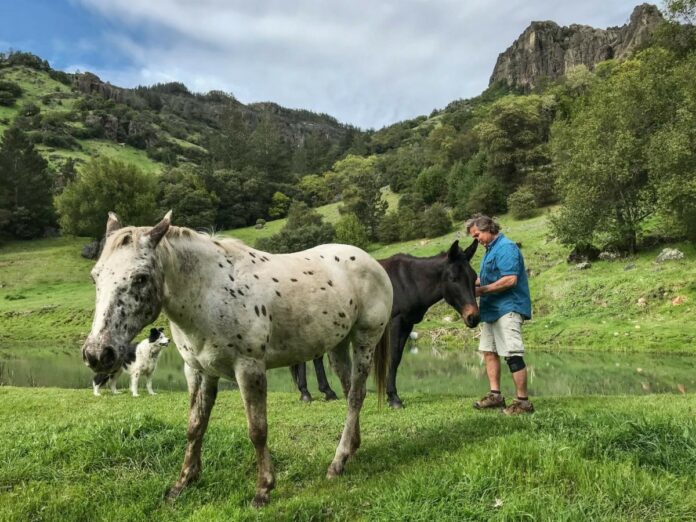
One Night, Many Voices: Festival Napa Valley Presents Virtual Concert

Founded in 2006, Festival Napa Valley celebrates the region’s beauty and bounty and makes performing arts accessible to all through world-class concerts and events each summer and year-round educational programs for North Bay students.

This summer was meant to be Festival Napa Valley’s 15th summer of shows, which annually features dozens of classical and chamber concerts, wine and food spectaculars and more featuring internationally-renowned performers.
Yet, the Covid-19 pandemic has forced the festival to press pause on its planned 10-day schedule.

In place of in-person events, Festival Napa Valley will bring the stars to you with a free virtual concert event, “One Night, Many Voices,” on Saturday, July 25, at 7pm.

The online showcase will include performances by festival favorites such as violinist Joshua Bell and pianist Jean-Yves Thibaudet, as well as the Young People’s Chorus of New York City and Cuban pianist Aldo López-Gavilán and his band among others.

“We are thrilled to bring together some Festival favorites for a special night to celebrate the healing power of music,” Richard Walker, President and CEO of Festival Napa Valley says in statement. “We hope this concert will provide connection, hope, and inspiration to music lovers everywhere.”

Recorded especially for this occasion, “One Night, Many Voices” will pack the festival’s wide array of musical offerings into a singular experience with familiar faces offering never-before-seen performances.

Violinist Joshua Bell is one of those familiar faces. He’s a frequent performer with Festival Napa Valley, and for good reason; his career spans more than thirty years as a soloist, chamber musician, recording artist, and conductor and he is one of the most celebrated violinists of the modern era.

This summer, Bell has become one of the busiest performers on the web in the wake of Covid-related concert cancellations. For this concert, Bell is performing with soprano singer Larisa Martínez, who he recently collaborated with on the Emmy-nominated PBS special, Live from Lincoln Center: Seasons of Cuba. For the last two years, Martínez has also toured with Italian singer Andrea Bocelli throughout North America, South America and Europe.

Internationally-recognized pianist Jean-Yves Thibaudet is also performing as part of “One Night, Many Voices” on July 25. Like Bell, Thibaudet has spent three decades performing as a soloist and in chamber and orchestral groups. Born in Lyon, France, Thibaudet is a noted interpreter of French music, and his creative collaborations span music, film, fashion and visual art.

Other voices appearing as part of Festival Napa Valley’s virtual concert include soprano Nadine Sierra, who recently portrayed Juliet in San Francisco Opera’s production of Romeo & Juliet, and tenor Michael Fabiano, who was scheduled to portray Rodolfo in San Francisco Opera’s now-canceled production of La Bohème this fall.

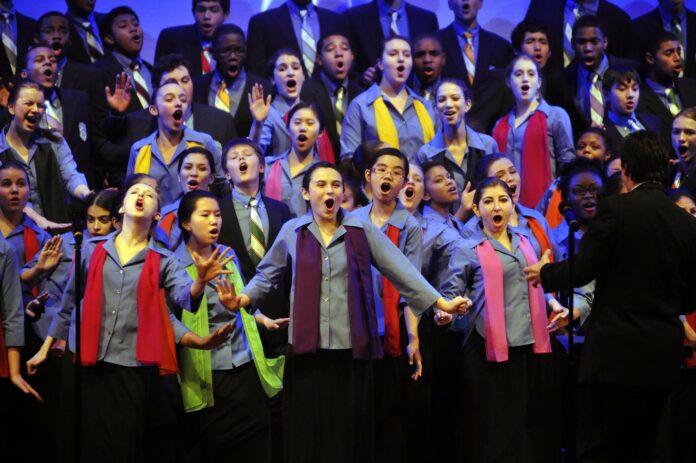
The Young People’s Chorus of New York City is also slated to appear on July 25. The chorus mirrors Festival Napa Valley’s educational commitment to make arts accessible by offering programs at Napa County public schools year-round, hosting a tuition-free summer music academy and donating concert tickets to families in Napa Valley.

“One Night, Many Voices” will crescendo with a performance by brilliant Cuban classical pianist Aldo López-Gavilán, who performs both traditional Afro-Cuban jazz and offers improvisational interpretations of classical music repertoire. López-Gavilán will appear with his band from their home in Havana, Cuba, capping off the global-inspired virtual concert.

To add to the festive evening, Festival Napa Valley invites Napa restaurants to produce curated to-go menus, and the festival’s many partner wineries will provide special offers on select bottles to enjoy with show. Participating restaurants include Heritage Eats, Mustards Grill, Solbar, Tre Posti and V Sattui.

As the Covid-19 pandemic continues to impact the North Bay through the summer, Festival Napa Valley is planning to expand its fall and spring concert schedules. The festival is also looking ahead to providing distance learning arts curriculum should Napa Valley public schools remain closed, creating original digital content with its roster of artists and community partners while social distancing remains in effect.

‘One Night, Many Voices’ streams virtually on Saturday, July 25, at 7pm. Register for free at FestivalNapaValley.org.
North Bay Black-owned restaurant list

Indoor dining is on hold in the North Bay for the foreseeable future, dealing a major setback for restaurants and bars that were hoping to salvage summer during the Covid-19 pandemic. Still, there are ways to support the local food industry, and last month, a Santa Rosa teacher launched an endeavor to highlight North Bay businesses and restaurants owned and operated by people of color, giving residents a guide to where they can support Black lives in the community while eating well.

Kelly Cramer, who works as a teacher at Roseland University Prep in Santa Rosa, made the ever-expanding online spreadsheet of Black, Immigrant and People of Color Owned Restaurants and Businesses in Sonoma County after looking for one like it on internet search engines.

“I just thought that it deserved to exist,” Cramer said at the time. “After much thought, I decided to also include all people of color and immigrant-run businesses because, although Black businesses need to be amplified now and always, I simply just wanted to keep this resource all in one place so people can continue to utilize it for the future, long after it’s trendy.”

Black-owned North Bay restaurants on the list include more than 250 restaurants and businesses. For North Bay food lovers in need of some real comfort, four spots stand out in Sonoma, Marin and Napa counties.

Buster’s Southern Barbecue has been serving up authentic Louisiana-inspired cooking in Calistoga since 1965 and has become a staple of the community. The restaurant serves up top quality tri-tip, pork and beef ribs and more with choices of mild or spicy BBQ sauce and their sandwiches, served on garlic toast, are a popular lunch for locals. Outside dining and take-out is available. busterssouthernbbq.com.

Bariadelli Caribbean Gourmet Pizza is located in northwest Santa Rosa, and specializes in authentic Caribbean cuisine, catering, take-and-bake gourmet pizzas and food-truck services. Now open for online orders, Bariadelli brings bold flavors to its menu, with items like Jerk Chicken Pizza and a Caribbean Supreme that features rice and beans, creole chicken, jumbo shrimp and fried plantains. bariadelli.com.

Marin County residents can also find Black-owned restaurants and chefs in their backyard, with locations such as Caribbean Spices Restaurant in San Rafael. Since 2009, Caribbean Spices makes Haitian and Creole cuisine, and the restaurant has been offering outdoor dining in addition to catering options with specialty dishes like oxtail and creole snapper. carribeanspicesdba.net.

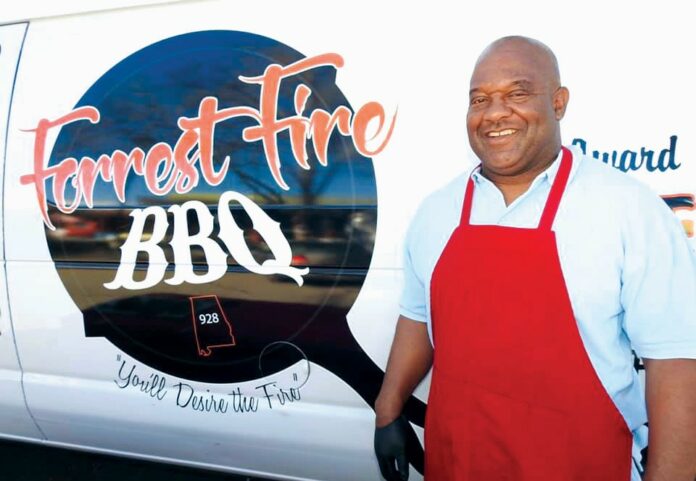
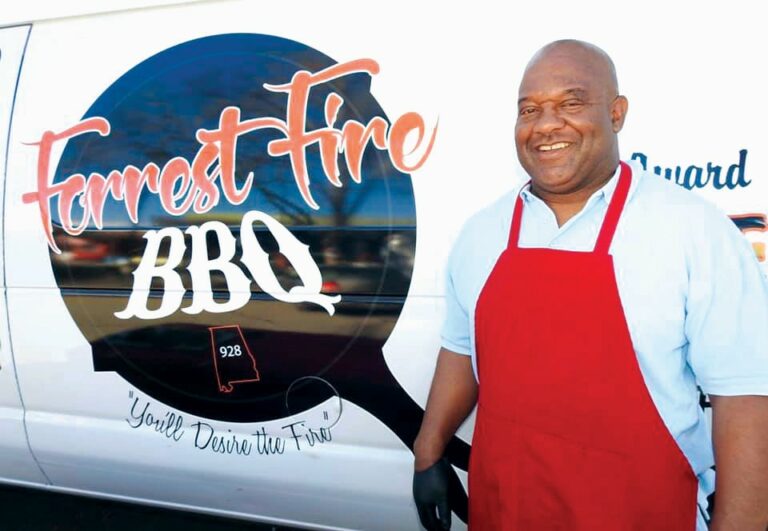
Also based in San Rafael, Forrest Fire BBQ is the culinary soul of owner and pitmaster Forrest Murray Jr. Murray learned to cook from his family, and he puts that familial love into his food. Forrest Fire BBQ is a mobile operation, and Murray caters throughout the Bay Area with a menu that includes St Louis–style pork ribs, sirloin beef ball tip steaks and pulled meat sandwiches with all the sides and sauces. Forrest Fire BBQ also pops up at Marinwood Market on certain weekends, with ribs, hot dogs, corn on a stick and more on hand. forrestfirebbq.com.

“A disproportionate percentage of Black and POC-owned businesses have closed during the Covid-19 pandemic,” Cramer says. “Supporting these places is just ultimately good for everyone. Plus, so much good food and wine is on this list! A ton of places I can’t wait to try.”

Find the full list at bit.ly/SOCOPOC.

Not Lost Anymore: Napa Valley History, Told Through Food

Alexandria Brown isn’t a foodie, but she wrote this year’s most compelling North Bay book on food. In fact, Lost Restaurants of Napa Valley and Their Recipes, released in April by The History Press, was written while its author lived in a kitchenless apartment. In it, Brown—a historian—uses restaurants-past as a lens through which to tell stories of the immigrant and people-of-color communities that shaped the esteemed culinary region. 

At first, Brown—who has master’s degrees in library science and U.S. history—wasn’t eager about her press’s proposal to write about restaurants. But she did a bit of research and soon got excited about the project. 

“I found all of these people of color, immigrants and women who were doing really interesting things with food but whose stories had never been told or had been white-washed,” says Brown, who is a Black woman raised in Napa.

While focused on Napa, Lost Restaurants is also a book that traces how “exotic” and “foreign” foods become “American” classics. 

Several of the book’s chapters focus on a specific cuisine. “Chili Queens and Tamale Men” tells the stories of Mexican-American cuisine in the 19th and early 20th centuries. 

The chapter “Chow Chop Suey” explores three 20th-century Chinese restaurants that specialized in the wildly popular dish of the time. Brown’s book couldn’t tell the stories of Chinese food and local restaurants without also telling the story of Chinese immigration to Napa, xenophobia, racism and pervasive “model minority” myths. 

Brown likens her book to Padma Lakshmi’s new Hulu series, Taste the Nation.

“I feel like we’re doing similar things and our audiences are similar,” she says. “We’re both looking at history, food, race and immigration. We’re mixing these topics together in one big pot and doing it in a way that’s approachable but educational at the same time.” 

It’s worth noting that Lakshmi’s show began as a research project on immigration. According to The Atlantic, food was later chosen as a way to become more acquainted with the communities Lakshmi was investigating. Similarly, the intimacy and universality of eating are often what make Brown’s book—including its tough truths about racial inequity—palatable.

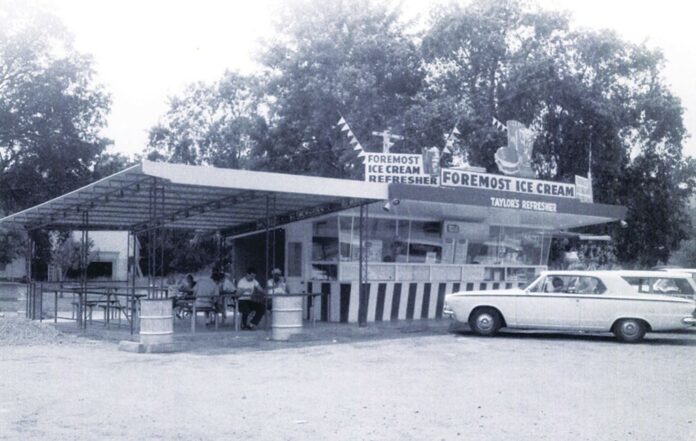
Brown says older locals will delight in the book and may remember going out as children to some of the mid-century restaurants spotlighted, such as the drive-in Taylor’s Refresher. The cover of Lost Restaurants, with its signature ’50s diner-esque font and vintage photographs, evokes this nostalgia. 

One photo on the back cover is meant to bait some readers who may expect a different book. 

“Reagan announced his gubernatorial campaign at the posh Aetna Springs in Pope Valley,” Brown says. “I really like the idea of grumpy conservatives looking and thinking, ‘Ooh, Reagan! Yes!’ Then they’ll open the book and find out that it’s all about immigrants and Black and Indigenous people of color.” 

What Constitutes a Restaurant?

Restaurants, as we think of them today (or as we thought of them throughout our lifetimes until a global pandemic exploded this March), are a fairly recent concept. 

As readers will learn, the French word restaurant initially described a rich meat broth that would restore one’s health. Later, it came to refer to the places that sold such broth.

In 19th-century Napa and other Western towns, restaurants weren’t places you went out to eat at for a fun time. 

“You ate where you could get food because you weren’t cooking because you were a transient man with no house and no wife or a woman who was working in a hotel,” Brown says.

With this in mind, Brown’s definition of “restaurant” was broad—covering any place that prepared and sold food to the public. That allowed her to talk about bars, resorts, hotels and wholesale vendors.

“We had a lot of home tamale makers,” Brown says. “Latinx women who were Californiana descendants who would make tamales and sell them to bars and markets.” 

Most of Brown’s research began with old newspapers and their advertisements, sometimes as spare as a note saying, “So-and-so is now selling tamales at this local grocer!” Many local newspapers are digitized through the Napa County Library, but Brown’s research also included a trip to the Huntington Library to look at some original Napa newspapers from the 1850s. 

From these leads, she could often learn more about restaurateurs by digging into census data and genealogy research to piece together fuller stories of her subjects’ lives. 

However, she sometimes met dead-ends.

“Old newspapers tend to be fast and loose with facts,” Brown notes.

She was fascinated to learn that two men of Japanese ancestry briefly owned a restaurant on East First Street—near where Oxbow Market is today—in the early 1900s. Their names, listed in two old ads, were spelled differently each time. Brown even looked in the Japanese internment database, but could find no record of them. Since their story is unknown, it doesn’t appear in Lost Restaurants

Brown wishes she knew more about these men.

“We don’t talk about Black people in Napa, but we really don’t talk about Japanese people pre-internment here,” she says. 

Though records of most early Napa restaurants aren’t difficult to find, little has been written about them. Unless someone was really famous, people didn’t write in-depth stories about restaurants of the time.

The Recipes

Brown’s book contains 18 recipes, though not all are user-friendly. Readers should keep in mind that, in many cases, people cooked over fire and their recipes didn’t offer cook times or temperatures.

“There’s a wedding cake recipe that has absolutely no cooking instructions in it and I wouldn’t probably recommend attempting it,” Brown says. 

There are two chop suey recipes presented—one from 1902 and another from 1931.

“Every recipe would be like, ‘This is the official recipe for chop suey—this is exactly how they make it in China,’” Brown says, “and it would be completely different than the next recipe that made the same claim.”

Like many recipes of the time, readers are told what ingredients to combine (mostly animal offal), but not how much of them. 

That said, Brown tasted the parmesan polenta recipe from Caterina Nichelini, the late founder of the still-existent Nichelini Family Winery (established 1895), and it stands the test of time. 

Brown still hasn’t prepared any of the recipes herself, but would love to hear from adventurous readers who do. She can be reached through her website at bookjockeyalex.com

Watch the author read from Lost Recipes of Napa Valley and talk more with Chelsea Kurnick about her book here on YouTube at https://bit.ly/3fvwptP.

Black journalists are needed now more than ever

0

Last month, The Associated Press announced it would capitalize the “b” in “Black” when referring to people in a racial or ethnic context. In a June 19 blog post, John Daniszewski, vice president for standards, wrote, “These changes align with long-standing capitalization of other racial and ethnic identifiers such as Latino, Asian American and Native American. Our discussions on style and language consider many points, including the need to be inclusive and respectful in our storytelling and the evolution of language. We believe this change serves those ends.”

The Associated Press is the standard language for all journalists, and anyone who has studied in the field must be familiar with The AP Style Guide before graduating. As goes AP, so goes the mainstream press. Though seemingly innocuous at first, the style change is reflective of what is going on in journalism as the result of covering the deaths of George Floyd, Brianna Taylor, Elijah McClain, Ahmaud Arbery, Tony McDade, David McAtee, Nina Pop and countless others—and the resulting Black Lives Matter protests taking place all over the country right now. The heightened “need to be inclusive and respectful” when it comes to not only how Black people are covered in the news, but also an examination into who does the reporting, has inspired a long-overdue “day of reckoning” in mainstream journalism.

In a June 23 New York Times opinion piece, “A Reckoning Over Objectivity, Led by Black Journalists,”” two-time Pulitzer Prize–winner Wesly Lowry wrote, “The view and inclinations of whiteness are accepted as the objective neutral. When Black and Brown reporters and editors challenge those conventions, it’s not uncommon for them to be pushed out, reprimanded or robbed of new opportunities.”

This observation came following a June 6 Washington Post article, “Pittsburgh paper accused of barring Black reporters from covering protests, censoring stories,” which reported that a Black journalist and photographer had been pulled from covering Black Lives Matter protests there. In the article, photojournalist Michael Santiago says, “the paper has barred him and at least one other reporter from covering anti-racism protests in Pittsburgh because they are seen as biased for being Black. Journalists are also accusing the newspaper of removing and censoring at least two articles published online Friday that reported on protests over George Floyd’s death and police abuses, as well as of penalizing reporters who came out in support of their black colleagues,” while pointing out the possible remedy by saying, “With the country gripped by an anti-racism uprising, what’s been unfolding inside the local Pittsburgh newspaper has underscored one of the fundamental challenges American media faces with its coverage: a lack of diverse voices, including of black journalists, in newsrooms. It’s also laid bare the challenges of trying to change that.”

There are challenges ahead in changing the status quo and how we, as reporters and editors, mean to meet them. Former KRON on-air reporter, East Bay Bureau chief and CNN anchor, Soledad O’Brien, cited in her July 4 New York Times Op-ed that, “According to the News Leaders Association in 2019, 21 percent of newspaper employees and 31 percent of online-only news employees belonged to so-called minority groups—that includes African-Americans, Latinos, Asian-Americans and Native Americans.”

In a time when Black journalists are needed most, media outlets, old and new, have failed to meet the rising call for representation, while reinforcing white supremacy in hiring, reporting and access to opportunities. What this “day of reckoning” shows is that this was not done by happenstance, but by design.

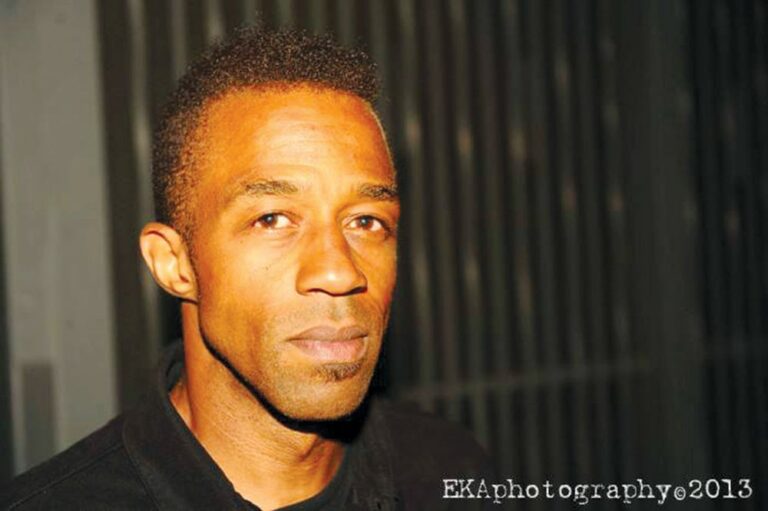
As a Black editor in the Weeklys family of newspapers and the first Black, Culture Editor of East Bay Express (the new sibling paper of the Bohemian and Pacific Sun), I am committed to elevating all voices of our diverse community. If you or someone you know is a Black or Brown journalist who has been locked out of the industry, our door is always open.

Email D. Scot Miller at ds******@*****ys.com.

Open Mic: Remembering Carl Reiner

0

“Dying is easy, comedy is hard.”

This quote is purported to have been spoken by an English actor, Edward Gwenn, on his deathbed, when questioned about his health.

Carl Reiner, a comedy giant, has left the stage at only 98 years of age. Most Americans will not recognize his name or his contribution to the world of humor, but the above quote applies to him.

We old-timers have fond memories of the man. He wore many hats: auteur/actor/movie director, 1950s TV comedy writer (during the first days of live television­); creator of the revered 1960s sitcom, The Dick Van Dyke Show; and the man behind comedy albums such as his 2,000 Year Old Man album with fellow comedian/writer, Mel Brooks.

Comedy is hard—just ask any comedian. It is a tightrope, working without a net, thinking on your feet, where pushing the envelope is oftentimes required. It takes years to hone the art and craft of what is funny; to not shy away from topical material; to gauge the audience’s temperament; and to consistently set up, time and deliver the lines that will seduce the audience and melt them into fits of laughter. It takes not only courage, but chutzpah!

For those of us who came of age in the 1950s and ’60s, there were countless comedians who left a mark and influenced future comedians with their distinct styles,  leaving us breathless, tearful and perspiring, our faces and bodies tired and weak from convulsive laughter. These funny people found the humor in their own personal life experiences that displayed the collective human foibles within us all, and encouraged us to take a break from life’s difficulties—to not take ourselves and the world so seriously (not always an easy task).

Or, as Wavy Gravy says, “Keep your sense of humor, my friend; if you don’t have a sense of humor, it just isn’t funny anymore …”

Thank you Carl, for all the years of laughter.

E.G. Singer lives in Santa Rosa.

Letters: Signs of the Times

Why did the city allow this against the sign ordinance? When it rains who will clean up the mess! BAD DECISION by Petaluma. Shame on you!!!

Not in the Park!

via Bohemian.com

Good move, Petaluma. The Kindness Committee will certainly take care of the installation—and it never rains in the summer in Sonoma County. #blacklivesmatter #kindnesscommittee

Olive Petaluma

via Bohemian.com

Automobile Investigation

The following were online comments in response to a July 9 online article, “Focus of SR Police’s Investigation Into Porsche-Protester Incident Remains Unclear.”

As a person who was quite literally shoved out of the way of this vehicle after it sped past the front cyclist, yeah. There is a lot more than frustration for how the police handled this, the biased and awful press release, and this faulty, super-flimsy claim of the driver, who had her window up when she nearly hit me and “was punched” AFTER driving through a crowd of more than 150 peaceful people.

AL 1

via Bohemian.com

Two similar incidents at the June 26 march in Healdsburg are currently being “investigated” by HPD. Nothing has been done and now investigating officer Craig Smith has gone silent, not responding to my request for an update. Chief Burke is finessing the city council member who asked for info. So Alex Z gets to just drive right at a group of 50 protesters with impunity. I am disgusted.

Karen Miller

Via Bohemian.com

Musicians Munch & Chat in New Video Series

0

Four months in, and social distancing is not getting any easier for anyone in the North Bay, especially artists, musicians and others who rely on social gatherings for income.

Such is the case with musician, event producer and promoter Josh Windmiller, who runs the Railroad Square Music Festival in Santa Rosa, among other music-related endeavors.

That festival, like many in the North Bay this summer, was cancelled due to Covid-19. Yet, Windmiller is not taking the summer off. Instead, he’s figuring out new ways to entertain the masses and support his fellow artists virtually.

In May, Windmiller took on hosting duties for the “Living Room Live” online variety show, hosted by the organizers of Rivertown Revival. This month, he and the Railroad Square Music Festival crew launch a new online project, RSMFtv, which will feature several virtual series exploring musical exploits of North Bay artists.

“RSMFtv is about fulfilling the mission of the festival without being able to assemble in masses,” Windmiller says. “Railroad Square Music Festival is here to showcase what Santa Rosa is and foster what it can be through the eyes of its artists.”

The new digital initiative, sponsored in part by the City of Santa Rosa, is aimed at highlighting local artists with different projects including a series of lyric videos, video blogs featuring album reviews, and RSMFtv’s latest series, a socially distant virtual talk show Musicians at Home Eating Food, which debuted last week on Facebook and Instagram.

The series, much like Jerry Seinfeld’s online sensation Comedians in Cars Getting Coffee, pairs food and conversation.

“It seemed like a good idea, because the restaurants are hurting and musicians are hurting, and this is a way to give some attention to both,” Windmiller says. “That’s a key part of this, how music and the concert experience and such can be paired with other aspects of life in the community. It also lets people see artists in a different way, other than just on the stage.”

The premiere episode of Musicians at Home Eating Food begins as all good things do, with coffee. In this case, Windmiller opens the show by picking up some coffee and brunch at Big River Coffee in Santa Rosa and delivering it (contactless) to accomplished local drummer, solo artist and social activist Libby, before the two engage in a socially distant conversation over Zoom.

Big River Coffee is a family-owned-and-operated business that’s been brewing coffee since 1991. With indoor dining cut, the café is still offering outdoor service and takeout, with a full espresso and coffee bar, pastries, made-to-order breakfast sandwiches, breakfast burritos and a lunch menu.

In the video, Windmiller orders an Everything Bagel for Libby and the “Next Level” Avocado Toast for himself, with a 16-ounce black coffee and a 16-ounce Aztec Mocha with oat milk.

“The toast was fantastic,” Windmiller says. “It was the top-of-the-line avocado toast.”

Based in Santa Rosa, Libby performs in several bands around the North Bay in addition to writing and performing under their own name. Libby recently released the full-length digital album, i forgive myself, a sequel to their 2018 album, TERROR JAZZ!!!.

Libby’s latest album is a cathartic cacophony of drums, Casio keyboards and experimental noise-rock elements that emulate the tones of an 8-bit video game sent through a threshing machine. While the record is instrumental, the sonic journey evokes an emotional response and Libby describes the record as “a picture into my brain” on the album’s Bandcamp page.

In the Musicians at Home Eating Food premiere, Windmiller and Libby engage in a long, free-flowing conversation that touches on topics such as those video games that inspired Libby’s sound, art, history, the Black Lives Matter movement, Libby’s involvement in the recent protests in Sonoma County and much more. At times funny, at times frank, the discussion is engaging and the food looks delicious.

“Libby’s album is very moving and powerful,” Windmiller says. “And then Libby taking a big role in these protests in the area, it made it an amazing opportunity to talk to someone who’s so present at these demonstrations, who’s put a lot of time and thought into this and is a great communicator in the community. To point a camera at them and get them really caffeinated seemed like a great idea.”

RSMFtv can be found at facebook.com/RSMFest and instagram.com/rsmfest.

Meet a ‘Calistogan’ at Napa Valley Art Exhibit

Since moving to Calistoga in 2015, editorial photographer Clark James Mishler has taken hundreds of photo portraits as part of an ongoing “Portrait a Day” project that appears in the Calistoga Tribune’s weekly column “Who We Are.” Some of the photos are funny, some are poignant and all are uniquely “Calistogan.”

In March of this year, Mishler collected several of these photo portraits in a major exhibition at Calistoga’s Sofie Contemporary Arts. That show opened on March 8, and featured hundreds of portraits of locals grouped into categories such as At Work, At Home, Individuals, Family, Friends, Artists and Best Friends—which highlights Calistoga residents with their family dogs.

Like other venues in the region, Sofie Contemporary Arts was forced to close its doors as the Covid-19 pandemic forced the North Bay to shelter-in-place, and the exhibit was shuttered in mid-March. Nearly four months later, Napa County’s restrictions have eased, and Sofie Contemporary Arts is able to welcome back visitors for a new opportunity to see these portraits and to meet Mishler.

On Saturday and Sunday, July 18–19, Sofie Contemporary Arts hosts a “Meet the Artist” weekend, with the “Calistogans” exhibit on display and Mishler on-hand to answer questions and share stories about the scores of people who live or work in or near Calistoga.

Because of the very limited access to the exhibit, the gallery is offering a 40-percent discount this weekend to multiple purchases of the works. Increased sanitation measures are being implemented and all protocols for safety, including face coverings and social distancing, are required.

“The ‘Calistogans’ series is beautifully photographed and its technical and formal artistic elements are extremely satisfying, but Mishler also reveals the subjects and their surroundings in the most sensitive, authentic and appealing way,” Jan Sofie, gallery director and exhibit curator, says in a statement. “Some are quite funny and many extremely poignant, but the best part for me is that although the portraits depict simple moments and commonplace aspects of life we are all familiar with, they are also so intensely human, the viewer can’t help but be moved.”

The unframed works are installed clipped onto tiered wires, in their related groups. Sofie says this contemporary approach creates an accessible exhibition that both visitors and locals will appreciate.

“The idea here is that Calistoga is both exceptional and comfortable in itself,” Sofie says. “We wanted the exhibition structure and shape to communicate the sense of our strong, honest and beautifully diverse community that Mr. Mishler so deftly portrays.”

Before moving to Calistoga in 2015, Mishler spent several years in Alaska. In 1970, he first worked with a documentary film crew specializing in community development in the lower Yukon delta. In 1977, he took the job as layout editor at the National Geographic Magazine in Washington, D.C., though he soon returned to Alaska in 1979 and became a freelance editorial photographer, a profession he continues to practice and enjoy today.

Mishler’s “Portrait a Day” project also dates back to his time in Anchorage, Alaska, and he kept the project going on his first day in Calistoga in 2015. Mishler says that photographing those who live and work in Calistoga has made the transition smoother and greatly helped the couple assimilate into the community and meet many new friends.

“Beyond that, I think that these portraits in the Tribune have helped all of us better know our neighbors and, in some cases, made it easier for us to reach out across social, economic and cultural lines,” he says.

“I think the best reason for making a portrait every day is that it keeps me on my toes, gets me out the door and has taught me to be a better photographer,” Mishler says. “Most of all, I love meeting the people of Calistoga while documenting who we are at this time and in this place. I just hope to continue the project as long as I’m able to hold a camera in my hands.”

‘Calistogans’ displays with Mishler present on Saturday and Sunday, July 18–19, at Sofie Contemporary Arts, 1407 Lincoln Ave., Calistoga. 12:30–4:30pm each day. 707.942.4231.

Focus of SR Police’s Investigation Into Porsche-Protester Incident Remains Unclear

0

Nearly three weeks after an unidentified motorist drove through a crowd of Black Lives Matter protesters marching in Santa Rosa, basic details about the Santa Rosa Police Department’s investigation into the matter remain unclear, angering protesters who say the driver’s actions threatened their lives.

On June 20, a motorist in a white Porsche Cayenne drove through a crowd of Black Lives Matter protesters marching along Santa Rosa’s Sonoma Avenue. Since then, dozens of protesters who witnessed the incident have reported it to the police, alleging that the motorist drove recklessly with intent to injure protesters.

At least three witnesses submitted video of the event along with their police reports. The driver, whose identity has not been revealed by police, reported the incident, too, alleging protesters attacked her.


SRPD’s Violent Crimes Investigation Team (VCI) conducted an investigation and turned their findings over to Sonoma County District Attorney Jill Ravitch’s office on Tuesday, July 7, according to Santa Rosa police lieutenant Jeneane Kucker, a department spokesperson.

“This case has been sent to the DA at this point for a decision on prosecution. Our VCI team thoroughly investigated the case and interviewed more than 25 (plus) [sic] people involved,” Kucker told the Bohemian in an email.

On July 8, Brandon Gilbert, an assistant to Ravitch, confirmed that the prosecutor’s office is reviewing the case.

“We just received the investigative report and it is under review,” Gilbert said. “We will be reviewing all digital media as well.”

Still, it’s not clear yet who the police actually investigated.

Lt. Kucker twice did not respond to questions asking whether the VCI investigated the driver, protesters or both as possible perpetrators.

That lack of clarity and publicity seems appropriate for the case given that the SRPD’s initial public statements about the incident seemed slanted in favor of the driver, in contrast to multiple videos of the event circulating online.

A press release issued by SRPD the day after the June 20 event created alarm among protesters that the driver was described as the victim. The SRPD press release described the motorist as a nurse who had gotten off work at a local hospital, and multiple news websites wrote articles that relied only on the SRPD release as a source.

According to the release, the motorist alleged that she was followed by someone on a bicycle who punched her in the face when she stopped her car. Protesters who witnessed the driver accelerate through the crowd doubt this claim.

The Bohemian asked Lt. Kucker, “How did SRPD determine that the driver was punched? What evidence supports that?” Lt. Kucker did not answer these questions either.

Alleging that police and media dangerously misrepresented protesters in their reporting, a group of about 20 witnesses gathered on two occasions to demand justice from SRPD and the DA’s office.

Sophia Grace Ferar, one of the organizers of these follow-up actions, said that the event’s media coverage frustrated her deeply. She noted that SRPD issued no subsequent press releases about the event, despite telling a witness that they had received 60–70 statements from protesters.

“We were almost run over and the only difference between us and Summer Taylor, who lost her life [during a protest in Seattle], is that we had security in front of us who gave us a heads-up,” said Ferar. (The King County Prosecutor charged the driver who killed Taylor with vehicular homicide, vehicular assault and reckless driving on Wednesday.)

On July 7, Ravitch and six deputy DAs came to Santa Rosa’s Old Courthouse to meet with a group of protesters. Though prompted by the investigation into the incident between the motorist and protesters, the meeting was broader in scope.

Delashay Carmona Benson, a local Afro-Latina activist and community organizer, spoke with Ravitch before and at the meeting. Carmona Benson says that she will be assembling a committee of Black and Indigenous community members who will meet with Ravitch every two weeks.

“Everything starts with dialogue,” Carmona Benson said.

When asked whether she feels optimistic about her interaction with Ravitch, Carmona Benson said, “I felt she was listening and that she was responsive.”

Carmona Benson told Ravitch she wants to meet with judges, parole officers, probation officers and people from the family law division. She says Ravitch has already begun to put her in touch with those people, as promised.

Regarding the meeting, Gilbert said, “[Ravitch] plans to continue to engage with all members in the community she was elected by and lives in. She believes strongly that all voices should be heard and that dissent should be respectful and not dismissive. She believes this is an important time for all of us, and we need to focus on working together for positive change. She has pledged to be part of that effort.”

Carmona Benson said, “It’s her job to work for the people. We elected her. I think she knows I’m not afraid to tell the world if she’s not doing it.”

Open Space Case

In the middle of the Covid crisis, political unrest and economic uncertainty, the County of Sonoma is seeking to bypass voters and flout open-space protections to push forward a new luxury resort and major event center at 3890 Old Redwood Highway in the heart of the key voter-protected Windsor-Larkfield-Santa Rosa Community Separator greenbelt.

County planners want to allow construction of a luxury resort subdivision of a dozen Wine Country party houses and a warehouse-sized event building. The plan is for a hundred events serving a total of 10,000 people per year open daily for drinking, dining, weddings and music until 10pm on open, undeveloped land next to a youth summer camp.  

Even worse, the luxury resort is to be located in the Tubb’s fire burn zone at the foot of Fountaingrove, putting more people in harm’s way. The project will exacerbate the housing crisis and will compete with local businesses.

Strangely, county planners have determined that there will be no significant environmental impacts from the intensified commercial use of the property to Piner Creek, a large pond home to yellow legged frogs and giant salamanders, or to the old oaks that dot the property.

The luxury project is also on the outside edge of the voter-approved Santa Rosa Urban Growth Boundary where urban development has twice been determined by voters to end.

A public hearing by the Board of Zoning Adjustments is set for 1pm on July 9 for a vote on the environmental review and the project. The luxury resort and event center violates critical community separator protections, the General Plan and Zoning Code and overrides the will of the voters. It shouldn’t be reviewed or approved at a time of crisis when voters countywide are facing life and death issues.

Teri Shore

Regional Director, North Bay

Greenbelt Alliance

One Night, Many Voices: Festival Napa Valley Presents Virtual Concert

All-star lineup appears online Saturday, July 25.

North Bay Black-owned restaurant list

Indoor dining is on hold in the North Bay for the foreseeable future, dealing a major setback for restaurants and bars that were hoping to salvage summer during the Covid-19 pandemic. Still, there are ways to support the local food industry, and last month, a Santa Rosa teacher launched an endeavor to...

Not Lost Anymore: Napa Valley History, Told Through Food

Alexandria Brown isn’t a foodie, but she wrote this year’s most compelling North Bay book on food. In fact, Lost Restaurants of Napa Valley and Their Recipes, released in April by The History Press, was written while its author lived in a kitchenless apartment. In it, Brown—a historian—uses restaurants-past as a lens...

Black journalists are needed now more than ever

Last month, The Associated Press announced it would capitalize the “b” in “Black” when referring to people in a racial or ethnic context. In a June 19 blog post, John Daniszewski, vice president for standards, wrote, “These changes align with long-standing capitalization of other racial and ethnic identifiers such as Latino, Asian American and Native...

Open Mic: Remembering Carl Reiner

“Dying is easy, comedy is hard.” This quote is purported to have been spoken by an English actor, Edward Gwenn, on his deathbed, when questioned about his health. Carl Reiner, a comedy giant, has left the stage at only 98 years of age. Most Americans will...

Letters: Signs of the Times

Why did the city allow this against the sign ordinance? When it rains who will clean up the mess! BAD DECISION by Petaluma. Shame on you!!! Not in the Park! ...

Musicians Munch & Chat in New Video Series

Four months in, and social distancing is not getting any easier for anyone in the North Bay, especially artists, musicians and others who rely on social gatherings for income. Such is the case with musician, event producer and promoter Josh Windmiller, who runs the Railroad Square Music Festival in Santa Rosa, among other music-related endeavors. That festival, like many in the...

Meet a ‘Calistogan’ at Napa Valley Art Exhibit

Sofie Contemporary Arts hosts local photographer July 18-19

Focus of SR Police’s Investigation Into Porsche-Protester Incident Remains Unclear

Nearly three weeks after an unidentified motorist drove through a crowd of Black Lives Matter protesters marching in...

Open Space Case

In the middle of the Covid crisis, political unrest and economic uncertainty, the County of Sonoma is seeking to bypass voters and flout open-space protections to push forward a new luxury resort and major event center at 3890 Old Redwood Highway in the heart of the key voter-protected Windsor-Larkfield-Santa Rosa Community Separator greenbelt. County planners want to allow construction of...
11,084FansLike
4,446FollowersFollow
6,928FollowersFollow