Dec. 5: Jill Sobule at Sweetwater Music Hall

0

Jill_Sobule_z.jpg

Katy Perry may have kissed a girl in 2008, but Jill Sobule beat her to the punch way back in 1995. Sobule’s quirky, story-driven folk-rock anthem “I Kissed a Girl” may not have the dirty pop gloss of Perry’s song, but if forced into the unfortunate decision of having to listen to either one over and over, in Guantanamo-style musical torture, I’d definitely go with Sobule. Originally part of the Lilith Fair—era of women-in-music that also produced Juliana Hatfield and Lisa Loeb, the singer-songwriter has released quite a few albums since her underground hit. She continues to write smart, sardonic songs for a dedicated cadre of fans. Jill Sobule plays on Wednesday, Dec. 5, at the Sweetwater Music Hall. 19 Corte Madera Ave., Mill Valley. $15. 8pm. 415.388.3850.

Dec. 2: “Drinking Diaries: Women Serve Their Stories Straight Up” Reading at Book Passage (Featuring Pam Houston)

0

women-drinking1.jpg

Come on, ladies, it’s time to admit it. We all have a drinking story or two, or 20. What about the New Year’s Eve you got so drunk that you made out with the wrong boy and lost your red heels in the bushes next to 7-Eleven? Or the time you gulped down a pint of Jägermeister like it was soda, followed by too many slugs of cheap whiskey, only to end up puking outside the venue while the raddest lineup of the year was just getting started? Enter Caren Osten Gerszberg and Leah Odze Epstein, who created their Drinking Diaries blog as a forum for women to “share, vent, express and discuss their drinking stories without judgment.” Now those stories are available in book form with ‘Drinking Diaries: Women Serve Their Stories Straight Up.’ In a celebration of the book’s release, contributors Joyce Maynard and Pam Houston share their drinking tales on Sunday, Dec. 2, at Book Passage. 51 Tamal Vista Blvd., Corte Madera. 7pm. Free. 415.927.0960.

Dec.1: San Francisco Gay Men’s Chorus Performs “SantaConcert” at the Center for Spiritual Living

0

231028_10151116789772077_2138391837_n.jpg

In my humble opinion, you can truly never have too many gay Santas in one place. So how great is it that the San Francisco Gay Men’s Chorus bring their “SantaConcert,” a choral performance by 250 gay Santas, to Santa Rosa on Dec. 1? The performance benefits Face to Face, the Sonoma County AIDS network, and falls on World AIDS Day, but we all know the real draw. That’s right: the 250 gay Santas. It’s a night that promises to be fun, festive and full of glee, and we can only hope for a repeat of last year’s mid-show can-can dancing elves. The San Francisco Gay Men’s Chorus performs for the holidays on Saturday, Dec. 1, at the Center for Spiritual Living. 2075 Occidental Road, Santa Rosa. 7:30pm. $25—$35. 707.544.1581.

Nov. 29: The Mickey Hart Band at the Uptown Theatre

0

3_3_12_B_mickey_hart_band_kabik-67-2-588.jpg

While his ex—band mate Phil Lesh celebrates the reopening of the Grate Room at Terrapin Crossroads with a two-week extravaganza and $150 admission, Mickey Hart plays further north this week at Napa’s Uptown Theatre for the reasonable price of $35. The former Grateful Dead drummer isn’t afraid of pushing the boundaries of sound, as demonstrated by his 2012 album Mysterium Tremendum, for which the Sebastopol resident takes inspiration from the sonic images of the formation of the universe and transforms them into sound vibrations. Yeah, it sounds pretty trippy, but what else would you expect from a member of the world’s foremost space-dancing jam band? The Mickey Hart Band plays on Thursday, Nov. 29, at the Uptown Theatre. $35. 8pm. 1350 Third St., Napa. 707.259.0333.

Nosh Out

0

Is there anything in the world lovelier than a bakery, breads and cakes baking away in the oven, mounds of sweet treats displayed on doilies, waiting to be devoured? Owned and operated by Dawn Zaft, who arrived at baking during a break from acupuncture school, Criminal Baking Co. and Noshery is a welcome addition to Santa Rosa’s South A district. The mini cream pies in lemon, pumpkin and coconut are pure delight tucked into a tasty shortbread crust ($5). Made with pure ingredients, a lemon bar ($3) paired with a cup of fresh-brewed Melody Coffee ($2.50) hits the spot on a rainy winter afternoon. Or how about a drunken chocolate chip cookie ($2), gluten free blueberry-coconut bar ($3) or brownie with walnuts ($3)?

The Noshery offers savory options, too, which, depending on day and season, include soups made of potato and leek with bacon or a vegan coconut curry pumpkin topped with pepitas. A savory pie of locally grown potatoes, spinach, wild mushrooms and squash was a big hit on Nov. 17, the bakery’s opening day, as was the roasted red pepper focaccia and organic mixed green salad.

The location also hosts classes and events, including a syrup and cordial making workshop on Wednesday, Dec. 5. Further diversifying, they’ve also signed on to become a weekly pick-up point for CSA boxes from Bloomfield Farms. What’s not to love? Criminal Baking Co. and Noshery is located at 463 Sebastopol Ave., Santa Rosa. Open Thursday–Saturday,8am–5pm. On Sundays, Baker’s Brunch is offered from 9am-2pm. 707.992.5661.

Wall of Sound

Sometimes it’s the song, not the singer. This year’s 17th annual Sonoma County Jewish Film Festival has two documentaries on how well-crafted tunes have lives of their own.

For a long time, “Hava Nagila” has been a familiar guest at every wedding and Bar Mitzvah. Like the blues and jazz tunes it traveled with, the song is a contradiction in terms: a downbeat, minor-key song of celebration. Originating in the 19th-century Ukraine, and initially with no words, the bitterness in the melody is as palpable as the joy. Old Jewish proverb: to the worm in the horseradish, the horseradish is sweet.

“Hava Nagila” took off in the 1950s, with popular singers such as Danny Kaye, Harry Belafonte, Connie Francis, Glen Campbell and Elvis Presley recording the song. By charting its course, the film Hava Nagila connects the song to a history of Jewish culture. For the JFF screening on Dec. 4, director Roberta Grossman will be on hand.

A.K.A. Doc Pomus is also about the sweeter uses of suffering. Born Jerome Felder, this Brill Building tunesmith turns out to be one of the most genial of men, revered by performers from the little (Jimmy Smith) to the big (Joe Turner). He was a teacher as well as a singer, a man drawn to the nightlife from an early age. Pomus was a gambler, a raconteur holding court in the wee hours in the lobby of a dubious Manhattan hotel. Crippled by polio at age six, by the time he was 18 he was a successful blues singer marketing his tunes.

When Elvis was caught in the sausage machine in Culver City, making four films a year, each one with 10 tunes each, Pomus came to the rescue with a number of hits, most memorably “Viva Las Vegas” and the sly and nigh incestuous “Little Sister.”

A.K.A. Doc Pomus shows how much truth there is in the standard hackneyed showbiz biography. Personal heartbreak balanced processional success: divorce, hard times and confinement to a wheelchair from the mid-1960s on.

Interviews here include a number of luminaries, as well as Pomus’ ex-wife Wilma, a remarkable person in her own right. She says something plaintive to the effect that their marriage could have been summed up by the space between “Save the Last Dance for Me” and “Can’t Get Used to Losing You”—both tunes were among Pomus’ gift to the world. The music in the film is of course terrific, and the documentary is laudable in its refusal to demonize Pomus’ rakish side.

Universal Bass

Flying home after an entire year of touring, Portland native Phutureprimitive, aka Rain, is gathering energy for a voyage to the pyramids of Chichen Itza on Dec. 21. As the Mayan calendar transitions into the Fifth Sun along Mexico’s Yucatán Peninsula, he will harness the universe with bass music.

Before heading south of the border, though, he plays Hopmonk’s Juke Joint series this week. Phutureprimitive’s lush organic tempos are showered with heavy bass distortion. Just as one emerges from the subliminal experience, the dubstep drop releases a downpour of cosmic tribal EDM. Classic electronica fans will appreciate the unique artistry of deep trance, while the mathematical duality of beat patterns and melodic phrasing blend with Rain’s own hybrid of organic verses and electronic sounds.

“I love organic geometry—ferns are a great example of this: concentric repeating patterns that slowly change and morph,” says Rain. “I put subtle sounds in the background, low in the mix, that aren’t part of the musicality. Yet they somehow add contrast, creating a backdrop for the music to be heard. I’m expressing some of the dark side I carry around. Something that is dark in nature, yet beautiful.”

Explore the dark and dense palette of Phutureprimitive on Thursday, Nov. 29, at Hopmonk Tavern. 230 Petaluma Ave., Sebastopol. 10pm. $10–$15. 707.829.7300.

Enriquez Estate Wines

0

Toasting the new year? The Bohemian‘s guide to unique, small-batch sparkling wines is due on newsstands Wednesday, Dec. 26—if, that is, the finale of the Mayan “long count” calendar due on Dec. 21 leads to nothing more apocalyptic than another day of frenzied Christmas shopping. Just in case, we’ve picked out a wine to toast the end of days, too.

Featuring a ghosted image of Mexico’s iconic Chichen Itza pyramid, it’ll do if we’re just shopping by the label, anyway—and who doesn’t? May we also assume that Enriquez is among those wineries founded by a close-knit Mexican-American family whose hardworking parents migrated north for better opportunities? Naturally. When they first saw the vineyard, bordering Petaluma Airport and the Rooster Run Golf Club, it was a dream come true. “I can have my plane right there!” said aviation, golf and fine wine enthusiast Eduardo Enriquez. “Oh Dad, this is perfect,” said daughter Cecilia. “I can quit my job, move out here to California and start my own wine brand!” And that is where our assumptions end.

Accomplished in the fields of internal medicine and banking, Eduardo hails from Guadalajara but grew up in South Jersey, where his father was a top cardiovascular surgeon. Millennial-aged Cecilia majored in business and got a financial services job right out of school, but “absolutely hated it.” A family trip to wine country proved unexpectedly auspicious. After closing on the property in 2011, Cecilia energetically addressed herself to building a wine club and connecting with charity organizations, while learning cellar craft from Michael Carr of Roche Winery (whose facility is leased on the property).

Happy to laugh about her newbie status, Enriquez explains that she designed the Mayan-themed label. “I really liked what it stood for,” she says. “They were very sophisticated and elite people, and that’s kind of what I want to do with the wine. I want it to be an exclusive, ultra-premium brand.” Tasting is by appointment only, at the vineyard’s 1930s farmhouse; we found Cecilia at Petaluma’s La Dolce Vita wine lounge, which hosts tastings of new and small wineries.

A dry, floral white with a bit of tropical zest, the 2011 “Brisa” ($28) is a blend of Sauvignon Blanc, Muscat, and Chardonnay. The 2009 Sonoma Coast Pinot Noir ($38) is an agreeable sipper with cherry, rose, orange rind, and sweet, bright cherry flavor. The champ here is the 2009 Sonoma Coast Tempranillo ($32), a chewy mouthful of black cherry fruit; a good showing for Tempranillo, a perpetually up-and-coming alternative varietal in California. Now, there’s a new era that we can toast to.

Enriquez Estate Wines, Petaluma. Tasting by appointment only; hours vary. Call for more information. 707.347.9719.

Rewriting History

0

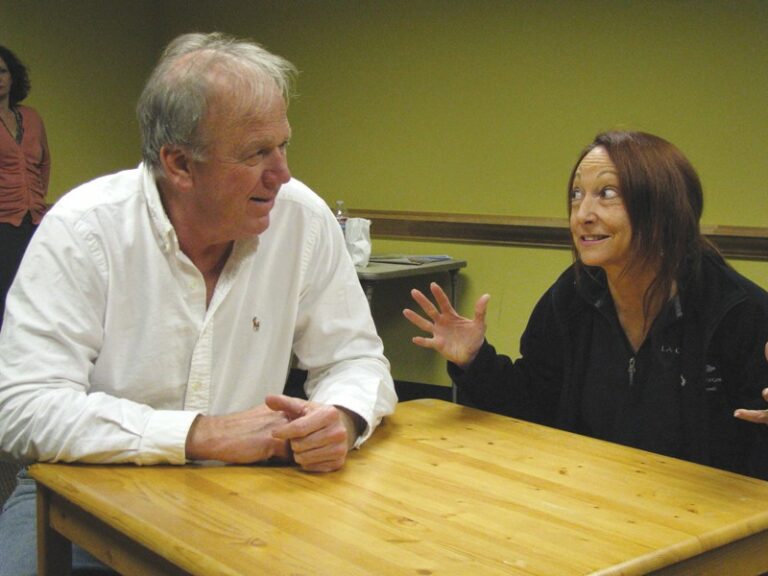
Shelly Jackson is frustrated, and it’s messing with her sleep.

“I have so many things brewing, I couldn’t sleep last night,” the programs manager at the Marin History Museum says, leaning toward me over a wooden desk in her San Rafael office. “I have so many ideas, but I want to hatch them or launch them when I know there’s an audience.”

Jackson’s ideas include oral histories, pop-up exhibits, expert panels, bilingual events, hikes and a craft-beer festival—not your standard regional history fare. Central to the 28-year-old’s REM-stealing vision is audience engagement, particularly around current events that, she points out, will soon pass into the stuff of history.

“Gone are the days when visitors came to a museum, paid at the ticket counter, picked up an audio guide or brochure and were basically fed information,” she says, combing her fingers through several inches of curly red hair. “We want to know your personal story. We want to know why you came to Marin; we want to know why your grandmother came to Marin. We also want to know what you think about the death penalty not being repealed. We want to know if you have any questions about it from 50 or 60 years ago and how that legislation has changed through history.”

But Jackson and the staff of the MHM have run into a problem with their vision of community engagement. The community, it seems, doesn’t want to be engaged.

For example, in early October, she invited several ACLU veterans and authors to speak on the theme of individuals spurring change, from the Civil Rights era to the local Occupy movement. Four people came.

Visitors have repeatedly told her that they’re not comfortable with interactive spotlights on current Marin issues, be they racial profiling in the justice system, immigration or Occupy—”Which I did not realize was so ‘NO!’ here,” she says. But attendance at events that she describes as more “one-sided or didactic” has remained strong. In a flat voice, she twice remarks that the museum’s audience has seemed to love lectures on the Mt. Tam watershed.

Part of this could simply be a lack of public knowledge on the 77-year-old museum’s changing nature, director Michelle Kaufman points out. After all, the San Rafael site is currently housed in a tan-and-white Victorian on an isolated corner of B Street.

“People often see the exterior of this building and they think ‘Oh, it’s that little house and it has some dusty furniture in it,'” she says. “But then they come in and say, ‘Oh, you have all these programs.'”

But Jackson, who’s been with MHM for nine months and grew up in Florida, associates it with a blend of cultural discomfort unique to the affluent North Bay county.

“I knew there was a big socioeconomic, racial, regional gap in Marin, but I thought there was more of a collective ownership of that gap,” she says. “I thought there were more eyes on what we could do to make it smaller.”

Whatever the reason, the museum hopes to gather a larger audience when it opens another venue in early December in San Rafael’s Court Plaza. The branch will showcase a collection of local photos taken in Steep Ravine by Depression-era great Dorothea Lange for its first exhibit and will feature an opening holidary arts fair on Dec. 14.

Jackson leads me down the stairs from her office, through an exhibit called “Justice and Judgment” that, although more of your typical curated-objects setup, contains some arresting artifacts. On one wall, visitors can see San Quentin’s last, blood-splattered noose. On an iPad, scanned prison documents detail death row inmates’ final moments, including the exact length of time, down to the second, it took many of them to die.

She takes me to the new Court Plaze venue. Right now, it’s decorated only with a yellow carpet, a single desk and chair, and a handful of cardboard boxes. Jackson hurries around the fluorescent-lit space, showing me how exhibit walls will be arranged and where a screen will hang. She wants to host everything from academic lectures to dance troupes and live music in this still-to-be-defined space.

“In 2012, museums need to provide a forum or community hub, some kind of safe receptacle where visitors come to the museum and say, ‘Let me tell you what my story is and why it’s relevant,'” she’d told me earlier. In this empty space, I compliment her for trying to bring a vehicle of storytelling and discourse to Marin.

“Do you think we can do it?” she asks, her voice full of uncertainty, determination and hope.

The Awareness Gap

0

Twenty-one years ago, on Nov. 7, 1991, America was jolted with the news that basketball legend Magic Johnson had contracted HIV and would retire from the sport.

Almost immediately, Johnson began taking the antiretroviral drug AZT, and his health quickly improved. Just three months later, Johnson returned to basketball to play in the 1992 All-Star Game, where his performance earned him the MVP award.

Johnson’s fans and supporters were delighted by his triumphant return. Through Johnson’s experience, mainstream America began to understand that HIV infection was no longer an automatic death sentence, but a largely treatable, chronic condition.

We are fortunate that during the past two decades there has been great progress in the treatment and care of people living with HIV and AIDS. With early detection and increasingly effective treatments, Johnson’s story is now just one of many high-profile examples of how people can manage their HIV and live long, productive lives. But while proper treatment for people with HIV has become much more available and effective, only 25 percent of Americans with HIV are receiving it.

At the same time, people born after AIDS first emerged in 1981 are now most at risk of becoming infected with HIV. This sad fact highlights how important awareness and education is as we mark World AIDS Day on Dec. 1.

According to the Centers for Disease Control and Prevention (CDC), HIV infection rates are increasing for Americans between 13 and 30, and most of the new HIV infections reported in this country involve people under 30.

Let World AIDS Day remind us that about 56,000 Americans become infected with HIV each year, and that more than 14,000 Americans with AIDS die each year. The CDC estimates that nearly 1.2 million Americans are living with HIV, and that about one in five don’t know they have the virus.

As was the case with Magic Johnson and other courageous Americans 20 years ago, we can’t allow today’s more effective treatments to make us complacent or ambivalent. To learn more, or to find a place near you to get tested, visit www.actagainstaids.org.

Sam Ho, M.D., is the chief medical officer for UnitedHealthcare.

Open Mic is a weekly feature in the ‘Bohemian.’ We welcome your contribution. To have your topical essay of 350 words considered for publication, write op*****@******an.com.

Dec. 5: Jill Sobule at Sweetwater Music Hall

Katy Perry may have kissed a girl in 2008, but Jill Sobule beat her to the punch way back in 1995. Sobule’s quirky, story-driven folk-rock anthem “I Kissed a Girl” may not have the dirty pop gloss of Perry’s song, but if forced into the unfortunate decision of having to listen to either one over and over, in Guantanamo-style...

Dec. 2: “Drinking Diaries: Women Serve Their Stories Straight Up” Reading at Book Passage (Featuring Pam Houston)

Come on, ladies, it’s time to admit it. We all have a drinking story or two, or 20. What about the New Year’s Eve you got so drunk that you made out with the wrong boy and lost your red heels in the bushes next to 7-Eleven? Or the time you gulped down a pint of Jägermeister like it...

Dec.1: San Francisco Gay Men’s Chorus Performs “SantaConcert” at the Center for Spiritual Living

In my humble opinion, you can truly never have too many gay Santas in one place. So how great is it that the San Francisco Gay Men’s Chorus bring their “SantaConcert,” a choral performance by 250 gay Santas, to Santa Rosa on Dec. 1? The performance benefits Face to Face, the Sonoma County AIDS network, and falls on World...

Nov. 29: The Mickey Hart Band at the Uptown Theatre

While his ex—band mate Phil Lesh celebrates the reopening of the Grate Room at Terrapin Crossroads with a two-week extravaganza and $150 admission, Mickey Hart plays further north this week at Napa’s Uptown Theatre for the reasonable price of $35. The former Grateful Dead drummer isn’t afraid of pushing the boundaries of sound, as demonstrated by his 2012 album...

Nosh Out

Is there anything in the world lovelier than a bakery, breads and cakes baking away in the oven, mounds of sweet treats displayed on doilies, waiting to be devoured? Owned and operated by Dawn Zaft, who arrived at baking during a break from acupuncture school, Criminal Baking Co. and Noshery is a welcome addition to Santa Rosa's South A...

Wall of Sound

Two films explore Jewish music at JFF

Universal Bass

Phutureprimitive's electronic downpour

Enriquez Estate Wines

Uncorking a new age

Rewriting History

Marin History Museum reinvents what 'going to the museum' means—and tackles big goals in the process

The Awareness Gap

Testing, understanding and treating HIV is as important as ever
11,084FansLike
4,446FollowersFollow
6,928FollowersFollow