Jan. 27: The Calder Quartet at the Glaser Center

0

calder.jpg

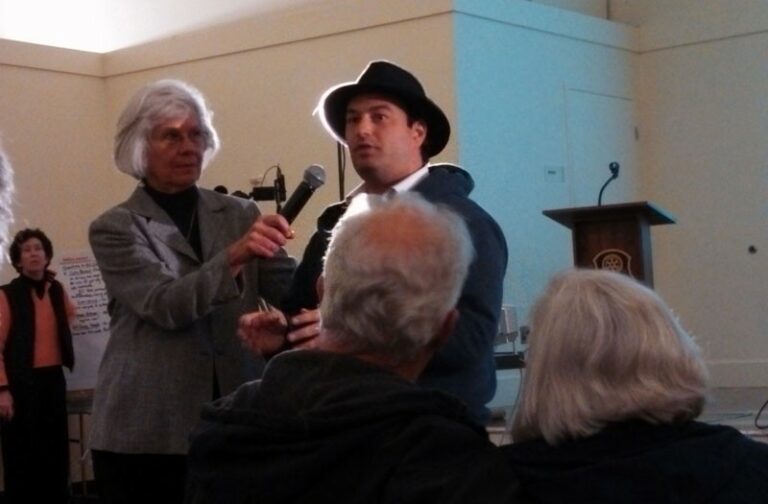
The Calder Quartet started young. In college, the four connected well enough to take risks beyond the standard chamber music repertoire, and like well-known contemporaries the Kronos Quartet, they work with new composers, rock groups and even Andrew W.K.—without sounding forced. They’re comfortable playing music from a hundred years ago written by candlelight as music written in a Portland basement last week, possibly also by candlelight. For their Santa Rosa appearance in conjunction with the Redwood Arts Council, the program includes Ravel’s String Quartet in F Major, Bartok’s String Quartet no. 5 and the young composer Andrew Norman’s “. . . toward sunrise and the prime of light . . . ,” which premiered in October 2010. The Calder Quartet play Sunday, Jan. 27, at the Glaser Center. 547 Mendocino Ave., Santa Rosa. 4pm. $25. 707.874.1124.

Jan. 25 and 26: Tim Flannery at Sweetwater Music Hall and the Uptown Theatre

0

flannery.jpg

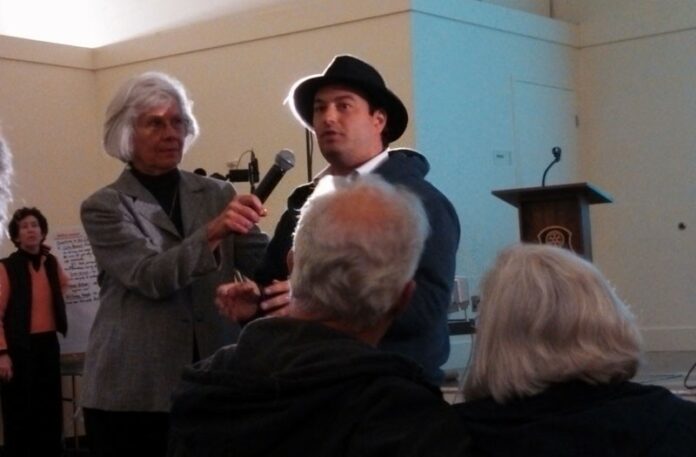
When he’s not windmilling wildly signaling Buster Posey to go for home, San Francisco Giants third base coach Tim Flannery is windmilling his guitar like Pete Townsend. OK, maybe he doesn’t get crazy and smash guitars onstage, but he is a good songwriter with a voice of wisdom. He’s even sung harmony with the Grateful Dead’s Phil Lesh and Bob Weir before games at the Giants ballpark. The real question is, after two World Series titles in three years, where the hell does he get the time to do all this? Tim Flannery plays Friday, Jan 25 at Sweetwater Music Hall. 19 Corte Madera Ave., Mill Valley. 8pm. $22. 415.388.3850. He also plays with friends Saturday, Jan. 26, at the Uptown Theater in a benefit concert for Bryan Stow.1350 Third St., Napa. 8pm. $49—$100. 707.259.0123.

Jan. 25: The Melodians at the Redwood Cafe

0

melodians.jpg

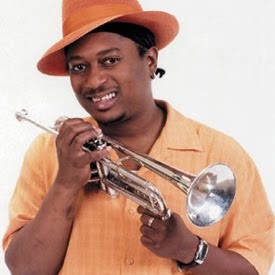
The Redwood Cafe sure is becoming a legit music venue. This week, the Cotati cafe hosts the Melodians, a top-notch reggae band from Jamaica that’s been around since 1965. They’ve been top billing at huge festivals like the Sierra Nevada World Music Fest, and “Rivers of Babylon”—you know it from The Harder They Come—has become one of the Rastafarian movement’s anthems. Singing in harmony with plenty of soul, sounding like a Motown version of the feel-good, bass-driven, upbeat style reggae fans are used to, the Melodians are backed by the erstwhile Yellow Wall Dub Squad on tours. Dan Martin and the Noma Rocksteady Band open, and the best part is, if you get the munchies, the cafe is open. The Melodians play Friday, Jan. 25, at the Redwood Cafe. 8240 Old Redwood Hwy., Cotati. 9pm. $10—$15. 707.795.7868.

Jan. 27: Hoodoo Rhythm Devils at the Sweetwater Music Hall

0

hoodoo.jpg

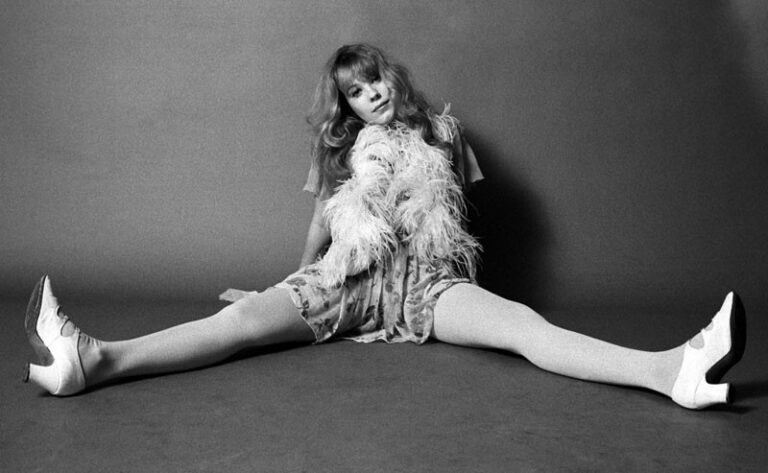
The Hoodoo Rhythm Devils were one of those bands from the ’70s that really should have made it big. They were tight, sounded great, put on an awesome live show and could play all day long. They played funky country blues that instantly turned a lazy Sunday backyard barbecue into a prime time event. They’re a no-bullshit band, and maybe that’s why they didn’t make it to that next level in the music biz—it’s tough to make it without makeup and stage effects. They made five albums for Capitol, Blue Thumb and Fantasy records throughout the ’70s, and reunited last year when they released The Lost Album, apparently recorded in their prime but never released. Hoodoo Rhythm Devils play Sunday, Jan. 27, at Sweetwater Music Hall. 19 Corte Madera Ave., Mill Valley. 8pm. $20. 415.388.3850.

Letters to the Editor: January 23, 2013

Farewell, Tinker

It was with great sadness to learn of the death of an old River staple, Alex “Tinker” Lazlo. I feel compelled to not let Tinker’s passing go overlooked or let his importance in our community’s history be overshadowed by his scarcity in his fading years.

Tinker was a River icon, a man whose memory and words evoke a smile and a sense of being a part of something. He was the first person I met when I moved here over 30 years ago. He had his fix-it shop where the Gasco now stands, and I came to him with a broken chainsaw.

I grew up with guys like Tinker. He was from South Philly, I was from industrial northern New Jersey—downwind from each other, he used to say. When I met Tinker in my first week as a River resident in the spring of 1981, I knew I was home.

I knew Tinker through his lean years, during his golden ones after he married Jane and had his sons and beyond. I remember when he started his video store. This was back in the day where recorded VHS tapes were around $100. I had acquired a collection while writing for an underground free press in L.A. the year before I moved here. I loaned him the most bizarre ones I had to get his “Offbeat” section started. These movies were rated X—not for anything unsavory, mind you, but for their shocking content: Andy Warhol’s Frankenstein in 3-D, John Waters’ Multiple Maniacs and Mondo Trasho, replete with puke eaters and a giant homicidal lobster, to name a few.

When the town flooded shortly afterward, I stopped by to check on Tinker’s store. Basically, all was lost. While helping him clean up, we found my movies floating in mud and debris. He stood next to me, bumped my shoulder with his, smiled and said, “Just between you and me, some things are just too disgusting to exist.” In the midst of a disaster, Tinker’s humor, as always, prevailed, and we laughed like crazy in agreement.

Years later, at his beloved Jane’s memorial service, he was adamant about interring her eyeglasses with her, as reading to her students and her sons was her favorite thing to do. In the eyeglass case, I noticed a piece of paper. When I asked Tinker what was written on it, he told me there were two pieces, one of which he told me was “Hopefully, the sweetest love letter she’s ever read. “

We can measure our true worth by the friends we acquire along the way, and define ourselves by those moments we’ve shared with them. Thank you, Tinker, and goodbye, my old friend. For some of us, you made all the difference in the world.

Guerneville

Violence Against Women

The issue of violence against women is critical. While the statistic for violence against women varies within each city, county, state and country, the United Nations states that, globally, one in three women on the planet will be raped, beaten or sexually abused in her lifetime. Do the math—that’s 1 billion mothers, daughters, sisters, aunts, grandmothers, nieces. This is an atrocity.

VDay.org is inviting 1 billion women and those who love them to walk out, dance, rise up and demand an end to this violence on Feb. 14. One Billion Rising will move the earth, activating women and men across every country. V-Day wants the world to see our collective strength, our numbers, our solidarity across borders.

One Billion Rising is a global strike; an invitation to dance; a call to men and women to refuse to participate in the status quo until rape and rape culture ends; an act of solidarity, demonstrating to women the commonality of their struggles and their power in numbers; a refusal to accept violence against women and girls as a given; a new time and a new way of being.

While numerous One Billion Rising events are scheduled in the Bay Area, two, in particular, are scheduled for the North Bay: Dominican Rising (at Dominican University) and North Bay Rising (in Petaluma). To participate at the event nearest you, go to www.onebillionrising.org.

Join us, along with over 182 other countries, in rising and saying “No more!” to the violence.

Petaluma

Think Positve

I just wanted to send a gigantic thanks to Brian Thomas Gallagher for his terrific review of Oliver Burkeman’s new “anti-positive thinking” book. I’ve been waiting forever for this!

Santa Rosa

Write to us at le*****@******an.com.

Museum as Meta

0

“Do you want to see the attic?”

I’ve been at the Sonoma County Museum for 45 minutes when Pat Lenz says the seven words I’ve been dying to hear. Of course I want to see the attic, and on she leads me up a narrow staircase, twisting and turning until, with a flick of a light switch, before me is an enormous part of the museum I’ve never seen before.

Parts of the Museum You’ve Never Seen Before take center stage at “In My Back Yard,” an exhibit opening Jan. 25. During October and November, over a hundred photographers visited the museum, given free access to every square inch; the result is an extensive series of 10-by-10-inch photos of the building’s corners, crevices and angles, displayed inside the museum itself.

“I think what’s going to be interesting is the mix of what we call professional versus amateur,” says Lenz, who, with co-curator Dominic Egan, first produced the “In My Back Yard” idea at her SlaughterhouseSpace Gallery in Healdsburg. When digital photography, and especially photo filtering services like Hipstamatic and Instagram, rose in prominence, many professional photographers dismissed it as cheating. But “you can’t fight it,” says Lenz, “and you have to kind of say, in a way, ‘This is good for photography.”

Interestingly, the photos are displayed without labels, so that professional photographers hang beside hair stylists popular on Instagram, tinkerers with Hasselblads, the clients of Becoming Independent and students from the SRJC. The prints are for sale at different prices, but how visitors react is based purely on the work itself.

There is an old saying about photography stealing one’s soul, but “In My Back Yard” serves instead to uncover the soul of the museum. Images were taken while laying flat inside the elevator, balancing on a ceiling joist, craning beneath a thermostat. “I did actually hear the staff say, ‘Oh, wow, I’ve never seen that part of the museum before,'” notes Egan.

The great stucco building, with four giant columns and Spanish-style roof tiles, was built in 1910 as the Santa Rosa Post Office and Federal Building, on Fifth Street. In the 1970s, misguided city planners negotiated construction of the mall, and the building was slated for demolition. In perhaps the most famed architectural preservation in the city’s history, historical architect Dan Peterson arranged for the building to be slowly towed for 800 feet, on railroad tracks, to its current site.

In the show, subjects range from the lobby’s elegant chandeliers—rescued in 1979 from the Poulsen Building at Fourth and A streets, another casualty of the city’s shopping mall—to unassuming piles of clutter in a back room. An image by Ned Kahn shows a splatter of water—from a fountain? a sink?—while others feature models walking, literally, on the walls of the space.

There’s a Dadaist sculpture by Boris Landau, a large 45-by-45-inch lenticular photograph by Margeaux Walter and Robin Lasser, and larger black-and-white prints by Bob Cornelis. Sausalito artist David Broom has a full wall, and Shanti Knapp, Hanya Popova Parker, Sara Webb, Cat Kaufman, Mary Jarvis, Mario Uribe and Jan Nunn are but a handful of the participants in this encompassing, inviting show.

From the attic, I find what I’ve been looking for. In the public staircase of the museum is a wall; about six feet up from the floor is a mysterious door with no steps or ladder leading to it, an awkward relic from the building’s former use. Like many museum visitors, I have often wondered where that door leads, and there in the attic, behind a chain, I find a similar-looking door. Could it be?

I crack the door slightly, and see the staircase below . . .

Don’t Talk Back

0

Songwriters Jerry Leiber and Mike Stoller met as teenagers in Los Angeles, and were one of rock ‘n’ roll’s most prolific songwriting team.

The legendary duo was responsible for hundreds of hit songs, many considered among the greatest rock songs of all time. Eschewing simple love-song formulas, Leiber, who died in 2011, and Stoller borrowed playfully from the vernacular youth speech and slang of the day, imbuing their songs with a potent theatricality that was more than just musically satisfying. From “Yakety Yak” and “Charlie Brown” to “Jailhouse Rock” and “Love Potion No. 9,” Leiber and Stoller’s songs were pure, infectious fun.

In 1995, one of Broadway’s biggest hits was Smokey Joe’s Cafe, a giddily entertaining, thoroughly plotless stage revue featuring 40 of Leiber and Stoller’s best songs. Named for the song of the same title, itself originally written for the 1950s doo-wop band the Robins, Smokey Joe’s Cafe—which has just opened a three-weekend run at Sixth Street Playhouse—is a big bouncing ball of nostalgia, with no dialogue whatsoever. Just songs, songs, songs, flowing from one to the next like a jukebox stuck in overdrive.

Directed by first-time director Alise Girard, who’s choreographed several of Sixth Street’s recent shows, the show features nine performers who take turns bringing this hit parade of tunes to life through Girard’s inventively kitschy chorography.

The songs are a heady blend of less familiar works—”Pearl’s a Singer,” “Neighborhood,” “Dance with Me,” “I Keep Forgettin'”—and tunes that evoke an instantaneous jolt of affection and sentimental recollection—”On Broadway,” “There Goes My Baby,” “Spanish Harlem” and “Stand by Me.”

Backed up by a first-rate band under the direction of Mateo Dillaway, the tunes unspool on a set that resembles a 1950s dance show. Girard keeps things spinning, with plenty of clever bits of business worked into the performances of the songs, spanning the emotional spectrum from puppy love to serious heartbreak.

Each performer is given an opportunity to display his or her individual gifts—for belting out a tune, dancing up a storm or engaging in wacky physical comedy—ultimately transforming the rather thin undertaking into a robust and energetic young artist showcase.

After all, Smokey Joe’s Cafe is basically a celebration of an art form born of youthful dreams, designed to make us feel young, or feel young all over again. In the words of the song that ends the show, baby, that’s rock ‘n’ roll.

Co-Op Country

0

On Jan. 26, the Share Exchange presents a workshop on co-ops, focusing on worker ownership. Co-op developer and author of Holy Cooperation! Andrew McLeod will lead the presentation, which includes introductions to various cooperative forms and startups and envisions how Sonoma County could benefit from the unique business model. McLeod examines a cross-section of faith and cooperative economics, taking a hard second look at social practices that have fallen out of favor in mainstream business and religious circles. Sponsors include Summit State Bank, Alvarado Street Bakery, Community First Credit Union and others. Attendees are asked to bring their own bag lunch. The daylong workshop is on Saturday, Jan. 26, at the Share Exchange. 531 Fifth St., Santa Rosa. 9am–4pm. $40–$50. 707.583.7667.—Rachel Dovey

Co-Op Country

Cotati City Councilmember Pat Gilardi has accepted a job as district director for county supervisor Susan Gorin. Gilardi had served on the Cotati City Council for 13 years and won reelection last November, but the lure of working for Gorin—a $73,000 annual salary helps—proved too strong to resist. This leaves the city with another vacancy, the fourth in the past four years. Each of the other spots has been filled by appointment rather than special election, which could cost the city upwards of $20,000. This is by far the most positive of the four vacancies, however; other open seats being caused by campaign finance scandal, special recall election and a sudden, unexpected death. But it leaves the city with another new face to get used to, with a first-time mayor on the dais.—Nicolas Grizzle

Dignified Senility

Rather startlingly, Quartet is the first movie to be directed by Dustin Hoffman. You’d never guess in a thousand years he was behind the camera; there’s little trace of the actor whose against-the-grain, immersive performances changed movie acting in the 1970s.

The film is a cattle call for every British thespian over the age of 60. When not repeating the maxim about old age not being for sissies, the retirees at a home for aging musicians instruct visiting music students. The place is in fiscal trouble, and the hopes are that a charity gala might save the manor with the reunion of four singers whose performance in La Traviata is still cherished decades later.

Billy Connolly plays Wilfred Bond, recovering from a stroke which has left him an erotomaniac. (“It’s the stroke talking,” he says after delivering himself of some dirty reminiscences.) His good female friend and co-star Cissy (Pauline Collins) is drawn deeper into senility. And the most reluctant hold-out is the new arrival at the home, Jean Horton (Maggie Smith), once a heartbreaker, now so unnerved that even a passing cart full of laundry makes her jump.

She makes a twofold refusal to perform music live: she can’t give a substandard performance because “I can’t insult the memory of who I was.” But the other half of her reluctance is guilt: the fourth member of the proposed reunion is her ex-husband and former partner, already a resident when Jean arrived.

Tom Courtenay, playing ex-husband Reginald, asks the question “Did she know that I live here?” with two different emphases; it’s a taste of his range. When this movie gets overfond of its cast, Courtenay cools it down. He shows the cold blue light of old age, the irreconcilable hurt. He thought he could count on “dignified senility” in his last years, until the ex-wife who crushed his heart turns up to rekindle the pain. In a movie this essentially mushy, he stands tall.

Quartet is ultimately a gathering of actors lining up for a curtain call; however deserved that applause is, they have so much more to give.

‘Quartet’ opens Friday, Jan. 25, at the Rafael Film Center, 1118 Fourth St., San Rafael. 415.454.1222.

Forks & Corks

Just because the last of the Christmas trees have been plucked from the sidewalks and the Santa plates packed away for another year doesn’t mean we need to stop eating, drinking and making merry. Case in point: Forks and Corks, a four-part dinner series at Healdsburg’s Spoonbar that kicks off this Saturday, Jan. 26. Seven chefs a-cooking. Three sommeliers a-pairing. Even a mixologist with a rare recipe.

Hosted by Spoonbar’s own executive chef, Louis Maldonado, each of the four themed dinners are co-created by top Bay Area chefs and wine experts. For the debut meal, Maldonado teams with Michelin-starred chef James Syhabout (pictured) to celebrate global influences and local Sonoma ingredients with dishes that include sea urchin and crab in a coconut bath, Guinea hen with green curry aromatics, and Parsnip milk tapioca with mandarins.

“Where Land Meets Sea” is the theme for the dinner on Feb. 23, which will feature Outerlands’ chef Brett Cooper alongside Sommelier Kevin Wardell of Bergamot Alley. The series wraps up with an as-yet-to-be-decided themed meal prepared by chef Lauren Kiino and sommelier David Lynch on April 20. With the exception of March’s Swine and Wine Dinner, which is part of the Annual Pigs and Pinot Celebration package, all meals include six courses for $110.

For more information and to reserve a seat, call 707.433.7222.

Jan. 27: The Calder Quartet at the Glaser Center

The Calder Quartet started young. In college, the four connected well enough to take risks beyond the standard chamber music repertoire, and like well-known contemporaries the Kronos Quartet, they work with new composers, rock groups and even Andrew W.K.—without sounding forced. They’re comfortable playing music from a hundred years ago written by candlelight as music written in a Portland...

Jan. 25 and 26: Tim Flannery at Sweetwater Music Hall and the Uptown Theatre

When he’s not windmilling wildly signaling Buster Posey to go for home, San Francisco Giants third base coach Tim Flannery is windmilling his guitar like Pete Townsend. OK, maybe he doesn’t get crazy and smash guitars onstage, but he is a good songwriter with a voice of wisdom. He’s even sung harmony with the Grateful Dead’s Phil Lesh and...

Jan. 25: The Melodians at the Redwood Cafe

The Redwood Cafe sure is becoming a legit music venue. This week, the Cotati cafe hosts the Melodians, a top-notch reggae band from Jamaica that’s been around since 1965. They’ve been top billing at huge festivals like the Sierra Nevada World Music Fest, and “Rivers of Babylon”—you know it from The Harder They Come—has become one of the Rastafarian...

Jan. 27: Hoodoo Rhythm Devils at the Sweetwater Music Hall

The Hoodoo Rhythm Devils were one of those bands from the ’70s that really should have made it big. They were tight, sounded great, put on an awesome live show and could play all day long. They played funky country blues that instantly turned a lazy Sunday backyard barbecue into a prime time event. They’re a no-bullshit band, and...

Letters to the Editor: January 23, 2013

Letters to the Editor: January 23, 2013

Museum as Meta

At 'In My Back Yard,' the Sonoma County Museum is the subject

Don’t Talk Back

'Smokey Joe's Cafe' a nostalgic revue

Co-Op Country

On Jan. 26, the Share Exchange presents a workshop on co-ops, focusing on worker ownership. Co-op developer and author of Holy Cooperation! Andrew McLeod will lead the presentation, which includes introductions to various cooperative forms and startups and envisions how Sonoma County could benefit from the unique business model. McLeod examines a cross-section of faith and cooperative economics, taking...

Dignified Senility

'Quartet' an adagio on age and music

Forks & Corks

Just because the last of the Christmas trees have been plucked from the sidewalks and the Santa plates packed away for another year doesn't mean we need to stop eating, drinking and making merry. Case in point: Forks and Corks, a four-part dinner series at Healdsburg's Spoonbar that kicks off this Saturday, Jan. 26. Seven chefs a-cooking. Three sommeliers...
11,084FansLike
4,606FollowersFollow
6,928FollowersFollow