The Best Books of 2012

0

Books.jpg

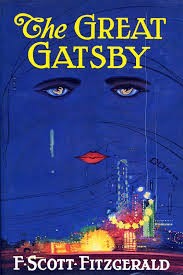
This week’s issue features a list of the top-selling books at Copperfields Books for 2012. Spoiler alert: Fifty Shades of Grey, the erotica series by E.L. James written for those who want their S&M draped in a gossamer lens, takes the top spot. The rest of the trilogy lodges into the third and fourth spots.

Confession: I didn’t read Fifty Shades of Grey, and don’t plan on ever cracking its lightly illicit cover unless I’m somehow engaged in some sort of Guantanamo-styled book torture. I’m a bit like Josh Radnor’s character in Liberal Arts when he berates Elizabeth Olsen for reading the entirety of the Twilight series “unironically”: “With the many amazing books in the world, why would you read this?”

That said, here’s a list of books that I loved in 2012. Mention these to me at a cocktail party and you’ll certainly get a smile instead of a tongue-lashing.

1. A Working Theory of Love by Scott Hutchins

Hutchins’ story of a man who struggles with intimacy after a divorce (and working on a project that involves his dead father’s diaries and a computer) became one of my “can’t put it down” books for 2012. It’s always great to be surprised by a book’s elegance and depth.

2. Wild by Cheryl Strayed

Here is the one place I crossed paths with Sonoma County readers. Cheryl Strayed’s memoir about hiking the Pacific Crest Trail as a way to exorcise ghost and demons was one of the best-written books of the year. Masterful, devastating and inspiring, all at once.

3. Violence Girl by Alice Bag

Bag is one of the L.A. punk originals. Her autobiography is raw, contagious and burning with feminist power. At the same time, the musician and artist doesn’t glorify the end results of punk rock and its many casualties.

4. This Is How You Lose Her by Junot Diaz

It was a big year for the Dominican-American author. He won a MacArthur Genius grant, published an acclaimed collection of short stories, and made an appearance at Copperfields in Montgomery Village that included liberal use of the words “motherfucker” and “fuck” and “interlocuter.” This collection is riveting and ragged; it captures the dilemma of masculinity and the failure inherent in the blind drive to “man up” even as the world around crumbles and decays.

5. The Danger of Proximal Alphabets by Kathleen Alcott

Alcott is a young writer, but you wouldn’t know it from this gripping, beautifully written debut novel. The Petaluma native, who now lives in New York, writes with the confidence of someone who’s been fine-tuning her work for a long while. The book is a fractured love story, a story that falls into lyricism more often that not, and one that flirts constantly with a sense of the tragic.

6. How Should a Person Be? by Sheila Heti

Warning: this book is not for everyone, and if you read it and hate it, please don’t stop me in the street and berate me for recommending something to you that you hated. Some (like Gawker, which called her one of the 50 Least Important Writers of 2012) have labeled Heti’s “novel” of artists living in modern-day Toronto as self-indulgent and navel-gazing. And it is! But Heti happens to have a navel that I find very interesting! I found this book to be brave and painful in the best possible way.

Deciphering the Code of Rihanna

I have always had a hard time accepting Rihanna’s extreme popularity. Her music, to me, is bland, and she’s not a good performer. The fact that she is a victim of extreme domestic violence who has since climbed back into the arms of her abuser, fellow pop star Chris Brown, sets a terrible example for others in her situation and actually upsets me.
I’ve never had a way to explain these confusing opinions until Sasha Frere-Jones apparently climbed into my head, organized my thoughts and wrote them for me in the New Yorker’s Dec. 24&31 issue.
He nails the social impact with this:
“With all this drama, it is difficult to think of Rihanna’s stated version of independence, of being a ‘Good Girl Gone Bad,’ as the title of her biggest-selling album would have it, is being the object of badness, being subjugated… What makes this attitude even more disturbing is that it seems to have served only to make Rihanna more popular.”
Without missing a beat, Frere-Jones flings more thought-goo from the cauldron of my stewed brain and it sticks on the wall in this elegant, concise phrasing: “She has an exceptional physical beauty married to an unexceptional, almost disengaged sense of performance–she may be the most successful amateur ever.” I’ve already applied this lightbulb concept to other pop stars that suck, like Lana Del Rey, Ke$ha and Nickelback.
And, as a good critic should do, he calls out the pop star for what should be an obvious “phone-it-in” moment, her “performance” last month on Saturday Night Live. “She moves, in Timberland boots and a fatigue jacket, as if she had perhaps beard the song a few times before. There was one bit that reminded me of dancing.”
Unfortunately the article is paywalled, only available with a subscription or by purchasing the whole issue. But it’s a luxury worth paying for, if for nothing else than Frere-Jones’ music columns.

Think You Know About Music, Huh?

0


If you’re like me, you woke up on New Years Day and listened to the ultimate soothing hangover cure album, 20 Jazz Funk Greats by Throbbing Gristle.
If you’re not like me, you were probably paying attention to more popular music throughout the year 2012. Good news for you, then! Every year I compile a pop music quiz for you, the oh-so-smart CSI reader, eager to test your attention span for music (which, as the here-today-gone-tomorrow spotlight on Lana Del Rey taught us this year, is sometimes very short).
Sharpen your pencils and take the quiz here. Answers are at the bottom. And give yourself one extra point if you never made yourself look silly by doing the “Gangnam Style” dance in public.

(Keyboard image via Shutterstock)

Swine & Wine

If watching Iron Chef on TV just isn’t cutting it, consider heading to Healdsburg to catch some real live culinary action. In the adrenaline-packed Tournament of the Pig, two teams of high-profile chefs are given a whole pig and two hours to create two distinct dishes using ingredients found in the kitchen at Dry Creek Restaurant. In the Ultimate Pinot Smackdown, four master sommeliers will go head-to-head pitching their four favorite Pinot Noirs to a lucky audience who will get to taste the picks and then decide on a winner.

These events and more are part of Charlie Palmer’s eighth annual celebration of Pigs and Pinot at the Hotel Healdsburg on March 22–23. Featured chefs include Elizabeth Falkner, Dean Fearing, Craig Stoll and Iron Chef Jose Garces and winemakers from De Loach, Martinelli and Sea Smoke (among others), whose creations and libations will be featured in a five-course gala dinner on Saturday evening.

Comedian and actor Mario Cantone (Anthony from Sex and the City, pictured) hosts the pig tournament, which, like all of the events, will likely sell out quickly (tickets go on sale Thursday, Jan. 10). All proceeds (yopping $110,000 last year!) benefit local charities, as well as Share Our Strength, a national nonprofit devoted to ending childhood hunger.

Garnet Vineyards

0

When we talk about a wine’s perfume, that’s when we lose some people. Where do we get hints of anise, Meyer lemon and, for gosh sakes, Chinese five spice out of a squirt of grape juice? Seriously, those aren’t actually in the wine, like some kind of eau de cologne?

Yes, in a way, they are. “They’re the same compounds, shared between different plant organisms,” Garnet Vineyards winemaker Alison Crowe explains. “One just happens to end up in a barrel, and the other one happens to end up in a bottle of Guerlain Eau Impériale.”

Crowe, who pluckily announced that she wanted to be a winemaker at age 16, has a secret hobby. She collects perfume and is fascinated by its history. But ever since graduating from UC Davis, Crowe has worked in vineyards and cellars, where the dress code is sneakers and a fleece jacket, and where no career-minded person wears perfume.

“It’s kind of like forbidden fruit,” she muses, “something I can’t indulge in every day.” When she assembles a blend of wine from barrel lots, each having its own characteristics, she sees it as being similar to a traditional perfumer’s task. “You’re taking a perishable, seasonal, organic product, and you’re trying to capture time in a bottle.”

Garnet’s 2011 Monterey County Pinot Noir ($14.99) surely captures the essence of carob and nutmeg, while flooding the palate with deep cherry flavor, checked by tense cranberry fruit on the finish. Crowe calls the 2010 Carneros Pinot Noir ($19.99) her “shiny happy people wine.” It’s scented with Christmassy cinnamon, clove and potpourri, the dark fruit brightened with strawberry jam. But her “goth, Tim Burton” 2010 Sonoma Coast, Rodgers Creek Vineyard Pinot Noir ($29.99) gets over its dark, brooding phase after a day uncorked, becoming silky and quenching—bing cherries, rhubarb, licorice, orange zest and cinnamon. Or, you know, their organic chemical kin.

Created by Pinot house Saintsbury in 1983, Garnet was sold to Silverado Winegrowers in 2011. Crowe is a partner in the brand, which is nationally distributed to restaurants and retailers. Jill of all trades, she’s tasked with everything from overseeing vineyards to traveling for the brand, while personally responding to customers on Facebook, and climbing barrels—although, with her second son well on the way, she’s had to give that up for a while.

Sampled out of ground-level barrels, two different clones of newly fermented Rodgers Creek smell sort of peanut buttery to me—they’re just finishing up malolactic. But Crowe can pick out the dark, fresh fruit aromas lurking beneath. She’s going to enjoy blending this fragrance: 2012 in a bottle.

Garnet Vineyards, Sonoma. For wine availability and retail locations, see www.garnetvineyards.com.

Old Wisdom Anew

The “new thing” is green religion—which is actually the reappearance of an ancient thing. Can it help place the brakes on Earth’s decline? In his 2010 book, Dark Green Religion: Nature Spirituality and the Planetary Future, environmental studies scholar Bron Taylor examines the rise of earth-based religion as a trend he suspects might be good for the planet.

“When people say this kind of religion is perhaps the oldest,” Taylor tells the Bohemian, “it’s because the earliest roots of the word ‘religion’ mean to be bound to that which ones considers ultimately meaningful and transformative. To feel a sense of belonging to the natural world, and even considering it sacred in some way, is part of the human emotional repertoire. In fact, these feelings existed before the axial, or world, religions emerged.”

According to Taylor, feelings of connectedness to nature can intertwine with traditional faiths, but for the most part they exist separate, because axial religions tend to promote “some kind of divine rescue from this world rather than a feeling of belonging to it.”

Taylor’ book defines two categories of nature spirituality: Gaia and animism. Gaia refers to the hypothesis that earth is a living organism; animism is a term used to refer to relationships people have with natural entities, such as pets or other organisms. “Animism can be part of the religion and can be entirely about the perception of intelligence and value in the natural world,” explains Taylor.

For some, the Gaia hypothesis is completely scientific, and for others it has a religious dimension—that a divine source is orchestrating all this. “Either way,” says Taylor, “we find increasing numbers of people arriving at these perceptions: that the world is interdependent. Combined with the kinship ethic—that all organisms are literally related—it makes sense to talk about the world as sacred in some way.”

Whether this rapidly growing movement will exhibit what Taylor calls the dark side of religion is yet unknown. “Religion involves drawing the boundaries of who or what is included within the moral community,” says Taylor. “The dark side of religion is that those outside the boundaries are not accorded the same levels of respect or care. So if green religions have a dark side, we need to make corrections as necessary.”

So far, Taylor is hopeful that green religion may aid all forms of life.

“I’m convinced that our species has ethical obligations to other species, and that they have inherent value,” says Taylor. “And whether they are useful to us or not, we ought not to be driving other species off the planet.”

Raising My Hand

I have not come out and directly expressed this previously, but now it is required of me as a patriot, an advocate for a vulnerable subclass of Americans and a fighter for justice.

I have bipolar disorder. I have had it since I was 19, and was diagnosed when I moved to California early this decade. I have had my struggles, but I am a productive member of society. My profile is right there on LinkedIn or Google if you want evidence.

So now we are engaging in a national dialogue about guns and mental illness. And it’s gotten ugly.

When there’s a mass shooting, inevitably the NRA calls for people to carry more guns, paradoxically. In Newtown, as we all know, a disturbed 20-year-old annihilated almost 30 people, most of them children. The NRA was silent, except to say that they would be making a statement later. Well, the NRA made their statement, and missed a chance for constructive dialogue. “Scapegoating” is the word for what they are doing.

In a change in tactic, the NRA is calling for a national database of the mentally ill—me and others like me being rounded up and fingerprinted and our movements tracked. Even The Atlantic‘s staff writer Jeffrey Goldberg is nonchalantly considering taking away the Second Amendment rights of the mentally ill who haven’t been charged with a crime or judged mentally ill by the courts.

The mentally ill are not sex offenders or parolees. We’re human beings who are doing our best to plod along and maintain relationships and work and live and take care of our families and build careers and get educated just like everyone else in the country.

We will not be scapegoated. We will not be tracked and monitored like pedophiles on parole wearing ankle bracelets. Count on us to fight for our rights—we are Americans, only with different brain chemistry than most. That makes us assets, not liabilities.

The answer to psychopathic shooters is absolutely not to infringe on the Constitutional rights and privileges of the 1 percent of the population of the United States who take Prozac or Seroquel or go to therapy. That much we will make known—and are making known.

Kris Magnusson is a professional writer for a large software company and is the coauthor of ‘Java Enterprise In a Nutshell.’ He lives in Sonoma.

Open Mic is a weekly op/ed feature in the Bohemian. To have your topical essay of 350 words considered for publication, write op*****@******an.com.

No More Bacon!

In the realm of gastronomy, boundaries are constantly being pushed and new food trends invented. Consider the “invasivore” movement. After realizing the culinary potential of green crabs, a prolific invasive species plaguing the East Coast, New York conservation biologist/foodie Joe Roman created the website Eat the Invaders, designed to help folks fight so-called alien species “one bite at a time.”

Combining the fun of foraging with the practicality of environmentalism, “invasivores” are combing their beaches and backyards for abundant edible delights. Invasive species menus are even cropping up in some restaurants.

Local chefs take note: Is there a ragu to be made with Scotch broom? Perhaps a eucalyptus-infused vodka? Though it may take a while for the invasivore trend to make its way to our coast, certain trends have caught on here in the North Bay (hello smoked water and secret supper clubs!) while others are going the way of the Twinkie (so long giant portions and fattened goose liver). On the cusp of 2013, it’s time to ask local chefs what they foresee as the year’s approaching food trends.

Thanks in part to farmers like Joel Salatin who are fed up with the bureaucratic red tape and high costs of USDA certification, “organic” is no longer the word du jour when it comes to quality food. The growing trend? Local, local, local. “It’s back to the land, know your farmer and know your food,” says Sheana Davis of Sonoma’s Epicurean Connection. Central Market’s Tony Najiola agrees, noting that the more you know about the people farming for you, the better. “If a farmer tells me he’s not spraying, that’s good enough for me,” he says.

Of course, the whole “farm-to-table” philosophy is how most people all over the world have eaten for centuries. Instead of being trendy, shouldn’t it just be common sense to take advantage of the local abundance of cheese, eggs, wine, apples, meat and vegetables that are produced here in the Bay Area? Indeed, when restaurants tout “farm-to-table,” they usually back it up with a slew of local farms from whom they procure their goat cheese or chicken, giving credence to the label. Let’s hope that the phrase can be saved from the maws of marketing, which have rendered words like “artisanal” (used by the likes of Burger King and Frito Lay) all but meaningless.

The “snout-to-tail” movement, which promotes making use of the entire animal, is now being applied to fish and veggies. “We try to use everything, including the little things that often get composted,” says Ryan Fancher, executive chef at Healdsburg’s Barndiva. In this way, filet mignon trimmings and chard stems find their way into burgers and pickling brine. Other chefs note that as far as sustainable practices go, there’s always room for improvement. “We need more local slaughterhouses,” says Lowell Sheldon, owner of Sebastopol’s Peter Lowell’s, “so we don’t have to ship animals across the state before shipping them back to our county to be eaten.”

Some restaurants are even taking the local trend beyond the kitchen. If our food is produced in the next town over, they reason, why not our flatware and plates? “I see restaurants going the custom-made route,” says chef Louis Maldonado of Healdsburg’s Spoonbar, whose plates, lights and tables are products of local ceramicists, glassblowers and woodworkers. In fact, the whole nondecorating minimalist approach seems to be on its way out. People may enjoy the stripped-down aesthetic of exposed brick walls, but how many painted air ducts can diners gaze at before craving the eye-candy of some black-and-white photography or psychedelic poster art?

[page]

In July, California became the first state to ban foie gras, the fattened liver of a goose or duck resulting from force-feeding the bird through a tube. Of course, one animal-rights advocate’s victory is another gastronome’s defeat. As soon as the ban to sell foie gras took effect, many restaurants embraced the “BYOF” loophole: if you supply it, some chefs will cook it, giving rise to the term “foie-kage” fee.

No longer relegated to the shameful status of garnish, kale has finally found its rightful place on the plate, thanks in part to its ability to be harnessed into that favorite American snack food, the chip. But with more iron than beef and more calcium than milk per calorie, this easy-to-grow antioxidant- and fiber-rich “future food” surely deserves the hype. “I put a baby kale salad on my menu,” says Mark Miller, head chef at the Underwood Bar and Bistro in Graton, “because they’re everywhere.” Everywhere, including the White House’s Thanksgiving dinner this year, which served the greens harvested straight from Michelle Obama’s garden.

While most chefs celebrate kale’s ascendance, not everyone is so smitten with bacon’s stronghold. As Maldonado tells me, “The pork craze is just ridiculous.” It’s not that there’s anything wrong with bacon per se. It’s just that, as Jason Sheehan of the Seattle Weekly put it, “bacon has not merely jumped the shark. Bacon has taken all the sharks, stuffed them with cupcakes, ice cream, sausage, lipstick, alarm clocks and mayonnaise, wrapped them in bacon, deep-fried them, then jumped that. Using a ramp made of bacon.”

Most chefs have due reverence for the salty slab, yet within reason. “Bacon is food crack,” says Jason Denton, chef du cuisine at Jackson’s Bar & Oven, “but that doesn’t mean it needs to show up in a latte.” Jack Mitchell, chef and owner of Jack and Tony’s, echoes the sentiment. “I would never serve bacon ice cream,” he tells me, “but a classic like the BLT can’t be beat.” Sheehan is right: “We need to let bacon be bacon once again.”

Gluten continues to be the scarlet letter of ingredients, forcing some restaurants, like Graffiti in Petaluma, to create a gluten-free version of their menu. Bad news for bread, but good news for rice, which is the main grain in most Asian food, currently poised to steal the culinary show in the coming year. “People want authentic Asian food,” Miller tells me, echoing a popular contention, “not just Americanized kung pao chicken.”

No matter what food captures the Zeitgeist, people will always need to quench their thirst. While “mixologists” continue to garner plenty of attention, gimmicky fads are on their way out, especially after an 18-year-old British woman lost her stomach—literally—after imbibing a cocktail made with liquid nitrogen. “I see a return to the classics, like the Manhattan and the Old Fashioned,” says the Underwood’s Frank Dice. “For your last drink on earth, you probably want a mixologist,” he laughs, “but if you’re looking to cut up on a Friday night, you need a bartender.”

So will the cake-pop unseat the cupcake as the queen of frosting? Will people really use pork-flavored lubricant? Are invasivores destined to become the new insectivores? As 2013 arrives, one thing is certain: the coming year will surely raise new gastronomical questions, and they’ll probably still be deep-fried and wrapped in bacon.

Tuneful Memoir

“It’s Angela’s Ashes . . . the musical!”

That’s a joke.

Jim Peterson is searching for a way to describe Cinnabar Theater’s toe-tapping new show A Couple of Blaguards. Written by Frank McCourt (who won a Pulitzer for the heartbreaking memoir Angela’s Ashes) and his brother Malachy McCourt (actor, politician and bestselling author of A Monk Swimming), Blaguards was first performed by the McCourt brothers in Pennsylvania.

In the Cinnabar production, directed by Sheri Lee Miller—with Peterson as musical director—actors Steven Abbott and Tim Kniffin play the celebrated Irish raconteurs as the ultimate survivors, two brothers who’ve found humor and joy in spite of the difficult childhood they’ve both described in eloquent detail in their books. Only in this one, it’s mostly all funny.

“These are funny guys, guys who love life,” says Peterson, “guys who found a lot of life all around them, even in the crushing poverty they grew up with. There are some stories in the show that are a bit heart-rending, but this play is about their journey from childhood to positions of success. It’s not a down story, by any means. It’s actually a very lively story.

“There are,” he grins, “a lot of laughs in this one.”

And plenty of music, too. Dozens of songs are interspersed between the various stories acted out by the energetic McCourts, each character playing several other characters in the course of telling their tales. All of them are songs that have meant something to the McCourts throughout their lives, from Irish tunes of their childhood, to novelty songs from their adopted country of America.

“It’s got the song ‘Limerick Is Beautiful,'” lists Peterson, “along with ‘Barefoot Days’ and ‘Irish Rover.’ Lots of tunes you’ll recognize and some you won’t. Some are these sort of interesting Tin Pan Alley tunes, like ‘There’s No One with Endurance Like the Man Who Sells Insurance.'”

In the original production, the McCourts sang to a recorded soundtrack. In the Cinnabar version, Kniffin and Abbott perform with a live band, the local trio Youkali, featuring Roxanne Oliva on accordion, Daniel Kahane on fiddle and Josh Fossgreen on bass.

“They are all phenomenal musicians,” says Peterson, who plays guitar along with the band. “We’re also borrowing some tunes from their repertoire to use as moments of interlude music, songs like ‘Red Haired Boy’ and ‘Shebeg Shemore’—beautiful, evocative tunes that help us tell the story.

“And this,” Peterson adds, “is a really good story.”

Hell-a-No, Delano

Watching Bill Murray play Franklin Delano Roosevelt, one wonders why they didn’t just hire Kevin Kline. Kline’s easy, shallow Manhattanite manner could have done justice to the conception of FDR in Hyde Park on Hudson: a colorlessly suave man shadowed by a ruthless personal life (he juggled mistresses) and surrounded by forceful, domineering women.

The occasion is a visit from the king and queen of England in 1939, with Samuel West as the stuttering George VI, subject of The King’s Speech. He and his queen (Olivia Colman) come for an uncomfortable visit to a Dutchess County house unsuited for royals. The uncertain king gets a boost from FDR’s world-famous ability to inspire confidence; the warmest scene is a late-night meeting of the men.

This very odd film tries to leech away some of the myth of FDR, and it uses the least interesting person in the room as the entry point, FDR’s cousin Daisy (Laura Linney), whom he seduces with banal authority. First Roosevelt shows her his stamp collection; then he takes her for a country ride, parks, clasps her hand and puts it in his lap.

FDR may not be a demigod, but this cutting down to size (especially given Linney’s meek, slightly bewildered performance) isn’t edifying or informative. She narrates, so we hear all the details of her heartbreak when she realizes she’s been fed a well-used line by a powerful older man. And as an actor, Murray can’t do what he does best—exude the air of falseness and dubiousness.

Hyde Park is a privacy-invading movie, yet it doesn’t make its point about how the lack of privacy keeps us from having the leaders we might have had. It also says FDR spurned Eleanor (nicely played by Olivia Williams), but considering Eleanor’s lack of enthusiasm for sex, we might have seen his side of it. And the way the film poster sells this story as a naughty comedy is the last straw.

‘Hyde Park on Hudson’ is showing at Summerfield Cinemas (551 Summerfield Road, Santa Rosa, 707.522.0719) and CinéArts Sequoia (25 Throckmorton Ave., Mill Valley, 415.388.1190).

The Best Books of 2012

Leilani Clark rounds up her favorite books of 2012, including work by Junot Diaz, Cheryl Strayed, Scott Hutchins and Sheila Heti.

Deciphering the Code of Rihanna

I have always had a hard time accepting Rihanna's extreme popularity. Her music, to me, is bland, and she's not a good performer. The fact that she is a victim of extreme domestic violence who has since climbed back into the arms of her abuser, fellow pop star Chris Brown, sets a terrible example for others in her situation...

Think You Know About Music, Huh?

If you're like me, you woke up on New Years Day and listened to the ultimate soothing hangover cure album, 20 Jazz Funk Greats by Throbbing Gristle. If you're not like me, you were probably paying attention to more popular music throughout the year 2012. Good news for you, then! Every year I compile a pop music quiz for you,...

Swine & Wine

If watching Iron Chef on TV just isn't cutting it, consider heading to Healdsburg to catch some real live culinary action. In the adrenaline-packed Tournament of the Pig, two teams of high-profile chefs are given a whole pig and two hours to create two distinct dishes using ingredients found in the kitchen at Dry Creek Restaurant. In the Ultimate...

Garnet Vineyards

Making sense of scents with Alison Crowe

Old Wisdom Anew

Bron Taylor's 'Dark Green Religion'

Raising My Hand

On the NRA and bipolar disorder

No More Bacon!

Local chefs on the year's dead food trends—and what's upcoming for 2013

Tuneful Memoir

'Blaguards' a musical from 'Angela's Ashes' author

Hell-a-No, Delano

'Hyde Park' a very odd thwacking of FDR
11,084FansLike
4,446FollowersFollow
6,928FollowersFollow