Jan. 19: Merle Haggard the the Uptown Theatre

0

haggard.jpg

My grandma was a big Merle Haggard fan. We spent many a summer night, sitting on the back porch of her house in Arizona, Grandma drinking Budweiser, me drinking 7-Up, Merle or Willie on the cassette player; I liked singing the chorus of “Okie from Muskogee” at the top of my lungs, whenever possible. Now in his mid-70s, Haggard’s been at this country music business for a mighty long stretch, but age ain’t nothing but a number for the poet of the common man’s voice, energy or sense of humor. After all, this is the guy who wrote, “Half of My Garden Is for Willie,” a song about growing tobacco, mushrooms and cannabis for his bandana-and-braided compadre. He plays Saturday, Jan. 19, at the Uptown Theatre. 1350 Third St., Napa. 8pm. $80—$90. 707.259.0123.

Jan. 19-20: Chris Botti at the Napa Valley Opera House

0

botti.jpg

Chris Botti is a hunk. If they made a “Sexy Men of Jazz” calendar, he would certainly be Mr. December. Just ask Katie Couric! But beyond his all-American looks, the jazz trumpeter actually possesses serious chops. Studying with Woody Shaw and Bill Adam at Indiana University before moving to New York in the ’80s, he then went the pop route, forming creative partnerships with Paul Simon, Sting and Joni Mitchell, snagging many Grammy nominations along the way. Though he’s able to hold his own at the Village Vanguard, on his latest album Botti continues to blend pop and jazz, performing “romantic melodies” with the likes of Vince Gill, Herbie Hancock, Mark Knopfler and Andrea Bocelli. He blows on Saturday, Jan. 19, and Sunday, Jan. 20, at the Napa Valley Opera House. 1030 Main St., Napa. 8pm and 7pm. $80—$90. 707.226.7372.

Jan. 17: Battle of the Baristas Final Showdown at Taylor Maid

0

coffee.jpg

I spent years behind coffeehouse counters, steaming up foamy lattes with glum despair before learning how to make a proper coffee drink. It took training by a boss who viewed coffee as an art form to change my ways. Under her tutelage, I learned the exact temperature at which milk caramelizes, how to make a superb espresso shot (tiger stripes, people), and the way to pour freshly steamed milk so as to produce crema-licious rosettes. I’m now as obsessed with a well-made cappuccino as the 30 Oliver’s Market baristas who’ve trained with Taylor Maid Farms for the past three months in preparation for the ultimate challenge. Bask in their knowledge and skill at the Battle of the Baristas Final Showdown on Thursday, Jan. 17, at Taylor Maid Farms. 7190 Keating Ave., Sebastopol. 6pm. 707.634.7129.

Roots Rave-Up

0

Any musician doling out advice on how to get press coverage will, at one point, roll his eyes and sigh. “You could always make it a benefit for something,” the ever-broke musician will say, cognizant of the power of charity to attract do-gooder media outlets.

Though we believe in pure, honest charity that edifieth and does not puffeth up, it takes more than giving “a portion of the proceeds” (read: $10, possibly) to a good cause to perk up our ears. Which is why you’re reading about Winter Roots here; in addition to being serious about charity (the last event contributed $3,500 to bird rescue), the evening promises damn fine music.

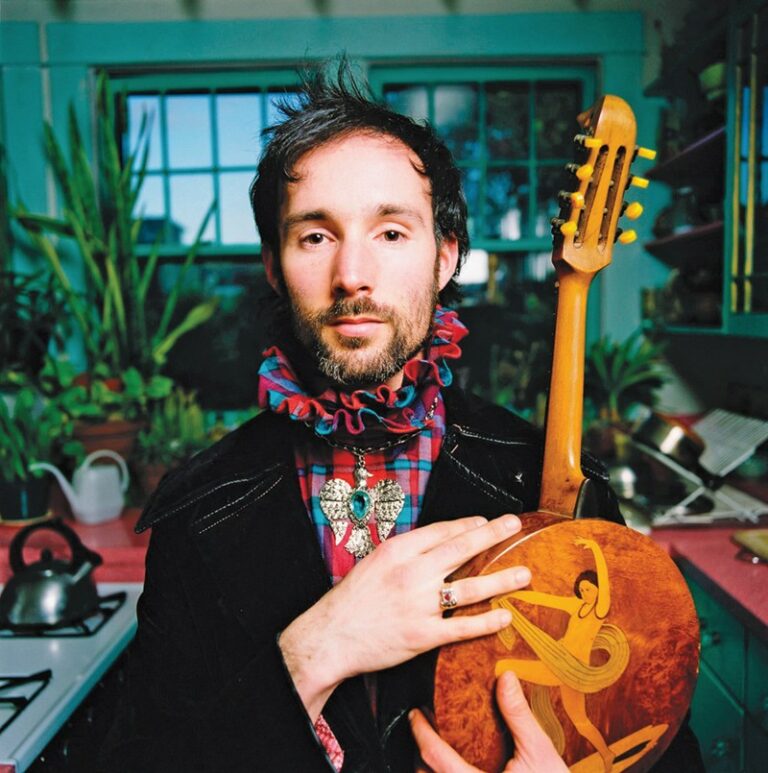
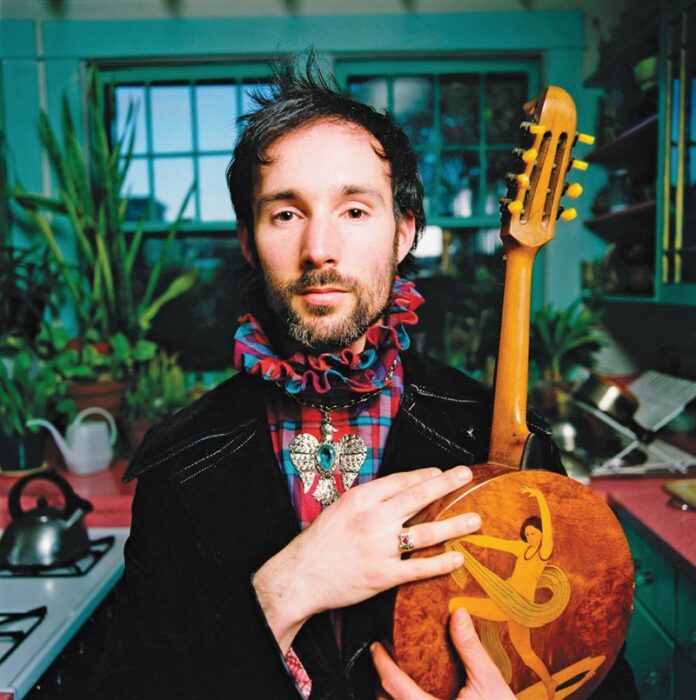
Feel like dancing? Look no further: Arann Harris and the Farm Band raise the barn roof with odes to chickens and country doctors; the Church Marching Band birth a raucous lovechild of Sousa and klezmer; Tiny Television (pictured) inject absolute rave-up to “Swing Low, Sweet Chariot,” and the Dixie Giants have sousaphone solos. Serious.

Food for Thought, the Sonoma County AIDS food bank, benefits, while Lagunitas beer and homemade tamales fuel the fleet-footed. Be there on Saturday, Jan. 19, at the Sebastopol Community Center. 390 Morris St., Sebastopol. 7pm. $15–$20. 707.823.1511.

Trione Vineyards & Winery

0

Despite being the one-time owners of Geyser Peak Winery, and well-connected in business generally, the Trione family had no leg up when they opened this shop in the inauspicious year of 2008, says sales director Denise Trione. For one thing, the mighty Trione name didn’t travel too far outside Sonoma County. She and winemaker Scot Covington have had to hand-sell their wine across the country, while wearing all the different hats that a small winery requires. “It’s a different kind of animal,” Covington explains.

It’s surely a different beast from the old Canyon Road Winery, this site’s former occupant, a sort of country cousin brand to Geyser Peak that has since been sent to pasture in Modesto. In a brand-new production facility that Covington designed to incorporate his experience at Pellegrini Family Vineyards and others, Trione operates on a “cream of the crop” model, in which Covington gets his pick from more than 600-plus acres of grapes that the Triones farm to make just 6,000 cases of wine.

Located along a well-liked cycling route, Trione is a popular stop. You’re likely to be greeted by Denise Trione with a free welcome glass of crisp, elegant 2010 Russian River Valley Sauvignon Blanc ($23), or, more likely, first by Bubba, a friendly American bulldog, and Scout, a Jack Russell terrier who’s given to worrying a well-chewed doorstop before placing it expectantly at one’s feet.

Midway through the wine list, here’s a little mystery solved. What happened to Geyser Peak’s once-celebrated, post-Aussie winemaker invasion Shiraz? The new owners quietly dropped it. But one wine’s still coded Shiraz in Trione’s SKU system. With savory, rural aromas of olives, leather and horse blanket—all in a good way—the 2008 RRV Syrah ($32) won’t be mistaken for your more typical Shiraz. This vineyard was planted in French, not Australian clones, after all. A core of stony, cherry and plum fruit becomes more fleshy with time, blueberry syrup entering the scene late.

Not for everyone, but more sensuous than the technically polished Bordeaux blend. There’s a good Primitivo on hand, too, and a juicy, cranberry-and-cola flavored 2009 RRV Pinot Noir ($35), jazzy with Christmas spices of cinnamon and clove, like a mulled wine that’s been left out to cool. And how satisfactory when a tasting ends not with the thud of an overwrought Cab, but the engaging, lively and refined 2008 Alexander Valley Cabernet Sauvignon ($65), as irresistible as a soggy doorstop to a terrier.

Trione Vineyards & Winery, 19550 Geyserville Ave., Geyserville. Thursday–Sunday, 10am–5pm. Tasting fee, $5–$15. 707.814.8100.

End of the Affair

Those familiar with Michael Haneke’s films realized that when he made a movie called Amour, it wouldn’t be an ordinary love story. What we see, in all of its horror, is the final stage of a successful love story, the end of the line. The film opens with doors thrown open on an apartment where an elderly woman’s flower-bedecked corpse is discovered in a gas-filled room by paramedics.

We flash back to the events leading up to this moment. Anne (Emmanuelle Riva) and Georges (Jean-Louis Trintignant, in his first film in nine years) are an elderly couple with a great love of classical music, relaxing in an apartment furnished with books, paintings and a grand piano. They discuss some of the usual pressures—familiar unhappiness, mainly, since their daughter (Isabelle Huppert) is involved with a two-timing British husband.

One morning during coffee, Anne stops in her tracks, dumbstruck. She’s lost a minute of her life to a stroke; this incident is followed by complications from surgery to relieve the damage. Then comes another stroke, paralysis and irreversible decline.

Amour‘s perfection lies in its clinical refusal to euphemize. That’s visible in the way the camera is positioned right at the foot of Anne’s bed, as if standing in the place of someone who didn’t know the sick woman all that well, who can neither politely leave the room nor sit down close to her pillow like a daughter.

The film has the 3am clarity of a fantasy of downfall, unredeemed by false uplift and spiritual afflatus about the satisfaction of dying in your own bed. (They take your bed, anyway, and replace it with one of those hospital models.) The beauty that’s said to be waiting at the end of life may just be something else that keeps people pliable—all of it just mystification, which Haneke proposes to strip away.

‘Amour’ opens Friday, Jan. 18 at the Rafael Film Center.

Heart Trails

0

Now a 29-year-old tradition, this year’s see-and-be-seen Art from the Heart auction at SSU takes place on Jan. 19.

Previous auctions have featured goodies donated from local inns and wineries, but this year, attendees will bid strictly on the artworks themselves, generously donated from over a hundred notable sculptors, painters and conceptual creators.

Among those is San Francisco’s Ray Beldner, whose 101 Portraits are blurry, low-res amalgamations of exactly that many celebrity Google searches. The misty, nearly faceless results comment on fame-worship in the digital age by silently staring back at viewers with the vapid blankness of someone who’s just looked through 101 pictures of, well, anything.

Closer to home, SRJC faculty member Kristine Branscomb will also be featured. Her paintings likewise examine the intersection of media and reality, creating impressionistic, faceless scenes that play on the notion of that two-dimensional, airbrushed reality so often used to sell.

If you don’t feel like donning a tie, brushing your hair or whatever dressing up for a fancy gala means to you, a free preview exhibit is held Jan. 16–18, starting at 11am. Art from the Heart is on Saturday, Jan. 19, at University Art Gallery. 1801 E. Cotati Ave., Rohnert Park. 6pm. $25 donation. 707.664.2295.

They’re ba-a-a-ck!

0

Walmart is returning to the Rohnert Park Planning Commission on Thursday, Jan. 24, to ask once again for permission to expand its Rohnert Park store into a Walmart Supercenter. Despite overwhelming opposition in 2010 to Walmart’s proposal, and despite having lost a lawsuit over the proposal in June 2011, Walmart just won’t take no for an answer.

A number of labor, environmental and community organizations have joined together to oppose Walmart’s plans. There are many reasons why a Walmart Supercenter is a bad idea, not only for Rohnert Park but for the entire county.

1. Job loss and wage decline in the retail and grocery industry across the county.

2. Working poverty: Walmart workers make significantly less than a living wage for Sonoma County and less than other local grocers pay.

3. Gender inequity: Walmart is being sued for gender discrimination in California.

4. Healthcare and public subsidies: Fewer than half of Walmart workers have employer-provided healthcare insurance, and many must rely on healthcare services provided by local and state government.

5. Increased traffic congestion and reliance on the automobile, which undermines transit-oriented development on the 101 corridor.

6. A significant increase of greenhouse gas emissions.

7. Extra burden on law-enforcement services.

8. Unethical business practices such as the massive bribery scandal in Mexico.

United States Sen. Bernie Sanders, I-Vt., has reported that one family, the Walton family of Walmart, owns more wealth than the bottom 40 percent of Americans combined. The two main factors that resulted in such a fabulous accumulation of wealth are the low wages paid to employees, and the intense pressure put on suppliers to keep cutting wholesale prices to them.

How much is enough?

The meeting on Walmart’s expansion is on Thursday, Jan. 24, at Rohnert Park City Hall (130 Avram St., Rohnert Park) at 6pm.

Rick Luttmann is a resident of Rohnert Park, a professor at Sonoma State University, and a member of the Living Wage Coalition.

Open Mic is a weekly op/ed feature in the Bohemian. To have your essay of 350 words considered for publication, write op*****@******an.com.

Road to Wellville

0

When was the last time you went to the hospital for yoga?

Though the hospital setting tends to go hand in hand more with illness, surgery and trauma care, recent developments in the healthcare industry signal a dramatic shift in the way that hospitals and healthcare clinics approach the treatment of chronic disease. Namely, moving increasingly toward prevention and wellness—including programs for acupuncture, dance classes, tai chi and, yes, yoga.

Such a shift couldn’t come at a better time for the United States. According to new report by the National Research Council and the Institute of Medicine, Americans live shorter lives and experience more injuries and illnesses than those in comparable high-income nations. In terms of life expectancy, the United States ranks at or near the bottom of a list of 17 countries.

“If we’re able to educate people and the public, we’re going to have a healthier community, and that’s best for everyone,” explains Dr. Marko Bodor, medical director at the Synergy Medical-Fitness Center in Napa. Located on the campus of the Queen of the Valley Medical Center, Synergy opened its doors in 2006. Utilized by both patients and fee-paying members of the public, the facility emphasizes the five aspects of wellness: exercise, nutrition, sleep, psycho-social and spiritual well-being and, of course, prevention, says Bodor.

With its pool, dance classes, nutritionists, cardio and strength-training equipment, Synergy may look like a gym, but it goes beyond your standard 24 Hour Fitness, offering a breast and mammography center, a cardiac rehab facility, public talks on health and nutrition and an integrative health center.

“Medicine for centuries was pretty much acute or terminal care. When you absolutely needed to see a doctor, you saw one,” says Bodor. “We’re definitely seeing a transformation in the way we treat things.” Because of healthcare reform, organizations will be more accountable for their outcomes, and prevention will become much more essential, he adds.

By 2015, Santa Rosa may get its own medical-fitness center. A zoning amendment approved on Dec. 4 by the Santa Rosa City Council has opened the doors for the construction of a facility to be integrated with Santa Rosa Memorial Hospital. It’s part of an overarching goal of promoting wellness, preventative care and physical activity, says Katy Hillenmeyer, a spokesperson for the St. Joseph Health System.

“Healthcare reform has provisions in it to minimize readmissions to the hospital for people with chronic illness,” she adds. “Anything we can do for the health of our neighbors outside of the hospital helps in combating chronic disease, and helps keep people healthy so that they don’t necessarily end up in an acute care hospital.”

The shift toward a preventative model can be traced to two sources. The first is a change in public health needs. Infectious diseases, a cause for concern a hundred years ago, have been replaced with chronic disease from poor lifestyle choices. The second is the passing of the Affordable Care Act in 2010, which allows for the creation of a prevention and public health fund, along with the issuance of community transformation grants to help promote healthy lifestyle choices in every community.

[page]

A switch in focus to outcome-based reimbursement, something that’s already in place at for-profit Kaiser Permanente—a company that, according to Bodor, stays profitable by keeping people out of the intensive care unit—is another Affordable Care Act goal. According to a report by Trust in America’s Health, for every dollar spent on prevention, approximately $6 are saved in healthcare costs.

“The reality is that every time we keep someone out of the emergency room, it saves the public a lot of money,” says Michael DiRosario, clinic manager at the Forestville Wellness Center, which was opened in 2011 by West County Health Centers.

Geared specifically toward the uninsured and low-income populations that don’t normally have access to alternative medical services and preventative health education, the wellness center offers acupuncture, nutrition for diabetes and smoking cessation group meetings, cooking demos, and Zumba and yoga classes.

“What lots of places are starting to focus on is how we can get people to think about wellness and lifestyle changes,” says doctor of osteopathy Connie Earl, who’s practiced integrative medicine at the Forestville Wellness Center since November 2011. Though most people dread entering clinical settings, creating community by focusing on healthy lifestyles has made a marked difference.

“People love coming here,” says Earl. “They say they love the feel of the place. It shifts the feel since they’re actually getting treatment for chronic medical conditions, and feel more empowered in their own healthcare.”

The Petaluma Health Center is a federally qualified health center that serves approximately 18,000 patients. After moving to a 6,000-square-foot building in November 2011, the facility was able to expand the services in its Center of Good Health. Now, the primary care clinic—which serves low-income individuals along with those with private insurance—is taking prevention to a level not often seen in healthcare settings. The center sees on average 200 wellness group visits a month, for sessions on smoking cessation, child obesity (an issue of serious concern in the United States) and chronic pain. The facility offers medical acupuncture (getting an average of 100 visits a month), yoga, Zumba, tai chi, meditation and hour-long integrative medicine consultations with Dr. Fasih Hameed, a doctor who recently spearheaded a conference in Santa Rosa focusing on “Integrative Medicine for the Underserved.”

The crux is getting out of chronic-disease cycle, says Luke Entrop, wellness program manager.

“Tobacco use, poor diet and lack of exercise lead to heart disease, type 2 diabetes, lung disease and cancer, which account for 50 percent of U.S. deaths per year,” he adds. “If we can get on the prevention end of things, we’re getting to the heart of these chronic conditions of our time.”

Entrop sees the Center of Good Health and the preventative approach as a way to promote healthy living for people of all backgrounds.

“With more affordable healthcare coverage, we’re able to reduce the cost of acute emergent health conditions by working on some basic behavior change and nutrition education,” he says. “These are some of the driving factors of more expensive healthcare costs. By investing in prevention, we’re able to reduce costs in the long run.”

Elder States

I know an indigenous elder in Napa. He’s got olive-colored skin, salt-and-pepper hair, drives a Prius and has no idea I’m applying such a sacred term to him.

He would disagree, because he yearly spends uncounted hours with the real deal—indigenous holy men in remote outposts of the Southern Hemisphere—absorbing their wisdom. It might not occur to my friend that in my urban neighborhood, he is to us what those men are to him, out in kivas and caves far away. He ponders deeply, speaks from his heart and inadvertently spreads hope and conviction in his words and actions every day.

But if I make him the “wise one” and go no further, I miss the point; all cultures have indigenous roots. Therefore, each of us can dig down inside for the so-called blood memory that reminds us what is right and who we are. (Of course it requires a time of disconnection from stimulation, including electronic devices.) According to a revered Peruvian elder, we need only “remember what we already know.”

Amazing but true: we already know how to live in balance and teach others by example. The indigenous tribes that lived in North America had an earth-centered spirituality. They looked at trees and saw “our standing brothers and sisters.” But most of the conquering Europeans came from indigenous Celtic tribes that once took tree respect even further. For the Celtic tribes, before they began to forget, divine worship took place in groves. Trees were sacred individuals that inspired awe and reverence. At times, that awe awakes in us.

It is convenient to make American Indians or indigenous people (misnomers notwithstanding) responsible for deep wisdom and connection to nature. Then we can pretend it does not belong to us. The speech attributed to Chief Seattle resonates:

“This we know—that Earth does not belong to man. . . . All things are connected like the blood that unites one family. All things are connected. What befalls the earth befalls the sons of earth.”

But Chief Seattle said no such thing. The speech came from screenwriter Ted Perry in 1971, and four decades later we still can’t believe it. Nobody wants heart-wrenching wisdom from a screenwriter named Ted; we want it from a distant romantic figure, a holy man or woman, an indigenous elder.

That would be all of us. The words resonate because they make us “remember what we already know.” Chief Seattle and the “nobody” Ted Perry both reside in us, along with the responsibility to wake up and remember our indigenous roots, that we’re part of nature—siblings of those awe-inspiring trees.

Jan. 19: Merle Haggard the the Uptown Theatre

My grandma was a big Merle Haggard fan. We spent many a summer night, sitting on the back porch of her house in Arizona, Grandma drinking Budweiser, me drinking 7-Up, Merle or Willie on the cassette player; I liked singing the chorus of “Okie from Muskogee” at the top of my lungs, whenever possible. Now in his mid-70s, Haggard’s...

Jan. 19-20: Chris Botti at the Napa Valley Opera House

Chris Botti is a hunk. If they made a “Sexy Men of Jazz” calendar, he would certainly be Mr. December. Just ask Katie Couric! But beyond his all-American looks, the jazz trumpeter actually possesses serious chops. Studying with Woody Shaw and Bill Adam at Indiana University before moving to New York in the ’80s, he then went the pop...

Jan. 17: Battle of the Baristas Final Showdown at Taylor Maid

I spent years behind coffeehouse counters, steaming up foamy lattes with glum despair before learning how to make a proper coffee drink. It took training by a boss who viewed coffee as an art form to change my ways. Under her tutelage, I learned the exact temperature at which milk caramelizes, how to make a superb espresso shot (tiger...

Roots Rave-Up

Good causes, sure, but come for the nonstop dancing

Trione Vineyards & Winery

Family winery ascends a smaller peak

End of the Affair

Michael Haneke's 'Amour' faces death head-on

Heart Trails

Art from the Heart a massive benefit auction with over 100 artists

They’re ba-a-a-ck!

Walmart's Supercenter idea for Rohnert Park just won't go away

Road to Wellville

Hospitals and clinics move toward a preventative model of wellness

Elder States

Feeling awe, remembering what we already know
11,084FansLike
4,446FollowersFollow
6,928FollowersFollow