Tabletop Talent

If you’re like us, you’ve combed the couch for change at least twice in the last month. You eye your shelves looking for books or records to sell, you scour the Craigslist “free” section and you save all those 15 percent–off coupons that show up in the mail.

You also like to go out to dinner every once in a while.

Enter Sonoma County Restaurant Week, which annually provides the more economically minded among us an excuse to splurge on a nice night out. With over a hundred restaurants taking part, local diners have plenty of choices for special prix fixe menus at one of three discounted price tiers—just $19, $29 and $39—with each level buying a three-course dinner.

Running from March 18–24, Sonoma County Restaurant Week has a full restaurant list up at sonomacountyrestaurantweek.org. For us, it’s a chance to shine a light on some of our local chefs participating in Restaurant Week: John Franchetti from Rosso, Tim Bodell from Rustic, Jack Mitchell from Jack & Tony’s, Arturo Cardenas from Caffe Portofino and Claudio Capetta from Cafe Claudio.

Read on and eat away—because this week, you might not even have to raid the couch for it.”—Gabe Meline

CURDLED CURIOSITY

John Franchetti, Rosso Pizzeria & Mozzarella Bar

Quick, think of pizza. The first things that come to mind are dough and cheese, right? Since they’ve already perfected the dough, when Santa Rosa’s Rosso Pizzeria opened a second location in Petaluma, it was time to get cheesy. Inspired by a visit to a cheese bar in Rome, Rosso chef and owner John Franchetti has now brought a little piece of Italy back to Sonoma County.

“I was tasting the different burratas available for purchase, and being the chef that I am, I said, ‘I could make this,'” says Franchetti. So, with little training outside of YouTube, and with a lot of curd from water buffalos in Two Rock, Franchetti crafted his own buffalo burrata. The result is an extremely creamy, spreadable cheese with flavor that lingers and teases the tongue long after it’s been devoured—a staple of Rosso Pizzeria & Mozzarella Bar in Petaluma.

A recent special of buffalo burrata with a poached egg and black truffle shavings was almost too good, making the trio of traditional burrata, stracciatella and goat cheese with mint ($9) seem almost pedestrian in comparison. Like a big, meaty red wine, it’s best to work up to the buffalo flavor monster.

There’s nothing wrong with eating only cheese for dinner—especially this cheese. But it would behoove hungry diners to try the new additions to Rosso, which opened its Petaluma location about a year ago. Dinner entrées, formerly rotating specials, are now menu staples. Hearty plates like fried chicken with smashed potatoes ($15) and forever roasted pig with pappardelle ($13.50) are satisfying with or without appetizers.

Rosso shines brightest, of course, with its pizza. “I really try to emulate what happens in Naples,” says Franchetti. “The difference is, Naples is really rustic; they just throw their ingredients on there. Americans are used to placed ingredients.” It is difficult to find anything wrong with the traditional margherita, made with red sauce, mozzarella, basil and olive oil. More adventurous diners might lean toward the Moto Guzzi, made with smoked mozzarella, Caggiano Italian sausage, smoked olive oil, Swiss chard and slow roasted onions. After a few tries and a little advice, Franchetti started smoking the water used to make the cheese instead of just cold-smoking the cheese itself; the result is a strong flavor that’s not overpowering but definitely in charge.

But for a chef who can make just about anything he sets his mind to, Franchetti keeps things fairly simple when it comes to his own preference. “If I need to eat a pizza,” he says, “I’m having the pepperoni pizza.”—Nicolas Grizzle

[page]

THE DIRECTOR’S CHAIR

Tim Bodell, Rustic

From dishwasher to line cook to culinary manager and chef, Tim Bodell believes that every station not only deserves respect, but presents a potential learning opportunity. “I tell the people that I mentor that you can learn something from everybody, every day,” Bodell says. “And if you’re not learning something, you’re not doing something right. You’re not having an open mind.”

That’s no mere kitchen homily coming from Bodell, who’s worked them all, from the bottom up. Growing up in the Philadelphia area, his earliest memories were cooking with his mother. “I always loved food, always loved to cook,” he recalls. He wasted no time getting started in the restaurant business as a dishwasher in his early teens. When just 18, he worked with his first “real chef,” and after attending culinary school at Johnson & Wales University in Providence, R.I., Bodell led the itinerant life of a young chef on the move.

“For me, in my 20s, my thing was to always stay for exactly one year and move on. There’s only so much you can learn form a mentor, and the learning curve is so dramatic. Every chef has different things to teach you. I wanted to diversify my knowledge.”

In 2000, Bodell moved west to work at high-end golf communities, where his openness to learning new things led to a pastime that he didn’t know he’d ever even considered: getting in touch with his inner outdoorsman. “I had never hunted until I moved to Oregon and became great friends with a ‘good old boy,’ a ‘redneck,'” he says with a laugh, “who showed me the way.”

When he’s not spending time with his wife and 14-month-old son, he takes his yellow lab duck hunting or foraging for mushrooms. “For me, there’s nothing as gourmet as traipsing around in the mud, coming home and preparing [mushrooms]. It’s really something I enjoy.”

Meanwhile at Rustic, the restaurant at Francis Ford Coppola Winery inspired by the director’s favorite food from both his travels and his memories at the family table, Bodell fine-tunes small-plate wine and food pairings, makes fresh pasta and oversees two sous chefs and “an army” of line cooks, prep cooks and dishwashers. This January, he had the privilege of cooking at the James Beard House in New York City for the second time, representing the winery.

Bodell confirms that Coppola is very involved in Rustic. “I really enjoy working with Francis himself. He’s a storyteller, so I really have the pleasure of learning about him, his family and his family recipes.”

Naturally, all of this makes Bodell a busy man. On a recent Saturday, the chef was taking a break from a 400-seat lunch rush, plus a wine club event serving 600 members. He had 220 reservations for dinner. “I’ve been here since 6:30,” Bodell says, without a hint of exhaustion. “I’ll be here a few more hours. I’m looking forward to that first cold beer, that’s for sure!”—James Knight

WHO’S TONY?

Jack Mitchell, Jack and Tony’s

A few years ago, the owners of a building in Santa Rosa’s Railroad Square approached chef Jack Mitchell to open a restaurant. He declined. Though interested in a new endeavor, he was still running the popular restaurant Sassafras and had other plans in the works.

“Then I had a dream,” Mitchell tells me recently, “and the entire concept came to me. Even the name.” And thus was born Jack and Tony’s Restaurant and Whisky Bar, named after the chef-owner himself—and his alter-ego.

While Tony’s function is mainly auxiliary—the staff enjoys making up stories about him—he does have his own email address and business cards. (Neither of which, apparently, came in handy during his latest kerfuffle, in which he was kidnapped and whisked off to Cancun).

“Tony” may be getting into trouble south of the border, but Jack grew up way north of it, in St. Paul, Minn., where his interest in food started young. “My mom wasn’t a great cook,” he tells me, “so I’d sneak over to Grandma’s house to eat lunch with her.” He paid his way through college by working in restaurants, and by the time graduation rolled around, he was cooking in a four-star hotel. So instead of pursuing further education (“Culinary school,” he says, “is for people who don’t know how to cook”), he continued to move through kitchens around the country.

For eight years, Mitchell cooked fancy French cuisine in Arizona, but, as he puts it, “I was cooking for tourists; I could get away with anything.” San Francisco, with its promise of a more “informed clientele,” beckoned. In addition to working for the Real Restaurant Group and the Lark Creek Inn, he ran the kitchen at San Francisco’s Beach Chalet, which served a thousand tables a day. “It was a great experience,” he says, “but ultimately not fulfilling.”

Drawn by abundant local produce, Mitchell moved to Santa Rosa. “The last thing this town needed,” he recognizes, “was another wine bar.” Whiskey might not drive the entire menu at Jack and Tony’s, but it certainly has a grip on the wheel. The apple tart, lox, oysters—all of them pair nicely with various gradations of the amber liquor.

With a seasonally shifting menu, the industrious chef—he’s cooking a BLT and a cheeseburger, medium well, as we talk on the phone—is unabashed about the quality of his food. “We didn’t invent the caesar salad,” he says, “but we perfected it.”

As for Tony? “We tried to raise the $50,000 ransom,” Mitchell deadpans, “but only managed to get about 15 bucks.”—Jessica Dur Taylor

[page]

FOURTH STREET FINESSE

Arturo Cardenas, Caffe Portofino

Arturo Cardenas never imagined he’d be head chef at a popular Italian restaurant in downtown Santa Rosa. He grew up in Michoacan, Mexico, and came to California for the first time in the ’80s to pick apples and grapes. But he found work in the off-season in the kitchen at Caffe Portofino, and 23 years later, he’s got a whole staff calling him “chef.”

After learning from the prior chef how to prepare the menu’s staples, Cardenas was surprised when the owners wanted to send him to culinary school in San Francisco. (“I didn’t even know it was a career,” he says. “I just love what I do.”) He became sous chef and then, 10 years ago, under new ownership, head chef. “I was free to create new dishes,” he says.

Not that the downtown Italian joint has changed much since then. The décor still looks much like it did when Cardenas began his career, and the menu, much to the relief of its fans, hasn’t seen too many new additions. Customers enjoy the old favorites so much that Cardenas says he gets complaints when something isn’t available. Dishes like penne pasta with chicken and fettuccine pescatore are staples at Portofino—and by all accounts, will always be.

Cardenas brings work home, too, as his nine children enjoy many of the recipes he makes for diners at the crowded restaurant. The oldest, now 23, helps out cooking for the other kids, the youngest of whom is just three. “I leave them instructions on what we’re having for dinner,” he says. “They make my life a lot easier.”

Mom’s old saying “This isn’t a restaurant, you’ll eat what I make” doesn’t quite apply in the Cardenas household. The kids can be picky eaters, and the chef, trained in pleasing the customer’s palate, often obliges: “People say I spoil my kids because I make them three or four dishes.”

The Caffe Portofino model follows the sage advice “If it ain’t broke, don’t fix it.” The place is still packed most nights of the week, with homemade pasta, reliable favorites and a friendly staff (bar manager Su Wolfard has been there 25 years). Toss in a prime downtown location, and it’s a recipe for success.—Nicolas Grizzle

CLAUDIO’S WAY

Claudio Capetta, Cafe Claudio

When I call chef Claudio Capetta on a recent Saturday, he’s just made some tiramisu, asparagus-stuffed tortoloni and gnocchi in anticipation of the evening’s dinner guests. I ask about his signature menu items, and he ticks off dish after dish—veal topped with prosciutto and pepperoni, spaghetti alla carbonara, gnocchi with creamy pesto, risotto del giorno, scampi fra diavolo—and then says, “Nothing major. I just try to cover the whole spectrum of Italian food.”

Such nonchalance is befitting of the 72 year-old-chef, who had no qualms about opening a restaurant in a location that’s seen more turnover than a rookie basketball game. In less than a decade, the roadhouse bistro at 9890 Bodega Hwy. has been home to such promising eateries as P/30, Cafe Saint Rose and Two Crows—all of which turned off the oven sooner than expected.

“The location doesn’t make the restaurant,” Capetta tells me, “the person running it makes the restaurant. You can’t just open a restaurant because you have the money. You must love it, too.”

Capetta obviously loves it. Cafe Claudio is his fourth restaurant in Sonoma County alone. “I used to call my restaurants Claudio’s Trattoria or Claudio’s L’Osteria, and then my daughter said I must modernize,” he says, laughing. “And so I called this one Cafe Claudio. And I got on Facebook and Instagram.”

Originally from Liguria on the Genoa Coast of Italy, Capetta ran Claudio’s Trattoria in Sebastopol (where Sushi Tozai is now) for a few years before selling it to move down to Santa Barbara. The occasion? His daughter was going off to college.

“My wife and I wanted to be near her,” he says matter-of-factly, as though parents routinely follow their kids to college. Years later, he’s doing it again, moving to Santa Rosa to be closer to his daughter and two grandchildren. As for Cafe Claudio, it remains as rooted as the patio herb garden and homegrown tomatoes planted out front 20 months after opening.

“I’m not a spring chicken anymore,” says Capetta, who is nonetheless embracing the 21st century with aplomb. “But you can find me on Facebook!”—Jessica Dur Taylor

Horn of Plenty

0

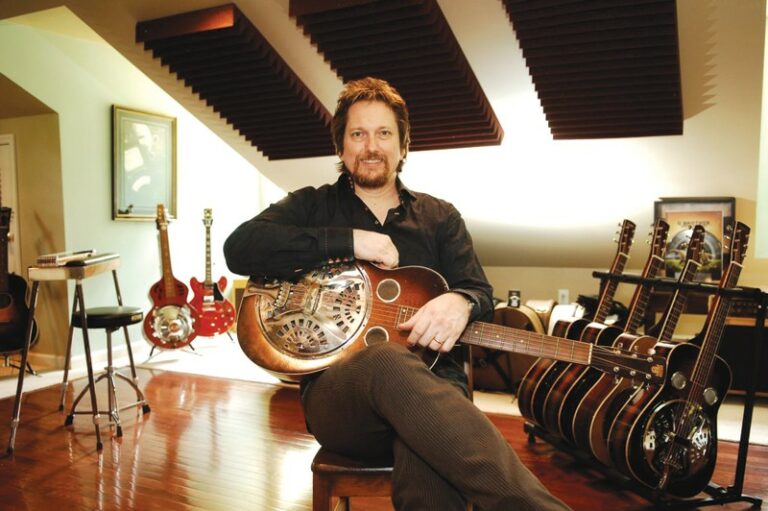
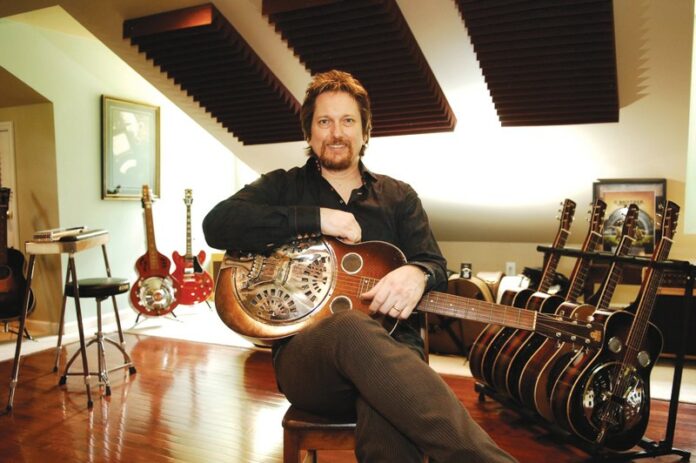
Sax, drugs and rock ‘n’ roll—the Seattle-born saxophonist Skerik has done it all. Trying to label Skerik’s sound, be it jazz, punk, punk-jazz or metal, is like handling the keys on a greased saxophone: it keeps slipping through your fingers.

Skerik (born Eric Walton) picked up the sax in the fifth grade and was influenced early by the Rolling Stones and Pink Floyd, bands that incorporated saxophone into rock music. But like a human sponge, Skerik continued to soak up any possible kind of music, from classical to African soukous, and incorporated it into his own.

For Skerik, music is more about the concept than the skill. This philosophy has landed him gigs like playing as a member of local hero and bass legend Les Claypool’s Fancy Band and Frog Brigade and touring with the likes of Pearl Jam, R.E.M., Bonnie Raitt and Roger Waters. Through his career, he’s been a member of Critters Buggin, Garage a Trois, Crack Sabbath and the Dead Kenny G’s. Skerik performs with another one of his many bands, Bandalabra, on Wednesday, March 13, at the Sweetwater Music Hall (19 Corte Madera Ave, Mill Valley; 8pm; $12; 415.388.1100) and on Saturday, March 16, at the Forestville Club (6250 Front St., Forestville; 8pm; $5; 707.887.2594).

Goliath Meets David

Some days, you think you know the world and the way it works. Other days, the wife of the CEO of Amazon.com is going on a book tour of small independent bookstores.

You read that right: Mackenzie Bezos, wife of Amazon CEO Jeff Bezos, has written a novel. Cute idea, right? After all, when the family business model is based on suffocating and killing small bookstores, spending millions lobbying to keep from paying sales tax on those loss-leader books and maintaining sweatshop-like conditions at distribution warehouses to send those books out all over the country for maximum profit, it’s only a matter of time before one thinks, “Gee, these ‘authors’ must be on to something. I’ll try it, too! Maybe I can go around to talk about it at some quaint little bookstores, if there are any left.”

Mackenzie Bezos’ book, Traps, is the story of four women whose lives intersect, transforming them forever, etc., etc. What you really want to know is: how does Copperfield’s feel about this?

“We try to look at the author independent of whom they are married to,” says Copperfield’s spokesperson Vicki D’Arman, adding: “Bezos himself—not happening.”

Anyway, see the wife of Amazon’s CEO appearing at the very type of small independent bookstore that Amazon has so successfully squashed on Monday, March 18, at Copperfield’s Books. 775 Village Court, Montgomery Village, Santa Rosa. 7pm. Free. 707.578.8938.—Gabe Meline

The Cost of Privilege

0

Last June, I observed a Santa Rosa police officer arresting a homeless man during the Wednesday Night Market. For the crime of observing this, I was arrested and spent half a night in jail. I was then charged with obstructing an officer.

I am grateful to say that after months of court dates and pushing this case all the way to a jury trial, the charges have been dismissed.

Sometimes white privilege means that going into court against the law enforcement establishment might actually work in your favor. While I’m thrilled to not have a bogus charge on my record, I also have to face the fact that things may very well have worked out differently if my skin had looked a little bit different, or if I hadn’t been born in this country.

We have a lot of work to do to dismantle white supremacy and capitalism, and part of that work starts with realizing how this system has a plan for destroying the lives and families of people of color, through prison, deportations, economic exploitation, state violence, pollution of poor neighborhoods and so many more little evils that go unnoticed by most of us.

I am grateful to live in a community of thoughtful and radical individuals who are not afraid to resist these injustices. I specifically want to hold up the event being organized by the D.R.E.A.M. Alliance of Sonoma County on March 27 at SSU’s Mario Savio Speaker’s Corner called “Coming Out of the Shadows,” with immigrant youth speaking on their experiences in the United States.

I also want to remind folks to check out a great event on Tuesday, March 19, at the Arlene Francis Center, with author and activist Chris Crass, author of Towards Collective Liberation: Anti-Racist Organizing, Feminist Praxis, and Movement Building.

The struggle continues. I am glad to be free of the court system. Now it’s time to get free of capitalism.

Carl Patrick is a member of Occupy Santa Rosa and the Sonoma County Solidarity Network.Open Mic is a weekly op/ed feature in the Bohemian. We welcome your contribution.

To have your topical essay of 350 words considered for publication, write op*****@******an.com.

Letters to the Editor: March 13, 2013

Scientology Slam

A thought does occur that the usual location for picking up a copy of the Bohemian at the Station in downtown Mill Valley had no copies. Could the Scientologists be collecting stacks to minimize publicity of DeWolf’s appearance at the North Bay Poetry Slam?

Via online

I Don’t Like Tom Tomorrow

I’m just wondering why you feature Tom Tomorrow. Most political cartoons extend false logic to a familiar scenario in order to illustrate how ridiculous the logic is. His cartoons distort the logic and apply it to equally ridiculous scenarios for who knows what end. I’m almost always left understanding his point but being neither intellectually nor comically amused. Which begs the question: Why the illustration and punch line, if you’re just providing droll, trite commentary?

Via email

Hi Jonathan, thanks for writing. Not everyone gets the ending of ‘La Dolce Vita,’ either. Marcello on the beach, with the dead, bulbous carcass of a sea creature? Paola trying to yell to him from across the estuary, her words drowned out by the waves? Boy, is it ever weird.—The Ed.

Proof of Intent?

I was very disappointed in your choice of Tom Tomorrow’s twisted cartoon on the Second Amendment (Feb. 20). In these difficult times, let us not be distracted and confused by propagandistic manipulations which are the antithesis of mindful thinking, and look at the original intention of the Second Amendment: “The strongest reason for a people to retain the right to keep and bear arms is, as a last resort, to protect themselves against tyranny in government.” (Thomas Jefferson.)

As Obama enlarges his drone assassination list of robotic death from above and the criminal banker elite rob many American families openly for fun and profit, this quote from the principal author of the Declaration of Independence and the third president of the United States speaks far better to us on the subject than Mr. Tomorrow’s cartoon.

Santa Cruz

Hi Drew, thanks for writing. But—whoops—Thomas Jefferson never actually said those words. The quote first showed up in an op-ed piece in 1989, and no one knows where the author got it. It’s been floating around since, despite no record of it in any of Jefferson’s speeches, papers or letters. Talk about “propagandistic manipulation”! In the meantime, a six-month-old baby girl named Jonylah Watkins was shot five times with a gun and died last week in Chicago. Have a fun day!—The Ed.

Fee-and-Dividend

The level of contaminants released into the atmosphere from the burning of fossil fuels is threatening our air, food, water and health. The rising ocean from the melting polar ice is slowly inundating the coastal land.

The transition to clean-energy technologies is the best way to curb greenhouse gas and other pollutants released into the atmosphere. A dozen countries in Europe have succeeded in reducing emissions by employing carbon tax to encourage cleaner energy. Among several carbon bills that have been introduced in the Congress, fee-and-dividend has the best chance of promoting job growth, encouraging conservation and, with household income from the dividend, stimulating the economy.

The fee-and-dividend proposes that the revenue from the fee-on-carbon be paid out equally to every citizen. With the current CO2 emissions of 6 billion tons, the proposed $15/ton fee for the first year would be approximately $750/year per capita.

For the Pacific West, where hydroelectric power is abundant, the impact on heating, cooling and transportation cost is insignificant. Higher oil cost brought on by the $15/ton fee is expected to add $0.10 to a gallon of gas. An average driver who drives 12,000 miles per year would pay roughly $40 more a year at the pump, assuming the car gets 30 mpg.

Santa Rosa

Write to us at le*****@******an.com.

For the Love of Leopold

0

A brave yet bashful author, Aldo Leopold never cared for fame and fortune. Though his classic 1949 collection of essays, A Sand County Almanac, has sold millions, he himself remains largely unknown today. “Aldo who?” a quiz show contestant might well ask.

But for decades, family members, friends and followers have kept his flame burning brightly. Now, scientists, teachers and activists want to make the visionary environmentalist, who died in 1948 at the age of 61, as well-known as his book, and as respected a figure as Henry David Thoreau, author of Walden; John Muir, founder of the Sierra Club; and Rachel Carson, whose feisty polemic Silent Spring helped create the Environmental Protection Agency.

Unlike Thoreau and Muir, Leopold was a dedicated family man, college professor and government employee. Unlike Carson, who achieved sudden fame, he never received national acclaim in his lifetime, not even from conservationists. Still, over the past decades, his work has gained respect. His stunning essay “Thinking Like a Mountain” has inspired half a dozen or so imitations with titles such as “Thinking Like a Watershed” and “Thinking Like a River.”

Pretty soon, ecologists everywhere may be “Thinking Like Leopold,” if they aren’t already, which means thinking ethically about the earth.

The year 2013 might be the Leopold moment for our time, and just in “the nick of time,” to borrow Thoreau’s phrase, now that climate change has undeniably arrived. A snazzy documentary about Leopold titled Green Fire, completed two years ago, is now reaching large audiences—in April, it airs nationwide on PBS—and the prestigious Library of America has just published a collection of Leopold’s best works edited by Curt Meine. Meine headlines the three-day Geography of Hope Conference, running March 15–17 in Point Reyes Station, that’s all about the author of A Sand County Almanac.

There’s no more fit setting for the conference than West Marin with its rich agricultural history, brave new organic farmers and ferocious battles about trees, water and, most recently, the oyster, the lowly mollusk that made Point Reyes legendary and that continues to divide friends and families ever since the federal government ordered the closure of Drakes Bay Oyster Company. The wounds haven’t healed yet. Robert Hass, a former U.S. poet laureate and a longtime resident of Marin, hopes that the conference will create a calm atmosphere to talk about the oyster wars. “Oysters and the environment are an inescapable topic,” he told me the day after he returned from a trip to Myanmar. “This year’s conference is more relevant to Marin than any other we’ve ever had.”

Co-sponsored by the U.S. Forest Service, the Aldo Leopold Foundation and the Center for Humans and Nature, this year’s get-together—the fourth in five years—brings together scholars, activists and poets from near and far. Geography of Hope fans and followers can hear lectures, watch the film Green Fire and meet its producers, go on outings to farms and fields, watch birds, learn about habitat restoration and taste organic goat cheese at Toluma Farms in Tomales. The documentary Rebels with a Cause will also be shown. Never before have so many outstanding ecologists and conservationists come together to talk about Leopold’s identities, ideas and ethics that, Leopoldians insist, can help save the earth if farmers, hunters, ranchers and tourists work together.

The rallying cry for the 2013 conference, “Igniting the Green Fire: Finding Hope in Aldo Leopold’s Land Ethic,” grew organically from previous gatherings about farming and water. The very first conference, in 2009, focused on the “geography of hope,” a phrase coined by Pulitzer Prize–winning novelist Wallace Stegner, who died in 1993. These days, Stegner serves as a friendly environmental ghost who haunts West Marin and its park rangers, tree huggers and citizens who want to wander wild lands before—as Joni Mitchell lamented in her pop anthem “Big Yellow Taxi”—they’re “paved” over with parking lots.

In the crowded field of Aldo Leopold studies, nobody knows more about him than his official biographer, Curt Meine. A modest Midwesterner like Leopold, Meine gives credit to all the players on the Leopold team and insists that the ecologist’s legacy ought to be written and rewritten by everyone in a community, whether it’s Point Reyes or his own in the Driftless area of Wisconsin, a Midwestern version of Northern California. Like Leopold and Stegner, Meine expresses hope about the environment, though he doesn’t lapse into glib optimism. “Every landscape is pregnant with hope and despair,” he tells me the day we talk, which happens to be the anniversary of Leopold’s birth. He adds, “No landscape is so bleak that it’s hopeless. Even in the most despairing environments, something positive can be done.”

Almost everyone who writes about Leopold has an epiphany. Meine’s took place in 1982 in the University of Wisconsin library. An eager graduate student, he opened a box with Leopold’s papers and held them in his hands as though they were the Dead Sea Scrolls. “That particular box contained the papers that were in his desk when he died,” Meine tells me. “Some were typed, some handwritten, some the barest of fragments.”

Three decades later, he looks back at the evolution of his career from fledging student to venerable scholar. He also sees, perhaps clearer than ever before, the growth of Leopold’s thinking about the wilderness, that quintessential American landscape. “As a young man, the wilderness was his hunting ground,” Meine says. “Later, he prized it as a historical site, because so much of the American past was enacted there.

“In the 1930s, with the Dust Bowl, he developed an ecological sense of the wild. In the 1940s, he recognized its importance as a living laboratory for scientists, and, near the end of his life, it became a spiritual place. On his deathbed, he was a staunch advocate for wild lands and at the same time a defender of farms and farming.”

[page]

The film Green Fire shows Leopold wearing all his many colorful hats. There’s a stunning image of him, for example, in 1909 in the Arizona territory. A recent graduate of the Yale School of Forestry, he recreated himself as a cowboy with a six-gun and a Stetson, employed by the fledgling National Forest Service. Leopold’s friend, Rube Pritchard, boasted in a letter to his mother that he’d rather work in an American forest than be crowned king of England. Leopold added modestly, “I’m beginning to agree.”

Co-produced by Ann and Steve Dunsky, both of whom work in Vallejo for the U.S. Forest Service, Green Fire offers Leopold’s own words as read by Marin County’s inimitable Peter Coyote, whose deep, resonant voice is instantly recognizable. “I never prepared to read from Leopold,” Coyote tells me. “I’ve done voiceovers for hundreds of films, and I always work like an improvisational jazz saxophonist.” Still, Coyote couldn’t have been better prepared. A longtime, heartfelt fan of Leopold’s work, he grew up on a farm, and later learned about nature and spirituality from California Indians, Zen Buddhists and from his buddy, Gary Snyder, who taught him that “the wild has his own dictates.”

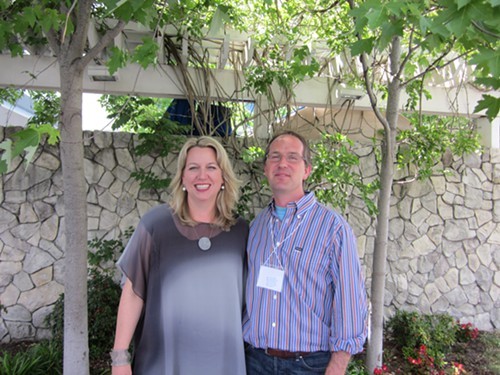
“Coyote is amazing,” Ann Dunsky tells me. “He read perfectly from A Sand County Almanac on the first take.” She and her husband come to Leopold’s work from opposite directions. He’s an Easterner; she’s a Westerner. He grew up thinking hunters were evil; she came from a family of hunters. He’s a dogged researcher; she’s a creative filmmaker. These days, they share a love of Leopold, whom they see as a lifelong moderate who avoided extremes and whose work can bridge clashing communities and opposing schools of thought.

“When I first read A Sand County Almanac as a teenager,” Steve Dunsky tells me, “I saw it as the ruminations of an old man with quaint stories. I went back to it in my 40s and found it a complex work that examines the big picture and sees human beings as a part of the natural world. His ‘land ethic’ links all of us and every species on the earth.”

Professor Kathleen Moore, a philosopher and ethicist at Oregon State, believes that everyone who graduates from college ought to have read Sand County Almanac and understood it. “If students are too busy to read it,” she tells me, “they ought to see Green Fire.” When undergraduates and colleagues want to know her favorite passage in Leopold’s classic, she turns instantly to the section titled “The Outlook” and reads: “A thing is right when it tends to preserve the integrity, stability, and beauty of the biotic community. It is wrong when it tends otherwise.”

A fiery teacher, impassioned moralist and compassionate writer, Moore doesn’t think the sky is falling, but she insists that the oceans are rising fast and furious, and argues that if humans don’t act wisely, quickly, “we’ll soon be caught between hell and high water.” Leopold’s ethical values can help, she says, “if humans stop thinking of themselves as solitary beings and recognize they’re part of a system and have an impact on it.”

Like Meine and Stegner, she’s hopeful and whimsical, too. “The beavers are back in the woods of Oregon,” she tells me. “They’re resurgent, though I can’t speak for the beavers on the football team.”

Wendell Gilgert calls himself a Leopoldian, and though he’s not a professor, writer or filmmaker, he does have a BA and an MA from Chico State. In high school in 1964, his English teacher told him to go to the library, find a book and read it. A Sand County Almanac changed his life. For decades, he worked with the USDA Natural Resources Conservation Service. In 2011, he became the working landscapes program director at Point Reyes Bird Observatory Conservation Science, a Marin County nonprofit. These days, he goes into fields and farms, talks the farmer talk and walks the rancher walk.

“I don’t tell anyone what to do or how to improve what they’re already doing,” he explains. “I suggest tools they might use. I learned that from Leopold.” Gilgert hopes farmers and ranchers will be effective stewards of the land, protect watersheds, enhance soils and guard wildlife habitat. Mike and Sally Gale in Chileno Valley, and Loren Poncia in Tomales, operate sustainable ranches that might be emulated, Gilgert says.

The most surprising take on Leopold comes, not surprisingly, from Robert Hass, a guiding light of the Geography of Hope Conference who put Marin’s geography on the literary map of America in volumes of poetry such as The Apple Trees at Olema. During the course of our early morning conversation, Hass compared Leopold to T. S. Eliot, another Midwesterner, born a year after Leopold, whose quintessential modernist poem The Waste Land offers a geography of despair in lines such as “Here is no water but only rock.” On first glance, Leopold and Eliot seem like polar opposites, but Hass argues that A Sand County Almanac, like The Waste Land, is a modernist work in that it’s made up of “patches and fragments.”

Furthermore, he believes that The Waste Land is an ecological poem and that, despite Eliot’s sense of alienation and despair, was written “out of a hunger for wholeness.”

If anyone at the Geography of Hope Conference can fuse seeming opposites and bring together apparent foes, it’s surely Hass. No one followed Marin’s oyster wars as sensitively as he, and no one hungers more for the wholeness of the community than he. Hopeful and fearless, he’s prepared to talk about the links between Wallace Stegner and Aldo Leopold, and eager, too, to persuade the volatile members of Marin’s divided community to sit down with one another and share ideas.

“I hope that there’s time for poetry, too,” Hass says, instantly conjuring an image of a hawk from the work of Robinson Jeffers. “We’ve got to have poetry to have a geography of hope.”

Flavor of Two Valleys

0

Twenty-two wineries throughout Sonoma Valley come together this weekend for Savor Sonoma Valley 2013. Wineries will showcase 2012 vintage wines straight from the barrels, sample new releases and offer pairings with culinary creations prepared by local chefs and restaurants. Meet winemakers and mingle with wine lovers while perusing local artists’ work and listening to live music on Saturday and Sunday, March 16–17, at various wineries throughout the valley. Full weekend pass $65; Sunday only, $50. For more, see www.heartofsonomavalley.com.

The 20th annual Taste of Yountville celebration to showcase the town’s finest food, wine and art kicks off on Friday, March 15, with the Taste of Yountville Show & Sale artist reception from 6pm to 8pm, where attendees can view and purchase the works of local Napa Valley artists. The celebration climaxes on Saturday, March 16, from noon to 5pm, with the Taste of Yountville block party. Renowned restaurants and wineries will serve up delicious food, microbrews and wines all along Washington Street. Admission is free; tasting tickets are only $1 each. For more, see www.yountville.com.

Silver Oak Cellars

0

It is surely an homage to success when a wine is so well-known, so ubiquitous in nationwide distribution channels, that it’s shadowed by its very own pun, popular among wine snobs: “Silver Joke.”

But the numbers are in favor of Silver Oak fans, who showed up to cheer on the winery in every corner of the United States during a 2012 tour across the country to celebrate its 40th anniversary.

In the starring role, a 12-foot “mini-me” replica of Silver Oak’s trademark water tower was hauled from state to state on a trailer, and posed for photos on the National Mall, under Yosemite Falls, overlooking the Grand Canyon, tagged on Cadillac Ranch. Mini-me inspired impromptu parking-lot parties, took third place in a Fourth of July parade and called on special fans like Utah’s tattooed lady, who sports a full-arm logo in memory of her father, who liked his Silver Oak.

What inspires such devotion to a wine? Let’s start with the tower.

There is no tower. Well, there is and there isn’t. When Ray Duncan and Justin Meyer founded Silver Oak in 1972, they chose to model their label after the venerable Chateau Latour—with a Napa Valley twist. The towers that you see today—one each for the Oakville and Geyserville locations—weren’t built until much later. When I peer inside, it appears to be empty, except for a humming pump churning out water for the fountain.

The Oakville winery, rebuilt in 2008 after a fire, is a handsome structure of reclaimed stone from a Midwestern mill. The interior is suggestive of an abbey, the destination of a pilgrimage. Inside a temperature-controlled shrine, colossal corks lay aside outsized bottles, while hundreds of library vintages shimmer on the walls.

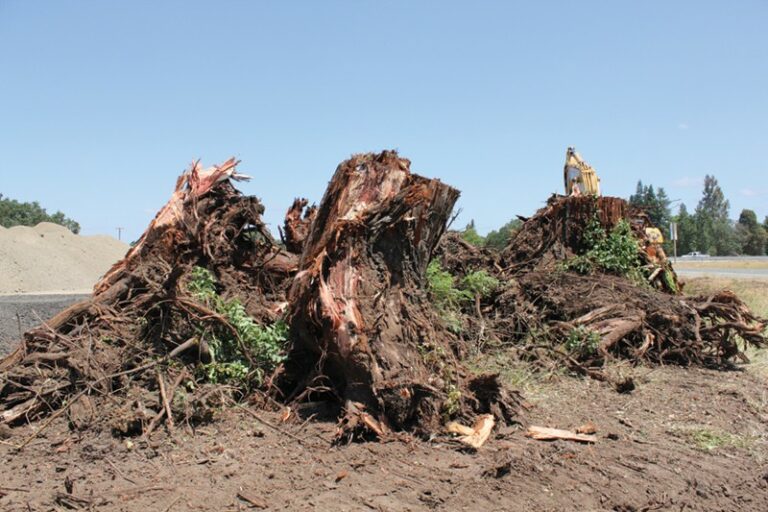
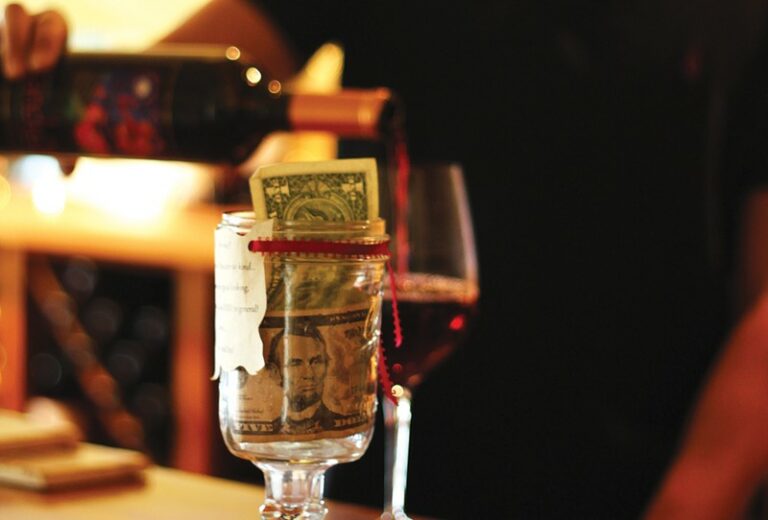
Silver oak trees grow in Australia, and have naught to do with this Cab shop; it’s named for Silverado Trail plus Oakville Cross. So there’s no oak? No, there’s oak. A lot of it. The custom-coopered barrels are, famously, all-American oak, mostly all new. I enjoyed the softness and appealing vanilla, savory olive aromas of the 2003 Alexander Valley Cabernet Sauvignon ($95) somewhat more than the dusty 2008 ($70). The 2008 Napa Valley Cabernet Sauvignon ($110) showed similar, dusty wood notes, a bit of olive and graphite, and flavors that melded nicely together in a mélange of somewhat understated Cab characteristics.

“This wine affects people in deep ways,” my host interjects. Of that, I have no doubt, and in that respect, Silver Oak truly is a cult wine, confounding, perhaps, to outsiders who don’t feel the magic.

Silver Oak Cellars, 915 Oakville Cross Road, Oakville. Monday–Saturday, 9am–5pm; Sunday, 11am–5pm. Tasting fee, $20. 707.942.7022.

Cats Are Fun

0

Comfort Slacks are serious about making music that stands out against the doldrums of daily life. “It’s boring, boring, boring; there are no fun colors, no fun sounds, no fun challenges,” says Jessie Fagan, who makes up half of the Napa electro-pop duo with her husband, Matt. “This band is a great opportunity for us to break away from our mundane lives and do something fun.”

The songs on the band’s debut EP, Biscuit Face, can seem innocuous or obscure, but they’re all driven by a sense of fun. Take “Coffee,” for example, which proclaims matter-of-factly, “We like to hang out with the cops at the doughnut shops / We drink lots of coffee and we fuck all night / We smoke lots of weed and we get real high, yeah.” After such an emotionally deep and provocative verse, the chorus goes downright philosophical: “Ring-ding-ding, I like my coffee.” (The song has inspired two dozen karaoke-style video responses online thus far.)

There’s obviously a lot of thought put into Comfort Slacks’ execution, but it doesn’t veer from the lighthearted core of the people who make it. Their music and live performances could be compared to the Aquabats or the Phenomenauts, but this duo is not relegated to the speedy, upbeat guitar strums of third-wave ska. The Fagans’ intimacy and awkward-yet-appropriate blend of solo male and female vocals can draw a brief comparison to Mates of State, but it fades quickly as Comfort Slacks establish themselves as far more unique.

With live shows not heavily dependent on the actual playing of instruments, the duo sometimes dress up in costume. “I dare you to find a live show that’s as wacky and weird and chaotic and strange as ours,” says Fagan. “And fun.”

The couple, now in their mid-30s, moved here from Jersey City, N.J., five years ago. “One of the first things we noticed is that it smells very nice,” says Fagan. But without friends to show them around, they found themselves bored. Matt had been in metal bands in New Jersey and plays several instruments, so Jessie taught herself piano and learned how to program drums and synthesizers. The resulting lo-fi electronic sound is spiced up with physical instruments in a tasty mix.

For all their carefree demeanor, things get serious when Fagan mentions their love for animals, especially cats. Felines litter their website, and there are undoubtedly several hidden mentions of cats in the band’s songs.

“Everybody thinks we are doing it because it’s cool, but it’s real stuff,” she says without a hint of sarcasm. “We really love cats.”

Grocery Squeeze

0

With Michelle Obama’s “Let’s Move!” campaign, the topic of food deserts—low-income areas with few grocery stores and little access to fresh produce—has become a national concern. But a Santa Rosa legal scuffle illuminates a curious and perhaps unintended consequence of this national campaign: multinational chain stores gaining easier entry into urban areas where they would historically face opposition.

On Sept. 18, Santa Rosa’s city council adopted a plan to facilitate the opening of grocery stores in the city’s USDA-designated food desert, which stretches between Rohnert Park and Highway 12 along Santa Rosa Avenue. The city amended zoning codes so that food vendors re-tenanting existing spaces won’t need to apply for a conditional use permit; these permits cost around $12,000 and require a public hearing.

In October, Santa Rosa’s Living Wage Coalition filed a lawsuit against the city for this move, claiming it violates the general plan and will allow new stores to open without the necessary environmental and public considerations.

“We don’t think this was about getting healthy food to low-income people,” says Marty Bennett, co-chair of the Living Wage Coalition (LWC). “We think it was about giving a free pass to a developer, and potentially we thought a Small Mart [smaller grocery stores operated by Walmart] could come into the vacant Circuit City building.”

In 2011, the multinational chain announced its intent to open between 275 and 300 stores in federally designated food deserts, stating, “We believe every single person should have access to an abundant selection of fresh fruits and vegetables at an affordable price.”

The superstore, however, pays poverty-level wages—a national average of $8.81 an hour—employs roughly one-third of its employees without benefits and exports the majority of its earnings to its Bentonville, Ark., headquarters, creating a robust case that the city council’s quick-fix answer may hurt food deserts more than it helps them.

“We don’t think Walmart can solve the problem of low-wage people getting access to healthful food,” Bennett says.

But according to assistant city attorney Molly Dillon, the Santa Rosa City Council’s amendment was merely a response to the food desert designation. The superstore has not approached the city about opening in its southeast quadrant, she says.

“So far as I know, there was no application from Walmart nor any contact with Walmart about the area along the Santa Rosa corridor,” she says.

A Smart & Final store was approved under the new, relaxed zoning code, and is set to open in the old Circuit City building along Santa Rosa Avenue.

Nevertheless, a proposed settlement has been drawn up between Santa Rosa and the LWC. The coalition stipulates that if the city throws out the amendment and reinstates its former zoning requirements, it will not press the lawsuit. According to Dillon, staff plans to recommend that the council comply with the terms of this settlement at a city council meeting on March 19.

“The pending litigations would be expensive for the city in time and resources that could be better spent elsewhere,” she says. “And there is some relief in that area now—one additional resource [Smart & Final] that was not available.”

Under the terms of the potential agreement, Smart & Final will be allowed to go forward as the only store to have taken advantage of the city’s relaxed zoning measures.

“We’re prepared to fully comply with the terms of the settlement,” Bennett says.

In a strange twist to this story, a spokesperson representing Walmart contacted the Bohemian through email on Feb. 27, asking about the paper’s upcoming story on “food deserts in Santa Rosa.” The Bohemian had not approached the superstore prior to receiving this inquiry. When asked why Walmart believed the Bohemian was working on an article, the representative replied that “the Living Wage Coalition posted something about it.”

But according to Bennett, nothing was ever posted on the LWC’s website or social media pages. Their only mention of this newspaper was a line written in the organization’s private email list, forwarded out to 250 people on Feb. 23—one of whom, it would seem, has an inside connection to Walmart’s communications team.

The spokesperson responded to questions regarding where such information came from, saying, “I can’t tell you . . . it was forwarded to me. That’s funny how that happens, huh?”

The spokesperson also said Walmart had been under the assumption that the Bohemian was writing about a different lawsuit involving the superstore in Rohnert Park, and added that Walmart had no comment on the food-desert issue in Santa Rosa.

This directly contradicts Walmart’s initial email and is without precedent; the store has directly engaged on the food-desert issue in the opinion pages of the Press Democrat.

The Bohemian invited further comment from the chain and has yet to hear back.

Tabletop Talent

Local chefs offer deals with Sonoma County Restaurant Week

Horn of Plenty

Skerik's anything-goes saxophone playing

Goliath Meets David

Some days, you think you know the world and the way it works. Other days, the wife of the CEO of Amazon.com is going on a book tour of small independent bookstores. You read that right: Mackenzie Bezos, wife of Amazon CEO Jeff Bezos, has written a novel. Cute idea, right? After all, when the family business model is based...

The Cost of Privilege

Remembering that not all of us are so lucky

Letters to the Editor: March 13, 2013

Letters to the Editor: March 13, 2013

For the Love of Leopold

Geography of Hope Conference honors famed conservationist, environmentalist and author Aldo Leopold

Flavor of Two Valleys

Twenty-two wineries throughout Sonoma Valley come together this weekend for Savor Sonoma Valley 2013. Wineries will showcase 2012 vintage wines straight from the barrels, sample new releases and offer pairings with culinary creations prepared by local chefs and restaurants. Meet winemakers and mingle with wine lovers while perusing local artists' work and listening to live music on Saturday and...

Silver Oak Cellars

Going strong for over 40 years, no joke

Cats Are Fun

Comfort Slacks brighten Napa music scene with silly pop

Grocery Squeeze

Walmart's exploitation of food deserts becomes a preemptive concern for the Living Wage Coalition
11,084FansLike
4,446FollowersFollow
6,928FollowersFollow