For the Love of Leopold

0

A brave yet bashful author, Aldo Leopold never cared for fame and fortune. Though his classic 1949 collection of essays, A Sand County Almanac, has sold millions, he himself remains largely unknown today. “Aldo who?” a quiz show contestant might well ask.

But for decades, family members, friends and followers have kept his flame burning brightly. Now, scientists, teachers and activists want to make the visionary environmentalist, who died in 1948 at the age of 61, as well-known as his book, and as respected a figure as Henry David Thoreau, author of Walden; John Muir, founder of the Sierra Club; and Rachel Carson, whose feisty polemic Silent Spring helped create the Environmental Protection Agency.

Unlike Thoreau and Muir, Leopold was a dedicated family man, college professor and government employee. Unlike Carson, who achieved sudden fame, he never received national acclaim in his lifetime, not even from conservationists. Still, over the past decades, his work has gained respect. His stunning essay “Thinking Like a Mountain” has inspired half a dozen or so imitations with titles such as “Thinking Like a Watershed” and “Thinking Like a River.”

Pretty soon, ecologists everywhere may be “Thinking Like Leopold,” if they aren’t already, which means thinking ethically about the earth.

The year 2013 might be the Leopold moment for our time, and just in “the nick of time,” to borrow Thoreau’s phrase, now that climate change has undeniably arrived. A snazzy documentary about Leopold titled Green Fire, completed two years ago, is now reaching large audiences—in April, it airs nationwide on PBS—and the prestigious Library of America has just published a collection of Leopold’s best works edited by Curt Meine. Meine headlines the three-day Geography of Hope Conference, running March 15–17 in Point Reyes Station, that’s all about the author of A Sand County Almanac.

There’s no more fit setting for the conference than West Marin with its rich agricultural history, brave new organic farmers and ferocious battles about trees, water and, most recently, the oyster, the lowly mollusk that made Point Reyes legendary and that continues to divide friends and families ever since the federal government ordered the closure of Drakes Bay Oyster Company. The wounds haven’t healed yet. Robert Hass, a former U.S. poet laureate and a longtime resident of Marin, hopes that the conference will create a calm atmosphere to talk about the oyster wars. “Oysters and the environment are an inescapable topic,” he told me the day after he returned from a trip to Myanmar. “This year’s conference is more relevant to Marin than any other we’ve ever had.”

Co-sponsored by the U.S. Forest Service, the Aldo Leopold Foundation and the Center for Humans and Nature, this year’s get-together—the fourth in five years—brings together scholars, activists and poets from near and far. Geography of Hope fans and followers can hear lectures, watch the film Green Fire and meet its producers, go on outings to farms and fields, watch birds, learn about habitat restoration and taste organic goat cheese at Toluma Farms in Tomales. The documentary Rebels with a Cause will also be shown. Never before have so many outstanding ecologists and conservationists come together to talk about Leopold’s identities, ideas and ethics that, Leopoldians insist, can help save the earth if farmers, hunters, ranchers and tourists work together.

The rallying cry for the 2013 conference, “Igniting the Green Fire: Finding Hope in Aldo Leopold’s Land Ethic,” grew organically from previous gatherings about farming and water. The very first conference, in 2009, focused on the “geography of hope,” a phrase coined by Pulitzer Prize–winning novelist Wallace Stegner, who died in 1993. These days, Stegner serves as a friendly environmental ghost who haunts West Marin and its park rangers, tree huggers and citizens who want to wander wild lands before—as Joni Mitchell lamented in her pop anthem “Big Yellow Taxi”—they’re “paved” over with parking lots.

In the crowded field of Aldo Leopold studies, nobody knows more about him than his official biographer, Curt Meine. A modest Midwesterner like Leopold, Meine gives credit to all the players on the Leopold team and insists that the ecologist’s legacy ought to be written and rewritten by everyone in a community, whether it’s Point Reyes or his own in the Driftless area of Wisconsin, a Midwestern version of Northern California. Like Leopold and Stegner, Meine expresses hope about the environment, though he doesn’t lapse into glib optimism. “Every landscape is pregnant with hope and despair,” he tells me the day we talk, which happens to be the anniversary of Leopold’s birth. He adds, “No landscape is so bleak that it’s hopeless. Even in the most despairing environments, something positive can be done.”

Almost everyone who writes about Leopold has an epiphany. Meine’s took place in 1982 in the University of Wisconsin library. An eager graduate student, he opened a box with Leopold’s papers and held them in his hands as though they were the Dead Sea Scrolls. “That particular box contained the papers that were in his desk when he died,” Meine tells me. “Some were typed, some handwritten, some the barest of fragments.”

Three decades later, he looks back at the evolution of his career from fledging student to venerable scholar. He also sees, perhaps clearer than ever before, the growth of Leopold’s thinking about the wilderness, that quintessential American landscape. “As a young man, the wilderness was his hunting ground,” Meine says. “Later, he prized it as a historical site, because so much of the American past was enacted there.

“In the 1930s, with the Dust Bowl, he developed an ecological sense of the wild. In the 1940s, he recognized its importance as a living laboratory for scientists, and, near the end of his life, it became a spiritual place. On his deathbed, he was a staunch advocate for wild lands and at the same time a defender of farms and farming.”

[page]

The film Green Fire shows Leopold wearing all his many colorful hats. There’s a stunning image of him, for example, in 1909 in the Arizona territory. A recent graduate of the Yale School of Forestry, he recreated himself as a cowboy with a six-gun and a Stetson, employed by the fledgling National Forest Service. Leopold’s friend, Rube Pritchard, boasted in a letter to his mother that he’d rather work in an American forest than be crowned king of England. Leopold added modestly, “I’m beginning to agree.”

Co-produced by Ann and Steve Dunsky, both of whom work in Vallejo for the U.S. Forest Service, Green Fire offers Leopold’s own words as read by Marin County’s inimitable Peter Coyote, whose deep, resonant voice is instantly recognizable. “I never prepared to read from Leopold,” Coyote tells me. “I’ve done voiceovers for hundreds of films, and I always work like an improvisational jazz saxophonist.” Still, Coyote couldn’t have been better prepared. A longtime, heartfelt fan of Leopold’s work, he grew up on a farm, and later learned about nature and spirituality from California Indians, Zen Buddhists and from his buddy, Gary Snyder, who taught him that “the wild has his own dictates.”

“Coyote is amazing,” Ann Dunsky tells me. “He read perfectly from A Sand County Almanac on the first take.” She and her husband come to Leopold’s work from opposite directions. He’s an Easterner; she’s a Westerner. He grew up thinking hunters were evil; she came from a family of hunters. He’s a dogged researcher; she’s a creative filmmaker. These days, they share a love of Leopold, whom they see as a lifelong moderate who avoided extremes and whose work can bridge clashing communities and opposing schools of thought.

“When I first read A Sand County Almanac as a teenager,” Steve Dunsky tells me, “I saw it as the ruminations of an old man with quaint stories. I went back to it in my 40s and found it a complex work that examines the big picture and sees human beings as a part of the natural world. His ‘land ethic’ links all of us and every species on the earth.”

Professor Kathleen Moore, a philosopher and ethicist at Oregon State, believes that everyone who graduates from college ought to have read Sand County Almanac and understood it. “If students are too busy to read it,” she tells me, “they ought to see Green Fire.” When undergraduates and colleagues want to know her favorite passage in Leopold’s classic, she turns instantly to the section titled “The Outlook” and reads: “A thing is right when it tends to preserve the integrity, stability, and beauty of the biotic community. It is wrong when it tends otherwise.”

A fiery teacher, impassioned moralist and compassionate writer, Moore doesn’t think the sky is falling, but she insists that the oceans are rising fast and furious, and argues that if humans don’t act wisely, quickly, “we’ll soon be caught between hell and high water.” Leopold’s ethical values can help, she says, “if humans stop thinking of themselves as solitary beings and recognize they’re part of a system and have an impact on it.”

Like Meine and Stegner, she’s hopeful and whimsical, too. “The beavers are back in the woods of Oregon,” she tells me. “They’re resurgent, though I can’t speak for the beavers on the football team.”

Wendell Gilgert calls himself a Leopoldian, and though he’s not a professor, writer or filmmaker, he does have a BA and an MA from Chico State. In high school in 1964, his English teacher told him to go to the library, find a book and read it. A Sand County Almanac changed his life. For decades, he worked with the USDA Natural Resources Conservation Service. In 2011, he became the working landscapes program director at Point Reyes Bird Observatory Conservation Science, a Marin County nonprofit. These days, he goes into fields and farms, talks the farmer talk and walks the rancher walk.

“I don’t tell anyone what to do or how to improve what they’re already doing,” he explains. “I suggest tools they might use. I learned that from Leopold.” Gilgert hopes farmers and ranchers will be effective stewards of the land, protect watersheds, enhance soils and guard wildlife habitat. Mike and Sally Gale in Chileno Valley, and Loren Poncia in Tomales, operate sustainable ranches that might be emulated, Gilgert says.

The most surprising take on Leopold comes, not surprisingly, from Robert Hass, a guiding light of the Geography of Hope Conference who put Marin’s geography on the literary map of America in volumes of poetry such as The Apple Trees at Olema. During the course of our early morning conversation, Hass compared Leopold to T. S. Eliot, another Midwesterner, born a year after Leopold, whose quintessential modernist poem The Waste Land offers a geography of despair in lines such as “Here is no water but only rock.” On first glance, Leopold and Eliot seem like polar opposites, but Hass argues that A Sand County Almanac, like The Waste Land, is a modernist work in that it’s made up of “patches and fragments.”

Furthermore, he believes that The Waste Land is an ecological poem and that, despite Eliot’s sense of alienation and despair, was written “out of a hunger for wholeness.”

If anyone at the Geography of Hope Conference can fuse seeming opposites and bring together apparent foes, it’s surely Hass. No one followed Marin’s oyster wars as sensitively as he, and no one hungers more for the wholeness of the community than he. Hopeful and fearless, he’s prepared to talk about the links between Wallace Stegner and Aldo Leopold, and eager, too, to persuade the volatile members of Marin’s divided community to sit down with one another and share ideas.

“I hope that there’s time for poetry, too,” Hass says, instantly conjuring an image of a hawk from the work of Robinson Jeffers. “We’ve got to have poetry to have a geography of hope.”

Paid Dues

0

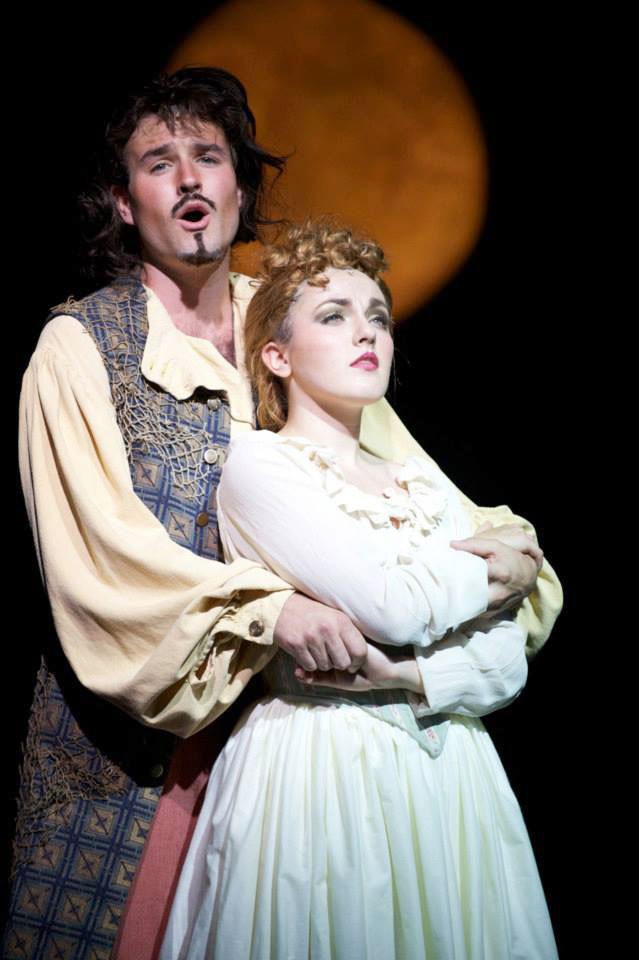
“It’s deeply moving, to me,” says actor Charles Siebert, discussing Arthur Miller’s 1968 play The Price, opening next weekend at the Cinnabar Theater. “Like almost all good dramas,” he observes, “like Death of a Salesman, Cat on a Hot Tin Roof, this play is about family, and what we do to one another as family. It’s about how we love one another and hate one another and drive each other crazy. It’s deeply, deeply touching.”

Siebert, an acclaimed New York theater and television actor (Cat on a Hot Tin Roof, The Gingerbread Lady, Trapper John, M.D.) who retired to Sonoma County several years ago, admits that he wasn’t very familiar with The Price when he was first cast in the Cinnabar production. Directed by Sheri Lee Miller, with a cast that also includes John Shillington, Samson Hood and Madeleine Ashe, the tightly written, intimately crafted story is set in the attic of a New York City brownstone, where two estranged brothers, a cop and a surgeon, meet to decide the fate of their late parents’ furniture. Gregory Solomon (Siebert) is the Russian-Jewish antique dealer who enters the picture to appraise the furniture, and perhaps bring some wisdom and perspective to the brothers’ 16-year-long feud.

“I knew two of the original Broadway cast,” Siebert says. “Kate Read, who plays the wife of one of the brothers, played Big Mama in the Cat on a Hot Tin Roof that I did on Broadway, when I played Gooper. And Pat Hingle, who played the cop in The Price, he was the original Gooper in Cat. When I did it, he came backstage and we talked. After that, we worked together a few times in L.A. He guested on Trapper John. He was a wonderful guy.”

When told that early reviewers described The Price as one of Miller’s most “theatrical” plays, Siebert laughs.

“I understand why they say that,” he says. “His writing is usually so . . . severe. And there is so much talk. In The Price, a lot of the theatricality springs from that family dynamic I was talking about, and also from this character Solomon. He’s a little bit of comic relief, but there’s so much to him. That part is a gift to an actor. It’s so clever and so interesting a part, taken in the context of the rest of the play.

“And it’s no accident he’s named Solomon,” he adds. “The two brothers stand before him, and in a way, he does offer his judgment. That’s pretty theatrical.”

One of the things Siebert appreciates about The Price, and much of Arthur Miller’s writing, is the absence of easy resolutions.

“The relationship between the two brothers is certainly not resolved,” he says. “And that’s sad, but it resonates with a lot of people, I suspect, in regards to their own families. Families are messy.

“One of the other things that’s so terrific about this play,” he continues, “is that neither character is really right or wrong. They each have legitimate points of view. They both have good reasons for feeling the way they do.”

Miller, Siebert believes, is a highly judgmental writer. “You know how he feels about this characters,” he explains. “You know which ones are right and which ones are wrong. But in this play, he doesn’t judge these people. He just lets them struggle to understand themselves, to understand each other.”

[page]

That, in a nutshell, is what makes Miller so exceptional an artist: his willingness to write about real life in ways that sidesteps an audience’s programmed expectation that everything will resolve itself in a tidy, satisfying way. In our art, for the most part, we do want resolution. At the same time, we recognize that in real life, few things are resolved neatly in the end.

“I think that’s one of the satisfactions of art,” Siebert muses. “Art has to have a form and a shape, a destination of some sort, whereas life is aimless and crazy and never resolves anything to complete satisfaction. That’s one of the interesting things about The Price. It doesn’t exactly resolve. And yet, you’re right, that is what we want from art. We want resolution. So will people leave this play devastated? I certainly hope so. “Because then they will have had a real experience. They will have gotten something extraordinary out of it.”

Siebert, having acted in plays, television shows and movies, and having directed for a number of popular television shows (including Hercules and Xena), still finds that the greatest excitement, for an actor, comes from performing onstage in front of a live audience. He feels the same way about sitting in the audience.

“There is an enormous exhilaration,” he says, “that comes from sitting in a room, hearing a couple of people getting up in front of us and saying these words that start to draw us in and engage us and finally tell us something about ourselves. That’s why I go to the theater, to experience something, to experience a confirmation of something I believe, or a challenge to what I’ve assumed, something interesting, exciting, funny, sad, whatever.

“The idea that a bunch of people can get together in a room and watch a bunch of other people stand up and do this thing we call theater, it’s amazing—because we buy it! We buy into it. Those are people pretending. Those guys aren’t really brothers, and they aren’t really working out their mutual angst—but we accept it completely.”

Ultimately, he suggests, it’s the language of theater that separates it from other art and entertainment forms.

“That’s what theater is: language,” Siebert says. “You don’t get that from the movies or television. Playwrights like Miller, sometimes, and like Tennessee Williams, they can create poetry out of the most mundane conflicts. It’s such a fascinating thing.

“It’s such a remarkable collaboration,” he concludes, “a collaboration between the audience and the artists. We in the audience agree to believe what the actors and the playwright and the director are presenting—even though everyone knows it’s absolutely not happening at all.

“It’s a fascinating game, and I love it!”

Silver Oak Cellars

0

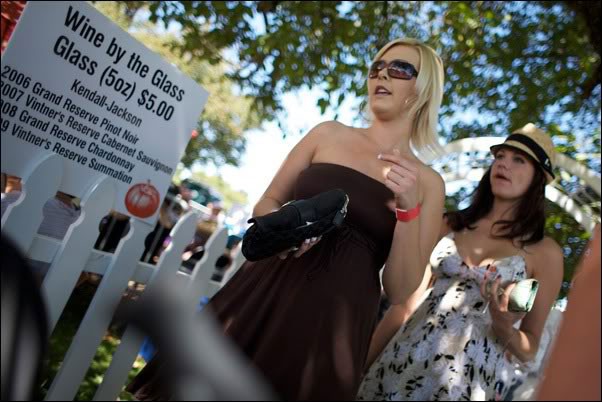
It is surely an homage to success when a wine is so well-known, so ubiquitous in nationwide distribution channels, that it’s shadowed by its very own pun, popular among wine snobs: “Silver Joke.”

But the numbers are in favor of Silver Oak fans, who showed up to cheer on the winery in every corner of the United States during a 2012 tour across the country to celebrate its 40th anniversary.

In the starring role, a 12-foot “mini-me” replica of Silver Oak’s trademark water tower was hauled from state to state on a trailer, and posed for photos on the National Mall, under Yosemite Falls, overlooking the Grand Canyon, tagged on Cadillac Ranch. Mini-me inspired impromptu parking-lot parties, took third place in a Fourth of July parade and called on special fans like Utah’s tattooed lady, who sports a full-arm logo in memory of her father, who liked his Silver Oak.

What inspires such devotion to a wine? Let’s start with the tower.

There is no tower. Well, there is and there isn’t. When Ray Duncan and Justin Meyer founded Silver Oak in 1972, they chose to model their label after the venerable Chateau Latour—with a Napa Valley twist. The towers that you see today—one each for the Oakville and Geyserville locations—weren’t built until much later. When I peer inside, it appears to be empty, except for a humming pump churning out water for the fountain.

The Oakville winery, rebuilt in 2008 after a fire, is a handsome structure of reclaimed stone from a Midwestern mill. The interior is suggestive of an abbey, the destination of a pilgrimage. Inside a temperature-controlled shrine, colossal corks lay aside outsized bottles, while hundreds of library vintages shimmer on the walls.

Silver oak trees grow in Australia, and have naught to do with this Cab shop; it’s named for Silverado Trail plus Oakville Cross. So there’s no oak? No, there’s oak. A lot of it. The custom-coopered barrels are, famously, all-American oak, mostly all new. I enjoyed the softness and appealing vanilla, savory olive aromas of the 2003 Alexander Valley Cabernet Sauvignon ($95) somewhat more than the dusty 2008 ($70). The 2008 Napa Valley Cabernet Sauvignon ($110) showed similar, dusty wood notes, a bit of olive and graphite, and flavors that melded nicely together in a mélange of somewhat understated Cab characteristics.

“This wine affects people in deep ways,” my host interjects. Of that, I have no doubt, and in that respect, Silver Oak truly is a cult wine, confounding, perhaps, to outsiders who don’t feel the magic.

Silver Oak Cellars, 915 Oakville Cross Road, Oakville. Monday–Saturday, 9am–5pm; Sunday, 11am–5pm. Tasting fee, $20. 707.942.7022.

Grocery Squeeze

0

With Michelle Obama’s “Let’s Move!” campaign, the topic of food deserts—low-income areas with few grocery stores and little access to fresh produce—has become a national concern. But a Santa Rosa legal scuffle illuminates a curious and perhaps unintended consequence of this national campaign: multinational chain stores gaining easier entry into urban areas where they would historically face opposition.

On Sept. 18, Santa Rosa’s city council adopted a plan to facilitate the opening of grocery stores in the city’s USDA-designated food desert, which stretches between Rohnert Park and Highway 12 along Santa Rosa Avenue. The city amended zoning codes so that food vendors re-tenanting existing spaces won’t need to apply for a conditional use permit; these permits cost around $12,000 and require a public hearing.

In October, Santa Rosa’s Living Wage Coalition filed a lawsuit against the city for this move, claiming it violates the general plan and will allow new stores to open without the necessary environmental and public considerations.

“We don’t think this was about getting healthy food to low-income people,” says Marty Bennett, co-chair of the Living Wage Coalition (LWC). “We think it was about giving a free pass to a developer, and potentially we thought a Small Mart [smaller grocery stores operated by Walmart] could come into the vacant Circuit City building.”

In 2011, the multinational chain announced its intent to open between 275 and 300 stores in federally designated food deserts, stating, “We believe every single person should have access to an abundant selection of fresh fruits and vegetables at an affordable price.”

The superstore, however, pays poverty-level wages—a national average of $8.81 an hour—employs roughly one-third of its employees without benefits and exports the majority of its earnings to its Bentonville, Ark., headquarters, creating a robust case that the city council’s quick-fix answer may hurt food deserts more than it helps them.

“We don’t think Walmart can solve the problem of low-wage people getting access to healthful food,” Bennett says.

But according to assistant city attorney Molly Dillon, the Santa Rosa City Council’s amendment was merely a response to the food desert designation. The superstore has not approached the city about opening in its southeast quadrant, she says.

“So far as I know, there was no application from Walmart nor any contact with Walmart about the area along the Santa Rosa corridor,” she says.

A Smart & Final store was approved under the new, relaxed zoning code, and is set to open in the old Circuit City building along Santa Rosa Avenue.

Nevertheless, a proposed settlement has been drawn up between Santa Rosa and the LWC. The coalition stipulates that if the city throws out the amendment and reinstates its former zoning requirements, it will not press the lawsuit. According to Dillon, staff plans to recommend that the council comply with the terms of this settlement at a city council meeting on March 19.

“The pending litigations would be expensive for the city in time and resources that could be better spent elsewhere,” she says. “And there is some relief in that area now—one additional resource [Smart & Final] that was not available.”

Under the terms of the potential agreement, Smart & Final will be allowed to go forward as the only store to have taken advantage of the city’s relaxed zoning measures.

“We’re prepared to fully comply with the terms of the settlement,” Bennett says.

In a strange twist to this story, a spokesperson representing Walmart contacted the Bohemian through email on Feb. 27, asking about the paper’s upcoming story on “food deserts in Santa Rosa.” The Bohemian had not approached the superstore prior to receiving this inquiry. When asked why Walmart believed the Bohemian was working on an article, the representative replied that “the Living Wage Coalition posted something about it.”

But according to Bennett, nothing was ever posted on the LWC’s website or social media pages. Their only mention of this newspaper was a line written in the organization’s private email list, forwarded out to 250 people on Feb. 23—one of whom, it would seem, has an inside connection to Walmart’s communications team.

The spokesperson responded to questions regarding where such information came from, saying, “I can’t tell you . . . it was forwarded to me. That’s funny how that happens, huh?”

The spokesperson also said Walmart had been under the assumption that the Bohemian was writing about a different lawsuit involving the superstore in Rohnert Park, and added that Walmart had no comment on the food-desert issue in Santa Rosa.

This directly contradicts Walmart’s initial email and is without precedent; the store has directly engaged on the food-desert issue in the opinion pages of the Press Democrat.

The Bohemian invited further comment from the chain and has yet to hear back.

Cats Are Fun

0

Comfort Slacks are serious about making music that stands out against the doldrums of daily life. “It’s boring, boring, boring; there are no fun colors, no fun sounds, no fun challenges,” says Jessie Fagan, who makes up half of the Napa electro-pop duo with her husband, Matt. “This band is a great opportunity for us to break away from our mundane lives and do something fun.”

The songs on the band’s debut EP, Biscuit Face, can seem innocuous or obscure, but they’re all driven by a sense of fun. Take “Coffee,” for example, which proclaims matter-of-factly, “We like to hang out with the cops at the doughnut shops / We drink lots of coffee and we fuck all night / We smoke lots of weed and we get real high, yeah.” After such an emotionally deep and provocative verse, the chorus goes downright philosophical: “Ring-ding-ding, I like my coffee.” (The song has inspired two dozen karaoke-style video responses online thus far.)

There’s obviously a lot of thought put into Comfort Slacks’ execution, but it doesn’t veer from the lighthearted core of the people who make it. Their music and live performances could be compared to the Aquabats or the Phenomenauts, but this duo is not relegated to the speedy, upbeat guitar strums of third-wave ska. The Fagans’ intimacy and awkward-yet-appropriate blend of solo male and female vocals can draw a brief comparison to Mates of State, but it fades quickly as Comfort Slacks establish themselves as far more unique.

With live shows not heavily dependent on the actual playing of instruments, the duo sometimes dress up in costume. “I dare you to find a live show that’s as wacky and weird and chaotic and strange as ours,” says Fagan. “And fun.”

The couple, now in their mid-30s, moved here from Jersey City, N.J., five years ago. “One of the first things we noticed is that it smells very nice,” says Fagan. But without friends to show them around, they found themselves bored. Matt had been in metal bands in New Jersey and plays several instruments, so Jessie taught herself piano and learned how to program drums and synthesizers. The resulting lo-fi electronic sound is spiced up with physical instruments in a tasty mix.

For all their carefree demeanor, things get serious when Fagan mentions their love for animals, especially cats. Felines litter their website, and there are undoubtedly several hidden mentions of cats in the band’s songs.

“Everybody thinks we are doing it because it’s cool, but it’s real stuff,” she says without a hint of sarcasm. “We really love cats.”

BottleRock Releases Comedy Lineup: Rob Delaney, Kristin Schaal, Jim Gaffigan, Demetri Martin, Tig Notaro, More

0

BottleRock Napa Valley has finally released their comedy lineup, which includes Rob Delaney, Kristin Schaal, Jim Gaffigan, Demetri Martin, Tig Notaro, Jim Breuer, Wyatt Cenac, Greg Behrendt, Aasif Mandavi, Anthony Jeselnik and J. Chris Newberg.
No word yet on which days each comedian will appear, but expect a schedule soon.
BottleRock runs May 8-12 in Napa, and features a hell of a music lineup including The Black Keys, Alabama Shakes, Zac Brown Band, Furthur featuring Bob Weir and Phil Lesh, Kings of Leon, Macklemore & Ryan Lewis, Primus, The Flaming Lips, Jane’s Addiction, Ben Harper & Charlie Musselwhite, The Shins, Bad Religion, Iron and Wine, Dirty Projectors, Dwight Yoakam, Edward Sharpe, Mavis Staples, Best Coast, Sharon Van Etten, Rodrigo y Gabriela, Cake, Michael Franti & Spearhead, Carolina Chocolate Drops, The Wallflowers, Blues Traveler, Brandi Carlile, Donovan Frankenreiter, Grouplove and many, many more.
More info here.


Live Review: Zakir Hussain at SFJAZZ Center

4

Eric Harland, Giovanni Hidalgo, Zakir Hussain and Steve Smith take a bow after their concert March 7 at the SFJAZZ Center.

 
Walking to the new SFJAZZ center last night, we were concerned with the time. Thanks to the state of downtown San Francisco traffic and parking, we would be walking in after the scheduled start time. A woman at the stoplight overheard us, and gave us a look.
“Relax, baby,” she said. “It’s jazz.”
While her wise words sank in, she crossed Franklin Street in a brief lull of traffic, against a red light, with headlights barreling toward her. We opted to do as she said, not as she did, and waited for the light. As luck would have it, we found our seats several minutes before tabla master Zakir Hussain took the stage.
First onstage was a group performing a piece commissioned by SFJAZZ in 1998, a poem by Rumi set to music featuring Hussain, three other tabla players, sax, piano, vocals and a dancer with bells on her ankles. The result was organic combination of Eastern rhythms and textures with Western jazz style. Hussain at times played a walking bass line on his tabla, and the other tabla players kept the beat with low and high sounds, mimicking a drummer with a kick and snare. Each player took a solo, culminating with the four tabla players furiously tapping fingers and slapping hands on their drums in complete synchronicity at unfathomable speed.
The opening act

Trying to listen to the individual notes in this situation is like trying to follow each individual flash on a set of strobe lights. Just when my head was about to explode, they finished with a finale rivaling a 15-second fireworks display.

Premiere Night: ‘Oz the Great and Powerful’

oz.jpg

‘Oz the Great and Powerful’ has built quite the big hype. For the past month, movie trailers have been playing nonstop on Hulu, and ads for the movie have been everywhere. The movie is a prequel of sorts to The Wizard of Oz—helllooooo, Wicked—and it gives Oz fans the chance to see the imagined back story of their favorite characters, before Dorothy’s visit to the yellow brick road.

The film stars James Franco as the heartbreaker circus magician with a hidden agenda, and follows his journey into the Land of Oz. In this movie’s telling, prophecy has arrived to the citizens of Oz that a great wizard bearing their land’s name will come restore peace. This wizard is meant to live a luxurious life in the great emerald palace—and of course, this sounds like a dream come true for a slightly selfish magician with nothing to lose.

Mila Kunis steals the show in the role of Theodora, who later becomes the wicked witch of the west. Kunis starts off as a good witch, the sister to the evil witch Evanora, who loves to leave large paths of destruction. Theodora is a kind woman who wants nothing more than to restore peace to the land. She’s the first person Oz meets on his journey, and falls for him instantly.

When push comes to shove, will Oz be the Wizard this magical land needs? What made the good witch go bad? Not that I can give away those sorts of spoilers, but I can answer one question: does this film live up to the buzz? Yes.

One other thing: the 3D experience is recommended for Oz fanatics who want to get up close with the colorful scenery.

I Don’t Know if Punk Rock is Bullshit, But John Roderick’s Argument Certainly Is


BY RACHEL DOVEY
I never was punk. (Or “a punk?” Or “a punk rocker?” See, I don’t even know the terminology.) I’m 27, so by the time I started flirting with counter-culture, which admittedly was fairly late, it wasn’t really an option. So when I read John Roderick’s Seattle Weekly essay “Punk Rock is Bullshit,” I don’t take personal offense. I wasn’t there.
But I’m really tired of Roderick’s argument, which is the same one that gets pegged to my generation’s counter culture—whether you call it Indie or Hipster or DIY—all the time. It goes something like this: Privilege breeds idealism, idealism breeds entitlement (led by those smug guitarists, or, these days, banjo players), entitlement breeds complacency, complacency breeds not really doing anything to make the world a better place.
I’m sure this particular psychological circle-jerk happens. I’m sure it happens to me in that endless, anxious loop that is my overly idealistic brain. But I don’t at all buy this notion, that a stance of mainstream critique attached to youth-oriented movements is built to fail, at least not in the way Roderick is saying. Occupy was primarily youngish white people with college degrees, and although the gatherings may have fizzled, mainstream media outlets have started talking about wealth and income distribution in an entirely different way. Does the term “99 percent” get co-opted by the one percent to get demographic points? Absolutely. Has the movement and all of the discussion it generated radically shifted the way I—and others in my age group—understand money in politics, vote, participate in local government and consume? Absolutely.
Perhaps there’s a distinction to be made between political youth culture and art-based youth culture, and you can make it in the comments section if you’re kind enough to read this. But I don’t necessarily think there is. In my experience, banjos, flannel shirts, beards, home canning, even, dare I say it, that particularly hushed and introspective roots-blend that comes from our county’s northwest—these are not just pieces of a twee nostalgia-fest that the New York Times likes to take issue with. They’re expressions of something more—of a growing naturalism in response to fossil fuel extraction so heinous its been associated with earthquakes; of consumption habits that value local economics and relationships in commerce and re-use. Maybe we’re annoying sometimes, maybe we grew up reading “The Lorax” and we’re a little smug, maybe sometimes our overly-earnest aesthetics lead to truly terrible products that we sell on Etsy without realizing that they look like genitals. But call me an optimist, I don’t think we’re complacent—and I think punk helped pave the way.
Or maybe I’m just still young, and not tired and worn-down and hopeless enough yet.

Bigfoot Sighting in Santa Rosa

Can you see the Bigfoot in this picture? No, its not a Magic Eye 3D image.

  • Courtesy RM Barrows
  • Can you see the Bigfoot in this picture? No, it’s not a Magic Eye 3D image.

If a tree falls in the woods, and nobody is around, does Bigfoot hear it? If that tree is in the Mayacama Mountain Area of Santa Rosa, the answer might be yes.

We get a lot of press releases at the Bohemian, but when the email subject reads “Bigfoot in Santa Rosa?” it’s gonna get opened. And when as much work is put into it as the one we received yesterday, it’s gonna get read. And when there are blurry photos of what might be the elusive, mythical Sasquatch, you bet your ass I’m gonna post that online like it’s a cat playing piano with sunglasses.

As the story goes, a Windsor man walking his dog shot the grainy, shaky footage and stabilized the best shot he had. If you squint really hard, and forget that this is in a forest, and don’t realize that these guys sell Bigfoot hunting trips, it looks like it might be a thing. Not necessarily Bigfoot, but definitely a thing. And hey, Bigfoot is a thing, so the search is on!

The man contacted Tom Biscardi, a renowned Bigfoot hunter in Redwood City. After carefully reviewing the footage, and enhancing it through several filters, it was determined that this could be worthy of more investigation. Though the team is still trying to get permission to cascade upon the mountain, the Bohemian was invited to send someone on the news staff to tag along on the hunt. (We’re just trying to find an issue with an open spot for a cover story, honest.)

This isn’t the first time Tom has reportedly been involved in a Santa Rosa Bigfoot sighting. Though his name was not used, it’s been reported he responded to a fake video made by Penn and Teller for their show, “Bullshit.” Biscardi also admitted to being hoaxed himself on the nationally-syndicated paranormal radio show Coast to Coast AM, which prompted the host to demand a refund to anyone who signed up for his live-cam Bigfoot watch after it was promised there would be Bigfoot, no matter how hard one watched.

I’m not in the Bigfoot biz, but I’m sure things like that happen all the time. There’s no shame in getting fooled once, or twice, or a few times. Hey, everyone’s gotta make a buck somehow (one offer came to Penn and Teller for $5,000 just to use their fake Bigfoot footage). It can be tough to find the real thing, and you’ve gotta strike while the iron is hot. There’s no time to check the facts or ask the experts. Bigfoot is quick and elusive, and he might turn up one day at Matanzas Creek Winery sipping chardonnay and the next day having a picnic on a dormant volcano in Atlanta. It’s the luck of the draw. Just make sure to carry your worst video camera around at all times.

For the Love of Leopold

Geography of Hope Conference honors famed conservationist, environmentalist and author Aldo Leopold

Paid Dues

Charles Siebert stars in Arthur Miller's 'The Price'

Silver Oak Cellars

Going strong for over 40 years, no joke

Grocery Squeeze

Walmart's exploitation of food deserts becomes a preemptive concern for the Living Wage Coalition

Cats Are Fun

Comfort Slacks brighten Napa music scene with silly pop

BottleRock Releases Comedy Lineup: Rob Delaney, Kristin Schaal, Jim Gaffigan, Demetri Martin, Tig Notaro, More

BottleRock Napa Valley has finally released their comedy lineup, which includes Rob Delaney, Kristin Schaal, Jim Gaffigan, Demetri Martin, Tig Notaro, Jim Breuer, Wyatt Cenac, Greg Behrendt, Aasif Mandavi, Anthony Jeselnik and J. Chris Newberg. No word yet on which days each comedian will appear, but expect a schedule soon. BottleRock runs May 8-12 in Napa, and features a hell of...

Live Review: Zakir Hussain at SFJAZZ Center

  Walking to the new SFJAZZ center last night, we were concerned with the time. Thanks to the state of downtown San Francisco traffic and parking, we would be walking in after the scheduled start time. A woman at the stoplight overheard us, and gave us a look. “Relax, baby,” she said. “It’s jazz.” While her wise words sank in, she crossed...

Premiere Night: ‘Oz the Great and Powerful’

'Oz the Great and Powerful' has built quite the big hype. For the past month, movie trailers have been playing nonstop on Hulu, and ads for the movie have been everywhere. The movie is a prequel of sorts to The Wizard of Oz—helllooooo, Wicked—and it gives Oz fans the chance to see the imagined back story of their favorite...

I Don’t Know if Punk Rock is Bullshit, But John Roderick’s Argument Certainly Is

BY RACHEL DOVEY I never was punk. (Or "a punk?" Or "a punk rocker?" See, I don't even know the terminology.) I'm 27, so by the time I started flirting with counter-culture, which admittedly was fairly late, it wasn't really an option. So when I read John Roderick's Seattle Weekly essay "Punk Rock is Bullshit," I don't take personal offense....

Bigfoot Sighting in Santa Rosa

Man... or Bigfoot man?
11,084FansLike
4,446FollowersFollow
6,928FollowersFollow