
Sept. 14: Rogue Wave at Sweetwater Music Hall

0

rogue_wave_tours_europe_adds_more_us_dates_410x302.jpg

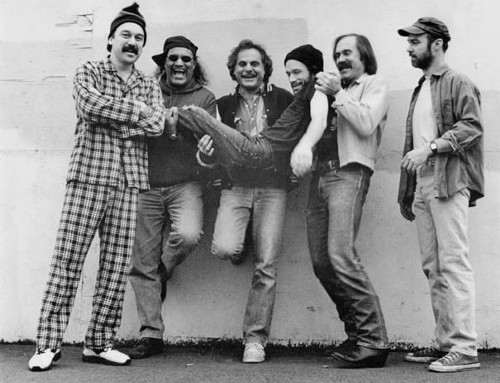
After losing his job in the dot-com bust, Zach Schwartz decided to ditch the leagues of the great unwashed to become Zach Rogue, the brilliant musical artist. Since then, his band Rogue Wave’s songs have played on the soundtracks to movies such as Love Happens, Napoleon Dynamite, Just Friends and Rachel Getting Married, and have been featured on TV shows like Heroes, Friday Night Lights and Weeds. The band’s popularity is so apparent that even in the 2009 blockbuster hit Love Happens, the main character is disappointed that the Rogue Wave concert is sold-out, until Jennifer Aniston manages to get her hands on a couple of tickets. Now it’s your chance to snatch a few tickets before they’re sold-out again on Saturday, Sept. 14, at the Sweetwater Music Hall. 19 Corte Madera Ave., Mill Valley. 9pm. $30. 415.388.3850.

Here is the Coddingtown Sign On the Back of a Truck

0

CoddingtownSign.jpg

  • Brian Keegan

Here’s something you don’t see every day, courtesy quick-thinking Bohemian reader Brian Keegan: The world-famous Coddingtown sign on the back of a truck, rolling down College Avenue.

Sentimental Santa Rosans need not worry—the sign is only temporarily down for repairs, and will be up again in about a month, spinning away.

Goosecross Cellars

0

You’re in a room. Yes, it’s a winetasting room. There are two doors, and you must decide. Behind one of the doors is a delicious bottle of Napa Valley Cabernet Sauvignon. Behind the other is a wild snow leopard. The clock is ticking. Which door do you open?

Relax. You’re at Goosecross Cellars, where you can get the wine and help the snow leopard to thrive in its own habitat at the same time. Founded in 1985 by Geoff and Karen Gorsuch with partners David and Colleen Topper, Goosecross purchased a web-based wine charity program from David’s sister a few years ago. Key to the plan is that these are not bulk wines with custom labels slapped on, but the same product as that bearing the sign of the goose. And while the price is the same, the “markup” that goes to participating charity organizations is no 10 percent—it’s significant. That’s an enticing incentive for folks interested in making a donation, says Alicia Antone, who heads up TorchLight Community at the winery. And then, “Once they taste the wine, they’re sold,” she says.

Torchlight’s clients are as diverse as the Old Las Vegas Mormon Fort State Historic Park, a Heart to Hold and NorCal German Shorthaired Pointer Rescue. Among their most successful clients is the International Snow Leopard Conservancy, based in Sonoma. The conservancy aims to protect the elusive, big cats through education and partnership with the communities that live with them.

Torchlight is much more than just a turn-key website. Winery staff pour at fundraising events, some of which may be held at the property’s old Tudor-style house. Goosecross itself was purchased in 2013 by a Colorado-based investment group owned by members of the Coors brewing family, and for now, manager Christi Coors Ficeli has kept the winery’s low-key, small-winery atmosphere intact.

A super-tangy sipper, the grapefruity 2011 Lake County Sauvignon Blanc ($27) is on offer at the friendly barrel room bar; your choice of goose or leopard on the label. The pretty 2011 Napa Valley Viognier ($38) is more peach than apricot, and is unsullied with oak. From the winery’s estate, the 2009 Napa Valley Merlot ($45) rolls a malt ball down a vanilla-scented lane lined with raspberries, the 2009 Howell Mountain Cabernet Sauvignon ($79) is elegant and well-rounded and the 2009 Yountville Cabernet Sauvignon ($56) is the kind of bright and friendly Cab that’ll please non-Cab fans, too. These wines are only available at the winery, or via TorchLight Community—except for one retail shop in Omaha, Neb. A charity case, no doubt.

Goosecross Cellars, 1119 State Lane, Yountville. By appointment only, 10am–4:30 pm. Tasting fee $20–$25. 707.944.1986.

Privacy Matters

0

Congressman Thompson’s oath of office requires that he uphold and protect the Constitution, including the First, Fourth and Fifth amendments for a free press, privacy and due process. This sworn oath does not allow for exceptions in the case of Democratic Party leadership or due to presidential wishes that he do otherwise.

In July, Thompson voted against Rep. Justin Amash’s amendment to an appropriations bill which would have barred mass surveillance programs like PRISM. Thompson’s vote was one of only 12 votes that prevented its passage. Along with House Democratic Leader Nancy Pelosi, Thompson was one of only two Bay Area representatives voting against the amendment.

Even after the recent revelations by the Washington Post of NSA violating privacy rules thousands of times each year, Thompson continues to support the NSA programs, saying in a statement on Aug. 16, “I do not believe protecting our citizens’ lives and civil liberties are mutually exclusive pursuits. Through aggressive oversight we can ensure our intelligence community can continue working to keep our country safe while respecting our citizens’ constitutional rights.”

This telling statement came from Thompson after reports of thousands of rule violations by the NSA—”abuses” within the program, Thompson called them, adding that “we must act to make sure the abuses are not repeated.” But the NSA surveillance program itself is the problem.

No amount of tinkering around the edges of a program in which the government targets the telephone records of journalists, vacuums up the phone-call records of hundreds of millions of Americans, captures and stores citizens’ emails and jettisons centuries-long principles of due process and habeas corpus can make this Big-Brother-on-steroids program fit within the protections afforded by our constitutionally guaranteed civil liberties of a free press, privacy and due process.

If Thompson continues to disregard the provisions of the Bill of Rights meant to protect the precious civil liberties of his constituents, he will continue to be challenged.

Anna Givens is a founding member of Progressive Democrats Sonoma County and a co-chair of the Coalition for Grassroots Progress.

Open Mic is a weekly op/ed in the Bohemian. To have your topical essay of 350 words considered for publication, write op*****@******an.com.
Another Knockout Year

0

Hi! I’m Death, the smooth-talking narrator of The Book Thief, the Oscar-bait movie starring Geoffrey Rush, who does not play me, but could have, because Geoffrey Rush rocks!

He’s just one of the reasons I already snapped up tickets for the 36th annual Mill Valley Film Festival (get them at www.mvff.com), running Oct. 3–13. The Book Thief kicks things off with Rush in attendance on opening night, sharing the evening with Alexander Payne’s new drama Nebraska, starring Bruce Dern (he’ll be there, too, and he also rocks), as an old coot at death’s door who talks his son (Will Forte, rocks as well) into driving him cross-country to pick up prize money he didn’t really win. Crazy stuff happens.

And that just skims the surface of the action-packed film offerings and celebrity appearances planned for this year. Ben Stiller will screen his new movie. The Secret Life of Walter Mitty; Dakota Fanning, star of the much-buzzed Effie Gray, gets a spotlight; and Revenge of the Jedi gets a 30th anniversary screening. Jared Leto (pictured) will be there, too, and the whole thing’s kicked off with a sold-out screening of Metallica’s new movie, Metallica Through the Never, with all four band members in a Q&A on Sept. 17. There are tons of other films, too, so hey—do what I do: keep busy! And see you at the movies!

Lulu’s in Town

0

Napa’s 1313 Main is a stunning wine bar, and after two years, it’s taking the next logical step into the culinary world with the opening of Lulu’s Kitchen. While 1313 Main sets a high bar with its wine selection and service, the food is meant to be an accompaniment, not the main focus, says proprietor Al Jabarin.

“We cook for the wine,” Jabarin explained last month at a media preview tasting, with a prix fixe menu served family-style to tables of four. Noting that Napa has so many excellent dining establishments, Jabarin added that it would be nearly impossible to keep the wine bar’s standards at a high level while simultaneously trying to outperform every restaurant in the area. Lulu’s dishes will transition in and out with the seasons and focus heavily on local farms; the restaurant’s purveyors are noted on the ever-changing menu.

We started with a lobster roll, which proved to be the top dish of the night. (It was such a big hit at the BottleRock festival, says Jabarin, that it will be the only exception to the menu’s “farm to fork” concept.) The lobster was fresh and not overpowered by its slaw-like salad, and the roll was light and sweet. The next dish, a raw vegetable salad ($8), visually beautiful, did not shine as brightly with eyes closed. Impossibly thin cross sections of radishes, carrots and other root vegetables were delicious at first glance, but needed more seasoning on first bite.

Crispy Belgian-style fries with poutine and bacon tasted fine, a concession to comfort food slightly out of place in such a refined setting as 1313 Main. Almost in overcorrection, oeufs en meurette, with quail eggs and pancetta, ($9) proved too dainty to support the thick, salty slices of pancetta. Like the vegetable salad, it looked beautiful, but thinner, less salty slices of pancetta could easily complement the rest of the dish.

Abita-braised pork belly with peaches and shoestring taro ($11) was served as a “main entrée” in this parade of small bites. This was the burst of flavor I was longing for. Sliced one-quarter inch in thickness and served with grilled peaches and a blueberry reduction, the pork belly melted in my mouth and left me wanting more. Had my fellow diners been any slower, I would have added at least a hundred more calories to my meal.

Dessert consisted of funnel cake strings with a trio of sauces ($8). Funnel cake is best enjoyed en masse; its very name implies dumping the crispy, fried, sugary concoction down one’s gullet, and part of the gratification includes a burnt mouth and soiled shirt. Again, this type of dish seemed out of place at such a fine wine bar, and perhaps the bananas Foster ($8) would be a more appropriate option for formal diners.

Attractive items on Lulu’s menu that went untasted include the hanging tender with succotash and pomegranate gastrique ($14) and the heirloom tomato salad with mozzarella and crispy avocado ($12).

Jabarin says Lulu’s is open to change. “We’re not dogmatic,” he says. “It’s food and wine, for God’s sake. It should be fun.” That’s the kind of attitude that will keep things fresh and inviting as the kitchen sets out on its way.

Lulu’s Kitchen, 1313 Main St., Napa. 707.258.1313.

Flat Tire

Rwanda is a desperately poor and tragic country, yet it’s also quite lovely, like Oregon’s Yamhill County. T. C. Johnstone’s bland, patchy documentary Rising from Ashes fails to lend poetry to that beauty. Despite its inspiring subject, the film is ultimately interesting only to the most ardent long-distance cyclists.

The film is about the creation of Team Rwanda, which Northern Californian bicycling phenomena Jonathan “Jock” Boyer organized with the help of pioneering mountain biker Tom Ritchey. Rising from Ashes tiptoes for a half hour around the “bad choices” that in 2002 landed Boyer in jail. Eventually we hear the bad news: lewd behavior with an 11-year-old.

Forgiveness depends on forgivability. Though he’s seen tenderly caring for his pets, Boyer has the 20/20 tunnel vision of any successful coach: his focus is on recruiting, cutting and training a team from Rwanda to compete in several serious international races before they arrive for competition at the 2012 London Olympics.

The interviews are too frequently inexpressive, but you can’t blame the reluctance of these athlete, who suffered unthinkable losses. First they survive the 1994 massacres; later, they’re harassed by criminal countrymen who think they’re wealthy celebs.

Johnstone glances over but doesn’t give us the sense of the races on the way to London, including the Cape Race in South Africa and New Mexico’s Tour of the Gila. True, narrator Forest Whitaker gives a good, fast TED-talk on the history of Rwanda’s tragedy: a catastrophe rooted in insane eugenics schemes carried out by the Belgian descendants of The Heart of Darkness‘ Mr. Kurtz.

One roots for Team Rwanda to triumph, but Philip Gourevitch’s account of the intrepid riders in a July 2011 New Yorker article is more informative that what we see here. And the prose is far more cinematic than Rising From Ashes, too.

‘Rising from Ashes’ opens Friday, Sept. 13, at Rialto Cinemas.

Family Plot

0

The biggest threat to family farms in the North Bay isn’t urban sprawl, the rise of industrial agriculture or even climate change. It’s inheritance taxes.

“Estate taxes can be crushing,” acknowledges Jamison Watts, executive director of the Marin Agricultural Land Trust (MALT). Because the tax code determines the worth of inherited farmland based on its value for potential development rather than agricultural use, “heirs can be forced to sell just to pay the tax bills.”

For the past 33 years, MALT has offered a buffer, buying up the development rights for 72 family ranches in West Marin—46,000 acres of dairy and ranchland that comprise roughly half of the privately owned farmland in the county.

Purchased at a cost that averages $1,500 per acre over the years, these conservation easements permanently prohibit subdividing or building new non-agricultural development on the farms. But with MALT’s more recent purchases costing up to $3,000 per acre, it was agreed that stronger measures were needed.

The nonprofit’s response has been to begin incorporating a Mandatory Agriculture Use provision in their new development-rights purchases.

One of the first landowners to accept this additional restriction was Loren Poncia, a fourth-generation beef and lamb rancher whose family already had a lengthy, supportive relationship with MALT.

“What that says is, basically, no matter what we do with the property—if we sell it to an estate buyer, we sell it to somebody else down the road—it’s required on the title that agriculture is continued,” he explains. “We thought as a family, this is a great way to protect this ground and make sure that it stays productive in perpetuity. It might be vines or trees or row crops, but there will be agriculture there on that property forever.”

It also helps keep young farmers on those lands, adds Watts. “It will make it more affordable, either for the heirs to keep owning it as the generations go forward, or having new agriculturalists come in and purchase the property.”

While the Poncias were enthusiastic early adopters, others are more cautious. This approach is “a really personal decision” for property owners, notes Bill Keene, executive director of the Sonoma County Agricultural Preservation and Open Space District. “A lot of people, their land is their biggest asset, and so restricting that is something that they think real hard about,” he explains.

“It’s not that they’re opposed to agriculture so much as they want to make sure they leave their options open.”

While there is usually some additional compensation for the landowner in the short term, Keene says these “affirmative agricultural easements” require taking a long view.

“The market will change over time, and you have to think, not what’s happening today, but what might be happening 20, 30, 40, 50, a hundred years from now,” he elaborates. “You want to be careful not to dictate what goes on the land, but just to have it be in agriculture.”

To date, the Sonoma County agency has made only one such purchase, which was initiated by the Cotati-area property owner. But more may be coming.

“We do ask landowners that we’re working with who are actively involved in agriculture whether they’re interested in that,” Keene says, but “it’s still a new concept to most of them.”

MALT has so far completed four easement purchases with the ag-use requirement, and intends to apply it to all new deals. And that’s not all.

“Phase two is looking to go back and amend all of our old easements,” says Watts. “It would be voluntary on the part of the landowners. We wouldn’t be forcing this on anybody; there would be some compensation involved. And we’re still working on that number.” An answer is expected by next summer.

By applying the Mandatory Agricultural Use provision to more—maybe even most—of the land MALT has already protected, the agency hopes to also help sustain the entire ag sector of the local economy.

“It works both ways,” explains Watts. “The producers rely on the supporting infrastructure—the veterinarians, the truck drivers, the markets—and those supporting services rely on the production of agriculture. When you start taking pieces out of the puzzle, 500- to 1,000-acre ranches, and you have this fragmented agricultural landscape, you’re diminishing and weakening that critical mass.”

Or, as Loren Poncia sums it up: “It won’t just be open space that sits there and is unproductive.”

Recoup d’Etat

0

In poetic verse, it’s convenient that BottleRock scans a bit like a certain colloquialism that starts with “cluster.” With festival organizers facing over $2.5 million in unpaid debts, some vendors aren’t waiting for the courts to decide who gets paid.

“I felt super alone at the onset,” says Mary Munat, owner of Sebastopol’s Green Mary waste diversion company, who is owed $28,700. “I didn’t think that my company was going to make it. It’s just too small to take this kind of hit.”

Her friends and family hated to see the cheerful environmentalist worried, so they put together this week’s benefit concert in Sebastopol. They’re not expecting to raise $29,000, but anything would help Munat, who was forced to take out a loan to pay employees after the festival.

Munat’s not alone, of course, and there are creditors who haven’t come forward yet. Of the known debts, the largest are to the Napa Valley Expo ($310,938), Bauer’s Intelligent Transportation Inc. ($524,239) and the International Alliance of Theatrical Stage Employees Local 16 ($630,000).

Like Green Mary, the Up and Under Pub in Point Richmond reached out to the community for support. Owed $185,000 for backstage catering services and struggling to make payroll and keep the doors open, the pub set up a “cash mob” night via Facebook, asking supporters to come out and spend money in droves. It raised a fraction of the debt, but it helped.

Munat and her crew separate trash from compost and recycling, which results in at least an 85 percent landfill diversion rate, she says. Now she’s learning to do the same in business meetings, vowing never to work with BottleRock organizers Gabe Meyers and Bob Vogt in the future. No matter how successful the fundraiser is, Munat will still file suit for money owed. “They shouldn’t get away with it,” she says.

Though no deal has been officially announced, meetings have taken place between Live Nation, one of the country’s largest concert promoters, and some parties involved in BottleRock. The Napa Valley Register reports that Napa mayor Jill Techel and Napa Valley Expo CEO Joe Anderson met with Live Nation representatives on Aug. 2. If Live Nation buys BottleRock, settling the outstanding debts would likely be part of any deal.

If that deal falls through, prepare for an interesting documentary: The Little Festival That (Almost) Could.

The Green Mary Gala features the Highway Poets, the Atom Waltz Project, comedy with Swami Beyondananda and a Trashion Fashion Show on Friday, Sept. 13, at
the Sebastopol Community Center. 390 Morris St., Sebastopol. 7pm.
$15–$50 sliding scale. 707.823.1511.

Portals of the Past

0

‘This is the way the universe begins.” So pronounces a congenially mysterious narrator (the dependably excellent Jeff Coté) in
the opening moments of Craig Wright’s 2000 drama The Pavilion, now playing at Cinnabar Theater.

A bittersweet morsel about fate, love and the choices we cannot undo, The Pavilion establishes from the start that we are always in the act of creating and destroying our own universes. As the narrator—sharing DNA with the stage manager from Thornton Wilder’s Our Town—guides the scenes, stepping in and out as a number of supporting characters, it is clear that we, the audience, are meant to think about our own choices, to recognize them as part of the grand neverending dance party of time and space. It is a poetic and ambitious goal, and at times, The Pavilion actually succeeds.

Unfortunately—unlike in Our Town, where a run-of-the-mill morning in Grover’s Corners really does become a metaphor for the lifespan of the entire human race—little that takes place in The Pavilion feels as earthshakingly profound as it clearly wants to, frequently bogging down in static predictability and simplistic character development. Despite this, there is an honest aching heart beating beneath Wright’s lyrical dialogue, and at times the power of the prose overcomes the script’s other weaknesses.

Directed by Tara Blau, the play is set during a 20-year high school reunion in the fictional town of Pine City, Minn. Peter (Nathan Cummings) and Kari (Sami Granberg) were once the cutest couple at school. Twenty years ago, Kari got pregnant, and Peter, frightened by the prospect of losing control of his life, fled Pine City, leaving Kari to deal with her crisis alone.

Now, after years of regret, he appears at the reunion—at the Pavilion, a soon-to-be demolished local landmark—with hopes of rekindling the relationship, but Kari, still seething with resentment, initially has no interest in seeing him or discussing the pain of those experiences so many years ago.

Cummings and Granberg, though fine actors clearly working at the top of their game here, have little fire or chemistry together, and both read far younger onstage than the 38-year-olds they are supposed to be, robbing the tale of much of its intended world-weary pathos. There is much that is moving and memorable about The Pavilion, but just like Peter and Kari’s hopes for their lives, I somehow expected a little bit more than I got.

Rating (out of 5): ★★★½

Sept. 14: Rogue Wave at Sweetwater Music Hall

After losing his job in the dot-com bust, Zach Schwartz decided to ditch the leagues of the great unwashed to become Zach Rogue, the brilliant musical artist. Since then, his band Rogue Wave’s songs have played on the soundtracks to movies such as Love Happens, Napoleon Dynamite, Just Friends and Rachel Getting Married, and have been featured on TV...

Here is the Coddingtown Sign On the Back of a Truck

It's down for repairs for about a month

Goosecross Cellars

You're in a room. Yes, it's a winetasting room. There are two doors, and you must decide. Behind one of the doors is a delicious bottle of Napa Valley Cabernet Sauvignon. Behind the other is a wild snow leopard. The clock is ticking. Which door do you open? Relax. You're at Goosecross Cellars, where you can get the wine and...

Privacy Matters

Congressman Thompson's oath of office requires that he uphold and protect the Constitution, including the First, Fourth and Fifth amendments for a free press, privacy and due process. This sworn oath does not allow for exceptions in the case of Democratic Party leadership or due to presidential wishes that he do otherwise. In July, Thompson voted against Rep. Justin Amash's...

Another Knockout Year

Hi! I'm Death, the smooth-talking narrator of The Book Thief, the Oscar-bait movie starring Geoffrey Rush, who does not play me, but could have, because Geoffrey Rush rocks! He's just one of the reasons I already snapped up tickets for the 36th annual Mill Valley Film Festival (get them at www.mvff.com), running Oct. 3–13. The Book Thief kicks things off...

Lulu’s in Town

Napa's 1313 Main is a stunning wine bar, and after two years, it's taking the next logical step into the culinary world with the opening of Lulu's Kitchen. While 1313 Main sets a high bar with its wine selection and service, the food is meant to be an accompaniment, not the main focus, says proprietor Al Jabarin. "We cook for...

Flat Tire

Rwanda is a desperately poor and tragic country, yet it's also quite lovely, like Oregon's Yamhill County. T. C. Johnstone's bland, patchy documentary Rising from Ashes fails to lend poetry to that beauty. Despite its inspiring subject, the film is ultimately interesting only to the most ardent long-distance cyclists. The film is about the creation of Team Rwanda, which Northern...

Family Plot

The biggest threat to family farms in the North Bay isn't urban sprawl, the rise of industrial agriculture or even climate change. It's inheritance taxes. "Estate taxes can be crushing," acknowledges Jamison Watts, executive director of the Marin Agricultural Land Trust (MALT). Because the tax code determines the worth of inherited farmland based on its value for potential development rather...

Recoup d’Etat

In poetic verse, it's convenient that BottleRock scans a bit like a certain colloquialism that starts with "cluster." With festival organizers facing over $2.5 million in unpaid debts, some vendors aren't waiting for the courts to decide who gets paid. "I felt super alone at the onset," says Mary Munat, owner of Sebastopol's Green Mary waste diversion company, who is...

Portals of the Past

'This is the way the universe begins." So pronounces a congenially mysterious narrator (the dependably excellent Jeff Coté) in the opening moments of Craig Wright's 2000 drama The Pavilion, now playing at Cinnabar Theater. A bittersweet morsel about fate, love and the choices we cannot undo, The Pavilion establishes from the start that we are always in the act of...
11,084FansLike
4,606FollowersFollow
6,928FollowersFollow