Nov. 9: Andrew Jackson Jihad at the Phoenix Theater

0

andrewjacksonjihad-1330542552.jpg

Did you know that People That Can Eat People Are the Luckiest People in the World? Well, according to the title Andrew Jackson Jihad’s second album, they are! Ever entertaining, the Arizona-based duo helped usher in a strain of folk-punk with social commentary highlighting such topics as social anxiety, poverty, religion, existentialism and politics, and perform on Saturday, Nov. 9, at the Phoenix Theater. 201 E. Washington St., Petaluma. 8pm. $10—$12. 707.762.3565.

Nov. 8: Ike Stubblefield at the Sweetwater Music Hall

0

ikestubblefield.jpg

Ike Stubblefield spent most of the ’70s and ’80s touring with R&B legends like Stevie Wonder, Martha Reeves, Al Green, Ike and Tina Turner and B. B. King. In the past 10 years, Stubblefield laid low to fight cancer, but now he’s back and stronger than ever, with a new album of his own and guest spots on 29 others. Stubblefield unleashes his legendary Hammond B-3 organ sounds on Friday, Nov. 8, at the Sweetwater Music Hall. 19 Corte Madera Ave., Mill Valley. 8pm. $22. 415.388.3850.

Nov. 8: Buddy Guy at the Wells Fargo Center

0

index.jpg

Rock and Roll Hall of Famer Buddy Guy approaches 78 years old with an album reminiscent of his years spent influencing classic rock artists like Eric Clapton and Jimi Hendrix while single-handedly pioneering Chicago’s electric blues sound. The living legend takes a look back at his extraordinary life in his new album, Living Proof, and performs Friday, Nov. 8, at the Wells Fargo Center. 50 Mark West Springs Road, Santa Rosa. 8pm. $47—$67. 707.546.3600.

Grinders & Finders

0

Sausage is one of those wonderful inventions that make life a little bit better. “Meat in tube form,” as food writer and TV personality Anthony Bourdain lovingly calls it, has a home in almost every cuisine, from Chinese to Brazilian. Marina Meats of San Francisco has been making its own sausage for years, and their butcher, Dave Budsworth, will share his secrets in a make-and-cook session (with dinner) on Thursday, Nov. 7, at the Next Key Center. 1385 N. Hamilton Parkway, Novato. 6:30pm. $55. 415.382.3363.

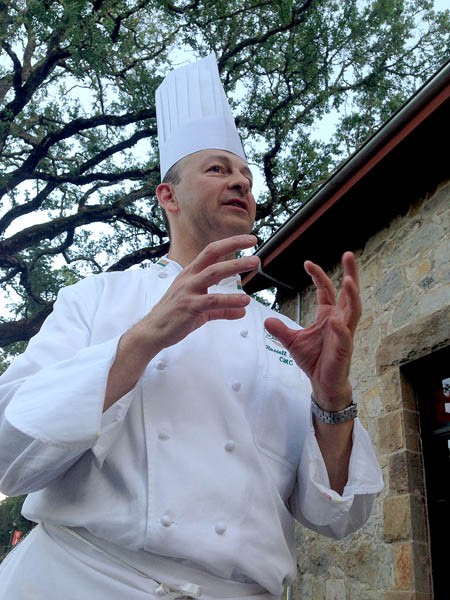
David Tanis (pictured) knows the value of good ingredients. He was the chef of Berkeley’s Chez Panisse, the Slow Food movement’s epicenter, for almost 25 years. He’s written a few books in his time there, each centering around a specific ingredient, and his latest, One Good Dish, seems to have a similar ideal. He speaks and signs books over lunch on Wednesday, Nov. 13, at the Left Bank Restaurant. 507 Magnoilia Ave., Larkspur. Noon. $110. 415.927.0960. Tanis also appears at Copperfield’s Books on Saturday, Nov. 16. 106 Matheson St., Healdsburg. Free. 3pm. 707.433.9270.

Honoring the Arts

0

We always were the types of people to pore over the fine print. Liner notes on album sleeves, closing credits at the end of movies, production notes buried in the back pages of a playbill—here in the Bohemian offices, we’re more likely to be racking our brains over who served as key grip in a hit film than who played the starring role.

It’s the same with covering the arts regionally, as we’ve done for over 30 years. Certain names will pop up regularly in that fine print and lodge themselves in our minds. People behind the soundboard, in the wings, running the lights or, as so often is the case, in a tiny closet of an office—these are the people who run the show but rarely get noticed.

Every year, for 16 years now, we take notice of these people. Our annual Boho Awards honor those who’ve made significant contributions to the arts in the North Bay, and not always with applause or recognition. These people and places include Martin Hamilton, who’s turned the Arlene Francis Center into the eye of a cutting-edge art and music storm in Santa Rosa; the Sonoma County Museum, long overdue to be honored, not just for top-notch art exhibits but for its role in our communal history and new outreach programs and expansion; Point Reyes Books, which brings top literary names to West Marin and hosts the Geography of Hope conference; Sheila-Groves Tracey, who for 26 years has brought thousands of bands to play in every county in the North Bay; and the Sebastopol Center for the Arts, a little idea that’s blossomed, 25 years later, into an organization we can’t imagine living without.

The following profiles will tell you a little bit about why we’ve chosen each honoree as a Boho Award recipient. But to truly understand the work performed by these dedicated people, we encourage readers to get out of the house and visit an opening, attend a performance or seek out a street festival. We live in an area incredibly robust for the arts, and it’s a testament to this creative drive that we manage to keep finding deserving movers and shakers to celebrate in these pages year after year.

You can help us celebrate this year’s Boho Award winners in a special soiree on Thursday, Nov. 7, at the Sebastopol Center for the Arts (282 S. High St., Sebastopol; admission $5). Starting at 5:30pm and replete with performances by the Transcendence Theatre Co. and our own David Templeton, it’ll feature food, drinks, winners, toasts, speeches from all winners, mingling, lingering and all things good and well with the world. Just like the arts are supposed to be.

See you there, and read on!

—Gabe Meline

SONOMA COUNTY MUSEUM

An irreplaceable hub of art and community

With all of the dancing, craft beer, young artists in glitter and leather and compelling conversation happening in the shadows of an edgy, colorful Bud Snow mural, a recent block party outside the Sonoma County Museum could have been mistaken for a night out in Brooklyn or Los Angeles.

Next door, as the moon rose high in the sky, art lovers checked out work by Tina Modotti, Edward Weston and Graciela Iturbide, part of a “Photography in Mexico” exhibition on loan from the SFMOMA, while upstairs in museum offices, developing plans to expand and offer even more art to the community percolated.

This stellar evening of art and community is just one example of how the area’s only collecting art and history museum between San Francisco and Portland has ramped up programming, outreach and exhibitions in the North Bay since visionary executive director Diane Evans (pictured) took over the reins in 2008. And these are just a few of the many reasons why it’s about time we give the Sonoma County Museum a long overdue, well-deserved Boho Award.

Evans says that the museum, a Smithsonian affiliate, has been in expansion mode for the past five years but has lacked the physical space needed to put on the kinds of art and history exhibitions they’d like to host. After shelving a plan to move the contemporary art collection into the old AT&T building located on Third Street in Santa Rosa, it was announced that the museum would instead take over the building at 505 B St., previously leased to Conklin Bros. This leaves the 1910 Post Office building as the designated spot for the museum’s vast historical archives, managed by Eric Stanley.

Evans wasted no time enlisting three local artists, Julia Davis (who signs her murals “Bud Snow”), Judy Kennedy and Carlos de Villasante to dress the non-descript brown building in gorgeous, street-art-inspired murals, establishing
a trend toward collaborative relationships with young and emerging arts in Sonoma County. The museum has also put out a call for artists, dancers and musicians to stage pop-up events in the large, currently empty warehouse space as funds are raised to build a new art museum.

“Our future is exciting, as SCM has a real opportunity to become a significant art center for the region,” explains Evans, citing the property’s debt-free status and strong programming, board and staff. “This will allow us to build our art collection—something we have not been able to do without dedicated exhibition and storage space. At the same time, we will finally be able to bring our collections out from storage and develop a focused regional history program.”

Currently, the museum houses a collection of 20,000 artworks and historic objects.

In addition to fine art, the museum’s programming tends to cover all aspects of life in Sonoma County. Recent exhibitions have included “Margins to Mainstream,” which focused on artists with disabilities in the region; a history exhibition about Santa Rosa’s Chinatown that shed light on a little-known area of the city’s past; and body mapping workshops, funded through the Irvine Foundation, which shared the stories of immigrants in Sonoma County.

In 2014, museum-goers can look forward to exhibitions with work by contemporary Korean artists from Jeju Island, a sister city of Santa Rosa. Also in the wings is a retrospective of Magnolia Editions studio, featuring works by Chuck Close, Hung Lieu and William Wiley, and an exhibition focusing on the emergence of the environmental movement in California.

Evans says there will also be a continued focus on art workshops dedicated to collecting stories from immigrant communities.

“Our focus is on bringing outstanding exhibitions and education programs to Sonoma County that cannot be seen elsewhere in the region,” explains Evans, who plans on working with collectors and artists to expand the collection now that the physical space is available. “My favorite exhibitions are those where we’ve been able to make strong connections with artists, museums and communities both in the county and around the world.”—Leilani Clark

[page]

MARTIN HAMILTON

The cultural ringleader of the Arlene Francis Center

It’s Halloween, and Martin Hamilton has turned down one of the biggest parties in town. With DJs, dancing and cocktails galore, the event would have raked in plenty of revenue for the Arlene Francis Center.

“But in Sonoma County, everything is so run toward commerce,” Hamilton bemoans, sitting on an old couch in the center’s front room. “Entertainment and culture is so driven by money all the time.”

For the last three years, Hamilton has grown the Arlene Francis Center into a lightning rod for the region’s artistic community, operating the large brick warehouse on the edges of Railroad Square with an eye not toward money but toward art, community, social change and culture. For this, we’re more than pleased to honor him with a Boho Award.

On any given week, Hamilton serves as manager, teacher, student, bartender, neighborhood liaison and guiding force at the Santa Rosa hotspot. In addition to music, the AFC regularly hosts art shows, film premieres, poetry gatherings, Renaissance music, dance performances, theater productions, food workshops, fermentation workshops, Bach choral recitals and just about anything else that meets the center’s criteria.

“Part of it is, what constitutes a meaningful activity?” asks Hamilton, theoretically. “And sometimes you have to stretch to find the meaning of, like, a heavy metal concert. And then I do!”

Hamilton relates a story of welcoming a group of 18-year-olds to the center who’d hitchhiked from L.A. solely to see a headlining punk band; at the end of the show, one emerged from the mosh pit, sweaty and flushed, “and he said, ‘Hey Martin, thank you very much. This was one of the best experiences of my whole life.’

“It was one of the times that I really appreciated that there was the old-fashioned part of me that said ‘I shouldn’t do this, this is dangerous’ versus what turned out to be a loving mosh pit. I felt like they had gone to the Hajj, in Saudi Arabia, moving around the cobblestone.”

Only Hamilton could compare a mosh pit to the Hajj, probably due to his illustrious background. Born and raised in St. Louis in a Catholic family of 11 siblings, Hamilton moved to Los Angeles when his father, a factory manager, was relocated. After his junior year of high school, he visited Haight Street in the summer of 1967, and everything changed. He attended USF, and was later hired at the New College of California in 1977.

As for the building at 99 Sixth St., it was eventually purchased by Hamilton’s New College partner, Peter Gabel, under the banner of the Arlene Francis Foundation. (Francis, the charismatic Hollywood actress best known for her episode-stealing turns on the television show What’s My Line?, was Peter’ mother; his father was Martin Gabel, an actor who worked with Alfred Hitchcock, Billy Wilder and Humphrey Bogart.)

A former flour-processing plant that served, over the years, as a moving warehouse, a brewery, a winery and more, the building housed the Santa Rosa branch of the New College of California until its collapse in 2008. Soon, Hamilton started meeting younger music fans and bands eager to use the space as an all-ages venue. It wasn’t long before art started hanging on the walls. Then a poetry organization came in for a weekend. Hamilton had harnessed the proverbial snowball and pushed it off the hill, and the center started gathering more and more snow.

“I do feel that many of the volunteers here really are such creative and wonderful people,” says Hamilton. “It just shows you the capacity for human beings to do the right thing. So that motivates me. And just giving people a chance. Otherwise, the culture doesn’t give them much chance.”

And on this night, Halloween, instead of an alcohol-drenched meat market? The best of the Arlene Francis Center is on
offer: the Crux performing songs from the original musical
The Ratcatcher with actors from the Imaginists Theatre Co., live trapeze and breakdancing, tarot readings, African xylophone, black-light dancers and more, all under one roof.

“Hopefully, there’s some of the best aspects of the work of trying to take seriously our life on earth and the responsibility of social change and fairness and equity and justice,” says Hamilton of his work at the Arlene Francis Center. “And not forgetting the spiritual aspects of life—the way arts make you feel better, music and how it moves you in certain ways, and just the joy of it all.”—Gabe Meline

POINT REYES BOOKS

West Marin’s great literary center

From the outside looking in, the ecologically diverse, remote slice of West Marin seems an unlikely hub for world-class literary events. But Point Reyes Books, established nearly 12 years ago by husband-and-wife team Steve Costa and Kate Levinson (pictured), has fostered a growing community of readers, writers and lovers of all things local that has attracted top literary talent, earning a well-deserved Boho Award this year.

“We were friends with the owner of the Brown Study Bookshop, which carried primarily used books and was, at best, open a few days a week,” says Levinson of the store’s beginnings. “One night when we were having dinner with her, about a year after she first told us she was selling the store, she told us she was lowering the price.”

Neither Costa nor Levinson had any prior retail experience, but the following morning, Costa woke up and told his wife that he wanted to buy the store. “Steve was not to be deterred by our being weekenders and both having full-time jobs,” says Levinson. They purchased the store in May 2002.

“People tell us they appreciate how much we’ve added to the community,” says Levinson. “I think it’s hard to identify one aspect of what we do, as the bookstore is truly a three dimensional endeavor.”

What the pair eventually created was not merely access to shelves of bestsellers alongside independently published and used books in their homey, hardwood-floored store on Highway 1; aside from big names like Michael Pollan, Vandana Shiva, Bill McKibben, Michael Ondaatje, T. C. Boyle, Pam Houston, Joanna Macy and Frances McDormand as featured guests at their many readings, the store has become the focal point for numerous successful community events.

Point Reyes Books is often a key collaborator and driving force behind fundraisers for area nonprofits, environmental field trips, author dinners and film nights. The store has raised a total of $320,000 for area nonprofits, and publishes the West Marin Review, a literary journal that features the work of local writers and visual artists. The store has hosted a Spanish language book group for a decade, and provides space for a local knitting group. They are also sponsors of the Point Reyes Farmers’ Market, raising money for the last 10 years to help with their operating costs.

As if that doesn’t keep them busy enough, they also organize the semi-annual Geography of Hope Conference, which brings people together to discuss the intersections of ecology, literature, art and film, often while noshing on meals provided by local farms and restaurants. “Geography of Hope” is a term borrowed from the late Wallace Stegner as he described our wild landscapes, a fitting title for a West Marin event. The 2013 conference focused on the work of Aldo Leopold, and offered several field trips throughout the region, including a visit to the Tomales Point Elk Preserve and a hiking tour and cheese tasting at Toluma Farms. Through the conference, Point Reyes Books even brought a permanent art installation to the community.

“We’ve held four Geography of Hope Conferences and two of them have had temporary public art installations,” Levinson says. “But ‘Our Lady of the Harbor’ by David Best was so loved by some of the community that we raised donations and arranged for it to become a permanent installation.”

Levinson attributes the continued success of the store to local shoppers, and to the tourists that stop in downtown Point Reyes Station. But anyone who knows the couple can attest to their kindness, generosity and commitment to being incredible booksellers. The spirit of community is almost palpable when one steps through their doors. They’ve created a book lovers paradise, and have helped strengthen the relationships among the creative talent that populates the ever-fascinating world of West Marin.

“People get to know one another in the bookstore and at bookstore events. Sometimes they strike up a conversation, sometimes we introduce them to one another, sometimes we ask them to work together on events we are organizing,” says Levinson, who adores her customers and the greater bookselling community. “Our hearts and minds have been so enriched.”—Dani Burlison

[page]

SHEILA GROVES-TRACEY

The tireless force behind the music

It was 1987, and Sheila Groves-Tracey found herself in need of a job. She picked up the phone and called up New George’s in San Rafael.

“I thought, ‘Booking’s kind of fun, and I’m doing OK with my own band. Maybe I’ll try it,'” she recalls.

That fateful rumination would prove transformative for the North Bay’s music community, as Groves-Tracey would go on to become the top talent buyer for the area. Twenty-six years later, she has booked literally thousands of bands, in dozens of venues. Often in the wings and out of sight of the regular fan, she is the force behind generations of North Bay residents’ musical memories. Because of this, we’re pleased to honor her with a Boho Award.

Hardworking and courageous, Groves-Tracey established a name for herself early. Within a year of taking the New George’s job, she got a call from Neil Young’s manager to book a Bay Area tour. Also in those early days came a remarkable night with Jerry Garcia and Carlos Santana both sitting in with Los Lobos at New George’s. Melissa Etheridge played the San Rafael club. The Red Hot Chili Peppers played there. The Grateful Dead filmed a video on its stage. For seven years, Groves-Tracey was at the center of the Marin scene.

After leaving New George’s, the Petaluma local turned briefly to the Cotati Cabaret, booking a little-known band called Primus on “dollar Tuesdays” before starting a long run at the Mystic Theatre. “And then we did Train on dollar Thursdays at the Mystic!” she says, remembering how, when the band got huge, they returned to the venue for a special tour kickoff.

Cake, Ben Harper, Santana, the Blind Boys of Alabama, the Blasters, R. L. Burnside, Gillian Welch—the list of highlight acts that came through the Mystic Theatre during her 12-year tenure is so long that Groves-Tracey can’t keep track of them all. During that time, she also acted in local plays—How I Learned to Drive, Medea the Musical, Joined at the Head, Foxfire, Smell of the Kill—and played in local bluegrass and country bands.

She also offered plenty of local bands opportunities for sharing the stage with their musical idols. “One of the things I love the most about booking is booking the openers,” she says, “because they so appreciate it, it means so much to them. And when they’re really good, and everybody appreciates them, that feels so good to go, ‘Yeah, see? Aren’t they great?'”

In 2010, she was offered the job of general manager at the newly renovated Uptown Theatre in Napa. It wasn’t a booking job, but of course, you can’t keep a good woman down. After eight months, Groves-Tracey was booking the Uptown, too, bringing in Willie Nelson, Devo, the Pixies, Built to Spill, Boz Scaggs, Del the Funkee Homosapien, Lucinda Williams and plenty of others to the restored theater in the past four years.

And then came BottleRock. In just three months, Groves-Tracey was hired by the music festival and single-handedly booked over 50 bands—big ones, “half-million-dollar-offer type things”—for what would turn out to be a huge success while the festival was happening and a financial disaster in the aftermath. BottleRock organizers currently owe over
$2 million to workers, stagehands, vendors, caterers and others.

Groves-Tracey has no part in the money that’s owed, and in fact, isn’t immune from the woes of the festival that she herself booked: she’s still owed $50,000.

“You know, it’s such a bummer, because I worked so hard,” she says now, resignedly. “It was such a massive, huge thing. And I couldn’t wait for it to be over so I could say, ‘I did it! I did it, and it worked!’ And I can’t quite do that, because it’s hard to celebrate knowing that people are owed money.”

Just this week, Groves-Tracey has left the Uptown to pursue a new phase in life as the new owner of the Twin Oaks Tavern in Penngrove, a roadside honky-tonk built in 1924 that’s perfect for Groves-Tracey’s simple-life outlook. Sitting at the back patio, the wind rustling through the trees and the occasional semi-truck lumbering by, she talks about plans for parking-lot parties, weekend concerts and even blues karaoke in the rustic landmark.

“I love the idea of going back to the basics and the roots of music, where you’re not at the rock star level with the riders and the attitudes and the tour managers,” she says, relief evident on her face. “But this? This is just music. Let’s just play some music. Grab your banjo. Let’s play.”—Gabe Meline

SEBASTOPOL CENTER FOR THE ARTS

Twenty-five years of a good idea, with no bounds

“The North Bay arts scene, especially here in Sonoma County, is abundant,” says Linda Galletta (pictured), executive director of the Sebastopol Center for the Arts. “This is an area that, per capita, has more artists, writers, musicians and poets than anywhere else.”

For 25 years, the Sebastopol Center for the Arts has been a vibrant and vital source of support and inspiration for those artists, as well as for the wider community in which those artists work, create and dream, making it a perfect Boho Award recipient. Many folks, however, do not remember exactly how humble its beginnings were one quarter of a century ago.

“The center actually started out as three file folders in my bottom desk drawer at the Sebastopol Chamber of Commerce,” says Galletta, who worked for the COC at the time as an economic program specialist. “The center for the arts was initially a program of the chamber of commerce, where the economic development committee thought it would be a very cool idea to create a subcommittee that addressed the needs of artists and musicians and writers—not just for the artists, but as an economic development element for the community.”

After three years, an offer came from the pastor at the Sebastopol United Methodist Church, which had a large basement area it was interested in making available to local nonprofit organizations.

“We thought, oh my goodness, we could actually move out of these desk drawers and into our own physical space,” says Galletta.

They spent five years there, eventually moving to a 1,500-square-foot A-frame building next to a lumberyard.

“So we moved into the A-frame, and suddenly there was an explosion of growth and activity,” she recalls. “We saw many more people coming in, and our programs began expanding.”

It was obvious that the little arts organization was making a habit of growing and growing. Another move came six years later, to a 9,200-square-foot location on Depot Street, where they remained for another 10 years. After all of this nomadic activity, Galletta says the Sebastopol Community Arts Center—having developed a series of classes, performances and gallery shows featuring international participation from artists of all kinds—needed to settle down into what would be a permanent home.

“In 2007 and 2008, we began looking for what would be a sustainable, long-term home for this organization,” Galletta says. “We began talking to the county of Sonoma, who at the same time had a building in the heart of the community—the veterans hall—that was aging and underutilized, costing the county hundreds of thousands of dollars to maintain and operate.”

After two years of negotiating, a deal was struck giving the Sebastopol Center for the Arts a nearly unheard of 30-year-lease on the building at the edge of Ives Park. Last year, Galletta and her team took over operations, beginning work on an ambitious renovating and remodeling plan that will turn the 17,800-square-foot facility into a vital, multifaceted destination for artists, writers, filmmakers, musicians and performers of all kinds.

“The new building has given us the ability to expand our programming and classes,” she explains. “It gives us so much more potential. We gained an auditorium with a real stage. The building also came with two grand pianos—and we already had one of our own, so now we have three. The county has been delighted with the improvements we’ve made to the building, turning it into a facility that can serve all of Sonoma County, both residents and visitors.”

For Galletta, the real fun comes from working with so many brilliant artists.

“I love artists! They are a different breed of person,” she laughs. “They are a breed that sees no boundaries. Artists are always looking ahead. It’s inspiring to be around them.”—David Templeton

Farm in the City

As far as business plans go, Joe Imwalle’s is pretty simple. He doesn’t advertise. He has no cell phone, doesn’t use a computer and isn’t sure what email is all about. His wife, Maria, keeps the books, and son Charles, who will eventually take over, works alongside him. His employees are few and loyal: most have worked there for two decades. Thanks in part to paying no rent, he can afford to keep his prices low. As he puts it, “I just can’t gouge people.”

Unsurprisingly, the family-owned Imwalle Gardens, which has been growing and selling produce and plants since 1886, is the business most locals said they would hate to see closed, according to a recent local poll.

Lucky for them, Joe shows no signs of stopping. “I’m 73; I should be retired,” he tells me on a recent afternoon. We’re sitting in his office, a cozy nook just off the barn, which his grandfather built out of virgin redwood in 1919. His desk is filled with photos of his three grandkids, a clutter of papers and order forms, and a phone that periodically chirrups. He grins and explains, “Business has really grown the last few years. I’ve built it up so big that I can’t leave it now!”

This despite the fact that the very popular Oliver’s Market, with its polished produce, opened a nearby store on Stony Point Road in 2007. “We don’t aim to sell everything under the sun,” says Imwalle of the difference between his stock and that of a supermarket, “and we can’t give you a box of perfect-looking tomatoes.”

What they do have, though, is remarkable: a huge selection of flavorful produce, much of it grown right on their eight-acre farm, sold at surprisingly low prices. On a recent visit, I picked out a bunch of organic kale, a shallow basket of plump blackberries, two local Rome apples, an organic onion and two huge gold beets. My total came to $5.79. I had to check the receipt to believe it.

Longtime customer Hannah Bartee remembers pulling into the parking lot one summer day. “There was Joe,” she smiles, “plucking figs off the giant fig tree, then bringing them right into the store to sell.”

The store itself is little more than a covered stand, where the wagons used to load up their vegetables for delivery. In addition to all the produce, Imwalle sells a smattering of bulk nuts, dried fruits, crackers, cider and some other picnic-worthy items. And then there’s the nursery, a maze of greenhouses filled with bedding plants and vegetable starts, potted ferns and coleus and tuberous rooted begonias, which were developed by Imwalle’s grandfather, Joseph.

When he moved to the United States from Germany in 1885 at the age of 21, Joseph was already a skilled horticulturalist. For years, he saved up to buy 15 acres on West Third Street in Santa Rosa, which at its heyday blossomed to a population of 60.

But from a business standpoint, flowers weren’t enough—”You can’t make a living just selling shrubs,” Imwalle points out—so Joseph started growing vegetables for his burgeoning truck-garden business. “He used to deliver by horse and buggy,” says Imwalle, who was eight when his grandfather died. “The horses knew the way to the customers’ houses and knew how to get back home again.”

According to his granddaughters, Joseph was a talented, classy man: he did his hoeing in a suit and tie, often collaborated with friend Luther Burbank and won a gold medal at the San Francisco World’s Fair in 1915. The farm’s business survived the inevitable grind of development, especially the opening of the Golden Gate Bridge in 1937, which gave people access to San Francisco’s farmers markets stocked with Central Valley produce.

Joseph’s two sons, Joseph II and Henry, took over the business when he retired in the 1940s, expanding the acreage with a hop yard and prune orchard. Once again, the business survived another disruption in the form of Highway 12, which bisected the property and cut half the land off from the creek’s water supply.

Eventually Joe III, who’d been learning the farming business since his first steps, graduated from Santa Rosa Junior College and joined the Marine Corp Reserve. Had he done better in English, he would’ve liked to become a teacher, like his mother and sisters. Fate had it otherwise: in 1966, when Imwalle was 23 years old and in the Marine Corp Reserve, his father died, bequeathing his half of the business to his only son. When his uncle retired, Imwalle bought him out, split the land and continued farming.

Imwalle tends to speak not in dates but in time passed. He remembers when Santa Rosa was a nice little friendly town of 17,000 people who moved about with relative ease. Forty-five years ago, he marvels, you could buy a beautiful home with hardwood floors, a fireplace and a two-car garage for $14,000. Twenty-five years ago, he’d wake up at midnight twice a week and trek to San Francisco to buy and trade produce.

One hundred and twenty-seven years after its founding, the family truck-garden business lives on, keeping many local restaurants, from La Gare to the Union Hotel, in supply of wholesale produce. The fourth generation of Imwalles are all actively involved—in addition to Charles, Imwalle’s sons Paul and Joe IV work there part-time, and his daughter Angela, who also lives on the property with her family, helps out a lot.

Thanks to his recent business boom, “the work days are longer now than they were 10 years ago,” says Imwalle, who, along with Charles, works from 7:30am until 6:30pm most days of the week. In the evening, he sits at his kitchen table, typically taking about two dozen produce orders by phone while watching the shows he likes best—Dancing with the Stars, college football, Family Feud. “Charles works just as hard as I do,” he tells me more than once.

Much has been made about the value of Imwalle’s property, smack in the middle of the city, a developer’s dream. Several years ago, at the height of the market, Imwalle’s two sisters sold off their 10-acre share. But when I ask him about the worth of his share, he is characteristically nonchalant. “Four or five years ago, it was worth a lot,” he admits. “But now the value is much less.”

Imwalle shrugs and continues, “Money isn’t everything. Health is more important, and the joy you get from work. I’ve lived here my whole life,” he tells me, “and I’m gonna die here.” The phone rings and a customer pops his head in, asking about the best price for onions for this weekend’s polenta dinner. Imwalle will get him 20 pounds by Friday morning.

When I tell him nearly 45 minutes have passed, he’s surprised. It’s time to get back to work.

To The Courts

0

The family of 13-year-old Andy Lopez has filed a lawsuit in federal court over the fatal shooting of their son, claiming that Sonoma County Sheriff’s deputy Erick Gelhaus has a history of reckless acts and “shot without provocation or cause.”

At a Monday press conference in San Francisco, standing between the boy’s parents Rodrigo and Sujey Lopez, attorney Arnoldo Casillas declared the Santa Rosa Police Department’s investigation into the shooting would be “a whitewash” and promised a thorough investigation via the legal process.

“We filed the lawsuit, as Rodrigo and Sujey would tell you, because we want an uncritical and honest investigation, and we believe that the only way that we’re going to get an honest investigation, an uncritical investigation, is if we do it ourselves,” said Casillas. “And that’s what we’re going to do.”

On the afternoon of Oct. 22, Andy Lopez was shot and killed by Gelhaus, who says he believed the replica AK-47 rifle the boy was carrying at the time was real. According to Casillas, only three seconds elapsed between the moment one of the deputies called for the boy to drop the gun and the moment Gelhaus began firing.

Casillas spoke to reporters about the autopsy, which bears out witnesses’ statements that Deputy Gelhaus continued to fire his gun after Lopez had fallen to the ground. A bullet that entered Lopez’s right buttock, Casillas explained, traveled up into the boy’s torso, proving that the shot was fired when Lopez was horizontal.

The attorney also detailed the initial shot that hit and felled Lopez, which entered his body above his right nipple and traveled toward his left shoulder. “It went through his heart. It killed him,” Casillas said.

Such a trajectory would appear to show that Lopez had only turned halfway to face Gelhaus by the time the first fatal shot was fired—in essence, that Lopez had no chance to see who was calling to him before he was struck with bullets. Gelhaus has stated that he cannot remember if he identified himself as law enforcement when he called for Lopez to drop his gun.

The suit also alleges that Gelhaus has “engaged in a custom and practice of reckless and dangerous use of firearms and other misconduct.” In 1996, Gelhaus and his partner were accused of falsifying police reports in a domestic violence matter, the suit says; the partner was fired, Gelhaus was not.

Last week, area resident Jeff Westbrook came forward to say that Gelhaus had pulled him over for a traffic violation and pointed his pistol at Westbrook twice—once when Westbrook offered to move his car to give Gelhaus more room on the road shoulder, and once when Westbrook lifted his shirt to show that he was carrying no weapons.

In December of 2012, Casillas won a $24 million jury verdict in Los Angeles after an LAPD officer shot and paralyzed a 13-year-old boy. Casillas stated Monday that the amount in Lopez’s case could be even higher. But the involvement of the Lopez family in marches and vigils since their son’s death hints that the results of subpoenaed information regarding the shooting and potential changes to the current protocol in Sonoma County are equal priorities.

Currently, investigations in officer-related shootings in Sonoma County call for the Santa Rosa Police Department to investigate the sheriff’s department, and vice-versa. But because of the shared duties and close relationship between the two agencies—at this time, the Sonoma County Sheriff’s Office is investigating the SRPD for an incident earlier this month—the ostensibly “outside” investigations contain a conflict of interest.

Investigations are then reviewed by the district attorney’s office. In district attorney Jill Ravitch’s case, more conflicts arise as she faces an election year. Sheriff Freitas, a key supporter, spoke at her campaign kickoff event at Kendall-Jackson winery in June. Additionally, the Santa Rosa Police Officers’ Association has endorsed her campaign.

Meanwhile, a coalition of 11 groups has officially called for the U.S. Commission on Civil Rights to return to Sonoma County and examine officer-related shootings, 26 of which have been fatal since 2000, and none of which has resulted in finding any wrongdoing on the part of the officer. In 2000, the same commission recommended the creation of a civilian review board to review officer-related shootings in Sonoma County.

Until that happens, high-paid attorneys will have to ask the hard questions of Gelhaus.

“We will ask him, ‘What the
hell were you thinking?'” said Casillas on Monday. “‘This is a 13-year-old boy. He is five-foot-four. He is 140 pounds. . . . What did you expect him to do when you called out, if not turn around and look at you?'”

Space Oddity

Canadian astronaut Chris Hadfield is one of the universe’s better-known space personalities, thanks to his version of David Bowie’s “Space Oddity” and its corresponding viral video, recorded while floating weightless with a guitar on the International Space Station.

Likewise, Hadfield is a social-media maven, tweeting photos from space, hosting online Q&A sessions, posting videos about his work and traveling the world as a keynote speaker. In his interviews, he expresses a sentiment, similar to that of other astronauts, that life is precious. If NASA had a Chris Hadfield, there might not be so many budget cuts (or there would at least be more outrage at the current ones).

When he’s back upon terra firma, Hadfield is a regular at speaking engagements, answering questions about everyday life in space. (How do you go to the bathroom without gravity? How do you sleep in space? What does space smell like?) Though he often waxes philosophical, possibly his most interesting comment was about his facial hair: he trims his awesome pushbroom mustache with scissors and a vacuum cleaner. Now that’s dedication to the ‘stache.

Chris Hadfield reads from his new book An Astronaut’s Guide to Life on Earth on Saturday, Nov. 9, at Book Passage. 51 Tamal Vista Blvd., Corte Madera. 4pm. Free. 415.927.0960.

Red Blends

0

In recent years, sales of inexpensive red blended wine, have taken off, and a lonely sea of Syrah has been given a new role in sexing up the old California recipe of Zin and Cab. Red blends are now poised to overtake Merlot. Bohemian staffers assembled to offer their considered opinions on a blind sampling from this category, scoring wines on a scale of one to five stars. (Asterisked prices are approximate.)

E&J Gallo 2011 ‘Apothic’ California Red Blend ($11*) A blend of Cab, Zin, Syrah and Merlot, Apothic is prototypical of this style. Another winery told me that they analyzed it in the lab, “because we were curious,” and found it had 1.5 percent residual sugar—not exactly “sweet” but well above “dry.” The clear favorite before scores were tallied. Aromas of crème de cassis, black olive, leather, blueberry-vanilla and a bold yet silky palate. Curiously, it was twice compared to beer: “Guinnessy,” and like Anderson Valley’s Summer Solstice cream ale. ★★★★

Jellybean 2010 California Cabernet Sauvignon ($11*) The opposite of Apothic’s gothy mystery look, here’s an obvious come-on which says, right on the label, that it’s “bursting with sweet, juicy fruit flavors . . . just like the colorful candy you love.” It was hard to dislike at the end of the tasting, anyway: simple, sweet black cherry juice, lip-smacking, round, gumball finish. From Petaluma-based Offbeat Brands. ★★★½

St. Francis 2011 ‘Red Splash’ California ($12.99) Red berry fruit, vanilla and chocolate, a, nicely-knit finish; a “sleeper hit.” ★★★½

Adler Fels ‘Totally Random’ California Sweet Red ($10) The label has its own Facebook and Twitter logos. Stop trying to push them, drink the wine. Anise and bitter herb aroma, but sweet strawberry jam flavor. Very Lodi Zin. ★★★½

Fetzer 2010 “Crimson” California Red Blend ($8*) See how the “jeans patch”-style label incorporates Fetzer’s oak-tree theme while getting the “fun wine” message across. Some detected the aroma of what a Nesquik powdered wine mix might produce, plus chocolate fondue fountain; raspberry jam, late-harvest Zin finish. ★★★

Ménage à Trois 2011 California Red Blend ($9.99) The dependable, created by Napa winemaker Scott Harvey in the late 1990s. Toasted dusty oak, spicy chocolate, chocolate-covered cherry. A sweet, plush payoff on the finish, skipping real complexity, for a nice price. ★★★

Geyser Peak 2011 ‘Uncensored’ California Red Blend ($15) Despite the name, it seems as if they could have let loose a little more with this one. Dusty pencil lead over reserved raspberry fruit, it’s somewhat tart, with a firm, slightly bitter finish. Seems like a more traditional Bordeaux-style blend. ★★

No Peeking

0

Sonoma County Supervisor Efren Carrillo will not face a felony charge from his Aug. 20 arrest for trying to break into a woman’s bedroom at 3am wearing only his socks and underwear. Instead, he faces a single misdemeanor count of “peeking,” filed by prosecutor Cody Hunt of the Napa district attorney’s office, which carries a maximum sentence of six months in jail and a $1,000 fine. Carrillo has yet to enter a plea.

“My client is relieved that Efren Carrillo is finally being brought to justice,” says Rosanne Darling, the lawyer for the unidentified victim in the case, “but she is disappointed because . . . the charge seems inadequate for what she went through that night.” Darling also notes that any rumor of a relationship between Carrillo and her client, romantic or otherwise, is “simply rubbish.”

Darling, a prosecutor with the Sonoma County district attorney’s office before leaving this summer for private practice, sounded disappointed with the charges as well, especially after so many delays granted to the prosecutor to allow him to gather evidence to build his case. “As a former prosecutor, if all you’re bringing is a misdemeanor charge, it seems odd that it would take you three full continuances to come to this decision.”

The Napa district attorney’s office, which was assigned to the case by the state attorney general, has a conviction rate of almost 84 percent for felonies in the past three years, and over 90 percent for misdemeanors in the same period. According to statistics from the American Grand Jury Foundation, that’s among the highest in the state, and near the top of all counties in the Bay Area.

Nov. 9: Andrew Jackson Jihad at the Phoenix Theater

Did you know that People That Can Eat People Are the Luckiest People in the World? Well, according to the title Andrew Jackson Jihad’s second album, they are! Ever entertaining, the Arizona-based duo helped usher in a strain of folk-punk with social commentary highlighting such topics as social anxiety, poverty, religion, existentialism and politics, and perform on Saturday, Nov....

Nov. 8: Ike Stubblefield at the Sweetwater Music Hall

Ike Stubblefield spent most of the ’70s and ’80s touring with R&B legends like Stevie Wonder, Martha Reeves, Al Green, Ike and Tina Turner and B. B. King. In the past 10 years, Stubblefield laid low to fight cancer, but now he’s back and stronger than ever, with a new album of his own and guest spots on 29...

Nov. 8: Buddy Guy at the Wells Fargo Center

Rock and Roll Hall of Famer Buddy Guy approaches 78 years old with an album reminiscent of his years spent influencing classic rock artists like Eric Clapton and Jimi Hendrix while single-handedly pioneering Chicago’s electric blues sound. The living legend takes a look back at his extraordinary life in his new album, Living Proof, and performs Friday, Nov. 8,...

Grinders & Finders

Sausage is one of those wonderful inventions that make life a little bit better. "Meat in tube form," as food writer and TV personality Anthony Bourdain lovingly calls it, has a home in almost every cuisine, from Chinese to Brazilian. Marina Meats of San Francisco has been making its own sausage for years, and their butcher, Dave Budsworth, will...

Honoring the Arts

We always were the types of people to pore over the fine print. Liner notes on album sleeves, closing credits at the end of movies, production notes buried in the back pages of a playbill—here in the Bohemian offices, we're more likely to be racking our brains over who served as key grip in a hit film than who...

Farm in the City

As far as business plans go, Joe Imwalle's is pretty simple. He doesn't advertise. He has no cell phone, doesn't use a computer and isn't sure what email is all about. His wife, Maria, keeps the books, and son Charles, who will eventually take over, works alongside him. His employees are few and loyal: most have worked there for...

To The Courts

The family of 13-year-old Andy Lopez has filed a lawsuit in federal court over the fatal shooting of their son, claiming that Sonoma County Sheriff's deputy Erick Gelhaus has a history of reckless acts and "shot without provocation or cause." At a Monday press conference in San Francisco, standing between the boy's parents Rodrigo and Sujey Lopez, attorney Arnoldo Casillas...

Space Oddity

Canadian astronaut Chris Hadfield is one of the universe's better-known space personalities, thanks to his version of David Bowie's "Space Oddity" and its corresponding viral video, recorded while floating weightless with a guitar on the International Space Station. Likewise, Hadfield is a social-media maven, tweeting photos from space, hosting online Q&A sessions, posting videos about his work and traveling the...

Red Blends

In recent years, sales of inexpensive red blended wine, have taken off, and a lonely sea of Syrah has been given a new role in sexing up the old California recipe of Zin and Cab. Red blends are now poised to overtake Merlot. Bohemian staffers assembled to offer their considered opinions on a blind sampling from this category, scoring...

No Peeking

Sonoma County Supervisor Efren Carrillo will not face a felony charge from his Aug. 20 arrest for trying to break into a woman's bedroom at 3am wearing only his socks and underwear. Instead, he faces a single misdemeanor count of "peeking," filed by prosecutor Cody Hunt of the Napa district attorney's office, which carries a maximum sentence of six...
11,084FansLike
4,446FollowersFollow
6,928FollowersFollow