Live Review: John Legend at the Wells Fargo Center


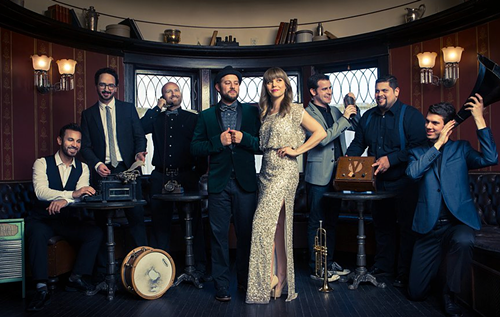
John Legend is a hard working performer. His two-hour concert at the Wells Fargo Center in Santa Rosa last night showed off not only his work ethic, but showcased his velvety voice and storytelling prowess in an intimate setting that was designed to feel like his living room. The only difference being, as the exquisitely dressed singer said during the show, “I don’t normally wear a suit in my living room.”
He really hammed it up at times for the crowd, who ate up his every word—except the gaff toward the end, when he said, “I mean, this is the Napa Valley, right?” This led to applause, briefly (because he was so charming, everything he said resulted in applause), but soon turned to boos. That’s right, Sonomans are so passionate about terrior they booed John Legend for making a minor geographical error. When he corrected his error with an embarrassed smile, “Oh, Sonoma Valley, right?” the applause resumed.
He mostly sat at the Yamaha grand piano, tickling the ivories with a young string quartet on the right of the stage and a guitarist to the left. When he brought the mic downstage and perched on a stool to serenade the crowd, women—and men—started squirming in their seats. Every John Legend song is a recipe for “making little tax breaks,” as he says, and though he doesn’t guarantee anything at the end of the night, “ya know…” he trails off before a knowing shrug, “you know.”
The intimate evening was staged with five loveseats occupied by couples who won tickets through radio promotions, with huge Hollywood movie lights towering above, lighting Legend from the back. Lighting against the back wall changed colors, and was especially useful during “Green Light,” one of his best songs of the night. The sound in the newly renovated space was crisp and loud. It felt like a larger space, but we were so close we could see the lack of sweat on Legend’s face. (Prince also lacks sweat glands, maybe they went to the same voodoo doctor for their musical talent.)
Women did a lot of the hooting and hollering through the night, but the fellas were cheering especially boisterously after a powerful solo piano cover of Bruce Springsteen’s “Dancing in the Dark.” He told a aw-shucks story about performing it on Late Night with Jimmy Fallon at the behest of that show’s musical director, the drummer ?uestlove, but never hearing if the Boss liked it or not. Months later, he says, he received a hand-signed letter asking him to play it at an awards gala. “I guess he liked it,” Legend said with a smile.
He paced the show perfectly, with some segments featuring three or four songs back to back, and some getting breaks between while he told stories. My favorite was when he met President Obama last year. After getting married to supermodel Christine Teigen earlier in the year, he asked Obama for marriage advice. Michelle chimed in, “How long had you been together before you got married?” He said about five years. “What took you so long?” the President asked, which earned Legend a glare from his new wife. Legend turned to the chuckling crowd, deadpan, and said, “Thanks, President Obama.”

Star Eclipse

0

The Grateful Dead played 2,318 official concerts over a 30-year run that started in San Francisco in 1965. That’s pretty impressive.

The Dark Star Orchestra—the premier Grateful Dead tribute band—has been together 16 years and will soon surpass the Dead in number of shows played, in about half the time. That’s very impressive.

The Orchestra are playing a couple of shows at Grateful Dead bassist Phil Lesh’s club, Terrapin Station, as a lead-up to a much-anticipated 2,319th show at the Great American Music Hall in San Francisco.

Like the Dead, the Dark Star Orchestra have toured coast-to-coast in an obsessive and nomadic fashion, offering lots of improvisation to fans along the way. The band performs a repertoire of Dead jams and puts together shows that are recreated from the band’s actual set lists. The Orchestra have averaged one show every two-and-a-half nights over those 16 years, and show no signs that they’re crashing anytime soon, or will pour their light into ashes, or anything like that (the Orchestra is named after the early Dead tune “Dark Star”).

Quantity aside, the Orchestra are renowned among Deadheads for the interpretative and improvisational spirit that captures the Dead concerts that inspire them. The band’s two North Bay appearances at Lesh’s joint mark the eve of their milestone achievement, and we’re wondering if Phil will bake a cake for them. Shall we go, you and I while we can? Through the transitive nightfall of diamonds?

Irie Power

As the sun set on the Reggae on the River Festival last August, the towering figure of Jamaican roots artist Prezident Brown could be seen walking down a path among the Humboldt County redwoods.

Reggae music filled the expanse of a river not yet parched by drought, and huge Jamaican flags waved in the breeze as Brown came into view, his gentle smile reflecting the early evening light.

It was a compelling image. At 6-foot-3, the reggae singer has a striking nature that exudes mindfulness, a characteristic he is pleased to share with fans stopping him when on the road. And whenever he parts ways with his fans, Brown stands at attention with fists pressed together in front of his heart and exclaims, “Towerful!”

It’s a symbolic gesture from Brown that leaves fans shouting, “There goes the Towerman!”

The underlying philosophy is more than just a handshake. “Tower” stands for “thinking, overstanding, working, enlightening and reasoning.” Each word represents a spiritual and pragmatic tool for making one’s way through the chaos and materialism of our fast-paced world.

Prezident Brown’s career spans three decades. Often hailed as Jamaica’s best-kept secret, Brown is now working with Kingston producer Rivah Jordan and says he’s been dipping into a pool of artists to collaborate with on an album due this fall. He’s mum on whom he might be teaming up with.

Even if he’s keeping his collaborators a secret for now, Brown does wear his political message on his sleeve. His current West Coast tour is called the “No-GMO Tour.”

“The issue of food is very important to speak on, as an artist,” he says via telephone, “for the human beings that might not know or understand what is happening. I am using my platform to raise the awareness of what is happening with food.”

But what if GMOs are not all bad?

“There is no scientific proof,” says Brown, “but what does that mean? That we should go ahead with this experiment? The population is going to be the experiment. It is big money and the control of profits—food being controlled by profit.”

Music fans promote food sovereignty when they align with artists like Brown. The solution to GMOs lies with the masses—so dance and be Towerful.

Jello-Rama

0

Bay Area punk legend Jello Biafra made a recent appearance on the Independent Film Channel’s Portlandia, in a sketch where he wakes from a coma to discover that his beloved scene is infested with yuppies.

Funny as the sketch was, there’s little to laugh at in the class war now underway in San Francisco, the city that gave rise to the Dead Kennedys in 1978.

“It’s no big secret,” Biafra says, “but we’re under a full, Vladimir Putin–size assault from another generation of ‘dot commies’ trying to take over and gentrify the town and bulldoze out people of lower income, people of color, service workers and, of course, artists and musicians.”

In an interview with the Bohemian, Biafra amply demonstrated why he’s considered one of the most eloquent and outspoken voices in music in the last three decades, and provided insight on how to save culture from the clutches of corporate predators. Biafra heads to the North Bay this week with his Guantanamo School of Medicine, appearing Friday at Santa Rosa’s Arlene Francis Center in support of their second full-length, White People and the Damage Done.

But first he has to finish ranting about those San Francisco “dot commies.” “One of the ways they get away with it is that several of these giant tech firms have started their own bus systems—yuppies only—to ferry their precious drones to and from ‘Silly Clone Valley’ to their playground in the Mission district,” he says. “It means it’s that much easier for people who might otherwise live down there to live here and drive up the rent.”

It’s an unsettling trend and one that’s made San Francisco rents among the highest in the world. Biafra connects the dots between corporate interests and their political allies. “The last dotcom holocaust happened when Willie Brown was mayor and his puppet planning commission rubber-stamped every last gentrification/eviction project they could get their hands on,” he says. “And now, the current mayor [Ed Lee] might as well be Willie Brown Mini Me. [Lee] pretty much lets Willie and crew tell him what to do,” says Biafra. “So once again its full speed ahead to wipe out affordable housing and sterilize the town.”

Biafra compares today’s social climate to that of his youth—and finds the present scene to be wanting. “The days are different from when somebody like me could come out here, a 19-year-old chasing a dream, find a room and start exploring the city that gave us the Beats and all that great psychedelia,” says Biafra. “But now if people come out chasing that dream at all, they’re more likely to go to Portland—yes, Portlandia—or L.A., or to Oakland.”

But Biafra is encouraged by what he saw during the recent Occupy movement. “The Occupy tents are gone, but the spirit lives,” he says. “You don’t have to pitch a tent or get your head cracked at a protest or sit up all night arguing with the more-radical-than-thou about 9-11 conspiracy theories or whatever. If people want to, they can make a vow to themselves, ‘I am not cooperating with this corporate system anymore. They can’t have me. They can’t have my money. They can’t have my time.’

“I think what happened with Occupy is that it had very widespread sympathy and support. Even the corporate opinion polls bore that out at the time. Even my mother, aged 83, said she thought they were right. So what I think people did was take that spirit and apply it another way.”

Biafra lays out some guidance on how to live with less commercial influence. “You give as little money as possible to the corporate chain stores and restaurants. Keep the money in the community’s local businesses and buy as few products from the corporate predators as possible,” explains Biafra. “I mean, does Coca-Cola taste as good as it did when you were a kid? And does something like Coors or Budweiser have any resemblance to decent beer? Some of these things are really easy.

“I haven’t eaten at McDonald’s in about 35 years. Have I suffered? No. And this is like drugs or tattoos. The more you do it, the more you want to go further. I thought back then, ‘Hey, if I don’t want to go to McDonald’s, which I never liked anyways, why should I go to Burger King?’ I’ll piss in their pots, but I won’t touch their food.”

The singer also highlights the importance of understanding commercial propaganda created by the corporate media. “I don’t think anyone should be allowed to graduate from high school until they pass a class on media literacy,” he says. “Unfortunately, those classes aren’t available. And that’s all by intention. So we have to go one-on-one teaching media literacy ourselves. That doesn’t mean blogging to an echo chamber that already agrees with you. It means eye to eye.

“If someone starts spouting Rush Limbaugh BS, don’t just throw up your hands and dismiss them as rednecks or stupid or unreachable. Sit down and talk to them. Don’t argue; communicate. If it’s somebody you know well, you know what’s important to him or her, and you can start with that. And most people, the bottom line is putting food on the table.

“It’s all helping people, both children and adults, to grow better bullshit detectors,” he adds. “Its especially important with children, where if they have a strong bullshit detector when they’re a kid, by the time they’re a teenager, the fashion police can’t hurt them as badly. They can say, ‘I don’t need that. I’d rather be myself.'”

Still, Biafra understands the realities of the world we live in, and the demands it makes. “We all wind up making some compromises, or we’re going to wind up like Ted Kaczynski, the Unabomber. He was pure as the driven snow from being detached from corporate society, but look what happened to him. I don’t think anybody wants to end up so isolated and crazy they wind up sending bombs to people they don’t even know, even making screws by hand, all because they can’t get laid.

“There’s got to be a better way, and everybody has to figure that out in life, and as life evolves, so does the individual,” he says. “Sometimes I’m not the most radical person on the block, but I just try to make those decisions based on something I can actually live with and live up to. I try to go as far as I can with what I do without being a jerk about it.”

The process of prying the corporate grip from our culture is not an overnight struggle. “It’s brick by brick,” says Biafra. “You know, the big picture looks pretty damn horrible. When you break off a piece of that puzzle and put energy into helping fight a smaller, winnable local battle, that’s where we start to take society back or at least keep the corporate predators further away from the front door by using our pitchforks.”

Mess with Texts

0

A California court issued a ruling last Friday that would let public officials shield emails and text messages from public view—even if those messages traffic in official business.

The Sixth District Court of Appeal ruled on a lawsuit against the city of San Jose by a citizen who sought access to the personal emails of thousands of city workers. The court found that messages or emails not held on city servers are not subject to disclosure under the California Public Records Act.

The Superior Court’s decision came a week after the Bohemian reported on text messages sent between embattled Sonoma County supervisor Efren Carrillo and Doug Bosco, a former congressman and co-owner of the Press Democrat. Under the court’s ruling, those text messages could now be withheld from public view. The case will next be heard by the California State Supreme Court.

The ruling could let officials shield official business from public view, simply by communicating through private email or telephone accounts. The court noted that it was up to the State Legislature to set the rules on public disclosure, and that it hadn’t done so.

County officials in Sonoma referenced the case when they fulfilled the Bohemian’s Feb. 28 request for correspondence between Carrillo and Bosco.

“We recognize that the law is currently unsettled as to the public’s right to access documents contained in the private electronic files of individuals serving in local government,” the county wrote. It cited City of San Jose v. Superior Court and added, “In light of that uncertainty, we have also asked Mr. Carrillo to . . . provide us with any documents responsive to your request. He has done so, and we are including those documents here.”

The texts illuminate a close relationship between Carrillo and Bosco and demonstrated that
Bosco had worked to influence
the PD’s coverage of pet issues.

Tiny Dancers

0

A tiny girl from a famous fairy tale, supernatural messengers eager to bring lovers together and a quartet of string instruments longing to be strummed are the cast of characters on view in the next two weeks, when several North Bay dance companies present vibrant pieces.

In Ballet Califia‘s Thumbelina, the diminutive lass with a huge heart springs to life with original choreography by founders Shelley Scott and David McNaughton. Dancing to music by Alexander Glazunov, the dancers range in age from 10 to 22, all performing up-close-and-personal at Ballet Califia’s Cotati dance studio.

“For those who are less familiar with ballet,” says Scott, “this is a great one, because unlike some ballets, the story of Thumbelina is pretty easy to follow.”

A bit less linear but no less imaginative is Strum, a world premiere dance-music collaboration from Sonoma County’s UPside Dance Company and composer Mark Growden. Presented for the first time this weekend at Healdsburg’s stylish new SHED marketplace and performance space, Strum brings out the inner “lives” of inanimate objects.

“We created our choreography based on researching different instruments like the violin, flute and cello,” says Tanya Tolmasoff, cofounder, with Kate Ahumada of UPside. “We asked, how would we move if we were these instruments, finding moments that we could be a bow, pluck a string, tune the instrument or hold a note.”

The choreography, set to original compositions by Growden—who will be performing with his quartet—even features an homage to the metronome. The SHED show also includes pieces performed to Growden’s “Pillar” and “Caravan.” The program,
says Tolmasoff, is a full-sensory experience.

“You will get your toe tapping and your heart strings plucked,” she says.

Next weekend, at the Marin Civic Center’s Showcase Theater, two other Bay Area companies—Nava Dance Theater and Odissi Vilas: Sacred Dance of India—join forces for an evening of storytelling through the medium of dance.

Messengers of Love features solo and group performances—many of them bringing to life Indian myths of love and divine intervention—presented with vivid costumes and athletic choreography. Expect to be inspired and entranced.

Think Globally, Munch Locally

0

To discover good food it helps to veer from the familiar and take old taste buds into new territory.

That’s what I did on a recent Thursday evening at the Hot Box Grill, nestled on Route 12 in Boyes Hot Springs. A local farmer and his wife, an artist, joined me. For two-and-a-half hours, we ate slowly, sipped good wine and talked about food and farming. We could hear one another without shouting—a real bonus, given the noise level in many restaurants these days.

At 34, the Hot Box’s Norm Owens is the youngest of the hotshot chefs in the Valley of the Moon. Born in Maryland and raised in New Hampshire, he attended college in Montana and traveled across Europe and Asia, cooking and eating his way from continent to continent, country to country. His rosy cheeks and infectious smile give the young chef a cherubic air.

“I guess you could call me a rolling stone,” Owens says on a quiet Friday afternoon as the sun streams through the Hot Box windows. “The menu here reflects my global ramblings and the lessons I’ve learned from master chefs, including John McReynolds, Michael Chiarello and a bunch of guys in France who allowed absolutely no screwing around in the kitchen.”

Owens shops at the open-air Friday market in the town of Sonoma, and, while he occasionally consults cookbooks, he mostly lets fresh local produce give him the inspiration for dishes he prepares. If he has a golden rule, it’s this: “Don’t mess too much with the ingredients. Let them stand out.”

We started with two sides: Brussels sprouts, pancetta, garlic and chile flakes ($6), and duck-fat fries with malt vinegar aioli ($6). If you haven’t eaten duck-fat fries with mayonnaise, you haven’t tasted real fries of the sort I’ve grown to love.

The farmer ordered chicken paillard with potatoes, celery root and squash ($18). The artist ordered pot roast with potato pancake and horseradish crème fraîche ($19). I took the Cornish game hen with cornbread pudding, coleslaw and mac ‘n’ cheese ($22 half a hen; $38 whole). We shared the dishes and ate steadily. By the end of the evening, there was plenty to take home for supper the next day.

The Hot Box lives up to its reputation for serving large portions of comfort food, though it also ought to be known for distinctive flavors. Roasted baby beets come with shaved fennel, grapefruit, feta cheese, toasted pistachios and citrus vinaigrette ($9). The spicy ahi tuna timbale is accompanied by lime and mint cucumbers, chili-infused sesame oil and ponzu, the popular Japanese sauce ($14).

Many of the meat dishes take days to prepare. Owens believes in slow cooking to bring out the fullness of the flavors and to make pork and lamb as tender as can be. There’s also a 32-ounce rib-eye steak that takes 20 to 25 minutes to cook. “It’s cowboy-size,” Owens says.

For vegetarians, there’s ricotta gnocchi with crimini mushrooms, shaved Parmesan cheese and kale ($18).

One of the kindest chefs around, Owens’ manner means a lot to the staff. “I never yell at anyone in the kitchen,” he says. “Treat your workers right, and they’ll treat you right.”

A chef who cares about his workers is a chef worth all the rib-eye steak and duck fat in the world.

Letters to the Editor, April 2, 2014

Very Odd

If you are interested in all this (“I Hate Me,” March 26), try Hannah Smith (digital self-harm). You mentioned Tumblr as a source of support. Dangerous, if you are loved for self-harm. And of course, the odd Megan Meier story. You mentioned Jessi Slaughter—forced off the internet for her own sanity, now transgender. If you are going to mention Jessi Slaughter, then you have to mention Aurora Eller. Then maybe Giovanna Plowman. Samantha Marie? There is something very odd about young females online.

Via online

Rolling in His Grave

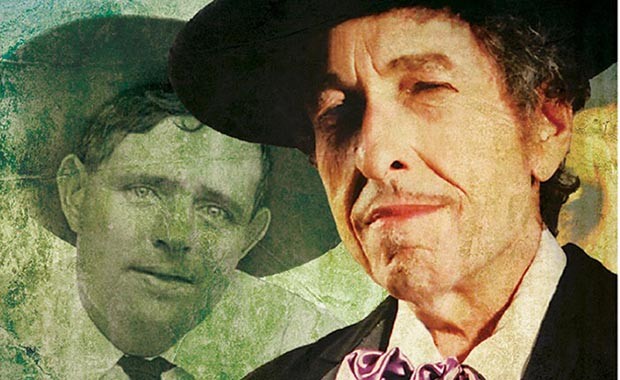
I don’t even know the words for how upset I am about your irresponsible statement on page 32 of your Best Of issue (March 19): Best Reincarnation of Jack London. Darius Anderson? Jack is rolling over in his grave!

Hidden Valley Lake

Noah Way

TV host Glenn Beck and other stalwarts of the Christian right have attacked the recent blockbuster Noah as being “pro-animal” and unfaithful to the Bible. Well, yes and no. The film is both pro-animal and faithful to the Bible, at least to the Book of Genesis, our only source for the story of Noah.

After all, Genesis 1:29 admonishes, “Behold, I have given you every herb yielding seed which is upon the face of all the earth, and every tree that has seed-yielding fruit—to you it shall be for food.” It is only after the flood, with fruits and vegetables no longer abundant, that humans get permission to eat animal flesh. Even then, the Bible stipulates that lives of only select animals may be taken and always with reverence and minimal cruelty. This is certainly a far cry from today’s factory farm and slaughterhouse practices.

Regardless of how we may feel about Noah’s interpretation of the Bible, each of us can recreate the recommended diet of the Garden of Eden in our home by dropping animal products from our menu.

Santa Rosa

Write to us at le*****@******an.com.

Morel Majority

0

Mycologists know the benefits of rain. Bolete, chanterelle, morel—all come out to play on the forest floor after a good soaking.

Some are delicious, with complex or delicate flavors, some taste like cardboard, and some are deadly. The poisonous Amanita phalloides, or “death cap,” closely resembles edible mushrooms like the straw mushroom. But how does one know which is which?

Gualala resident David Arora can help with that. “He’s the rock star of Northern California mushrooms,” says former Sonoma County Mycological Society president Bill Hanson. Arora’s 1979 book Mushrooms Demystified was penned when Arora was just 22 years old. “Today, it’s still the bible, if you will, for North Coast mushrooms,” says Hanson. A corresponding field guide, All That the Rain Promises and More . . ., is the go-to pocketbook for mushroom hunters who want to quickly identify fungi in the wilderness.

Both books are in the top five best-selling mushroom books on Amazon, and they’re available at local retailers and independent booksellers.

Rutherford Rustic

0

At the end of a less-traveled lane on the edge of Rutherford, a bluebird rests on a vineyard wire. Sheep bleat under the picholine trees. Guinea fowl peep from the poultry pen. Big, golden labs nuzzle a newborn black lamb with careful curiosity.

Manure, hay and the skeletal remains of last year’s grapes fill compost bins four feet high, and haunt the air with earthy aromas. And winery owner Julie Johnson is taking a break from prepping the faded, little red building for a fresh coat of paint—barn-red.

A former public-health nurse, Johnson and then-husband John Williams bought the property in 1987 when they were riding a wave of success as co-owners of Frog’s Leap Winery. Despite Rutherford being King Cab country, Johnson has kept eight acres of the original 1971 Zin planting. At first, she turned the grapes over to three winemakers who created three different expressions of the wine; thus, “Tres Sabores.” She began making her own wine after leaving Frog’s Leap in 2000.

Partly because she feels that wine tastes better when there are good people in the cellar, but also to help pay for the cellar, Johnson takes in a few custom crush clients. Even the guinea fowl must contribute—during a recent visit, FedEx carted off a box of them, headed for a winemaker dinner in Arizona.

The decor and vibe at the garden tasting room here is more “funky country art studio” than “Napa wine country.” When the weather’s fine, picnic table seating is the thing. As eager to talk about pomegranate trees as grapes, Johnson often pops by to encourage visitors to taste a pea shoot from the cover crop or a fresh grape off the organically grown vines. “I probably talk about everything else but the wine,” she says.

In season now, the 2013 Farina Vineyard Sonoma Mountain Sauvignon Blanc ($26), a direct and floral wine of lychee, pear and Canary melon, is aged on the lees in stainless steel, making a nicely rounded refresher. Tie-dye on the Zin bottle represents one of the many colors and patterns of duct tape Johnson uses to identify lots of wine in the cellar—leopard print is for “wild” yeast. The 2011 Estate Zinfandel ($38) is toasty, plummy, grapey, big and toothsome, spicy with peppers and Mexican chocolate. Smoky and meaty, with ginger cake spice and composty blackberry fruit, the 2010 Guarino Vineyard Calistoga Petite Sirah ($45) reveals the brooding spirit of last year’s grapes. It wouldn’t be Rutherford without a 2010 Cabernet Sauvignon ($80); it wouldn’t be Tres Sabores without pomegranate-infused golden balsamic vinegar ($22).

Live Review: John Legend at the Wells Fargo Center

John Legend is a hard working performer. His two-hour concert at the Wells Fargo Center in Santa Rosa last night showed off not only his work ethic, but showcased his velvety voice and storytelling prowess in an intimate setting that was designed to feel like his living room. The only difference being, as the exquisitely dressed singer said during...

Star Eclipse

The Grateful Dead played 2,318 official concerts over a 30-year run that started in San Francisco in 1965. That's pretty impressive. The Dark Star Orchestra—the premier Grateful Dead tribute band—has been together 16 years and will soon surpass the Dead in number of shows played, in about half the time. That's very impressive. The Orchestra are playing a couple of shows...

Irie Power

As the sun set on the Reggae on the River Festival last August, the towering figure of Jamaican roots artist Prezident Brown could be seen walking down a path among the Humboldt County redwoods. Reggae music filled the expanse of a river not yet parched by drought, and huge Jamaican flags waved in the breeze as Brown came into view,...

Jello-Rama

Bay Area punk legend Jello Biafra made a recent appearance on the Independent Film Channel's Portlandia, in a sketch where he wakes from a coma to discover that his beloved scene is infested with yuppies. Funny as the sketch was, there's little to laugh at in the class war now underway in San Francisco, the city that gave rise to...

Mess with Texts

A California court issued a ruling last Friday that would let public officials shield emails and text messages from public view—even if those messages traffic in official business. The Sixth District Court of Appeal ruled on a lawsuit against the city of San Jose by a citizen who sought access to the personal emails of thousands of city workers. The...

Tiny Dancers

A tiny girl from a famous fairy tale, supernatural messengers eager to bring lovers together and a quartet of string instruments longing to be strummed are the cast of characters on view in the next two weeks, when several North Bay dance companies present vibrant pieces. In Ballet Califia's Thumbelina, the diminutive lass with a huge heart springs to life...

Think Globally, Munch Locally

To discover good food it helps to veer from the familiar and take old taste buds into new territory. That's what I did on a recent Thursday evening at the Hot Box Grill, nestled on Route 12 in Boyes Hot Springs. A local farmer and his wife, an artist, joined me. For two-and-a-half hours, we ate slowly, sipped good wine...

Letters to the Editor, April 2, 2014

Very Odd If you are interested in all this ("I Hate Me," March 26), try Hannah Smith (digital self-harm). You mentioned Tumblr as a source of support. Dangerous, if you are loved for self-harm. And of course, the odd Megan Meier story. You mentioned Jessi Slaughter—forced off the internet for her own sanity, now transgender. If you are going to...

Morel Majority

Mycologists know the benefits of rain. Bolete, chanterelle, morel—all come out to play on the forest floor after a good soaking. Some are delicious, with complex or delicate flavors, some taste like cardboard, and some are deadly. The poisonous Amanita phalloides, or "death cap," closely resembles edible mushrooms like the straw mushroom. But how does one know which is which? Gualala...

Rutherford Rustic

At the end of a less-traveled lane on the edge of Rutherford, a bluebird rests on a vineyard wire. Sheep bleat under the picholine trees. Guinea fowl peep from the poultry pen. Big, golden labs nuzzle a newborn black lamb with careful curiosity. Manure, hay and the skeletal remains of last year's grapes fill compost bins four feet high, and...
11,084FansLike
4,606FollowersFollow
6,928FollowersFollow