The Right to Offend

0

The Charlie Hebdo catastrophe of Jan. 7 has stimulated a lot of conversation and debate here and abroad over the so-called limits of free speech—and raised questions in this country about the state of American satire.

Just how far is “too far,” and how much should—how much do—cartoonists engage in self-censorship? And why?

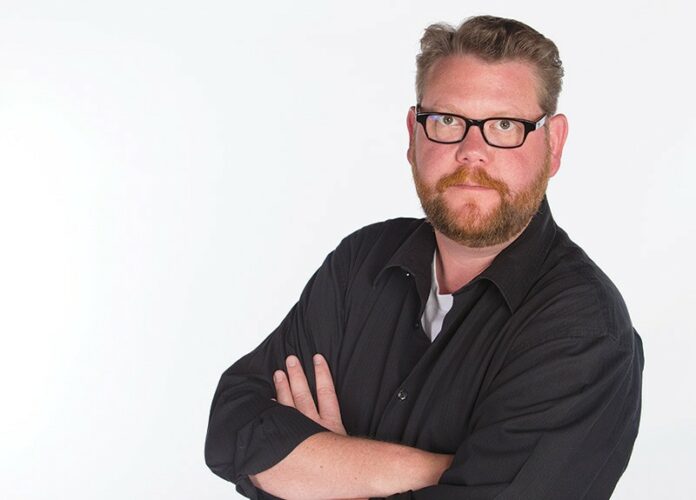
This week I interviewed a quartet of leading American cartoonists who’ve come out of the alternative media universe and squarely represent the tradition of American political satire in their own way. Each cartoonist has engaged these questions in the aftermath of Charlie Hebdo.

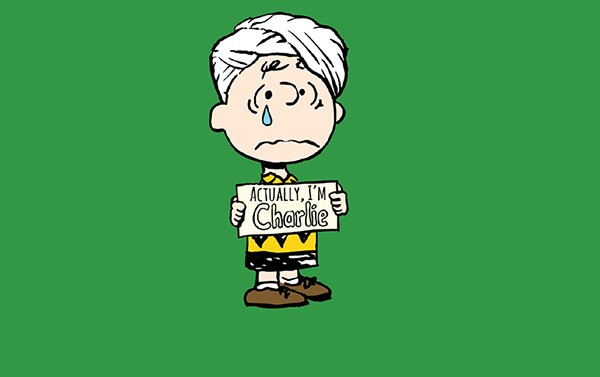
Our cover this week also tries to engage this question. With this cover, the Bohemian aims not to shock or offend, but to hold up the sacrosanct role of the alternative media: Do not shy from controversy.

Readers may know by now that Charlie Hebdo takes its name from the beloved pumpkin-headed Charles Schulz character. While the generally benign character of a typical Peanuts strip may not, at first, jibe with an impression of the scabrous and biting cartoons of Charlie Hebdo, perhaps it’s the existentialist bent of so many Peanuts strips that makes Charlie Brown a piece of American culture that the French can get with.

Santa Rosa’s Schulz Museum didn’t want to discuss the fact that the magazine named itself after Charlie Brown. “We don’t have a comment on that particular story,” says Gina Huntsinger, marketing director at the Santa Rosa–based museum. Pressed, she added, “It’s something that’s tragic that happened in Paris, and we feel it should stay with those people—not to take away from that tragedy in any way.”

Other cartoonists have taken up the Charlie Hebdo cudgel in their own way. Shannon Wheeler is the author of the popular strip Too Much Coffee Man, and was very quickly out of the Charlie Hebdo gate with a strip that we’ve reprinted here depicting the slain Charlie Hebdo employees ascending to heaven, with some choice commentary. It’s a priceless, bittersweet strip.

Wheeler says he had an initial impulse to not “go there,” but realized very quickly that he didn’t just want to do a pat comment on free speech, “something corny with pencils,” and that he had an obligation to honor the Charlie Hebdo heroes by having a little bit of fun. They’d have wanted it that way, he says.

But the American media—corporatized, sanitized and afraid of “offending” anyone, let alone an advertiser—is a dominant roadblock for American satirical cartoonists these days, Wheeler says. “People are afraid of offending. People are afraid of pushing limits,” says Wheeler. And, critically, “people are trying to make money. I think that’s what it boils down to a lot, in terms of why the humor is so conservative here.”

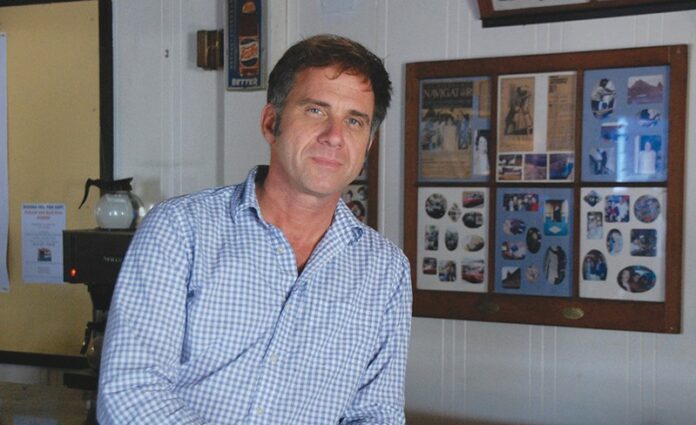
Cartoonist Danny Hellman identifies a strain of argument that runs “I support free speech, but . . .” as being a particularly insidious cop-out. “It’s not free speech if you put the ‘but’ there,” he says, adding that the average American doesn’t bother to get under the hood to understand the satire Charlie Hebdo was engaged in. Surface impressions rule the day.

[page]

“You have to be French and you have to be versed in French politics,” says Hellman, who rejects any conjecture that Charlie Hebdo had a “racist” undertone to it. “You can be against racism and be racist at the same time, but clearly they weren’t a white supremacist rag, like a lot of people in this country seem to think they were. They made fun of racists just as much as they made fun of religious figures. They were clearly just out to make fun of everything in a rude way.”

Jen Sorensen, who has been curating strips by Muslim cartoonists, and writing on it, believes that an “I support free speech, and . . .” approach is the more fruitful conversation to be having after the attack. “If we’re going to be talking about freedom of expression, there are some people who want to talk about the cartoons,” says Sorensen, the 2014 Herblock Prize winner.

Sorensen has been interviewing Muslim cartoonists about Charlie Hebdo. “These are educated Muslim cartoonists who are doing very brave work and whose lives are being threatened,” she says. Those cartoonists, she says, should have a voice—and it should not be drowned out in a froth of free-speech absolutism.

“I have two perspectives on this,” says Sorensen. “As a political cartoonist, it’s horrifying and awful, and I have a vested interest in not being attacked for drawing something. I absolutely support that. But then there is a conversation that follows.”

Through her interviews, she’s come to see “what different people in various minority groups think about this. And the more marginalized people are,” she continues, “the more complicated the responses are. I feel that we can firmly condemn the attacks, but can also talk about the cartoons and how they are being interpreted by broad populations.”

Skip Williamson is up there with R. Crumb and Art Spiegelman as one of the heavyweight cartoon satirists of the underground comix movement that sprang up in the convulsive American 1960s. Williamson is an absolutist on free speech issues. He cut his cartooning teeth in the racially polarized environment of America, circa Jim Crow.

One classic, jarring strip he’s been sharing on Facebook features a man in a car, with Mississippi license plate. The man has a lynched African American hanging from his rear-view-mirror. Today, that kind of gut-punchy stuff is basically off-limits, especially in mainstream publications that simply do not want to offend readers or make them uncomfortable.

“So many people here are so ready to pounce on anything that remotely smells like racism,” says Hellman, a veteran illustrator who’s done a couple of covers for the Bohemian in recent months.

Hellman makes the point that I’ve been thinking about, too: To Pakistanis and others in the Arab world who are protesting the Charlie Hebdo strips, the West is already the kingdom of the infidel. From their perspective, “we expect the infidels to do awful, disgusting things,” he says, “so why should they then kill them for being infidels? Why expect people in foreign countries to follow the rules of your religion? It’s just intolerance, plain and simple.”

[page]

Hellman notes that American cartoonists have other, somewhat more mundane concerns. “In this country, the risk of not being published is greater than being shot by radical Muslims. Who’s going to publish something that looks like Charlie Hebdo in this country? Why can’t we have good, nice, obscene satire? Someone who’s doing that sort of stuff here can’t even get into print so the jihadists can kill them.”

Hellman invokes the spirit of the Realist and early alternative newspapers, a golden age of American satire. “Things were so much more vibrant and hip back then. What happened to our media and popular culture that the blood just got sucked out of everything, and we’re left with this profit-driven, lowest-common-denominator ‘marketplace of ideas’?”

What indeed.

In the immediate aftermath of 9-11, George Bush spokesman Ari Fleischer uttered a phrase to a roomful of reporters that tipped the hand quite clearly when it came to the descent into madness that was about to ensue. Americans “need to watch what they say, watch what they do,” he infamously uttered.

It was as much a taunt as it was a threat.

But for every outrageous Ari Fleischer statement, there’s an overly sensitized person out there on the lookout for the unholy triumvirate of Racism! Sexism! Homophobia! to shout at the next person who dares to not watch what they’ve said. An entire generation, and maybe two of them, has been indoctrinated with the accepted progressive wisdom of the era, steeped in the academic cover of “identity politics” and set loose into a media atmosphere dominated by a lynch-mob chorus of instant outrage.

Wheeler agrees that Fleischer’s chilling comment is of a piece with the latter-day politics of shaming. The debatably glorious advent of Twitter has put an emphasis on beheading infidels, metaphorically, who don’t get with the sensitivity program.

“We’re still getting used to the idea that people can get shut down,” says Wheeler. “You do make the joke that is sexist or racist, or is interpreted that way, and people call for the end of your career. They call for your head. This person should be fired, they should never work again.

That’s a far cry from the heady and glorious days of the underground comix movement.

Williamson’s first published cartoon, which ran in papers all over the country in the middle of the 1960s, depicted two garbage cans as a way to highlight the abject injustices and hypocrisies of Jim Crow. One said “White Trash,” the other said “Negro Trash.” Nobody called him a racist for that cartoon strip, which he penned when he was all of 16 years old.

“Today if I published that, I’d get a lot of flak about it, but back then, it was just part of what people were doing and talking about,” says Williamson.

Williamson calls for “no censorship ever.” And he, like Hellman, laments a bygone era in American satire. “National Lampoon is gone, Mad is gone, The Realist is gone, the great satire magazines that existed at the end of the last century and into this—they are just not there anymore.

“The Charlie Hebdo murders show what a dangerous business this can be, if you do it right. If you have inner demons, you need to express them, you need to just do it. It might get you killed, but go for it!”

Sorenson’s take on the post-Hebdo conversation on expression, she says, is a little more nuanced than a lot of her colleagues. She stresses that she’s in the “I support free speech, and . . .” camp, as distinguished from the “free speech, but . . . ” camp, which can be exemplified, for instance, by Pope Francis’ utterances on the Charlie Hebdo massacre, which are worthy of savage mockery.

Sorensen also has more faith in the sturdiness of American political satire than her crusty male counterparts. “I have heard a lot of commentary to this effect, that compared to Charlie Hebdo, American satire is very weak. ‘Satire is dead in America.’ I guess I agree to the extent that daily newspapers have lost their edge, have become a lot more cautious,” she says.

“But in some ways I feel that political satire is alive and well in America.”
New Volume

0

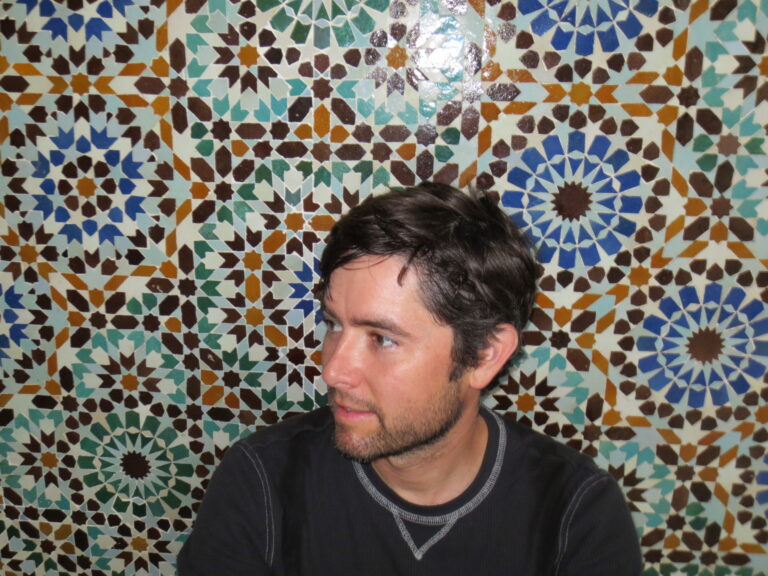
Multi-instrumentalist and songwriter Jon Fee has been playing in a band one way or another since he was in junior high.

The Sonoma County native first hit the indie music scene as the bassist in the melodically experimental band the Rum Diary and then in the dreamy post-punk outfit Shuteye Unison. Now for the first time in his musical career, Fee breaks out on his own with a new solo project and album, the Things of Youth’s Volume One.

Speaking from his home in San Anselmo, Fee shares his inspiration for going solo and how he did it with help from his friends.

“The Rum Diary and Shuteye Unison were both bands where no one brought in a complete song start to finish; a song would come about collectively,” says Fee. “I got so comfortable co-writing, I lost the ability to finish a song, which is kind of scary, so I said to myself, ‘You’ve got to get back to being a holistic songwriter.'”

Two years of honing his songwriting skills culminated in Fee forming the Things of Youth last year. On Jan. 27, the Things of Youth unveils its debut album. It’s a record that features major contributions from Fee’s musical friends, including Daniel McKenzie (the Rum Diary, Shuteye Unison) on guitar, Cory Gray (Carcrashlander) on piano and Jake Krohn (Shuteye Unison) on drums. With Fee singing and playing bass, the Things of Youth brings a lyrical introspection to its hypnotically driving lo-fi indie pop; think Jeff Tweedy and Elliott Smith fronting the American Analog Set.

“I’m in my 30s, I’ve got three kids, and I think when you start doing your own project, you do a lot of self-reflecting. I naturally started writing about either being young or growing old or the different experiences of my life,” says Fee. “There are a couple fun ones as well. I wrote the song ‘Eleventeen’ specifically for my oldest son. When he was three or four, I was trying to teach him to count one to 10, but he kept going beyond 10 and would say ‘eleventeen,’ and it’s always stuck with me,” says Fee.

For “Eleventeen,” Fee also collaborated with illustrator Lindsay Watson on a children’s book, meant to be read while listening to the song. The book will be available with the limited pressing LP, available on Fee’s own record label, Parks and Records. Volume One is the 10th release for the label, and as with every release, Fee, who is also an avid outdoorsman, gives a percent of all sales back to organizations that take care of the parks he like to spend time in.

The Things of Youth’s Volume One is available for download and on vinyl on Jan. 27 at Parksandrecords.com.

High Drama

0

Late last fall, Santa Rosa’s 6th Street Playhouse announced that it would be cutting back its performance schedule for the rest of the 2014–15 season.

It canceled all of the remaining shows in the 100-seat Studio Theater, while proceeding with the shows already planned for the larger, 185-seat G.K. Hardt Theater. The decision instantly sparked a flurry of rumors that the Railroad Square anchor is on the verge of collapse, a suggestion artistic director Craig Miller strongly denies.

“We’ve been having some trouble, yes, and I believe it’s time to be completely transparent about that,” he says, making it clear that, while things have been a bit touch-and-go, the leadership at 6th Street has no intention of shutting its doors.

“The short version is, the fundraising at 6th Street has been inadequate, in terms of meeting our development goals,” Miller says. “But the board is exploring new, sustainable ways to keep the doors open, and we’re already discussing the slate of plays and musicals for the 2015–16 season.”

Miller points to a recently formed group of supporters calling themselves the Champions of 6th Street Playhouse, who last week presented their plans to create long-range funding projects to support the theater. Those plans include a Kickstarter campaign targeted at raising $100,000.

“We are in good hands,” Miller says, adding that, despite the jitters caused by the Studio cancellations, “we are now on the firmest footing we’ve had in months.”

So what exactly happened at 6th Street, and is the situation in Railroad Square indicative of a larger problem in the entire North Bay theater community? As Miller describes it, 6th Street’s financial problems are primarily a matter of steadily declining donations. At a time when the recession is finally over, and theater patrons are now better equipped to heed their local nonprofits’ calls for help, 6th Street has seen a surprising evaporation of community grants, public donations and other forms of contributed income.

“Our goal has always been to build lasting relationships with the community,” Miller says, citing the kinds of relationships people have with their churches or with the public radio stations they support on a monthly basis. “We’ve put so much energy into producing an ambitious number of shows, but we’ve not been so good at building and sustaining those long-term donations. We admit it. And now, we need to get better at that. And we will.”

The theatrical landscape of the North Bay has definitely looked a bit rocky of late. Last year, both the Napa Valley Playhouse and Pegasus Theater lost their longtime homes. Such closures add to fears that the sky over the North Bay’s theater world is falling.

“We all need help,” says
John Degaetano of Wells Fargo Center’s North Bay Stage Co., a troupe made up of theater artists long associated with the Raven Players in Healdsburg (a company that bucked the trend by actually adding a second theater space in Windsor last year). “But we can’t do it by ticket sales alone,” he affirms. “You have to have financial support from the community. That takes years to build up, and getting there requires stamina, persistence and sheer bloody-minded optimism.”

While the woes experienced by 6th Street are not necessarily representative of the entire North Bay theater scene, the approaches that companies must take to keep open have been evolving.

“The old models are no longer working,” says Beth Craven, artistic director of Main Stage West in Sebastopol. With 70 seats in its storefront location downtown, Main Stage West is the smallest theater in the North Bay, a space it’s retained, in part, by renting the lobby as a downtown winetasting room. “Partnerships like the one we first established with Hook and Ladder, and now with Russian River Vineyards, have really helped increase traffic, cut down on overhead and given us another foothold in our community.”

It all comes back to relationships.

“In the waning days of the recession,” says Michael Barker, managing director of Marin Theatre Co., “our board wisely set up a cash reserve, partly as artistic ‘risk capital,’ but primarily to mitigate the ebbs and flows of a mid-sized nonprofits’ normal cash-flows. Ticket sales alone are not an indication of a relationship with your audience, and relationships are what sustains a theater organization.”

“Theater is the dirigible of the arts,” adds Craven. “It doesn’t look like it could possibly fly, but somehow it always manages to stay aloft anyway.”

SRJC Wine Classic

0

Santa Rosa Junior College is hosting its first Wine Classic
Feb. 8 from 2pm to 5pm at Lawrence A. Bertolini Hall. The SRJC Wine Classic is a walk-around tasting reception with 30 Sonoma County wineries pouring over 50 wines, live music, appetizer buffet and a souvenir glass for attendees 21 and over

The Wine Classic will honor this year’s honorary co-chairs Rich Thomas and Joe Martin. Both have a rich history in the Sonoma County wine industry and are longtime supporters of SRJC.

Thomas is a veteran viticulture instructor at the college whose more than 40-year agricultural career and contributions to the Sonoma County wine industry are widely known. Thomas developed the state’s first full-time viticulture program at the community-college level, recognized as a model for community colleges in California. Martin is the founder of St. Francis Winery and one of the first to plant Merlot grapes in Sonoma Valley back in 1971. He has welcomed generations of SRJC students to St. Francis Winery and continues to actively support local educational and charitable causes.

Participating wineries include Balletto Vineyards, Dutton Goldfield, Kosta Browne Winery, Dry Creek Vineyard, La Follette and Merry Edwards Winery.

Tickets are $55 per person and can be purchased at www.srjcwineclassic.com. All proceeds will fund SRJC wine, culinary arts and hospitality students and student scholarships. Bank of Marin and American AgCredit are the event’s major sponsors.

Barn Raising

0

In the North Bay, where two venerable theater groups have recently lost their homes, and where other theater failures seem imminent or possible, one little company in Napa is doing something unthinkable. They are building a new theater from scratch.

“We’re really not crazy!” laughs Taylor Bartolucci, cofounder of Lucky Penny Theater Co., which this weekend officially opens the Lucky Penny Community Arts Center with a two-weekend run of Lionel Bart’s moody musical Oliver!

The center—complete with an 85-seat theater, rehearsal and dressing rooms, costume and scenery shops, and more—is a former kitchen tile store, now receiving its final, transformative touches before the Thursday-night opening.

“This building is happening because it has to happen,” explains Bartolucci, who’s directing Oliver! along with Lucky Penny co-founder Barry Martin. Citing the closure of the Napa Valley Playhouse last year on the heels of the Opera House’s transformation into the mostly musical City Winery venue, Bartolucci and Martin—who created Lucky Penny in 2009 and have performed at the above venues and a few others—realized that no affordable options were left for theater artists seeking a place to stage a show in Napa.

“This was always in the back of our mind, to eventually have our own venue,” says Bartolucci. “But now we feel we have to build our own theater, because we simply won’t have a theater company anymore if we don’t.”

“Before we committed to this place,” says Martin, gesturing across the sawdust-covered room to where dressing room walls are being framed and sheetrocked, “we talked to every conceivable other venue in the area. We talked to owners of vacant buildings. We talked to schools. We talked to everyone. And nothing else made sense.”

The cost of the renovation is estimated at $200,000, over half of which has already been raised through private donations and fundraising events. And the closer the new facility comes to opening, the more Bartolucci says she can feel the community’s excitement rising.

“People see this space and they see the progress we’ve made, and they are floored!” she says. “They say, ‘Oh, wow! You’re really doing this!’ Yes we are! Look at the history of Lucky Penny. When we say we’re going to do something, we pretty much always do it.”

“And this time,” says Martin, “we’re not just doing it to put on one show. We’re building something that will be a resource for the whole community for years to come.”

Seize Mentality

Last August, a fire in a Sebastopol building exposed a cannabis growing operation on site. Sonoma County detectives, invoking a federal asset-forfeiture program called “equitable sharing,” seized property and goods on the property that included 1,421 gold and silver coins and $1.4 million in cash.

But late last week, U.S. Attorney General Eric Holder all but ended the equitable sharing program, whereby the feds, state and local law enforcement agencies split the proceeds from the sale of confiscated goods.

The Sebastopol story, first reported in the Press Democrat, raised eyebrows since the local police didn’t charge the property owner with anything—and six months later still haven’t charged him with anything.

When asked about the whereabouts of the gold and silver last October, Sonoma County assistant district attorney Bud McMahon confirmed that it been turned over to the feds.

The reason, he said, was because “we don’t have any local state charges here. We don’t have any identified suspects. All the cash and the precious metals were sent to the federal government for asset forfeiture purposes.”

This week, McMahon told the Bohemian that Holder’s move would have “little or no impact” on the Sonoma County District Attorney’s office, and said he “doesn’t know any more about the case. I never read any police reports. I don’t know anything about it.”

McMahon added that the rationale for seizing the goods in Sebastopol was that law enforcement didn’t want to leave it there “for someone else to steal.”

And he downplayed the county’s use of the program. “We don’t use the federal government for asset forfeiture, hardly at all,” McMahon said.

The Washington Post was first out of the box with this story last week and noted in its report that Holder’s move came with some exceptions—guns, child pornography and explosives.

But, the Post noted, those items represented a fraction of the assets seized since 2008. Since then, the Post reported, the feds have made more than 55,000 seizures worth over $3 billion, much of it cash money.

The program has been widely criticized for being a convenient lever for local law enforcement to pad their budgets from the sale of the confiscated goods. Under the program, the feds keep 20 percent of the proceeds, and the localities get 80 percent.

Now, under the Holder ruling, absent a warrant or criminal charges being filed at the state or local level—exactly the scenario in the Sebastopol bust—local law enforcement agencies will no longer be able to seize assets using the federal program.

The program was of special value in California, where state asset forfeiture laws are not only more difficult to invoke, but are less harsh than the federal program, according to materials offered by a San Francisco law firm that’s been in the asset-forfeiture trenches.

The Shouse California Law Group, based in San Francisco, has represented clients caught up in asset-forfeiture cases all around the state. The firm’s website details how, in California, this program was leaned on by law enforcement.

“The laws passed by the California Legislature actually provide pretty good protections for individuals caught up in asset-forfeiture proceedings,” the firm notes.

“But equitable sharing allows California cops to get around those laws by handing property they have seized over to federal law enforcement agencies. That property then gets handled under federal asset-forfeiture laws, which are much harsher than California’s.”

McMahon said that assertion is “absolutely untrue,” and that whether it was the federal or state asset-forfeiture law, “it’s the same burden of proof.”

He added that the district attorney’s office relied almost entirely on state asset-forfeiture laws: “We do asset-forfeiture cases all the time, and we gladly accept them and we rarely turn them down.”

McMahon said he was unfamiliar with the equitable sharing 80–20 split and went on to admit, “I don’t know the rules of federal asset law, it may be broader, but we do not do that in Sonoma County.

“To suggest to me that it’s harder to do it from a state standpoint than from a federal standpoint—we’re as fair as we can be. We give property and money back all the time that’s been seized.”

The Holder move, he said, “is not going to change our workload or the number of asset forfeitures that we do.”

Shouse reports that in California, between 2000 and 2008, “more than $300 million worth of assets was seized in California through equitable sharing.”

The firm notes, “What this means is that California cops can do an end-run around the restrictions on asset forfeiture that were put in place by California’s own elected officials, and still make plenty of money for their departments.”

Rohnert Park: The Walmart Friendly City

0

It did not go well for protestors and others intent on stopping a proposed Walmart expansion in Rohnert Park. A Tuesday night meeting at Rohnert Park City Hall found the town’s cowed councilmembers voting 4-1 in favor of letting the supercenter plan go forward, according to an exhaustive report in the mid-week Press Democrat.

The vote ended, presumably, a five-year battle fought by opponents against the megalithic market, which has been trying to expand an already extant Walmart in town.

In the meantime, it went ahead and built another Walmart in Rohnert Park, a so-called “neighborhood market.”

Anti-Walmart agitator Rick Luttman sent an email overnight Wednesday, after the vote, that prompted one of those chuckling, “Tell us what you really think, Rick” moments.

Luttman described the development as “outrageous and disgraceful. No other city in Sonoma County would have done something like this. They’re all a bunch of wimps.”

“The worst part,” he adds, “is they clearly don’t believe in democracy. The opinions expressed by citizens last night was overwhelmingly opposed to Walmart.”

I reached out to my old friend and colleague Liza Featherstone, a journalist, professor and the author of Selling Women Short: The Landmark Battle for Workers’ Rights at Walmart, for some scope-out thoughts on how Walmart might have managed to convince Rohnert Park officials to green-light the proposed expansion—despite a broad base of opposition to the proposal, which extended to numerous justice and workers’ rights groups around the area.

The corporation has gotten savvy over the years, Featherstone notes, given the relentless torrent of criticism directed at them for low wages, poor job security, and ongoing patterns of naked gender discrimination.

“The company has gotten really good at telling a different story,” she says. “They’ve had so much practice over the years.”

And indeed, the Tuesday vote was met with protestors banging drums, and with, as the P-D reported, Walmart supporters wearing Walmart buttons and carrying signs that said how wonderful the company was. Yes, shopping at Walmart is definitely cheaper than blowing a hole in your paycheck at Whole Foods.

But despite the self-generated hype to the contrary, long-documented workers’ rights problems with Walmart haven’t been addressed by the company in any substantive way, says Featherstone. It has plowed forth with public relations campaigns, many featuring smiling brown workers cheerfully sporting the signature blue Walmart apron, gushing about the friendly corporate culture and blah blah blah.

And why should Walmart give a hoot about its wage-slavery: people still apply to work there, in droves, despite well-documented policies that aren’t exactly in the best interests of workers. The company, as has been noted elsewhere, provides new employees with applications for food stamps, since it knows workers will be left short at the end of the week.

Ain’t it ironic.

“It’s not just about the low hourly wages,” says Featherstone, “but the difficulty in just getting enough hours, and reliably just being on the schedule, which is another huge challenge for someone trying to make ends meet. And, on top of that, the health insurance is terrible, and it’s hard to get it because it’s so hard to get the necessary hours to qualify for it.”

The Press Democrat report was larded with gibberish from the Rohnert Park officials, who essentially argued that it’s not their business, necessarily, to decide which businesses are good for the city and which aren’t. Let them all come, and the market will decide.

As Featherstone notes, one of the tricks to a successful Walmart bulldoze-the-opponents campaign is to promise jobs in an area that’s otherwise short on them. But I checked, and the jobless rate in Sonoma County has plummeted over the past two years, from almost 7 percent in 2013 to below 5 percent as of late 2014.

But the issue isn’t necessarily the quantity of available jobs, but the quality.

Featherstone notes that “any conservative, or just an observant person, would argue that people apply for these jobs. If there were better jobs in the community, obviously people wouldn’t be applying at Walmart, and that’s one thing that communities have to consider. Why would they want these low-paying jobs? The community probably needs to be providing other ways that people can make a living. If there is support, it’s probably because there are significant numbers of people who are not finding jobs. If you find that there are people in the community who don’t really care or actually want it to be there, it might be because the community needs to figure out better ways for economic opportunity.”

Featherstone goes on to note that longstanding gender discrimination concerns at Walmart haven’t gone anywhere. “There are these additional insults to employees’ dignity, in the form of sex discrimination. The majority of workers are women, and they are paid less and promoted less often. That issue has never been resolved despite a class action suit, from the first decade of this century.”

In other words, the terrorists have won. Oh no you didn’t!

The P-D report was filled with handwringing jeremiads from town leaders extolling the virtue of the Blessed and Irreproachable Free Market. It wasn’t their job to decide whether another Walmart in the town would drive out other businesses, such as Food Maxx, that provide the same service but without the odious corporate profile and well-documented history of screwing its workers at any and every turn. Vive Le Costco!

At least the proponents of expansion kept it civil. Give them that. One thoughtful Walmart supporter waxed downright philosophical in the Press Democrat when he considered the substance of opponents’ arguments against the expansion. He called them a bunch of “sniveling, crying, mental midgets.”

That person was not Ted Nugent, but it might as well have been. 

Panda Bear to Play Gun Bun in April

Panda_Bear_PSVSGR_Announce
Noah Benjamin Lennox is best known as a member of experimental indie rock group Animal Collective, and under the pseudonym Panda Bear, Lennox has evolved considerably as an electronic artist with a pitch perfect penchant for expansive melodies in his sampled beats.  This week, Panda Bear released his fifth solo album, Panda Bear Meets the Grim Reaper, to universal acclaim; and today at noon tickets go on sale for Panda Bear’s upcoming concert at Gundlach Bundschu Winery in Sonoma on April 16. This is a great chance to see the indie star in the intimate setting of Gun Bun’s newly restored Old Redwood Barn. Click here to grab tickets to the show, and watch the official video for “Mr Noah,” the first single off the new album.
[youtube]https://www.youtube.com/watch?v=CmXIIL2tmR8[/youtube]

Jan. 15: Fangs in Sebastopol

0

Last month, things were not looking good for Hooded Fang. The Toronto-based indie band was all set to open a string of West Coast shows for famed guitarist Johnny Marr, when a family emergency meant Marr canceled the tour right after Hooded Fang arrived in California with all their gear. Turning life into lemonade, the resourceful four-piece instead carved out their own tour, traversing the coast in their van. Their infectious energy has made them an underground favorite, and their last album, 2013’s Gravez, is an underrated garage-punk party starter. Hooded Fang get the party started with support from Secret Cat and Basement Stares on Thursday, Jan. 15, at 775 After Dark,
775 Petaluma Ave., Sebastopol. 8pm. $8. 707.829.2722.

Jan. 16: Gold and Rust in Novato

0

Singer and songwriter Lauren Shera has long been inspired by her home state of California, but she left the Golden State for the epicenter of country music, Nashville. Now an emerging star who has performed alongside the likes of Shawn Colvin and Jason Mraz, Shera’s latest album is a heartfelt farewell and ode to California. Gold and Rust is a meditative and elegant work of American folk and country-tinged rock that looks at the creative impact her family and childhood surrounding had on the young performer, who has also spent time at Chicago’s famed Old Town School of Folk Music. This week, Shera makes her way back to the West Coast, touring in support of Gold and Rust, and appearing on Friday, Jan. 16 at HopMonk Novato, 224 Vintage Way, Novato. 8pm. $12. 415.892.6200.

The Right to Offend

The Charlie Hebdo catastrophe of Jan. 7 has stimulated a lot of conversation and debate here and abroad over the so-called limits of free speech—and raised questions in this country about the state of American satire. Just how far is "too far," and how much should—how much do—cartoonists engage in self-censorship? And why? This week I interviewed a quartet of leading...

New Volume

Multi-instrumentalist and songwriter Jon Fee has been playing in a band one way or another since he was in junior high. The Sonoma County native first hit the indie music scene as the bassist in the melodically experimental band the Rum Diary and then in the dreamy post-punk outfit Shuteye Unison. Now for the first time in his musical career,...

High Drama

Late last fall, Santa Rosa's 6th Street Playhouse announced that it would be cutting back its performance schedule for the rest of the 2014–15 season. It canceled all of the remaining shows in the 100-seat Studio Theater, while proceeding with the shows already planned for the larger, 185-seat G.K. Hardt Theater. The decision instantly sparked a flurry of rumors that...

SRJC Wine Classic

Santa Rosa Junior College is hosting its first Wine Classic Feb. 8 from 2pm to 5pm at Lawrence A. Bertolini Hall. The SRJC Wine Classic is a walk-around tasting reception with 30 Sonoma County wineries pouring over 50 wines, live music, appetizer buffet and a souvenir glass for attendees 21 and over The Wine Classic will honor this year's honorary...

Barn Raising

In the North Bay, where two venerable theater groups have recently lost their homes, and where other theater failures seem imminent or possible, one little company in Napa is doing something unthinkable. They are building a new theater from scratch. "We're really not crazy!" laughs Taylor Bartolucci, cofounder of Lucky Penny Theater Co., which this weekend officially opens the Lucky...

Seize Mentality

Last August, a fire in a Sebastopol building exposed a cannabis growing operation on site. Sonoma County detectives, invoking a federal asset-forfeiture program called "equitable sharing," seized property and goods on the property that included 1,421 gold and silver coins and $1.4 million in cash. But late last week, U.S. Attorney General Eric Holder all but ended the equitable sharing...

Rohnert Park: The Walmart Friendly City

City officials get rolled by the corporate giant

Panda Bear to Play Gun Bun in April

Noah Benjamin Lennox is best known as a member of experimental indie rock group Animal Collective, and under the pseudonym Panda Bear, Lennox has evolved considerably as an electronic artist with a pitch perfect penchant for expansive melodies in his sampled beats.  This week, Panda Bear released his fifth solo album, Panda Bear Meets the Grim Reaper, to universal...

Jan. 15: Fangs in Sebastopol

Last month, things were not looking good for Hooded Fang. The Toronto-based indie band was all set to open a string of West Coast shows for famed guitarist Johnny Marr, when a family emergency meant Marr canceled the tour right after Hooded Fang arrived in California with all their gear. Turning life into lemonade, the resourceful four-piece instead carved...

Jan. 16: Gold and Rust in Novato

Singer and songwriter Lauren Shera has long been inspired by her home state of California, but she left the Golden State for the epicenter of country music, Nashville. Now an emerging star who has performed alongside the likes of Shawn Colvin and Jason Mraz, Shera’s latest album is a heartfelt farewell and ode to California. Gold and Rust is...
11,084FansLike
4,606FollowersFollow
6,928FollowersFollow