Loose Leaf Art

0

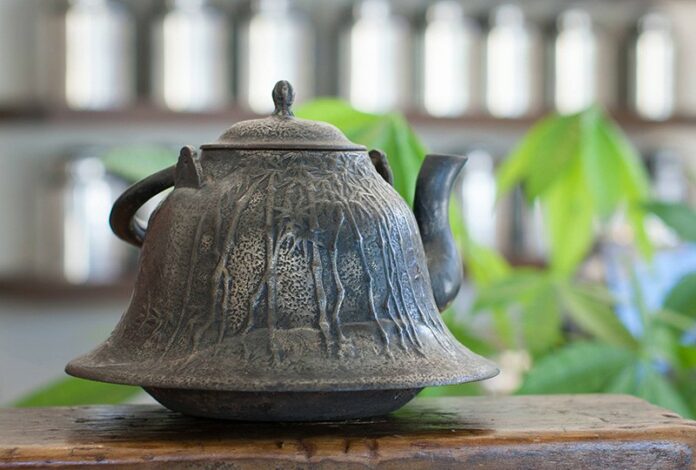
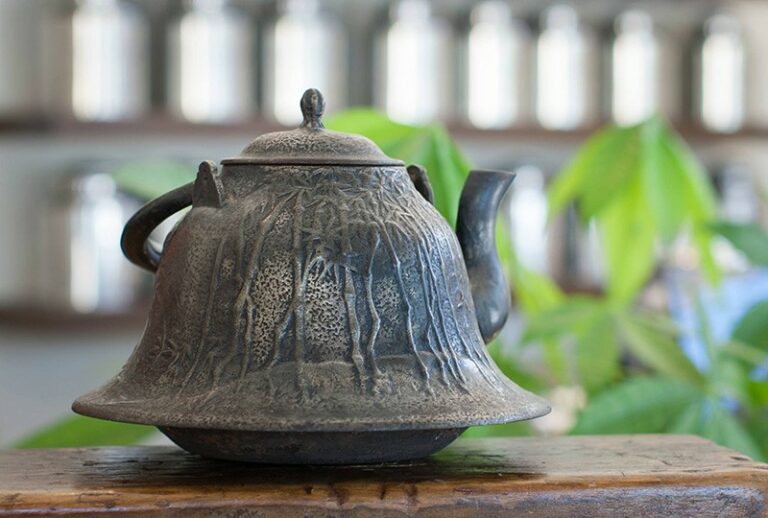
Sourced from organic farms around the world and blended by hand, the teas crafted by Marin-based Desta Epicures Guild are works of art in themselves, but that’s not the only thing on display in the small San Anselmo storefront. The Desta Art & Tea Gallery combines stunning visual works and sensual teas for a stimulating multi-sensory experience.

This week, the gallery brings together its new crop of spring teas and a new selection of art in the “Still Motion” exhibit, which opens with a reception on April 9, and a special “Tea with the Artists” event April 11.

“Still Motion” complements Desta’s serene atmosphere with a collection of paintings and sculptures that capture life’s quiet moments. Included in the show are landscapes and figures by painters James Kroner and Debra Maddox, and clay works by Sandy Frank. Desta founder Emebet Bellingham Korn offers her small batch: single-origin teas ranging from berry-infused black teas to ginger and lemongrass yerba mate.

The reception on April 9 also includes Desta’s renowned hand-blended tea-infused cocktails, Champagne and light appetizers, and the afternoon tea on April 11 will pair teas, sweets and eye-opening conversation with the artists in the communal and creative space.

“Still Motion” opens on Thursday,
April 9, and Tea with the Artists takes place on Saturday, April 11, at Desta Art & Tea Gallery, 417 San Anselmo Ave., San Anselmo. Reception at 6pm, Tea with the Artists at 2pm. Free. 415.524.8932.

Apr. 1: Literary Merit in Santa Rosa

0

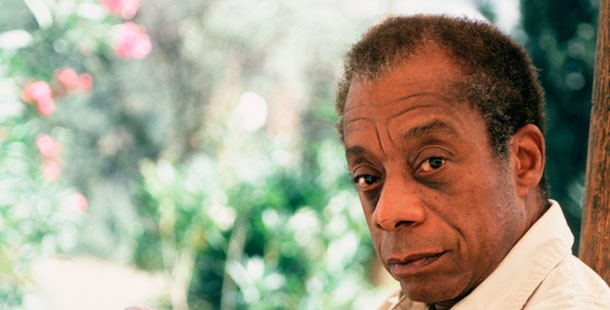
Author James Baldwin was one of the most prophetic voices of the Civil Rights movement. This month, the Santa Rosa Junior College is holding a series of events that examine Baldwin’s legacy and how his ideas remain relevant today. First, members of the SRJC English department and members of the SRJC Black Student Union will discuss Baldwin’s most enduring ideas on Wednesday, April 1, at 5pm, and the next day, the documentary film The Price of the Ticket, which profiles Baldwin, screens at 3:30pm. Finally, Walter Turner, host of “Africa Today” on KPFA, presents a lecture on Baldwin’s place in history on Monday, April 6, at noon. All events happen at the Newman Auditorium, Santa Rosa Junior College, 1501 Mendocino Ave., Santa Rosa. Free. 707.527.4372. 

Apr. 4: Castle Party in Calistoga

0

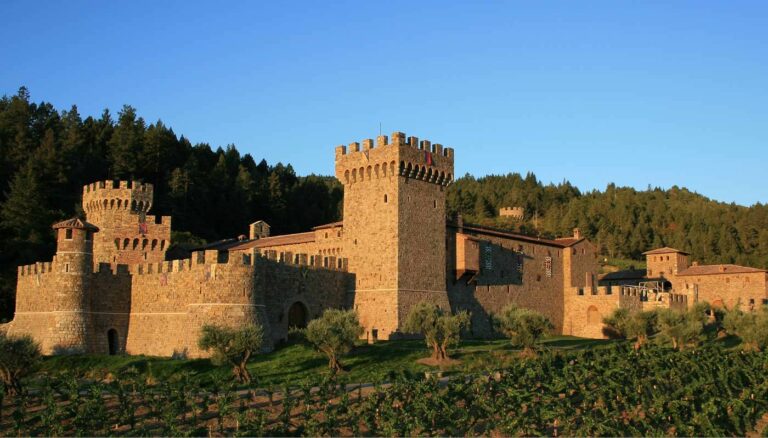
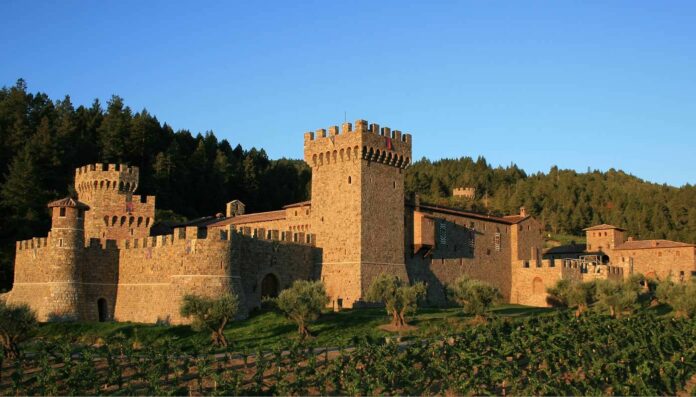
Posey the opossum is an animal ambassador who’s looking forward to meeting you at Castello di Amorosa for this year’s Wild Night at the Castle fundraising gala, but she won’t be the only one. Owls, hawks and other native Napa creatures join them for this event that benefits the Wildlife Rescue Center of Napa County, which helps care for orphaned or sick wild animals. Within the literal castle walls of the Medieval-looking estate, live music and savory dishes will delight as one-of-a-kind items go up for auction. There’s even a chance to win an “instant wine cellar” stacked with dozens of Napa Valley wines. Things get wild Saturday, April 4, at Castello di Amorosa, 4045 N. St. Helena Hwy., Calistoga. 7pm. $150. 707.967.6272. 

Apr. 4: The Road to Glory Begins in Petaluma

0

Last year, the Bohemian covered the return of professional wrestling in the North Bay when it chronicled the rise of Phoenix Pro Wrestling in November. Now the boys are back, and the belt is on the line this weekend when the high-flying and hard-hitting (though immensely family-friendly) event returns. The road to the championship starts here, and the tournament-style bill offers exciting match-ups that includes favorites from last year: the leaping Virgil Flynn, the hulking JR Kratos, as well as new faces and a slew of surprises. Bring the kids and get a shot of Phoenix Pro Wrestling on Saturday, April 4, at the Phoenix Theater, 201 Washington St., Petaluma. 8pm. $2–$10. 707.762.3565.

Apr. 7: Think Pieces in Larkspur

0

Back for a spring season, the weekly Mind Reels series presented at Lark Theater is an eye-opening afternoon of thoughtful films and documentaries paired with lively presentations. The series kicks off April 7 with an inside-look at a fashion icon and pioneer when the documentary Diana Vreeland: The Eye Has to Travel screens with two very different experts offering interpretations on the film. Jill D’Alessandro, curator of costume and textile art at the de Young Museum, speaks on the brilliance of Vreeland’s eye for style, while psychologist Bart Magee, director of the Access Institute, examines her consuming drive for fame. Mind Reels begins Tuesday, April 7, and continues for six weeks at Lark Theater, 549 Magnolia Ave., Larkspur. Noon. $25–$30. 415.924.5111.

Mountain High

0

One of the great things about universities are the college towns that spring up around them with all the cool movie theaters, music clubs, bars, record stores and restaurants. I especially like the food.

College town restaurant scenes in places like Berkeley, Austin, Eugene, Ore., and Chapel Hill, N.C., are great because not only is the food affordable for those on a student budget but the restaurants reflect the international diversity of the student body. The food expands your horizons, just like college is supposed to.

Sadly, Rohnert Park’s Sonoma State University has not given rise to a great college-town food scene. But there are a few standout restaurants, and Shangri-La Café & Grill is one of them. Located across from SSU in the Wolf Den shopping center, the restaurant offers a refreshing point of departure. The 11-year-old Shangri-La is run by the Nepalese-born brother and sister team of Paramesh Adhikari and Meenakshi Sharma. The dishes are cooked from scratch with mostly organic produce from Sharma’s garden.

Nepalese food leans more toward northern India than China but has elements of Chinese, as well as dishes unique to itself. To the extent people are familiar with Nepalese food, it’s the momo, a savory steamed dumpling filled with meat and vegetables that borrows much from China and Tibet. It’s Nepal’s national fast food, and they are delicious at Shangri-La. The beautifully fluted flour buns are made with housemade dough and stuffed with flavorful nuggets of minced lamb mixed with red onion, shallots, green onions and aromatic spices. It’s served with a silky tomato sauce for dipping. You get six for $9.99. I could eat a few plates of these. There is also a vegetarian version ($9.99) made with tofu, cauliflower, onion, cabbage and spinach.

Another good starter is the samosa chaat ($6.99), a crushed samosa filled with cumin-seasoned garbanzo beans and mashed potatoes topped with chopped onions and apple. Dal is another staple in Nepal, and it’s well represented at Shangri-La. The dal bhat lamb ($16.99) is made with tomatoes, onion, garlic, ginger and classic spices of cumin, coriander and turmeric is great. It comes with a bowl of yellow dal.

The creamy lentil soup ($4.99) is lighter and thinner than versions I’ve had at Indian restaurants. It’s a good side dish, but not hearty enough to stand on its own.

I’m not sure where to place the creamy masala pumpkin curry ($11.99), but it’s a good vegetarian option. Butter chicken is right up there with tikka masala in popularity, and Shangri-La’s version ($12.99) is as silky and luxurious as any I’ve had. It’s great over steamed brown rice.

In what is perhaps a nod to the college kids across the way, Shangri-La serves a version of saag made with trendy kale instead of the traditional spinach. It’s a flavorful and hearty vegetarian dish.

What else? Service is friendly and quick. Naan options ($2.99–$4.99) range from plain butter to garlic-basil, garlic-cheese and even sweet cinnamon. Desserts are basic: gulab jamun and rice pudding ($4.99).

For students, ex-students, faculty or just fans of good food, Shangri-La is worth the trip.

Shangri-La Café & Grill, 1706 E. Cotati Ave., Rohnert Park. 707.793.0300.

‘Fresno’ Bound

0

The Easy Leaves, self-proclaimed North Bay ambassadors of country-western music, never set out to write an ode to Fresno, but on their upcoming Fresno EP, out on April 7, the band gives the Central Valley hub its due.

On April 3, the Easy Leaves preview their upcoming record with a show at HopMonk Tavern in Sebastopol, and they’re bringing a full band to show off their slow burning honky-tonk goodness, with local favorites Brian Whelan and the Bootleg Honeys opening.

Talking over coffee, the duo of guitarist-vocalist Sage Fiefield and bassist-vocalist Kevin Carducci discuss developing their classically western sound.

“I don’t really sit down and say, ‘I’m going to write a song about Fresno,'” says Fiefield. “It was just in the consciousness, and it’s an interesting town. Kevin described it a bit as some of the towns he grew up in back east.”

Carducci grew up in the Cleveland, Ohio, area—”underdog towns,” as he calls them. Fiefield spent his formative years in the Sierras. The two met in Sonoma County at open mic events around 2008.

In the early days, the Easy Leaves played as an acoustic duo, with Fifield switching between mandolin and banjo while Carducci slapped and spun his standup bass with aplomb. Over the years, the duo have expanded their palette, with a full band recording on their previous album, 2012’s American Times. And since then, they’ve performed at a nonstop pace around the country.

“We’ve focused on developing our sound and turning our music into something sustainable,” says Carducci.

“Just barely paying the rent and shopping at the Mercado in Roseland,” laughs Fifield.

The pair performs alongside different types of musicians. For Fresno, they took these varied experiences and transformed them into a four-song honky-tonk fest with colorful character-driven tunes and a tight band.

Recorded at Prairie Sun Studios in Cotati, it was the band’s first time going straight to tape. The all-analog process was also the first time all the players were in the same room together. “We were all kind of feeling each other out at first,” says Carducci. “But soon, everyone was high on the energy in the room.”

Recorded in one day, Fresno also features the Easy Leaves utilizing accordions and organs, giving each track its own distinctive personality, and conjuring visions of open plains and valleys that span from Fresno to Reno to Mexico, always turned toward sundown.

The Easy Leaves debut ‘Fresno’
April 3, at HopMonk Tavern,
230 Petaluma Ave, Sebastopol. 8pm. $20. 707.829.7300.

National Hypocrisy

This country was built on the backs and with the bloodshed of kidnapped African American slaves who never received any compensation or reward. Even after being “emancipated,” many starved to death or were forced to work for their former slave-master for slave wages, victims of slave-master trickery.

America’s drug epidemic illustrates the hypocrisy of America’s “democracy.” Drugs are concentrated in the African-American communities, having been placed there by design by this government, unjust laws have been enacted and contracts for constructing prisons, guards and services are mega-dollar industries, whose lobbies wield huge amounts of political power. When mass killings occur, the American public gets empty lip-service from scumbag politicians, who are controlled by the dollars and political clout wielded by the powerful gun lobby and the gun manufacturers.

We can correlate a more direct line of genocide with the enormous influx of firearms, placed by design, into black and other disenfranchised communities and mostly wielded by so-called officers of the peace. Law enforcement has declared government-sanctioned open season on all youths of color.

Social media glorifies the drug culture and grabs the attention of our youth, who are fed the propaganda that lives are worthless and that the price you have to pay for what you choose to do in life, inconsequential.

It is of necessity and urgency, that in order to recognize and understand our present situation and strive for change, we must tie America’s history of genocide and racism to our current history, to our so-called system of democracy, which is fundamentally hypocrisy, and to the lives of our lost youths of color at the hands of this system. It is of dire necessity that we do all we can to enlighten our children, for that is what we owe them, and their futures depend on it.

Elbert ‘Big Man’ Howard is a founding member of the Black Panther Party and is an author, lecturer and community activist in Sonoma County.

Open Mic is a weekly feature in the ‘Bohemian.’ We welcome your contribution. To have your topical essay of 350 words considered for publication, write op*****@******an.com.

Letters to the Editor: April 1, 2015

Round ’em Up

According to Mr. Lockert (Letters, March 18), science becomes “settled” when a “practical use” is found for it. Really? I do not believe there are many practicing scientists who would agree with this utilitarian definition of the scientific endeavor.

Putting this aside, I still do not understand his point. Round-Up was developed by scientists. It works. It is an incredibly effective weed killer—at least in the short run. That is settled. Its effect on the human organism and on the long-term ability of the earth to sustain agriculture and life is not part of this equation. This is a separate scientific question, one that needs research grants and other resources to study it.

I did not say that the rise in childhood asthma and autoimmune diseases is caused by vaccination. I said that this is a legitimate scientific question to ask, and that there is no research money available to study this hypothesis. I also said that it might be dangerous, based upon historical precedent, to raise such radical questions. Mr. Lockert extrapolates from this that I “assume all of our fellow citizens employed in immunology, virology and epidemiology are so motivated by greed that they are cowed into submission and will not speak out.” That is quite a stretch from anything that I said (or think). It is a mean-spirited, ad hominen attack and diminishes the possibility of dialogue on this vital public health question.

Vaccines are chemicals. They are introduced into the interior environment of very young human beings in massive doses. And they work.Just as Round-up works to kill weeds, vaccines work to kill measles. We live in a society in which, by Mr. Lockert’s characterization, it is possible for “thousands of untested chemicals to be put into the environment.” Why then is it so far-fetched for people to question this one? Vaccines may work in the short term, but is incumbent upon us as parents and as a society to consider the long-term consequences of this immediate “victory” over the diseases of childhood.

Sebastopol

Bacon Bit

It seems we are living in a bacon wonderland (“It’s Raining Bacon,”
March 25). It’s interesting to note that when your product doesn’t stand up on its own, you have to add plant-based spices and sugars.

Here’s a bacon story: A father takes his four-year-old to “agriculture day” where there seems to be a lot of happy animals and nothing bad is happening. The father hands his son a bacon sandwich, the son asks, “Where did the bacon come from?” Dad replies, “You don’t want to know, but I’ve got good news. For your fifth birthday, we’re going to have a big bacon-infused cake, and of course, a side of bacon. Everybody can bring their dogs. We’ll have T-shirts with pictures of happy pigs on them, and remember, if anybody mentions the pigs, make a joke real quick and change the subject.” The child persists, “How did you get the bacon?” Dad says, “Well, there’s a machine, and the pig goes in one end and the bacon comes out the other.” The forward-thinking child reacts, “I’d rather have a happy pig tomorrow than a bacon sandwich today.”

Petaluma

Write to us at le*****@******an.com.

Rain Catchment-22

So, what’s the catch with rain-catchment systems?

In the face of a relentless drought and dire warnings that the state is going to run out of water, oh, next year, the State Water Resources Control Board (SWRCB) recently cranked up residential water-use restrictions designed to get Californians to conserve more and waste less. Meanwhile, the state passed a bill in 2012 to permit residential rainwater-catchment systems—but hasn’t done a whole lot to encourage Californians to install them. Why not?

The recent move by the SWRCB gave localities and municipalities more leverage to crack down on water wasters. George Kostyrko, public affairs director at the board, says the move follows on 2014 restrictions that “saved enough water for about 2 million people.”

The new restrictions compel municipalities to turn in water wasters to the state. In the extreme, the state can shut off a customer’s flow, “to make a point that they shouldn’t be wasting water,” says Kostryko. There are fines, too, that are part of the new punitive regime.

But where’s the part of the story where people are encouraged to conserve water by collecting it in rain-catchment systems? The American West has historically been averse to rain-catchment because of water-management rules designed to spread the resource around. But given the scope and intensity of the drought, the Legislature passed a law to allow for the use of residential rain-catchment systems. Given the scope and intensity of the drought, why isn’t it doing more to encourage their installation?

Los Angeles gave away a bunch of rain barrels as soon the 2012 state law passed, but it was quickly deemed a waste of time and money in a well-traveled UC Davis study, and there hasn’t been much buy-in at the residential or municipal level beyond that gesture.

The state didn’t follow up—no state tax credit has been offered for the purchase of rain-catchment systems, for example. It’s about a $3,000 investment, says Chad Griffith, a manager at Harmony Farm Supply in Sebastopol.

“I do believe we encourage it,” says SWRCB spokesman Timothy Moran, “if not financially.”

Moran points out that the water board doesn’t work with individuals, and that it’s in no position to offer a tax credit, which would have to be enacted by the Legislature.

But he says, there’s more that could be done: “I believe we could work through local agencies, like county departments of public health or public works, to offer financial help in the form of a low interest loan or grant. The local agency would have to act as a go-between for individual projects.”

Griffith says that the drought has brought with it greater interest in rain-catchment systems, but that the up-front investment remains a disincentive. And, he notes, water’s still pretty cheap, despite the fact that California’s running out of it.

Trathen Heckman, a pioneering activist at the organization Daily Acts, ran with the new state law and helped push Sonoma County to write its rain-catchment regulations. He has a 1,500-gallon tank in his Petaluma backyard that still has rainwater in it from winter storms.

“We’re not getting a lot of rain, but I still have water in the tank,” he says, and he’s using it to hand-water his beets, garlic and kale. The industry standard average for rain-catchment is that an inch or rain on a 1,000-square-foot roof equals about 600 gallons of water.

That’s better than a drop in a bucket—and the drought, says Griffith, has ramped up interest among homeowners in harvesting every last drop. Going back five years, says Griffith, he’d get one or two people a year asking about rainwater-catchment systems. Now it’s more like five people a week.

People want a practical return on the investment, he says, which just wasn’t there before the drought. Now that it is, where’s the state to encourage people to install these systems? How about that tax credit?

“I think certainly that could help, and with the right sort of lobbying, I think it could be done,” says Griffith, “but you’d have to lobby and get the Legislature, and push on the right people. And enough people have to want to do it.

“There is a ton of value in doing this,” he adds, “just to see how valuable water is.”

Heckman says he supports the new mandates but that the greater issue is in reducing an individual’s “water footprint” beyond adhering to state rules about lawn watering. Get rid of the lawn altogether, says Heckman, and in an ideal universe, fully integrated home ecosystems such as his would be encouraged to use more water, given the benefit of carbon sequestration and general sustainability that comes along with growing your own food and dispensing with the lawn mower.

But Heckman is a pioneer in a progressive county. His entire home yard is given over to growing things, raising chickens, managing honey bees, and reducing his water footprint by reusing graywater and leaning on that big watertank.

Heckman has done the groundwork and offers a model to others through Daily Acts. He gets big props from Ann DuBay at the Sonoma County Water Agency, who notes that “the big barriers to rainwater-catchment systems are that it requires a little bit of capital to put them in, and it requires a little bit of technical skill.

“Anytime the state can provide rebates or provide funding to local agencies to provide rebate programs, or help people pay for this—that’s a good thing.”

DuBay notes that the state has made available, through grant programs, monies dedicated to lawn- and toilet-replacement systems, all in the service of water conservation. Healdsburg, she notes, got $1 million from the state for exactly that. “That’s one example of how the state can really help, and they can do the same thing for rainwater catchment,” she says.

Moran explains that “from the funding side, we are pushing for larger scale projects that capture rainwater and percolate it into the groundwater.” He notes that last year’s water-focused Proposition 1 has funding to incentivize those projects.

“As for rain barrels at [the] home level, they are not very cost-efficient. It is much better and cheaper to direct your storm runoff onto your lawn or flower beds and let it soak in.”

The state is now saying it is looking closely at Australia for tips on how next to confront the drought. Australia mandated that catchment systems be installed in new-home constructions, just sayin’. The state might also look to arid Arizona, which offers a one-time tax credit of up to $1,000 for installing graywater or rainwater-catchment systems.

Loose Leaf Art

Sourced from organic farms around the world and blended by hand, the teas crafted by Marin-based Desta Epicures Guild are works of art in themselves, but that's not the only thing on display in the small San Anselmo storefront. The Desta Art & Tea Gallery combines stunning visual works and sensual teas for a stimulating multi-sensory experience. This week, the...

Apr. 1: Literary Merit in Santa Rosa

Author James Baldwin was one of the most prophetic voices of the Civil Rights movement. This month, the Santa Rosa Junior College is holding a series of events that examine Baldwin’s legacy and how his ideas remain relevant today. First, members of the SRJC English department and members of the SRJC Black Student Union will discuss Baldwin’s most enduring...

Apr. 4: Castle Party in Calistoga

Posey the opossum is an animal ambassador who’s looking forward to meeting you at Castello di Amorosa for this year’s Wild Night at the Castle fundraising gala, but she won’t be the only one. Owls, hawks and other native Napa creatures join them for this event that benefits the Wildlife Rescue Center of Napa County, which helps care for...

Apr. 4: The Road to Glory Begins in Petaluma

Last year, the Bohemian covered the return of professional wrestling in the North Bay when it chronicled the rise of Phoenix Pro Wrestling in November. Now the boys are back, and the belt is on the line this weekend when the high-flying and hard-hitting (though immensely family-friendly) event returns. The road to the championship starts here, and the tournament-style...

Apr. 7: Think Pieces in Larkspur

Back for a spring season, the weekly Mind Reels series presented at Lark Theater is an eye-opening afternoon of thoughtful films and documentaries paired with lively presentations. The series kicks off April 7 with an inside-look at a fashion icon and pioneer when the documentary Diana Vreeland: The Eye Has to Travel screens with two very different experts offering...

Mountain High

One of the great things about universities are the college towns that spring up around them with all the cool movie theaters, music clubs, bars, record stores and restaurants. I especially like the food. College town restaurant scenes in places like Berkeley, Austin, Eugene, Ore., and Chapel Hill, N.C., are great because not only is the food affordable for those...

‘Fresno’ Bound

The Easy Leaves, self-proclaimed North Bay ambassadors of country-western music, never set out to write an ode to Fresno, but on their upcoming Fresno EP, out on April 7, the band gives the Central Valley hub its due. On April 3, the Easy Leaves preview their upcoming record with a show at HopMonk Tavern in Sebastopol, and they're bringing a...

National Hypocrisy

This country was built on the backs and with the bloodshed of kidnapped African American slaves who never received any compensation or reward. Even after being "emancipated," many starved to death or were forced to work for their former slave-master for slave wages, victims of slave-master trickery. America's drug epidemic illustrates the hypocrisy of America's "democracy." Drugs are concentrated in...

Letters to the Editor: April 1, 2015

Round 'em Up According to Mr. Lockert (Letters, March 18), science becomes "settled" when a "practical use" is found for it. Really? I do not believe there are many practicing scientists who would agree with this utilitarian definition of the scientific endeavor. Putting this aside, I still do not understand his point. Round-Up was developed by scientists. It works. It is...

Rain Catchment-22

So, what's the catch with rain-catchment systems? In the face of a relentless drought and dire warnings that the state is going to run out of water, oh, next year, the State Water Resources Control Board (SWRCB) recently cranked up residential water-use restrictions designed to get Californians to conserve more and waste less. Meanwhile, the state passed a bill in...
12,118FansLike
4,924FollowersFollow
6,928FollowersFollow