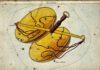
At 5:05pm, Tuesday, Sept. 22, the sun crossed the celestial equator, giving us the autumnal equinox—no pumpkin spice latte required.
The equinox is one of those annual astronomical events that reminds us wee mortals that the planet is going to assert itself regardless of whatever is happening in our own little worlds. It’s humbling really, and we should take a collective moment to acknowledge the moment.
This is what happens: The Earth’s axis tilts neither toward nor away from the sun, and the sun appears directly over the equator. Day and night come almost into balance perfectly—though not quite, because the atmosphere bends sunlight and gives daytime a few bonus minutes. Yep, even the cosmos, apparently, fudges the numbers.
Human beings have been celebrating the autumnal equinox for ages, and modern pagans continue to celebrate Mabon, a harvest observance devoted to gratitude for the Earth’s bounty.
The Greeks, naturally, made it considerably more dramatic. Autumn meant Persephone returning to the underworld and Hades, leaving the world above to dim in her absence. Even revolutionary-era France went so far as to begin each new year at the autumnal equinox in its magnificently ambitious attempt to reinvent the calendar along with society. Personally, I’m satisfied with a sweater—the uglier the better.
What I like about fall is its understatement. It’s often literally in a fog—one that, at my age, also feels like a state of mind. Autumn dims the lights and cools the air. It makes everything slow down. And it should; the year is old. And will soon be over. And for one astronomical instant, everything is balanced. Light and darkness. Coming and going. Growth and decline. And no matter what we do or whoever we are, the planet is just gonna keep on keeping on. With or (gulp) without us.
So here’s to autumn: season of apples, pumpkins and premature Halloween decorations. The days get shorter from here, my friends. All the more reason to notice them.
Micah D. Mercer lives and loves in the North Bay.