Cosby Canceled at Wells Fargo Center

0

Last week I wrote about the scheduled appearance in Santa Rosa by alleged serial starlet-drugger and creepy toe-sucker Bill Cosby. The story wondered why on earth the show must go on in Santa Rosa, when it’s been cancelled at various venues, and in light of the fact that there’s like 31 women who claim he’s a creep. I wondered why Wells Fargo would continue with naming-rights for the center, given what we believed was a colossal case of poor judgement on the center’s part.

Well, as of today, the show is “indefinitely postponed.

This just in from the Wells Fargo Center for the Arts, a press release in our inbox this morning, from us to you. Indefinitely postponed is a nice way of saying the thing’s been canceled. Good riddance. 

“SANTA ROSA, CA (February 20, 2015) – Promoter John Low announced today that the Bill Cosby performance, scheduled for Saturday, June 6, 2015 at Wells Fargo Center for the Arts, has been indefinitely postponed. The postponement is by mutual agreement between Mr. Low and Mr. Cosby.

“We regret any inconvenience created for patrons who have already purchased tickets,” said Kyle Clausen, Director of Marketing and Patron Services for Wells Fargo Center for the Arts.

Ticket holders will automatically be issued a refund for their ticket purchases. Patrons who purchased tickets with a credit card will receive a refund to that card within five to seven business days. Patrons who purchased tickets by cash or check will be mailed a refund check within 14 business days. Questions about this refund process can be directed to the Wells Fargo Center for the Arts ticket office at 707.546.3600, which is open daily from 12 noon – 6 p.m.”

….This must have been what Clausen meant when he said there was a “resolution” in the works as I was reporting this story.  

Feb. 20: Folk Sculpture in Santa Rosa

0

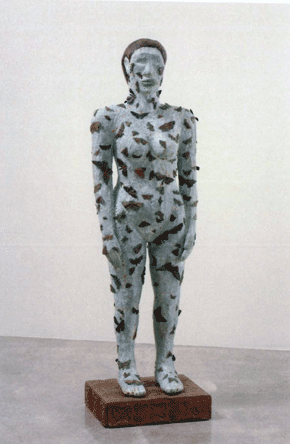
The African- and Native-American heritage of L.A.-based artist Alison Saar takes shape in life-sized sculptures that mix elements of folklore and modern culture. Saar’s newest exhibit is “Thistle and Twitch,” presented at the Sonoma County Museum. Through the next two months, a series of film screenings and lectures will highlight cultural paths taken, or endured, by American Indians and African Americans. Saar herself appears in discussion at the “Thistle and Twitch” opening reception on Friday, Feb. 20, at the Sonoma County Museum, 425 Seventh St., Santa Rosa. 6pm. $10 for non-members. 707.579.1500. 

Feb. 21-25: Cheese Heads in Sonoma

0

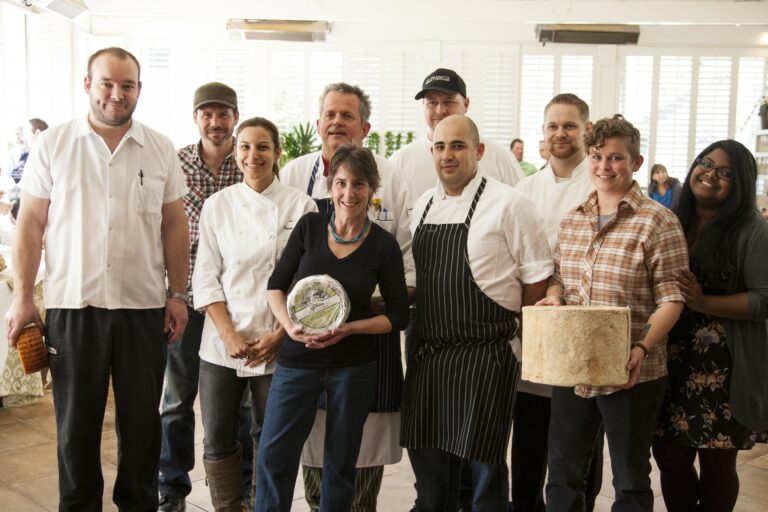
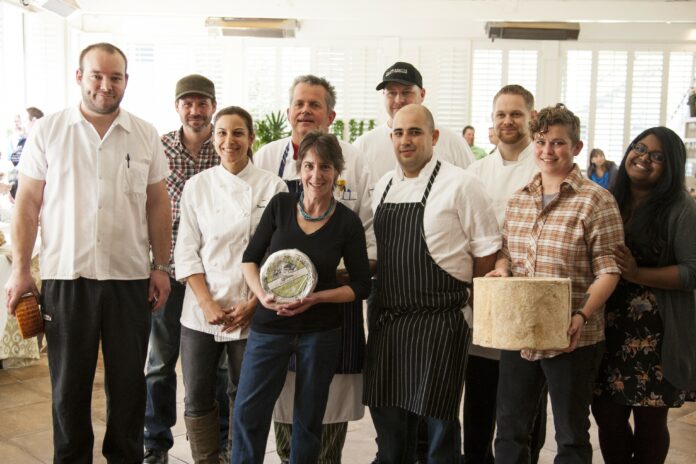
Hosted by Sheana Davis of the Epicurean Connection, the Sonoma Valley Cheese Conference returns as the premier destination for cheese-industry leaders from across the nation. There are dinners and day-long showcases that include the creamiest and stinkiest of this year’s best cheeses. Learn which cheeses can make you the most cheddar and learn how to build your own cheese empire as you listen to guest speakers like Jonathan Bowen of Gypsy Cheese Co., Jed Asmus of Ewetopia Dairy, Sarah Marcus of Briar Rose Creamery and many others. The Cheese Conference takes place from Saturday, Feb. 21, to Wednesday, Feb. 25, at various locations in Sonoma. $150 and up. 707.935.7960. 

Feb. 22: Return to Form in Sebastopol

0

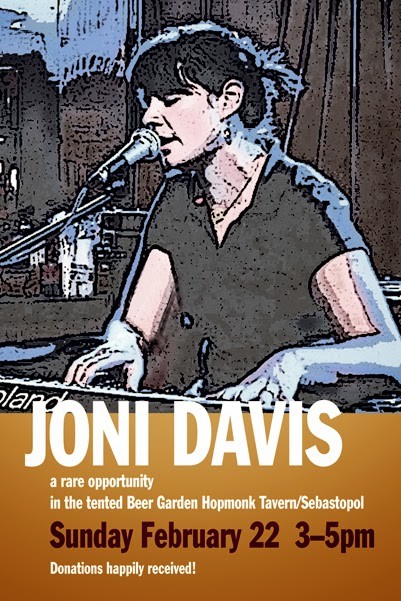
Personal story time: About eight years ago, I briefly worked the box office at a local venue, where I met a fellow part-timer named Joni Davis. Music quickly came up, and Davis told me she was a pianist and songwriter. Oh cool, I thought, that’s nice. Then I saw Davis perform, and was absolutely floored. Her haunting melodies attached themselves to my psyche and refused to let go. Cut to now: It’s been over two years since Davis last played live. I wondered what became of this gifted artist, and this week comes the welcome news that Davis will be dusting off the keys on Sunday, Feb. 22, at HopMonk Tavern, 230 Petaluma Ave., Sebastopol. 3pm. 707.829.7300. 

Feb. 24: New Road in Pt Reyes Station

0

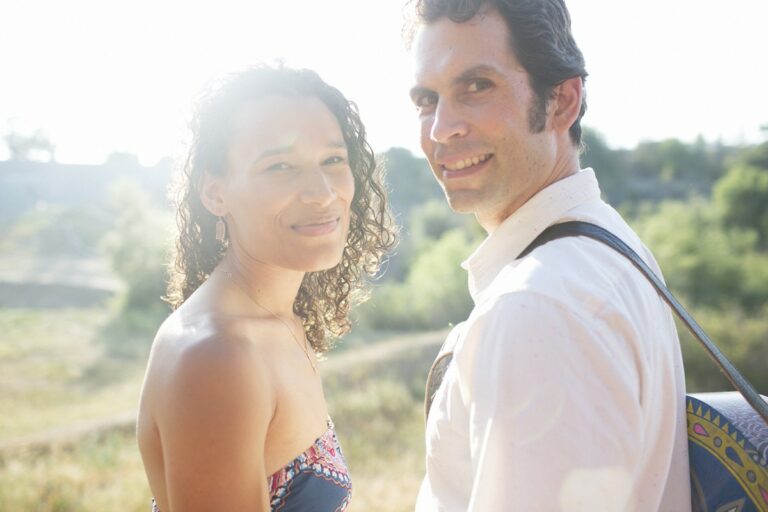
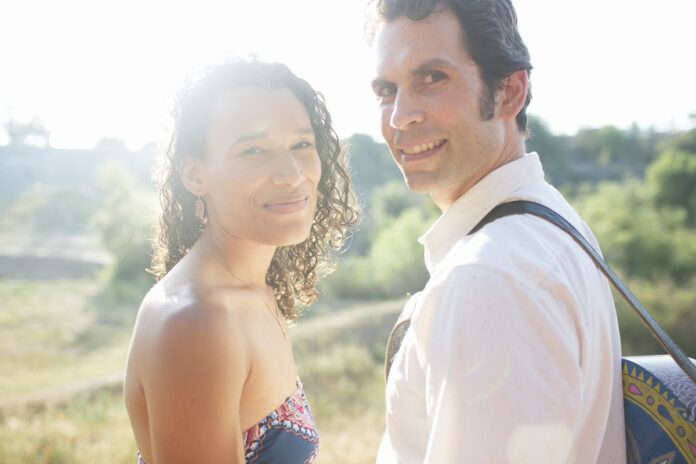
Husband and wife Matthew and Avasa Love first met in 2008 when Avasa was waiting tables at Cafe Gratitude in Berkeley. Married in 2010, the couple shares a commitment to music as much as to each other. Their guitar and harmonium pairing of the duo effortlessly infuses worldly influences and catchy rhythms, citing everyone from Beethoven to Bob Marley as an inspiration. This week marks the release of Avasa and Matthew Love’s second album, The Road, and the two are bringing a full band of fellow musicians with them when they throw a special record-release concert celebration on Tuesday, Feb. 24, at the Dance Palace, 503 B St., Pt Reyes Station. 8pm. $20. 415.663.1075. 

Letters to the Editor: February 18, 2015

Cosby Question

Thank you for writing this article (“Cosby Conundrum,” Feb. 11). A friend of mine
has gathered over 3,700 signatures for a petition to stop Cosby’s appearance. The list is growing, and this is one show that should not go on.

Via Facebook

Thank you for bringing to my attention that Cosby is performing. I might have missed his show otherwise.

Via Facebook

Dark Love

An amendment to the assertion that love is but a lonely void; love is dark energy. A definition goes like so: “A theoretical force that permeates all of space and assists in the expansion of the universe.” Down to the smallest particle pushing, pulling, coaxing, stroking, caressing, shoving, contorting, confounding often for reasons in ways that leave us feeling . . . utterly clueless.

Lytton Springs

Pipe Down, People

As a fellow lifelong musician, I hear ya, Jeff Falconer (“Say What?” Feb. 4). I am amazed that I have witnessed, more and more over the last couple of years, people having full-blown conversations while a band is playing away, sometimes right in front, talking loudly, trying to compete with the band. And not just here in Sonoma County. I’m talking the Fillmore. People, don’t you get why they started amplifying the blues in Chicago: because everyone was carrying on so much, you couldn’t hear the music.

I have been to shows over the last few years, string bands and singer-songwriters, where people are talking away, like it’s just background music. The idea that performers are playing music they have rehearsed and sweated hour over completely escapes them. The inability of people to leave their phone alone for a period of more than 10 minutes is obviously a new evolutionary trend. As I’m fond of saying lately, you’re either awake or asleep.

However, credit should be given where credit is due. I produce a series of singer-songwriter-in-the-round shows in west Sonoma County, and in the three venues I’ve used, audiences have been amazingly quiet and respectful. I do threaten them when we start the show, but truth be told, I only weigh
147 pounds.

Maybe a new protocol needs to be established. When the musicians feel the level of other sound gets to be too much, they just stop playing. If no one notices after whatever time you set, pack it up and go home. I’d say “And collect your pay,” but I don’t mean to create paralyzing fits of laughter.

Sebastopol

Write to us at le*****@******an.com.

Drive On

1

When longtime fans are introduced to radio host Steve Jaxon for the first time, they often notice something interesting. Having listened to Jaxon on one of the many radio programs he’s hosted over the last four decades—the last seven of those years spent as the award-winning host of The Drive on KSRO 103.5-FM and 1350-AM they tend to make the same observation when finally meeting Jaxon face-to-face: Wow! You don’t look like your voice sounds.

“Yeah, I get that one all the time,” laughs Jaxon, his recognizably deep-toned rumble rolling out like boulders bouncing off a snare drum. “People love to tell me, ‘You don’t look anything like your voice!’ Some people think I’m younger than I am. Maybe they picture me thinner.

“A lot of people think I’m African American,” he adds, grinning. “Paul Mercurio, the writer for The Daily Show, has been doing The Drive as a frequent call-in guest for years, calling in from New York—and for a long time he just assumed that I was a black guy. I love it! Let people have whatever pictures of me they want. That’s part of the fun of radio.

“It happens in our ears, with the sound of what you’re hearing, but it also happens in our minds and imaginations. You picture these people behind the mic, talking to each other, and what you don’t know, your mind fills in for you. That’s got to be good for you. Listening to the radio probably delays Alzheimer’s.

“And I wouldn’t be a bit surprised,” Jaxon shrugs, “if that turned out to be true.”

It’s classic Jaxon. In less time than it takes most people to form a single thought, he’s covered the sound of his own voice, analyzed the necessity of imagination while listening to the radio, and even suggested a cure for Alzheimer’s. Over coffee this morning, he’ll more than once demonstrate this multidirectional skill, launching an array of verbal excursions into conversational territories hitherto uncharted, the kind his listening audience and on-air guests are generally, and always happily, a little bit unprepared for.

“I cracked up Jimmy Carter live on the air once,” Jaxon proudly admits. “I’m able to do that, but I’m not sure how. I don’t pre-think anything, I just start talking. And what comes out of my mouth, comes out. Even when I’m talking to big-shot people, discussing very serious subjects, I’ll still throw something in that makes them laugh.

“It’s fun,” he continues. “That’s what my show is supposed to be. For the guest, for the listeners, and for me, it’s just a lot of fun—even where we’re talking about subjects that are not all that fun, like Ebola. Somehow, when the mood is right, I can actually make Ebola seem almost amusing.”

Taking a global epidemic and turning it into something we can all laugh at—that’s just part of what’s makes Jaxon one of the most popular and beloved radio voices in Sonoma County, and what has turned The Drive with Steve Jaxon into one of the most listened-to prime-time radio programs in the Bay Area.

The show—usually featuring a dozen or so guests discussing as many separate topics—is a hard-to-describe but highly entertaining mishmash, a blend of local news, celebrity and newsmaker interviews, live musical performances, food and drink segments, standup comics doing their thing from around the country, wacky improvisational comedy, and the occasional diversion into such bizarro topics as Batboy, alien abduction and the secret addictions of Santa Claus.

A slightly wacky thread of eccentricity and WTF giddiness runs through the show. Longtime listeners have come to expect certain things: regular reports from the country’s strangest website, The Weekly World News; Jaxon teasing producer Mike DeWald on the air about his sex life and his passion for playing ice hockey; a tendency to nominate regulars to the Drive Hall of Fame, something most baffled recipients say they’d never dreamt of.

And then there’s the food. Not only do local restaurateurs come on frequently with samples of their best dishes, inspiring Jaxon to offer improvisational poetry when describing each flavorful offering. Once a week, the award-winning “Wine Wednesday” segment brings in winemakers from all over the region to swirl and sip and engage in in-depth conversation on what separates good wines from great wines. On Thursdays, he does the same thing with beer, unleashing a segment called “Brew Haha.”

And holding it all together is Jaxon. Somehow, he always manages to sound amiable and engaged while also seeming a tad surly, a bit cantankerous and always stunningly candid.

‘The Steve Jaxon you hear on the air is the real Steve Jaxon,” says DeWald, who produces the show and juggles the numerous incoming calls and studio guests with the grace and ease of a circus acrobat. Even while simultaneously answering a call, sending an email and slipping messages to Jaxon, DeWald pays attention to the crazy things coming from his star’s seat by the studio window. As big a Steve Jaxon fan as anyone listening at home or in their car, DeWald—from 3pm to 6pm every weekday—can almost always be seen smiling at whatever just happened, if not doubled over in fits of laughter.

“There’s no filter, no act with Steve,” he says. “Whatever’s happening in his life at the time, positive or negative, is reflected on the air. I think there is a rawness and realness to that, and it resonates with people. It builds trust with the audience and makes them feel like they are part of the family.”

[page]

Growing up in Lansing, Mich., where his earliest dreams were to become a jazz or rock ‘n’ roll drummer, Jaxon (his pre-radio name was Steve Vicario) was encouraged by his parents to consider a possible fallback job.

It was an option he had never seriously considered.

“When I was 13, I told my mom and dad I wanted to play music for the rest of my life, and skip things like getting a job,” he recalls. “I loved music. Through my dad, I’d even developed a love for Frank Sinatra, and I played the single of ‘Witchcraft’ so many times my dad kept having to replace the record. I learned to play the drums, and I wanted to play music. That was all I wanted to do. My dad eventually convinced me that I didn’t want to end up some 35-year-old drummer, with a wife and two kids, playing in some second-rate band in a broken-down bar somewhere. That possibility really hit home.

“I realized that my dreams of playing with Eric Clapton were maybe a little beyond the realm of possibility, but I didn’t know what else to do. Playing music was all I cared about. My dad said, ‘Listen. You’ve got a great voice and a great personality! You should check out radio.'”

“I’d never thought about that,” Jaxon says. “We did listen to the radio all the time. And I admired the DJs I heard on the air. They were like heroes to me. I mentioned to one of my teachers that my dad suggested I get into radio, and she said, ‘Oh yeah. You’ve got a spectacular voice.'”

Just like that, at the age of 13, Jaxon knew what he would do with his life. He’d play music whenever possible, for fun, and as for making a living, he would find a way to use the sound of his voice.

“You use what you have, right? Well, at 13, my voice was the best thing I had going for me.”

As it so happened, Jaxon’s dad played golf with a man who had connections to a local radio station in Lansing. One thing led to another, and in 1972, while still a teenager, Jaxon was hired as a radio reporter for WITF, filing pieces about the Lansing City Hall, the board of supervisors and the like. He still has vivid memories of walking up to local politicians, his hair down to his waist, asking them for a quote. Hanging out with cigar-smoking, hard-drinking newsmen, he had to fight hard to be accepted as a legitimate journalist, and if it hadn’t been for the news director’s staunch support, he might have given in to pressure to clean up and get a haircut.

“The news director was hardcore about no one telling anyone else how to live,” Jaxon says. “He threatened to quit if the owner made me cut my hair. He was a great guy. I loved him. I learned a lot from that experience. But through it all, I was still basically a music guy.”

After a series of jobs at stations around the country, Jaxon eventually became a disc jockey on a major country rock station in Austin, Texas, in 1975.

“I stayed in Austin for five years,” he says, “had the time of my life. But for years I’d been thinking I wanted to check out Northern California, and in 1980 I finally made the move.”

All this time, he continued to play in a series of bands—including one stint as a drummer for a blues band called the Bombay Pistons—steadily building his chops while earning a solid reputation as a guy who knew music—and people—like nobody else.

In the North Bay, after a brief stint at Prairie Sun Studios, all while touring hard with his band, Jaxon found himself hungering for the relative stability and calm of radio. He landed some overnight DJ gigs at KBRE, and in 1986, moved to KREO, launching a morning music and comedy show with Randy Wells.

The rest of the story is basically a list of major North Bay and San Francisco radio stations. Along the way, he created the show Swingin’ with Sinatra, for local jazz station KJZY, expressing his long hidden affection for Sinatra. That show, which he hosts, is now syndicated and heard all over the country, and still runs weekly on KJZY.

In the late ’80s he teamed up with Blair Hardman to create the Studio KAFE in conjunction with the new cable station KAFE. The project, which combined the best of FM radio with a live comedy and music venue, was such a crazy idea that Jaxon couldn’t resist. He accepted a job running the station and the cafe.

“It was a blast!” he says. “I was running a nightclub and a cable radio station. We had shows every night. It was crazy, and I loved every minute of it.”

About eight years ago KSRO was looking for a replacement for David Glass, who’d been hosting the afternoon drive-time show, but had decided to leave the job to run for mayor of Petaluma. Glass’ producer was DeWald, working his first gig as producer of a major radio show. Jaxon, who by then was doing news reports on KSRO, pitched a new idea for a radio show to take over the afternoon slot. Described as a variety show for the airwaves, the station took a shot, and The Drive with Steve Jaxon, with DeWald as producer, was born on Aug. 8, 2008.

[page]

‘Variety is the key to [The Drive],” says Jaxon. “Variety, as in lots of different things all crammed into one three-hour program. If someone would have come up with this idea and put it on paper, or tried to explain it to someone on radio 20 years ago, no one would have gotten it. Even today, they’d say you can’t pull that off, not every day. It’s too much work. Even DeWald can’t figure out how we pull it off, and I don’t have a clue. Every day, those three hours are so intense. It’s a huge workout, because we’re talking to about 12 guests in three hours, each on a different topic. It’s incredibly taxing.”

One of the key elements that sets The Drive apart from other radio talk shows is that Jaxon makes sure not to let the balance tip toward any one focus. Few other shows would put an interview with the local fire department chief in between segments about a popular new bartender and an interview with Jimmy Carter. You never know what you’re going to get when you tune into The Drive.

Past guests have included Colin Powell, Rob and Carl Reiner, Jerry Brown, Uma Thurman, Ryan Reynolds, Gavin Newsom, Phil Donahue, Lewis Black, John Oliver, Daniel Ellsberg, Larry the Cable Guy and many others, including fairly regular appearances by local heroes from Food Channel guru Guy Fieri to Pearls Before Swine cartoonist Stephan Pastis.

By any measure, that level of star power is impressive.

“Mike somehow gets them on the show, and I keep them coming back,” says Jaxon. “Our whole trip is that the show is live from the heart of wine country, with a huge signal that can be heard across the North Bay and into San Francisco, Oakland, Berkeley. We’re huge in the East Bay. When we get someone big on the air, they have a good time, and they always say, ‘Call anytime.’ And we do.”

With The Drive ending up on so many famous folks’ radars, it was only a matter of time before Jaxon’s work became noticed outside the Bay Area. For the last few years, “Wine Wednesday” has been annually nominated for a Taste Award. Known in the broadcast industry as “the Tasties,” the award honors outstanding achievement in the world of lifestyle journalism, radio, web and television shows focusing on food, fashion and home.

Last year, “Wine Wednesday” was once again nominated for Best Critic or Review Series. This time, it won. The awards were held in Hollywood, and the Drive staff and supporters all attended.

“It was great,” says Jaxon. “They played this cool video about The Drive and ‘Wine Wednesday.’ I got up, and I spoke a little too long, probably, but everyone ahead of us was so boring I decided to just liven things up a little. I couldn’t help it. I got the crowd going. It was a blast!”

The day after the event, Jaxon says, he “stalked Al Pacino. That was one of my goals, since I was there in Hollywood and I know his address. My son Nick has got shots of me outside Al Pacino’s gate. ‘Hi Al. It’s Steve. I’m here for lunch!’

“He didn’t come out or anything, which would have been cool, but at least I didn’t get arrested.”

Al Pacino, as it so happens, is one of the people on Jaxon’s current “bucket list” of guests he’d most like to have on the show. The list also includes Hillary and Bill Clinton.

“I think we’ll get Hillary this year, or maybe next. I think Bill is totally getable. And Pacino—that would be so cool. And it could happen. Hey, I know where he lives.”

Though Jaxon is currently enjoying the success his years of hard work and perseverance have brought him, he’s the first to point out the various setbacks and disappointments he’s also encountered, including a couple of marriages that ended, a number of health-related problems and the occasional radio gig that ended unhappily. True to form, Jaxon even spins the setbacks in a positive way.

“My ex-wife Cathy is still one of my best friends,” he says. “And even when marriages don’t work out, there’s always something good that comes from it, if you let yourself go there. My son Nick, for example. He’s the best thing that ever happened to me.”

That son, Nick Vicario, is a member of the alternative rock band the Wild Ones, based in Portland, Ore. The band has toured the world and is rapidly rising in popularity. Jaxon proudly points out that his son is now living the successful musician’s life he once dreamed for himself.

As for those bumps on the road, one major one occurred a few yeas back, when the previous owners of KSRO briefly canceled The Drive, replacing it with a non-local syndicated talk show. The public outcry was enormous.

Jaxon didn’t wait long before coming up with a way back on the air. He pitched the station the idea that instead of working for them, he’d buy the airspace and pay for it through sponsors and advertisers landed by his hardworking team, which includes ex-wife Cathy, the executive director of Vicario Productions. Within a few weeks, The Drive with Steve Jaxon was back on the air.

It was a major moment for Jaxon, and for the show itself.

“I noticed a huge change in perception during the period that Steve was off the air and then got the show back,” says DeWald. “After that, we started getting this almost underdog mentality from listeners, a collective feeling of ‘us against the world’ that has kind of stuck ever since. I can’t really explain it, but Steve losing the show and getting it back just seemed to strike this universal chord that everyone could root for.”

In early 2013, KSRO and its affiliate stations were acquired by Sonoma Media Group, and a new contract was drawn up, with Jaxon once again assured of a space on the air for a long time to come. Though the station, under general manager Michael O’Shea, was largely turned over to an all-conservative format, the unapologetically liberal Jaxon remains as the station’s afternoon anchor.

“Michael O’Shea is a genius,” says Jaxon. “He totally gets what it is we’re doing with The Drive. He understands the uniqueness of the show.”

At 62, the veteran radioman is as excited as ever.

“I told Mike the other day,” laughs Jaxon, “I should really quit smoking, because I want to do this another 20 years. I call this my retirement gig. I’ve been in radio for over 40 years, and this is the dream gig of my entire career. I’m having more fun than I’ve ever had in my life, and let me tell you, I’ve had a lot of fun.”

Jaxon isn’t kidding when he says he wants to keep doing The Drive until the day he dies.

“I really do hope I croak on the air,” he grins. “In about 20 years, when I’m 81 or 82, I’ll be doing the show one afternoon, and I’ll say, ‘This is Steve Jaxon, and we’ll be right ba— Auuugh!‘ And that’ll be it.

“I really hope that’s how I go,” says Jaxon. “I’d love that.”

Home Bound

To hear Beneit Gandre tell it, sleeping under a table in an open-all-night U.S. post office isn’t much to write home about.

Gandre would just as soon put those homeless days behind him. The young man with aspirations to be a TV writer is doing just that, with the help of Ambassadors of Hope and Opportunity (AHO), a nonprofit that targets a vulnerable and invisible population: homegrown homeless young adults in Marin County.

For young people who grew up in Marin only to find themselves on its streets, the cruel ironies are everywhere. Youth in this age bracket who come from difficult home situations often find themselves at the mercy of an outsized cost of living once they’ve left the checkered nest. These are not ukulele-playing freegan gypsies living off the land and the nearest food bank.

Gandre is 21 and one of scores of Marin County youth who’ve been helped by Zara Babitzke and the AHO, which she founded in 2006. She says Marin County needs to do more for these kids—and the county says it’s working on it.

This is a unique sub-section of the homeless population: young people with self-image and stigma on the mind—along with stress about where to find that next meal or place to stay.

The county did a homeless count in 2013 and concluded that this demographic makes up about 6 percent of the population, says Jason Satterfield, the county homeless policy analyst. Now the county is counting heads again for an upcoming update—and Satterfield says “the number is higher than six percent.”

“There’s recognition that there’s special needs for those people, and we are trying to address it. “

Gandre grew up in Fairfax and went to Sir Francis Drake High School. He was living with an aunt who told him, “As soon as you graduate high school, you are out.”

Gandre didn’t take the threat seriously. On graduation night, he stayed out with friends, got back to his aunt’s house around 5am.

“All my stuff was outside,” he says.

It wasn’t too bad that first summer out of high school. Kids are scrappy and adaptable. They’ve got the DIY spirit in spades—even if, as he says, being a homeless youth is a “huge pride thing.” Gandre put his stuff in storage, stayed with friends and made a specialty of going to parties, where he’d get so intoxicated that he had to crash there for the night.

But summer ended, reality hit home and Gandre started staying in post offices around the county. “You can hide under the postal table,” he says, “but I learned that people check their mail at all hours, and I got thrown out of them.”

He lied to friends and said he had a place to stay. He couldn’t pay the storage bill, so his stuff got sold. He had a grant to go to the College of Marin, but says, “I didn’t do well, because I was homeless.”

Gandre eventually got caught lifting items from a grocery store, and through a public defender was given a referral to Babitzke.

Now he works at a Subway and stays with his girlfriend. He does standup comedy and hits an occasional poetry night. But his material doesn’t address the time he spent without a roof over his head, even though “so many people are completely oblivious to the homeless youth living in Marin.”

That’s the way homeless youth want it, too. Being invisible is better than being scorned and judged. “Self-image means a lot in Marin,” says Emily Schwenk, 21.

Schwenk grew up in a Mill Valley household that didn’t provide much in the way of teaching adult life skills. She contrasts her story with those of the troubled children of Marin’s well-heeled. “Their kids can mess up a thousand time and still be ahead of a lot of the kids that I’ve met,” she says.

Schwenk says her father has mental-health issues, and that she first found herself on the street as a high school sophomore. She stayed with a family friend for a while after graduating high school, but when it was time to move on, she says, “I realized I was homeless and headed to darker waters. It was very scary.”

Now Schwenk is taking classes at the College of Marin and stays with her boyfriend, Jesse. She checks in on her father to make sure he’s OK, and dreams of being a teacher even as she laments at the cost of living in Marin: “Everything is as expensive as it can be here.”

Even a nutritious meal becomes a source of cruel irony in a county of such abundance. Schwenk just got a monthly $200 food stamp card. “Having fruits and vegetables on a regular basis, it’s life-changing,” she says.

Schwenk first met with Babitzke at the Cafe Aroma in San Rafael.

“They don’t look like ‘urban homeless,'” says Babitzke, “so people don’t see them. They’re not causing trouble, so in the mind of residents here, everything is fine.”

Babitzke says sensitive youth like Schwenk face additional hurdles on the street. “People with these qualities can have a really challenging time in a culture or a country that has values that are more monetary or ‘thing-oriented,'” she says.

There’s also a stigma in self-identifying as homeless in a community you call home.

“It’s an awkward step,” says Nick Petty, 23, another AHO participant. “It’s like giving up drugs—it’s very awkward to make yourself vulnerable like that.”

Petty grew up in Novato and comes from a “a blue-collar family that struggled.” His struggle was with opiate addiction and he was thrown out of his house over it.

“My family didn’t want to deal with me,” he says. “It was hopeless. I had nowhere to go.”

Petty is a musician with a history of depression and says that along the way he “started self-medicating.”

He wound up in jail, more than once, to clean up from drugs. “Not exactly good mental-health treatment in there,” he says.

He would stay in halfway houses and the occasional motel room, but invariably wound up back in jail. Now he tries to help others in similar straits. He recently met a homeless youth who shared an interest in music during an outreach event called Youth Connect put on by Babitzke. “I was stoked to help some kids,” Petty says. “It felt good to reach out to someone.”

Petty also slept outside and worked hard to “do everything you can do to not look homeless. It’s a very uncomfortable place.”

Julian Stein echoes the sentiment. He has never begged for spare change and always tried to “dress better than the not-homeless.”

Stein, too, is in his early 20s. He’s been working since he was 17, even when home was his car. He got kicked out of the house by his father when he turned 18. His mother died when he was 13.

“I didn’t get along with dad, but now the relationship is better,” says Stein.

Stein recently shared a Marin County shed with two others. The shed was 98 square feet and the monthly rent was $700. “Luckily, we got out of there,” says Stein.

Now he’s staying with his girlfriend and hopes to get back to the College of Marin. He took courses there until he couldn’t afford them.

Stein has made pizzas and worked other jobs as he bounced between couches and his car. Now he finds himself at work helping his 70-year-old father. “Dad just got evicted,” he says. “He had no place to stay.”

Julian is giving him rides around Marin County as his father tries to find a job and a new place to call home.

What the Foxes Say

0

In the decade since they first formed, San Francisco rockers the Stone Foxes have continually evolved as a group, and the last year has been no exception.

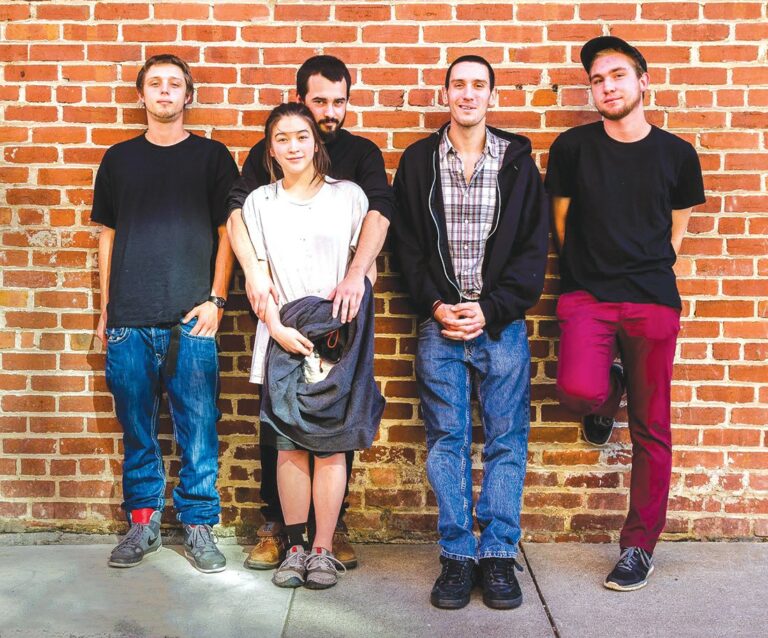
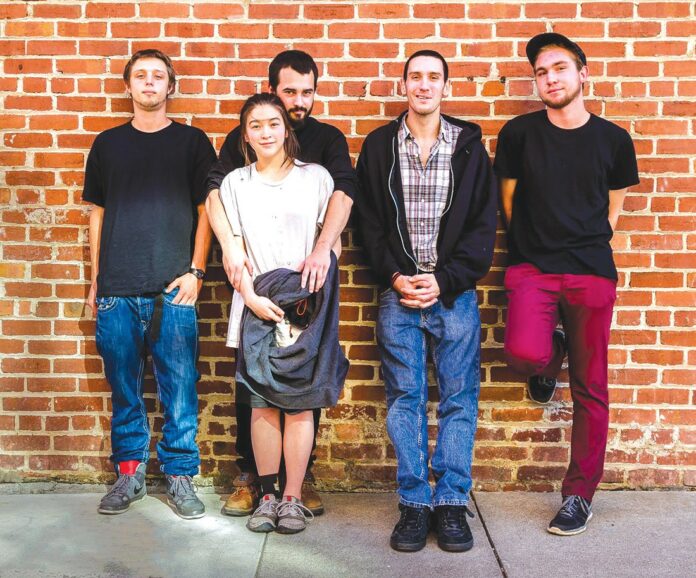
Originally comprising brothers Shannon and Spence Koehler and Elliott Peltzman, the band has recently doubled in size and sound, and their blend of soul and blues rock is sharpening the group’s edge and amplifying their energy.

“Over the last year, we had some new guys join our crew,” says singer and songwriter Shannon Koehler in an interview, referring to bassist Vince Dewald, drummer Brian Bakalian and guitarist Ben Andrews. “We added them one by one, and over that time we would jump in the studio and record songs. It wasn’t like we went into a barn and lumped all these songs together. Each song had its moment in the studio, and a lot of songs get overlooked on a record, so we wanted to give each track special attention.”

For their upcoming fourth album, Twelve Spells, the band is taking a new approach, releasing one track every month for a year, each with its own album art, in an ongoing “First Foxes Friday” singles series.

“Usually we write songs that are more social-justice-oriented. We’re a fun rock band, but we want to make sure whatever we sing about, we care about,” says Koehler about the new tracks. “But lately, most of the stuff I’ve been writing is more personal.”

The band’s latest song, “Cold Like a Killer,” relates to Koehler’s heart condition. Koehler has had numerous surgeries and pacemakers in his time, battling bad valves and an unstable heartbeat. “I take more pills than my grandma does,” jokes Koehler. “But I’m in a good place right now. I’m healthy and can run around.”

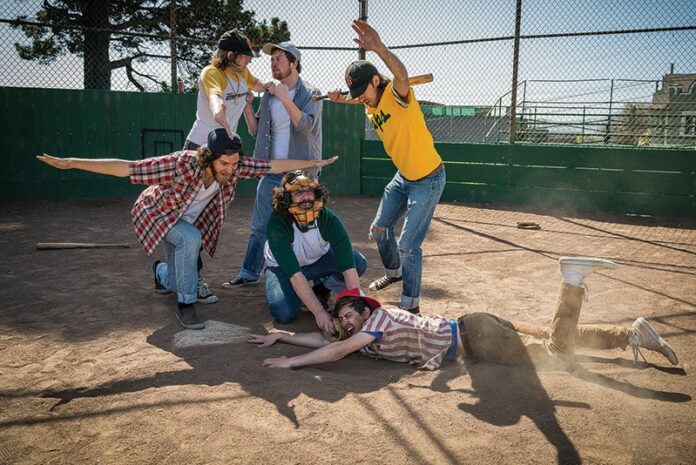
And that’s a good thing, because the Stone Foxes put on a physically exhausting live show, with members running around onstage while they switch roles and rock out with every ounce of energy. The band play the Sweetwater Music Hall in Mill Valley on
Feb. 21.

At the show, the Stone Foxes will also be collecting nonperishable foods as part of the bands Goodnight Moon Project, an outreach program that attempts to humanize and put a face on the homeless population. All food collected at the show goes to a local homeless shelter or food pantry, and the band will give out a 7-inch record in return for each donation.

Debriefer: February 18, 2015

It’s misty and cool in Santa Rosa as Debriefer tries to puzzle out the dimensions of this ongoing drought. When will it end? Will it ever end? Debriefer needs to take a shower.

“Bottom line: We’re not out of the woods yet,” says Brad Sherwood, program specialist for community and government affairs at the Sonoma County Water Agency. There are good signs, but too many springtime unknowns to declare this drought dead.

“Rainfall looks good—rainfall averages are at 115 percent,” says Sherwood, “and the reservoir levels have increased because of atmospheric river events. But the kicker to all this is the way the reservoirs are managed.”

The North Bay relies mainly on two reservoirs to fill its cups and quench its crops: Lake Mendocino and Lake Sonoma (pictured). Last week, the water agency reported that the former reservoir was at 98 percent of water-supply storage capacity, following recent rains. The larger Lake Sonoma is at 88 percent of water-supply capacity.

The reservoirs, as Debriefer has explained before, operate on a layered system, like a cake. The water-supply pool is the lower part of the reservoir, and the county runs that show; the flood-control pool is above that—and if water levels get too high, the Army Corps of Engineers drains the surplus.

Last time they did that, after a big storm filled the reservoir in late 2012, it was widely considered to be a stupid thing to do, given that the end of the drought was nowhere in sight at that point.

This year the corps has agreed to let the county stash extra water for a non-rainy day—not as much as they’d like, but it’s a start.

“Normally, they’d be releasing any water that was in the flood control pool,” says Sherwood, but the county will be able to “encroach” into the flood-control pool by 5,000-acre-feet of water.

But there’s a “scary proposition” out there based on what’s already happened this year, says Sherwood: “January was very dry, and without that one system in February, we’d be in trouble. We’re not ready to call off the drought just yet because we’re waiting to see what happens in March and April in terms of rainstorms.”

What’s Lake Mendocino going to look like, Sherwood wonders, if it doesn’t rain again this winter? Could be down to 80 or even 70 percent of capacity.

There are other issues complicating the picture, which Sherwood says should clear up by early April.

As of next week, the county is obliged to open its spigots to fulfill state-managed “in-stream flow requirements,” that assist out-migrating juvenile fish
as they make their way down the Russian River and into the
ocean. “Next week, the in-stream flow requirements will go back to what they normally are,” he says.

The good news is that there’s “plenty of water [in the Russian River] for the out-migrating fish. You’d want to make sure that stays the same, so we don’t have to release more water out of Lake Mendocino.”

One more unknown: What if there’s an early spring frost? The warm weather this winter has prompted some grape vines into early budding. “A frost in the early springtime can devastate grape crops,” he says, adding that frost-protection measures include irrigating crops to protect them from frost.—Tom Gogola

Cosby Canceled at Wells Fargo Center

The Wells Fargo Center had promised a satisfactory "resolution" to the creepy Cosby conundrum in last week's paper.

Feb. 20: Folk Sculpture in Santa Rosa

The African- and Native-American heritage of L.A.-based artist Alison Saar takes shape in life-sized sculptures that mix elements of folklore and modern culture. Saar’s newest exhibit is “Thistle and Twitch,” presented at the Sonoma County Museum. Through the next two months, a series of film screenings and lectures will highlight cultural paths taken, or endured, by American Indians and...

Feb. 21-25: Cheese Heads in Sonoma

Hosted by Sheana Davis of the Epicurean Connection, the Sonoma Valley Cheese Conference returns as the premier destination for cheese-industry leaders from across the nation. There are dinners and day-long showcases that include the creamiest and stinkiest of this year’s best cheeses. Learn which cheeses can make you the most cheddar and learn how to build your own...

Feb. 22: Return to Form in Sebastopol

Personal story time: About eight years ago, I briefly worked the box office at a local venue, where I met a fellow part-timer named Joni Davis. Music quickly came up, and Davis told me she was a pianist and songwriter. Oh cool, I thought, that’s nice. Then I saw Davis perform, and was absolutely floored. Her haunting melodies attached...

Feb. 24: New Road in Pt Reyes Station

Husband and wife Matthew and Avasa Love first met in 2008 when Avasa was waiting tables at Cafe Gratitude in Berkeley. Married in 2010, the couple shares a commitment to music as much as to each other. Their guitar and harmonium pairing of the duo effortlessly infuses worldly influences and catchy rhythms, citing everyone from Beethoven to Bob Marley...

Letters to the Editor: February 18, 2015

Cosby Question Thank you for writing this article ("Cosby Conundrum," Feb. 11). A friend of mine has gathered over 3,700 signatures for a petition to stop Cosby's appearance. The list is growing, and this is one show that should not go on. —Dodie Cools Edelstein Via Facebook Thank you for bringing to my attention that Cosby is performing. I might have missed his...

Drive On

When longtime fans are introduced to radio host Steve Jaxon for the first time, they often notice something interesting. Having listened to Jaxon on one of the many radio programs he's hosted over the last four decades—the last seven of those years spent as the award-winning host of The Drive on KSRO 103.5-FM and 1350-AM they tend to make...

Home Bound

To hear Beneit Gandre tell it, sleeping under a table in an open-all-night U.S. post office isn't much to write home about. Gandre would just as soon put those homeless days behind him. The young man with aspirations to be a TV writer is doing just that, with the help of Ambassadors of Hope and Opportunity (AHO), a nonprofit that...

What the Foxes Say

In the decade since they first formed, San Francisco rockers the Stone Foxes have continually evolved as a group, and the last year has been no exception. Originally comprising brothers Shannon and Spence Koehler and Elliott Peltzman, the band has recently doubled in size and sound, and their blend of soul and blues rock is sharpening the group's edge and...

Debriefer: February 18, 2015

It's misty and cool in Santa Rosa as Debriefer tries to puzzle out the dimensions of this ongoing drought. When will it end? Will it ever end? Debriefer needs to take a shower. "Bottom line: We're not out of the woods yet," says Brad Sherwood, program specialist for community and government affairs at the Sonoma County Water Agency. There are...
11,084FansLike
4,606FollowersFollow
6,928FollowersFollow