Laptops and Lattes: Internet Cafes with Free WiFi in the North Bay

0

Cafes have always been the unofficial workplaces for creatives and freelance writers working on the next big thing. As the laptop replaced the notebook, the internet cafe was born, complete with free WiFi, good music, plenty of sockets and ‘hang out as long as you like’ policy. But finding a cafe in the North Bay that offers all of the above, while keeping coffee standards high can be a challenge, especially outside of large cities. Here are a few dignified options, whether you live on a slope in Marin, or by the river in Sonoma County..

In Sebastopol, Taylor Maid Farms is as close as it gets to a perfect second office. Opened in the beginning of 2014 at the Barlow, the place is a mecca for photographers, writers and scholars who seek a bright, friendly space to accommodate their business and creative exploration. Laptop users can choose between bar stools on the terrace, a spot on the upper level, or roomy tables by the counter, where some visitors have regular seats; many spend the whole day here.

The smell of freshly ground coffee, roasted on location, is ever-present, but the play list changes according to the staff’s mood. You might type to French chansons one day then browse to alternative rock the next. Culinary minimalism—just pastries and cookies—ensures no one will distract you with a tuna sandwich while you’re editing your short film, and the most indulgent item on the beverage menu is lavender or pumpkin latte.

The same no-nonsense attitude can be observed in other Sonoma County hotspots—smaller than Tailor Maid but very effective nevertheless. Roasting their own beans and sharing a modern design of wood and steel, both Acre Coffee in Petaluma and Santa Rosa and Flying Goat Coffee in Healdsburg and Santa Rosa host dozens of laptop users on daily basis. While Acre offers a busy, urban vibe and networking, Flying Goat’s atmosphere is laid-back and small-town friendly, welcoming yoga-practicing girls, rural entrepreneurs and nonprofit enthusiasts.

In addition to the Acre and Flying Goat, Santa Rosa has plenty of laptop-friendly options, but none of them has the sunlight or menu of Criminal Baking Co. & Undercover Noshery. This tiny SOFA district place is charming and arty, with Melody coffee and WiFi fast enough to Skype, if you must. The menu will make sure nobody goes home hungry.

Napa County’s choice of coffee shops could be improved, but glimpses of hope emerge occasionally. Yo El Rey Roasting in Calistoga may have limited seating, but the cute modern design and the excellent fair trade, organic coffee make this coffee shop a pleasant pit stop. The Calistoga Roastery is a cozy alternative, where families outnumber laptop tappers.

Marin County offers plenty of nearly-perfect spots, catering to students, tech workers and young dads on maternity leave. Fans of quirky, unusual settings and anyone who’d like to try a “scuffin,” should head to Dr. Insomniac’s in Novato. Christmas lights and homemade lattes make for a good workday boost, and the muffin-meets-scone pastries are addictive.

In San Rafael, Royal Ground Coffee and Aroma Cafe both have plenty of sunlight and a number of tables to perch your laptop on. Royal Ground has generous food portions and luscious mocha drinks, presented in a relaxed, casual environment. Aroma Cafe serves Grafeo espresso and McLaughlin Coffee Co. brew, plus a tempting Mediterranean menu. The exposed brick and the artwork, featuring local artists, make for a European vibe, perfect for an afternoon escapism session.

Alternatively, a very happening local atmosphere can be found at Mill Valley’s Depot Cafe and Bookstore, located in one of the most charming buildings in the county. An old train depot, the narrow structure’s big windows fill the space with light. As delicious salads and quiches come out of the kitchen, coffee drinks can be overlooked, but great lattes and ice coffees, courtesy of Peerless Coffee in Oakland, are available.

A similar deal—books, sun, music and coffee—makes Corte Madera’s Book Passage a favorite destination. Here, the scene is more Golden Girls than HBO’s Girls, and the menu offers delicious gluten-free options. In chic San Anselmo, where everyone seems to be on a perpetual vacation, the San Anselmo Coffee Roastery is a popular daytime spot. Located on a street corner, it pampers laptop crowds with ample seating, a very Instagrammable mural for a background and house-roasted beans.

Balancing good coffee, quietude and creative energy isn’t easily achieved, but these coffee shops hit the mark.

Fight of Our Lives

0

Capitalism is on a death ride, and it’s taking all of us with it. So argues Naomi Klein in her new book This Changes Everything: Capitalism vs. The Climate.

The book is a galvanizing and potent dose of real talk, filled with harrowing stories of the immense damage done by free-market capitalism gone amok. But there’s still time (not much) to stave off a fossil-fuel driven endgame, argues Klein.

“Nothing is going to change until there are broad-based, muscular mass movements that are fighting for change,” says Klein, on the phone from Portland, Ore. “And not just polite NGOs having meetings with lawmakers. These should be political communities deeply invested in social change, much like the labor movement and the Civil Rights movement.” Klein appears in Santa Rosa on Oct. 17 and in San Rafael on Oct. 18 at the Bioneers Conference.

The Canadian journalist has long disrupted the status quo. Her 1999 book No Logo took on corporate branding and consumerism. In 2007,
her international bestseller
The Shock Doctrine exposed how governments and corporations exploit large-scale disasters (think: post-Katrina New Orleans) for profit.

Yet Klein spent years turning a blind eye to the biggest threat to humanity and the natural world. “I denied climate change for longer than I care to admit,” she writes in her new book. At a 2009 meeting with Angélica Navarro Llanos, the Bolivian ambassador to the World Trade Organization, Klein learned about the young woman’s call for a “Marshall Plan for the Earth.” This forced her to take a hard look at the terrible threats of climate change—and the opportunity to switch to a post-growth economic system, one fueled by renewable energy, carbon taxes, climate debt and polluters-pay legislation.

Klein immersed herself in scientific studies about climate change. The birth of her son Toma in 2013 gave the issue even more urgency, she says in the book.

Over the course of 400 pages, Klein takes the reader on a masterful ride through a maze of carbon trading, fossil fuel companies with little to no governmental regulations, indigenous battles against pipelines and the glimmer of hope found in renewable energy, with a focus on the Northern Cheyenne tribe in Montana and the Idle No More movement in Canada.

Klein favors the word “regenerative” over “resilient.”

“Humans and natural systems are resilient, but they have limits and can be pushed too far,” Klein tells me. “What I like about the idea of regeneration, and a regenerative economic model and systems in general, are that they stress reciprocity.”

We need a new paradigm, she goes on to say, one that values cycles of regeneration and fertility over the extraction-or-bust drive of the fossil-fuel industry. “Just because we can take a lot, doesn’t mean we can take everything,” says Klein.

Klein tells stories, with her trademark incisive, journalistic approach, about the Northern Cheyenne in southeastern Montana who’ve been fighting off mining companies since the 1970s. Instead of giving in, or engaging in an endless, and ultimately, doomed battle, activists turned to solar—specifically the installation of solar heaters and energy panels. Then there’s Richmond, Calif., where solar co-ops have been a successful strategy in the battle against Chevron’s polluting refineries.

Much of This Changes Everything is dedicated to big-picture economic analysis. She explains the convoluted and false promise of carbon trades—a market-based “remedy” that led corporations to pollute more instead of less. She calls out “green” billionaires like Richard Branson, and the “big green” NGOs that coddle polluters rather than holding them to task. Climate-change deniers, geo-engineers who want to “dim the sun” and short-sighted government officials are all hewed by Klein’s sharp-edged analysis.

Fresh off the People’s Climate March on Sept. 21, Klein says she was heartened by what she witnessed in the streets. “It was diverse, led by communities of color, and led by indigenous people. That to me is the game changer.”

While the fossil-fuel industry has much to lose, those people most effected by the environmental and health impacts of extractive projects have the most to gain, and the most to lose if things change, she says.

“This is also the promise of climate justice,” she says. “It could bring resources to those communities that have been on the front lines. Communities that have been on the front lines of our toxic economy should be first in line to benefit from the new economy. We can’t get there unless we’re willing to look at the path with honesty.”

Debriefer: October 15, 2014

0

FOAM TO MARKET

For the first time, California craft beermakers will be able to sell bottled beer at certified farmers markets under AB 2004, signed into law by Gov. Jerry Brown earlier this month. Sponsored by Assemblyman Wes Chesbro, the bill lifts restrictions on the state’s craft-beer industry at farmers markets, and lets beer-makers sell any kind of beer and wine at private, on-premises events they host. The measure enjoyed unanimous bipartisan support in Sacramento and goes into effect Jan. 1.

Critically, AB 2004 brings state beer law in line with what’s allowed in the wine industry.

The craft-beer lobby is thrilled at a bill that offers parity “with the privileges currently enjoyed by the wine industry,” says California Craft Brewers Association executive director Tom McCormick in a statement.

STAR SALE

A small group of Bolinas residents is working hard to keep Star Route Farms operational as an organic farm.

Star Route opened in 1974; it’s where modern organic farming started in the United States. But the 100-acre farm is for sale by owner Warren Weber. Asking price: about $12.5 million.

Enter CORE (Community Organic Regenerative Education), whose goal is to “bring in research and education to a farm that’s already doing fantastic,” says Bolinas resident Melinda Stone. CORE is hoping for buy-in from a regional land trust, and from a university that’s been shopping for an off-campus ag site. A deep-pockets investor would also come in handy.

REMEMBERING ANDY LOPEZ

A long and trying year has passed since Andy Lopez was shot and killed by a Sonoma County Deputy Sheriff. October 22 marks the one-year anniversary of the teen’s death in the Moorland Avenue neighborhood, and Santa Rosa criminal-justice activists have organized two weeks’ worth of Lopez-related actions and events to commemorate his passing as they push for greater police accountability.

Here’s what’s happening: The Justice Coalition for Andy Lopez (JCAL) has a memorial planned for Lopez on Oct. 15 at 4pm at the plot of land known as Andy’s Memorial Park (Moorland and Los Robles). There’s a cleanup at the park Oct. 18 at 10am and a meeting of the Sonoma County Community Oversight of Police Practices on Oct. 20—that group sprang up out of the JCAL and is working up a review of police practices in Santa Rosa.

Organizers plan a daylong protest at the Hall of Justice in Santa Rosa and at the Sonoma Board of Supervisors County Complex on Oct. 21.

Oct. 22 was Andy Lopez’ last day on earth in 2013, and, sadly, it coincides with the National Day Against Police Brutality and Mass Incarceration. There’s a daylong protest against such things in Sacramento starting at 9am—and a potluck back at Andy’s Park in the late afternoon.

Lopez’s death has already spawned legislation at the state level. At the time of his death, he was carrying a toy gun that was mistaken for a real one. Legislation sponsored by Santa Rosa State Sen. Noreen Evans and signed by Gov. Brown this year puts new restrictions on toy guns—the most obvious one being to make sure toy guns can’t be mistaken for real ones.

Surprise Ending

0

The 1998 film You’ve Got Mail portrayed Meg Ryan as the owner of a quaint, neighborhood bookstore being preyed upon by a Barnes & Noble–like behemoth.

The film foreshadowed the likelihood of heartless, corporate megastores knocking off the mom-and-pop shops one by one, leaving only a pile of brick and mortar.

Flash forward to today. The demise of the independent bookstore by online superstores has not come to pass. But in an age that embraces all things tech, how did the quaint, neighborhood bookstore endure?

According to the American Booksellers Association, despite hitting rock-bottom in 2009, the number of independent bookstores has increased 19.3 percent, from 1,651 to 1,971. This trajectory bodes well for the future of the small business.

“Reports of our death are definitely premature,” jokes Elaine Petrocelli, owner of North Bay independent bookstore Book Passage, which has been thriving for more 30 years.

She maintains that their success is a combination of things, including the people who work in the store, the more than 800 events they host and the involvement of the authors themselves. One might happen upon local author Martin Cruz Smith sipping hot tea in a corner, which, according to Petrocelli, happened only recently.

Vicki DeArmon, marketing and events director for Copperfield’s Books, with locations in Marin, Napa and Sonoma counties, asserts that these indie stores can “make bestsellers out of books,” adding that they can, “hand-sell a book, introduce it to the community,” thereby making a sleeper out of an otherwise lesser known title. This kind of symbiotic relationship is uncharacteristic of e-commerce. “You are not going to meet any authors on Amazon,” she says.

Naomi Chamblin grew up in her father’s bookstore and felt compelled to open one of her own.

“Napa was missing a bookstore. The community needed it,” she says. Thus, Napa Book Mine was born. The store has only been open a little over a year, but Chamblin and her husband, Eric Hagyard, have already opened a second location at the Oxbow Farmer’s Market in Napa.

A critical flaw in the mega-bookstore, world-wide domination theorem surfaced in 2011 when Borders closed all of its stores. The reason for their failure was a misread of the market. Peter Wahlstrom, an industry tracker for research firm Morningstar, stated in a 2011 interview for NPR, “[Borders] made a pretty big bet in merchandising, went heavy into CD music sales and DVDs, just as the industry was going towards digital. And at that same time, Barnes and Noble was pulling back.

“Barnes and Noble invested in beefing up its online sales,” Wahlstrom told NPR. “Borders did not. Instead, it expanded its physical plant and refurbished its stores. And Borders outsourced its online sales operation to Amazon. In our view, that was more like handing the keys over to a direct competitor.”

One might conclude that this casualty of commerce would create room for more online corporations to flourish. Meanwhile, Amazon announced it would be opening a store in Manhattan, close to the Macy’s flagship, a testament to the resiliency of the conventional bookshop.

Here in the North Bay, the strength of the community is integral in what makes a successful business. “We were so lucky,” says Chamblin, referring to the recent earthquake that devastated a number of businesses in Napa. “Half of our books fell to the ground, and people just showed up to help out. We were only closed for one day.” Chamblin adds, “Those experiences you cannot get in a big chain.”

And independent bookstores are as equally involved in their communities. Book Passage began its foray into civic participation when it conducted a writing class with local author Anne Lamott 25 years ago.

“The Bay Area’s liveliest bookstore” also conducts classes throughout the year for adults and children, in languages, art appreciation, cooking and writing classes as well as working closely with local schools, including Dominican University. Petrocelli believes that residents should “support the idea of locally owned businesses. It is the beauty of where we live. We are lucky to have this thriving community. We have fun!”

Copperfield’s DeArmon cannot deny the visceral element. “People want the experience of being in a bookstore, they want the experience of discovery. [The bookstore] evokes all the senses. It has the ability to create a whole experience.” She contrasts the personal experience of a bookstore to online dating and e-commerce. “It’s not sustaining. People want the contact.”

Amazon would do well to sleep with one eye open.

Small Town Drama

Embittered high-end attorney Hank Palmer (Robert Downey Jr.) returns to his practically perfect home town of Carlinville, Ind., for his mother’s funeral. Palmer intends to leave, but that’s when his father, Joseph (Robert Duvall), a judge of some 42 years standing, is arrested for a hit-and-run accident. Evidence suggests Joseph had a personal motive for the accident. The accused judge needs the best lawyer he can get . . .

David Dobkin’s film is contrived and shameless, and it derives some of its courtroom methods by a close observation of Judge Judy. (As on afternoon TV, when Joseph hammers his gavel, it echoes like the sound of a pile driver.)

All this is mitigated by one fine cast. The Oscar-bound Downey, leading them, demonstrates lashing impatience and bursts of intelligence, and proves that so much of what we describe as great acting is just a matter of clearing air fouled by the smell of moldy corn. Duvall is at home with the role’s stubbornness and graphic physical decay. Vera Farmiga, as the tattooed girl Hank left behind, is a Howard Hawks type who likes to start things first. She’s too good to be true, but she’s a hotshot. A pleasure that they didn’t go for the manic pixie, as usual.

And in this relentlessly patriarchy-pampering drama, Farmiga gives the movie some physicality, some common sense. She’s just about the only female in the film, if you don’t count Hanks’ studiously cute little girl. Thomas Newman’s soundtrack is unnoticeable until you notice it—which is a good way to furnish such a drama.

If some of the driving scenes are shot like car commercials, with the prop wash from the camera copter ruffling the corn fields, Dobkin’s people found a fairly ravishing hamlet to shoot in, and cinematographer Janusz Kaminski burnishes the locations. “Indiana” is played by river town Shelburne Falls, Mass., which works well for us in California. During a serious drought, you start to crave even the look of water.

‘The Judge’ is now playing in wide release.

19 Going on 30

0

The building at 17 and 19 Broadway Boulevard, erected in 1921 a decade before Fairfax became incorporated, has seen nearly a century of action, first as a hotel and restaurant, then a speakeasy, and now a long-standing and popular nightclub in the city’s small but vibrant downtown.
19 Broadway Club is celebrating its tradition of presenting live music every night of the week for 30 years running.

Owners Garry and Amory Graham have spent the last few years amplifying the frequency and scale of nationally touring acts that have started making the club a regular spot on their tours. In the last few months, popular acts like reggae star J Boog, rock band the Stone Foxes and East Bay hip-hop pioneer Lyrics Born have graced the stage. This week, 19 Broadway throws itself a much deserved birthday party, commemorating three decades of good times.

The night will be a full roster of local favorites and friends. Graham’s 19 Broadway Good Time Band will bring a big-band vibe to the party. Jerry Hannan and Danny Uzilevsky will each play their spirited Americana melodies and phenomenal
guitar rock. Finally, Jon Korty, founder of
the band Vinyl and a recent co-owner of the 19 Broadway, packs in an eclectic set with an array of friends and musicians.

19 Broadway’s 30-year anniversary takes place on Friday, Oct. 17, at 19 Broadway Club, 17 Broadway Blvd., Fairfax. 9pm. $10. 415.459.1091.

Red October

0

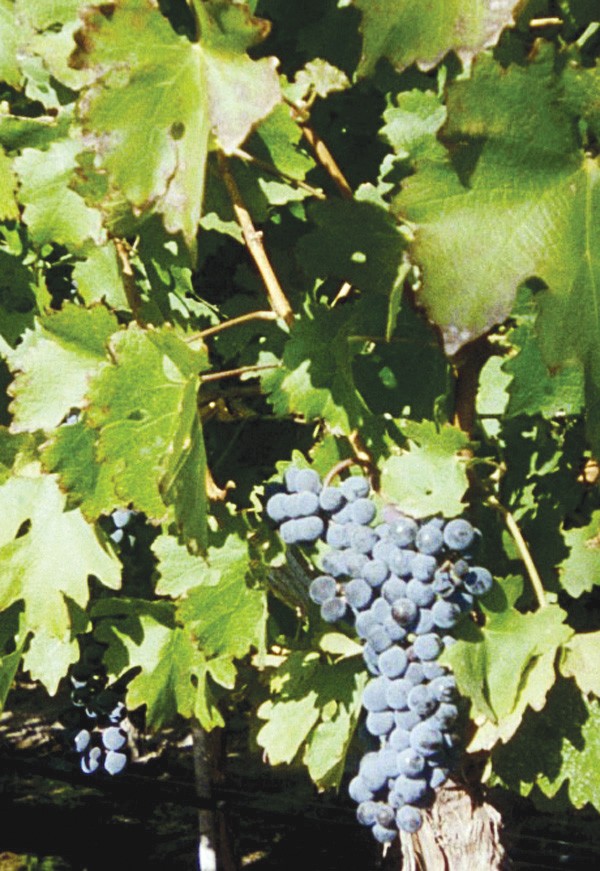
It’s a lovely afternoon for financial panic. The sun warms the air just so, the vineyards are speckled with yellow and red, and don’t all the really great stock market crashes happen in October? If it isn’t exactly October, 1929 or 1987—and who can forget the Panic of 1907?—I can’t take my eyes off the live electronic stock ticker above the bar at UPTick Vineyards. Today, every big-name stock that flashes by is in negative territory. On the plus side, there’s drink.

Just having a passion for wine is really great, but it will not build a brand-new tasting room on Westside Road with ample parking and furnish it with a baby grand piano. When owners Steven and Robin Black founded UPTick in 2007, they rather candidly themed it after the heaps of money that Steven Black made in the New York financial-services industry, having started in the mail room at Merrill Lynch at age 18.

But it’s not all no bull at UPTick. In one corner, a sculpture inspired by the Wall Street “Charging Bull” snorts and stomps under a 9-11 memorial flag. Like a hyperinflated market, the bull’s not solid—it’s convincingly spray-painted styrofoam and can be lifted with one finger, as tasting room host David Day demonstrates. Until they step out from behind the bar, the people here appear in bizarre silhouette against the vineyard—almost as if, say, an invisible hand were pouring the wine. Day, who is also assistant winemaker, explains that the tasting room was designed that way, to showcase the view, not the people. But it is actually Day’s knowledgeable and honest talk about the winery that turn this visit from a curiosity-seeking whim into a favorable impression of their efforts.

Wines are 100 percent varietal, single vineyard, and are custom-crushed in Sebastopol. The 2012 Hilda’s Rosé ($22) is crisp and steely, with strawberry highlights. The 2012 Dry Creek Valley Sauvignon Blanc ($30) has that classic Sauvignon cat-pee nose, but a nicely rounded, oak-aged body. Also well mannered, the 2011 Estate Russian River Valley Chardonnay ($30) shows barrel aging without malolactic fermentation—juicy, golden raisin and baked apple flavors linger without undue sweetness or tartness.

A diverse portfolio of reds fills out the roster: juicy Pinot Noir, toasty Syrah, old vine Zin and requisite Cabernet. Since all bubbles must pop, a light, yeasty Sparkling Brut ($25) is poured at the end to refresh the palate. Give this place a chance next time you’re joyriding in the area; although past performance is no guarantee of future results, the opportunity cost is low.

UPTick Vineyards, 779 Westside Road, Healdsburg. Open daily, 11am–5pm. Tasting fee, $10. American songbook piano, Saturdays. 707.395.0864.

Letters to the Editor: October 15, 2014

It’s Complicated

The article (“Gary’s Web,” Oct. 8) suggests Mercury News executive editor Jerry Ceppos threw Gary Webb under the bus, but the truth is more complex than that.

At the time, in the Albion Monitor I paraphrased Ceppos’ editorial thus: “Look, this was an extremely important story, but it was also complex and involved staggering amounts of information. It was probably the greatest challenge I’ve seen in my three decades as a reporter. For the record, I’d like to say that I’m not satisfied with a few points. We did a great job, but I’d change a few things if I had my druthers.” In particular, Ceppos was right in saying that the series oversimplified the causes of the crack explosion in urban America.

But the New York Times pounced on his editorial and “produced an article and editorial as deceitful as Ceppos’ work was noble” (quoting again my 1997 piece that appeared in the Albion Monitor). “The Mercury News Comes Clean,” read the NYT editorial headline, falsely claiming that Ceppos and the Mercury News were retracting all or part of the story.

To the contrary, Ceppos wrote in his editorial: “Indeed, one of the most bedeviling questions for us over the past few months has been: Does the presence of conflicting information invalidate our entire effort? I strongly believe the answer is no, and that this story was right on many important points.”

The Times, the Washington Post, and the Los Angeles Times worked hard to discredit the series and succeeded, to their shame. The Post also refused to print a letter to the editor from Ceppos in response to their critique.

If Webb’s series was flawed, it’s because he didn’t delve deep enough into those bloodied waters. Yet the Times misused the Ceppos editorial as an excuse to exonerate the CIA—something far more deceptive than Ceppos’ qualified admission that they couldn’t conclusively link top CIA officials to the operation.

Via online

Eat at Molina

Best place in Marin (“Not Run of the Mill,” Oct. 8). Love the music, love the food and love Todd.

Via online

Walmart Not Wanted

What happens in Rohnert Park does not stay in Rohnert Park. That is why local environmental, labor, health and social justice organizations have consistently opposed the expansion of the Walmart store in that city.

Since Rohnert Park is a part of a regional economy and the proposed expansion is designed to attract shoppers from nearby communities, city officials should assess the long-term impacts on the region, not just their city.

Instead of supporting pedestrian and bike-friendly neighborhood shopping centers, anchored by a grocery store, as envisioned in the city’s general plan, the construction of a super-center far from any residential complex tramples that vision. It means long shopping trips across town or on 101, increasing traffic and carbon emissions in an already congested corridor.

Because Walmart ships many of its products from distant or offshore factories, its operations are energy intensive and its container ships release millions of tons of greenhouse gases. Instead of buying local, its food products are shipped by truck from factory farms or canneries, burning fossil fuels and increasing carbon emissions. This expansion and 24-7 operations will double Walmart’s carbon footprint.

This is not just about Walmart, or about Rohnert Park. We are part of a national movement against the low-wage, no benefits packages of big-box retail outlets and fast-food restaurants. Although more Americans are employed today than in 2008, they earn 23 percent less.

We welcome the promise of new jobs, but we need jobs which offer a living wage. Since Walmart does not pay a living wage, its employees qualify for food stamps, rental assistance and Medicaid.

Although Walmart supporters cite the increased revenue from sales taxes, the major increase will be in nontaxable grocery items. Any increase in sales, therefore, will be at the expense of existing businesses without increasing jobs, sales or revenue.

The big-box retail model, based on low wages and part-time employment, and pressuring suppliers and competitors to reduce employee compensation, has also played a role in the decline of the middle class. By forcing small, locally owned businesses, the major source of job creation, to close, this model reduces good job opportunities.

Under smart growth policies, workers and consumers live close to where they work and shop, reducing traffic, commuting costs and emissions. When they receive a living wage, they spend it in locally owned businesses, promoting job growth and a stable local economy.

By supporting smart growth and expressing our opposition to the big-box model, we work for a more efficient and stable economy, one which offers just compensation, protects our environment and preserves our democracy.

Santa Rosa

Write to us at le*****@******an.com.

Bar Fight

0

It was an epic throw-down. Fourteen local establishments competed for best bar bragging rights in the annual Sonoma Bar Battle Saturday night,
Oct. 11. When it was over, many lay wasted and the streets ran crimson red—but that was probably just some spilled Sunday morning bloody Marys.

All the heavy hitters in sweet Sonoma made the scene Saturday night at the Sonoma Veterans Building: HopMonk Sonoma, Burgers & Vine, the Swiss Hotel, Town Square, Murphy’s Irish Pub, Aventine Glen Ellen, Centre du Vin, Steiners Tavern, El Dorado Kitchen, Mary’s Pizza Shack, Blue Moon Saloon, and others. They came to make drinks, and to be judged for them.

Murphy’s Irish Pub came out on top, and we think it’s pretty cool that the Irish joint won, given that those sorts of places can tend toward the beer-and-shot end of the saloon experience.

But not in sophisticated Sonoma, and not at this competition, where participants made drinks with a “secret ingredient” liquor—Courvoiser VSOP—and secret mixes that included pineapple gum syrup, spicy ginger shrub and other weird mixological offerings. There was vodka too.

Second prize in this year’s competition, the eighth annual year of the Sonoma bar battle, went to Burgers & Vine. Saddles Steakhouse came in third. HopMonk Sonoma won for best “fan favorite booth.”

All proceeds from the booze battle went to serve veterans who have fought actual ones: the Native Sons of the Golden West Parlor #111 and Jack London American Legion Post #489.

Murphy’s Irish Pub, 464 First St. E., Sonoma. 707. 935.0660.

Beautiful Earth

This Saturday, Oct. 11, the immersive multimedia performance known as Bella Gaia will be exhibiting a special display of their world music and dance performers accompanied by breathtaking scenes of cosmic imagery. The multi-sensory experience combines images of Earth and nature courtesy of NASA satellite photographs paired with live performances of music and dance from around the world. It is coming to the Marin Veteran’s Memorial Auditorium for a very rare performance, and for one night only.

The ensemble’s purpose is to deepen appreciation for our planet and the environmental challenges it faces. And it seems to be working; data from a NASA-led survey shows that “90 percent of the audience reported a transformed perspective of the Earth, and a doubling of respondents say that the Earth plays a more important role in their personal lives and their family” after attending Bella-Gaia.

“At the time, I had no idea what to do, how I would do it, or what it would look like,” says creator Kenji Williams. “But chance meetings, introductions, and a stubborn persistence led me to win several grants to start production, and develop the project. It really grew organically, through synchronous meetings, and collaborations. Bella Gaia chose me, not the other way around!”

It began with a collaboration between Williams and NASA astronaut Mike Fincke, who had lived on the International Space Station for over a year. Williams recalls: “I asked him ‘what changed when you went into space?’ and he told me that before he went to space, his favorite planets were Mars, Jupiter and Saturn, but once he went into space and looked out the window of the space station, he completely fell in love with planet Earth, and Earth became his favorite planet. I just got really inspired by this story, and got me thinking ‘How could I bring this transformative effect that Mike Fincke had, to those of us who cannot yet go to space?’ This was the primary motivation that led me to create Bella Gaia.”

“The long term goal is to create our own stand-alone custom theater,” says Williams. “Bella Gaia currently exists on multiple platforms using HD and traditional theaters, full-dome planetarium, and more. But I would like to design a theater screen and stage that combines the best of all these different types of experiences, into one ultimate experience.”

His vision is to scale up the technology and audience relationship to the performance in a new theater entirely different from anything in existence, one that caters to the many aspects of the experience of Bella Gaia and reaches more people.

At their upcoming show Bella Gaia wishes to build support for their latest single, “Biosphere Pulse”, and their forthcoming album Bella Gaia—Beautiful Earth which has a release date of Nov. 11, as well as to share this audio-visual extravaganza with the North Bay.

Tickets are $25-$75. Click here for more info.

Laptops and Lattes: Internet Cafes with Free WiFi in the North Bay

Cafes have always been the unofficial workplaces for creatives and freelance writers working on the next big thing. As the laptop replaced the notebook, the internet cafe was born, complete with free WiFi, good music, plenty of sockets and 'hang out as long as you like' policy. But finding a cafe in the North Bay that offers all of...

Fight of Our Lives

Capitalism is on a death ride, and it's taking all of us with it. So argues Naomi Klein in her new book This Changes Everything: Capitalism vs. The Climate. The book is a galvanizing and potent dose of real talk, filled with harrowing stories of the immense damage done by free-market capitalism gone amok. But there's still time (not much)...

Debriefer: October 15, 2014

FOAM TO MARKET For the first time, California craft beermakers will be able to sell bottled beer at certified farmers markets under AB 2004, signed into law by Gov. Jerry Brown earlier this month. Sponsored by Assemblyman Wes Chesbro, the bill lifts restrictions on the state's craft-beer industry at farmers markets, and lets beer-makers sell any kind of beer and...

Surprise Ending

The 1998 film You've Got Mail portrayed Meg Ryan as the owner of a quaint, neighborhood bookstore being preyed upon by a Barnes & Noble–like behemoth. The film foreshadowed the likelihood of heartless, corporate megastores knocking off the mom-and-pop shops one by one, leaving only a pile of brick and mortar. Flash forward to today. The demise of the independent bookstore...

Small Town Drama

Embittered high-end attorney Hank Palmer (Robert Downey Jr.) returns to his practically perfect home town of Carlinville, Ind., for his mother's funeral. Palmer intends to leave, but that's when his father, Joseph (Robert Duvall), a judge of some 42 years standing, is arrested for a hit-and-run accident. Evidence suggests Joseph had a personal motive for the accident. The accused...

19 Going on 30

The building at 17 and 19 Broadway Boulevard, erected in 1921 a decade before Fairfax became incorporated, has seen nearly a century of action, first as a hotel and restaurant, then a speakeasy, and now a long-standing and popular nightclub in the city's small but vibrant downtown. 19 Broadway Club is celebrating its tradition of presenting live music every...

Red October

It's a lovely afternoon for financial panic. The sun warms the air just so, the vineyards are speckled with yellow and red, and don't all the really great stock market crashes happen in October? If it isn't exactly October, 1929 or 1987—and who can forget the Panic of 1907?—I can't take my eyes off the live electronic stock ticker...

Letters to the Editor: October 15, 2014

It's Complicated The article ("Gary's Web," Oct. 8) suggests Mercury News executive editor Jerry Ceppos threw Gary Webb under the bus, but the truth is more complex than that. At the time, in the Albion Monitor I paraphrased Ceppos' editorial thus: "Look, this was an extremely important story, but it was also complex and involved staggering amounts of information. It was...

Bar Fight

It was an epic throw-down. Fourteen local establishments competed for best bar bragging rights in the annual Sonoma Bar Battle Saturday night, Oct. 11. When it was over, many lay wasted and the streets ran crimson red—but that was probably just some spilled Sunday morning bloody Marys. All the heavy hitters in sweet Sonoma made the scene Saturday night at...

Beautiful Earth

This Saturday, Oct. 11, the immersive multimedia performance known as Bella Gaia will be exhibiting a special display of their world music and dance performers accompanied by breathtaking scenes of cosmic imagery. The multi-sensory experience combines images of Earth and nature courtesy of NASA satellite photographs paired with live performances of music and dance from around the world. It...
11,084FansLike
4,446FollowersFollow
6,928FollowersFollow