The Road Goes On

0

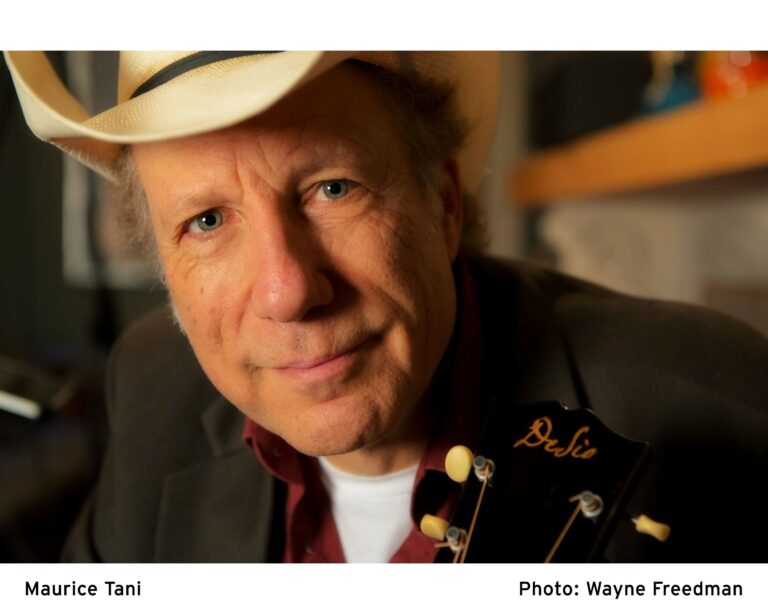
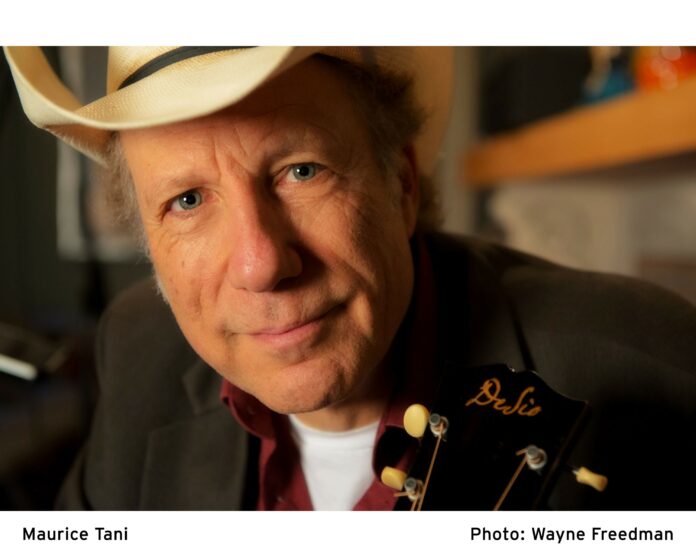
Acclaimed songwriter and country star Robert Earl Keen is best known for hits like his beloved anthem “The Road Goes On Forever,” yet the sixth-generation Texan has always had a soft spot for bluegrass, the music of his youth.

Keen shares this lifelong passion on a new album, Happy Prisoner: The Bluegrass Sessions, and a summer tour making its way to Mill Valley on June 24.

“The first date I ever had, I took a girl to a bluegrass festival,” says Keen, speaking by phone from the hill country of Kerrville, Texas. “I don’t recommend it. It did solidify the fact that, number one, I really did love bluegrass, and number two, that really shouldn’t be your first date with a girl you want to keep going out with,” he laughs.

Keen grew up on a steady diet of records by the likes of Bill Monroe and the Stanley Brothers, and learned to play guitar alongside their albums, and with bluegrass fiddle players in Houston, where he was raised. “It has really affected the whole way I write and sing,” he says.

Still, in a career that spans more than three decades, Keen never produced a strictly bluegrass album until this past February, when Happy Prisoner was released to universal praise and a top spot on the U.S. bluegrass charts.

“I got to a point in my life where I thought, you know, if I don’t do this now, I might never do it,” says Keen about the new album. Collected from a list of a hundred of his favorite songs, Happy Prisoner features 15 classic bluegrass tunes played with Keen’s signature grit.

Guest appearances by friends like Lyle Lovett and Sara Watkins (Nickel Creek) bolster Keen and his band’s playing, and the record encompasses an eclectic array of what bluegrass means to him.

“A lot of people have a real myopic view of bluegrass, but I think of it in terms of a broad spectrum with real nuances,” says Keen. “I wanted to pick songs that represented the entire bluegrass landscape.”

Bringing that landscape to the North Bay, Keen returns to Sweetwater, where he has appeared numerous times since sending the venue a handmade press kit back in his earliest days of playing.

This time around, Keen and his core band of 20 years will be working the stage with a blend of material off the new record as well as a crop of his biggest hits, like “Shades of Gray” and “Feelin’ Good Again,” done up in a bluegrass style.

Private Impressions

0

One of the late 19th century’s most gifted artists, and an integral figure in the impressionist and modernist movements, Edgar Degas worked in a variety of media yet rarely exhibited anything other than his paintings and pastels. He was a reluctant celebrity in the art world of Paris, and a private person.

A century later, Degas’ complex and emotionally penetrating work still fascinates art lovers around the world. This week, the most personal works of this legendary figure come to the Petaluma Arts Center (PAC)
for an intimate exhibition, “Edgar Degas: The Private Impressionist,” which collects more than a hundred works on paper by the artist and others in his immediate circle.

This world-class showing, drawn from the collection of San Francisco curator Robert Flynn Johnson, marks a major step for the ambitious PAC, which has grown exponentially in the last five years. “Edgar Degas: The Private Impressionist” runs through July 26, with a gala preview on Friday, June 19, and an opening reception on Saturday, June 20. Petaluma Arts Center, 230 Lakeville St., Petaluma. $100 (gala); $10 (opening). 707.762.5600.

Localize This!

Sometimes there’s so much to say about a topic that it’s hard to fit it all in. That’s what happened last week (“Hot Pockets,” June 10) when I reported on the bounty of resilient eco-enterprises popping up in the North Bay in response to climate change.

Climate change has become an intractable problem. What troubles me is why governments and corporations don’t figure out sensible policies to address an issue that so profoundly threatens the future of our children and grandchildren. Is it possible that some people are so corrupt, so greedy—so evil, really—that they can’t give up a few luxuries to refashion the game to protect our planet?

In my article, I took up author Naomi Klein’s view that capitalism is the cause of the problem. According to Klein, conservatives recognize that addressing climate change poses a threat to capitalism, which is their operating system; hence they resist.

We asked some innovative thinkers on this topic what they thought. Richard Heinberg, in particular, is clear that growth, made possible by cheap fossil fuels, must come to an end.

Michael Shuman and Marco Vangelisti agree that the economy cannot continue to grow. Whether (and when) it will collapse is certainly in question, but in fact it has already collapsed once, in 2008, and is currently supported mainly by debt. The situation, once again, looks precarious.

One alternative is to invest in small-scale, local businesses funded by local capital instead of conglomerate debt, that are accountable to the people they serve and respectful of the limits of nature. Ironically, that’s still capitalism; you might call it capitalism with a conscience. As I discovered, here in the North Bay there are dozens of small businesses trying to reduce emissions, produce food and other good things, and share information and resources. It’s working.

Whether localization is going to solve the problems created by uncontrolled growth and abusive capitalism remains to be seen. But, hey, it’s a step. At least somebody’s doing something that needs to be done, something we can all support. And who knows, it might trickle up.

Stephanie Hiller is a freelance writer living in Sonoma.

Open Mic is a weekly feature in the ‘Bohemian.’ We welcome your contribution. To have your topical essay of 350 words considered for publication, write op*****@******an.com.

Return to Form

0

A talent at the piano from the age of three, and a Sonoma County resident since he was eight, Beau D Flasher is a master behind the keys.

Flasher got some of his jazz chops from gifted instructor Mel Graves, and for a decade he made a good living by teaching piano and giving occasional performances that showcased his skillful technique and graceful playing. Still, he struggled to find satisfaction.

“I stopped teaching because I wanted to get away from music to enjoy it more,” says Flasher, who performs a solo concert June 20 at Sonoma State University. “I wanted to understand myself a little more. I was helping people with music, but I wanted to reach them in other ways.”

That was before the accident.

In August 2012, Flasher was on a friend’s property in west Sonoma County when he stumbled down a hillside into a row of solar panels. The collision cut Flasher’s dominant arm to the bone, and severed four tendons that controlled his right hand.

“I didn’t feel it,” he recalls, showing off the striking, angular scar on his forearm. “I was just looking at it, thinking, ‘There’s no way this is happening.'”

For 10 days the tendons remained severed while he waited for treatment. Doctors were able to reconnect them in a procedure that essentially glued them back together. The tendons held, but there was no way to know if Flasher would ever play again.

“I didn’t touch a piano for half a year,” says Flasher. When he did, he was shocked to discover the lasting effects of his injury. “When I got back to hitting the keys, the timing was off,” he says.

The neural messages from brain to finger were delayed by a half second in his right hand. Flasher realized that to play again, he had to re-time his entire brain and body, even synching up his noninjured left hand to account for the latency in his right.

For two years, Flasher worked his way toward recovery. “I just started to play and play, and I wrote—I wrote a song a day,” he says. “This new energy came out of nowhere.” The newfound energy inspired him to return to playing music, and it also manifested in his daily life.

“I was hard to get to know,” says Flasher of his previous personality. “And I realized that I wasn’t allowing myself to be open and vulnerable, and I didn’t want to hold all that in again. I said, ‘I’m going to choose love everyday,’ and it affected all areas of my life.”

Since the accident, Flasher has found a renewed passion for inspiring others through his experience and through his music. This week, he steps back onto a stage for the first time in three years to perform a selection of his latest compositions accompanied by a powerful multimedia presentation.

“[The accident] was an important event in my life, like a rite of passage,” says Flasher. “I’m grateful for it, because it led me in a direction I needed to go. I used to hide the scar, but I don’t anymore.”

Head Trip

Pixar, the studio that tries harder than any of them, tries something different in Inside Out. It’s a cartoon inner-space voyage into the subconscious, starring a cast of psychological abstractions.

Riley (voiced by Kaitlyn Dias), not yet a teenager, is uprooted by her parents from her idyllic Minneapolis home to a dingy Victorian in an authentically delineated San Francisco. We see the crisis disrupting her life from the inside of her personality. Riley’s troubles are processed by five color-coded figures: the luminescent, blue-haired pixie Joy (voiced by Amy Poehler), who puts her seal on every event; Sadness (Phyllis Smith of The Office), a shapeless, bespectacled sloucher in a chunky white turtleneck sweater; Disgust (Mindy Kaling), green and scowling with disdain; and, lurking like minions, Anger (Lewis Black) and Fear (Bill Hader).

Joy’s job is to collect and protect memories before they’re sent to the core. The newly minted memories are the size and color of glow-in-the-dark bowling balls, which roll down ramps of mammoth machinery to be safely archived below decks, before sadness can touch and cloud them.

For all the mulling over of emotional conflict, Inside Out is as restless as any summer action film, with both a rocket journey and a train wreck. The amusement-park-like “islands” of Riley’s inner-life (one, a “Goofyland,” is where Riley goes when she pretends to be a monkey to cheer her dad) crumble under the girl’s stress, shaking as if they’d been built on a psychological San Andreas fault.

Co-director Pete Doctor is trying for something funny and also profound. He mostly succeeds. And once again, Pixar gets you right between the ribs, this time with a scene of reconciliation—when Riley comes to understand that there is something called bittersweetness that dwells between the extremes of joy and sadness.

‘Inside Out’ opens June 19 in wide release.

Into the Weeds

0

A state cannabis commission headed by
Lt. Gov. Gavin Newsom will issue its final report July 7, a key date along the road to an expected referendum on the legalization of recreational marijuana on the 2016 California ballot.

July 7 also marks the soft filing deadline set by state Attorney General Kamala Harris’ office to give the state enough time to vet qualifying signatures for voter initiatives.

The double sevens were not good news for ReformCA, a legalization advocacy coalition whose member groups range from the National Organization for the Reform of Marijuana Laws (NORML) to the NAACP. The group hasn’t filed its initiative yet because it wants to absorb the commission’s report to make sure it’s in sync with the commission’s findings. Now the group says it will have to spend more money to get its signatures verified.

The timing hints at the delicate dynamics at play as the state rolls toward 2016: the Blue Ribbon Commission on Marijuana Policy (BRC), and Newsom, can’t favor, or appear to favor, one of several legalization initiatives over another—especially when the commission isn’t itself pro-legalization, even if Newsom is.

Nor can the commission create an appearance that it is coordinating its effort with ReformCA, even if ReformCA tried to coordinate its effort with the BRC’s report.

But the commission has a timetable of its own.

ReformCA was waiting on the commission report to get input from legalization opponents such as the California Police Chiefs Association.

Also high on the list: What do to about cannabis users on probation or in jail, and those Emerald Triangle mom-and-pop growers anxiously awaiting their fate.

Newsom met Humboldt County growers last month to hear their concerns.

“We’d be foolhardy to not understand perspectives of other communities that we may not have had access to, who came out of the woodwork on behalf of the lieutenant governor,” says Dale Sky Jones, who chairs ReformCA and teaches at the Oaksterdam University in Oakland, a cannabis cultivation school.

“This is why we are waiting for the [commission],” she says.

In anticipation of the 7/7 deadline, ReformCA had set “an ideal drop-dead date” of July 6 to file its initiative, says Jones.

The cannabis activist says she understands the commission’s delicate position, given that Californians “don’t want to feel that [legalization] is being pushed down their throats.”

The 7/7 filing deadline is tied to verification measures used to certify signatures needed to petition for a proposition. The “full check” system goes beyond random sampling and requires that California’s secretary of state direct county elections officials to verify every signature on the petition.

Harris’ office could not comment on any of the pending initiatives. Press secretary Kristin Ford told the Bohemian via email that “the AG looks forward to reviewing the findings of the commission.”

Harris is a candidate for Barbara Boxer’s Senate seat in 2016 and has to walk a fine line here, too. Harris’ spokesperson reiterated a previously reported position that she’s not “morally opposed to the legalization of marijuana. But as the state’s top law enforcement officer, it is important to address issues that impact public safety in a thoughtful manner.”

Harris’ work extends to other states that have gone legal.

“Our dialogue with Washington and Colorado has yielded some important avenues to explore and understand further, like edibles and packaging,” wrote Ford.

The unfolding politics of ending prohibition in California seem to go as follows: There are very real concerns over a 2016 presidential election gone bad—Bush III backlash, anyone? Boxer’s seat is up for grabs. There’s an ambitious lieutenant governor running for governor who says he would support an initiative, “provided it is the ‘right one,'” as California NORML has pointed out.

Meanwhile, several legalization initiatives have already been filed with the attorney general—including one from Sebastopol cannabis lawyer Omar Figueroa—but ReformCA has been tuned in to the commission’s work this spring as it sought to establish itself as the most serious coalition.

How serious? ReformCA put Howard Dean campaign guru Joe Trippi on its payroll two years ago and is treating the legalization referendum as a “national issue,” says Jones.

Jones says she started to push Newsom “once [the BRC] was announced,” and at every opportunity, “I asked him to turn it the hell up!”

“I’m probably driving the lieutenant governor insane,” she says with a laugh, “if not amused. Every time I see him, I tell him, ‘Hurry up—you’re going too slow.'”

The commission’s general outlook on legalization? Not so fast.

The forthcoming white paper follows a trio of public forums held this spring that emphasized public safety, youth issues and the tangled web of banking and taxation, says Abdi Soltani, a member of the BRC steering committee.

Soltani, executive director of the American Civil Liberties Union of Northern California, says the report, 18 months in the making, will distill the findings and highlight challenges and options California faces as it moves toward the expected 2016 vote. It’s not a referendum on the referendum, he says, which is to say that the commission isn’t endorsing a pro-legalization regime.

“We wanted to gather people who would be thoughtful about what is it that has to be thought through if the state goes forward,” he says. “But there is nothing inevitable about anything. In the end, the voters will make the decision.”

Pressed for details on what the report might offer, Soltani stressed fairness and transparency. “After 7/7, we’ll be in a position to get on an equal-opportunity basis” with all interested parties, he says, “and we’ll share this with the public.”

Given the size of California, the order of magnitude is much greater here than in states that have legalized recreational cannabis, such as Colorado or Washington. “The biggest factor that presents the biggest challenge is that we would still be dealing with the federal prohibition,” says Soltani. “I don’t think we’ll come out of this process claiming to know everything. It’s a long road. How do you transition from a system that’s prohibition to a system that’s legal? There will be course corrections and new regulations along the way, and we have to take a long view.”

Jones says she’ll press on with the work of gathering signatures and raising money.

“The fact that they are coming in on July 7 when the ideal drop date is 7/6 is going to make it more expensive,” she says.

Jones says a referendum will cost between $4 million and $6 million: that’s for getting all the required signatures, and getting the vote out in November 2016. But she says “the [fundraising] goal we are shooting for is $10 [million] to
$20 million.”

To qualify for the ballot, the group must gather 585,000 signatures—
8 percent of the electorate in the 2014 gubernatorial election.

Jones says the main big-ticket expenditure would be for media buys—which are contingent on two unknowns at the present: “Who is going to be president, and how much opposition to legalization is going to be mustered in the state.”

Jones says she is treating cannabis not as an issue but as a national candidate in 2016. It’s a full-on hearts-and-minds campaign.

“Cannabis—you know her. You’ve had experiences, and you feel like you know Mary Jane already.”

Barlow Street Fair

0

Sebastopol’s Barlow marketplace kicks off its summer street fair season Thursday, June 18, with scores of food and retail vendors and live music from the Pulsators.

The street fair runs Thursdays from 5pm to 8pm through Sept. 24. Last year, the fair featured about 20 food vendors offering everything from paella to raw oysters. McKinley Street is blocked off to cars, and dining tables are set up for an al fresco, street-party vibe. The Barlow’s resident restaurants, winetasting rooms, brewery and other vendors are also open during the fair.

Upcoming musical acts include the
Al Molina Jazz Sextet (July 2), the Foxes in the Henhouse (July 23) Sol Horizon (Aug. 6) and the Gator Nation (Sept. 17). The final show, on Sept. 24, will feature the Blane Lyon Band with Barlow developer Barney Aldridge.

Golden State Psycho

0

Is evil something you are? Or is it something you do?—Bret Easton Ellis, ‘American Psycho’

On Dec. 19, 2000, shuttle driver Ross Vitalie, the owner of Door-to-Door Airporter in Humboldt County, picked up his fare—a slight figure in his early 50s with an odd, gruff manner of speaking and peculiar facial tics—at what was then known as the Arcata Airport, a small-town airfield with a couple of runways originally built by the U.S. Navy during World War II.

The dark-haired and affable Vitalie then headed roughly 15 miles south down Highway 101 to Harper Motors, a Ford dealership located just north of Eureka, where his passenger picked up some keys for his car stored in long-term parking at the airport. Vitalie drove him back. The round trip took little more than 30 minutes.

Vitalie’s passenger had been a regular customer over the past half-decade. “You could say he was a little bit strange,” says Vitalie, a muscular six-footer who studied martial arts in college. “For his size, he could be very demanding.”

Airport records would later indicate that Vitalie’s passenger had often stored his car in long-term parking in the years prior. The records also indicated that he removed his car from the lot that afternoon. Vitalie dropped off his passenger—whom he called simply “Bob”—at the airport, and bid him adieu.

“He was a loner,” Vitalie recalls. “The only thing I remember was him asking what was going on around town whenever he returned. He’d want to know if anything was going on with the police department.”

Vitalie’s fare that day was none other than Robert Durst, the quirky and allegedly deadly scion of a Manhattan real estate dynasty. He had relocated to the seaside California town of Trinidad in late 1994 or early 1995, shortly after his father, Seymour Durst, passed him over, installing Durst’s younger brother Douglas as head of the family’s billion-dollar high-rise empire.

The controversial, albeit intoxicating, documentary series The Jinx: The Life and Deaths of Robert Durst, which aired on HBO this past winter, made it seem as though Robert Durst never wanted to serve as head of the family business, but that’s one of many false narratives established by Durst after the fact, as a way of putting off anyone on his trail.

Those close to him knew better. They say that Durst was livid about being bypassed for his younger sibling, angry and bitter, and that he had blown up in the plush Manhattan offices of the Durst Organization when he had been told the news.

CRUSHED LIKE A BUG

Durst had come to the Emerald Triangle in Northern California—a place where pot was plentiful and accessible, and where he could go essentially unrecognized—to get away from his father and brother, to break away from the long arm of his family’s influence. Maybe he had darker visions as well.

A decade earlier, Durst had been the prime suspect following the disappearance of his young and beautiful wife, Kathie McCormack Durst, who went missing in the winter of 1982, when the Dursts’ marriage had deteriorated into coke and drinking binges, a series of sexual affairs and violent outbursts. Durst had spun a tale about his wife’s disappearance—and, many believe, got away with murder.

Those close to Durst—family, friends, you name them—have described him as an inveterate liar, “incapable of telling the truth,” in the words of his brother Douglas. Although he would claim otherwise in The Jinx, he was also extremely skilled in his duplicity. More than once, law enforcement officials took the bait. They swallowed it hook, line and sinker in New York. And they may have swallowed it in California too.

According to records in the Humboldt County Recorder’s Office, Durst purchased a three-story ocean-view home in Trinidad from Diane Bueche in June of 1995. “It was very rural,” Durst would tell Jinx director Andrew Jarecki about Trinidad in an interview for the film. “Very pretty.”

Located on the corner of Van Wycke and Galindo streets in the picturesque seaside village, Durst’s residence—with wall-to-wall decking and full-length picture windows on each level—afforded sweeping views of the Trinidad waterfront, arguably one of the most beautiful stretches of coastline in Northern California.

Bueche lived directly next door to Durst on Van Wycke, in a sprawling two-story shingled home with equally breathtaking views. The outgoing, well-off Bueche was “a bon vivant” to her friends (many called her “Bo”) who owned and managed several properties in Humboldt and Trinity counties. She quickly became Durst’s friend, confidante and social guide to the North Coast. They went out to dinner, movies and cultural events.

“Bobby” Durst, as he was most frequently known, generally kept to himself among strangers, but he had surprising charm around women. They seemed to hover over him, guarding him, maybe even wanting to “mother” him, according to one friend. That he was receptive to such affection shouldn’t have been surprising, since his own mother had committed suicide when he was seven—though not, as he would often claim, directly in front of him. Durst liked to stretch the truth on that story too.

His first wife, Kathie, was a beautiful, bright 19-year-old when he met her. By the time she disappeared, it is widely known that Durst had taken up with Prudence Farrow, the younger sister of actress Mia Farrow and the subject of the Beatles’ song “Dear Prudence,” written by John Lennon. Some suspected that Bueche and Durst were an item in Trinidad, but no one seems to have known for sure. One police report, drafted in 2003, asserts that Durst only had sex with prostitutes after the disappearance of Kathie in 1982.

More than likely, the Bueche-Durst relationship was platonic, though they kept in close contact with each other, even when one of them was out of town. Bueche would later say that they connected by phone, email, fax and letters. Durst, who still used his Manhattan letterhead for business communication, had stationery printed with his Trinidad address on it for local and personal correspondence.

In one letter Durst sent to Bueche (a copy of which was provided by Matt Birkbeck, author of A Deadly Secret: The Bizarre and Chilling Story of Robert Durst), he said that he had “so much fucking energy these days I feel like the top of my head is coming off.” He cryptically mentioned rearranging the furniture in Bueche’s bedroom and upgrading his burglar alarm. He asked rhetorically, “Do you know it is illegal to shoot your pistol in town even in self defense[?]”

In another handwritten note that Durst faxed to Bueche, he declared: “I’d love to joust with you, but you might crush me like a bug. However, if you enjoy crushing bugs, call me. . . . Maybe I’ll get to bite you real good before I’m cornered.”

[page]

AN ‘ODD DUCK’

Those who knew Durst in Trinidad mostly refused to talk about him on the record, but privately they tell of an odd little man (“a weird, weird dude,” said one; “a very strange guy” and “spooky,” said another) who threw his money around with a small coterie of acquaintances, and who talked big—but whose stories never quite added up.

Durst had told Bueche and others that he had a daughter (he did not), and that he was planning to develop property in an isolated region north of Trinidad known as Big Lagoon, only to run afoul of the California Coastal Commission. There’s no record of that. For a while he kept an office in Eureka’s “Old Town,” on E Street, though what he actually did there is anyone’s guess. At one point, he claimed to be a botanist for the Pacific Lumber Company. At other times, he claimed to be an insurance investigator or a rare metals expert. None of it was true.

Durst was essentially computer illiterate when he arrived in Humboldt, and incapable of typing as well. He put up an advertisement for a computer tech at Humboldt State University’s career center in Arcata and eventually hired an HSU student, Michael Glass, who worked for Durst at his home in Trinidad for several years. Like most who encountered Durst in Humboldt County, Glass described him as being an “odd duck” and “eccentric.”

One memory for Glass stands out. He recalls that Durst was thoroughly infatuated with Pixar’s computer-animated blockbuster Toy Story, which was released in 1995, right around the time Durst arrived in Humboldt. Durst wanted all the imagery on his computer—the screen saver, etc.—related to Toy Story. Durst, Glass recalls, powerfully identified with the film.

A CONFIDANTE

The same day— Dec. 19, 2000—that Durst rode with Ross Vitalie to and from the Arcata Airport, his longtime friend and intimate, Susan Berman, a struggling writer in Los Angeles, had a conversation with one of her closest friends, the actress Kim Lankford.

Lankford, who had starred in the primetime soap opera Knots Landing in the late 1970s, would later recall that Berman was especially excited that day, claiming in an interview with New York magazine writer Lisa DePaulo that Berman was about to break a big story “that was going to blow the top off things.”

Berman was always on the verge of something, always a handful. She was the daughter of Las Vegas mobster David Berman—also known as “Davie the Jew”—a close associate of the legendary Vegas Mafioso Bugsy Siegel, who had been assassinated by rival gangsters in 1947. Lankford presumed that her friend’s big revelation had something to do with mob history, maybe about who had killed Siegel.

Berman had met Durst at UCLA in the late 1960s and had reportedly bonded over issues of losing a beloved parent from violence in their childhoods. She had migrated to the Bay Area after college, where she became a well-known writer at the San Francisco Examiner after penning a Sunday magazine piece titled “Why I Can’t Get Laid in San Francisco.”

By the new millennium, Berman, who had relocated to Los Angeles, was begging her friends for money, in debt to everyone. And with Berman, it was always a crisis, always high theater, always about her. She was the prototypical drama queen.

Through it all, however, Durst and Berman remained loyal to each other. When Durst’s wife Kathie went missing in 1982, Berman had served as Durst’s spokesperson, and, as many now believe, may have helped to mislead investigators by placing a call to the medical school at which Kathie was a student, claiming to be Kathie and saying that she would be absent from school the day after she went missing.

While they were no longer as close as they once were, sometime in the fall of 2000, after investigators in New York had kick-started a new investigation into Kathie’s disappearance, Robert Durst had sent Berman, now living in a run-down bungalow in Beverly Hills, two checks for $25,000 each—a $50,000 gift, he made clear, not a loan—which many journalists and investitgators later figured may have been hush money for whatever role Berman played in Kathie’s fate.

On Christmas Eve, five days after Durst had flown into Humboldt County, Los Angeles police made a startling discovery. Berman was found face down in a pool of blood on her bedroom floor, executed by a single shot from a 9mm pistol to the back of her head. Since there had been no forced entry into Berman’s home, investigators immediately speculated that whoever killed the mobster’s daughter was a person she knew.

That same day, the Beverly Hills Police Department received an anonymous note indicating that there was a “cadaver” at Berman’s address on Benedict Canyon Drive. The note may have been anonymous, but the author left a telltale sign, spelling “Beverley Hills” incorrectly, with an extra e.

Nearly 15 years after the grisly discovery at Berman’s home (and only hours before the climax of
The Jinx on HBO), the county of Los Angeles filed a felony complaint: “On or between Dec. 22, 2000, and Dec. 23, 2000, in the County of Los Angeles, the crime of MURDER . . . was committed by ROBERT DURST, who did unlawfully, and with malice aforethought, murder SUSAN BERMAN, a human being.”

[page]

The saga of Robert Durst and the many deaths that surround him has become, in recent months, part of the national cultural fabric. Durst has emerged—there is really no other way to put it—as a celebrity killer and international sensation. That he was found not guilty of the 2001 killing of Morris Black on the grounds of self-defense (never mind that he dismembered the corpse and tossed it into Galveston Bay) has only added to Durst’s creepy celebrity status and media mystique.

DRIFTER, CROSS-DRESSER, MURDERER?

Today, the ailing 72-year-old Durst, currently incarcerated in the
St. Charles Parish Jail in Louisiana, is facing federal gun charges, and after that process plays itself out this fall, he’ll be facing extradition proceedings to bring him back to Los Angeles on murder charges.

Many of the people I’ve spoken to in the past several months don’t think that Durst will ever see the light of day again—but they thought the same thing when he was arrested for the murder of Morris Black in 2001.

Shortly after the arrest of Durst in New Orleans, I was looking through a newspaper search engine when I made the surprising discovery in the Ukiah Daily Journal from May 11, 1995, that Durst had been arrested in Mendocino County for driving under the influence and possession of marijuana. Somehow this arrest had escaped the notice of journalists and law enforcement officials alike.

The Mendocino arrest was classic Durst. Pulled over in the tourist haven of Mendocino Village after drinking a bottle of wine at the upscale Cafe Beaujolais, Durst was found with marijuana and $3,700 in cash in his trunk—and he failed a series of field sobriety tests. “[T]he money and marijuana is mine,” Durst said to the cop, “and I have always smoked it, even as a kid. . . . So what’s the big deal?”

In fact, after he left the Durst Organization in 1994, Durst took on an even more bizarre lifestyle than the one he maintained in New York. Durst had residences all over the country: in New York, Florida, Texas, Louisiana, and California, and several cities therein. Investigators in at least three states noted that he liked frequenting the tenderloin and skid-row neighborhoods in various cities, often hanging out with the homeless and down-and-out. In some instances, he pretended to be a person in need himself.

He had also taken to cross-dressing, and in a celebrated profile of Durst in GQ magazine, investigative reporter Robert Draper claimed Durst had taken to the streets as a transvestite, plying young men for tricks. He hung out in tranny bars, always on the make. How far he went with this fetish is uncertain (some investigators question the veracity of Draper’s account), but he was seen dressed as a woman in at least three different locations during the 1990s and early 2000s.

In Northern California, Durst owned his home in Trinidad, owned two upscale townhouses in San Francisco and had several other addresses stretching from the northern region of Humboldt County to as far south, according to one report, as Palo Alto.

“[Durst] never stayed in one place for more than a few days,” says Cody Cazalas, the lanky mustachioed investigator from Galveston, Texas, who provided The Jinx with its soul, if not its conscience. “He’d fly from Texas to California to Louisiana then back to Florida then Texas again,” Cazalas says. “He was extremely mobile and very secretive about his movements. Two or three days was about it in any one place. He was all over the charts.”

GONE MISSING

Little more than two years after Durst was arrested in Mendocino and had settled into his ocean-view digs in Trinidad, a 16-year-old high school student from Eureka—Karen Marie Mitchell—was declared missing after visiting her aunt’s shoe store at the Bayshore Mall on the south side of town. The Mitchell case captivated and galvanized the community. Over the next several years, numerous leads were exhausted, and several suspects were identified, though, ultimately, nothing came to fruition.

Although it’s not clear when Durst appeared on the radar of Eureka investigators, according to newspaper records, Mitchell’s aunt, Annie Casper (with whom Karen was residing at the time of her disappearance), first publicly identified Durst by name as a suspect in her niece’s case in December of 2001, not 2003, as has often been claimed in the media.

“[Durst’s] been in our store twice, which I thought was kind of odd,” Casper was quoted as saying. “Anytime somebody does something [like Durst did, in reference to the killing of Morris Black], that’s lived in this area for some amount of time, I check it out.” On at least one occasion when Durst was in the store, according to a store employee, he was dressed as a woman.

It’s never been clear how seriously Humboldt County investigators took Durst as a suspect in the Mitchell disappearance. For a while, at least, they had their eyes on someone else, a Humboldt County trucker named Wayne Adam Ford, who eventually confessed to killing four women (but adamantly denied killing Mitchell)—and federal investigators had flight records appearing to indicate that Durst wasn’t in Eureka on the day of the abduction.

Shortly before Mitchell went missing in 1997, there was another disappearance of a young woman in Northern California, Kristen Modafferi, an 18-year-old student from North Carolina visiting the Bay Area for the summer. Since Modafferi was living in the East Bay at the time (she was taking a summer course in photography at UC Berkeley), her disappearance was investigated by the Oakland Police Department. One of the suspects in the Modafferi case fit a profile similar to Durst, particularly in respect to cross-dressing and prowling around homeless shelters. The Oakland investigators felt there might be a connection.

Although Bay Area investigators didn’t have sufficient evidence to pursue Durst in respect to Modafferi’s disappearance, they felt that there was reason to do so in respect to the disappearance of Karen Mitchell. According to Birkbeck’s Deadly Secret, East Bay investigators believed that Durst had flown into the Arcata Airport on Nov. 25, 1997, the day of Mitchell’s disappearance. They had subpoenaed credit card and Federal Express records indicating Durst’s presence in Humboldt County that day.

San Francisco District Attorney’s Office investigator John Bradley interviewed a woman then incarcerated in a San Francisco jail, Sheli C., who had lived in Humboldt County during the same five-year period that Durst was living there. A drug addict and a prostitute, Sheli had been arrested on narcotics charges. Bradley had a hunch that she might know something about the Mitchell disappearance. She didn’t.

But when Bradley showed Sheli a picture of Durst, she recognized him immediately from Eureka, where, she said, Durst had frequented a homeless shelter only a couple of blocks from the office he kept in Old Town. “Karen Mitchell’s aunt and guardian,” Bradley declared in a report from 2003, “told me Mitchell volunteered at [a shelter in Old Town] for a brief period.”

According to Sheli, Durst had tried to pay her for sex, but he always low-balled her, so, she claimed, it never happened. But when shown a second picture of Durst, she said, curiously, “That’s what he looks like in the morning.” She said that Durst’s “pattern” was to hang around the homeless shelter for a while, disappear for a couple of months, “then he would return to loitering around the homeless shelter.”

There had also been a composite sketch drawn of someone who may have been driving a car that Mitchell got into the day of her disappearance. A witness had stepped forward months afterward, and the sketch looked remarkably like Durst—down to his oversized, wire-rimmed glasses—so much so that Bradley believed the informant had to have known Durst.

Bradley and his partner down in Oakland wanted to push the case against Durst harder. The last thing Sheli C. said to Bradley was that “weird people get tired of doing normal stuff.” The line struck a chord with Bradley. Then Sheli went on the lam, and so did the informant. Bradley and his partner never had a chance for any follow-up interviews. Their frustration mounted.

One thing that can happen when criminal cases fall under separate jurisdictions is investigators get territorial, toes get stepped on, egos bruised. Outsiders often get marginalized by local cops who take personal possession of a case.

“You hear about it from time to time,” Cazalas tells me in his distinctive South Texas drawl. “And it baffles the shit out of me, to be honest with you. It’s just a cryin’ shame. . . . If it happened anywhere involving [Durst], like I said, that’s a cryin’ shame.”

[page]

‘DUPED’ AND DEAD

The timing of Durst’s drive from Humboldt County to Los Angeles in 2000 comes as no surprise to investigators who have followed the Durst case closely. On Halloween of 2000, Durst received a tip—reportedly from his sister, which the Durst Corporation denies—that law enforcement officials in New York had reopened the case of Kathie Durst’s disappearance.

The heat was back on. In early November, Durst bought an engagement ring for one of his girlfriends, Debrah Lee Charatan, an accomplished, high-powered Manhattan real estate agent. Then, on Nov. 15, according to Birkbeck, Durst called an apartment owner in Galveston on behalf of a “deaf-mute woman,” Dorothy Ciner (one of Durst’s many aliases). What this means is that Durst had set up shop in Galveston even before he had cleared out of Northern California.

Durst’s erratic behavior during this time was also duly noted in Trinidad, where his confidante Diane Bueche began to feel uneasy. At first she defended Durst when television crews came to Trinidad during the spring of 2001 for the ABC shows Vanished and Prime Time, feeling that Durst was “the victim of a ruthless press.” Ironically, Durst had suggested that she watch Unsolved Mysteries, which featured a segment on his wife—perhaps, Bueche later speculated, to deter concern on her part should she have come across it on her own.

By the fall of 2001, however, when Durst went on the lam following the death of Morris Black, Bueche became more than a little concerned. Bueche eventually contacted Judy Hodgson, publisher of the North Coast Journal, to tell her the Durst story. Hodgson says that Bueche “did not look well” at the time, telling Hodgson that she was “ill and dying of cancer.” Bueche, recalls Hodgson, “felt a little duped or stupid for originally taking Durst’s side.”

A few months later, a psychic named Barbara Stamps told the New York Post that she began “picking up on dark energy” at Durst’s former Trinidad home directly next door to Bueche’s residence, and “had very strong feelings that a murder had been committed there.” Stamps said that she had “mental images” of the home as early as May 16, 2000—long before the killings of Berman and Black.

Once again, those in Trinidad became anxious. Many worried that they had recently had a murderer in their midst. Only months after the psychic identified Durst’s home, Diane Bueche was found dead in the master bedroom next door. At first, I was told that Bueche had died of cancer. Later, I discovered that she had committed suicide, shot through her head with a Smith & Wesson .357 revolver. The bullet had exited through the back of her skull, penetrating the mattress.

Durst was in custody in Galveston at the time, but there are those in Trinidad and elsewhere who still have questions about Bueche’s death.

SERIAL KILLER?

On a cold and windy day in Eureka this spring, I sat in a Starbucks with Andy Mills, the city’s recently appointed police chief, who in the aftermath of Durst’s arrest in March has quietly reopened the Karen Mitchell case.

Mills, who arrived in Eureka highly touted from San Diego, was candid and forthcoming. He described the Mitchell investigation as “reinvigorated and active,” and says that though he was unable to identify any new evidence involving Durst, Durst is very much in play as a suspect.

Since then, I’ve discovered that the FBI has assembled an unofficial national task force specifically looking at a multitude of unsolved murders and disappearances wherever Durst has lived, stretching back more than 40 years. Indeed, there’s a case involving a young girl who vanished after frequenting Durst’s health food store in Vermont in 1971.

During my trip through Northern California last month, following Durst’s ghost behind the Redwood Curtain, I re-read portions of Bret Easton Ellis’ American Psycho, the controversial novel about Manhattan investment banker Patrick Bateman, whose decadent lifestyle descends into a series of grotesque murders. Several passages seemed surprisingly reminiscent of Durst, this one in particular:

Myself is fabricated, an aberration. I am a noncontingent human being. My personality is sketchy and unformed, my heartlessness goes deep and is persistent. . . . All I have in common with the uncontrollable and the insane, the vicious
and the evil, all the mayhem I have caused and my utter indifference toward it, I have now surpassed. . . . My pain is constant and sharp and I do not hope for a better world for anyone. In fact, I want my pain to be inflicted on others.

The passages were unnerving. They haunted me as I reflected on this story on the long drive along the Mendocino and Humboldt coastlines, then back home along the Highway 101 corridor, through the wine country of Mendocino and Sonoma counties and into the Bay Area. Somewhere I had read that Durst had rented the movie American Psycho when he was dating a woman from Dallas in 2000. Durst, she said, “was all excited about American Psycho.” The woman said he had a room in his luxury Dallas apartment with concrete flooring and an electric saw. He told her he was dealing in “chemicals.”

Several law enforcement officials have told me they now think Durst may be a serial killer, over a span that stretches more than 40 years. In the cases of his wife Kathie, his friend Susan Berman, and then Morris Black, he may well have had overt motives for killing them. But what about the various dotted lines that link those three known targets?

During the Morris Black investigation, Cazalas thought that the murderer “had done this before.” Durst’s brother Douglas, who in a recent New York Times interview said that “there’s no doubt in my mind that if he had the opportunity to kill me, he would,” also believes that his brother killed seven of his own dogs, all named Igor. The judge from Durst’s murder trial in Galveston believes that Durst left the severed head of a cat on her doorstep.

A DEADLY PATTERN

I discussed the matter of what seems to be two distinct patterns of killing with a Northern California psychiatrist who specializes in criminal psychology. He said that, yes, the killings beyond the three we know of could be consistent with the pathology of a single serial killer. He also added an interesting caveat: Durst’s decision to be filmed on The Jinx could also be viewed as emanating from the same behavioral reservoir—that of calling attention to himself and humiliating his family.

As I went through my thick file of interview notes, reports and various articles that I had accumulated for this story, I came across a chilling note from Bradley written in October of 2004. “I reasonably believe Durst was a serial killer,” he wrote. “Others believe Durst only kills people he knows and with whom he has become enraged. I counter that his comfort level with killing is so secure, he kills strangers for practice then people directly connected to him and just does not worry about discovery.”

It seems that Robert Durst is always trying to get caught—he said so himself in The Jinx. When he was asked about the letter addressed to the “Beverley Hills” Police Department on the day of Susan Berman’s murder, he acknowledged that the killer was “taking a big risk. You’re sending a letter to police that only the killer could have written.”

Authorities in Los Angeles believe that Durst wrote the now infamous letter.

Moreover, Durst reportedly left mail with his address on it, along with parts of Morris Black’s body, in garbage bags in Galveston Bay; he told lies to New York City detectives about his wife’s disappearance that were easily discovered; he stole some Band-Aids and a hoagie at a market in Pennsylvania when he had $500 in cash in his pocket. Most recently, he urinated on some candy bars in a Houston convenience store while security cameras recorded his activities.

Durst always has a counter-narrative to explain away his actions. It’s a cat-and-mouse game he seems to enjoy playing. How else does one explain his participating in a film project that ultimately resulted in his arrest?

Through his defense attorney Dick DeGuerin, Durst has denied involvement in all of these murders. But while much attention has been paid to Durst’s shocking confessional at the end of The Jinx—”There it is. You’re caught. You’re right, of course. . . . What the hell did I do? Killed them all, of course”—there was an even more telling revelation earlier in the series, when he declared, “There’s a lot of people out there who think I killed my wife, that I killed Susan Berman, that I intentionally murdered Morris Black, and it’s quite possible that he’s killed a whole slew of other people.” (Emphasis added).

Note the change from the first to third person in the middle of the sentence. Nobody had brought up “other people.” In the parlance of poker players, it’s a tell.

I asked Cazalas—who believes that Durst killed his wife and Susan Berman, along with Morris Black—if it would surprise him if Durst had killed more people. “No,” he says, with a long drawn-out pause. “No, no, it wouldn’t.”

Maybe Robert Durst is trying to tell us something. Perhaps there are a whole slew of other people. Maybe, just maybe, he did kill them all.

Jun. 12-13: Best Indie Fest in Sonoma

0

One of last year’s best (though not necessarily biggest) music festivals was the intimate and insanely fun Huichica Music Festival at Gundlach Bundschu Winery in Sonoma. Organized by musician Eric D. Johnson and Gun Bun owner Jeff Bundschu, this year’s festival returns with another awesome lineup of bands, the best food trucks and libations aplenty. Headlining the event are Los Angeles garage rockers Allah-Las, fresh off a series of shows in England. Other highlights includes songwriter Cass McCombs bringing a supergroup of friends together for the McCombs Skiffle Players, and local favorites like the Donkeys and Sonny & the Sunsets. The Huichica (Pronounced We-Chica) Music Festival rocks out on Friday and Saturday, June 12-13, at Gundlach Bundschu Winery, 2000 Denmark St., Sonoma. $40-$120. 707.938.5277.

Jun. 13: Home Sweet Home in Nicasio

0


Matt Lax & Nearly Beloved
have spent their career crafting intelligent and stylized country-western tunes while pushing the boundaries of the genre, and once again Lax re-sets the bar for songwriting on the bands new album, This House of Mine. Poignant and soulful, the record revels in roots music and achieves a distinctly Americana blend. This week, Matt Lax & Nearly Beloved celebrate the release of the album and raise funds for NAMI Marin (National Alliance on Mental Illness) with a concert on Saturday, June 13, at Rancho Nicasio, 1 Old Rancheria Road, Nicasio. 8pm. $15. 415.662.2219. 

The Road Goes On

Acclaimed songwriter and country star Robert Earl Keen is best known for hits like his beloved anthem "The Road Goes On Forever," yet the sixth-generation Texan has always had a soft spot for bluegrass, the music of his youth. Keen shares this lifelong passion on a new album, Happy Prisoner: The Bluegrass Sessions, and a summer tour making its way...

Private Impressions

One of the late 19th century's most gifted artists, and an integral figure in the impressionist and modernist movements, Edgar Degas worked in a variety of media yet rarely exhibited anything other than his paintings and pastels. He was a reluctant celebrity in the art world of Paris, and a private person. A century later, Degas' complex and emotionally penetrating...

Localize This!

Sometimes there's so much to say about a topic that it's hard to fit it all in. That's what happened last week ("Hot Pockets," June 10) when I reported on the bounty of resilient eco-enterprises popping up in the North Bay in response to climate change. Climate change has become an intractable problem. What troubles me is why governments and...

Return to Form

A talent at the piano from the age of three, and a Sonoma County resident since he was eight, Beau D Flasher is a master behind the keys. Flasher got some of his jazz chops from gifted instructor Mel Graves, and for a decade he made a good living by teaching piano and giving occasional performances that showcased his skillful...

Head Trip

Pixar, the studio that tries harder than any of them, tries something different in Inside Out. It's a cartoon inner-space voyage into the subconscious, starring a cast of psychological abstractions. Riley (voiced by Kaitlyn Dias), not yet a teenager, is uprooted by her parents from her idyllic Minneapolis home to a dingy Victorian in an authentically delineated San Francisco. We...

Into the Weeds

A state cannabis commission headed by Lt. Gov. Gavin Newsom will issue its final report July 7, a key date along the road to an expected referendum on the legalization of recreational marijuana on the 2016 California ballot. July 7 also marks the soft filing deadline set by state Attorney General Kamala Harris' office to give the state enough time...

Barlow Street Fair

Sebastopol's Barlow marketplace kicks off its summer street fair season Thursday, June 18, with scores of food and retail vendors and live music from the Pulsators. The street fair runs Thursdays from 5pm to 8pm through Sept. 24. Last year, the fair featured about 20 food vendors offering everything from paella to raw oysters. McKinley Street is blocked off to...

Golden State Psycho

Is evil something you are? Or is it something you do?—Bret Easton Ellis, 'American Psycho' On Dec. 19, 2000, shuttle driver Ross Vitalie, the owner of Door-to-Door Airporter in Humboldt County, picked up his fare—a slight figure in his early 50s with an odd, gruff manner of speaking and peculiar facial tics—at what was then known as the Arcata Airport,...

Jun. 12-13: Best Indie Fest in Sonoma

One of last year's best (though not necessarily biggest) music festivals was the intimate and insanely fun Huichica Music Festival at Gundlach Bundschu Winery in Sonoma. Organized by musician Eric D. Johnson and Gun Bun owner Jeff Bundschu, this year's festival returns with another awesome lineup of bands, the best food trucks and libations aplenty. Headlining the event are...

Jun. 13: Home Sweet Home in Nicasio

Matt Lax & Nearly Beloved have spent their career crafting intelligent and stylized country-western tunes while pushing the boundaries of the genre, and once again Lax re-sets the bar for songwriting on the bands new album, This House of Mine. Poignant and soulful, the record revels in roots music and achieves a distinctly Americana blend. This week, Matt Lax...
11,084FansLike
4,606FollowersFollow
6,928FollowersFollow