Sept. 13-16: West Coast Roots in the North Bay

0

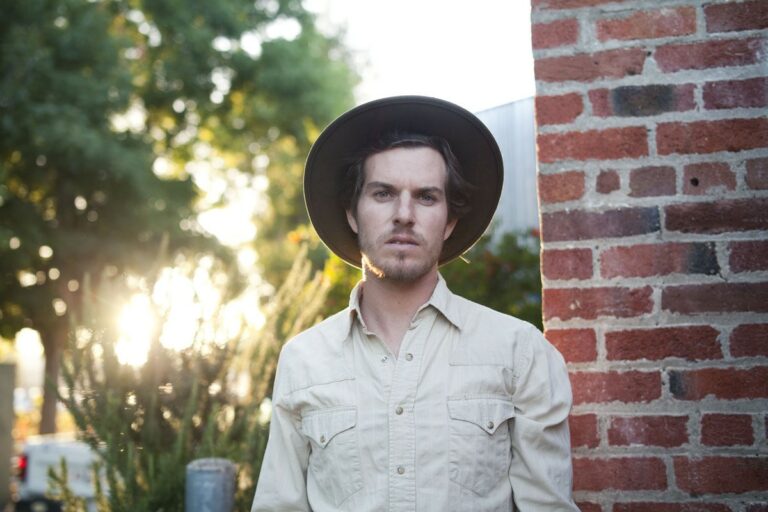
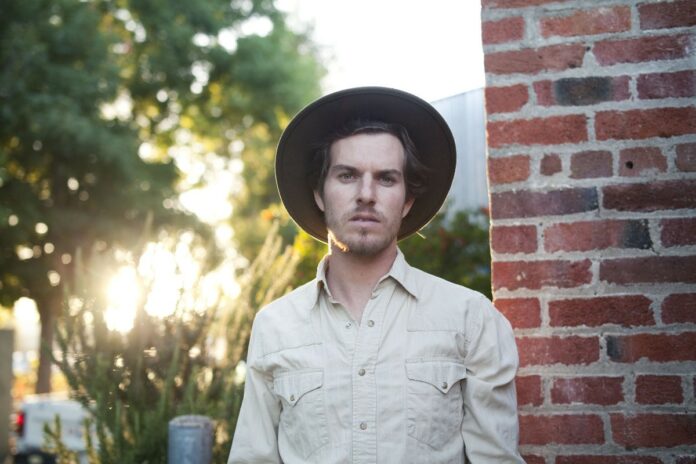
Americana songwriter Frankie Bourne is a California original. Born in the Bay Area and raised in a roadhouse, Bourne has been playing guitar since he was 14, self-taught and south-pawed. Inspired by a lifelong love of folk and blues-rock, last month Bourne released his solo debut album, Californicana. Now living in Los Angeles, Bourne is bringing his roots rock back to the North Bay for a tour that includes three Sonoma County shows. Bourne hits the stage first on Sunday, Sept. 13, at Jamison’s Roaring Donkey, 146 Kentucky St., Petaluma. 707.772.5478. Next, Bourne plays on Tuesday, Sept. 15, at A’Roma Roasters, 95 Fifth St, Santa Rosa. 707.576.7765. Bourne also plays Wednesday, Sept. 16, at BV Whiskey Bar & Grille, 400 First St E, Sonoma. 707.938.7110.

Understanding Amy’s

0

At Amy’s Drive Thru, the shakes are frothy, the sauce is secret and the fries are golden and crispy. But the sprouts, they are not crunchy. At Amy’s, there are no sprouts. And there is no “crunchy.”

Since at least the 1970s, sprouts have been an essential, nay, stereotypical menu item for natural foods and vegetarian restaurants everywhere, a status cinematically cemented with Alvy Singer’s order of “alfalfa sprouts and a plate of mashed yeast” during a visit to L.A. in the 1977 comedy Annie Hall. Sprouts, piled high and wild on exotic, fringe foods like falafel, tempeh and tofu, meant health food, and vice versa.

In July, the privately held natural foods manufacturer Amy’s Kitchen opened a drive-through vegetarian restaurant in Rohnert Park that’s touted as the first of its kind. But as vegetarian food makes this historic sortie into mainstream fast food culture, sprouts are not coming along for the ride.

Amy’s is creating a distinction between vegetarian food and fast food that happens to be vegetarian. Understanding that difference is key to understanding the company’s appeal.

AS THE TOFU TURNS

During two visits to Amy’s, I only had to glance at the entrance to see visitors pausing to take a photo as they walked up—big smiles on their faces, they’d clearly been planning to snap that pic. People love Amy’s before they even walk through the door. Indeed, the restaurant’s slogan is that it “runs on love.”

If so, it’s a well-oiled machine that runs on love. A battalion of workers, clad in fair-trade, organic cotton uniforms, run orders and blend shakes. Emerging from the back, managers deal with an equipment issue: clearly food service industry veterans, they’ve got that 1,000-burger stare.

It’s a far cry from a memorable morning-to-afternoon I spent at a perfectly typical vegetarian cafe in the Sierra Foothills a few years back. When my friends and I ordered our food from the beatific young women staffing the joint, we were young men, angling to shake off well-deserved hangovers after a Halloween party. As we waited, we talked and grew weary of talk. But we dared not peek into the kitchen, knowing by long experience that any sign of impatience on the part of the customer in such sanctuaries of virtuous foods might earn a frosty look, if not a lecture. By the time our heaping plates of tempeh stir-fry and hummus arrived, we had reached middle age.

The dream of a happy union between fast food and healthy food is nothing new. Back in 1981, a restaurant with such ambitions opened in Santa Cruz. As a stick in the eye to the reigning fast-food giant, the owners called it McDharma’s. The Clown, he didn’t like that much. The Clown didn’t think it was funny. Facing the overwhelming firepower of McDonald’s litigation, Dharma’s agreed to drop the “Mc” in 1988. They’re still in business—at one location.

So it was looking like we’d get fusion energy before we got a real vegetarian fast-food restaurant, until Santa Monica–based Veggie Grill (in the sexy-sounding “fast casual” category”) expanded into the North Bay in 2014.

CONVENIENCE, HOLD THE MEAT

Amy’s Kitchen has always been about convenience, but up until 2015, they steered clear of retail. A major employer in Petaluma with about a thousand employees and plans for hundreds more, Amy’s also runs manufacturing locations in Oregon, Idaho and the U.K. The company built a not so little empire out of a once-improbable concept: give consumers everything they get in the frozen food aisle, like convenience and familiar entrées, without the meat—and later, without the GMOs, the gluten; without the you-name-it. They’ve got it, if it’s a “not.” Because of Amy’s, and other companies, vegetarians and vegans no longer need pretend to be satisfied with a plain bun with pickles and a side of potato salad at the barbecue—and, because of the quality and variety of Amy’s products, may even have to endure less snickering over their contribution to the grill.

Andy and Rachel Berliner founded Amy’s in 1987, around the time that I decided, at an impressionable young age, that meat was not natural, normal or kind. My parents were unfamiliar with a vegetarian diet, but then Amy’s showed up with wholesome-sounding comfort foods like mac and cheese, enchiladas and pot pies.

After 20 years as a strict vegetarian, I changed my diet—but there’s no point in trying to retrain my family on that fact. To this day, they still keep an Amy’s or two in the freezer for me. And to be honest, whenever I’m feeling blue, my go-to choice among all comfort foods is Amy’s “veggie loaf,” a lentil loaf simulacrum of Salisbury steak, with sides of mashed potatoes and peas.

[page]

ENTER THE CLOWN

It’s been about 10 years since I had a McVeggie burger at McDonald’s. Apparently, there was room under the Golden Arches for experimentation. It was OK. But McDonald’s pulled the product, and the only explanation was lack of consumer demand. Indeed, a 2012 Gallup poll concluded that only 5 percent of Americans identify as vegetarians—an apparently expendable market share for an empire that was founded on efficiency, above all. (The company’s grasp of the vegetarian demographic is apparent in its disclaimer that the product “may come in contact with meat during preparation.”)

In 1948, San Bernardino’s McDonald Brothers Burger Bar Drive-In fired its carhops and installed a streamlined system designed for maximum efficiency operated by minimally skilled labor. The fast-food revolution was born. By the 1980s, however, images of McDonald’s ostensibly happy clown mascot, Ronald McDonald, were showing up in the “zines” (note to youngsters: a kind of photocopied, self-published magazine in the era before the web) of the punk rock era, sporting fascist symbols and salutes. The happy clown had become a villain.

Mainstream America clued into the controversy with the publication of Eric Schlosser’s Fast Food Nation: The Dark Side of the All-American Meal. Back in 2001, Schlosser noted that Americans spent $110 billion on fast food, “more money . . . than on higher education, personal computers, computer software, or new cars. They spend more
on fast food than on movies, books, magazines, newspapers, videos, and recorded music—combined.” Today, that figure is some $200 billion.

While working in Germany, I discovered Burger King’s vegetarian “Country Burger.” It’s a pretty good curried version, likely aimed at satisfying immigrant populations. But it’s not available in the States. Instead, we get the bland BK Veggie.

The fast-food burger may be a marvel of modern, chemical taste engineering. The fast-food veggie burger is a marvel of a different order: it’s darned hard to find a good veggie burger. Despite the fact that nearly every brewpub in California now offers a veggie burger option, few are worth the extra price. Some appear to be thinly veiled insults: mealy quinoa apologies stuffed in an obscenely greased-up bun, as if to say that if you don’t want saturated fat on the inside, you’ll darn well get it on the outside.

BUILDING THE MEATLESS BURGER

The Amy’s Drive Thru burger was carefully designed. Although Amy’s Kitchen markets a frozen veggie patty for every veggie taste, this version was developed, according to the company, over the course of 1,000 recipe trials. If the patty seems a little undersized, there’s no use in asking, “Where’s the beef?” Order the menu headliner, the double-patty “Amy,” for a dollar and change extra.

The burger’s texture is firm, and a hint of smoke lingers on my fingers. The cheese is a small square of cheddar, and the lettuce and locally brined pickles are topped off with Thousand Island–type “secret sauce” available in regular or spicy. When I opt for spicy at the restaurant, the order taker punctuates the exchange with an enthusiastic, “Yeah!”

Noteworthy in its absence is whole wheat, a natural foods mainstay. The Amy’s burger bun may be organic and non-GMO, but it’s made from white flour—another contrast to Veggie Grill. It’s no small matter: the bun is half the burger, and the burger is the reason for the restaurant. I can only imagine there was a standoff between two possible consumer perceptions: whole wheat is healthy vs. whole wheat is toxic to the mainstream image of classic, American fast food. The white bun took that round.

Perhaps it’s more important to today’s consumer that the burger is GMO-free, a perceived health benefit—in the context of a white-flour, fast-food burger bun—with little to no scientific consensus backing it: genetically modified wheat is actually not currently available to farmers. “No GMOs” ranks at the top of Amy’s Drive Thru menu, followed by “Organic,” with “Gluten-free” and “Vegan” options.

Turning to the mission statement: “Amy’s Drive Thru is returning to the roots of American fast food, serving lovingly handcrafted food to nourish hard-working citizens, busy families and road-weary travelers.” Sounds great, tell me more: “What’s Cooking? Authentic American classics in a new American style. Burgers, shakes & fries made with organic and non-GMO ingredients. Fresh veggies from the farm around the corner. French fries with a story to tell. Gluten-free and vegan options for everything!”

If I wasn’t already familiar with Amy’s Kitchen, I’d have no idea at all that every item on the menu here is vegetarian. But will the message remain the same when, and if, Amy’s Drive Thru expands beyond its home turf, where the company is already well-recognized and held in high regard? Perhaps when vegetarians secure a real cultural gain, they no longer bare their teeth.

There is certainly no talk of happy cows and karma saved on the packaging. The burger box sports a surfboard graphic, and the takeout bags bear a manly message: Fred’s secret sauce vs. Fred Jr.’s secret hot sauce.

But the burger is still a recognizable veggie burger. Amy’s says it’s a mix of organic vegetables, grains and beans. With minor exceptions, Amy’s Kitchen has never much played the fake meat game. The veggie loaf frozen dinner, for instance, could never be mistaken for anything but what it is: a lentil loaf. At Veggie Grill, which is 100 percent vegan but dares not say it out loud, soy protein is disguised to look like chicken nuggets or beef burgers. Each in their own way, Amy’s Drive Thru and Veggie Grill seem to take care not to frighten off that most timid and shy of demographics: the all-American meat eater.

[page]

Amy’s fries are deep-fried perfection. No upscale, shoestring style here, and no skins. No sweet potato, no baked strips of kale. They’re just greasy enough. And how does Amy’s whip the organic dairy into such a surreal froth that the vanilla shake takes me back decades, to the last time I ordered such a thing from a fast-food restaurant? I’m told the vegan version is much chunkier.

If this is what marginal market share that’s not worth a dime to the burger heavies looks like, you wouldn’t know it by the constant stream of customers. A man in line behind me is pleasantly surprised on his first visit. “What a neat concept, huh?” he says to a companion. “Oh, chili fries—wow!” Amy’s has scooped up all of that pent-up demand, spread out over thousands of dissatisfied visits to other chains, and parked it in one spot.

FAST, SLOW
and GREEN

Speaking of parking, Amy’s can accommodate 140 visitors in indoor and outdoor seating areas, but while there’s plenty of seating available, the parking lot is near stuffed. On my second visit, I see a woman exit the drive-through only to park in a stall. I park and look around me: here and there, people are still sitting in their cars.

I have to get the full Amy’s experience, so I’ve got the windows rolled down and the A/C on, and I’m rolling, rolling through the drive-through lane. And then I’m idling, I’m idling in the drive-through lane, with a minimum 12 other cars.

When I was a walk-in customer, a couple still deciding on the menu waved me on, and I walked right up to the register. I got my burger within five minutes. Now I’m stuck in my car, idling to the point that I feel self-conscious about it and switch the engine off just in time to have to move up one car length closer to the window again. Much of the time, a drive-through only provides the illusion of speed and convenience. For many, that may be a cherished illusion.

Ideally, you’d do the drive-through in an electric vehicle. An employee might not come out on roller skates to give you a hug, but Amy’s does provide an EV charging station.

At least I can admire the landscaping. Across the street, fast-food chains have the same landscaping that you see from coast to coast: thirsty green hillocks of lawn, a landscape driven by fear of looking different. In contrast, Amy’s is a drought-friendly oasis of native plants, young oak trees, shrubs and grasses plunked in a thick bark mulch. The soon-to-be iconic water tower is actually functional, collecting rain water to keep the plants on the “living roof” alive.

The company claims that over 95 percent of the wood used in the restaurant’s construction was either recycled or upcycled from cast-offs, and the rest was Forest Stewardship Council–certified. A section of the drive-through is shaded by a battery of solar panels that offsets its energy use. At Amy’s, I almost feel that I can have my carbon-spewing cake and eat it, too. By the way, there’s no cake on the menu.

I DID HAVE FRIES THAT NIGHT

Roundtrip to the Bohemian: 22 miles. Gasoline burned: half a gallon. Contribution to the atmosphere: 10 pounds of CO2. Pizzas harmed: one. Amy’s organic Margherita pizza is similar to the frozen pizza of the same name, and it didn’t travel really well—a few minutes in an oven might have freshened it up. To be fair, it’s a fast-food pizza, with a little cheese and an edible crust, and it’s fine.

Made for this kind of life, the chili cheese fries ($3.49) are a hit. The classic burrito ($4.69), also available in a bowl, has a mild spiciness and refried consistency that’s superior to, yet reminiscent of, many a young and poor vegetarian’s default road trip option: the seven-layer burrito.

The most expensive items on the menu are the salads. You can’t fake a salad, although the behemoths of burgerland try and try again to indulge an allegedly health-conscious public with iceberg lettuce and mean little tomatoes—and the calorie tally is a whopper after the dressing is poured.

Here, there are shades of bright and deep green. Lots of shredded carrot, and a reasonably ripe tomato. And what’s this: hummus, quinoa and tofu are not in exile, after all. They’ve got their place at the end of the menu, in the super salad ($7.99).

The lettuce only travels 12 miles from farm to Drive Thru. Indeed, I see a pile of lettuce leaves on my walk around the restaurant, reminiscent of delivery mishaps at a bustling fresh produce market.

What else is local? I ask the young cashier. “Um, I’m pretty sure everything’s local!” she says. Well, at least we can count on the Coast Roast coffee from Tomales, Clover Stornetta sour cream and chocolate milk from Organic Valley co-op dairies. The goat cheese add-on for salads (75 cents) is from Oregon. But everything’s local in Oregon.

It’s only when I pile a vegan option on top of a gluten-free option that Amy’s carefully tailored, iconic all-American burger begins to wobble. The gluten-free bun is a kind of spongy pancake, made with rice flour and apparently based on Amy’s Kitchen’s gluten-free sandwich rounds; the burger is mealier and falls apart more easily than the standard Amy. Still, packed with crisp lettuce and topped with a much more generous slice of vegan cheese, it’s a brave little burger, and really not bad at all.

Meanwhile, down the street, Arby’s is piling brown sugar bacon on top of a sandwich already stuffed with smoked ham. For all its efforts to appear as nonthreatening as possible, Amy’s Drive Thru is, indeed, no threat—yet—to the factory-farm, fast-food industrial complex. There’s a fine line between beating them at their own game and becoming indistinguishable from that very same machine. If any company can do it, Amy’s is well positioned. They are certainly no clowns.

Wing Ding in Petaluma

0

There’s a tangy waft in the air! We are in Petaluma at Original Buffalo Wings for a half-dozen in the white box, and another half-dozen observations, to go:

1. Um, don’t ever eat Buffalo wings while driving. The sauce will spray all over the dashboard, and you will be tempted to throw bones at pedestrians as you crunch celery under the influence of Bitches Brew.

2. It’s not “traditional” to serve celery with wings, despite the claims of OBW—who are, in fairness, hardly alone in this grievous miscalculation. It is traditional to serve celery and carrots with them (and blue cheese, of course).

3. Don’t ever snort the cocaine while making the hot sauce. I’m not sayin’ the youngsters at OBW are doing that—I’m just sayin’. I once worked for a guy at a pizza-and-wings joint who snorted a few lines and then put cayenne-tinged finger to nose. He was subsequently hospitalized with palpitations.

4. I’m not sayin’ the potholes in Petaluma are so massive you could host a four-bucket wing-ding in them and still have room for a couple of those OBW salads and a cheesesteak sandwich—I’m just sayin’.

5. Say no to cocaine, but say yes to the recipe for hot sauce that emerged from the Anchor Bar in Buffalo. Key ingredient: butter.

6. The wings at OBW are tasty and satisfying.

Original Buffalo Wings, 707 E. Washington St., Petaluma. 707.762.6855.

Debriefer: September 9, 2015

0

EMERGENCY ROOM FOR ERROR

The Sonoma West Medical Center did not open last week, despite what the new management team had hoped would happen—and despite our regrettable cover headline, “West County Hospital Opens.”

The hospital did not pass a state inspection Aug. 31, and there’s work to be done before it opens. The Bohemian regrets jumping the gun. It will open soon, we’re told: Stay tuned.

COFFEE KLATCH

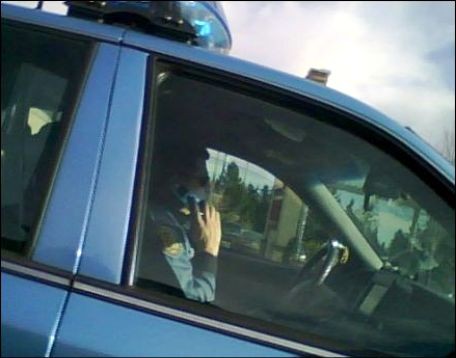
Last month a viral video of a Rohnert Park police officer engaged in questionable policing protocols—he pulled his gun on a man who was in his front yard working on his boat—was met with an admirable moment of self-scrutiny by Friendly City elected officials who promised a full, independent investigation. That’s ongoing. In the meantime, the dust-up threw a planned “Coffee with a Cop” event at a local McDonalds into sharp relief. The event was rescheduled.

Now Santa Rosa is hosting its own Coffee with a Cop event later this month. The program is part of a national push by the U.S. Department of Justice, which has provided funding for the event.

The police force here is still grappling with fallout from the 2013 shooting of 13-year-old Andy Lopez and subsequent efforts to shape-up community oversight of the police and sheriff’s departmernts.

The Santa Rosa event will also take place at a McDonald’s—the one at 2642 Santa Rosa Ave.—on Sept. 27 at 8:30am. All are welcome.

From the press release issued Sept. 4: “The majority of contacts law enforcement has with the public happen during emergencies or emotional situations. Those situations are not always the most effective times for relationship building with the community and some community members may feel that officers are unapproachable on the street. Coffee with a Cop breaks down barriers and allows for a relaxed, one-on-one interaction.”

“There will be more Coffee with a Cop events coming to a neighborhood near you,” the release announces. We’re not sure where the next one will be but if it’s Sebastopol, residents might instead anticipate Kombucha with a Cop. It’s the thought that counts.

ALGAE RHYTHM

Oh, that scary story about algae in the Russian River, the deadly algae that killed poor Posie the dog when he injested some water and was poisoned by neurotoxins. Very sad.

We saw that story last week and thought the Labor Day weekend was shaping up as a possible Jaws moment. You know: One of the biggest tourist weekends of the year, and one where you don’t want to be scaring people away from your beaches. Chief Brody, get those damned “Beach Closed” signs out of here!

Out of an abundance of caution, Sonoma County issued a health advisory that said keep your dogs away—and keep your kids from inhaling the water. A report in the Monday Press Democrat noted that people were at first wary about heading to the river, but—everyone in the water! It’s hot.

The Bohemian got a glimpse of the algae Saturday when we headed over the Russian River to the Taste of Sonoma event at the MacMurray vineyard in Healdsburg. Good times. There we spotted Sonoma County Supervisor Efren Carrillo and asked him, with some degree of cheek, if he’d lead the way and be the first to jump into the river. He laughed and said no.

Upstairs, Downstairs

The Second Mother is set in the no-man’s land of South America’s class struggle. When you consider how many films are made by people who have personal assistants, it’s particularly interesting to watch the acute tenderness and anger of a movie like The Second Mother.

The Portuguese title of the film is When Will She Be Back?—which could be considered a lady of the manor’s stern inquiry or a child’s cry. The film is set in São Paulo where water shortages bring significance to a subplot about the draining of a family swimming pool. Carlos (Lourenco Mutarelli), a bald, bearded old idler in an Elvis Costello T-shirt, is the head of a well-off family. He used to paint pictures, but now they’re wrapped in plastic in his studio. His hard-to-stomach wife, Barbara (Karine Teles), is a snobby social dynamo.

Central to the house, but rarely noticed, is Val (Regina Casé), from the poor northeast of Brazil. Val serves meals and has nannied the adolescent Fabinho (Michel Joelsas) since his boyhood. Val and Fabinho have a tender relationship, with a lot of physical contact—they secretly share a bed sometimes. But Val’s growing a bit too old to cuddle and is starting to fret about being a virgin.

Into this ménage comes an intruder: Val’s lithe daughter, Jessica (Camila Márdila), strong-willed and more than a little angry. The arrival causes ripples in all directions.

Shot in middle distance, this film isn’t just democratic in theme, it’s democratic in style. Director Anna Muylaert is dry, tough, smart and funny. We’re never quite sure who the film is about. Jessica’s right about her mom: she is a cringer, living like a serf. And Val is right about Jessica: she’s a pain-in-the-neck guest. It’s a mark of Muylaert’s control of the smaller details that she won’t let the family’s golden retriever steal a single scene, no matter how much the smiling dog tries.

‘The Second Mother’ is playing at the Christopher B. Smith Film Center,
118 Fourth St., San Rafael. 415.454.5813.

Get Comfortable

0

Jim and Michele Wimborough had a dream: Leave the
big city and move
to a small town where they could open a little restaurant of their own. They did it, and opened Hazel in Occidental six weeks ago. It’s a great addition to the West County’s dining scene.

The restaurant, located in what was Bistro de Copains, is an intimate, cheery place with large windows and a wood-fired oven focal point. As I walked up to the restaurant one night, smoke curled up from the chimney and rose against the backdrop of St. Philip church and the dense greenery of the western hills above, looking like a scene from New England. The nip of early fall was in the air. The cozy glow inside made Hazel an appealing place to be, a feeling that grew once the food arrived.

The menu of Mediterranean-inspired dishes reads the community well. I call it West County comfort food: wood-fired pizza, braised short ribs, roasted chicken and a variety of appealing starters sourced from local purveyors. The wines all come from Sonoma County. It’s familiar stuff, but quality ingredients and skillful execution elevate the restaurant above another “meat loaf and mashed potatoes” joint. A weekday meal doesn’t feel like a splurge but still qualifies as a special night out.

Starters are usually where the fireworks are, and that’s the case at Hazel. My favorite was the cured scallops draped with golden Calabrian chile oil and topped with sliced radishes, spring onions, lime juice and tiny, jewel-like Bronx grapes ($9). It’s a beautiful plate of food, with exquisitely balanced flavors. I also loved the roasted octopus ($11). Too often rendered as tough as surgical tubing, here I could have cut it with a spoon. The meaty flavor of the cephalopod is well matched with the creamy white beans, grapefruit and orange, fennel and olives.

Heirloom tomato salads are a menu cliché, but that’s forgiven when they’re as good as they are at Hazel ($8). For sheer comfort appeal, go for the fried Brussels sprouts tossed with bacon and a dusting of Estero Gold cheese ($8).

Pizzas are great. The corn pizza ($13) with cherry tomatoes, jalapeños and Pugs Leap chèvre is a standout. The crust is at once crunchy, soft inside and wonderfully rich.

Main courses hit their target, too. I’m a sucker for roasted chicken, and Hazel delivered with a succulent mix of breast, wing and leg that did time in the wood oven ($20). The crisp-skinned bird was stacked atop a satisfying cannellini bean ragout shot through with bacon, leeks and tomatoes. Best of all was the preternaturally juicy roast lamb loin ($27).

While Jim cooks, Michele runs the front of the house and turns out some great desserts ($7–$8). Pies and crisps sell out fast. Be sure to order the ridiculously creamy chocolate pot de crème.

There is outdoor seating in the front and back, but hold out for a seat inside. It gets chilly outside, and there are no heat lamps yet. And when it gets busy, which it usually does, it’s easy to feel a bit forgotten. Inside is where the action is.

Hazel, 3782 Bohemian Hwy., Occidental. 707.874.6603.

Say It Twice

0

A highlight of every summer is Petaluma’s “Live at Lagunitas” series at the Lagunitas TapRoom & Brewery. With this season coming to a close, the brewery has a special treat when experimental Philadelphia rockers Man Man take the stage Sept. 14.

In addition to a set of highly energetic grooves and infectious melodies, the concert will also feature a chance for the audience to participate in what’s being called the “Man Man Uke Uke Jam Jam.” This tongue twister is open to anyone with a ukulele who wants to get in on a jam session with the band and play a cover of their song “Deep Cover,” which will be filmed and no doubt uploaded to Youtube within the hour. Heads up, the Uke Uke Jam Jam is a separate ticket from the concert, both of which need to be picked up through the band’s website.

“Deep Cover” is from Man Man’s latest album, On Oni Pond. The record sees the band maturing from reckless abandon to rhythmic rambling. Light on the guitar squeals that defined their early output, Man Man are actually flirting with pop these days, though they still retain their unpredictable streaks of freak-folk weirdness, complete with psychobilly keyboards, dark funk jams and the occasional xylophone thrown in for fun.

BYOU(kulele) when Man Man rock
out on Monday, Sept. 14, at the Lagunitas Amphitheaterette, 1280 N. McDowell Blvd., Petaluma. 4:20pm. Free with RSVP. 707.778.8776.

‘City’ Falters

0

If imitation is the sincerest form of flattery, than perhaps disappointment is the purest reflection of respect.

There are few theater companies in the Bay Area that have earned the level of respect and admiration that Cinnabar Theater has over its 43 years of presenting quality theater, opera and musicals. So maybe it’s because the company has built up such an expectation of artistic excellence that Cinnabar’s current production of Larry Gelbart’s

City of Angels ranks as such a baffling disappointment.

While the outstanding lighting, engineering and orchestral achievements of this technically challenging production do meet the high standards that Cinnabar audiences tend to look forward to, the woefully uneven cast, despite a few fine performances and some appealing voices, as a whole falls far short.

City of Angels, a clever, funny, supremely twisty story-within-a-story, takes place partially in the mind of a pulp-fiction novelist turned Hollywood screenwriter (Domonic Tracy, earnest but one-note), as he casually cheats on his long-suffering wife (an excellent Kelly Britt, among the show’s few standouts) while working to turn one of his novels into a Hollywood screenplay. When not in bed with a sweet, hard-luck Hollywood secretary (Cary Ann Rosko, also strong), the unlikable novelist locks horns with his imperious, gleefully amoral movie producer (Spencer Dodd, hollering every line like a cartoon character).

Intermingling with the “real life” story is the fictional tale being adapted for the film, a potboiler featuring a hardboiled gumshoe named Stone (James Pfeiffer, painfully stiff and vocally unsuited to the part), as he tracks down the missing daughter of a wealthy socialite (Maria Mikheyenko, strong-voiced and playfully fetching as the obvious femme fatale).

Most of the actors play dual roles. Director Nathan Cummings keeps the flip-flopping narratives clear, assisted by Wayne Hovey’s set featuring two rotating platforms and crisp projections, Robin DeLucca’s atmospherically double-duty light design and Lisa Claybaugh’s delightful costumes. The musical direction by Mary Chun is also quite effective.

If only the same care had been taken with the performances.

With the above-noted exceptions, the mismatched cast rarely rises to the level of surreal authenticity demanded by Gelbart’s oft-hilarious script, falling far short of the kind of harmonic theatrical magic we expect from Cinnabar.

Rating (out of 5): ★★½

Three Thousand Nights Later

A few weeks ago, the Sonoma County Board of Supervisors signed up to reverse more than 35 years of federal neglect and human suffering. Their remarkable plan to raise $110 million and build 2,200 homes over the next 10 years promises an end to widespread and chronic homelessness in the county.

County staff have developed a 91-page report, “Building Homes:
A Policy Maker’s Toolbox for Ending Homelessness,” with a multitude of ideas that include zoning changes, higher densities, remodeling of unused buildings, new fees, use of surplus land, allowance for smaller living spaces and more.

One hundred ten million dollars is a lot of cash. The supervisors expect to invest “substantial money” in the project and create a housing trust fund for the remodeling and building of the new homes. But without money from other government and private sources, this plan will flounder.

It isn’t just the money: the potential for 2,200 new homes for very poor people is likely to trigger widespread paranoia. Burbank Housing has demonstrated that small groups of low-income housing do no damage to property values or neighborhood culture. Despite this, people continue to show up at hearings with 101 reasons why living spaces for poor people simply won’t work near their homes.

Given all this, 10 years is a short window to fund and build 2,200 homes. But it’s a long window for those who will sleep on the street tonight. Ten years is 3,650 nights, nights that will destroy lives and forever wound those who have to live through them without shelter.

It is often said that the supervisors are beholden to developer and landlord money. This plan is an opportunity for them to demonstrate their even-handedness. And it’s an opportunity for you to be part of the solution.

Tell the supervisors that the homeless need to be deeply involved in the planning. Then tell them you strongly support these interim solutions: legal encampments, rent control and just-cause evictions and shelter at the former hospital site on Chanate Road. Hopefully, that shelter will only be needed for the next 3,650 nights.

Adrienne Lauby is a member of Homeless Action! and a producer-host of KPFA’s ‘Pushing Limits,’ which covers disability issues.

Open Mic is a weekly feature in the ‘Bohemian.’ To have your topical essay of 350 words considered for publication, write op*****@******an.com.

Letters to the Editor: September 9, 2015

Up a Creek

Time to remove all pumps along the creeks and rivers. Absolute greed and damage to the river has occurred due to pumping for grapes. Withdraw all grape pump stations now! Not printed was the number of residential developments demanding water from wells located within 30 feet of Green Valley Creek.

Via Bohemian.com

It’s time for responsible local growers who truly care about the long-term viability of Sonoma County’s wine industry to part ways with reactionaries like Tito Sasaki and others who still defend a status quo that has led us to this point of crisis (“Coho vs. Pinot,”
Sept. 2). Millennials won’t buy wine that was paid for in fish blood.

Via Bohemian.com

I thought your article “Coho vs. Pinot” was an important contribution to the ongoing dialogue in this county about the wine industry. As a member of the wine industry, I would have appreciated two additions. First, it would have been useful to compare the water usage of vineyards to other crops that could take their place. Second, it would have been of great benefit to show the heterogeneity of water usage within the wine industry. How do the big three wineries in Sonoma County stack up? I would bet that Kendall-Jackson is more sparing with water than Constellation and Gallo.

And what about the many growers I see at seminar after seminar learning how to reduce water usage? It’s great that we have seen large-scale, voluntary water-use reduction in certain areas, but there are many individual farmers quietly cutting supply (and often their own profits), with no fanfare, marketing benefit or monetary return on that investment.

Gabriel Froymovich Healdsburg

Twenty-five thousand steelhead did not die. The estimate you cited in your recent article is not factually based. It’s amazing how people continue to regurgitate this number without ever examining its validity.

Mendocino County

Will Parrish Replies: National Marine Fisheries Service (NMFS) staff members who investigated fish strandings on the upper Russian River generated the estimate of some 25,000 steelhead mortalities in the spring of 2008. They explain the rationale for the estimate in a March 2011 memorandum titled “Biological Context of the Spring 2008 De-Watering Event in the Upper Mainstem of the Russian River.” In a 2012 interview with Wine Business Monthly, NMFS biologist David Hines notes that he and other federal biologists produced the estimate at the request of Rep. Mike Thompson, and it was based on the best information available at the time.

Write to us at le*****@******an.com.

Sept. 13-16: West Coast Roots in the North Bay

Americana songwriter Frankie Bourne is a California original. Born in the Bay Area and raised in a roadhouse, Bourne has been playing guitar since he was 14, self-taught and south-pawed. Inspired by a lifelong love of folk and blues-rock, last month Bourne released his solo debut album, Californicana. Now living in Los Angeles, Bourne is bringing his roots rock...

Understanding Amy’s

At Amy's Drive Thru, the shakes are frothy, the sauce is secret and the fries are golden and crispy. But the sprouts, they are not crunchy. At Amy's, there are no sprouts. And there is no "crunchy." Since at least the 1970s, sprouts have been an essential, nay, stereotypical menu item for natural foods and vegetarian restaurants everywhere, a status...

Wing Ding in Petaluma

There's a tangy waft in the air! We are in Petaluma at Original Buffalo Wings for a half-dozen in the white box, and another half-dozen observations, to go: 1. Um, don't ever eat Buffalo wings while driving. The sauce will spray all over the dashboard, and you will be tempted to throw bones at pedestrians as you crunch celery under...

Debriefer: September 9, 2015

EMERGENCY ROOM FOR ERROR The Sonoma West Medical Center did not open last week, despite what the new management team had hoped would happen—and despite our regrettable cover headline, "West County Hospital Opens." The hospital did not pass a state inspection Aug. 31, and there's work to be done before it opens. The Bohemian regrets jumping the gun. It will open...

Upstairs, Downstairs

The Second Mother is set in the no-man's land of South America's class struggle. When you consider how many films are made by people who have personal assistants, it's particularly interesting to watch the acute tenderness and anger of a movie like The Second Mother. The Portuguese title of the film is When Will She Be Back?—which could be considered...

Get Comfortable

Jim and Michele Wimborough had a dream: Leave the big city and move to a small town where they could open a little restaurant of their own. They did it, and opened Hazel in Occidental six weeks ago. It's a great addition to the West County's dining scene. The restaurant, located in what was Bistro de Copains, is an intimate,...

Say It Twice

A highlight of every summer is Petaluma's "Live at Lagunitas" series at the Lagunitas TapRoom & Brewery. With this season coming to a close, the brewery has a special treat when experimental Philadelphia rockers Man Man take the stage Sept. 14. In addition to a set of highly energetic grooves and infectious melodies, the concert will also feature a chance...

‘City’ Falters

If imitation is the sincerest form of flattery, than perhaps disappointment is the purest reflection of respect. There are few theater companies in the Bay Area that have earned the level of respect and admiration that Cinnabar Theater has over its 43 years of presenting quality theater, opera and musicals. So maybe it's because the company has built up such...

Three Thousand Nights Later

A few weeks ago, the Sonoma County Board of Supervisors signed up to reverse more than 35 years of federal neglect and human suffering. Their remarkable plan to raise $110 million and build 2,200 homes over the next 10 years promises an end to widespread and chronic homelessness in the county. County staff have developed a 91-page report, "Building Homes:...

Letters to the Editor: September 9, 2015

Up a Creek Time to remove all pumps along the creeks and rivers. Absolute greed and damage to the river has occurred due to pumping for grapes. Withdraw all grape pump stations now! Not printed was the number of residential developments demanding water from wells located within 30 feet of Green Valley Creek. —Brad Pipal Via Bohemian.com It's time for responsible local growers...
11,084FansLike
4,606FollowersFollow
6,928FollowersFollow