Not a Sewer

0

Between Jan. 19, 2014, and Feb. 7, 2015, St. Helena failed to properly maintain its wastewater treatment plant, and 5 million gallons of partially treated wastewater surged from a torn holding pond and contaminated groundwater and nearby wells. The San Francisco Bay Regional Water Quality Control Board is considering a mandate to compel St. Helena to upgrade its wastewater treatment plant to meet new requirements, or face more penalties.

From 2014 and 2015, the city of Calistoga’s Dunaweal wastewater treatment plant released elevated levels of pollutants into the Napa River in violation of its National Pollution Discharge Elimination Systems permit. In addition, Calistoga’s wastewater treatment plant utilizes effluent storage ponds adjacent to the river that have been percolating into the river for years. The infrastructure of this problematic facility, which has operated under a cease-and-desist order for the past year, has not been able to handle the sewage load of its current population and has necessitated emergency discharges into the river. Yet the city has approved extensive new resorts and housing developments despite public protests.

The Napa River is home to a unique assemblage of fish. The Environmental Protection Agency listed the Napa River as polluted in 1988 due to pathogens, nutrients and sediment, and the health of the river continues to decline due to higher temperatures and lack of sufficient flows. Groundwater that historically connected with the river is already compromised by over-extraction and drought.

Complicating recent wastewater treatment violations by valley municipalities, Calistoga and Napa violated clean water and potable water laws at their water treatment facilities this year because they failed to manage water flowing from the Conn Creek and Kimball Creek watersheds that were full of contaminates such as nitrates and phosphate. Phosphate is a byproduct of industrial fertilizers applied to grapevines. Invasive plant growth and algae are plaguing our waterways due to contaminates such as phosphate. Some species of algae are harmful to humans and can form lethal toxins. According to the National Marine Fisheries Service, algae toxins probably killed the dolphin that made its way into the Napa River this summer.

The Napa River is not a sewer. This needs attention by all.

Chris Malan is the executive director of the Institute for Conservation Advocacy, Research and Education, and chair of the North Coast Stream Flow Coalition.

Open Mic is a weekly feature in the ‘Bohemian.’ We welcome your contribution. To have your topical essay of 350 words considered for publication, write [email protected].

Room with No View

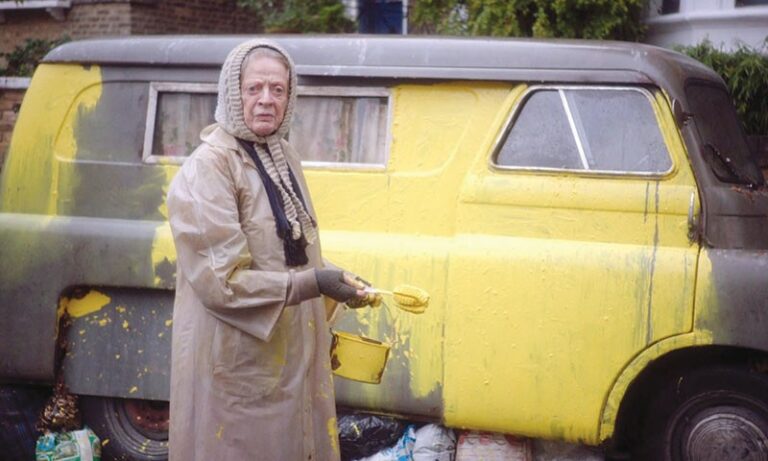
Based on one of those stories you don’t even want to think about, Room is adapted from Emma Donoghue’s novel—which, in turn, is sourced from the real-life ordeals of women kidnapped and imprisoned in makeshift dungeons. In this story, Joy (Brie Larson) and Jack (Jacob Tremblay) are in their own world; they have to be, given how they are walled up in a windowless 10-by-10-foot shed in an Akron, Ohio, backyard. Jack is five and it’s Joy’s seventh year in captivity. Not knowing her rapist’s name (Sean Bridgers), she calls him “Old Nick,” as in Satan.

Larson’s impressively focused acting never lets you blink. She’s bonded in a tight inner circle with the superb young Tremblay. Whenever director Lenny Abrahamson has the two together, he never goes wrong. He handles even the risky and macabre portions of the story—such as the scene of the monster, Nick, whining to his prisoner that he’s been laid off and has suffered unemployment for the past six months.

The truth is that Jack is relatively happy. He treats the room like Pee-wee’s Playhouse. Every piece of furniture has a name. He’s satisfied at being the complete focus of a mother’s attention. But the love and tears this movie has drawn from national audiences eludes me; the film’s turn toward healing and therapy comes on so quickly that it seems indecent.

Even performers like William H. Macy and Joan Allen (as the parents of the kidnapped Joy) can’t transcend the simple melodramatic roles they’re cast in. And the direction is even flatter for the various police, doctors, lawyers and journalists who come out to help get Joy back into the world. The clean suburbs and the orchestrated score insist on a happy ending for the kind of story that never ends joyously.

‘Room’ is playing at Summerfield Cinemas, 551 Summerfield Road,
Santa Rosa. 707.522.0719.

Ghosts of Xmas Past

Many of our Christmas stories are tales of tribulation, from Jimmy Stewart’s contemplated suicide in It’s a Wonderful Life to Tim Allen’s accidental killing of Santa in The Santa Clause. Even Charlie Brown’s seasonal affective disorder becomes a kind of wistful melancholia with enough piano jazz.

Thus it stands to reason that writer and performer (and Bohemian theater critic) David Templeton would yoke his yuletide monologue Polar Bears to a similar strategy—”tragedy plus time equals comedy,” as they say. But Templeton isn’t pursuing comedy so as much as catharsis.

Polar Bears is inspired by the true events that followed Templeton’s divorce from and the untimely death of the mother of his two young children, and how he endeavored against incredible odds to keep the spirit of Christmas alive. Through funeral arrangements and grief and an array of misunderstandings (including the inspiration for the title, which will put a lump in your throat), Polar Bears reminds us that our children’s belief in Santa may not be the best measure for our belief in ourselves as parents.

Well-directed by local theater veteran Sheri Lee Miller, the collaboration must have been akin to a protracted psychotherapy session. Though overcompensation is the modus operandi of many a divorced dad, Templeton’s story, conveyed with myriad voices, including those of his children and even his own father, approaches the neurotic.

Templeton is a writer first and an actor second—not a distant second, but enough that the latter sometimes has to play catch up with the former. At worst, Templeton has a tendency toward recitation, which, at nearly two hours of live performance, is a feat in itself. But at his best, he eschews fidelity to his text and speaks truly to the emotion of the moment. It’s like he’s talking to a friend about one of the most challenging periods of his life. (Full disclosure: I consider myself one among David’s many friends.)

Templeton’s hindsight, however, is not through rose-tinted glasses—it’s more like a microscope whose slide is smudged around the edges with Vaseline, which affords it a kind of Golden Age of Hollywood–style nostalgia, despite the rigorous self-examination. Polar Bears may not restore your belief in Santa Claus, but it will restore your belief in parenthood.

Letters to the Editor: December 9, 2015

Support Your Local Busker

I have been busking in Sonoma County, from Healdsburg to Petaluma, for more than 10 years. Buskers usually play music with a case open or something else for tips. Buskers do not panhandle by asking for money and have a little more entertainment value than a panhandler.

The recent acquisition of Safeway by Albertsons has increased corporate anti-panhandling and loitering rules as evidenced by new signs. I have talked to the manager at Safeway in Sebastopol, and he understands the difference between buskers and panhandlers, and has allowed buskers with some restrictions. I have thanked him for his support and appreciation of Sonoma County’s rich music culture.

But recently there have been complaints about buskers. I do not understand how during the one-minute walk from the car to the store some music could be a problem. But the manager is getting complaints. He is reconsidering his stance about buskers and the corporate rules. Since I get many compliments, I have the feeling the manager is hearing only complaints.

If you enjoy the culture brought to you by buskers, please fill out a customer comment card so the manager can have a more balanced understanding of how the customers feel.

Andy’s Market, Fiesta Market and Oliver’s Market are all busker-friendly, and some have a sign-up process for musicians and nonprofits, which shows their appreciation of buskers as part of the community.

Sebastopol

Save the Trees

I was born and raised in Santa Rosa and have recently returned to my hometown after a 30-year hiatus. I adore the trees and how much they add to the local flavor. I must strongly urge the city not to cut down the trees in Courthouse Square. There is plenty of parking (covered no less) at the mall, and walking a few blocks seems a small price to pay for having the majesty of the redwoods grace our downtown.

Via Bohemian.com

Time to Reflect

I was disappointed by Jonah Raskin’s Open Mic (Nov. 25), because he does not take the opportunity to discuss the larger context of war and violence around the world. Instead, he focuses on the recent violence in Paris as if that is all the suffering there is, just as the Western media does. I fear this exclusion continues to feed first world insularism (as 9-11 did). I can appreciate Mr. Raskin’s love of France, his friends, the culture, but when he ignores the larger context of violence and suffering around the world, there is a huge cost.

Why do we wait until Paris to express our grief and sadness when Syria, Yemen, Afghanistan, Iraq, Africa all suffer? Let’s talk about the ancient cultures being lost in those countries. And now France joins the United States, Great Britain and Germany in bombing these countries and adding to the suffering. We must find other tools besides bombs and guns to stop violence and suffering. I hope Mr. Raskin will raise his voice to all of that.

Santa Rosa

Write to us at [email protected].

The Star Child

0

‘In this art form, people hold on to old success stories and old models,” says Brent Lindsay, “and I just want to punch right through that.”

As co-founder of Santa Rosa’s experimental theater company the Imaginists, Lindsay and his partner, Amy Pinto, regularly push the boundaries of live theater with original works that are often subversive and challenging.

The Imaginists’ latest offering is also one of their most out-of-this-world productions. The Eternal Return of the Cosmic Star Child from the Songbook of the Invisible Sky is an interstellar operetta that takes inspiration from the nativity story and dials into current-day issues of xenophobia, spirituality and refugees for an intensely stirring musical that runs Dec. 10–20.

Conceived of by Lindsay five weeks ago, and directed by Lindsay and Pinto, the new production is a collaborative effort with musical director and songwriter Charlie Davenport (Rags, Secret Cat) and experimental Santa Rosa band Snake Walk.

Lindsay plays the King Herod–like role of a CEO who’s after the miracle-born Star Child. The cast—which includes longtime Imaginists ensemble performers Rae Quintana, Amanda Artru, Quenby Dolgushkin as the protective Magi, and Katrina Dolgushkin as the motherly Mira—sing from four platforms under circling spotlights while the audience sits in the round.

“I love working with Brent because he’s so open and allows everybody to reach his or her potential,” says Davenport, who makes his Imaginists debut in this show. “And because it’s all written so quickly, it feels so current. Plus it’s gorgeous to look at. It’s like candy to watch.”

With the live band belting out original music that ranges from heavy guitar rock to sublime synthesizer atmospheres, the cast brings this bizarre songbook to life in a nontraditional way.

“You want to make it complex enough that it keeps growing, not shrinking, not going dormant,” Lindsay says. “For me, I want to make theater where people have to come a second time. That’s what I want. The second time is almost always when people come up to me and tell me they loved it.”

A Santa Rosa native, Lindsay credits his love of theater with his old Analy High School drama teacher Amy Glazer, now a professor at San Jose State University and a well-known Bay Area director. “She changed my whole perception,” says Lindsay. “I think what she did to me was she said, ‘With disciple, this art form can be really exciting.'”

After high school, though, live theater in the North Bay of the 1980s didn’t offer Lindsay much excitement. He moved east and attended the North Carolina School of the Arts, where he met Pinto in 1986 when they were both enrolled in the theater department.

After five years in New York City, where, among other gigs, Lindsay worked for the Living Theatre founder and off-Broadway force of nature Judith Malina, he and Pinto found themselves on a farm in southern Delaware. In 1994, they formed the experimental ensemble theater company KITUS (Knights of Indulgence Theatre United States), and, says Lindsay, conned the company into coming out west. They landed in Truckee and took over the scene there from 1997 to 2001, when KITUS disbanded. “We were all hitting 30 to 35 years old,” says Lindsay. “And we were going, ‘What are we doing?'”

After that reality check, Lindsay and Pinto came to the North Bay, settled in Healdsburg and founded the Imaginists in 2001 as a small company and theater school.

“I don’t know that I knew I was going to be here,” says Lindsay. “I knew there was something interesting about returning here and putting something in place that wasn’t here for me.”

Ten students at the school turned into 40, then turned into waiting lists. Many of those original students, like Quenby and Katrina Dolgushkin, have now grown up alongside Lindsay and Pinto, and are regular members of the company today.

The Imaginists moved to their current location in Santa Rosa’s South A Street arts district in 2009, and for the last six years have been attracting diverse crowds and gaining national and international attention for their works.

“The main focus is to get people to share their story,” Lindsay says. “We build shows around themes and ideas, but it’s always about people pitching in. For young people, to build up from their creative voice is really exciting. We try to look for interesting ways to keep young people excited about theater, showing them that theater can be whatever you want it to be.

“There’s empowerment in imagination.”

Rainmaker

A much-belated El Niño is coming—the first in 18 years—and it may be the strongest since 1950, when oceanographic monitoring began. “It’s right on schedule,” says Nate Mantua, a climate scientist for the National Oceanic and Atmospheric Administration’s (NOAA) Southwest Fisheries Science Center.

By November, “temperatures in Southern California [were] about 5 degrees Celsius warmer than normal, or almost 10 degrees Fahrenheit warmer than normal,” says Mantua. “Local waters are 5.5 degrees Fahrenheit above average, or in the low- to mid-60s, depending what the wind is doing.”

There were hopes for drought-beating rain last winter, but instead we got the opposite: barely three inches of rain fell in Santa Rosa between January and March of this year. Petaluma got about four inches of rain over that same period.

It was the Great El Niño Fizzle, sparked by the promise of increased ocean temperatures but extinguished by the trade winds which, in an El Niño event, need to slacken so all that warm water will slosh back to our side of the Pacific.

While there are no sure things, this year looks different. Surfers are psyched for a wave-generating El Niño. Organizers of Half Moon Bay’s Titans of Mavericks big-wave surf contest have already been printing T-shirts that say “El Niño Is Coming,” and coastal residents are rightly excited for larger than average swells in the coming months.

The oceans are warming, the trade winds have already died down, and the usually bone-dry Atacama Desert in northern Chile and southern Peru is blooming—a telltale sign that El Niño is upon us. There’s just one thing: if El Niño was, in fact, a boy child gathering strength inside the womb of the Pacific, his sonogram would be atypical, to say the least. Admittedly, there’s that unmistakable band of warm water bulging along the equator—El Niño’s hallmark—but there are also large masses of warm water, creatively dubbed “the warm blob,” extending, as we have never seen before, from the coastal United States and Mexico to as far north as Alaska.

“We’ve got this incredible warming of the higher latitudes of the Pacific Ocean,” says Mantua, “and ocean temperatures have been record-high for the last two years. That makes this year unlike anything in our historical record.”

El Niño was on everyone’s mind on Dec. 3 when State Sen. Mike McGuire and Assemblyman Jim Wood held a hearing at the Steele Lane Community Center in Santa Rosa to talk about the ongoing shutdown of the California Dungeness and rock crab fisheries. Both species are victims of the blob, which spurred an algae bloom this year of unprecedented proportion that toxified the crab with high levels of domoic acid.

The backdrop at the big crab meeting was what scientists and elected officials are calling the emergent “new normal” in the Pacific Ocean. Though nothing is certain in these weird new waters, “if El Nino shows up in force as predicted, the blob will dissipate,” said Catherine Kuhlman, executive director for ocean and coastal policy at the California Ocean Protection Council.

Kuhlman cited a litany of unpleasant blob-related trends at the crab conference that included many marine mammal deaths—sea lions are taking a hit—and unusual species’ washing up on the beaches. “The ecosystem is shifting in response to the climate,” Kuhlman told the committee and packed room of commercial crabbers who had journeyed from around the state for the event.

Kuhlman warned that, despite whatever benefit a wicked winter El Niño might have on breaking up the blob, “it’s highly likely that we will have more of the algae blooms” in coming years.

“We don’t know if it’s climate change, the blob or El Niño, but the oceans are changing, and they are changing fast,” said Eric Sklar, who sits on the California Fish and Game Commission.

The anomalous blob is raising many questions about climate change and our future—including what this year’s El Niño winter will be like. Warmer oceans mean stronger storms and increased odds of above-average winter precipitation. But just how much rain is the boy-child planning to bring us? It is enough to replenish our parched land? Will it unfold slow and steady like applause or come in fits and torrential downpours, unleashing landslides, floods and hurricane-force winds, like the ones that tormented California’s not-so-distant past?

“We know that no two El Niño events in the past have been the same,” Mantua says, “even though a lot of attention is being put on what happened in [the] 1997–98 and 1982–83 [El Niños], because of similarities in the strength of this event to what those two events had. But there is no guarantee that we’ll see a repeat of all of the things that might stand out in people’s memories. Odds are there will be some surprises.”

Even with advanced technology—which includes some 70 buoys moored in the depths between Japan and the California coast—climate prediction is a field riddled with unknowns, probabilities and conservative estimates. The saying goes, climate is what you predict and weather is what you get. But one thing is certain: it’s going to rain this winter. Possibly a lot. And maybe in a way Northern California hasn’t seen in decades.

Stormy Past

In early January 1982, a giant storm sat over the Bay Area and much of the California coastline. The rain began to fall during the last quarter of the NFL championship game between the San Francisco 49ers and the New York Giants, pouring through the night and into the next day. It was one of the most notorious California weather events of the 20th century, reports the Western Regional Climate Center (WRCC), a repository of historical climate information which uses data from the National Weather Service. The center reports that the ’82 storms brought “high wind, heavy rain and heavy snowfall across all of California. This led to direct wind damage, higher tides, immediate flooding to coastal and valley locations, mudslides in coastal mountain areas, record snowfall in the Sierra mountains, and resulting spring snowmelt river flooding.”

The ’82–83 El Nino left lots of wreckage, along with record rains and snowstorms: “Thirty-six dead, 481 injured, $1.2 billion economic losses, including 6,661 homes and 1,330 businesses damaged or destroyed,” reports the WRCC.

They still talk about the weather events down in hard-hit Santa Cruz, especially scientists in the South Bay who beheld its wrath. “All you saw were trees sticking out and cars and pieces of houses, and it was right after Christmas, so there were Christmas decorations, and there were 10 people buried under it all,” says Gary Griggs, professor of earth and planetary sciences at UC Santa Cruz, where he’s taught since 1968. He was the first geologist on the scene the morning after the storm. “One woman survived,” recalls Griggs. “She grabbed onto a tree as it went through her house at one in the morning.”

More recently, in the winter of ’97–98, massive flooding claimed 17 lives in California. East Palo Alto was one of the hardest hit cities in the Bay Area, as the San Francisquito Creek overflowed and damaged a reported 1,700 homes. Many were trapped inside, as all that surrounded the exteriors were lakes of muddy water after a steady month of rain. Those were El Niño years, which is a level this winter doesn’t need to create dire consequences. “You don’t have to have an El Niño year to have a really devastating winter,” says Griggs.

According to a study published in the Journal of Coastal Research, about 76 percent of the storms between 1910 and 1995 that caused significant erosion and structural damage along the California coast occurred during El Niño years. We still don’t really know why it happens, but when the trade winds—which normally blow toward the equator from the northeast and southeast—die down, it allows the warm water in the western Pacific to flow back toward the coast of South America and then up the coast.

“The first thing it does is change the climate on opposite sides of the Pacific,” says Griggs. That means drought in places like the Philippines, New Guinea and parts of Australia, as well as heavy rainfall in the eastern half of the tropical Pacific. Some of these shifts are already happening, according to Mantua.

“Right now, the Atacama Desert in southern Peru and northern Chile is blooming,” Mantua says. “They’ve had lots of rainfall the last couple of months, and that’s a part of the world that has some of the driest deserts on earth in the absence of these El Niño periods. It can go years without any appreciable rain at all.” Mantua notes that the same is true for the Galápagos Islands.

During El Niño winters, which typically peak in December and continue through January and February, periods of active storm development at the same latitude as Central and Southern California have sent storms barreling into the West Coast, says Mantua. This happened in the ’82–83 and ’97–98 El Niño years, but we have also had lots
of storms like this in some
non–El Niño years, he points out.

One concern is that the ominous warm blob could potentially add fuel to storms as they develop in their breeding ground between Hawaii and the Aleutians. “When we have big storms that do develop and move across that water,” Mantua says, “they’re going to have strong winds and they’re going to evaporate a lot of water off that surface. They’re going to cool that warm blob, but in the process, they’re going to fuel themselves up. So I do think that our storms are going to be warmer and stronger than they otherwise would be without that vast area of warm water.”

Coupled with elevated sea levels typical of a warmer ocean, the more direct westerly wave approach of El Niño winters delivers an extra blow, and potentially vast flooding.

Thirst for Rain

El Niño isn’t synonymous with rain, though four out of the last six strong El Niños brought wet winters to California, Mantua says. But NOAA’s Climate Prediction Center is calling for “increased odds” of a wet winter in Northern California; there’s a one-in-three chance, and a less than one-in-three chance for a dry winter. And while the odds for a wet winter increase in Southern California, the Gulf Coast and Florida, there’s just a 5 to 10 percent shift in the odds for a wet winter for the central and northern coast, Mantua says. “It’s pretty subtle,” he says, “but that is the nature of climate forecasting.”

Would a wet winter end the drought?

“While the precipitation outlook suggests good news for California, one season of above-average rain and snow is unlikely to erase four years of drought,” says Mike Halpert of NOAA’s Climate Prediction Center. “The drought outlook shows that some improvement is likely in Central and Southern California by the end of January, but not drought removal. Additional statewide relief is possible during February and March.”

The ’82–83 and ’97–98 El Niño months did bring lots of rain to the area, so there is hope that this year’s El Niño might be the drought-buster. The headline-grabber from ’98 was in parts of Marin County, which got up to 90 inches of rain that year. Many cities and towns up and down the coast, and inland, experienced a doubling, or more, of their annual rainfall averages in ’97–98, according to data from the National Weather Service.

“There was good snowpack in the Sierra, and if we had a repeat of those kind of winters, it would definitely put a dent in the drought,” says Mantua. “It wouldn’t wipe out all of our water-supply deficit, it wouldn’t recharge all of the ground water that’s been pumped out in the last four years and the last dozens of years, but at least it would help refill reservoirs and recharge our soils and get a snowpack established again in the mountains.”

El Niño was identified by fishermen in Peru and Ecuador as far back as the 1600s, not so much for its weather patterns as for its negative impacts on fishing. The warm waters shut down nutrient-rich upwelling, halting the plankton bloom and subsequently breaking the entire food chain. But El Niño’s warm water can also mean weak upwelling in local waters too, which could mean poor reproduction this year for Dungeness crab, which are also being plagued by the blob’s algae bloom of toxic domoic acid.

The warm water isn’t great for Pacific salmon either, Mantua says, which thrive in cold, upwelled water high in nutrients and a productive plankton community that includes lipid-rich copepods and other crustaceans like krill.

“During these warm periods we know that it can be stressful for top predators, including salmon, seabirds, sea lions and seals,” says Mantua. Salmon released from hatcheries, which produce most of the salmon caught off the coast of California, are usually fished after they’ve been in the ocean for two or three years, Mantua says, “so it doesn’t have such a big impact on the season that you’re in, but two or three years down the road.”

Similar to past El Niño years, bluefin tuna, opah or moonfish, and bonito—marine life typical off the coast of Southern California—are all currently swarming area waters.

Since the last El Niño, the Bay Area has experienced almost two decades of relatively mild winters, and Griggs points out that only a small portion of today’s residents were even here to experience the full wrath of an intense storm season.

“It’s like all earthquakes aren’t the same—all floods aren’t the same, and all El Niños are not the same. I’m not sure if people fully understand that,” says Griggs. “I think, in terms of flooding, what people are doing is trying to clean out storm drains and get sandbags ready and make sure your roof gutters are clean, which helps the water get out faster.” Even so, “You can’t stop sea levels from rising and you can’t stop the waves from coming.”

East of Amigos

0

Midway into a tour of Merriam Vineyards, I’m shown the spacious tasting room, which is appointed like an upscale country boutique.

I learn that the estate vineyard was bound for organic certification from the very start in 2003. And proprietor Peter Merriam tells me how he came to love the great wines of France, because that’s what they put on the shelves on the East Coast, where he’s in business. But I’m looking around, wondering: where’s the paint-by-numbers, Tuscan-style villa?

This winery is actually “New England–styled,” and it turns out that Merriam never actually moved to wine country, although he’s been visiting Healdsburg since 1982, when his school buddy Tom Simoneau (for years, “the Wine Guy” on KSRO) trekked out here. After harvest, however, Merriam heads back to New England, like a snowbird in reverse. “I’m an East Coast kind of guy,” Merriam says with a shrug. A self-described outdoors enthusiast, the native Mainer sticks to where there’s a reliable snowpack.

That East Coast business? That’s actually the winery itself, which Merriam runs from the Boston area, visiting Sonoma County nearly once a month. Formerly, he ran a “package store,” which is what they call off-sale wine and liquor shops back there, while his wife, Diana, was on the board of a large, family-run New England supermarket chain.

Enough of the story, how is the wine? Well, a sign that boasts “94+ points Robert Parker” for the 2010 Rockpile Cabernet hangs on a wall in the cellar, so that’s something. I’ll advocate at least as many points for the 2013 Bacigalupi Chardonnay ($50), an excellent rendition from this treasured vineyard that splits the cream from the apple, with not too much butter in between.

While the 2013 Estate Pinot Noir ($40) is warm and jammy, look for the cool 2015 rosé next year, with chalky acidity and light, strawberry and rose aromas. Instead of straight-up, toasty oak, the 2014 Fumé Blanc ($28) smells like toasted almonds and none of the grassiness of the fruity 2014 Sauvignon Blanc ($20).

Slightly charred, but not too much, the 2011 Estate Merlot ($30) displays all the graphite and dark, red berry fruit that you might want in a Merlot. With less than I expect from a Cab Franc—in the sense of less is more—the accessible 2010 Dry Creek Valley Cabernet Franc ($45) wows with perfumed red berry fruit and notes of sweet blonde tobacco.

Merriam Vineyards, 11654 Los Amigos Road, Healdsburg. Daily, 10am–5pm. Tasting fee, $10. Dog-friendly. 707.433.4032.

Emerald Standard

0

The first year that the Emerald Cup was held at the Sonoma County Fairgrounds in Santa Rosa, people were anxious to attend. Now in its 12th year, the Emerald Cup has become the world’s largest and most respected outdoor organic cannabis competition.

This year’s Cup, happening Dec. 12–13, will be the biggest yet with great music, top-tier speakers and panels, hands-on workshops, on-site physician recommendations and more than 200 vendors.

The list of guest speakers includes politicians Fiona Ma, state Board of Equalization member, and Assemblyman Ken Cooley, as well as entrepreneurs, cannabis cultivators and a host of scientists and lawyers. There will also be plenty of entertainment, as Santa Barbara roots-reggae rockers Rebelution and Oakland’s worldly electronica outfit Beats Antique headline the Healing Harvest Music Hall with a host of other exciting acts. There’s even some “cannabis comedy” slated for the event, and the whole weekend wraps up with the awards ceremony.

The Emerald Cup takes place on Saturday–Sunday, Dec. 12–13, at the Sonoma County Fairgrounds, 1350 Bennett Valley Road, Santa Rosa. Saturday, 11am to 10:30pm; Sunday, 11am to 7:30pm. $55–$100; 18 and over. theemeraldcup.com

Debriefer: December 9, 2015

SHUTDOWN

A critical component to fund a Larkspur SMART train extension moved forward in the U.S. Congress as lawmakers agreed in early December to authorize the Small Starts program at $11 billion over six years. There’s $20 million pledged by President Obama in the transportation authorization bill earmarked for the Sonoma-Marin Area Transit system that would extend rail tracks by two miles, from San Rafael to Larkspur.

But the entire spending package might go out the window, and the SMART dollars with them. A government shutdown looms as Democratic lawmakers grapple with multiple radical right-wing riders dropped into an omnibus appropriations bill to fund the government. The transportation authorization bill that passed earlier this month included SMART dollars, but now that it’s time to appropriate the money, Republicans have threatened a shutdown.

“They’ve thrown the kitchen sink at the Democrats,” says Rep. Jared Huffman, D-San Rafael. After months of negotiations, Huffman says, the party “threw it out the window and offered a deal to Democrats that was basically every radically ideological agenda [item] that they could dream up.” The GOP riders would ban Syrian refugees; amend the Dodd-Frank Act; pollute the Clean Air Act; wreck Obamacare; defund, demonize and otherwise delegitimize Planned Parenthood; whittle away at the Endangered Species Act . . .

House Democrats sent the bill back to the GOP to scrub the extremism. “It’s been flatly rejected by us, so now—having had the goal posts moved—we are really not quite sure where this goes in the next few days,” said Huffman late last week. He was cautiously optimistic. “It’s wait-and-see time, but we don’t have to wait too terribly long. We’re at the 11th hour.”

BAN DRAGS ON

Crabbers headed to the Steele Lane Community Center in Santa Rosa on Dec. 3 to find out when the state would lift the closure on the Dungeness and rock crab fisheries because of high levels of the potentially fatal domoic acid.

The news was unsatisfying. “I don’t know when we will reopen,” said California Department of Fish and Wildlife director Charlton Bonham. He assured the crabbers that there would be constant testing going on through the month, and that Fish and Wildlife was “seeing good trends, but very highly elevated hot spots.”

In order to open the fisheries, state officials need to see average levels of domoic acid in crab viscera drop to below 30 parts per million for two weeks running. The levels are generally abating, but one Dungeness in the Channel Islands area had just been sampled at 1,000 ppm.

News of the very “hot” crab elicited a round of agitated murmurs from the room full of crabbers, which included Don Marshall, a member of the Pacific Coast Federation of Fishermen’s Associations.

“I agree, and the fleet agrees as a whole, that public safety is the main concern,” Marshall told the legislative panel comprised of Healdsburg lawmakers State
Sen. Mike McGuire and Assemblyman Jim Wood.

Marshall advocated for a uniform opening of the Dungeness season when it was safe to do so, and strongly rejected any consideration to open state waters based on local test results. “The crabs don’t abide district lines,” Marshall said as he urged lawmakers and officials to “approach this matter with extreme caution. We are in uncharted waters.”

Marshall is selling Christmas trees to get through the holidays.

Ramen for Here

0

Ramen Gaijin is staying in Sebastopol. The popular Sebastopol ramen shop was eyeing a move to a space in Santa Rosa’s Railroad Square, but owners Matthew Williams and Moishe Hahn-Schuman secured a favorable lease with building owner Stephen Singer and now have ambitious plans in the works.

The other big news is that, as of Dec. 10, beer, sake and wine will flow again after a four-month dry spell. After moving into Forcetta-Bastoni earlier this year, Williams and Hahn-Schuman applied to transfer the faltering restaurant’s liquor license to their business, but the process was mired in red tape and the state blocked liquor sales until outstanding issues were resolved. Forcetta-Bastoni has since closed, and Ramen Gaijin is the sole occupant of the downtown Sebastopol space. Beer, wine and sake will be available at the bar and lounge, but not ramen. No spirits for now.

Meanwhile, the ramen restaurant will close for as long as a month over the holidays for remodeling aimed at streamlining the kitchen, retooling the bar and taking care of building-maintenance issues.

Once the renovations are complete, the bar will offer an izakaya menu, Japanese-style bar snacks like yakitori and small plate dishes made to go with drinks. There are also plans to hire a beverage director who will create an ambitious cocktail program (think Japanese whiskey-based cocktails and more sake).

Longer term, Williams says he and Hahn-Schuman are looking to bring in a sushi chef to open a 10-seat omakase-style sushi bar at the counter space in the middle of the restaurant. They also have plans to make their excellent noodles available for wholesale.

In the meantime, toast Ramen Gaijin’s commitment to stay with a beer and bowl of shoyu ramen. 6948 Sebastopol Ave., Sebastopol. 707.827.3609.

Not a Sewer

Between Jan. 19, 2014, and Feb. 7, 2015, St. Helena failed to properly maintain its wastewater treatment plant, and 5 million gallons of partially treated wastewater surged from a torn holding pond and contaminated groundwater and nearby wells. The San Francisco Bay Regional Water Quality Control Board is considering a mandate to compel St. Helena to upgrade its wastewater...

Room with No View

Based on one of those stories you don't even want to think about, Room is adapted from Emma Donoghue's novel—which, in turn, is sourced from the real-life ordeals of women kidnapped and imprisoned in makeshift dungeons. In this story, Joy (Brie Larson) and Jack (Jacob Tremblay) are in their own world; they have to be, given how they are...

Ghosts of Xmas Past

Many of our Christmas stories are tales of tribulation, from Jimmy Stewart's contemplated suicide in It's a Wonderful Life to Tim Allen's accidental killing of Santa in The Santa Clause. Even Charlie Brown's seasonal affective disorder becomes a kind of wistful melancholia with enough piano jazz. Thus it stands to reason that writer and performer (and Bohemian theater critic) David...

Letters to the Editor: December 9, 2015

Support Your Local Busker I have been busking in Sonoma County, from Healdsburg to Petaluma, for more than 10 years. Buskers usually play music with a case open or something else for tips. Buskers do not panhandle by asking for money and have a little more entertainment value than a panhandler. The recent acquisition of Safeway by Albertsons has increased corporate...

The Star Child

'In this art form, people hold on to old success stories and old models," says Brent Lindsay, "and I just want to punch right through that." As co-founder of Santa Rosa's experimental theater company the Imaginists, Lindsay and his partner, Amy Pinto, regularly push the boundaries of live theater with original works that are often subversive and challenging. The Imaginists' latest...

Rainmaker

A much-belated El Niño is coming—the first in 18 years—and it may be the strongest since 1950, when oceanographic monitoring began. "It's right on schedule," says Nate Mantua, a climate scientist for the National Oceanic and Atmospheric Administration's (NOAA) Southwest Fisheries Science Center. By November, "temperatures in Southern California about 5 degrees Celsius warmer than normal, or almost 10...

East of Amigos

Midway into a tour of Merriam Vineyards, I'm shown the spacious tasting room, which is appointed like an upscale country boutique. I learn that the estate vineyard was bound for organic certification from the very start in 2003. And proprietor Peter Merriam tells me how he came to love the great wines of France, because that's what they put on...

Emerald Standard

The first year that the Emerald Cup was held at the Sonoma County Fairgrounds in Santa Rosa, people were anxious to attend. Now in its 12th year, the Emerald Cup has become the world's largest and most respected outdoor organic cannabis competition. This year's Cup, happening Dec. 12–13, will be the biggest yet with great music, top-tier speakers and panels,...

Debriefer: December 9, 2015

SHUTDOWN A critical component to fund a Larkspur SMART train extension moved forward in the U.S. Congress as lawmakers agreed in early December to authorize the Small Starts program at $11 billion over six years. There's $20 million pledged by President Obama in the transportation authorization bill earmarked for the Sonoma-Marin Area Transit system that would extend rail tracks by...

Ramen for Here

Ramen Gaijin is staying in Sebastopol. The popular Sebastopol ramen shop was eyeing a move to a space in Santa Rosa's Railroad Square, but owners Matthew Williams and Moishe Hahn-Schuman secured a favorable lease with building owner Stephen Singer and now have ambitious plans in the works. The other big news is that, as of Dec. 10, beer, sake and...
11,084FansLike
4,606FollowersFollow
6,928FollowersFollow