Pie in Your Eye

0

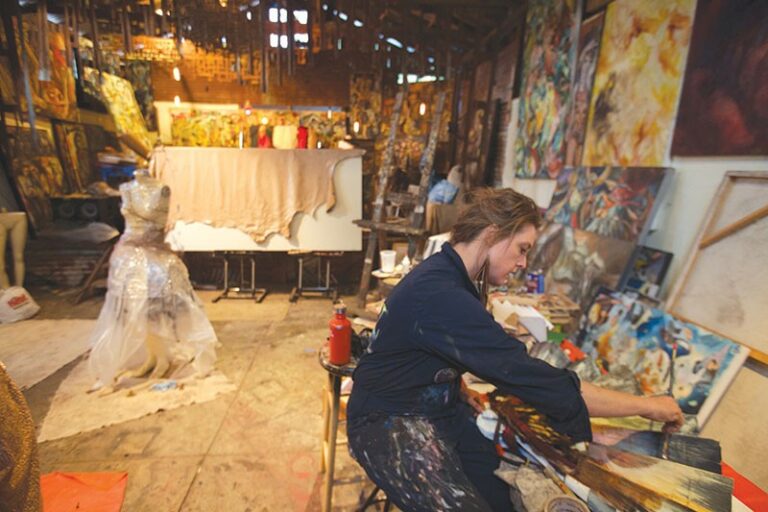
Pie Eyed Studio is not your typical art space. Run by artist Lauri Luck on Gravenstein Highway just south of Sebastopol, it has become a haven for both art and food lovers over the last four years with a monthly open studio event where visiting artists and complimentary homemade pies intermingle.

After 45 shows featuring 65 artists, Luck recently decided to take a sabbatical from hosting the Pie Eyed events to focus on her own work, though she’s hosting two more weekends in November before taking a break.

On Nov. 12–13, Pie Eyed has a special pop-up show for artists Mardi Storm and Kimberly McCartney. The exhibit is a fundraiser for Storm, who is going to grad school, and Luck will have 40 pies for sale in addition to her usual free offerings. Then on
Nov. 26–27 Pie Eyed presents a printmakers and jewelers weekend with artists Holly Jordan and Karen Kelly, jeweler Pattie Reilly and an array of cranberry-pear, lemon chess and pecan pies.

Pie Eyed started when Luck was looking for a bigger working studio in 2012. She called friend and fellow West County artist Patrick Amiot, best known as a “junk artist” whose brightly colored, fantastically fun sculptures, made from recycled materials, dot Sebastopol and the West County. Amiot welcomed Luck to join him at his large workspace on Gravenstein Highway.

“He’s a pretty energetic figure,” says Luck. “It was nice to be tapped into that space and we agreed that was a go.”

Thing is, it was a pricey situation, so Luck opened her studio to the public on weekends to sell her work out of her space. “I tell you, nobody came,” she says, laughing.

After one or two lonely weekends, a light bulb went off while making a slew of Thanksgiving pies. “I had this idea that I could offer pie, which sounds kind of crazy, but I love pie and I love to make it, and I thought that would be quirky enough to get people’s interest,” says Luck.

She was right, and not long after she put out a roadside sign for “Art + Pie,” people started showing up. Luck quickly found that the surest way to an art lover’s heart is via the stomach.

Soon, artists started asking if they could show at Luck’s Pie Eyed events. “When an artist comes to me about doing a show, a lot of the times I’ve never met them or seen their work,” Luck says. “For me, it’s a thrill, because I’m discovering them too.”

Pie Eyed has welcomed a Wyoming cowboy artist, the dean of art, architecture and design from Cornell University, goat herders and even hitchhikers from Wilmington, N.C., where much of Luck’s family lives.

“It’s exciting for folks to see what’s being done in their community, this amazing range of creativity,” she says.

Until Death

0

Most stories that appear to be about death and dying prove to be all about life and living. They just use the inevitability of death to cast comparative light and shadow on the many joys and pitfalls of being alive.

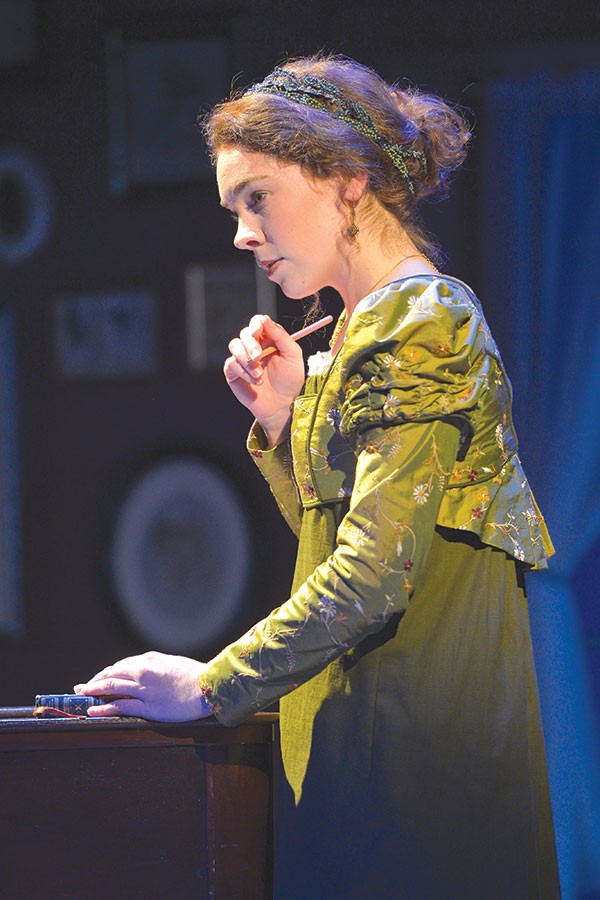
In Jane Anderson’s deliciously rich drama The Quality of Life, playing at Petaluma’s Cinnabar Theater, four superb performances anchor a beautifully crafted series of alternately heavy and lighthearted discussions about death and life, culminating in a two-part climax that is at once breathtaking in its poetic simplicity and stunning in its clear-eyed wisdom.

Dinah and Bill (Susan Gundunas and Richard Pallaziol), conservative Christians from the Midwest, are struggling in different ways with the brutal death of their daughter. When Dinah learns that her cousin Jeannette (Elly Lichenstein) has lost her Northern California home to a wildfire, and that her husband, Neil (James Pelican), is in the final stages of cancer, the straight-laced Midwesterners decide to visit their hippy-dippy in-laws. Stunned to find the Californians living blissfully in a yurt aside the skeletal remains of their house, Dinah and Bill are in for another surprise when they learn that Neil plans to take his own life in a few weeks—after one last party.

What perhaps sounds depressing and heavy is anything but in Anderson’s humor-filled script. The level of intellectual debate among the characters is at times exhilarating, as this mismatched foursome power through a fiery list of hot-button topics, from medical marijuana and right-to-die issues to the question of whether God truly has a plan for our lives.

The unusual set, by Nina Ball, is truly impressive—all blackened timber at crazy angles on a patch of dirt complete with campfire. The lighting by Jon Tracy effectively gives a sense of time, from early morning to late evening.

Taylor Korobow’s sensitive direction is unfussy and clean, focusing on building intensity through the ever-shifting relationships of the all-too-human characters. An unnecessary opening sequence set to Bob Dylan’s “Not Dark Yet” mainly serves to delay the action.

Once in gear, though, Korobow and her excellent cast deliver a gripping, moving, funny and life-affirming examination of the ways that death, ironically enough, has ways to remind us that life, for all its shocks and snares and unhappy twists, really is worth living, and savoring, right to the end.

Rating (out of 5): ★★★★½

Door to Door

Andrea Arnold’s celebrated, rhapsodic yet shapeless road-trip movie American Honey follows Star (Sasha Lane), who flees the squalor of her Texas home to join a crew of magazine sellers, helmed by Jake (Shia LaBeouf). Crammed into a van or into motel rooms, the rootless runaway kids hustle subscriptions all over the Midwest.

Arnold, the director of Fish Tank and Wuthering Heights, has sharp instincts. And Lane, discovered on a Florida beach, was a find: this petite dreaming girl, half-amused with her ability to charm men, gives this rambling movie a center.

Star is enraptured with the landscapes. The gargantuan, Trumpian mini-mansions of Kansas City’s suburbs, appearing as described in Thomas Frank’s What’s the Matter With Kansas?, give way to the bleak fracking grounds on the prairie. (Among the roughnecks, Star is tempted to sell herself instead of the subscriptions.)

Arnold loves the cloudscapes, the interstate-scapes and even the insects flittering in for their closeups. But the director always seems a stranger to the people of the area. She doesn’t understand how nervous America is. Second only to “In God We Trust” is the motto “No solicitors.” It may be true that America is hard on the edges and soft in the middle, but these Midwestern doors seem porous to Jake’s aimless franticness and transparent bullshit stories.

There’s a third American motto that eludes Arnold: “You’re under arrest.” All the cops and security guards we have here never interfere with the dance parties and the bonfires these rootless kids throw in every other scene. It’s one thing being a teen and just letting stuff happen; it’s another to stage their lives that way—to hope that wrapping it all up with a song (the Lady Antebellum hit that gives this movies its title) will make it look like a story that’s come to a full stop.

‘American Honey’ is playing at Summerfield Cinemas, 551 Summerfield Road, Santa Rosa. 707.522.0719.

Into Darkness

1

Growing up in a religious family that viewed anything other than Protestant Christianity as satanic, Preston kept his interest in magic and witchcraft a secret at home. Often, he’d disguise his library books—Earth, Air, Fire & Water and To Ride a Silver Broomstick—with book covers, hiding them from his family and the church they belonged to.

Preston grew up in a community that was predominantly people of color, many of whom were first- or second-generation immigrants. Religion, he says, was no passive activity, not something one attended only on holidays like Christmas; faith ran deep, and it helped tie the community together.

“It’s a source of strength, it’s a source of community, it’s a source of resiliency,” says Preston, who, like many witches interviewed for this story, prefers to use only his first name. “Those ideas of a spiritual path being integral to human well-being were instilled in me at a very young age. So it’s not that faith wasn’t important, because it was for me in my personal experience; I just had religious revelations and experiences that were outside of the confines of the type of Christianity that my parents were practicing.”

Preston’s divergent religious path led him to like-minded groups. Around the age of 17, he found his way to the Covenant of Unitarian Universalist Pagans, a charter sect under Unitarian Universalism, in his hometown of New Bedford, Mass.

Now some 20 years later, Preston lives in Vallejo and identifies as a witch and a priest-ess—he prefers “priest-ess” with a hyphen because it “allows me some gender fluidity but still calls back on those old and current days of being in witch priesthoods.”

HAPPY SAMHAIN

Many North Bay residents are carving pumpkins, scouring thrift stores in search of 1980s threads for Halloween costumes of their favorite Stranger Things characters, or building Dia de los Muertos altars to remember their beloved dead. Meanwhile,
Preston and thousands of other witches are preparing for the
Oct. 31 pagan festival of Samhain. And, no, the festivities do not include eating babies.

For many witches or pagans, Samhain—an ancient Celtic festival with roots primarily in Ireland and the Scottish Highlands—is recognized as one of the most magical times of the year, a time when the veil between the living and the dead is thinnest. Some prefer the term “witchy as fuck.” The number of people celebrating the season and adopting the idea of witchcraft as a feminist alternative to mainstream spirituality is growing. So, too, is the number of ritual participants.

So what does a pagan ritual full of witches look like?

“Actual rituals look like a gathering,” says Gwion, a Sonoma County witch and priestess. “There’s often a recognition or summoning of the various elements: water, air, fire, the earth. There’s recognition of the ancestors that have either walked this land or have walked in our tradition before us. There might be an invocation of the various gods and goddesses that may be associated with the time of year or with a specific witchcraft tradition, and often there is a piece of personal work. Joseph Campbell liked to say that dreams are individual mythologies and mythologies are collective dream work. And that’s something I very much believe ritual is.”

Sometimes these gatherings take place around a fire or seasonal altar and include symbolic offerings. Sometimes participants dance or sing or are led through guided meditations.

Gwion grew up in England, attending “very buttoned-down Church of England schools” and came to witchcraft after dabbling in other religions through his 20s and early 30s. At one point, he focused on Buddhism, “literally sitting at the steps of a Tibetan Rinpoche for years.” It was later, after he married his wife, Phoenix, another witch and priestess, and traveled with her to his native England, that he felt a powerful connection to his ancestral pagan roots.

“She wanted to go to Glastonbury Tor and Stonehenge,” says Gwion, “and all of the places I had grown up going to, and it occurred to me, as I’m standing on Glastonbury Tor and being at the Chalice Well and the White Springs, that all of these stories I’d grown up with—all of these mythologies—were alive.”

Phoenix came to magic and witchcraft through a different route. Raised without religion, she had her heart broken for the first time at 15 and began searching for a religious belief system to comfort her. She first felt an affinity with a statue of St. Elizabeth but was turned off by the patriarchal elements of Catholicism. She made her way through various religious texts before she came across a book of spells.

“I thought, ‘Maybe I just need to do a spell [on my ex] and get him to come back to me. Maybe it’s not religion!’ So I did try that and it did work, but it was so bad,” she says with a laugh. “Then I found another book, [Buckland’s] Complete Book of Witchcraft by Raymond Buckland, and it talked about the goddess, and I thought, ‘Oh, that’s what I was missing.”

Preston, Gwion and Phoenix are a part of a large and growing community of North Bay witches and pagans. They’re primarily associated with the “reclaiming tradition,” which reaches back about 40 years, though it borrows from many pre-Christian traditions. Many other witches in the region identify as Dianic witches, Gardnerian witches, Jewish witches, hedge witches, kitchen witches, druids, followers of the Feri tradition, heathens or Wiccans.

Each group has its own practices and perspectives, but the common core is a connection to the natural world and the cycles of the year. In addition to North Bay Reclaiming, other organizations like Sonoma County Pagan Network and Diana’s Grove host rituals and other events that are open to the public.

RECLAIMING SOCIAL JUSTICE

The greater reclaiming community, which has groups across the globe, differs from other religions in that it is rooted in magical activism. The organization also uses a non-hierarchical, consensus-based structure. This means there is no high priest or priestess, and instead of focusing on personal enlightenment, like so many New Age spiritual practices, a strong emphasis is placed on engaging with communities to advocate for various social-justice issues, as well as working toward inclusivity within the organization itself.

“I will set an intention, something that I want to manifest in the world, something I want to change in the world, some way of collecting all of the pieces of the puzzle that might result in that change—that’s what I call spell work,” Gwion says. “That might mean, for me, being on the front line of a political action, that might mean educating people on what transphobia is or what homophobia is, or working with people to learn what witchcraft is or isn’t.”

A lot of discussion these days focuses on race, adds Phoenix, and how people of color are not well represented in the community.

“More folks of color are seeking entryways into reclaiming, and are asking, ‘Why is it so Eurocentric?’ And it’s a good question,” Preston says. “Why is leadership so Eurocentric? Why are the myths we work with so Eurocentric? There are a lot of ways that reclaiming can grow to be radically inclusive. And if its not radically inclusive, is it really a socially just spiritual tradition?”

Some gatherings that appear to have “witchy” feminist leanings have recently come under scrutiny for their lack of racial diversity and economic barriers. An exposé on Spirit Weavers in the July Harper’s Bazaar criticized the gathering as one of blatant privilege, full of mostly straight white women with enough financial security to afford the $700 weekend event.

These are the very issues reclaiming continues to address, which can be complicated in a relatively new tradition with no ancient religious texts to refer back to.

“I see the larger pagan witch community as very culturally appropriative,” Preston says. “There are not many pagan traditions that I feel called to, because they seem void of political and social-justice interest.”

OUT OF THE (BROOM) CLOSET

Witchcraft is becoming more understood and less stigmatized as more witches step out of the “broom closet.” Recent articles about witchcraft in mainstream publications like Wired and the Huffington Post online journal have painted the tradition in a positive light and as one of feminist empowerment instead of evil sorcery. Yet some common stereotypes linger, thanks to shows like Supernatural (which many witches actually love) or films like 2015’s The Witch.

“The common myths and understanding of witches is that we sit around naked inside burning pentacles with a sacrificial animal or child, and we’re doing work for the devil and that everything we do is malevolent,” Gwion says.

But the devil, Phoenix points out, is a figure of the Christian faith, and people who are not Christian are not likely to believe in him or his power. Satan has no place in the lives of most witches.

“The other side of it,” adds Gwion, “is that we’re charlatans and we’re selling snake oil and that nothing we do works.”

Witch hunts continue because of these misperceptions. Earlier this fall, a 73-year-old woman was convicted of witchcraft and burned alive in Peru, and another woman accused of witchcraft was beaten to death in central India. A 57-year-old man accused of witchcraft was burned alive in Uganda on Oct. 10. Other attacks—including a beheading in Saudi Arabia and a group killing in India—have also occurred in recent years.

And although the United States protects freedom of religion, several states, including Michigan, North Carolina, Ohio and Pennsylvania, still prohibit the practice of “fortune-telling” services, laws that some say restrict the right to practice witchcraft.

The aftertaste of the Dark Ages is even found in our liberal West Coast bubble. Community members blocked the opening of an occult shop in Southern Oregon in September, with one local resident claiming that “if it brings in occult practices, it will develop into satanism, which practices the skinning of cats.” And closer to home, a Fort Bragg man was arrested this summer for planning a “witch hunt” against a local pagan gathering. According to the Anderson Valley Advertiser, his public social media call for co-conspirators drew on language and practices from the Europe of old: “Shall it be a burn day? Possible [sic] a river cleansing?”

THE WITCH NEXT DOOR

The thing is, most witches are just like everyone else. Preston teaches environmental education at a zoo and works as a substance-abuse counselor for gay men in early stages of recovery while he completes a PhD program. Gwion works in marketing. And Phoenix is a small business owner; to date, no cats have been skinned at her shop, Milk & Honey, in Sebastopol.

“We’re normal people, we’re abnormally normal,” Gwion says with a laugh. “I have a day job. I take out the garbage.”

Then what of the common perception that witchcraft and paganism dabble in darkness?

“There is darkness in all religions, there is darkness in all faiths—because there is darkness in the world,” Phoenix says. “And I think when we try to say ‘light is good and dark is bad,’ we’re creating a false paradox. Because it’s not true. Amazing things happen in the darkness, like gestation and growth.

“I think the reality is that magic is gray; it comes to a question of ethics about what’s OK, and that is so personal.”

North Bay Reclaiming hosts its annual Samhain ritual on Friday, Oct. 21, at the Sebastopol Grange Hall. 6:30pm. $10–$30, sliding scale.

Bay Area Reclaiming hosts the 37th annual Samhain Spiral Dance with Starhawk on Sunday, Oct. 30, at the Yerba Buena Center for the Arts. 5pm. $18–$25, sliding scale.

Fish Rap

U.S. Rep. Jared Huffman offered a moment of levity during a recent state fisheries hearing at the Bodega Marine Laboratory when he suggested that instead of aquaculture, maybe a robust new industry of California cricket farms could be a way to keep the people fed.

Huffman’s comment drew laughs from the crowd, but the twin subjects on the agenda were very serious business—crabs and aquaculture—and Huffman joined Healdsburg state senator Mike McGuire, who hosted the hearing, for a crowded afternoon summit at the marine lab that featured speakers from across the spectrum of California fishery industries and regulators.

The panel kicked off with the good news that this year’s Dungeness and rock crab outlook won’t be anything like last year’s season, which was essentially canceled because of persistently high levels of domoic acid in the crabs. The last closures on the crab fishery, which was implemented in advance of the season opener last November, weren’t lifted until May, bringing real economic hurt to fishermen and nearly $50 million in losses across the state.

Regulators are determined to learn from last year’s unprecedented event and respond to any domoic hot spots that might emerge. This year looks good, but 2017 is shaping up for a potential repeat of the 2015 closure.

Sonke Mastrup, environmental program manager for the state Department of Fish and Wildlife, described last year’s statewide closure as a “chaotic scene,” owing to the unprecedented nature of the domoic-acid outbreak and how to respond to it. The crabbing industry supported a full statewide ban over spot closures last season in order to protect the reputation of the much-in-demand California Dungeness—even if there were areas where the crabs were clean or the levels acceptably low. The problem, in hindsight, was that nobody knew how long the domoic-acid problem would persist when the season was shut down—and nobody anticipated that the season would effectively end before it even got started.

Chuck Cappotto is president of the Community Fishing Association of Bodega Bay and an out-front supporter of the full statewide closure last year. He stepped to the microphone during the hearing with the understated assessment that “we made the best of a bad situation” last year. Moving forward, Cappotto emphasized consumer confidence in the California Dungeness. “We have to ensure the consumer [that the product is safe], or we will lose that fresh market,” he warned.

Last year’s crab shutdown wasn’t just bad, it was unprecedented and devastating to fishermen already reeling from beleaguered salmon stocks, and while officials are optimistic about a rebounded 2016–17 crab season, they’re worried about a big blob of warm water lurking off the Pacific Northwest that could bring the pain again by this time next year.

For now, favorable ocean conditions arising from the El Niño-to-La Niña transition have pushed a dissipated local blob of warm water offshore.

As a result, says Raphael Kudela, professor of ocean science at UC Santa Cruz, “we might have seen the peak of toxicity just a few weeks ago” he told attendees at the Oct. 4 hearing. “We’re basically normal right now,” he said, adding that “we could see local accumulations of toxins, but not a statewide phenomenon.”

Patrick Kennelly, chief of the food-safety section at the California Department of Public Health, said that health officials this year aren’t seeing anywhere near the levels of domoic acid as last year, even though there are “some hot spots” that popped up in testing this year. He reports, for example, that a single “hot” crab was pulled from the Russian River in September—but two weeks later officials didn’t find any crabs with unsafe domoic acid levels (20 parts per million in the meat; 30 ppm in the viscera).

Over the summer, officials found that about half the crabs they tested in Monterey Bay were in the domoic-acid danger zone, but a month later they could only find one hot crab. Kennelly anticipates that there will “probably be . . . some areas that spike up,” even as he expressed cautious optimism for this season.

The fear is a return in 2017 of the conditions that gave rise to the 2015 closure, as the Pacific Northwest blob intrudes into southern waters. “I’m optimistic, but you scared me about 2017,” McGuire said to Mastrup as the state official described the looming blob.

McGuire said that any state response this year to hot spots would be to push for partial closures instead of a full-on shutdown. The plan for 2017 remains to be seen.

Because of the offshore warm-water blob, Oregon and Washington crabbers are again at risk for extensive crab closures this year. That puts more pressure on the California crab fishery—though one silver lining of the shutdown last year was to ease pressure on the fishery and give the stocks a chance to grow as the industry works with regulators, scientists and health officials to set a course for a California fishery that can adjust when necessary.

“To be adaptive and nimble requires cooperation and collaboration,” said Mastrup.

And research. As Huffman noted, there’s not a lot of data when it comes to domoic acid’s effects on human beings. Last year, state regulators and health officials relied on a single study from Prince Edward Island that found significant health risks associated with the toxin after an outbreak there in the late 1980s. And given the lack of data—Kennelly described last year’s domoic-acid response in terms of “flying a little blind”—health officials built in a larger health-safety barrier than perhaps was needed.

Mastrup called for better data but allowed that he’s optimistic about 2016 even as “2017 doesn’t look great.”

“If we’re going to rely on the ocean for food,” said Mastrup, “we need more research.”

Other speakers noted that California is going to have to ramp up its aquaculture efforts. The Dungeness dilemma has unfolded as the state has struggled to promote a robust and profitable aquaculture economy. The crab closure underscored a fragile crabbing economy wholly dependent on unpredictable environmental forces—i.e., global warming and its impact on the health of our oceans.

In the North Bay, most of the ongoing aquaculture action is in raising oysters. John Finger, CEO of Hog Island Oyster Company, quipped to the lawmakers that farming oysters in California is an enterprise that “will kill you with potential,” as he described the myriad hoops facing anyone who’d like to get into the business—starting with a balky permitting process that requires regulatory check-offs from more than a dozen agencies, ranging from the Army Corps of Engineers to the state water board. The process takes at least four years to complete, according to state timelines.

Finger noted that before the forced closure of Pt. Reyes National Seashore’s Drakes Bay Oyster Company in 2014, the state was fish-farming some 25 million tons of oysters a year. Post-Drakes, that number has dropped to 17 million tons a year, in a state that has an insatiable demand for the bivalves. “We’ve never met the demand,” Finger said, as he bemoaned the permitting process.

Finger was joined by fellow oyster-farmer Greg Dale, southwest operations manager for the Humboldt-based Coast Seafoods Company. Dale noted the rich ironies of trying to scratch out a living in Humboldt, which was music to McGuire’s ears. “It’s easier to get a permit to grow pot in this state than to get a permit to grow shellfish,” Dale said, and McGuire agreed (McGuire has been way out in front on illegal grows and their water-wasting, eco-damaging ways). Dale then played off of Huffman’s joke about eating crickets. “I support a Hog Island cricket farm!” he said.

Despite the moment of humor, aquaculture is a touchy subject, especially when it comes to salmon, a fish marketed as “wild-caught California salmon” in a world where most of the salmon consumed by humans is fish-farmed.

Huffman raised his salmon concern to Don Kent, who is spearheading a big aquaculture project in the San Diego bight, growing yellowtail tuna through the Hubbs-SeaWorld Research Institute. A skeptical Huffman said he was “a little conflicted” about offshore aquaculture, even though he’s seen studies that highlight the protein value of farm-raised fish.

Huffman’s salmon concerns are a non-issue because salmon aquaculture is already banned in California. Kent’s pilot program in San Diego is designed to displace fish-farmed yellowtail imports with locally grown product.

The bottom line, says Kent: California and the nation as a whole lag far behind other nations that have embraced aquaculture in a world of plummeting oceanic fish stocks and uncertain climate-change effects.

Anthonie Schuur, president of the California Aquaculture Association, noted that the
United States already imports most of its fish, and that a mere 2.5 percent of all fish consumed in the country is farm-raised here. Another 6.5 percent is caught by commercial fishermen, and the rest, 91 percent, is imported—including farm-raised fish from far-off nations.

Kent says that’s crazy and unsustainable over the long haul, and put it to the lawmakers: “Why import tilapia from Nicaragua when we can grow striped bass here?”

Oct. 13: Come Alive in Santa Rosa

0

The winner of the 2014 Sundance Film Festival Audience Award for U.S. Documentary, Alive Inside is an inspiring and revelatory look at those working in the healthcare system who eschew the normal bureaucracy and help their patients through music therapy. The film focuses on Dan Cohen, founder of the nonprofit organization Music & Memory, and follows those who have benefitted from music’s healing power. Hosted by local music makers Sonoma Bach, the film helps raise funds for the choral group with a wine reception and screening on Thursday, Oct. 13, at Summerfield Cinemas, 551 Summerfield Rd., Santa Rosa. 6:15pm. $20–$25. 707.528.4222.

Oct. 13 & 14: Spiritual Songsmith in Mill Valley & Napa

0

Guitarist and songwriter Trevor Hall has had an interesting journey. Born and raised in South Carolina, he learned the traditions of blues as a child. Then, he moved to Los Angeles and studied classical guitar. There he discovered yoga and Eastern spiritualism, all of which informs his output of acoustic rock, reggae and soul music. This week, the young star hits up the North Bay with a show as part of the Mill Valley Film Festival on Thursday, Oct., 13, at Sweetwater Music Hall, (19 Corte Madera Ave., Mill Valley, 8pm. $25–$30. 415.388.1100) and appears for an anniversary party on Friday, Oct. 14, at Ca’ Momi Osteria, (1141 First St., Napa. 10pm. Free. 707.224.6664).

Oct. 14: X Marks the Spot in Sonoma

0

Born in Australia as Ry Cumming, songwriter and vocalist Ry X mixes surf culture sounds and postmodern pop structures on his 2016 album, “Dawn.” Now living in Los Angeles, Ry X first caught the collective consciousness with his band The Acid in 2014 and has already tracked well in France, Germany and the U.K. Now on a world tour in support of “Dawn,” Ry X performs an intimate show in the historic Redwood Barn located among the vines at Gun Bun winery, where hot indie stars regularly commune. Ry X plays on Friday, Oct. 14, at Gundlach Bundschu Winery, 2000 Denmark St., Sonoma. 8pm. $28. 707.938.5277.

Oct. 15: Water World in Rutherford

0

The stunning black-and-white photographs from Wayne Levin look like they’re from another world, and in a way, they are. Since the 1970s, Levin has documented underwater scenes with grace and illuminating skill. Levin’s latest collection of images is on display in his new solo exhibit, “Through a Liquid Mirror,” which both celebrates the ocean worlds surrounding his adopted home of Hawaii and also warns against humanity’s increasingly disruptive influence on life below the waves. The show offers an opening reception on Saturday, Oct. 15, at Mumm Napa Winery, 8445 Silverado Trail, Rutherford. 6:30pm. Free, RSVP required. 800.686.6272.

Of Char and Tar

0

Char. Tar. Cigar. Graphite, pencil shavings and pipe tobacco. Isn’t it strange that while Cabernet Sauvignon is America’s favorite red wine, many of the varietal’s signature aromatics are probably not on top of most wine drinkers’ “love it!” lists? Or at least, as with pipe tobacco, are declining in favor.

Syrah, at least, sometimes smells like “animal fur” even when it’s really good, so why can’t a nation that smooches with schnauzers get with that great grape? Cab has more cachet is why, so let’s find out how some of Cabernet Sauvignon’s typical aromas and flavors play out in a lineup of recent North Coast vintages.

Hess Select 2014 North Coast Cabernet Sauvignon ($19)

The “green pepper” characteristic that Cab sometimes shares with Sauvignon Blanc is easier to understand when you know that Savvy is a parent of Cab. Curiously, the black currant flavor, which is the most typical analog to the varietal’s fruit and jam flavors, isn’t familiar to most Americans. After some searching I found one French brand of black currant jelly on a bottom shelf at Oliver’s Market and, sure enough, it’s got a sweet aroma similar to blackberry, but is more savory and earthy—just like Cab. This wine sweetens up to a more minty note, finishing on a firm note of iron.

★★

Educated Guess 2014 Napa Valley Cabernet Sauvignon ($25)

Cedar is nice, but it can’t just be the oak barrels that contribute this typical Cabernet aroma—after all, they’re oak, not cedar. But the char is all heavily toasted oak. Think barbecue—the stubborn meaty bits of char you’ve got to scrape off the grill. This wine coats the tongue with raspberry fruit-wrapped tannins, finishing on the hot side.

★★½

Jordan 2012 Alexander Valley Cabernet Sauvignon ($55)

True to house style, this is unforthcoming at first, showing only hints of gravel dust, and maybe a little sweet raspberry-flavored pipe tobacco—or “vape” flavor. But the Jordan’s shyness does not mean lack of substance—it finishes with a lingering hint of sweet raspberry fruit and spice, instead of austere bitterness. I recently had the 2013 Cabernet with roast chicken at one of Jordan’s harvest lunches, and it was a better pairing than the Chardonnay—go figure.

★★★

Charles Krug 2013 Napa Valley Cabernet Sauvignon ($30)

Bacon, green olive and cassis? Now we’re getting into something more…savory. The notes of bacon may come from oak barrels more refined in their toasting, while the savory, green olive notes are an elaboration on the green pepper trend. This wine has a silky body and intense flavors of red berries and cassis—the liqueur version of black currant. Pretty good price for the neighborhood.

★★★★

As for pencil lead, better luck next time.

Pie in Your Eye

Pie Eyed Studio is not your typical art space. Run by artist Lauri Luck on Gravenstein Highway just south of Sebastopol, it has become a haven for both art and food lovers over the last four years with a monthly open studio event where visiting artists and complimentary homemade pies intermingle. After 45 shows featuring 65 artists, Luck recently decided...

Until Death

Most stories that appear to be about death and dying prove to be all about life and living. They just use the inevitability of death to cast comparative light and shadow on the many joys and pitfalls of being alive. In Jane Anderson's deliciously rich drama The Quality of Life, playing at Petaluma's Cinnabar Theater, four superb performances anchor a...

Door to Door

Andrea Arnold's celebrated, rhapsodic yet shapeless road-trip movie American Honey follows Star (Sasha Lane), who flees the squalor of her Texas home to join a crew of magazine sellers, helmed by Jake (Shia LaBeouf). Crammed into a van or into motel rooms, the rootless runaway kids hustle subscriptions all over the Midwest. Arnold, the director of Fish Tank and Wuthering...

Into Darkness

Growing up in a religious family that viewed anything other than Protestant Christianity as satanic, Preston kept his interest in magic and witchcraft a secret at home. Often, he'd disguise his library books—Earth, Air, Fire & Water and To Ride a Silver Broomstick—with book covers, hiding them from his family and the church they belonged to. Preston grew up in...

Fish Rap

U.S. Rep. Jared Huffman offered a moment of levity during a recent state fisheries hearing at the Bodega Marine Laboratory when he suggested that instead of aquaculture, maybe a robust new industry of California cricket farms could be a way to keep the people fed. Huffman's comment drew laughs from the crowd, but the twin subjects on the agenda were...

Oct. 13: Come Alive in Santa Rosa

The winner of the 2014 Sundance Film Festival Audience Award for U.S. Documentary, Alive Inside is an inspiring and revelatory look at those working in the healthcare system who eschew the normal bureaucracy and help their patients through music therapy. The film focuses on Dan Cohen, founder of the nonprofit organization Music & Memory, and follows those who have...

Oct. 13 & 14: Spiritual Songsmith in Mill Valley & Napa

Guitarist and songwriter Trevor Hall has had an interesting journey. Born and raised in South Carolina, he learned the traditions of blues as a child. Then, he moved to Los Angeles and studied classical guitar. There he discovered yoga and Eastern spiritualism, all of which informs his output of acoustic rock, reggae and soul music. This week, the young...

Oct. 14: X Marks the Spot in Sonoma

Born in Australia as Ry Cumming, songwriter and vocalist Ry X mixes surf culture sounds and postmodern pop structures on his 2016 album, “Dawn.” Now living in Los Angeles, Ry X first caught the collective consciousness with his band The Acid in 2014 and has already tracked well in France, Germany and the U.K. Now on a world tour...

Oct. 15: Water World in Rutherford

The stunning black-and-white photographs from Wayne Levin look like they’re from another world, and in a way, they are. Since the 1970s, Levin has documented underwater scenes with grace and illuminating skill. Levin’s latest collection of images is on display in his new solo exhibit, “Through a Liquid Mirror,” which both celebrates the ocean worlds surrounding his adopted home...

Of Char and Tar

Char. Tar. Cigar. Graphite, pencil shavings and pipe tobacco. Isn't it strange that while Cabernet Sauvignon is America's favorite red wine, many of the varietal's signature aromatics are probably not on top of most wine drinkers' "love it!" lists? Or at least, as with pipe tobacco, are declining in favor. Syrah, at least, sometimes smells like "animal fur" even when...
11,084FansLike
4,606FollowersFollow
6,928FollowersFollow