Dec. 18: Holiday Licks in San Rafael

0

Last February, the North Bay lost one of its finest folk figures when country-swing songwriter Dan Hicks passed away at his home in Mill Valley after battling cancer. The man behind Dan Hicks & the Hot Licks was always a funny and gracious party host, and his memory lives on in this weekend’s Holidaze in Hicksville tribute concert. Featuring a lineup of members from the Hot Licks, Roberta Donnay & the Prohibition Mob Band and other special guests and friends, this celebratory remembrance promises all the uplifting energy that Hicks was famous for. Travel to Hicksville on Sunday, Dec. 18, at Fenix, 919 Fourth St., San Rafael. 6:30pm. $15–$18. 415.813.5600.

Letters to the Editor: December 14, 2016

Dry Guy

I am a soil scientist, and I’ve planted vineyards around the world (“Dirt Farmer,” Dec. 7). Soils vary considerably in origin, chemistry, rock content and depth. You cannot treat all soils the same, especially when it comes to irrigation. I oversee vineyards in California planted in rock with very little soil. Vines would not produce crop if these vineyards were dry-farmed. Management must suit the site and not an ideal.

Via Bohemian.com

Amazing man, great family. They are all invested, heart and soul, in agriculture and live off the land.

Via Bohemian.com

Da Bomb

What? Go Gary! I had no idea you had this in you (“The Bomb,” Nov. 30). I mean, I knew you were clever and brilliant and hilarious and kind and thoughtful and really, really good at your job, but a novel? Awesome. I’m going to get ahold of a copy post-haste

Via Bohemian.com

Bargain Buy

One hundred and ninety dollars an ounce (“The Nugget,” Dec. 7)? Geez, we were getting more than that in the 1970s. What a deal!

Via Bohemian.com

Let’s Get Busy

This horrendous election has unleashed a candidate who is uneducated, unskilled and a criminal. And he associates with the same breed. His words and acts are unconscionable.

We were all in mourning, but the time for mourning is over. It’s time for action. It will take much creative thinking by millions of us to stop this train wreck. I will join with you.

We cannot sit by and observe as more and more dangerous “appointees” are announced each day to join in this fascist takeover, and while this ill-mannered, uncultured, narcissistic buffoon ascends to the most powerful office in the land and ravages our world.

When a dictator takes power in other parts of the world, the people respond. We in the U.S. need to respond, and be as creative as we can. Put a wrench in the machine, toss banana peels under their feet, whatever we can do to create imbalance for them.

I’m inspired by the eloquent Harry Belafonte. “We just have to get out our old coats,” he says, “dust them off, stop screwing around and just chasing the good times, and get down to business. There’s some ass-kicking out here to be done. And we should do it.”

Santa Rosa

Write to us at le*****@******an.com.

Austen Power

0

The best Christmas presents—much like the happy endings of a Jane Austen novel—are those that are fully expected and yet still come as a bit of a surprise.

Such is the case with Marin Theatre Company’s deliciously funny, boldly old-fashioned Miss Bennet: Christmas at Pemberley, by Lauren Gunderson and Margot Melcon. It’s a sequel, of sorts, to Austen’s beloved Pride and Prejudice, which concluded with the marriage of Elizabeth Bennet (Cindy Im), one of five sisters, to the wealthy and charming Mr. Darcy (Joseph Patrick O’Malley).

As the story now continues—under the skillfully knowing direction of Meredith McDonough—the happily married Darcys have invited three of Elizabeth’s sisters to spend Christmas at Pemberley, their vast country estate, which Elizabeth has boldly adorned with a Christmas tree, a custom not yet common in England.

Jane (Lauren Spencer), now married to the affable Mr. Bingley (Tommy Gorrebeeck), is, as they say, with child. Lydia (Erika Rankin, a powerhouse) desperately attempts to convince her
sisters that her absent husband,
Mr. Wickham, is not the scoundrel everyone knows him to be, and her hyperkinetic activities over the course of the holiday cause at least one of the play’s many comic misunderstandings.

The primary focus of the play, it turns out, is Mary Bennet (played with agreeably dry wit and plenty of simmering charm by Martha Brigham), the sister portrayed in the novel as talentless and pointedly bookish, though not necessarily very bright. Much has changed over the last two years. Mary, clearly, has evolved into a smart, observant and accomplished young woman, though no one seems to have noticed. (The absence of the fifth sister, Kitty, by the way, is acknowledged in a funny, slightly “meta” reference toward the end of the play.)

The tale’s expected love story comes in the form of the painfully awkward bookworm Arthur De Bourgh (a magnificent Adam Magill), who has recently inherited the estate of Darcy’s aunt, the daughter of whom, Anne (Laura Odeh, hilarious), suddenly appears to interrupt the growing love-at-nerd-sight romance between Arthur and Mary.

The dialogue is sparkly and infectious, and the set by Erik Flatmo is a marvel, with snow ever-falling behind the drawing room window.

Fluffy and sweet as a Georgian Ice, Christmas at Pemberley is as captivating and delightful a holiday diversion as one is likely to find—with or without a Christmas tree.

Rating (out of 5): ★★★★★

Going Rogue

The stand-alone Rogue One: A Star Wars Story is a WWII movie in space. The finale is set on the planet Scarif, a world of surf and tropical reefs; the attack wings shooting, bombing and crashing are like a futuristic version of Pearl Harbor.

The film is set during the rise of Lord Vader and Grand Moff Tarkin. Tarkin is played by Peter Cushing’s digitized ghost. It’s hard not to stare at the apparition of an actor dead for 22 years—the movements are a little artificial, but it’s him, all right. No one had seriously thought the grave could hold Peter Cushing, anyway.

Rogue One answers a question that’s been plaguing geeks for decades: why did the Death Star have a design flaw, so similar to the ever-convenient self-destruct button in spy movies? Having answered this, director Gareth Edwards races along to the climax of a dangerous mission, carried out with a mixed cast of funny-name bearers. Central to it is Jyn Erso (Felicity Jones, as determined and rabbitty as ever).

On a nearby planet, the Jedi’s towering main temple is abandoned, but it’s being salvaged for a mineral or something called kyber,
which fuels both light sabers and the Death Star. Rebels join Jyn to become the crew of a battered Imperial freighter stolen and renamed Rogue One.

The Empire shoots back, for once, and with accuracy. The movie is all action, hopping from planet to planet, and blasting all the way, which makes it faster and more serious than anything in the series.

This seriousness makes Rogue One less uplifting than last year’s Force Awakens. One really wants to leave the recent election out of this experience and forget our desperate times. This is difficult, given the huge emphasis on revolutionary self-sacrifice and battle lines being drawn; it’s an unpleasant kind of Zeitgeist offered here, offering premonitions of possible struggle to come.

‘Rogue One’ is playing in wide release in the North Bay.

Wrong Number

0

Former San Quentin inmate James “J.B.” Bennett works a couple of days a week counseling the Bay Area’s recently de-carcerated, helping them get back on their feet and acclimated to life beyond the bars.

When ex-convicts meet with Bennett, they’re greeted by a bulletin board hanging in his workspace with some handy slogans on it, including one that reads, “Communication is to a relationship as breath is to life.”

That’s a sentiment from pioneering 1970s family therapist Virginia Satir, founder of Palo Alto’s Mental Research Institute, and it’s a telling quote for our times.

Under President Barack Obama and his rolling efforts at criminal-justice reform, the Federal Communications Commission has, for the first time, weighed in on for-profit inmate calling services (ICS) and the cost of phone calls between inmates and their families. Over the past couple of years, the FCC has put in new regulations—or tried to, anyway—that limit the per-minute charges that ICS providers, such as Securus and Global Tel Link (GTL), can charge inmates or their families, who often are poor. As Bennett puts it, prison life is split between the haves and the have-nots, a fact that plays out in every last detail of prison life. “Prison is really about how well off you are financially,” Bennett says. “If you have money, you can live really well.”

If you don’t—too bad. And when it comes to a phone call from a loved one, or a lawyer, or a priest, ICS charges can spike to more than $1 per minute, and much of the tolls have historically been tied up in so-called site commissions that are folded into the per-minute rate.

As numerous prisoner-rights advocates have observed, a “site commission” is a polite way of describing the promised kickback that an ICS company sends to sheriffs. The site commissions are passed along to the inmates and their families in the form of sky-high phone rates.

“Everything I’ve heard about the toll aspect of prison calls is that the toll rate is excessive,” says Bennett.

He spent nearly 25 years of a 30-year murder sentence in San Quentin before being released in 2011, and echoes most anti-recidivist research when he says that “human contact with one’s family, communication—it’s critical.”

The year Bennett was released from San Quentin was also the year that California banned site commissions at state-run prisons administered by the California Department of Corrections and Rehabilitation, which, as the Leadership Conference on Civil and Human Rights notes, was previously sending $20 million a year in site-commission fees to the state.

GTL has the contract to provide phone services across the state prison system. The 2011 site-commission ban did not extend to the thousands of local or county lockups around the state, where GTL also has numerous contracts. Sonoma County will end its contract with GTL next year—it picked another company, Legacy Inmate Communications, to install and administer its ICS system at the Sonoma County Main Adult Detention Facility and other county-run jails as of next March. The new contract includes a 60 percent site-commission fee paid to the Sonoma County Sheriff’s Office to administer the phone-service privilege to inmates and to fund the Inmate Welfare Fund. According to the upcoming contract, Legacy will provide $20 pre-paid phone cards to the county, for resale to inmates. The contract stipulates that the “County shall be invoiced for all Debit Cards purchased and will receive a 60 percent commission percentage as a discount on each purchased card (i.e., a debit card with a face value of $20 shall be purchased [by the county] for $8).”

Securus and GTL have been fighting the proposed FCC rules since they were first announced in 2014. The agency acted in August of this year to set new rate caps for local and long-distance inmate calling, and the FCC website notes that the “new rate caps were scheduled to take effect for prisons on Dec. 12, 2016, and for jails on March 13, 2017.”

It notes that the rates were stayed by court order and that the FCC’s “interim rate caps remain in effect. The interim rate caps apply only to interstate long-distance calls, not in-state long distance or local calls. Those rates are 21 cents a minute for debit-prepaid calls, and 25 cents a minute for collect calls.”

Those figures line up with call rates in the new contract for Legacy in Sonoma. In the meantime, ICS providers have found themselves subject to lawsuits, including the company that currently runs the ICS in Sonoma County.

Class Action News reports that GTL was sued in June 2015 over widespread charges that the company leverages its dominant market position nationally to charge unreasonably high prices for its services. The company has contracts in more than 2,000 jails and prisons in the United States and, according to the GTL website, runs the ICS at local lockups around the North Bay—Mill Valley, Petaluma, Novato, Fairfax, Napa.

As the FCC rules hang in limbo, legislative efforts undertaken in Sacramento to ban local site commissions have failed. In 2014, Hayward Democrat Bill Quirk introduced AB 1876, a bill that aimed for the kickback and which would have extended the Corrections and Rehabilitation site-commission ban and prohibit “commissions in telephone service contracts for juvenile facilities and for county, municipal or privately operated jails, and requires such contracts to be negotiated and awarded to the lowest cost provider.”

[page]

Quirk’s bill made it through the Assembly despite opposition from the California State Sheriffs’ Association, but died in the Senate finance committee because of cost concerns that would have been passed from the counties to the state—Quirk believes those costs should be borne by the state.

“I was certainly very much in favor of inmates not being charged for being in jail,” Quirk says, adding that for a poor inmate, the difference between charging $2 or $15 for a 15-minute phone call is the difference between that inmate having a connection with his loved one or not. He also notes that even as the funds are supposed to go into the Inmate Welfare Fund, in his county at least (Alameda), the site commissions were used to pay guards to oversee inmates while they were taking a class or exercising. “That should be paid by the county,” he says.

Under the state penal code, the Inmate Welfare Fund was set up to receive any “money, refund, rebate, or commission received from a telephone company or pay-telephone provider when the money, refund, rebate, or commission is attributable to the use of pay telephones which are primarily used by inmates while incarcerated.”

The California State Sheriffs’ Association has also pushed back against efforts undertaken at the FCC to rein in site-commissions and regulations on other inmate communications, including video visitation. This has occurred as the FCC now finds itself in the crosshairs of a threatened return to a “tough-on-crime” posture at the U.S. Department of Justice, with a backbite of rampant privatization on the promised Trumpian horizon.

New Republican leadership at the FCC could mean Obama-era initiatives would be revoked. Recent reports on the agency have pointed to the likely ascension of Republican board member Ajit Pai as the FCC’s next commissioner, replacing the outgoing Democrat Tom Wheeler on the five-person board, whose members are split between Democrats and Republicans—the party in charge of the White House gets the advantage.

Pai’s opposition to net neutrality regulations promulgated under Obama’s FCC have been getting the headlines—an important (if First World) problem—but Pai is no fan of the FCC’s push on ICS rates, either. He laid out his displeasure with Democratic overreach at the FCC in a Nov. 3 letter after the latest court stay was implemented at the Court of Appeals in the District of Columbia.

“Something has gone seriously awry at the FCC,” he wrote, arguing that the agency failed to make reforms and needs to move on. “It didn’t have to happen. Three times I have urged my colleagues to adopt reasonable regulations that would substantially reduce interstate inmate calling rates and survive judicial scrutiny. Three times they have declined.”

Prison-phone-rate reform efforts would shift to the states in the event of an FCC rollback of the ICS regulations—which is where the ICS reform push started. But the lead national champion for ICS reform just lost his bid for U.S. Senate, in the runoff in Louisiana that saw the defeat of Democrat Foster Campbell at the hands of GOP candidate John Kennedy.

As head of the Louisiana Public Service Commission, Campbell took on what he called the “sinful” ICS toll charges and in 2012 pushed through new regulations in that state that slashed the maximum price-per-minute rate for calls between inmates and clergy members, lawyers or family members.

Campbell’s efforts on behalf of Louisiana prisoners were exactly what inspired the FCC to take up the ICS call—and in 2014 the agency issued its first new set of regulations, and also set out to grapple with the advent of video-visitation, a service that GTL and other ICS providers offer to jails and prisons. National Public Radio aired a story on video visitation last week which reported that prisons are already using the communications technology to enable cash-strapped jailers to switch out video visitation with an actual visit with a loved one.

The former head of the California State Sheriffs’ Association, Martin Ryan, sent a letter in January to FCC secretary Arlene Dortch that implored the agency to back off from its proposed plans to regulate or cap fees on video-visitation, citing “massive changes to ICS just implemented” by the agency’s previous ICS orders.

“We urge the commission to refrain from regulating these media,” Ryan wrote. “The new technology should not be impeded or disadvantaged by unwieldy regulation, and facilities should be given a meaningful chance to adjust to pending orders. Capping rates on video-calling services could stop this promising new technology in its tracks to the detriment of facilities and inmates.” (According to its new contract with Legacy Inmate Communications, the video-visitation rate at the Sonoma lockup is 35 cents per minute.)

In its report, NPR found that in jails that use video-visitation,
75 percent have “ended in-person visits altogether.” Bennett recalls conjugal visits with his ex-wife when he was serving his long sentence at San Quentin. “I had a wife and a daughter while I was in prison,” he recalls, “and we had family visits once a month, 72-hour visits, and it was wonderful.”

Quirk says he is meanwhile holding off on reintroducing a bill to ban local or county-level site commissions.

“It depends on what the FCC does,” he says.

Sister Art

0

[iamge-1]

Tucked among vineyards and palatial estates in Napa Valley lies the Ehlers Society, a collective of artists, filmmakers and performers led by sisters Melissa and Mercedes Baker.

Through their paintings and event installations and productions—and with the help of their friends—the Baker sisters are transforming their little corner of wine country into an artistic oasis.

This weekend, the Ehlers Society hosts a holiday open house in
St. Helena, where the Bakers will show and sell their oil paintings and welcome other artisans, like jeweler Sonia Lub and filmmaker and photographer Ryan McGuire, to share in some holiday cheer.

Oakville natives, the sisters grew up on a cattle ranch with their other sister, Anna, also an artist and writer. “We were really the only kids out there, and we had a lot of time on our hands, so we started doing art and performing plays really young,” Melissa says.

After high school, the sisters studied art at the University of Wisconsin Oshkosh before transferring to San Francisco State University.

Melissa’s paintings are decidedly abstract, with color and atmosphere emphasized over form. Mercedes’ works are a mixture of representational and expressionist that layer semitransparent figures and architectural structures of every era to reflect a passage of time.

“All of time and history can be seen in the present day,” Mercedes says, “and I explore the idea that our heritage forms who we become.”

“My paintings feel more celestial,” Melissa says, “Like they’re scenes from another world. It’s funny when you look at our work together, because Mercedes’ paintings will be representative of something and mine will feel like the subconscious element of that representation, what’s going on under the surface.”

After a decade of traveling and living in various locations around the country, the sisters moved back to the Napa Valley together in 2008 to be closer to family. They rented a house on Ehlers Lane in St. Helena that came with a 1920s hay barn littered with old appliances and farm equipment, which the sisters transformed into an art studio.

Since their return to the North Bay, the sisters have shown their oil paintings at wineries and alternative art spaces, yet their imaginations quickly propelled them beyond the canvas. They formed the Ehlers Society in 2010 to produce large-format installations at events like Nimbus Arts’ annual Nimbash gala, and recently at SOMO Village. Today, the Ehlers Society is made up of filmmakers, fashion designers, welders and everything in between.

“Artists tend to gravitate toward each other,” says Melissa. “And we all fuel each other creatively.”

Fast Feast

0

The Feast of Seven Fishes is a popular Italian-American way of celebrating Christmas Eve. It isn’t entirely clear how the number seven was arrived at, or what it means. Many families celebrate with more or fewer fishes, and originally it was likely to have been just one.

The tradition’s origins are in

la Vigilia, or the Vigil, a southern Italian fasting day that was observed on Christmas Eve as people awaited the midnight birth of baby Jesus. The celebrants couldn’t eat meat because they were fasting, which at the time meant they couldn’t eat mammal meat. So they often ate baccalà, or salted cod, a peasant dish that was a nod to the regions humble roots. The Feast of Seven Fishes, in other words, is a fancy way of saying “fish for dinner” on Christmas Eve.

Today, typical fish dishes for the event include cod cakes, oyster shooters, clam linguini, fried calamari, stuffed lobster, and many other popular Italian-American dishes. Seems like a lot of trouble to me, considering I only need about 20 minutes to whip up a batch of my signature seafood stew, which I call Soup of Seven Fishes.

It’s based on cioppino, the classic Italian-American seafood stew from San Francisco but rooted in Italy.

My recipe comes from Genoa where the San Francisco dish is thought to originate and where I had one great bowl of fish soup. As far as I could tell, the seasonings and general ingredient profile similar to many cioppinos I’ve known: chunky seafood in a tomato and wine broth and butter with garlic, onions and herbs.

“Catch of the day” principles apply, as well as catch-what-catch-can in the freezer. I shoot for seven fishes, including shellfish. Start with a mix of olive oil and butter, on medium heat. I add my frozen flaky fish and let it gently sizzle, and hope it forms a light crust that might hold the fish together later on.

While that sputters, I add minced onion and garlic to the oil around the fish. For a seasonal twist, I also add sliced celery root, carrot slices and cauliflower florets.

Then I add other seafood that might be frozen, like shrimp or crab or scallops. Somewhere in there, I add a bay leaf and some thyme or Italian seasonings or Herbs de Provence, in addition to tomatoes, either fresh or, ideally, some well-preserved tomato product from summer. I add a tablespoon or two of paprika or red chile flakes. I also like to toss in a handful of olives and a tablespoon or two of capers.

At this point you will not have stirred it once.

If at any time you smell browning, deglaze with white wine or sherry. Squeeze in a lemon or lime, if you’ve got one. Other seafood could be added. The more the merrier, as diversity adds complexity to the broth.

As it simmers, wash a bunch of parsley, chop off the stems, and mince, in preparation to garnish.

Stir it one time, really well, and serve. Imagine yourself in some weathered seafood stall near the Mediterranean shore, watching the sailors, whores, poets, cargo and seagulls. Imagine yourself drinking wine and sucking the meat out of bivalve shells, spitting shrimp peels onto the street, and sopping every drop of buttery broth with a hunk of ciabatta.

You know, fasting.

Mull It Over

0

This wine sounds like trouble to me. Like every wine educator’s nightmare.

Tasting room staff regularly field such earnest questions as, “So, when do you put the spices in the wine?” With all the talk of cinnamon and clove, etc., it’s no wonder some newcomers to winespeak deduce that actual spices are added to the wine, instead of being analogs to the myriad compounds that originate in the grape itself, the oak barrel, the darned terroir. Now here comes Spicy Vines—they add the actual spices to the wine.

Co-founder and Healdsburg native Crystalyn Hoffman doesn’t think her Zinfandel-based, spiced concoction is a threat to all that is sacred in wine; in fact, response has been quite positive. Although adding spice to wine is an ancient practice, a new category had to be created to fit into today’s narrow market: “Grape wine with fruit and spices added.”

A tall, blonde millennial, Hoffman loved the spiced glühwein she found during a post-college stay in Germany, where she was considering a career in Olympic-level dressage. Served warm on cold fall nights, glühwein is a holiday tradition there, but nearly impossible to find back in the States. Finding a winery that wouldn’t hang up the phone on such an unconventional project was tough going, too. Today, winemaker Doug Hackett makes Hoffman’s wines at Owl Ridge custom crush in Sebastopol.

Most of the wines are not spiced at all and have few additions of any kind. When I drop by the tasting room on a recent morning, Hackett offers a still-cloudy but light-bodied sample of 2016 Cabernet Sauvignon and a Nouveau-style Pinot Noir that will be released in January.

The tasting lounge is furnished with a black upholstered bar and sofas, but an incongruous wood and wrought-iron door betrays another of Hoffman’s obsessions: she’s a big Game of Thrones fan, which explains the 2013 “Dragon’s Kiss” Dry Creek Valley Syrah ($38), animale but tamed, a plush, licorice-laced wine.

Get the 2012 “Zin Master” Sonoma County Zinfandel ($32) while you can—aromas of overripe figs, plum liqueur and olallieberry wine are winning. More on the savory side, the 2013 “Zin Master” ($35) hints of blooming mustard. If the 2015 “Joie de Vivre” Carneros Chardonnay ($38) is reminiscent of apple-pie spice, that’s just a bit of wine-aroma talk.

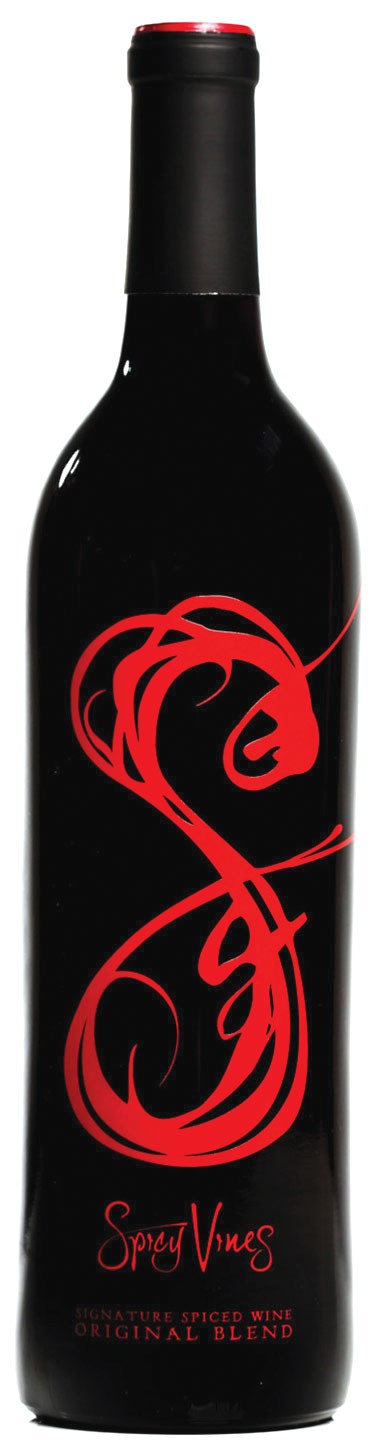
Spicy Vines Original Blend ($26) is, indeed, heady with actual cardamom and other chai spices. Spiked with brandy, it’s a ready-to-go mulled wine, and is offered hot on tap ($8 glass) during the holiday season—in the summer, as cool sangria—at the tasting room.

Spicy Vines, 441 Healdsburg Ave., Healdsburg. Daily, 11am–6pm. Tasting fee, $12. Acoustic music Saturdays. 707.927.1065.

Three Billion?

Sonoma County Go Local co-managing member Terry Garrett was quoted in the New York Times last month saying that Sonoma County’s cannabis crop is worth
$3 billion annually. That’s six times the estimated value of the county’s grape crop and about twice the annual GDP of Belize. Forget Powerball, I just want one day of Sonoma County cannabis revenue.

I recently met with Garrett to go through his data. Taking a somewhat skeptical approach, I became more and more convinced that he is close to the truth. His research and supporting documentation are as strong as can be expected, given the fact that the cannabis industry lives as much in the shadows as it does in the open.

I do have issues with his price per square foot and potential yield per acre. I think he underestimates the canopy required to produce $3 billion. That single issue should not in any way diminish what I regard as otherwise solid work. Decide for yourself; much of his work can be found on his blog at thegrid.ai/one-acre.

Garrett points out that cannabis is a low-resource, high-yield industry. He estimates that cannabis produces 100 times more revenue per square foot than grapes. Even if it’s only 20 times, that’s still highly significant. And counting all the cannabis enterprises in cultivation, manufacturing, distribution and retail—plus the suppliers (hardware stores, hydroponic stores, soil suppliers) and professional services (consultants, lawyers) catering to the industry—there are as many as 15,000 jobs that wouldn’t exist in Sonoma County if there wasn’t a cannabis sector, he says

Garrett used survey results from the California Department of Food and Agriculture to do a county-by-county analysis and estimates the statewide economic impact of cannabis to be in the range of $40–$50 billion annually. Assuming this can be validated, it means that cannabis is equal to all other agriculture in California combined. Most analyses I had seen put the figure at $10 billion.

Garrett then hit me with what I regard as deeply profound speculation.

“I believe that cannabis is the hidden factor that saved all of California from collapse during the economic crisis of 2008 and what has driven California to be the eighth largest economy in the world,” he says.

Just let that thought marinate for a few minutes—or days. Cannabis (might have) saved California and no one noticed.

Michael Hayes works for CDB-Guild. Contact him at mh*******@*****st.net.

Standing Together

0

On Sunday, Nov. 6, in Redwood Valley, one of two small Mendocino County towns where the Russian River’s headwaters spill from the southern Mendocino Range mountains, cars overflowed the parking lot at the local grange and lined rural East Side Road in both directions. Several hundred people had gathered to listen to activists report back from Standing Rock where they had stood in solidarity with Native American tribes known as Water Protectors who oppose the Dakota Access Pipeline.

One such speaker was Jassen Rodriguez, a member of the Mishewal Wappo, whose ancestral lands include much of Sonoma, Napa and southern Lake counties. He had just returned from a three-week sojourn to Standing Rock.

Rodriguez had stayed at Oceti Sakowin, or Seven Council Fires, an encampment named for the seven bands of the Sioux people where a ceremonial fire has remained burning for many months. Elders at Standing Rock had granted Rodriguez the responsibility of tending the sacred fire on behalf of the entire camp, and he choked back tears as he recounted the experience. Tears also moistened the eyes of many audience members as he spoke.

“It was the greatest honor of my life,” Rodriguez says. “It was an incredible blessing. The entire experience was a spiritual awakening.”

STANDING TOGETHER

Opposition to the Dakota Access Pipeline has galvanized support from all over the world. Constructed mainly by Fortune 500 company Energy Transfer Partners, the pipeline originates in the Bakken oil patch and traverses North Dakota, South Dakota and Iowa, and ends in Illinois, linking to transmission routes to the East Coast and Gulf Coast.

For several months, indigenous people, environmentalists and Great Plains residents have protested the project because it threatens water quality and myriad sacred sites of the Standing Rock Sioux. It will also contribute to the global climate crisis.

The movement against the pipeline has touched deep into the heart of indigenous communities in Northern California. Hundreds of people from the North Bay and North Coast, indigenous and non-indigenous alike, made the trek to the area of wind-swept prairie where the Cannonball and Missouri rivers meet.

On Dec. 4, the Standing Rock resistance achieved a major breakthrough when the Army Corps of Engineers denied Energy Transfer Partners’ request for an easement to build the pipeline beneath the Missouri River, requiring a full environmental impact statement before that part of the project can proceed.

Local support has manifested through fundraisers, rallies and ceremonies. Earlier this month, more than 500 people marched through downtown Santa Rosa to the beat of traditional drums. More than 600 people attended a November fundraiser in Sebastopol, with hundreds also turning out for events in Mendocino, Lake and Humboldt counties.

Windsor resident and substance-abuse counselor with Sonoma County Indian Health Adam Villagomez, who is Dakota Sioux and Chippewa, has been at the forefront of Sonoma County’s support efforts for Standing Rock. He traveled with his wife and
three sons there in the week preceding Indigenous People’s
Day, otherwise known as
Columbus Day.

Villagomez says that Standing Rock is only the leading edge of a much larger spiritual and political phenomenon that involves recognition of indigenous sovereignty, water protection and climate-change activism.

“Standing Rock is a spark that ignited fires in many people, which are going to grow and spread as people continue to bring the same spirit home to their communities,” he says.

POLICE VIOLENCE

The protests at Standing Rock first started making headlines in August. Much of the attention focused on the police’s brutal treatment of protesters. With North Dakota’s Morton County Sheriff’s Department in the lead, police used high-powered water hoses, dogs, rubber bullets, sonic weapons, pepper spray and tear gas against the Water Protectors, who resisted efforts to move
them out.

The level of force and the militarized appearance of the police captured national headlines partly because they were out of proportion to the physical threat posed by the activists. Brandy Toelupe, a lawyer for the National Lawyers Guild, helped file a lawsuit against the sheriff and other police agencies for using excessive force.

“From the beginning, governments have used their latest technologies to take land and resources from native nations and oppress indigenous peoples,” she says. The Morton County Sheriff’s Department’s “actions make it clear that nothing has changed.”

In late November, a demonstration outside of the Oceti Sakowin camp called attention to a police barricade that prevented emergency services vehicles and other traffic from accessing the Standing Rock Sioux Reservation’s northern access route since late-October. A line of riot police responded by firing concussion grenades and rubber bullets, and drenched hundreds of people with high-powered water hoses amid freezing temperatures.

I stood on or near the Blackwater Bridge on Highway 180—the center of the action—for several hours that night. People wielded plywood and galvanized aluminum roofing shields to protect themselves and their comrades from the rubber bullets. Many sang their culture’s traditional songs as expressions of prayer-filled defiance. The pungent smell of tear gas periodically filled the air, mixing with the more persistent smell of vomit produced by the tear gas.

Sometimes, the police directed the rubber bullets at people’s faces and chests. Cars transporting volunteer medics periodically parted the sea of people on the bridge. By night’s end, the police had wounded more than 150 unarmed individuals. Yet people kept streaming to the frontline of the action. The chaotic scene lasted for more than six hours.

A 21-year-old woman whose arm was nearly torn off by an explosive grenade is still undergoing multiple surgeries as of this writing, and faces permanent disability. Another protester was shot in the eye, leading to possible blindness.

Among those on the frontline that night was Loren Lincoln, a Wailaki from the Round Valley Indian Tribes in northeastern Mendocino County, California’s largest reservation. He first traveled to Standing Rock immediately after private security guards in Energy Transfer Partners’ employ set dogs on protesters, severely wounding several.

“Fortunately, the bullets whizzed past me out here,” he says. “I was one of the lucky ones.”

[page]

The police’s brutal assault on unarmed Water Protectors pricked the conscience of the nation. Certainly, it led to far greater scrutiny from the mainstream media and members of the national political establishment. Meanwhile, the mood at the Oceti Sakowin camp tangibly changed. Despite being shaken by their experience, many people’s sense of pride and determination seemed only to have increased.

North Dakota law enforcement agencies have claimed that they are merely defending the pipeline’s right-of-way owners from an intrusion on their right to use their property on their own terms, and that the areas of construction they are guarding have been legally permitted by state and federal agencies.

COMMON CAUSE

On Nov. 28, U.S. Reps. Jared Huffman and Raul Grijalva, D-Tucson, sent a letter to President Obama requesting an immediate meeting to “demand accountability for [the] alarming treatment of Water Protectors and peaceful demonstrators at the Dakota Access Pipeline in North Dakota.”

A reason for Huffman’s role in the letter may be the large number of North Coast people who have traveled to Standing Rock, and the growing political strength of indigenous people in his district. Lincoln says that indigenous people are accustomed to brutal treatment from the police. The Round Valley Reservation received national media attention in 1996 after the Mendocino County Sheriff’s Office was found to have subjected local natives to brutal treatment following a shoot-out between police and a young native man.

“We deal with basically the same kinds of things where I’m from,” Lincoln says. “My experience of growing up on the reservation is what has given me the instinct to come fight for all indigenous people who are part of this struggle.”

For many California native people, the resistance at Standing Rock has helped draw parallels to their struggles at home. Because indigenous cultures are inextricably linked to the lands they have historically inhabited, their survival necessarily depends on preserving those lands, which face numerous threats at any given time.

In California and beyond, contemporary indigenous people are engaged in battles over mineral rights, water rights, federal recognition, honoring of treaties, repatriation or honorable treatment of sacred sites, healthcare, language preservation and other challenges.

As in Standing Rock, recognition of indigenous sovereignty and environmental protection are inextricably linked. Largely owing to some of these tribes’ long struggle to maintain federally acknowledged fishing rights, for example, the Klamath and Trinity rivers region is home to the largest population of wild salmon of any river system in California, not to mention one of the healthiest populations of steelhead trout in the lower 48, and perhaps the world’s most abundant green sturgeon population, although all of these fisheries are in a steep decline.

Dozens of indigenous people from the Klamath Basin traveled to Standing Rock. “We’re out here in Standing Rock talking about our struggles in the Klamath, and about how nonviolent direct action has changed our world,” the Hoopa Valley Tribe’s Dania Colegrove told supporters at an event in Arcata in September.

Jim Browneagle, an Elem Pomo traditional cultural leader from Lake County, traveled to Standing Rock with a contingent of Pomo people in October. He too notes the similarities between the struggles for treaty recognition in California and North Dakota.

The Dakota Access Pipeline skirts around the Standing Rock Sioux reservation land by about a half-mile. The Sioux point out that the land rightfully belongs to them under the terms of the 1868 Fort Laramie Treaty, and that the land was later seized without their consent.

As Browneagle notes, the U.S. negotiated 18 treaties with California’s 500 native nations in California, setting aside roughly 7.5 million acres of land as reservations within the then-new state’s boundaries. One of these treaties set aside much of the land around Clear Lake for exclusive use and occupancy by Pomo peoples. The U.S. Senate refused to recognize the treaties, however, instead taking the unique step of having these documents placed in secret files.

Since returning home, Browneagle has given a number of presentations about Standing Rock, such as one he and his daughter gave to the Lake County Judges Association earlier this month. He notes that low-income communities of color are overwhelmingly more likely to live near pollution sources or suffer adverse impacts from resource exploitation. For example, the Dakota Access Pipeline was originally slated to cross the Missouri River north of Bismarck, North Dakota’s capital city.

Due to concerns about contamination of the city’s water supply, it was rerouted to cross the Missouri River at Lake Oahe, the sole water supply for the Standing Rock and Cheyenne River Sioux tribes and thousands of other people.

Again, Browneagle’s own people are a case in point. The Elem Pomo’s 50-acre rancheria is adjacent to the Bradley mercury mine near Clearlake Oaks, a site formerly on the EPA’s Superfund list of the most contaminated locations in the country. The mine began operations in 1871 and was among the nation’s most productive mercury mines during WWII, feeding the demand for quicksilver detonators in munitions.

But the mine also contaminated the Elem’s land and water with prodigious amounts of methyl mercury tailings, compounds Browneagle says caused premature deaths, birth defects, cancers and deformities among tribal members. It forced the tribe to abandon its ancient subsistence fishing culture in the 1970s after the fish became contaminated far beyond levels fit for consumption.

“Ultimately, everyone in this area is impacted by the pollution, but we as native people are on the frontline of it, just like at Standing Rock,” Browneagle says. “As Standing Rock has shown, though, we can’t fight this kind of battle on our own. We have to unite our communities.”

Windsor’s Adam Villagomez agrees.

“In Indian country, people have been dealing with these issues for a while,” he says. “So when the call was put out, there was a massive amount of people who came from Northern California tribes.

“As far as the non-native community goes,” he adds, “this is the most support we’ve seen as Native Americans.”

[page]

FOSSIL FUEL FIGHT

The Standing Rock struggle did not emerge in a vacuum. In recent years, movements against fossil-fuel extraction have helped revive and, to some degree, reinvent North American environmentalism, with indigenous people frequently at the forefront.

There has been strong opposition to nearly any infrastructure project associated with the Alberta tar sands and Keystone XL pipeline, along with widespread resistance to new coal infrastructure and extraction techniques such as fracking and acidization.

Some campaigns have succeeded by targeting the fossil-fuel industries’ greatest Achilles heel: shipping. Three of the largest and potentially most lucrative fossil fuel sources in North America—the Alberta tar sands, the Powder River coal basin and the Bakken oil shale basin—are located in the middle of the continent, far away from refineries, processing plants and shipping hubs. In effect, they are landlocked.

Grassroots opposition to Keystone XL led President Barack Obama to veto the project in 2015. And opposition by some of the most systematically disenfranchised people in North America—western Canada’s indigenous people—was the main obstacle to the completion of the equally massive Northern Gateway pipeline.

An indigenous-led encampment protesting the Keystone XL pipeline also took place in 2013–14 at the Rosebud Sioux Reservation in South Dakota, a little over a hundred miles from Standing Rock. Bob Gough, a longtime resident of the Rosebud Reservation, said the Keystone fight had given indigenous people in the area “something to rally around, especially younger people here.”

A PROPHECY FULFILLED

From the perspective of many indigenous people at Standing Rock, their role in opposing fossil-fuel extraction marks another chapter in a struggle that has lasted for more than 500 years. For many, it is also part of a spiritual awakening and revitalization of traditional culture that was foretold generations ago.

On Dec. 29, 1890, the 7th Cavalry Regiment massacred around 300 Lakota children, women and men near Wounded Knee, S.D., in what many historians see as the grisly final chapter in America’s Manifest Destiny period. The massacre symbolized to the Lakota the shattering of the Sacred Hoop, the traditional circle of the Oceti Sakowin, representing the unity of the Seven Council Fires of the Lakota Nation.

“My understanding is that the movement at Standing Rock is the fulfillment of multiple prophecies that involve our people coming together, standing up and mending the sacred hoop,” Villagomez says.

WHAT NEXT?

As of this writing, at least 2,000 people remain camped at Standing Rock in spite of snowy conditions and North Dakota’s punishing winter winds, which blow clear down from Canada. The Dakota Access Pipeline is more than 90 percent completed, but construction adjacent to Standing Rock remains on hold thanks to the Army Corps of Engineers’ recent directive.

Most Water Protectors are fully aware that Donald Trump’s administration is committed to seeing the pipeline completed, and that the Army Corps could reverse itself once he’s in office. The Army Corps’ directive delays, but does not cancel, the project.

In the meantime, people across the country have launched divestment campaigns targeting the multiple banks that are financially fueling the pipeline’s construction (see “The Spigot,” Oct. 26). People in San Francisco, Santa Rosa, Ukiah and Clearlake have recently held protests at Wells Fargo, which is among the pipeline’s major creditors and is the main banker of Energy Transfer Partners, to encourage customers to close their accounts there. They have also targeted other financial institutions like Citibank.

Wells Fargo corporate communications director Jessica Ong told the Bohemian in October that the bank invested in the pipeline only after concluding there was low risk of social or environmental harm.

In court filings, Energy Transfer Partners representatives have claimed that their contracts with the nine companies that have agreed to pay them to ship oil through the pipeline expire on Jan. 1, but can be renegotiated. As I reported in October, one of these companies appears to be Oasis Petroleum, a major Bakken shale producer in which Marin County–based investment firm SPO Partners owns the largest stake of any investor.

“If Oasis Petroleum has made a financial commitment to the pipeline, as it appears they have, it certainly raises questions about their complicity in the pipeline company’s egregious behavior toward the Water Protectors,” says Clark Williams-Derry, research director of the Sightline Institute, an energy-policy think tank in Seattle. “The moral pressure is on them to decide whether they are to be a party to Dakota Access’ actions.”

Among those who participated in a November demonstration at Wells Fargo’s Ukiah branch was Jassen Rodriguez, the Mishewal Wappo man who had tended the Seven Councils fire at Standing Rock. Two days later, he drove back out to Standing Rock, along with four family members, braving the snow and the ice of North Dakota’s punishing late-fall.

“We’ve been waiting for this a long time,” he says. “We’ve got to keep up the momentum.”

Dec. 18: Holiday Licks in San Rafael

Last February, the North Bay lost one of its finest folk figures when country-swing songwriter Dan Hicks passed away at his home in Mill Valley after battling cancer. The man behind Dan Hicks & the Hot Licks was always a funny and gracious party host, and his memory lives on in this weekend’s Holidaze in Hicksville tribute concert. Featuring...

Letters to the Editor: December 14, 2016

Dry Guy I am a soil scientist, and I've planted vineyards around the world ("Dirt Farmer," Dec. 7). Soils vary considerably in origin, chemistry, rock content and depth. You cannot treat all soils the same, especially when it comes to irrigation. I oversee vineyards in California planted in rock with very little soil. Vines would not produce crop if these...

Austen Power

The best Christmas presents—much like the happy endings of a Jane Austen novel—are those that are fully expected and yet still come as a bit of a surprise. Such is the case with Marin Theatre Company's deliciously funny, boldly old-fashioned Miss Bennet: Christmas at Pemberley, by Lauren Gunderson and Margot Melcon. It's a sequel, of sorts, to Austen's beloved Pride...

Going Rogue

The stand-alone Rogue One: A Star Wars Story is a WWII movie in space. The finale is set on the planet Scarif, a world of surf and tropical reefs; the attack wings shooting, bombing and crashing are like a futuristic version of Pearl Harbor. The film is set during the rise of Lord Vader and Grand Moff Tarkin. Tarkin is...

Wrong Number

Former San Quentin inmate James "J.B." Bennett works a couple of days a week counseling the Bay Area's recently de-carcerated, helping them get back on their feet and acclimated to life beyond the bars. When ex-convicts meet with Bennett, they're greeted by a bulletin board hanging in his workspace with some handy slogans on it, including one that reads, "Communication...

Sister Art

Tucked among vineyards and palatial estates in Napa Valley lies the Ehlers Society, a collective of artists, filmmakers and performers led by sisters Melissa and Mercedes Baker. Through their paintings and event installations and productions—and with the help of their friends—the Baker sisters are transforming their little corner of wine country into an artistic oasis. This weekend, the Ehlers Society hosts...

Fast Feast

The Feast of Seven Fishes is a popular Italian-American way of celebrating Christmas Eve. It isn't entirely clear how the number seven was arrived at, or what it means. Many families celebrate with more or fewer fishes, and originally it was likely to have been just one. The tradition's origins are in la Vigilia, or the Vigil, a southern Italian...

Mull It Over

This wine sounds like trouble to me. Like every wine educator's nightmare. Tasting room staff regularly field such earnest questions as, "So, when do you put the spices in the wine?" With all the talk of cinnamon and clove, etc., it's no wonder some newcomers to winespeak deduce that actual spices are added to the wine, instead of being analogs...

Three Billion?

Sonoma County Go Local co-managing member Terry Garrett was quoted in the New York Times last month saying that Sonoma County's cannabis crop is worth $3 billion annually. That's six times the estimated value of the county's grape crop and about twice the annual GDP of Belize. Forget Powerball, I just want one day of Sonoma County cannabis revenue. I...

Standing Together

On Sunday, Nov. 6, in Redwood Valley, one of two small Mendocino County towns where the Russian River's headwaters spill from the southern Mendocino Range mountains, cars overflowed the parking lot at the local grange and lined rural East Side Road in both directions. Several hundred people had gathered to listen to activists report back from Standing Rock where...
11,084FansLike
4,606FollowersFollow
6,928FollowersFollow