March 19: Don’t Cry in Napa

0

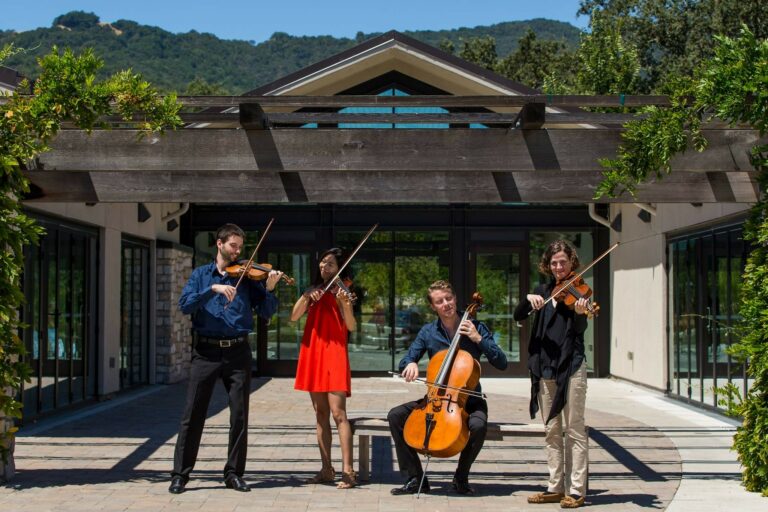
Last month, local theater company Sonoma Arts Live presented the Tony-winning musical Evita to great acclaim and a sold-out run of performances. For anyone who missed the show, the stars of that staging are appearing one more time in a special benefit concert to support the First Presbyterian Church in Napa. Evita stars Ellen Toscano, who has also spent a decade starring in the hit Beach Blanket Babylon, and Robert Dornaus, who also appeared in Sonoma Arts Live’s production of Cabaret, show off their range of talents when they take the stage this weekend alongside other performers on Sunday, March 19, at First Presbyterian Church, 1333 Third St., Napa. 4pm. $10. 707.224.8693.

Tough Questions

0

You want to tell me about black people?”

In director Carl Jordan’s sensitive, doggedly humane staging of David Mamet’s 2009 drama Race – running through March 26 at Left Edge Theater – that confrontational line comes early, as a brilliant black lawyer, Henry (Dorian Lockett, funny, furious, and absolutely superb) faces off against a potential client, the cocky millionaire Charles (Chris Ginesi, nicely layered), whose been accused of raping a black woman. It’s a sneaky line.

David Mamet is, of course, a white man, writing a play about black people, aggressively tackling the subjects of bigotry, black rage, white guilt, white privilege, cultural suspicion, and workplace sexism, surgically uncovering—with effective bouts of Mamet-style humor – the lies that so many Americans tell each other, and themselves, about race and racism.

Race is certainly ambitious, and though the script bears one or two irritating flaws—a typically under-written female part, for one—Mamet’s best trick is to ask hard questions and then not even attempt to answer them. He knows that to offer any actual answers about such subjects would be cloying at best and offensive at worst. Instead, he simply presents a number of juicy, interesting, uncomfortable things to think about, then tosses in a few last-minute surprises and sends us away wondering what-the-hell it was that just happened.

It works. Mike Pavone, as Brown’s cagey law partner Jack, is wonderful, a blunt-and-befuddled, ever-moving force of nature, verbally bulldozing his way through everyone in this path – especially Susan (Jazmine Pierce), the law firm’s cautiously watchful new hire. Pierce, intense and focused, does what she can with the role, which frequently requires her to stand silently and observe the men plotting their defense of Charles—though her character does become increasingly pivotal as the plot twists stack up.

It’s hard to say anything more without spoiling the intricately composed story.

It’s no shock that Mamet, ever the master of profane conversation, peppers his play with four-letter-words, racial epithets and effectively hammer-hard dialogue, which is as much about sexism as it is about racism. At one point, when the two male lawyers concoct a defensive plan designed around a jury’s discomfort with interracial sex, Susan points out, “This case isn’t about sex. It’s about rape,” to which the men brusquely reply, “What’s the difference?”

Intelligent and raw, probing and disturbing, Left Edge Theater’s Race might offer no answers, but the questions it asks couldn’t be better timed, or more important.

Four stars

Tell the Truth

0

Founded in 2007, the Sebastopol Documentary Film Festival is the North Bay’s premier showcase of independent documentaries from both international filmmakers and homegrown talent.

Randy Hall is one such homegrown talent. Currently the festival director, the Santa Rosa resident’s first experience with the film festival was as a filmmaker. His short documentary on a Fresno-based raw milk producer, Udderly Direct, was selected and screened at the SDFF in 2013.

“It was an amazing experience,” Hall says. “They treat you like family. There’s a focus on hospitality” toward the filmmakers.

That welcoming sense of community is big part of what draws filmmakers to the festival, which turns 10 this year and boasts its biggest and most engaging program yet. The festival runs March 23 through 26 at Rialto Cinemas and the Sebastopol Center for the Arts.

“The interesting thing about documentary is the way you go about finding the subject,” Hall says. “Sometimes, the story or the subject finds you.”

Given that the topics in documentaries are often close to the filmmaker’s heart, Hall explains that the best of them always have an opinion about the subject.

“It’s important to understand that while documentaries are nonfiction, they’re not necessarily journalistic in their approach,” he says. “They are espousing a point of view, and the filmmaker is trying to say something about the world.”

To that effect, the SDFF’s opening-night film is 2016’s far-reaching Sacred, directed by Academy Award winner Thomas Lennon. Spanning the globe and employing over 40 independent filmmakers, Sacred is a portrait of diverse religious faiths and ceremonies told entirely through visuals, lending an eye to deeply personal beliefs without the use of narration or talking heads.

Lennon, who won the Oscar for Best Documentary Short in 2007 as the producer of the AIDS documentary The Blood of Yingzhou District, will be on hand for a post-screening reception on March 23, at the SCA’s Brent Auditorium.

Some selections at this year’s festival are personal stories, such as Big Sonia, which follows Holocaust survivor and inspiring public speaker Sonia Warshawski, whose tireless work is threatened when she receives an eviction notice.

Other selections tell universal stories through a personal lens, like the 2016 Danish-produced film Les Sauteurs (“Those Who Jump”), about a group of Moroccan youth who attempt to jump the enormous fence system that separates Morocco from a tiny land spit of Spain, and which parallels the current immigration situation with America’s own southern border.

Through it all, the SDFF’s commitment to showing truthful films is highlighted quite literally in selections like The Truth Beneath the Ground, which sheds light on the massive armed conflict against Guatemala’s indigenous people that lasted from 1960 to the 1990s, seen through testimonials and photographs.

One of the big focuses of the SDFF this year is welcoming back filmmakers who’ve previously showed documentaries in past years and pairing their older films with new works to show their progress and range.

For example, Brooklyn-based director Eddie Rosenstein is showing three films, starting with his 2008 selection, School Play, in which a grade-school theater production of The Wizard of Oz doubles as a real life coming-of-age drama, and including his most recent, The Freedom to Marry, following Marriage Equality architects and key litigators Evan Wolfson and Mary Bonauto’s fight in the Supreme Court. Like several other filmmakers, Rosenstein will be on hand for his screenings to meet the audience and tell stories.

In the 10 years since the SDFF’s founding, Hall says that documentaries have become more popular than ever, and he believes much of it has to do with the current social and political Zeitgeist in this country.

“There’s a feeling, especially here in West Sonoma County, that events are hurdling towards some kind of climax,” he says “The world stage is more chaotic than usual, and people are questioning what’s going on.

“In that void, in that questioning, documentaries are an opportunity to explore and find out the answers to their questions.”

Another factor drawing audiences, Hall points out, is the way documentaries are increasingly crafting their real-life narratives through structures used by fictional films.

“Audiences get interested in the person onscreen, but also they get the perspective of that person,” says Hall. “The audience gets to expand their horizons through this personal experience.”

Now What?

0

Sonoma County’s cannabis industry was split on support for the cannabis tax Measure A.

But its passage last week will help local growers and businesses get the licenses and state permits they need to emerge from the black market and make good on their investments, says Tawnie Logan, executive director of the Sonoma County Growers Alliance (SCGA), a trade group that opposed the tax.

The initial tax rate of up to
5 percent is expected to generate $6.3 million for the county’s regulatory program. If the rate goes to the maximum
10 percent rate it would bring
in $15.6 million. The maximum tax for cottage growers, $1,250 a year, is quite good, Logan says.

Getting a business permit and a state license are priorities for anyone with “skin in the game,” she says. “If the tax measure didn’t pass, there would be no business permits for the industry in Sonoma County.”

And that would have meant waiting for the county to place another tax measure on the ballot or looking to the local cannabis industry to muster the approximately $300,000 to do it themselves. Either scenario would have left looking-to-go-legit cannabis businesses in limbo.

But now that it’s passed (by 72 percent of the vote), Logan wants to see better and more frequent dialogue with the county and an effort to help the 2,000 growers affected by zoning changes that now prohibit them from cultivation on land zoned rural residential and rural agriculture.

“What we really need to address are the thousands of operators that are already here,” she says. “That’s what this whole thing is about. If the county just permits the big players, it’s business as usual for the black market because there’s no access.”

She points to a progressive Humboldt County program that gives growers facing similar zoning changes ample time to retire out of the industry, a clear pathway to come into compliance and help with relocation to areas zoned for cannabis production and operations.

To help growers who can no longer grow in rural areas, her organization is exploring cooperatives made up of several small growers on one plot of
land. But as a result of the
zoning changes and the top-end 10 percent tax, some businesses are looking elsewhere, she says.

“They’re shopping all the counties.”

Santa Rosa, which recently approved an 8 percent cannabis tax on the June 6 ballot, looks better to many businesses, she says, arguing that a 10 percent county tax rate will be too much when state taxes and other fees are factored in.

Voters legalized recreational cannabis with the passage of Proposition 64 in November. It keeps large operations out, but that protection ends in five years. While a 10 percent tax rate is too high for small businesses, it may be too low if corporate entities like Philip Morris or Monsanto get into the pot business, Logan says.

“Five years from now, we’re going to be dealing with a whole different set of players than we’ve ever dealt with,” she says.

It will take a concerted local effort to keep those large-scale players at bay and defend local regulations, she says.

Even with the low tax rate, some growers hoping to make a go in the legal market face an uphill battle. “It almost pushes me out of the legal market because I’m so small-scale I don’t know how I would be able to afford to stay in it the way it’s being taxed,” says a West County grower of the new taxes.

He says many growers his size feel like small organic farmers being pitted against large conventional growers.

“The tax per square foot is still going to put a lot of people out of business,” he says.

Some growers are contemplating pushing for one more big season on the black market before they look for work with larger operations or get out of business altogether, he says.

For her part, 5th District Sonoma County supervisor Lynda Hopkins says she’s eager to work with the industry on “phase two,” the county’s term for implementation of the tax and the regulatory regime. She says she recognizes the floating tax rate is a cause of concern, but that flexibility can be a benefit because it allows the county to adjust to changing conditions. She said zoning decisions can be reexamined again, too.

“That’s easy to revisit,” says Hopkins.

She says she’s in conversation with the SCGA and other growers to find a way to support small-scale cannabis businesses, many of which operate in the 5th district she represents.

“I’m hoping to earn their trust.”

Scary White People

What do white people want? As a civilized horror comedy, Get Out asks the question, wondering over the strange mix of ogling and fright with which the majority views the minority. It’s hugely entertaining and absolutely ingenious, even if director and writer Jordan Peele of Key & Peele overlaid this stimulating social comedy on a familiar Old Dark House template.

Photographer Chris (Daniel Kaluuya) goes out to the country with his girlfriend, Rose (Allison Williams), to meet her parents. When he gets to their secluded estate, there is something more than slightly off: the black servants practically genuflect. The psychiatrist mom (Catherine Keener, more alluring than ever in this witchy part) is eager to try out her hypnosis techniques on this new subject. Chris fails to heed the telephoned-in warnings of his best pal, a TSA agent (Lil Rel Howery). The film just percolates along from there.

The superb Betty Gabriel reveals almost David Lynch levels of uncanniness as the strangely faithful maid. Erika Alexander comes in strong with the comedy relief, as a detective listening to the wild tale so far.

Soundtrack composer Michael Abels celebrates Bernard Herrmann’s legacy to cinema, which not only heightens the mood but keeps the ghastliness of the tale from being overwhelming.

Get Out not only amuses, but it makes its important point with deftness: watch it, and see the too-white world as a member of a hunted minority would see it, listening to the idiot clichés meant to make people docile. (Rose’s liberal dad, played with impressive beigeness by Bradley Whitford, even swears he would have voted for Obama a third time.)

Kaluuya ought to be a star for the tenderness and grit he brings to this part. Get Out is an unlikely success. It could have gone wrong in a hundred ways, but it’s an invigorating entertainment with a subtext worth mulling over.

‘Get Out’ is playing in wide release in the North Bay.

Sex Pots

Sex. We all want it and more of it. More desire, more frequency and more intensity. Or, for self-deprecating, aging baby boomers like myself, some desire, some frequency and some intensity would be a nice change.

Does cannabis affect sexuality? In reviewing the considerable but nonscientific literature, it appears that for inhibition reduction, anything works, but for a clear aphrodisiac effect, strain matters. A female friend explained it this way, “When I smoke Blue Jay Way, I find myself in sweatpants cleaning the house; when I smoke Purple Kush, I find myself heading to the bedroom leaving a trail of forgotten lingerie.” Thanks for the poetic visual.

Gender plays a role as well. A woman named Karyn Wagner has developed a strain specifically for women called Sexxpot. The strain is crossed with Mr. Nice and other unknown strains. Karyn says that smoking Mr. Nice dramatically improved her sex life and implies that it “saved her marriage.” Whether Sexxpot is simply great marketing and clever branding or is actually a powerful female aphrodisiac is open for debate. Or research. Anyone?

There are some downsides to cannabis and sex. Dryness, both oral and vaginal, was mentioned frequently. On the other hand, temporal distortion—the feeling that time has slowed—can be a great psychological boost to those who tend to start and finish before the microwaved popcorn is done. Ding.

What are the strains that are frequently reported as great for sex? Let’s look at some of the strains and comments I received:

Girl Scout Cookies: “Perfect for lonely nights.” Mentioned only once. Of course it was mentioned only once.

Jasmine: “The ultimate mood setter for women.” Three mentions. The powerful aromatics at work here should be bottled and made universally available.

Asian Fantasy: “The perfect vacation sex weed.” Duh. Mentioned three times. The sexual effect of this strain may be more related to the suggestive name than any inherent properties.

Sour Diesel: “Powerful lustful sex.” Three mentions.

And the winner is . . . Grand Daddy Purple: “Extremely strong powerful arousal.” Regarding the name, there are some things better left unsaid. Seven mentions! No other strain was mentioned more than four times.

How do the above strains affect sexuality? I think the effect of cannabis on sexuality is less a matter of the cannabinoid content, and more a function of terpenes working synergistically. For reference, the primary terpenes in Grand Daddy Purple are linalool (3.3 percent), alpha-pinene (1.17 percent) and caryophyllene (.91 percent).

I know what strain I’m including in this year’s crop.

Michael Hayes works for the CBD Guild. Contact him at mh*******@*****st.net.

The Nose Knows

0

There once was a bane of wine closures that made wine buyers lose their composure. But if you could tell taint from terroir at the tasting-room bar, you’d be that much less a wine poseur!

That is correct: a limerick about cork is as much St. Paddy’s Day theme as you’ll get out of this mid-March wine column. The rest is all about the insidious chemical compound behind the plague of corked wines.

“Corked” is a vague-sounding term that means specifically that a wine is tainted with 2,4,6-Trichloroanisole (TCA), not any other wine flaw—or, as I’ve heard many times, that one just doesn’t like the aroma.

Thanks to new cork-processing techniques, the percentage of truly corked wines has fallen in recent years. Still, it may be as much as 1 to 2 percent, I’m told at Enartis USA (formerly Enartis Vinquiry). The company, which provides winemaking products and laboratory services worldwide, offers TCA threshold testing at its Windsor location.

I took the test a few years ago, and was confronted with an array of wine glasses holding identical pours of light, white wine, an unknown number of them tainted in varying but precise amounts with commercial-grade TCA. What kind of wine makes for the ideal, neutral test medium? Carlo Rossi Chablis. Needless to say, this was a swirl-and-sniff test—no tasting necessary.

A few glasses were obvious, some were tough going. I second-guessed my nose. TCA is measured in minute quantities—merely a few parts per trillion (ppt) can dampen the aroma of wine, leaving a musty impression like wet cardboard. One fascinating aspect of the saga of TCA is that the moldy aroma isn’t mold itself; it’s the result of mold spores defending themselves from a fungicidal compound.

In the end, I identified three out of three in the 2ppt and 6ppt range, and one of three at 1ppt, receiving a certificate attesting to my 2ppt threshold achievement. For the most part, the high-ticket test is paid for by wineries and other industry companies that find it useful to have employees trained and certified on TCA. On the wine-connoisseur side, however, what price would it be worth to be able to say, “Waiter, I know this bottle bears the hallmark aroma of 2,4,6-Trichloroanisole, for I am certified for a TCA threshold of 2 parts per trillion in a neutral white wine!”

Enartis Education Center,
7975 Cameron Drive, Windsor.
TCA Threshold Testing, March 30, May 25 and July 11. $100 per person. Register at enartis.com or 707.838.6312.

Good Vibes

0

Given the diversity of the greater Bay Area’s food culture, it’s surprising there are so few Jamaican restaurants, because the food is so good and easy to like.

Slavery, colonialism and Caribbean trade routes created one of the world’s most eclectic and delicious cuisines. Jamaican food draws from Africa, China, India, Spain, Britain and the island’s native population. Because of its cosmopolitan influences, Jamaican food tastes familiar, but the amalgam of ingredients and cooking techniques makes it unique.

That’s why Sebastopol’s Revibe Cafe and Scoop Bar is a welcome addition to the North Bay. The restaurant occupies what was a Quonset on Healdsburg Avenue next to Peter Lowell’s restaurant. The metal building has been incorporated into a new structure that includes a dining room, bar and outdoor patio. There’s also a take-out window for excellent, made-from-scratch ice cream.

Will Abrams and his Jamaican-born wife, Eki, opened the restaurant in January after a lengthy remodel. Abrams has a background in nonprofit management, but wanted to try something different and showcase Jamaican food. But he hasn’t left the do-good mission of nonprofits behind. The restaurant donates a whopping 50 percent of its profits to local nonprofits. Current recipients include the Ceres Project and a teen work program at the Sebastopol Community Center.

That seems like a challenging business plan, but Abrams looks at it like paying an investor.

Abrams scored with chef Anthony Walters. Walters trained at New York’s Culinary Institute of America, but is from Jamaica’s capital city of Kingston and is steeped in the country’s cuisine. In spite of the restaurant’s laidback vibe and Jamaican food’s humble origins, there is a level of refinement in Walters’ cooking, from the delicately fried leaves of kale atop the ital stew to the complex flavors of the jerk pork and the whiff of pimento wood from the outdoor smoker.

For now, there are just small plates ($8.26 each) on the menu. Entrées, breakfast and lunch will be added later. There’s also a late-night menu that starts at 9pm and plans to add a menu of root tonics, traditional Jamaican beverages with purported health properties.

The jerk pork is the best I’ve tried. Pork shoulder is smoked for hours and seasoned with a variety of spices and enlivened with fiery Scotch bonnet chili pepper. While the pepper’s heat comes through, it’s far from a one-note dish. The tangy, aromatic flavors of the jerk marinade add up to something special.

Ital is the equivalent of kosher for Rastafarians. I always thought it was rather bland given the prohibition on salt, but Revibe’s ital stew, a hearty, coconut milk-based stew made with propeller-shaped dumplings called spinners, is a less strict interpretation and it’s great.

Revibe’s goat curry, made from Eki’s family recipe, is outstanding, too. The curry makes it similar to Indian and Thai cuisine and it’s a great choice, even if you think you don’t like goat. You will, and you will like Revibe, too.

Revibe Cafe and Scoop Bar,
7365 Healdsburg Ave., Sebastopol. 707.827.8188.

Letters to the Editor: March 14, 2016

Threet Responds

Peter Byrne’s Open Mic (“Threet’s Beat,” March 1) raised the legitimate question of whether the newly created Independent Office of Law Enforcement Review and Outreach (IOLERO) is worth the money necessary to run it. Of course, these questions were discussed at length in multiple public forums by county officials and community members for over a year, the public largely supported the proposal, and county supervisors approved the model creating our office. Byrne now again raises this issue, but in a way that distorts the facts we provided him.

The IOLERO has a total budget of $527,335. Approximately 75 percent of the budget is made up of salaries and benefits of the agency’s two employees, the director and the administrative coordinator. My salary as director is around $160K, plus benefits, for a total of about $263K in compensation. My assistant’s salary is approximately $63K, plus benefits, for a total of about $122K in compensation. Because the IOLERO director is required to be an attorney, the compensation for that position is commensurate with public attorney salaries.

In accepting this position, I took a salary cut from the $180,000 I previously received as a deputy city attorney. I did so because I believe this is important work.The remaining $130,000 includes support services and supplies, which account for 25 percent of the budget. More than the refreshments mentioned by Byrne, this covers rents/utilities, advertising and marketing, translation services, professional memberships, conferences (such as the National Association for Civilian Oversight of Law Enforcement), software licenses, business travel, etc. This also includes about $40,000 for the possible relocation of our office, which we have decided against spending in order to preserve continuity of the current location and save money.

Byrne asks what you are getting for this money, and focuses on my decision to forgo additional review of the Andy Lopez shooting. I’ll turn to that in a minute. First, lets look at what our office has been doing. When I started last April, I began to set up an entirely new department from scratch, including a work plan, websites, social media, office procedures, audit protocols, hiring an assistant, meetings with stakeholders and outreach to communities. From April until July of 2016, those start-up tasks took all of my time, but by August of last year, we were fully staffed and up and running.

So what are our missions? First, we provide independent civilian review of investigations of complaints against sheriff’s deputies. Since August of 2016, we have 25 such investigations in our log, 15 of which have been completed by the sheriff’s office and referred to the IOLERO for review. Of those 15, we have completed eight audits. Three of these audits resulted in recommended changes to sheriff’s policies. In six of them, the IOLERO agreed with the findings of the investigation exonerating the deputy of wrongdoing. In two of them, the IOLERO disagreed with the finding of exonerated.

While our office has no authority to impose a contrary finding on a complaint investigation, neither do most civilian oversight agencies in the country. Second, we conduct robust outreach to Sonoma County communities, to bring community feedback back to the Sheriff’s Office and to help explain sheriff’s policies to community members. We also try to bridge gaps where they exist. I’ve had over a hundred meetings and met with many hundreds of community members since last April, including most recently close to 200 members of the undocumented immigrant community in small settings, hearing their concerns and explaining Sheriffs policies that may affect them.

We have an 11-member Community Advisory Council that holds meetings to review policies and recommend changes. Our current focus is on the immigration policies of the sheriff’s office. Both the CAC and I will soon be making formal recommendations for changes in the sheriff’s policies in this area. We will then turn to review other policies, such as body-worn cameras and use of force. The most important opportunity to change law enforcement interactions that the public wants improved is through changes in the policies that guide deputy actions.

Byrne correctly states that I declined to review the Lopez shooting but significantly misrepresents my explanation. The IOLERO’s general policy is not to audit completed investigations over one year old, as the statute of limitations has passed on any possible discipline for the deputy for any violation of policy. In addition, the Lopez shooting was independently reviewed by the district attorney and by the U.S. Department of Justice, both of which cleared the deputy of wrongdoing.

Finally, the Lopez case is being litigated in federal civil court, where the issue of whether the deputy followed policy is being fully explored by an independent magistrate. Give these multiple reviews, and the passage of the statute of limitations on discipline for the deputy, there is little a review by our office could add at this late juncture. Because there are other investigations currently pending in our log where our review could make a difference, it makes little sense to focus our limited resources on the 2013 Lopez shooting.

Jerry Threet

Director, Sonoma County Independent Office of Law Enforcement Review and Outreach

Into Darkness

“Darkness is good.” This quote is from Steve Bannon, Mr. Trump’s chief strategist and NSC member. The quote further goes on to state, “Dick Cheney, Darth Vader, Satan. That’s power.” Yes, that is power, but to what ends? I don’t know what the future portends, but there is certainly a darkness enveloping our nation. Mr. Trump’s appointees and cabinet choices can easily be substituted one for another. Genuine discussions that invite different opinions are a rare commodity in this administration. Instead, there’s a built-in consensus reflecting a rigid ideology on domestic and foreign policies for a nation and a world that has not existed since the mid-20th century.

“The globalists gutted the American working class and created a middle class in Asia,” says Bannon. Globalists! Or was it American banks and businesses, who had merely followed the natural flow of capital to where the biggest bang for the buck could be found, and that had, in Bannon’s own words, “fucked the workers of this country.”

Bannon says that there is a new movement emerging, a movement that will last 50 years and that these are times as exciting as the 1930s. I would suggest we read and remember what really happened during those times overseas, when nationalist movements, of which Mr. Bannon is claiming to be a part of now, governed. Another man with aspirations to make his country great again, through fear, intimidation and broken agreements with other countries, offered a regime that would stand a thousand years. Fortunately, it only lasted 12, but millions suffered as a result.

Fifty years, Mr. Bannon—I think not!

E. G. Singer

Santa Rosa

Write to us at le*****@******an.com. Open Mic returns next week

Debriefer: March 15, 2017

0

KEEPING THE INTER-FAITH

Jewish cemeteries and community centers have been facing white-supremacist hate of late, and Trump’s at it again with his second executive order aiming to ban Muslims from the United States, under the guise of counterterrorism.

In response, organizations around the country are stepping up their efforts at Muslim-Jewish alliances in these troubling times. Muslims have been scrubbing swastikas off desecrated Jewish tombstones, and Jews have linked arms in defense of mosques and against the anti-Muslim violence in Texas and Canada.

These efforts come to Santa Rosa today, March 15, as the “Of One Soul” campaign of the Interfaith Council of Sonoma County hosts an event with speakers of various faiths coming together on the steps of City Hall in Santa Rosa.

The Rev. David Parks-Ramage from the First Congregational United Church of Christ joins Aisha Morgan of the Islamic Networks Group and Reb Irwin Keller of the Ner Shalom Congregation. Local elected officials have also committed to the event, which was called by the organization Interfaith Witness in Support of Our Muslim Neighbors. Santa Rosa mayor Chris Coursey and councilmember Julie Combs have both committed to the event, along with Sonoma County Supervisor Susan Gorin.

There’s music at 5pm and the speakers get going at 5:30. Organizers ask that attendees consider it a holy gathering. “Please let your signs and words be child-friendly,” they say in a statement, “and reflect what we want to invite into the world at this moment.”

In other words, leave the “Tuck Frump” signage at home, at least for now.

TUCK FRUMP

The Republican plan to repeal and replace the Affordable Care Act has hit a few bumps on the road to throwing 24 million people off their insurance by 2026, as the Congressional Budget Office reported this week. Now the California Senate has unsurprisingly chimed in with Resolution 26 which calls on Congress to “reject the ACA repeal unless it’s replaced with a plan that ensures that not one American will lose coverage and that coverage will be more affordable and of higher quality for all Americans.”

State Sen. Mike McGuire noted in a statement that, contrary to Republican claims about Obamacare, “the Affordable Care Act is not failing, in fact it is succeeding wildly in California.”

Some of McGuire’s constituents will be headed to the Trump death panels if the ACA is repealed. “A senior resident in a small, rural California county will have to pay several thousand dollars more per year out of her own pocket under [Trumpcare]. This is unacceptable.”

The uninsured rate in California was 17.2 percent in 2013. It’s 7.1 percent as of 2016—”the largest percentage point decline in the uninsured rate of any state,” reports McGuire. The Senate approved Resolution 26 on Monday.

March 19: Don’t Cry in Napa

Last month, local theater company Sonoma Arts Live presented the Tony-winning musical Evita to great acclaim and a sold-out run of performances. For anyone who missed the show, the stars of that staging are appearing one more time in a special benefit concert to support the First Presbyterian Church in Napa. Evita stars Ellen Toscano, who has also spent...

Tough Questions

“You want to tell me about black people?” In director Carl Jordan’s sensitive, doggedly humane staging of David Mamet’s 2009 drama Race – running through March 26 at Left Edge Theater – that confrontational line comes early, as a brilliant black lawyer, Henry (Dorian Lockett, funny, furious, and absolutely superb) faces off against a potential client, the cocky millionaire...

Tell the Truth

Founded in 2007, the Sebastopol Documentary Film Festival is the North Bay's premier showcase of independent documentaries from both international filmmakers and homegrown talent. Randy Hall is one such homegrown talent. Currently the festival director, the Santa Rosa resident's first experience with the film festival was as a filmmaker. His short documentary on a Fresno-based raw milk producer, Udderly Direct,...

Now What?

Sonoma County's cannabis industry was split on support for the cannabis tax Measure A. But its passage last week will help local growers and businesses get the licenses and state permits they need to emerge from the black market and make good on their investments, says Tawnie Logan, executive director of the Sonoma County Growers Alliance (SCGA), a trade group...

Scary White People

What do white people want? As a civilized horror comedy, Get Out asks the question, wondering over the strange mix of ogling and fright with which the majority views the minority. It's hugely entertaining and absolutely ingenious, even if director and writer Jordan Peele of Key & Peele overlaid this stimulating social comedy on a familiar Old Dark House...

Sex Pots

Sex. We all want it and more of it. More desire, more frequency and more intensity. Or, for self-deprecating, aging baby boomers like myself, some desire, some frequency and some intensity would be a nice change. Does cannabis affect sexuality? In reviewing the considerable but nonscientific literature, it appears that for inhibition reduction, anything works, but for a clear aphrodisiac...

The Nose Knows

There once was a bane of wine closures that made wine buyers lose their composure. But if you could tell taint from terroir at the tasting-room bar, you'd be that much less a wine poseur! That is correct: a limerick about cork is as much St. Paddy's Day theme as you'll get out of this mid-March wine column. The rest...

Good Vibes

Given the diversity of the greater Bay Area's food culture, it's surprising there are so few Jamaican restaurants, because the food is so good and easy to like. Slavery, colonialism and Caribbean trade routes created one of the world's most eclectic and delicious cuisines. Jamaican food draws from Africa, China, India, Spain, Britain and the island's native population. Because of...

Letters to the Editor: March 14, 2016

Threet Responds Peter Byrne's Open Mic ("Threet's Beat," March 1) raised the legitimate question of whether the newly created Independent Office of Law Enforcement Review and Outreach (IOLERO) is worth the money necessary to run it. Of course, these questions were discussed at length in multiple public forums by county officials and community members for over a year, the public...

Debriefer: March 15, 2017

KEEPING THE INTER-FAITH Jewish cemeteries and community centers have been facing white-supremacist hate of late, and Trump's at it again with his second executive order aiming to ban Muslims from the United States, under the guise of counterterrorism. In response, organizations around the country are stepping up their efforts at Muslim-Jewish alliances in these troubling times. Muslims have been scrubbing swastikas...
11,084FansLike
4,606FollowersFollow
6,928FollowersFollow