Wedge Issue

0

A small triangle of cheese lies on its mark on a tasting sheet. This is no ordinary, creamy yellowish wedge of cheese, nor does it merely sport a rustic rind or smell faintly of the farmyard. This cheese looks like it was retrieved from the crypt. Marbled gray-blue, it looks like it’s smoldering. This cheese needs a beer.

It’s no everyday ale that stands up to Boonter’s Blue, which is actually a mild blue cheese in the Spanish Cabrales style, and is made from raw goat’s milk by Boonville’s Pennyroyal Farm. Still, this sample of dusty gray-blue, hazily marbled Boonter’s, gamy and earthy smelling, is about as far from the usual jack or cheddar served at beer joints as Miller Light is to Russian River Brewing’s Consecration ale.

Those two are a pretty good pairing, says certified cicerone Chris Munsey, who presented a seminar on cheese and beer pairing at the California Artisan Cheese Festival in Petaluma. Indeed, the cheese brings out the wine and fruit notes in the sour dark ale, which is aged in Cabernet barrels with black currants, without losing its earthy appeal. So this is a good beer to pair with artisan cheese? Not with Fiscalini Farmstead’s bandaged-wrapped cheddar, which to my taste accentuates lactic off-flavors in the beer.

Munsey chose his pairings well, matching the cheddar with Calicraft Brewing’s the City IPA. That’s how a cicerone earns his keep—the designation basically means “beer somm.” Although he is employed by a Vermont creamery, Munsey lives in California, and promotes the idea that farmstead cheeses, which by definition are made with milk from the creamery’s own animals, ought to be enjoyed with “farmhouse” beer, which he more loosely defines as beer brewed “with a sense of place” or the inclusion of local ingredients.

There’s a place for lighter beer beside the cheese board, too. A slice of Point Reyes Farmstead’s Toma, which is mild but more flavorful than standard jack, fills out a crisp, bright ale brewed with chamomile and orange peel instead of hops by Oakland’s Ale Industries.

If fancy beer and the lilting term “cicerone” cement your notion that craft brew has gone too far down the precious path toward the old Chardonnay and brie trope, relax—greasy nachos are not going out of style. You could also think about craft brew and artisan cheese as basically reinventions, with up-to-date equipment and fermentation science, of even older traditions—and flavors.

For beginners, regular old stouts are very versatile with cheese, says Munsey, particularly with cheddar, gouda and rich, creamy cheeses. Sometimes even Cowgirl Creamery’s Mt. Tam needs a beer.

Letters to the Editor: March 29, 2016

Taxpayer Questions

I totally agree with Peter Byrne’s legitimate questioning of the Sonoma County Independent Office of Law Enforcement Review and Outreach (IOLERO) as a complete waste of taxpayer money (Open Mic, March 1.) If Jerry Threet needs nine paragraphs to justify and defend his newly formed organization (Letters, March 15), the questions are well-deserved.

To the common person, the fact that half of the total budget goes to one person is difficult to comprehend. His explanation for this is weak at best. In paragraph three, Threet wants us to know, and possibly feel sorry for him, that he “took a salary cut from $180,000” to his present $160,000 salary and $103,00 in benefits, totaling $263,000. His assistant receives $63,000 in salary and $59,000 in benefits for a total of $122,000. In the remaining paragraphs, Mr. Threet states what the agency has done to get set up, the “hundred” meetings held and, finally, what they can and cannot do, which included his reasons why the tragic Lopez murder cannot be examined by the IOLERO.

I have never met Mr. Threet, nor do I know anything more about him except what has been written. I am sure he is a fine attorney, an honorable man and wants to do what is best for the community in which he resides by providing a link between the public and law enforcement. This interaction is desperately needed.

My point is that a nine-paragraph

response explaining and justifying the IOLERO’s existence has done more harm than good. My suggestion is to make the IOLERO website more user-friendly by breaking down the “investigations currently pending in our log” in an orderly manner so they can be clearly understood and followed from inception to completion. This will help taxpayers make up their own minds as to whether the IOLERO is worth the cost.

Sebastopol

Pave the Way

After the rainiest winter in memory, many Marin and Sonoma county roads are in deplorable condition. The $65 million that the Sonoma County Board of Supervisors has invested in pavement preservation during recent years has enabled 300 miles of well-traveled county roads to largely escape the storms’ ravages. We thank the supervisors for addressing the decades of neglect that transformed the county’s road system into one of the worst in California.

But we still desperately need funds to repair the 60 percent of the Sonoma County road system that remains in poor or failing condition. Marin County roads have similar problems.

Legislation designated as SB1 will eventually provide over $18 million and $7.8 million annually to fix Sonoma and Marin county roads, respectively. Our cities face similar challenges and will benefit greatly.

Of Marin and Sonoma county’s five legislators, only Assemblyman Marc Levine has not endorsed this proposed legislation. Save Our Sonoma Roads urges voters to contact Assemblyman Levine (Ma*********@****ca.gov) and insist that he support this vital legislation.

SOSroads

Write to us at le*****@******an.com.

Crossing Borders

0

Singer, songwriter and guitarist Gaby Moreno’s earliest memories are of being on a stage. Growing up in Guatemala, she was encouraged by her parents at a young age to perform.

“That’s something that’s been natural to me,” she says. “I feel very comfortable there.”

Today, Moreno is considered one of the premier voices in Latin pop, singing with tremendous emotional power in both English and Spanish while mixing blues, jazz, indie folk and more for a dynamic sound that recently earned her a Grammy nomination.

Moreno will share her songs in an intimate setting when she performs with a trio on April 3 at Sweetwater Music Hall in
Mill Valley.

Moreno is the kind of singer whose raw talent became apparent early. When she was 18, Warner Brothers Records discovered her and gave her a deal. That was also the year she moved to Los Angeles. “What I wanted to do was surround myself with all kinds of producers and songwriters,” she says of her decision to attend music school in Hollywood. “I wanted to absorb everything around me. and I knew L.A. would be the perfect city for that.”

When she first came to Los Angeles, Moreno sang and wrote exclusively in English. While she was happily plugging away in the alternative pop scene, she started to think back on her roots. “I started to embrace my Latin culture,” says Moreno. “I wanted to tell people where I come from.”

In 2006, Moreno started writing in Spanish for the first time. That year, she submitted her song “Escondidos” to the John Lennon Songwriting Contest, established by Yoko Ono in 1997, and won in the Latin category and then the overall prize. “That was kind of a big deal,” Moreno says. “I think that motivated me to want to keep doing it.”

Last year, Moreno released her most acclaimed album yet,

Ilusión. Produced by Dap-Kings member and Daptone Records co-founder Gabriel Roth, the record is an analog assembly of live takes in studio. “We decided to just do a few takes, and take one without editing,” she says. “There’s a very raw sound to this album, but the emotion is there.”

Since becoming a bilingual songwriter, Moreno has seen her audiences grow. “People are affected by music no matter what language they’re being spoken to in,” she says.

“I love French music, I love Brazilian music. I don’t understand what the words are, but the music moves me,” she says. “That’s testimony that, indeed, music is a universal language.”

Waiting on a Train

0

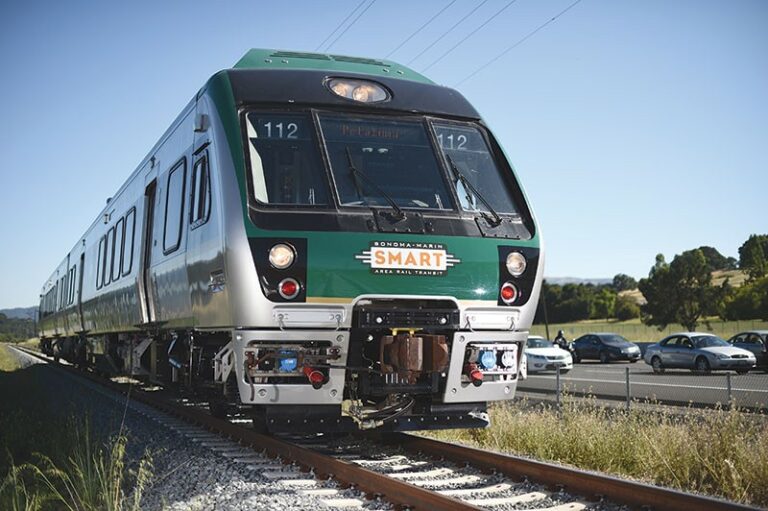
Even the most ardent supporter of a commuter train linking Sonoma County to central Marin County has to be feeling a little skeptical these days.

The Sonoma Marin Area Rail Transit (SMART) was supposed to be shuttling passengers from Santa Rosa to San Rafael. But a December 2016 promise of service was postponed until “late spring.” There was also the promise that a voter-approved quarter-cent sales tax would cover all expenses. That’s not happening either.

Meanwhile, empty trains roll up and down the North Bay, adding costs to an ambitious, $500 million build-out plan that’s growing more expensive by the day. How much is SMART laying out in payroll and other expenses since December? The agency won’t say. Public records requests from the Bohemian are pending.

The train’s social media pages are meanwhile peppered with frustration from citizens weary of the delay: “Trains operating, yet still empty,” Jerry Gibson wrote on Facebook. “Our tax dollars hard at work.” Missy LePoint wrote: “SMART is dispensing advice on time-management? Hilarious. Just tell us the day that ‘late spring’ arrives, OK?” And a note from Michael Nelson spoke for long-standing opponents: “Stop, already, enough of this horse crap . . . hope the people that voted for this are happy.”

The train is still popular among the region’s political class, which has proposed it as a traffic-beating alternative along Highway 101. None of the elected officials who championed SMART have publicly wavered, despite delays and budget increases—not even Windsor mayor Deb Fudge. She’s been on the SMART district board since 2005, and in January was selected to head the board, notwithstanding the fact that the train is not scheduled to head her way for years—and nobody can say for sure how many.

Larkspur vice mayor Daniel Hillmer represents Marin County mayors and councilmembers on the SMART board. He’s pleased with the progress.

“SMART is performing according to the Measure Q requirements, has balanced budgets and is on schedule,” Hillmer says, referring to the Marin measure that partially funded the train in 2008. “SMART continues to make significant progress in preparation for passenger service to begin in the late spring.”

Hillmer’s on-time optimism doesn’t jibe with what voters were promised when Measure Q appeared on the ballot nine years ago—a fully operational train ferrying riders from Cloverdale to Larkspur by 2014, paid entirely by a quarter-cent sales tax.

SMART spokeswoman Jeanne Mariani-Belding notes that a late-game engine snafu caused the latest delay, as she concedes that “federal and regional grants” had to be called upon to keep the project alive when it became clear that the voter-approved tax was not going to be enough to pay for the train.

Expenses keep mounting, a challenging situation which puts more pressure on SMART to deliver a service whose budget is contingent on ridership. Skeptics of SMART’s ticket-revenue note that maximum daily round-trip adult fare to ride the train’s entire route will be fixed at $23, and SMART is offering a slate of discount rates for regular commuters, seniors, youth and disabled passengers.

SMART’s funding has
long been a challenge. Before
Measure Q passed in 2008, Measure R in 2006 failed to earn the two-thirds majority of combined votes between Sonoma and Marin counties. With the most to gain from a train offsetting Highway 101 gridlock, about 70 percent of Sonoma County backed Measure R, but skeptical Marin County voters doomed the proposed quarter-cent tax to pay for SMART.

SMART financing returned as Measure Q and incorporated bicycle paths into the mix. That helped nab it the endorsement of the Marin Bicycle Coalition, among the area’s more vocal activist groups. Marinites again failed to deliver two-thirds support, but overwhelming support in Sonoma County carried the day (the combined vote eclipsed the two-thirds threshold needed to pass it) and the $500 million SMART commuter train was born—with a then-projected completion date of late 2014 and a promise to link Cloverdale to Larkspur, eventually.

But 2008 was more than SMART’s birthday—it also marked the onset of the Great Recession. Citing the economy’s downturn, the SMART district’s revised plan delayed northern Sonoma County SMART service in Healdsburg and Windsor—even as residents there said they needed a commuter train. At the Marin County end of the line, residents sparred with SMART over a proposed two-mile connector line from San Rafael to Larkspur, a key component in getting Bay Area commuters onto cross-bay ferries.

That fight was settled recently with the help of North Coast Congressman Jared Huffman and the Larkspur railroad extension was OK-ed with an expected opening in 2018. Down the road, SMART pledges it will stay true to the original plan. “Future expansion plans include Windsor, Healdsburg and Cloverdale, for a total of 70 miles,” said Mariani-Belding.

SMART critics said the new plan for a “future expansion” belied the original promise made to voters: a complete railway from Cloverdale to Larkspur by 2014. Those opponents complained that the faltering SMART project might have siphoned transportation funds needed for Sonoma and Marin county’s decimated rural roads since the agency tapped state and federal transportation grants. A Measure Q repeal push in 2011 failed and now the double-whammy of disappointment: no train, and the roads are still terrible.

A faltering late-aughts economy also meant a decrease in tax revenues and pushed SMART’s opening to the end of 2016. But a July 2016 engine failure in a Toronto commuter-train system, which uses the same engine-car combination as SMART, pushed the opening into 2017, as all the SMART engines had to be replaced while SMART struggled to sort out problems with its warning systems.

“This new engine problem, and the need to complete our system-wide safety testing . . . has led me to the conclusion that beginning of passenger service by the end of 2016 is not advisable,” wrote SMART general manager Farhad Mansourian in an October 2016 memo to SMART’s board. “We will be working even harder, and target late spring 2017 as our beginning of passenger rail service.”

SMART worked with Cummins Inc., which supplied the train’s diesel engines, and Nippon Sharyo, which designed the trains, to fix a design flaw in the crankshaft, “and replace all 14 of our engines prior to service,” Mariani-Belding explained. The engines are under warranty, and the manufacturer is eating the cost. “Each engine weighs 2.7 tons, so this is no small feat. The good news is that the work is right on schedule, and we now have 13 of the 14 engines replaced.”

She added that the system as a whole, which has also been beset with road-crossing issues up and down the current 43-mile line, is “in the home stretch of some important system-wide safety testing.” Those safety issues have also delayed a final sign-off on the project by the Federal Railroad Administration.

The safety tests include the not-infrequent blaring of train horns, which have been met with complaints from residents near the tracks, an audible reminder that SMART is still not up and running.


Next Steps

Now that Measure A passed, some in the cannabis industry are wondering how the permitting process will work. Sonoma County businesses (except dispensaries) can start applying for business permits July 1. I expect the county is using the next few months to come up with the systems needed to process applications. How are you getting ready?

Proof that you are following the best management practices and operating standards will be necessary to get your permit. If you don’t understand those, you need to learn them immediately. The county has given growers until Jan. 1, 2018, to either come into compliance with local regulations or cease growing.

As for permitting itself, I again urge everyone to read the county’s ordinance. No longer can you form a collective and grow cannabis without government oversight. Assuming your business is properly zoned and complies with the appropriate setbacks and land-use issues, you’ll also have to confront things like air quality and odor, energy use and water supply. This is on top of issues like grading, building, plumbing, septic, electrical, fire, and public health and safety.

Some of these areas will require both professional assistance (such as an engineer) and oversight or approval from other government agencies (such as the North Coast Water Quality Control Board). Successful permitting will require properly completing county applications forms, providing supporting documentation, paying fees and meeting the various requirements and regulations.

It’s that last item that I expect will cause a lot of hair pulling. Going from unregulated to highly regulated will not be easy. I won’t be surprised if many farmers spend hundreds of thousands of dollars to get a local permit, as most properties will need significant expenditures to bring them up to code, especially as they relate to the Americans with Disabilities Act requirements.

One other area to be especially aware of is that many permits are conditional. If I were thinking of getting such a permit, I would want to get a good grasp on how my neighbors feel about a commercial cannabis business before I started the process. Some cannabis businesses that would otherwise qualify will be denied a permit based on neighborhood objections.

You have three months to get your act together. The decision to go forward must be based not only on the economics of your business, but also on the likelihood of getting a permit. Be conservative in your estimated returns, and plan for delays and greater expenses. Success isn’t impossible, but we’re entering an unpredictable new era.

Ben Adams is a local attorney who concentrates his practice on cannabis compliance and defense.

Out of the Ordinary

0

‘Hold still and sip the pain.”

It’s a brief, swift line, uttered kindly but fiercely by the wise, wary slave Azucar (Cathleen Riddley), combing the hair of the impulsive, 13-year-old Zuri (Dezi Soley). Azucar’s simple sentence is a strong early example of how playwright Star Finch will be weaving words together in
the stunning world premiere
of Bondage, presented through April 16 by Marin County’s AlterTheater ensemble.

Blending blunt prose with lush, intricate poetry, Finch does more than put lyrical words in the mouths of her richly rendered characters; she uses that language to create an atmosphere of off-kilter dreaminess, establishing concrete details—an island, a slave plantation, a stifling house, a dining room—then coating them in a mood thick with metaphor, fantasy, riddles, danger and a strong undercurrent of supernatural alternate reality.

It’s a style the playwright calls Afro-surrealism. What Finch used then in the service of a ferocious futuristic fable, she now uses in a tale rooted in the harsh history of American slavery.

Zuri, property of wealthy white plantation owner Philip (Shane Fahy), lives on a small, secluded island, where she’s been raised alongside Philip’s daughter, Emily (Emily Serdahl). Emily, whose mother died years ago under bloody, stigmatizing circumstances, has always thought of Zuri as a sister, the two of them inventing games ranging from the childlike and innocent to the stunningly bizarre.

You may never think of puppets in quite the same way again.

Despite Azucar’s warning that Philip is “circling” the light-skinned Zuri like a predator, the young woman tests her growing sexual powers in ways that give her a sense of control over her life and destiny, control Azucar knows Zuri doesn’t really have. Upon the arrival of Emily’s rigid aunt Ruby (Emilie Talbot), the tentative bond between Zuri and Emily is severely tested, as Ruby insists her niece step into the role of mistress, and that Zuri finally accept her place as Emily’s slave.

Director Elizabeth Carter, aided by a uniformly excellent cast and remarkable sound design by Gerry Grosz, skillfully matches Finch’s poetic language with choreography and eerie-beautiful mimicry. The ending, a breathtaking collision of gothic melodrama, Shakespearean climax and art-house cinema, is gorgeously staged and stunningly unexpected.

Rating (out of five): ★★★★★

Near and Far

0

Celebrating its 20th year, the Sonoma International Film Festival takes over Sonoma’s historic
plaza for five days. The 90 handpicked films in this year’s festival, running March 29–April 2, include independent features,
shorts and documentaries from around the world—with two of
the most intriguing coming from local filmmakers.

William Papadin, whose short film sans reponse (pictured) screens on March 31 and April 2, is from Sonoma and now lives in San Francisco. sans reponse, listed in SIFF’s guide as a foreign short, features a French narrator and black-and-white photography that evokes 1950s and ’60s French New Wave films. Gracefully heartbreaking and featuring a few recognizable locales, sans reponse follows a young man (played by Papadin) who returns home to Sonoma after failing to make it in Hollywood. The film has also been selected to screen at the 2017 Cannes International Film Festival.

For a lighter dose of local cinema, check out Birdnan, Sonoma County filmmaker Tim Wetzel’s endearing examination of local tattoo artist Shotsie Gorman. The title is inspired by a misspelled ink job, but Birdnan, screening March 31 and April 1, is more than a one-note joke; it’s a reflection on Gorman’s lifetime body of work.

For more information about these and other Sonoma International Film Festival screenings, visit sonomafilmfest.org.

War of the Worm

In space, no one can hear you scream, “For God’s sake, don’t coddle that damned face-hugging alien!”

Daniel Espinosa’s Life throws the sci-fi fanciers a few (human) bones. Xenobiologist Ariyon Bakare’s Hugh Derry croons over a little bugger brought to the International Space Station by the Pilgrim 7 Martian probe. Talking to it, petting it in its glove box and then goosing it with an electrical prod when the critter is trying to take a siesta, Derry is the most foolhardy scientist since doomed Manhattan Project physicist Louis Slotin. One gets a sense that Espinosa doesn’t have a real point of view about his lurking, pouncing Martian critter: a tapeworm-sized beast that ends up quite big after helping himself to the crew.

As for “Calvin,” as the ornery, tentacled beast is called, it honors that thing you always say at parties when you’ve run out of things to say about octopi: “If there were alien life, it might well look like this crafty cephalopod, so ingenious, so gifted at escape attempts.” Unfortunately, “Calvin” isn’t as good at calligraphy as those alien squid in Arrival.

Life doubles down on the zero-gravity swimming scenes that were part of the appeal of Gravity, with the cast (Olga Dihovichnaya, Rebecca Ferguson, Jake Gyllenhaal, Ryan Reynolds and Hiroyuki Sanada) clawing their way through the corridors as the thing chases them. But there are many “Now, we wait!” scenes in between the science-fiction declaratives of “We’re looking at the first incontrovertible proof of extraterrestrial life!” before humanity makes its last desperate stand with duct tape and flashlights.

Life is a movie you wish you could see for the second time first, so that everything that fails to make sense first time around, every amazingly stupid action the cast carries out, would be clarified. It’s unclear why this movie exists, beyond the reason of showing what a sucker’s game it is to try to top Alien.

‘Life’ is playing in wide release in the North Bay.

FBI and SCSO

0

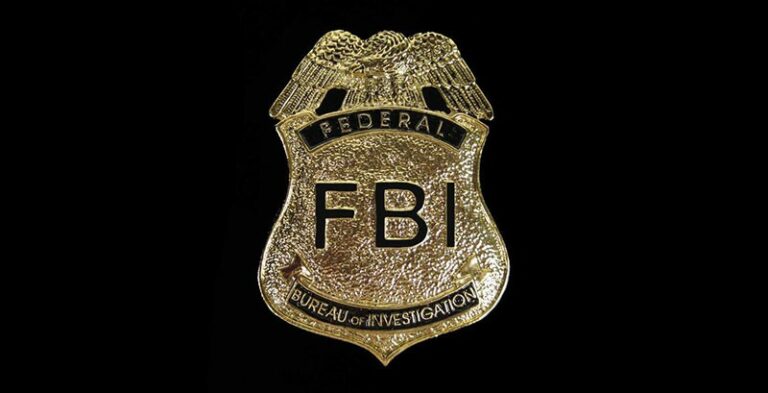
Last week, the Bohemian reported on an intra-agency FBI electronic communication from Oct. 30, 2013 that showed the agency had quietly de-prioritized its involvement in the shooting of Andy Lopez by a Sonoma County sheriff’s deputy. The FBI communiqué said that the agency had inadvertently opened a “full investigation” into the shooting on Oct. 25, and that an FBI higher-up had stepped in and reclassified their role as an “assessment”—the lowest tier of FBI priorities. Lopez was killed on Oct. 23.

In response to a California Public Records Act request, the Sonoma County Counsel’s Office said on March 20 that there was no record of any communication between anyone in the county—including at the Sonoma County Sheriff’s Office or the District Attorney’s Office—and the FBI in the aftermath of the shooting.

After our story came out last week, the county informed the Bohemian that the sheriff’s office had, in fact, found a record of communication between the Sonoma County Sheriff’s Office and the FBI. The undated handwritten telephone-call note, reports Deputy County Counsel Petra Bruggisser, “may have occurred during the time frame specified in your request. The phone call pertained in part to another case, unrelated to the Lopez case, and general FBI contact information in officer-involved shooting cases. …The note simply reflects that the FBI informed the sheriff’s office about opening a case. The sheriff’s office maintains that it had no involvement in the FBI’s investigation and no knowledge about the FBI’s internal administrative handling or classification of the case.”

The text of the note: “Associate [unclear] counselor. Open a case, civil rights case. Shooting. Controversial shootings.”

March 22–26: Taste of the Valley in Napa

0

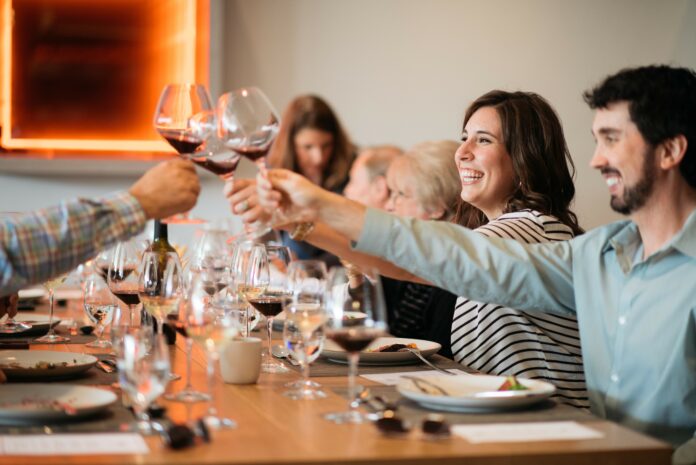
Wine and food enthusiasts have reason to be excited this week, when the five-day Flavor! Napa Valley returns to showcase local winemakers and chefs and support scholarship programs for the Culinary Institute of America in St. Helena and Napa. This year’s schedule of events honors iconic figures like Heidi Barrett, the woman behind several 100-point rated wines, and celebrates the region’s range of terrific terroirs at wineries like Paraduxx and St. Supéry Estate Vineyards. Throughout the week, tastings and classes help expand palates and heighten culinary experiences. Wednesday through Sunday, March 22–26, throughout Napa Valley. For more information and tickets, visit flavornapavalley.com.

Wedge Issue

A small triangle of cheese lies on its mark on a tasting sheet. This is no ordinary, creamy yellowish wedge of cheese, nor does it merely sport a rustic rind or smell faintly of the farmyard. This cheese looks like it was retrieved from the crypt. Marbled gray-blue, it looks like it's smoldering. This cheese needs a beer. It's no...

Letters to the Editor: March 29, 2016

Taxpayer Questions I totally agree with Peter Byrne's legitimate questioning of the Sonoma County Independent Office of Law Enforcement Review and Outreach (IOLERO) as a complete waste of taxpayer money (Open Mic, March 1.) If Jerry Threet needs nine paragraphs to justify and defend his newly formed organization (Letters, March 15), the questions are well-deserved. To the common person, the fact...

Crossing Borders

Singer, songwriter and guitarist Gaby Moreno's earliest memories are of being on a stage. Growing up in Guatemala, she was encouraged by her parents at a young age to perform. "That's something that's been natural to me," she says. "I feel very comfortable there." Today, Moreno is considered one of the premier voices in Latin pop, singing with tremendous emotional power...

Waiting on a Train

Even the most ardent supporter of a commuter train linking Sonoma County to central Marin County has to be feeling a little skeptical these days. The Sonoma Marin Area Rail Transit (SMART) was supposed to be shuttling passengers from Santa Rosa to San Rafael. But a December 2016 promise of service was postponed until "late spring." There was also the...

Next Steps

Now that Measure A passed, some in the cannabis industry are wondering how the permitting process will work. Sonoma County businesses (except dispensaries) can start applying for business permits July 1. I expect the county is using the next few months to come up with the systems needed to process applications. How are you getting ready? Proof that you are...

Out of the Ordinary

'Hold still and sip the pain." It's a brief, swift line, uttered kindly but fiercely by the wise, wary slave Azucar (Cathleen Riddley), combing the hair of the impulsive, 13-year-old Zuri (Dezi Soley). Azucar's simple sentence is a strong early example of how playwright Star Finch will be weaving words together in the stunning world premiere of Bondage, presented through...

Near and Far

Celebrating its 20th year, the Sonoma International Film Festival takes over Sonoma's historic plaza for five days. The 90 handpicked films in this year's festival, running March 29–April 2, include independent features, shorts and documentaries from around the world—with two of the most intriguing coming from local filmmakers. William Papadin, whose short film sans reponse (pictured) screens on March 31...

War of the Worm

In space, no one can hear you scream, "For God's sake, don't coddle that damned face-hugging alien!" Daniel Espinosa's Life throws the sci-fi fanciers a few (human) bones. Xenobiologist Ariyon Bakare's Hugh Derry croons over a little bugger brought to the International Space Station by the Pilgrim 7 Martian probe. Talking to it, petting it in its glove box and...

FBI and SCSO

Last week, the Bohemian reported on an intra-agency FBI electronic communication from Oct. 30, 2013 that showed the agency had quietly de-prioritized its involvement in the shooting of Andy Lopez by a Sonoma County sheriff's deputy. The FBI communiqué said that the agency had inadvertently opened a "full investigation" into the shooting on Oct. 25, and that an FBI...

March 22–26: Taste of the Valley in Napa

Wine and food enthusiasts have reason to be excited this week, when the five-day Flavor! Napa Valley returns to showcase local winemakers and chefs and support scholarship programs for the Culinary Institute of America in St. Helena and Napa. This year’s schedule of events honors iconic figures like Heidi Barrett, the woman behind several 100-point rated wines, and celebrates...
11,084FansLike
4,606FollowersFollow
6,928FollowersFollow