Threet’s Beat

0

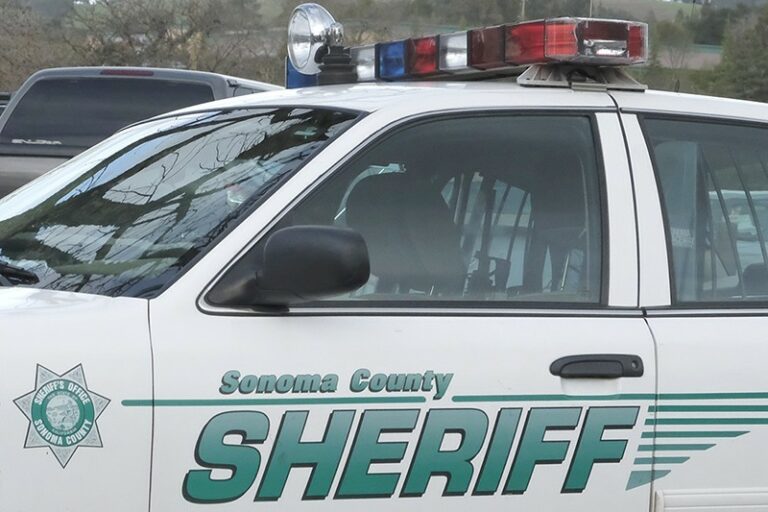
Jerry Threet runs Sonoma County’s Independent Office of Law Enforcement Review and Outreach. The office was created last year in response to the shocking killing of 13-year-old Andy Lopez in 2013 by Sheriff’s Deputy Erick Gelhaus.

Threet is paid $254,000 in salary and benefits and spends another quarter million dollars on an assistant, office expenses and “refreshments” for community meetings.

What are we getting for our half million bucks a year?

Threet does have the power to investigate complaints against the sheriff and his deputies. He is limited to “auditing” whether they complied with “administrative procedures,” which include the rules of engagement on the use of force. He is not allowed to investigate allegations of criminal behavior. He cannot gather evidence or interview witnesses or consult forensic experts. He is only allowed to review the paper trail of a self-investigation by the sheriff after it is completed. He cannot overturn the sheriff’s decision to dismiss a complaint.

In short, Threet has no meaningful authority to oversee complaints of assault, false arrest, illegal search and seizure, rape or murder (there were 26 complaints last year).

Sonoma County law enforcers are notorious for excessive use of force and violation of civil rights. There is a pressing need for independent investigations of police misconduct. Threet is not independent of the sheriff he is supposed to monitor; he views his job as giving the community “assurances that these investigations are being done appropriately.”

In a telephone interview, Threet said he is satisfied with the six investigations presented to him so far by Sheriff Steve Freitas. He has not audited the sheriff’s self-exonerating “investigation” of the killing of Lopez, because, he says, “No one has asked me to audit it.”

So I asked Threet to audit it. A few days later, he emailed me that due to “limited resources” he is not “inclined” to audit the Lopez case because Freitas had found that his deputy correctly followed “administrative procedures” when he shot Lopez without warning.

The sheriff’s administrative procedures require that a warning be given before using lethal force. That he failed to give that warning is the core of a lawsuit launched by the Lopez family.

Peter Byrne is an investigative reporter based in Petaluma.

Open Mic is a weekly feature in the ‘Bohemian.’ We welcome your contribution. To have your topical essay of 350 words considered for publication, write op*****@******an.com.

Back Off

U.S. Attorney General Jeff Sessions said that it is not the responsibility of the attorney general to pick and choose which federal laws to enforce.

“One obvious concern is that the United States Congress has made the possession of marijuana in every state and distribution of it an illegal act,” he said. “If that’s something that’s not desired any longer, Congress should pass a law to change the rule.”

But the AG does set priorities and policies regarding enforcement. Under presidents Reagan and Bush Sr., AG Dick Thornburgh ordered the nation’s federal prosecutors in drug cases, including cannabis, to file the most serious charges possible. Under President Obama, AG Eric Holder advised the same prosecutors to file lesser charges when possible to reduce the social harms and prison costs run up.

President Obama failed to reschedule marijuana, during his eight years in office leaving in place all the problems that Schedule 1 entails for society. Nobody knows what Trump has in mind, probably not even him.

Sessions has a deplorable record regarding marijuana. Rather than trust his judgment, it is time for Congress to change the law once and for all. Currently, the annual federal budget keeps U.S. agencies from violating states’ rights in regard to industrial hemp and medical-marijuana reforms. The rules have been upheld by the courts, but they are tenuous.

Anticipating Sessions’ anti-cannabis bent, California U.S. Rep. Dana Rohrabacher joined six other Republicans and six Democrats to introduce bipartisan legislation, the Respect State Marijuana Laws Act. The bill would prevent the federal government from criminally prosecuting individuals and/or businesses engaged in state-sanctioned activities specific to the possession, use, production and distribution of marijuana.

The bill, HR 975, states, “Notwithstanding any other provision of law, the provisions of this subchapter related to marijuana shall not apply to any person acting in compliance with state laws relating to the production, possession, distribution, dispensation, administration, or delivery of marijuana.”

National polls show that
60 percent of Americans support legalizing marijuana, but recent history shows that a majority of public opinion or even a majority of registered voters at the polls does not mean that the will of the people will be followed.

Passage of HR 975 would halt Sessions and any other federal official from prosecuting individuals and businesses for violating the Controlled Substances Act in the 28 states (and the District of Columbia) that permit either the medical or adult use and distribution of marijuana. Call or write your member of Congress to support HR 975.

Chris Conrad is the publisher of ‘West Coast Leaf.’

Bung Rush

0

One of wine country’s biggest bacchanals is, of all things, a tribute to delayed gratification.

The basic idea behind barrel tasting sounds so very sober: (1) get a small sample of the latest vintage direct from the barrel, along with some frank talk about the vintage direct from the winemaker; (2) mull it over, then expel the sample in the general direction of the cellar drain—it’s unfinished wine, after all; (3) choose to purchase or decline a share of that wine some 12 to 18 months in the future, when it’s good and ready to drink, should you deem it worthy of the wait.

Beginning with just eight wineries 40 years ago as a way to entice visitors in the off-season, Wine Road’s annual barrel tasting weekend proved so popular that it now spans two weekends, plus Fridays. “At first, it was just bring your own glass and show up,” says Debbie Osborn, events manager at the marketing association that includes wineries and lodgings within the Russian River Valley, Dry Creek Valley and Alexander Valley viticultural areas.

Today, tickets cost up to $70 at the door, with discounts for Sunday drivers and designated drivers. While that’s a sevenfold increase from a decade ago, it’s still a deal, says Osborn, considering that individual tasting fees of $10 to $20 can quickly add up during a day of touring on any other day. And perhaps there’s even a silver lining to the high cost, whether intentional or not. The low cost of admission made barrel tasting a cheap way to get one’s drunk on, some critics have noted in past years, taxing winery staff and local residents while blurring the educational premise of the event—being able to chat up the vintner about the drought years’ effect on phenol development, say, or even,

So, when do they put the raspberries in the wine?

Wine Road has also banned buses, to cut down on crowd surges. That’s never a problem at Acorn Winery, according to Betsy Nachbaur, whose husband, Bill, will be offering samples of his Zinfandel-based field blend from their vineyard that was planted in 1890. “We are never slammed because we’re off the beaten path,” says Betsy. “We feel very much like we’re giving a party in our house.” Nachbaur advises that locals take advantage of the Friday option for smaller crowds and a more intimate experience. As a plus, your gratification need not be delayed one day longer into the weekend.

Wine Road Barrel Tasting, March 3–5 and March 10–12, 2017, 11am–4pm each day. Tickets at the door $70 weekend, Sunday only $60. Designated driver ticket $10. www.wineroad.com.

Lone Wolverine

It’s 2029 and the last of the mutants—pale Caliban (Stephen Merchant), Charles Xavier (Patrick Stewart) and the mercenary Logan, aka Wolverine (Hugh Jackman)—are holed up in an abandoned industrial facility in the Mexican desert. Trying to hide from the government and his past, Logan works as a limo driver, taking high school kids to their proms.

A smirking Blackwaterish thug called Donald (Boyd Holbrook) turns up around the same time that Logan is asked for help by a woman tending a special child, Laurie (Dafne Keen), who seeks safety in an Eden for mutants. This most meta of the X-Men movies suggests that a clue published in an old X-Men comic book determines the future of mutantkind. But the comics are there for Logan’s contempt, as if he were a Western gunslinger scorning a Ned Buntline dime novel.

The tangy script makes up for director James Mangold’s bent for overemphasis. We glimpse the statue of liberty on a sign for a low-class flophouse called the Liberty Motel—we get it, remembering the X-Men’s battle 17 years ago atop the torch. Mangold (Walk the Line) tries to give Jackman’s Logan Johnny Cash–worthy demonstrations of integrity, even ratifying that moral heft with Cash’s “Man Comes Around.” It usually works, but Mangold leans on the buzzer.

There are worse things than moral seriousness. Logan‘s action comes hard and fast, with a savage car pursuit and various skirmishes in an Oklahoma farm and in the Rocky Mountains. There’s magnificent action-movie confidence in the moment where Logan steps into the full force of one of Xavier’s psy-storms, which are strong enough to break windows blocks away. Logan pulls himself to the center of the telepathic hurricane, bracing himself with his claws at every step.

With dignity and grace, Jackman says sayonara to this signature role, and one wonders what will replace it in upcoming X-Men installments.

‘Logan’ is playing in wide release in the Bay Area.

Taking Measure

0

Lynda Hopkins has been in office for six weeks and has already endured six floods in her early tenure as Sonoma County supervisor in the 5th District. Now she’s wading into another stormy subject: a scheduled special election next week to enact a county-wide tax on cannabis businesses.

Many of those who will be affected by the tax live in her West County district.

Voters will be asked to head to the polls on March 7 to vote on Measure A. Unlike cannabis taxes that have been set at the state level, the Sonoma County proposal is not a “pay-go” tax; cannabis taxes will not be restricted to cannabis regulation or law enforcement, but will rather go into the county’s general fund where they can be used for those purposes—or not.

The vote comes as the county has set out various zoning schemes that codify who can grow cannabis and where, under the statewide cannabis legalization regime that took place with the passage of Proposition 64. That measure sets out state-specific taxes and also opens the door to localities to set their own.

The proposed county tax would be placed on cannabis businesses, both medical and non-medical, and can be used to pay for code enforcement, public safety, road repair, health and human services or environmental protection and remediation.

According to county fact sheets and documents explaining the tax, the maximum rate that can be charged to growers is 10 percent of gross receipts, under the proposed supply-chain businesses tax. For manufacturers, the starting rate is set at 5 percent. Another cultivation tax is set by square footage. Outdoor cultivators will pay between 50 cents and $10 per square foot, while indoor cultivators will start out at between $1.88 and $18.75 per square foot, with a maximum rate of $38 per square foot.

The county compared its proposed rate with those of 50 other cities and counties around the country, and in an online fact-sheet reported that, “While maximum square footage rates for cultivation are on the higher end, the starting rates, especially for small businesses, are among the lowest.”

The board says it set the rates low to “incentivize compliance and offset startup costs,” and anticipates annual tax revenues of $6.3 million if the measure is adopted. The rate would be set at the discretion of the board of supervisors.

But Measure A opponents say the tax is too high and will be a disincentive to comply with state and county efforts to license and regulate the state’s for-now-legal cannabis industry. And, for pot-growing residents in the county’s “ag residential” and “rural residential” zoned areas, the tax is a double-whammy, since the county has already set out to ban commercial grows in those areas, where thousands of growers now tend to their plants.

Even though Sonoma County code-enforcement efforts operate as a complaint-driven system, resident growers in Hopkins’ district are uncertain about how they’re going to weather the new zoning rules—tax or no tax, Hopkins says.

The pot tax cake was already baked by the time Hopkins took her place on the board in January, as the supervisors voted for the March 7 tax before she was sworn into office.

“I just get to serve the cake,” she says.

Asked if she supports Measure A, Hopkins offers a qualified yes, “We do need the funding in order to begin the permitting process.”

Hopkins is concerned that the tax could serve to drive those in the cannabis industry looking to follow the law back into the shadows, and says Measure A’s flexibility on setting the tax rate—and where the taxes actually go—is a problem for her. Hopkins has been hearing complaints about the tax and the cost of the single-item election, which will reportedly cost $400,000 to administer.

As a general tax, as opposed to a more restrictive special tax, it gives the board of supervisors “tremendous flexibility in how the tax will be assessed,” she says. “Cannabis growers don’t know how much they are going to pay—there’s a range.”

[page]

Hopkins recently met with Forestville grower Oaky Joe Munson, a longtime North Coast grower who has been raising cannabis for HIV-afflicted people in Sonoma County for five years. He was raided in 2015 after a probation check, and hundreds of his plants were destroyed by sheriff’s deputies, who also confiscated cash he only recently got back after the pot-related charges against him were dropped. He’s got a new crop in now, he says—and friendly neighbors, too. Still, he says, “local growers are terrified that they are going to get squeezed out” by the county’s cannabis zoning scheme.

Hopkins says she’s hearing variations on Munson’s concern. “There is a tremendous amount of fear and mistrust,” she says. “People on ag- or rural-residential [land] are now being told that if they continue, that they will be in violation of county code.”

The tax will only apply in unincorporated parts of the county, so that a cannabis business in Santa Rosa won’t be faced with a double-dip from the county and the city.

As the county gets set to vote next week, the city of Santa Rosa is also preparing a pot tax vote of its own in July to set its cannabis business tax, which has been promoted by Santa Rosa through a proposed ordinance. On March 7, the Santa Rosa City Council will meet to discuss the tax rate for the proposed tax and the July election. A series of public meetings will follow throughout the month. According to the proposed ordinance, “the city council is authorized to impose on every person who is engaged in commercial cannabis cultivation in the city, an annual cannabis industry tax at a rate not to exceed either, as council in its discretion may choose, $38 per square foot of cannabis cultivation area or ten percent of annual gross receipts.”

Meanwhile, California has also embarked on a new cannabis taxation regime—and has set out licensing and permitting requirements that localities must abide. All that means more pressure on the county to stand up and and fund its regulation regime and deal with community concerns that come along with cannabis legalization.

Craig Litwin is the owner of Sebastopol’s 421 Group, “a boutique consultancy that offers planning, strategy and development services to help innovative cannabis organizations succeed.” He sees nothing good coming from Measure A, even as he says he appreciates the effort to tackle regulatory problems in Sonoma County. The Sonoma County Growers Alliance is also opposed to the tax, even as some local growers have stepped up in support of it.

“I’m urging people to vote no and go back to the drawing board,” Litwin says. He suggests a lower tax rate going in, repeating an oft-heard tax-the-pot conundrum: “Too many taxes on top of each other will only reinforce the black market.”

Hopkins says that if Measure A passes she’ll work with the Sonoma County Medical Marijuana Ad Hoc Committee to set a target tax rate that’s fair.

Hopkins has established relationships with growers like Oaky Joe and says others have offered to share their books so she can aggregate the data.

“I would come to the board of supervisors and say, ‘If you tax this too high, it will eliminate their profit margin.'”

Of course, all of this talk about taxing commercial cannabis businesses is predicated on the U.S. Department of Justice and its recently appointed pot-hating attorney general Jeff Sessions. And just last week Trump spokesman Sean Spicer hinted at a federal crackdown on recreational cannabis. Closer to home, the Sonoma County sheriff, Steve Freitas, is an opponent of recreational legalization and recently met with Sessions in D.C. “Sheriff Freitas’ opinion has always been that marijuana possession, cultivation, use, transportation and sales should be illegal,” says SCSO spokesman Sgt. Spencer Crum via email.

For its part, the Sonoma County Republican Party opposes Measure A, charging that the board of supervisors is “cramming this item forward with such a hastily called and costly special election.” The local GOP also notes that the “new tax would not decrease the so-called black market sales of cannabis and other drugs, but would instead, in our opinion, increase the black market many fold.”

Appetizing Art

0

On the menu at Shige Sushi Japanese Kitchen is a wide range of delicious Japanese food. Opened by Shigekazu “Shige” Mori in 2012, the eatery is beloved by fans of traditional Japanese food.

But the tiny restaurant has a lesser known feature: it’s a gallery space known as the Art Wall at Shige Sushi, curated by Santa Rosa artist and photographer Colin Talcroft.

Raised in New York City, Talcroft started photography and drawing at eight years old. “I’ve done all kinds of stuff,” he says. “Photography, painting, collage and printmaking when I lived in Japan.”

Talcroft first visited Japan as an exchange student in high school, then returned in 1983 after getting an undergraduate degree in Japanese and a master’s degree in modern Japanese literature at Ohio State University.

For nearly 20 years, he lived mostly in Tokyo, teaching English, working in the stock market and making art. In 2000, he relocated to Santa Rosa with his family. Talcroft first met Shige when his wife started working part-time at the restaurant soon after it opened.

“When I first saw this place, it looked kind of blank,” Talcroft says. “I said, ‘There’s a big empty wall here that I could have fun with.’ Shige said, ‘Sure, go for it.'”

Though he was more than familiar with sushi-restaurant aesthetics, Talcroft set his sights on doing something different with the empty space.

“I had two ideas in mind when I started this,” he says. “One was that I did not want to show Japanese-themed art; I didn’t want to think of this as a place that just showed travel shots of Kyoto, that kind of thing.

“My main idea, from the beginning, was that I simply wanted to show the best work I could get access to,” says Talcroft. “My main interest is to find really good artists and, since I’m a working artist myself, I wanted to create a place where it’s as easy for the artist as possible.”

To that end, the Art Wall at Shige Sushi takes a much smaller percentage of sales from the art, offering local artists a venue that’s accessible in a way many galleries that charge for wall space are not.

The art wall’s first show opened in December 2014. Now entering its third year, the space regularly shows a diverse range of works from North Bay and Bay Area artists, rotating every two months.

This month and next, the Art Wall is hosting a group show, “Contemporary Bay Area Photography,” featuring pieces by nearly a dozen photographers. The show includes landscape, figurative and avant-garde works from local photographers and nationally recognized figures like experimental San Francisco filmmaker Janis Crystal Lipzin.

It’s an unlikely venue, but that makes the Art Wall one of the most intriguing and intimate galleries in the North Bay.

Letters to the Editor: March 1, 2016

Measure A Makes Sense

As someone who has been in the industry for many years and currently operates several hundred square feet below the “cottage level” cutoff, I couldn’t disagree with you more (“No Way on ‘A’,” Feb. 22). The proposed Sonoma County taxes are better than any of the other any other cannabis taxes in states where marijuana is legal—worse than Humboldt, but better than what has been proposed or passed anywhere south or east of here. Yes the “up to” 10 percent is scary. But this is a process in a process. The county, for those that have been involved, clearly wants to support small operators and not kill the goose that laid the golden egg. Welcome to the real world or regulation, taxes, OSHA, labor boards, etc. Guess what? We are finally being handed a legal and regulated industry. Scary, yes. Expensive, yes. But we also escape living in a world where what we do is illegal.

Yep, many of us are going to have scale up considerably. But we will have the freedom to do so without fear of Henry 1’s flights twice a year. And, yep, a lot of players both small and large are pretty much done. If you can’t produce a product that is good enough for the California market, your days are numbered. So be it. These are the people who have created much of the environmental, worker and criminal abuses in our region. Maybe you should have explained to people that without a tax in place the county doesn’t issue permits. Without county permits, you can’t get a state permit—meaning the cannabis industry in Sonoma County could become completely illegal for one or more years under a federal administration itching to screw the cannabis industry, and California in particular.

Via Bohemian.com

Word on Threet

Since Mr. Threet’s primary function (“The Watchdog,” Feb. 22) appears to be to reassure the public, nice, fluffy pieces like this will help the cause, but where are the questions from Tom Gogola for Threet regarding Sheriff Freitas’ meeting with Attorney General Jeff Sessions?The Press Democrat reported on the meeting on Feb. 8. The Bohemian reported that “Threet said he will ask Freitas further questions next week when they are scheduled to meet.” What were those questions and what were Freitas’ answers? Enquiring members of the public wish to know. Gogola asked him to comment on the people commenting on the PD piece, yet apparently failed to ask Threet about the follow-up meeting with Freitas. C’mon, Boho, we need some answers.

Via Bohemian.com

This was surprising to read. The board of supervisors has always seemed to say they have no policy authority over the sheriff: “My own personal view of it is the government code does give the board of supervisors supervisorial authority over sheriffs, and that it’s rarely exercised,” Jerry Threet was quoted as saying.As it stands, it seems the only thing the sheriff is currently doing that the board of supervisors may have issue with is notifying immigration officials if inmates will be released. They do not honor 48-hour hold requests unless accompanied by a court order; in fact, it now seems it has been found unlawful to honor hold requests unless they come with a court order.

Via Bohemian.com

Write to us at le*****@******an.com.

Debriefer: March 1, 2017

0

DAPL BE DAMNED

Last Friday, the organization Sonoma Solidarity with Standing Rock descended on SPO Partners in Mill Valley to protest the Dakota Access Pipeline project in South Dakota. SPO Partners is a hedge fund with ties to the DAPL project (“The Spigot,” Oct. 26). In a statement, Patrick O’Connell says organizers picked SPO “because they are the largest investors in Oasis Petroleum, [which] is one of nine companies supplying oil to DAPL.” On Feb. 24, O’Connell and the Sonoma No Dakota Access Pipeline support group presented a letter to SPO Partners managing partner John Scully that charged, “We believe that SPO Partners investments in Oasis Petroleum is a criminal act”—and said that because of the proposed route through sacred Sioux land, the criminal violation occurred under the so-called incitement offense of the Genocide Convention Implementation Act of 1987.

BOYES OH BOY

Sgt. Spencer Crum of the Sonoma County Sheriff’s Office reports that an ongoing internal-investigation at SCSO into a controversial arrest in Boyes Hot Springs has concluded and awaits the signature from Sheriff Steve Freitas. The arrest involved three SCSO deputies and one suspect, who was in his bedroom at the time of the October 2016 incident, which began with an anonymous call about domestic abuse. The suspect was Tasered by two of the deputies, including Deputy Scott Thorne, who also beat the man with his baton. Thorne was fired from SCSO after an administrative review of the body-cam video, and all charges against the victim were dropped. An SCSO-prompted criminal investigation by the Santa Rosa Police Department led to a felony assault charge against Thorne by the Sonoma County District Attorney. As a probationary officer, Thorne did not have civil service protections afforded the other two veteran officers on the scene, though Crum says those protections aren’t an inoculation against accountability.

“Thorne was on probation; the other two weren’t,” he says. “If it is substantiated that any deputy uses excessive force, they can be terminated regardless of probationary status.”

Thorne pled not guilty to the excessive-force charge in mid-January and is due back in court later this month. Meanwhile, the other two deputies—Beau Zastrow and Anthony Diehm—remain on duty. Once Freitas signs off on the internal investigation, which is focused on the actions of those officers, not Thorne, it goes to Jerry Threet at the Independent Office of Law Enforcement Review and Outreach, for his review.

BIG MAN ON THE MEND

Santa Rosa’s most prominent African-American citizen spent much of Black History Month in the hospital, but we’re pleased to report that Elbert “Big Man” Howard is on the mend and back at home after leaving a health-rehab facility late last week, according to his wife, Carol Hyams-Howard. Howard was a founding member of the Black Panthers in 1966. The Bohemian wishes him god-speed in his recovery.

Clown Around

‘We have sinned!” exclaims a desperately guilty character early on in A Little Night Music, adding, “And it was a complete failure!”

“In our show, that line is worth the ticket price,” proclaims Craig Miller, director of 6th Street Playhouse’s production of the beloved Stephen Sondheim musical. “It’s my favorite moment in the show,” Miller says.

The show, which Miller describes as “an uproariously funny and sexy celebration of the ins-and-outs of love,” has fallen in and out of favor since it debuted in 1973. Currently, it’s on the rise. This month alone there have been productions in Spokane, Bozeman, Mont., Staten Island and over in Napa at Lucky Penny Community Arts Center.

Based on the 1955 Ingmar Bergman film Smiles of a Summer Night, the show is perhaps best known for giving us the song “Send in the Clowns.” More on that later.

In the show, Tina Lloyd Meals plays Desiree Armfeldt, a promiscuous actress hoping to rekindle an old affair with lawyer Fredrik Egerman (Phil Levesque), who has recently married the 18-year-old Anne (Nicole Stanley), who’s too nervous to consummate the relationship. Complicating Desiree’s would-be seduction of Fredrik is her pompously jealous lover Count Carl-Magnus Malcolm (Stefan Wenger), and his not-so-jealous wife Charlotte (Tracy Hinman). With the addition of some star-crossed step-siblings, a randy maid and a singing quintet, the stage is set for a night of colossal collisions of love, lust and self-discovery.

I played Count Carl-Magnus in college, and I have to say there is literally very little redeemable about him,” admits Miller. “However, he serves an important function in the play, which is to remind us all that misogyny and male chauvinism was, and still is, alive and well.”

Which brings us to “Send in the Clowns.”

“It is a gorgeous song, and I do love it,” says Miller, “and I love what Tina is doing with it. I think we have discovered the way into the song that is really unique. We have decided that the song is not to be played as a defeat. The song has a journey. It starts off hopeful, then the bomb drops, and it ends with the question about losing her timing in love, and the realization that it might be too late. It’s beautiful—if it’s done right, and Tina is definitely doing it right.”

Sheriff Freitas trip to D.C. cost Sonoma taxpayers $2,522.90. Plus: ICE and SCSO.

Shannon Dower, Legal Staff Supervisor and Discovery Clerk with Sonoma County, followed up with the Fishing Report this week with some information about the cost of an early-February trip to Washington D.C., taken by Sonoma County Sheriff-Coroner Steve Freitas.

During the trip, Freitas met with then-U.S. Attorney General designate Jeff Sessions, along with five other California sheriffs. The trip was met with dismay among immigrant-rights advocates in the county, who have worked to protect the local undocumented population from the threat of mass deportation. At the same time Freitas was meeting with Sessions, the Sonoma County Board of Supervisors was pushing the idea of the county-as-sanctuary—without actually calling it a sanctuary, given how loaded that word has become. Sessions has since been confirmed as U.S. Attorney General—and in the days following his confirmation, immigration agents have ramped up raids around the country and the state—but not in Sonoma County.

Dower says the Freitas trip cost Sonoma County taxpayers $2,522.90, broken down as follows:
Airfare: $595.60
Hotel: $1597.30
Meals: $300.00
Taxi: $30

(I’m waiting for further information from Dower and the SCSO about where he stayed and for how long.)

The information about the cost of his trip arrived as the Sonoma County Sheriff’s Office released a public letter from Freitas this week, to regional media outlets, that it then withdrew and then resent a day later when the original letter was found to have contained some errant information.

The corrections in the second letter key in on the number of times the county informed Immigration and Customs Enforcement (ICE) agents when an undocumented immigrant was arrested and booked into the county lockup.

The first letter, sent on Feb. 22, reported that ICE had been contacted four times this year: one undocumented perpetrator at the Main Adult Detention Center was a felony suspect; two were in jail on domestic violence charges; and a third was locked up on a weapons charge.

The updated letter on Feb. 23 said—with “extreme apologies” from SCSO for pushing out the initial, errant info—that ICE had in fact been contacted 15 times so far this year, not four.

Here’s the updated breakdown of ICE contacts in 2017: Two felonies, three domestic violence, one weapons charge, four DUI, two felony DUI, one for violating probation; one for false identification/drug possession, and one who had committed assault and battery on another person.

What is the eventual fate of those inmates?

“We don’t release them to ICE custody,” says Sgt. Spencer Crum, the SCSO public-information officer. “We simply advise ICE of the release date and if they pick them up, they pick them up outside of our jail after they are released. There is no ‘transfer of custody.’ We don’t know about it and don’t keep any records.”

In the updated and corrected letter, Freitas also clarified the rules-of-engagement with ICE officials who are looking for a criminal suspect in the county—an entire paragraph that wasn’t in the first letter in any form, but which seems designed to set minds at ease when it comes to fears of random roundup of undocumented immigrants under the guise of a criminal investigation:

“Additionally, my deputies will cooperate with ICE agents if they are in Sonoma County looking for serious/violent criminals in the community. However, our policy is clear that my deputies working with ICE, and the ICE agents themselves, will not detain people solely for immigration violations while we are looking for the serious criminals. If ICE does not agree to these conditions then my deputies will not join them in the community.”

That paragraph could be viewed as an acknowledgement of SB 54, the Senate bill proposed by California Senate pro Tempore Kevin DeLeon that would make California a sanctuary state, and restrict local law enforcement participation in ICE raids. In part, the de Leon bill reads, “State and local participation in federal immigration enforcement programs also raises constitutional concerns, including the prospect that California residents could be detained in violation of the Fourth Amendment to the United States Constitution, targeted on the basis of race or ethnicity in violation of the Equal Protection Clause, or denied access to education based on immigration status.”

At the same time, SB 54 would also restrict California law enforcement agencies from, “Giving federal immigration authorities access to interview individuals in agency or department custody for immigration enforcement purposes.” And yet it appears that SCSO may have done that on 15 occasions so far this year—gave ICE a heads-up on potential deportees, including a handful locked up on what appear to be non-violent, non-felony charges.

Freitas says in his letter that his main concern is the public safety of county residents, “regardless of your citizenship or immigration status.”

Threet’s Beat

Jerry Threet runs Sonoma County's Independent Office of Law Enforcement Review and Outreach. The office was created last year in response to the shocking killing of 13-year-old Andy Lopez in 2013 by Sheriff's Deputy Erick Gelhaus. Threet is paid $254,000 in salary and benefits and spends another quarter million dollars on an assistant, office expenses and "refreshments" for community meetings. What...

Back Off

U.S. Attorney General Jeff Sessions said that it is not the responsibility of the attorney general to pick and choose which federal laws to enforce. "One obvious concern is that the United States Congress has made the possession of marijuana in every state and distribution of it an illegal act," he said. "If that's something that's not desired any longer,...

Bung Rush

One of wine country's biggest bacchanals is, of all things, a tribute to delayed gratification. The basic idea behind barrel tasting sounds so very sober: (1) get a small sample of the latest vintage direct from the barrel, along with some frank talk about the vintage direct from the winemaker; (2) mull it over, then expel the sample in the...

Lone Wolverine

It's 2029 and the last of the mutants—pale Caliban (Stephen Merchant), Charles Xavier (Patrick Stewart) and the mercenary Logan, aka Wolverine (Hugh Jackman)—are holed up in an abandoned industrial facility in the Mexican desert. Trying to hide from the government and his past, Logan works as a limo driver, taking high school kids to their proms. A smirking Blackwaterish thug...

Taking Measure

Lynda Hopkins has been in office for six weeks and has already endured six floods in her early tenure as Sonoma County supervisor in the 5th District. Now she's wading into another stormy subject: a scheduled special election next week to enact a county-wide tax on cannabis businesses. Many of those who will be affected by the tax live in...

Appetizing Art

On the menu at Shige Sushi Japanese Kitchen is a wide range of delicious Japanese food. Opened by Shigekazu "Shige" Mori in 2012, the eatery is beloved by fans of traditional Japanese food. But the tiny restaurant has a lesser known feature: it's a gallery space known as the Art Wall at Shige Sushi, curated by Santa Rosa artist and...

Letters to the Editor: March 1, 2016

Measure A Makes Sense As someone who has been in the industry for many years and currently operates several hundred square feet below the "cottage level" cutoff, I couldn't disagree with you more ("No Way on 'A'," Feb. 22). The proposed Sonoma County taxes are better than any of the other any other cannabis taxes in states where marijuana is...

Debriefer: March 1, 2017

DAPL BE DAMNED Last Friday, the organization Sonoma Solidarity with Standing Rock descended on SPO Partners in Mill Valley to protest the Dakota Access Pipeline project in South Dakota. SPO Partners is a hedge fund with ties to the DAPL project ("The Spigot," Oct. 26). In a statement, Patrick O'Connell says organizers picked SPO "because they are the largest investors...

Clown Around

'We have sinned!" exclaims a desperately guilty character early on in A Little Night Music, adding, "And it was a complete failure!" "In our show, that line is worth the ticket price," proclaims Craig Miller, director of 6th Street Playhouse's production of the beloved Stephen Sondheim musical. "It's my favorite moment in the show," Miller says. The show, which Miller describes...

Sheriff Freitas trip to D.C. cost Sonoma taxpayers $2,522.90. Plus: ICE and SCSO.

Shannon Dower, Legal Staff Supervisor and Discovery Clerk with Sonoma County, followed up with the Fishing Report this week with some information about the cost of an early-February trip to Washington D.C., taken by Sonoma County Sheriff-Coroner Steve Freitas. During the trip, Freitas met with then-U.S. Attorney General designate Jeff Sessions, along with five other California sheriffs. The trip...
11,084FansLike
4,446FollowersFollow
6,928FollowersFollow