June 24: Lifetime of Art in Santa Rosa

0

In 1947, at the age of nine, Ray Jacobsen moved to Sonoma from Colorado with his family, and he never left. He grew up to be an artist and made a living selling and showing vibrant landscape paintings until his death in 2007. Jacobsen’s career includes being one of the founding members of the Arts Guild of Sonoma in 1977, and his oil and watercolor paintings reflected the North Bay’s colorful natural features. This week, a retrospective show, ‘Forty Years of Ray Jacobsen,’ highlights paintings from throughout the artist’s career. The show opens with a reception on Saturday, June 24, at Calabi Gallery, 456 10th St., Santa Rosa. 4pm. Free. 707.781.7070.

June 27: Traveling Man in Petaluma

0

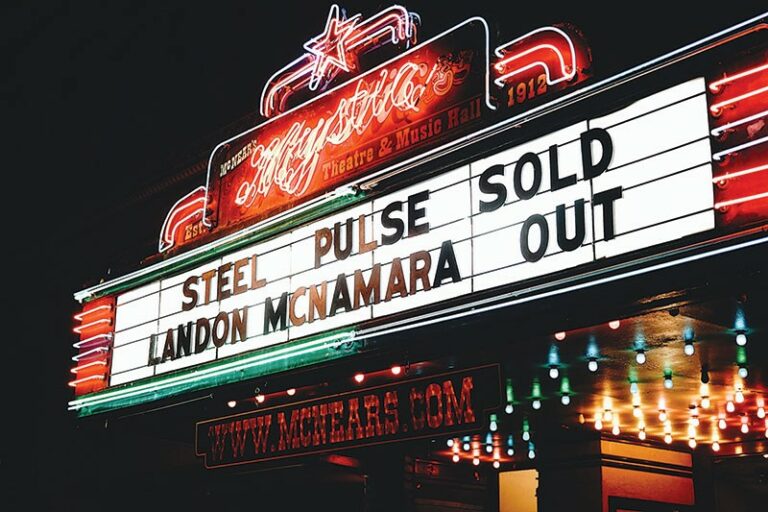
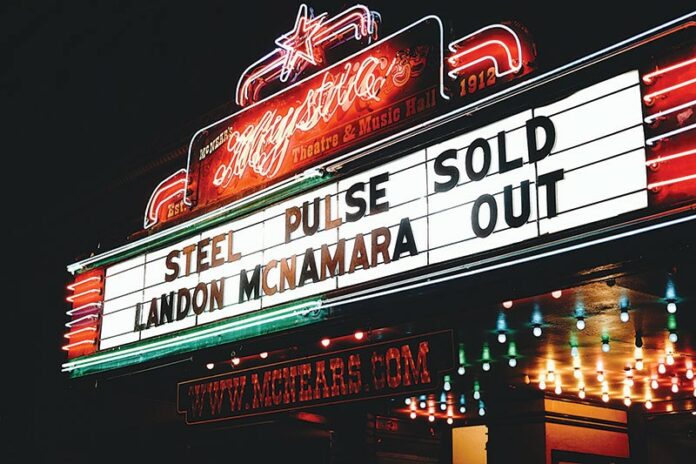
Folk songwriter Charles Ellsworth has been all over the map the past few years—literally. Born in Arizona, the musician was living in Brooklyn when he decided to return west to make his latest full-length solo album, Cesaréa, released last month. The album is a blend of Americana grit and post-punk haze that reflects his experiences with dry-heat Arizona summers and frigid New York winters. Though he now calls Salt Lake City home, Ellsworth is touring in support of Cesaréa, and stops in the North Bay for a show on Tuesday, June 27, at the Big Easy, 128 American Alley, Petaluma. Doors at 6:30pm, Free admission. 707.776.7163.

Summer Sips

0

The summer wine samples have arrived and with them a growing pile of tasting notes and press releases proffering tips on how and when to enjoy those wines. What these wineries or their press agents have in mind is that I, a busy wine journalist who’d rather be at the beach than tapping away at a keyboard in a stuffy office, will be happy to pass these themes on to readers.

But there’s a way to say it all with better economy of words: pair these wines with summer.

Charles Krug 2016 St. Helena Sauvignon Blanc ($18) The top wine of several Sauvignon Blancs and other whites tasted on a recent, unseasonably warm late spring evening, the Krug has a fine, light aroma like the powdery crumbs left in an emptied tin of lemon pastilles. Showing just a dusting of oak, this is no “fumé blanc” style, yet it only becomes grassy on the crisp, not too bitter finish. The buoyant palate suggests flavors of wheatgrass, lemon and underripe tropical fruit, defying easy Sauv Blanc categorization (i.e., “New Zealand style, etc).

The press agents who send out wine for Krug are pushing a “grilling surf and turf” theme, complete with a recipe “from the grill” of winery co-proprietor Peter Mondavi Jr.—which I have no reason to doubt, as Mondavi hosted a cookout for a few of us media types last spring, and he’s just the kind of knowledgeable but laid-back guy you’d want at the grill—for steak and cedar plank salmon. The Charles Krug 2013 Napa Valley Merlot ($25) is billed as pairing with either, but I actually preferred the Sauv Blanc with steak over the Merlot after trying Mondavi’s suggestion of an olive oil finish and coarsely ground sea salt. Already smoky with toasted oak, the otherwise full-flavored, chunky-tannic Merlot wasn’t much fun to sip at the grill and meets the meat on a bitter note, while the Blanc brightens up a bite, especially with a dab of pesto.

Try Rodney Strong’s 2016 Charlotte’s Home Northern Sonoma Sauvignon Blanc ($17) for a more herbal, lemon verbena-tinged take on the varietal. They’d have done well to have sent out a recipe, too, as I don’t find the marked astringency of the wine particularly refreshing, but it’s got the bones for some kind of cuisine.

Davis Bynum 2015 Jane’s Vineyard, Virginia’s Block Russian River Valley Sauvignon Blanc ($25) Here’s a mouthful of a product title, but it’s pretty easy on the palate—juicy flavors of melon, lime, green apple and green grass, and a tangy finish with no bitters would have earned this cooler climate Sauvignon Blanc the top spot, were it not such a stinker on the nose. Reductive aromas of days-old lawn clippings only began to dissipate after a day, uncorked, in the fridge. Curiously, the aroma was no issue grill side, so give this to the grill master to sip while tending the veggies, which would be a better pairing with this wine.

Toad Hollow 2015 Richard McDowell’s Selection Sonoma County Merlot ($15.99) This is the bright, ripe red raspberry and vanilla-flavored, medium-bodied, easy-pleasing Merlot that Merlot is all about. Just enough oak and fine tannins make themselves felt on the dry finish to set the wine apart from cheaper versions, but the price is good for a Sonoma County red wine. My only quibble is with the closure—a screw cap would make this a handier option for “spring and summer sporting events,” the theme that Toad Hollow’s press agent has chosen for this shipment, which also includes Toad Hollow 2015 Mendocino County Unoaked Chardonnay ($14.99) Wouldn’t it be great if we could have cool, crisp Chardonnay without all the oak and malolactic character? Another question one might ask: isn’t there Pinot Grigio for that? Actually, now that I’ve read the tasting notes after tasting this wine, I find it underwent 80 percent malolactic fermentation, yet it’s still fairly characterless—innocuous, slightly yellow apple fruited, but OK for downing well-chilled on a warm evening.

Cline 2016 Sonoma Coast Pinot Gris ($15) Speaking of Pinot Grigio, this Pinot Gris is made from the same variety, but often—not always—the convention in California is to make it in a softer, perhaps barrel-aged style when calling it by the French. This one doesn’t fit that storyline: zippy, sharp honeydew melon and kiwi flavors emerge from an initially sulfury, then oddly peanut-brittle aroma.

Bard Season

0

Warm weather in California means a number of things: a rise in local sales of sun block, a heightened chance of troublesome grass fires—and a sharp spike in productions of plays by William Shakespeare.

This year, the annual array of Shakespearean comedies and dramas includes a puppet-heavy presentation of the playwright’s greatest tragedy; a localized adaptation of his final play; an updated musical version of a beloved romance; and a Western-themed take on that same play, performed in a Marin County amphitheater.

Lear (running through July 2 at Main Stage West in Sebastopol) is an intense, funny and fierce look at King Lear, presented by Sebastopol’s Independent Eye and featuring the two performer-puppeteers, Conrad Bishop and Elizabeth Fuller. Bishop is a first-rate Lear, tilting toward madness and despair as his faithful Fool (Fuller) remains by his side. All the other characters are puppets. It’s eerie and awesome.

Pegasus Theater, in Guerneville, presents Merlyn Sell’s original play Tempestuous (through June 25), taking The Tempest and replacing Prospero’s magical island with a magical riverside commune that is suddenly repopulated with clashing visitors and magicians.

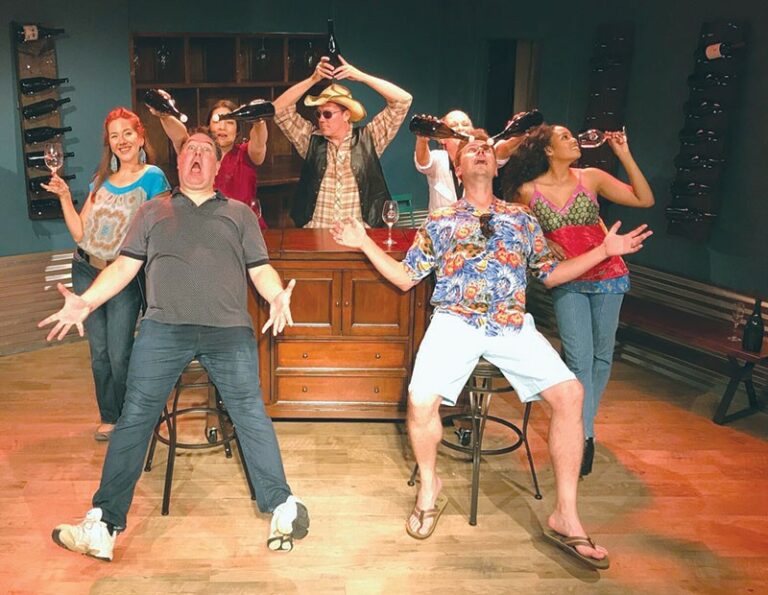
In Cloverdale, Shakespeare’s original Tempest (through June 25 at the Cloverdale Community Arts Center) gets a more traditional run (the island, the spirits, the monsters, the storm), while in San Rafael, Much Ado About Nothing (June 30–July 23, courtesy of the Marin Shakespeare Company) maintains Shakespeare’s language but puts its mismatched lovers, fiendish plots and goofball sidekicks into cowboy hats and plaid garb for a Western feel.

In the Mood (July 13–Aug. 5, by Shakespeare in the Cannery) takes the same story, and much of the language, but sets it in 1940 Italy, just after WWII, and includes a number of popular big band tunes. At the same location later in the summer, 6th Street Playhouse presents Fairy World (Aug. 10–Sept. 2), a stripped-down, reworked version of A Midsummer Night’s Dream, conceived by Jared Sakren.

In Sonoma at Buena Vista Winery, Sonoma Shakespeare Avalon Players presents the twins-switched-at-birth Comedy of Errors (Aug. 9–20), and in Petaluma, on the river, Petaluma Shakespeare brings us the bawdy history Henry IV, Part One (Aug. 25–Sept. 9).

Finally, back to San Rafael, Marin Shakespeare concludes its season with the bittersweet Love’s Labors Lost (Sept. 2–24), Shakespeare’s only romantic comedy that doesn’t end with a marriage.

Most of these shows take place under open skies, so barring any unexpected tempests, this should be one epic summer.

Family Recipe

0

Matt and Natalie Werle have their hands full with four young daughters—including triplets—but if the family-business T-shirts are any indication, the kids are totally on board with the mom-and-dad barbecue-sauce operation that the family started in December.

Saucin is a tangy and healthful, locally produced barbecue sauce that’s a labor of love for Matt Werle. He concocted the recipe while working up pork-shoulder tacos from the barbecue, his “dad place” in the Werle family home in Santa Rosa.

Werle’s barbecue sauce was popular among family and friends, and was featured in one of Natalie’s family member’s Redwood City restaurants, when Matt was still making the sauce himself.

He also won a first-responder’s barbecue contest several years ago in Marin County, he says with a laugh, “and my head got real big.” In that competition he took first in the sauce category and second in the ribs.

In December the couple took Saucin to the streets and shops and the response has been enormously supportive, says Werle, a California highway patrolman when he’s not running the business with his wife.

Saucin is a thin sauce relative to many others on the market (some of which can be overly treacly), but it’s thick on flavor and richness and a great, all-purpose sauce perfect for dipping or marinating.

In order to get a tangy crust that doesn’t burn, Werle recommends slathering meat with the sauce when you’ve got about 10 minutes left to go.

The sauce, he says, works well on pork, chicken and beef. Sebastopol’s Pacific Market offered up a salmon and Saucin dish not long ago.

Werle says he didn’t set out to make healthful barbecue sauce that actually has some flavor and bite—but diabetics and personal trainers have responded positively to the low-sugar, low-sodium, no-corn-syrup recipe that gets its mellow creep-up zing from judiciously applied garlic and Sriracha. “We did not plan on the health aspect.”

It’s suddenly summer and barbecue season—and Saucin is also suddenly all over the place: at the Safeway, at Umpqua Bank, which has a local-purveyor program, and at Pacific Market and even Fogbelt Brewing Co.

“We never thought we’d be in Safeway this quickly,” says Natalie, who handles the business, marketing and online sales.

Saucin is priced at $4.99 in Safeway, and you won’t find retailers clipping buyers for more than $6 a bottle.

Like many who have come before him in the world of local purveyor-ship of a beloved food, Werle started out by making a sauce that he would like—and one he could afford: “I wanted to make it something that I would buy.”

The sauce is made in Healdsburg by CMS Fine Foods, a company that also does product creation for Trader Joe’s. Two local distributors move the product around the North Bay, FEED Sonoma and Morris Distribution. Keep an eye peeled for the Werles at the Wine Country Big Q Festival on July 8 at the Sonoma-Marin Fairgrounds in Petaluma.

The law enforcement veteran and Sonoma County native (Natalie Werle hails from Terra Linda in Marin County) says the number-one question he gets is, Do you have a spicy version?

It’s coming, Matt says.

“That’s our next goal.”

Hats Off

0

Let’s get the obvious cliché out of the way right at the top: Jennifer Webley wears a lot of hats.

As owner of Portobello Hats in Santa Rosa, Webley presides over the North Bay’s premier hat shop. She dove deeper into the hat business when she purchased a 6,300-square-foot industrial space in Santa Rosa’s South Park neighborhood last year. Once a motorsports shop, the space is now the Hattery, a small-scale hat-production facility that also hosts millinery workshops, classes, Gould Hat Designs—a bespoke milliner—and a 25-member hat club called the Eccentric Ladies.

This past winter, Webley also purchased Ukiah’s Shady Brady hat company. She now owns the company’s inventory of straw hats and propane- powered hat presses, vintage sewing machines, leather cutters and other hulking early 20th-century hat-making machinery.

“There’s a lot of curiosity about how hats are made,” Webley says “and a great deal of ignorance how it’s done”—a reflection of rising interest in both hats and hands-on, artisanal products with a story behind them. “I think there is a something interesting about creating and making things.”

With the rise of Wal-Mart and Amazon, Webley sees growing disillusionment with anonymous online and retail sales.

“There is pushback, and this is the pushback,” she says.

While she’s still putting the final touches on the shop, it’s filled with her vast hat collection, vintage hat blocks (wooden hat molds), ribbons and feathers for hat bands, old hat boxes (the Hattery will offer classes on hat-box-making, too) and work tables for the business of hat making. There’s nothing quite like it.

Interest in hats for men and women is on the rise, a trend that reconnects with the America’s hat-wearing history, says Webley. “There was a time when you wouldn’t leave the house without a hat,” she says.

She points to the hat-wearing style of the royal family as part of the push behind the trend, particularly Kate Middleton’s penchant for “fascinator” hats, small, clip-on headpieces adorned with feathers, veils and bows.

Josephine Mayo manages Portobello Hats and the Hattery. She’s also a member of the Eccentric Ladies hat club. What does a hat club do? “We all wear hats and we talk about hats,” she says.

They also make and repair hats. The group used to meet at cafes, but now convenes at the Hattery. “It’s wonderful to call this place home,” says Mayo.

In addition to classes, Webley says the Hattery will produce small numbers of hats for businesses looking for distinctive headwear or wedding party members interested in something they can wear on more than the day of the wedding.

While the shop is open by appointment only for now, Webley is eager to pull the veil back on hat making.

“I want the world to see what we’re doing.”

Cage of Her Own

0

A quick glance at Roxane Gay’s new book, Hunger: A Memoir of (My) Body, on Amazon yields this surprising fact: it’s No. 1 in three categories—cooking, LGBTQ parenting/families and abuse.

But this book is about none of those things. There are no recipes, nothing on how to parent, not much about being queer and it’s not really about abuse, either. There should be a trigger warning, however—early on Gay reveals she was gang-raped at 12, and that subsequently her entire life became about wrapping herself in virtual bubble wrap to save the precious child destroyed in an hour.

“My body is a cage,” she writes over and over, sometimes meaning that she’s trapped within, other times meaning she’s strong. Her powerful thighs can hold her in a fake sitting position for an evening when the chair is clearly too flimsy to hold her. Her weight, at whatever number, is too much for most people to handle, so she endures internet mockery and shame, celebrity comparisons and impossible standards.

“This book . . . is about living in the world when you are not a few, or even forty pounds overweight. This book is about living in the world when you are three or four hundred pounds overweight.”

She divides her life in two—the before and the after; the skinny, sheltered child and the heavy, wounded adult: “cleaved not so neatly. . . . Before I gained weight. After I gained weight. Before I was raped. After I was raped.”

Gay writes about eating to become “solid, stronger, safer,” to become less desirable, and while often she’s the target of derision, she is also sexually invisible. From medical professionals giving her unsolicited advice about losing weight to strangers’ remarks or staring, to purported feminists figuratively stabbing her in the back, Gay has met them all. Her depictions of these encounters—and they are daily occurrences—come across not as complaints but as an epic endurance test.

“To tell you the story of my body is to tell you about shame,” she writes. Shame is a potent poison. “I understood I was a terrible, repulsive thing. Sweet words were not for girls like me. . . . I did not deserve . . . a gentle touch.”

Gay made waves with her Tumblr blog and books like Bad Feminist, and she continues to make news because of her audacity in calling out fat-shaming in this book.

“No matter what I accomplish, I will be fat, first and foremost,” she writes. This beautifully crafted, deeply considered and brutally true story should be required reading for anyone who considers herself—or himself—a feminist, or a decent human being.

Mixed Greens

0

The band began as a standard jazz sextet, formed in 2015 to complete a recital requirement for Sonoma State University’s music program. It aged into a genre-bending collaboration that now garners labels like “spazz jazz” and “prog bop.” The band is Cabbagehead, the North Bay’s most indefinable ensemble that’s quickly gaining renown for their technical skills and imaginative compositions.

“We kind of go everywhere [musically],” says drummer Ricky Lomeli, who formed the group with guitarist Ab Menon, bassist Kevin Hayes, keyboardist Nate Dittle and a pair of saxophone players, Jesse Shantor on alto sax and Chaco Amazé Lechón Peckham on tenor sax.

The band’s inspiration for their unpredictable and motley sound can be traced back to musicians like Frank Zappa, and their technical chops allow the group to experiment wildly with arrangements and tempos.

“The driving force behind this band is that it’s a very open domain for us to get as weird as we want,” says Lomeli.

Though not everything makes it past rehearsals, Cabbagehead’s commitment to musical experimentation is brilliantly executed on the band’s debut full-length album,

Age, recorded over a single intense weekend last July and released in February.

“It was a very bonding experience to do that album,” says Lomeli, “I think that, in a way, making the record pushed us to realize we wanted to keep this project going.”

Bookended by three vignettes, “CABB,” “AGE” and “HEAD,” the record features extended jams of highly energized jazz fusion that aren’t afraid to dive into heavy metal breakdowns and swing with ska flourishes, and the dueling saxophones play like they’re possessed by the ghost of late free-jazz pioneer Ornette Coleman.

“We very much embrace that we have two saxophonists,” says Lomeli. “They have such different personalities that when they play together they have a nice contrast.”

More puzzling than the music, though, is the name: Cabbagehead. Even the band doesn’t exactly agree on what it means. Menon insists it began after he bought way too much cabbage at the grocery store. Peckham believes it to be a reference to his bushy hair style, while other members apparently have their own random theories.

In any case, the group is making the most of their musical brainstorms with some of the most uniquely mind-blowing bombardments of sound in the Bay Area. “We are after the freedom to do anything,” says Menon. “We’ll try anything once, musically.”

Letters to the Editor: June 21, 2017

Concrete Park

As I drove a friend of mine, who once lived here years ago with her parents, past Old Courthouse Square, she said all she sees is a desert with a small patch of green. There is no creativity to this park. There are no curves, no place to plant flowers to beautify it and no restrooms. Just a freaking square of cement with trees and some green lawn.

All my friend could say was how ugly the park is and wondered who pocketed the money to build this eyesore. It makes one think. Luther Burbank is probably turning in his grave.

Santa Rosa

Gun Logic

There is no gun/knife/club violence. There is only human violence. Because there is human violence, self-defense is a natural, basic right. The Second Amendment recognizes that right. Gun shops allow for the procurement of that right, and the state shall not interfere in that right. Gun-free zones interfere with that right and allow good people to be killed with impunity.

There are no bad guns, only bad People. Because there are bad people, good people need the physical means to protect themselves: guns save lives.

The main cause of human violence is a lack of intellectual and moral integrity, not a physical object like a gun/knife/club. When there is no intellectual integrity, only gross physicality rules. The solution is to recognize and promote intellectual and moral integrity, as opposed to moral relativity. When people lack the means to self-defense (guns/knives/clubs), they are ruled by violence from criminals and the state. Exercise your rights!

Petaluma

Faux News

Mainstream media has primarily reflected the reality of upper middle class life and served the propaganda needs of the dominant political parties for a long time. It has ignored the day-to-day reality of coal miners, steel workers, assembly line workers, waitresses and retail clerks. The disconnect has finally reached crisis proportions politically.

Government statistics claim a strong jobs recovery, a booming stock market, increasing productivity and record corporate profits, as if this reflected the experience of the working and lower middle classes, those who earn less than a living wage, those without affordable health insurance, those with food insecurity, those without access to higher education or affordable housing.

This “underclass” of voters resonates with a “populist” politician who asserts that the mainstream media is “fake news,” even if it seems apparent to others that this is for his own political self interest. Many of these voters will admit Mr. Trump’s shortcomings, but minimize them because their goal is to be included in the American dream.

Until the mainstream media and politicians do their job and start reflecting the frustration of those who are not benefiting from the current surging stock market, millions of disenfranchised voters will continue to regard mainstream corporate news as “fake news,” and the traditional leaders of both parties as advocating primarily for the economic elite, and they will be right.

Sonoma

Write to us at le*****@******an.com.

The So-So Depression

The New Jersey–bred comedian Demetri Martin directs and stars in Dean, he’s a Brooklyn panel cartoonist who hasn’t felt like doing very much ever since his mother died. The forlorn Dean says that “an uninvited guest” has found his way into his drawings: the figure of Death, with hood and scythe.

At a Hollywood party, Dean runs into the jesting, pretty Nicky (Gillian Jacobs), who seems to be on his wavelength. Meanwhile, Dean’s father (Kevin Kline) is selling the family home, and starting to date his real estate agent (Mary Steenburgen).

At 40-plus, Martin is of indeterminate age, with a shaggy Beatles haircut masking the jowls that are starting to form—he has some truculence to go with his air of disappointment, and could actually play Nixon someday. But he’s so soft in the face that these essentially twenty-something problems don’t look too unseemly in a man his age.

Compassion has its limits, and the no-visible means of support in his Brooklyn life has been done with more acuteness elsewhere. Even with the autobiographical sourcing, Dean is a movie that appears based on the notes in someone’s Moleskine.

I prefer Kline’s scenes because his character is more about what this movie is supposed to be about—that is, the doldrums of grief. By contrast, Dean doesn’t look like he did all that much in life even before he became sad. One actress stands out, Kate Berlant as Naomi, a too-chatty girl on a cross-country plane. She looks forceful enough to give this undernourished movie some kind of push. Dean is so full of moping, it’s refreshing to see someone eager, even if it’s just eagerness for a conversation about the greatness of Brooklyn.

‘Dean’ is playing at Summerfield Cinemas, 551 Summerfield Road, Santa Rosa. 707.522.0719.

June 24: Lifetime of Art in Santa Rosa

In 1947, at the age of nine, Ray Jacobsen moved to Sonoma from Colorado with his family, and he never left. He grew up to be an artist and made a living selling and showing vibrant landscape paintings until his death in 2007. Jacobsen’s career includes being one of the founding members of the Arts Guild of Sonoma in...

June 27: Traveling Man in Petaluma

Folk songwriter Charles Ellsworth has been all over the map the past few years—literally. Born in Arizona, the musician was living in Brooklyn when he decided to return west to make his latest full-length solo album, Cesaréa, released last month. The album is a blend of Americana grit and post-punk haze that reflects his experiences with dry-heat Arizona summers...

Summer Sips

The summer wine samples have arrived and with them a growing pile of tasting notes and press releases proffering tips on how and when to enjoy those wines. What these wineries or their press agents have in mind is that I, a busy wine journalist who'd rather be at the beach than tapping away at a keyboard in a...

Bard Season

Warm weather in California means a number of things: a rise in local sales of sun block, a heightened chance of troublesome grass fires—and a sharp spike in productions of plays by William Shakespeare. This year, the annual array of Shakespearean comedies and dramas includes a puppet-heavy presentation of the playwright's greatest tragedy; a localized adaptation of his final play;...

Family Recipe

Matt and Natalie Werle have their hands full with four young daughters—including triplets—but if the family-business T-shirts are any indication, the kids are totally on board with the mom-and-dad barbecue-sauce operation that the family started in December. Saucin is a tangy and healthful, locally produced barbecue sauce that's a labor of love for Matt Werle. He concocted the recipe while...

Hats Off

Let's get the obvious cliché out of the way right at the top: Jennifer Webley wears a lot of hats. As owner of Portobello Hats in Santa Rosa, Webley presides over the North Bay's premier hat shop. She dove deeper into the hat business when she purchased a 6,300-square-foot industrial space in Santa Rosa's South Park neighborhood last year. Once...

Cage of Her Own

A quick glance at Roxane Gay's new book, Hunger: A Memoir of (My) Body, on Amazon yields this surprising fact: it's No. 1 in three categories—cooking, LGBTQ parenting/families and abuse. But this book is about none of those things. There are no recipes, nothing on how to parent, not much about being queer and it's not really about abuse, either....

Mixed Greens

The band began as a standard jazz sextet, formed in 2015 to complete a recital requirement for Sonoma State University's music program. It aged into a genre-bending collaboration that now garners labels like "spazz jazz" and "prog bop." The band is Cabbagehead, the North Bay's most indefinable ensemble that's quickly gaining renown for their technical skills and imaginative compositions. "We...

Letters to the Editor: June 21, 2017

Concrete Park As I drove a friend of mine, who once lived here years ago with her parents, past Old Courthouse Square, she said all she sees is a desert with a small patch of green. There is no creativity to this park. There are no curves, no place to plant flowers to beautify it and no restrooms. Just a...

The So-So Depression

The New Jersey–bred comedian Demetri Martin directs and stars in Dean, he's a Brooklyn panel cartoonist who hasn't felt like doing very much ever since his mother died. The forlorn Dean says that "an uninvited guest" has found his way into his drawings: the figure of Death, with hood and scythe. At a Hollywood party, Dean runs into the jesting,...
11,084FansLike
4,446FollowersFollow
6,928FollowersFollow