Sept. 16: Farm Fun in Petaluma

0

You don’t have to be a farmer to have a hay barrel of fun at the fourth annual Agrarian Games this weekend. The Farmers Guild hosts the event, but it’s open to city slickers and anyone interested in sustainable community agriculture. In addition to a farmers market full of fresh, locally grown and raised fruits, vegetables, meat and more, the day boasts competitions in butter churning, hay bale tossing, watermelon seed spitting and other activities. There’s also live music by the Hubbub Club, Oddjob Ensemble and others, interactive artwork, information booths and family fun on Saturday, Sept. 16, at Petaluma Fairgrounds, 175 Fairgrounds Drive, Petaluma. Noon to 6pm. $10–$15; kids under five are free. farmersguild.org.

Sept. 16: Multimedia Laughs in Healdsburg

0

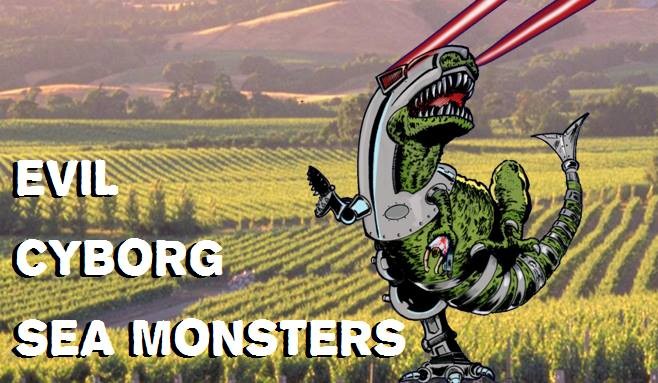
San Francisco’s Mike Capozzola is a comedy jack-of-all-trades. He’s known at clubs and theaters in the United States and Britain for his sharp but silly standup acts, though he’s also a prolific comedy writer and gifted illustrator and cartoonist whose work has appeared in MAD Magazine, McSweeney’s and other national publications. This weekend, Capozzola puts all of those talents to use in his latest pop-culture mashup, Evil Cyborg Sea Monsters. Mixing fantastical visuals with irreverent humor, Capozzola’s one-man show celebrates and dissects superheroes, secret agents, science-fiction creatures and more on Saturday, Sept. 16, at the Raven Film Center,
415 Center St., Healdsburg. 8pm. $10. 707. 525.8909.

Sept. 17: Try the Wine in Sonoma

0

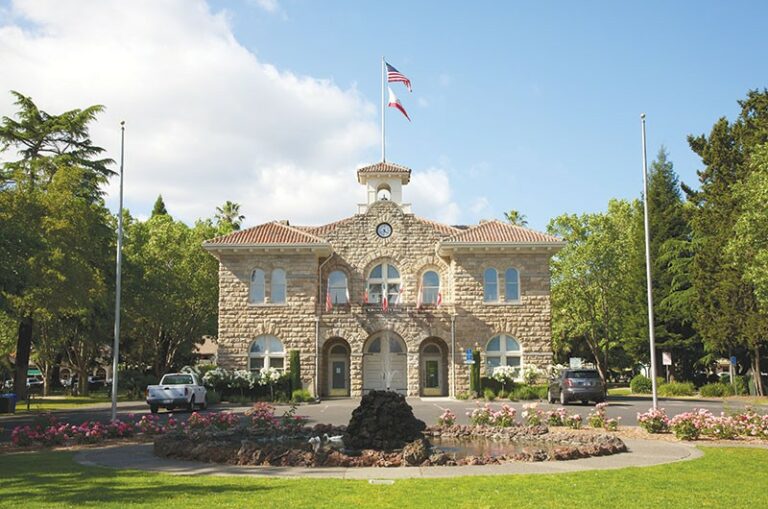
Home is where the heart is, so it follows that the members of the Sonoma Home Winemakers club put a lot of heart into their homemade wines. The group gets together monthly to taste and evaluate each other’s wines, and this month they let the public in on the fun with the second annual Sonoma Valley Uncorked. Enjoy red, white and rosé wines made by more than 20 members of the club, nibble on bites from local chefs, hear the sounds of songwriter Sean Carscadden and enter silent auctions and raffles featuring premium packages. Sunday, Sept. 17, at Sonoma Veterans Memorial Hall, 126 First St. W., Sonoma. 2–5pm. $40–$50. sonomahomewine.org.

Sept. 19: Happiest Food on Earth in Santa Rosa

0

North Bay food personality Marcy Smothers blissfully blends culinary knowledge and a warm wit. Previously known as one half of the nationally syndicated radio program Food Guy and Marcy, with chef Guy Fieri, Smothers has lately turned her attention to writing books, and this month she unveils the fascinating retrospective ‘Eat Like Walt: The Wonderful World of Disney Food.’ Smothers covers the delicious side of Disneyland from 1955 to today, highlighting the theme park’s long-running restaurants, secret snack spots and more with a heaping helping of charm. Smothers reads from the new book on Tuesday, Sept. 19, at Copperfield’s Books, 775 Village Court, Santa Rosa. 7pm. Free. 707.578.8938.

Letters to the Editor: September 13, 2017

Artful

Love, love, love Katie Kincade’s work (“Rocking Artist,” Sept. 6)!

Via Bohemian.com

What Are You Smoking?

“Going to Pot” (The Nugget, Sept. 6) incorrectly states that the Healthy Kids Colorado Survey indicates “The portion of adolescents who thought smoking marijuana was harmful also did not change” when in fact the study states the exact opposite, that “fewer students see regular marijuana use as risky behavior.”

Santa Rosa

What About
the Workers?

Clearly the health of grapes takes precedence over the well-being of vineyard workers. On Saturday, Sept. 2, I read the online article in the Press Democrat, “Harvest in Heat Wave.” A few of the photos show workers wearing bandanas that cover their mouth and nose for protection against dust and smoke. Some also wear caps and hoodies for further protection. These people were picking grapes at night under hot, bright lights, under skies shrouded with smoke during last weekend’s excessive heat wave when temperatures rose to over 100 degrees. Workers toil at a feverish pace from early evening until dawn picking grapes and then running with bins full of grapes when even the nights were much warmer than usual.

I was stunned by the paragraph that read, “Smoke from Trinity and other northern California fires should not pose a problem for the local crop as grapes are more susceptible to smoke taint in the early summer than at this point in the growing season.”

In this entire article, there is no empathy shown or compassion stated for the workers who pick in extreme weather conditions, and no mention of the workers’ health when exposed to “smoke taint.”

This situation reminds me of how the Trump administration treats people and the environment.

Occidental

Trump Twister

Don’t be a ‘wower’

Don’t just be sour

Don’t frown and glower

Don’t crouch and cower

Beneath Trump Tower

It’s no real bower

Now is the hour

It’s time to scour

Reclaim our power

Be the truth’s vower

Let our hearts flower

Let our lights shower

Make America

Really great again

America first

No mistake, amen!

Santa Rosa

Write to us at le*****@******an.com.

DACA Blues

0

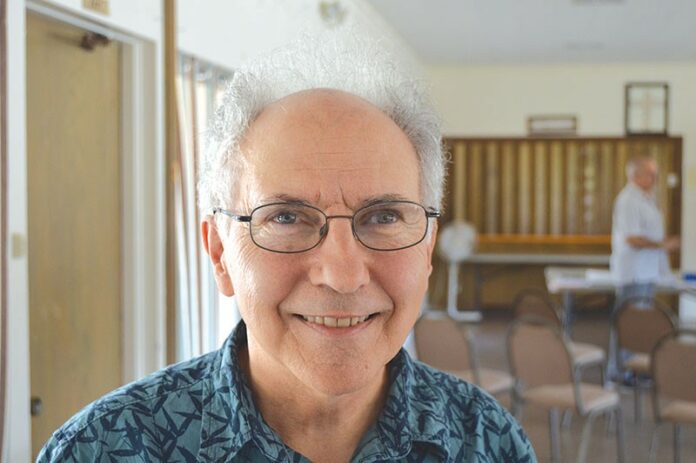
Hector Jimenez is a 20-year-old sophomore at Santa Rosa Junior College whose parents brought him to the United States from Mexico when he was all of one year old.

Like many recent and undocumented immigrants, his parents were flushed out of their Oaxaca home by the negative economic impacts of the ’90s-era North American Free Trade Agreement.

“I’ve been in the Santa Rosa area ever since,” Jimenez says. But if Trump has anything to say about it, he’s facing deportation to a country that’s not his home.

Jimenez is one of 800,000 people, about one-fourth of them from California, who face possible deportation after Trump’s decision to rescind the Deferred Action for Childhood Arrivals (DACA) program, which established a formalized registration system under which Americans like Jimenez could come out of the proverbial shadows and get a Social Security card, a driver’s license and live without fear.

Jimenez has a cousin in the same situation, a graduate of Sonoma State University who, “when he got his degree and tried to use it, nobody would hire him because he didn’t have a Social Security number,” Jimenez says. His cousin graduated when Jimenez was in middle school, “and that’s when I really realized what this meant for me.” He recalls that he “essentially gave up on school—I didn’t ditch it, but I just wasn’t in it mentally because I realized that, ‘what’s the point if, when I graduate, I won’t be able to use my degree anyway?'”

But he stayed in school and Obama unveiled DACA while Jimenez was entering high school. Like many youth in that age bracket, he wanted to get his driver’s license but couldn’t. “Luckily, this program came around, and I was excited but also very afraid; it put all of us in a vulnerable position, giving them all of my information that if they wanted to use it against us, there would be no legal consequence. It was a vulnerable and terrifying position to be in, but at the same time I was so excited to get my driver’s license.”

Now Jimenez is studying sociology and law at SRJC which, like many schools around the state and country, has become something of a sanctuary school, with about 1,500 undocumented students on the rolls and a dozen or so DACA Dreamers like Jimenez, who works in the schools’ immigrant-resource Dream Center.

In response to Trump’s order, the University of California state system has come out in vociferous opposition, and on Monday the state of California itself announced it would sue the administration for its push against the Obama legacy item. The state community college system is yet another of a number of organizations and agencies to come out swinging against the destruction of
DACA. Local politicians, from State Sen. Mike McGuire to U.S. Congressman Jared Huffman, have issued blistering take-downs on the rescinded policy over the past week—”un-American,” in Huffman’s words—as Trump has rolled out his latest version of governance-by-blackmail to a compliant GOP Congress.

The program, says Jimenez, opened up a future that he couldn’t envision before 2012. Persons who came to the States as children were given the opportunity to register in exchange for a commitment from the federal Immigration and Customs Enforcement agency that they wouldn’t be targeted for deportation. Seemed like a pretty square deal that fixed a long-standing problem.

That promise has been taken back, as Trump has broken faith with the essential decency and practicality of DACA, which emerged only after one do-nothing Congress after another refused to take on immigration “reform,” lately under the Dream Act. Now Trump has called on Congress to pass reform, and if they don’t, he’ll start deporting people whose only crime is something their parents did. The same Trump who pardoned disgraced Arizona sheriff Joe Arpaio and issued an executive order banning Muslims from the United States, has now argued that Obama exceeded his authority.

“I couldn’t believe it at first,” says Jimenez. “It was angering and frustrating to hear that the reason they were ending it was the rule of law—but they go out and pardon Joe Arpaio? How is this justifiable as well? This individual committed numerous crimes, and you pardon him? How is that just at all?”

Through DACA and the politics that pushed it into existence, Jimenez found his way, got interested in organizing and was part of the movement that pressured the Obama administration “so that something would occur. I was motivated and moved by that.”

That’s all changed now, says Jimenez, whose work at the SRJC Dream Center puts him in contact with undocumented students.
“I’ve noticed the panic within the community—there’s a lot of people coming here who seek comfort, and there’s definitely been a spike in depression and anxiety, which is completely understandable. People who already have all sorts of things going on—they are taking 17-plus [college credit] units, working two jobs and also have to pay rent and on top of that—are now being told that they might not even be able to work.”

The DACA downer has added urgency to efforts underway to protect undocumented individuals from excessive zealotry at the hands of ICE and the Department of Homeland Security.

It’s a hot and dry Saturday afternoon in Petaluma, where about 20 Sonoma County residents have showed up at the Unitarian Universalist church on the west side of town to be trained as legal observers.

[page]

The Sonoma County Rapid Response Network emerged in the early days of the Trump White House and has so far trained about 800 people to monitor ICE as it goes about its business—often conducted in the shadow of constitutionality, say critics of the agency.

Sam Tuttelman is one of those critics. The Petaluma resident lost 95 percent of his family in the Holocaust and has a friendly but forthright delivery as he co-hosts the training meeting for potential legal observers, under the auspices of the Petaluma Rapid Response Network.

The network aims to witness, accompany and advocate on behalf of immigrants who might find themselves subject to deportation. When fully up to speed, the network will operate as a sort of alternative emergency-response system designed to assist a particularly vulnerable community.

Under the emergency protocol, Sonoma County residents who find ICE agents at their front door will call a hotline and connect with a dispatcher who will then send a text message to any legal observers available within a five-mile radius of the raid. The legal observer will get the text message and head to the home, where, as Tuttelman stresses, the job is not to be a hero or intervene, but to bear witness in the service of the Constitution and due process.

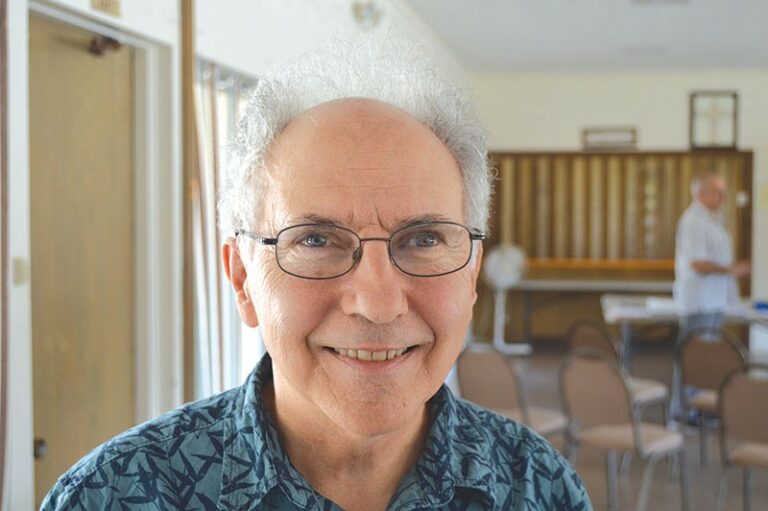
George Beeler is one of the trainees and a member of the Unitarian Universalist church. Beeler is a retired architect who grew up on a Kentucky farm and extols the added value of the local immigrant community, which, he says, “is critical to our local economy and in celebrating the exuberance of the food culture” of the North Bay.

“This is a country built on immigration,” Beeler adds, “and farming is very hard work that people don’t do unless they have to.” The DACA crackdown, he says, is adding insult to a grievous injury already inflicted on immigrant communities—an intolerance that has itself seeped into the nominally tolerant streets of Petaluma.

“It’s just heartbreaking,” Beeler says as he recounts the occasional spotting of Confederate flags in the pleasantly seed-strewn agriculture town, and some of the “hateful rhetoric” that greets immigrants and their supporters in the streets.

He also notes that Petaluma has launched an “It Won’t Happen Here,” campaign, riffing on the Sinclair Lewis novel wherein the United States is rendered anew as a totalitarian state. The Lewis book is famous for its observation that when fascism comes to the United States, “it will be wrapped in a flag and carrying a cross.”

And yet here we are, ironically enough, in church, where a group of concerned citizens includes first-generation Americans with immigrant parents from various European locales, a Republican military veteran, teachers and a woman who works in a popular local restaurant and says her interactions with undocumented co-workers brought her here today.

One attendee spoke of parents who escaped the Bolsheviks. Another spoke of undocumented Irish parents who lived in a prior generation’s shadow world. Said one, “We’re not going to lay down and wait for it.”

The observers’ training includes information on the ways ICE agents have found legally questionable workarounds to effectuate their raids. Tuttelman notes that any ICE warrant “has to be signed by a federal judge, but the overwhelming number of warrants are not.” ICE agents have used the “detainer” policy to get around that particular Fourth Amendment due-process concern. That’s the tactic where ICE utilizes local law-enforcement agencies to hold arrestees until they can swoop in with the deportation papers, no warrant needed.

And even though ICE agents typically know who they are looking for in most immigration raids, “they can start intimidating other people, asking them to show documents,” Tuttleman says. Or, he says, they mask their participation in raids by wearing generic police vests that don’t identify them as federal agents.

Speaking to the dangers inherent in signing up as a legal observer, Tuttelman tells the group that legal observers are encouraged to write a lawyer’s name on their arm in case they, too, get arrested during the raid. But he also stresses that they’re not on the scene to be heroes or to “get in the face of ICE or vent rage or outrage.” The observers are there to do one thing: develop evidence for people facing deportation to demonstrate where ICE is not following its own rules.

“In 90 percent of cases, ICE violates people’s rights,” Tuttelman says.

The high-tech observer system in the works can’t come soon enough for Sonoma County residents like Hector Jimenez, who faces deportation to a country he doesn’t know—as do his parents. He has two siblings, both American citizens born in this country with significant health issues. “If anything were to happen [to my parents]— the ability for them to stay here is what is keeping my siblings alive.”


Road Prophets

0

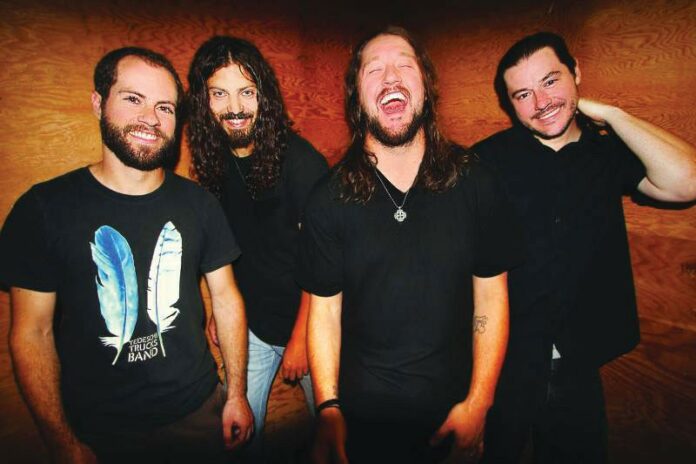
After 11 years of musical successes that include winning numerous NorBay awards for best indie band, extensive tours and appearances at some of the biggest festivals on the West Coast, Petaluma’s Highway Poets are checking another box on their rock ‘n’ roll bucket list when they play their first headline set at the Mystic Theatre & Music Hall in their hometown on Saturday, Sept. 16.

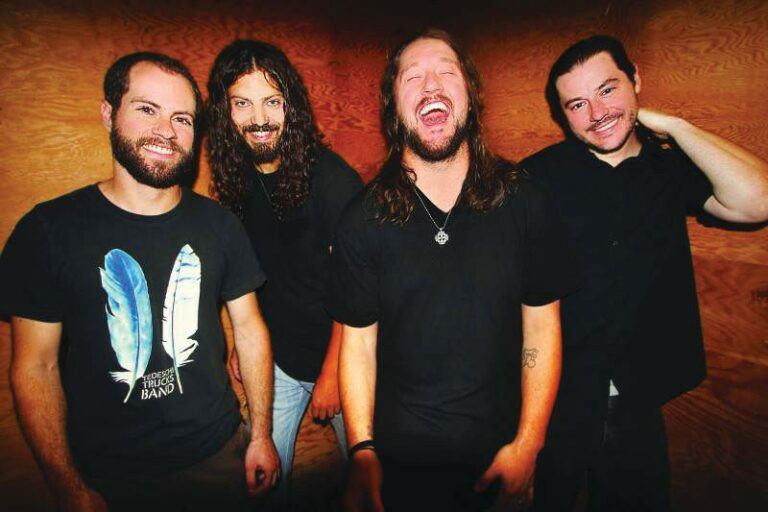
Led by guitarist and vocalist Sebastian Saint James and featuring guitarist Travis James, bassist Taylor James and drummer Rhyne Erde, the tight-knit powerhouse group will unveil their long-awaited sophomore album,

Chasing Youth, with a concert featuring rock and roll comrades Kingsborough, the John Courage Trio and a surprise guest.

The band’s name reflects the members’ passion for playing on the road, though the Highway Poets have spent the last two years largely retooling their sound after the departure of their original drummer. “We basically had a big shock to our system, and slowed down,” Saint James says.

When Erde joined the group, they incorporated his classic rock style to their existing sound. “We’ve all become brothers-in-arms,” Saint James says. “We kind of created a new band.”

Chasing Youth marks a sophisticated leap in performance and production for the fiercely DIY group. Last year, the Highway Poets gathered over $11,000 from fans through an online campaign and used the funds wisely, recording at Frogville Studios in Santa Fe, N.M. Songwriter Frankie Boots introduced Saint James to the space three years ago. “It’s like a studio out of the ’60s,” Saint James says. “We just fell in love.”

Utilizing the studio’s vintage gear, the band took an old-school approach to recording the album, which boasts gritty soul-rock infused with horns and keys amid the howling vocals and red-hot guitar hooks. The band is a live wire of electricity on the record, a departure from the folk influences of their previous releases. “Writing the songs, we wanted to make an R&B record in our minds,” Saint James says.

Chasing Youth will be available when the Highway Poets headline the Mystic, a longtime dream of the band, who have opened several shows there.

“We’ve always cherished the sound in that room,” Saint James says. “As a performer, you can kind of lay into the Mystic—there’s something about the reverb in that room. I feel like I always have a good night there.”

Sonoma Green?

After multiple appeals, Ken Brown finally saw the term “cannabis dispensary” back on the Sonoma City Council. According to the agenda, the city took up the issue “to help decide which types of cannabis-related businesses, if any, should be allowed in Sonoma and, if allowed, where they would go and how they would operate.”

A former mayor of Sonoma and a longtime cannabis advocate, Brown has been relentless in his support for a marijuana dispensary in his hometown. The council heard from experts and stakeholders Monday, Sept. 11, about the rapidly expanding field of legal cannabis distribution in the wake of California’s passage of Proposition 64 last year. State regulations affecting cannabis (both recreational and medicinal) were reviewed, along with the city’s potential policy options.

City staff will now make recommendations for a draft ordinance that will be brought to the planning commission and possibly the city council in future months.

Brown is optimistic. “The nature of the council has changed,” he says. “The Proposition 64 vote [the Adult Use of Marijuana Act] reawakened the possibility we could get a medical cannabis facility with delivery passed in Sonoma.”

Past votes on marijuana regulation reflect the council’s hesitancy on the issue. In 2009, when Brown was mayor, a 2–2 vote on dispensaries kept the prohibition in place. In 2015, the council unanimously voted to uphold its restrictions on marijuana, which left no possibility for a dispensary.

Last November, after Proposition 64 passed, the council imposed two 45-day moratoriums on outdoor growing in order to review and revise relevant regulations.

“There were good points on both sides,” says Councilmember Madolyn Agrimonti. “It is tough. I think accessibility is one reason for a local dispensary . . . but what came out of it was to continue the moratoria. I’m glad we still have the moratoria, because we still have so many unanswered questions. I’m 50–50 on the dispensary.”

Brown believes that the conservative slant of the council does not reflect the populace. He notes that 62 percent of city voters voted in favor of Proposition 64—more than any other city in Sonoma County.

“The people of Sonoma are clearly ready for this.”

Gospel Wise

0

Update: This show has been canceled. Call the Mystic at 707.775.6048 for refunds/details.

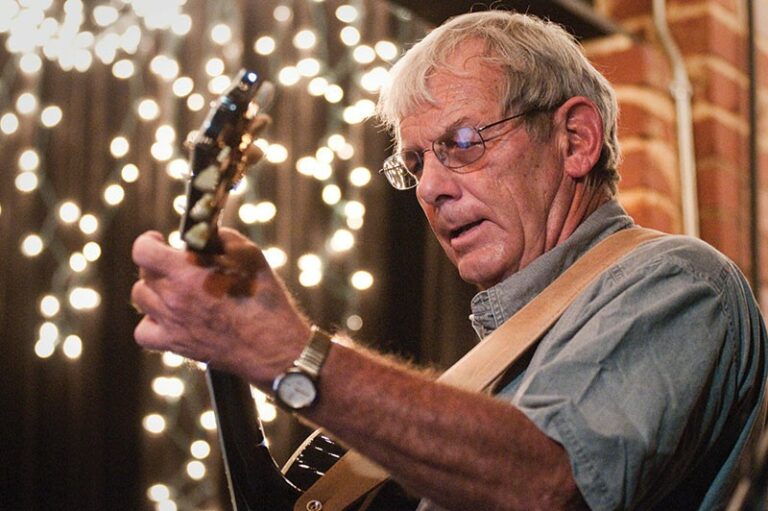
Gospel and folk singer-songwriter Jim Avett is probably best known to contemporary music fans as the father of North Carolina folk-rock siblings the Avett Brothers, Seth and Scott, who often reference his paternal guidance in their song lyrics and in interviews.

“They think a lot more of their daddy than they ought to,” laughs Avett. Despite his demure attitude, Avett is an undeniable influence on his sons, not only in his harmony-rich acoustic music, but also in his work ethic and altruistic approach to creativity. “When you’re trying to be creative, you’re trying to affect people’s lives,” he says. “You’re not trying to make money and be famous—that’ll come well enough. You just have to be the best you can be.”

At 70 years old, Avett has seen it all, and has recently added to his career highlights a new album, For His Children and Ours, that he recorded with his sons. The album features traditional gospel and country-gospel songs done in evocative three-part harmony. “I think you can tell how good a person’s life is by how much harmony is in their life,” says Avett. “And I’m not just talking about music.”

Jim Avett performs a seated solo show on Thursday, Sept. 21, at the Mystic Theatre & Music Hall. 23 Petaluma Blvd. N., Petaluma. 7:30pm. $22. 707.775.6048.

Cowboy Creamery

0

In case you hadn’t noticed, the North Bay’s cheese scene is dominated by women. There’s Jennifer Bice of Redwood Hill Creamery, Sue Conley and Peggy Smith of Cowgirl Creamy, Cindy Callahan of Bellwether Farms, Lisa Gottreich of Bohemian Creamery and Seana Doughty of Bleating Heart, to name a few.

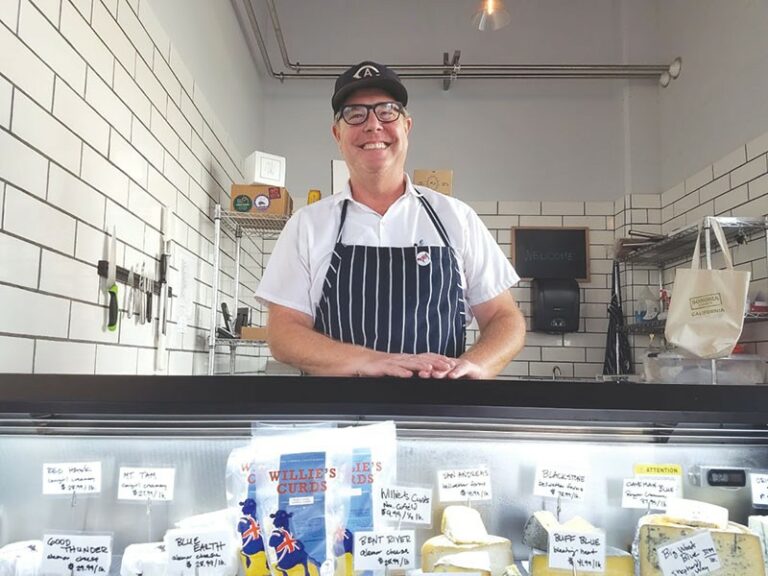
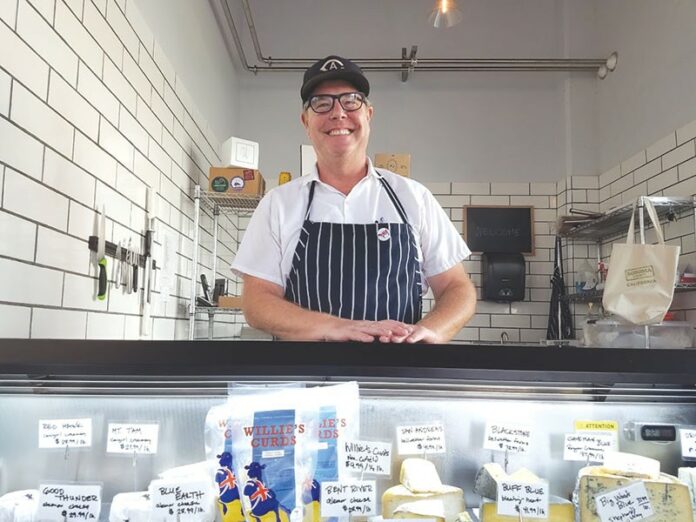
But here come the dudes! Old friends Keith Adams and Rob Hunter teamed up to open William Cofield Cheesemakers in Sebastopol last year. There’s something else that distinguishes the duo, besides their gender: the cheese.

“We’re British-inspired cheesemakers,” Adams says. “No one is doing anything like this here.”

Seeing that French- and Spanish-style cheeses were pretty well-covered by North Bay cheesemakers, and the fact that Adams is a big fan of English cheeses and spent time studying under some of England’s master cheesemakers, the choice made practical sense. (Cofield is Adams’ middle name; it sounds more British.)

Adams already had a successful career as a cheesemaker for Alemar, a Minnesota-based creamery that makes an acclaimed Camembert–style cheese called Bent River, as well as Brie-style and washed-rind cheeses. Adams became intrigued with British-style cheeses (think Stilton and cheddar), having been first exposed them as a boy living briefly in England. He decided to move back to his native California to start a new business and approached his old college friend Rob Hunter about a partnership. Hunter is a winemaker for
Hunter III and also works as a wine-industry consultant.

The creamery and storefront are located in a small, tidy white-tiled space in Sebastopol’s Barlow retail zone. All the creamery’s milk comes from Robert Camozzi’s Willow Creek Jerseys, an organic dairy on Bloomfield Road southwest of Sebastopol. The milk is organic and the cows are pastured-raised.

“If you do that, you’re likely to get great milk,” Adams says.

And great milk makes great cheese. Adams make three cheeses: a Stilton-style blue cheese called Bodega Blue and a cloth-wrapped cheddar called McKinley (named after the street in the Barlow where the creamery stands) and cheese curds, an ode to Adams’ years in Minnesota, where the salty cheese squiggles are a beloved state-fair snack.

Adams says making the Stilton-style has been a challenge, but believes he’s finally gotten it right. “This is the first version that has passed muster,” he says, handing me a taste.

It’s creamy and pleasingly salty, with the great funky tang that Stilton is known for. McKinley is a hearty cheddar that’s sharp but tempered with mouth-filling creaminess. I’d like this one paired with some tart apple slices.

In addition to their own cheese, the shop sells Alemar cheese and local curds from Bleating Heart, Bellwether, Point Reyes Farmstead Creamery, Cypress Groves, Cowgirl and others.

William Cofield Cheesemakers will hold a party Oct. 27 at the Barlow that will feature cheese
(of course), live music, a roasted whole hog and the Zazu restaurant food truck. Tickets are $75.

“We know how to throw a good party,” Adams says.

Sept. 16: Farm Fun in Petaluma

You don't have to be a farmer to have a hay barrel of fun at the fourth annual Agrarian Games this weekend. The Farmers Guild hosts the event, but it’s open to city slickers and anyone interested in sustainable community agriculture. In addition to a farmers market full of fresh, locally grown and raised fruits, vegetables, meat and more,...

Sept. 16: Multimedia Laughs in Healdsburg

San Francisco’s Mike Capozzola is a comedy jack-of-all-trades. He’s known at clubs and theaters in the United States and Britain for his sharp but silly standup acts, though he’s also a prolific comedy writer and gifted illustrator and cartoonist whose work has appeared in MAD Magazine, McSweeney’s and other national publications. This weekend, Capozzola puts all of those talents...

Sept. 17: Try the Wine in Sonoma

Home is where the heart is, so it follows that the members of the Sonoma Home Winemakers club put a lot of heart into their homemade wines. The group gets together monthly to taste and evaluate each other’s wines, and this month they let the public in on the fun with the second annual Sonoma Valley Uncorked. Enjoy red,...

Sept. 19: Happiest Food on Earth in Santa Rosa

North Bay food personality Marcy Smothers blissfully blends culinary knowledge and a warm wit. Previously known as one half of the nationally syndicated radio program Food Guy and Marcy, with chef Guy Fieri, Smothers has lately turned her attention to writing books, and this month she unveils the fascinating retrospective ‘Eat Like Walt: The Wonderful World of Disney Food.’...

Letters to the Editor: September 13, 2017

Artful Love, love, love Katie Kincade's work ("Rocking Artist," Sept. 6)! —David Dodd Via Bohemian.com What Are You Smoking? "Going to Pot" (The Nugget, Sept. 6) incorrectly states that the Healthy Kids Colorado Survey indicates "The portion of adolescents who thought smoking marijuana was harmful also did not change" when in fact the study states the exact opposite, that "fewer students see regular marijuana...

DACA Blues

Hector Jimenez is a 20-year-old sophomore at Santa Rosa Junior College whose parents brought him to the United States from Mexico when he was all of one year old. Like many recent and undocumented immigrants, his parents were flushed out of their Oaxaca home by the negative economic impacts of the '90s-era North American Free Trade Agreement. "I've been in the...

Road Prophets

After 11 years of musical successes that include winning numerous NorBay awards for best indie band, extensive tours and appearances at some of the biggest festivals on the West Coast, Petaluma's Highway Poets are checking another box on their rock 'n' roll bucket list when they play their first headline set at the Mystic Theatre & Music Hall in...

Sonoma Green?

After multiple appeals, Ken Brown finally saw the term "cannabis dispensary" back on the Sonoma City Council. According to the agenda, the city took up the issue "to help decide which types of cannabis-related businesses, if any, should be allowed in Sonoma and, if allowed, where they would go and how they would operate." A former mayor of Sonoma and...

Gospel Wise

Update: This show has been canceled. Call the Mystic at 707.775.6048 for refunds/details. Gospel and folk singer-songwriter Jim Avett is probably best known to contemporary music fans as the father of North Carolina folk-rock siblings the Avett Brothers, Seth and Scott, who often reference his paternal guidance in their song lyrics and in interviews. "They think a lot more of their...

Cowboy Creamery

In case you hadn't noticed, the North Bay's cheese scene is dominated by women. There's Jennifer Bice of Redwood Hill Creamery, Sue Conley and Peggy Smith of Cowgirl Creamy, Cindy Callahan of Bellwether Farms, Lisa Gottreich of Bohemian Creamery and Seana Doughty of Bleating Heart, to name a few. But here come the dudes! Old friends Keith Adams and Rob...
11,084FansLike
4,606FollowersFollow
6,928FollowersFollow