Housekeeping

The endearingly gawky Sally Hawkins (Happy Go Lucky) stars in Maudie, and it’s one of the best ever cinematic portraits of a character constrained by her body, up there with My Left Foot.

The Nova Scotia outsider artist Maud Lewis (Hawkins) was bent over with juvenile arthritis with hands so clawed she eventually had to hold the brushes with her wrists. Lewis made a small name for herself, painting her world—the pets she had, or wished she had, and flowers for every season.

She lived in a 10-by-12-foot shack in Nova Scotia with her fish-peddling husband, Everett (Ethan Hawke), selling her paintings by the roadside as souvenirs. Because of her immobility, Lewis couldn’t paint very big canvases. Much of her work has disappeared.

Maudie shows how Lewis’ life changed when she left her domineering aunt and took a job with Everett, a scowling, almost vicious grownup orphan with a bad temper. Hawke has to stretch—he’s a tenor trying to sing bass—though it’s clear why he was cast; being a warm, handsome actor, Hawke lets you forgive Everett for his meanness.

Hawkins’ unguarded grin, the husky voice from too many cigs, the candidness and sidelong ways are disarming. There is a secret world inside her; left alone, she talks a bit to herself, or to the chickens, though Hawkins’ Maud isn’t a simpleton, and the film has plenty of salt to it. In one poignant scene, she brings a hen to the chopping block: “Yeah. It’s time. You know, don’t you?”

Maudie would be captivating even if its main character had never painted a lick.

‘Maudie’ opens July 7 at Summerfield Cinemas, 551 Summerfield Road, Santa Rosa. 707.525.8909.

What Would Trump Do?

As a journalist I am, of course, all for an informed citizenry. Democracy dies when the public is kept in the dark or disconnects from what our government is up to. But sometimes staying too informed can be hazardous to your mental health. At least that’s been the case for me when it comes to staying on top of the latest abominations from the Trump administration.

During the run-up to the election, I was glued to the news: Politico, the New York Times, CNN, the Washington Post, FiveThirtyEight—anywhere I could get an update on what I hoped would be Trump’s demise. But when the loathsome man-child was elected, I doubled down on my news consumption with equal parts horror and incredulity. How can this be happening?

Over the next few weeks, I noticed a change in myself. I knew Trump’s rogues gallery of cabinet picks inside and out and read the news of each executive order with pained interest. But my binge consumption of Trump news was making me unhappy. So I unplugged from Trump news. Trump was president. Every one of his utterances or actions was horrible. What else did I need to know? I focused on my kids again. I admired spring flowers.

But then some new outrage pulled me back, and there I was again, hitting refresh on the DailyKos or ProPublica sites. Surely, such an incompetent and ignorant creature would fall on his own gilded sword and rid our nation of this waking nightmare. But it was not to be, at least not yet. And the cycle continued. Binge on news. Feel angry and depressed. Withdrawal from news. Reconnect with the beauty of the world only to be pulled back into Trumps’ festering stench of lies and arrogance.

As I look past Independence Day, I’ve come up with a new course of action. I’ll keep abreast of the latest Trump news, but refrain from plunging down the rabbit hole of Trump’s moral turpitude. Instead, I’ll do something that would irritate the popular vote loser. I’ll reach out to immigrants or Muslims and those more frightened than me by what Trump might do to them. I’ll step out of my comfort zone to defend our climate, our oceans, our air, our food supply. And I’ll strive to be honest, kind and humble. Trump would hate that.

Stett Holbrook is the editor of the ‘Bohemian.’

Open Mic is a weekly feature in the ‘Bohemian.’ We welcome your contribution. To have your topical essay of 350 words considered for publication, write op*****@******an.com.

Made for Malbec

0

Two samples of Malbec wine recently showed up on our doorstep unbidden. That’s unusual because wineries almost never send the rest of the Cab crew (the traditional Bordeaux quintet of grapes that also includes Cabernet Sauvignon, Merlot, Cabernet Franc and Petit Verdot) out on the media circuit—with the exception of Merlot, and after last week’s barbecue with Merlot column, I think we’re done with Merlot here for the season.

That’s it—’tis the outdoor grilling season. And who brings something called Petit Verdot to a barbecue? Malbec is a minor player in local Cabernet-based blends, used, if at all, in homeopathic doses of 1 or 2 percent. The grape hit the big time in Argentina, however, where they’re big on wood-fired meats—hence the red-blooded, gaucho pampas cred the varietal boasts at the asado, or barbecue. It helps that Malbec tends to be an intense, red-fruited wine, but less tiresomely tannic than much Cabernet Sauvignon.

For a time it looked like cheap Argentinian Malbec would become the next cheap, Australian Shiraz—maybe it’s a good thing it didn’t. Think of it as the Zinfandel of Argentina. Last time Swirl met Malbec, we liked samples from Chateau St. Jean, Arrowood and Imagery Estate.

Hess Collection 2013 Mount Veeder Malbec ($58) Hess Collection says they’ve got more Malbec than anyone in Napa Valley, where the grape occupies more than 400 acres—about neck and neck with Sonoma County. This wine, never mind what I said about red fruit, swirls in the glass like a Stygian current, deep purple and black-fruited. The fruit is ripe and furry, a whiff of a grape-laden arbor on a humid, late summer day in the shade, plus fig jam and dense Christmas fruitcake. But the palate is cool, and grainy tannins bring an iron finality to a finish that’s not metallic or bitter, and doesn’t leave you reaching for the water bottle to spray down your tongue.

Rodney Strong 2013 Sonoma County Reserve Malbec ($40) This venerable Sonoma County winery has picked up 60 acres of Malbec in the last four years—seems like a lot for a sideshow variety, but this wine is a solid classic of the style. A hint of smoke suggests a well-used grill, skipping the “burnt rubber” aroma that is either a flaw or a charm with some South American examples. Blackberry wine brings Zinfandel to mind, then red plum and raspberry offer Merlot comparisons—split the difference and call it pretty good.

Writing Waves

There is something about immersing oneself in saltwater for extended periods of time and dodging walls of waves that lends to some deep thinking about life and our place in the world.

Surfing has recently produced some excellent works of nonfiction that have little to do with stoned-out surfer stereotypes. Last year’s Pulitzer Prize for autobiography went to William Finnegan for Barbarian Days: A Surfing Life. Steve Kotler’s West of Jesus: Surfing, Science and the Origins of Belief is a fine book on the intersection of surfing and spirituality. And I’ll add Jaimal Yogis’ new memoir, All Our Waves Are Water: Stumbling Toward Enlightenment and the Perfect Ride, to the mix.

Yogis, a San Francisco–based author, wrote the book as a follow-up to Saltwater Buddha, a coming-of-age story that blends surfing and spiritual seeking. All Our Waves picks up where he left off in and chronicles Yogis’ multidisciplinary spiritual quests and more earthbound struggles of career, friendship and starting a family. Yogis’ spiritual and physical journeys take him to the Himalayas, Jerusalem, a Washington Heights friary, Puerto Escondido, Mexico, and the cold water of San Francisco’s Ocean Beach.

Yogis sprinkles the book with quotable quotes that connect with the here and now: “God is a circle whose center is everywhere and circumference nowhere” (Voltaire); “Without going into the ocean, it is impossible to find precious, priceless pearls” (Vimalakirti Sutra); and my favorite and most apt to this book, “You are not a drop in the ocean. You are the entire ocean in a drop” (Rumi). Buddhism is the guiding light, and the book and Yogis offers a practical tour of Buddhist philosophy.

The subtext of All Our Waves is not surfing, but the search for the universal and the divine in whatever form she/he/it takes. “The word ‘spiritual’ can be a bit confusing,” Yogis says. “In Zen and other non-dual schools of spirituality like Vedanta yoga, everything is considered spiritual, even the most mundane tasks like washing dishes. So surfing is just one of the things I do because I love to do it.

“And because I practice meditation and am interested in what you might call spiritual or philosophical questions—why are we here, how do we realize our potential, how do we reduce suffering—the sea becomes another place to practice.”

With equal doses of humor, self-deprecation and well-rendered storytelling, Yogis does a great job making these heady themes accessible and entertaining through personal experiences.

In the toxic fumes that characterizes American political and cultural discourse of late, All Our Waves Are Water is a lungful of fresh air and a poignant reminder of the wider world beyond the glow of the TV screen. And Yogis is a sharp and insightful writer who has the good sense to temper his spiritual pursuits with a healthy dose of humility and humanity.

Electric Jazz

0

Bay Area jazz trio Charged Particles are not afraid to plug in and get loud when the occasion calls for it.

For nearly 30 years, the band has engaged in a variety of genre-blending projects marked by elaborate arrangements and fiery performances.

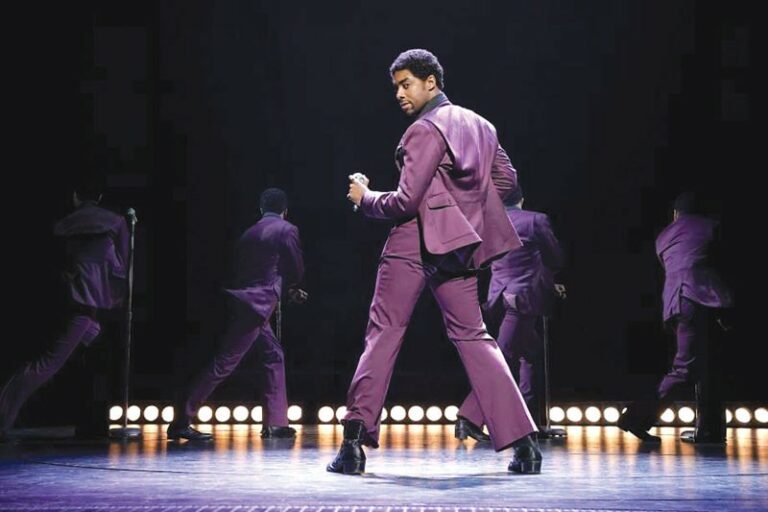
This month, saxophonist Tod Dickow joins Charged Particles for a concert tribute to saxophonist and bandleader Michael Brecker at Blue Note in Napa, July 12.

Founded by Stanford professor and drummer Jon Krosnick, Charged Particles also features keyboardist Murray Low and bassist Aaron Germain. Together, the group covers a broad spectrum of jazz with an emphasis on fusion’s heavy doses of synthesizers and amplified instruments.

“Around 1970, Miles Davis, Weather Report and others saw synthesizers and the electric bass as a way to increase the volume, increase the energy and increase the breadth of sounds you had to offer audiences,” Krosnick says. “All of a sudden it became very loud and very intense.”

These days, Krosnick notes many jazz players have gone back to the acoustic styles popular before 1970, and his aim for Charged Particles is to embrace all of those historic periods and sensibilities into a blend. Low performs on electric keyboards as well as a traditional piano, and Germain switches between electric and standup bass.

“What we want to do is to make sure the audience is engaged and interested and surprised as often as possible,” Krosnick says. “We’re always looking for how to make the next song different from the last one.”

The group also keeps it interesting by joining forces with other performers, as they’ve done with San Francisco saxophonist Tod Dickow for this upcoming tribute concert to the late Michael Brecker, who passed away in 2007.

“Michael [Brecker] is in the handful of the most important jazz musicians ever,” Krosnick says. “He really set a standard for technical excellence, but his brilliant creative ideas and innovative compositions moved the music forward. He was a very important voice for my generation and younger generations of jazz listeners.”

Though Brecker’s music is rarely found in songbooks, Dickow devoted himself to transcribing his works by listening to archives, and the band’s relentless rehearsals have allowed them to perform Brecker’s most complex songs with proper precision and musical expression.

“We’re incredibly excited to bring it to the Blue Note, which I think is a really important chapter for jazz in the Bay Area,” Krosnick says. “It’s arguably the most important jazz club franchise in the world, and for us to be invited to play there is an honor.”

Spotlight on Napa

0

Napa poet laureate Beclee Wilson celebrates the written word.

There’s a myth about writers, created over the years, that depicts them as lonely souls scribbling away outside of society. They’re riddled with demons and too often misunderstood by the very masses they simultaneously loathe yet hope to attract. They’re a complex and surly lot.

There may be some truth to the stereotype, but not for Beclee Wilson, who has served as Napa Valley poet laureate for the past two years.

“My background is in theater,” she says. “I don’t create in isolation, mining my emotions.”

Instead, Beclee learned to appreciate connecting with an audience as a young thespian in one of the first child theater companies in the country. She was born a performer.

Beclee credits her parents and upbringing for ensuring that she was “surrounded by language and words.” That appreciation carried through her advanced education, which included Northwestern University’s School of Speech, a master’s degree from the University of Michigan and a doctorate from the University of Minnesota.

It was during her college years that she met future husband John Wilson, who would eventually become executive vice president and chief economist for the Bank of America, as well as a teacher
at UC Berkeley. They moved to
St. Helena in 2000.

Napa Valley has proven to be a source of inspiration for Wilson—and provided her a sense of community, as well. She cherishes the town’s history and even takes it upon herself to polish the brass at the local post office building, a structure that shares her birth year of 1940. Those planter boxes in front? That was her handiwork, too. A group of appreciative locals even created a joint birthday celebration for the two.

“The valley has been a wonderful place,” Wilson says.

More than the town, though, Wilson finds inspiration and motivation through its children. A former grade-school teacher, she works with nearly every regional school to enhance an appreciation of poetry. Reaching kids has been her primary mission as Napa Valley’s poet laureate, and she’s worked with hundreds of them over the years.

As her stint comes to an end—a new laureate will be chosen in July—Wilson continues her campaign, benefiting from a grant that will enable school children to have their own poetry on display in a Yountville museum.

“It’s a wonderful outlet for human beings of every age,” Wilson says of poetry and the written word. “There’s no moment in life that cannot be worked into a poem.”

Wilson, in creating her own poetry, says she tries to “look at life and capture a moment in some way, using all of my senses—what am I seeing, smelling, hearing?”

She says she tries to “have an internal conversation” as she engages her surroundings and that “all of life around me has an opportunity” to inspire poetry.

These are exciting times for the poet, who just learned that her published works will be included in five upcoming international book fairs. Having her works translated into other languages isn’t out of the question.

Wilson’s focus remains on keeping poetry vibrant and alive among the young and respecting how vital poetry has been through the ages.

“All artistic ways of expressing life within a life around have been essential for a full life of creating and receiving through all human existence,” she says.

[page]

LOCAL KNOWLEDGE

Anne Girven helps get the word out about the CIA at Copia

What is it about the city of Napa that makes for an ideal location for this Culinary Institute of America outpost?

Napa is a burgeoning area that keeps growing year after year, with the local population increasing and visitation on the rise. The CIA at Copia is a veritable playground for food and wine lovers with our daily cooking demonstrations, winetasting experiences, lifestyle store and the Restaurant at CIA Copia. We offer experiences that are attractive to both locals and visitors, and with the city of Napa becoming a destination for foodies and wine lovers, this location works well for our mission.

What sorts of dishes or approaches to cooking do you utilize at CIA Copia that are hooked into regional traditions?

All of our experiences are geared toward consumers at the CIA at Copia. In our demonstrations and hands-on cooking classes, we teach techniques that are taught at the college, but they are formatted in a way that is easy to understand for non-chefs. Everything at the CIA at Copia involves learning, but you may not realize you are learning new skills because the classes are fun and exciting.

At the restaurant and in our classes, we use ingredients from our farms and gardens to create seasonal dishes and experiences for our guests. We also recently opened our Tasting Showcase, which features up to six different local wineries and their wines at individual bars throughout our atrium. Each winery showcases its wines to guests through tastings. It’s a great way to learn about Napa Valley wines and taste from different producers in one spot.

Where do you like to go to eat in Napa when you’re not at the CIA?

We of course love to dine at the Restaurant at CIA Copia, but we also love supporting our alumni, including Michael Gyetvan of Azzurro Pizzeria & Enoteca, Todd Humphries of Kitchen Door, Kadriye Gitgel Baspehlivan of Tarla, Jessica Sedlacek of Blue Note Napa, and many others.

How has the arrival of the CIA in Napa been met by locals?

We often get visitors to the facility who were members of the previous Copia or who had visited the facility previously, and they are happy to see the space open again.

What’s your personal favorite thing about CIA Copia—a dish or otherwise?

My favorite thing to come out of the CIA at Copia has definitely been awakening this space that was dormant for so long. We are so excited to launch new programs over the next year, including the Chuck Williams Culinary Arts Museum and the opening of our Hestan Teaching Kitchen, allowing us to host more hands-on cooking and baking classes. We are thrilled to be part of downtown Napa, and we look forward to continue to offer innovative and fun programs for locals and visitors.

[page]

THINGS TO DO IN NAPA

Napa City Nights

Celebrating 10 years of shows this summer, the Napa City Nights concert series offers the region’s hottest acts performing weekly at the Veterans Memorial Park Amphitheater along the Napa Riverfront Promenade. Originally built as part of a flood control project in 2008, this outdoor venue boasts lawn seating and a large dance floor, and the genre-blending series is perfect for music fans of all ages and interests. This week, July 7, funk tribute act Hour of Tower, blues-rock outfit Ordinary Sons and world-music big band New Era Beats Brigade mix it up. Later dates feature Napa Valley bands and songwriters like the Deadlies, Full Chizel, Zak Fennie and others. Fridays through Aug. 18, Veterans Memorial Park, Third and Main streets, Napa. 6:30pm. Free. napacitynights.com.

Taste of Napa

One of the biggest events in Festival Napa Valley’s 10-day schedule of extravagant experiences, Taste of Napa showcases the area’s diverse culinary world and wine empire with tastings from dozens of restaurants, wineries and artisan purveyors. Many of the participating wineries rarely open their doors to the public, making this an exceptional time to expand the palate and discover new flavors. Three local bands, chosen by the public in an online vote, will accompany the buzzed-about bites and wines, and there’s even a beer garden on hand for Taste of Napa on Saturday, July 15, at Napa Valley Exposition, 575 Third St., Napa. 11am to 2:30pm. $99 main floor; $225 Reserve Salon. festivalnapavalley.org.

Napa Porchfest

The popular annual Porchfest takes advantage of the summer weather and takes to the streets for a one-of-a-kind walking tour of live music this month. Featuring local bands and artists playing their tunes literally on the porches of several historic homes and properties throughout downtown Napa, this year’s Porchfest will be centered around Fuller Park, and the houses surrounding it, for a bulk of the action. This new hub will be able to host around a dozen food trucks in addition to providing shade and restrooms for the general public. The Porchfest organizers will also have info and maps to the other locations. The fun is only a porch away on Sunday, July 30, Fuller Park, 560 Jefferson St., Napa. Noon to 6pm. Free. napaporchfest.org.

Napa Town
& Country Fair

For 85 years, the Napa Town & Country Fair has brought local exhibits, agricultural competitions and lively entertainment to the city’s fairgrounds for a family-friendly week. This year, the fair has hired first-class amusement ride company Helm & Sons Amusements to provide the carnival with a new look and new rides that are both fun for young kids and thrilling for adults. In addition to the roller coasters, the fair includes two stages of live music featuring popular tribute acts and headlining performers like Wynonna & the Big Noise and Tony Orlando. Arts and crafts, farm exhibits, 4H demonstrations and a livestock arena put the “country” in the Town & Country Fair, running Aug. 9–13 at Napa Valley Exposition, 575 Third St., Napa. Gates open at noon everyday. $10–$13; kids five and under free. napavalleyexpo.com.

Appellation Trail

0

When it comes to the roll-out of a unified cannabis policy in California, a sativa singularity if you will, the devil is definitely in the details—not to mention the tongue-twisting parade of cannabis-bill acronyms that are hard to keep up with.

Now that the state has merged its medical and adult-use recreational regimes into one law, what’s next? Is everyone happy yet?

In late June, Gov. Jerry Brown signed a budget bill rider authored by North Coast State Sen. Mike McGuire, D-Healdsburg, that aimed to fully square up 2016’s Medical Marijuana Regulation and Safety Act (MMSRA) with the Adult Use of Marijuana Act (AUMA)—while protecting North Coast growers from a rapacious Big Cannabis onslaught.

Enter MAUCRSA, the Medical and Adult-Use Cannabis Regulation and Safety Act, roughly pronounced “mao-curser.” What happens now that the state has acted speedily and decisively to bring its pot laws under one roof? The medical community, not to mention this newspaper, had declared that the state was “not ready” for legalization last year—but ready or not, the state now has one law and a whole bunch of details to sort out.

For one thing, a 500-page draft project environmental impact review (PEIR), issued by the California Department of Food and Agriculture (CDFA) in June, may be amended or revised to reflect changes in the new law that will impact the department, which has broad licensing and regulatory powers in the state’s cannabis economy.

As the cannabis legislation was getting hashed out in Sacramento this spring, with a push from McGuire’s rider bill, the CDFA issued its epic PEIR, which, as Rebecca Forée at the CDFA says, was written with the changing law in mind, even if it doesn’t explicitly address all the changes that emerged in the final product—including the creation of an “appellation” regime overseen by the CDFA.

“We were aware of the trailer bill as we were preparing the draft PEIR,” says Forée, communications manager at CalCannabis Cultivation Licensing, a branch of the CDFA charged with overseeing the licensing cannabis cultivators.

“However, the exact text of the law was in flux at that time. Therefore, we crafted the draft PEIR to accommodate a range of possible outcomes—from the existing bill [prior to passage of the trailer bill] to the passage of some form of the trailer bill.”

Forée says a final PEIR will be issued by year’s end and will incorporate new aspects of the
law contained in the McGuire rider. She says she doesn’t anticipate that the PEIR will be delayed or that the agency would need to reissue it. The draft PEIR was prepared by the Oakland-based Horizon Water and Environment.

“We are in the process of carefully reviewing the trailer bill language to determine what portions of the draft PEIR may need to be revisited or amended in the final PEIR,” says Forée.

The draft PEIR is now in a state-mandated 45-day comment period through the end of July.

One key provision in McGuire’s rider—which helped it gain the support of the California Growers Association, a statewide lobby—is the inclusion of a measure to create cannabis “appellations” to help protect growers in cannabis country.

In a statement about his rider released on June 12, McGuire highlights that 60 percent of all the cannabis grown in the country comes from four California counties: Sonoma, Marin, Mendocino and Humboldt.

With that fact in mind, McGuire—and fellow North Coast lawmaker Jim Wood—was adamant that North Coast growers needed to be protected in whatever reconciliation bill emerged from the medical-meets-recreational legislative process.

McGuire’s budget rider bill pushed for enhanced environmental regulations in the cannabis industry—he’s been a big anti-illegal-grow zealot—and for the creation of “an organic-standards program for cannabis.”

A much-needed North Coast “one-stop shop for tax and license collections” so would-be cultivators don’t have to drive five hours to Sacramento to apply for a license is on the way, and the McGuire rider also recognizes agricultural co-ops, “ensuring that small family cultivators can thrive in the new regulatory system.”

[page]

The MAUCRSA eases licensing requirements—cultivators can for example have an adult-use and medical license—and offers a new designation for cultivators that would allow for small-scale “boutique” grows, provided the local and county governments approve (local control is very much highlighted in the McGuire rider).

The adult-use law, which California voters approved via Proposition 64 last election day—had placed the appellation process in the purview of the Bureau of Medical Cannabis Regulation, which operates under the aegis of the state Department of Consumer Affairs, and gave the industry and regulators until 2018 to create an appellation regime for California cannabis.

The MAUCRSA shifts this responsibility to the CDFA and stretches the timeline to 2020. But there’s no mention of the CDFA’s new role as appellation-designator in the draft PEIR.

Forée says it will be in the final version.

The agency is also given authority over a new track-and-trace program that will keep the state eye on cannabis products, from seed to store.

The “appellation” issue is
of course a big deal in the California wine industry. Indeed, the California State Fair, held
July 14–30 this year in Sacramento, has a big wine competition—and the state fair is very serious about the rules when they pertain to where a grape is grown: “In order for a wine to qualify in any region, the label must designate the appellation of the grapes,” under federal regulations that established so-called American Viticultural Areas, and which are protected by booze-and-tobacco agents of the United States Department of the Treasury.

Will a future California State Fair have a cannabis contest with designated “American Cannabis Areas”?

That’s anyone’s guess, but with any federal descheduling of cannabis resting in the hands of Attorney General Jeff Sessions, who has demonstrated a certain unyielding contempt for cannabis, it’s up to the state of California to come up with the appellation regime for cannabis, in order to protect the local growers by regulating source-of-bud claims in marketing and licensing. In a statement, McGuire says his rider also allows for the co-location of medical and recreational cannabis under one roof “and clarifies that businesses cannot mislead consumers as to the origin of marijuana products on labeling, advertising, marketing or packaging.”

Forée describes the overarching purpose of the PEIR as a mechanism “to evaluate and disclose the potentially significant impacts of implementing the CDFA’s responsibilities under MAUCRSA, and to identify ways to minimize or avoid those impacts that are found to be significant.”

The CDFA, she adds, will set the parameters and assumptions within which cultivators can operate. But the state regulations leave room for localities to set their own eco-terms for would-be cultivators. “In some cases, due to the broad, statewide level of analysis in the PEIR, additional site-specific CEQA compliance may be required for individual cultivation sites or groups of sites (e.g., those within a particular county or city). We expect that such a site-specific CEQA evaluation would often be conducted by the local jurisdiction where the cultivation site(s) is located.” The CDFA’s role in those instances would be to review the site-specific CEQA as part of the application process.

The new law keeps intact a provision in the AUMA that bans large cultivators from the state until 2023. But in the meantime, licensing restrictions in the MCSRA were also written so that licensees can also hold medical and adult-use licenses. And small-time cannabis growers got a big victory in the new law, which removes a requirement that growers use an outside distributor to get their crop to market. The high times are just beginning.

Letters to the Editor: July 5, 2017

SMART and Dumb

Some things you have to see to believe. For starters, that includes the so-called SMART train at a cost of over half of a billion dollars and projected to run at a deficit. That’s really a “smart” use of tax dollars. Now consider the “dumb”
$10 million park in downtown Santa Rosa. “Dumb” park meet “SMART” train. Uncomfortable benches with no backs. No trees (tore them down). No play area for kids. No restrooms. The downtown denizens won’t get caught dead in this park. Was that the plan? On the other hand you can hear the train whistle, and that must count for something.

Sebastopol

I read Mike Shea’s letter to the editor (June 21) in reference to the pathetic excuse of a supposed “reunification project” of downtown Santa Rosa’s Courthouse Square. I agree with the writer 100 percent. It’s another empty, soulless, unimaginative, cement-filled taxpayer boondoggle disguised and peddled as something other than that. How anyone could laud something as abhorrent as the “new town square” is beyond the pale.

Via Facebook

Book Fare

One hundred and forty-nine dollars for a book (“Pot Rules,” June 21)? Thanks for not helping the people that need it! I can’t help it. I think that’s seriously shameful.

Sebastopol

Resist

I am one of those tribal members (Coos) that opposes this project (“Pipelines and Battlelines,” June 14). The pipeline would go through forests and under the Umpqua, Rogue, Coquille and Coos rivers. It would ultimately be bad for fish and wildlife and impact archaeological sites.

Via Bohemian.com

We all need to wake up and see this project as a real threat. So much environmental, cultural and property damage could be unleashed in the five river crossings if the line ever leaks or breaks! So scary the way this is getting pushed ahead after being rejected twice. Do whatever you can to educate others and fight this thing.

Via Bohemian.com

Stepping Out

Marin also has the Marin Agricultural Land Trust, which offers tours of local farming operations, often followed by hikes on private ranches. Those shorter hikes are more my speed than the few overnight camping trips described here (“The Outback in Our Backyard”, May 17), but I still think TrekSonoma is super-cool.

Via Facebook

Write to us at le*****@******an.com.

Drive On

In states where marijuana has been legalized, traffic stops resulting in searches by state police are down dramatically, according to a new analysis from the Marshall Project and the Center for Investigative Reporting.

In states where possession of marijuana is legal, police can no longer assume criminal activity simply because pot is present, which would have given them probable cause to conduct a search. And that means fewer interactions between drivers and police, reducing the prospect of dangerous—or even deadly—clashes.

But even though the number of searches dropped for all racial groups, black and brown drivers are still being subjected to searches at a higher rate than whites, the study found. And because the report only studied state police stops, not stops by local law enforcement, which patrol urban areas with higher minority population concentrations, the report may understate the racial disparity in traffic stop searches.

The report is based on an analysis of data from researchers at Stanford University, who also released a report this week studying some 60 million state patrol stops in 31 states between 2011 and 2015, the most thorough look yet at national traffic stop data. The results from the legal pot states of Colorado and Washington are striking.

In Colorado, the number of traffic stop searches dropped by nearly two-thirds for whites, 58 percent for Hispanics and nearly half for blacks. In Washington, the search rate dropped by about 25 percent for whites and Hispanics, and
34 percent for African Americans.

Still, racial disparities in search rates persisted in both states. In Colorado, the search rate for black drivers was 3.3 times that for whites, and the rate for Hispanic drivers was 2.7 times that for whites. In Washington, blacks were twice as likely to be searched as whites, while the search rate for Hispanics was 1.7 times that of whites.

The data corresponds to marijuana arrests in legal states. In Colorado, for instance, a 2016 Department of Public Safety report found that while the number of pot arrests dropped by nearly half after legalization, the arrest rate for blacks was still nearly three times that of whites.

“Legalizing marijuana is not going to solve racial disparities,” says Mark Silverstein, legal director of the American Civil Liberties Union of Colorado. “We need to do a lot more before we get at that.”

But legalizing marijuana does reduce the number of traffic stop searches, and given the fraught relationship between police and the citizenry, especially communities of color, that is a good thing in itself.

Phillip Smith is editor of the AlterNet Drug Reporter and author of the ‘Drug War Chronicle.’

Garden of Eatin’

0

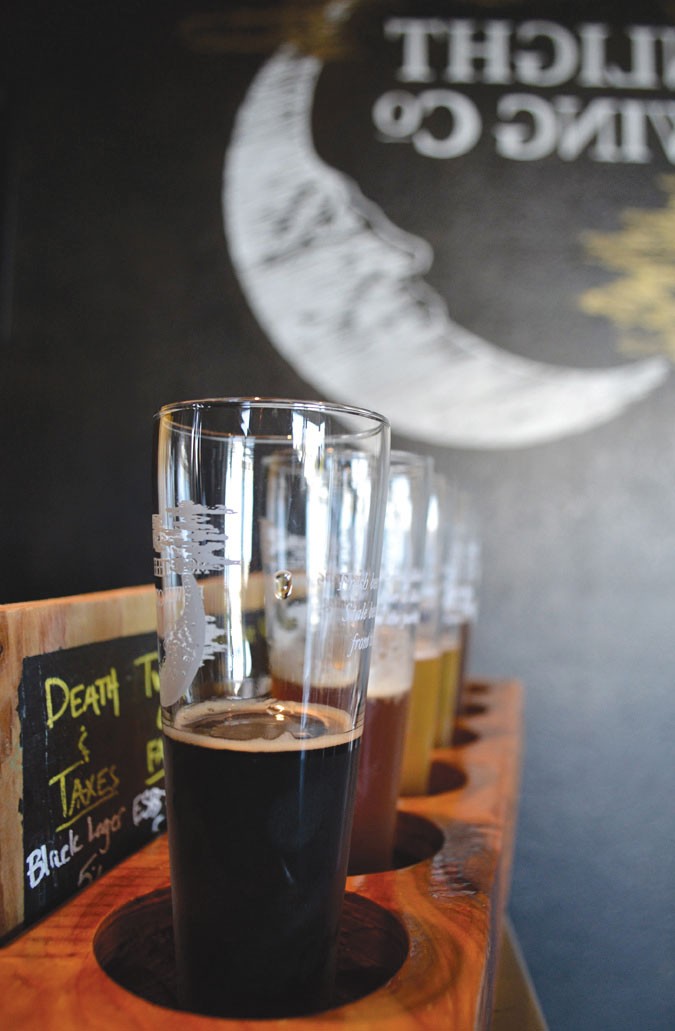
During one of those sweltering days last month, I found myself hungry for dinner but with no desire to make my house hotter by turning on the oven. So I set out to try Brewster’s Beer Garden, a new downtown Petaluma restaurant opened by San Francisco restaurateur Mike Goebel and three other partners—Chris Beerman (executive chef), Ben Hetzel (general manager) and Alfie Turnshek-Goins (bar manager).

As I rounded the corner and walked in the restaurant’s open-air, riverfront entrance, I was greeted by about 300 diners who had exactly the same idea: sit outside, drink some cold beer, eat barbecue and listen to live rock and roll. That’s my idea of a great evening.

The 350-person space is spectacular. While there is some indoor seating, most of the tables are outside on a vast, crushed-granite patio. The old brick and masonry walls of the adjacent building and the metal and woodwork created for the restaurant give it a look and feel that’s at once vintage, industrial and warm.

There’s also a large fire pit, a bocce ball court and a fenced-off playground for kids. On the other side is a stage that hosts a changing lineup of bands. Dogs are welcome, too. The restaurant fairly screams, “Relax, sit down and have a beer!”

Speaking of beers, the rows of bristling taps dispense 30 brands of craft beer from near and far. The list of cocktails and wine is impressive, too.

Beerman (how perfect is that?) has created an enticing menu of classic barbecue (ribs, brisket, pulled pork, chicken) that’s rooted in Deep South traditions but made with impeccably sourced, sustainably raised local meat from the likes of Marin Sun Farms and Stemple Creek Ranch.

My favorite from the smoker are the St. Louis–style ribs ($24 for a half rack). The beautifully lacquered ribs are smoked over white oak and are meaty and flavorful. The Carolina-style wet-mopped “whole chopped hog” ($14 for half pound) was also good, large chunks of pork shoulder suffused with smoke and a piquant, vinegar-based slather of sauce.

Brisket is my test of a pit master’s art. It’s a tough cut of meat to get right and requires a lot of time in the smoke and heat. The meat was tender and revealed a deep smoke ring, the line of pink in the meat that is a testament to ample time on the barbecue.

Beyond barbecue, there are plenty of other options. The roasted, dry-rubbed carrots served with buttermilk dressing ($8) are a good starter, as is the roasted cauliflower with onions and capers and creamy curry sauce ($11).

My one gripe was the caesar salad ($11). I’m all for reinventing the classics, but they’ve got to be better than the original. Brewster’s makes theirs with Little Gem lettuce hearts and toasted bagel slices, instead of croutons, all tossed in a creamy but bland dressing that had me yearning for garlic, lemon and anchovies.

If you want to sit inside (and I don’t know why you would on a hot summer night), you have to wait to be seated, but the beer garden is self seating. Everybody seems to be in a good mood here. And with the food, drink, music and open-air setting, it’s easy to see why.

Brewster’s Beer Garden, 229 Water St. N., Petaluma. 707.981.8330.

Housekeeping

The endearingly gawky Sally Hawkins (Happy Go Lucky) stars in Maudie, and it's one of the best ever cinematic portraits of a character constrained by her body, up there with My Left Foot. The Nova Scotia outsider artist Maud Lewis (Hawkins) was bent over with juvenile arthritis with hands so clawed she eventually had to hold the brushes with her...

What Would Trump Do?

As a journalist I am, of course, all for an informed citizenry. Democracy dies when the public is kept in the dark or disconnects from what our government is up to. But sometimes staying too informed can be hazardous to your mental health. At least that's been the case for me when it comes to staying on top of...

Made for Malbec

Two samples of Malbec wine recently showed up on our doorstep unbidden. That's unusual because wineries almost never send the rest of the Cab crew (the traditional Bordeaux quintet of grapes that also includes Cabernet Sauvignon, Merlot, Cabernet Franc and Petit Verdot) out on the media circuit—with the exception of Merlot, and after last week's barbecue with Merlot column,...

Writing Waves

There is something about immersing oneself in saltwater for extended periods of time and dodging walls of waves that lends to some deep thinking about life and our place in the world. Surfing has recently produced some excellent works of nonfiction that have little to do with stoned-out surfer stereotypes. Last year's Pulitzer Prize for autobiography went to William Finnegan...

Electric Jazz

Bay Area jazz trio Charged Particles are not afraid to plug in and get loud when the occasion calls for it. For nearly 30 years, the band has engaged in a variety of genre-blending projects marked by elaborate arrangements and fiery performances. This month, saxophonist Tod Dickow joins Charged Particles for a concert tribute to saxophonist and bandleader Michael Brecker at...

Spotlight on Napa

Napa poet laureate Beclee Wilson celebrates the written word. There's a myth about writers, created over the years, that depicts them as lonely souls scribbling away outside of society. They're riddled with demons and too often misunderstood by the very masses they simultaneously loathe yet hope to attract. They're a complex and surly lot. There may be some truth to the...

Appellation Trail

When it comes to the roll-out of a unified cannabis policy in California, a sativa singularity if you will, the devil is definitely in the details—not to mention the tongue-twisting parade of cannabis-bill acronyms that are hard to keep up with. Now that the state has merged its medical and adult-use recreational regimes into one law, what's next? Is everyone...

Letters to the Editor: July 5, 2017

SMART and Dumb Some things you have to see to believe. For starters, that includes the so-called SMART train at a cost of over half of a billion dollars and projected to run at a deficit. That's really a "smart" use of tax dollars. Now consider the "dumb" $10 million park in downtown Santa Rosa. "Dumb" park meet "SMART" train....

Drive On

In states where marijuana has been legalized, traffic stops resulting in searches by state police are down dramatically, according to a new analysis from the Marshall Project and the Center for Investigative Reporting. In states where possession of marijuana is legal, police can no longer assume criminal activity simply because pot is present, which would have given them probable cause...

Garden of Eatin’

During one of those sweltering days last month, I found myself hungry for dinner but with no desire to make my house hotter by turning on the oven. So I set out to try Brewster's Beer Garden, a new downtown Petaluma restaurant opened by San Francisco restaurateur Mike Goebel and three other partners—Chris Beerman (executive chef), Ben Hetzel (general...
11,084FansLike
4,446FollowersFollow
6,928FollowersFollow