Letters to the Editor: September 13, 2017

Artful

Love, love, love Katie Kincade’s work (“Rocking Artist,” Sept. 6)!

Via Bohemian.com

What Are You Smoking?

“Going to Pot” (The Nugget, Sept. 6) incorrectly states that the Healthy Kids Colorado Survey indicates “The portion of adolescents who thought smoking marijuana was harmful also did not change” when in fact the study states the exact opposite, that “fewer students see regular marijuana use as risky behavior.”

Santa Rosa

What About
the Workers?

Clearly the health of grapes takes precedence over the well-being of vineyard workers. On Saturday, Sept. 2, I read the online article in the Press Democrat, “Harvest in Heat Wave.” A few of the photos show workers wearing bandanas that cover their mouth and nose for protection against dust and smoke. Some also wear caps and hoodies for further protection. These people were picking grapes at night under hot, bright lights, under skies shrouded with smoke during last weekend’s excessive heat wave when temperatures rose to over 100 degrees. Workers toil at a feverish pace from early evening until dawn picking grapes and then running with bins full of grapes when even the nights were much warmer than usual.

I was stunned by the paragraph that read, “Smoke from Trinity and other northern California fires should not pose a problem for the local crop as grapes are more susceptible to smoke taint in the early summer than at this point in the growing season.”

In this entire article, there is no empathy shown or compassion stated for the workers who pick in extreme weather conditions, and no mention of the workers’ health when exposed to “smoke taint.”

This situation reminds me of how the Trump administration treats people and the environment.

Occidental

Trump Twister

Don’t be a ‘wower’

Don’t just be sour

Don’t frown and glower

Don’t crouch and cower

Beneath Trump Tower

It’s no real bower

Now is the hour

It’s time to scour

Reclaim our power

Be the truth’s vower

Let our hearts flower

Let our lights shower

Make America

Really great again

America first

No mistake, amen!

Santa Rosa

Write to us at le*****@******an.com.

Road Prophets

0

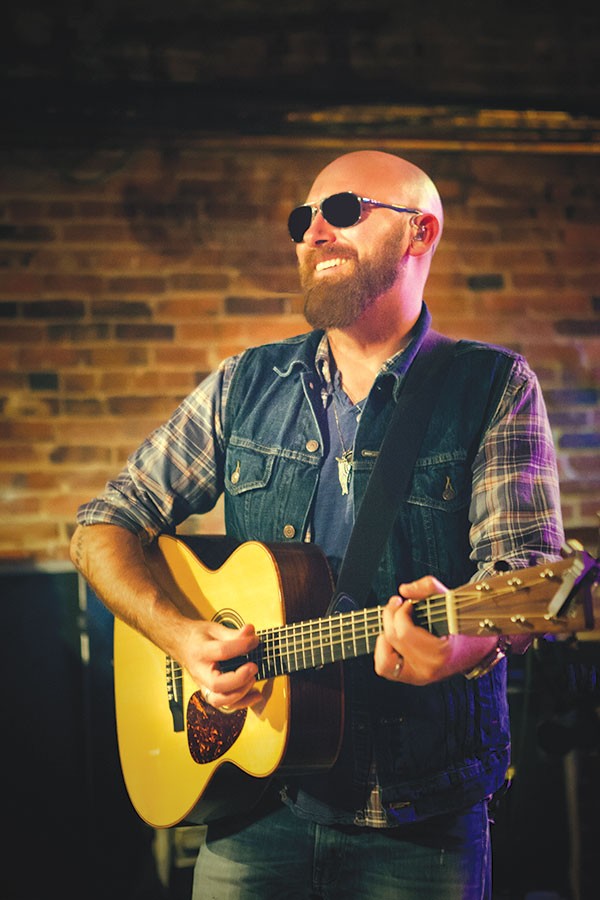
After 11 years of musical successes that include winning numerous NorBay awards for best indie band, extensive tours and appearances at some of the biggest festivals on the West Coast, Petaluma’s Highway Poets are checking another box on their rock ‘n’ roll bucket list when they play their first headline set at the Mystic Theatre & Music Hall in their hometown on Saturday, Sept. 16.

Led by guitarist and vocalist Sebastian Saint James and featuring guitarist Travis James, bassist Taylor James and drummer Rhyne Erde, the tight-knit powerhouse group will unveil their long-awaited sophomore album,

Chasing Youth, with a concert featuring rock and roll comrades Kingsborough, the John Courage Trio and a surprise guest.

The band’s name reflects the members’ passion for playing on the road, though the Highway Poets have spent the last two years largely retooling their sound after the departure of their original drummer. “We basically had a big shock to our system, and slowed down,” Saint James says.

When Erde joined the group, they incorporated his classic rock style to their existing sound. “We’ve all become brothers-in-arms,” Saint James says. “We kind of created a new band.”

Chasing Youth marks a sophisticated leap in performance and production for the fiercely DIY group. Last year, the Highway Poets gathered over $11,000 from fans through an online campaign and used the funds wisely, recording at Frogville Studios in Santa Fe, N.M. Songwriter Frankie Boots introduced Saint James to the space three years ago. “It’s like a studio out of the ’60s,” Saint James says. “We just fell in love.”

Utilizing the studio’s vintage gear, the band took an old-school approach to recording the album, which boasts gritty soul-rock infused with horns and keys amid the howling vocals and red-hot guitar hooks. The band is a live wire of electricity on the record, a departure from the folk influences of their previous releases. “Writing the songs, we wanted to make an R&B record in our minds,” Saint James says.

Chasing Youth will be available when the Highway Poets headline the Mystic, a longtime dream of the band, who have opened several shows there.

“We’ve always cherished the sound in that room,” Saint James says. “As a performer, you can kind of lay into the Mystic—there’s something about the reverb in that room. I feel like I always have a good night there.”

Sonoma Green?

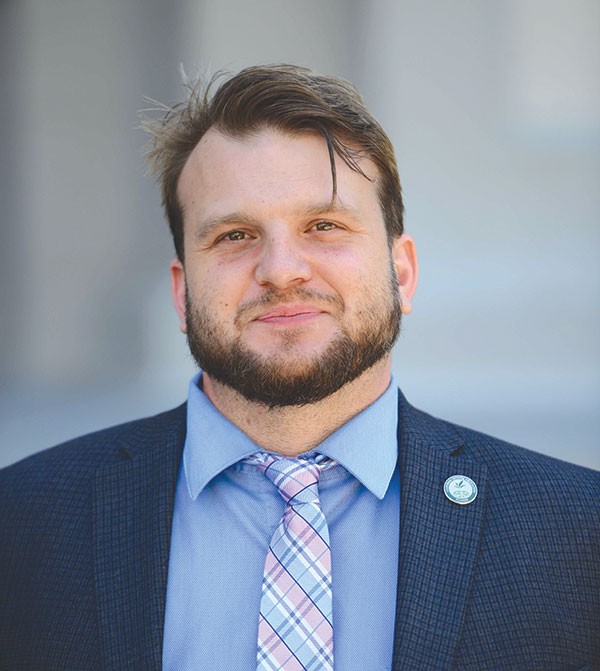
After multiple appeals, Ken Brown finally saw the term “cannabis dispensary” back on the Sonoma City Council. According to the agenda, the city took up the issue “to help decide which types of cannabis-related businesses, if any, should be allowed in Sonoma and, if allowed, where they would go and how they would operate.”

A former mayor of Sonoma and a longtime cannabis advocate, Brown has been relentless in his support for a marijuana dispensary in his hometown. The council heard from experts and stakeholders Monday, Sept. 11, about the rapidly expanding field of legal cannabis distribution in the wake of California’s passage of Proposition 64 last year. State regulations affecting cannabis (both recreational and medicinal) were reviewed, along with the city’s potential policy options.

City staff will now make recommendations for a draft ordinance that will be brought to the planning commission and possibly the city council in future months.

Brown is optimistic. “The nature of the council has changed,” he says. “The Proposition 64 vote [the Adult Use of Marijuana Act] reawakened the possibility we could get a medical cannabis facility with delivery passed in Sonoma.”

Past votes on marijuana regulation reflect the council’s hesitancy on the issue. In 2009, when Brown was mayor, a 2–2 vote on dispensaries kept the prohibition in place. In 2015, the council unanimously voted to uphold its restrictions on marijuana, which left no possibility for a dispensary.

Last November, after Proposition 64 passed, the council imposed two 45-day moratoriums on outdoor growing in order to review and revise relevant regulations.

“There were good points on both sides,” says Councilmember Madolyn Agrimonti. “It is tough. I think accessibility is one reason for a local dispensary . . . but what came out of it was to continue the moratoria. I’m glad we still have the moratoria, because we still have so many unanswered questions. I’m 50–50 on the dispensary.”

Brown believes that the conservative slant of the council does not reflect the populace. He notes that 62 percent of city voters voted in favor of Proposition 64—more than any other city in Sonoma County.

“The people of Sonoma are clearly ready for this.”

Cowboy Creamery

0

In case you hadn’t noticed, the North Bay’s cheese scene is dominated by women. There’s Jennifer Bice of Redwood Hill Creamery, Sue Conley and Peggy Smith of Cowgirl Creamy, Cindy Callahan of Bellwether Farms, Lisa Gottreich of Bohemian Creamery and Seana Doughty of Bleating Heart, to name a few.

But here come the dudes! Old friends Keith Adams and Rob Hunter teamed up to open William Cofield Cheesemakers in Sebastopol last year. There’s something else that distinguishes the duo, besides their gender: the cheese.

“We’re British-inspired cheesemakers,” Adams says. “No one is doing anything like this here.”

Seeing that French- and Spanish-style cheeses were pretty well-covered by North Bay cheesemakers, and the fact that Adams is a big fan of English cheeses and spent time studying under some of England’s master cheesemakers, the choice made practical sense. (Cofield is Adams’ middle name; it sounds more British.)

Adams already had a successful career as a cheesemaker for Alemar, a Minnesota-based creamery that makes an acclaimed Camembert–style cheese called Bent River, as well as Brie-style and washed-rind cheeses. Adams became intrigued with British-style cheeses (think Stilton and cheddar), having been first exposed them as a boy living briefly in England. He decided to move back to his native California to start a new business and approached his old college friend Rob Hunter about a partnership. Hunter is a winemaker for
Hunter III and also works as a wine-industry consultant.

The creamery and storefront are located in a small, tidy white-tiled space in Sebastopol’s Barlow retail zone. All the creamery’s milk comes from Robert Camozzi’s Willow Creek Jerseys, an organic dairy on Bloomfield Road southwest of Sebastopol. The milk is organic and the cows are pastured-raised.

“If you do that, you’re likely to get great milk,” Adams says.

And great milk makes great cheese. Adams make three cheeses: a Stilton-style blue cheese called Bodega Blue and a cloth-wrapped cheddar called McKinley (named after the street in the Barlow where the creamery stands) and cheese curds, an ode to Adams’ years in Minnesota, where the salty cheese squiggles are a beloved state-fair snack.

Adams says making the Stilton-style has been a challenge, but believes he’s finally gotten it right. “This is the first version that has passed muster,” he says, handing me a taste.

It’s creamy and pleasingly salty, with the great funky tang that Stilton is known for. McKinley is a hearty cheddar that’s sharp but tempered with mouth-filling creaminess. I’d like this one paired with some tart apple slices.

In addition to their own cheese, the shop sells Alemar cheese and local curds from Bleating Heart, Bellwether, Point Reyes Farmstead Creamery, Cypress Groves, Cowgirl and others.

William Cofield Cheesemakers will hold a party Oct. 27 at the Barlow that will feature cheese
(of course), live music, a roasted whole hog and the Zazu restaurant food truck. Tickets are $75.

“We know how to throw a good party,” Adams says.

Gospel Wise

0

Update: This show has been canceled. Call the Mystic at 707.775.6048 for refunds/details.

Gospel and folk singer-songwriter Jim Avett is probably best known to contemporary music fans as the father of North Carolina folk-rock siblings the Avett Brothers, Seth and Scott, who often reference his paternal guidance in their song lyrics and in interviews.

“They think a lot more of their daddy than they ought to,” laughs Avett. Despite his demure attitude, Avett is an undeniable influence on his sons, not only in his harmony-rich acoustic music, but also in his work ethic and altruistic approach to creativity. “When you’re trying to be creative, you’re trying to affect people’s lives,” he says. “You’re not trying to make money and be famous—that’ll come well enough. You just have to be the best you can be.”

At 70 years old, Avett has seen it all, and has recently added to his career highlights a new album, For His Children and Ours, that he recorded with his sons. The album features traditional gospel and country-gospel songs done in evocative three-part harmony. “I think you can tell how good a person’s life is by how much harmony is in their life,” says Avett. “And I’m not just talking about music.”

Jim Avett performs a seated solo show on Thursday, Sept. 21, at the Mystic Theatre & Music Hall. 23 Petaluma Blvd. N., Petaluma. 7:30pm. $22. 707.775.6048.

Good Harvests

0

These days I hear a lot of statements that begin with “Things being the way they are now.”

A group of west Sonoma County citizens founded Heart & Hammer to do something about things being the way they are. After discussion, the group is taking its first action toward “tangible solutions in our local community that we believe will lead to national healing,” according to group member Ellen Cavalli, who’s also cofounder of Tilted Shed Ciderworks, by launching a fundraiser for Centro Laboral de Graton (CLG)—the Graton Day Labor Center.

“This is the first time anyone has taken on raising funds for us,” says CLG executive director Christy Lubin. “We can’t change what’s going on in Washington, but it’s really beautiful that these women are standing up.”

Dr. Loco’s Rockin’ Jalapeño Band headline the event, which is titled “Love and Justice,” and Pablo Alvarado, executive director of the National Day Labor and Organizing Network, is the keynote speaker. “He’s always just spot-on in his analysis of the current situation,” Lubin says.

The $100-plus ticket price, which includes a sit-down dinner, beer, wine and cider, and the opportunity to bid on auction
items and enter a raffle, will be discounted for students and CLG workers. Proceeds will fund the center’s outreach and organizing efforts, including labor-rights education for domestic workers, who often have restricted access to information and support. Love and Justice 2017 at the Shone Farm Pavilion, 7450 Steve Olson Lane, Forestville. Saturday, Oct. 28, 6–10pm. Tickets, $100–$150, or donate a ticket to a low-income community member for $95.

Want to break out the bubbly a little sooner in the calendar? Breathless Wines celebrates its tasting room’s first year with a 1920s-themed circus-style party. The team at Breathless, a charitably focused sparkling wine outfit, encourages costumes, and sights include performers and live animals. Ten percent of ticket sales benefit Healdsburg Health Foundation. Cirque du Breathless at Breathless Wines, 499 Moore Lane, Healdsburg. Sunday, Sept. 17, 1–3pm, 4–6pm. $29. 707.395.7300.

Harvest starts out with a blessing of the grapes at some wineries, but by October, it may be mostly cursing of the grapes, from what I’ve heard. Bless the animals, instead. While it’s mostly dogs at
St. Francis Winery’s annual Blessing of the Animals, I’m told folks bring birds, fish, horses and turtles to receive a blessing from a real, live Catholic priest. Silent auction and raffle proceeds benefit the Sonoma County Humane Society. St. Francis Winery & Vineyards, 100 Pythian Road at Highway 12, Santa Rosa. Oct. 1, 2–5pm. No blessed fee.

Unshame the Pain

0

As opioid deaths have continued to rise at a staggering rate, the epidemic was declared a national emergency last month. However, what’s not being talked about are the millions of Americans in chronic pain desperate for relief, acknowledgment and understanding. September is National Pain Awareness Month and I urge our communities to step up.

As a 31-year-old woman with “invisible” musculoskeletal, autoimmune and pain diseases that have disabled me since my teens, I know all too well the misinformation and misunderstandings surrounding chronic pain. I nearly died of liver failure due to opioid overdose in 2007 after attempting suicide because the pain and the lack of effective treatments, combined with demoralizing judgments from family, friends and medical providers, was so excruciating.

According to the National Institutes of Health, nearly 50 million Americans experience daily and severe disabling chronic pain; other studies put the estimate of Americans in chronic pain at over 100 million. But addressing the debilitating effects of chronic pain, a process that physiologically changes a person’s ability to modulate pain, continues to be sidelined.

“Relieving Pain in America,” a 300-plus page report commissioned by the Obama administration, states that “people with chronic pain should be recognized by family, employers, health insurers, and others as having a serious condition.” Yet people in pain continue to be stigmatized, discriminated against and disbelieved , all of which impedes treatment, care and quality of life. People from marginalized groups, particularly women and people of color, confront the greatest prejudices and barriers in receiving treatment and are further marginalized by the disabling and financially devastating effects of chronic pain.

People in chronic pain need access not only to effective treatment, but also to community support and advocacy. Pain is a human-rights and social-justice issue transcending the singularity of medicine, policy or the individual. Truly influencing better support of people in pain requires that individuals and institutions alike make conscious choices to change how pain, and people in pain, are regarded. We can begin with ourselves!

Ma’ayan Simon lives in Sebastopol and writes the pain activism and education blog maayansimon.wordpress.com; she also teaches about pain, disability and intersectional social justice.

To have your topical essay of 350 words considered for publication, write op*****@******an.com.

Hallowed Stage

0

It’s taken on several names and many purposes in the 106 years it has stood on Petaluma Boulevard, right where the road turns to follow the river’s bend in downtown Petaluma.

Standing as a cultural signpost, the Mystic Theatre is one of the North Bay’s most recognizable sights, with a famous neon marquee that’s been featured in the film American Graffiti and an art deco interior bursting with a history of entertainment that dates back to the vaudeville era.

This year, the Mystic marks 25 years as a live music venue, a run that began in 1992 with partners Jeff and Nancy Harriman and Kenneth O’Donnell, and continues today under the direction of Bay Area company Ineffable Music Group, which took over management and booking of the Mystic two years ago.

Ineffable founder and talent buyer Thomas Cussins first got a taste of the Mystic when artists he managed began playing there.

“The vibe felt so special that I started to come to the venue to see shows and started hanging out more and more,” says Cussins, who lives in Oakland.

“For me, the default activity is going to a concert,” Cussins says. “That’s what it’s all about for me, the live experience. And the Mystic has one of the best live experiences I’ve ever experienced.”

Given its relatively small size—550-person capacity—the venue’s intimate atmosphere and up-close stage offer an unparalleled live connection to the artists.

“You’re very much in the moment with them,” Cussins says. “You’re right up there in the mix.”

The Mystic’s main floor can accommodate standing room or fully seated shows, and the venue’s balcony, accessible by two staircases that curve along the sides, inhabits a perfectly vintage vibe that embodies the venue’s colorful past.

When Petaluma pioneer John McNear constructed the theater as part of the McNear Building in 1911, it indeed hosted live entertainment for a time, before being converted into a series of movie houses, at one time even running as a porn theater called the State in the 1970s.

In the early ’90s, when the Harrimans and O’Donnell, who were operating McNear’s restaurant next door, acquired the theater, they set it on its current track as a music venue under the name McNear’s Mystic Theatre.

“One thing that makes the Mystic special is the history,” says music management and booking veteran Sheila Groves-Tracey, who held shows there for over 15 years. “The fact that it is still a live performance hall 106 years later is pretty amazing! The room just feels really good, it feels welcoming, has great sight lines from everywhere in the house, has a good and professional staff, and musicians love playing there.”

Two years ago, when Cussins and Ineffable took over management and booking duties, they renamed the venue the Mystic Theatre & Music Hall, with a commitment to continuing the venue’s legacy of hosting top-tier music in Petaluma.

“There was pressure to live up to the quality of music that has been through the venue,” says Cussins, whose focus is to increase the volume of shows by bringing in more national touring acts while also developing local bands with the space.

“The North Bay scene is flourishing,” Cussins adds. “There’s all these great local musicians looking for an outlet to play their music and develop their sound. I think this is going to be the next hotbed for talent in California.” This month, North Bay bands the Highway Poets (see Music, p21), the Grain and the Soul Section will take the stage.

“The Mystic feels to me like the center of Petaluma and what all roads lead to,” says San Francisco songwriter Sam Chase, whose Americana outfit the Sam Chase & the Untraditional perform there on Sept. 30 with North Bay acts Trebuchet and Timothy O’Neil making their Mystic debut. “Its history is burning in every light bulb on the marquee,” he continues. “You feel the need to dress up to cross the threshold of those hallowed grounds. As a musician, you find yourself standing a little taller once you’ve played there.”

The Mystic’s upcoming concert lineup is also one of the most varied in the North Bay, with folk sisters Rising Appalachia, rock fusion band TAUK, reggae star Mike Love and others scheduled to appear this fall.

“I want there to be something for everybody,” Cussins says.

Now, for the 25th anniversary of live music at the Mystic, Cussins is looking to honor the past. “We always knew some of the history of the theater, the big show that everyone always points to is that Van Morrison show, which in December would have been 25 years ago,” Cussins says.

With that in mind, Cussins is dedicating the month of December to celebrate the venue with free shows and giveaways.

Cussins’ other goal is to give back to the community, and Ineffable donates $1 from every ticket sold at the Mystic to Petaluma charities, choosing a new one each month. Cussins estimates over $25,000 will be donated to various charities by the end of the year.

“It’s been a great joy,” says Cussins. “We love Petaluma, we love the venue, and we love having shows there.”

Third Act

0

Appropriately enough for a stage show based on Rex Pickett’s raunchy, gleefully bacchanalian novel Sideways, there is a lot of vino consumed over the course of the stage version’s nearly two-and-a-half-hour running time.

In Left Edge Theatre’s world premiere of Pickett’s own adaptation—significantly stripped down from the versions previously seen in London and L.A.—bottles and bottles of wine are uncorked and consumed, each one ceremoniously archived on one of several wall-mounted wine racks hanging here and there across director Argo Thompson’s spare, effective, and highly adaptable set.

Sideways, best known for the Oscar-winning film version starring Paul Giamatti and Thomas Haden Church, tells the doggishly shaggy story of two friends on a weeklong winetasting tour through Southern California’s Santa Ynez valley.

Miles (Ron Severdia, trading Giamatti’s high-strung self-hatred for an amiably laconic, soul-crippling fear) is a barely functioning, would-be novelist, part-time wine aficionado and full-time depressive whose fragile self-esteem (what remains of it) is dependent on his latest detective novel being picked up by the publisher currently considering it. As he waits anxiously for word from his agent, Miles acts as tour guide and wine instructor for his amoral, longtime actor-director friend Jack (Chris Ginesi, expertly capturing his character’s delightfully dim, affably caddish attitude), who hopes to commit a few final acts of oat-sowing before his wedding at week’s end.

The pair’s path soon crosses with two wine-loving friends. Maya (Maureen O’Neill, excellent), who has turned a bad marriage into a passion for wine-making, clearly likes Miles, enjoying his enological verbosity, while Terra (Jazmine Pierce, all sweetness and steel), a fiery tasting-room party girl, falls hard for Jack, who begins to return the favor. A variety of supporting characters are played by the first-rate team of Kimberly Kalember, Mark Bradbury and Angela Squire.

As Pickett’s bittersweet tale progresses through a sometimes hilarious, sometimes moving, sometimes achingly sad series of escalating successes and disasters, Miles and Jack’s friendship, the real theme of this story, is tested again and again. The production’s pace could stand to be picked up a bit, and the final moments of the play feel a bit too tidy. But on the whole, this cleverly faithful, wine-soaked journey through hope and disappointment is much more than just quaffable; it’s a road trip well worth taking.

Rating (out of 5): ★★★★

Staging ‘Sideways’

Rex Pickett is tall, funny, brutally honest and unfailingly energetic—even when exhausted and hungry. In conversation, he is passionate and personal, spontaneous and astonishingly self-critical. He speaks in a stream of short to medium-length proclamations, suggestions and confessions, strung all together like one long sentence that, on occasion, will go on for several uninterrupted minutes.

Pickett is not humble, exactly. He is on record as saying that Pinot Noir might not be so popular today were it not for him, but he has a habit of being more or less right about such statements. He really is responsible for the popularity of Pinot, though he would add that Pinot itself has something to do with that. For the record, he’s also responsible for a decline in popularity of Merlot, though he adds that Merlot might itself have something to do with that, too.

Pickett is, of course, the author of the novel Sideways, the inspiration for the Oscar-winning 2004 film by Alexander Payne that stars Paul Giamatti and Thomas Haden Church. The film, a road-movie through the wine country of Santa Ynez north of Santa Barbara, follows Miles, a sad-sack writer with a passion for Pinot Noir, and his best-friend, Jack, an aging Hollywood actor with a touch of sex addiction and a hankering to sow some final wild oats before getting married. The film famously allowed Miles to insult Merlot drinkers so hilariously that vast hordes of people stopped drinking the stuff.

After following up Sideways with two sequels, Pickett has spent the last several years adapting the original novel into a stage play. After test runs of earlier drafts in Santa Monica, San Diego and London, the completed version is about to receive its world premiere in Santa Rosa, courtesy of Left Edge Theatre and director Argo Thompson, with a mighty assist from actor Ron Severdia, who not only plays Miles in the show, but also had a hand in convincing Left Edge to take a crack at reinventing the play.

Last month, at the start of rehearsals, Pickett visited the cast and crew for several days, making final suggestions and alterations. During that time, he sat down with me for a nearly two-hour conversation.

Here are some of the juiciest moments.

THE BOHEMIAN: The Left Edge Theatre production of ‘Sideways’ is being billed as a world premiere, but there have been one or two previous stagings of the play, or some version of the play. I assume this is the latest incarnation of a show that has basically been in various stages of early development until now?

REX PICKETT: OK, here’s the story. It’s kind of crazy, because theater is kind of crazy. First of all, yes. This is the world premiere. An earlier version of Sideways was done at the Ruskin Group Theater in Santa Monica in 2012, in a tiny 50-seat theater, and then another incarnation was done at the La Jolla Playhouse in 2013—
a much bigger production.

And how’d those productions go?

They went great, but I learned a lot. Look, I’ve written novels, but this is my first play, right? And early on, it was a very difficult play. Really funny, but hard to stage. My script had 23 different scenes, with complete set changes between every one. The director of the San Diego version, Des McAnuff, who directed Jersey Boys, said that Sideways was the most difficult nonmusical he’d directed in 38 years.

You sound kind proud of that.

Well, yes and no. I was trying to make the play feel like the movie, because I know how much people love the movie. It’s a road movie, so I wanted the play to have that same sense of forward momentum and drive. A lot of quick scenes, one after the other, does have a sense of propulsion.

Anyway, after La Jolla, I was sort of waiting for the show to maybe go to Broadway. So I’m sitting there waiting and waiting. And Broadway didn’t happen. So I took the play to London last summer, and we had a run of it there at the St. James Theatre.

This was still the 23-scene version?

Yes. Reviews were good but mixed, and the scene changes were part of the problem. At La Jolla Playhouse, they used rear-screen projection, hot tubs coming up out of the floor, cars driving across the stage. That’s how the scene changes were handled. In London there was a kind of a turntable on the stage, but it’s an old theater, and it didn’t always work.

That was a little over a year ago. How did you end up deciding to bring the play to Northern California, and to Left Edge Theatre, another ‘small black box’–type place?

Well, Ron Severdia, who works with Left Edge Theatre, had been tracking the play for several years, writing me all these emails asking when the script of Sideways would be available. And I kept writing Ron back, saying, “It’s tied up. It’s still tied up.” But he kept at it, and I have to say, his determination and the ideas that came with the proposal, were very appealing.

All this time, I have been focused on getting the play into bigger and bigger theaters, but Ron’s thought was, this play should be in a lot of theaters all over the place, that it should be published in a version that is accessible—and not so technically challenging—for theaters large or small to produce. He told me that he and Argo Thompson, the [Left Edge Theatre] director, had an idea to take those 23 scenes and simplify the transitions, without losing a line of dialogue.

Let me be clear. I loved the La Jolla production, with all the fancy stagecraft a big, well-funded theater can do. And the London production, too. They were great. But what I learned from those versions is that the story of Sideways is really about connection, it’s about conversation and dialogue. And that’s what Ron and Argo convinced me of—that to really work, this story should be stripped-down to what makes it great. And that’s the relationship between Miles and Jack.

[page]

So I thought, “Wow! If we could just start over and rethink this thing, and make it truer to the book than to the movie, then maybe we’ll have something that can be done in theaters all over the world.” This play still takes you through a week in these guys’ lives, but it does it in a way that we’ve not tried before. So, yes, this is a changed version, a new version, and this is the one that Samuel French will be publishing and making available to regional theaters in the U.S. and beyond.

And to be honest, I now believe that this is the version that could end up on Broadway. It’s that good. Though Broadway is pretty congested these days. It’s mostly just shows with famous stars eager to show they can really act, or big splashy musicals.

Have you ever considered adapting ‘Sideways’ into a musical?

[Long pause] Honestly? Uh, yes. In fact, I’ve already done it. I’ve written the libretto for a musical version of Sideways, including writing the lyrics for all of the songs. And, yes, there’s a song about not liking Merlot. I’m working with a brilliant composer, who’s doing the music. I have no idea if it will ever be staged, but it was something I just had to do.

I imagine Miles would say some fairly acerbic and hilarious things if Jack told him they were making a musical out of one of the worst weekends of his life.

I might have said those same things once. Actually, I have said those same things. I don’t like musicals, with very few exceptions. And if this ever does happen, I think Sideways:
The Musical
will be one of those exceptions. Like the nonmusical version, it defies expectations.

By the way, I am Miles—you realize that, right? He’s based on me. There’s a lot of truth in the novel. He’s me. More or less. In the movie, Miles is kind of a wine snob, but in the book, not so much, because I’m not really a wine snob. I like wine. I like going to wine tastings, and I wrote the book because I’d been going to wine tastings in Santa Monica. Those people weren’t wine snobs either. I went there because I liked wine, and because it was my only social outlet at the time. Sure, there would be doctors and lawyers sometimes who’d try to prove they knew more about wine than me, but I mostly ignored them.

And the thing is, like me at the time, Miles had no money. I made two feature films in the 1980s and then went through a divorce, and I did not have a lot of expendable money—I still don’t, to tell you the truth, though everyone assumes I’m super-wealthy—so I’d go up to Santa Ynez Valley, to a golf course called La Purisima. It’s now surrounded by Pinot Noir, because of Sideways. I’d go up there for the weekend, and I’d stay at a place called the Windmill Inn, which has now been rebranded as the Sideways Inn.

Can they do that?

Evidently. I called an intellectual-property lawyer, and he said, “Sorry, Rex, you can’t own the word ‘sideways.’ It’s now the Sideways Inn.” And I discovered the place and made it famous.

I used to be able to go up there and play golf and spend the weekend for next to nothing. And winetasting was free. Now, because of Sideways, the place is overrun with tourists all the time and I can’t afford to go there all that often anymore. How’s that for irony? I’m not saying I’m bitter or anything. I’m really not. But I do find it ironic.

The point is, Miles is not a wine snob. Wine country is just where he goes to get away from L.A. It’s a cheap getaway. That’s what it was for me when I was just learning about wine. Most of what Miles knows about wine he got from reading about it, like me.

People come up to me sometimes, especially here in Northern California, and they want to know why Miles didn’t spend his time in Sonoma County or Napa—what some people call “the real wine country”—instead of Santa Ynez. Well, for one obvious reason, Miles lives in L.A. Santa Barbara and Santa Ynez were just closer, and it was a lot more affordable. I’ll be the first to say that when it comes to wine, Sonoma County and Napa County are awesome. I think, in terms of Pinot, Northern California has Burgundy beat. But it’s also way more expensive than Santa Ynez is. Or was, anyway.

How different is the play from the movie?

The play is funnier. It’s also a little bit darker.

Here’s the thing. The movie was based on my book. The play is based on the book, but not on the movie. I love the movie. I never get tired of watching it. It’s a very faithful adaptation of the book. I thank Alexander Payne for keeping it so faithful. In another filmmaker’s hands, it could have been two guys doing Jell-O shots in Cabo. But he did make some changes. In the movie, Miles is a schoolteacher. In the novel, he’s an out-of-work screenwriter. In the movie, he’s a bit more of a snob than in the book. In the book, his whole life is filled with dysphoria. He’s divorced, he can’t get published, his friend Jack is . . . well, he’s Jack. What Miles needs in his life is some euphoria, and winetasting is that euphoria. It gives him something poetic he can feel a bit of mastery over.

So to answer your question a different way, the difference is that the movie was very faithful to the book, and the play is even more faithful to the book.

Miles is based on you, you’ve pointed out. Unlike Miles in the book, though, you’ve now had a major literary success. So say a little more about what it is that excites you, Rex Pickett, successful author, about wine.

Wine is great. I’m going to sound like Miles, but there are so many identifiable grapes and so many different countries of origin and so many different regions and appellations. It’s subjective, too. I love the subjectivity of wine. And then every year it’s a new deal! And there are wines being cellared and bottled that we won’t know anything about for many more years. Then it could all change again. Wine is a vast world, a vast ocean of mystery—talking like my characters again—and nobody can ever master wine, not really. It’s too big. It’s like literature. You can try to learn everything about it, to read everything and taste everything, but you never will. And that’s OK, because the fun is in trying. The fun is in learning.

That’s what I love about wine.

Letters to the Editor: September 13, 2017

Artful Love, love, love Katie Kincade's work ("Rocking Artist," Sept. 6)! —David Dodd Via Bohemian.com What Are You Smoking? "Going to Pot" (The Nugget, Sept. 6) incorrectly states that the Healthy Kids Colorado Survey indicates "The portion of adolescents who thought smoking marijuana was harmful also did not change" when in fact the study states the exact opposite, that "fewer students see regular marijuana...

Road Prophets

After 11 years of musical successes that include winning numerous NorBay awards for best indie band, extensive tours and appearances at some of the biggest festivals on the West Coast, Petaluma's Highway Poets are checking another box on their rock 'n' roll bucket list when they play their first headline set at the Mystic Theatre & Music Hall in...

Sonoma Green?

After multiple appeals, Ken Brown finally saw the term "cannabis dispensary" back on the Sonoma City Council. According to the agenda, the city took up the issue "to help decide which types of cannabis-related businesses, if any, should be allowed in Sonoma and, if allowed, where they would go and how they would operate." A former mayor of Sonoma and...

Cowboy Creamery

In case you hadn't noticed, the North Bay's cheese scene is dominated by women. There's Jennifer Bice of Redwood Hill Creamery, Sue Conley and Peggy Smith of Cowgirl Creamy, Cindy Callahan of Bellwether Farms, Lisa Gottreich of Bohemian Creamery and Seana Doughty of Bleating Heart, to name a few. But here come the dudes! Old friends Keith Adams and Rob...

Gospel Wise

Update: This show has been canceled. Call the Mystic at 707.775.6048 for refunds/details. Gospel and folk singer-songwriter Jim Avett is probably best known to contemporary music fans as the father of North Carolina folk-rock siblings the Avett Brothers, Seth and Scott, who often reference his paternal guidance in their song lyrics and in interviews. "They think a lot more of their...

Good Harvests

These days I hear a lot of statements that begin with "Things being the way they are now." A group of west Sonoma County citizens founded Heart & Hammer to do something about things being the way they are. After discussion, the group is taking its first action toward "tangible solutions in our local community that we believe will lead...

Unshame the Pain

As opioid deaths have continued to rise at a staggering rate, the epidemic was declared a national emergency last month. However, what's not being talked about are the millions of Americans in chronic pain desperate for relief, acknowledgment and understanding. September is National Pain Awareness Month and I urge our communities to step up. As a 31-year-old woman with "invisible"...

Hallowed Stage

It's taken on several names and many purposes in the 106 years it has stood on Petaluma Boulevard, right where the road turns to follow the river's bend in downtown Petaluma. Standing as a cultural signpost, the Mystic Theatre is one of the North Bay's most recognizable sights, with a famous neon marquee that's been featured in the film American...

Third Act

Appropriately enough for a stage show based on Rex Pickett's raunchy, gleefully bacchanalian novel Sideways, there is a lot of vino consumed over the course of the stage version's nearly two-and-a-half-hour running time. In Left Edge Theatre's world premiere of Pickett's own adaptation—significantly stripped down from the versions previously seen in London and L.A.—bottles and bottles of wine are uncorked...

Staging ‘Sideways’

Rex Pickett is tall, funny, brutally honest and unfailingly energetic—even when exhausted and hungry. In conversation, he is passionate and personal, spontaneous and astonishingly self-critical. He speaks in a stream of short to medium-length proclamations, suggestions and confessions, strung all together like one long sentence that, on occasion, will go on for several uninterrupted minutes. Pickett is not humble, exactly....
11,084FansLike
4,446FollowersFollow
6,928FollowersFollow