Sept. 7: They’re Coming to Get You in Santa Rosa

0

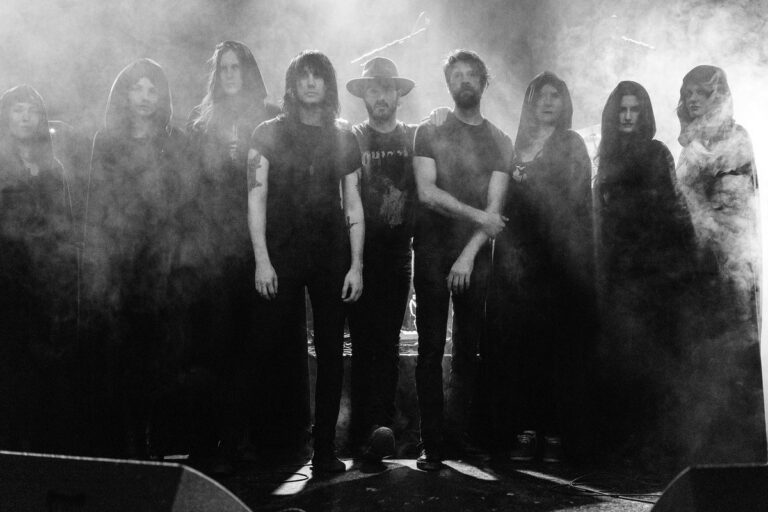
The word “zombie” is never used in director George A. Romero’s groundbreaking 1968 horror film Night of the Living Dead, yet the movie effectively invented the reanimated horror trope. Night of the Living Dead became a worldwide sensation, and Romero’s sequels, 1978’s Dawn of the Dead and 1985’s Day of the Dead, used the horror genre to offer biting social commentary amid the gore. All three films screen at the upcoming CULT Film Series tribute to the director, who passed away in July at the age of 77. Revisit the greatest hits from the godfather of the dead on Thursday, Sept. 7, at Roxy Stadium 14 Cinemas, 85 Santa Rosa Ave., Santa Rosa. 7pm. $10. 707.525.8909.

Sept. 9: Folk Creations in Napa

0

In addition to world-class wineries and five-star tourism destinations, Napa Valley is home to an eclectic assortment of folk artists and antiques dealers who come together for the 10th annual American Folk Art Festival this weekend. One-of-a-kind works, both vintage and contemporary, will be on display from dozens of creative and passionate vendors like designer Nicol Sayre and assemblage folk artist Susan Bartolucci. Wines, chocolates and baked goods sweeten the deal. A portion of proceeds benefits Napa nonprofit Lucky Penny Community Arts Center. Find fabulous folk art on Saturday, Sept. 9, at Madonna Estate Winery, 5400 Old Sonoma Road, Napa. 10am to 3pm. $10. americanfolkartfestival.com.

Sept. 9: A Decade on the River in Petaluma

0

When North Bay photographers Lance Kuehne and Jerrie Jerné Morago sought out a location for a high-end art gallery in Sonoma County, they searched high and low before coming upon the Riverfront Art Gallery, which marks a decade of showing art on the Petaluma River this month. Operating as a cooperative, the gallery exhibits works from nearly 20 artist members and special guests in rotating shows. This weekend, the Riverfront Art Gallery Ten-Year Anniversary showcases these artists in a gala reception with music by the Rivereens, drinks and art raffles and silent auctions to benefit Petaluma High School’s art department. Saturday, Sept. 9, at Riverfront Art Gallery, 132 Petaluma Blvd. N., Petaluma. 5pm. 707.775.4278.

Sept. 10: Two More Seasons in Healdsburg

0

From cooking in New York City to managing a farm in Maine to wowing the culinary scene in Portland, Ore., as executive chef and co-owner of Italian restaurant Ava Gene’s, Joshua McFadden has gained an appreciation for vegetables of every season. Now he shares these insights in a massive cookbook, ‘Six Seasons,’ which celebrates the ever-changing landscape of veggies throughout the calendar year. McFadden brings these recipes to the North Bay for a seasonal four-course meal and reading this weekend. Chef Perry Hoffman helps prepare the food and Sonoma’s Scribe Winery provides the vino, and every attendee gets a signed copy of the book on Sunday,
Sept. 10, at Healdsburg Shed, 25 North St., Healdsburg. 6pm. $125. 707.431.7433.

Brew by the Bay

0

The Tiburon Taps Beer Festival on Sept. 23 has a feature that many others might envy: breathtaking vistas of San Francisco, the Golden Gate Bridge and the bay. Just like craft beer, the views never get old.

Thrown every fall by the Ranch, through the Tiburon-Belvedere Joint Recreation Committee, the festival is a one-day extravaganza that welcomes numerous breweries, cideries and even coffee roasters from the Bay Area and beyond. And this year, “beyond” really means beyond, with representation from Scotland, courtesy of Auchentoshan, a single malt whisky brand.

“The festival began when I ran into my old friend and co-worker Cathleen Andreucci, the director of the Ranch, at a Starbucks,” says Jessica Hotchkiss, the youth recreation supervisor of the Ranch and the festival’s chair.

The Ranch offers fitness, language, technology and art classes for adults, sports activities and classes for youth and a variety of specialty summer camps.

“[Andreucci] said she wanted to throw a beer festival, and would I be interested in doing that. I said yes, and the rest is history!”

Going into its fourth year, Tiburon Taps brings together more than 30 vendors, including Magnolia Brewing Company in San Francisco, Lost Coast Brewery in Eureka and Adobe Creek Brewing in Novato. All will be offering samples alongside complimentary food stalls and entertainment.

For a venture that started as a conversation at a Starbucks, the festival has definitely outgrown its humble beginning. Last year, the festival sold out, with more than 1,300 attendees. Hotchkiss is responsible for “begging every brewery in Northern California to attend our event,” and with the abundance of beer events in the area to keep makers busy, the mission isn’t as easy as it may seem. “It takes me around six months to fill our brewery and beverage roster,” she says.

This year, her efforts brought on some interesting participants. “We are very excited to introduce new local Marin County brewers, Indian Valley Brewing, Rugged Coast Brewing and Adobe Creek Brewing,” Hotchkiss says. “Another big addition is Ballast Point Brewing & Spirits, out of San Diego. I truly appreciate all of the brewers that attend our event, as they are donating their time and beverages.”

The vendors are not the only ones donating—the festival is largely run by volunteers, and ticket sales help raise funds for scholaships at the Ranch.

The festivities, all part of the $45 ticket price ($20 for designated drivers), include music from cover band Neon Velvet, food, lawn games and the Best Brew contest. Front and center are the stunning views.

“I’d have to say our location is the best in the bay,” Hotchkiss says.”

Breaking Ground

0

It may not appear so, but the Sonoma Coast is moving, shaking and eroding into the ocean as two massive pieces of the earth’s crust interact along the San Andreas Fault.

Geologist Thomas Cochrane has spent 40 years studying the coastline from his home in Sea Ranch. Now he shares his insights in a new book, Shaping the Sonoma-Mendocino Coast: Exploring the Coastal Geology of Northern California.

Raised in rural New York, Cochrane spent 25 years working as a petroleum geologist in the flatlands of Oklahoma. He says he stumbled into living in the North Bay after he visited friends and fell in love with the redwood trees and the ocean views.

“I wasn’t here four hours and I bought a forest lot,” he says. Once he settled in Sea Ranch, he took to studying the local geology in earnest.

“What I noticed early on is there weren’t any detailed geology books on the coast here,” he says. Cochrane gathered his knowledge in the field, spending decades looking at rates of erosion and rock composition of the varied and sometimes unusual geographic patterns of the coast.

“I was motivated a couple years ago to sit down and put it all together, and to write a book that was accessible to the public rather than just to scientists,” Cochrane says. Made up of nine chapters and an appendix that acts as a road log, the new book offers a complete picture of the terrain and explains several of the coasts unusual formations.

Viewing the land on a geological time scale, Cochrane explains how the rugged terrain was formed. “Four million years ago, we were under the ocean, and now the area here has risen to 2,500 feet,” Cochrane says. “The land is rising.”

His book explores sea caves, sinkholes and coastal river watersheds. But not even Cochrane can explain everything, such as the bizarre Bowling Ball Beach north of Schooner Gulch in Mendocino County, named for the hundreds of smooth, rounded sandstone boulders that sit along the coast in six straight rows in a manner that almost looks intentional. “Someday we’ll figure it all out,” he laughs.

After dispensing with the scientific information, Cochrane’s new book lays out an 80-mile road log extending from Bodega Bay north to the unincorporated town of Elk. The reader is encouraged to day-trip to all the geological attractions, using mile markers to direct travelers to the best views.

The book also offers insight into the human impact on the coastline. “I think the value of a book like mine is to give people the knowledge of what’s here,” he says. “They can use that knowledge to take ownership of and protect the land.”

Bramble Ramble

0

The vocabulary of winetasting is unduly maligned.

But statements like that are easy to make—you can call the language that’s used at winetasting rooms and in printed tasting notes snobbish and obscurantist all you like, but that gets boring in good time, too. More fun and interesting is the question: how much more might you enjoy the wine you’re drinking if you forget about the notion that anyone is saying these are the “right” words to use when talking about wine, and instead free your mind to associate—ramble, if you will—in the real-world experience of aromas and flavors you can relate to?

Just take the descriptors “riparian” and “brambleberry,” for instance. A riparian zone is an area along a creek or river that’s typically thick with vegetation. A brambleberry is a berry, like a raspberry or blackberry, grown on a thorny bush that thrives in riparian zones—see where this is going?

As a descriptor for wine, brambleberry covers an experience that’s beyond any single berry—if a wine smells exactly like a market-fresh basket of raspberries, there’s no reason not to say just that. Late summer is the ideal time to get both words in your aroma repertoire.

Recently I took a bike ride on the West County Trail in the Green Valley of Russian River Valley appellation on a hot day. A section of the trail is unpaved as it skirts brambly thickets that cloak Atascadero Creek. Perhaps encouraged by extra soil moisture from the rains of last winter, blackberry bushes have offered a reprise crop of big, red, unripe berries, even while the extra heat of this summer turns their neighbors into inedible crisps before they can ripen. But even more are perfectly ripe and sweet; volatizing in the heat, they perfume the air, their aroma mingling with accents of stagnant water, green leaves and silty dust. That’s what I think of when I sample a wine that smells like that: fruity but earthy, not supermarket-fresh and not baked.

That being said, the most memorable Zinfandel I tasted lately was not riparian in the slightest: Frank Family Napa Valley Zinfandel ($37) has a frankly grapey liqueur, almost porty aroma—but note that port is not necessarily made from overly ripe grapes, and this wine, while sweetly suggesting baked figs and toasty Mexican chocolate, is neither cloying nor hot. Standout barbecue wine—but for teriyaki marinated steak or veggies, not burgers.

For burgers, go with the smoky, blackberry wine–scented Artezin 2015 Old Vine Mendocino Zinfandel ($18), or the green peppercorn-spiced and brambleberry-and-tomatillo-jam-flavored Cline 2015 Ancient Vines Lodi Zinfandel ($14.99).

Ah, the taste of summer.

London Fog

Was Karl Marx actually Jack the Ripper? If director Juan Carlos Medina’s Limehouse Golem doesn’t actually ask that question, it asks a similar one.

During a hunt for a murderer in 1880s London, the whiskery Marx is a suspect; one reenactment of the crime has him caped, glowering, talking straight to the camera in a slowed-down devil’s voice, before wielding a straight razor. Loads of right-wingers consider Marx to be history’s worst monster, but no one ever accused him of being a serial killer before.

The film is adapted from Peter Ackroyd’s tricky and literate 1994 novel, Dan Leno and the Limehouse Golem. The book told its story from several viewpoints; this version, scripted by Jane Goldman, is more straightforward, with a Holmes and Watson–like team on the case: John Kildare (Bill Nighy), a disliked police inspector, and Flood, a fleshy London copper (Daniel Mays) who has been on the hell-on-earth Limehouse beat for some time.

The investigation is catalyzed by the testimony of former music-hall star Lizzie Cree (Olivia Cooke), who faces the gallows for the accused arsenic murder of her husband, John (Sam Reid). Kildare suspects John of being a serial killer in a ghastly crime wave that included a young prostitute and an old Jewish scholar.

Medina’s eerie crimson and absinthe-green color scheme matches the painted backdrops of theater stages. In the context of a film about the stage copying life (and the other way around), it’s fine that the backdrops aren’t perfect illusions.

But the mystery’s revelation is unsatisfactory, with withheld evidence and reverse angles we didn’t get clues on first time around. The better actors here redeem the unlikely plot. Nighy’s role, in outline, is Holmes-like. But his Kildare is less competent than Sherlock, so he’s a tragic figure. Maybe he has a taste for this gaslight and madness material.

‘The Limehouse Golem’ is available on video on demand.

Spotlight on Sebastopol

0

Caitlin Hachmyer pairs farming with activism,
teaching

Farmers work famously long hours, especially right now as the growing season reaches its peak and harvest is in full swing. But Sebastopol farmer Caitlin Hachmyer packs more into a day than most.

Hachmyer, a fast-talking 33-year-old, runs Red H Farm, a small farm that sells produce to customers at the Sebastopol farmers market, to community supported agriculture subscribers and to Sebastopol’s Handline restaurant. She spent a recent Thursday harvesting early to beat the approach last weekend’s withering heat wave.

Hachmyer is a lead instructor at Farm School, a training program at Sebastopol’s Permaculture Artisans, where she also farms three-quarters of an acre. She teaches agroecology at Sonoma State University and she’s the host and organizer of a second annual conference on women in the food movement. This year’s all-day event, held Sept. 30 at Permaculture Artisans, will feature an international roster on the theme “Foundations and the Future: Celebrating Women’s Leadership in the Food Movement.”

On top of all that, Hachmyer is an outspoken advocate for small farmers in Sonoma County and, in particular, the need for land reform. Land reform is typically associated with developing countries where wealthy landowners hold vast swaths of land and peasants eke out an existence on the margins as tenant farmers. But the situation is not so different here, she says, where the high cost of land means most farmers rent instead of own, making them vulnerable when landlords jack up the rent or fail to renew leases.

Small-scale farmers in Sonoma County suffer from rural gentrification, a case Hachmyer makes in Land Justice:
Re-Imagining Land, Food, and the Commons in the United States
, an inspiring new book just published by the Oakland-based nonprofit Food First, where Hachmyer worked as an intern. As a remedy, she calls for making public land available to farmers and developing incubator farms, steps aimed at creating “community-level investment” in the food system and the development of commonly held land as a check against the dictates of private property.

Hachmyer didn’t start out wanting to farm, but sees her work as a bridge between advocacy and agriculture, which, she says, are too often viewed as two separate worlds. It was studying anthropology and political ecology at UC Berkeley that opened her eyes to the efficacy of sustainable agriculture as a tool of social justice. Rather than limit her understanding of agriculture to books, she worked as an apprentice at a farm in Minnesota while also interning at Food First and the Community Alliance with Family Farmers. “My introduction into agriculture was through a political lens,” she says.

When Hachmyer emerged from school ready to apply her academic and grassroots knowhow, the Great Recession was just starting and no jobs were forthcoming. So she turned to farming by necessity. She worked on a biodynamic farm in France before she decided to work an acre of land at her childhood home in southern Sebastopol. “I thought, ‘I have this land, and I might as well give it a shot.'”

Hachmyer has strong views and doesn’t sugarcoat them. She chose farming because, she says, she wouldn’t have to make “moral compromises.” She does most of the work herself because she can’t afford to pay a living wage for full-time help.

In spite of fatigue, a sometimes aching back and concerns for her financial future, Hachmyer is committed to farming.

“I can’t imagine not farming now,” she says. “I don’t even know how to grocery-shop anymore.”

More information about the Sept. 30 ‘Foundations and the Future’ conference can be found at foundationsandthefuture.wordpress.com.

[page]

THINGS TO DO IN SEBASTOPOL

Indulgence: Taste West Sonoma

Formed over the summer, the new winery collective Taste West Sonoma is an assortment of vineyards and estates dedicated to promoting and appreciating the bounty of wine that can be found in west Sonoma County. This month, Taste West Sonoma is putting the spotlight on nearly a dozen of those wineries at the inaugural Indulgence: Taste West Sonoma event at the Barlow Event Center. For the occasion, TWS is partnering with the avant-garde nonprofit the Russian River Sisters of Perpetual Indulgence. While the sisters spread goodwill and cheer with a schedule of theatrical fun and games, wineries like Claypool Cellars, Halleck Vineyard, Iron Horse Vineyards, Red Car Wines and others show off their spoils of viticulture selections. Live music, auctions and appetizers prepared by Worth Our Weight nonprofit culinary training organization complete the offerings. Proceeds will go back to the community in scholarship programs for graduating students at West Sonoma County high schools. Saturday, Sept. 16, Barlow Event Center, 6770 McKinley Ave., Sebastopol. VIP admission, noon; general admission, 1pm. $75–$125. rrsisters.org.

Harvest Hoedown 2017

Nonprofit mental-health organization LifeWorks of Sonoma County is dedicated to helping families and individuals make positive life experiences through counseling and education. Every year, the helping hands at LifeWorks cut loose in the country, when they host the rollicking Harvest Hoedown Event at one of Sebastopol’s most picturesque ranches. Get to the hoedown early for the opening cocktail reception, featuring folk delights from San Francisco world music trio Wry Rovers. Then, choose from a sumptuous spread including Napa Slaw Sliders, fried chicken and filets cooked with wild mushrooms. Stay for the silent and live auctions, boasting international trips and local adventures. Then dance into the night with the sounds of the Old Boots Band to cap off the country-western extravaganza. Saturday,
Sept. 16, Trappe Family Ranch, 12620 Bodega Hwy., Sebastopol. 4:30pm. $100 and up. lifeworkssc.org.

Harvest of the Heart

Delivering nourishing meals to seriously ill residents and empowering teens through garden and kitchen programs, Ceres Community Project inspires, heals and cares with communal heart. Now, the community is welcome to share in the love with the Harvest of the Heart fundraiser at Ceres’ garden in Sebastopol. The evening features a local, seasonal feast prepared by popular Sonoma County chefs and served under the stars among the beauty of the garden’s natural wonders. Live music and silent auctions open the festivities and a live auction promises world-class offerings. Saturday, Sept. 16, Ceres Community Garden, 1005 N. Gravenstein Hwy., Sebastopol. 5pm. $150. ceresproject.org.

Luther Burbank’s Experiment Farm Open House & Plant Sale

In addition to crafting new plant species at his home in Santa Rosa, famed Sonoma County botanist Luther Burbank made like a floral Dr. Frankenstein at a farm in Sebastopol, where nearly a thousand species of plants, trees and shrubs were developed on the 15-acre property atop Gold Ridge. Today, that farm is still thriving thanks to the efforts of the Western Sonoma County Historical Society, who host the annual Luther Burbank’s Experiment Farm Open House & Plant Sale this month. History comes alive as docents lead guests on tours of the farm, highlighting not only the variety of plants on hand, but revealing Burbank’s story with accounts of his successes and influences. The farm’s cottage is open and filled with a photographic display from Burbank’s heyday, and kids’ activities will keep the young ones engaged while the adults peruse the nursery for a wide selection of plants to take back to their own gardens. Saturday–Sunday, Sept. 23–24, 7777 Bodega Ave., Sebastopol. 10am–4pm both days. Free admission. wschsgrf.org.

Sonoma County Art Trails Preview Exhibit

Autumn in Sonoma County brings with it Art Trails. For two weekends each October, art lovers can take self-guided tours to dozens of Sonoma County artists’ homes and studios for an up-close look at new art and works in progress. In addition to the Art Trails weekends, taking place Oct. 14–15 and Oct. 21–22, local enthusiasts can flock to the Sonoma County Art Trails Preview Exhibit, happening at the Sebastopol Center for the Arts, who spearhead the annual affair. Get a glimpse at the abundance of art being produced in the county at the exhibit, which boasts a piece from each of the nearly 100 participating artists and runs through Oct. 22. Opening reception is Thursday, Sept. 28, at Sebastopol center for the Arts, 282 S. High St., Sebastopol. 6–8pm. Free. sebarts.org.

Going to Pot?

‘But what about the kids?” Most of us drug-policy reformers have been asked this question (or one like it) by a well-meaning adult concerned that marijuana legalization sends the “wrong message” to our youth.

We get it. People worry that legalization could lead young people to start using marijuana at an earlier age or make it more socially acceptable for them to use.

A study published on Aug. 17 in the Journal of Substance Use and Misuse, with data out of Colorado, adds to the growing body of literature which could allay some of these fears. The researchers were curious about whether the onset of retail marijuana sales in Colorado in 2014 had an impact on adolescent use, attitudes towards marijuana and access to marijuana. They analyzed responses from over 20,000 public middle and high school students who completed the Healthy Kids Colorado Survey (HKCS) and compared their 2013 responses to their 2014 responses in order to detect any possible changes.

So what did they find? There was no sudden increase in reported rates of marijuana use after retail sales began in 2014. Rates remained essentially the same as 2013. The portion of adolescents who thought that smoking marijuana was harmful also did not change. The majority of the sample (over 60 percent) continued to believe it was wrong for young people to use marijuana. And, although slightly more students said they could “easily” get access to marijuana in 2014, the researchers found that having a marijuana store within two miles of the school could not explain this increase in perceived access.

Interestingly, the study’s results diverge from research in the areas of alcohol and tobacco, which has long suggested that stores which sell these products close to schools are associated with increased use among students. It didn’t appear to be the case for marijuana in Colorado in 2014.

As the country continues to weigh the benefits and risks of marijuana legalization, studies such as these that track the impact on adolescent attitudes and behaviors are critical. We know that prohibition has been harmful to youth, particularly young people of color. With less risk of criminal justice involvement and no increase in rates of youth, for now anyway, it seems that the kids are all right indeed.

This piece first appeared on the Drug Policy Alliance blog. Sheila P. Vakharia is the policy manager of the Office of Academic Engagement for the Drug Policy Alliance.

Sept. 7: They’re Coming to Get You in Santa Rosa

The word “zombie” is never used in director George A. Romero’s groundbreaking 1968 horror film Night of the Living Dead, yet the movie effectively invented the reanimated horror trope. Night of the Living Dead became a worldwide sensation, and Romero’s sequels, 1978’s Dawn of the Dead and 1985’s Day of the Dead, used the horror genre to offer biting...

Sept. 9: Folk Creations in Napa

In addition to world-class wineries and five-star tourism destinations, Napa Valley is home to an eclectic assortment of folk artists and antiques dealers who come together for the 10th annual American Folk Art Festival this weekend. One-of-a-kind works, both vintage and contemporary, will be on display from dozens of creative and passionate vendors like designer Nicol Sayre and assemblage...

Sept. 9: A Decade on the River in Petaluma

When North Bay photographers Lance Kuehne and Jerrie Jerné Morago sought out a location for a high-end art gallery in Sonoma County, they searched high and low before coming upon the Riverfront Art Gallery, which marks a decade of showing art on the Petaluma River this month. Operating as a cooperative, the gallery exhibits works from nearly 20 artist...

Sept. 10: Two More Seasons in Healdsburg

From cooking in New York City to managing a farm in Maine to wowing the culinary scene in Portland, Ore., as executive chef and co-owner of Italian restaurant Ava Gene’s, Joshua McFadden has gained an appreciation for vegetables of every season. Now he shares these insights in a massive cookbook, ‘Six Seasons,’ which celebrates the ever-changing landscape of veggies...

Brew by the Bay

The Tiburon Taps Beer Festival on Sept. 23 has a feature that many others might envy: breathtaking vistas of San Francisco, the Golden Gate Bridge and the bay. Just like craft beer, the views never get old. Thrown every fall by the Ranch, through the Tiburon-Belvedere Joint Recreation Committee, the festival is a one-day extravaganza that welcomes numerous breweries, cideries...

Breaking Ground

It may not appear so, but the Sonoma Coast is moving, shaking and eroding into the ocean as two massive pieces of the earth's crust interact along the San Andreas Fault. Geologist Thomas Cochrane has spent 40 years studying the coastline from his home in Sea Ranch. Now he shares his insights in a new book, Shaping the Sonoma-Mendocino Coast:...

Bramble Ramble

The vocabulary of winetasting is unduly maligned. But statements like that are easy to make—you can call the language that's used at winetasting rooms and in printed tasting notes snobbish and obscurantist all you like, but that gets boring in good time, too. More fun and interesting is the question: how much more might you enjoy the wine you're drinking...

London Fog

Was Karl Marx actually Jack the Ripper? If director Juan Carlos Medina's Limehouse Golem doesn't actually ask that question, it asks a similar one. During a hunt for a murderer in 1880s London, the whiskery Marx is a suspect; one reenactment of the crime has him caped, glowering, talking straight to the camera in a slowed-down devil's voice, before wielding...

Spotlight on Sebastopol

Caitlin Hachmyer pairs farming with activism, teaching Farmers work famously long hours, especially right now as the growing season reaches its peak and harvest is in full swing. But Sebastopol farmer Caitlin Hachmyer packs more into a day than most. Hachmyer, a fast-talking 33-year-old, runs Red H Farm, a small farm that sells produce to customers at the Sebastopol farmers market,...

Going to Pot?

'But what about the kids?" Most of us drug-policy reformers have been asked this question (or one like it) by a well-meaning adult concerned that marijuana legalization sends the "wrong message" to our youth. We get it. People worry that legalization could lead young people to start using marijuana at an earlier age or make it more socially acceptable for...
11,084FansLike
4,446FollowersFollow
6,928FollowersFollow