Rock Therapy

0

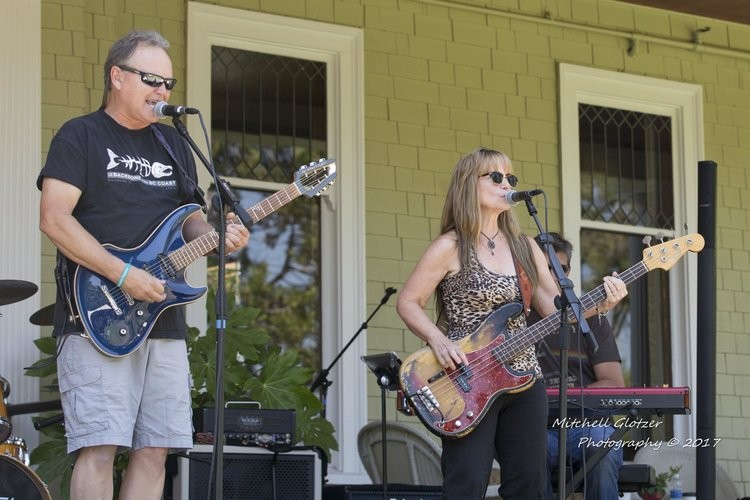
Singer-songwriter and multi-instrumentalist Joanne Rand has zigzagged across the country for the last 30 years, living in places like Atlanta (her hometown), Chicago, New Mexico, the North Bay, the Pacific Northwest and Arcata, where she lives today. Throughout it all, she still calls Sonoma County her “crucible.”

“It was the place where I was held by the community,” Rand says. “They supported me, they got me, and they understood what I wrote more than any place I ever lived. I still feel like that.”

Rand first moved to Sonoma County in 1990 after meeting guitarist Steve Kimock and relocating to play music with him. By then, she was already an accomplished performer, whose brand of psychedelic folk is a mixture of childhood favorites like Joni Mitchell and Pink Floyd. “I quit piano lessons because my piano teacher wouldn’t teach me

Dark Side of the Moon,” laughs Rand.

While living in Sonoma County in the ’90s, she formed Joanne Rand & the Little Big Band to wide acclaim. Today, Rand still works with North Bay producer Stephen Hart, with whom she’s released seven full-length albums in the last seven years.

“The songs just keep coming through,” Rand says. “I thought I was self-indulgent to keep making these albums, but I couldn’t stop myself. I got depressed if I couldn’t do it.”

For Rand, writing songs is her way of staying mentally and spiritually connected with the world around her. “I’m connected to whatever’s feeding me the songs, I’m connected to [the audience] who’s listening and giving back that energy,” Rand says. “It’s unifying.”

Rand’s latest album, Roses in the Snow & Drought, is filled with songs that reflect her diverse approach to songwriting. Some tracks are personal, written in response to current events or family matters; others are universally relatable stories of humanity and morality. Some are written in the style of long-held folk traditions, and others are extended dance jams that let the guitars wander.

This week, Rand makes her way back to Sonoma County for a show at the Redwood Cafe in Cotati that she’s dedicating to her longtime drummer Bradley D. Cox, who’s undergoing treatment for cancer. Joined by violinist Rob Diggins and guitarist Piet Dalmolen, Rand will play music from her latest album and revive older material.

“I want [the show] to be a journey.”

On the Hunt

0

Director, producer, writer and actor Marshall Cook has spent the last decade making commercials and films in Los Angeles, though he got his start on stages and behind cameras while growing up in Santa Rosa and attending Cardinal Newman High School.

“There actually wasn’t a theater department at Newman; you had to do it at Ursuline, the girls’ school,” Cook says. “And even then I had to play five male parts because it wasn’t terribly popular.”

Also an athlete, Cook attended Occidental College in Southern California, majoring in film and playing football. In 2003, he started landing small roles in movies like Jeepers Creepers 2 and television shows like JAG. He also began writing, directing and producing his own films, eventually matching his love of film and football in the 2011 feature, Division III: Football’s Finest, an ensemble comedy about a football team at a small liberal arts college.

That film was the first time Cook worked with Zack Wilcox, who set up lights as a gaffer. Last year, when Wilcox was casting his directorial debut, a survival drama titled Hunting Lands, he tapped Cook to star in the lead role. This week, Wilcox, Cook and other members of the film’s cast and crew premiere Hunting Lands with a special screening on March 4 at Santa Rosa’s Roxy Stadium 14.

“I think this is actually the first movie where I’m the lead actor and have zero to do with the writing or directing,” says Cook, whose production company, Convoy Entertainment, creates broadcast and digital content for several companies.

In Hunting Lands, Cook portrays an isolated war veteran whose attempt to escape society by living in the woods unravels when he finds a body on his property and becomes entangled in a game of cat-and-mouse with an unknown enemy.

For the March 4 screening, Cook will offers his insights with North Bay movie fans and filmmakers. “Hopefully, we can share our experience,” Cook says, “and pull back the curtain a bit on indie filmmaking.”

‘Hunting Lands’ screens on Sunday, March 4, at Roxy Stadium 14,
85 Santa Rosa Ave., Santa Rosa. 7pm. $6. 707.525.8909.

Nouveau Quiche

0

I like quiche, I don’t care what they say—and what was it they said about quiche?

Much has changed since a snarky scribe wrote the bestselling Real Men Don’t Eat Quiche: A Guidebook to All That Is Truly Masculine in 1982. The dish became collateral damage against a backdrop of changing gender roles, the questioning of men’s privilege in the workplace and a political swing to the right after a disoriented American public elected a strongman-type television personality who promised to bring back the nation’s past glories. I know, it seems like a long time ago. But how’s the quiche doing today?

“I don’t think the millennials know about that,” the Girl & the Fig founder Sondra Bernstein says of the authenticity-driven male embargo. “We sell a ton of quiche—I don’t think it’s a gender thing anymore.” As of December, the restaurant had sold an estimated 8,000 slices of their light and fluffy quiche in 2017.

These days, few people who have heard of the don’t-eat edict can identify its origin as the title of a satirical book that was, like much satire, mistaken for an instruction manual. Indeed, author Bruce Feirstein anticipated the objection that few men would refuse a helping of “cheese-and-egg pie,” without the Gallic taint (quiche, née küche, actually comes from German cuisine, a sidekick to bratwurst and beer).

It sure was lost in translation for French-born Alain Pisan. “I remember when my wife first told me about this expression,” the chef recalls, “it made me laugh at the silliness of it. Fortunately, we haven’t seen many men rebelling against quiche for the past two decades.” Quiche made from a family recipe was a popular item at Chloe’s French Café, the Santa Rosa eatery that Pisan cofounded and closed due to the 2017 fires. “Its popularity continues with our catering operation,” he says.

Cheese educator Lynne Devereux reminds me that quiche got a bad rap during a reputedly health-conscious decade, when many women traded the quiche and salad brunch for, well, salad.

“It’s part of that fat phobia that reigned in the ’80s,” says Devereux. “It’s glistening on the top because all the oils of the cheese have come to the top and made it all shiny. There’s fat in the crust—there’s fat in the filling! So it kind of became one of those ‘bad’ foods.”

That’s all good for Jean-Charles Boisset, a red-blooded captain of industry. “I think quiche can be a textural, sensual, seductive experience,” Boisset days. “And I love the word ‘quiche,'” Boisset enthuses. “Your lips move forward—you could even kiss the wall, or your plate. I used to kiss my plate.”

OK—I should have said “red-sock-wearing,” and clarified we’re talking about the wine industry here. But Boisset, who is perhaps California’s best-known Frenchman, knows of what he speaks, having fond memories of quiche and other season-to-table foods made by his mother and grandmother in Vougeot, Burgundy.

Boisset recommends pairing quiche with a rich Chardonnay or Pinot Noir made with Gruyère or Emmental, then finished with French Comté cheese aged 18 months. “You do that, and you’re gonna have an orgasmic experience,” Boisset says.

[page]

Winter Mushroom Crust Quiche

I merged two recipes to make this one, mixing it up with local ingredients. I’m thinking that, because it’s still winter, a savory quiche which was a favorite on my family’s table years ago fits the seasonal bill: it’s made with a crust of mushrooms rather than pastry.

This quiche doesn’t need meat to feel hearty, but I’ll add more mushrooms to the filling, and some kale that’s happily overwintering in my garden for a healthy dose of greens—and on a hunch that kale will add less water than chard or spinach when it cooks.

The main hitch in sourcing local cheese is that there’s no Emmental-equivalent made here—local creameries with Swiss-Italian heritage, like Valley Ford, make an Italian mountain-style cheese, while Bernstein uses Joe Matos St. George.

The mushroom crust lends the dish to easy gluten-free conversion. I made serviceable breadcrumbs by drying a gluten-free burger bun in the oven, then spinning it in the food processor. One great feature of quiche is that you can wing it a bit and turn out a perfectly edible pie. But I did not go so far as to imagine a vegan version. I mean, quelle horreur!

Ingredients

8 ounces cremini mushrooms

1/2 c. bread crumbs

2 tbsp. ground flaxseed

5 tbsp. butter or olive oil

8 ounces Bellwether Farms sheep milk ricotta (or substitute plain sheep milk yogurt)

1 c. shredded cheese: Point Reyes Toma, Valley Ford Estero Gold (substitute Beaufort, Emmental, Gruyère)

3 medium-large eggs

2 shallots, diced

1 c. chopped lacinato “dinosaur” kale

4 ounces oyster or other farmers market mushroom

1/2 tsp. horseradish

1/2 tsp. thyme leaves

Preparation

Mince mushrooms. Sauté in 3 tablespoons of butter or oil about 5 minutes. Mix with bread crumbs and flaxseed, and press mixture into a greased nine-inch pie pan. This is the hard part. You’ll question the exercise: how can something so poorly executed and futile be effeminate? You’re closer than you think: fill in the gaps, stick with it, or use more mushrooms and crumbs in the recipe to ensure the pan’s covered.

For the filling, beat eggs, mix with ricotta or yogurt and herbs. Add a few ounces half-and-half if the mixture doesn’t seem pourable. In skillet, sauté shallots and sliced specialty mushrooms with remaining butter or oil. Then either layer with kale on the crust and pour mixture over, or fold veggies into the mixture, then pour.

Bake 30-45 minutes at 375 degrees should do it. Stick a fork in it, man!

Road Ration

0

Open as of late September,
2 Tread had been scheduled for an April 2017 opening but was delayed by, among other things, recurrent rain (remember that?) that stymied patio construction. Set just inside the Santa Rosa Plaza, “between the hand and the rock,” as the company says, 2 Tread opens to the outdoors in a way that few businesses in the retail redoubt ever have—to Santa Rosa’s busy B Street, in this case, but it does afford easy access by bike (the tread thing—yes, it is a bike-themed brewpub). Serving as a whole section of the fence around the outdoor seating is a series of sturdy, metal loops to lock up to.

Better yet, just inside the door is a rare yet welcome sight for cyclists: a row of bike hooks installed on the wall. Riders can keep an eye on their gear when they’ve left the heavy bike lock at home to trim weight, which will come in handy considering the 32 ounces a couple of beers will add.

That house brew is only just now flowing from taps, says our server, who is friendly, prompt and helpful with the pub’s story so far. Brewer Christian August, who formerly brewed at Firestone Walker and founded 2 Tread with locals Bill Drury and Tracy Heydorn, is making batches titled “experimental,” instead of rushing to fill the menu with catchily titled brews, because every new brewery setup has unique characteristics that won’t duplicate ready-made recipes, according to the exacting brewer.

Other pours come from a roster of mostly local, mostly newer-on-the-scene breweries like Seismic and Barrel Brothers, and, like it or not, there’s a full bar of cocktails and booze available.

2 Tread’s Experimental Hoppy Pale Ale #1 ($5) was the best I tried for its fruity hop aroma and juicy, stone fruit flavor. Once the food was served, the grainy, dry and bitter-hopped, but less aromatic, Experimental IPA #2 ($5) made a better match with a 2 Tread Angus beef burger ($14), which was pretty tasty and comes with a choice of sides. Fries are thick-cut style and crisp; other entrées include pizza ($15), street tacos ($9) and small bites ($6). Compiling a list of the best fried shishito peppers, that now-ubiquitous trendy side, in the area? Yes, add this one to your list.

2 Tread Brewing Company, 1018 Santa Rosa Plaza, Santa Rosa. Open daily, 11am–10pm. 707.327.2822.

This story has been updated to reflect a correction.

Pot Bust

The vast majority of California’s marijuana growers have yet to move into the state’s new legal regulatory framework, leaving big questions looming around whether they can survive in the brave new world of legal weed, whether a substantial illicit market will remain and whether that anticipated tax revenue windfall will actually materialize.

According to a report released Feb. 19 by the California Growers Association, representing mainly small-scale growers across the state, fewer than 1 percent of growers have been licensed so far. That’s a measly 534 licensed growers out of an estimated 68,000 in the state.

The report, “An Emerging Crisis: Barriers to Entry in California Cannabis,” identifies a number of obstacles for small producers, and warns that those issues must be addressed if participation is to increase and a post-legalization police crackdown avoided.

“Without broad participation, legalization will look a lot like prohibition” with many illicit growers, the report concludes. “The current system will not achieve its goals without fundamental and structural changes that allow small and independent businesses to enter into compliance.”

Obstacles to participation include lack of access to the financial sector, the high costs of complying with regulatory and tax burdens, state regulations that seem perversely designed to weed out small competitors, slow-moving or sometimes hostile local governments and a saturated market.

As one Sonoma County cultivator put it in the report: “The unintended consequence of making it so difficult at the local and state level to enter the regulated market is that 80–90 percent of those who were working with dispensaries prior to Jan.1, 2018, are being pushed to the black market. This is not only bad for the regulated market, because so much high-quality product is now flooding into the black market,
but crime is increasing as a result as well.

State and local governments need to make course corrections, “or else a staggering number of businesses will fail, while staggeringly few [will] enjoy significant growth,” the report warned. “Many of the best growers—the most dedicated and passionate artisans who can add tremendous value to the state marketplace—are the ones being left behind.”

Quick action to make California’s legal markets more friendly to small producers may eventually entice more to fight their way into the regulated pot economy, but it’s going to take the end of pot prohibition in the rest of the country to end California’s black market pot exports.

Phillip Smith is editor of the ‘Drug War Chronicle.’

Life After Fire

Every weekend since December, the Sonoma Ecology Center has been leading hikes into local wildlands to see how they are faring after the Tubbs and Nuns fires whipped through Sonoma Valley.

The free hikes are popular, with 20 to 30 participants showing up every time for the two- to three-mile venture around Suttonfield Lake at the Sonoma Developmental Center, or 3,200 feet up Bald Mountain at Sugarloaf Ridge State Park and other properties.

“The bad news about the fires is very evident and reinforced through the media and personal experience,” says Caitlin Cornwall, a biologist and research program director at the Sonoma Ecology Center (SEC). “We’re doing the walks to give people a more nuanced experience of what fire means. You have to experience the rebound of the land before you can believe this is a true aspect of the fires.”

We are sitting outside the SEC offices on a prematurely warm day, accompanied by a woodpecker tapping overhead and the call of various birds.

“It’s difficult for people to hold in their heads and hearts that fires are frightening, and also beneficial and necessary. We’re looking to a future where it’s normal to see regular active management of wildlands. The idea that land should be left untouched shows a lack of understanding of what the land needs. The land needs us and we need the land. That is the message that has come from the Native American people.”

At Sugarloaf, the fire burned
80 percent of the 3,300-acre property. Since the fires, park staff have removed more than 60 downed trees and repaired burned-out steps, installed new retaining walls and creek bridges. Now the risk of landslides, higher here than anywhere in the county, is the top concern, says park manager John Roney. But there has been very little rain since November.

As we clamber up a trail toward Bald Mountain, the highest point in the park, it does appear, despite the chill wind, that the land is breathing more freely. We’re headed for the chaparral ecosystem near the top of the mountain, the domain of a large variety of shrubs and plants subject to frequent wildfire. For two months after the Tubbs fire, the land was completely black. Most of the chamise was seared to its bare trunk. The few trees, mostly manzanita and madrone, were black and bare too.

“It was a moonscape,” says Cornwall, who visited the area as soon as it was safe to do so. It wasn’t until early February that Sugarloaf could welcome visitors.

The first rain brought a smooth, green carpet of fresh grass, appearing all the more brilliant in the absence of the dead grasses destroyed by fire.

About halfway up the mountain, we find ourselves in a beautiful open meadow surrounded by hills. “You can see the fire line here,” Cornwall says. On one side, a field of mixed grasses; adjacent to it, a brilliant green field where the fire had been.

I return the next day and catch a ride to the top with a park steward. As we drive through the cattle gate on the narrow fire road, the vista that spreads before me is unlike anything I have seen before.

Nearly five months since the firestorm, it’s an eerie sight. Areas once dense with bushes and undergrowth are nothing but blackened hardpan with the charred remains of the plants. The fire was so hot in some places trees vaporized, leaving a skeleton of white ashes on the ground. The stale smell of burnt vegetation still lingers in the air.

However, signs of life are visible. Little clusters of plants have emerged. The delicate white flowers of Fremont’s star lily, a bulb rarely seen here, are abundant. Little shoots of other plants are visible, among them the wavy leaf soap root, whispering bells and purple needle grass. These bulbs and seeds have evolved to bloom in the higher temperatures.

Other plants find unusual ways to germinate. Madrones that looked completely burned are resprouting from the canopy, proof that trees that appear dead probably aren’t.

[page]

Coast live oaks are sending out new leaves from along their branches, not the usual way to sprout, Cornwall says. “Leaves normally sprout from the tips,” she says. “The tips release a hormone that inhibits growth in other parts of the tree, but since the tips burned, they no longer produce the hormone. The phenomenon is similar to what you see when you prune your fruit trees—leaves start to appear on the branches.”

Another shrub, the toyon, is sprouting new leaves from the burl at its base instead of from the burnt branch tips.

The most common chaparral plant is the chamise, whose seeds have adapted to sprout only after the higher temperatures of fire. Feathery seedlings of chamise are already in view.

Some plants sprout from their roots. The fire’s heat penetrates only an inch of the soil, and the root system beneath may be intact beneath a blackened trunk that appears dead, but often the root system, which is wider than the canopy, has survived. Hence most trees should not be removed unless they are dangerous. Some oaks will take three to six years to reveal that they are alive.

Even dead trees are useful, providing habitat for creatures like the endangered spotted owl, a native of these forests, while fallen tree trunks, left to rot, produce insects, bacteria and fungi that other animals eat.

Chaparral has adapted to fire, which naturally occurs every 30 years or so. But if fires occur more often, as is happening due to human activity, the seeds will lose the ability to sprout, according to the California Chaparral Institute. Wild grasses, which are much more flammable, will start to take over.

Because of the danger of accumulated undergrowth and cramped trees, Cornwall supports prescribed burns.

“The plant community produces more biomass and more biodiversity when there are fewer stunted, crowded plants,” she says. “Ash fertilizes soil. Fire stimulates the growth of bulbs and reduces the cover of nonnative grasses.” There are exceptions, though. “If their needles burn, Douglas firs won’t come back. Neither will bay trees.”

In a landscape where fires are a natural feature, prescribed burns would make us safer. Insurance companies, however, don’t agree. Cornwall says that’s understandable, though she hopes the industry will flip from “not insuring properties that do burns to not insuring properties where burns are not done.”

A recent study by the Little Hoover Commission, an independent state oversight agency, supports Cornwall’s view. Its report, “Fire on the Mountain: Rethinking Forest Management in the Sierra Nevada,” concludes that “California’s forests suffer from neglect and mismanagement, resulting in overcrowding that leaves them susceptible to disease, insects and wildfire.”

One hundred twenty-nine million trees have died in California forests during drought and bark beetle infestations since 2010, which represents a significant fire hazard. Instead of focusing almost solely on fire suppression, the report states, the state must institute wide-scale controlled burns and other strategic measures as a tool to reinvigorate forests, inhibit firestorms and help protect air and water quality.

“Dead trees due to drought and a century of forest mismanagement have devastated scenic landscapes throughout the Sierra range,” says Little Hoover Commission chair Pedro Nava. “Rural counties and homeowners alike are staggering under the financial impacts of removing them. We have catastrophe-scale fire danger throughout our unhealthy forests and a growing financial burden for all taxpayers and government like California has never seen.”

Plants grow back; houses don’t. A visit to Bald Mountain is a powerful experience, but it is also a reminder: like so much else going on in our world today, the threats appear to be moving toward us faster than our willingness to confront them.

Fire hikes will continue through June, when the wildflower display will be at its peak. Check the calendar at sonomaecologycenter.org for the schedule.

Stephanie Hiller is a freelance writer and Santa Rosa Junior College adjunct instructor. She lives in Sonoma.

Huffman Signs On for Impeachment

U.S. Rep. Jared Huffman has signed on as a co-sponsor to Articles of Impeachment introduced in Congress against Donald Trump, his office reports today. The articles have been written up by Tennessee Democrat Steve Cohen, who is the ranking member of the House Judiciary Subcommittee on the Constitution and Civil Justice. The articles lay out five areas where the lawmakers say Trump has abused his power, as it hits on collusion, corruption and the reality-show president’s violently mocking disdain for the fourth estate, especially when it comes to his obsession with female news anchors’ bodily fluids.

The North Bay Democrat says in a statement:

“Every member of the House of Representatives pledges to support and defend the Constitution of the United States when we are sworn into office. That carries with it the responsibility to provide checks and balances on executive power, and in exceptional circumstances, to impeach a President who has violated the law or abused power to the serious detriment of our country.”

“I’m cosponsoring Rep. Cohen’s articles of impeachment because they focus on the most serious and egregious examples of President Trump’s impeachable actions—his obstruction of justice, his unprecedented conflicts of interest, his unwillingness or inability to credibly and forthrightly address Russia’s interference in the 2016 election, and his recklessness with matters of national security. President Trump has shown contempt for the institutions and safeguards that are essential to the rule of law and the proper functioning of our democracy. That is precisely the situation that the rare remedy of impeachment was intended to address.”

Here’s a summary of the articles of impeachment:

[pdf-1]

Contractor who Set Out to Rebuild First Post-Fire House—Rebuilds First Post-Fire House

Back in November I wrote about Dan Bradford, a Coffey Park resident who lost his home to the Tubbs fire and who’d gotten caught up in some red tape over the cleanup of his property. Bradford had hired his friend Mark Mitchell—who, as he had done in Lake County, wanted to be the first contractor to swing the first hammer signaling the first house was being rebuilt after the October fires.
Well, wouldn’t you know it but I just read in the local daily newspaper that Bradford’s house is indeed the first one being rebuilt in Coffey Park. That’s great news.

ReCANstruction comes to the Coddingtown Mall

The Redwood Empire Food Bank is hosting a great and timely charity art competition at the Coddingtown Mall that kicks off tomorrow (Saturday 2/24) from 10am to 3pm. ReCANstruction, says REFB in a release, brings together students, businesses and architects to design sculptures made from canned goods that will eventually go to feed hungry folks around the county. The judging begins at 1pm and the panel includes a trio of local heroes from the recent fires: Santa Rosa fire chief Tony Gossner; volunteer fire chief Mike Mikelson and, according to REFB, 13-year-old REFB Food Drive champion, Memphis Roetter. When the competition’s over on March 2, the sculptures will be dismantled and all canned goods will be send to the food bank’s warehouse, which provides meals for some 82,000 families and seniors throughout the county. Participants include the Sonoma Country Day School, ZFA Structural Engineer, Wright Contracting and others.

NPR Tiny Desk Contest Coming to Sonoma County

0

TDC_Press Release
Calling all North Bay musicians, NPR’s massively popular Tiny Desk Contest is on for 2018.  Now in its fourth year, the nationwide contest for unsigned bands and artists is an opportunity like no other. Simply make a video of yourself performing an original tune while sitting at a desk in the style of NPR’s longrunning Tiny Desk Concert series, upload it to YouTube and submit it as an entry. Winners will have the chance to tour the country, and this year, the tour stops in Sonoma County for the first time with a performance at Lagunitas Tap Room in Petaluma.
Now, maybe it’s just me, a humble North Bay native; but how cool would it be for a local band to be on that stage when NPR comes to town? Tiny Desk contest winners in past years have gone on to perform for sold-out crowds around the world, and Oakland’s Fantastic Negrito even picked up a Grammy Award after winning the contest in 2015.
If you don’t win the grand prize, submitting artists have still been featured on NPR Music’s All Songs Considered blog as well as Tiny Desk supercut videos and the like. If you’re a band that has submitted in past years, you can do it again, just pick a new song. Also, creativity is encouraged, so the concept of a “desk” to perform at can be stretched in any number of ways.
Unsigned bands and musicians can submit videos now through Sunday, March 25 at 11:59 p.m. ET at NPR.org/tinydeskcontest. Please see website for official rules.

Rock Therapy

Singer-songwriter and multi-instrumentalist Joanne Rand has zigzagged across the country for the last 30 years, living in places like Atlanta (her hometown), Chicago, New Mexico, the North Bay, the Pacific Northwest and Arcata, where she lives today. Throughout it all, she still calls Sonoma County her "crucible." "It was the place where I was held by the community," Rand says....

On the Hunt

Director, producer, writer and actor Marshall Cook has spent the last decade making commercials and films in Los Angeles, though he got his start on stages and behind cameras while growing up in Santa Rosa and attending Cardinal Newman High School. "There actually wasn't a theater department at Newman; you had to do it at Ursuline, the girls' school," Cook...

Nouveau Quiche

I like quiche, I don't care what they say—and what was it they said about quiche? Much has changed since a snarky scribe wrote the bestselling Real Men Don't Eat Quiche: A Guidebook to All That Is Truly Masculine in 1982. The dish became collateral damage against a backdrop of changing gender roles, the questioning of men's privilege in the...

Road Ration

Open as of late September, 2 Tread had been scheduled for an April 2017 opening but was delayed by, among other things, recurrent rain (remember that?) that stymied patio construction. Set just inside the Santa Rosa Plaza, "between the hand and the rock," as the company says, 2 Tread opens to the outdoors in a way that few businesses...

Pot Bust

The vast majority of California's marijuana growers have yet to move into the state's new legal regulatory framework, leaving big questions looming around whether they can survive in the brave new world of legal weed, whether a substantial illicit market will remain and whether that anticipated tax revenue windfall will actually materialize. According to a report released Feb. 19 by...

Life After Fire

Every weekend since December, the Sonoma Ecology Center has been leading hikes into local wildlands to see how they are faring after the Tubbs and Nuns fires whipped through Sonoma Valley. The free hikes are popular, with 20 to 30 participants showing up every time for the two- to three-mile venture around Suttonfield Lake at the Sonoma Developmental Center, or...

Huffman Signs On for Impeachment

U.S. Rep. Jared Huffman has signed on as a co-sponsor to Articles of Impeachment introduced in Congress against Donald Trump, his office reports today. The articles have been written up by Tennessee Democrat Steve Cohen, who is the ranking member of the House Judiciary Subcommittee on the Constitution and Civil Justice. The articles lay out five areas where the...

Contractor who Set Out to Rebuild First Post-Fire House—Rebuilds First Post-Fire House

Back in November I wrote about Dan Bradford, a Coffey Park resident who lost his home to the Tubbs fire and who'd gotten caught up in some red tape over the cleanup of his property. Bradford had hired his friend Mark Mitchell—who, as he had done in Lake County, wanted to be the first contractor to swing the first...

ReCANstruction comes to the Coddingtown Mall

The Redwood Empire Food Bank is hosting a great and timely charity art competition at the Coddingtown Mall that kicks off tomorrow (Saturday 2/24) from 10am to 3pm. ReCANstruction, says REFB in a release, brings together students, businesses and architects to design sculptures made from canned goods that will eventually go to feed hungry folks around the...

NPR Tiny Desk Contest Coming to Sonoma County

Calling all North Bay musicians, NPR's massively popular Tiny Desk Contest is on for 2018.  Now in its fourth year, the nationwide contest for unsigned bands and artists is an opportunity like no other. Simply make a video of yourself performing an original tune while sitting at a desk in the style of NPR's longrunning Tiny Desk Concert series, upload it to YouTube...
11,084FansLike
4,606FollowersFollow
6,928FollowersFollow