Feb. 17 ushers in the Chinese Lunar New Year, and this one is coming hot. The Year of the Fire Horse is a rare beast—traditionally associated with momentum, bold moves and a kind of kinetic charge (not to mention flames galore).
Here in the North Bay, where Chinese history and culture have long been woven into the fabric of the region (sometimes with a complicated yet vibrant history), the Lunar New Year brings a variety of community rituals, embodied practices, performances, food and fun.
The Fire Horse doesn’t ask for restraint so much as awareness. And fittingly, the North Bay answers with a slate of celebrations that harness that energy. What follows is a curated selection for one’s unbridled enjoyment.
Year of the Horse: Chinese New Year Sound Healing Journey
One may join host Chris Young-Ginzburg of Grove Circle Healing and her co-host, Heather Star, to celebrate the Chinese New Year with sound, intention and renewal.
6–8pm, Tuesday, Feb. 17, Energy Wave Center, 120 Pleasant Hill Ave. N., Ste. 330, Sebastopol. Tickets $40; attendance is very limited. More information at energywavecenter.com/horse.
City of Fairfax Lion Dance Performance
The Marin Chinese Cultural Association presents a Lion Dance Performance, free and open to the public. The Lion Dance is typically performed to celebrate the Lunar New Year as a way to ward off evil spirits while bringing good luck, joy and prosperity, all things we are in definite need of these days.
11am–noon, Saturday, Feb. 21, Town Hall Plaza, 525 San Anselmo Ave., San Anselmo. Free and open to the public. More information at mcca.blog.
Chinese New Year Lion Dance at Larkspur Library
Not ones to let the Fairfax Library have all the fun, the Larkspur Library will also be having a celebratory Lion Dance on Saturday, Feb. 21. The Lion Dance is a combination of martial arts and dance movements and typically begins with a cai qing (plucking the greens) ceremony, where the lion “eats” green vegetables representing wealth, and then spits them out to symbolize spreading good fortune.
Of course, Napa Valley will be adding wine to their festivities with a Lunar New Year 2026 Celebration. This occasion, or Tết (short for Tết Nguyên Đán), marks the most important, sacred and widely celebrated holiday in Vietnam and for its diaspora. The event is open to all ages and will feature food, wine and revelry.
4–7pm, Saturday, Feb. 21, RD Winery, 3 Executive Way, Napa. Open to all ages. More information at napavalley.wine.
Chinese New Year: Heritage Ritual
Sebastopol’s Soft Medicine will celebrate the Lunar New Year with Qigong, Chinese Astrology, Gong Fu Cha tea service and more body movement with traditional dance performances with Cat and Ember Luna, a sound bath by Xuun and a bass and Guzheng set courtesy of Shelajit.
7–10pm, Thursday, Feb. 19, Soft Medicine, 186 N. Main St., Ste. 120, Sebastopol. More information at softmedicinesebastopol.com.
Celebrate Chinese New Year at Empress M
Foodies may rejoice and fuel up for the New Year at Napa’s Empress M. The restaurant celebrates the Year of the Fire Horse with a “Fun & Feast Lunch Menu” featuring premium dishes such as fish maw soup, special royal chicken, abalone with mustard greens, dim sum and golden egg tart for dessert. Plus, there will be dancing and an appearance by chef Marin Yan. Noon–2:30pm, Saturday, Feb. 22, Empress M, 221 Silverado Trail, Napa. Limited tickets available. For more information and tickets, head to empressm.us.
Here, journalist and organizer Cincinnatus Hibbard offers the second of two sneak peeks at elements of his forthcoming book, ‘Love is The Answer.’
Part one of the previously published piece (headlined, ‘The Word We Need,’ and available on our website) ends with a choice between love and fear, in this life, and in the present political moment. In the past, as Hibbard suggests, love was not considered a viable choice—perhaps because it was ill defined—vague, misty, numinous. Here, he defines what love is, and why it is the answer. —Editor
I will now undrape for you a defined definition of love (in its mystical aspect).
It flashes out. In its form, this definition is a list—a list of qualities and traits bound in complex (a red cut jewel beyond price).
Attend, lovers—just as “love is the answer,” love is the answers. Each quality of love is a direct answer to a different problem (in these challenging times). As you read each of these traits, think of their binary opposites—they are the qualities of fear, and “the system” itself is defined.
Love is Otherworldly.
Love is a realm and a world apart. Recall being in bed with your lover and young love, and feeling that the screaming world was so far away. This new world is uncanny, strange and new. Not because it is upside down, but because it is right side up.
Love is Gentle and Tender.
Love is Peaceful.
Let me define this aspect of love through its antithesis, fear. Power (really, fear) is in competition with everyone. And absolute power is at war with everyone, and indeed at war with everything—all of creation. Everything is a threat because power is afraid of everything. In a state of love, we are, if transiently, at harmony with everything.
Love is Slow.
Love is Timeless.
In this world defined by fear, we are ruled by the ticking clock, by calendars, by schedules filling with appointments and deadlines until the staccato pace of life is taken at a run. When love is embodied, time is suspended. The power of clocks is broken. You step into a realm that is timeless and eternal.
Love is a True Destination.
When you chase status and ambition, there is no destination, no rest. You are forever running (scared). Attend. Love is the only thing in the universe that has the quality of arriving at a true destination—it is the place of rest and repose. Which is why we call love “home.”
Love is Magic.
Real magic is wonder—wonder for the real, everyday miracles of life. Love brings you into a child-like state of awe.
Love is Euphoric.
In this corrupt world, damaging drugs are used to approximate euphoria. But unlike drugs, love does not degenerate mind, body and soul. Love can be used for euphoria every day, and it makes you healthier.
Love is Healing.
If you want to undo the bodily ravages of cortisol (the stress hormone), try oxytocin (the love hormone). Love restores the tissues.
Love is Healed.
Transient love allows you to experience what it is to be whole and complete in yourself, previewing the end (the destination) of your trauma healing journey.
Love is Connection and Omni-Connectiveness.
Love is Union and Unity.
Love is Abundant.
Love is Satiated.
Nothing to do, nowhere to go—love satisfies and fulfills as nothing else can. Power (fear) is a hungry ghost whose yearnings and appetites can never be appeased.
Love is Grateful.
Love is Accepting.
Love is Ego Death.
In all ages, a willingness to die (for a child or a lover or a sacred cause) has been the greatest test and expression of love. The ultimate sacrifice is made and made without hesitation because, in love the lover has experienced “ego death.” In love, there is a detaching from ego, and a willing shedding of property and land and personal titles, jobs, roles, reputation, one’s story and one’s name—and even one’s body—one’s life.
In love, they fall away like a mask and draping disguise, leaving all that remains—spirit, soul or just a pure loving essence…
Love is Liberation and True Freedom.
Love is Fearless.
Love is Safe.
Again, we chase wealth and status because power appears to be the place of safety in this unsafe world. But that is illusory—there is no safety in this world. Only in a state of love can we feel truly safe—perhaps because we are at peace with losing all our wealth and status.
Love is Sacred.
I once attempted to define what is sacred to me. Ask yourself, what is sacred in this profane world? To me, it is the moments of deep vulnerable connection (love) and things charged with the associations of love (family photos, hand-made gifts, love letters and wedding rings).
Love is Perfect and Perfection.
That closes the open list. In summary, love is otherworldly, peaceful, tender, slow, timeless, a true destination, euphoric, magic, healing, healed (whole), connected, abundant, satiated, grateful, accepting, egoless, liberated, fearless, safe, sacred and perfection. And in contrast—the contrast of opposed antitheses, power (fear) is worldly, violent, harsh, fast, timed, without destination or rest, hurt, disenchanted, sickening, incomplete, isolated, in a state of scarcity, ungrateful, rejected and rejecting, egotistical, scared, imprisoned, unsafe, corrupt and imperfect.
Love is the Answer
On a narrative note, the last section is the note I sent to those two operators (in part one) the day after our meeting—the morning after my late night revelation (intellectual orgasm).
Recall those two interlocking social problems that those players brought me—those of over-consumption and over-work. Recollect that we had been at an impasse—we had no solution that didn’t seem to make things worse. Now take those two issues, and make a longer list of all the intractable problems of the world. With our fears and anxieties, we can extend that list almost without limit.
There’s environmental degradation and mass extinction, political polarization, immigration and human trafficking, congressional deadlock, inequality and fascism, international rearmament (etc., etc., etc). They are all impasse issues, and for now, they are all getting worse—as trends you can follow them, like fuses, to a general explosion, and a future where all is night.
CONVOCATION With his forthcoming book, ‘Love is The Answer,’ author Cincinnatus Hibbard sets out to rally and convene the forces of love (against power [fear]). But first he must himself join them, by overcoming his own fear, and skepticism about love. Photo by Loren Hansen,
Tranquilo, lovers. Have another look at the 21 bound qualities of love. While not a direct solution, I ask you—can you think of a single social issue or conflict that would not be eased, loosened, soothed, smoothed and remedied, if not outright cured, by a visitation by these 21 loving qualities? Consider the effects of (re)connection and egolessness on our politics alone…
As here defined, definitively, love reveals itself as the all-medicine. Love is the panacea to cure all of what ails this sick—and dying world.
Here and now—at long last, we can declare that Love is The Answer. That night, I shouted it into the darkness—eureka. I have found it.
…And yet, somehow, the changes worked by love are more than a cure … they amount to a total transformation. Enclose the list of love in the shell of conceptual totality by drawing a round circle from its last quality, “perfection,” back to its first quality, “otherworldliness,” taking them all in. Break that first word into bits—it becomes “other world,” and “another world.” …Love is not simply de-escalation or reform capitalism—love contains within it the seed of a new world…
…But out of fear, the old world and its powers will stand up to defend the status quo—with fearsome tooth and claw (and a lot of guns). So which will win out, love or fear?
Love vs. Fear
At the climax of part one, I posed a choice—the choice between love and fear.
Cut through the noise to the bone. It is the choice that stands before us in this moment
in time—in history—in society—in the rooms and places of countless confrontations—will we choose to love or to fear—and submit or attempt to overpower?
A choice is a conflict within ourselves. And in this, it is a conflict between two. So let us match them. Imagine this choice as two people opposed over any intractable issue.
One embodies the 21 qualities of love, and is unarmed. The other embodies the 21 qualities of fear, but has all of the armaments of power. One has been made saint-like by love, and one has been made monstrous by fear.
Which will win?
Power wins, right? Power is, after all, power—it has the guns and the police and the prisons…
Think again.
In a mystical state of love, a person is made fearless. You can hurt them, but they cannot be harmed—emotionally, they feel true safety. Egoless and unattached, love is quite ready to give its life. Whereas for all its ferocity, power is mortally afraid. Moreover, love has everything power (fear) wants and cannot have (satiety, rest, repose, healing, connection, bliss, etc., etc.). Love is all we want. Power cannot seize these things—they disappear as it closes its heavy fist. But it need not do so, because true love offers these things to “the enemy” freely and compassionately.
Love is unarmed and it is vulnerable, but love has a power—a power that is not power, and a force that is not force. Love overcomes, not by destruction but by defection, by conversion—by embracing “enemies” to unify all.
Love wins. In inner choice and outer conflict, love prevails—so choose love. I have.
There is a quote without attribution that hangs in my home, over my workspace. On a red and pink piece of foam core, it reads, “Love is the revolution everyone is waiting for. And when it truly arrives, it will be unresisted.” …Love will be a revolution without guns.
The Problem With the Solution
Definitively, Love is The Answer. …But is there a problem with the solution?
In this fearful world, love is thought to be rare—and perhaps the scarcest and most expensive commodity of all. Whereas fear is seemingly limitless. Perhaps, psychologically speaking, fear is the true product and consumable of the world-capitalist machinery. So… Is love too rare to be the answer?
…I agree that people are afraid. And while I agree that most things (controlled property) are charged with a certain anxiety, I posit the posture that “love is scarce” is actually part of the self-breeding and self-protecting ideology of Power. That is to say, “that’s just what they want you to think.”
In my new dedicated (consecrated) pursuit of love, I have come to believe that love is infinite—and free. To the satisfaction of my own skepticism, I have proven it by accessing love and love’s 21 qualities from little things and unlikely things everywhere—and even from challenging things (like sadness, judgement, heartbreak, litter, childhood trauma, political conflict, contentious issues and even the end of the world—hint, hint; it is only the end of the system of fear and oppression). Though morally complex, aspects of love can be seen in these bad and horrible things with the right lens.
And each time we do so, love becomes more and more abundant. And fear more scarce. And a new world draws closer to its dawning.
Across the chapters of this book, I will show you. And you will see. Follow me. I am not a leader; I am led—in pursuit of love and the mystical experience.
If you and I are ever parted, remember these words:
These are truly scary times. And there is worse to come. There will be disasters and paroxysms of fear as the old world thrashes through its death spirals. Come what may, choose love. Let love be your oracle and guide. Ask love; follow love; be love—it knows the way.
Learn more: Join Cincinnatus Hibbard in his pursuit of love into the next world atloveistheanswerbook.substack.com. There, his book, ‘Love is The Answer,’ is being published as a serial. Subscribers can expect chapters that inspire love, along with audiobook recordings set to ambient electronica, original art, films, tips and tricks, as well as performance dates and workshops leading into his book release and beyond.
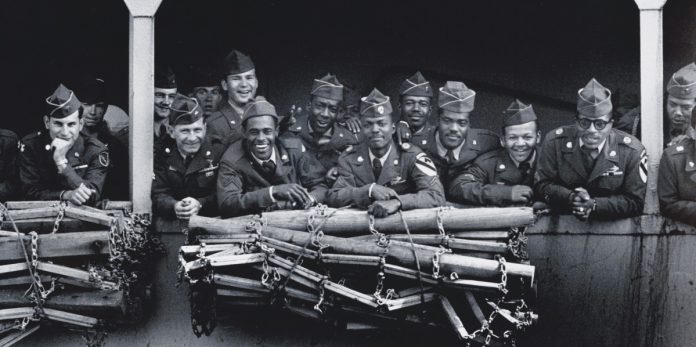
African American History Month is marked at the Museum of Sonoma County with a Feb. 21 evening of readings and conversation featuring African American writers from across Sonoma County, reflecting on the museum’s exhibit, “Take Me to the Water: Histories of the Black Pacific.” Hosted by Kwasi Turner, the program features Joanna Wheeldin, Enid Pickett, Dr. Andrea Hall, Morris “Abashe’” Turner and N’game’ Gray—many of whom are descendants of families who made the historic westward migration explored in the exhibition. It’s a rare chance to hear local voices in direct dialogue with regional history, culture and memory. 5pm, Saturday, Feb. 21, Museum of Sonoma County, 425 7th St., Santa Rosa. Free; registration requested at museumsc.org/events.
Mill Valley
Dream Logic
Carol Duchamp’s large-format acrylic and watercolor paintings currently animate the lobby and stairwell at Thompson/Dorfman with a sense of looseness, luminosity and trust in the unplanned. An intuitive painter, Duchamp works from feeling-tone rather than fixed destination, allowing color, ink and gesture to arrive where they may. The result is a series of inner landscapes shaped by encounters with nature, travel, emotional and spiritual states, and the lived experience of being human. Now through March 25, Thompson/Dorfman, 39 Forrest St., Mill Valley. 8am–5pm, Monday–Friday.
Geyserville
Sips & Stories
Dutcher Crossing Winery adds a literary twist to wine country with the debut of Sips & Stories, a new quarterly book club that pairs thoughtful conversation with small-lot wines and thematically inspired bites. The inaugural gathering, on Feb. 26, centers on The Widow Clicquot: The Story of a Champagne Empire and the Woman Who Ruled It, an engaging look at the woman behind one of the world’s most iconic Champagne houses. Participants who buy the featured book at Copperfield’s in Healdsburg and mention Sips & Stories receive a special discount. 5–7pm, Thursday, Feb. 26, Dutcher Crossing Winery, 8533 Dry Creek Rd., Geyserville. Free for wine club members; wines by the glass available for non-members. RSVP by Feb. 20 to la****@*******************ry.com.
Mill Valley
Fly Story Slam
Love gets the mic at a special Valentine’s edition of Fly Story Slam, the local, live-wire storytelling night modeled after The Moth. Now in its 21st show, Fly Story Slam invites Bay Area storytellers to take the stage at Boomerang Lounge on Feb. 13and share true, personal stories told straight from lived experience. February’s theme, Connections, is tailor-made for a Valentine’s crowd. Expect laughter, tenderness, the occasional gut punch and the communal thrill that comes from hearing real people tell real stories in real time. Doors 7pm, show 7:30pm, Friday, Feb. 13, Boomerang Lounge, Mill Valley. More info (including sign-ups for storytellers) at theflystoryslam.com. $23.18.
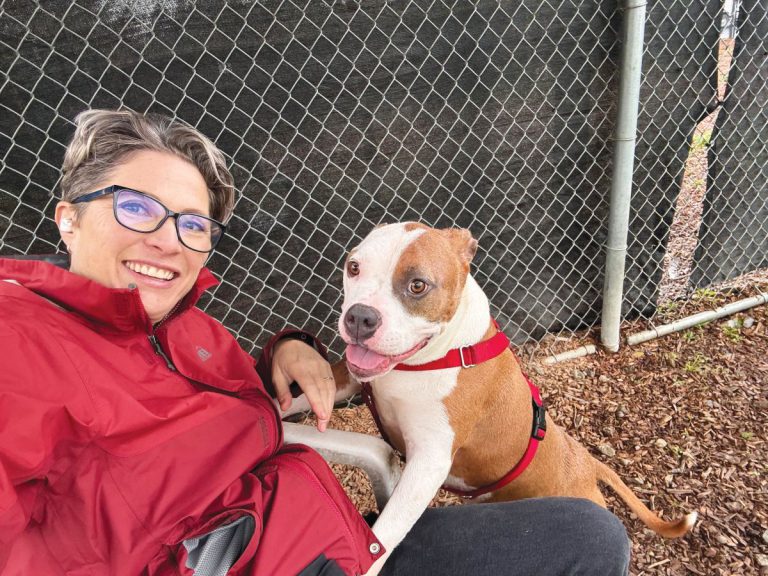
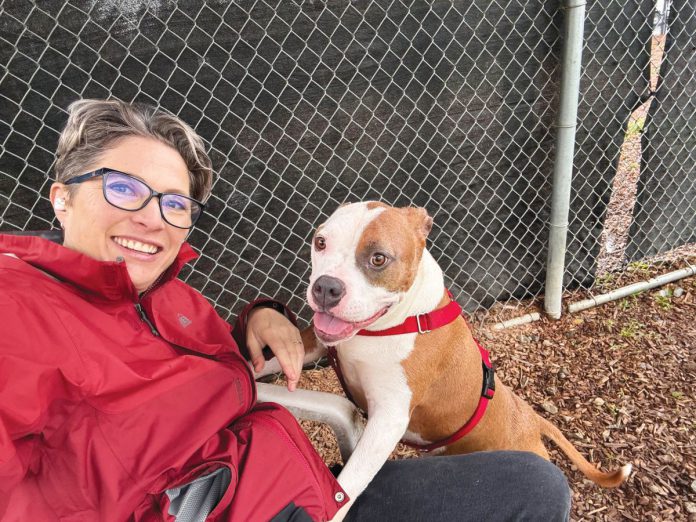
When it comes to pets, the Humane Society is usually the first call. The 95-year-old nonprofit organization, founded locally in 1931, has a long and storied record in pet rescue and adoption.
Then as now, the services they offer are focused on pet welfare, health and adoption. Cynthia King, their new executive director, has a lengthy local career in community nonprofits and only came to the Humane Society of Sonoma County six months ago.
“I’ve always loved animals. I thought I wanted to be a vet when I was younger,” she told Weeklys last week. “I was drawn to the Humane Society for what they do and how well they do it.”
No surprise here, but King has pets. Two dogs. “I have a Covid puppy who is a mix, and then a neighbor rehomed their dog with us; she’s a chocolate lab,” she said. “I always feel like I have to explain that because I wouldn’t have bought a pure-bred dog that hasn’t been given to me.”
Rehoming of pets is one of the main services the Humane Society performs. But there are others: clinics for spaying or neutering pets (and other veterinarian services, including vaccinations), an Animal Adventure Camp for primary school children (registration starts March 3), licensing, plus pet microchipping and euthanasia.
There’s even a “dog’s day out” program where pet-lovers can pick up a dog to take out for the day. “It could be people who are visiting or people who live here; they can take them to the beach, take them to a winery, take them to a dog park,” said King. “Different things are great for the dogs to get out and experience,” especially for the larger dogs that can use the exercise and variety.
Adoption is of course a key mission of the Humane Society. They begin the process with an interview of the applicant to get a clear idea of what kind of pet they’re looking for, and if they’re looking for the right kind of pet.
King outlined the process when an animal comes in, whether a stray or a “surrender” from a previous owner. “When an animal is brought in, ideally it’s within 24 hours that we’ve done medical assessment, updated vaccines, checked their microchip and made sure they don’t have any infectious disease,” she explained.
Most of the pets pass through in a matter of days—some don’t even make it out of evaluation for health, behavior, etc., before one of the volunteers takes the animal home. Many stay less than 24 hours.
The society’s secret weapon in the adoption process might be Gabe Rathmann, who is coming up on his 30th year with the organization. “He’s very good at pairing people with the right pet. So if people can come with an open mind as to the animal that might be the best fit for them, we actually are quite good at creating that match,” King noted.
Whether or not Rathmann is a “dog whisperer” or a “people whisperer” depends on who’s asking, pet or person. “I would say a little of both. I came into this with the compassion and understanding of people, and then learned the animal component here. It then became a marriage of the two,” he said.
More than 1,800 pets went through the Humane Society of Sonoma County in 2025, about a third of which were dogs, and 63% were cats. Most of the felines pass through in “kitten season,” from March through September. The “other” category was 4%, said King. “That’s Guinea pigs, rabbits, the occasional rat, things like that.”
More information about adoptions and other services is available at humanesocietysoco.org.
I picked up the last issue expecting the usual mix of music, culture and mild civic agitation, and instead found myself ankle-deep in poetry. Then knee-deep. Then—suddenly—immersed. A Courage of Poets. Found Poets. The Open Mic. Poetry everywhere. At first I thought it was a themed issue. Then I wondered if I’d accidentally grabbed a literary journal. Then I realized: No, this is just the North Bay.
To be clear, I’m not complaining—just marveling. In an era of doomscrolling and evil algorithms, it was refreshing, and maybe kinda, sorta anarchic. So yes: WTF. But also—keep going. If poetry is having a moment in the North Bay, go big.
Cassady Caution Petaluma
Authenticity
It was nice to read the article by Nikki Silverstein about the Novato Girl Scout troop that helped to educate the public about authentic versus Americanized Chinese cuisine. Great to see the youth in action in our community. Thanks for including a youth-oriented article in the Pacific Sun.
Michelle Aschwald San Rafael
A previously published version of the ‘Pacific Sun’ article, ‘Homeless Count,’ Feb. 4, 2026, misstated that Marin County was redirecting funds from homeless veterans to homeless families. Instead, Marin is implementing the same approach with families that it used to reduce veteran homelessness. We regret the error. —Editor
A beloved local painter leaves a lasting contribution to the world
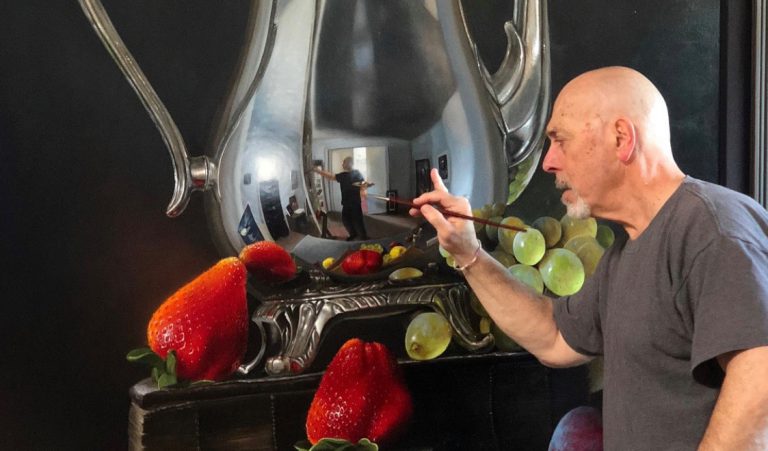
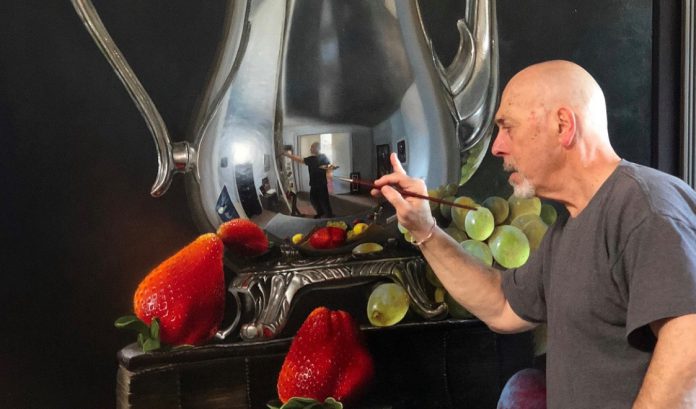
Some people create magic, and some people exude magic. And some people, like late Sonoma County painter Charles Robert Becker, synergize both qualities to an uncanny degree.
Born in 1952, Becker grew up in Millbrae and spent most of his adult life in the North Bay. As a 19-year-old hippie he met and studied under Italian still-life master painter Roberto Lupetti. From that experience he developed his own unique style of painting, which eventually brought him international recognition.
His work defied easy categorization. Some called it still life, or nature morte—“dead nature”—but that description didn’t do justice to the unusually lustrous quality of the imagery he painted.
Said San Francisco-based Weinstein Gallery proprietor Rowland Weinstein, who signed Becker on as his first living artist and sold Becker’s paintings exclusively from 1993–2009: “… Charles’ work was so alive to me—you could take the strawberries right off the canvas, you know. You could pick up the doily. There was something so beautiful, so complete to me, it almost wasn’t like he was painting a strawberry. He was painting a portrait of a strawberry; he was painting a portrait of a plum. He was painting them like he was painting individuals.”
In time Becker’s style came to be termed Magical Realism. In 1986 a painting of his appeared on the cover of Southwest Art Magazine, giving him widespread recognition, and in 1990 Absolut Vodka commissioned him to paint four pieces for a highly successful ad campaign, further vaulting him into the spotlight. He was featured in Time Magazine, USA Today and many more publications, and his paintings appeared in galleries, exhibitions and private collections both nationally and internationally.
Those close to Becker make it clear that the magic in his paintings stemmed from him; that the man and his art were inextricably linked, each as extraordinary as the other.
“Any discussion of Charles’ work has to start with who he was as a person,” said Becker’s partner, Amanda Roze. “Each of his actions originated in love—each gesture, brushstroke, and communication was filled with beauty and heart … He tried to translate all of his emotions onto the canvas and reach the hearts of the viewers. He used art as a means to connect with people.”
The effect of Becker’s paintings on those who owned or worked among them can’t be overstated.
“Charles’ work can’t disappear into the wall,” Weinstein said. “Once you had a painting of his it brought you back into it every time you walked by it. It wasn’t on the wall to be a beautiful decoration to complete a corner.”
For many years Becker operated two studios in Graton, while living in Sebastopol. From one he taught Bay Area students in-person and distance students online, and in the other he painted and displayed his work. He lived in Santa Rosa in his later years.
“The task I have undertaken, the journey I am on is to question, to use all of my emotions, be they joy or pain, peace or passion, to believe in the creation of magic and record it on canvas,” he said. “This is what it means to be an artist. This is what it means to be alive.”
Charles Robert Becker died Jan. 21, 2026, at age 73, surrounded by family in Sonoma County. He leaves behind a lasting legacy to the many people, near and far, who marveled at the magic that flowed through him and his art. A Celebration of Life will take place Saturday, Feb. 14, at Harmony Elementary School in Occidental.
Feb. 21 and 22 is the weekend of the inaugural Russian River Fungi Fest, a free celebration of West Sonoma County’s exceptional fungal ecosystem.
The trees will sway under the sun and clouds; the river will trickle and slosh nearby. But more quietly, underneath, the mushrooms will find their own way to enjoy the party.
“A lot of people think it’s dead in the winter up here in West Sonoma County, but it’s actually one of the most beautiful times to visit our forests,” said Spencer Scott, one half of the husband-husband power couple that founded Solar Punk Farms, the organization behind the Fungi Fest. “Winter is mushroom season, and fungi are one of the most underappreciated and wonderful aspects of our local ecology.”
As I sit here sipping my adaptogenic mushroom coffee to write this article on a perfect Northern California day, I think the mushroom’s time has come. Too long left out of the life-on-Earth dyad, animals and plants, fungi are—as all school kids now know, but maybe few of us really understand—truly a different kind of being, one ancient and essential to the rest of life.
It excites the imagination. A whole other kingdom of life bustling through the ground and materials all around. And their way of being, the mushroom way to interact with the world, with the other beings living around it, might offer us some wisdom.
“We have the plant kingdom that brings the ultimate source of energy [through] photosynthesis, and the animal kingdom is all about productivity and mobility,” noted Nick Schwanz, the right brain of the Solar Punk Farms duo and president of the Russian River Chamber of Commerce. “It’s the thing that closes the loop of those two kingdoms. Mycelium is the connector and the recycler.”
That is where we can learn from them. Zen Buddhism venerates the flexibility of the bamboo reed, and Taoism follows the lessons of water. What wisdom can we gain from listening to the mushroom?
“The fungal kingdom really is the one that makes that whole system into a loop,” said Schwanz. “They are decomposing and moving things around and making sure all of it is connected.”
“One of the reasons we wanted to host Fungi Fest was to show our love for our subterranean friends who transform decaying matter into delicious treats,” added Schwanz. “What little magicians.”
Safety, More Than Ever
At the Fungi Fest, the focus will be on safety. The rate of mushroom poisoning among foragers has reached historic levels this season, with a recent death in Sonoma County.
“No one should ever consume any mushroom that they aren’t 100% sure is safe,” advised Schwanz. “All our walks and foraging parties are led by experts who can identify and share safety protocols.”
Wait, by gathering together, we can share safety information across groups and individuals? So mycological.
“It is important to gather community around mushrooms so [we] can be safely curious with what mushrooms pop up after it rains,” said local mushroom maven Brandi Kowalski. She noted that her contribution at the event will be to “showcase all of the benefits mushrooms can bring to our lives medicinally, culinarily, scientifically.”
“Be sure to stop by the Mushroom ID display table” at Mushroom Market, she added. “Please bring whatever mushrooms you’d like to be identified, and we will do our best.”
A Movement?
Why “solar punk,” the optimism optimizing movement bubbling among creatives around the globe from which the farm took its name?
Scott calls solar punk “a genre of hopeful storytelling that imagines how we might use technology in service of ecological health and a political movement dedicated to turning our optimistic visions into reality.” That is why the festival was a fit. “We love that solar punk can both capture the imagination and get people motivated to take action,” Scott continued.
The Russian River Fungi Fest is being held at venues across Guerneville and the Russian River. Expect guided tours, mushroom talks, food, hyper-local craft products and artsy workshops on everything mushroom, from poetry and painting, to cooking and gardening and more.
First Annual Russian River Fungi Fest, Feb. 21-22, across multiple venues in Guerneville and West County. RSVP for specific events. Suggested donation of $15 (accessible to everyone). For more information and tickets, visit RussianRiverFungiFest.com.
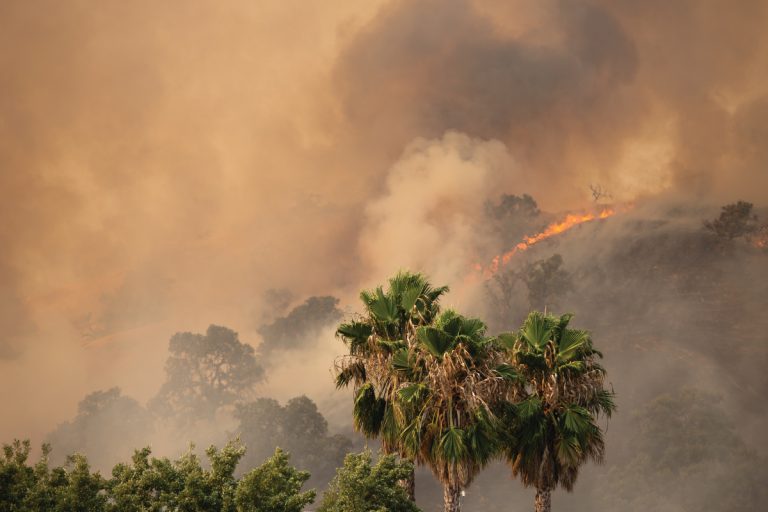
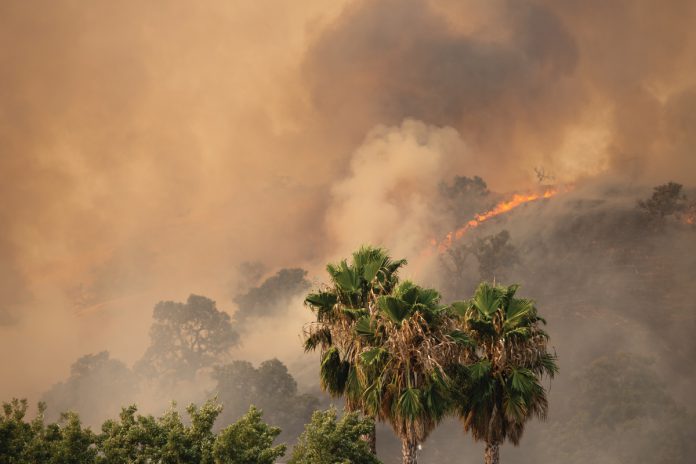
Growing up, I listened to a folk song with the chorus, “Fire, fire, from every rooftop, I heard the cry.” But I didn’t shout “fire, fire” until I arrived in California and began to survive fire seasons that traditionally began when the rains stopped and ended when they started again.
Now of course, fire season can be anytime of the year and “fire country” can be anywhere and everywhere in the state, as the January 2025 fires in Los Angeles and San Diego County—which caused $61. 2 billion in damages—made abundantly clear.
“Why do you want to go to California?” a friend asked me when I went on the road and headed west. She added, “They have earthquakes there.”
She didn’t know and neither did I about fire, smoke and drought, too. In Sonoma County, I watched a wild fire leap across the 101, devour million dollar homes, incinerate Coffey Park, fill the air with smoke and force residents to flee their homes and seek shelter elsewhere. I learned that Native Americans used fire as a tool and in beneficial ways, and that fire was an essential and necessary part of the landscape that made for rebirth and rejuvenation.
“It’s not a foe but a friend,” a woman at the Sonoma Ecology Center told me as we walked across a blackened landscape where green growth emerged.
Most of the 12 contributors to the book Red Flag Warning (AK Press; $18) emphasize the sense of community and fellowship that has emerged in the wake of wildfires, though some of them don’t ignore the hardship, the sadness and the destruction.
Sunday, Feb. 15, the Occidental Center for the Arts Literary Series hosts collection contributors Manjula Martin, Hiya Swanhuyser, Beatrice Camacho and Amy Elizabeth Robinson.
As Canadian born author Naomi Klein observed in The Shock Doctrine and The Battle for Paradise—which can read like rejoinders to Rebecca Solnit’s A Paradise Built in Hell: The Extraordinary Communities that Arise in Disaster and Hope in the Dark: Untold Histories, Wild Possibilities—capitalism has a way of seizing on misery and squeezing profits from fires, earthquakes, tornados, droughts and more.
In Parenting in Fire Country, Dani Burlison, the co-editor of Red Flag Warning, interviews Kailea Loften, an African American citizen of Liard First Nation and a member of the Tsesk’ye clan who has served as the climate commissioner for the City of Petaluma. That the contributors to this volume come from diverse cultures and backgrounds is probably its strongest recommendation.
Loften seems to stand with Klein and not Solnit, but maybe I’m reading too much into her comments. Still, she says, “We are in compounding crises.” She finds fault with people who say, “I’m an optimist” and who think that “if they just keep hoping or keep wishing, it’ll be okay.” Loften complains about the “space of toxic positivity” and adds, “We’re being constantly gaslit.”
I’ve long stood with U.S. Sen. Elizabeth Warren, who has jousted with people who harp on hope. Warren insists that hope is largely meaningless unless it’s joined to meaningful political action.
Fortunately, Burlison, whose name and essays ought to be familiar to readers of the Bohemian and Pacific Sun, writes about what might be called the psychology of fire in “What Wildfires Do To Our Minds.” Her essay is based in part on a conversation with Mary Good, a therapist, ecopsychologist and California naturalist who took on as patients, pro bono, “fire survivors” to help them navigate the “aftermath of disaster.” Good tells Burlison, “It was an absolute trauma for everybody involved.” She adds, “The fire is over, but the grief may last a long time.” There’s no sugar coating trauma and no shortcut through the stages of grief.
Burlison reminds readers that “Low income and other marginalized communities are disproportionately impacted by climate disasters like the frequent firestorms we experience here in Northern California.” She suggests that marginalized individuals need “mental health services” as well as “community support and mutual aid.” Hell, they need homes, jobs, child care and more.
Another section of the book that I read and reread and that I love is an interview Burlison conducted with Brandon Smith, a formerly incarcerated firefighter with the Forestry and Fire Recruitment Program who earned $2-5 per day with an additional $1-2 per hour while serving on an active fire.
Smith walked the walk and talks the talk. No obfuscation from him. “There’s something that’s very cleansing about fire,” he says. By fighting fire, he learned about fire and fire fighters like himself. “A fire camp is a half prison, half fire station where currently incarcerated people work as firefighters,” he says.
I enjoyed his candor, and Jane Braxton Little’s description of throwing the I Ching the night her town burned down and the community lost its post office, drug and hardware stores, library and 1,000 homes. “Climate disaster is the disaster lurking for all of us,” she says. “Fire delivers it to some, floods, drought and famine to others.” All those things no one warned me about when I left New York and came to California.
I would be remiss if I didn’t mention the first essay in the book, which has the catchy title, “Solidarity, Not Charity,” by Weeklys contributor Hiya Swanhuyser. The word disaster, she explains, means “no stars,” in other words, a world in darkness. She also informs readers that the phrase “mutual aid” comes from Peter Kropotkin, the 19th- and 20th-century Russian anarchist and scientist. Swanhuyser plugs Rebecca’s Solnit’s A Paradise Built in Hell, but ends her essay with the sobering thought, “We are headed for disaster.”
On the way to a dark world, read Swanhuyser’s essay and all the other illuminating words that light up Red Flag Warning.
The ‘Red Flag Warning’ literary event begins at 2pm, Sunday, Feb. 15, at the Occidental Center for the Arts, 3850 Doris Murphy Ct. Free. More info at bit.ly/red-flag-oca.
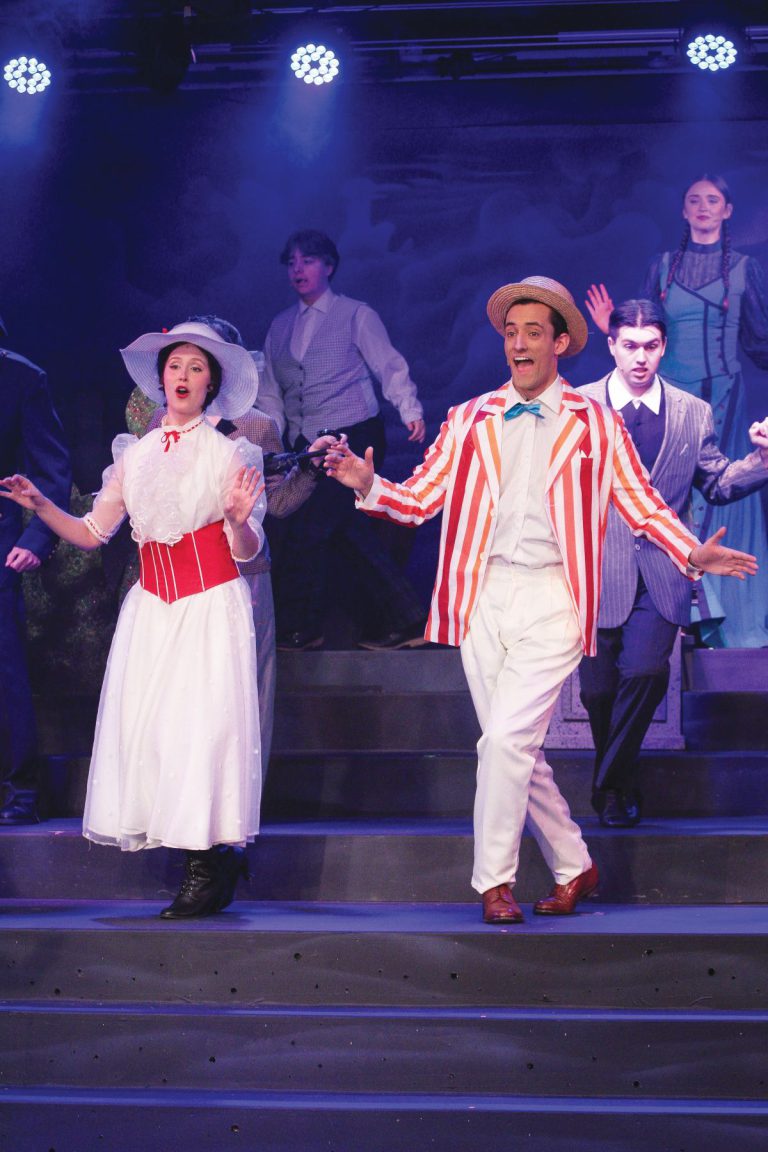
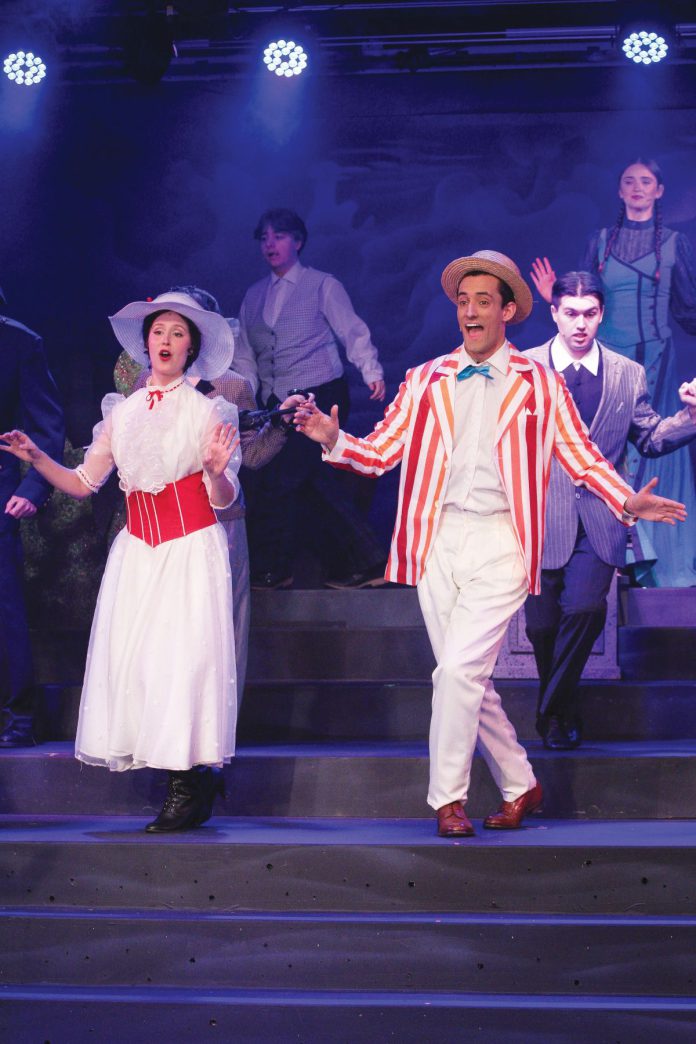
An upside-down family gets right-sided with the help of a practically perfect nanny in P.L. Travers’ classic Mary Poppins. In between the 1964 Disney film adaption and its belated 2018 sequel, Cameron Mackintosh put together a Broadway musical that featured elements of the Disney film along with new material. Santa Rosa’s 6th Street Playhouse has a production running through March 7.
It’s not a carbon copy of the film, though it features many of the original Sherman Brothers songs and recreates some of the film’s magical moments in its telling the tale of the Banks family: uptight father George (Robert Nelson), overwhelmed mother Winifred (Andrea Thorpe), and unruly children Michael (Joe Schulze) and Jane (Violet Spears).
The departure of the children’s umpteenth nanny is soon followed by the arrival of their latest, Mary Poppins (Caroline Flett), who, with the help of her jack-of-all-trades friend Bert (Andrew Cedeño), teaches them all a lesson or two before flying off.
It’s a big show with a big cast (director Emily Lynn Cornelius has double cast the principal roles) and a lot of moving parts. The large cast and deck crew has responsibility for sliding Peter Crompton and Aissa Simbulan-designed scenery and set pieces on and off the stage throughout the show and do a pretty good job of it.
When they’re not moving chairs or sliding frames into view, the cast is acting, singing and dancing their hearts out. Almost all the musical numbers are large ensemble pieces (“Jolly Holiday,” “Supercalifragilisticexpialidocious”), and the cast delivers them with gusto. Jonathen Blue’s choreography honors the original while making it work in the 6th Street space.
Flett is the perfect Poppins, in both physicality and attitude, and possesses a fine singing voice. Ditto for Cedeño. Nelson is a staid George, and Thorpe brings the heart as Winifred. I found young Schulze a bit unfocused as Michael, particularly when compared to Spears’ dynamo of a Jane.
Veteran Jill Wagoner delivers two crackerjack performances, first as the Bird Woman (“Feed the Birds”) and then as Miss Andrew, the holy terror of a nanny whose approach to child rearing explains George’s personality.
Musical director Les Pfützenreuter leads an eight-piece orchestra that robustly delivers the beloved songs (“A Spoonful of Sugar,” “Step in Time”) and new additions (“Practically Perfect,” “Brimstone and Treacle”).
Mary Poppins is the type of show that better deliver what an audience expects.
It does.
‘Mary Poppins’ runs through March 7 in the GK Hardt Theater at 6th Street Playhouse, 52 W. 6th Street, Santa Rosa. Thurs–Sat, 7:30pm; Sat & Sun, 2pm. $32–$56. 707.523.4185. 6thstreetplayhouse.com.
Published in cooperation between bet105 and the Bohemian
Legal sports betting has transformed into a powerful driver of innovation, competition and consumer empowerment. Beyond tax revenue and job creation, the industry’s real strength comes from elevating safety standards, improving user experiences and pushing digital infrastructures to evolve rapidly. With the growing integration of cryptocurrency as a payment option, this positive trajectory is expanding even further, creating faster, more secure and globally accessible financial pathways for bettors.
A major advantage of regulated sports betting is the move away from unverified offshore platforms and into monitored, compliant environments. Bettors now receive strong protections, reliable withdrawals, transparent odds and clear dispute-resolution processes. Operators must meet strict licensing requirements, undergo audits and maintain secure technology stacks. These safeguards offer a level of trust that was impossible in the unregulated era.
Competition among licensed sportsbooks continues to raise the bar. Each operator aims to offer cleaner interfaces, better odds, faster payouts and more intuitive features. This environment benefits the consumer by pushing constant improvement. Bitcoin sportsbooks like bet105 play a role in this evolution through reduced juice offerings, efficient digital design and quick processing speeds. As platforms compete, users receive more value, better transparency and greater reliability.
The rapid adoption of cryptocurrency in sports betting further strengthens this ecosystem. Crypto introduces faster transaction times, lower fees and enhanced financial privacy compared to traditional banking. Bettors can deposit or withdraw funds within minutes, bypassing the delays associated with credit cards or bank transfers. For international users or states with restrictive banking rules, crypto creates safer and more accessible pathways to participate. It also reduces friction for high volume bettors, allowing them to move funds efficiently without compromising security.
Crypto payments also promote operational efficiency for sportsbooks. Blockchain transactions offer transparent verification, lower processing costs and reduced risk of chargebacks. These benefits let operators allocate more resources toward improved odds, technology and customer support. As more crypto sportsbooks adopt Bitcoin, Ethereum and USDC, the standard of speed and convenience continues to rise across the industry.
Innovation spreads well beyond the betting platforms themselves. Data companies, fraud detection firms, geolocation services, streaming technology providers and fintech processors all level up their systems to meet the demands of modern sportsbooks. This includes advancements in server capacity, encryption, latency reduction and real-time analytics. Improvements required for betting systems often carry over to other industries, boosting the performance of e-commerce, gaming, mobile banking and cloud technology.
Sports entertainment has evolved alongside these changes. Fans now interact with games through real time dashboards, player prop markets, predictive analytics and interactive data streams. Even viewers who never place bets benefit from deeper insights that enhance their overall experience. Engagement rises, viewership increases and leagues benefit from stronger partnerships with data and betting providers.
Integrity monitoring is another key outcome. Regulated markets allow leagues and integrity firms to track suspicious activity, identify anomalies and protect competition from manipulation. This transparency strengthens trust between fans, athletes and organizations.
Local economies also gain from legalization. Sportsbooks partner with restaurants, stadiums, event venues and hospitality businesses, increasing foot traffic and creating new revenue opportunities. Content creators, analytics startups, marketing agencies and software developers benefit from the industry’s expansion as well.
Ultimately, legal sports betting combined with cryptocurrency has created a modern, efficient and consumer focused financial and entertainment ecosystem. Regulation brings safety. Competition enhances quality. Technology pushes innovation. Crypto accelerates speed and access.
Together, they form one of the most progressive digital markets today, with benefits that extend far beyond wagering itself and into the broader economy.
Feb. 17 ushers in the Chinese Lunar New Year, and this one is coming hot. The Year of the Fire Horse is a rare beast—traditionally associated with momentum, bold moves and a kind of kinetic charge (not to mention flames galore).
Here in the North Bay, where Chinese history and culture have long been woven into the fabric of the...
Here, journalist and organizer Cincinnatus Hibbard offers the second of two sneak peeks at elements of his forthcoming book, ‘Love is The Answer.’
Part one of the previously published piece (headlined, ‘The Word We Need,’ and available on our website) ends with a choice between love and fear, in this life, and in the present political moment. In the past,...
Santa Rosa
Black Pacific
African American History Month is marked at the Museum of Sonoma County with a Feb. 21 evening of readings and conversation featuring African American writers from across Sonoma County, reflecting on the museum’s exhibit, “Take Me to the Water: Histories of the Black Pacific.” Hosted by Kwasi Turner, the program features Joanna Wheeldin, Enid Pickett, Dr. Andrea...
When it comes to pets, the Humane Society is usually the first call. The 95-year-old nonprofit organization, founded locally in 1931, has a long and storied record in pet rescue and adoption.
Then as now, the services they offer are focused on pet welfare, health and adoption. Cynthia King, their new executive director, has a lengthy local career in community...
Not Averse
I picked up the last issue expecting the usual mix of music, culture and mild civic agitation, and instead found myself ankle-deep in poetry. Then knee-deep. Then—suddenly—immersed. A Courage of Poets. Found Poets. The Open Mic. Poetry everywhere. At first I thought it was a themed issue. Then I wondered if I’d accidentally grabbed a literary journal. Then...
A beloved local painter leaves a lasting contribution to the world
Some people create magic, and some people exude magic. And some people, like late Sonoma County painter Charles Robert Becker, synergize both qualities to an uncanny degree.
Born in 1952, Becker grew up in Millbrae and spent most of his adult life in the North Bay. As a 19-year-old hippie...
Feb. 21 and 22 is the weekend of the inaugural Russian River Fungi Fest, a free celebration of West Sonoma County’s exceptional fungal ecosystem.
The trees will sway under the sun and clouds; the river will trickle and slosh nearby. But more quietly, underneath, the mushrooms will find their own way to enjoy the party.
“A lot of people think it’s...
Growing up, I listened to a folk song with the chorus, “Fire, fire, from every rooftop, I heard the cry.” But I didn’t shout “fire, fire” until I arrived in California and began to survive fire seasons that traditionally began when the rains stopped and ended when they started again.
Now of course, fire season can be anytime of the...
An upside-down family gets right-sided with the help of a practically perfect nanny in P.L. Travers’ classic Mary Poppins. In between the 1964 Disney film adaption and its belated 2018 sequel, Cameron Mackintosh put together a Broadway musical that featured elements of the Disney film along with new material. Santa Rosa’s 6th Street Playhouse has a production running through...
Published in cooperation between bet105 and the Bohemian
Legal sports betting has transformed into a powerful driver of innovation, competition and consumer empowerment. Beyond tax revenue and job creation, the industry’s real strength comes from elevating safety standards, improving user experiences and pushing digital infrastructures to evolve rapidly. With the growing integration of cryptocurrency as a payment option, this positive...