Sour Note

0

A familiar drama unfolds every summer as my father attempts to save a small crop of cherries from two little trees from attack by air: it’s man vs. mockingbird.

Typically, the birds get their fill of cherries, occasionally fluttering about unhelpfully while the man patiently shows them out from a patchwork of netting they got themselves trapped inside in their gluttony, as if the indignity was theirs alone.

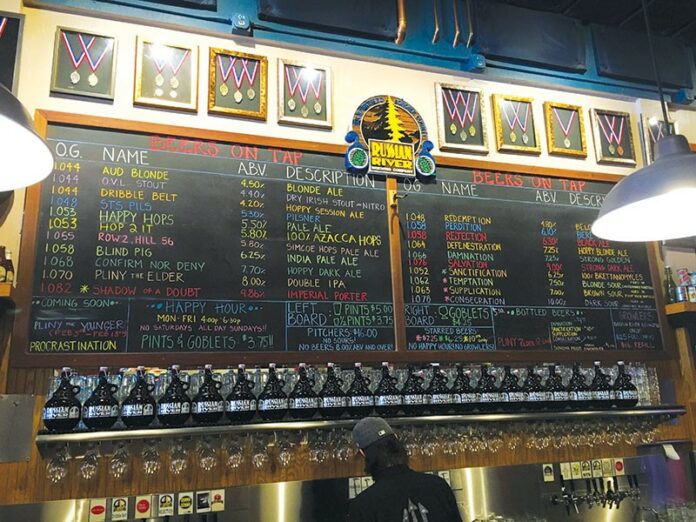
Finally, last year he got a bumper crop when we wrapped the tree, like a mummy, in agricultural fabric. Looks weird, but it works, and I commemorated the success by fermenting my share, about a pound of black Tartarian cherries, in a five-gallon batch of saison-style homebrew. I’d like to think they added a bit of fruit nuance, but it’s nothing like Lagunitas Brewing Company’s Cherry Jane sour ale, a “One Hitter” release in stores now in six-packs of 12-ounce bottles.

Brewed with what they call Turkish Delight cherry juice (which has the added summer-day utility of recalling a cool day in Narnia), it’s a vivid pink hue, like a dark rosé wine, but refreshes with a sousing factor of just 5.5 percent alcohol by volume (abv). While a bit austere, like crushed black cherries in galvanized metal, the aroma is also reminiscent of good German lager, and the sweet cherry flavor just rounds out the dry, puckery finish. It’s got a little Brettanomyces, but like other brews from Lagunitas’ funky forays, it’s not really that funky—maybe a bit extra tart.

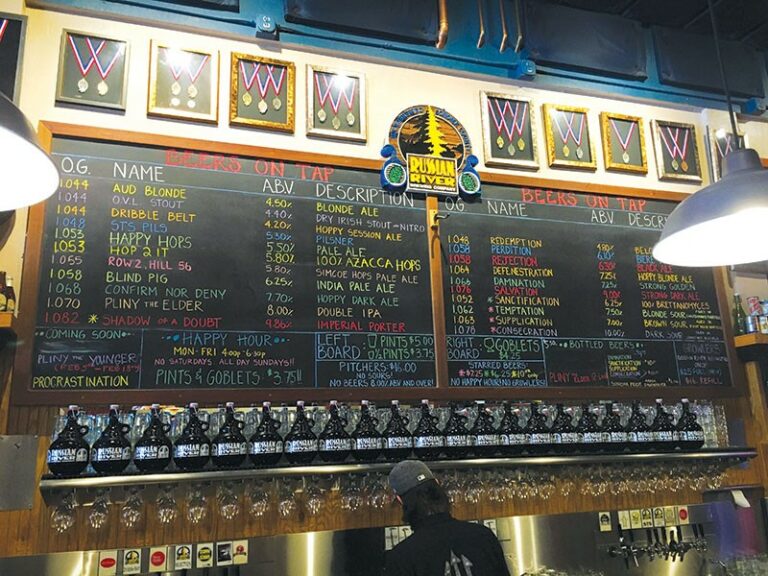
Hoping to find a seasonal trend, I head to Sebastopol’s Crooked Goat, which is comfortable in the fruit-beer niche. “I don’t think any of us think of ourselves as beer snobs,” says head brewer Will Erickson. “Beer should be fun!” As a starter for non-beer drinkers in the company of beer fans, as their license doesn’t allow let them to serve local ciders or wines, Crooked Goat offers the raspberry-pink First Crush (5.0 abv). It’s a hit four times out of five. First Crush, made with puréed berries from the Pacific Northwest, smells like fresh raspberries. Although it contains no hops, I get a sense of spice from the berry seeds.

Up the road in the Barlow, Woodfour Brewing Company is just getting ready to brew its sour farmhouse ale from locally grown strawberries. Meanwhile, Anderson Valley Brewing Company’s Framboise Rose gose is a lightly tinted pink, lightly strawberry flavored, salty refreshment at
4.2 percent abv.

On a gose note, I’m looking forward to Fogbelt Brewing’s Margarita-style gose, brewed with lime and tequila oak, due in cans in early August. If the birds leave me some wine grapes, I just might make it my official beer of this year’s harvest.

Film with Terroir

0

‘We are shining a light on the folks,” says Brooke Tansley, executive artistic director of the newly launched Folklight Film Club. A Sonoma County–based film production company, Folklight has created the first wine club–inspired experience to be centered on making a movie.

Tansley, a veteran actress and producer who previously heralded the Sonoma Laughfest, got the idea after getting to know the wine industry through her husband’s work in the North Bay.

“We started seeing parallels between the entertainment industry and wine,” Tansley says. “The purpose of storytelling as a tradition is to strengthen the bonds of a community through experiences and wisdom, and to pass that on. The values in fine winemaking are the same thing.”

For Tansley, wine is all about the shared moments between people—much like the experience of seeing a film in a packed theater. “I started thinking,” she says, “what if we made a wine club, but we made movies instead?”

Similar to the way a wine club offers members exclusive access to a winery and special events not available to the public, Folklight Film Club’s plan is to feature behind-the-scenes access to filmmaking. For a quarterly fee, members can participate in and influence a full-length feature film production from script to screen.

The first thing club members will do is share their own ideas and/or personal experiences that they would like to see on the big screen. From there, Folklight will commission a professional screenwriter to craft a script that will then get the full filmmaking treatment. Other scheduled film club events include a cast and crew panel discussion, a concert featuring music from an original soundtrack for the film, a gallery viewing of art inspired by the film and eventually a red carpet premiere.

Tansley points out that this community-driven model of filmmaking is antithetical to traditional filmmaking, where a single writer, director and studio come up with an idea and then go about producing it. “We are creating the infrastructure to making the film before the film exists,” she says.

Membership enrollment is open now to residents of Sonoma, Napa, Marin and Mendocino counties, though space is limited and enrollment closes after the summer. The two-year membership, including all the events and engagement, is $79 quarterly and discounts are available for making yearly or one-time payments, and for pairs or groups.

“What we’re going to end up with is a feature film that we are calling the first farm-to-table film, or work of ‘film terroir,'” says Tansley, who admits she has no idea at this point what filmic possibilities could come from this endeavor.

“We are going to have a film that is going to capture who these people are at this place and at this time. It’s going to be really exciting to see what story we end up telling.”

For more details on Folklight Film Club and to sign up now, visit folklightfilmclub.com.

New Documentary on Tubbs Fire Premieres in Santa Rosa

Sonoma County Sheriff Rob Giordano and Santa Rosa Fire Chief Tony Gossner were among those in attendance last night, Thursday, Jul 19, for the world premiere of the new documentary “Urban Inferno: The Night Santa Rosa Burned” at the Roxy Stadium 14 in downtown Santa Rosa.
Now screening daily at the nearby Third Street Cinemas, the 40-minute, locally-produced documentary recounts last October’s devastating Tubbs Fire, the most destructive wildfire in California history, and focuses on the initial impact of the fire on Santa Rosa.
Speaking alongside director Dr Stephen Seager, a longtime Santa Rosa resident, and co-producers Metta Seager, KSRO president Michael O’Shea and KSRO news director Pat Kerrigan and others, the sheriff and fire chief took questions from the local crowd who attended the sold-out premiere and heard from others who shared their experiences.

Told through on-camera interviews and raw video compiled from cell phone footage, police body cameras and other sources which captured the firestorm that swept through parts of Santa Rosa in the late night and early morning of Oct 8-9, 2017, “Urban Inferno” is at times harrowing and heartbreaking, though it deftly tells the complex story of the unprecedented event and highlights the heroism that rose up to meet the chaos. In particular, the film explains how Gossner’s decision to focus on evacuation over firefighting likely saved hundreds of lives.
“Urban Inferno” also shines light on the work of the news staff at KSRO 1350 AM, who broadcasted commercial-free for 24 hours a day as the fire unfolded and who largely became the only line of communication for thousands of Santa Rosans forced to flee their homes.
For some in the audience, the screening was a raw reminder of last October’s events, and footage of destruction was met with gasps at times, though the film takes a respectful and hopeful tone. “Urban Inferno” opens today, Jul 20, with regular screenings, and all proceeds from the premiere and the subsequent screenings will go to the Sonoma County Resilience Fund. Click here for times and tickets.

Kaiser Evacuated, Highway 101 Closed

0

All patients and staff at the north campus of Kaiser hospital in Santa Rosa were evacuated Wednesday afternoon after a tanker truck carrying liquid oxygen crashed into a hospital building and sparked a brush fire. Highway 101 at Mendocino Avenue was also closed in both directions near Mendocino Avenue. There were no immediate reports of injuries.

This is second time in nine months that the hospital has been evacuated. The facility was evacuated in October after last year’s fires threatened the medical campus.

July 19-22: Sip & Laugh in Santa Rosa

0

The third annual Wine Country Comedy Fest, presented by the Crushers of Comedy, is back to offer four funny days at the Crushers’ home base, the Laugh Cellar. Thursday’s opening night features New York comedian Jeena Bloom and veteran observational comic Steve Bruner. Friday includes a Spit & Swallow winetasting comedy show where sommeliers pair wines with several performers. The weekend includes the likes of San Francisco comedy club favorite Phil Griffiths on Saturday and Last Comic Standing alum Priya Prasad on Sunday. July 19–22, at the Laugh Cellar, 5755 Mountain Hawk Way, Santa Rosa. Times and costs vary. 707.843.3824.

July 21-22: Vienna in the Valley in Sonoma

0

This summer, the Valley of the Moon Music Festival takes a musical journey to Vienna and explores the most influential music composed in the central European city. Opening this past weekend and continuing this weekend and next, the festival includes concerts on Saturday and Sunday that boast classical and chamber music from Viennese composers like Mozart, Brahms, Haydn and others. Featured performers include soprano Nikki Einfeld, and pianists Eric Zivian and Jeffrey LaDeur, who team up to perform Franz Schubert’s “Lebensstürme,” a work for four hands. July 21-22, at Hanna Boys Center, 17000 Arnold Drive, Sonoma. 4pm both days. $45. valleyofthemoonmusicfestival.org.

July 23: Old World Act in Petaluma

0

New Orleans–based LadyBEAST Productions is a nationally touring circus troupe that offers inspiring takes on traditional acts and creates mind-bending stories in their live shows. This month, the company is in the Bay Area and stops in Sonoma County for a new production called ‘Levity.’ The show promises to turn the ordinary into the extraordinary, opening with the simple act of sitting in a chair and transforming it into a collaborative journey that travels deep inside the human psyche with awe-inspiring acrobatics and stunning visuals. Experience Levity on Monday, July 23, at the Phoenix Theater, 201 Washington St., Petaluma. 7:30pm. $10–$20. 707.762.3565.

Eat the Map

0

West Sonoma County—known to locals as West County—is the most delicious place in America. It’s still something of a secret to the outside world, but I predict that will soon change as more people catch on.

West County is America’s Tuscany—a land of word-class wineries, cider houses, artisanal cheesemakers, heritage breed goat and cattle ranches, family-owned organic farms, wild mushrooms, fresh Dungeness crab, wild abalone, king salmon and, thankfully, an absence of pretense. Nowhere else in the country has as many great raw ingredients and food products in one place. That bounty has inspired generations of chefs, home cooks, foragers, fishermen, winemakers and brewers who celebrate West County’s abundance.

“In Sonoma’s West County, we know that food quality and abundance are within arm’s reach—we almost take it for granted,” says Heidi Herrmann, seaweed harvester, farmer and agro-ecology instructor at Sonoma State University. “This little pocket of land on the left edge of the continent is a culinary wonder.”

In spite of all this great food, the region still flies under the radar. Back before I knew better, I filed West County under “Need to check that place out; seems cool.” Before I relocated here in 2011, I’d pass through Sebastopol a couple times a year on weekend drives out to the Russian River to escape cold San Francisco summers or during a search for affordable housing, a game my wife and I used to play called “Should we move here? How about here?”

Each time we drove through Sebastopol—the commercial if not spiritual heart of West County, I’d come to learn—and the surrounding vineyards, apple orchards and redwood forests, I’d inhale deeply. I slowed down. There was something about this place I couldn’t quite identify, a rugged charm and bohemian spirit I found alluring.

As a food writer, what really haunted my dreams was my unconfirmed belief that West County was an authentic source of great food and drink, raw ingredients and craftspeople that hadn’t been spiffed up and reconstituted to appeal to a mass audience. It was the un-Napa, a land of milk and honey and exceptional Pinot Noir without the tourists and bachelorette party limos. That’s what my foodie radar told me. But I knew my short forays there weren’t enough to confirm my suspicions. And anyway, if West County was this culinary nirvana, why wasn’t it already overrun with visitors and celebrity chef steakhouses?

Fast forward 10 years. Life, kids and work had taken me in different directions, but I was still, consciously or not, on the trail of West County. I was researching a documentary series for PBS about Americans reforming our food system called

Food Forward, traveling in a 26-foot, refurbished 1966 Airstream trailer with my wife and two young children. As I put together the itinerary of farms, dairies, ranches and restaurants to visit, I knew I wanted to include a stop in West County to see once and for all what was up with that place. Long story short, we showed up and never left. It was the place I had been looking for.

I’ve spent the years since exploring West County, turning down new roads to see where they go, pulling over at farm stands, eating at new and old restaurants and drinking my share of local wine, beer and cider. One of my first dining experiences in West County was at Lowell’s in Sebastopol. I think it was over a bowl of their beans and greens for breakfast that I realized I was on to something good. Founder Lowell Sheldon—who went on to open Handline with partner Natalie Goble in 2016 and is building a third business called Fern Bar, a cocktail lounge and small-plates restaurant in Sebastopol due to open this fall—has long been a champion of West County as a culinary region with his rigorous local sourcing and commitment to sustainable agriculture.

But he’s not alone. Restaurants like Ramen Gaijin, Zazu, Farmhouse, Fork Roadhouse, Casino Bar and Grill, Hazel, Boon and others all raise West County’s profile.

To raise awareness of West County’s community of like-minded businesses, Lowell Sheldon and his team have been at work on a map of the area’s many splendid things for the past 18 months, and it’s going to be available this week. It’s a must have. The “West Sonoma County Field Guide” is a piece of marketing, but it’s more than that. It’s the first document to draw a circle around the region and showcase its many delicious things. It puts West County and its unique business and destinations on the map by creating the map.

[page]

Rather than list restaurants and businesses by price, the field guide is built around a shared ethos of local sourcing and environmental sustainability, very West County values.

“It’s the community of businesses that I want to associate with,” says Gia Baiocchi, owner of the Nectary in Sebastopol and now Healdsburg. She likes it because it’s a collaboration between businesses rather than a competition.

The guide, which features a detailed, hand-drawn map, offers a curated list of restaurants, wineries and businesses, as well as hikes and must-stops along West County’s long and bumpy roads. If you’ve got out-of-town guests looking for something to do, hand them this. It’s a good resource for locals, too.

Sheldon is eager to see if the map drives more interest for sustainably minded businesses like those in the field guide.

“Hopefully, it will have some-lasting impact,” he says.

West County’s left-of-center, countercultural spirit, born of hippies who relocated here in the 1960s and ’70s, still reverberates in the hills and back roads and accounts for some of the area’s low-profile and slow-growth politics. Add infamously pot-holed, winding roads and a relatively sparse tourist infrastructure, vast forested wildlands and sprawling cattle ranches, and West County can feel unknowable.

Of course, West County isn’t really a secret. In a 2017 article on coastal Sonoma County Chardonnays, New York Times wine writer Eric Asimov called the area his favorite place in the world. If Napa is pink polo shirts and loafers, West County is flip-flops, flannel shirts and Patagonia fleece. The area attracts a different kind of visitor, those with a DIY spirit willing to make their own discoveries. It hasn’t become another Napa Valley—wall-to-wall grapes and tourist-focused development that often leaves locals choking on the dust and stuck in traffic—but the threat looms large as small-scale farmers fear rent increases and another apple orchard or oak grove falls to vineyard development or, more recently, cannabis cultivation.

West County’s farms and orchards have supplied San Francisco with fresh produce, butter and milk for more than 150 years. Until the construction of the Golden Gate Bridge in 1937, steamboats and other vessels moved apples, berries and dairy products down the nearby Petaluma River into San Francisco Bay. An electric train used to travel down Sebastopol’s Main Street loaded with fruit for the big city to the south.

Famed botanist Luther Burbank developed many of his prized plants, including the Shasta daisy, the Santa Rosa plum and the russet Burbank potato—for better or worse, the main potato now used in McDonald’s fries—in an experimental garden in Sebastopol that still stands in Sebastopol. West County produce travels down Highway 101 in box trucks now, but is still as revered by San Francisco chefs as it was in the 1800s.

Geographically, West County is easy to define. To the east it’s bound by the Laguna de Santa Rosa, a vast wetland that rises and falls with winter rains. On warm mornings, a band of fog rises from the Laguna like a force field, exhaling vapor into sky before the gathering day. The Laguna serves as a flood relief valve for the Russian River, the northern boundary of West County.

The favorable climate for Pinot and Chardonnay in due in large part to the Pacific Ocean, West County’s western border. And, finally, to the south is the Petaluma Gap, a break in the coastal hills that draw in roaring wind and fog from the coast, a perfect climate for more cool-weather grapes and the region’s dairy ranches and artisan cheesemakers.

But for me there is a something more elusive about West County, a culture and a state of mind that is harder to define. And that’s part of its appeal. I realized this anew as I was trying to find a view or image to capture West County. But what one image could do that? An orchard of the region’s famed Gravenstein apples? A lone salmon boat returning to port at sunset? A weathered, surfboard-topped VW bus chugging up Highway 1? Rather than one image, I think West County is defined by its food and people.

Droning On

0

As the 2018 wildfire season blazes across headlines and various hotspots in California—some a little close to home—officials in Marin County are ramping up efforts to deploy drones as a potential emergency service tool.

This week, the Marin Independent Journal offered a weighty feature on the Marin County Sheriff’s Office bid to acquire unmanned aerial vehicles (UAVs) for various law enforcement and emergency services uses. The Marin drone plan was outed by a citizen who raised privacy concerns about the incipient program at a recent supervisors meeting.

Bottom line from the IJ report: They’re just getting going on a drone program in Marin County, and any use there would require a policy put in place by the Marin County Board of Supervisors.

Sonoma County, by contrast, already has two drones in its possession, but can’t use them—because there’s no county policy in place governing their deployment.

“Our volunteer Search and Rescue team does own two UAVs,” says Sonoma County Sheriff’s Office spokesman Sgt. Spencer Crum. “However, they have never been used in an operation, as we have never formally developed a policy on their use. We have not placed a priority on getting a policy completed. However, if we ever do, we would seek public input.”

The process in Sonoma County would also include required buy-in from the Sonoma County Board of Supervisors, says Crum.

As the IJ reported, a bill under consideration in Sacramento would require localities to have a written policy in place governing the use of UAVs before any local agency could deploy them. Drones have been heavily criticized by opponents for their potential, for example, to conduct surveillance on unwitting citizens.

Sonoma County has been considering a UAV program since last year, and on Oct. 2, 2017—just a week before the catastrophic wildfires—hosted an open town meeting about their proposed deployment in the county.

The San Francisco–based Electronic Frontier Foundation has been an out-front critic of UAVs ever since 2012, when the Federal Aviation Administration (FAA) promulgated guidelines for the rapidly growing UAV industry, which first took flight in the public imagination as military drones blasted targets in the Middle East. The upgraded FAA regulations, notes the EFF on its website, “includes provisions to make the licensing easier and quicker for law enforcement” as it highlighted the issues with drones that have drawn fire from critics:

“Surveillance drones raise significant issues for privacy and civil liberties. Drones are capable of highly advanced surveillance and drones already in use by law enforcement can carry various types of equipment including live feed video cameras, infrared cameras, heat sensors and radar.”

The controversial devices are, however, also increasingly embraced by firefighters, especially when equipped with thermal-imaging cameras. Those pricey cameras, which according to numerous online sources can add more than $10,000 to the price of a $2,000–$3,000 drone, can detect the body heat of a fleeing perp inasmuch as they can detect a small fire before it becomes a big one.

Sour Note

A familiar drama unfolds every summer as my father attempts to save a small crop of cherries from two little trees from attack by air: it's man vs. mockingbird. Typically, the birds get their fill of cherries, occasionally fluttering about unhelpfully while the man patiently shows them out from a patchwork of netting they got themselves trapped inside in their...

Film with Terroir

'We are shining a light on the folks," says Brooke Tansley, executive artistic director of the newly launched Folklight Film Club. A Sonoma County–based film production company, Folklight has created the first wine club–inspired experience to be centered on making a movie. Tansley, a veteran actress and producer who previously heralded the Sonoma Laughfest, got the idea after getting to...

New Documentary on Tubbs Fire Premieres in Santa Rosa

Locally-produced "Urban Inferno: The Night Santa Rosa Burned" begins daily screenings.

Kaiser Evacuated, Highway 101 Closed

All patients and staff at the north campus of Kaiser hospital in Santa Rosa were evacuated Wednesday afternoon after a tanker truck carrying liquid oxygen crashed into a hospital building and sparked a brush fire. Highway 101 at Mendocino Avenue was also closed in both directions near Mendocino Avenue. There were no immediate reports of injuries. This is...

July 19-22: Sip & Laugh in Santa Rosa

The third annual Wine Country Comedy Fest, presented by the Crushers of Comedy, is back to offer four funny days at the Crushers’ home base, the Laugh Cellar. Thursday’s opening night features New York comedian Jeena Bloom and veteran observational comic Steve Bruner. Friday includes a Spit & Swallow winetasting comedy show where sommeliers pair wines...

July 21-22: Vienna in the Valley in Sonoma

This summer, the Valley of the Moon Music Festival takes a musical journey to Vienna and explores the most influential music composed in the central European city. Opening this past weekend and continuing this weekend and next, the festival includes concerts on Saturday and Sunday that boast classical and chamber music from Viennese composers like Mozart, Brahms, Haydn and...

July 23: Old World Act in Petaluma

New Orleans–based LadyBEAST Productions is a nationally touring circus troupe that offers inspiring takes on traditional acts and creates mind-bending stories in their live shows. This month, the company is in the Bay Area and stops in Sonoma County for a new production called ‘Levity.’ The show promises to turn the ordinary into the extraordinary, opening with the simple...

Eat the Map

West Sonoma County—known to locals as West County—is the most delicious place in America. It's still something of a secret to the outside world, but I predict that will soon change as more people catch on. West County is America's Tuscany—a land of word-class wineries, cider houses, artisanal cheesemakers, heritage breed goat and cattle ranches, family-owned organic farms, wild mushrooms,...

Droning On

As the 2018 wildfire season blazes across headlines and various hotspots in California—some a little close to home—officials in Marin County are ramping up efforts to deploy drones as a potential emergency service tool. This week, the Marin Independent Journal offered a weighty feature on the Marin County Sheriff's Office bid to acquire unmanned aerial vehicles (UAVs) for various law...
11,084FansLike
4,606FollowersFollow
6,928FollowersFollow