To Do List

0

Before participating in the national school walkout against gun violence on Friday April 20, Credo High School students got a visit from Congressman Mike Thompson.

The moderate Democrat began his speech at the Rohnert Park school by stating, “I’m a gun owner. I believe in the 2nd Amendment.”
Although Thompson has been in the House since 1998—first for the 1st District and now for the reapportioned 5th District—it wasn’t until the Sandy Hook elementary school shooting in 2011 that gun violence became the target for his advocacy.

“I was duck hunting in Sacramento when my phone buzzed with the news. Nancy [Pelosi] and I talked and decided to start the task force on gun violence protection.”

Since then, he has served as the Chairman of the House Gun Violence Prevention Task Force. Here, Congressman Thompson and his colleagues focus on writing policy that has both the biggest effect on citizen safety and the highest chances of being passed in the deeply partisan House. For example, he said, there is not currently enough Republican support in Congress to ban military assault weapons. He himself has opposed any attempt to limit civilian access to high-capacity rifles such as the AR-15.

Thompson went on to cite what he believes is the most effective form of gun control: background checks. One of his current bills on this has over 200 co-sponsors—a personal high for Thompson—but only 12 are Republicans. If the Democrats win control of the house this November, he promised that this bill would be one of the first up for a vote.

When asked if guns really did help with self-defense, he suggested, “Leave criminals to the police, they’ve undergone extensive fire arm training.”

For this same reason, the Congressman said to great applause from Credo students and faculty alike that “teachers should educate you not spend hours practicing at the shooting range.”

Since nearly all Credo students are constituents of either Thompson or of Congressman Jared Huffman, both of whom are advocates for gun control reform, he advised Credo students who are fed up with the current situation to write fellow high school students in Republican districts to also demand action from their representatives.

“The NRA pales in comparison to all y’all student leaders and the work you’re going to do,” he said. “It’s always the young people who change this country.”

April 27: Landmark Film in Larkspur

0

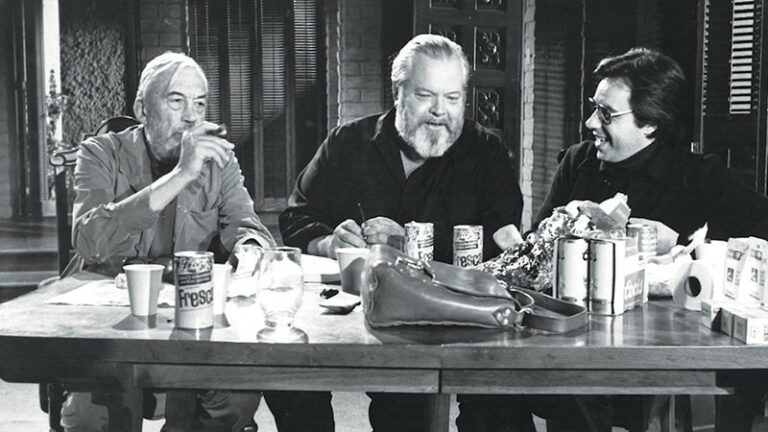
Based on the bestselling novel by Kent Nerburn, last year’s indie film ‘Neither Wolf Nor Dog’ takes audiences on an eye-opening road trip through Lakota life and culture. The film stars elder Dave Bald Eagle (once called “the world’s most interesting man” by NPR), who was 95 years old during filming but died before its release. After playing at dozens of cinemas for the past year, Neither Wolf Nor Dog debuts in Marin with a weekend of screenings starting Friday, April 27, at Lark Theater, 549 Magnolia Ave., Larkspur. Friday, 6:30pm; Saturday, 3:45pm; Sunday, 10:30am. $8–$11. 415.924.5111.

April 27: Free Range Folk in Sebastopol

0

Sonoma County folk outfit the Musers are new to the scene as a trio, though the members are all North Bay musical veterans. Songwriters, vocalists and multi-instrumentalists Megan McLaughlin (Cularan) and Anita Sandwina (Spark & Whisper), along with standup bassist Tom Kuhn, share a tight musical connection on their upbeat acoustic originals, which can be heard on the group’s debut CD. It’s available this weekend when the Musers perform an album-release show alongside fellow folk outfit the Farallons on Friday, April 27, at the Sebastopol Community Center Annex, 425 Morris St., Sebastopol. 8pm. $10. 707.823.1511.

April 28: Local Fling in Guerneville

0

Nearly two dozen local culinary purveyors get a chance to rub elbows at the Russian River Food & Wine Spring Fling this weekend. Stations of food and wine from the likes of Sonoma Coast-based Flowers Vineyards & Winery and local oyster bar Seaside Metal will line the street, and highlights include bites by noted Guerneville chef Crista Luedtke, owner of Boon restaurant, book signings by Sonoma County chef, cooking instructor and cookbook author Michele Anna Jordan and live music by West County favorites THUGZ. Enjoy the fling on Saturday, April 28, on Main Street in downtown Guerneville. 1–4pm. $30–$50 and up. russianriver.com.

April 28: Pure Art in Healdsburg

0

With an emphasis on emotional expression over figurative representation, abstract art is a long-evolving movement that is increasingly finding a global audience. This week, Sonoma County gets a major dose of today’s hottest artists in the field when ‘Purely Abstract: Visions in Line, Form and Color’ opens in Healdsburg. Artist Jerrold Ballaine and art historian Satri Pencak juried the show, featuring works from over 50 artists, including locals like Sonoma’s Shotsie Gorman and Santa Rosa’s Max DuBois. The exhibit opens with a reception on Saturday, April 28, at the Healdsburg Center for the Arts, 130 Plaza St., Healdsburg. 5pm. Free admission. 707.431.1970.

Power Politics

0

As he sets out to rebuild the North Bay after the October wildfires, Sonoma County developer, newspaper investor and regional Democratic Party power broker Darius Anderson is now lobbying in Sacramento on behalf of Pacific Gas & Electric interests.

According to the California Secretary of State, Anderson’s lobbying firm, Platinum Advisors, was hired by the utility on
March 28—just as a Senate bill that’s targeted at PG&E’s fire liability was scheduled to make its way through the committee process. Co-sponsored by North Bay pols Bill Dodd and Mike McGuire, SB 819 sets out to limit the extent to which electric utilities can pass off legal fees and fines to ratepayers.

If signed into law, SB 819 would enhance the state’s current ability to regulate rate hikes; California law already gives the state Public Utilities Commission leverage to “fix the rates and charges for every public utility and requires that those rates and charges be just and reasonable.”

The current regulations prohibit gas corporations from “recovering any fine or penalty in any rate approved by the commission,” and SB 819 extends the prohibition to investor-owned gas and electric corporations such as San Francisco–based PG&E, which provides power to some
16 million California residents and is the dominant investor-owned utility in the state.

Senate Bill 819 would seem designed to head off the utility’s attempt to convince Sacramento regulators and lawmakers that fallout from the “new normal” of climate change and wildfires shouldn’t fall on the utility, even if its equipment is determined to be a culprit. Two state agencies are investigating the historic blaze that swept through the region last October, and no final official determination has been made about PG&E’s ultimate responsibility for the fires.

Sacramento-based PG&E spokesperson Lynsey Paulo says that “PG&E has not taken a position on Senate Bill 819. We’re committed to working with the state to build resiliency into our infrastructure, as we collectively confront the escalating pace and intensity of catastrophic events brought on by climate change. We ask the legislature to take a more holistic view in dealing with this new normal of extreme weather events driven by climate change.”

The bill unanimously passed the Senate’s Energy, Utilities and Communications committee last week and was headed for another hearing with the Judiciary Committee this week. Sen. McGuire is a member of the former committee. His office did not respond to a request for comment on Platinum Advisors or Anderson’s new role lobbying for PG&E. Like many elected California officials, McGuire has been a recipient of PG&E campaign funds.

The bill was introduced on
Jan. 3, and the Senate set last week’s hearing date on March 12. Platinum Advisors was hired by PG&E about two weeks later, but the company won’t say for how much or for how long. “Like many individuals and businesses, PG&E participates in the political process,” says Paulo. “PG&E holds itself to the highest standards of public disclosure and compliance with applicable laws and regulations.”

Platinum Advisors was founded by Anderson, a Sonoma resident who is also a principal investor at the Sonoma Media Group, which owns the Press Democrat and several other publications around the region.

He’s also the founder of the Rebuild Northbay Foundation, a nonprofit he created after the fires. It is registered as both a 501(c)3 and 501(c)4, which means that Rebuild Northbay can act as a charitable nonprofit organization and as a lobbying group. The 501(c)(4) designation is for “social welfare organizations,” which can endorse political candidates; 501(c)(3) nonprofits are restricted from influencing legislation and can’t participate in campaign activities for or against candidates.

The Rebuild Northbay Foundation’s board members include Steven Malnight, currently a senior vice president at PG&E. According to the Rebuild website, Malnight until recently served as PG&E’s senior vice president for regulatory affairs, “where he oversaw PG&E’s regulatory policy efforts at the national and state levels, including interactions with the California Public Utilities Commission (CPUC).”

Paulo did not respond to a follow-up email inquiring about Malnight’s role as a PG&E employee who is also a board member at Rebuild Northbay.

The utility has come under intense scrutiny following the wildfires last fall, as state investigators set out to determine what caused the fires that destroyed nearly 9,000 homes and buildings, killed more than 40 people and prompted hundreds of lawsuits against the utility—including a suit by Sonoma County itself. At last count, Sonoma County faced a $2.2 million budget deficit because of the fires, and sued PG&E in February. County Counsel Bruce Goldstein told the Press Democrat that the county hoped to recover between $9 million and $25 million in county funds spent on the cleanup and overtime pay.

As he announced the lawsuit against PG&E in early February, James Gore, chairman of the Sonoma County Board of Supervisors, told the San Francisco Chronicle that the county sued the company with reluctance, and that PG&E were “great partners” for the county. Gore’s wife, Elizabeth, is chair of the Rebuild Northbay Foundation, whose founder is now lobbying for PG&E’s interests in Sacramento. James Gore did not return a call for comment.

Noreen Evans, the Santa Rosa lawyer who lost to the Anderson-backed Lynda Hopkins in the 2016 5th district Sonoma County supervisors race, apparently doesn’t see much in the way of a “good partner” in PG&E. Responding to PG&E’s mid-March superior court pushback to fire-related lawsuits, she told the Press Democrat that “PG&E wants to increase your utility bill to pay for burning your home.” Evans is representing local plaintiffs who are suing the utility.

Anderson’s new deal with PG&E comes as the developer has for-profit business before Sonoma County this week through his firm Kenwood Investments. The Sonoma County Board of Supervisors was set to vote Tuesday on Anderson’s plan to build out his Wing & Barrel Ranch, an upper-crust shooting club in the Sonoma baylands whose splashy plans come complete with a restaurant, a fishing pond, an 18,000-square-foot clubhouse, and a new 85-foot tower nestled among a hay field dotted with 250-foot PG&E towers.

As part of an agreement with the county, Kenwood Investments agreed to knock one story off the proposed three-story clubhouse, set aside a couple days a week for hunters of lesser means and cap club membership at 500, including 25 corporate memberships of three-persons each. The proposal was conditionally approved in 2012.

According to Wing & Barrel promotional materials, those memberships are $75,000 a year for individuals, and $145,000 for corporations to enjoy the Charlie Palmer menu and premium cigars. Anderson did not respond to an email seeking comment, and a call to Platinum Advisors was not returned.

Does PG&E plan to purchase a corporate membership at Anderson’s new venture? Has Wing & Barrel sent its marketing materials to the company’s investors? Paulo did not respond to a follow-up inquiry which sought to answer these questions.

The North Bay fires caused an estimated $9 billion in insured damage, and many residents hold the utility directly responsible for their losses. Numerous press reports have noted that PG&E carries about $800 million in liability insurance. The upshot is that the investor-owned utility may be facing one of the more severe existential crises in its hundred-plus-year history, and issued a statement in January which, even as it didn’t oppose it, argued that SB 819 could not have come at a worse time for the utility or its ratepayers—given its commitment to participating in the state’s climate-change reduction strategies.

Since the fires, PG&E has embarked on a vigorous public-relations campaign to assure ratepayers that it’s on top of its responsibilities to clear vegetation from around power lines. Some suspect the fires began with sparks from wind-whipped power lines that ignited nearby trees.

The utility participates in the region’s clean power initiative (Sonoma Clean Power) and has extensive ties in the county, some of which are reflected through its community investment program. In 2015, for example, the utility donated $2,500 to the nonprofit Children’s Museum of Sonoma County; it also displayed a hydroelectric model in the facility as the museum was getting off the ground. Leslie Horak, one of the founding members of the museum, works as a communications specialist with PG&E and manages its college-scholarship program. The museum was not damaged by the October wildfires.

As wildfire suits mounted late last year, PG&E put the heavyweight Sacramento lobbying group Capitol Advocacy on its payroll as of Jan. 1 of this year. It added more lobbying firepower with the addition of Platinum Advisors about three months later.

Just days after it hired Capitol Advocacy, on Jan. 4, local news outlets reported that Petaluma resident Katie Kerns Davis was promoted to chief of staff for PG&E chief operating officer Geisha Williams. Davis is a former head of the Petaluma Chamber of Commerce, and her husband, Mike Kerns, is a former Sonoma County Supervisor; her corporate bio notes that in her nine years at PG&E, she had recently “taken part in company-wide initiatives on corporate strategy and the strategic response to last fall’s Northern California wildfires.”

That strategy appears to be: hold the line at any attempt to hold the company liable for damages in the fires; enhance local partnerships with deep-pocket developers; and serve the interests of investors in the process. At the time of the fires, PG&E shares were trading for about $70; by early February,
the stock had bottomed out at $38 a share, and has slowly crept back to $45 a share as of late April. The company reported $17.14 billion in revenue in 2017 and announced late last year that it would suspend dividend payouts to investors in 2018, given the uncertainty over its liability for the fires.

By the middle of March, the utility had taken its case to court and submitted multiple findings in state superior court pushing back against the mounting lawsuits.

At issue for PG&E is the principle of “inverse condemnation,” whereby California says the utility can be held liable for damages from a wildfire, as PG&E argued in a press release on Jan. 3, “even if the utility has followed established inspection and safety rules.” The utility had been negotiating with the state Public Utilities Commission over extant regulations right up until the fires broke out in early October. The commission has historically been taken to task for its too-cozy relationship with the utility and its Wall Street backers, but did announce after the fires that it was launching an investigation of its own and told the utility to preserve all its emails and documents.

Power Politics

0

As he sets out to rebuild the North Bay after the October wildfires, Sonoma County developer, newspaper investor and regional Democratic Party power broker Darius Anderson is now lobbying in Sacramento on behalf of Pacific Gas & Electric interests.

According to the California Secretary of State, Anderson’s lobbying firm, Platinum Advisors, was hired by the utility on
March 28—just as a Senate bill that’s targeted at PG&E’s fire liability was scheduled to make its way through the committee process. Co-sponsored by North Bay pols Bill Dodd and Mike McGuire, SB 819 sets out to limit the extent to which electric utilities can pass off legal fees and fines to ratepayers.

If signed into law, SB 819 would enhance the state’s current ability to regulate rate hikes; California law already gives the state Public Utilities Commission leverage to “fix the rates and charges for every public utility and requires that those rates and charges be just and reasonable.”

The current regulations prohibit gas corporations from “recovering any fine or penalty in any rate approved by the commission,” and SB 819 extends the prohibition to investor-owned gas and electric corporations such as San Francisco–based PG&E, which provides power to some 16 million California residents and is the dominant investor-owned utility in the state.

Senate Bill 819 would seem designed to head off the utility’s attempt to convince Sacramento regulators and lawmakers that fallout from the “new normal” of climate change and wildfires shouldn’t fall on the utility, even if its equipment is determined to be a culprit. Two state agencies are investigating the historic blaze that swept through the region last October, and no final official determination has been made about PG&E’s ultimate responsibility for the fires.

Sacramento-based PG&E spokesperson Lynsey Paulo says that “PG&E has not taken a position on Senate Bill 819. We’re committed to working with the state to build resiliency into our infrastructure, as we collectively confront the escalating pace and intensity of catastrophic events brought on by climate change. We ask the legislature to take a more holistic view in dealing with this new normal of extreme weather events driven by climate change.”

The bill unanimously passed the Senate’s Energy, Utilities and Communications committee last week and was headed for another hearing with the Judiciary Committee this week. Sen. McGuire is a member of the former committee. His office did not respond to a request for comment on Platinum Advisors or Anderson’s new role lobbying for PG&E. Like many elected California officials, McGuire has been a recipient of PG&E campaign funds.

The bill was introduced on Jan. 3, and the Senate set last week’s hearing date on March 12. Platinum Advisors was hired by PG&E about two weeks later, but the company won’t say for how much or for how long. “Like many individuals and businesses, PG&E participates in the political process,” says Paulo. “PG&E holds itself to the highest standards of public disclosure and compliance with applicable laws and regulations.”

Platinum Advisors was founded by Anderson, a Sonoma resident who is also a principal investor at the Sonoma Media Group, which owns the Press Democrat and several other publications around the region.

He’s also the founder of the Rebuild Northbay Foundation, a nonprofit he created after the fires. It is registered as both a 501(c)3 and 501(c)4, which means that Rebuild Northbay can act as a charitable nonprofit organization and as a lobbying group. The 501(c)(4) designation is for “social welfare organizations,” which can endorse political candidates; 501(c)(3) nonprofits are restricted from influencing legislation and can’t participate in campaign activities for or against candidates.

The Rebuild Northbay Foundation’s board members include Steven Malnight, currently a senior vice president at PG&E. According to the Rebuild website, Malnight until recently served as PG&E’s senior vice president for regulatory affairs, “where he oversaw PG&E’s regulatory policy efforts at the national and state levels, including interactions with the California Public Utilities Commission (CPUC).”
Paulo did not respond to a follow-up email inquiring about Malnight’s role as a PG&E employee who is also a board member at Rebuild Northbay.

The utility has come under intense scrutiny following the wildfires last fall, as state investigators set out to determine what caused the fires that destroyed nearly 9,000 homes and buildings, killed more than 40 people and prompted hundreds of lawsuits against the utility—including a suit by Sonoma County itself. At last count, Sonoma County faced a $2.2 million budget deficit because of the fires, and sued PG&E in February. County Counsel Bruce Goldstein told the Press Democrat that the county hoped to recover between $9 million and $25 million in county funds spent on the cleanup and overtime pay.

As he announced the lawsuit against PG&E in early February, James Gore, chairman of the Sonoma County Board of Supervisors, told the San Francisco Chronicle that the county sued the company with reluctance, and that PG&E were “great partners” for the county. Gore’s wife, Elizabeth, is chair of the Rebuild Northbay Foundation, whose founder is now lobbying for PG&E’s interests in Sacramento. James Gore did not return a call for comment.

Noreen Evans, the Santa Rosa lawyer who lost to the Press Democrat–endorsed Lynda Hopkins in the 2016 5th district Sonoma County supervisors race, apparently doesn’t see much in the way of a “good partner” in PG&E. Responding to PG&E’s mid-March superior court pushback to fire-related lawsuits, she told the Press Democrat that “PG&E wants to increase your utility bill to pay for burning your home.” Evans is representing local plaintiffs who are suing the utility.

Anderson’s new deal with PG&E comes as the developer has for-profit business before Sonoma County this week through his firm Kenwood Investments. Tuesday the Sonoma County Board of Supervisors approved Anderson’s plan to build out his Wing & Barrel Ranch, an upper-crust shooting club in the Sonoma baylands whose splashy plans come complete with a restaurant, a fishing pond, an 18,000-square-foot clubhouse, and a new 85-foot shooting tower nestled among a field dotted with 250-foot PG&E towers.

As part of an agreement with the county, Kenwood Investments agreed to knock one story off the proposed three-story clubhouse, set aside a couple days a week for hunters of lesser means and cap club membership at 500, including 25 corporate memberships of three-persons each. The proposal was conditionally approved in 2012.
According to Wing & Barrel promotional materials, those memberships are $75,000 a year for individuals, and $145,000 for corporations to enjoy the Charlie Palmer menu and premium cigars. Anderson did not respond to an email seeking comment, and a call to Platinum Advisors was not returned.

Does PG&E plan to purchase a corporate membership at Anderson’s new venture? Has Wing & Barrel sent its marketing materials to the company’s investors? Paulo did not respond to a follow-up inquiry which sought to answer these questions.

The North Bay fires caused an estimated $9 billion in insured damage, and many residents hold the utility directly responsible for their losses. Numerous press reports have noted that PG&E carries about $800 million in liability insurance. The upshot is that the investor-owned utility may be facing one of the more severe existential crises in its hundred-plus-year history, and issued a statement in January which, even as it didn’t oppose it, argued that SB 819 could not have come at a worse time for the utility or its ratepayers—given its commitment to participating in the state’s climate-change reduction strategies.

Since the fires, PG&E has embarked on a vigorous public-relations campaign to assure ratepayers that it’s on top of its responsibilities to clear vegetation from around power lines. Some suspect the fires began with sparks from wind-whipped power lines that ignited nearby trees.

The utility participates in the region’s clean power initiative (Sonoma Clean Power) and has extensive ties in the county, some of which are reflected through its community investment program. In 2015, for example, the utility donated $2,500 to the nonprofit Children’s Museum of Sonoma County; it also displayed a hydroelectric model in the facility as the museum was getting off the ground. Leslie Horak, one of the founding members of the museum, works as a communications specialist with PG&E and manages its college-scholarship program. The museum was not damaged by the October wildfires.

As wildfire suits mounted late last year, PG&E put the heavyweight Sacramento lobbying group Capitol Advocacy on its payroll as of Jan. 1 of this year. It added more lobbying firepower with the addition of Platinum Advisors about three months later.

Just days after it hired Capitol Advocacy, on Jan. 4, local news outlets reported that Petaluma resident Katie Kerns Davis was promoted to chief of staff for PG&E chief operating officer Geisha Williams. Davis is a former head of the Petaluma Chamber of Commerce, and her father, Mike Kerns, is a former Sonoma County Supervisor; her corporate bio notes that in her nine years at PG&E, she had recently “taken part in company-wide initiatives on corporate strategy and the strategic response to last fall’s Northern California wildfires.”

That strategy appears to be: hold the line at any attempt to hold the company liable for damages in the fires; enhance local partnerships with deep-pocket developers; and serve the interests of investors in the process. At the time of the fires, PG&E shares were trading for about $70; by early February, the stock had bottomed out at $38 a share, and has slowly crept back to $45 a share as of late April. The company reported $17.14 billion in revenue in 2017 and announced late last year that it would suspend dividend payouts to investors in 2018, given the uncertainty over its liability for the fires.
By the middle of March, the utility had taken its case to court and submitted multiple findings in state superior court pushing back against the mounting lawsuits.

At issue for PG&E is the principle of “inverse condemnation,” whereby California says the utility can be held liable for damages from a wildfire, as PG&E argued in a press release on Jan. 3, “even if the utility has followed established inspection and safety rules.” The utility had been negotiating with the state Public Utilities Commission over extant regulations right up until the fires broke out in early October. The commission has historically been taken to task for its too-cozy relationship with the utility and its Wall Street backers, but did announce after the fires that it was launching an investigation of its own and told the utility to preserve all its emails and documents.

Correction and clarification: an earlier version of this story incorrectly stated that Kerns’ husband is a former Sonoma Supervisor; Mike Kerns is her father. Also, an earlier version stated that Hopkins was backed by Anderson. She was backed by the Press Democrat, which is co-owned by Anderson.

On Strike

0

‘Shut it down” became students’ rallying cry throughout the halls of academia and across the nation’s college and high school campuses during the late 1960s. The call and walkouts were in response to the Vietnam War and domestic injustices.

In the past month, we have seen the same strategy being employed not only by students, but by underpaid teachers in various parts of the United States. West Virginia teachers frustrated by low pay and poor working conditions took action and walked out, forcing its own union’s hand in what is called a “wildcat” strike. One month later they had won.

Now teachers in Oklahoma, Kentucky, Colorado and Arizona are picking up the torch of their West Virginia brethren. In Oklahoma, teachers might get up to a $40,000 yearly annual income after 10 years!

Many teachers not only work multiple jobs, before and after school, but often rely on social services and local food pantries to support their own families. Out-of-pocket and unreimbursed expenses for classroom supplies to enhance their students’ learning experiences is the norm in many parts of the country.

Those who chose to become teachers love and value children. They are a crucial, interdependent link in the process of instilling values, knowledge and a sense of community in young people.

There is a saying that goes, “My family has a good doctor and dentist we pay very well, a good lawyer we pay very well, a good accountant we pay very well, and my children have good teachers—and we really appreciate it!” Teachers deserve much more than our appreciation.

E.G. Singer lives in Santa Rosa.

Open Mic is a weekly feature in the ‘Bohemian.’ We welcome your contribution. To have your topical essay of 350 words considered for publication, write op*****@******an.com.

Letters to the Editor: April 25, 2018

Astronomical

What’s retro about 160 bucks a night for the Astro Motel (“Hip Advisor,” April 10)? I guess they have to keep pace with the Spinster Sisters’ prices.

Occidental

Housing for All

Sonoma County was already facing an issue with affordable housing before the October wildfires. Now there needs to be more permanent housing created to ensure families at risk of homelessness. Affordable housing is defined as paying 30 percent or less of the gross monthly household income. Due to the fires, there was a 5 percent loss of housing units, roughly 4,000 homes and around 100 structures in Santa Rosa. Now Sonoma County will need the 4,000 housing units that were taken by the fire, on top of the 17,144 more for affordable rental homes, to meet the needs of the lowest income renters. The average median for a house rose to $639,000 in 2017. Only 26 percent of county households could afford it back in 2016. After the fires, the house median has rose to $689,000.

According to the Sonoma County League of Women Voters, roughly half of young people living in Sonoma County between 18 and 39 have considered leaving the Bay Area due to the lack of affordable housing. There needs to be more assistance programs for the general population to have access to affordable housing.

Petaluma

Yes for Water

Napa County’s water future will be decided on June 5. A yes vote on Measure C, the Napa County Watershed and Oak Woodland Protection Initiative, will protect that future. Measure C is a well-written initiative, based on the best current science, and puts in place reasonable measures to protect Napa County’s water supply. It is good for agricultural, good for the wine industry, good for all of us in the county. Measure C stops unsustainable expansion of vineyards in our hillside watershed.

Napa County’s vineyard/wine/tourism economy makes the valley a desirable place to live and visit. But this interdependent economy cannot be sustained if we predicate our thinking on an unlimited water future. Expanding vineyards into our hillside watershed means less water reaches our reservoirs and recharges our groundwater. Groundwater and reservoir levels drop, leaving less water for existing uses. Given the current climate predictions of less rainfall and more dangerous and frequent droughts, we need to guard what we have to maintain the valley as it is. I am voting yes on Measure C to ensure a stable, secure, and clean water future for Napa County.

Napa

Dept. of Corrections

Due to a reporting error, the ownership and management teams of the Astro Motel were misstated (“Hip Advisor,” April 10). Liza Hinman is the chef and co-owner of the Spinster Sisters restaurant and part of the team behind the Astro, not Lizzie Simon. And Camille Cannon is no longer general manager of the Astro. Lisa Robbins is general manager of the motel now. The Bohemian regrets the errors.

Write to us at le*****@******an.com.

Fun on Wheels

0

Napa Valley is obviously well-known as a food and wine destination, but because it’s flanked by mountains and crossed by winding roads that thread through picturesque vineyards and small towns, it’s also a haven for cyclists—provided you can avoid the weekend traffic jams. This weekend Napa will be jammed with cyclists of all kinds as CampoVelo rolls into the area for its second year.

CampoVelo is Coachella for cyclists. Held April 27–29, the event is a three-day celebration of food, wine, cycling, music and philanthropy. There are activities for non-cyclists as well. (The Bohemian is a media sponsor of the event.)

“It’s really about enjoying being outdoors, whether you’re cycling or going on a hike or doing some yoga,” says co-founder Chris Cosentino, celebrity chef and avid cyclist. “It’s all about community, conviviality and giving back.”

For gearheads, the event is stacked with a variety of rides for different skill levels and on different surfaces: road, gravel and dirt. Cosentino’s remarks about giving back is in reference to No Kid Hungry, Chefs Cycle, the Napa Valley Vine Trail and World Bicycle Relief, philanthropic groups that are beneficiaries of CampoVelo’s various fundraising dinners and events.

Of course, this being Napa, there will be plenty of opportunities to geek out on wine. Rebekah Wineburg, winemaker for Quintessa, will participate in a panel discussion at one of Saturday’s “Speakeasy Sessions” at the Calistoga Motor Lodge. She’ll be joined by winemakers Steve Matthiasson and Bertus Van Zyl, and Iron Chef America winner Neal Fraser.

“[The event] is really interesting to me because of the combination of food, wine and fitness,” Wineburg says.

While she’s not a cyclist, Wineburg will lead a hike Saturday up Calistoga’s Oat Hill Mine trail. Saturday. “I really like the connection between healthy lifestyle and food and wine.”

Many of the event’s rides will be led by professional cyclists, Ironman winners and other elite riders. Ted King, a former Tour de France competitor who now lives in Marin County, will lead Friday’s 30-mile gravel-road ride along Lake Hennessey and Saturday’s fast-paced, 43-mile “Espresso Train” ride on the Silverado Trail from Calistoga to Rutherford.

“Riding in the Napa Valley is amazing,” says King. “It’s some of the best riding in America.”

As a professional cyclist for 10 years pedaling through Europe, King had to forego all the great food and drink the area had to offer in the name of training. Those days are over now. He says CampoVelo matches great cycling and plenty of great food.

Saturday also features a race at the Calistoga Speedway patterned after the “Little 500” race depicted in the classic cycling film Breaking Away. Just like in the movie, teams of four will compete on flat-pedal, single-speed bikes. The event will feature food trucks and live music, and proceeds will help the Napa Valley Vine Trail, a nonprofit group working to build a paved bike path from Calistoga to the Vallejo ferry.

Cosentino will be on one of the teams competing on the speedway. I knew he had a talent for turning beef heart, tripe and other typically cast-off animal parts into delicious plates of food. I didn’t know he was once a professional mountain biker and solo, 24-hour endurance racer.

Chefs are generally a driven, hyperactive bunch who put in extremely long hours to create indulgent experiences. With three restaurants to his name (Cockscomb in San Francisco, Acacia House in St. Helena and the new Jackrabbit in Portland, Ore.), a line of cooking knives, a writing credit for a Wolverine comic book and a Top Chef Masters win, the extreme-mountain-bike-racer thing makes sense.

Cosentino rose to fame as the offal-loving chef at the late Incanto, a beloved San Francisco restaurant that put him and lesser cuts of meat on the map. After the birth of his son 13 years ago, he put the brakes on cycling and focused on his culinary career. But he’s returned to his love for cycling in recent years, and this weekend, Cosentino’s love for bikes and food ride in tandem at CampoVelo.

Cosentino lives in San Francisco but rides in Napa Valley regularly with his friend and Napa frame builder Curtis Inglis.

“He takes me on all these crazy, amazing road rides,” Cosentino says. “But there’s also riding at Skyline [Wilderness Park] and these gravel rides he takes me on which I don’t even know the names of. I just follow him, and that, to me, is the most fun, that sense of adventure. . . .There’s nothing like it. It’s just incredible.

“I like to say [Napa] is like riding in Europe where everybody speaks English.”

For more information, visit
campovelo.com.

To Do List

Before participating in the national school walkout against gun violence on Friday April 20, Credo High School students got a visit from Congressman Mike Thompson. The moderate Democrat began his speech at the Rohnert Park school by stating, “I’m a gun owner. I believe in the 2nd Amendment.” Although Thompson has been in the House since 1998—first for the...

April 27: Landmark Film in Larkspur

Based on the bestselling novel by Kent Nerburn, last year’s indie film ‘Neither Wolf Nor Dog’ takes audiences on an eye-opening road trip through Lakota life and culture. The film stars elder Dave Bald Eagle (once called “the world’s most interesting man” by NPR), who was 95 years old during filming but died before its release. After playing at...

April 27: Free Range Folk in Sebastopol

Sonoma County folk outfit the Musers are new to the scene as a trio, though the members are all North Bay musical veterans. Songwriters, vocalists and multi-instrumentalists Megan McLaughlin (Cularan) and Anita Sandwina (Spark & Whisper), along with standup bassist Tom Kuhn, share a tight musical connection on their upbeat acoustic originals, which can be heard on the group’s...

April 28: Local Fling in Guerneville

Nearly two dozen local culinary purveyors get a chance to rub elbows at the Russian River Food & Wine Spring Fling this weekend. Stations of food and wine from the likes of Sonoma Coast-based Flowers Vineyards & Winery and local oyster bar Seaside Metal will line the street, and highlights include bites by noted Guerneville chef Crista Luedtke, owner...

April 28: Pure Art in Healdsburg

With an emphasis on emotional expression over figurative representation, abstract art is a long-evolving movement that is increasingly finding a global audience. This week, Sonoma County gets a major dose of today’s hottest artists in the field when ‘Purely Abstract: Visions in Line, Form and Color’ opens in Healdsburg. Artist Jerrold Ballaine and art historian Satri Pencak juried the...

Power Politics

As he sets out to rebuild the North Bay after the October wildfires, Sonoma County developer, newspaper investor and regional Democratic Party power broker Darius Anderson is now lobbying in Sacramento on behalf of Pacific Gas & Electric interests. According to the California Secretary of State, Anderson's lobbying firm, Platinum Advisors, was hired by the utility on March 28—just as...

Power Politics

As he sets out to rebuild the North Bay after the October wildfires, Sonoma County developer, newspaper investor and regional Democratic Party power broker Darius Anderson is now lobbying in Sacramento on behalf of Pacific Gas & Electric interests. According to the California Secretary of State, Anderson’s lobbying firm, Platinum Advisors, was hired by the utility on March 28—just as...

On Strike

'Shut it down" became students' rallying cry throughout the halls of academia and across the nation's college and high school campuses during the late 1960s. The call and walkouts were in response to the Vietnam War and domestic injustices. In the past month, we have seen the same strategy being employed not only by students, but by underpaid teachers in...

Letters to the Editor: April 25, 2018

Astronomical What's retro about 160 bucks a night for the Astro Motel ("Hip Advisor," April 10)? I guess they have to keep pace with the Spinster Sisters' prices. —Pieter S. Myers Occidental Housing for All Sonoma County was already facing an issue with affordable housing before the October wildfires. Now there needs to be more permanent housing created to ensure families at risk of...

Fun on Wheels

Napa Valley is obviously well-known as a food and wine destination, but because it's flanked by mountains and crossed by winding roads that thread through picturesque vineyards and small towns, it's also a haven for cyclists—provided you can avoid the weekend traffic jams. This weekend Napa will be jammed with cyclists of all kinds as CampoVelo rolls into the...
11,084FansLike
4,446FollowersFollow
6,928FollowersFollow